Podcast episode
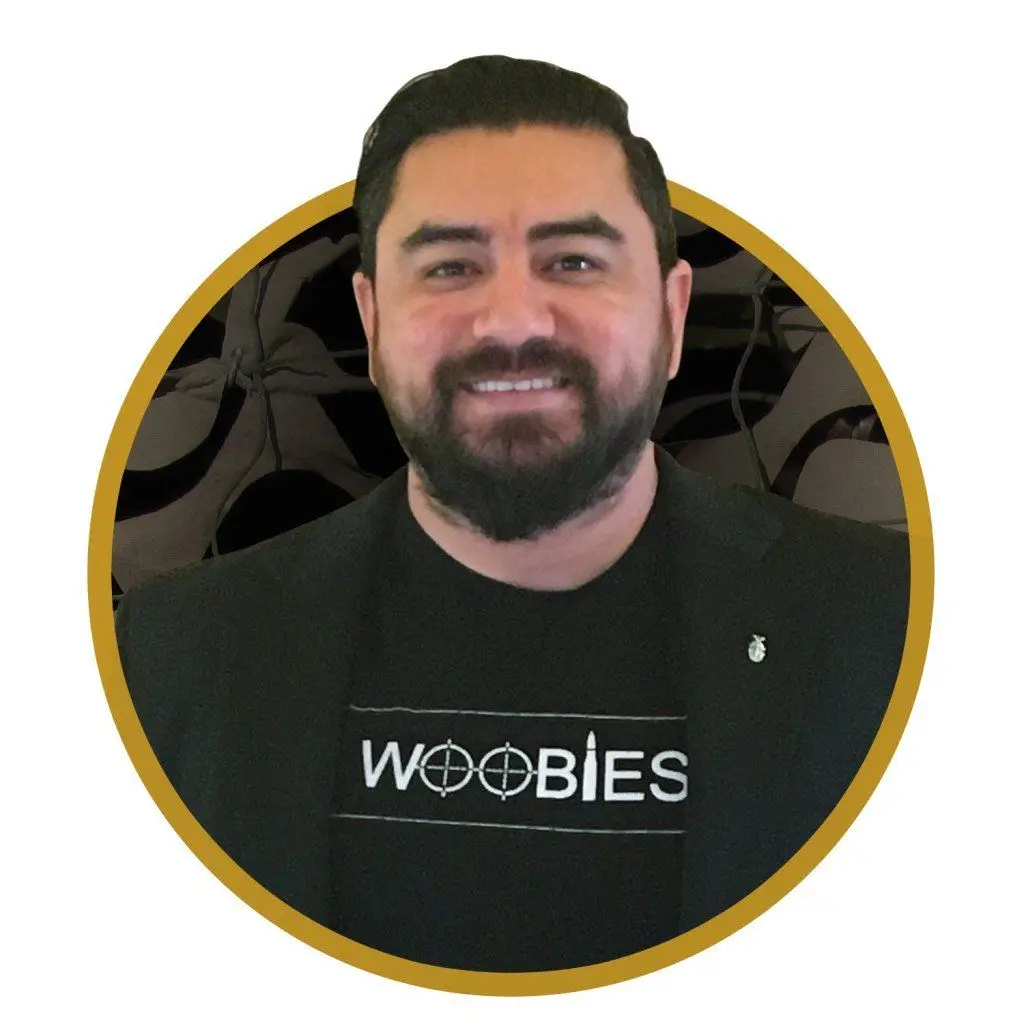
Episode 62: Woobies, Entrepreneurship, and Cannabis with US Special Forces Veteran Tony Aguiniga
Hosted by Chris Albert
The Warrior Soul Podcast
To listen on itunes:
https://itunes.apple.com/us/podcast/episode-62-woobies-entrepreneurship-cannabis-us-army/id1096901382?i=1000393194973&mt=2
Our Sponsors:

After serving in the US Army’s Special Forces, Tony Aguiniga pushed hard into the civilian world. He graduated from the Fire Academy, got his Oil Broker’s License, and began his civilian life in what many would consider responsible fashion.

But something wasn’t right. Tony wanted to do more. So Tony and some friends started a tactical shoe company called Woobies. These are awesome, fashionable, and comfortable shoes that you could wear hunting or out to dinner. With his first entrepreneurial experience under his belt, Tony decided to pursue another passion: educating veterans about the benefits of cannabis.
In his new venture, mygreentools.com, Tony’s site teaches veterans about the potential benefits of the cannabis plant: what strains to use, the best dosages, and methods of use. He also runs a company called Grey Matter that makes some amazing glass pipes.

To catch up with Woobies Shoes: www.woobiesweb.com
For My Green Tools: https://www.mygreentools.com/

Transcript
Machine-generated from the episode audio and lightly edited — may contain errors.
Chris Albert (link to this point)
What's going on Warrior Soul Nation? This is Chris Albert with the Warrior Soul podcast and welcome to episode number 62. Today we have an awesome episode for you with Tony Aguiniga. Tony served as a Special Forces Green Beret and after his service, he went on to become an entrepreneur. He was a founder in a company called Woobies and they make some awesome, comfortable tactical shoes and we get into the actual process through which Tony helped to start this company.
Go through some of the hardships he faced. We go through some of the challenges he faced in trying to create a manufactured product and trying to create a company that would eventually lead to a lot of jobs for veterans. But also, and equally importantly, we talk about Tony's advocacy for the cannabis plant. And this is something I've been passionate about for a while now. Ever since last year, I got my own medical cannabis card, and I've been using medicinal cannabis to help me with my challenges with ulcerative colitis.
And I think it's a great plant, one that everybody should at least keep their mind open to and everybody should at least have access to. And my philosophy is plants over pills. You know, the cannabis plant has never been shown to be fatally toxic and it's got a wide range of uses for healing, for getting to know yourself a little bit better, for alleviating pain. And so many people out there could benefit from turning to something like this over some opiate pill or something like that that their doctor's giving them that could be toxic on their bodies, and that could cause some severe addiction. So this was a really, really great conversation.
And one cool thing about Tony and his advocacy of cannabis is that he's also taking action on it. He started a website called mygreentools.com and the main purpose of this website is to educate veterans on the use of the cannabis plant. A lot of people might want to try cannabis, but they might not understand what the different strains do. They might not understand the dosage. And so My Green Tools provides some amazing resources for veterans who are looking to educate themselves about potential treatment with medicinal cannabis.
Beyond that, Tony also has an awesome line of glass pieces. These are called Grey Matter and they're pretty, pretty cool. And you can find those up there on the website as well at mygreentools.com. Just a note about our sponsors. This podcast is sponsored by F bomb nutrition.
F bomb makes these awesome portable fats, portable packages of delicious fats. And this one here is coconut oil. My favorite is actually their macadamia nut butter. That stuff is so delicious. It's you guys have had macadamia nuts before.
Maybe you've had them cookies. Maybe you've had them in other things. Well, their macadamia nut butter, I mean, it tastes like a macadamia nut cookie in like a really cool buttery paste. And they have one that's mixed with coconut butter. They also have one that's mixed up with sea salt and these are absolutely delicious.
They're one of my favorite things to eat on the run. You should definitely check them out. If you go to www.fatismartfuel.com and you use the code Warrior Soul, you're gonna get 20% off your first order. So definitely check them out. Now, let's get into this episode, episode number 62 with my brother, your brother, Aguiniga.
This is Chris Albert, and I'm here to remind you of one thing. Someday, you're going to die. Now that's not some morbid statement or scary idea. It's solid fact. Your time here on this earth is limited.
And we need to be reminded of this as much as possible for one simple reason, to live your best life while you can. This is the Warrior Soul Podcast. One.
What's going on everybody? Welcome to the Warrior Soul Podcast. This is Chris Albert, and this is where we give you tools, tactics, people, and stories that are gonna help you to live your best life. And today, I'm I'm gonna murder your last name, brother. But today, I've got my bro, Tony.
Tony served in the United States Army. He is involved in a little company called Woobies that makes shoes, and he's involved in a new company called mygreentools.com. And what I want to do today is really get into a little bit of Tony's story, how he came to entrepreneurship. I want to talk about cannabis, cannabis as it benefits veterans. And I want to talk about the business journey here.
How Tony went from being in the United States Army and doing what he did in the United States Army to to finding entrepreneurship and and finding his journey here in the civilian world. How are doing today, Tony?
Tony Aguiniga (link to this point)
I'm doing fantastic. How are you, Chris?
Chris Albert (link to this point)
Good, man. Can you say your last name for me? I know it's I'm gonna pronounce it. Hold on a second. I have to pronounce it.
Aguiniga.
Tony Aguiniga (link to this point)
Pretty close. It's Aguiniga.
Chris Albert (link to this point)
Aguiniga. Aguiniga. Okay. You just told me that. I'm I'm a little bit spaced out and and then So so you're of Basque heritage.
Right?
Yes. Those are those are hardy, hardy people, mountain people. Right?
Tony Aguiniga (link to this point)
Right. Yes. That's that's where it comes from from what which I've been told. But, you know, we have we do have this, you know, Mexican and some other stuff in there too.
Chris Albert (link to this point)
So Yeah. If you don't know the backstory of that, just take a little a little segue here. But the Basque people, they survived for thousands of years in the mountains. The Roman armies came through. The everybody the the German tribes, everything was coming through there.
And they stayed up in the mountains, and they kept their language. And so nobody actually knows where the Basque language comes from. It's a pretty fascinating thing. But we're here today to talk about you, sir. Tell for for those who who don't know anything about Woobies or My Green Tools at home, tell us a little bit about you.
A little bit about where you came from, where you served, and and, you know, a little bit about your journey.
Tony Aguiniga (link to this point)
Okay. Yeah. I I joined the army in in 2001, and I went to basic training at Fort Sill. Actually, 09/11 happened around, like, week seven in basic training, which was kind of a surreal situation. We thought, like, the drill sergeants were actually messing with us.
And after about a few hours of just people running around, they actually let us go in and watch TV and see, like, the people running around with them. You know, just chaotic in New York. So it hit home and then we started getting briefed by other people, characters that came in like from the chain of command saying like hey, know, things are changing now since this has happened so welcome to the new army basically. Get ready for deployments. A lot of us accepted that before we even signed up.
But Patriot Missile 14 Tango did the first deployment. It just wasn't for me so I went to selection. It didn't pass in 2003. I didn't make the land navigation. I wasn't really strong at land nav like Compass, Protractor, Rucksack, stuff like that.
So I went back and then about a year later I got selected and went to the Q course, became an 18 Echo, got deployed to Afghanistan, and then mainly stayed in seventh and twentieth group.
Chris Albert (link to this point)
Mhmm.
Tony Aguiniga (link to this point)
I got really big in the intelligence world, plainclothes stuff, stayed there for a while, and then came here to Dallas, went to the Fire Academy, EMT, paramedic school, worked the streets for a while. Resigned from that through personal logistic reasons, custody cases, stuff like that. And then I kept on trying to find what was best for me at the time as I was finding myself transitioning as a civilian from special operations. Completely different from what I was used to. It was kind of like a hasty situation as well.
I wasn't planning on leaving after twelve years. I was trying to save my you know my relationship and be around my daughter which was my number it's still my number one. Obviously she's my number one. So I was inventing myself out here and firefighter, police officer, broker, series twenty two, series sixty three selling oil in Texas. And then I realized that the whole time, my entrepreneur senses and my drive was just overtaking everything and I said, you know what, it's just time to break loose.
I didn't transition like you're supposed to. I didn't have money coming in through any businesses. I basically just jumped into the pool. I kind of tend to do that sometimes. I mean actually a lot of times. And I just went in and put all my chips in the middle of the table and we started Woobies LLC, me and Matt. Matt and I had no idea what shoes were about.
No idea how to manufacture shoes. What the process did. So it was basically me having the Good Idea Fairy come along knowing that there wasn't really anything out there like that yet for the veteran community. We knew we wanted to facilitate change by giving to good organizations like the Green Beret Foundation, Boot Campaign. So we started that partnership with them.
We still work with them but we ended up figuring it out. We designed the shoes ourselves through you know a lot of obstacles. We got the first generation in, made some improvements and we've just been going ever since. With that motivation and network platforms and I kept on going and going and I became very addicted almost to start up the whole start up process as a as a small business and as a veteran, and learning how to put the pieces together and learning the real management, real different types of leadership. And and we just started doing stuff.
And then my green tools came along through the four twenty
Chris Albert (link to this point)
Mhmm.
Tony Aguiniga (link to this point)
Movement that's going on right now.
Chris Albert (link to this point)
Well, before we get into that, I want I wanna just ask you, what was the the the straw that broke the camel's back? Alright. Because I I think everybody has it. Right? So you're coming out, you're going into the world, you're trying to make a name for yourself, you know, you're going to the fire academy, which is supposedly a really secure job.
And then you're you're you're in the oil business. Right? Where you're making that money. Right?
Tony Aguiniga (link to this point)
Making money.
Chris Albert (link to this point)
Right.
And but but what was it that that that said, you know what? I can't do this for the rest of my life. There there's no way that I can keep doing this. I gotta go do something for myself. What what was that thing?
Tony Aguiniga (link to this point)
That's a great question, Chris. And I've been actually fighting this battle internally on a daily basis. And I'm not saying it's a battle but it's self recognition and self actualization. It's basically finding out my own mortality. Through my kind of a shitty childhood, growing up in a very abusive household, family structure, on my own, and basically getting everything that I had at the time through my own blood, sweat and tears with nobody helping me, really.
I knew that life was just too short to waste it on something that I didn't believe in. I did work for, if you want to call it the man or the organizations. But I always seemed to do something that was bigger and better than me. And I do know that as thick minded as I am, that I do know there's something bigger and better than us out there. That's why I joined the Army.
That's why I went to Special Forces. I became a public servant and went to the Academy and went back to paramedics. I knew that I was always, there was something out there and entrepreneur was the ultimate sacrifice to me. It was the ultimate suicide, no pun intended. It was ultimate, hey, this is you.
You own it And if you fail, you fail. You make it, you make it. But you die knowing that you did what you needed to do and there's no regrets. And guys out there, very successful businessmen will tell you as well that I we look up to is like one of the biggest fears is talking to an 80 year old man and asking what he's fearful of and what's the biggest thing that scares him and it's regret. And I knew that.
And life being so volatile with its ups and downs and how fast it can be taken from you because we are nothing out there. You know, we could be gone at any moment and we see that every day and it's time to take action and do what you love and try to create content that facilitates a change. Something that wasn't out there yet and for people to enjoy it and receive it well and to make a difference, it really became the staple of who I was the whole time. And that's breaking the camel's back, to answer your question, Chris, was constantly not being happy and satisfied. And the universe kind of put me in situations where I had to make tough decisions.
Am I gonna stay here for the rest of my life? Am I gonna stay in Dallas Fire Department, which is a very hard job to get? Am I gonna do this for the rest of my life? Am I gonna be a broker? Is this really what I wanna do?
Do I love doing this every day? No. But now that as an entrepreneur where I'm in charge, I work for my investor, I work for my customers, number one, right? So it holds me accountable. It keeps me learning every day and honest.
And that's what I love that's what I love about the you know, it's your it's what you make of it just like the military.
Chris Albert (link to this point)
Yeah. You know, something you said there as far as, you know, talking to that 80 year old man and and asking him what scares him and, you know, the whole regret fat regret factor. But it's true, you know, we live in a place that has a lot of security, right? So so we all have four walls around us, we probably have running water, you probably have food. But even if you don't, if you're living in the Western world, you still have a lot of security.
Even if you're living out of your car, can still probably find food someplace. But the fact of the matter is, you can either use your hardships as a crutch and something that's gonna hold you back from the rest of your life, and you can be bitter about them, you can be bitter about the fact that you had a shitty childhood, or you can be bitter about the fact that maybe your service didn't go the way you intended or something like that. Maybe you lost a lot while you're overseas, that kind of thing. Or you can say, you know what, I'm still breathing, I'm still living. I've got a limited time to be doing this, right, because we're all going to die someday. So I might as well be happy doing what I'm doing every single day.
Tony Aguiniga (link to this point)
Absolutely. Absolutely. And quite frankly, the odds of us being on this Earth and then being born in this country and just having what we're very fortunate. So, you know, like like I was saying, even to this moment, I still think about my mortality and how fast it could all be over, unwittingly. So I just try to do the best I can to make that day as useful as possible.
But I make mistakes, you know, as everybody does, but I try my best. And I wish I had that mentality when I was younger, you know, when I was a young adult pre military. But, you know, it all happened the way it needed to happen.
Chris Albert (link to this point)
So the next question is, you you decide to get in a business. Why shoes? And why these shoes in particular?
Tony Aguiniga (link to this point)
Yeah. So, shoes have been kind of the one of one of my soft spots in in my life growing up. Not having a lot of money. Shoes was was kind of one of those covenant articles of clothing that I would be able to get every once in a while. And when I got them, I did everything that I could to make sure no one stepped on them in the hallway systems.
Just taking care of them as long as I could. Yes. Like shirts and pants would come more often, but a pair of shoes was kinda the big deal for me. And then and then going on into the military, especially in combat arms and and walking all the time, your feet are very important, obviously. Probably one of the most important things that you have.
You gotta take care of it. And so boots and comfort and and applications was always in the front part of my mind. As a business standpoint, felt that there was a need for a veteran owned shoe company. Something that's not like boots, like straight boots. Something that was like a I grew up wearing Vans and Converse.
Universal timeless design shoes. I mean you can wear Chucks even today and they're still in style. And then growing up in board culture, snowboarding and skateboarding was everything on on the daily for me, that culture. So design wise and application wise, I I had a mental sketch of what these shoes were gonna be about, how they were gonna look, and what they were gonna be used for. So that's kinda how we got into that.
Chris Albert (link to this point)
And did you did you check like did you do surveys of like audiences, talking to veterans, talking to active duty military personnel, like basically trying to figure out what they wanted in the shoe first or Yes.
Tony Aguiniga (link to this point)
I I did as much, through the my through the military career, I kinda I through different, jobs and actions and environments, I kinda knew what shoes were good and what boots worked for what. And then talking to other people and their bodies and what they you can see what people wear. If you go to the range or if you go in a car all day or if you're running, I see not everybody wears the same. At least in special operations, have the liberty to be able to use what you need that's good for you. And also for a civilian too, I didn't just want to pinpoint one market.
I wanted what's in style, what's gonna be good for water, what's gonna be good for lightweight materials. I wanted something that because you can't do everything in one shoe. It's like you can't do everything with one cooking pan. I'm looking at my kitchen. So one pan is not good for all meals.
Mean you can but it's not. So you try to do your best to see what shoe would be better and that's where the design came in. Yes, talking to people, obviously I'm open and transparent and and and will listen to anybody. And yes, I did ask questions. I I took all the feedback that I can possibly get.
But the big learning part on Woobies shoes was actually getting the first pair in in my hands. Through all the over the phone conversations and and and sketches and graphic designs and emails, well, that's great. But now when I have something in my hands, I can smell smell it, touch it, wear it. And I spent several weeks to months actually wearing a pair of white Woobies that just were super pristine but first thing I did is I put them on, went to a lake and I walked in the sand, the water and the rocks and I started field testing these things. I put them through everything that I could through weeks and weeks and weeks and then that's when I started adjusting the design and purpose of the shoes.
Chris Albert (link to this point)
And so so you get the design, right, and and you you out exactly what you want. How did you hammer down the manufacturing and and, you know, structure that so that that you were able to do that?
Tony Aguiniga (link to this point)
You're talking about the producing the shoes? Like actually making them?
Chris Albert (link to this point)
Yeah.
Tony Aguiniga (link to this point)
So as a veteran community or as a veteran business patriotic, I I found out very fast that it's very hard to get textiles made in The United States. Mean I me and my partner, man, we spent days and days and days and weeks and hundreds of calls and emails talking to everybody from shoot, I I don't know if I'm gonna drop the names, but companies that you know about out there, right? Right. That make shoes. There's a couple American companies out there.
There's a very few of them. One of them is in the skate industry kind of the bright. The other one is kind of more of a running. It's basically not that they told us to go get bent but it was like, unless you got a couple million in the bank on overhead, I mean, are you're not gonna find a shoe manufacturer here for what you're trying to do as a really small, small business. So we had to suck it up and say, you know what?
We have to go overseas. Bomb damn line. That's the way it is. We're gonna be in business and we're gonna do this and so and go, well, we tried, you know. Can't get it made in America today, guys.
So fuck it. No. So I said, you know what, we're gonna make them overseas because it makes sense on a business standpoint and it keeps us going and it gets us started. But the way we can more or for me personally even, where I can ethically be okay with that, because I want to hire veterans obviously, that's goal. In the meantime, I could take my proceeds, a good portion of my proceeds, and dedicate that to good organizations and then with a long term goal, turn around and get the manufacturing over a year.
But long story short, I found a good guy overseas who, it took a while to build that trust and that relationship, especially when you're wiring money and you're exposing yourself just on a personal level. It's not just business, you know. As you know, business is about relationships and I had to build a rapport with this guy who's not a US citizen. Especially coming from the intelligence community and stuff, you know, how much do you want to drop your pants? Right.
So that was a learning curve but it worked out, you know, and it was respect on both ends and it wasn't easy. We had a lot of disagreements and there were some obstacles but now, through the years, we've able we've been able to really, really button it up.
Chris Albert (link to this point)
Yeah, that I think the biggest thing I'm trying to get at here is the is the problem solving aspect of all these things, right? So so when you're getting into business, a lot of people start out strong. They have a vision. Right. Have it in their mind exactly what they wanna do.
They the the clouds are gonna part and the the seats are gonna pass with you and then you are are on a path to building your business. But inevitably, obstacles are gonna come up, especially when you get to a bottleneck period like like when you're you're dealing with something like manufacturing. Right? And that's why. You got somebody at the door, brother?
Tony Aguiniga (link to this point)
Yeah. Yeah. Yeah.
Chris Albert (link to this point)
Yeah. So Gabe, we can all answer the door with you if you want.
Tony Aguiniga (link to this point)
You wanna do that?
Chris Albert (link to this point)
Yeah. We're good.
Tony Aguiniga (link to this point)
Hey, bud. Hey. I just wanna let you know you're there's, like, thousands and thousands of people are gonna watch this probably. This is a
Neighbor (link to this point)
Hey. What's up, man?
Chris Albert (link to this point)
Hey. What's going on, man? I'm Chris.
Neighbor (link to this point)
Oh, right on. Okay. How are you affiliated if if if you don't mind me asking?
Chris Albert (link to this point)
I'm with the Warrior Soul podcast. We're a veteran podcast.
Neighbor (link to this point)
Right on, dude. Like, that's awesome.
Chris Albert (link to this point)
Yeah, man. I'll be seeing you.
Neighbor (link to this point)
I'm done. They come over, like, now, bro.
Tony Aguiniga (link to this point)
I can't. I can't, but I'll I'll get you when I'm done.
Neighbor (link to this point)
Okay? Alright.
Tony Aguiniga (link to this point)
I just started this. I'll get I'll get up.
Neighbor (link to this point)
Go start knocking.
Tony Aguiniga (link to this point)
I got you, bro. Alright. I don't know. Good guy. Good guy.
That's pretty that was a good one.
Chris Albert (link to this point)
That's a first.
Tony Aguiniga (link to this point)
An hope there emergency or anything, but Nah, that's okay. About that. Who knows? I mean, there could have been someone out there giving birth and
Chris Albert (link to this point)
It's all good, man. It's all good.
But yeah.
Yeah. That's that's the big thing, man. I think it's it's one, you know, understanding that problems are gonna come up. Two, you kinda have to be like liquid. Right? And how does water run? Water runs through cracks.
It it finds the weak points and it and it keeps flowing. Right? And that goes both ways. Problems are a lot like liquid too. Right?
They'll find your weak points and they'll creep through. And that's why we got Murphy's Law. But with with entrepreneurs, and I tell everybody, you know, we're running a podcast right here.
Right?
Answer Yeah. Your door. We got to be flexible. Right? That's that's a big thing.
If you're if you're too rigid, then then then everything goes to goes to crap. Yeah.
Tony Aguiniga (link to this point)
And it's just like what we did when we were we weren't planning that. I mean, what was the odds when I have a 100 at my neighbor? I'm I don't have neighbors just come by. I'm not like the neighborhood. I don't know.
But that was pretty cool. But no shame. Won't answer the door. But like I tell people that I like on a startup for instance, you're saying, Chris, we we're planning and we're planning. We're writing stuff down and we got whiteboards and we have an operational room and this is what's gonna happen.
PACE plan, primary alternate contingency and emergency. But one of the main things that I've been that I've learned myself and I and I humbly tell people that work with me or for me is like, once we start this company and once we go live, even before we go live, like, there's things that are gonna happen that we can't even plan for and we don't even know what it's gonna be. It's kind of exciting. At the same time, just prepare to be like fuck a lot. Just be like, ah shit.
But what it does is if you don't stop and you keep going, not only do you build a sense of pride because you work through these problems and you find out how to how to problem solve, But it makes you a better person. It makes you a better entrepreneur and it builds you to a point where you can start helping other people. And that's the main key that I've found is just don't quit. Because things are so volatile out there that like anything can happen. Like you can have you can be in almost figuring it thinking like you're you got no money and and you can't go on anymore or whatever.
But if you stay positive and keep on going every day, then shoot that money's gonna be there or something's gonna. The universe seems to work in ways that it needs to work. If you keep on trying to stay positive and and do the right thing from what I've seen. I mean, you know, it's
Chris Albert (link to this point)
Yeah, man. I I could tell you I've been broke so many times and and I've had not had money. I've had money. I've not had money. I've money.
Had And you know, the biggest thing is you've got to get to that place where you're not worried about that. You're worried about the mission. You're worried about, completing what you set out to do. And there is no business.
There's very few businesses I should say, because it's not like there's none, but there's very few businesses that have been overnight successes. And you kind of got to expect that. That's that's what you got to do if you're going to try and do something great. And all the suckers, they're the ones who quit. Right?
Tony Aguiniga (link to this point)
Yeah.
Chris Albert (link to this point)
That's what separates you from everybody else.
Tony Aguiniga (link to this point)
That's very true.
Chris Albert (link to this point)
So, so when you got out there and you had the had these shoes, know, how'd you end up marketing them? How'd you, how'd you get a, get them out there to the community?
Tony Aguiniga (link to this point)
Yeah. So we we are very blessed in this day and age, as you know, by social media. It's a such a beautiful platform for business people. It's a it's a thing out there that you just gotta you have to use. It's almost damn near free.
I mean, the day they can they'll start charging a dollar per post where where it's a whole different situation. But we we wanted to get out to our main audience which was kind of like the guys like us, girls and guys like us who have the same mentality. So we went to the SHOT Show. We took about 50 pairs of shoes and it was a generation ones. It's the first time really that customers or consumers hopefully to be customers were gonna see our shoes.
So we took them out to the SHOT Show and we had some very affluent other business people that were at the SHOT Show too and we passed our shoes out basically. Chris is how we got our shoes out there. We went to the SHOT Show and passed them out, passed out t shirts, got the buzz a little bit going, created a website, created an Instagram, created a Facebook and kind of force multiplied. We don't we're kind of growing year or two. We're not rapidly growing on followers but the name is out there and we're growing it to a, it's slowly starting to catch on, if you will.
And we have some good veterans that are supporting us. But that's basically what we use Chris was was the platforms of social media and online. Because we are essentially an e commerce business.
Chris Albert (link to this point)
Yeah. You guys have like Tim Kennedy and a couple other people out there helping promote the shoes, right?
Tony Aguiniga (link to this point)
Yes. Tim is a fellow Green Beret and he and he's a he's a he's a one of our owners of the company.
Chris Albert (link to this point)
Awesome. As you so you're going through, you've got Woobies going on, and then a new entrepreneurial venture kinda came up. And it's my mygreentools.com. And green tools are, you know, you make glass pipes and glass pieces for cannabis consumption, correct?
Tony Aguiniga (link to this point)
Tobacco.
Chris Albert (link to this point)
Tobacco, tobacco, not cannabis, tobacco. They, these are all 100% for tobacco.
Tony Aguiniga (link to this point)
No, you're, you're absolutely right. It's, and it didn't just start off with My Green Tools. That was actually not even the plan initially when I, I entertained the idea of, of veteran advocacy through four twenty.
Tony Aguiniga (link to this point)
Oh no. We were actually trying to get into the actual product manufacturing and like actually like working with cannabis but we soon found that just talking to attorneys and talking to other people in the industry and yes, we could have gotten it that way, like dispensary wise or processing wise or any kind of way. But I was like after a while, we didn't have the overhead to do that to get into that. I didn't want to go through the ass painting to go through that, to be honest with you. I didn't want to have to worry like look over my back all the time like what law am violating today?
I mean, it would just that's not what we were all about. It was basically trying to figure out a way to get into having a voice in the cannabis industry but through a veteran ear and eye and platform and and showing the veterans out there that it's okay to agree because it's such a taboo situation right now and it's been for years. And it's changing every day. Just like the Magazine that's out right now, it's got a big old leap on it. Main Street marijuana, right?
So I knew that as a business, on my business perspective, I knew that was the that's the industry to get into right now, bottom line. We all know. I mean stocks, equipment, anything you can to get into the industry. It's a smart business move. I get it.
But cannabis means something to me on a very personal level through my personal family, very immediate family dying from cancer and using cannabis, medicating and getting through those years. I mean that's when it really started impacting me on as a medical standpoint. And then through the military and the veteran world, I've seen so many people affected in a negative way on opiates and etc. So this is a way that we can spearhead a frontier, a whole new idea. And there are veteran organizations out there.
I'm not saying they're not doing a good job or we're the only one doing it. That's fine. But we have a message. Our message is straight medical, truly trying to save somebody, trying to show that it is safe to think to be patriotic but still be a little bit moderate on certain issues. Now I'm not I want everybody to be able to live life that full wellness life through exercise, good family relationship, adequate sleep and diet.
That's the big circle as you know because you're a subject matter expert of that stuff. But if you have to medicate, put down the alcohol, put down the needles, put down the pills, the cannabis through facts, through research, through open source, just Google it, it's a lot less harmless. So it's just going on for hours and hours and hours on this content. There's millions of reasons why we started mygreentools.com. Not to go off on a whole another thing but it didn't start off with mygreentools.com.
It came kind of a few months after the fact that we only started Grey Matter Pipes actually.
Chris Albert (link to this point)
So yeah, Matter Pipes is the brand of the pipe. Right. It's proprietary pipe system. Yeah. Yeah.
Cool. Cool. Yeah. What I am, you know, as far as cannabis goes, I'm a user of cannabis and I actually, I don't see it as a political issue. I think in fact, if you're on the conservative end of the spectrum, you know, there's nothing ideologically that should keep you from thinking that cannabis should be legal.
And I tend to be on the conservative end of the spectrum. And that's because I believe in personal freedom, the ability to do what you want to do without hurting anybody else in this world. And that's what makes me a conservative, and that's what also makes me advocate for cannabis because I think it's something that's useful, that has a million ways of helping people out, whether that be overcoming depression, whether that be helping you to deal with pain, whether that be reducing total body chronic inflammation, or whether that be, you know, taking an edible and looking deep, deep inside yourself and figuring out what your negative self talk is and trying to fight it. I just think it's something that's grossly misunderstood, but I also see a lot of people here in the veteran community who are definitely for legalizing cannabis.
Tony Aguiniga (link to this point)
Yeah.
Chris Albert (link to this point)
You know, when I've I've posted on the Warrior Soul page, I've had a lot of people, including police officers say, you know what? I've never ever had to, you know, toss somebody on on cannabis in cuffs. I've always had to do it to somebody who's drunk. I've done it to somebody who's drunk a thousand times. So, you know, I don't I I think that people it's growing on people.
Tony Aguiniga (link to this point)
You know? Yeah. You know, I'm Chris Albert. And not to I don't know how to put this, but, like, I'm sick and tired of I mean, we could like you said, it's not not necessarily political. It's not necessarily it could be social.
It could be a lot of things. But, like, I grew up around alcoholics, and and I saw and drugs. And man, and and and as a kid, I thought it was normal. And it wasn't later on in life when I really when I saw other families and other people, how they grew up, I'm like, wow. I was kinda that was kinda fucked up.
And And and through my personal experience, and I've struggled too with substance. Straight up. I mean, I'm a man, I'll admit it. And I saw how dangerous. One one foot on a banana peel and another foot in rehab basically, right?
And and as a responsibility as a father, as an entrepreneur, as an owner of a business, just as a good citizen, I had to really look at myself and be like, what is really going on? It's so easy to get addicted to stuff, as we know. And both know that it can be. You don't wake up with a hangover and sleeping until 12:00 in the afternoon.
Chris Albert (link to this point)
No.
Tony Aguiniga (link to this point)
Or, oh shit, what happened last night? Man, I'm super oh my car is here. Shit, man. I'm glad I made it home drunk. Or you know what I'm saying?
Or just I know every decision that I made in my life that was well, it was a bad decision or anything unfortunate or bad. Ninety nine point nine was because of alcohol. Like anything that I've done that made any kind of downfall in my life was responsible probably by the alcohol.
Chris Albert (link to this point)
Yeah.
Tony Aguiniga (link to this point)
And it's ruined families. It's destroyed bodies. It's careers, relationships, you know. Drug's the same. Since drugs was introduced in my life at such an early age, my radar has been out since then about that whole drug and alcohol industry.
And I've been battling personally and professionally and just with my inner circle of people that I care about. It's been a battle my whole life. And the cannabis has saved not just the people that are close to me but the people that I don't even know, people that I talk to. And one thing that we're doing is we're starting to put out and publish our own content on mygreentools.com. If you click on the Learn tab or even on our homepage, you're gonna see we're putting out educational content, our own, that people can go and they can kind of, okay, I'm gonna go to My Green.
Let's say I just got out of the court, right? And I've been getting piss tests for the last seven years oh I can't do it, I can't do it. But now I'm making the decisions that I can do it and I wanna get a little bit more familiar with the whole situation. I wanna know from veterans that I can respect and lean to. Well that's what My Green Tools is starting to be, you know?
We have to start small and get big, but through products, through our own proprietary merchandise, and then with our own educational content out there, we're building a culture culture's already out there. We're just bringing it together, you know. And giving people a credit source of, okay, what's the difference between Sativa and Indica? Okay, well yeah, look at these stats with veterans and the health problems. And so we are giving people not just something where they can go and hang out and buy things, but something where they can actually get some good knowledge to help them guide them through this process of freedom, if you will.
Chris Albert (link to this point)
Yeah. I think that's so important to get that education out there because otherwise, if somebody uses it and they don't know how to use it properly or they don't know what strain to use and they get the wrong thing from it, then that can tend to turn them off for a long time. For example, if you get an edible, you probably don't want to eat the entire cookie. That could screw you up, right? So you want to know your dosages, you want to know exactly how much to use, for what effect and things like that. And I think the more this education is out there, the better a lot of people are gonna make use out of the plant itself.
Tony Aguiniga (link to this point)
Absolutely. It it really it was a few weeks ago. I I was in class. I'm taking I'm going back to school. And the conversation came up in a government class in cannabis and then My Tools and Grey Matter came up and one of these veterans is like, hey, how does My Green Tools help veterans?
By selling pipes? And you know what, I took that in and he had a great point. Like just selling merchandise isn't helping. Yeah, it's cool. It might help.
Having another product out there showing that you can have initiative to make a product and be a business person and support a community. But what about the other type of content? So when he said that, it really hit home realizing that we were doing the right thing because at the same time, we were working on our own content when it came to education content.
Chris Albert (link to this point)
Right. I really think that that business is going in the direction of information wise, people are going to start to expect information for free. Right? They're going to start to expect that whatever business they associate with themselves is helping them out in some way besides just giving them the product. And I think that that's why merchandise and manufacturing and all these things, I think we're going to bring more and more manufacturing back to The US. The reason is because I think hard products are going to be the thing.
We see a lot of online business. We see a lot of online courses and things like that right now. But merchandising is where it's at. I think that the more we get veteran business owners to take up entrepreneurship and to start to to learn this. And, you know, the more we're gonna be able to be able to get help for the community, the more we're gonna be able to develop a class of leaders who's gonna take this country back to where it needs to be.
And the more we're gonna, you know, have the more successful veterans we see out there, the better off the veteran community is is gonna be. Absolutely.
Tony Aguiniga (link to this point)
Is stronger. You know, I don't know what the actual numbers was, Chris. That wasn't like after World War two, like a majority of businesses out there in our country were veteran owned and operated. And then opposite of that.
Chris Albert (link to this point)
Yeah, I don't know the statistics on it, but it was quite significant. And the thing is, when you look at the World War two generation, how they were able to come back and and really, you know, I guess you could say transform society. They were able to do so because, you know, they felt they had to they felt like they had an obligation to. And I think that what we see now in the veteran community, this is kind of a wake up call for all of us we We need to be starting our own things. We need to be starting our own organizations.
We have to understand that the VA is not gonna take care of every one of our freaking needs. It's not gonna be there when, you know, your pocket's empty and you're not able to put food on the table. We shouldn't want it to be there because otherwise that's gonna make us more and more weak.
Tony Aguiniga (link to this point)
Yeah. More vulnerable, right?
Chris Albert (link to this point)
More vulnerable. And, you know, I think that none of us went into the military so we could spend the rest of our lives not being leaders. Right? We want to be leaders. We want to be building things.
We want to be on top of our lives. And obviously, lot of us have disabilities and things like that. And, you know, if we're going to be taking care of veterans with disabilities, those of us who do not have to be be doing everything we can to make everything we can out of ourselves so that we can give back. And even those with disabilities, you have to understand that, you know what, you've got a disability, great, or not great, but but in that sucks. But, you know, what are you gonna do with what you do have?
Tony Aguiniga (link to this point)
Yeah.
Chris Albert (link to this point)
What are you gonna do with what you can control? What are you gonna do to make sure that that your fate isn't somebody who just fell by the wayside and and who got used up by the system? Right? You you've got to take charge of your own life and and and take charge of building what you want to build in this life. Otherwise otherwise, the world will eat you up.
It's been eating up living things from the beginning of time and none of us are any different.
Tony Aguiniga (link to this point)
Yeah. You know, it's absolutely. And and like going back what you were saying is, like, I I think about, like, leadership as, you know, being in a regular military and and line unit and then and even in in special operations. Like, when we ever when we have a problem or or even in the beginning of my career, if I had soldiers under me, I'd say, you come to me first. Handle everything at the lowest level.
Within the team. Kind of like out here in the business community or in the civilian world. Like you said with the VA, I have relied on the VA before and I got let down. And I soon learned quick when I got out. It wasn't like the Army where it was their responsibility to do something that I knew that it was their job to do and they would try to make it happen.
The VA wasn't like that. And we have to take responsibility, and we should anyways, of our own and take care of each other. So I like to use the SERE school thing, at least when I was going through SERE school, insulate and not isolate each other. And in the business world, even in the veteran community, I've told people and I've said it publicly, here's my phone number, hit me up on social media. I don't give a crap, like just hit me up if you have any questions about anything. If you have a problem, get something off your chest. Because I want you to know that it's not just a post that I'm not just a post or I'm not just a hey, cool. Look at this website.
I'm actually a person out there with real feelings, real experiences, and empathy for other people. And we gotta do that with each other. And I think sometimes we have a tendency to be in competition to a point where we're not helping each other sometimes. I'm not saying that's that's that's not it's happening like everybody's like that. But like I think if we pull together and and handle all the our each other's problems on a lower level, if we can first before we go to the VA or in or whatever, then I think we'll be able to navigate through, you know Yeah.
More Yeah.
Chris Albert (link to this point)
And obviously, we're not saying don't seek medical attention.
Tony Aguiniga (link to this point)
Right.
Chris Albert (link to this point)
That's definitely not something we're we're saying. But but I I think it's you know, as a community, we need to come together as a community. And Yeah. All of us have different experiences. Right?
You know, Tony has his experience as a Green Beret and and serving overseas and things like that. I have my experiences as a marine, you know, and and a lot of us, whether whether we served in combat or not, we're all in this together. Right? We're all in this together. And and what makes me a little bit little bit sick is when people start to try to instill divisions over everything.
And and they try to try to say, well, you're not worth this because you served in the air force and sat sat in front of a computer for a while. That's bullshit. He served, you know, or she served. Whoever they are, they served. Right?
And and, you know, regardless of of the veterans experiences, we all have to be here from each for each other because we can all learn from each other. That, you know, we've all got things that we can provide that that through our experiences that will help each other out and help us to get to our best state as human beings.
Tony Aguiniga (link to this point)
Absolutely. I mean, it's it's the right thing to do. You know, that's what we're supposed to do is we're supposed to insulate. Mean, we're supposed to not compartmentalize our each other each other so much. And and and and it's happening.
And it's gonna happen, like you said, more and more. It's the we're through other people's visions and examples, we're we're able to leapfrog off each other and and and just learn from each other and keep building. I think it's you see more veteran businesses popping up daily, at least on social media I do, you know. And one thing I will say is, and I've said things, sometimes things just don't work out and sometimes you just can't do anything about it. But like, we have to realize when we say we're gonna start something and we wanna do it, we have to follow through.
We have to do everything we can to follow through with that. And I think we have to I'm not saying anybody it's just like when you say you're gonna do it just like the military, then gotta then do it. See it through so you know you gave yourself all opportunities and possibilities for that to happen. Because know entrepreneurship is not it's very time consuming and a lot of sacrifice and it's difficult. And it's very easy to quit. But those are the times when we gotta keep going and that's how you're gonna make it. And I encourage veterans to keep going, you know.
Chris Albert (link to this point)
Absolutely. Absolutely. And and that's what not only entrepreneurship is about, but it's it's what life's about. Right? And and, you know, regardless, you you could lose your job tomorrow.
You could you could face tragedy tomorrow. Right? Yeah. As an entrepreneur, I I mean, I can tell you just from experience, there's been many nights when I've lost a lot of sleep wondering when the heck my next batch of money was coming.
Tony Aguiniga (link to this point)
Yeah.
Chris Albert (link to this point)
And, you know, I still have that. Every month, I'm like, what the heck am am I doing?
Tony Aguiniga (link to this point)
You know?
Chris Albert (link to this point)
So if you're out there and you're in the grind, just understand, one, you're not alone. Two, there as long as you keep going and you keep doing something, there is hope. And and and you've got to keep going to understand where you're gonna make it. So
Tony Aguiniga (link to this point)
Yeah, absolutely. Yes. We talk about all the time. It's just you go through these phases and these seasons, if you will, where we ride these waves And eventually, the waves will break and it'll calm down and another one will come. But I I completely agree with that.
You gotta keep going no matter what. Surround yourself with a good team and just just every day. And next thing you know, you're a year in. And you're still and you're still going forward so yeah it's crazy.
Chris Albert (link to this point)
So Tony where where are you gonna take your two businesses? What what are your next steps?
Tony Aguiniga (link to this point)
Okay. I Woobies full when we started this, we wanna be a staple. We we wanna be the veteran Converse. We wanna be the veteran Vans, and that's what we're we're striving to do. We wanna be a timeless and universal shoe.
We We're starting to get international people from all parts of the world, you know, buying our stuff. Like, Woobies is an idea. It's a company. It's a future for us veterans, but it's also a good product that's meant to do water and dry operations. And we're in this for the long run.
I want that company, just like any company that I start, to be around longer than me. And I want it to help people when I'm gone. And so the intent on the Woobies is to be worldwide, to have world class athletes, world class heroes in the military, give back to people who are really in need and really helping people on a larger scale. That's number one. And number two is having a great shoe out there that's gonna be in hopefully on the street when you walk down the city of wherever you're from.
So I fully intend and my team, our Woobies team, is fully intend to ride this thing to the end. On the highest, as far as we can possibly take it. With My Green Tools, same same, different industry, obviously, but the ultimate goal is to create that culture in the veteran community that it's okay to be pro four twenty for the right reasons. And yes, it does help people and save lives. So let's embrace that.
And we understand that the legislation side of the things won't last forever. I mean in the next five to ten years, easily I expect it to be full blown. And we are going be on the frontier of that. But save lives again, give back to good foundations. The Green Group Foundation is a new one that we have partnered up with down here in Texas.
Help people out on a personal intimate level through medication awareness, through apparatuses, if you will, the glass and delivery system, medication delivery system, contents, lifestyle, culture, a resource, right? Like a resource of people and just information. So we not like a High Times but like a staple just like the Woobies would be, like a staple in the four twenty veteran community. That's what mygreentools.com, I want it to be Amazon, rei.com. My dream for My Green Tools is you get on that website, not only do you have educational content and videos and interviews, but you also have products and services from other veteran owned companies, which most of them are if you go to My Green Tools right now as we're building it, it's a brand new business. But 99% of those companies that might not say Grey Matter four twenty are actually our companies. Like Grey Matter is our company.
Smokin' Patriots is our company. The skateboards that we'll have out this year. Dry Old Boards, that's our company. And so we do have other affiliates as well. And then with our brand ambassadors.
We have good brand ambassadors that we're building daily. It's just I don't I want it to last longer than for my mortality. I want it to help people longer, reach out more than I can possibly reach. I want it to force multiply using that again. I want it to force multiply with with words.
Kinda like one of those things where you just, you can, I could I could be asleep and it could be helping somebody? You know what I mean? Like I don't have to be in the office to help somebody. I could be asleep in the shower or wherever with my family and somebody's getting help because of the process and the system that we created in the community.
Chris Albert (link to this point)
Awesome. Awesome. And where can they find you guys on the Internet?
Tony Aguiniga (link to this point)
Okay. Woobiesweb.com is our main website for the shoes, Woobies Shoes. Instagram, it's Woobies Web. Facebook, look up Woobies Shoes. mygreentools.com, one word, mygreentools.com.
Instagram, we have mygreentools. GreyMatterPipes dryholeboards smokingpatriots. And then so through social media and websites basically. You can just Google it and it usually pops up now.
Chris Albert (link to this point)
Awesome. Well, Tony, first things first. I just want to want to acknowledge you. I think you're doing amazing work. You're an inspiration for any veteran who wants to continue his mission in his civilian life and in doing so through entrepreneurship.
I want to thank you for your advocacy for cannabis for veterans and educating people on the benefits of this plant. And I guess also educating people on how, you know, the medications that are legal, fully legal right now could be harming us in many ways that we don't particularly understand. And I want to thank you for telling us your story here on this podcast today. I think it's been awesome. And and above all, I want to thank you for your service.
Thank you for serving this country. Thank you for protecting our freedom. And thank you for being you.
Tony Aguiniga (link to this point)
Oh, Chris, you know, likewise the same. It's been a real pleasure meeting you the other weekend and getting to know you for for, you know, the future, what we can do, you know, even together. And it's been a humbling experience. And thank you for taking the time out of your busy schedule to listen to our story and what we're here and who we are what who we are and what we do. And please, anybody out there, don't hesitate to to come and contact me personally for anything.
That's what we're here for.
Chris Albert (link to this point)
Awesome. And to everybody out there in the Warrior Soul nation, I want to thank you for listening. Now get out there, educate yourselves, and live your best life.
Host of the Warrior Soul Podcast and founder of Warrior Soul. Worldwide trainer and nutrition coach, contributing author at Testosterone Nation and Muscle and Strength.