Podcast episode
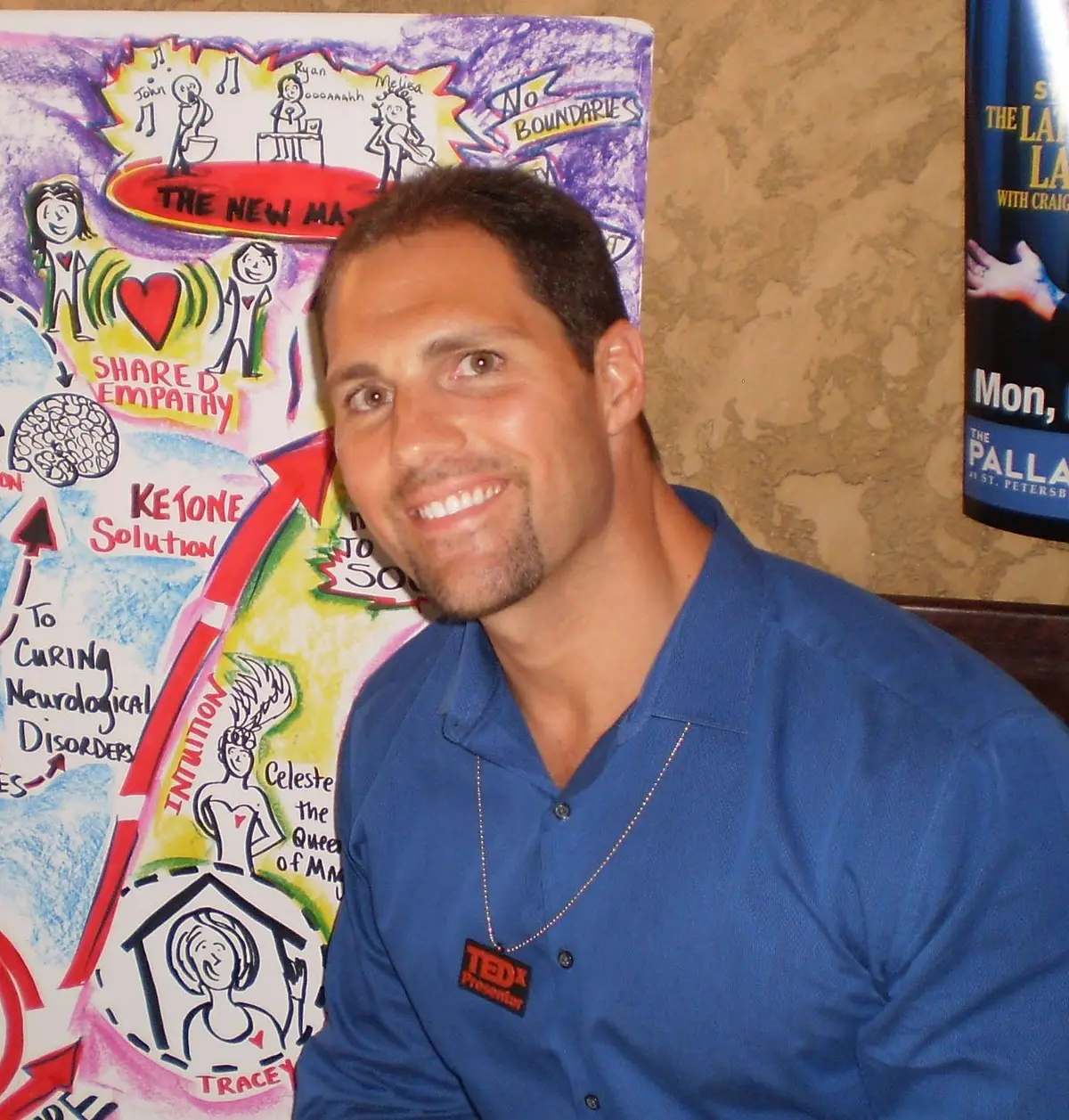
Ketosis for Warfighters, Veterans, and Athletes: A Discussion with Dom D’agostino
Hosted by Chris Albert
The Warrior Soul Podcast
DON’T MISS AN EPISODE!
Please subscribe to us on itunes here.
Subscribe on YouTube here.
Dr. Dominic D’Agostino is a tenured Associate Professor in the Department of Molecular Pharmacology and Physiology at the University of South Florida Morsani College of Medicine. He is also a Research Scientist at the Institute for Human and Machine Cognition (IHMC). His laboratory develops and tests nutritional strategies and metabolic-based supplements for neurological disorders, cancer and performance. He was a crew member on NASA’s Extreme Environment Mission Operations 22 (NEEMO 22) and has a personal interest in environmental medicine and methods to enhance safety and physiological resilience in extreme environments. His research is supported by the Office of Naval Research (ONR), Department of Defense (DoD), private organizations and foundations.

In this conversation, Dom and Chris discuss applications of ketosis to enhance performance for the US Military warfighter and potential for neuroprotection to guard against future neurological issues with post-traumatic stress and traumatic brain injury. They also get into making the ketogenic diet easier and more palatable.
Dom’s Favorite Keto Foods: https://ketonutrition.org/
For FBOMB Nut Butters and Oils (Use code WarriorSoul to get 20% off): http://www.dropanfbomb.com?ref=WARRIORSOUL
Know Low Carb Cookies: http://amzn.to/2wMcgcC
Kegenix Prime ketone salts: https://realketones.com/#WarriorSoul
To Reach Dom on Social:
Facebook: https://www.facebook.com/dominic.dagostino.1
Twitter: https://twitter.com/DominicDAgosti2?lang=en
Instagram: https://www.instagram.com/dominic.dagostino.kt/?hl=en
Linkedin: https://www.linkedin.com/in/dominic-d-agostino-156014b/
Academia (research pubs): https://usf.academia.edu/DominicDAgostino
Transcript
Machine-generated from the episode audio and lightly edited — may contain errors.
Chris Albert (link to this point)
What's going on, everybody? We have an awesome episode for you today with doctor Dominic D'Agostino. And, if you've heard that name before, it's because he's done shows like the Joe Rogan Experience, and he's done the Tim Ferriss Show. And you know what? Since he did those shows, we decided to, you know, fill some space and pencil them in here.
I'm just kidding. We were so excited when he agreed to come on to the show, and he's a real stand up guy. When he heard that we were gonna be talking to veterans and talking to active duty war fighters, he jumped at the chance. And that's because he truly wants to help out. He's got a real passion for what he does, and, he's doing great work.
He he's an expert in clinical applications of ketosis and the ketogenic diet to things like epilepsy and cancer. And he's got this amazing TED talk out there. It's called starving cancer, and it's super interesting. They found that a lot of different forms of cancer actually burn glucose. And if you starve them of glucose with something like a ketogenic diet, it can actually help to shrink tumors and can actually increase the survival rate for a lot of different types of cancer patients.
Doctor D'Agostino has also put a lot of work into studying warfighter resilience. He started by working with the Navy SEALs. They were having issues with having seizures because of their underwater rebreathers. These are devices that keep bubbles from floating up when when they're underwater with their scuba gear, you know, coming into an objective. You don't want those bubbles coming up and pinpointing where you are, but, the devices actually tend to cause seizures.
And, though the seizure itself is not fatal, it could be fatal when it's underwater and in the middle of an operation, and it could definitely ruin the entire thing if one of your teammates or yourself goes through something like that. So he was instrumental in helping to develop these ketone salts that you're seeing everywhere as supplements. And these salts help to get the person using them into ketosis in under thirty minutes, which is important because you don't want to have them going through keto adaptation in preparation for a mission or anything like that and have to go through that whole process. You want them to be able to do it instantly, and and this is a method of doing so. In this episode, we talk a lot about the neuroprotective effects of ketosis and ways that warfighters and veterans can use ketosis to protect themselves and to increase their performance.
Particularly, those veterans out there who are suffering from post traumatic stress and traumatic brain injury, There are a lot of potential implications for those of you, and a lot of these relate to some things that we talked about with doctor Mark Gordon and Andrew when they were on the show. And, you know, they're doing amazing work. Doctor. D'Agostino is doing amazing work, and I really hope that, you know, as we get a lot of these different types of ideas out here on the podcast, a lot of them can start to come together and increase the effectiveness of warfighters and make veterans' lives a lot better, which is what this show is all about to begin with anyways. Another thing that doctor D'Agostino does is in this episode is talks about ways of making the diet easier, more palatable.
And one way that we found in doing so is with FBOMB. And FBOMB makes these amazing portable, delicious packets of fats, and they've got oils like coconut oil, olive oil, avocado oil. But my favorite thing are their nut butters. They have this amazing macadamia nut butter. They've got another one that's macadamia nut butter combined with coconut butter and another one that's like macadamia nut butter and chocolate and sea salt.
And these things are so delicious. If you're trying to do the ketogenic diet and you're doing something like, say, going out in the field, you don't want to be carrying around jars of fats with you, these portable packets make things so much easier. And even if you're not out there in the military and you're just in your civilian job, again, these packets make things so much easier when you're out and about and you're on on the go. And I I I actually eat a couple of these macadamia nut butters on a lot of days. Maybe I'm overindulging a bit, but they are so delicious.
It's like a a crushed up macadamia nut cookie. So definitely check them out. You can get 20 off if you use the code warrior soul at www.fatissmartfuel.com. And with that, I'm gonna stop smacking my gums over here, and we'll get into episode number 63 with doctor Dominic D'Agostino. This is Chris Albert, and I'm here to remind you of one thing. Someday, you're going to die. Now that's not some morbid statement or scary idea. It's solid fact. Your time here on this earth is limited.
You need to be reminded of this as much as possible for one simple reason, to live your best life while you can. This is the Warrior Soul Podcast. Welcome to the Warrior Soul Podcast. This is Chris Albert. And today we are going to be talking to somebody who I'm a very big fan of, Doctor.
Dominic D'Agostino. Doctor. D'Agostino is a neuroscientist and he has been working with applications of the ketogenic diet. Been studying epilepsy, and he has a TED talk about how the ketogenic diet might end cancer. Today, we're going to be talking to him about applications for the warfighter.
Part of doctor D'Agostino's expertise is in the area of resilience for warfighters and for astronauts and and I think even aquanauts. He he spent some time underwater there. So we're going to be talking to him about this, we're also going to be talking about applications, potential applications for veterans who are suffering from traumatic brain injury, suffering from post traumatic stress, and dealing with different sorts of brain issues. First off, how you doing today?
Dominic D'Agostino (link to this point)
I'm doing great, Chris. Thanks for having me.
Chris Albert (link to this point)
Awesome. Do you want me to call you Doctor. D'Agostino or Dom?
Dominic D'Agostino (link to this point)
Dom is good.
Chris Albert (link to this point)
Dom? Okay, cool. First things first, a lot of people have some preconceptions about the ketogenic diet and they think it's like a starvation diet. They're gonna lose all their muscle mass. But you've got a background as a power lifter and I've heard in other places and other podcasts that you've actually, after days of fasting, been able to deadlift heavy amounts of weight for multiple repetitions.
Is that correct?
Dominic D'Agostino (link to this point)
Yeah, that's correct. During the days that I did most of my, you know, powerlifting, I would say most serious about it, my early like teen years and early 20s. So I built up a base of strength and muscle that I found the ketogenic diet did a remarkable job at maintaining that and after following that for a few years was able I realized that in periods of fasting or even low calories that I could retain my strength and muscle better than I could have otherwise. And yeah I did go a period of fasting, I haven't really fasted extended periods of time recently, but one of the tests that I did on myself you know in the lab even measuring my blood work was the strength response to predetermined period of fasting. And I did three days and then waited a little bit and then went back went back and did a seven day fast and was able to you know, felt pretty good at the end of seven days.
Chris Albert (link to this point)
Yeah, that that that's one thing that absolutely amazes me about the diet. I come from a bodybuilding background and a powerlifting background. I was one of these guys who was eating 10 times a day and I actually got driven to the ketogenic diet because I suffer from ulcerative colitis and it was one of the few diets that I could actually tolerate. Didn't have to load up on oatmeal and all these other things I was eating at the time. And when I actually got into it, I thought I was going to lose all my muscle mass.
And then I went and after being on the diet for a while, went to a music festival out in Las Vegas and didn't really eat much for three days except for like coconut oil and a couple other things. And then I came back and I PR'd on my front squat. I couldn't believe it. So just for the people out there, what is the ketogenic diet and how did you come to be interested in it in the first place?
Dominic D'Agostino (link to this point)
I guess the best way to explain it, I like to just start out in the context of fasting. Like we're talking about not eating, right? So over a period of time, typically about a day or two or three days, we've depleted our carbohydrate stores and our body mobilizes fat for energy and our normal most tissues can use fat very effectively as an energy source. Our skeletal muscle and our heart can use it very effectively whereas our brain has a limited capacity, if any capacity, to use these fats as a source of energy. So our liver converts them to ketone bodies and the ketone bodies can readily cross the blood brain barrier and help to restore and maintain brain energy metabolism.
So and we knew that ketones were therapeutic in the in the context of epilepsy or fasting and that they worked remarkably well. We've known from millennia. And early studies were done about a hundred years ago evolving from Mayo Clinic showing that a diet with a macronutrient ratio, defining the ketogenic diet, of a high fat in upwards of about 80 to 90% fat, a moderate amount of protein that would sustain us and just aid in rebuilding, and a very limited, or if any amount of carbohydrates in the diet. And that diet when it's consumed and sustained would mimic the metabolic aspects of semi starvation or fasting in that there would be an elevation of these ketone bodies which really only are present in the blood with sustained carbohydrate restriction or really sustained suppression of the hormone insulin. So by suppressing the hormone insulin that gets our body to mobilize.
Insulin is a storing hormone so when it's suppressed and its levels are low glucagon tends to rise and we mobilize fat very effectively for energy. Some of this fat is converted over the ketone bodies and then that can like spark up and energize the brain. So from my perspective that diet was used for drug resistance, or at the time they didn't really have drugs, severe epilepsy and seizures. And then as drugs came along, the diet was marginalized and then it had a resurgence back when Jim Abrahams of the Charlie Foundation you know went public with it. Meryl Streep made a movie first to do no harm about the ketogenic diet and that brought more publicity about it.
It's one of the first things that I watched when I was researching this. And I was funded by the Department of Defense and the Office of Navy Research to develop a countermeasure or mitigation strategy for oxygen toxicity seizures. Also what's known as CNS oxygen toxicity. It's a limitation of special operations dieting. The Navy SEALs for example use a Drager rebreather.
It's a relatively small compact breathing apparatus where it's closed circuit so there's no bubbles coming up and there's a stealth component to that and it allows you to be in an area and remain undetected, but if you were to dive down deep using this, it's generally used for low, kind of shallow diving, but if you have to evade the enemy, if they can see you from overhead in shallow water, if you have to plant a mine on a bridge on a ship and dive down to fifty sixty feet, at 50 feet if we look at the navy dive tables at 50 feet you have the potential of having a seizure within ten minutes at 50 feet in a closed circuit oxygen rebreather which is used. So and this they've had cases of this and then they get kind of there's precursors to it where they get twitching and kind of confusing and kind of some twitching of the eyes. And then there's pulmonary oxygen toxicity too, which is another thing. So the idea behind the ketogenic diet was to put the war fighter into a state that would promote resilience in that extreme environment. And and the ketogenic diet was not fully embraced at the time.
So we worked on developing supplementation that could effectively kind of allow us to circumvent the dietary restriction and the fasting to get into that state so the supplementation would produce an elevation of ketones which have an anti convulsive neuroprotective effect and establish that metabolic ketosis within thirty minutes instead of two or three days. So you can consume something, achieve a state of ketosis just prior to the dive. So that's kind of was the idea that we had going back about seven, eight years ago, and now we've come a long way since then and now we study a variety of things and we're continuing to study this thing too and look at all a variety of different ketone molecules.
Chris Albert (link to this point)
Yeah, I so just to for everybody at home, so when we're talking about the ketogenic diet here, we're not talking about some fad thing. When we talk about ketosis, it's not like a fad or buzzword or anything like that. This is kind of something that we as human beings have always been able to do. But there's a process to getting into ketosis and you to go through this kind of adaptation phase and that if you look at some of the books by like Doctor. Jeff Volek and Stephen Phinney, The Art, Science of Low Carbohydrate Performance, I think they talk about the adaptation phase.
But what you've been able to do is you've actually been able to create different types of supplements. Like I've got Kegenix Prime right here. These are ketone salts that can actually create a state of ketosis for somebody in, what is it, about thirty minutes you said?
Dominic D'Agostino (link to this point)
Within thirty minutes, you can consume consume a product like that and then measure urine, blood and breath ketones and mimic and it basically mimics a response that would take you about two or three days to get into with a ketogenic diet. So it is pretty remarkable. Know the question is there's a lot of things happening with the ketogenic diet and fasting that may not necessarily be happening with consumption of a ketone product, right. So a number of studies over the last I would say ten more like five years have been showing that ketones have kind of drug like properties or signaling properties that occur you know even in the absence of their metabolic effects. So the anti inflammatory effects.
They activate various gene programs that confer protection against oxidative stress. They have a receptor. So these things have just you know recently been discovered and when we first did our study with the seizures, we made sure that the animals were following a high carbohydrate diet so it wasn't the effect of a ketogenic diet. They're following a high carbohydrate diet prior to administration of the ketogenic agent, prior to exposure to the oxidative stimulus that causes a seizure. And we saw that in general about a six hundred percent delay in the latency of seizure.
So it made them considerably more resilient even without the diet. My preference is like to follow a low carb diet to begin and even the ketogenic diet which I follow. And we do quite a bit of ketogenic diet research and we do ketone supplementation. We do them individually and also together now. But for various applications it's been shown that the ketone, different types of ketone supplements and formulas can have an anti seizure effect that's equivalent to or even greater than what you would expect with the ketogenic diet or even prolonged fasting.
And that's giving it and then testing thirty to sixty minutes later. And this is you know oxygen toxicity is very powerful tonic clonic seizures, but we do that across the spectrum we have an animal model of absence seizures, which are seizures that occur without the tonic clonic, and it has a remarkable effect in suppressing that too. So other things, know there's other emerging applications of the ketogenic diet which you can find on PubMed of course, weight loss, type two diabetes, Angelman syndrome something that we study, know probably about 12 different things. So it might make sense that ketone supplementation may also or people who have all these disorders may also be responsive to ketone supplementation if they are responsive to the ketogenic diet. So that's interesting because the main problem with the ketogenic diet, not so much for me but for the general population, is compliance to the diet.
Right. To be able to sustain it. So our vision is to work with food companies that can make a ketogenic diet palatable, enjoyable, sustainable, and to make it a little more liberal in the amount of protein you can consume and even you know, allowing a little bit more carbohydrates in the form of vegetables, maybe some fruits. But to add a ketone supplement that tastes good with that, that would achieve everything that a very strict medical ketogenic diet could achieve as far as neuroprotection, but to you know deliver it in a form that's pleasurable to consume, you know, that people will follow through with.
Chris Albert (link to this point)
Yeah, and when we're talking about ketosis that we hear about different forms of ketogenic diet. I remember back in the old days, Dan Duchaine's Underground Bodyopus. He kind of was one of the first guys to actually talk about it and he was a madman. And then you had Doctor. Mauro Di Pasquale's anabolic diet and then a bunch of the other applications.
But when we're talking about ketosis, there's different forms of the diet and there's sort of this extreme ketogenic diet. I think I've heard you call it like the archaic model before. And there's like a modified Atkins and then there's cyclic ketosis. Could we consider ketosis to be kind of like on a spectrum?
Dominic D'Agostino (link to this point)
Yeah. And you know, the ketogenic diet or ketosis is defined really by an elevation of ketones you know from a medical scientific perspective. The classical ketogenic diet as you mentioned is pretty draconian and it's still used for the pediatric population. It's kind of easy to administer because you can create, you can have a medical food like KetoCal or KetoCuisine, which is a baking powder. You can make like breads and things out of this.
And it's easier for a parent to get their child to adhere to the diet because they're dependent on everything that the parent gives them. Whereas if you have a teenager or an adult then it's actually harder to control So their for adult population that has seizure disorders they'll put them on a modified Atkins diet And that was spearheaded in large part to the work at Johns Hopkins with Eric Kossoff and his mentor John Freeman who had passed away a few years ago, but he was really, these guys were they spearheaded this idea of understanding if a more liberal version of the diet which has you know 20 to 30% protein instead of like eight to 10% could be used in various populations. And for the most part, yeah, the modified Atkins diet is a viable alternative and has a lot of the, anti seizure effects, if not all anti seizure effects in some population of the classical ketogenic diet and is the better option in many ways, especially if that diet is supplemented with things like coconut oil or medium chain triglyceride. So you can take a less restrictive form of the diet with more protein, incorporate medium chain triglyceride oils into the diet, you got salad dressings, you got you know MCT oil powder which I use to cook with coconut oil, things like that, And then you can further elevate ketones to a level that kind of correlates to what you'd expect with a more severe version or a restricted version of the diet.
And then there's cyclic ketogenic diet, yeah, which has been used in the world of athletics and things like that. And that helps to reset maybe your insulin sensitivity. You know some people have concerns about kind of down regulation of pyruvate dehydrogenase complex, the PDH complex, its activity goes lower, but that in large part that's kind of dependent upon your carbohydrate tolerance is kind of dependent upon or glycolytic performance I would say is dependent upon your training. So your training has a lot to do with that and your body has a remarkable ability to adapt, but I think the jury's still out on if you persistently restrict carbohydrates and train high intensity glycolytic state, if that's going to you know crush your anaerobic or glycolytic performance. And in some athletes it may, in some athletes I think they adapt quite well.
But I also think for me I find that if I add a little bit of carbohydrates in and it could be you know on the order of 20 or 30 grams into an intense training session, like a little bit goes a long way. I could still stay in ketosis especially if I've been strict throughout the day. So if my whole carbohydrate you know consumption in the course of twenty four hours is 50 grams of more like low glycemic higher fiber carbohydrates, I can consume that in and around my workout. And that may aid in recovery. The little boost of insulin that you get just prior to or during your training. Insulin's a pretty, it's anabolic hormone but it's also very anti catabolic.
So you might be able to achieve the same thing just by adding more protein. So that has been kind of my thing when people say should I you know add a carb day in? My thing is I think you can get by especially older athletes, maybe not so much for a teenager or young guy who should probably be eating carbohydrates anyway if he's trying to gain weight or gain muscle maybe, but just for someone I mean myself as an example on days that I do, if I get to the gym and do heavy training, I'll just simply boost my calories by 500, 2,000 calories extra that day on a leg day or a back day or something like that and spike the calories up about twice a week. Don't typically kick me out of ketosis because it's extra protein. But that extra protein, especially if I keep my body a little bit hungry, which I tend to do, I kind of stay in a fasted state, know about fairly deep into fasting now until I eat tonight.
But I think that extra boost in protein will achieve the result that a lot of people are looking for you know when they kind of do cyclic. And it will kick you out of ketosis, so in a way it's cyclic, but it's just not binging on carbohydrates to the point where you know it puts you in wild postprandial glucose excursions that can not only knock you out of ketosis but it has unwanted hormonal fluctuations and glucose fluctuations result from that.
Chris Albert (link to this point)
And a real foggy effect at times and that's something I wanted to mention. You know, when we're talking about the warfighter and maybe somebody who's serving in a US Army or US Marine Corps line company and you know, their their diet mostly consists when they're out in the field or if they're in a combat zone consists of MREs. And these MREs have things like pound cake in them, crackers, loaded with carbohydrates, you know, juice powders, those types of things. For for that individual, and I've been there, you know, serving in in the infantry, you know, after you eat something like that, you know, about an hour or two later, you start to you're trying to keep your eyes open and you're trying to keep alert. Can we talk about the potential benefits of ketosis for somebody there who needs to stay alert, who needs to stay cognitively sharp and who needs to be on top of their game?
And and I know that there's been some studies that suggest that a lot of the friendly fire incidents that have happened have happened because of low low blood sugar or or or drops in blood sugar. Could you talk about that for a little bit?
Dominic D'Agostino (link to this point)
That's interesting and it doesn't surprise me about the friendly fire. Your judgment, your reaction time and your ability to engage the enemy accurately will be highly dependent upon you know the energetic state of your brain. And if you're in a hypoglycemic episode, I mean I have a type one diabetic student here and I've seen what happens when it goes low. I mean he has it managed very well on a modified low carb diet now, but I've seen it, it's pretty scary. He doesn't know where he's at, he doesn't know, his sense of judgment's pretty low.
So I think it has tremendous implications for the war fighter from numerous perspectives. So maybe the first being, and then you know I've talked with the folks at Natick, they make the MREs, they make things like the first strike ration, which is basically you know sugar and caffeine. And yeah, I've tried all these things and they are very interested in you know, I don't know where the state of it is now, but I know they're interested enough that you know I've given talks there that they are considering ketogenic nutrition for a number of reasons. One is that the energy density of a ketogenic diet as you know is much greater. With fat nine calories per gram, protein and carbs are four calories per gram. So that's less weight you have to carry.
It's more energy in a smaller package less weight so it's logistically it's kind of better from that perspective. So from a performance perspective if your body is adapted to nutritional ketosis, pretty much everyone that you talk to about this who has followed and sustained a ketogenic diet, the number one thing that they say is that you know I don't get hungry. Or when there's limited food availability or an absence of eating for a period of time, so not only do they not get hungry, it's that they don't have this you know, the cravings and the hypoglycemia is not affecting them to the degree that it would be you know if they were on a carbohydrate based diet. So that has major implications as far as keeping you know your wits about you and keeping your mental acuity, your physical performance. So your cognitive and physical performance will tank very fast if your blood glucose goes low in the absence of ketones.
But if you can elevate your ketones and it doesn't have to be high, could be 0.5, one millimolar or two, upwards of three. I'm of the belief that I personally don't feel good if I get much above two. Once I get in the three or four zone I just don't feel as good as I do at like one or two. That's like your safety net. So if your ketones are elevated, you and this has been shown experimentally that you are way more resilient against the crushing effects of hypoglycemia mentally and cognitively.
So I think you know there's a lot of performance benefits and safety benefits that you can get from nutritional ketosis and that could be achieved with a ketogenic MRE. That could be achieved with a ketone supplement that's taken just prior to engaging the enemy or the energy density of it would allow it to be consumed every couple hours which could, you know, aid in a wide variety of things, you know, that the warfighter would be involved in. If not diving, then maybe if not the understeum environment be enhanced, under periods of hypoxia or at altitude. So these are just some of the practical things and they limit you know the because you're able to kind of maintain brain energy you're less likely to be dependent upon stimulants. I've had a number of you know, I work for the Veterans Affairs, I'm a reviewer on study section for the merit awards, and there's a lot of grants and a lot of concern about veterans on opioid drugs and painkillers. And a lot of the emails I get are like I've been able to completely wean myself off of painkillers because I don't have the inflammation that I had like simply changing my diet you know decreased the pain that I have from inflammation, the headaches that I have, from things like traumatic brain injury, things like that. So a lot of the guys that were kind of hooked on drugs and it's a pretty big problem especially in Florida here, that the diet has been a lifesaver for them. Yeah. So that's another thing in your community.
Chris Albert (link to this point)
There's so many potential applications on this. I mean, you know, ranging from like we said about the friendly fire incidents to first responders, police officers, law enforcement, trying to avoid situations where where where there's a a wrongful shooting. And and I've even heard that that judges, when they make their decisions, you can actually they actually correlate to whether or not the judges had lunch or not. The the severity of the sentence is actually correlates to whether or not the judges had lunch or not. So there's there's so much opportunity for study here.
You mentioned the the anti inflammatory effects of the of the diet and the implications for for people with traumatic brain injury and my good friend Andrew Marr, who served as a special forces operator and doctor Mark Gordon from the Warrior Angels Foundation. They've been putting a lot of study into understanding how inflammation creates traumatic brain injury and also how traumatic brain injury may also be what's actually causing the rise in veteran suicides, because he's saying that the actual shaking in the brain that a lot of military service members undergo creates brain inflammation. And he created kind of an anti inflammatory protocol for this. But when we talk about neuroprotection for soldiers, marines, sailors, and airmen out in the field, could the ketogenic diet actually attenuate the effects of these types of issues down the line once they get back into the civilian world?
Dominic D'Agostino (link to this point)
Yeah, I think even from a maybe a prophylactic point of view, if they're in a state of ketosis when they get injury too, but I think most importantly you know, that's important, but importantly there are a lot of guys now that are suffering from traumatic brain injury and if it's a penetrating traumatic brain injury about eighty, over eighty upwards of ninety percent of those people will have seizures resulting from a penetrating traumatic brain injury that's been shown at one point in time or maybe sustained seizures. And we know the diet already is approved for that. It has remarkable anti seizure effects so it kind of makes sense to put them on the diet or supplements. So a couple of things happen depending on the nature of the traumatic brain injury, where it's at and there's a number of things that can happen and most importantly is that usually brain energy is disrupted in a way where you're disrupting glucose metabolism in the brain. And there's a couple key I guess you would call like governors or stop points where that may be inhibiting normal glucose metabolism.
And one is the transporter for the receptor and another is pyruvate dehydrogenase complex. So these are two things that the ketogenic diet is actually remarkably effective at treating because it's used for a disorder called PDH deficiency and also glucose transporter deficiency. So it's clinically accepted and implemented for those conditions and it just turns out that with a brain injury these are like the two regulatory pathways that are impaired that prevent normal brain function from happening. And it's kind of like a stress response. Maybe the brain's way of decreasing glucose availability and oxidation and decreasing overall metabolism as a survival response.
But this impairment of metabolism can result in a larger degree of necrotic necrosis in the brain, in what we call the penumbra, like the expanding region of damage in the brain. And then that occurs more acutely, so if there is a brain injury the best thing to do would be to, in my opinion, would be to it's like a mini stroke. It's like a bunch of mini strokes because you shake the brain and a lot of capillaries break and you have kind of this global, it's regional but kind of global in the sense that there's multiple capillaries and it's impairing a region of normal brain metabolism. So the best thing to do is to kind of restore or maintain normal metabolic function and reverse the glucose and brain energy metabolism deficit and also probably to restore the level of oxygen in the brain. Because when you damage the blood vessels the two things that affect the brain metabolism is substrate, right, that's glucose or ketones in this effect to get around it and oxygenation.
So blood levels of, or tissue levels of oxygen can sharply drop. Now one way to restore brain oxygenation would be hyperbaric oxygen therapy. And I think that
Chris Albert (link to this point)
Doctor. Sherr on to talk about that here.
Dominic D'Agostino (link to this point)
Yeah, Doctor. Sherr. Yep. And I think this morning on Good Morning America I believe that Doctor. Paul Harch will be on there with Eden Carlson who is a child that sustained a pretty dramatic brain injury, hypoxia injury, and was able to Paul Harch you know in giving hyperbaric oxygen therapy was able to reverse the atrophy of the brain and also restore neurological function.
And to my knowledge that's not that's never been shown before or documented in such a way where they have brain scans to show it. So the thing that that's remarkable is that he implemented a therapeutic hyperbaric oxygen therapy protocol that pretty much undoubtedly you know reverses brain injury. So one thing to understand though is that kids brains are remarkably adaptable, remarkably plastic and regenerative compared to adults. Adults have that same capacity but it's limited and attenuated compared to the robust regenerative capacity of children, right? So reverse, you know restore brain energy with different substrates and that could be I could go into talking about that and restore oxygen levels.
And that will help attenuate the neural inflammation that you know is associated with chronic traumatic encephalopathy, the CTE that is experienced with football players for example that have concussions. So that's neuroinflammation that's persistent I believe. And ketones have, they block many inflammatory pathways in the body including a particular protein complex that when it's prevented from being activated it prevents the elevation of specific cytokines that are known to be implicated in this neuroinflammation. So that would be for the science people NLRP3 inflammasome and then there's IL-one beta IL-six and a number of pro inflammatory cytokines that cause that brain swelling, the inflammation, the headaches, the brain fog, and we think that that neuroinflammation is linked to seizures and the neuroinflammation is also linked to things like depression.
Chris Albert (link to this point)
Right, right.
Dominic D'Agostino (link to this point)
Suicide and things like that. So I came from a recent conference where they have imaging technologies that are PET imaging, but instead of fluorodeoxyglucose they use a molecule that can detect inflammation and inflammation it's thought could be a predictor of that person having, or neuroinflammation is a predictor of that person having a seizure. And a seizure also stimulates neuroinflammation so it can kind of be like a feed forward thing.
Chris Albert (link to this point)
Doctor. Gordon talks about a numerous implications of this as far as you know, ranging from depression up to, you know, dealing with, if you look at a lot of people who've been convicted of serial killers, a lot of times you find that they've had a good bit of neuroinflammation. They also tested a lot of service members who have committed suicide and they find neuroinflammation case after case. And, you know, it's interesting because if you look at the efficacy of SSRIs and SNRIs on the civilian versus the military population, the military population, it just doesn't seem to work. They just haven't had a lot of efficacy from those drugs as compared to the civilian population where they're seeing some efficacy and where they're seeing some results.
And it's just interesting to me from a scientific perspective, like why are these two populations different? Are biologically different? They can't be, right? So what's going on here?
Dominic D'Agostino (link to this point)
Yeah, that's a really good point. Well, I think there's multiple things going on with the veteran, with the war fighter. I think some of the depression may be linked to events in the past and the neuro inflammation can exacerbate kind of a preoccupation with you know those types of psychological events where if you restore what we call like brain homeostasis and neurotransmitter balance, which is highly dependent upon the brain energetic state, that the whole outlook can change pretty remarkably. And you know even the main theme now when it comes to neurology, you know looking at the ketogenic diets, the epileptologist, the main kind of thing that they point to because we don't have an exact mechanism of how the ketogenic diet works, but it's universally accepted that it restores brain homeostasis. So it gets the brain back into balance. So the etiology of seizures is largely unknown for most things, but we just know it's an imbalance of more glutamate, less GABA, and we know the diet activates glutamic acid decarboxylase which brings down glutamate which causes neuro excitation and stress and other seizures and brings up GABA which has a calming effect. It's actually something that I measured when I did various measurements on myself in a state of ketosis when I was actually on NASA Extreme Environment Mission Operations where, I did a variety of things. One was measuring neurotransmitter levels and my GABA level was at the top end of normal and my glutamate was at the low end of normal and it was about a ratio of about double or triple than what would be normally if I was on a normal diet. So that's some of the data that has emerged and this parallels the work that we've done in the lab and with our collaborators when they take, I looked at actually you can measure urine neurotransmitters but we actually did experiments where we take out the hippocampus or take out areas of the brain and then we analyze that tissue and then you know the GABA, the glutamate levels go down and the GABA levels go up.
And basically that's a brain stabilizing that produces a neurological effect that stabilizes normal brain activity. And if there is you know an injury to the brain, if there is some kind of anatomical deficit, or even if you consume some kind of neurotoxin that's triggering it, the ketogenic diet or a state of nutritional ketosis by elevating ketones will bring the brain back into that you know more stabilized response. And that has a lot to do you know that's really kind of the thrust of our lab. So we're trying to not necessarily always trying to just make it a superhuman and enhance performance, but to preserve normal activity and preserve performance in an extreme environment. Right.
That's kind of a different question. So if a normal person just takes a substance or a diet, does it make him a super person, a superhuman? In some cases no, in some cases it can help. But most importantly from our perspective is the safety of the warfighter and the performance of that warfighter in this in a safe environment. So creating things that produce I mean, we could say, you know, the the CEO that's going into the office could be an extreme environment, right?
You know, doing all nighters and just has to meet a deadline and needs like cognitive resilience. Or if he's training an athlete, an extreme athlete that's training and things like that.
Chris Albert (link to this point)
So well, it comes down to I think not, you know, not just trying to make somebody a superhuman, but once they're done with their service and they're getting up into their mid to late thirties like I am, and I'm feeling it, you know what I mean? I think it comes down to how are we gonna protect them later in life? Because when you're 18 to 25, you don't feel a lot. And a lot of these guys are so full of piss and vinegar that they're not feeling it at the time. But once you hit thirty, thirty two, 33, 34, you start to feel these things and you start to feel the effects of inflammation.
And I think that's huge. If we could do something to help these guys later in life, we'll save the government millions of dollars. We'll save a lot of people a lot of pain too.
Dominic D'Agostino (link to this point)
Yeah that's a really good point because we're physically connected to the VA hospital, right? And one of my students did a project on wound healing and basically instead of you know, and the veterans at the VA hospital, this is a big problem, a chronic problem. And a lot of it has to do with lifestyle too. So what they're eating.
Chris Albert (link to this point)
Oh yeah, one in four veterans has diabetes admitted to the VA. One in four.
Dominic D'Agostino (link to this point)
Yeah, so my colleague, MD PhD, Doctor. Lisa Gould, was at one she was president of the Wound Healing Association, and she's an expert in hyperbaric oxygen therapy for wound healing. And we kind of worked on the project together and it demonstrated that ketone supplementation can impact metabolic biomarkers that can enhance the wound healing process. So we have various models of ischemic wound injury where it can restore blood flow and it appears to, and even in the non ischemic it can enhance the wound healing process. So we did a study where we did young animals and then adult animals that were like type two diabetes overweight.
And it enhanced the wound healing process in both groups. In the ischemic and non ischemic. So we got some really robust data out of that. An application that you know I never would have thought of, but it just makes sense for wound healing. Everybody's trying to put something on the wound right like a band aid or some kind of ointment, but if you improve your metabolic physiology and knock down all the pro inflammatory cytokines that are creating you know sustained inflammation that that's what creates you know impaired wound healing.
That's why people have to be put inside a hyperbaric chamber and that's why people get limbs amputated because of the high glucose level is impeding blood flow to that tissue. And if you take a sample of that tissue the ATP levels, the energy currency of the cell, can be knocked down 90%. So one simple way to restore blood flow and the wound healing process is to bring glucose levels down. Exogenous ketone supplementation does that, the ketogenic diet will do that, And that enhances, quickly enhances, so you get an acute response. You quickly energize that wound tissue and then you also decrease inflammation.
That inflammation is preventing that tissue from healing. So you knock down inflammation and you can enhance the wound healing process. So it's a strategy that's far more effective than putting growth factors and things on the area which may work, but if you don't treat the underlying metabolic physiology and chronic inflammatory state of the person, then you're not going to do much to enhance that wound healing process. It's kind of like healing from the inside out. So the veterans, yeah that's one thing that really struck me.
I forget the numbers. It's like billions of dollars just wound healing. Like wounds that don't heal, chronic wounds that don't heal, the numbers, it's billions of dollars. So that's another area of research that we're into right now and I'm pretty passionate about because I do see that that's a big problem in the And I think we're working with something that has a big potential to help.
Chris Albert (link to this point)
Yeah, I'm gonna have to connect you with Andrew and Doctor. Gordon because I just think if you and Doctor. Gordon spoke it'd just be an amazing conversation and a lot of good could come from that. We have a little bit of time left. I wanted to talk to you really quick about palatability of the ketogenic diet.
And I know that there's that you know, I've done that. I've done strict version of the ketogenic diet. I've done cyclic ketosis. I've done it to where I've had the ketogenic diet fall apart on me before. I know that there's a lot of new products coming out as far as things that can help to increase the palatability and kind of, I guess, increase the percentage of compliance of people who are actually following the diet.
Have you seen anything that that that really makes this diet a lot easier?
Dominic D'Agostino (link to this point)
Yeah, I think ideally what you'd want is like prepackaged ketogenic foods, you know, that would be easy. Someone could just go online and a la carte pick things that sent to their house. But there are a lot of options out there, but I guess you would stay fulfill that criteria of comfort foods right. So under that category, I have you know some of my office around here right now, but I could you know the things that have helped me personally are the keto cookie is something that I kind of use on a routine basis. When I'm intermittent fasting, sorry, one of the products that I take is a spirulina product called energy bits.
Chris Albert (link to this point)
Oh nice.
Dominic D'Agostino (link to this point)
Yeah, I intermittent fast two days per week and during the day it's spirulina and chlorella and I'll consume that. It has an anti inflammatory effect, tons of many B vitamins and lots of phytonutrients without taking a vitamin pill. So that's a product that I'm pretty religiously stick to, and there's keto brownie is another product that I use on a routine basis. So I'm trying to look into my refrigerator here, there's a new line of foods that I'm of experimenting with now and have been eating for the last about two weeks. It's called Know, the Know brand foods or now rather. Now. Yeah. So that's, they're foods that they are not ketogenic but they're sufficiently low carb that I could eat some of them a day and some would be a chocolate, know fudge chocolate chip cookie, they have cakes, they have muffins and things like that. So these are foods that have helped me.
I put foods that we have tested actually experimentally in the lab, not only in a taste testing, but we've actually measured the glycemic response to different foods that sort of I approve and they're on my ketonutrition.org website. And I'll be expanding that food list so people can get on there and kind of check out and see you know kind of what foods they like best. There's a number of products like I use like the Kegenix Prime product, Pruvit Keto OS, orange flavor, and Ketologic are the three ketone, exogenous ketone products that we've tested in the lab. You know through self, in animals and other things. So they are the ones, and there are probably about a dozen out there, and I've tried pretty much all of them, but they're the three that I sort of recommend you know people to take.
And Quest Nutrition makes coconut oil powder and MCT oil powder, and I always include that wherever I'm traveling. I include that because oil is sometimes difficult to travel with because it's a liquid.
Chris Albert (link to this point)
There's a cool company I'm good friends with, they're called F Bomb. They make these little packets.
Dominic D'Agostino (link to this point)
Yeah, have that. Have that actually. Wait, hold on a second. So I just wanna my favorite version right here. So this was actually
Chris Albert (link to this point)
That stuff is awesome. The macadamia nut oil or the macadamia nut butter. That's awesome.
Dominic D'Agostino (link to this point)
So so yeah, I I've actually just started trying this. So they I got this we were asked. So my notebook here, you might be able to see actually has a f bomb.
Chris Albert (link to this point)
Oh nice.
Dominic D'Agostino (link to this point)
So yeah and then I picked up the sticker but I have these and I've been eating them midday when I don't have a meal like midday. I usually eat breakfast and dinner and I've been having this they have a coconut oil macadamia nut butter So I've been traveling around with these they're very easy for traveling. So it's a product that I love and enjoy along with the energy bits. So yeah, so these are just some of the products I put like I compiled the products that we've tested about 20% of the things that I test actually pass the test. And they're the things that I put on my website for that I think people will enjoy.
Chris Albert (link to this point)
That's awesome and we're gonna put your website up on the show notes and all these products up there as well. I really wanna thank you so much for coming on today. I I really think that this this episode is gonna do a lot of good for people. And, you know, I wanna acknowledge you for your work. It's not easy to go into a field as an academic that that goes against the grain.
I at one time in a former life, I was a PhD student at UC Santa Barbara, and I understand the review process. I understand a lot of the stuff you guys have to go through as far as as trying to get your research out there. And you you you really have to put the work in. And so I really wanna acknowledge you here because I think you're doing things that that are truly gonna help not only veterans, but it's gonna help humanity. So thank you so much Dom for everything that you do.
Dominic D'Agostino (link to this point)
Thank you. I appreciate that. I'm very grateful that you had me on and I just like to to let people know I feel very grateful to be doing what I'm doing and to have you know funding. This weekend I'll be working on another every three years I have to renew you know my DoD or Office of Navy Research grant. So and it's not something that I you know don't look forward to.
I mean it's exciting for me to lay out three years of research that will further advance the science and application of dietary you know therapies and supplement therapies too. So I feel very fortunate to be able to be in this academic position where I can not only share my research with you and with students, medical students and PhD students that I teach, And also just allowing, it's grateful that this platform exists too, that you're reaching out to veterans. I serve on Veterans Affairs study section but I don't feel that I'm connecting with veterans and I feel kind of very, I feel like this is gonna hit a lot of people that can really benefit from some of the things that I talked about today. Awesome. I thank you for that, for giving me this platform.
Chris Albert (link to this point)
Awesome, it's our pleasure. And for everybody out there listening to this episode, I hope you learned a lot. Now get out there and live your best life.
Host of the Warrior Soul Podcast and founder of Warrior Soul. Worldwide trainer and nutrition coach, contributing author at Testosterone Nation and Muscle and Strength.