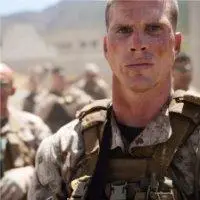
Podcast episode
Episode 70: The Marine Who Founded Relobase – Jack Somers
Hosted by Chris Albert
The Warrior Soul Podcast
To Subscribe on Itunes, click here.
While serving as a Marine Corps officer, Jack Somers found his military career cut short abruptly when he began experiencing seizures while on deployment.
Needing to find a new career, Jack became a real estate agent where he found himself knocking on doors trying to find leads on a daily basis. Then Jack got an idea: he could take the expertise he gained in his real estate career and help service members who needed to relocate. The idea for Relobase was born.
Today Jack serves as the President of Relobase, a full service company for US Military Service Members who need relocation services for bases throughout the US.
This was an amazing conversation and we get deep into Jack’s journey and the obstacles he’s overcome to build his business.
To learn more about Jack and Relobase, visit http://app.relobase.com/#/home
To learn more about the Stanford Ignite Program for Post 9/11 Veterans, visit https://www.gsb.stanford.edu/programs/stanford-ignite/campus/post-9-11-veterans
Transcript
Machine-generated from the episode audio and lightly edited — may contain errors.
Chris Albert (link to this point)
What's going on Warrior Soul Nation? This is Chris Albert, and welcome to episode number 70. We are getting into Thanksgiving. Thanksgiving's tomorrow as of this recording, and I wanna send a big thank you to all the soldiers, the sailors, the airmen, and, of course, the United States Marines who are out there on the front lines protecting us right now at this moment and as we celebrate this holiday. I'm gonna put a caveat on there for those of you who are out there.
I want you to listen to this. Here's the thing, guys. You are out there. You're away from your family. You're away from a lot of your loved ones, but you're also young.
You're also virile. And there's a lot of us old bastards who would give our right nut to be 19 and in the army or in the marine corps again. And so while I do thank you for being out there and I do wish you safety, I want you to all understand that you also need to be grateful. You need to be grateful for this amazing time and place that you're in, your youth. You need to be grateful for the family that you are surrounded with, which for all intents and purposes after you get out, you're gonna miss for the rest of your life.
So take advantage of this time and enjoy this Thanksgiving whether you're on duty, whether you're out in the field, whether you're out there on deployment, make the most of this time that you have, and remember that this time in your life is a time you're always gonna think back to. Today's interview is with a gentleman named Jack Somers, and Jack is a veteran of the United States Marine Corps. He served as an officer. He did two deployments, and his Marine Corps career ended abruptly because of seizures. And, I say that because for a lot of us who who serve and we get out, we always wonder what we should do next.
We always wonder how can we gain the fulfillment that we got from serving. And my opinion is that you should do so by finding a way to continue to serve. And Jack's done that. Jack is an entrepreneur who founded the company ReloBase, and it's a relocation company for U. S.
Military service members. It makes the relocation process easier and more efficient. And for those of you who are thinking about becoming entrepreneurs, the cool thing here is that Jack has found a niche. He's found a hole that had people who who weren't being serviced efficiently. And and he's done so by creating his own company that could help them and help them more efficiently than anybody else could.
And in that way, Jack's found a way to continue his service to, to both the country and to U. S. Military members. And, it doesn't just have to be to the military or anything else. You can find a group of people that you can be of service to.
But I think that's the real secret of both happiness, but also good business. Jack is also a graduate of a program up at Stanford University called the Ignite Program. It's a program that they run every year for veterans, and we get into that a bit. We also get into Jack's story, and we talk about what led him to start this company, the trials and tribulations that that and the obstacles that fell on his path as he tried to start this company. And, it's a really great conversation.
But before we get into it, I just wanna give you a quick note from our sponsors, F Bomb Nutrition. F Bomb is an absolutely amazing company run by amazing people. They make healthy, delicious packets of fat, Fat for fuel. I'm always talking about the benefits of fat in your diet. Whether you're on a ketogenic diet or a paleo diet or even if you're serving out in the field, one of the things, one of the problems with fueling yourself with sugar is that sugar burns really quickly.
And when, it burns out, you get really, really tired. You eat that MRE pound cake out in the field, and it's great. I used to love that stuff. But, what happens about now or later you start to feel really, really sleepy and you have trouble keeping your eyes open. I just remember having having real issues trying to stay awake.
But what F Bomb's done is they've made using fat for fuel really, really convenient with their amazing packets of fat. And so they've got avocado oil, coconut oil, MCT oil, but what I really like are their fuel packets. They've got fuel packets full of macadamia nut butter mixed with coconut butter. Those are absolutely delicious. It's one of my most favorite things to eat in the world and I have a couple of those every day because I'm a busy entrepreneur and I can't really stop to make lunch all the time.
So I use those quite a bit to fuel me, to fuel my brain so I can think and so that I can do these podcasts. If you go to their website, www.dropanfbomb.com and use the code Warrior Soul, you'll get 20% off of your first order. Alright? Www.dropanfbomb.com and use the code Warrior Soul, and you'll get 20% off your first order. Alright, guys.
Well, I am done with the announcements and the introduction. Let's get into this interview with Jack Somers of ReloBase.
Chris Albert (link to this point)
This is Chris Albert, and I'm here to remind you of one thing. Someday, you're going to die. Now that's not some morbid statement or scary idea. It's solid fact. Your time here on this earth is limited.
And we need to be reminded of this as much as possible for one simple reason, to live your best life while you can. This is the Warrior Soul Podcast.
Chris Albert (link to this point)
What is going on everybody? This is Chris Albert. I'm here with my friend Jack Somers. And Jack is here today to talk about ReloBase. And he set up a unique business that helps military members relocate.
And Jack's over here in Venice, California, living it up right next to the beach. How are doing today, Jack?
Jack Somers (link to this point)
I'm doing well. I'm doing well. Thanks.
Chris Albert (link to this point)
Jack, for the audience, can can you tell us a little bit about your background, where you come from, you know, and and what your story was kind of all the way up till now? I'll I'll have you put all that information into that.
Jack Somers (link to this point)
Sure. Sure. Yeah. Cliff notes version. Grew up in the Midwest, went to University of Iowa, ended up joining the Marine Corps after graduating from Iowa.
Spent about six years in the Marine Corps, twice deployed. Last deployment in 2010 was to Afghanistan. And immediately following that, I started having some seizures along with a few of my Marines that we were all deployed together. Started having seizures. I was subsequently medically retired at the end of twenty twelve.
From there, which was in Camp Pendleton, North San Diego County, I moved up to Los Angeles. Spent some time in Santa Monica and Venice doing some, you know, kind of odd jobs, figuring out what I wanted to do. Actually moved closer to where you are, Chris. I lived in Riverside for a little while as a real estate agent and eventually came to the conclusion that I wanted to get involved with the military community. I didn't feel like I was done serving.
I wanted to reengage. I wanted to figure out a way that I could bring my passion for that community along with maybe some other skill set that I had. And I kind of thought about it and I said, Hey, I love real estate. I love helping service members. Maybe there's a connection.
And sure enough, I found out that there was. And ultimately, I realized that this military relocation problem, which occurs to a third of the military every year and is a huge cost, financial burden. It's time consuming. It's stressful. I said, hey, why don't I try to make this relocation process easier and cheaper for military service members and their families?
And so about two years ago, I founded the company ReloBase to do exactly that.
Chris Albert (link to this point)
That's awesome. And something you brought up there, think is extremely important for the audience to understand and and that is that when you are getting out of service, that doesn't mean that you're necessarily out of service anymore. And and what I mean by that is, you know, finding a way that you can continue to serve. You don't have to necessarily be carrying around a rifle and wearing a uniform anymore. But finding a way that you can still serve and serve others, whether that's within the veteran community, and whether that's in the military community.
It really doesn't make any difference. Like veteran veteran business owners who do come back and help the veteran community, but you want to be in service in some way. And that's a great way to really continue what you set out to do in the first place.
Jack Somers (link to this point)
Yeah, exactly. And that is something, I think it's kind of in our DNA. If we feel like there is some calling towards the military or some purpose that is aligned with service to others, then that never really leaves you. It's just it morphs or it changes along the way, along the path of life or journey of life. And mine just I felt like I needed to get back to the military.
It's a community that I am so passionate about, that I care so much about, that I love so much. And when I see them going through pain and experiencing problems that I also experienced, I feel that it's actually my obligation to to right that wrong.
Chris Albert (link to this point)
So you said you spent some time as a real estate agent and and going from the military where you kind of have like a steady paycheck, you've got a job, you've got a set set list of items that you need to do to the real estate world and is kind of a very different experience, right? It's not as structured. You kind of have to make your own business. What types of lessons did you learn from your time as a real estate agent that that might have helped you down the line in becoming an entrepreneur?
Jack Somers (link to this point)
Yeah. That's a Probably the the greatest lesson was to not rest on your laurels. I mean, every single day as a real estate agent, you cold call or you would go out door knocking. Mean, are not glamorous jobs or duties. And you'd get your, know, people would hang up on you and people would slam the door in your face.
And so it was extremely humbling because there I was most of the folks out of maybe a 100 people in the office. I was one of five or so that had a college degree. And then of that to be a former captain in the Marine Corps, a lot of these people were like, My gosh, you should be out doing other things or what have you. And I said, well, if I want to get into real estate, I really have to learn from the ground level. I have to have people hang up on me.
I have to have people slam their door in my face to understand what that feels like. And it was so humbling. And I just realized that every single day I had to reinvent myself. I had to do something that said, this is who I am and I can show you the opportunity that I have today. I don't have to tell you about what I did before.
You don't have to remember that as a lieutenant, I did something in Afghanistan and now as a captain, people talk about you. Or as a staff sergeant, you did this and now you're a first sergeant. And so people know who you are. This was one of those that you just You have to just put it together every single day. You have to be consistent with your values, with your efforts.
And you got to be true to yourself. If doesn't work, then that business will eat you alive. With no steady paycheck, it seems to, you know, kind of happen often.
Chris Albert (link to this point)
Yeah, absolutely. And I think a lot of people who they'll get into various jobs and and they look super glamorous from the outside. And, you know, we've all seen real estate agents driving around in Jaguars and and and, you know, talking about their sales. I I have you ever seen what is it? Glengarry Glen Ross where he talks about coffees for closers and all this stuff, you know, but but but at the end of the day, it comes down to how many swings are you gonna take?
Alright, and you miss 100% of the swings you don't take. But but what are you gonna do to push yourself to make those calls? Did you have any tricks or any games that you would play with yourself to to really get the the amount of calls you needed in or to do what you needed to do to find success there?
Jack Somers (link to this point)
Yeah. I didn't. Just as I mean, my trick was getting in as as spending as much time as I could and being as dedicated as I could, obviously doing some type of training on a daily basis with my peers. But I didn't spend as much time as a real estate agent, you know, as many do. I was only there for about a year and realized that I felt my calling was to go back and help the military.
And so I realized that living in Riverside, being a real estate agent, actually Rancho Cucamonga, I was like, well, I think I need to go a different direction. So before I got too deep into it, I realized that it really wasn't for me and that I needed to I need to to continue to push forward to to my goals or, you know, on a different journey.
Chris Albert (link to this point)
So from that point, you start to realize that you wanna become an entrepreneur and you you you get an idea. How how did the idea first come to you?
Jack Somers (link to this point)
Yeah. So I was actually I was out door knocking with with one of my colleagues, and we were just getting doors just slammed in our face just over and over and over again. And every time I'd go out door knocking, I would wear my Marine Corps lapel pin. And periodically, someone before they would slam their door would stop and say, Hey, are you a Marine? And I'd say, yes, sir.
Yes, ma'am. I'm no longer active duty. I was in for five and a half years. And they would say, oh, well, I'm a Marine or my son's Marine or my dad is a Marine or my daughter, whatever it may be. And they would then follow-up with, Hey, let me have your card or your flyer.
And if something comes up, we'll contact you. And I say, Oh, thank you so much, ma'am. I really appreciate that. I'd hand it off. And this happened over a few months.
This happened six or seven times. And I was like, Man, what's going on? I'm proud enough that I'm wearing this pin for the Marine Corps or to represent in some way the Marine Corps and that I'm a Marine. But these people found a unique trust and had this thing that they said, Hey, rather than anyone else, I still don't know you, but because you're a Marine, I'm willing to give you a shot above everyone else. So I looked at that and I said, Man, maybe there's something there.
Maybe this community is so We're trusting each other. We're looking at each other for the answers and for support. And then I looked at that and I said, Okay. So if the active duty or veteran communities trust each other and want to work together, then I started looking at it as active duty and I realized that the military spouse community, the ones who are relocating with their service members, their significant others and partners every eighteen to thirty six months, unemployment rate was at 30%. Their underemployment rate was at 90%.
And then I looked at how many people in active duty were buying homes. And it was about 82,000 VA home loans were purchased the year prior to this. It was about $20,000,000,000 in sales. And I said, Man, why don't we just keep this all in house? Why don't we get these military spouses, who many of them are real estate agents, let's get the other ones this $4,000 educational benefit that they already have.
I said, Let's get them trained up to be real estate agents. They know the PCS process. They know what life is like living on or off a military base. And I said, They're extremely educated and very primed and able to take on this challenge. And so that's where it started.
That's where I said, Oh my gosh, let's get military spouses to be the agents to facilitate buying and selling real estate for our active duty community. And that's where all of a sudden I was like, okay. I think I need to explore this option.
Chris Albert (link to this point)
Cool. So so what were your first steps in starting to try and put it put it together?
Jack Somers (link to this point)
Yeah. I actually I put a little bit of a deck together. This took about this took a few days or a week. I put a deck together.
Chris Albert (link to this point)
Oh, when when you say when he says deck, that means, like, slides that that people Yeah.
Jack Somers (link to this point)
I'm sorry. I I put a little PowerPoint presentation together. And and I actually I called a local Costco. And in my mind, I said, I'd like to have booths, in Costcos. Costcos are all around the country.
A lot of service members, obviously, were not paid a lot. So on tight budgets with families going to Costco, it seemed like a reasonable place to maybe put a booth with some military spouses that could help real estate agents that could help our service members and their families get a little bit more knowledge on the VA home loan. And so I approached them, and I reached out and said, This is what I want to do. And they're like, Well, we typically don't do this, but I'll pass you up the chain. Well, that happened, and then it happened again.
And finally, I got to their VP of Marketing, Costco's VP of Marketing or something like that. And he ended up calling me and I said, This is what we want to do. I think Costco is a suitable candidate and you guys would really have a great opportunity to engage with the military community. And ultimately, there were some reasons why they weren't able to do it. But that was kind of where I was like, Man, all right.
I can do this and I'm passionate about this. And I see that there's a market. I see that there's a problem. I know the problem because I personally experienced it five times in six years. So I was like, Okay, let's start figuring out what the plan is to move forward with this.
And at that time, I actually was just timing. I heard about the Stanford Ignite for Veterans program. And so I applied and was very fortunately accepted.
Chris Albert (link to this point)
And did you when you did this, did did you immediately quit doing the real estate thing or did you keep doing the real estate thing in this for a while or or or how did that work out?
Jack Somers (link to this point)
Yeah. So I was working at a brokerage called All Nations Realty and my boss was actually a Korean War veteran. His name is Dick Dollar. Really amazing guy. And he saw the passion that I had for helping the military.
He saw what I saw. And he said, Hey, Jack, if you're not making sales, that's all right. You can use this space as an office, kind of adds like a little bit of an incubator type. You can use the people around you, ask them questions. And so I did.
He really laid the foundation for me to put all of my resources into doing this, which I'm forever indebted to. Because he really just let me do it and let me get started. And once I got started, I mean, I I just haven't been able to stop.
Chris Albert (link to this point)
And what challenges did you face that weren't necessarily expected at first? Like, what kinds of things did you run into that that you didn't necessarily expect? And how did you meet those challenges?
Jack Somers (link to this point)
Yeah, I I thought business would be, more just, Hey, this can work. Let's all work together. It can be super valuable and profitable and it's rewarding. And I found out that business was less like that. You really needed a very solid plan.
You needed actionable items to present. You needed to be so clear about your intent and the end state. And this is with context, with working with potential partners, customers and even users, our service members. I thought that just my natural passion and kind of like I enjoy talking with people. I thought that that could get everyone to work together and we could be one big team.
And I realized that that wasn't quite the case, which was tough for me because I love building teams. I love working with other people. And so more than anything, wanted this to be this huge project that a huge group of people take on. And that wasn't necessarily the case. I would say other issues, I was fortunate.
I mean, a lot of it, especially through Stanford Ignite, they gave me a lot of the tools to avoid some of the the pitfalls and avoid some of the the, you know, kind of landmines or business issues that I would have run into. Nice. Yeah.
Chris Albert (link to this point)
That's my dog going ballistic. He's coming out the door. I'm just gonna wait here until she tears them apart limb from limb. But Don't mind the screams, guys. Yeah.
Jack Somers (link to this point)
So, I mean, that that was kind of that was one of the the larger, you know, disappointing things for me. But, you know, other than that, I found a lot of the issues that I ran into were relatively small and in most cases were my own issues. It was like, it was me, you know, coming more prepared. It was me researching more or becoming a better businessman or understanding business. Oh, you know what?
One thing that I will say is my lack of knowing technology. And when I say technology, I mean understanding how a platform exists and how users engage the front end, the back end, you know, what this looks like, how you actually build a platform from a technology perspective or side versus, hey. I just want this great platform that's called ReloBase, and it allows military service members to move more easily and at a cheaper price. That was like, boom, that's what I wanna do. But the the nuts and bolts, you've got to understand, especially as a founder of a technology company, it's the amount of time and resources and capital that you will spend trying to figure out what's actually what your platform actually is versus what you want it to be, they're too high.
It's too extreme. So I'll just make a small little recommendation and I am doing it now. I would say to anyone listening to this podcast who may be interested in founding or interested in joining a technology company, I highly recommend you take some online free courses, free computer science classes, programming courses, whatever it may be. I'm doing a full stack developer program right now. It's six months long.
It's about fifteen to thirty hours a week. It's a lot. But it will, for anyone listening, please, if there's anything you take away from this, you can enroll in these courses. They're like $10 on Udemy and some other different companies out there. Enroll, take it, it'll pay dividends.
It's really something I wish I would have done a long time ago.
Chris Albert (link to this point)
Yeah. That's a that's a huge piece of advice right there because that's one thing I noticed when I got into business because, you know, I'm a you know, I I didn't I was kinda raised with the Internet, but not really. I mean, it kinda hit when I was at the end of my high school career. And then I kinda had this when I was in the Marine Corps, I never even touched it. We didn't have smartphones.
We didn't do anything like that. You know, and and then when we wanted to email, we had to all go to, like, a space to the computer room and then send emails out and things like that. And then somebody would send me an email that I couldn't click off that had a bunch of dicks in it. Yeah. Just all kind of crazy stuff.
But, yeah, my experience in business is that if you don't know technology, then you're gonna get robbed.
Jack Somers (link to this point)
Yeah.
Chris Albert (link to this point)
You're gonna get and developers, they they know this, they will. I've I've never met a group of more and that's nothing against you if you're a developer. But I've never met a group of more undisciplined people than some of the developers I've worked with in the past. And they've overcharged, they've under delivered and they've never met a deadline for anyone that I've ever met.
Jack Somers (link to this point)
It's so difficult and I'm sure you understand this too. If you don't have those skills, the developer skills, then you're leading an organization that frankly has more power than you do because you can't delegate, you can't supervise, you can't manage tasks and timelines that you're supposed to develop, you're supposed to produce. And then all of a sudden someone says, hey, a developer of mine may say, hey, I need an extra week. Well, of course, I'm gonna ask why, but their answer really doesn't matter. They could say anything.
And as long as it's all tech talk, then I'll be like, Yeah, I guess so. I mean, I can't argue with it. I can only try to learn, but I'm also the CMO and CEO and working legal and doing everything on the side. So it's really difficult. I really would just highly recommend that everyone start taking some online courses.
If you're a veteran out there, there are more programs that are covered by the Post-9/11 GI Bill. In 2020, there's gonna be, I think they say, a million positions that are not going to be filled for full stack developers. And I highly recommend and encourage any veterans out there to look more into it. It's a great career track and it's something that you can build anything that can So really jump into it and give it a whirl. And if you need any recommendations, they're all over Google, or you can personally contact me.
I'd be happy to talk about it anytime.
Chris Albert (link to this point)
That's awesome. I'll I'll probably ask you about that after the show. Maybe we can get some links up on the show notes.
Jack Somers (link to this point)
Yeah. Great.
Chris Albert (link to this point)
So how many people are on your team right now? Who what what what kind of team do you have at the moment?
Jack Somers (link to this point)
Yeah. So I have there's four of us total. I've got two full stack developers, one of which is my co founder, Aaron Walker, and then the two others are interned and they're seeking full time employment here at the beginning of next year in January. So hopefully, we'll be able to grow our team. That's one marketing guy, then that's me as the president kind of running business development and some other things, and then my two developers.
So it's kind of the the ReloBase team as it is.
Chris Albert (link to this point)
And how did you meet your partner? How how did that come about?
Jack Somers (link to this point)
Yeah. Aaron and I, we were both at Stanford for different programs in the summer of twenty fourteen. He was teaching research methods at a summer program and I was going through Stanford Ignite for veterans. And actually, we were having like a class barbecue. Aaron was staying in the same dorm as I was.
And we were having this class barbecue. We had a bunch of beers, grilling, the whole nine yards, music going. And Aaron, I guess, was hanging around, ran out of beer and walked downstairs. And the two of us actually just bumped into each other. And being me, I was just like, Hey, how are you, man?
I'm Jack Somers. And I'm Aaron Walker doing this, that or the other. And I said, Well, come on out. He said, Well, I've ran out of beer and it looks like you guys have beer. And so I said, We did.
Come on out and have a beer. And he asked what we were doing. And I said, well, we're doing this little pitch camp, kind of month long program. And so he just kind of asked people to pitch him, just introduce himself and then folks would pitch him on their ideas. And so that's how we met in summer twenty fourteen.
But what was funny about it is I really didn't it kind of came down to me as one of the guys that didn't pitch Aaron this elaborate solution on top of somewhat of a problem, I was like, man, a third of the military moves every year. It's 650,000 service members. It costs them about 20% of their median salary, dollars 6,700. And the government's rather hands off, they just give them a sheet of paper with a bunch of websites, tell them to go forth and conquer and keep their receipts to get reimbursed as best they can. And I said, there should be a better resource.
There should be a one stop shop. There should be a workforce mobility solution specifically designed for the military so that these service members can move more easily and at a cheaper price. And I'm like, I know where they're moving from and to. And so it just seems so silly that every time someone moves, they're not getting better at it. Why is that?
We have all the data. It's all available. Why are we not predicting a better way to relocate? And he was like, that sounds like an awesome problem. I think I can help you solve that.
And I was like, Okay. So we started talking, started working together, and things just really clicked, so we ended up partnering up.
Chris Albert (link to this point)
Cool. And and and what does he bring to the table that maybe you're short on? And and how does that partnership work?
Jack Somers (link to this point)
Yeah. So he is so he's the CTO, and he did his master's and PhD in psycholinguistics. Very black and white, you know, kind of syntax, branch style. I'm more gray. So I'm like big vision.
Hey, follow me. Let's charge ahead. And he's like, hey, we've got an extra twenty minutes to talk about this plan. What about this? What about that?
And so these considerations, this complementary pairing of gray and then very black and white are awesome together. Are we agreeing all the time? Absolutely not. And in fact, that is what keeps us together, is this kind of going back and forth being like, What about this? What about that?
And we just keep going until all of sudden we have something and we can slap hands on it and say, That's what we need to do. So that along with just an incredible ability to learn developing and programming in general, he's totally self taught, went from doing a few things at USC to now being a full stack developer and an incredibly impressive one.
Chris Albert (link to this point)
That's pretty awesome.
Jack Somers (link to this point)
Yeah. Yeah. And he's just a cool guy, too. So you got to pick the right person to work with. And there's a lot of talk about co founders and stuff.
And it's tough to give advice. Sometimes it's just being at the right place at the right time. It's doing the right things for the right reasons. And you never know, someone might just bump into you or someone may just introduce you to someone like we are today.
Chris Albert (link to this point)
Yeah, absolutely.
Jack Somers (link to this point)
Things if you're doing, if you're going about it the right way and keep a good head on your shoulders and you stay focused, definitely believe that good things will in fact happen. Sometimes they can happen in really big ways.
Chris Albert (link to this point)
Talk to me about the Stanford Ignite program because that seems like it was a perfect opportunity to network, to to learn some things, to to get your foot in the door on business. And and it's a big opportunity for veterans out there. What What kind of impact did that have on you? And what did you take from the program?
Jack Somers (link to this point)
Yeah. Stanford Ignite is it's special. It's different than you know, I've gone to a few other programs post separation and Stanford Ignite is in its own league. They do just such a wonderful job of coupling a curriculum that's challenging, a staff that is inspiring with a group of veterans that are so hungry. And when those three come together, nonetheless, on Stanford's campus, you feel compelled to do something great.
You don't just feel like, oh, I need to make the next step. You feel like I need to think bigger than what I've ever thought before. And that's what that program really does. And they offer you, of course, resources and networks of people of all walks of life that are very successful in business and other things too, of course. But it's just their ability to just put it all together and say, if you wanna do something great, this is where you start.
And so that's what I took away from it. I would say one other thing that I took away is just the idea of always paying it forward. Because the staff at Stanford Ignite, many of them were not veterans who led the program, the day to day operations. Some of those speakers that came in were veterans and were inspiring in their own right to be there with us. But the staff, they just cared so much about us.
They had such a deep level of appreciation for our service. I couldn't help but recognize that I owed something to them. I felt like they were thanking me and for that very reason and what they did, I needed to thank them more. I felt for the right reasons that I owed them. I do.
I feel that I owe them. I owe them my success. I owe them credit. I owe them to represent the program in the right way. And that is something they were paying it forward.
They were doing something they didn't need to do. And it had a tremendous impact on me. And I would say almost every veteran that walks through those those doors.
Chris Albert (link to this point)
Awesome. Yeah. It's definitely something that I have on my list of things that I wanna do at some point and been thinking about applying just a matter of getting the time to get up there and find things down. Yeah.
Jack Somers (link to this point)
Yeah. I mean, it's it is not it's not easy. And I was blessed. I feel like if I were to apply now, I I feel like they would be like, no thanks. Know, are just the caliber of applicant today.
I was the inaugural class in '20 so I think I got pretty lucky going through when I did. And now I'm looking at some of the folks going through and they're just man, if you are a fierce competitor, if you're set out to do great things for the world, then you've got to apply. And you're a veteran, of course. You've got to apply to Stanford Ignite. It's it's a must.
It's a must.
Chris Albert (link to this point)
Awesome. As far as so right now, you said you got to the point you you you got your platform up. You you you're doing business. Have you thought about scaling? And because I think that in every business, there there are certain danger points there, right?
So you get through the beginning, you're kind of out in the desert, and then and things start to come to fruition, you start to put everything together, you start making money, and then, you know, you start to think about about outside investors and and and things like that and scaling up. Where where are you with that? What types of decisions are coming up in your mind that that you've got to deal with right now as far as where you want to move the company?
Jack Somers (link to this point)
Yeah. So the with scaling the company. You know, I look at it and I say the consistency of our service can be compromised. Our brand can be compromised. Overall, the success of the company by just those two can be compromised by scaling too quickly.
And those are okay. That's kind of like no go criteria. So when I'm looking at, hey, can we scale to this space? Or right now, we're able to scale to about two twenty five installations nationwide. We have those bases available, but we don't market and advertise there.
We don't tell anybody that we're actually at that base other than if you were to go to the base page on ReloBase. So a large part of scaling, think, is what are you willing to give up in order to scale and what are you not willing to give up? Those, you've gotta marry them. You've gotta put them together and really look at it and say, is this the best for the business or is this best for the user? Because your answer, you've got investors, you've got to look out for the business, but ultimately the business is crap if the users aren't happy, if you're not looking out for their best interest.
So when you're scaling, always remember to anyone who's scaling a company, always remember that they are your company. They are your business. They are everything. And if you forget about their experience, if you forget about their pain points, if you forget about what matters most to them, then do not move. Don't move an inch because you have to get back to the drawing board and remember why you started it altogether.
Chris Albert (link to this point)
Yeah, that's I watch I coach a lot of businesses myself, and and I see people, one, not considering the the the possibility that they're gonna have to scale down the line, but two, running into real problems when they do decide to scale. And and it can destroy a company if it's not playing playing properly. So that's that's definitely an important point to remember. Now you're located in Venice, California right now. I know that they have it's kinda like being in Silicon Valley, but south with better better weather and bunch of different things.
Is that is that why you're there? Is that because of the tech base there, or is is it because of the beaches?
Jack Somers (link to this point)
Yeah. Well, both. So I did. I moved here. ReloBase was accepted into a Santa Monica based accelerator.
It's called Expert Dojo. They do an absolute wonderful job of incubating small startups like ReloBase and then bringing some of them into this premier program where they do look to scale them in the near future. They're not this three to five year scale. They're like, Hey, we're looking to scale this company over the next twelve to twenty four months. And so Expert Dojo accepted accepted ReloBase into their program.
That naturally brought me up from Southern Orange County in San Clemente. I moved up here so that I could be closer to those resources. And as I've gone through this program at Expert Dojo, they have so many events that I realized the Silicon Beach kind of name, it's real. I mean, there are so many investors, startups, resources, you name it. And you can't blame them.
I mean, like you said, it's beautiful weather. There's a lot of capital. There's a lot of money. There's a lot of successful businessmen and businesswomen here who are looking for another opportunity to get involved in a new space or reinvest earnings from from previous successes. So it's it's a great place to be.
It's a it's a great place to be. And it doesn't hurt that, you know, it's all like beaches.
Chris Albert (link to this point)
So, yeah, that's one of the things we back when I was in the gym business and I owned on Metroflex Gym in Long Beach. One of the things we were trying to and I don't I'm not. This isn't going to put me in the best light ever, but one of the things we were banking on is that Google supposedly now owns the building that Gold's Gym Venice is in. And so we were banking on them shutting down Gold's Gym Venice and putting him that obviously didn't happen. I'm an evil person, but, you know, it's it's all good.
It's all good.
Jack Somers (link to this point)
I like your strategy, though. I mean, it's aggressive, but I understand where where you saw that. And it you know, didn't necessarily pan out.
Chris Albert (link to this point)
But yeah, I know it absolutely. But we did all right. And the gym's pretty famous now. But but it was just kind of funny because Venice was changing at that time, you know, it had this kind of hippie culture. I had a I was in a relationship with a girl at the time who was a property manager and they were going through a massive lawsuit because they were trying to trying to upgrade the properties.
But one of the properties out there had like squatters who'd been there since the 1960s. And so they they they were trying to kick them out, but they couldn't develop the property. You know, they're trying to trying to create new housing for all the tech workers that are coming down
Jack Somers (link to this point)
Oh, yeah.
Chris Albert (link to this point)
But there are amazing things that are happening in that geographic area. My problem is I just can't deal with the traffic, man.
Jack Somers (link to this point)
Yeah. It's awful. And I, fortunately, or unfortunately, because I have seizures, I don't drive. So I'm somewhat confined to my bicycle or Uber, which frankly it works out as long as you can plan your own schedule. To those that don't live in LA and would be considering a job in LA that's a nine to five, I would highly suggest you don't consider that as an option because it's just so awful if you're driving around during the day.
But if you can get around on your bike and move around like that, then it's certainly a good place to be. But yeah, the traffic is absolutely horrendous.
Chris Albert (link to this point)
Absolutely. Now, the seizures, did those start happening? Those started happening a lot during your service in the Marine Corps, correct?
Jack Somers (link to this point)
Yeah, that's correct.
Chris Albert (link to this point)
And was that due to epilepsy or something that you had come in contact with?
Jack Somers (link to this point)
Yeah, that's still I don't have an answer for that question quite yet. We're still trying to figure it out because I didn't have any seizures prior to my service. Of course, you can't get into the service if you do have a history of seizures. So when I got back from Afghanistan, I had 60 guys that I deployed with. I took 29 to one particular area and we came back. Of those 29, three or four of us have now combined for over 50 seizures.
Chris Albert (link to this point)
Wow.
Jack Somers (link to this point)
And I have contacted, I think seven others that we've all had definitely upwards of, I would say, 150 seizures since 2010, 2010, 2011. 2010, right around now, actually, is when I had my first seizure in 2010. I've had about twelve twelve or to 15 seizure episodes since then. And I still do. I've had two of them in the last six or seven weeks.
So we don't really know. The VA hasn't given me an answer. I've pretty much been told that this can happen to anyone. And sometimes epilepsy rears its dirty head later in life, in your early thirties, mid thirties, which I understand. And I can accept that as an answer.
What I can't accept is that eight of us having 150 seizures since 2010 is just a coincidence that all of us just so happen to become epileptic to such an extreme degree. And that's just that that that seems a little a little strange to me.
Chris Albert (link to this point)
It's really strange. And there was no specific incident or anything like that that you can remember that that that started.
Jack Somers (link to this point)
No, no, I think it may have been. I don't know. This is just this is me speculating. This is no one has told me and this is not nothing more than just me saying. I think it may have been a vaccination that we received.
I don't know, obviously, but I don't believe it was anything that I was exposed to in Afghanistan or on my other deployment. Never nothing ever felt strange or out of the ordinary. That makes sense.
Chris Albert (link to this point)
No, no, I get that. We had Doctor. Dominic D'Agostino on the podcast a few weeks ago, and he's he's been on a bunch of different podcasts. He was on Rogan. He was on Ferris.
Jack Somers (link to this point)
Yeah, yeah.
Chris Albert (link to this point)
But he's done a lot of research and looking at nutrition and epilepsy In a lot of the rebreathers that they're using, Navy SEAL rebreathers, they cause seizures. One of the things they've done for the Navy SEALs is they put them into a state of ketosis in order to reduce the seizures. And I'm not this isn't like an endorsement or anything like that, but they develop these exogenous ketones.
Jack Somers (link to this point)
Yep.
Chris Albert (link to this point)
And that put people into a state of ketosis in order to allow them to use the rebreathers whenever they want to.
Jack Somers (link to this point)
Yeah.
Chris Albert (link to this point)
And supposedly ketosis has been known as being something that helps to reduce the amount of seizures for a very long time. So after the show, I'll try to connect you over and
Jack Somers (link to this point)
Yeah. Yeah. That would be awesome. And I will I've been going on a plant based diet for the last probably four months, which is strange because I've otherwise, and I have Crohn's, I know I've watched your
Chris Albert (link to this point)
I've got ulcerative colitis.
Jack Somers (link to this point)
Colitis, exactly.
I watched your podcast on UC and did some follow-up readings on that. And so to kind of combat the Crohn's, I've been on multiple medications, never really found them to help too much. I've tried different diets. I've found some level of success. But then I went to the plant based and my Crohn's, I mean, I felt like I didn't have it.
It's awesome. It was gone. And so what's strange, though, as good as I feel and I've never been big, but my walking weight's probably one hundred ninety five. I went up to about two ten just over the course of five, six months or something like that. And I went to this plant based diet, I dropped right back down to one hundred ninety five, healthy walking weight.
Gut felt great, no issues, but yet the seizure activity has actually gone up. So I'm very curious now with ketosis, how I can balance those and what that looks like.
Chris Albert (link to this point)
Well, that's the way I do the ketogenic diet. It's not a bunch of steak and meat or anything like that. Most of what I eat is vegetables. So it's actually very, very plant based. And you know, I'll eat a lot of greens every day.
Actually, you should listen to the podcast that I did with Doctor. Terry Wahls as well.
Jack Somers (link to this point)
Oh, yeah. Yep. I remember he. Yep.
Chris Albert (link to this point)
So definitely, definitely check that out and check out her book, The Wahls Protocol. But, you know, she she recommends eating like nine cups of green leafy vegetables, along with four additional cups of sulfur vegetables. And then what she'll do is she'll add some some animal protein here and there as far as like grass fed beef liver and organic grass fed beef. She adds a lot of coconut oil and things like that to get the fat So for the yeah, definitely stuff to check out, that's And something I wanted to mention just because we've got so many guys who listen to this who are suffering from TBIs, who are suffering from different ailments of one sort or the other. And it's useful to see somebody who's on the path to success, who's overcoming some significant physical challenges as well.
Jack Somers (link to this point)
Yeah, absolutely. I mean, it's certainly been a fight and a large part of it is, like so many of us, we're in super good shape in the Marine Corps. I still pride myself on being in good shape, of course, like you do, kind of keeping that, keeping it sharp mind and sharp body staying focused. But there's no doubt about it. Some of these things have taken a toll where the Crohn's and not knowing when I'm going to have a seizure next, not being able to drive and just kind of feeling out of control, it's really challenging.
And one thing that I am so blessed that this happened, I think I shared it with you, this interview that I did that Make the Connection organization posted kind of about me going through the transition. I thought the transition from active duty service member to veteran was easy. I thought it was easy because I have to make the decision about whether I was separating or not. I didn't have that burden. I was told, You're leaving.
You're done here. Your service is over. Thank you. It's time for you to go. That was easier for me than what the vast majority of our service members now veterans have to go through where they have to make that decision.
I find that to be incredibly intimidating and something that I didn't have to go through. I found the transition, it was a couple of years down the road where all of sudden I started hitting these walls that were tougher and higher than I ever expected. And, you know, if if anybody watches the video, you know, that it's out there, Make the Connection on my own personal Facebook and stuff, they'll they'll kind of see where I came from and and how I got through or over some of those hurdles.
Chris Albert (link to this point)
Yeah. Send me the link to that. I will definitely put that up on the show notes as well.
Jack Somers (link to this point)
You got it. Of course. Yeah.
Chris Albert (link to this point)
And and that's the thing. I think that what we lack a lot of times when when we're talking about separation, when we're talking about transition into the civilian world, is is that that the kind of planning aspect to it. Because, like, I was an enlisted guy and to us, you know, you you think about getting out someday. Someday you don't have to go to morning formation. Someday you don't have to, you know, you don't have to deal with all the bullshit.
And and what I I mean, if if you're out there, you're still in the Marine Corps or any other branch of service and you're you're worried about dealing with the bullshit, I got news for you. There's so much bullshit in the civilian world. At times, it's almost even more crazy. And not only do you have to deal with that, you know, I get into situations where I'm around other people and they're freaking out about things like like my girlfriend will freak out about the littlest tiniest thing like like it could be like, you know, Like a stain on a glass or something like that, or maybe the fact that maybe we're out driving and somebody cuts her off and she goes crazy about it. She gets crazy about it And she'll speed up, she'll honk her horn, things like that.
Like, why are you allowing this to stress you out so much? You know? And I think that's that's one of the problems is like, when we've got a plan and we've got to understand what the civilian world is like, we can't build up fantasies in our mind that we're going to be sitting there and partying, drinking, things like that all the time. There's a lot of work to be done when you get out here. Yeah. And you got to plan for it.
Jack Somers (link to this point)
Yeah, and the planning, that is a separate issue. I think a lot of the issues that people encounter throughout the transition and there's no end I don't know when the transition ends. I don't think that's ever really been defined. Maybe it's by like a successful job, holding down a successful job for a couple years or something, where there's some milestone that you reach where you say, I am a transitioned service member. But I look at it and I think a lot of the issues that we encounter can actually, we can attack them earlier on and we can actually attack them while we're on active duty.
And why I feel like ReloBase has a unique strategy or my strategy with ReloBase is that I wanna work with the service members when they're relocating, when they're 20, 21 years old or 24 years old with a wife and a newborn, or they're just on their own relocating where I can say, Hey, this is ReloBase. This is how we help you now. This is where we can demonstrate value for you now. Then as they, in eighteen to thirty six months, you look at it and you say, Well, this service member is either gonna be relocating again or they're gonna be transferring out. They're gonna transition out to veterans.
That's how you can engage with them and continue to offer, hey, say Amazon is looking to hire around Camp Pendleton. And you're like, well, I just moved here. It's like, well, it's just so you know, Amazon is looking to hire in your area around Camp Pendleton. Well then, twelve months before you're supposed to either relocate or you're supposed to transition out, you get another alert. And it's like Starbucks and Amazon are looking to hire veterans in your area.
And now all of a sudden you start to get this idea that, hey, there's a planning, the planning needs to occur. And I need to start thinking about what life is like after. Without a company, if it's ReloBase or someone else, obviously, I fully believe ReloBase is by far the best solution now to help our service members when they relocate. But the transition, what I see is that when service members, when they need help the most, when they're like, I am embarking on this new journey, my identity is going to change from being this Marine to now I'm searching for a job or I'm a college student, that's when the military gives you so many resources all at one time that you've never heard about before. So who's to say that you should trust any of them?
You want to, but you're overwhelmed with the amount of classes or people that are like, If you want a job, talk to me. If you wanna do this, talk to me. If you wanna do that and this, talk to that person. And before you know it, you're like, I don't even know what to do.
Chris Albert (link to this point)
Right.
Jack Somers (link to this point)
This is all happening so quickly and you're telling me to do so many different things. And now I'm not gonna do any of it. I'm gonna go back home and I'm just gonna start there. I'm gonna go to a junior college. And nothing against junior colleges, but that's kind of where we stand. And that's unacceptable to me. It's absolutely unacceptable. That's why people are feeling alone. That's why service members are turned veteran are left stranded in bad situations, doing things that, God forbid, take their own life or do things that just are not good for our community.
It's because we're not taking care of them. It's because we don't have the right strategy to take care of our veterans. And part of it is the transition.
Chris Albert (link to this point)
Yeah. And and, you know, I think, to to sum that up, I think you've got your vision for your civilian life has to be just as strong as the vision that brought you into the military. It has to be. And a lot of people don't want to think about that. A lot of people don't want to, you know, get into that.
But but, you know, you're exactly right. It's it's it's that abundance of choices that that leads to paralysis. And, know, I think that if you don't have that strong vision, you're going to be paralyzed because it's a it's a big world out here. It's a huge world. There's so many paths you can take.
There's so many different things you can do. But you have to have a solid beam on where you want to go and what you want your life to look like.
Jack Somers (link to this point)
Yeah. And I think just to add on to that is I think the private sector is set up to carve out that space because the government, as excited as they may be, to see veterans succeed as potential brand ambassadors, if you will, like veterans turn into recruiting tools and assets and potentially liabilities. Because if you have a bad experience, then you will say, no, I couldn't stand my time or they did me wrong like this or they did me wrong like that. And so we can really amplify messages that the military either wants us to or not. And so going through this, I think it's up to people in the private sector to develop strategies and really go about this in unique ways.
And I think it takes people like us. Frankly, I really believe it does. I think it takes people to get out there and to be a little vulnerable and to do something different, to have maybe a different concept than anyone has heard before to say, in order to relocate or in order to transition more successfully, you need to understand how to relocate more successfully. And like starting off with some maybe abstract approach, but if we can find little pieces that work, just little successes, then maybe along the way we offer different courses and we give you points if you're going through financial accounting or you do some program on computer science, you get points awarded that give you rewards at military bases at the local Costco or whatever. There's things out there.
There's ways that we can help and there's ways that we need to be more aggressive.
Chris Albert (link to this point)
That's awesome. Where can people find ReloBase online?
Jack Somers (link to this point)
Yeah, so you can go to relobase.com. Our app is kind of under construction right now. It'll be out around December 7 to the tenth. Mhmm. So we're super excited about that.
It's kind of like a ReloBase two point o. It's beautiful. It it assists service members when they relocate better than anything else out there. I wanted to create this kind of optimal management tool, an app that I wish I would have had when I relocated. That's what ReloBase two point o is.
Totally free. You can use it. You can look around. You can learn about on base, off base. You can share stuff with people.
It's awesome. I love it, and I hope everybody else does too. And then, of course, you can find us on social media and that type of stuff, ReloBase, I'm at captain Jack Somers. So if you find me there, feel free.
Chris Albert (link to this point)
Captain Jack Somers.
Jack Somers (link to this point)
Yeah. There you go. And then, of course, that one video, it's had, over a million views now. I am so grateful. If it helps one service member or one veteran navigate through their transition or get through a tough time for the better, then I consider it one of my greatest achievements.
Please, if anybody knows anybody who's having a tough time or if you're having a tough time or if you just want to see if I'm totally full of shit, go watch the video. You can take a look and and you kinda get a a peek behind the curtain on Jack Somers, I suppose.
Chris Albert (link to this point)
Definitely. And, again, send me those that link to that, and and we'll make sure that that video is up on the show notes for show.
Jack Somers (link to this point)
You got it.
Chris Albert (link to this point)
Awesome, man. Well, I wanna thank you so much for coming on today. It's been really enlightening, and I think it's just really helpful to take, our audience, which is mostly veterans, through that kind of process that it takes to build something like you're building and and to know about the struggle and, you know, wanting to wanting to understand web development and things like that. Like, these are all things. These are little bits of gold that, you know, Lance Corporal, some some PFC out there who might be listening to this, some, you know, 26 year old veteran who's sitting in college right now.
You know, if you're if you're sitting in class wondering what you're gonna do with your life, you know, you've got a lot of insight from this episode here, you know, there's a lot of insight on things you can do, and a lot of insight on different tracks you can track tracks you can take. Jack, anything else before we head off?
Jack Somers (link to this point)
No. I was just going to say thank you for your service, of course. Thank you to the enlisted Marine Corps, to the enlisted out there. That's the only reason why I had a job. So in a large part, I am forever indebted because that's why I'm here.
And thank you for having me, Chris. It's been an honor.
Chris Albert (link to this point)
It's my the honor is ours. Thank you so much, sir. And to everybody out there who's listening to this, take the lessons, jot them down, bring them to your heart, and get out there and live your best life. Hey, guys. I just wanna tell you really quickly about ways that you can support this podcast.
The first way is by, of course, supporting our clothing brand, Warrior Soul Apparel. You can find it at www.warriorsoulfitness.com. We make clothing for US military veterans, and you'll find a lot of amazing, awesome marine corps oriented gear up there. There's also some US army gear up there, and we're trying to get more designs to help all the services. And if you go there today and you use the code 20 off gear as a Warrior Soul listener, you're gonna get 20% off of any item in our store.
That's a really great deal. We try to keep the prices low on our t shirts, but 20% off in addition to that is gonna make the prices really, really low. We've got amazing green skivvy shirts. We've got some awesome hero shirts, You and should definitely check it out. The other way you can support this podcast is, of course, through our fitness courses.
And what we try to do is we don't try to take the normal meathead approach to fitness. What we wanna do is we wanna help you to create both a sound mind and a sound body. So when you get one of our courses, you're gonna find not only information on burning fat and building muscle, but also information on balancing out your hormones, increasing your testosterone levels naturally, increasing your brain power, and optimizing your digestion because your digestion is really the center of how you power your brain and your body. So if you wanna check those out, can go to our website at www.warriorsoulagoge.com and you can check out a number of our courses. We've got a new one out called DadBod Destruction.
That's for us older guys who are dealing with the dad bod a little bit, trying to get rid of love handles or beer belly. We've got an amazing course called Warrior Fitness. And that is a total package course, and that includes everything you need to know about strength training, about increasing your testosterone levels, balancing out your hormones, optimizing your digestion, increasing your strength. And this is a really great course for those of you who are still serving in the military and may want to increase your functional fitness. And then finally, we've got Warrior Soul Keto Camp.
Warrior Soul Keto Camp is a package, and that includes Warrior Fitness, but it also includes our entire Keto Camp guide. And this is gonna be for those of you who are looking to leverage the power of ketosis to build your brain, to burn fat, and to build your body. So if you wanna check those out again, that's www.warriorsoulagoge.com. And we actually have a new fitness URL that, is easy to remember, www.warriorsoulfitnessacademy.com. I will talk to you guys again very soon.
We'll see you next week. Peace.
Host of the Warrior Soul Podcast and founder of Warrior Soul. Worldwide trainer and nutrition coach, contributing author at Testosterone Nation and Muscle and Strength.