Podcast episode
Episode 69: Breathing, Archery, and Healing with Emily Hightower and Retired Green Beret Josh Lindstrom
Hosted by Chris Albert
The Warrior Soul Podcast
To listen on itunes click here.
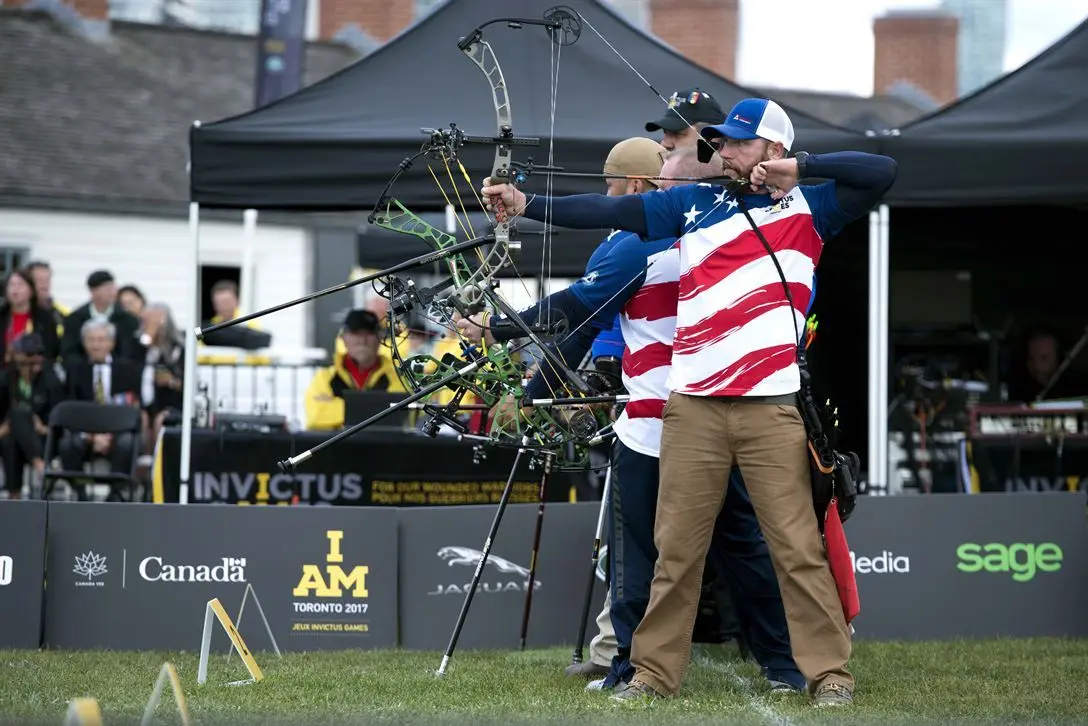
Josh Lindstrom is a retired Special Forces Green Beret who suffered a career ending Traumatic Brain Injury in 2012. Emily Hightower is a Breathing and Yoga specialist who works with challenged athletes to improve their performance. Together they’ve adapted breathing and mindfulness techniques to help veterans to improve at specific sports like Archery and to help them gain better mindsets and healing.
Transcript
Machine-generated from the episode audio and lightly edited — may contain errors.
Chris Albert (link to this point)
What's going on, Warrior Soul family? This is Chris Albert, and this is another episode of the Warrior Soul podcast. You know, in this day and age, we are getting more and more information every day about things that can help to improve performance. And it's interesting because we see all these advancements in athletics. We see these advancements in holistic medicine.
But when it comes to treatment of our veterans in the VA system, there is always one single answer that seems to be given by doctors, and that's pharmaceuticals. Well, today's guests, we have Emily Hightower and Josh Lindstrom. Emily is a yoga, breathing, nutrition specialist who works with challenged athletes to help to enhance their performance. And Josh Lindstrom is a retired Green Beret who suffered a traumatic brain injury who works with veterans to try to help them to gain a better mindset through sports. And, basically, what they've done is they've created these amazing breathing and mindfulness techniques.
And this this is the thing for most veterans. Most veterans don't wanna sit in the middle of a room doing yoga and doing breathing exercises without doing anything else. But what they've been able to do is they've been able to adapt these techniques to helping people with specific sports. And I think that's an amazing thing because it helps the person who's trying to do it to focus on something that they love. And through the practice of doing this sport, this craft that they're trying to master, they're basically also centering themselves and allowing themselves to get the benefits of mindfulness and breathing.
Most notably, they've adapted this to archery, and they've been taking veterans through archery classes that help to adapt these breathing techniques and help them to become better shooters. It's a really great podcast. Josh and Emily have some really awesome opinions on the state of veterans' health in this country today, and we get a lot into that in this conversation. They're also both great people, and you'll get to see that throughout this conversation. Before we get into the interview, I wanna give you an announcement from our amazing sponsors, F Bomb Nutrition.
You can find them at www.dropanfbomb.com. Now what do they do? They make amazing, delicious, healthy packets of fat. Now this is so helpful if you're a person who's doing the ketogenic diet or doing a high fat diet or a paleo diet for that matter, they've got these awesome packets of MCT oil, coconut oil, avocado oil, and olive oil. But what I really like are their fuel packets.
Now the fuel packets, they contain some amazing, awesome nectar of the gods type goodness. They've got this one, it's coconut oil mixed with macadamia... No, not coconut oil, coconut butter mixed with macadamia nut butter. And it tastes like a macadamia nut cookie crushed up into a packet, and it's readily available, and it doesn't have any sugar in it. I use these all the time.
Absolutely amazing product. Now if you're out there and this interests you, you can head over to www.dropanfbomb.com, and they're giving 20% off to Warrior Soul listeners on their first order. And you can get that by using the code Warrior Soul at checkout. 20% off for some delicious, awesome, high fat, low carb snacks. And with that, let's get into this episode of the Warrior Soul podcast with Emily Hightower and Josh Lindstrom.
Chris Albert (link to this point)
This is Chris Albert, and I'm here to remind you of one thing. Someday, you're going to die. Now that's not some morbid statement or scary idea. It's solid fact. Your time here on this earth is limited.
And we need to be reminded of this as much as possible for one simple reason, to live your best life while you can. This is the Warrior Soul podcast.
Chris Albert (link to this point)
What is going on everybody? This is Chris Albert with the Warrior Soul podcast, and we've got a multi screen show for you today. I'm joined today by Emily Hightower and Josh Lindstrom, and they're from an organization called Guerilla Holistic. How are guys doing today?
Emily Hightower (link to this point)
Good.
Chris Albert (link to this point)
Good. Josh is there. He's like, I'm good, man. I'm good. So first things first, I want...
I wanna talk to the audience about what you guys do, where you come from, and and how you got started. So so you guys give me the story here?
Emily Hightower (link to this point)
Yeah. Well, basically, I started working with Challenge Aspen seventeen years ago. They're an organization here that works with providing possibilities for people with all kinds of physical and cognitive challenges. So after the incidents of 9/11 and as the Gulf War took charge, we had a lot more needs in the veteran population. So we've really anchored into what's called CAMO, Challenge Aspen Military Opportunities, And that's where I provide breath work coaching and nutrition and yoga therapy.
So that's how I met Josh Lindstrom last year.
Josh Lindstrom (link to this point)
Which sounds like the absolute last place you would meet me. So I was a former tenth group. I actually knew Andrew Marr in the Q course. And, you know, ended up getting blown up 2012, medically retiring from that and had gone on this retreat with Challenge Aspen. It was a ski retreat with a Silicon Military Adaptive Sports program.
And we had to do a breath workshop at the end of one of the days of skiing. And I, you know, I breathe all day. So I figured, you know, what could I possibly learn about breathing? And we went into the yoga studio, which I mean, you can picture me in a yoga studio. Emily started to give her class and about five minutes in, I realized that there was a whole world of things that I had not considered in terms of how to improve performance.
And, you know, later discovered, you know, through talking to her, she helped coach me. So we did the class and I asked her to coach me for an hour with my archery, which is what I'm big into archery now. And she agreed. I didn't know she drove an hour to give me an hour class at six in the morning just on breathing and archery. She's never been an archer or never coached archery.
She's just good person, good friend, agrees to do it. I didn't know how good of a friend she's gonna end up being, you know, but I thought she lived right down valley anyway. So she coaches me, I go home and I shoot the best score I've shot ever at that time, you know, by a large margin. I, you know, every, just kind of clicked that there was this whole path that I had not explored in terms of performance. And, you know, she kept coaching me and still does.
And we ended up what was really her vision to do this archery breath retreat. I agreed to do it and not really thinking much was going to come of it. She pretty much put it together, invited seven wounded veterans out to Aspen to this archery camp, which turned out to be this great way to teach and practice breathing and, you know, all the things that I found in the therapy of shooting, you know, in specific regards to head injuries, mainly, you know, learning coordination, fixing the balance system, you know, really doing therapy for the eyes, all the parts that are damaged in the TBI, I believe are improved in the archery. And so, you know, both things just take a ton of time and, you know, after that realization of what she had to offer, you know, I dove in as headlong as I could.
Chris Albert (link to this point)
You know, it's amazing to me because breath work is something we all have access to. And I've had so many experts who've come on to to this show. You know, we've had Brian McKenzie on, we've had Patrick McKeown. We had, you know, we've had a lot of people come out and talk about the Wim Hof method and, you know, for for me, breathing's been important to different aspects of my life throughout my life. Right?
So when I was in the Marine Corps, it was really important for marksmanship. Right? It's it's really important for shooting, and that's like the center of it. And then, you know, when I got into power lifting, breathing was so important for power lifting and and making sure that you you were able to control your breath through the lift, and it actually would determine whether or not your lift was successful or not. Mhmm.
Now I'm in in the jiu-jitsu and and martial arts, and again, so important. Emily, when when when you approach these these types of issues with breath work, do you find that you can can can walk up to somebody and say, okay, you know, breathing is gonna be such an important part of you, such an important part of who you are, or do you need something external like the archery? Does it help to introduce the discipline to it?
Emily Hightower (link to this point)
Oh, that's a great question. I think having something to focus on is the meal ticket to getting people to breathe correctly. If you ask people to sit, as we found out in our archery retreat, to sit down and do a long extended breath training, you have to have a lot of buy in before you try that. And for most people, it takes something that's going to give them a metric to see how successful they are when they start to add the breath. I mean, could you feel that in your power lifts when you weren't breathing correctly versus when you were?
That's extremely motivating to learn more about breathing and to make sure you're doing it correctly.
Chris Albert (link to this point)
Absolutely.
Emily Hightower (link to this point)
Yeah, and the physiology is endless. The science behind breath for things like, I know you're super into the ketogenic diet, and that's been an incredible part of Josh's healing path, just learning more about traumatic brain injury and inflammation. The breath on the exhale is also when you trigger fat burning metabolism, but only if you're breathing diaphragmatic and if you're bringing the breath all the way down into the belly. So there are ways that you can apply breath to digestion, to performance, to focus, to kind of exploit the breath to help with acute things like anxiety or insomnia. And it's just fun to be working with someone like Josh who uses it for something like archery, where he can actually see the result every day.
And then when he's having a bad day, he has breath tools now to get back on track.
Chris Albert (link to this point)
So Josh, is this something that you've introduced to your daily routine? Is mostly when you're practicing archery or is it something you just do at will?
Josh Lindstrom (link to this point)
So that's a great question. It's kind of a long answer because I kind of wanted to get into that, like how I found breathing and why I think it's so important because, you know, two years before I'd met Emily, I started doing some adaptive sports camps with SOCOM and I went there and I tried the air rifle and you know, I'm a sniper. So I figured I'm just, I'm gonna pick this thing up. I'm gonna knock it out of the park. I got ahold of that thing and it looked like I was shooting a machine gun.
I just, I could not come to terms with that. So I would have to lay down and breathe for ten minutes. And I wasn't, you know, I didn't, I wasn't thinking meditating. I was just like, if I don't calm myself down, I can't quite do this the way I need to do it. And that drove me to start, the adaptive sports drove me to start exploring.
And you guys, you you gotta forgive me here. I forget what I'm talking about sometimes.
Chris Albert (link to this point)
Oh, it's all good,
Josh Lindstrom (link to this point)
This is, you know, you gotta reel me back in though. Well, Air rifle.
Chris Albert (link to this point)
The air rifle. And and one thing I wanted to comment on with that because you were talking about how you picked it up and it looked like, you know, it looked like you were shooting with a machine gun. You know, with somebody with your background, very specialized in shooting, that had to be a really hard thing. And that was probably very disruptive to your system as well. You know, adding extra stress causing you to breathe all over the place, right?
Josh Lindstrom (link to this point)
Yeah. And that's, you know, the only time I was really finding like home and rest was when I was doing that type of shooting. And this is the part where I can't remember where I was, you'd asked the question just on your last
Chris Albert (link to this point)
How do you incorporate it into your daily discipline?
Josh Lindstrom (link to this point)
Okay, all right. And so, I remember now. So what I found was that after, you know, doing this breathing stuff that it was useful for more than just performance in archery or shooting, it was that I was noticing the same tightness of breathing problems under different types of stress. And I saw that similarity. And so it bled into life in general accidentally.
And that's, you know, something me and Emily, you know, talked about after we taught the first class is a lot of coyote ing, you know, giving a metric, like you have to have a reason to do that stuff. And really the reason was to get better at archery. But what I found was the improvements in being able to tell when a lot of the issues that I was having with a head injury were a lot of more mood related, which brings up another whole thing that I want to talk about, you know, when you are tasked with being homicidally angry, appropriately so in work, and then you take the list of symptoms from a head injury and you anger, irritability, all these, you know, the standard list of head injury symptoms that are a lot of the times by the VA and military called PTSD, which I don't personally believe having had a head injury, knowing how prolific they are just from our own weapon systems.
Chris Albert (link to this point)
Right.
Josh Lindstrom (link to this point)
Guys are coming out diminished and if they've had a lot of deployments, it's almost like it's not who, it's how bad. And so having this metric to go back to and say, okay, well this is what calm feels like. This is what I'm feeling like. How do I, give me the roadmap from appropriately homicidally angry to these symptoms and where the line is? What that line is.
What I found was that my breathing was the indicator for where that line was. So if I was breathing the same way I had been breathing in combat and then breathing under the stress of firing and then driving down the road, I knew that there was a problem and then I had a tool to fix
Chris Albert (link to this point)
Gotcha.
Josh Lindstrom (link to this point)
Having a breath work to just, you know, kind of see frequencies out became something that I used, still use every day, you know.
Chris Albert (link to this point)
So you were literally able to tell whether or not there was gonna be an issue by the way you were breathing or you could catch yourself falling into that because you were monitoring your breathing, were becoming more mindful of it and actually paying attention to your breath. I think that's a really important concept to address there.
Emily Hightower (link to this point)
It's a muscle that you exercise, and it starts to be recruited on your behalf. The more that you use it, the more you not only have it to implement in the ways you need it, but the more you'll become aware of when you're not using it correctly or to your advantage. And like the guys that we brought out for this archery breathwork camp, I don't even think we called it a breathwork camp. That was just hidden. But those degenerate groups of soldiers, you guys breathed more than
Josh Lindstrom (link to this point)
Degenerates in the Mountains Of
Emily Hightower (link to this point)
Aspen.
Josh Lindstrom (link to this point)
Yeah. A degenerates group
Chris Albert (link to this point)
in the Mountains Of Aspen.
Emily Hightower (link to this point)
With weapons. And one yogini running around guiding Really, breath you guys breathed more than any yoga retreat I've ever been on. You could go to a week long yoga retreat in Bali to do some deep breath work training, and you wouldn't breathe as sincerely or as frequently as these participants in the archery camp because and they weren't necessarily trying to do the technique. It's just archery brings you into it. You cannot help but start to focus on bringing your breath awareness into your balance and into your shot process.
Chris Albert (link to this point)
I think that's really important too, because, you know, as Josh just mentioned, a lot of people don't really know that they have a traumatic brain injury. They they don't know what kind of impact their service has has done to them. Right? And that's it. And like you said, and this is some of the important work that Andrew Andrew Marr, you know, my good friend who who who's written a book on this stuff, he's you know, he's brought to light the fact that, you know, our own weapon systems can give us traumatic brain injuries, that coup counter coup scenario. It happens a lot amongst our service members. And then not only that, but the poor nutrition you get, you know, we have to deal with the MREs, the amount of inflammation that comes in that that total body chronic inflammation that gets up to the brain and that can worsen any injury that you get through that process.
Josh Lindstrom (link to this point)
Three things. Number one, they're finding traumatic brain injuries from the temporary cavitation of bullet wounds as far away as the abdomen. So that means you get hit with the right round, that temporary cavitation of that energy dispersing in your tissue is so damaging that it flows all the way up in your brain damages the brain. Those are gunshots. I've got friends with high gunshots about the same symptoms I'm talking about, which is the second part of the problem is that I was just reading a National Geographic article and they're saying they're shouting matches in the Pentagon about whether or not brain injury exists.
There are neurologists on the wards at law school that didn't believe that there was such a thing as a post concussive headache, you know. So there's this push to turn it and call it PTSD, which is, I don't know how many guys I've met. They're like, I have mental issues, you know? Because they don't want to say PTSD because it's so stigmatized. And I ask, hey, were you ever hit with an IED or blown up or fire any mortars or a cannon or a tank? And they're like, every single time they're like, yep.
Which brings me to the third thing, what I'd like to do, I wanna get one of those, you know those ballistic gelatin skeletons they use on that discovery show channel and see who's got the sharper axe or whose karate kick is the worst. I wanna get one of those. I wanna put it in an MRAP and I wanna get a 60,000 frame per second camera. And I wanna film it because the people aren't gonna, prediction is that the amount of force generated by those, just the blast wave is gonna get a bend and compressed bones in a way that I'm gonna imagine is gonna be nauseating. You know bones tib fib compressing an inch when that that blast wave goes through and the bones, you know, bending at, you know, a significant arc as that wave of force travels through them.
And when you look at that and compare it to what causes, you know, damaging injuries physically and then you imagine what it does to the brain, people won't be able to help but believe it. But right now there's a huge problem with people going around abelieving because of the VA and the military saying, hey, you got PTSD and not even acknowledging head injuries, mostly because you know, the resolution on MRIs and FMRIs is not sharp enough to see brain damage and tell, and I know several guys that have been diagnosed with multiple sclerosis or multiple scarring of the brain, which is normally associated as a degenerative disease, but is being caused by this rapid compression and decompression of the gases, the injury to the tissue and the symptoms are all, you know, very similar.
Chris Albert (link to this point)
One So of the interesting things that I found is in just doing this type of work and doing the research required to do this podcast is that, when you look at the clinical trials behind SSRIs, the main SSRIs that are being used to to treat veterans for PTSD. If you look at the clinical trials, the efficaciousness amongst the civilian population is so so right. They work some of the time with civilians. They've actually never demonstrated that SSRIs or s s... Or SNRIs have any efficaciousness on the veteran population. So that makes that makes you ask a few questions. Now are veterans biologically different than other human beings? Well, of course not.
So then why are these drugs working on some of the civilian population but never on veterans? And that leads you to believe that there's an alternative explanation here, right?
Josh Lindstrom (link to this point)
I mean, so I'm gonna wrap on pharmaceutical SSRIs for just a second, but when they were introduced in the sixties, they were actually tested on a population that was hospitalized. The first revision of the, the first copy of the DSM, diagnostic service manual, it's what they used to diagnose every single mental disorder. It's what the DOD and the VA use. When they wrote that initially, they had a pretty narrow definition for major depressive disorder. And they found that SSRIs were effective on patients that had been hospitalized for depression.
Now I know a lot of guys that are injured and haven't been hospitalized for depression, but most people I know know zero. What they found at that time was seventy percent effectivity of SSRIs on the patient population while there was a thirty percent positive affect from the placebo, which gave you a forty percent improvement. Okay, fast forward a decade, DSM two comes out. Now they've brought the definition of major depressive disorder and include things like sighing loudly, kicking rocks, sad despondent look in the eyes immediately after losing a puppy. I mean, just to these ridiculous extents.
And they took that out non hospitalized population and ran the same study. What they found was they had a forty percent efficacy rate on SSRIs and a thirty percent efficacy rate on placebo, which means that statistically they have a ten percent improvement now with this broadened definition. Now legally, that means that you can prescribe these drugs to many, many, many more people. Right now it's eleven percent I believe The United States population is on SSRIs. And the problem with the whole thing is, is that the, I feel like switching to a tin foil hat here, but you know, 90% of your serotonin and 70% of your dopamine are produced by the bacteria in your gut.
So we are physically pruning neuro receptors off the brain, which accept serotonin to say that, okay, this diminished amount of serotonin that we're now receiving is enough. When really to improve the body's bioavailability of serotonin, you have to improve the gut bacteria, which has the diet. So we're treating, especially in the military, I mean, you could prevent this almost before it happens by giving soldiers a probiotic.
Chris Albert (link to this point)
Right, we just had a Doctor Rodney Dietert on, he wrote a book called The Human Superorganism And that book, I highly recommend it to anybody who wants to read it. But in that book, he talks about the fact that bacteria, they're not just something that just improves our digestion. They're not just something that hangs out on our skin. They actually influence our genes.
They influence our brain.
Josh Lindstrom (link to this point)
Everything.
Chris Albert (link to this point)
You have a nerve that connects directly from your brain to your gut. That's why they say we have two brains. So the bacteria in your intestinal tract can influence your brain. And if it's not right, it can cause inflammation, it could cause depression, it could cause a whole host of really nasty issues all around your body.
Josh Lindstrom (link to this point)
I'll even one up that. My current working theory, and I don't have the research budget to test this, but alcoholism, So we know about small intestinal bacterial overgrowth. I believe you've talked about it on the podcast before. Okay, I just don't want to re educate if people already know. So the small intestinal bacterial overgrowth eats sugar, right?
Alcohol is metabolized into pure sugar. It's a bacterial infection that acquire. And the example I like to use is native Americans. You have a population who's never developed alcohol, right? And then they are introduced to a second population with a bacteria that demands sugar.
Have a diet that has no sugar in it. And then you give them a fuel source for it in the, you know, metabolized alcohol, which is essentially pure sugar. And so what I'm starting to believe is the effect of these outside organisms on the body isn't just, limited to, you know, what you said, which are, you know, that kind of covers everything, but it can be, the effects can be as dramatic as like chronic alcoholism that causes death, but a perfect disease doesn't kill, you know, immediately. That one's probably the best one around. It's been hiding right under our noses for two hundred years. Three, four, I wouldn't have been in alcohol, you know? So many influences on your body that we don't even...
Haven't even mapped all of them.
Chris Albert (link to this point)
Yeah. You gotta check out that book, man. You will absolutely love it. The Human Superorganism because it's like you said that this is something that has been lying under the surface. And one of the things to remember too is that a lot of vets from our generation, people who are born in the late 1970s, early 1980s, mid 1980s, during that time period, people were being told that breastfeeding was bad for you, or bad for the baby.
And so they were going to formula babies. And so what we had was a lot of what Doctor Dietert would call incomplete human beings because we're not just our mammalian genes. He actually says that 99% of our genes come from that bacterial influence. What happens is if you're not giving the baby the probiotics breastfeeding and through vaginal birth, then a lot of times that baby will develop chronic disease problems. And what you have to understand about traumatic brain injury is that it's not just the initial injury, it's the inflammation that comes afterwards. And so we don't have that defense mechanism to heal that inflammation, then things are just going to get worse.
Josh Lindstrom (link to this point)
You just made me think like, so if a woman has a baby through C section, you're supposed to take some of the amniotic fluid and like splash in the face of the baby or, I mean, maybe it's that easy. Like how do you fix that?
Emily Hightower (link to this point)
It's a whole another big topic, but there's a whole lot more than the amniotic fluid that happens there. Only know that because I'm a mama, but it's dealing with the effects of what we have now with so many people that are C section babies, are not breastfed, or that are eating the standard American diet, and there's just these two pieces of the education, and then the positive interventions that you can take to influence the result. And the positive interventions take time, and they take training, and that's where we're all trying to come in with not just prevention, but proactive tools to change the outcome of your health. And I think what Josh has found, and Andrew Marr as well, and through all of your work too, is that this traumatic brain injury piece, until we can start to really claim that and understand the ramifications of post concussive blasts, we're not going to be able to make all the positive interventions possible that are needed out there.
Chris Albert (link to this point)
Right.
Emily Hightower (link to this point)
I've just done some research on the brain that's pretty I didn't do the research, but there has been research that shows lymphatic tissue in the brain, and that's cutting edge new information. We didn't know that lymph existed in brain tissue. That adds a lot of credibility to inversions in yoga and why putting your legs up the wall helps physiologically change the chemistry and feeling in the body, why it helps your immune system. So there's a lot of examples with yoga and with breathing and adaptive sports on nutrition. All of these things take that combination of education and then training to implement them.
Josh Lindstrom (link to this point)
And time.
Emily Hightower (link to this point)
And time, Yeah.
Chris Albert (link to this point)
And, you know, I think that the application of this is something like like archery is is genius because it's it's kind of like we said at the beginning because it it archery is a skill and you have to you have to be very disciplined in your approach to it. It's a practice. And so when you apply this type of thing to just, you know, anything that requires a discipline, I think that introduces a routine in somebody's life and it gives them a ritual that they've got to practice, you know, regularly that helps them to get outside of their mind and get outside of their thoughts. And I think that's the beauty of this because if you go up to most guys and you say, hey, you're out now. You just got your DD-214.
Let's go to yoga class or let's go to this meditation retreat. It's not gonna fly. You know what I mean? But if you say, hey, you know, let's go practice our shooting or hey, let's go practice some archery or hey, let's go roll some jiu-jitsu or something like that, then that introduces that other element. It helps them to continue that discipline after that they're really craving and helps to introduce some camaraderie, especially if they're doing it around other people.
Emily Hightower (link to this point)
Absolutely, it makes my job so much easier. It's terrifying to go into a yoga studio with a bunch of veterans that don't buy in, that want nothing to do with you. And I have the buy in. I've been doing this lifestyle for over twenty years. I know the benefits, I want to share them, but it has to be offered in a way that's down to earth and practical and useful in their lives.
And I think that's true for everything, but it is super fun to have Josh's help and to have archery, behind me to help me kind of coyote at least the breathing in. And then we play with some yoga, some stretching for archery specifically, and it's a learning process to figure out what's going to work best.
Josh Lindstrom (link to this point)
Have you, you know
Chris Albert (link to this point)
Oh, go ahead, Josh. No, you go ahead, man.
Josh Lindstrom (link to this point)
Well, I was just gonna say, you know, the thing is, is it takes, oh man. So you're only supposed to build a brain once, you know? Kind of going back to what you said and piggybacking onto what Emily said, but the amount of time and effort it took to build a brain was, you know, by most estimates, twenty seven years. And me and Em had been talking about, I kind of have an epiphany about it, you know, that she'd known a guy who had a severe like hard drive crash delete head injury, like full coma for a duration. And he said seventeen years, he was just starting to get better.
And what I really want to put out for other veterans is I know you guys, if you're like me, you go to the doctor and they say, look, you got six months. Six months and that damage is permanent. That is one of the worst things you could tell somebody who's got any sort of head injury, PT, six months and you're done, which was really damaging for me to hear because I was having difficulty, you know, trying to reconcile living a life that, you know, had become something so different from where I was that it was difficult to even accept that. And so what I found is that, you know, the amount of time, you know, is probably relative to the amount of damage. And at five years in, like I'm still just really starting to have improvement in the things, you know, I forgot what I was talking about earlier.
You know, that's pretty regular for me, You know, going from being able to memorize, you know, a whole list of serial numbers or we'll just take the jump master nomenclature test. I learned that in twenty four hours, I got a 100%. I'd never seen the study guide before. And now I can't get numbers from one page to the next without having to go back and recheck them six times. So, you know, the amount of damage that guys can be experiencing, you know, significant and it requires significant effort and time to get it functioning again.
But guys gotta know, look, it can function again. You know, that is the main thing that if I tell anybody anything, if any guys are out there, they're listening, you got a head injury, I know what the doctor said. I know, because I went to all of them and they're saying, Hey, you're done after six months to two years is the longest I heard. No, like, but you have to focus 100% totally completely on that. Everything I do now is with the intention of, you know, recovering from the injury.
If it is not conducive to recovery, I don't do it. I'm for what works. I don't care what it is, you know? And so when we're talking about these archery and breathing retreats, like it doesn't matter if you like archery, it doesn't matter if you like breathing. And as Emily likes to say, it works whether you want it to or not.
You have to find something that you can stomach long enough to put the effort in that you need to rebuild. Your brain doesn't just rebuild itself. Right. Neuron is built a very specific materials that are hard to find, you know, in your food. You're not supposed to really be getting those.
Your mom makes those and gives them to you and then your body has this huge engine at a young age that can produce these very difficult complex cells that take a long to regenerate and you only have a couple of things that regenerate, that's your liver and your brain. And it takes a very specific set of circumstances to reboot that insistence to, hey, build brain again, you know? And that's why when we talk about it's nutrition, it's breathing meditation, it's yoga, it doesn't matter. It doesn't matter what it is. It doesn't matter that the person at the VA was unenthusiastic if you just do what they're saying because I mean, I did that stuff, you know, and every time I was like, what a waste of time, but it's working whether you want it to or not, you know, but you have to do things.
And I think that what happens when you get injured is that everything goes away like step one, all right, no more jumping out of planes homeboy. Okay, no more standing next to the breach. Okay, now you take my airborne pay, you take my dental pay. You know, I go take another job where, okay, well you can't really write emails. Let's put you on a profile.
Okay, now we're just gonna fire you. You know, so that you just, gets taken away, all your responsibility, everything you have to do gets removed. And then how are you supposed to practice these very complex? I mean, you know, we talk about emotions, you're really talking about a very specific chemical mixture in the brain that causes a reaction to, you know, eat, sleep, fuck. Mean, if you want to be completely simple about it.
And so these emotional issues that we're being diagnosed with are physiological issues that They can be changed over are accessible and it's not why should you, like, I'm not gonna tell anybody why, here's why you should do this. I'm for what works. Why wouldn't you? Why wouldn't you do something if you're, you know, hurt? We come up with these mind blowing plans of, you know, daring feats of rescue and assaults and rushing into danger as a QRF and we can't, you know, take that same effort towards, you know, optimizing everything we're doing in our life.
Like think about how you did things in the mouth. Yeah. You kept looking until you found a solution that was workable for everybody, even the weakest link and you made it work. That's what we do. But for some reason, when we get out, we get doctors to tell us to stop doing that.
And, you know, it's rice bowl wars and ego that does that. And what I want to tell guys is, dude, don't ever stop looking for, that's how Andrew got better. That's how I found Andrew to know what to look for to start getting better. You know, he showed me and now my job is to show other people because there's 339,002 guys that we know of and if it's not 10 to one on that, I will eat my beret you know with a pack of MRE cheese on it.
Chris Albert (link to this point)
Well this is the thing too. Mean you mentioned the idea of getting out of the military and and what people do when they get out of the military. And I think there's this narrative, you get out, you settle down into civilian life, and and you you just kinda blend in with the rest of the crowd. And I don't think anybody joined the military in the first place, at least not the guys probably I was around or you were around or anything like that. They didn't they didn't join the blend into anything.
Right? They wanted to to stand out. They wanted to excel. And, you know, the the thing is when you get out and you go to the doctor, the doctor's job is to alleviate your symptoms or or try to help you with your symptoms and to try to try if it's trauma doctor, they're going to try and fix a bone or something like that. Right?
We're actually good at fixing traumatic injuries, bodily injuries. Right? We're not very good at fixing chronic disease. The most we can do with chronic disease is treat the symptoms. Again, if you start to look at traumatic brain injury as a chronic disease, as something that needs to be approached from multiple angles, then you start to get a different perspective.
But they're saying, you know, I have a chronic disease, I have ulcerative colitis, and my doctor has consistently tried to tell me that the medication is what's working, right? The nutrition aspect of this, you don't really need to pay attention to it because the medication should be working for you. And that's the message they're giving to people. That's the message I got when I first got diagnosed. They said, Don't worry about this other stuff.
Take the medication and it'll hold off. But that didn't work. And I went through immense pain because of it. I'm not saying that my doctors have ill intentions, but they're not educated in a way to prevent disease. Not educated in a way to really cure disease.
They're educated in a way to try to stave off symptoms.
Emily Hightower (link to this point)
It's an attack mode which works in certain circumstances. But when we're talking about healing and therapeutic applications, it's kind of like the gut bacteria. They're subtle, they're microscopic, they're even invisible sometimes. And it's a huge force like the breath. It's an enormous influencer on your mind, body, state, and your physiology.
You know, the way you breathe and the choices you make around your food and the way that you choose to live your lifestyle day in and day out, sleep, hydration, all these facets have this therapeutic kind of tone. So it's a harder sell for doctors especially. They would much rather attack a symptom and see a quick result. And unfortunately, I'm very careful with medications. I would never advise somebody. I'm not a doctor, so I'm not going to advise somebody to go off their meds. But we've had success through the CAMO program with participants getting off of these pretty harsh synthetic drugs that have these damaging side effects to our guts and to our serotonin levels over time that kind of cripple our body's own capacities at regeneration and renewal. And how exciting is it that the brain and the liver do regenerate?
The body has healing mechanisms. And if we can flip the word therapy even on its head and kind of tie that into just doing everything that works, that it's not a soft skill, that it's actually something very radical. It's radical for somebody to take charge of their health and their lifestyle in that proactive way. That's really something I'm passionate about, is giving people tools that they can use at home when they're not in Aspen on a ski retreat, when they're not on a river rafting week fly fishing and doing archery or whatever we get to do. My role is bringing in those tools at home that are gonna make a long term difference.
Chris Albert (link to this point)
What what what is a very simple thing that maybe somebody who's listening to this could try at home right at the moment? Like, what what is a very simple thing that they could do right now that that that could potentially help them to to start?
Emily Hightower (link to this point)
You gotta breathe through your nose, or as Josh and his friends have coined the Ujjayi hole. In yoga, it's your Ujjayi breath. So nasal breathing creates more suction and pressure and brings your breath deeper down into the lower lobes of your lungs. So you breathe through your nose, and you let your belly move when you breathe. So even as we're talking and you're listening, you're breathing through your nose, and and your belly is moving out when you breathe in, and it's moving in when you breathe out.
And that's innervating your digestive tract, that vagus nerve that runs through the entire spine down into the belly. That gut brain connection is activated. So if you do nothing else after this podcast, then start to breathe through your nose in and out. Breathe out your mouth if it's challenging at first. That's fine.
And to just start to listen to your body's signals for when you're chest breathing. It's a really common pattern for all of us to start to breathe up high in the chest, and that just exacerbates a stress response in the brain that's not always helpful. It's helpful in some situations, not others. So I guess that would be my first piece. What do you got, Josh?
What would you tell people?
Chris Albert (link to this point)
Shoot some shit?
Josh Lindstrom (link to this point)
Think that the, yeah, definitely use demolitions to calm down if you have access to those. If you don't, which a lot of us don't anymore, I think that perfectly describes that indicator I had was that heavy chest breathing because I'd learned the one that I used after, you know, Emily had coached me that one time she taught me what she called the box breath. It's just breathing in, holding for two, in for four seconds, hold for two seconds, out for four, hold for two. And that just calms your breathing, slows your heart rate. And I picked that one up at that camp and I was going to a tournament in Las Vegas and it was my first archery tournament.
I was so nervous that every time I would think the word Vegas, literally just the word Vegas, I would get so much, you know, I would get so fired up that I couldn't even practice. And I noticed I was breathing in my chest and I would, you know, do this box breathing in and out with the belly button and the four in to hold, four out to hold, and that would lower my heart rate. It would stop my hands, you know, from being unsteady. And really, I mean, when you're aiming, yeah, 0.2, 0.02 degrees, I think to hit the X, you know, if your hands are moving that you can't, I couldn't even practice, you know? So, I mean, it doesn't take a lot of anything to have a detrimental effect, but it's very easy to move things in a, and I am always thinking about optimization.
Like I want this race car to perform how I want this race car to perform. If I was shooting a boat or riding a bike, I would have it set up exactly how I want it. You know, if I was going into combat, I would put my gun truck with the weapons arrayed in a way that they are most conveniently usable for me that I can fire them in 300 seat. You know, every consideration I would make, you know, would be conducive to performance and you know, breathing, that simple little breathing tool again, like why should you, why wouldn't you? Because if you're gonna be good at anything, you have to attend to every single detail of the performance of that specific task.
And you're gonna need oxygen to do As your brain gets more and more tasks saturated, like, you know, you've been in a military training, it's task saturation. You start to breathe differently, guys react differently. And as they have more stress piled upon them until they're trained, you know, you'll see a degradation of their decision making ability, their physical ability to do what they need to do. And a lot of it can probably stem from the fact that they're not just, you know, let me think about this for a second and reacting, but we do it without knowing we're doing it in the military. You know, the fantastic thing that me and Em were talking about earlier was that somehow, and I don't know how we manage it, but without any of these tools, we are able to perform at this high level in the military. And so I started to think about like, how is that possible? Well, maybe we weren't performing at the high level we thought we were performing. And maybe we're just performing a little bit higher level than, you know, I guess the rest of the world. We're still, I'm pretty sure GWAC world champs, has that changed?
Emily Hightower (link to this point)
I think that's an important, powerful point. I mean, Josh and I were having a lively conversation about responding in general. It doesn't really matter if you're an extreme athlete, or you're in the military, or whatever gives you a chance to respond, or right now for Josh, it's archery. For me, it was whitewater kayaking. Something that puts your body and mind in that possibility to have a flow state experience.
And the mind will tell the body how to breathe in those states. It'll do it for you. You are called to attend to your highest optimal state possible because you don't have the bandwidth to process anything. You're in the moment. So for me, if it's a class four river, I'm in that moment.
I'm not going to be thinking about my to do list or some conversation that bums me out, and it's an amazing thing to experience as a human. And I think it's really important performance or healing to find something that gives you a chance to practice that state. And then of course the breath can become an advantage to that state. And in the breath work that we're doing, training people how to use the breath to kind of cultivate a state that you have access to when you need it. So there's training time just like what you do in archery or anything else and when you're training to get proficient at something.
But then there's the acute skills that you need when something goes wrong. So if you're having an anxiety attack, there are specific breath patterns that you can use, but you're not likely to use them if you haven't trained.
Chris Albert (link to this point)
That's one of the things I've done with jiu-jitsu is before I roll, I'll do some box breathing on my own. And actually, you know what, I get a lot less time. I mean, I do a lot of conditioning work. I do a lot of lot of like training, but I get a lot less tired and and end up not doing the freaky breathing that a lot of people do while while we're doing the live roll. And I still suck. I'm a white belt, but I find that doing breathing exercises and actually focusing on my breathing beforehand really helps me to stay in a state of mind where I'm not freaking out if somebody's trying to smother me or anything like that.
Emily Hightower (link to this point)
So I try to say it's like wagging the dog, the tail wagging the dog. The breath can wag the nervous system. You have a master switch. It's one of the few automatic nervous system functions you can control. So it's awesome that you have that as a metric, everybody can relate to that in some form or another.
It's just there are a few that are like Josh that are gonna apply it and find out that it works and then use it to their advantage. And I think that's the message we both want to send out is like, take advantage of tools that work. And if they don't work for you, that's okay. We're not here to sell anything. This is like, get well in the ways that you can perform at your best so that life can improve.
And then for both of us, we've noticed when we are at our best, the result is that you have more for your family. You have more time at work, more space to accomplish the things that you're setting out for in life. So it's not just about feeling good, it's about functioning really well and performing at a level that you can not just feel good about, but that you can improve the lives of the people around you that you care about.
Chris Albert (link to this point)
That's awesome.
Josh Lindstrom (link to this point)
So the thing that really like that philosophy that draws me to this is, you know, I think about, and you know, anybody who's been to combat is gonna know exactly what I'm talking about. Like we don't like this, I want more to sacrifice and give to my brothers. These are the people that I care more about than myself. And if I can do anything to tip the balance into my favor so that I could do more for them, like it's not, why should I, why wouldn't I? You know, I'm gonna take every single event I always have.
And I've never fought with anybody that has done anything but that. We are all 100% focused and committed. And, you know, it's such a beautiful thing to see this team operate, you know, teams of any type of military unit, you know, in such harmony, you know, a group of guys so committed to each other that instead of running away from the guns, they run to the guns. Like, you know, where do we find such people? That is born of a commitment by each person in that unit to be as good as they can possibly be.
And that the other people around you that you know, that guy is gonna do what he said he's gonna do, which is cover my ass because I know that he's done everything. I trust him implicitly, completely, you know, whether it's giving him a $10,000 bill and asking him to take it to the bank, or if it's, you know, standing up to give me some covering fire to go, you know, take a crap or whatever, I don't know, whatever, you know, your buddy did for you that, you know, is putting you in front of him. That's, you know, so amazing.
Chris Albert (link to this point)
Yeah, I think that's a really important thing, man, because, you know, I think just being in service to others, it gives you a purpose and it gives you a reason for doing everything you're doing, you know, and and a lot of people they think to themselves, alright, I'm in the civilian world now. I don't have to be in service to others or anything like that, but you lose something from that. And it it takes away a little bit of your purpose for getting up every morning. And so one of the things I tell people is that, you know, that mentality of, you know, covering for your brothers, that doesn't end. And and in the civilian world, if you're a veteran who is out there and you become successful, you become you becoming successful is a win for all of us.
You becoming... Your story is a win for all of us. And and you have to remember that. You getting up every day, you continuing to breathe, you putting a 100% into what you're gonna be doing here in the civilian world is helping all of us out, and it's putting you in service to your brothers and to everybody who's ever worn uniform Because all of us are sick of hearing about the suicides. All of us are sick about hearing about the bad stuff.
We need some good stories. We need some some good civilian leaders here in this country. And I think that the veteran community can do that. We just need to continue to answer the call.
Josh Lindstrom (link to this point)
Yeah. Well, I think the important thing there is that losing the job and the brotherhood and everything like that, that's not the end of the people that need you, you know? I mean, the skills that are acquired in the military, the cultural understanding of, you know, the world and how important and special what we have is, you know, is not fully appreciated until, you know, it's fully appreciated. And it takes an effort to become that way and being the type of person that, you know, has that appreciation, that appreciation needs to get spread, you know, and we are always, you know, kind of called the same way, I think, you know, you don't stop being needed when you get out and feel that way, but your family needs you or your friends need you, you know, there's always, you know, something to work and strive for. I mean, that's how you made it. Even if you were the biggest dirtbag in the first Infantry Division, you know, you still went to Iraq and you still did your year.
You know, you still did what you had to do and maybe, you you don't like that guy, but maybe he needs you, you know, to do something for him that he can't do for himself. If, you know, we don't do it, nobody's gonna do it.
Chris Albert (link to this point)
Absolutely.
Josh Lindstrom (link to this point)
Know, got a purpose.
Chris Albert (link to this point)
Definitely. Definitely. I agree 100%. I wanted to ask you ask you guys before before we start to sign off. How can people get in touch with you?
Where where can they go to find you? And and how can they become involved?
Emily Hightower (link to this point)
Well, two things. The first is Challenge Aspen Military Opportunities is where Josh and I met and where we continue to do some really great work together. We have three archery camps already on the calendar for next summer. And so there's a you can go to challengeaspen.org to either apply for I think we have 20 different adaptive sports camps this year, and spaces are filling quickly. So that program is expanding, and I encourage people to apply to come out here and join us for those.
You can donate. You can volunteer at Challenge Aspen. Every ounce of energy that goes into that organization turns around and changes lives. It's one of the most efficient, well run nonprofits I've ever seen or been a part of. So I'm really proud of what they're doing and our role there is really exciting.
And then the second thing is sort of a mystery. Josh and I are co creating what we're calling Guerilla Holistic, and we do have a website. You can go there and sign up and we will be in touch when we know what the hell we're doing. But for now, it's about spreading our knowledge and information to the people that we care about that need it and evolving programs when we're ready to do that. So Josh, do you have anything to say about that?
Josh Lindstrom (link to this point)
Yeah. In addition to a couple of things I'd like to tell people. Number one, if you're not involved in your military adaptive sports program, if you're out, your Army Wounded Warrior rep should be able to put you in contact with somebody who can get you involved. And if you're hurt, you know, you got to there are certain things you got to do to get better. That's pretty much step one through 10 is getting involved in something.
There's already a program established, military adaptive sports, and each service has a branch and a program, and you can get into whatever archery or whatever you want to get into. You can get into it there. It doesn't matter what's wrong with you. I got friends with one hand left, and they golf, they shoot bows, seated volleyball, wheelchair, basketball, wheelchair, rugby. I mean, is no adaptation that I've seen that hasn't, you know, worked.
There is something for, I mean, I've got a buddy who's a quadriplegic that rides a hand bike. So if he can get out there and get on his hand bike, you guys need to also, and I'll caveat that by saying, you know, you got to do something. I'm just saying, guys, you have to pick something and do it. Even if it's not military adaptive sports, you find something because all the guys that didn't make it home, you know, don't have that opportunity. Your job now is to get better, find something, you know, get ahold of us, get ahold of Warrior Angels.
If you're special operations like a Task Force Dagger, you know, talk to your Army Wounded Warrior rep, get involved, do something. One of the other options that I'm personally involved with is the Disabled Veterans Archery Assistance Program. You can find them at dvap.org. Fill out an application for our program. We're going to take I think, 60 vets to archery tournaments this summer.
We'll give you gear, the whole nine yards. Also the CAMO program, for I mean, they do skiing, blacksmithing, archery now, three camps this year we'll do. I'd love to do more. And if there's a big enough need, we will, we'll do as many as they'll let us do. And so if you guys are looking for something, definitely get ahold of any one of those people and do something because, you know, they're watching.
Chris Albert (link to this point)
Awesome. That's awesome, Josh. Yeah. Thank you very much. And, you know, all of you out there and I say this every week, but what you gotta understand here is that that each and every one of you, you have a choice every day. And your choice is to look at the world around you and see chains and constraints, or to look at the world around you and to see opportunity. And each and every day brings the opportunity for that choice, and each and every choice you make feeds into this. So when Josh says you gotta do something, it means you gotta do something. You gotta get out there.
You've got to fight to make sure that you're living your best life. And so every day, get up, get your clothes on, make that decision, make the most out of your time here because there's a lot of guys who who couldn't come back to to have that choice. So with that, to the Warrior Soul audience, thank you for listening. Now get out there and live your best lives.
Host of the Warrior Soul Podcast and founder of Warrior Soul. Worldwide trainer and nutrition coach, contributing author at Testosterone Nation and Muscle and Strength.