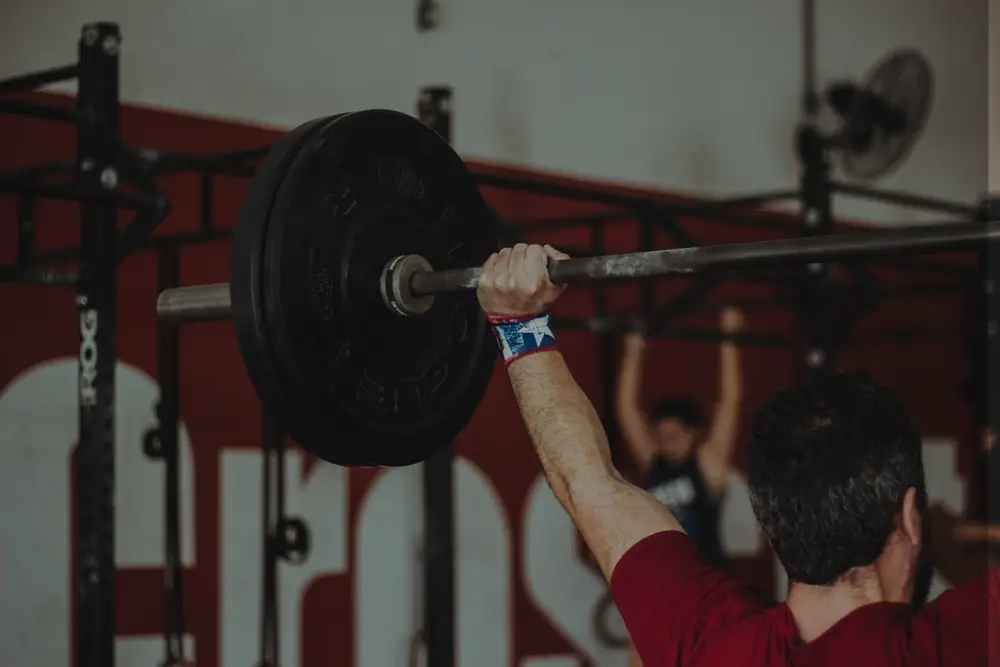
Fitness is a lifelong pursuit, but it can mean different things at different times in your life. When I was younger, I was a competitive powerlifter and bodybuilder. Training meant that I was going to physically push my body to it’s limits almost every time I walked into the gym.
Training after age 35 is very different. I don’t train for competition and I’m not looking to lift obscene amounts of weight. Instead, I train to feel better, prevent injury, and to be healthier. The aesthetic benefits of looking strong and muscular are side benefits.
That means that, while I keep my training challenging, it’s not the knock down drag out fight that it once was. In this way, training supports the rest of my life goals of being a good business man, a good partner, and a good leader.
Additionally, training keeps me mentally clear and allows me to feel my best no matter what’s going on in my life.
Transcript
Machine-generated from the episode audio and lightly edited — may contain errors.
Chris Albert (link to this point)
This is Chris Albert, and I'm here to remind you of one thing. Someday, you're going to die. Now that's not some morbid statement or scary idea. It's solid fact. Your time here on this earth is limited.
And we need to be reminded of this as much as possible for one simple reason, to live your best life while you can. This is the Warrior Soul podcast.
Hey. What's going on, guys? Welcome to the Warrior Soul podcast, and this is a Wednesday fitness notes edition of the podcast. This is where I handle things related to fitness. A lot of times I'll get questions from the Warrior Soul Fitness Academy private Facebook group.
Other times, there'll be topics that I wanna cover. And today, I'm gonna talk about is what I've changed since I became age 35. Now, as I'm talking to you about this, I'm 39 years old today, and I will tell you that I've been in fitness my whole life, and I always thought that I would train the exact same way. But now things are very different from what they used to look like. Even back when I was, say, thirty one, thirty two, I'm training very differently now than than what I had before.
And I'm not training in any any weaker or I'm not training sorry guys, had to clear my throat. I'm not training any weaker or any any less hard. I'm still challenging myself, but I am training difficult differently. I'm I am training in a lot smarter of a manner than what I used to do. Before we get into that conversation, I just wanna say a couple things.
Number one, this is the Warrior Soul podcast. And if you haven't been here before, this podcast is done specifically for US military veterans. The reason is because over the past decade and a half, The US military veteran community has had a lot of difficulties ranging from suicide to bettering homelessness to chronic disease. And the thing is there's a lot of people trying to raise awareness about this, but I don't want to just raise awareness. I want to actually propose solutions.
So what you'll find here on this podcast are issues related to living your best life. So we talk about fitness, we talk about, mindset, we talk about mental strength, we'll talk about business. And a lot of times I will bring on experts every Monday. I will bring on experts or people who are very accomplished in their lives to talk about things that they use to find success. So that's what the podcast is about.
And here's the thing, guys. We don't ask for anything in return. We just ask that you share these episodes out with people who can use them. Additionally, if you want to pay us the highest compliment, head over to iTunes and write us a written rating and review. Really helps to show out.
Also, I want to mention that this podcast would not be possible without the good people at F Bomb Nutrition. They make awesome macadamia nut butters. They stick them in awesome portable packets, and they mix them up with chocolate, with sea salt, with pecan butter. They're absolutely delicious and you can get 20% off of your first order when you head over to www.dropanfbomb.com and use the code Warrior Soul at checkout. Now back to the subject at hand.
How has my training, my fitness regimen, my workouts changed since I hit age 35? And what I can tell you is this. I'm focusing on age 35 was because that's when I found a few different things. Number one, I found that I wasn't recovering from my workouts like I used to. I was not recovering from my workouts like I used to.
I was it was very very slow. I it wasn't just a matter of being sore. I was literally finding that workouts would affect my brain. They would affect my mood. They would affect everything about me.
Number two, I found that, you know, I was a lot more likely to get injured. So I was getting little tweaks, little aches, but every once in a while I was getting like little rips and tears. And that started to worry me. And a lot of times it it got to the point where I couldn't move after for for a couple days after a workout, or I I wouldn't be able to train as hard as I would like to. And so these nagging injuries started to creep in.
And number three, and this is probably the biggest thing, is is that I found that a lot of the things I was doing as a younger man were no longer serving me and no longer serving me in my purpose. And, you know, let's get into a little bit of those differences. So number one, the the fact that so the first thing to remember is this, you know, prior to age 35, I was a bodybuilder and a power lifter. And a lot of what I did for a living back then was centered around that. I was training people.
I I had to carry a certain look. I was also training out of Metroflex Gym in Long Beach, California, where a lot of monsters used to come to play. And, you know, my whole purpose and being was centered around looking a certain way and lifting a certain amount of weight. So every time I went into the gym, it was really like a knockdown drag out fight. You know, I wanted to find my limit all the time because I was constantly trying to push my body to be more muscular and to become more strong.
And so whenever I would go in for a leg workout, I knew that I was gonna be pushing my body to to maximum punishment. I wasn't I was hardly going to be able to walk out of that gym. And so the thing is that over time a lot of my priorities changed. Number one, my profession, you know, at a certain point at about age 35 was no longer in personal training. It was actually in consulting people on businesses.
It was actually helping businesses to to find success online. It was doing a lot of other stuff. So what I was finding was that in because there was a period of time of overlap where I was still training like that, that when I went into the gym and I did one of these crazy crazy workouts in the morning, for the rest of the day, I really wasn't thinking straight. I really wasn't. And, you know, in in my book, you know, back then, that's the purpose that training served me.
Now, in my older years, I want training to help me feel better. And so, I'm still training really hard. I'm I'm still pushing myself. I get my heart rate up. I I'm still training for strength to be as strong as I can.
But for me to let's say go in and try to do, you know, three sets of 20 with 315 pounds on the squat like I used to, that's not gonna happen anymore because I, number one, probably am not fit physically capable of it. We'll just be honest about that. But number two, I really don't want to be crossing my words and falling asleep for the rest of the day, which is what used to happen. Not only was I physically sore after workouts like that, I I literally was brain dead, and so I couldn't think, I couldn't do the work that I needed to do. And and right now, because I am a full time business consultant, my my work is much more academic, so I have to do a lot more thinking.
And so that is a very big difference there. Number two, you know, at when I started hitting age 35, like I said, my all those those nagging injuries. And so, you know, while I would still love to squat, you know, 405 and and deadlift tons and tons of weight, the the worth isn't there for me anymore. Like, I don't have any goal centered around lifting a lot of weight right now. And, you know, again, even though I really do love being strong and I think that that people should seek strength in general, I don't think they should seek injury.
And so the cost of me trying to put my body in jeopardy, that that definitely outweighs the benefit right now. And so I don't do it. And then, you know, like I said, pretty much all of my goals switched from being big and muscular and and all these different things to, you know, now just trying to really feel good, trying to be healthy, trying to look good. I still wanna look muscular, but I don't feel like the need to try to be some crazy beast. So my schedule now, it looks very different than it did back then.
You know, back then I would come into the gym about six, seven days of the week. I would do a really hard weights workout. If I was training up for a competition or if I knew I was gonna do something, I I would work on my conditioning and my cardio. So, for I was never a long steady state cardio guy. Sometimes I would do it if I was really close to a bodybuilding show.
But most of the time my cardio was pushing around a sled or, you know, hitting a hitting a tire with a hammer out back, doing workouts like that, more strongman oriented. Now I'll I'll typically hit the gym only three to four times per week, but I'm hitting my muscles with a bit more frequency. So what does that mean? That means that when I'm going in, I'm I'm typically doing total body workout. So I'll I will include one of the main movements.
It'll be a squat or a dead lift, and then I'll go into a push movement and I'll hit overhead press or I'll hit bench press. And then I will work in a lot of supplement exercises. So I'm constantly working out with kettlebells, dumbbells. I like to include Olympic lifts in at least twice a week if I can. Not heavy Olympic lifts, but but lighter Olympic lifts so I could work on my speed and work on my explosion.
And then a lot of times I'll work in lunges and I will work in Romanian deadlifts and things like that, supplements to help me with my my main movements and my strength. And then from there, I will do usually a short conditioning circuit that that's very HIIT related. On my off days, and this is a a big change from what I used to do, on my off days, I'm typically getting outside and I'm going for a run or a jog or I'm hiking with a kettlebell or hiking with a pack on. That's much more important to me now than it used to be, and it's important to me for a big reason. I use cardiovascular exercise really to clear my mind, and that kind of repetitive work helps me to empty my mind so I can come back, get in front of my desk, do what I need to do work wise, and do it with a real fresh mind with a lot of energy.
It also helps me to put myself in a much better mood. Every day, I'm usually doing some sort of stretching. So mobility is more important to me now than ever was. I've always been very flexible remarkably. Even when I was a competitive power lifter, I was extremely flexible.
But, you know, mobility now, it's it's more of an effort on my part. So when I'm doing mobility, I'll typically take something from Kelly Starrett's building the supple leopard or becoming the supple leopard, and I'll apply it to my training for that day, and I'll work with a band or I will do a lot of active types of mobility, because I find that works a lot better for me. Flexibility is very passive. This actually requires strength and it requires me to put myself into positions that might be a bit uncomfortable, but that will also help me with my movement patterns. I don't do yoga even though I think there's a lot of value to it.
I just can't get myself to go to a yoga studio a couple of times a week and it's, I frankly don't like a lot of the Bikram yoga and, sitting there in a really hot room with a bunch of people for an hour and a half, just doesn't turn me on. So I do a lot of stretching on my own. The other thing I do is jiu-jitsu, and it's been something that that I just started, you know, a couple of years ago. And frankly, I'm not very good at it. Like, not good at it at all.
But I like it a lot, and I go mainly to become part of a group and to socialize and to to train with other guys and to to learn how to grapple. And that's been something that I really enjoy. I'm not gonna be a black belt anytime soon. I'm not gonna be a jiu-jitsu world champion, but it's something I've dedicated myself to trying to get a little bit better at. I'll go to jiu-jitsu probably two to three times per week, and a lot of times those workouts will push me and they will push me really hard.
If you've ever rolled or wrestled or anything like that, then you know it's it's really hard cardio work. So on those days, I will come home and I will take a really cold shower afterwards, and I will eat a good amount of food. Now diet wise, here's the biggest thing I've learned since, you know, making this this switch that I have. And that is that nutrition is more important now than it ever was. I need to make sure that I'm getting the right kind of calories.
I need to make sure that I'm getting enough protein. I need to make sure that I'm getting enough micronutrients. If I am not taking my fish oil, if I am not taking my vitamin d, if I'm not taking my vitamin c, then I will feel it. My brain will feel it. I am not thinking straight.
I'm not feeling good. I am not as energetic as I would be, if I had been taking them. So I need to make sure that I'm I'm getting all those nutrients. Also, in my diet, I focus a lot more on getting good nutrients into my body. So I'm eating a lot of vegetables every single day.
I am not doing as many cheat meals as I used to because I also find that whenever I do a cheat meal, I head out to In N Out or if I go and eat some pizza, number one, it could potentially affect my ulcerative colitis, but more likely it's going to affect me in the gym or on the mat in the next couple of days with greater soreness, a lot more injury, or a lot more potential for injury, and, it'll also affect my sleep. Now, big reason for that is is probably in for inflammation. You know, if you're filling your body with food that isn't good for you, that it's not very digestible and it's it's, lacking in certain micronutrients, then what's gonna happen is your body is not going to have as easy of a time to recover because you're you're creating an inflammatory state in your digestive tract, and your digestive tract is really the center of your ability to do a lot of things with your body, but but really for recovery purposes, it's it's gonna be a big thing. Now overall, I just wanna say this, you know, this is a very, very, rudimentary overview of of what I've got going on.
I could go in a lot deeper, but I'm not gonna drag you through all the science on this stuff. So if you've got specific questions on anything, hit me up in the Warrior Soul Fitness Academy private Facebook group, and I will cover it here. But I just wanted to give you this kind of overview here because I know that a lot of you are hitting your mid thirties right now, and a lot of you are dealing with, you know, decreased recovery, increased soreness, and you are probably not getting served as well by those old style bodybuilding workouts and that bodybuilding routine that you used to do. Above all, I want to say this, you really should make training something that contributes to your life. It shouldn't be something that's separate from everything else you're doing.
So for example, as I said before, I use training to help me to feel better. I use training to also help me to think better. Training should contribute to your ability to do your work. It should contribute to your ability to be a good parent, a good father, a good mother, a good spouse, everything. It should make everything about your life better.
That's the big reason why I still train and why I'm so dedicated to maintaining a training regimen. Because if I don't, then I know that everything else in my life is going to suffer. Ranging from my mood, to my mental health, to my relationship, to my business. So that's what I got for this week guys. If you guys have any questions, please let me know.
Like I said, head over to the Warrior Soul Fitness Academy, our private Facebook group. Join us. Let me know if you've got any questions at all, and I am happy to help you out. With that, get out there and live your best lives while you can.
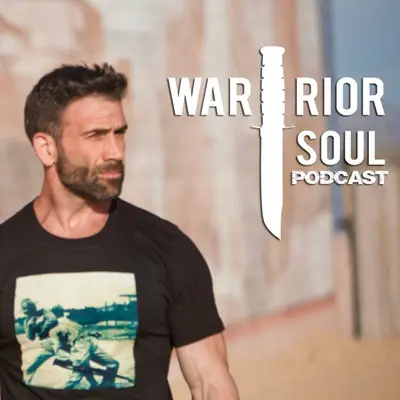
Host of the Warrior Soul Podcast and founder of Warrior Soul. Worldwide trainer and nutrition coach, contributing author at Testosterone Nation and Muscle and Strength.