Podcast episode
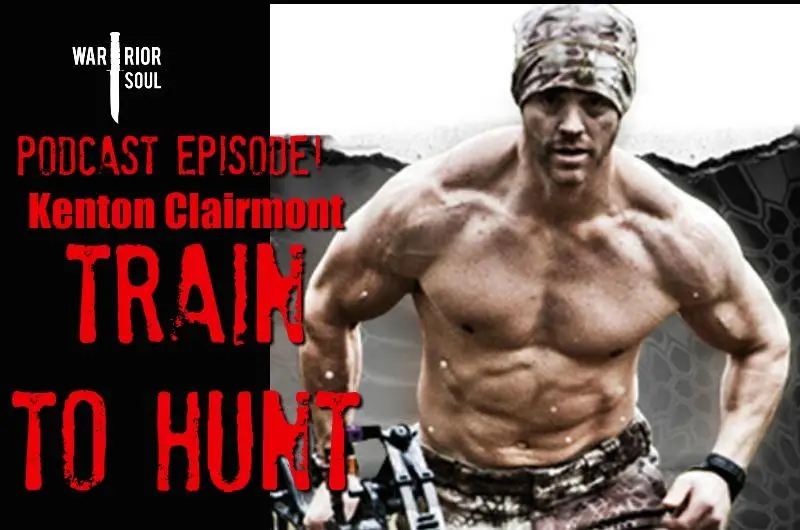
Training to Become a Better Hunter with Kenton Clairmont
Hosted by Chris Albert
The Warrior Soul Podcast

Kenton Clairmont is the founder of Train to Hunt, a company that provides events and conditioning programs specifically for hunters. A former professional baseball player, Kenton combined his love for athletics with his love for hunting. These challenges and conditioning programs are a great way for hunters to stay in shape year round. We spoke to Kenton about how he thought up Train to Hunt along with his success secrets including his daily routine and training schedule. This was an awesome conversation and hunters and non-hunters alike will find a lot of value here. Train To Hunt Website Train To Hunt Challenge Information Train To Hunt Merchandise Train To Hunt Podcast Train To Hunt Facebook We are on Instagram @traintohunt

Transcript
Machine-generated from the episode audio and lightly edited — may contain errors.
Chris Albert (link to this point)
What's going on, Warrior Soul nation? This is Chris Albert, and welcome to this episode of the Warrior Soul podcast. Today, we're gonna be talking to Kenton Clairmont from Train to Hunt. And if you love hunting and you're looking for a new fitness modality, this is really an outstanding program that Kenton has put together to train hunters to become better at hunting. Teaches hunters how to become physically fit for their journeys, and he's created these awesome Train to Hunt challenges that are kinda like Spartan races but for hunters.
And they consist of doing a lot of exercise and shooting under physical duress. And we're gonna get into what that is in a second. But before we get into this conversation, I just wanna tell you about our amazing sponsors, F Bomb Nutrition. Got to visit these guys out in Flagstaff, Arizona this past weekend, and they are absolutely amazing people. They wanna do great things for this world.
They wanna help to end disease through better nutrition, and they really wanna help veterans out. So, you know, F Bomb, what do they do? They they make these delicious portable packets of fat. Now they have their fat packets. Those consist of coconut oil, MCT oil, olive oil, really great way of getting a quick source of fat on the go.
But what I really love are their fuel packets. Now these have some amazing nut butters inside them. So they've got macadamia nut butter, they've macadamia nut butter with chocolate, and now they've got macadamia nut butter and pecan. And they also have macadamia nut butter with coconut butter. All these are really awesome healthy fats.
It's really hard to get fats in when you're on a ketogenic diet and you're out and about. And, they're really, really great. You can check them out at www.dropanfbomb.com. And for those of you who are out there who have people who are currently deployed, let me know about that. Send me a message over the site at warriorsoulagoge.com, because, Ross and Kara really want to provide some units who who are deployed abroad with some of their fat packets and their fuel packets free of charge.
They wanna make sure that the guys who are overseas right now are getting great nutrition. So those of you who are in the military currently or or who are veterans who know of units that are deployed, let me know, and we'll be sure to try to get them some, cases of fuel packets from F Bomb Nutrition. Again, check these guys out. And if you are looking to buy some F bombs, you can use the code Warrior Soul at checkout, and you'll get 20% off of your first order.
Chris Albert (link to this point)
This is Chris Albert, and I'm here to remind you of one thing. Someday, you're going to die. Now that's not some morbid statement or scary idea. It's solid fact. Your time here on this earth is limited.
We need to be reminded of this as much as possible for one simple reason, to live your best life while you can. This is the Warrior podcast.
Chris Albert (link to this point)
Hello everybody. Welcome to the Warrior Soul Podcast. We are back after a little bit of a couple of week hiatus. I had to do some business traveling and you know, over the past few weeks, lot's been going on out there. You know, we obviously have everything.
We're hearing about everything going on out there in the world and people are really concerned about the state of our country, the state of our future here. Through all the media and all of the things I hear about, what I'm not hearing about is something that I'm really concerned about. And that's the fact that we've got about a third of our population that's pre diabetic right now. And within the veteran community, one in four of us who's admitted to the VA system has full blown diabetes. That's absolutely mind blowing to me.
And and it's gonna affect us. And I believe that the Pentagon is now actually looking at this as a national security issue. So the question comes up, how do we stay motivated? How do we get ourselves to the point where we can keep moving, where we can focus on our nutrition, where we can try to improve ourselves all the time. And a gentleman I have on today, Kenton Clairmont from Train to Hunt, he came up with a pretty awesome idea, and that is to take something that that people love, like hunting, and make it into something that they're they're gonna be training for all year long.
And, you know, Kenton Kenton's from up there in Washington. So it's he's in a really hearty area. I'm sure it's very cold up there right now. I'm I'm in my my floofy little house down here in Southern California enjoying the warmth and the sun and everything like that. But, Kenton, first off, I wanna welcome you to the Warrior Soul podcast.
Kenton Clairmont (link to this point)
Man, thanks. It's an honor to be here. I I sure appreciate you tracking me down, and I I really look forward to just chatting about all things hunting, fitness, health, you name it. I'm stoked to be here. Thank you.
Chris Albert (link to this point)
Absolutely. You know, first things first, we, you know, we were talking before we came on here, I know you you had a bit of a wrestling background. And it's funny because if you look at successful people statistically, particularly men, you know, because it wasn't a really big sport for women up until recently, but statistically, a lot of successful men have been wrestlers. What do you think it is about wrestling that that, you know, makes makes guys really launch themselves into life?
Kenton Clairmont (link to this point)
Man, that's a great question. It's funny you mentioned that that wrestling is such a springboard for success. And I I you know, the other thing is crazy, Chris, is that you can you can identify a wrestler, like, pretty quickly. Like, if if I walk into a if I walk into a room full of dudes and, you know, and I look around, I can almost identify the guys who are either wrestlers or, you know, Brazilian jiu-jitsu guys or or or or some guys who don't mind a little hand to hand combat. You know?
And I think a lot of that just comes down to how much discipline it takes to be a wrestler. You have to, you know, you have to watch what you eat. You have to get up and grind every single day even if you're just going to wrestling practice and and put yourself, you know, put yourself against another man and knowing that, you know, you might lose, you might win, but you're gonna go out there and give it everything you got. I think that those those practices of discipline and and not being afraid to lose. Because let's face it.
If you wrestle it for any time at all, when you first started, you probably weren't that successful. You get out there and you get your ass kicked for a little bit, and then you just grind away and grind away. You get better. You learn. You stay disciplined.
And before we know it, you're starting to beat some people that maybe beat you in the past. And I think that wrestling wrestling teaches that to people that discipline pays off, which is probably the number one thing that wrestling teaches you is that if you're disciplined, it will pay off. It's just you have to be into it for the long haul. That your your nutrition matters because if you eat like crap, you're not gonna perform well. You're gonna be overweight, all those things.
And so, you know, at a young age, as a wrestler, I I I learned those things really, really early as far as, like, like I said, discipline pays off, and and we'll watch what you eat and go out perform and don't be afraid to fail and give it everything you got and never ever under any circumstances quit.
Chris Albert (link to this point)
Yeah. You know, there there really is no other situation that a young person can be in that's gonna teach them that kind of discipline. You're you're responsible for your weight. You're responsible for your own practice, your conditioning. All of these things, they play into this this creation of what promotes most of the time is an outstanding individual, you know, and I think that that these are things that we learn when we're in the military as well.
You know? And when you're going through training, you're going through your time in the military, you learn about personal responsibility. You learn about discipline, and wrestling is a great way of instilling that. You know, for for yourself, you you went from wrestling. You were into baseball.
Right?
Kenton Clairmont (link to this point)
Yeah.
Chris Albert (link to this point)
Yep.
Kenton Clairmont (link to this point)
And So I yeah.
Chris Albert (link to this point)
And you made it all up all the way up into college and and I think into the into the into the leagues?
Kenton Clairmont (link to this point)
Yeah. Well, yeah, I played coming out of high school, I could have wrestled or played baseball. And I, you know, I wrestled for thirteen years. My thirteenth year of wrestling was my senior year. And, man, I really had this passion for baseball.
It was kind of a newfound passion because I never I didn't even play baseball till I was 13. The small town I grew up in didn't have baseball, but man, I really I really had a love for baseball. And and so when I got to be a college, it was the first time that I had played baseball in a school because my high school didn't have baseball either. I just kinda leaned on to Babe Ruth and the and the American Legion program around. And by the time I got to make that decision, it was really it felt like I had more more to do in the baseball world than I had left to do in the wrestling world.
And so I chose baseball and and went on and played little college baseball. And then after college, I I kinda went through a time that, you know, I think that I think a lot of your listeners can can relate to, and that is, you know, under no circumstances am I trying to compare, like, leaving my athletic career behind me and trying to figure out what's next to leaving the military and and feeling lost. But I really had a sense of a loss of identity when I left college because for the last twenty two years, all I'd had really been was an athlete. And that's where I felt like my worth was to the world was as somebody who could physically perform. And I brought like pride and to my family and my community and to myself.
And And when I left college, really got lost and I didn't really have my next mission. I didn't know what I wanted to do because I'd put so much focus on the on just being a professional athlete. Like that's all I ever wanted to be. That's what I figured that I'd be. That's why I went to college is just the next step of becoming a professional athlete.
And then once I I left college and went on Draftstead, I, you know, I I didn't know what I was gonna do. I'm I'm telling you it was one of the hardest times of my life because I felt like my whole life had been, you know, just kind of this big failure because I hadn't completed my mission and my mission was to be a professional athlete. And so I had to just kind of recompose myself and find out what my next mission was and decided that if I could be a professional athlete, was going to try to educate, inspire, and and help help the next generation, you know, fulfill some of their dreams because I knew that being a college athlete was a pretty big deal just in itself. And so I went back to the high school ranks and and started coaching, and I coached there for a couple years. And they inspired me to go out.
They thought, man, coach, you know, you should go out and try out. You you're still pretty good. You can still swap pretty good. So I went out and went to a tryout in Spokane, Washington. About two weeks later, I got a call from a manager of the Johnstown Johnnies in Pennsylvania and asked me if, you know, if I'd like to fly over there and start a game on the July 4.
This was the July 2. And so I went in and told my boss, hey, I got an opportunity to play some professional baseball. I'd love to take the opportunity, but, you know, I feel bad for just kinda leaving you high and dry. The guy I worked for said, man, you gotta go chase your dream. This job will always be here, but this is a once in a lifetime opportunity.
So I went I went to Pennsylvania and and played one summer of minor leagues. And and then after that last summer, I came back and got into my new job and or my old job back, and it was a great time. It was it was one of those moments in my life, one of those times in my life that I really needed something to kinda put me back on on a track of making me feel like I I was still worse. You know, I still had it, I guess. I guess every man wants to know that they still have it.
And I got unconditionally released, but I still got my year in the sun, and I stopped having nightmares about, you know, trying to go out on the field. I couldn't find my cleats or my glove or or whatever. You know? Like, I think all athletes have have those nightmares once they they they stop being competitive. They just, oh, man.
Where's my wrestling shoes? Yeah. Or whatever. All those all those nightmares went away, so it was it was nice.
Chris Albert (link to this point)
Yeah. That's so so I guess that year kinda took the lust year away maybe a little bit and and made you appreciate what you what you had before, or was it, you know, was it like, oh, okay. I've I've tried this. I'm done now. And, you know, I'm gonna move on to to something else.
Kenton Clairmont (link to this point)
It it really was the latter. It was like, you know, I've done it. I I I made it. I see I've I've been there. I know what it's like.
It wasn't a fan I mean, as a as a kid, obviously, playing professional baseball, you kinda have this fantasy of what it's like and and, you know, how great it's gonna be and that you're gonna be, you know, famous and and make all this money. And, you know, when I got when I got my shot, I realized that it was just a lot different than I thought. And I'm sure it had a lot to do with just minor league ball is a lot different than, you know, playing the majors. When you get to these majors, those are the those are the real professionals. The minor leaguers, they're all just trying to climb the ladder.
Right? And so it was there wasn't a ton of camaraderie. There wasn't a ton of, like I'm I I love being part of a team and a close knit team and guys that are willing to put their asses on the line for you, and there wasn't much of that in the in the team that I played for, and I kinda got my eyes open to, number one, you don't make hardly any money. Number two, there's not this huge, like, camaraderie within a, you know, a single a team. Everybody's kinda into it to try and perform their best so they can get picked up and move up into the ranks and maybe make triple a or and when it was all said and done, I was I was glad I'd I'd done it, but I was like, man, that wasn't what I thought it was gonna be, I guess.
I would rather go back and play college baseball than go back and play another year of of the modern day. Just a it's a rough it's a rough it's a rough time, and I have a ton of I mean, I newfound respect for those guys who spend a lot of their time in the minor leagues and and just love the game so much that they they keep they keep climbing and climbing and clawing away and and make it gonna happen. But, yeah, I was done. I was glad to to be to close that chapter and and it really made me appreciate that I had the experience and I could use that experience to ask and that knowledge to pass on to people in the future when I when I started training and coaching people.
Chris Albert (link to this point)
Yeah. Let me let me ask you this because I've I've always kinda wondered this. When when that time was over, alright, when you when you said, okay. I've done this. I'm moving on now.
Did did something in your mindset change about physical fitness? Like, were you able to stay in shape right after that, or or was it not a problem for you at all, or or or did you have a lapse?
Kenton Clairmont (link to this point)
So I had a lapse right away. Like, as soon as I stopped, soon as I basically had thrown in the towel and and came to grips with the fact that I wasn't gonna be a professional athlete. I was just I was gonna be a coach and and a teacher and a trainer. You know, my my fitness really kind of fell by the wayside for a little bit. Just I I didn't train as hard.
I didn't I didn't really feel like I had much to train for. So I was I was training here and there, but nothing nothing real consistent. And every time I'd go into the gym, I'd it just kinda became mundane. Like, man, what's the point of all this? Why should why should I keep training when there's there seemingly doesn't seem to there's no point to it.
And so that lasted, gosh, that lasted about a year. About about a year. And and then it it came a point where I just got I just got tired of I got up to I gained about 30 pounds. And I remember I was on a bike ride, and I was just climbing this hill, and I was with some some younger some younger kids that I was teaching when we were going on a bike ride. And I got to the top of this hill, and I was really out of breath, and these guys were waiting for me.
And, man, that they really I guess it just bruised my ego a little bit. And I was like, alright. That's enough of that crap. I'm getting my butt back in shape. Yep.
If it's one thing I didn't want, it was, you know, feeling like I was dragging the group down. You know? I kinda took pride in the fact that I was somebody to chase, not somebody to wait for. So that was kind of the that was the turning point. I got my back my butt back in the gym and and, you know, just started doing some some high reps and and lifting some weights.
And and then I got out and and started doing some cardio, some biking, some running, some swimming, and I didn't spend a ton of time. Like, I was I've never been one of those guys that spend, you know, a couple hours in a gym. I'm a get in, do something with a purpose, and get the hell out and move on with your life. And then one of the keys I think to my my oh, I guess my comeback and you'd call it my physical comeback was that I tried to make everything I did into a workout. And I classify I classify my workout as if it makes me break a sweat, I'm working out.
And so regardless of what I was doing, I was trying to, you know, make it a workout. If I was out, you know, just walking to class. Instead of walking to class, I'd run-in the class. If if if I was watching TV at night, every commercial, I'd drop down and do push ups for one commercial. And so just switch commercials for the next fifteen second commercial, I'd do sit ups.
And then the next fifteen second or thirty second commercial, I'd flip over and do push ups. And then when the program came back on, I'd sit back in my chair. But I was always looking for any excuse to just get a quick one in. You know what I mean?
Chris Albert (link to this point)
Like Gotcha.
Kenton Clairmont (link to this point)
I can just get if I can if I could sit down through a program in every commercial, I'm doing push ups and sit ups. By the end of this program, I'm gonna have, you know, a couple 100 push ups and a couple 100 sit ups knocked out, and I didn't have to go to to the gym. I didn't have to do anything. So I think that was a bit in fact, I know that was the big key because, you know, everybody I had a full time job. You know?
Everybody's busy. I think that that might be something that's overlooked just in programming just in itself. And the pay the way people look at quote unquote working out is that they have to go for some reason, people right now are just dead set on the fact that they have to go to the gym to work out. I say, no. That's that's horseshit.
Like, you can you can you can do anything and make it a workout. You know? Like, if you're if you're doing some shoveling or moving some rocks or or, you know, hell, even if you're going, you know, live if you work at a an office building and you're on the 3rd Floor instead of taking the elevator, like, run up the stairs. Mhmm. You know?
Yeah. I think set your you know what I'm saying?
Chris Albert (link to this point)
Yeah. You you you're right on point here, man. Because I think one of the worst things that we've ever done in this country was to make fitness into a hobby. Right? And and not part of our body.
Kenton Clairmont (link to this point)
Right.
Chris Albert (link to this point)
And, you know, I think, like, regardless of what modality you're looking at, whether it's CrossFit, whether it's bodybuilding, whether it's, you know, you're just trying to burn fat, build muscle, do whatever. If if you're looking at it like a hobby and and, you know, that that that Fran time is gonna get old at some point. You're gonna something's gonna happen in your life and you're gonna have to, you know, feed some mouths and pay some bills, you know, that that can go away. Right? Same thing with the abs.
It's like if you're if you're your abs aren't gonna be as important as as, you know, the things that are stressing you out in your life. And and I think Yeah. We lose it when things get bad. But but in this way, the way you're talking about, the way where you can make it part of something bigger, you know, that's gonna be important to you for the rest of your life, you hold on to it for the rest of your life.
Kenton Clairmont (link to this point)
Absolutely. And and I think we're just in a really weird time right now because it wasn't that long ago that you didn't have to go out and, you know, go out of your way to exercise. We'll just call it exercising. You didn't have, you know, to move around because most of the jobs that were that people had were, you know, there was some movement involved, some labor jobs. You know, there was a lot there was plenty of jobs and most of the jobs that the guys had, they were out moving around and they didn't have to go out of their way to to exercise and move because that's what they were doing all day for their work. I mean, my my dad's a great example.
I grew up in a in a in a in the timber industry. And all the guys that I knew that were my dad's friends, they didn't go out and work out and get ready for the hunting season because they they packed the freaking chainsaw up and down the mountains, cutting down trees or Mhmm. Or hooking cable or or turning logs or or they were or they were doing something physical all day long. So when it came to hunting season, they just throw a pack on and go. And they they were mountain men.
They were, I mean, they were ready. They never thought about, oh, we gotta go to the gym and do some bicep curls. I mean, it's just that you you know what I mean? That that just didn't exist. And and I know that it's a kind of a micro of, you know, picture of of the rest of the country.
And but the fact of the matter is is the more technology is developed, the more we're gonna have to just think about movement. We gotta get out and move. And if we can think of it as just get it off our butts and move, you know, stand up. Start with just standing up. Stand longer instead of watching TV.
If you just stood up while you watch TV or stood up at at your desk instead of sitting down at your desk, it's amazing how much difference that small adjustment would make in your overall health. Well, what do they what do they say? Sitting is the new smoking. Right? Like Yep.
We sit we sit so much that that that it's it's it's becoming the new smoking. And the here's the here lies the problem. And I think I heard you talk about it on the podcast is that is that we we we we're we're misled by the media. We're misled by advertising marketing for fitness and that fitness is is for people who are already in shape, you know, and that and that if you come in and and come into our gym and do x y z, then you're going to have these results. And and the fact of the matter is it's not true at all.
In fact, in order to in order to have those results, it it takes a lot more a lot it it take most of those people that are advertising, they're professional weightlifters. You know, they're fitness models. And we get impatient with this with the process. And all this comes back down to it doesn't you don't have to go in and spend two hours in the gym. You can start by doing the little things.
And the little things will add up. It's something that nobody tells us, you know, in the fit in in fitness marketing because it doesn't it doesn't promote their bottom line. But as sit as simple as as watching what you eat, you know, cutting cutting cut all the sugar and all the pop out of your diet, and then stand more for more hours than you sit in a day, and you can turn your health around drastically Drastically. Those two things. Cut the sugar and the soda out of your diet and stand on your feet longer than you're sitting in a chair every day.
And those those things would change your your your health drastically.
Chris Albert (link to this point)
Absolutely. I I mean, I could not agree with you more here. It as far as it's those really simple things that you can do to to, you know, just get up, just just move. And we don't have to believe this narrative that we're being sold, know. When you see this advertising, there's a guy working out on the beach in Malibu, he's going home, you know, he's he's he's, what's it called, drinking his green smoothie in his perfect house with his wife, and then he goes out Right.
Training session in at Gold's Gym Venice, and you know, that's not the narrative that that we need to be listening to. What we need to be hearing is that if you're out there and you're working and you got a family you need to support, if you got responsibility, if you got people that depend on you, fitness should be way more important to you than that bachelor fitness model who's living in Venice or Santa Monica. It it should Yeah. Because you have more that depends on it.
Kenton Clairmont (link to this point)
Absolutely. It it it's one of the things that that it's the staple it's trained to hunt. Is that, you know, because when I first started this thing seven years ago, I got a little bit of lash back. Not a ton. There was a lot of really good feedback in that, man, I'm glad someone's finally out there training, you know, a little more primitively and specifically for hunting because, you know, it's really tough to find anything that is training hunters specifically.
But I did get some lash back as far as like, man, you don't have to be in shape for hunting. I've killed tons of animals throughout many over many years and I've never worked out for it. And, you know, try to convince me that I need to go out more, that I need to work out. And here's what would put most people in a place where they shed some light on it. And this is what I tell them.
I'd say, do you have a hunting partner? And most of them do because most people I'd say the majority of people have somebody to hunt with. Whether even if it's, hey, my my dad and I or my brother and I or my cousin and I or friend and I, we go out either hunt in the mountains together or we we divide up and go into, you know, our our separate blinds or tree stands and and we hunt. And then we meet up at night. What I tell them is, what would it be like if you were out with your hunting partner and you were, you know, just say a mile from from help and your hunting partner fell out of a tree or your hunting partner had a heart attack or a stroke or broke their leg or stabbed themselves in an artery with a knife or got hurt bad enough that they are in an instant, in an instant, they are completely dependent on you to save their lives.
At that moment, if you are not physically prepared to do so, your life is gonna be forever changed. It's you're I would've now I can't speak for everybody, but I can speak for myself that it would be really hard to forgive myself if I ever put myself in a situation where I knew I could have done something about it, but I didn't. Whether it be, you know, and so I say if if you're getting ready for a hunt or if you're getting ready for it, basically, you name it. You just said that you have a family. You have people that depend on you.
If you don't take it upon yourself to stay physically ready to help those people who are going to who are dependent on you, whether you whether they will admit they depend on you or not, like in a in a hunting partner's case, that you may not you may go out there as, you know, physically equally, you know, with equal physical ability, but they stab themselves in the femoral artery and instantly now they're gonna get it on you to get their asses out. If you can't do that, you it I I would have a really tough time living with it. And I would hate to think that I I could have prevented it by just simply being disciplined and taking action to get prepared for the worst case scenario leading up to up to that event, whether it be a hunt or or anything like that. So so you hit it on the head, man. Like, if you can't find it in yourself to stay disciplined to to stay healthy for yourself, then look around you.
Because there's people, I promise you, there are people that depend on you to stay healthy and fit and ready at, you know, ready at any moment to to be able to lean on you. And if you're not prepared, it you're gonna regret it. Period. So so I I couldn't agree more, man. Like, you owe it to yourself.
Owe it to your family. You owe it to your kids. You owe it to your friends to do one simple thing and that is just stay disciplined in your pursuit to be the best version of yourself that you can be and that means exercise nutrition and and that's and it seems simple. I I get it. It seems simple.
It's simply stated, and and and most people are are are having a tough time with motivation.
Chris Albert (link to this point)
Absolutely.
Kenton Clairmont (link to this point)
Man, how do I stay motivated?
Chris Albert (link to this point)
Yeah. That's huge. And and, you know, another motivating factor that I just thought up while while while while you were speaking there is that, you know, even if say, there isn't a possibility of tragedy, and even say, you're trained to the point where you've minimized all of that, well think about this, you still gotta put socks on, right? In order to get out there and hunt, you still gotta put boots on, right? So so Yeah. What happens if you become diabetic and you get diabetic ulcers on your feet? Right?
Kenton Clairmont (link to this point)
Right. Right.
Chris Albert (link to this point)
It comes down to this. If you love hunting, how long do you wanna be able to hunt for? Right? Long do you wanna be able to hunt for in your life? Do you wanna be 75 and still being able to get out there?
Do you wanna be, you know, 55 and you can't get out there because your blood sugar's too high and you're getting diabetic on your feet and you're afraid of losing a toe. You know, that's that's a huge thing. And I think that that's where we're headed. But what I what I really want to want to get into this. Did you develop the concept for Train to Hunt?
Kenton Clairmont (link to this point)
Well, so I was I owned a CrossFit gym. Mhmm. And I opened it in 2008. And and prior to that, I actually was training at a big box gym here in Spokane. And I love I just fell in love with training people and seeing people break down limitations and seeing people seeing how people felt about being disciplined in their pursuit of fitness and health.
And I was able to train a lot of really great athletes. And I had a lot of fun training athletes who were really focused on a goal and becoming taking it to their sport to the next level, whether it be soccer or football or baseball or you know, any of those traditional sports. So I spent a lot of time training people in sports specific areas so that they could just move up to the next level. Well, about two years into my CrossFit, owning my CrossFit, we started training baseball teams and football teams. And every September, I would I block the whole month out so that I could go hunting and I realized that I was training much different than anybody else that was doing training in the CrossFit gym because I had a I had my sport.
I was hunting. I was getting ready for these adventure hunts in the back country. You know, I was going to Alaska and doing, you know, ten days sheep hunts in the Brooks Mountain Range. And I knew, hey, there's a certain modality that needs to be practiced here or else, you know, I'm not gonna be as prepared as I could be. I mean, I can't I can't go jump on the bike and I can't, you know, do Fran, you know, a couple of times a week.
I can't do, you know, these short CrossFit workouts in order because it's just it's not preparing me to the full potential for hunting. Because hunting more of an endurance sport, stamina, and really focused on nutrition. And so it was like it was 2010. It just kind of dawned on me that, oh, you know what? Nobody's out there training hunters to get ready for hunting season.
And really the big light bulb was I talked to my dad about getting ready for a hunt we were about ready to do. And he said, man, I just hate going to the gym. You know, I don't want to go and run on the treadmill or go lift weights or and I was like, wait dad, you don't have to do that. Like here, get the backpack, get a sandbag, carve some time out after work, and I can put give you a whole training program to get ready for our hunt. And I realized being, hey, nobody else is out there training these these athletes.
These these guys who are preparing to go into the background into the unknown, into the unpredictable, there are certain types of exercises. There's certain time, you know, domains that they need to be working in. There are certain strengths that they need to have. There are other other areas that they don't have to stress as much like just absolute strength and they don't need to be working on as much as they do their overall endurance and mobility and power. And so the light bulb went off and I I said, hey, I'm gonna I'm gonna throw this out there.
I'm gonna open a website, and I'm just gonna advertise for, you know, training training hunters to get ready for their fall adventures. And I searched and searched and searched the web to see if anybody was out there doing it already. And I couldn't find anybody. And so I thought, man, I was onto something. So I launched I launched this website, put up daily workouts, and had a really good result and had guys coming, you know, really raving about, man, thanks for putting this out there.
I really enjoy your workouts. I love that I can do them at home. I love that you mixed in shooting my bow into the workouts. And and, yeah, Train to Hunt was launched. And it went really good for for twelve months.
And I'd started doing some analysis after twelve months and found that around November, obviously, hunting season was over. And I started people started falling off. Stopped coming to the website, stopped doing the workouts. And I was like, yeah, man. Of course, people are training like June, July, August, and then going into hunting season.
And then, you know, around the holiday, they just drop off and they don't come back until the next June because they figure I'll just get ready for hunting season in June. So I started I started, you know, thinking about how I could entice people, hunters specifically, this audience that I had. How could I entice them to think about and and stay in shape all year? How could I get them to go to the gym, you know, three or or do a workout three to four times a week year round? Just think about it year round and and always stay prepared and and stop dropping off right after hunting season and coming back right before hunting season.
And that's where I came up with the idea of the Train to Hunt Challenge. And that was that was in that was just my answer to people were you know, basically, there was there was sprint triathlons. There was it was this kind of the first the very first start of these obstacle races like Spartan Race and Tough Mudder and and those obstacle races. And then there was, like, road races, like, five k's and 10 k's. And if you were a beast, you could go out and do some of these ultramarathons or maybe run a marathon or maybe do an Ironman or an Olympic sized triathlon, but there was nothing that was like, you know what?
Let's let's test true hunting fitness like mountain fitness. This was before GORUCK. This was before any of these companies. And so I put together a challenge that was like, alright. Let's let's see if you can do these physical challenges, and they were simple.
Just like over the box step ups and then run, you know, three, four hundred yards. Catch your breath, refocus, get your heart rate down, and make a good ethical shot with your bow on a three d target, on a foam target. You do this for six stations and and finish. And so I I just I threw it out there. I said, hey.
Anybody interested in doing something like this? We're gonna be in Boise. Come out and and give it a shot. If the the the fastest time through this course, we'll win a a a free Hoyt bow, and the second fastest wins Vortex optics. And we just had a few prizes here and there, and we got a pretty decent turnout.
And it was a good it was a good enough turnout that I decided to just continue the pursuit of expanding the race. And over the years, we've, you know, we've done the best we can do in expanding it across the country. And I'm excited to say that we basically reached out for all the corners of The United States. We're in New York, Pennsylvania, Wisconsin, Texas, Oregon, Washington, Montana, Idaho, Colorado, Wyoming, Arizona, Utah, or Arizona, and Nevada. So we got these events all over the country that are qualifiers for the big stage, which is the national championship.
We bring all the top three in every division and bring them together and we put them head to head and see who the best in the country is.
Chris Albert (link to this point)
Let me ask you this. Types of skills are you training for in in Train to Hunt? Is there is there a, like, a list of skill sets that that you guys focus on? Yeah.
Kenton Clairmont (link to this point)
So we want you to be able to move move loads over uneven terrain Gotcha. Efficiently. Mhmm. Whether that be in a backpack or over your shoulder or carrying it in your hands. But we we really focus on your ability to move loads, small loads, large loads, medium loads, whatever that load might look like over uneven terrain for, you know, some, you know, right now we're testing upwards of a couple miles.
But in your training, you should be looking at somewhere between two and ten miles depending on what hunt's coming up, how far the prediction is. We focus a ton on your ability to calm down after a bout of of exercise whether it be just a run or some burpees or some over the box step ups or some ground to shoulder where you basically pick a sandbag up and and throw it over your shoulder. You do that a few times. And then immediately, how fast can you complete your last rep? How fast can you calm your heart rate down?
Focus on what the task that needs to be done, which is shooting your bow accurately. Draw your draw your bow and make a good ethical confident shot. Like, how how efficient are you at being able to go from from a 100 miles an hour to a 100% focused on on a shot. We we we work on that skill. We also work on being able to pick weight up off the ground efficiently and get it to your shoulder or get it, you know, just get it up off the ground because there's a proper technique and an efficient technique that you can use to avoid injury and just, you know, conserve energy frankly so that you can get that weight from the ground to your person and then so you can pack it up.
I would say the other modality that we that we work on a lot is just overall just endurance. Mhmm. You know? How well can how well how long can you stay in motion without stopping, basically? Right?
Like that's that's hunting for you. You know, you're gonna you're basically gonna rock over an unknown distance. I mean, you can all know that anybody who's hunted at all knows I'm gonna start here. I know where my starting point is. I know where, you know, I have a pretty good idea where my destination is and where I wanna maybe set up spike camp or whatever.
But, you know, the day's activity kinda takes you off off trail or off track and I mean, who knows? You might arrow up a deer or an elk like early in the day and then end up spending the rest of the day just on your feet bent over tracking that animal. So what you need in order to be able to last from sun up to sundown on your feet is just flat endurance. And so we focus a lot of on just endurance. It's just slow bouts of exercise, you know, spread over anywhere between sixty, you know, an hour to three hours.
Chris Albert (link to this point)
Wow. So so when when you're training for one of these things, what what's your I don't want you to get into, like, specifics on the workouts or anything like that because I know you Yeah. Know the workouts website. But what's your typical week of workouts like? What's your typical kind of programming like?
Kenton Clairmont (link to this point)
So you wanna do at least five days a week, and not all five of those days do you need to go, you know, blowing out your eyeballs. I I pretty I'm pretty consistently even with beginners will say, you wanna give me at least two days a week where you're going as hard as you can for a shorter period of time. So, you know, a good couplet might be like, first of all, you wanna warm up and that's something that we can get into, but that's too it's really overlooked aspect of fitness is warming up properly so that you don't get injured during your workouts because we all know that nothing creates a bigger roadblock or a bigger excuse to stop training than injury. So warm up and then what I do is a couple times a week, I give people like a couplet where the so it'd be like 10 ground to shoulders with a 30 pound sandbag and then a 200 yard sprint. And do that as fast as you can, and then give yourself one to three minutes to recover.
In that recovery time, it is a good time to calm down, take a take a shot at a target, you know, 20 yards or whatever. If you have the equipment available and the space available, that's a good time to calm your heart rate down, take a good shot, and then on the one minute mark or three minute mark, do that again. Do 10 ground to shoulders with the sandbag and then sprint for 200 yards or 400 yards and and do it as hard as you can. I mean, this is a good opportunity for you to go out and really push, you know, push your limits for a very short period of time. And that's the important part of it.
These really high intense bouts don't need to be more than, you know, a couple minutes, two, three minutes, and then give yourself a little bit of rest. And then, you know, give yourself five minutes rest after those three sets are done and then go into a second couplet or triplet whether it be like maybe, you know, say 10 air squats, 10 scissor jumps, and 10 kettlebell swings. And do that triplet for three rounds. But the key here is that you wanna do it fast. I'm a firm believer in that there's really two ends of the fitness mode.
Basically, the motor the mo the two motors that need to be executed the most are usually the ones that we neglect the most. Think and what what I mean by that is we spend a lot of time even people who do go out and they do, you know, work out or they do move. A lot of people spend most of their time in this area of it's pretty hard where where they're pushing themselves hard enough to make it feel like a workout, but not so hard that it's painful. You know what I'm saying? Mhmm.
Like, I'm I don't feel like I'm dogging it. Like, I'm pushing myself, but I'm not pushing myself so hard that I'm breathing out my eyeballs. And and I think that I think that what we need to do is we need to focus more on that on both ends of the spectrum. So either you're out doing and I'll I'll just use this as a, you know, you should be doing either wind sprints or you should be out going at a slow pace for a long duration. You should be working, you know, doing some some cardio, some heart rate training, whether it be, you know, you know, a 140 beats per minute.
It's usually like right around a 180 minus your age for an hour, or you should be doing these balls out workouts as hard as you can for these short durations. One that, you know, say thirty seconds to three minutes with short breaks in between. Because I think that's where you're gonna get the most bang for your buck is is really what I'm saying. So if you do two days of really hard, short short duration, really super hard, mixing in, you know, ground to shoulder, burpees, box step overs, sandbag, get ups where you hold the sandbag at your chest, you lay flat on your back and stand back up. But you're doing these hard.
You're not pacing yourself. You're doing them super hard. That's why you keep the counts down to, you know, somewhere between eight and twelve, and you just go as hard as you can. And, you know, you do that a couple of times a week, and then a couple times a week, you wanna try to carve out an hour to ninety minutes where you can get on it. You know you can ideally it'd be good to be on your feet whether it be you have a weighted pack or you're just going for a jog or you're on a bike if your knees you got some knees and hips and some back issues, you can do some unweighted cardio whether it be swimming or biking or you know, recumbent bike or rowing something that's off your feet so you don't beat up your knees too much.
But a couple times a week, you should be setting aside a good sixty to ninety minutes. And, you know, most people can do this on like maybe a one day during the weekday and then a Saturday. You know, that's that's the way I that's my schedule right now is I do like a Tuesday, Thursday, Saturday for my long cardio. And then Monday, Wednesday, Friday is when I go. I do my leg my hill strength and my, you know, my heavy pack climbs and that kind of stuff.
So in order to train for the challenge, the training on challenge, I would train just like if I was getting ready for a long hunt. And that's really what the challenge is there for. It's really easy to caught up in, man, I want to train specifically for this event because I really want to do well. And so how do I need to train? Well, I say you need to train just like if you were going to go out on a regular, you know, two, three overnight, you know, backcountry hunt where you're gonna be negotiating some terrain whether it be climbing mountains or rocks or whatever it might be.
So that just looks like, train hard two days a week, train long bouts a couple days a week to build that endurance for capacity and then shoot your bow a ton. Yeah. Shoot it as much as you can. Shoot it during your workouts. Every time you you take a break, pick up an arrow, catch your breath, go through your shooting routine in your head, and and get a nice clean break, good release, and get confident that you can shoot that bow under any circumstances, in any situation, and in any position.
Kneeling, seated, standing, you know, shooting from, you know, shooting drawing from a kneeling position and standing up and shooting. But I would shoot just shoot your bow a lot because over the years, if it's one thing that's held true is if you could if you're the fittest guy on the planet, but you can't shoot, you will you won't win a Train to Hunt challenge. You just can't you can't out. You can't run hard enough to make up for bad shooting.
Chris Albert (link to this point)
Yeah. There's gonna be a lot of people in the audience who relate to all this. And I think that, you know, back when I went into the military, I I I went in the nineteen nineties, and, you know, we were on these long, slow runs. If we did other types of training like calisthenics, we were of course focused on the pull ups because they were part of our physical fitness test. It was long, runs and then bodybuilding.
And then I think today it's a lot different. More and more people are doing high intensity training and training at both ends of the spectrum. But I think that for for guys who were really into, you know, both being fit but being functionally fit and being fit for a purpose. Yeah. This is something that's absolutely awesome.
Let me ask you this. As far as nutrition goes, is there is there a recommended Train to Hunt nutrition kind of protocol that you guys use?
Kenton Clairmont (link to this point)
Man, this this is one topic that I feel like is such a huge can of worms that I've never really risked. We don't have a protocol. We don't have a like this is the diet we recommend because every human is so different, man. Like there are some rules that there's some rules that I always recommend. And it's funny to me because a lot of times people think that dieting is about, man, I want to eat the right things.
I want to make sure I'm eating enough protein. I want to make sure I'm eating, you know, the right carbs and not the wrong carbs. I want to make sure that, you know, how do I know if I'm getting enough fat in my diet? What tell people is that the best way to start looking at your nutrition is to look at the things that you know you shouldn't be eating Mhmm. And stop eating and stop eating them.
That's that's always my first my first piece of advice is look at the things that you what are some of the things that you know that you're eating now? Even if it's just once a week that you know you should be eating. They're not good for you. Whether it be, you know, a lot of people have sweet tooth, so they'll, you know, they'll eat a piece of cake or they'll eat a doughnut or they'll have, you know, they can't seem to say no to a soda or a candy bar or man, my life is so busy that I can't, you know, I just eat whatever is in the break room and you know, there's only pizza and donuts in the break room or whatever. So look at the things that you know you shouldn't be eating and then stop eating those.
The next thing I tell people is that you have to prepare to succeed. You have to prepare to succeed. If you don't prepare, you're really setting yourself up for failure. And in that, you should have something on your person, in your car, in your pockets, in your briefcase, something that will rescue you when you're so hungry that you're basically ready to throw in the towel. And we've all been there, man.
I'm just I'm as guilty as the next guy. Mhmm. You get caught up in your in the grind, you know, your daily grind and you're you're out about before you know it, you look at your watch and, man, I'm starving and I'm long ways from home and I'm just gonna swing in here and grab something to eat. Even at that moment, you have a choice whether to stop the grocery store and get something, you know, that you have to put together or eat or you can stop at the fast food joint and go have a burger or burrito or whatever. And when you're that hungry, your body is telling you, give me calories, give them to a lot of them to me, and give them to me now.
And so a lot of times, it's easy to just give into that temptation and and swing in. Now you have something on your purpose, on your person. You have, you know, you have you have a few ounces of meat, whether it be lunch meat or or any kind of meat. And you have, you know, a few almonds and you have, you know, you have some some string cheese or, you know, some sort just something that is gonna take the edge off you so that you can think rationally. You're gonna be like, okay.
I don't have to I don't have to stop in there and get that fast food joint. So that's one of the things that one of the practices I have people start doing is is come up with something. It's not gross. I mean, if you don't like almost, know, get macadamia nuts. If you don't like them, get cashews.
Just get something. Get a food that you know is good for you. You know, some beef jerky, some mac some some sort of nuts. And maybe, you know, maybe you like, you know, dried, you know, mango. You don't wanna have a ton of that because there's a ton of sugar in that, but something that can rescue you.
It's your it's your rescue pouch. Right? Mhmm. So you don't so you don't make those bad choices when when seem it seeming seems there's only bad choices to to be made.
Chris Albert (link to this point)
It seems to that that that the hunting lifestyle can almost feed a healthier lifestyle too, because, you know, if you're hunting for your own meat, a lot of these animals out there, they're not eating a bunch of, you know, a bunch of corn, and they're not fattening themselves up on omega six oils or anything like that. A lot of the animals you're hunting actually provide really healthy protein. So almost seems to me like the lifestyle would feed the nutrition.
Kenton Clairmont (link to this point)
Absolutely. And that's I mean, the one thing that is really apparent that I people are becoming more and more aware of it is that all all meat isn't created equal. That's just the bottom line. And I and when I'm when I'm asked the question, well, what meat do you know is good meat? And you know, how do I know if I'm getting a good cut of meat?
And I tell them this that I I tell them that when you can, you want you wanna get grass fed beef or organic chicken. I said, however, and this is the big however. However, there's still some risk in that because unless you know how that animal grew up, like what were the what was what what were the conditions around this animal? You know, how that animal died? Like, what was the method used to kill this animal?
What, you know, however that might be, How it was handled immediately after it died? Meaning, how was it processed? How was it handled? Was it did it sit out? Was there a ton of other, you know, chickens or a ton of other beef in this same warehouse?
There's some risk involved. If you don't know how that animal grew up, how it was killed, how it was treated after it was killed, then there's really some unknowns about this protein that you'll never know. And so I try to encourage guys and tell people that that's one of the most beautiful parts about hunting or even like raising your own chickens or raising your own beef or whatever is that you have you know how that animal was raised. You know what what it ate. You know how it died.
You know how it was handled immediately after it died. And so you can be confident that that meat you're sticking in your body and fueling your body with is the best possible protein that you can get. And if you're going into a restaurant ordering a steak or in the chicken or ordering you know whatever it might be on the menu, you don't know those things about that protein source. You don't know how it was handled. You don't know it died.
You don't know how it was handled after it died. None of that. So protein is not created equal I guess in the moral of the story. So hunting your own meat has that huge, huge upside. You're not getting any hormones.
You're not getting, you know, you're not getting all these unnecessary macronutrients in your beef that you you're not gonna get in in a wild animal.
Chris Albert (link to this point)
Yeah. No. Most definitely. Most definitely. I wanna ask you this because I know I know you pack a lot into a day.
What's your daily schedule like? What what's, you know, what time are you waking up? What what are the first things you do in the morning? And then how are you spending the rest of your day?
Kenton Clairmont (link to this point)
So the first thing I do when I get up is I have a cup of coffee because I got I usually wake up and my son has to catch the bus at 06:20 in the morning. So I'm I'm up at at about 05:50, 06:00. I'm waking him up. I'm grabbing that cup of coffee. I put I do the Bulletproof coffee, so I put grass fed butter and and coconut oil in and then a little cinnamon in my coffee.
And I'll see my son off to off to school, and then about 06:30 right now, it's getting a little it's getting light enough outside about seven because I I could go work out. And the reason I have to wait for it to get light outside is because my workout facility is outside in a I have a, like, a little pole barn on my place where I set up my my equipment. And so it's like, you know, it's pretty primitive. There's dirt floors and sandbags, and I have a barbell in there, but there's no light and no heat. And so I just I wait till it gets light.
And so about seven 07:30 or so, I'll go out and and, you know, warm up, workout, and get done. Usually, you're like right around 08:30, 09:00. And then I will usually get some some work done. That's usually my email time. I'll sit down and get some email stuff done.
My wife spend some time with my wife and my two youngest kids who are four years old. I have twins, a boy and a girl twins, and I spent some time with them. And then, yeah, it's a day, but it's fun. Know? Like, I love spending time with my kids and, you know, putting together puzzles and reading to them and you know, wrestling with my son.
About 11:00 is when I eat my first meal. And that's usually, you know, I usually have some sort of protein, whether it be steak or sausage or some sort of protein, and I'll do like a a big salad with mostly like spinach and greens and little cheese and, you know, some cucumbers and that kind of thing. And then and always always a full avocado. Nice. So I get my protein, my my carbs, my full avocado in there.
And then in the afternoon, that's usually when I'll go out and I'll I'll get some arrows done. I'll use practice like shooting from my knees or shooting from a seated position or I'll do like a a real quick like first and recovery shoot whereas like I'll do like five burpees as quick as I can and get a shot off, try and get a shot off in Like, I'll do five burpees and try and get a shot off in thirty seconds. So I'll start a clock, five burpees, get up, shoot thirty seconds, and kind of give myself that perceived pressure of shooting so that there's a little bit of a clock in my head and practice just shooting under pressure. And then my son gets off work or my son gets off school about 03:30 and then it's family time. At that point, I'm usually playing with my son and by playing, I mean, we're shooting our bows and they have a little like a little ninja course that I set up for him that has like tires and boxes.
Yeah. My my kids are freaks about the about American Ninja Warrior. So I'm always trying to build them new little little obstacles they can swing on or jump on or over whatever and and throwing snowballs and sledding and try to get them outside as much as they can. Of course, they're tip they're typical kids that, you know, once they discover that, oh, there's games on this computer. Oh, I'd love to sit here and play this computer all day.
So I I'm like I'm like, the hell, you know, the hell? I'm like, no. Put the computer down. We're going outside. We're gonna have fun.
And they, you know, they usually fight me a little bit, but then once we get outside and start running around and throwing. If you can get boys to throw and fight and jump and roll around and, like, they love it. The more the more roughhousing I do with my boys, the happier they are.
Chris Albert (link to this point)
Yep.
Kenton Clairmont (link to this point)
And my little yeah. My and my little girl, she's tough too. She, you know, she's fourth thing. She's the only girl and, you know, three kids. She's got a twin brother and an older brother.
But she's tough. She gets in there and I make I make sure that she, you know, I I baby her a little bit. She's my little princess, so I I can't let her be getting hurt.
Chris Albert (link to this point)
You gotta make her you gotta make her just enough just tough enough to be lethal. You know?
Kenton Clairmont (link to this point)
So That's right. That's right. That's right, man. Man, I was just thinking this last night because I was wrestling around with my boys. I was like, you know, as soon as as soon as we have the time and and I'm gonna get my boy I'm gonna get all my kids into jiu-jitsu
Chris Albert (link to this point)
Yeah.
Kenton Clairmont (link to this point)
Because, you know, it's just a it's such a good way it's like wrestling. Right? It's just the only difference is is that in wrestling, I always felt like I was you know, I never sized people up, but I always felt confident that, hey. You know, I can hold my own against just about anybody because, you know, I have these wrestling skills, and I could take them down and basically incapacitate them. You know, I didn't have the chokes in the in the in the tap out of Brazilian jiu-jitsu, but I always felt pretty confident I could go get them down and tie them up enough that they would just have to, you know, basically give up or else I just, you know, beat them up.
And Brazilian jiu-jitsu is just the added element. Right? It's not just wrestling, but it's like giving you the ability to, like, really, like, if you have to, you can you can knock somebody out. You can choke them out. You can, you know, snap an arm or whatever needs to be done.
So I I wouldn't I don't promote that for my kids as a way for them to go beat people up, but it's a huge confident booster to know that if it came down to it, yeah, I could hold my own. And that's what I just want them to have the confidence.
Chris Albert (link to this point)
You know? That's the most important thing, man. I think, you know, I watch the kids at the jiu-jitsu studio I go to, and they're like little ninjas. I mean, literally, know, you see, like, these eight year olds. We just had a I think there's somebody. He's he's like an 11 year old. He was in an MMA fight. A kid's MMA fight, like, last week, and and a kid's a beast.
Like, he's got he's got, you know, six pack abs and big biceps, and he's, like, 11. Know? When he gets to high school, he's gonna be, like, running the place. Yeah. But yeah, man.
Like, I jiu-jitsu's a a really, really awesome I mean, I'm I'm a white belt. I'm a nobody in there, but, you know, I I've been doing it for for the past year, and Nice. It's been really, really great for me, you know, because I I get to go kinda go back to those days when I was in wrestling practice and and, you know Yeah. Doing the grappling and everything like that. But one of the things about jiu-jitsu that that I realized was that, you know, wrestling's really tough.
If if you know grappling, you're you're ahead of the game. But but Yeah. Same time, they can use everything that I ever learned in wrestling against me if they know what it is. Yeah. So so it was like, I came in here the first day, and I was, you know, I I was pretty big back then.
I was two hundred and fifteen pounds. I was dead lifting close to 600 pounds, and I got broken in half by a dude who was a hundred and thirty pounds. Like, really, really crazy. And that's where I was like, I I gotta learn this stuff. Like, this is this is Yeah.
Kenton Clairmont (link to this point)
Well, it's it's it's a great way to learn humility. Right?
Chris Albert (link to this point)
Mhmm.
Kenton Clairmont (link to this point)
Like, you go in there and, like, no matter how big and strong and fast you think you are, like you just said, like, I got broke up by a guy, you know, a hundred and thirty five pound guy. Like, seemingly, like, there's no way he should be able to submit me to, you know, make me go make me tap and say mercy. Right? But Yep. It's and I think it's important.
It is. There's there's a couple things that I think are really important for men. And one of those is that you feel confident you can handle yourself.
Chris Albert (link to this point)
Yep.
Kenton Clairmont (link to this point)
You know, in any situation. The other thing that it's really important to men, I believe, is that we're always testing ourselves. Mhmm. You know, we're always we're always pushing forward to the next mission. We're always we always have something to focus on our energy on and and when we're pursuing the next thing.
You know what I mean? And I think Brazilian jiu-jitsu is great because it has, you know, has the belt system, so you're always trying to progress and get better and there's some humility in that. There's some tech I mean, you're gonna be tested daily. You're gonna have some surprises like, wow. You know, you've learned, you're gonna be able to beat guys that are bigger than you and you're gonna be humbled by people that you know, you feel like you have no business.
But in this pursuit, you're going to find some purpose in your training. You're gonna find some purpose you know, in your discipline like man, you know, I gotta I gotta be more disciplined in my diet if I wanna if I wanna progress, you know, optimally in in in this pursuit of of pursuing jiu-jitsu. And I just think there's a lot of upside in that in that pursuit. And the other thing that, you know, the other thing I believe is men need men. And, yeah, I'm not trying to say that I mean, I'm not I say that like, yeah.
With all due respect, right?
Chris Albert (link to this point)
Yeah.
Kenton Clairmont (link to this point)
Like like like men need men to be and they need honest and they need honest men. They need men who will hold them accountable. They need men who will be like, man, you're screwing it up. You gotta, you know, come on. Come back to us.
And I guess kinda along the same lines, the one thing that I I feel the reason I feel like we need a pursuit, we need to be involved in Brazilian jiu-jitsu. We need to surround ourselves with honest, good men who are have our best interest in mind is that is that motivation like motivation will always fail you. Period. Like if you're looking for reasons to stay motivated so that you take to go get a workout and to stay disciplined on your diet, things. Motivation is always short lived.
And if anybody's ever tried to be like like listen to a podcast or watch a movie or listen to song and okay. I'm okay. I'm ready. I'm gonna go get after it right now. That's for, you know, the great a great example is that your your New Year's resolution.
Right? Like, This is the year. I'm gonna do it. I'm motivated. I'm gonna I'm gonna gonna yeah.
I have a wedding coming up or whatever. Like, that is short lived. The the only thing that will never fail you is self discipline. That's it. Like, and it's it's simply that may sound there is nothing that is going to taste better, feel better, or or make you more happy than discipline.
Nothing. Nothing. Like, just just think about this. When you're like struggling through your day and you go, man, I don't wanna work out. But you you did you you take a this opportunity to be disciplined.
You go work out. After your workout, how do you feel? Feel absolutely great. Right? Yeah.
Absolutely amazing. And I would argue that if not, it's it's that amazing feeling that pride, that proud feeling that, man, I'm so glad I did this. Isn't so much about the workout you just did. It's about the fact that you decided to stick to your stick to your discipline, stick to the plan. Like, this is something that I I set my mind out to do today, and I'm gonna damn well do it.
And you do it, and then afterwards, you're like, man, I'm so glad I did that. And if you and on the other side of that, if you like, man, I'll just do it tomorrow. What do you usually spend the rest of the day doing? Usually sitting on your ass and making bad decisions. Right?
Like Yep. Yep. Working out tomorrow. I'm I'm just gonna go home. I'm too tired.
So Yeah. I guess that's what I would say to to your listeners looking for a motivator. Like, man, I need what what can help motivate me? I'll tell you what. Motivation will fail you.
I would look for some motivation, look for some things that get you going initially. But when when it comes down to grit, it comes down to the time of like, where your motivation is Your your your videos, your music, and everything around you failing you, stick to your discipline. I put it on paper that I'm gonna do this today. I'm gonna damn well do it. Become hell or high water.
Chris Albert (link to this point)
Wow. That those are those are amazing pieces of advice and and you're absolutely right there. It's it's, you know, discipline is absolutely everything. And, you know, we we've talked about a number of different things that that can keep you in the game, so to speak. Right?
And and Yeah. Yep. Fact of the matter at is is this. It comes down to, you know, I've I've had days when I didn't wanna work out. I've had days when I didn't want to go to Brazilian jiu-jitsu, but I've never regretted going.
Right? Never.
Kenton Clairmont (link to this point)
Right.
Chris Albert (link to this point)
Right. Never in the world have I ever regretted a workout. Never have I ever regretted going to to a jiu-jitsu class. Never have I ever regretted going on a run. You know, that I mean, quite simple.
I have regretted sitting on my ass and eating ice cream. You know, that's that's that's Mhmm. I have regret regretting a lot of drunken nights, but but I'm not gonna regret any of that stuff.
Kenton Clairmont (link to this point)
Man, that's that's so true. That's I mean, here here's another thing that I wanna put in the mix in this conversation, and that is that when when you're talking about discipline, all it really is is just a matter of sticking to your own plan. Right? So, like, you say, tomorrow, I'm going to I'm going to whatever. Write this article.
I'm gonna work out, and I'm going to, you know, run this down. Like, those are the three things I'm gonna do. So you write those down on Monday night, and that's this is what I'm gonna do on Tuesday. I'm gonna work out. I'm gonna do this.
I'm gonna do that. Wake up the next day and then just do what you said you were gonna do. The other thing that the other thing that you have to keep in mind is that I've run into this a lot in a lot of areas. I I ran into it with my wife trying to, you know, ask me about a workout program, and a lot of people are like, man, I I feel like I get started, and then I just I burn out really quick because I get so sore, and I get like I just kinda get overwhelmed with stress and like my my work week seems to like overwhelm me. Here's something that that I would say to your listeners out there who are just like just getting started like, man, I'm ready.
I'm just not sure how to go about this. I would encourage you to make sure that you're designing this training schedule. Okay? As if you're designing it for somebody else. And it's and it's somebody you like, by the way. It's somebody you like. Yeah. Like somebody you don't you don't wanna see get too sore. You don't wanna see them get burnt out.
You don't wanna see them, like, you know, get get, you know, to a point where it's just too much. Plan your day as though it was for somebody else that you really like. For like somebody who was working for you that you like really care about this person. You care about their well-being. You care about them getting in shape, but you don't want them to go too fast and get burned out.
So if if you're just starting out, don't like schedule yourself. Alright. I'm gonna work out five times this week, and I'm gonna block out an hour a day. Like, ease up on the gas, man. Like, give yourself give yourself a schedule that you know.
Like, no matter what happens in my day, I can stick to this. Like, tomorrow, I'm gonna get up, and tomorrow, sometime throughout the day, I'm going to do a 100 push ups and a 100 sit ups. And then on Wednesday, on on Wednesday, schedule Thursday. On Thursday, I'm going to I'm gonna walk or run for one for two for one mile. Here's the thing.
You can always ramp up your workout. This is a this is a marathon running, you guys. This isn't a sprint. We're not trying to get we're not trying to get in shape by Saturday. You know, we're not trying to get in shape by next month.
We're not trying to get in shape by next year. We're trying to create a schedule that we can stick to and feel and and and know we'll be able to stick to and feel good about sticking to. And and that's why I say design as though you're designing it for somebody else that you like. Because a lot of times, we're just really hard on ourselves. Damn.
I'm in such terrible shape. I'm gonna I'm gonna get in the gym. I'm gonna I'm gonna I'm I'm guilty of it, man. Like, I if I miss I've missed a week of workouts before, you know, on the road, you know, you know, I'm on the road or I I have all these excuses. I get home and what's what's the first thing I wanna do?
I wanna beat the hell out of myself. I wanna go for an eight mile run, and I wanted to do, you know, two two workouts and like, oh, yeah. Like, I gotta catch up. Like, somehow, I need to catch up. You're you don't need to catch up.
You need to create a schedule so that you can maintain it. And most importantly, like I just said, you can always ramp up your workout. But at the end of the day, you never wanna get to the end of your day where you're writing out your schedule for the next day and feel like a failure. Right. You don't wanna go, dang.
Dang, man. I wrote I wrote that I was gonna do five miles on the bike, and I was gonna, you know, do, you know, squats, and I was gonna do, you know, four sets of max push ups. And, man, I I got barely got on the bike, and I was so burned out that I I was beat after the bike, and I came home. And so even though you did something, you still feel like a failure. So go go easy on yourself.
Start slow. You know, start slow where at the end of that workout, you might feel like, man, that that that was that was pretty easy. Well, that's how that's how it's supposed to feel at first where it was really easy. Like, you know? And then then the next week, maybe you're doing a little more.
And then the next week, you do a little more. And every single week, you're gonna learn a little bit about your fitness level, what you can handle, what your days are gonna look like. And pretty soon, like, five, six, seven months down the road, it is like clockwork, baby. I mean, you're just in the you're in a rhythm, and you know how to squeeze in your workout here, your workout there. You know how you know that that you're gonna get during lunch, I'm gonna get so many flights of stairs done regardless of of what the rest of my day looks like.
So that's that's a good place to start, man. It's just like go easy on yourself. Schedule it as though you're scheduling it for somebody that you like, and try not to cram your workout into a day. Like, just build it into the day. You got time.
I guarantee you, you got a a combined hour somewhere, five minutes here, ten minutes there Mhmm. You know, fifteen minutes here where you can get out and move. Go for a walk. Go for some stairs. You know, do some push ups.
Do some sit ups. You don't have to be in a workout outfit. You don't have to be in a workout gym. You don't have to you can do it anywhere.
Chris Albert (link to this point)
Yeah. That's I I you know, discipline is really the way to go with this because it's it's it's a matter of integrating this stuff in your life so that it's like brushing your teeth. Right? You're gonna do whatever.
Kenton Clairmont (link to this point)
Right?
Chris Albert (link to this point)
Or you're gonna include it regularly. Maybe not every day, but you're gonna include it in regularly. And I think, you know, what happens is we set it up, like I said before, like it like it's a hobby. Like, we set it up to be something that that, you know, when when everything else in our life goes wrong or or this the second something goes goes wrong in our lives, that's the first thing to go is our physical fitness. We drop it.
We drop it at really, really crazy consequences to our health, to our well-being, to our mental stability. That's a huge factor because there is a factor here. You know, there are chemical stimulations that happen when we train that help to keep us in a positive mood, to keep us moving, you know, to keep us in a good good mindset.
Kenton Clairmont (link to this point)
Absolutely.
Chris Albert (link to this point)
One thing I wanted to ask you too was, I know you talked about Train to Hunt as being something that that was for hunters, But but do you think you've attracted anyone to hunting through Train to Hunt?
Kenton Clairmont (link to this point)
Oh, absolutely. I think what we are doing is we're we're really, I think what we're doing on a on a big scale is we're teaching people how to train without going to the gym. Mhmm. And people are are really unintim there's not as much of intimidation factor with a bow as there is with a gun. You know, guns in in in somebody who is really uneducated, maybe never been exposed to guns, they they they get there's some fear along with those with the with, you know, with the gun.
We all know that they're they're they're safe. They're you know, you need some training, but they can be as safe as possible. But the fact is people, they don't seem to have that that that intimidation or that that fear factor of a bow and arrow. And so we're people are picking up archery equipment, learning how to shoot an archery archery equipment, and and and starting to have fun again with their workouts because they like, you know, they like the the the aspect of being able to do these things and shoot their bows. And and then in the process, they they start looking at, you know, the the benefits of of of of hunting and and and harvesting your own meat.
And so with the paleo, I mean, I could take the paleo movement a lot for this and that people are becoming very aware of what is going in the mouth and the quality of things that are going in the mouth. And so people are starting starting to think, you know, maybe it wouldn't be such a bad idea to to go out and maybe get a deer or maybe, you know, go out and get a turkey or or or whatever it might be. Go out and harvest my own meat. And and in fact, people, for some reason, look at doing that with archery tackle as somehow, you know, more ethical or more or different and, you know, to which I would disagree. But, you know, I think people I think that the Train to Hunt movement is is starting to to show people that number one, you can work out at your house and you can have fun because there's some skill and, you know, you can pick up archery tackle and learn a new skill.
And then in the process, people are like, hey. You know what? I'm getting pretty efficient at shooting this bow, and and, know, I feel like I'm ready to go out. And, of course, that opens up a whole another can of worms because I'll be the first one to tell you. Just because you're in shape and you can shoot a bow doesn't mean you're good hunter.
It just means that you're in shape and you can shoot a bow. But I do think it is it is opening the doors and at least starting a conversation with people who might not otherwise have started that conversation to being open to the idea of hunting their own food.
Chris Albert (link to this point)
That's awesome. That's awesome. Yeah.
Kenton Clairmont (link to this point)
Yeah.
Chris Albert (link to this point)
So what we're gonna I'm gonna follow-up with a couple of final questions. Number one, when you know, what what would it take for somebody to really make the jump into hunting? Like, where would you start? Would you start with getting a guide? Are there are there people that out there that you can learn from?
Kenton Clairmont (link to this point)
Yeah. Yeah. If you've never been if you've never been hunting, what I would do is, you know, find a mentor of some sort. Now if if if you don't know anybody that hunts, I know this is gonna sound self promoting, but I would I would I would start by doing a Train to Hunt challenge. It's an absolute amazing community full of people who are willing to help any way they can, especially new hunters.
They just, you know, these these people that that are able to sit down their Ricos, come out, compete against each other, and they all seem to be like minded in that what they wanna do is they wanna welcome you into the Train to Hunt community, which really is, you know, part of the hunting community. And in that, they'll they're willing to bend over backwards to make sure that you have everything that you need to feel confident to go on your first hunt. Maybe that's they'll recommend a guide. Maybe that they'll invite you on a hunt. Maybe that's they're just gonna give you some shooting tips on, you know, some shooting tips or some tips on how to set up a good set for a for a white tail stander or whatever it might be.
But I would challenge any of your listeners who out there like, man, I really like to get into hunting, I'm not sure where to start. I would challenge you to come out. Start shooting your bow, get in shape, come out, and do a Train Hunt challenge and meet some of these people. It's absolutely amazing. There's a couple stories that I have around this whole idea.
One of them being my neighbor kid is top one in high school and he text me one day and says, hey Kenton, is there any way you could show me how to shoot a bow? And I said absolutely come on over. Know come over. I'll show you right now how to shoot a bow. And he comes over and I was assuming that he had a bow.
And he comes over and he's no bow in tow. And and I was like, oh, man. I don't I don't have a bow for you. I'm I'm left handed for for one, and I don't think the draw length is gonna be appropriate for you. So I don't wanna teach you on equipment that isn't set up for you because you'll run into some frustrations that you normally could avoid.
So he said, well, gosh, you know, I got my 4-H money where I sold my I sold my steer, and, you know, I have some some money maybe I can you know, where would you recommend that I look to to get a bow? And I said to him, you know, I told him, you know, get people are always looking to upgrade, and so you might wanna, you know, check, you know, Craigslist or or some of the forums. And and I said, but I'll tell you what, I'll get on I'll get on the Train to Hunt Facebook page, and I'll just put I'll I'll let people know that that you're looking for a bow. So I got it on there and I said, hey. I explained the situation.
I have a kid who is really looking to try and get into hunting but doesn't have a bow. He's looking for something cheap. Does anybody out there have a bow that, you know, that you could sell him for a few $100? He's just a high school kid. Within fifteen minutes, I had an email saying, hey.
I got this I got this bow that I bought last year. I'm upgrading this year. I got a bow, a sight, a rest, and two dozen arrows that I'll ship your way. And I said, man, is there anything I you know, how much can I you know, can I trade you something? He's like, nope.
I'm just glad to see somebody, you know, starting out, and I'm happy to I'm happy to donate my bow. That's the kind of community that we have. And I I believe that most hunters are kinda in that same mind mindset that they're willing to help out hunters that are just starting out. So, you know, ask it around. Find it.
Find some mentors. Find some people that that are willing, and most of them are gonna be willing to help you out. That that's Go ahead. Yeah.
Chris Albert (link to this point)
That's an awesome awesome thing.
Kenton Clairmont (link to this point)
It is. It is. And it's it's it's one of my favorite parts about being of starting Train Hunt and seeing where Train to Hunt has has come. And our community is 16,000 strong. And people in that huge hearts, they're willing to help.
They're willing to I mean, I see year after year after year, I see you guys from back east, you know, going hunting with somebody they met at training to hunt out west, and they took them for their first elk hunt or the first mule deer hunt or, you know, these these these bonds are built within this community. And I think that I mean, your listeners, you would understand there's nothing more bonding than going through hell together. You know what I mean? Yep. Like, if you if you if you go through boot camp together, you just have this mutual respect for one another.
And you know that what this person is willing to do and sacrifice for the better of the group. And they you know what how much they're willing to push through. And you see it in their eyes, you see it in their actions, and there's something really special about being part of that. And I can I can tell you that in the last seven years on three separate occasions, I've had ex military men stand up at the closing ceremonies and basically give the same testimony? And that was after I got out of the military, I felt really lost for a long time because I didn't have my brothers with me.
I didn't have I didn't really didn't have this group of people that I felt were were like my team and my brothers and sisters and like, and I really kind of felt like I was lost. And after coming to this competition, I feel like I have found a home again. I feel like I found people that understand me, who welcome me, and people that I can look to. And that those moments right there felt authentic and it and it really it made everything that I've ever done worth doing. All the late nights, all the phone calls and emails, and the time I sacrificed with my family and my wife and kids, and it made it worth it because that's what Train to Hunt is about.
That's what the hunting community is about. It's about inclusion. It's about you're safe with us. We're welcoming you with open arms. So anybody who's out there looking for that camaraderie, that that family, that community to to dive into and be part of, Train to Hunt is is is the place I would I would steer you.
It's unlike just about any other community out there. The only thing I that I've seen that could come close is when I owned a CrossFit gym, that CrossFit like community was was really tightened in as well. But, man, if you're starting out or you're you're looking for some people to connect to that are willing to, you know, give some blood, sweat, and tears to the cause, the Train Hunt Community is the place.
Chris Albert (link to this point)
Awesome. Well, Kenton, a couple of different things. Number one, where can people how can people join the community?
Kenton Clairmont (link to this point)
So you can you can start by just going to to Facebook and and joining the Train Hunt community Facebook page. It's a it's a closed group. Everybody's welcome. But it the importance of of being part of the community as opposed to just the Train Hunt pages that if you're part of that group, you get that on your timeline every single time. And you can you can start there.
And then if you go to traintohunt.com, you can look around. You can, you know, become a member of Train to Hunt, which is which entails basically you getting a week's worth of workouts, which is six workouts in your in in your email inbox every Sunday for a year. It's it's a it's a $120 for the year, but you get you get twenty five fifty two work weeks worth of workouts that you can do. You can supplement with them. You can do them exactly.
You can use them at your discretion, but it's one one thing that is really popular at Train to Hunt is the membership because people even if people know what to do, they get tired of programming for themselves. So they'll just jump on there. They'll they'll become a member. And they and every Sunday, they can count on checking their email and they'll there's my week's worth of workouts. They just go through them and they pick and choose or they follow it right as laid out whatever they wanna do.
The other thing that I really encourage people to do is is come out and do a challenge. It's it's really not this big monster that people have have have probably made it to be. It is challenging, and it's designed to be physically challenging. But I designed the course so that whether you're just starting out or if you're just a beat like the year round beast, it's gonna be challenging. It's just all up to you.
How fast do you wanna do it? You know? But there's nothing in there in the challenge course that you're gonna run up against where you're gonna say, there's just no physically, I just can't do this. I can't pick up. I can't pick this up or I can't step over this box or I can't whatever.
There'll never be there's nothing in in there that you'll run up against. I mean, we're only talking about 10 over the box step ups with a 20 inch box, 20 burpees, 20 sandbag to show ground to shoulder. So lift the sandbag from the ground to your shoulder, and the heaviest sandbag is fifth it's 50 pounds. And then you put a pack on you put a pack on, the heaviest pack is 50 pounds. It goes down from there.
Forty, thirty, even 10 for like, the 60 and over women. And then you negotiate this mile long trail, and you shoot out, and and other than that, you're just shooting you're just shooting targets. So physically, it's not that demanding. Now there's some guys out there that are gonna go out there, and they're gonna they're gonna hammer that trail. You know?
They're gonna hammer that course. They're gonna be fast.
Chris Albert (link to this point)
Yeah.
Kenton Clairmont (link to this point)
But even but even if you're starting out, you can do it. You know? Come out and do a challenge. Meet the group. Be part of the community.
Get involved. You know, there's there's some great groups out there that are accountability groups, train the hunt accountability group. There's a there's a there's a accountability group out there called Hammer and Chisel that is is kind of a shoot off from Train to Hunt where they just they post one workout every week and everybody just kinda, you know, feeds off each other. Yeah. I got it done.
Here's here's how I did. Man, that was hard. Whatever. But become part of the Train Hunt community, Facebook, Instagram, and then get on the Train to Hunt website and sign up for an event near you. Just sign up for an event.
You you won't regret it.
Chris Albert (link to this point)
Awesome. Well, Kenton, I wanna really thank you for coming on today. I I I just emailed this guy out of nowhere, and I was like, dude, I love what you're doing. I want you to come on on Warrior Soul podcast. He heard what what we were about, and and he wanted to come on without hesitation.
So I wanna thank you for for coming on and talking to our listeners, and I wanna thank you for creating this thing. I think it's absolutely awesome, and I think for those of you out there who are wondering about something that you can be fanatical about again. Right? Because I think, at the end of the day, those of us who served in the Marine Corps, or served in the Army, what we're really looking for is something to challenge ourselves, something to to become a little bit fanatical about again. This could be the ticket for you, you know, and and it's it's fun.
It's gonna introduce a life skill or or it's gonna help you to focus on a life skill that you already have. And it's it's gonna give you a reason to get out there and get after it. I think that that's what's so important. And with so many of us in the veteran community and in The United States suffering from metabolic disease, diabetes, obesity, You know, we've got to find new ways of moving and we gotta find new ways to kick up the intensity. And I think Kenton's definitely got something here.
So again, Kenton, thank you so much for coming on And You
Kenton Clairmont (link to this point)
you bet.
Chris Albert (link to this point)
Yeah. And to everybody else out there, you know, get out there and live your best lives.
Kenton Clairmont (link to this point)
Talk to you soon.
Host of the Warrior Soul Podcast and founder of Warrior Soul. Worldwide trainer and nutrition coach, contributing author at Testosterone Nation and Muscle and Strength.