Podcast episode
G. Michael Hopf: From US Marine to Author
Hosted by Chris Albert
The Warrior Soul Podcast
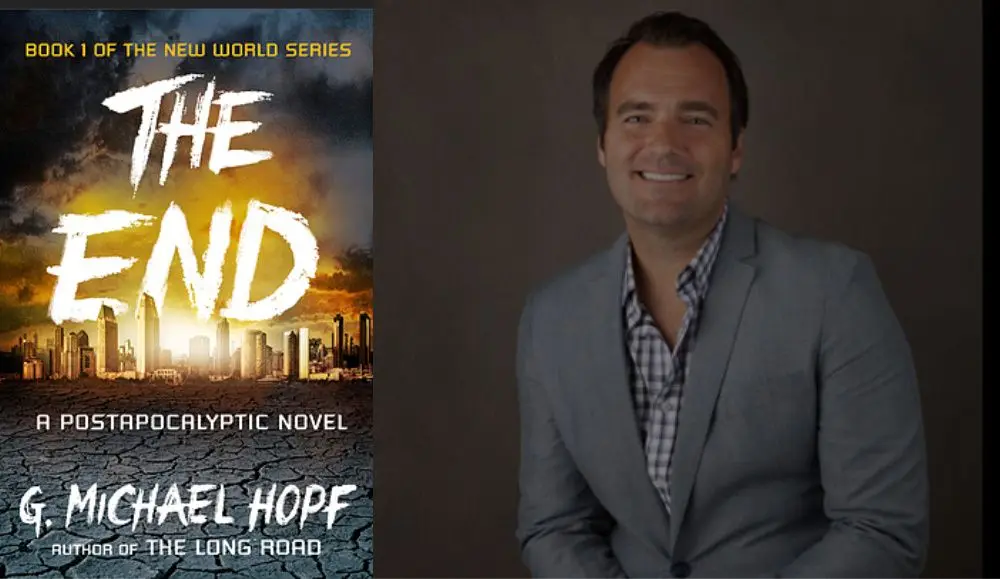
G. Michael Hopf is an apocalyptic author and US Marine Corps Veteran. Much of his life before he began writing was an adventure. In addition to his time as a US Marine, G. Michael Hopf was a commercial diver and an executive protection agent who once guarded members of the Saudi Royal Family.
He credits his travels and the host of characters he met along his way with helping his own character development in his writing.
Today, his books have a massive following amongst apocalyptic fiction readers. G. Michael Hopf has authored close to 30 books including his best-selling New World Series.
In this episode we discuss his amazing story and how he went from the Marine Corp to becoming a best-selling novelist. We also speak at length about his creative process and the business of writing a book.
You’ll learn:
- how he started writing
- how he develops his ideas and characters
- what it was like marketing his first book
- his advice for new writers
- and so much more
To follow G. Michael Hopf and keep up with his work head over to his web site at: https://www.gmichaelhopf.com
Transcript
Machine-generated from the episode audio and lightly edited — may contain errors.
Chris Albert (link to this point)
The Warrior Soul podcast is written, produced, and edited by me, Albert. Our mission is to provide tools, tactics, strategies, and ideas to US military veterans and anybody else willing to listen to help them to navigate toward living their absolute best lives. If you find these episodes helpful, please share them out with somebody that you know of that can use them. And if you really like the podcast, please also head over to iTunes and write us a written rating and a review. It really helps us to spread word about the show, and it really helps to get these tools in the hands of others who really need them.
This podcast is sponsored by f bomb nutrition. They make awesome delicious packets of macadamia nut butters. They mix them up with chocolate, with sea salt, with pecan butter. They're absolutely delicious, and they also have a number of other fat fueled snacks, like their meat sticks and their cheese crisps. They're amazing people who are sending boxes of this stuff out to the troops on the front lines, and they're offering 20% off to our listeners on their first orders.
If you head over to www.dropanfbomb.com and use the code Warrior Soul at checkout, you'll get 20% off of that first order. And I'm gonna keep the announcements short and sweet today. You can stick around to the end. I got a really special announcement about a brotherhood that we're creating here at Warrior Soul. So hope you enjoy this episode.
I hope you get a lot out of it. And without delay, let's get into it.
This is Chris Albert, and I'm here to remind you of one thing. Someday, you're going to die. That's not some morbid statement or scary idea. It's solid fact. Your time here on this earth is limited.
And we need to be reminded of this as much as possible for one simple reason, to live your best life while you can. This is the Warrior Soul Podcast.
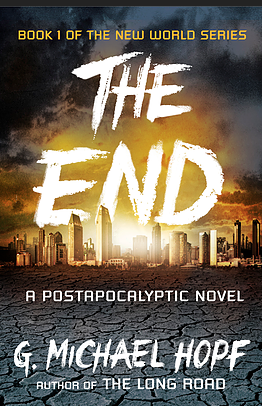
Alright, We got a great episode for you today. It's with mister G. Michael Hopf. He is a novelist. He's also a Marine Corps veteran, and he's written, I think it's eight or 10 different novels and he's got this series, it's called the New World Series and the first book is one of his most famous books, it's called The End. We get into a great conversation with him.
He spent time in the Marine Corps when he got out. He was doing a lot of, private personal security, executive security, executive protection, and he decided that he wanted to write. So what he did? He went and he got started. And today he, like I said, he's written numerous novels.
He's made appearances over at Comic Con. He's got a huge fan base out there. And, he's also helping others to read. He's very open, not helping others to read, helping others to write. He's very open about helping guys who who wanna get started in writing, wanna get going on maybe their own novels or their own books.
And we talk about that quite a bit. I really enjoyed this conversation. He's an absolutely great dude. And, you know what? Don't have anything more than that.
Be sure to stick around to the end because I've got a few special notes for those of you out there. And with that, let's get into this conversation with mister G. Michael Hopf, the author of The End and The New World Series. Welcome to the show, Jeff. How are doing today?
G. Michael Hopf (link to this point)
I'm doing great. Thank you, and thank you for having me.
Chris Albert (link to this point)
Absolutely. Absolutely. And I've got one of your books here. It's called The End, a post apocalyptic novel. We were just talking a little bit before, but I'm going through this book and, you know, I'm on edge every second, every chapter I'm reading it as as the sequence of events is is occurring.
And one of the questions I had for you is, as a novelist, how how do you come up with these storylines? Where where do you get your material from?
G. Michael Hopf (link to this point)
Well, that's a great question. It's kind of a mixed bag. I know I pay attention to kind of popular culture a lot and also current events and things like that. Also, there's a kind of a combination of current events as well as kind of a fascination as it pertains to science fiction, like kind of what if scenarios. As it pertains to that book specifically and the post apocalyptic genre, I've always been fascinated by the what ifs.
If something, A, event occurs, how will people essentially react to that event? And that's why as you're reading The End, you're meeting these characters in the event, you're watching them just before the event and then as the event occurs and then post event and what exactly they're doing. And I always just have this belief. It is a real belief that in modern society you, if you take away kind of the conveniences, if you take, you bring us like a grid down scenario, people aren't used to living like that. And because if they, because they know they lack the skillset to survive in a post electrical world, they'll panic and freak out.
And then they're in calls that causes chaos. Chaos then turns into bloodletting and then society collapses because people don't know how to one, work together and two, they lack the skill set. So again, people's, it's people's lack of skills and inability to work together is what will bring about any kind of future apocalypse I believe. So I just look at just how humans interact. I look at, you know, again, current events and then mash that up with kind of some kind of a singular event that could bring about it. And then then I ask her in whatever that whatever that is and write about it.
Hope that makes sense. But
Chris Albert (link to this point)
Absolutely. And I I wanna I wanna get a little bit more into your process in a second, but let's talk a little bit about where you come from, what what your background is. You served in the United States Marine Corps, and it seems like that experience kinda bleeds into your stories a whole lot. Can you tell us a little bit about that?
G. Michael Hopf (link to this point)
Yeah. I think it's I think a lot of writers or people, even non writers, have heard about the concept of write what you know. And so I do that as far as the characters. It just made natural sense that I have characters in my book that were Marines only because I spent six years in the United States Marine Corps. I was a, what they call an 0352 anti tank gunner.
So essentially I was the infantry man that rode in a Hummer. The one of the lucky guys. I've got a funny story about that too another time. And so I definitely incorporate that and the deployments I went on, but then so from the Marine Corps, I still kind of had a thirst for adventure and then from there I decided to not go to college like a lot of my other contemporaries did. Decided, I'll become a commercial diver, not driver, diver.
And because I still kind of had this hunger for adventure and I thought it paid a lot, which it does by the way. Did that for a couple years and then I got invited to work for an outfit called Vance International, which was an executive protection group. And so I went and did the interview, they accepted me and next thing I had, then that started me on kind of a ten year journey with them doing EP work for a variety of clients, you know, around the world. And then that and then I shifted gears to doing a more entrepreneurial stuff, did some real estate and then one day I decided to write a children's book was first thing that I did. Once a children's book was completed, I kind of started kind of with an idea.
And then once I actually had it in my hand, I realized I can I can my idea can manifest into something that I can actually hold in my hand? This is a pretty cool concept. And so I've always had this idea about a novel, which is the one you have, The End. And so I decided just to sit down and start writing it. And I made the mind shift at the time time though too that I wasn't going to treat it like a hobby, I was going to treat it like a job, like a second job because I was already working another at the time so I just, I literally was, I get back from work and I sit down at night after the family went to bed and I'd write, write every single night to try to make sure this thing I got it completed and eventually did and then then the book took off and then my life has changed and now I'm a full time novelist.
But going back to what you were talking about earlier, definitely I incorporate in any of the books that I have, 30 now, that my own life experiences coupled with again kind of the melding in kind of the current events and kind of the science fiction or kind of fantasy of what would happen if something else, if something were to happen and how people react to that. But all the characters you see are definitely mashups of people that I know. It's just because it's easier instead of just making it up. Sometimes it can sound like a bunch of, you know, bs. So I just literally take from how how people talk, their their mannerisms and and things like this kind of blend those into characters, specifically some some of the bad people, some of the kind of the antagonists you find are people that I don't like, and they're kind of the the mashup of those people.
Chris Albert (link to this point)
Wow. And and so being having been in executive protection and and a host of different jobs, you probably ran into a lot of different characters there that, you know, I mean, just thinking off the top of my head, somebody who needs protection to go into an area of the world or or or a certain place. You know, what I'm seeing there is maybe somebody who's not entirely put together needs to rely on other people in order to do that. And have did did did those types of personalities make it into your work as well?
G. Michael Hopf (link to this point)
Oh, absolutely. There's when you when you work for people and I I was doing I wasn't doing any government work. I was doing primarily just corporate executives providing that as well as get we we got into what they call cultural property protection. So we were working for the fine art museums and institutions around the world and and and would help, you know, take take a a piece of art that was on loan from one institution to the to the other. And so we were protected, you know, as it was en route.
Anyway you meet some really interesting characters specifically looking at some of the CEOs and are making buttloads of cash and whether they own companies. There's some really interesting, some of them are really good people, some it's just like anywhere you go, right? There's some good people and there's some not good people, but some were just some narcissistic self centered assholes, like just, you know, and so they've made it in some of the books too. I remember a guy, it was right at 9/11 I was providing protection for a gentleman. On 9/11 we actually had, he had a tee time up in Pebble Beach and I went, I got the vehicle ready and then all hell was breaking loose back east and then within a short period of time they shut down airspace.
So we were supposed to fly out. He chartered a plane. We're supposed to fly out private out of Palomar, which is up here in SoCal and I got a call from the pilot. We're not going wheels up. Everything's shut down.
No one's in the air. Everything's done. So I call him and I tell him he's like freaking out. He's having a meltdown. All he cares about, there's the country's under attack, right?
And thousands of people have died. We were at that time probably thinking it could be tens of thousands if you remember. And he's only concerned about this tea time he has in in Pebble Beach. It was just like, wow, this guy's like so disconnected. Wow.
So only self centered about his own needs. It was really kind of fucked up really. And so I was like, I can't work for this guy anymore. But so yeah, people like that are I incorporate them also into my books. I clearly never use names again and lots of times they're just mainly mashups of people, not necessarily one individual.
Chris Albert (link to this point)
And so when you started this this first book, you know, you said you were working in short bouts after work. Right? So you were treating it like a job. Every night you would come home and you would write. When you started out, did you have a structure in mind?
Did you draw it out? Or did you have like diagrams and things like that? Or was it I'm just gonna get in front of the computer and whatever comes out of my brain, I'm gonna put it on the screen?
G. Michael Hopf (link to this point)
That is a great question and one that a lot of people that want to write a book try to understand. You go to any creative writing class and they're very big about what they call the outline of the book and really hammering that up beforehand. But then there are other people, some of them incredibly successful that think outlines take away the creative process of the writer. Stephen King is one that he is adamant and I think everyone's heard of him and there's other very popular writers are the same way. They think that when you have an outline sometimes the writer can become hostage to the outline and then they'll have the outline and then when they're writing their brain doesn't necessarily go and kind of, I call it organic writing where you're writing and essentially like the story starts to kind of take over and then you're creating or coming up with situations or characters that you never would have imagined because you're in that creative process.
I know it might sound odd, but once you really get into that, there'll be stuff that will come out of your mind. You're like, where did that come from? This is amazing. Wouldn't, that doesn't necessarily come out when you're doing an outline because an outline is kind of almost a great, it's very technical, structured, it's almost an analytical process. Well, when you're actually writing the story, you get engulfed in it and then these details and these situations, these characters or whatever are coming out of you, you know where they're coming out of it.
So when you have an outline and you're very strict about adhering to it, you're constantly in the back of your mind thinking, well, I can't deviate from that. I can't, even though I have this urge to kind of explore where this character wants to go, I don't know if I want to do that because that deviates from my outline. So what I typically do is I will I take a lot of notes. Some people say that's kind of a quasi outline, but I don't think it is. I just take a kind of I'll have an idea like a movie in my head.
How how some of these scenes are playing out is typically like the beginning of the book. Also have I typically also have the ending already kind of played out like a movie in my head, too. But so I'll I'll sit down and I'll just take a bunch of notes and just flesh out some characters and flesh out a basic just kind of idea of what it's like. Again, it's more of an idea of how the story will go. Then I sit down and I just start hammering out the first chapter or the prologue because again, I've seen it in my head and playing like a movie and I put it down on the page right away.
I just get it on the page. If I already have the ending in mind, I'll do that as well, but I give myself the freedom to make any changes at all. I don't I don't I don't, I'm not very strict in that. I put it on the page and then say, you can't change that. I'm very open to it because as organic writing process is going along, I, the ending will change.
Like I was just writing this. I just finished a manuscript yesterday and I had to go back and change the ending because of how the story was going along. It was much better than I'd ever imagined much better than my notes. And so I was like, I loved how it was going. And so I, when I got to the end, I went ahead and changed all that up again and it made it for a much better ending, but I'm just a big believer in that.
So I take the ideas, I get them in notes and then I just start writing and then I just kind of let the creative process of this organic writing kind of just happen. And so I did that with The End I already had, I always had this vision Of that, it's what's now the second scene in the book where it has the main character, he's in the battle, the second battle of Fallujah. You know, he's the anti he's that TOW gunner there. I've always had that scene where he's sitting there and he gets the gun up and the pop in the whiz. That sounds very familiar to me being a TOW gunner.
I think he hits that minaret, blows it up. And anyway, so I've always had that that that. Seen in my head for years, and so that was natural, easily to write that down. But what what came later is that it didn't feel right. To start the book in that scene, I thought then I created that prologue where you're taken into the future and it's really the story you're reading is really a story being told by his daughter 50 later.
And that actually became very successful. A lot of people like that having that just very simple, very short kind of prologue that kind of introduces to you, the reader, what you're about to experience and what is actually going to eventually happen in the future.
Chris Albert (link to this point)
Yeah, I liked that a lot too. And like I said, I'm partway through this book right now, and I find it extremely engrossing and and definitely am sitting there every second that I'm reading it, wanting to see what's gonna happen next. And and you keep tend to keep the reader on the hook like that. And it's it's it's an interesting thing to me when an author is able to do that, to keep you on the hook and to say, alright, you gotta read this next chapter. You gotta you gotta spend, you know, ten more minutes here on reading the next few pages.
Was that something that developed as you had been working on this book? Did you did did had you learned how to do that? Had somebody trained you how to do that? Or is it something that that you just learned how to do as you went along?
G. Michael Hopf (link to this point)
I just I didn't take any creative writing classes. I had I've always had the idea for the book and I just when I'm really enthusiastic about something, I just start, I mean, I'll do a little bit of research on stuff, I just start doing it. I go back to, there was an interview that Ernest Hemingway and I think everyone's heard of Ernest Hemingway and he was being interviewed and he was asked, what's the best advice you could give a writer? And he said, just write. And I think it's some it's people will put a bunch of obstacles in their way to prevent them from ever actually doing something.
It's not that I'm against education or against training. It's not that at all. It's what what I always encourage new writers is you're one, if you're you're a first time writer you've probably had this book burning in your head for a very long time and so I think it's more important to sit down and start writing it. Don't put all these obstacles in your way and say, why don't you go take creative writing classes over the next six months or I need to go get a degree in creative writing. I think what that does is it again it puts it puts out your dream or your goal way way out and you have to accomplish all these other things before you can get there.
I think you should just start writing the book and just getting it down on the page. It doesn't say that you can't be taking creative writing classes while you're doing it, but I think it's more important to sit down and just start to write. So to go back to really answer the question though, I just I just did that. I just just started writing it and just I made mistakes along the way. But again, I didn't beat myself up over it. I it was kind of the journey more than just this goal of getting the book done.
And a lot of those was funny. A lot of the way the scenes are in a way I leave them. So then we bleed you into the next and makes people want to turn the page. I kind of got that from my television shows, how some of these really interesting television shows will take you up this interesting scene, drop you And then you jump into another and then you, and then you, you were like, Oh, what the hell just happened? Whatever.
And so you're wanting to keep turning the page. I kind of stole that from like, I think it was the television show like 24. Yeah. It takes you, it takes you up and like this right there. And then like, Oh, what the hell is going on?
And you're waiting to the commercial break or what, what are waiting for the next thing to happen? So I kind of took it from there. And I was like, what if you kind of, I kind of, I can adapt that to a book and keep people and keep it pithy too. Like some people I noticed will go on and it'll keep the very verbose and just keep talking or keep writing and writing and writing. I was like, no, no.
So I to give them just enough, just enough little in the one another bite. And so that's kind of what I did and I've heard it worked out.
Chris Albert (link to this point)
Yeah. No, absolutely. That's I think The Sopranos were the first show that really did that. And and then it just keep kept evolving with all these different different shows that that kind of keep you on a hook and that make you wanna watch more. And before you know it, you're watching Netflix for four straight hours.
G. Michael Hopf (link to this point)
That's true. Yeah.
Chris Albert (link to this point)
Have you ever read the book, The War of Art by Steven Pressfield?
G. Michael Hopf (link to this point)
No. I have not.
Chris Albert (link to this point)
It's a it's an interesting book because he describes the same thing that that you describe. And and Pressfield was a was a US Marine as well. He wrote the book, the Gates of Fire, which they they read in the basic school now, the all the military academies. But in The War of Art, he describes his life as an author up until he he didn't make it big up till he got into his fifties. And the guy was, like, living in a van.
He describes this scene where he had his typewriter was underneath all of his clothes and he'd have to pull it out and all these different things. But one of the things he says in the book was that this this concept called this like invisible force called resistance gets in the way of everybody. And every anytime you're trying to do anything big, anytime you're trying to write a book, it keeps you from doing your art. And he says resistance kicked his ass up and down the the both coasts, you know, up till he was into his fifties. And it wasn't until he was in his fifties that he learned how to beat it, and he learned how to to to just get the work done, and that's when he got his first novel out.
G. Michael Hopf (link to this point)
Interesting. Yeah. That I I can relate to that. That resonates as well. It's kind of also that invisible.
I call the the ether, the creative I said that's not the opposite. That's that that space that when you're really into creating anything, by the way, I think it could be whether it's art or whatever you're doing, you're really focused. And on the in the creative process, these ideas start coming to you, and I always said they're from the that's where they're coming from. I think it's probably the inverse of what he's talking about, that resistance that's there. Well, if you can break through that wall, then there's all this stuff on the other side, which is absolutely amazing.
And you you again, your analytical mind really can't come up with it. But once you're in that other space, it's it's really there and it's it's available to you.
Chris Albert (link to this point)
Are there any things that you do with your environment when you write? Like, do do you have certain things in your office? Are there any rituals that you do beforehand or anything like that?
G. Michael Hopf (link to this point)
I just have coffee. If it's at night then I might have a glass of whiskey but it doesn't mean I don't write when I'm drunk though but I have, it's not always the greatest stuff but you know, I'll just use it to relax. But I I just have to have some kind of a drink with me and then I just use I just use it like people always ask me, like, kind of equipment do you use? You use any kind of special software? I'm like, I'm pretty I'm pretty simple because it's not about all this fancy software.
It's not about all this fancy stuff and expensive equipment. I just have a very cheap Dell laptop. That's it. I have a little thumb drive to six off the end of it and I just use Microsoft word. That's it.
That's all you need and then access to the internet for research or if you have an idea or you want to find a synonym on something, but that's pretty much it. I keep it very, very basic. I always look at it this way too for new writers. It's important to be the storyteller. Again, this is the difference between, I'll probably overuse the word creative process, words, creative process or being creative too much, but the the the, it's important to be the creator.
You're the storyteller. I know it's so easy for new writers to get caught in this habit of they'll write something then they'll go back and they'll put on the editor hat and then they'll start to try to edit what they've just written and I think that's wrong by the way. If you're an experienced writer you can do that without getting caught in this what I call crazy gate trap and I can explain that later but that's by keeping things very simple and then with your equipment, don't over overthink any of that. And then when you're, once you're, what you're creating, just literally create, be the storyteller. Don't worry about any of the technical stuff.
Let's get the story on the page because the rough draft is the rough draft and then go back and then you can start doing the heavy lifting of editing and rewrites and things along that line.
Chris Albert (link to this point)
Awesome. And so when once you get through the book, right? So you get your first draft on. What's the process from there? You go back, you edit, and then and then do you start thinking about how you're gonna get the book published from there?
G. Michael Hopf (link to this point)
No. I don't I don't worry about the well, I mean, I do think I'm always thinking about the how I'm I'm gonna get that published and it depends like so if it's if this happens to be a book that will be with a mainstream publisher then it's just about I'll go I'll I'll then I have to worry about the publishing. I know they're going to handle that. Then so what I'll do when I'm done with the manuscript, the rough draft, I immediately I close my computer. I'm done.
I actually quit working for that day. I think it's important that once you're done with the rough draft, this again, this goes back to new writers. They should go celebrate. They've actually written the book. It's still in rough, rough form, but yet they've completed a book and it's important to go, I'm done.
I feel amazing. This book is I crushed it. I know I still got a lot of work to do, but I'm going to go celebrate right now. Whatever that means for somebody to celebrate. And then the next day, open the computer up and then you begin the heavy lifting of reading through the book and cleaning up anything you might you might see.
And I do that a couple of times and then I then I then I just shoot it over to my editor and she she she does what she does and she does a hell of a lot better than I can do. But thinking about the publishing, it just depends like if it's with the mainstream publisher, I'll do that. Then I send it to them and then they do all the heavy lifting. But if I'm doing, if I'm self publishing it, then I'll start working on cover concepts with my graphic person, make sure I get all the self publishing platforms lined up and, start preparing, start preparing everything for that and start working on looking at, you know, the marketing is kind of like, I just, just take this and fill that in. It's kind of easy now for me actually.
I know how I'm going to market it. So I just make sure I start lining up. I start lining up the campaigns and everything like that.
Chris Albert (link to this point)
And so are you, cause you've done 30 books and that's a lot and so are you working on one book at a time or are there several concepts floating around at any given time?
G. Michael Hopf (link to this point)
I've got, I told my wife, not only she has a very nice, I have a very nice life insurance policy in case I kick the bucket, but she can go on my computer and I think I have, there have got to be dozens of story concepts and notes and some chapters already written just sitting there like she could, I told her, I said, don't tell anyone I'm dead, Just hire a ghost writer. You've got all the, you've got years of material. You just see all these books, you can keep going. But, so I I'm, I work on probably two, the average of that, maybe three books at one time.
Chris Albert (link to this point)
Mhmm. And I gotta ask this too because, you know, we live in in times where I think everybody's stacking money away for for retirement. Right? So as much as possible. But because right now, economic times are pretty good.
So everybody's kinda, like, pushing, pushing, pushing, and and, you know, the decision to go from, okay. I've got I'm doing real estate or I've got this executive protection job to saying, okay. I'm gonna do this now full time. What was that like for you and and what what allowed you to make that decision?
G. Michael Hopf (link to this point)
It was because the well, I was very fortunate. It came down just to one was money. I published the I stopped. Well, it's kind of an interesting journey. I hadn't I had an actual literary agent before I published my first novel, which is very difficult to get.
And she wanted to make some real structural changes. I then I didn't want to do that. I had a lot of beta readers out there that have read the book, the one you're reading, The End, and they really enjoyed it and so I'm a big believer in going. I'm a big believer in what the market will dictate and my beta readers were the market. They were kind of the demographic that would pick it would actually pick the book up and they really enjoyed it.
I knew my literary agent. She's a wonderful woman. She really wasn't the market. And so she was wanting to make these changes to book with it. That didn't that didn't feel right.
And I think violated the integrity of it. So I fired her. Everyone thought it was crazy to fired a literary agent because I was supposed to be going traditional with her. And I went ahead and hit self published. And for about ten days, the book languished selling about 10 to 15 copies and then it just took off and then it just wouldn't stop selling.
I didn't know. I thought it was just some kind of weird blip or whatever. So I didn't get excited right away. And then it just it just wouldn't stop selling. It just it just took on a life of its own.
And then after about three weeks of it, just crushing it, I was like, I printed a spreadsheet out and I told my wife, I was like, there's an opportunity here. Like, I need to get a second book out right away. I sequel to this. I can't wait eighteen months. There's a window of opportunity that I need to go through right now and she of course was resistant when I first mentioned it to her because she was like, you want to quit your job?
I mean, cause that's what I was telling her. Need to quit my job and work full time to get the sequel out. And I then that's why I was smart. And I presented her the spreadsheet. Like this is what we're going to make for the first month of the book.
She was like, Oh my God. It was like three times what I just made per month when I was already making. And she was like, that was a no brainer. I think this could, this could really, this could be something really big. We could be on the doorstep of something that changes our life.
And so she was like all in. And so I quit my job and I went to work and I got the sequel out in four months. And so it was more of kind of a monetary thing. Was like, I was looking at. For some reason, people like the book and they were really captivated by it.
I knew I needed to a second out because if not, you can't wait too much time in between, I believe. And that really benefited me a lot to get to do that because the second book with presale was already at number one across multiple genres. And then I was like, like when it acts on release day on release day it got I was almost outperforming George R. R. Martin's latest release at that time.
Chris Albert (link to this point)
Oh wow.
G. Michael Hopf (link to this point)
Oh it was I was doing really good. You know I was doing really good. So it was it was a monetary thing. I was like and also it was the money when I could provide for my family and two It was just it was just like, oh my God, I could have this lifestyle as a writer. This would be a really cool lifestyle.
I'm working for myself. Like so I went all in, took the risk.
Chris Albert (link to this point)
And do you know what it was that caused it to take off? Because, you know, obviously, you probably wanted to duplicate that. Did did did you see what variable it was that that made it take off ten to fifteen days in?
G. Michael Hopf (link to this point)
I I don't. I I've I've asked I've been asked that question a lot. I wish I could say I a plus B equals C but I don't know. Mean I do remember when I was looking at the genre in 2011, like it was just on Amazon looking at the product pages and looking at the bestseller lists for post apocalyptic and dystopian fiction and I saw there wasn't a lot of competition there and that I just what's interesting, so Amazon's really changed in that time period but I was like there just doesn't seem to be that many people in this space And there still isn't overall when you compare the post apocalyptic dystopian to say your generic thrillers and things along these other kind of romance. These are the kind of categories are out there.
So I don't know if had to do with that. It was just a new book in that space and there wasn't a lot of competition at the time. I mean there still was a ton of books but there wasn't, I just don't know. I don't know. I can tell though there was clearly some kind of enough people sort of reading it and somebody must have been telling other people because then it took on this kind of like organic, all of it just went viral.
It's really the best way to describe it.
Chris Albert (link to this point)
Wow.
G. Michael Hopf (link to this point)
And Amazon's algorithms are just kind of set up for that. So once a book is being hit or clicked or saved or added to wish list enough, it starts populating all over their search engine and populating all over other people's product pages. And then I think so it just was just slow, just build up and then it just boom, it just took off at day 10. I mean, I literally went from like five sales the day before to like I woke up in the morning and I checked it was like over 50 already. Was like, what the hell?
What just happened? I didn't know what's going on. And it just wouldn't stop. It just like there's another five. I hit refresh another 10.
I was like, oh my God, I was like, is this what's happening? Is there some kind of weird promo? And that never stopped for months.
Chris Albert (link to this point)
Wow. And so hindsight, the self publish option was probably a really, really good decision on your part because
G. Michael Hopf (link to this point)
it looks that way, right?
Chris Albert (link to this point)
Yeah, absolutely. Because that meant that you got most of the revenues from that book. When you were doing your own market research and deciding who the audience was that you were putting this out to, how did you start to figure that out? Did you did you have an idea beforehand? Did you had you had you interviewed various audience audience members?
You spoke. I know you said you had beta readers, but were there focus groups? Had you asked them beforehand?
G. Michael Hopf (link to this point)
I wouldn't I wouldn't say they're essentially focus groups I looked at. I know that there's the post apocalyptic genre itself is a subgenre of other genres. Right. And it's not as big as you would think it is. But I know that I did.
I was doing research on Facebook specifically and just what I was doing. I wasn't interviewing people. I was just looking at where other books and other where other people were talking about these books and other groups they were in specifically. And I noticed that a big chunk of the demographic were preppers and survivalists. They they like they like the post apocalyptic genre because they look at it from not just an entertainment value, but is the writer providing content that is valuable for them?
Can they can they take something from it that they can apply into their own preps? And so that was ended up so because of that, I started I picked up on that right away and I started reaching out to a lot of lot of those groups. At the same time, I was I've always been kind of more prepared minded individual at the same time, too. And so I started reaching out to them and trying to get interviews and talk to them, jumping on, doing kind of blog posts, because once the book took off, then even in that community, people were talking about it. And then then you kind of have the very science fiction wonky types that kind of like post apocalyptic and I kind of reached out to them and as well as you also have the zombie people and because The Walking Dead was, you know, you know, really popular at the time.
Think that was like, it was only in season two or whatever at the time. Now it's a different type of apocalypse but a lot of these people will cross over. They dislike the whole concept of an apocalyptic world. And so I reached out to them as well. And so it was kind of a mashup of your prepper survivalists, kind of the sci fi people and you know the people that like the Mad Max that kind of stuff and then the zombie people.
Chris Albert (link to this point)
That's pretty awesome.
G. Michael Hopf (link to this point)
That's I targeted first.
Chris Albert (link to this point)
That's pretty awesome. And had you gone to any conferences like comp I know you're down in San Diego like Comic Con or anything like that?
G. Michael Hopf (link to this point)
I didn't before I started. I ended up going to Comic Con later. Was invited to go speak on a panel back in 2015 or '14, something like that. The art of fear, that was a panel I spoke on.
Chris Albert (link to this point)
Oh, Nice.
G. Michael Hopf (link to this point)
Yeah. Comic Con's a great place. It's so much fun. Have you ever been?
Chris Albert (link to this point)
I've never been. I wanna go someday. Down.
G. Michael Hopf (link to this point)
I mean, I'm in San Diego. You got a place to stay. It's but it's such a fun, fun time. It's like it's like the happiest place on earth. Like everyone's all decked out.
Everyone's just having a good time. But it's just if you're really into kind of the science fiction genres and any of that kind of content, it's it's a great place to be.
Chris Albert (link to this point)
Awesome, awesome. Now, so you get your first book book done. I know you said you wanted to jump through that window of opportunity. Once you saw that that this book was was gonna become successful, what was your thought process in starting the next book? Where Did you have any issues remaining creative?
Did you have to get yourself back into the creative mindset or anything like that?
G. Michael Hopf (link to this point)
Well, it was I had a little bit of issues as far as where I wanted the story to go. So I had taken notes about, I always knew I wanted seven books and I don't know why I came up with that number a long time ago, but I remember putting that out. And I had taken notes creating what it's like a series arc, understanding where I wanted the characters to travel along all seven books and ultimately end up at the end of book seven. And I've also kind of gave everybody that foreshadowed that with the prologue that you're going to end up in the year 2066, right? Because you're being interviewed right in the beginning of the book, you're being interviewed.
I mean, there was woman's being interviewed and she's the one telling the tale. So I already foreshadowed where we're going to end up in a new country called the Republic Of Cascadia and the year will be 2066. So I foreshadowed that. So I already had that. So I've taken these notes and then, I also knew because the way the book one ended that I thought the second book would make sense if they were traveling between San Diego and their destination.
And so then I made it, I knew that that's what the entire book had to be about them on the road, main the characters. Of course you had the other characters you're reading, you know, about, you know, Connor and all those other people, but everyone is kind of traveling on what I call the long road and that there is. And so I had some difficulties and that mainly came down to what I ended up doing with a couple characters which have upset some people. My wife mainly. I won't spoil it for anybody but I just, I look at, I look at an apocalyptic world and I'll just say some people die that you're like, what do you mean?
Why did you kill them? And it's just like, well, it's an apocalyptic world. Things are unpredictable and
Chris Albert (link to this point)
like Ned Stark dying at the beginning of, right?
G. Michael Hopf (link to this point)
Yeah, exactly. Yeah. And it will, what it does it from a storytelling, you choose as the storytelling device. It really keeps people on edge then they're like, no one is safe. Right.
The writers tell me that nobody is safe. And so it scares people as a reading is they don't know, they're like, am I going to get invested this in this character and love them? Then they're going to die in the next book or they're going to die in two books later. And so it keeps them on edge, but it also makes it I think kind of realistic. Know how many harrowing situations can one character go through without getting taken out or severely wounded or something along those lines and and I just I didn't want to make it hokey in that way and so there are characters that you're gonna so it's kind of almost Game of Thrones issue that you're, you're, you have characters you're, you're, you're gonna fall in love with.
They get taken up at the same day you're meeting new characters along this journey of the seven books and series. So it's, it's so that was kind of the most difficult thing which was, was to make decision if that's the direction I wanted to go. And, I did. And once I committed to it, then I was all in. And a lot of readers have mentioned that it's they'll they keep they keep reading it.
They keep reading the series, but at the same time they're upset that I break some of the conventional, you know, like I've been told by another agent because you can't kill main characters. I'm like, yeah, you guys, you can because I just did anyway. So it's it's just I just wanted it to feel more realistic versus telling kind of the happy ending story, have the happy ending, you know, so forth and so on. Not saying the ending isn't happy, it's just. It's not as happy as it could be.
Chris Albert (link to this point)
Yeah, yeah, gotcha, gotcha. As far as where you're going, so so you've got 30 books out there. What are you working on right now and and where do you think your destination is? Where where do you wanna end up with this?
G. Michael Hopf (link to this point)
Well, I ultimately have this weird goal of writing a 100 books in my life and I'm definitely on that path and I think I'll I'll I'll achieve that. I just finished up with a manuscript on one book that's now with my editor. I'm also working on a couple of other projects and one I'm going to announce soon, but what I can tell people is I'm always looking for ways of getting additional content because I think content's important and ways of diversifying myself as a writer. And this came to me and I'm sure it's probably not new, but this came to me in early August. I devour a lot of podcasts and some of the podcasts I devour also just people telling stories or it could be true crime stuff or whatever.
Just people like real individuals detailing encounters or whatever and telling stories and I was listening to podcasts, this one and it has a ton of followers for around four years. Was like, wow, there's a lot of content here and I was like, wonder if they have any books that kind of have these encounters in the book because that's a different medium, right? There's people listening to these people's stories. What if they could put it be put into a book form? So I researched they didn't.
So I sent them a proposal of like, you've got the content and if you've ever had idea of putting some of these into a book, this is another medium to one reach a different audience, create additional income stream. So she was all for it. So we created a partnership a couple weeks ago and I, that's one of the projects I've been working on and she's sending me the, she's transcribing some of these shows from her favorites and I'm rewriting them in kind of first person past tense format for readers to eventually consume. And it's just kind of an interesting way of, I call it flipping content. And again, it's just, there's, it's a one way for writers to instead of always having to create their own their own content, their own stories is to take other content exists and then flip that, work that to their advantage and so that's another project I'm really really hot on right now.
Chris Albert (link to this point)
That's that's really interesting because I I listen to a couple of different storytelling podcasts. One of them is they're they're more like nonfiction storytelling. One of them is Disgraceland and it tells the stories of of the the crazy stories about celebrities and how messed up their lives are and things like that. And it's it's got that kind of same addictive kind of thing to it where you wanna hear more, you wanna hear the next one, and he's got this crazy format that's that that he uses. And I think that's really interesting that you're doing that.
G. Michael Hopf (link to this point)
Are there are are they real stories?
Chris Albert (link to this point)
Yeah. They're real stories. Like, there's there's a
G. Michael Hopf (link to this point)
that right there would be a perfect one to flip that content. Yeah. There's a If he's not if he's writer.
Chris Albert (link to this point)
About Rick James and what during the LA riots, Rick James going on top of the roof of his studio, pulling out an AR 15, and just pumping rounds into the freaking crowd around this room.
G. Michael Hopf (link to this point)
Yeah.
Chris Albert (link to this point)
Just nuts. Nuts. Him and this other he had this it it was like a pretty boy lead singer. Yeah. It's supposedly a true story, like Rick James just pumping rounds into a crowd during the LA riots.
But, yeah, that kind of stuff.
G. Michael Hopf (link to this point)
Yeah, and there's there's so there's a lot of podcasts that have a lot of content out there like that. And so, you know, I'm always wanting to like to share kind of stuff like writers, like contact some of these people, like because here's the thing, some people are, everyone has talents for other things. I don't think I'm really good podcasts. Like I've done a podcast years and years ago. I didn't think it came out that good.
And, but some other people are really good. You're really good at this format. And, and, but I'm a, think I do a pretty good job as a writer. And so that's where it's about finding people that are good in their medium and you just kind of bring things together as a partnership and then offer it to another audience that isn't, that doesn't have access to it. Cause there's some people that just don't listen to podcasts.
Right. I don't. Yeah. And so the readers. Right.
And so that was my whole my whole come from. She was like, I hate writing. I'd say it was interesting. She'd already thought about this two years before, tried to do it and she goes, it was just it just didn't work. And so it was just kind of just how again, so this is this goes down to kind of always being open minded to find different opportunities.
And so I was just really, I remember in early August I was just kind of always thinking like there's there's other ways of finding content, there's other opportunities just keeping my mind, just open and thinking about that. And that's when I ended up with two publishing contracts that ended up happening in the first week of September and this deal ended up happening just because I'm always open to opportunities and always putting my mind out there, always thinking about that stuff constantly at the same time always thinking about these different storylines or different interesting concepts. Always I don't I don't get bogged down in negative bullshit at all.
Chris Albert (link to this point)
I guess it's a highly entrepreneurial thing, you know, because a lot of people will think of writers. They're alone. They're in their office. They're wearing some kind of tweed sweater and and
G. Michael Hopf (link to this point)
Smoking a pipe.
Chris Albert (link to this point)
Smoking a pipe smoking a pipe and and sipping some tea. But, you know, you're out there. You're hustling. You're you're making connections with people. You're making deals.
You're creating opportunity for yourself, and and that's why you've been successful.
G. Michael Hopf (link to this point)
Well, is that, you know, I think it's the difference between the, I call it the starving artists syndrome. It's those writers and it can be any artists and painters or whatever. They come from is always, I'm not in it for the money, man. Like, okay. Then like, I don't care how many books I sell.
Then I'm always like, then what's the point? What are you, what are you doing then? It's like, you're wasting all this time and sometimes it's resources. One is time. Time is incredibly valuable and people just take it for granted and I don't care how much money you have.
You can't buy more time, man. It's all, that's all you have. And so you've got to use it wisely. And I don't get it. Like, why would anyone go through, unless there's some kind of therapeutic exercise, what's the point of, of spending months and months and months of writing a book to then not give a shit if it sells?
Right. What that means, if it doesn't sell, that means no one reads it. So I get I go back. What was the point? And and because if the point is just to write a book and then kind of have some therapy to throw it in a fire and watch kind of the ashes floated through the sky and you've been cleansed or whatever pain and misery you've had in your life, fine.
That's okay. But if you're going then to the next step of actually self publishing or trying to find a publisher but then you turn around and go, I don't care how many sales I make. One, any publisher that hears that they go, well we don't want you because they need, even traditional publishers aren't going to do all the marketing for you. They're going to want you to promote yourself and if you're one of those people like, don't care how many sales, I don't care if I make any money, that means you're not gonna put any effort behind it. And marketing and promoting your book is very important.
Chris Albert (link to this point)
Absolutely. And Yeah.
G. Michael Hopf (link to this point)
Yeah, I don't I don't understand that. I just don't get that whole concept. So I I just I don't I never dwell on any kind of negative stuff. I think it's a waste of waste of time. I don't get in any politics about stuff either because I think that's again another waste of energy.
I just don't get sucked into it. It's like I go vote every couple years whatever it is and then I'm back at what I do. Otherwise you get sucked in this negative void.
Chris Albert (link to this point)
Yeah. No. I stay the hell away from the news. I keep all the calls off my phone. If something if the apocalypse is gonna happen, I'm already prepared because I'm reading your book and, you know, so so that's that's that's a big thing.
You know, I know you're also you said you you like to connect with other writers and help them out. We talked about the opportunities that you you just mentioned, but are you working with younger writers right now? And and when you do work with younger writers, how does that relationship work out?
G. Michael Hopf (link to this point)
Well, I do. I wouldn't say they're necessarily younger, some are like older than me. They're just they're just new to what they do. I'm working with another guy. I actually served with him, too, and I'm helping put his, he's getting ready to release a second book.
And so I just spent time with them on the phone and just did this give them counsel. Like when it comes to the writing part, that's all up to them and I will, I will coach them a little bit, give them some advice, but I'd be honest, I don't know how to teach writing per se. I, but I'm good at like teaching them or showing them is a better way, better word to you, showing them how to start their own self publishing platform. I walk through them through that entire process. I walk through how to set up a marketing campaign for when they're getting ready to do a new release, what they should be doing, etcetera, etcetera.
I try to make them make sure they're very efficient with their marketing so their monies aren't wasted. And so that's kind of what I'm doing as far as my coaching is helping them more in the self publishing side versus the, versus the writing side. I will read certain things. I, again, I will help coach them on some techniques that I've used, but the techniques that I use are just what I do. There's other great, greater writers than I am that, that that do other things.
And then so that that's kind of so I'm working with right now, working with three other writers right now, two are vets. So I'm really, really big about helping those guys because I think everyone has a story and for veterans, if they can get their words out, that's awesome. I want them to do that. And again, because a lot of this stuff seems very daunting, and again, most of it I find they want to know how to market. They want to know how can they get their book out to the world.
That's what I coach them on primarily.
Chris Albert (link to this point)
Outstanding. And how can people get in touch with your books and learn more about you?
G. Michael Hopf (link to this point)
Well, you can always go to my website gmichaelhopf.com as well as all my books are on amazon.com as well as a certain number of books you can find in Barnes and Noble as well as on iTunes or and some of the books are also in actual physical Barnes and Noble stores. You can find there are other book retailers, physical book retailers. If people just and they can also find me on Facebook and you know I think it's facebook.com/gmichaelhopf and if anyone wants to they go on they go on my website, anyone wants to send me an email, I'm open to taking any questions and I I'm actually the person who replies to them within a reasonable amount of time. Please email me if you've any questions about writing or publishing.
Chris Albert (link to this point)
Outstanding. Well, Jeff, number one, I wanna thank you for for coming on here. I'm really I really am enjoying your book. Going through it, it's definitely one of those things that keeps me on edge and I have a feeling I'm gonna get to the end of it and I'm gonna be like I gotta go to Amazon now and get the next one. So I'm looking forward to that.
Any last words for our audience over here?
G. Michael Hopf (link to this point)
No, I just want to say that I thank you for letting me on your show. I've been listening to your show for a little while and it's great. You've got some great content. You're doing a good thing. So I'm I'm really honored that I can be on here as well.
Thank you.
Chris Albert (link to this point)
I I appreciate that a lot. I appreciate that a lot. Thank you so much, guys, and thank you all for listening. And, you know, if you're a writer and you've got something in you that you wanna get out there into the world, you know, take some of these lessons. Just get out there and start.
Start taking some action in your lives. Start actually doing rather than thinking, and I think that goes a long way. That's a big lesson we learned here today. So get out there, live your best lives while you can, and we are out.
Alright, guys.
I hope that you enjoyed that episode with mister G. Michael Hopf. I really enjoyed the conversation, and I know that there's a lot of you out there who might have books within you. So I hope that if you do, you're getting started on that and you're working to make that dream come true. Wanted to talk to you a little bit about a men's group that we've got going on here at Warrior Soul. It is called the Warriors Obituary Society and it's a group of men who are empowering each other to live their absolute best lives.
Lives worthy of epic obituaries. And with this group, when new members come in, they go through an eight week program. They're outlining their vision, outlining their goals, they're getting clarity on what they want out of this life. And then from there, what we're doing is we're working on specifics. We're going into fitness.
We're going into your personal development, figuring out your finances, working on your relationships with your family. If you've got a business or if you've got a career you're working on, we want to help you with that as well. And through this development program, they're completing assignments. They're they're they're moving forward on their goals. And then once the eight week development program is over, that's when the work really begins.
We're getting together each week on live calls. We're holding each other accountable to our goals. And as we're going forward, each step of the way, you're going to have a group of men who are going to hold you accountable to what you say and who are going to push you to get to where you wanna go. This is just the start of this amazing group, and, we've been working on it for a while here, and we are bringing on new members right now. So if this is something that really interests you, if it's something that that you want to take part on, go ahead and head over to courses.warriors warriorbusinessacademy.com/courses/warriorobituary.
Now that's a really long URL. I'm gonna work on shortening that URL. But if you didn't get that, just DM me over at Warrior Soul Agoge on Instagram or email me at chris@warriorsoulagoge.com if you're interested and I'll send you more information about it. No pressure, no high pressure sales to come on or anything like that. And honestly, this isn't an expensive program.
I wanted to make sure that it was accessible to as many people as possible. So like I said, if you're interested, let me know. Beyond that, if you enjoyed this episode, if you enjoyed the Warrior Soul podcast, please head over to iTunes, write us a written rating and review, and share this episode out. And with that, I want to thank you so much for listening. We'll be back at you with more awesome content later on this week, and I am out.
Host of the Warrior Soul Podcast and founder of Warrior Soul. Worldwide trainer and nutrition coach, contributing author at Testosterone Nation and Muscle and Strength.