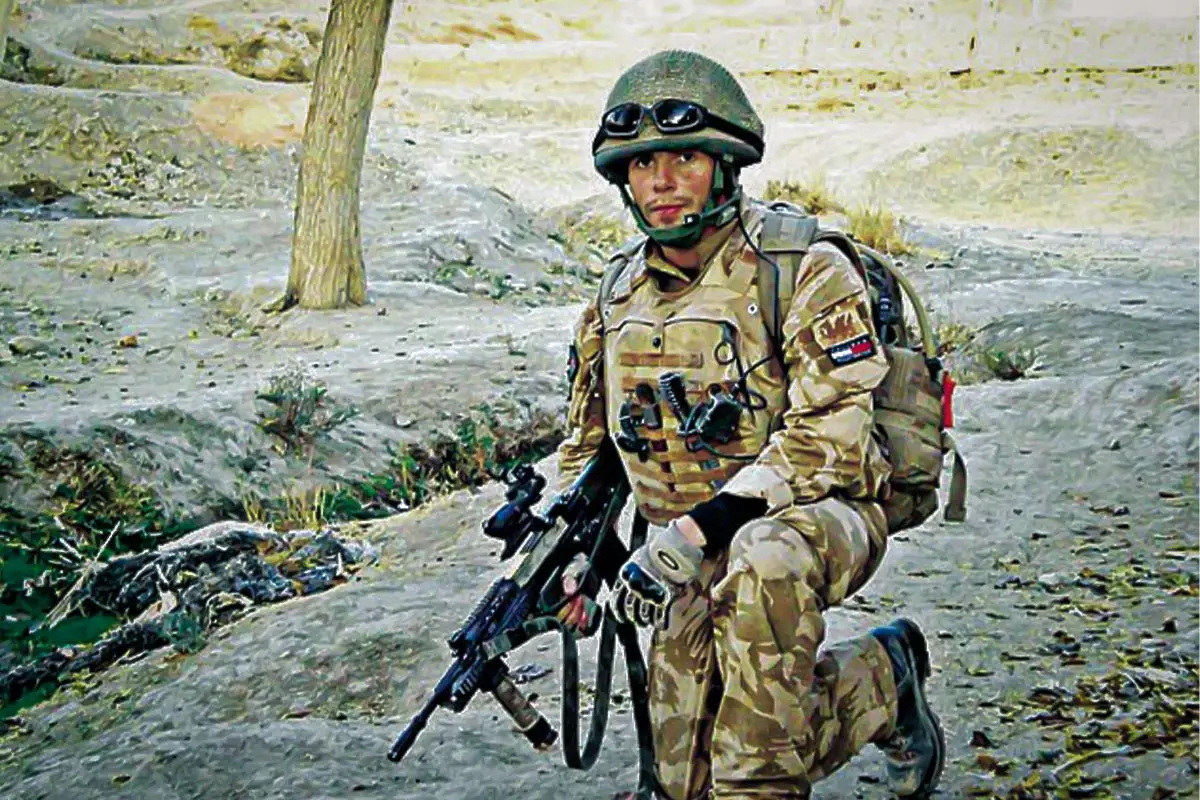
Geraint Jones - Author, Podcaster, and Infantry Veteran
Listen on Spotify by clicking here.
Geraint Jones is an author, podcaster, and Veteran who served as an infantry soldier in both Iraq and Afghanistan for the United Kingdom.
Geraint has written a historical fiction series about the roman legions, and his Afghanistan memoir Brothers in Arms was published in 2019.
Geraint is also the host of the Veteran State of Mind Podcast where his discusses current events, veteran success stories, and life with fellow Veterans from around the world.
I've been wanting to speak with Geraint for a while. He has two of the most thought provoking Instagram pages in the veteran community and we had an excellent conversation.
To follow Veteran State of Mind on Instagram click here.
To follow Geraint's personal page, click here.
Transcript
Machine-generated from the episode audio and lightly edited — may contain errors.
Chris Albert (link to this point)
What is going on, everybody? Welcome to the Warrior Soul podcast. Man, I am here with somebody today that I've been following quite a bit. I've been definitely vibing with the stuff he's been putting out there on Instagram and on his podcast. Geraint Jones, welcome to the Warrior Soul podcast, man.
How are doing today?
Geraint Jones (link to this point)
Thanks for having me on, mate. I'm doing great. As we were just talking off camera, it's nice to actually have this time to sit down, have a chat with somebody like minded, maybe not like minded on everything. We'll find out. But it's it's it's so cool, bro, to, like, you know, I was just kinda having a little complaint about how things are kinda going bad in some things in the world.
But on the other hand, this ability to just, like, connect with people all over the world is pretty cool time to be alive.
Chris Albert (link to this point)
Oh, absolutely, man. Like, I I love the stuff you put out there on on your Instagram page. I love the the stuff you're doing on your podcast. For for the audience at home who might not know who you are, could you go into like a give them like a thirty second synopsis of your story, who you are, what you're doing, where you come from?
Geraint Jones (link to this point)
Yeah. Sure, mate. So I joined the army before 09/11 as a reserves with the idea of going in for a full time career. I wanted to do the officer route. I went to university and everything, did the degree high in history and in politics.
And then I thought I'd go out and do one one deployment as a a grunt just to kind of get a feel for it. I thought it may make me a better officer and then I realized you know actually this is kind of where I want to be. Don't want to do the officer route anymore. I did back to back deployments in Iraq, six, seven in the infantry. Then I went back out to Helmand Province Afghanistan two thousand nine, two thousand ten.
And then honestly I'd had my kinda had my fill. I got really lucky that I'd gone on to the tours at like the kind of like the peaks of both, you know, you call them insurgencies. And I just thought I've got everything I want here. So I went into, I started to, I'd become a physical training instructor in the army. So I started working in the gym.
That really wasn't it for me. So then I started to do the security on the ships, you know, run Gulf Of Aden, all that kind of stuff off Somalia. Then I did some West African jobs, and then I started writing while I was on the ships. That kind of took off for me quite quickly, and I've been writing full time now for about about five years.
Chris Albert (link to this point)
That's awesome. Which genre?
Geraint Jones (link to this point)
So I write everything, mate. So right now, I've got three books to write by the middle of January. And they're but they're all for other people. So I like, it's a lot of what pays the bills as a writer is is ghostwriting, really. Like it was ghostwriting that enabled me to do this as a full time job.
So I'd say for every book that I write with my own name on it, I'm probably writing two or three for other people with their names on it. And you know, like that that could be really cool because you know, you learn from each one of those people. Like at the moment, I've got I can't really go too in into it, but I'll just say that one of the books is in like the world of like nature. One of the books is like kind of the underworld and the criminal underworld. And what's the other one?
Oh, the other one is a military book. So like, know, three different topics which I obviously have to research and everything like that. So it's really kind of fun because I get to the other thing as well is I get to meet like really interesting people doing this and through the process you become, you know, you become like, you get to know these people really well and become mates with them.
Chris Albert (link to this point)
That's awesome.
Geraint Jones (link to this point)
And there's some of these people, you know, like people are paying these guys 6 figures for a speaking engagement, and I get to pick up the phone and ask them all the questions I want for the book. So, you know, I think at first, I'll be quite honest with you, like a lot of young men, especially soldiers, I had a bit of a chip on my shoulder like, why can nobody recognize my genius? Why am I not getting paid 6 figures for my own books? You know? But then I'm like, now I'm just like, yeah, this is awesome because one, I get to work with other people, which is, you know, nice.
Mhmm. But I get to learn like every single one of these people, you know, I'm learning from these. These are people that I look up to. I get to learn from. And it's really kind of it's it's it's a nice balance to have.
Write my own stuff, write other people's. And by doing other people's, I think that I was able to transition like, you know, because to be real, to be honest to me, a lot of people say I must be really difficult to, you know, become a force on writing stuff. I actually didn't find it was. And I think it was because of the willingness to just take on other people's work rather than say, no, I'm gonna keep, you know, I'm gonna keep waiting until I get that one huge deal myself and then I could just do my own stuff. I'm like, alright, well, what will get me closer to my goal writing for other people?
Cool. Let's do that. Went from there.
Chris Albert (link to this point)
Awesome.
Geraint Jones (link to this point)
That's awesome. Oh, and I also do screenplays. So we got a right now yeah. Right now we've got a movie finished. I did a movie with my bro Nate Boyer, former Green Beret, Seahawk.
Nice. Yeah. We wrote we wrote a movie together. We've got Tony Gonzalez, Hall of Fame tight end in there. We got Michael Strahan does a little bit in there.
We've got Randy Couture from the UFC. And we we we wrote this together 2017, and Nate directed it. Nate acted in it. He did an amazing job. And we are hopefully very soon going to have the the the big announcement on that about where it's gonna where it's gonna find its home.
So so that's been really cool. So that's been the other I've done a bit of screen screenplay writing. So so I write everything, mate. That was really long winded answer. This is why I write books, mate.
I don't do sound bites.
Chris Albert (link to this point)
I mean, part of this is these guys at home who are trying to figure out what the fuck to do with their lives, who are who are feeling like same as you did, why can't the world recognize my awesome genius and just to get into this fucking career? Like, they need to hear this shit. Right? Like, it's fucking it's it's things that help to open up the community's eyes, man. You know, we were we were talking a little bit about the state of the world prior prior to hitting record here.
And, you know, one of those things, like, I don't know. Sometimes you're on Instagram and you see something that somebody writes and you just vibe with it. Right? And, like, I've vibed with a lot of the stuff you put out there. I think we have very similar mindsets when it comes to everything that's going on.
You know? And and you're also in a different part of the world. You're in Wales. You know, what do you think about us in The States right now and and and everything we're going through? I mean, everybody seems like they're on edge.
We got this thing in Kenosha where everybody looks like they got their guns out ready to ready to fight and and, you know, what what are you guys thinking over there about about us?
Geraint Jones (link to this point)
I think it's the same everywhere, mate, is that you've got these amplified voices on both ends of the spectrum, and most people in the middle are just like, leave me alone. I just wanna be left alone. I don't care. I don't believe in this side of the spectrum. I don't believe in this side of the spectrum.
I want everyone to just be allowed to get along, go through their lives, you know, provide for their family and live life, you know, as long as you I kind of like have a libertarian kind of point of view of, you know, just like just don't do harm to other people and just do what the hell you want. I agree that I don't care. If you want to if if you want to take heroin every day and it makes you happy, go do that, you know. If you want to if you want to own a bunch of guns and you're not using them against other people, great. You know, whatever sexuality you are, I don't give a shit.
Just don't enforce your views through, you know, with the use of violence on other people. And and I honestly think that that's where most people's heads are at. I do think I I do think though that that is changing because I I I think that most people were in the middle there, especially in somewhere like Britain. Think Britain was very kind of like just basically chilled, to be quite honest. I really think that most people here were very tolerant to society, really didn't give a shit. Mhmm. But there's constant media bombardment from one side to the other, the way that social media works.
You know, I do think that more and more people are getting pulled from the middle towards the, you know, opposite ends of the spectrum. And I do think that that's very that's very dangerous. I am worried about like, you know, I kind of think a bit of a critical optimist, you know, I do think that humanity will continue to trend upwards, but at the same time, I think that we might be going through we might go through a bit of a correction, you know, we might there might be there might be a few I I do think that we are a long way from coming out of this bumpy couple of years. I think we have at least a few more ahead of us. But I was actually thinking about this yesterday, because I've been reading a lot about the first world war at the moment.
You know, I was thinking those guys went through four years in the trenches. The the second world war, know, you're looking at really about a five or six year period there, you know, and I think these things tend to happen in like four or five year periods, and I think we're in one of those periods at the moment where it's gonna be another few years before we come out of it. I think the next elections in America, the next presidential elections, I think we'll sort a lot of stuff out one way or the other.
Chris Albert (link to this point)
Yeah.
Geraint Jones (link to this point)
It's either it's good. It's gonna be made. I think it's gonna be a real make or break moment. But I think the world is so connected now that what happens in America, you know, like I look at Britain. Britain was gonna go a totally different approach to COVID at the beginning of things.
And then America, you know America then decides to go into lockdowns and then Britain all of a sudden change and I think it's because we're so connected now with our media and everything that one country has to pretty much do what another country is doing in the West because otherwise you'll be like, well, I go like why America doing this and we're not doing that and your your politicians are almost held accountable in another country if that makes sense, you know, because Biden is the, you know, Biden's decisions make a big deal, you know, they're sorry make a big deal. I can't speak honestly. They make a big impact in The UK, you know, we are partners in trade with partners in the military, know, with we've and you know, a lot of these especially the last year and a half things like COVID policies. Like if America had not gone into lockdown, I really don't think most Western countries probably would have done, but it's almost this all kind of like they're all in it together and we see them at all these conventions with each other where they're clearly all getting on to the same, you know, like we have our separate government sure, but then they go to these conventions and you're like, they're all pretty much one.
I'm not I'm not talking new world order or any of that kind of thing. I'm really, you know, I don't think things have to be as sinister as or as as controlled as that. But when you're putting people together and you get like you and I have similar ideas, if we sat down in the same room and how they summit together, we're gonna we're not really gonna come away with drastically different ideas, are we? And I think that's the same as these politicians. No.
Chris Albert (link to this point)
You're you're exactly right. I mean, they they they tend to travel in the same circles, go to the same schools Exactly. Get the same first jobs out of college, that kind of stuff. Right?
Geraint Jones (link to this point)
Yeah. Yeah.
Chris Albert (link to this point)
And and and that's the way it works. Right? And and I I think we in America, I think we like to think that we're separate from that because I know in The UK, there's a set like Oxbridge system. A lot of the MPs come out of it. They all join these clubs and things like that.
We have the same thing here. Right? It's just not highly talked about. Right? Like, people tend to go to the same schools.
They they they they and that starts, like, in grade school. They go to these private schools, and then it keeps going. And I'm not I'm not saying anything that's conspiracy theory here. This is widely known fact. You could look at the biographies of of each president of The United States, see where they came from.
You could look at members of congress, see where they came from. We're not so far apart from that aristocratic thing that that existed in Europe that that we thought we revolted against. And and Yeah. I think that's what pisses a lot of Americans off. I am as I told you before, I'm in I'm in America's wing, Florida right now.
And, you know, one of the things I noticed was that the media, the way the media was covering certain things was that, you know, I was talking to people from my friends from Europe, my friends from The UK, and they thought I was like tripping over bodies to get to work because of COVID nineteen. And and, you know, that that, you know, we had to to ration certain materials for body bags and things like that. And nothing was the case down here. I mean, our economy's been booming. We've got a very low COVID rate.
We've got a very low death rate right now, and we haven't had endured the lockdowns. But the problem was the and and it goes both ways. The media here was also looking at some of the things going on in China and going on in Italy and going on in in in Europe in general and seeing some of the measures they were putting down. And so the media here was kind of pressuring The United States to go into lockdown and criticizing the Trump administration heavily for not doing so or or resisting doing so. And I think that it goes both ways because, like, our our media gets influenced by what what happens over there in The UK, and then you guys get influenced in turn.
It's just like cycle that goes back and forth.
Geraint Jones (link to this point)
But the media also, like, they're never going to come up with the best case scenario where they like that they're always gonna go with what is the what is the fear porn basically. Mhmm. And I just want say as well, I totally agree with you on the the like I met someone said to me recently on a podcast like, you know, what's it like having royal family and I'm like dude America has a royal family. Yeah. You know like it's the same families all the time in at the top end of politics.
It's exactly the same and maybe that's just a human thing. But no mate you're right with you know the like, you know, we saw it with we it's one of the things I actually find it's really interesting about this whole COVID thing is it's so weird that as a society, we don't seem to just be able to go this thing isn't as bad as we thought it would be. What a great fucking relief. Mhmm. It's like we had these projections at the beginning, which are all proved to be wrong, but we're still going, we're down on even harsher measures than what we had when we thought that the projections were right.
And it's like nobody wants to go. This isn't as bad as we thought it was gonna be.
Chris Albert (link to this point)
Right.
Geraint Jones (link to this point)
Like and why isn't that a good thing? I kind of say it's a bit like going like, it's like going to get your car fixed. You take your car into mechanic and you think that it's gonna need a whole new engine. He's like, no, I just gotta change this plug. You're like, nope, I want you to hold change the whole engine.
I was like, but bro, like, it's just a plug. No, I insist take the whole engine out because you don't want to admit to your dad that it was because you told your dad the engine needs to change and he said it was a plug and you don't admit that you were wrong.
Chris Albert (link to this point)
Right.
Geraint Jones (link to this point)
And I think that to me has been one of the craziest things about this. So one of my friends messaged me last night that he knows now six people that have gone in for and I just want to say as well, I'm pro choice about pretty much everything. I don't give a fuck what you put into your body. I really don't mind and I you know, I want to put into my body what I want to put in, you put it what you want to put in. I don't I don't need to know what you've done and what you haven't, just good for you.
But what I will say is one of my friends had for, he knows six people now who have gone in after having a booster shot, who have gone in to the hospital with heart problems, including his wife's father. And you know, he's trying to say to her like, you know, he's never had problems with his heart before. He has the booster, then he has to go into hospital with a heart. Do you not think that that could be connected? No, no, no.
It's just coincidence. It's just coincidence. You know, I've had the reason I haven't had vaccine myself is because well I had COVID so I just thought, okay, I've already had it. I was I would say I had a cough for twenty four hours at the most and then I was fine. And it wasn't a debilitating cough either, was just like a tickle in the throat, you know.
I was lucky, I know some people aren't, which is why I really would never try and tell someone what they should do with it. But I've had two friends my own age, two of my best friends who both got rushed into hospital with heart problems. One of them was there for a week and there was a lot of other guys in their thirties who were on that ward who would probably not have been on there otherwise. They all had in common was that they all just had or very recently had a vaccine. And you know, that to me, it's still, you know, it's a risk reward.
I had diabetes and I was massively overweight, then I'd still say, well, you know what, I'm probably better off taking my chances. But I just I think I don't want to go as far as to say like they're the enemy because I think you know that that's could that kind of language doesn't really help anything. But I do think that if you are looking at what are the major problems that Western societies face, I think the corporate press is probably the biggest problem that the the the West has, you know, hands hands down.
Chris Albert (link to this point)
Big time. Big time. I mean, you can't trust anything anymore. And it's not because this is some conspiracy theory. Literally, they've lied to our faces over and over and over again.
I mean, you couldn't get the media to admit that the Afghanistan withdrawal was a complete disaster. You couldn't get the media to admit anything about Biden's cognitive decline. Like and they're lying to us over and over and over again about it, and it sucks. Right? Because they it's almost like they feel like the rest of us are stupid. And getting back to that aristocratic thing, here in The States, if you're not from, like, the New York City area or the Los Angeles area and and maybe the Chicago area, people tend to look down on you.
They look down on people who live in the middle. And I think that that's a huge part of what's going on here is that, you know, the this this group of people, and it's not, you know, it's not like I don't think they're the enemy either. I just think that that they have a set of views and and they're raised a certain way to think that they're smarter than everybody else and that they're special. And they they, you know, believe that they know best and that they're mommy and daddy and that they're guiding the rest of the country toward this, quote, unquote, better world.
Geraint Jones (link to this point)
And it's funny, mate, because these groups of people, they exist in, you know, most countries will have their equivalent. So obviously, you know, if, like, if you go down to, you know, I'm I'm from a very, working class town, but I'd say, you know, I went to university myself. So I'd say, I'm not trying to say I'm from like a, you know, like a poverty stricken family, far from it, you know. But if you'd were to go down into town now and speak to most of the people there, this being an old, you know, steel town and a coal town, right? That kind of attitude is still there of live and let live, but also don't tell me what to do, I have rights.
That kind of attitude. Whereas when you go down to, and the other thing as well is like I'd actually, I find these places to be a lot more inclusive. So when you go down to places like, when I bring down to places like London and especially you know what, my younger brother, I love him, but he is from the generation which are the ones that are kind of pushing what I think is far more divisive, know, agendas and they kind of they feel like they have this worldview which is correct and anybody who's outside that worldview is they're either racist that but they just don't know it, they're in denial about it or you know, you can't possibly not share their views and not be racist for instance. I use the racism one because it's a you know, it's a pretty of like a something that's probably consistent in every country will have this now. And you know, I'll say it to my brother.
I'll be like, well, look at my like, look at my what I've done in life. Look at my groups of friends, you know, I don't need to say that I'm not racist because my actions in life and my friends will show that. I'm like, you know, your group of middle class educated English, all of you are all of you are white, all of you have this upper education, you know, do you really think that you're in a position to lecture other people about race relations and things like that? It's like where's the diversity in your friend group? Right.
Where's the diverse like there's no one in your friend group who hasn't been to university. There's no one in there from another. There's no one in there that's an immigrant or anything like that, you know, it's like your group. These groups are you know, the most kind of like homogenous groups going and yet these are the groups that tend to lecture everybody else on how to you know, how to live. I'm like most of us know how to live, we just do it naturally.
We don't need this kind of like this, it's almost like they have this you know user manual about how they think that humans should interact that they work from and it's like you know, we don't need that. People know how to coexist with each other. We do it very well most of the time and I think again it's where I just I feel like you know there is such a thing as criminal behavior and we have definitions in our own countries about what it is and it's a very weird thing about humanity that what is criminal in one country is not in the other, which just lends to the idea that, you know, what really is criminal behavior. And if you if you were to look at the amount of suffering and the amount of, you know, kind of carnage that comes out of the lies of the media and the way that they, like, you know, so we've had, for instance, the Kenosha situation right now with Kyle Rittenhouse. I don't love the the idea of a 17 year old lad going around on his own with an AR, not because I don't think he has the right, but just because I think this is just gonna lead to an escalation in the situation.
And that is why I'm coming at that point of view as someone from the military who is just thinking like just one guy out on, well not one guy out on his own, but this is just something that you're gonna go out into a bad situation and it's probably gonna get worse, right? But you know, you can look at what he's done there and say that he put himself into a bad situation, which doesn't take away at all from his then right to defend himself. Right. But then you know, there are people in the press who will just jump on him for that, know, well, he inflamed the situation, he went there with a weapon blah blah blah. Maybe that's true.
But let's look at everything that inflamed that situation to begin with. Right. All of that situation was created from the press. Every single bit of it, every single one of those riots, every brick thrown was a direct result of the way that the press was stirring the country up. Oh yeah.
And it's it's it's very worrying to me, mate, I just I've just see it so much through through history. This this thing of you whip up a group and you these people might not actually realize what they're doing. So maybe they are ignorant. I personally think that they have to know what they're doing. I just don't think anyone could be that stupid.
But to to look at what they're doing and to not think where does this stop? You know, where is what is the point where they are the press going to turn around and say, well okay now we're gonna we're gonna totally scrap our model. We're no longer gonna be about clickbait. We're no longer gonna be about these like kind of rousing aggressive headlines. We're no longer gonna be about people like Don Lemon calling everybody under the sun a racist.
You know, I this you know, I'm I'm rambling here, mate, but this is just it's just really kind of I've I've figured Great though. As I go to head, but it's like this this the the Rittenhouse situation. A white man shooting some other white men. Mhmm. White supremacy, you know, with racism.
Yeah. No. No. You're right. And I'm like and I'm just like, you you really have to stop this or this is got like it cannot continue without just a devastating at some point something will spill over and what I will say about America man, which you know, I just really believe I that the resolve and restraint of your average American over this last year and a half has been huge. Mhmm. Because I genuinely believe, to be quite honest, that there are people out there who are trying to push people into a violent reaction to then justify further kind of clamp downs on things like the second amendment. And I just got to take my heart off to the American people for not reacting, you know, and if it to to not, like, all the all these overbearing tyrannical laws for people for not resorting to violence, I think, like, it speaks really highly of, like, the character of, like, a lot of people.
Chris Albert (link to this point)
Well, I do think it's huge. I think that what horrifies me is this. Back when when you and I were both younger men in the post nine eleven world, In The United States being here, you started to see changes in language. Right? So, you know, George Bush was talking about freedom all the time and people who were anti freedom.
And then we started changing our french fries to freedom fries. And then we started, you know, getting roused up in this kind of patriotic, you know, fervor. And then, you know, we had this thing called the Patriot Act where we basically surrendered it surrendered any notion of privacy that we ever had and and, you know, handed it over willingly because of fear. And then we actually, you know, we invaded one country to revenge for nine eleven, and then we invaded another country because that bloodlust wasn't wasn't satisfied, and we needed more. And the funny thing is a lot of the people who we see who are quote unquote woke right now back then were were very anti all this stuff.
But I see this whole thing is the same thing. I see the the COVID madness. I see the the the the wokeness. I see the the the the calls for Kyle Rittenhouse's head. I see all of these things as the same people who sent us off on a stupid mission for a stupid war that should have never happened in the first place.
And I think they're they're they're pushing for something similar here. And there's a good portion of America that has been very tolerant of this, but I think that if you push us too far, there's gonna be a fucking blood blood bath, and that's fucking gonna be horrible.
Geraint Jones (link to this point)
I agree with you, mate. I think you're 100% spot on there. Language is really important. You know, language really matters. Obviously, you know, the kind of the OG of this was George Orwell, 1984, when he talked about the Ministry of Truth and how they would rewrite history.
And and we're seeing that now and, you know, we're we're we're seeing this one of the things that is is kind of quite obvious is they're they're trying to break this contract. In the past, it was always like, you know, we are grateful for what you have now because of the sacrifices of what people did in the past. And, you know, you kind of try and build up on that civilization layer by layer. And I think a lot of this kind of villainization of people in the past because like, anyone if you you and I today judged us ourselves today against the standards we had ten years ago, we would fail those standards. So when we're judging people from fifty, a hundred, a hundred and fifty years ago, they're always gonna fail today's standard and they should do because if they don't fail that standard, it means we haven't progressed.
So the fact that failing the standards is a fucking good thing because it means we're going on. But this tearing down of the people who were people that we looked up to and we're grateful for, is all part of this kind of like you say, this the language is the other part of it in And basically altering reality, you know, we start to see people who, you know, we start to see, it's very easy to frame somebody as an enemy with a tiny, a little bit of wordplay. So, you know, some of the most clever pieces of wordplay they've used recently be anti vaxxer, you know, because you don't believe in vaccine mandates, they will label you an anti vaxxer, which is you know, so you might have a very reasonable position which is like look I don't believe in vaccine mandates because some people will have an adverse reaction to a vaccine. Some people might be pregnant and not want to get it that's why I don't believe in mandates. But by calling you anti vaxxer, they take all that nuance out of the conversation and you're just a anti vaxxer or if you say, look I think that we have when we look at these, look we can look at this information over the last year and see that over $3,000,000,000,000 of wealth has been redistributed from the lower classes to the billionaires.
We can see that. No no no. Conspiracy theory. So, you know, you're a conspiracy theorist. So every, you know, people latch on to that word then and everything that you have to say has to go through this this the lens then of a conspiracy theorist.
So even if they wanna believe you and even if you're speaking a sense, because that that little trigger that can like they heard they heard bump conspiracy theory, and then all of a sudden that little trigger goes, so they hear anti vaxx and that trigger go. Someone said to me on social media, there is still a lot of your posts come across as anti vaxx. And I said, have I ever said that I'm against vaccine? No. Then why would you say that anything I've ever said comes across as anti vaxx when I've never said that I'm against people have a vaccine.
In fact, I've said the opposite. I said I'm very grateful that my grandma got to have vaccine. Very grateful. I am. You know, so where would that come from?
I don't really know. I'm like exactly because someone's just put in your head that anyone that asks a question is an anti vaxxer or anyone that says, anyone that says I don't agree with what that person on TV saying, that's a conspiracy theory. Like the use of language, part of me, I take my heart off to a mate because like I'm almost like fucking hell, you motherfuckers are clever. Like you are great.
Chris Albert (link to this point)
Yeah, yeah, no exactly.
Geraint Jones (link to this point)
It's this level of manipulation but you know, I forget the name of the guy now, but he's kind of the father of propaganda and I forget his name is, yeah, so I apologize about that, but
Chris Albert (link to this point)
you know. Goebbels?
Geraint Jones (link to this point)
No. He was so Goebbels actually learned from this guy. He's an American guy that kind of came up with this. Goebbels kind of like picked up the bat and ran with it and you know, like just for instance, and this is where I get very angry with governments is using term, you know, saying things like, this is a pandemic of the unvaccinated and things like that because there's no factual basis for it to begin with. But then it's that it's almost going back to that.
These are the like, you know, like in the Rwanda genocide, you know, you weren't killing humans, you were killing cockroaches, you know. It's the same thing. You start you just start to dehumanize people and you know, say, how could this group of people do that to another group of people? Well because they weren't seeing people, you know, and then all this and then that is the problem, this language now. People and you know, and then it's obviously the anonymity of social media is a big part of it as well.
But even without that, we've quite clearly seen through our history that you can dehumanize somebody and still be face to face and have no problem killing that person. And think, you know, for someone like you or I and the listeners, anyone that's been to countries like Iraq, you see that people can very easily do horrific things to their to their countrymen. Like, so for you and I going over to somewhere, we don't speak the language, you know, we don't share the culture. We've already got that bit of dehumanization going. But the horrific acts that were taking place in Iraq and continue to take place there, were not done by us against Iraqis, you know, it was done by neighbors, you know, raping, drilling holes in each other, you know, fucking the torture chambers and stuff that they had going on there.
You know, and that is that all of that takes place because they dehumanize the other side and that like you're you're just spot on, mate. It's this the change in the language that's going on now. It's kind of annoying because is it subtle? Yeah. But you and I can see it.
Chris Albert (link to this point)
Right.
Geraint Jones (link to this point)
And you and I try and tell other people about it, and people just don't wanna be told a a lot of the time.
Chris Albert (link to this point)
Right. It it's like they're blind to it or, like, they're so wrapped up in themselves that they they they can't see what they're actually doing. And, you know, one of the I mean, here's a here here's some things to think about. I mean, the Salem witch trials weren't that long ago. Right?
The know, 1692, I think they happened. Right? Friggin, those are the same species of human, the same biological species of human, some some of whom are descendants of people who are still living here in The United States who actually perpetrated that. You know, the the Rwanda genocide more recently, same species of human that perpetrated that. The Holocaust, same species of human.
Soviet Union, same species of human. Right? All of these different things were were were perpetrated by people just like us in societies that that, you know, they had normal lives. Right? They they were going about their business.
Right? They were they were trying to accomplish something. And it's it's it's crazy how people don't see that. We think we're above or beyond all these things right now when we're we're we're slowly drifting back toward it. I wanna ask you this because a lot of people don't know this, and and I kind of fumbled at the beginning.
I said, what part of England you from? But but a lot of people don't realize that The UK is is split up. You know, you've got England, you've got Wales, you've got you've you've got Scotland. And and I'm sure if I fumbled over there, I'd probably get hit in the face for for for certain things. But but, you know, being somebody who's from Wales in The UK, there's there's a history there.
Right? I mean, there there's a history of of, you know, you know, I believe there was a mine that failed and lots of people died and things like that, and and there's this kind of the separatist movement that was going on. What are things like over there right now for you guys?
Geraint Jones (link to this point)
Yeah. I mean, so, you know, there was obviously and this is one of the things I I always get wound up with history. Was like people always try and paint this idea that, like, one group of history got, like, one particular, like, demographic of people got an easy ride in history. Whereas the reality was just like life has been hard for everybody and up until very recently, I would say. And it's still very hard for a lot of people even in countries like America and Britain.
A lot of people are day to day, you know. But yeah, there was a I would say like a kind of like a socialist movement because like a lot of the industry here was like steel, coal, all that kind of stuff. So it's always been quite like the the socialist party in The UK, like Labour Party, has always been has had quite a strong foothold in Wales. Things started to turn a bit now. It always used to just totally dominate, but more people have been moving towards the conservative side of things.
And the reason why was because, you know, someone like myself, I 100% believe that we should look after people in society that can't look after themselves. And if people are going through a bad few years, they lost a job. I want to help them get back on their feet and find another job. But I think a lot of people myself included, hang on. This is the third generation that this family is not working now.
There's nothing wrong with them. They just don't wanna fucking work and they're making more money than I am. What the fuck? Right. You know?
So I think that that has started to change things now.
But then on top of that, you then have the kind of like you said, the separatist kind of movement, which to be honest, it's really located in like West Wales. I don't think you'd find many people like I'm twenty minutes from England here, there's not many people a year because I think anybody with an ounce of sense knows that without England, Wales is a third world country. Like we don't have industry anymore. We you know, most of the industry it's hit like in West Wales relies on tourism. You know, a lot of our money comes from English taxes and it's the same with Scotland.
Like I really don't know what Scotland thinks is gonna happen if they go their own way because they are, you know, disproportionately subsidized by taxes from, you know, England. But again, these politicians don't care because they're gonna be alright. Their idea will be, well, we'll tax the hell out of the people who do, you know, who do have businesses here or who do have higher incomes and those people are just gonna move. Like they'll just leave. And you know, it's it's you see you see it everywhere.
It's like it's kind of like said to you earlier, it's kind of the same as the situation in California. You know, the situate in California, the politicians think, oh, we'll just tax people more. People know, no, man. I'm just gonna leave. And that's what would happen in in Wales, if Wales ever were I don't think it would, to be honest.
I I think there was a bit of steam behind the movement a while ago, just in a sense of, you know, sometimes usually the only people turn out to vote are the people that actually really care. A lot of people didn't care one way or the other. So, like, the polls would always be a bit you know, they only just scrape things anyway to get, like, this devolved parliament and stuff. But I think now people would be like if they kind of came out and tried to go their own way, I think enough people would come out and just say, fuck this. We wanna be part I I wanna be part of The United Kingdom.
I don't wanna Yeah. No. I'm I'm I'm I'm very Welsh when we're playing rugby, but, you know, I I I'd have to be an absolute idiot to want a separate state for Wales. I wouldn't live here if we did. I know, I think both of my parents would move because like if you've, businesses and business owners have always been smashed in Wales.
Like it's, they've always made it very hard. You know, it gets to that point where you start to ask yourself the question like why am I working these extra hours? Because at the end of like, you know, at the end of the all that extra the extra hours you put in every week of every month of you know of every year, you're only like a little bit further ahead from your friends who just who were just being employed by the state or something. You're like, well why am I why am I fucking why am I bothering? I just punted the social life for a year.
Why am I why am I bothering? And I think we're kind of at that point now. I think businesses in Wales have been absolutely smashed over the last year by the lockdowns. So one of the things which is just absolutely disgusting to me is the devolved governments in Wales and Scotland have basically just decided to do whatever the opposite England's doing. So when England shut down, Wales opened with restrictions.
When England opened, Wales and Scotland shut down. And they're all apparently following the science. But you know, they're clearly just doing stuff to point score against because they want to do something different and we're doing it right now, know. Most of Wales' population is very close to England. So right now in Wales they're bringing in vaccine passports for bars.
They tried to bring it in for restaurants, cinemas, that kind of thing. Thankfully that got shut down just. Oh my god. But people are just going, okay fine, I'll just drive twenty minutes to England to go to a bar there, You know, so they're already I think that I think the keep in mind that bars have been shut down for the best part of a year and a half. Since they brought the vaccine passports in, I think they're down like another 15% on their on their earnings, which is obviously the difference in staying afloat for a lot of businesses.
Know, most businesses not Especially a horror restaurant. Yeah. They they don't have margins of 15% that they can afford to to to lose. So these politicians are just driving business into the ground and they're doing it because they live in their own little fucking world and that they'll do their little term and they'll leave and then they'll write their book. And you know, they'll go on the speaking circuit and and that'll be them and they'll leave the carnage behind and let somebody else worry about cleaning it up.
Chris Albert (link to this point)
Yeah. It's it's so fucking crazy because like I I told you, I moved out here from California and, you know, being in Florida, a a place that has no state tax and and seeing, you know, the states run pretty efficiently. Mhmm. Whereas in California, I I didn't know what I was paying for. You know, like, potholes everywhere.
You go to Downtown LA, it's I I I felt safer in Iraq than I did in Downtown LA.
Geraint Jones (link to this point)
I with you 100%.
Chris Albert (link to this point)
Fucking crazy. Right?
Geraint Jones (link to this point)
Yeah.
Chris Albert (link to this point)
But, like, you know, you have this idea of, like, tax the rich. Right? And and and I don't think people have an even an idea of what what rich is because, like, you know, somebody who makes 7 to $8,000,000 a year, right, they're they're pretty well off, but those are the people that are keeping small business alive. Right?
Geraint Jones (link to this point)
Yeah.
Chris Albert (link to this point)
And there's a difference between them and say, Jeff Bezos or Elon Musk who have billions and billions of dollars. And one of the crazy things I just read is that, you know, George Soros got a stimulus check-in the mail. Like, that's fucking crazy. Yeah. And and and if you think that those people, these billionaires and there's a list of billionaires who got stimulus checks in the mail.
If you think that those billionaires don't know how to get around those tax loopholes Of Of you're fucking insane. Right? You're fucking insane. They they can make it look like they have no income. Right?
They could they they could borrow off of their stock tax free. It's fucking people are just so ignorant about this stuff.
Geraint Jones (link to this point)
No, man. I totally agree. It's, you know, like like, I can't remember what the exact threshold is now, but it's probably it's very similar to California. It's basically here. Like, once you're earning over, like, $40, you're paying like 40% tax on it.
Yep. And that's really like that makes like $40 is not like that's not even middle management level. So if you are a self employed business person, you're probably gonna be earning in that threshold. And you've got to give half of your income away. So it's like, how are you ever supposed to scale your business?
How how are you ever supposed to like be able to take that next step up? You know, because the idea was always be that you work hard and then the next generation that comes after you, your kids, you build something for them and then they get to come in and build on that and then you know, you build up and you build up and you build up. And you know, here now we've got this, you know, we have inheritance tax where I think it's anything over like $300 I think it is. You know, the state gets 50% of that when you die, you know. And that used to be, that threshold used to be that it would only catch the wealthiest families.
But they've never really adjusted it, so obviously with inflation and everything, now most families will fall into that. So it means when your parent dies, for most families, you can't keep the family home anymore. You have to leave the family home because you owe 50% tax on that fucking home. And I just I'm not against paying tax, know. I am but I am against paying tax that's just squandered and that's just wasted.
I mean I do think as well that I do think the tax you do pay should be a very low like you know like a federal tax. Federal tax. I really don't believe in like the state taxes that we pay. So like right where we are here, we pay like one of the things we have to do is pay a council tax like local council. We pay £3,500, which is about probably about $5,500 at the moment.
And for that we get our trash cans emptied twice a month. There's no street lights. There's the roads are totally fucked. There is no whenever you call the police, they will show up. Like we basically get nothing.
And it's like, you know what? Fine. But let me keep that money. And then if a bunch of us 20 families around here want to pull together for security security guard, we could afford to have a full time security guard for this area for a year for that money. We could afford to empty our own trash.
We'll just pay a private company to come and take that stuff away. So I'm like, you know, I see it now. It's like, you know, the country's like Austria. Well, the unvaccinated can't leave their homes. The unvaccinated can't use public transport, etcetera, etcetera.
Alright. Fine. Stop taxing them. You know, stop stop extorting money out of people because it's basically what what you kinda have going on now is a protection bracket. Right. You know? Because if you don't pay your tax, alright. Cool.
You're going in the fucking cage. Like, how is that anything other than a mafia style protection racket?
Chris Albert (link to this point)
Oh, exactly. It it it's exactly that. It's fucking it's fucking insane, man. These are fucking gangsters.
Geraint Jones (link to this point)
They are they are gangsters. I I say this to people all the time. If Boris Johnson had tattoos on his face and was wearing was wearing like a wife beater, you'd have no problem looking at him going, that's a gangster. But because he wears a tie, people go, oh, he's not a gangster. Right?
People I hate to say this man, but a lot of people are fucking idiots. Oh, dude. Most of the world.
Chris Albert (link to this point)
Most of the world.
Geraint Jones (link to this point)
Because like, you don't know what you don't know.
Chris Albert (link to this point)
Right?
Geraint Jones (link to this point)
Right. But it's this but then it's this it's the double what I just can't stand is the doubling down on something. So when you point out to someone like, you know, people would say, well, you know, Boris Johnson is not is not a gangster because, you know, gangsters kill people. I'd be like, we sell weapons to Saudi Arabia to drop on kids in Yemen. Yeah.
Right? What is that if not violence? What is, you know, is it if I don't pay my taxes, people will come into my house or break down the door, drag me away, and put me in a cage. Right. Is that not violence?
You know? But the difference is is our politicians, they get people like you and me to do the dirty work for them.
Chris Albert (link to this point)
Right. Right. Exactly. Exactly. And and, yeah, Biden freaking, you know, calls a drone strike, kills an innocent family, has no penalties whatsoever. I it's it's fucking crazy, man. I wanna talk a little bit about about your writing and the stuff you write for yourself. And I I know you've got a full a few books out there. Tell us about those and and and how you kinda got started on this path.
I know you you mentioned you were writing while you were deployed, but, like, did you always wanna be a writer? Like, how how did the stories come to your head?
Geraint Jones (link to this point)
Yeah. I I think so, mate. I think it's kinda like the same way that you just know that you wanna be a soldier. You know? It's just in there and in you.
And it's just I don't know. Maybe it's in the DNA or something because it's it just does just come naturally. I kind of honestly just think of it as like it's almost like and I have literally no idea where this stuff comes from, but I do think that sometimes I'll wake up and there's just a fully formed idea just there when I wake up. I don't know where that comes from. I'm open to the idea of past lives.
I'm open to the idea of collective consciousness. You know, I have no idea. But I just know that sometimes I'll go to sleep and I'll wake up and there'll be a complete idea there From start to finish with all the characters, all the arcs, everything. And yeah, I like to write about a variety of stuff. I I get bored doing one thing in anything.
So I write anything from the Roman legions to because I very much like what you were saying earlier, I don't think people change. You know, technology changes, you know, but people don't fucking change, man. Right. Like, they really don't. And the more of history you read, I'm reading right now a book about the first world war, and we could quite easily be talking about they're talking about like these guys, they're pilots in the first world war, and they're sitting around like bullshitting.
And the what their conversation could quite easily be the conversation about the pull out of Afghanistan quite easily. And, you know, people really don't change. And maybe that's because we keep coming back around. I don't know. Maybe or maybe it's just that it's just our makeup you know.
Like an ant an ant from five thousand years ago thinks the same way as an ant does now. So I don't see why that would be any different for human beings either. You know because in terms of evolutionary scale like I mean you know, like recorded history is just nothing, you know, we haven't we haven't been around long enough to change, you know, like the kind of like, you know, since civilization has been around. And yeah, like I guess I kind of drawn towards war and conflict because that is where you see the real ends of like the humans experience, the spectrum, everything is intensified in in those arenas. And that's just kinda, I think, where my head's at.
Like, most of my dreams usually tend to I usually tend to dream about war or I tend to dream about crime and violence and that kind of thing. I don't know, man. Maybe I'm just fucked up, but that's what's in my head. So that's what that's what I write about. I couldn't write a kid's book if you paid me, you know.
I wouldn't I wouldn't know where to start. But this other stuff, writing about war, writing about soldiers, things, I could just sit down and I just like that just will kind of just, you know, people, you know, talk about flow state. I'm not saying it's that easy every day. I still have to work on it, obviously, like any craft, but it comes naturally to me, you know, like, I I felt soldiering came naturally and I feel that writing comes naturally. And to do anything else would just feel like I was going against what I was supposed to be doing, you know, and I have tried to do other jobs.
And there are plenty of jobs today. Like this morning, I really wasn't in the mood to start writing. But once I sat down, it start it was it was coming naturally, know. Didn't want to do it because to be honest, quite lazy. I want to sit down and watch the Patriots game from last night.
That's what I wanted to do. But I thought that's what I wanted to do. But once I sat down, it came naturally. Whereas like, if I'm like, I have no kind of affinity towards mechanics. If I try and do something on a car, there's never a point where it floats out.
It's always a struggle, you know. And I and I think that that's just kind of why I try not to overthink it's just like if something's coming naturally to you, if something's coming easy to you, if it feels right, you're probably doing the right thing.
Chris Albert (link to this point)
Have you ever done psychedelics or anything like that?
Geraint Jones (link to this point)
Yes. Nice. I'm a fan. I'm a I'm a fan of so I I didn't touch a drug until after I was in the army. Mhmm.
So people now are they always think like, oh, you're so poor with drugs now. It's just because you got thrown out the army for using. It's one of the things that people jump to. Like no but I do think that it's quite insane that in order to literally save my life when I was struggling with PTSD I had to break the law. It seems quite insane and again I just think like you know that's why I just think the law is a fucking joke to be quiet.
Yeah. But, you know, I'm a big fan of MDMA. Nice. A fan of DMT. I'm a fan of like, I just basically all the kind all the psychedelics and stuff.
I think, you know, and and the same with with with rights come responsibility, you know, that's true for drugs as well. I have friends that say to me like, oh, I've never had a good experience doing something like, you know, ketamine. Mhmm. I'm like, well, do you meditate? Do you sit alone with your thoughts?
Do you go for a walk for an hour without music and just listen to your thoughts? If you don't do any of that, then, yeah, you probably are gonna have a bad time when you go on a psychedelic trip.
Chris Albert (link to this point)
Right.
Geraint Jones (link to this point)
You know? Like, it's so I I I think I saw this, like, this old school SAS guy who was on a he was on a program where they gave him drugs and he was talking about what an awful experience it was and how nobody should do drugs or anything. I thought I got to speak out against it. Usually, I try not to comment on other people's stuff, but I thought this guy could be turning people away from something here which could save their life. Yeah.
Exactly. But he was was like, oh, I had this awful like, he did MDMA, and he was like, it took me to places that I didn't wanna go and all that kind of stuff. I'm feeling like, that's not the drug, mate. That's you never having worked through any of your issues. Yeah.
And and also the first time you're taking a drug, you're doing it with a bunch of cameras in your face, lighting in your face, a a film crew that you don't know. Like, yeah, no fucking shit. That's gonna be a bad experience. Whereas like, I kind of like, you know, think of things like, you know, MDMA and stuff. And I I do, it's been a while.
Like, I I would, you know, I'm going through a period of sobriety at the moment. I like to do a few months a year where I don't drink. I don't do anything, you know, because I think that's important as well. You know, think it's all ends of the spectrum and important. But I think of it as like, you know, if your brain is a if you got a mansion in your in your skull Mhmm. Like when you're your sober normal self, you know a few rooms in that house and you don't have the keys to the other room unless you sometimes you need something like a substance or whatever to, maybe not even like, it doesn't even have to be a substance, but a different experience. So like the experience of being on top of a mountain might open a different part in your brain. Right?
Same as taking MDMA might open. I do think as well as like once you've opened those doors, you don't necessarily need the drug to go back through them. So like you can like, it's not as intense obviously, but you know, one of the things that when I first did MDMA I realized was like, I was like, oh, everyone's I just had this like great feeling of empathy when I'm like, we're all going through shit. We're all doing our best, you know, Like, it just made me feel a lot more connected to people and that has stuck with me now, you know, since since then and stuff. So yeah.
So that was a very long winded answer to of saying that, yes, I I I am a fan and I do believe that, I mean, fucking hell. I could we could do a whole podcast about the war on drugs, but but but basically, to me, like, the war on drugs is one of the greatest, like, perpetual crimes, which is which is which is put on human beings.
Chris Albert (link to this point)
It's one of the most corrupt things in our history as human beings. It's I'm a I'm a huge fan of psychedelics. I've done DMT, MDMA, LSD, microdose levels, and things like that. And and, you know, I I I didn't touch any of that stuff till after I got out the military. I was brought up with those stories that if you take LSD, you'll go insane, that kind of stuff. But, like, I mean, they brought me to some uncomfortable places, but I learned a lot about myself and my weaknesses through that process.
And, you know, I think that I think it's it's so dumb to say, no. You can't explore that or no. You can't do this or or I had an awful experience, so you should never use it. And and and I think that's that's a bunch of garbage. And I think that that there's huge possibilities for the veteran community in in in that realm.
Geraint Jones (link to this point)
Massive. And just for people in general, bro, honestly. But it's know, because, like, you're right. It does take you to some places sometimes you don't wanna go, but those places are there for you when you're sober too. It's not like you didn't know about that place, know.
It's like that it just makes you maybe have to confront things and work through things. But then I think well if I'd have had ability to use MDMA, let's say when I was like got back from Afghanistan, would I have ever would have ever have got to the point where it was know, where it was built up so much? Probably not, you know. And the other thing was with drugs as well is when I did start using them to kind of try and help myself, I went down bad paths and did wrong things with them because I wasn't able to access information. I wasn't able to talk about it.
I was it was a and there's this, you know, massive shame and stigma around it, which doesn't really help your healing process. But until you come to accept that like, you know what? This is actually okay. Like, at first you're like, what the fuck is wrong with me? I am gonna I'm gonna end up being this useless, you know, person on the street because I, you know, did drugs.
I just think like, if we just talk that way to begin with, we've already fucking done a lot of healing, like, because that that that that is this like self perpetuating, you know, cycle. I think I was this guy, doctor Carl Hart, he was on Joe Rogan. Mhmm. And he said something great because Rogan was like, well, I know people are like, you know, they don't coke and stuff and they get really paranoid about it. And Carl Hart's like, well, yeah, because they know that if people find them doing it, there's going to be consequences, including possibly going to prison.
So that would make you paranoid. And Joe Rogan's like, oh, yeah. I never thought about it like that. And I'm like, Of course. Like, if you thought that let's say, if you thought that you were gonna if I'm having this cup of tea now and this this tea is illegal and if the cops catch me up with this cup of tea, I'm gonna get put in a cage with fucking violent criminals who might rape me.
But, I'm gonna be paranoid about having a cup of tea.
Chris Albert (link to this point)
Oh, yeah. No. Absolutely. Absolutely. And, you know, hopefully, ten years from now, we're not being paranoid about, you know, podcasting across some secret network because everybody's trying to cancel us.
So
Geraint Jones (link to this point)
But, mate, it's it's it's just true. I I just think, like, again, and I know, you know, I I very much believe in if you are going to do like, so for instance, like, I don't use before I got my testosterone done recently. Because I just felt like I felt like it was low so I was like I got a blood test and you know it came back low and I'm like alright cool now I'm gonna you know get on on testosterone but my you know I've done anabolic steroids in the past Mhmm. And the reason I stopped doing them was because I was like, can I look at myself in the mirror and say that I am already working as hard as I could work? Am I really dialing in my program? Am I really fully present in all my sets? And because I couldn't say yes to those, I was like, well, you don't get to play the steroid card because you're not doing you're not doing all the others.
And it's the same with psychedelics and stuff. If you're not doing the work on yourself, if you're not reading, if you're not meditating, if you're not going for exercise, if you're not trying to connect with yourself in other ways, well you probably shouldn't just be throwing drugs at yourself either. Mhmm. You know, it's a balance. But I just, what fundamentally comes down to for me is that the idea that anybody else other than you or me gets to decide what happens with our consciousness.
That to me is I'm not gonna go as far as to say like, look, we are slaves to the state because at the end of the day, we're not getting whipped. We're not getting, you know, fed to dogs or any anything like that. But but can we say that we are truly free in our countries when we do not get to control our own consciousness? I don't think you can. I don't think you can be a free human being if you do not have control of your own consciousness.
Chris Albert (link to this point)
Right. I I 100% agree with that. What what type of stuff do you read?
Geraint Jones (link to this point)
Mate, to be honest, I actually read way less now that I'm a writer than than I did when I was, you know, beforehand because a couple of reasons. One is time and the other is I always feel like, you know, like it just if it's a good book, inspires me to go and write. And if it's a bad book, think I could do better. I'm gonna go and write. So I have to really stick time aside.
So I would get more reading done when I used to travel before COVID when I'd fly a lot. I'd get a lot of reading, a lot my reading done on flights and that kind of thing. But I tend, I really enjoy reading memoirs, like war memoirs. I really enjoy reading those. That's probably the staple and then audiobook wise that's where I will get like my non fiction in.
So you're Malcolm Gladwell, Seth not Seth Rogan what's his name, Seth Godin, guys like that you know. I kind of I enjoy like I don't really consider myself a businessman but I enjoy books about business and stuff because it's just something that I kind of is like same way as I enjoy like a book about someone it's like a high achiever in athletics or something. Like it's not my field but I enjoy listening to that kind of that kind of thing. But that I tend to get through audio books. But, dude, I think one of the reasons I don't read as much now is because of podcasts.
Yeah. You know, like, they've kind of they've filled that kind of, like, that educational space or entertainment space, you know, podcasts have kind of come into that. I think because I sit down so much for work, unfortunately, I I just can't write and be on the move. Doesn't it's impossible. Because of that, when I do get time to, it's like right, this is my time for learning. If I can go for a walk and listen to something, then I'm gonna choose to do that rather than right now I'm gonna sit down and do you know do some more reading. So like I could never stop buying books but I do think it's gonna be one of it's one of those ones I'm like okay well when I get to this point then I'm not gonna have to write as much and I could start reading more. But, yeah, it is. I I really don't get to read that much, to be honest anymore.
It's a I need to try this more.
Chris Albert (link to this point)
Yeah. It's it's it's so hard. It's so hard, but I try to do a little bit every day. But, yeah, an audio book's help and and podcasts and and and all that stuff.
Geraint Jones (link to this point)
But yeah.
Chris Albert (link to this point)
And there's so much out there to read. Every time I'm I'm, like, getting into a book, I find another one that I really wanna read, and then I'm like, shit. I should go read that one. But
Geraint Jones (link to this point)
That and that's just the the thing in general now, mate, as well is, like, one of the other things I think is so amazing about the time that we're living in is, like, it's like before you would just really like, it would come down to you happen to come across something in a shop or somebody would recommend it. But now it's so easy to seek out this stuff. And like you said, like, just there's there's there's just book after book after book. And, you know, one of the amazing things about, you know, being alive is just knowing that you're never gonna this you're never gonna you're never gonna max out on on knowledge. You're never gonna max out on on stories.
And I don't think I I don't think I ever get tired of reading about, you know, stories from guys in the First World War and Second World War. Don't think I could I don't think I could possibly get tired of that.
Chris Albert (link to this point)
Yeah. No. Absolutely. There's and there's so much there, man. What what's your daily routine like?
Geraint Jones (link to this point)
Great. It depends, mate, honestly. So right now, it's fucking kind of like a bit jacked up because like I'm telling you, you know, we've got this moving out this house and everything. And but in an ideal world, I'll go through the the ideal world. I'll get out of bed, take a piss, I won't even bother cleaning my teeth.
I'm just gonna be honest. I'm going straight down to the laptop. I'm gonna sit down and I'm gonna start writing. Mhmm. And then I'll probably write for a few hours.
They'll probably be after a couple hours, probably start get feel a bit hungry, get some food in. And then about an hour after that, I'm gonna take a break. I'm gonna train. I'm gonna get get do my first kind of workout. And then I'll probably then I'll have a bit of a break after working out while I eat lunch, get on my phone, emails, that kind of thing.
Get back down to a bit more writing, then do a second workout after dinner in in the evening. And then the evening then will kind of be, you know, bits and pieces like the podcast, emails. Just trying to like like, maybe like so I'll have people ask me, can you can you read over this for me? Can you do a bit of work? You know, like, a little kind of like bits of work.
But the meat of the work, I like to do. Like, if I if I ignore my phone and everything like that, when I get out of bed, I can have my real work done for the day within two three hours of waking up. And then everything else on top of that is is extra. But if I do a solid two or three hours of like concentrated writing when I wake up, that's equivalent to like, I think like five books a year. If I just do that every year.
So yeah, you really don't have to do like it doesn't work out quite like that because there's editing process and and everything like that. But I just know if I come up in the morning, a solid two three hours in, then my career will my career will be good. I'm gonna make money and I'll continue to progress. So that first few hours is crucial. But yeah, it's it's the biggest thing for me is just don't look at my phone when I get up.
But that, you know, but then life gets in the way. It could be someone, you know, if my family needs something or something and, know, I can't do that in the morning. And then that's when the like, the writing if I come back to writing in the afternoon or the evening, it's never as good as what I get done in the morning. Like that's just the prime time. And I think it's just because you just wake it up, you're focused, and you know, that that to me is when the best stuff gets done.
Chris Albert (link to this point)
That's awesome. That's awesome. Before we go, I wanna talk a little bit about your show too because you've got a podcast. It's called Veteran State of Mind. How long have been doing that for?
Geraint Jones (link to this point)
I think, mate. I think it's going on for years. I was trying to think about this yesterday. But yeah, started a few years ago. Really, well, a couple of reasons.
One, I guess saying to you earlier, I wanted to a reason to box off time to talk about stuff because working on my own, it's quite easy. Like I did it, you know, I I can go a week with literally not seeing anybody. Just Mhmm. Fucking go head down in the bunker just right in. So there's that kind of side.
It's a it's a good way to catch it. I have a lot of my friends on the podcast. So it's a great excuse to be like, here's two hours where we're gonna talk to each other, you know. It's awesome. It's also a great excuse to write things off my taxes when I travel around America.
So that's part of it and also I thought, know what, like in this day and age, if you are self employed, you're it's it's kind of a, you know, you're letting yourself down if you don't have a podcast really because it's just it's it's almost like not having social media or something. I'm like, you know, even if it sells every time we release a book, even if it sells an extra, let's say 50 copies, well that, you know, that 50 copies could be the difference between making into a chart and not, you know, I'm not making into a chart. It's just I just didn't see reason not to do it, I guess. You know, there's there's no reason like not to do it to not to do one. And then obviously, like on the back of that, it's I never set out with the intention of, oh, this is gonna really be help that helpful for other people to be quite honest.
But then when you do get those messages stuff from people and now, you know, we have a regular listenership now. Mhmm. You know, and I think that's really cool that Yeah. That these that these people are tuning in to it and we have guys who have like the I try and what I really wanted to do with the podcast was not just have like, right, these are your well known veterans that are like a 100,000 followers whatever. Right.
Right. You need you need those to grow it, but I wanted to have on Joe who was an infanteer who is now a truck driver, you know, because his experience is no less valid because just because he isn't on TV.
Chris Albert (link to this point)
Right.
Geraint Jones (link to this point)
You know, like very few veterans end up in the public eye.
Chris Albert (link to this point)
Yeah.
Geraint Jones (link to this point)
And I wanted and I wanted to have those veterans on because, you know, like, their stories matter, you know, and and their experience matters. And quite often, they're just as fucking funny and as knowledgeable as any veteran that's on TV or something, but they just happen to be on a different life path.
Chris Albert (link to this point)
Yeah.
Geraint Jones (link to this point)
So I I I think I'm quite happy with, like, the balance that we have, you know, that we have on there. But it's been great, man. It's a great excuse to get in touch with people as well because you can just be like instead of just being like, hi. I'm just creeping. You'd be like, fuck off podcast.
But I I love it, mate. I just I I think as well, like, it's very important. I hate that. I hate the whole boohoo veteran thing. Oh, like, oh, god.
Yeah. PTSD. It's like it's like, well, you know, I I really disagree with that because every single human being has a sob story about something because we've all you can't go through life and not suffer. Right. You know?
And I just think that it's really important to get the the messages out. But what I will say is I do I never saw it going this way. Mhmm. But it has also started to more morph into a almost like a libertarian kind of like I'm not saying like, I'm I'm not very, like, doctrinally sound on libertarian stuff. So when I say libertarian, I'm not talking about, you know, I'm I'm not talking about economics and stuff like that.
I'm just talking about the principles of live and let live.
Chris Albert (link to this point)
Right.
Geraint Jones (link to this point)
And I and I never thought that was never the plan for it. But with what's been happening in the last year and a half, I thought, I don't I I can't ignore this. I can't not talk about this stuff. You know? I'm not just gonna I'm not gonna pretend that isn't, you know, that isn't happening.
So Right. The guests I've been having on have been maybe a bit more political, you know, maybe more, like, we you know, may the the podcast has become a a bit less about, like, let's hear about your success story and more like how do we get out of this fucking, you know Yeah. How do we get out of this trouble? And and I just think that like that that has to be the way because unless we have personal freedoms, well, can hear all the success stories you want but if you're not allowed to go to work
Chris Albert (link to this point)
No.
Geraint Jones (link to this point)
Exactly. Really not gonna matter. So yeah, that's kind of where we're at now, mate.
Chris Albert (link to this point)
No. Definitely. Definitely. Well, I really enjoyed this conversation, man. I like I said, I've been I've been following you for a while and, like like, I actually I think I was following you before I actually knew who you were.
Like, just because, like, I love the stuff you're putting out there, and I think you got, you know, one of the best Instagram pages on in the community. Love your show. Love everything you're doing. And, you know, how how can people find you?
Geraint Jones (link to this point)
Well, thanks, Will. And you have to jump off that shit state of mind sometime, man.
Chris Albert (link to this point)
Definitely, man.
Geraint Jones (link to this point)
Yeah. We we we could get more of get more of your your brain picked. Where am I on Instagram? At Veteran State of Mind, that's one word, at g r j books, golf Romeo Juliet books, vsompodcast.com. That's got if you go to vsompodcast.com, it's got link.
You can sign it to like newsletter and stuff there, which I'm really kind of trying to push now because I have had my page pulled a few times on on Instagram and I think it's I just think with Instagram, it's a matter of like when not if like any any page with like a dissenting opinion is going to get pulled off there. Yeah. I think probably like I think I generally think the run up to like the next election. I think I'm gonna give you one one little conspiracy theory before we finish. I think that the reason that people's page like that it's not happening now is because if it happens now, there's time for some kind of like parallel platforms and stuff to come up before the next election cycle.
I really think that they're just kinda like letting everybody stay there, letting everybody be comfortable. And just before the next election run, I think anyone with a page that has a dissenting opinion, those pages are just gonna be gone, you know, like a bit of a blackout. So if I like, I'm just trying to get out, like, trying to get ahead of it, build the email list so that I at least have a way of, like, keeping in touch with people. But, mate, thanks so much for today. I really enjoyed it.
Chris Albert (link to this point)
Yeah, man. No. It's been it's been awesome. And like it's like you said, it's just great being able to connect with people around the world, like minded individuals, and and, you know, that's what this community is about. You know, I I'm a big believer in the the veteran community being sleep sleeping giant in this country, but also in the Western world in general.
I think that that that some of the things we've been through cross all international boundaries. And, you know, when I get to see a guy like you who's who's doing amazing things and putting great things out in the world, I love it, and I I always wanna talk to you. So
Geraint Jones (link to this point)
Well, I appreciate it, brother, and I look forward to talking to you soon on a Veteran State of Mind.
Chris Albert (link to this point)
Absolutely, my man. To everybody out there, I'm gonna have links to to Geraint's stuff all on on the show notes, and I hope you guys enjoyed this conversation. I I know I did. Get out there and live your best lives while you can. This is Chris and Geraint, and we are out.
Host of the Warrior Soul Podcast and founder of Warrior Soul. Worldwide trainer and nutrition coach, contributing author at Testosterone Nation and Muscle and Strength.