Podcast episode
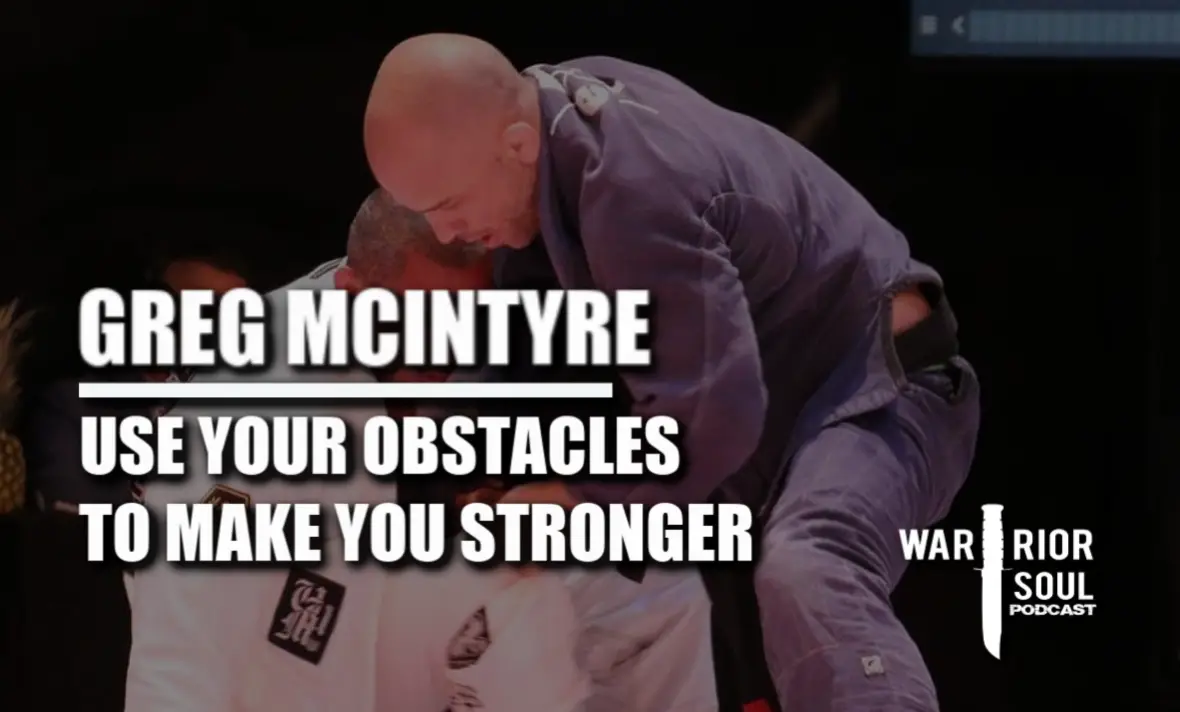
Greg McIntyre, Jiu-Jitsu Black Belt: Use Your Obstacles to Make You Stronger
Hosted by Chris Albert
The Warrior Soul Podcast
Greg McIntyre is a former professional fighter and Jiu-Jitsu Black Belt. He's also an Instructor at Victory MMA and Fitness in San Diego, CA.
Greg McIntyre is a Jiu-Jitsu Black Belt and a former professional MMA Fighter who fought in the WEC. He started training Brazilian Jiu-Jitsu under Fabio Santos and received his Black Belt from Dean Lister. He is an instructor at Victory MMA and Fitness in San Diego, CA where he’s known as “Greg Train.”
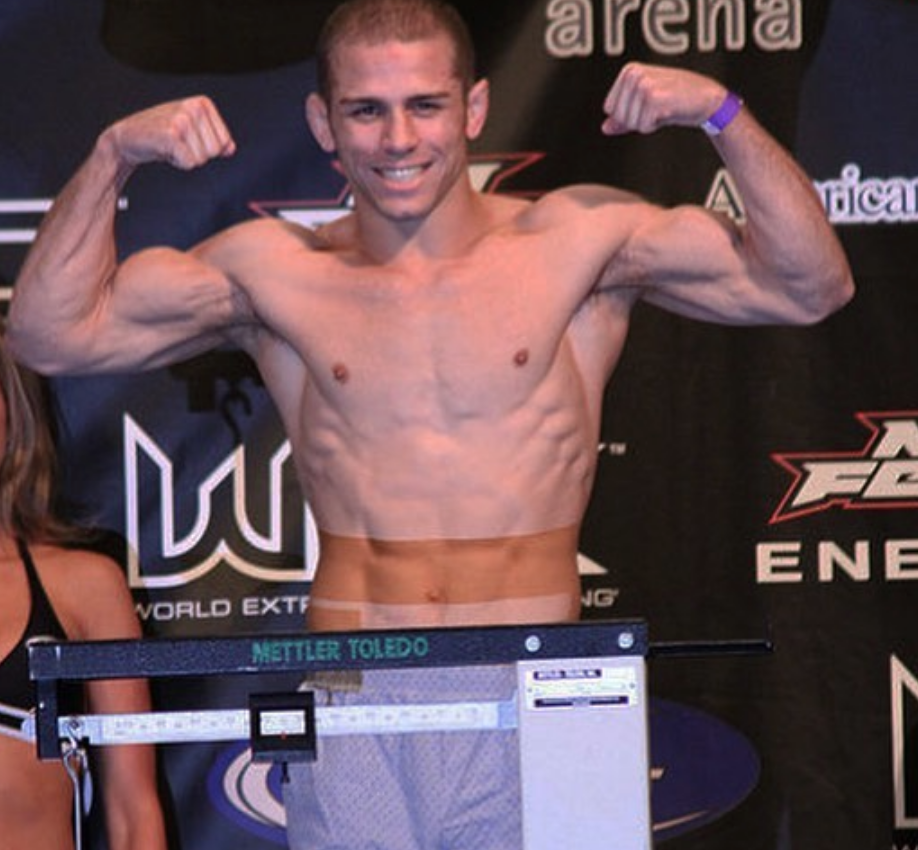
As Greg was beginning his MMA career he was afflicted with an autoimmune disease called ulcerative colitis. It began with abdominal cramps and diarrhea. Before long he was losing lots of blood, and after a colonoscopy, his doctor told him that they needed to remove his colon.
Greg lived for several months with a colostomy bag, and then had his colon transitioned to a “j-pouch.” Greg was able to get back into training once his colon was removed and eventually returned to fighting.
Today, Greg has found a new life as an XRay technician while instructing at Victory MMA. He is also raising a family in San Diego.
Greg came on to talk about his life, fighting, Jiu-Jitsu, and his disease. You’ll find that, despite his misfortunes, he has an excellent mindset. As someone who also suffers from ulcerative colitis, I know the extent of the pain and discomfort he’s had to go through, but all of it has made him a stronger person.
This is an excellent conversation that anyone is sure to find inspiration in. I highly suggest that you also check out Greg’s Instagram @gregorymcintyre. He puts out some excellent instructional videos for Jiu Jitsu and fighting.
Transcript
Machine-generated from the episode audio and lightly edited — may contain errors.
Chris Albert (link to this point)
The Warrior Soul podcast is written, edited, and produced by me, Albert. Our mission is to provide tools, tactics, strategies, and ideas that help The US military veteran community to show up as the wisest, strongest, most capable versions of themselves in the civilian world. If you're not a veteran, stick around because anything we talk about will most certainly apply to you as well. This podcast is made possible with the help of f bomb nutrition. They make delicious packets of fats that you can carry around anywhere with you in little portable packets.
They make macadamia nut butters. They mix them up with chocolate. They mix them up with sea salt. They mix them up with coconut butter. They're absolutely delicious, and they're really good for you.
They don't have any sugar. They also make a lot of cheese snacks. They make meat sticks, and it's just a great company. These guys send packages of this stuff to the troops who are on the front lines overseas to supplement their MREs, and we didn't ask them to do that. They just did that on their own initiative.
Really great company. If you wanna get 20% off your first order of f bombs, head over to www.dropanfbomb.com and use the code Warrior Soul at checkout. This podcast is also brought to you with the help of Save the Brave. Savethebrave.org is a five zero one c three charity for veterans. They run camaraderie events that include fishing, golfing.
They also do a lot of work with gold star families. And unlike a lot of other organizations, their board doesn't take a salary. Really great organization that is doing amazing work. So go and check them out at savethebrave.org. With that, thank you guys so much.
Let's get into today's programming.
This is Chris Albert, and I'm here to remind you of one thing. Someday, you're going to die. Now that's not some morbid statement or scary idea. It's solid fact. Your time here on this earth is limited.
And we need to be reminded of this as much as possible for one simple reason, to live your best life while you can. This is the Warrior Soul podcast.
What's going on guys? Today's interview is a way for me to combine two things that have affected my life very heavily. One is a very positive thing and the other one is a pretty negative thing. And that is jiu-jitsu and autoimmune disease. My guest today is a man named Greg McIntyre.
Greg is a jiu-jitsu black belt. He also was a professional fighter for a while. He got all the way up to the WEC. He was a very promising professional fighter and he had a crazy early career. But along the way he got ulcerative colitis and the colitis was so bad and his colon was so affected that he had to have his colon removed.
And so now he has what's called a j pouch. He doesn't have to walk around with a colostomy bag or anything like that, but it's affected his life greatly. But the thing about it is this, Greg never let that break him. He never let that destroy him. He has a mindset that I think more people need to emulate.
He is a very strong individual. And what you're gonna really get from this episode of the podcast is that no matter what happens to you in life, you can always use it to make you stronger. It's not necessarily good, it's not necessarily bad, but it's only bad if you look at it that way. You can utilize these events, these horrible things that could potentially happen to you, to actually make you into a better, stronger, wiser individual. And that's what Greg's done.
We had a great conversation. Greg is an instructor down at Victory MMA in San Diego. That's the gym that Jocko owns along with Dean Lister and a few other people. And he is definitely at the top of that field. His Instagram is outstanding.
If you're trying to learn jiu-jitsu, if you're trying to understand jiu-jitsu moves a little bit better, he he does a really great job and I think more people need to follow Instagram. So definitely check him out. I'll have all of the links up on the show notes to be able to do so. And with that, I'm gonna stop, flap my gums over here, and let's get into this outstanding conversation with mister Greg McIntyre. Greg, man, welcome to the show.
Greg McIntyre (link to this point)
Hey. Thanks for having me, Chris.
Chris Albert (link to this point)
Dude, I first heard you on Jocko's Grounded podcast and heard a bit about your story, heard a bit about your fight career, and a bit about something we're gonna talk about in a little bit which is your your autoimmune disease. But for the audience at home, you know, could you give us just a a quick two minute synopsis of who you are and where you're coming from?
Greg McIntyre (link to this point)
Yeah. I'm I'm from San Diego, and I I grew up here. I wasn't born I was born in LA, but I grew up here since I was tiny. And I started wrestling, got into jiu-jitsu, and found out I had that autoimmune disease. I don't know how much you wanna know about my background, but, that actually played a huge part in, my development, like in my twenties there.
Then I continued to compete in jiu-jitsu and MMA and things like that, and then started a career as an x-ray technologist at the hospital and started a family year. So that's the short version.
Chris Albert (link to this point)
Nice. What made you get into wrestling, man?
Greg McIntyre (link to this point)
You know, as I mentioned to Jocko, I was forced into doing things because my older brother was doing them in the beginning because single mom, and when my older brother was doing something, then I was sort of along for the ride. He was in a BMX racing, and I hated every minute of it. And so as soon as he started wrestling in high school, at that point, I was in junior high, I wanted to do it too, and then we found a youth program, and then immediately, I I I was like a fish to water in wrestling, and I did really well, and I kept winning. So it gave me some confidence at a time where I needed it in junior high. And and so I I stuck with that, and then I wrestled.
After junior high. I wrestled in high school. Did well there, and then got into jiu-jitsu. It's just sort of a natural progression, wrestling to jiu-jitsu, and we had some lucky options here in San Diego because a lot of the Brazilians, a lot the good ones, the talented ones, they come here because they like the climate and the fruit or whatever, the beach, you know? And so back there's a lot more now than there was then.
I'm talking 1999 is when I started
Chris Albert (link to this point)
Wow.
Greg McIntyre (link to this point)
Jiu-jitsu.
And I started with Fabio Santos jiu-jitsu. He's a Rickson Gracie black belt.
Chris Albert (link to this point)
Mhmm.
Greg McIntyre (link to this point)
Great guy. He was my initial instructor. And he was the most legitimate instructor in San Diego for obvious reasons. And he's a he's a red and black coral belt now, and he still teaches here. He he's also I go and visit him now and then.
And I started there and just jumped into a couple MMA fights sort of unprepared and went on from there.
Chris Albert (link to this point)
That's cool. You know, the thing about wrestling, I I wrestled in high school too. There is I don't think there's another sport in high school that kids could do that does what wrestling does. Like instilling self discipline and and, you know, self reliance and and making sure you gotta make weight and and the the conditioning and the practice and all of the the stuff you gotta deal with. I mean, it's just such an outstanding sport for kids to get into.
Greg McIntyre (link to this point)
Oh, I I agree completely. Did you wrestle?
Chris Albert (link to this point)
Yeah. I wrestled. I'm from Connecticut. I wrestled
Greg McIntyre (link to this point)
Okay.
Chris Albert (link to this point)
High school. In
Greg McIntyre (link to this point)
Oh, right on.
Chris Albert (link to this point)
Yeah.
Greg McIntyre (link to this point)
Yeah. I mean, I've had that conversation a few times with my buddies that wrestled and I couldn't agree more. I hope my kids wrestle. I'll try to trick them into it, make them think it's their idea, get them wrestling if I can. But, yeah, I think it's a combination of things.
It's an individual sport. So you're wrestling, you're out there on the mat, and it's not like your team lost, like you got your ass kicked. So that is a little different, you know, for a kid. Like in a good way, whether you win and it's really great or you lose, like, it's it's doing something to your brain at that age that other sports I don't think can do, you know? And then you mentioned cutting weight.
Cutting weight's huge. I mean, especially at an age where you're just so impetuous and immature, you know, and you're depriving yourself of food and even water for a period of time just so you can make weight. Cutting weight will make you mentally tough like no other thing can't. Yeah, those two things that wrestling brings to the table that I think other sports other sports that you that you do in high school really don't.
Chris Albert (link to this point)
Yeah. And it's like you either make the weight or you don't, or you perform on the mat or you don't. There's no like, nothing like that. It's all on you.
Greg McIntyre (link to this point)
Yeah.
Chris Albert (link to this point)
Don't blame anybody else. Right?
Greg McIntyre (link to this point)
Yeah.
Chris Albert (link to this point)
Now, when you talk about jiu-jitsu and and Southern California, yeah, you're right. We're we're really blessed down here as far as things go. I mean, San Diego and then Huntington Beach and a lot of these other areas, they seem to be like hotbeds. How'd you first hear about jiu-jitsu? Was it was it through like UFC?
Was it through the Gracies? Was it was it on your own? Did you just just run into it?
Greg McIntyre (link to this point)
Yeah. It was early on. It was more I was more interested in fighting than I was jiu-jitsu because jiu-jitsu really wasn't a thing like it is now. Now it's just so popular and common. But back then, it was, I mean, we're going to Blockbuster, which doesn't really exist anymore, to get video to watch the the UFC fights, the early UFC fights, watching Royce Gracie.
And and if you watched enough of them, it quickly became obvious that jiu-jitsu was the the grappling art that was dominating all the others until it eventually evolved into mixed or true mixed martial arts where everybody kinda was disciplined and understood jiu-jitsu on some level. But So I was watching Royce Gracie, and and I wanted to do that. I didn't know that they had jiu-jitsu separate until I I learned of I think I I I came across some Hansel Gracie VHS tape, and then I realized, oh, yeah. This is cool. You could just do jiu-jitsu separately just like wrestling and not jump into a fight right away and learn that.
So I got some tapes, some of those Hensel Gracie VHS tapes. And then when I graduated high school, I learned that Fabio Santos was in town here in San Diego. And and I went and went and started training there.
Chris Albert (link to this point)
And what was that like? Like, was, you know, walking into into to his school the first time, was there were were there a lot of people there? Was there was there a a good mix of people? Was it was it intimidating?
Greg McIntyre (link to this point)
Yeah. I mean, I'm I guess it was, but I I just remember being so excited. I I remember just like, okay, I knew I didn't really wanna wrestle in college after high school and got all the way I was in, I was more interested in something like this. And so it was just like, oh, this is this is really what I want, and it's right here. It's close to home.
And then there was a there was a good mix of people. Everybody's everybody was cool for the most part. You're always gonna get maybe one person in the gym that's that's a jerk or something like that. But generally speaking, people that train jiu-jitsu, they're cool. They wanna help you, and they have their egos in check.
And so I went in, and everybody was just immediately helping me out. It was intimidating because I didn't understand what they're doing. The objectives are totally different than they are in wrestling, but and then so I just used my wrestling because that's all I had. And then, yeah, Fabio Santos would stick Dean Lister on me and and Jeff Higgs, who are who are now longtime friends of mine, and and they would submit me a whole bunch of times. And and I I I mean, it was, jeez, twenty years ago now, but but I remember enjoying that.
I remember smiling, like, smiling in a way that, like, I can't believe this guy submitted me a bunch of times. Like, almost like like, incredulity, you know, like, to where, like, I need to learn this. Like, this this is cool. You know? I didn't think someone could do that to me, and they did because I was always successful in wrestling, and this is just a totally different animal.
And then I was addicted to me, and I made a bunch of friends there. And, yeah, it was great.
Chris Albert (link to this point)
That's awesome. Yeah. My first time I got into jiu-jitsu was three years ago. I walked into school and back then I was a power lifter. I was a lot bigger than I am now.
I was about two hundred pounds. I could deadlift 600 pounds and I go in first day. I got broken in half by a 14 year old kid. I was like
Greg McIntyre (link to this point)
Yeah.
Chris Albert (link to this point)
Oh, man. Maybe maybe just lifting inanimate objects for the past, you know, fifteen years wasn't making me a more capable human. Right?
Greg McIntyre (link to this point)
Right. Yes. Strength and talent doesn't count for a whole lot, you know? Especially when you're a zero belt. You just went in there.
You're gonna get tapped out. It's either gonna make you leave and not come back, or get addicted and learn the art. Yeah.
Chris Albert (link to this point)
Yeah. Exactly. So you started training there and then you you get into you get into fighting. When when did you make the decision that you were you said you wanted a fight from the beginning. Do had you already decided that you were gonna jump into a fight from there, like when you walked into the school?
Greg McIntyre (link to this point)
Yeah, no, I didn't. I knew I wanted to. It was always sort of in the back of my head. I never had a specific plan as to how that was gonna happen or anything like that. It just sort of happened.
I just I just have watched the VHS tapes and I think that was cool, and I had some anger issues, so it was a good fit. You know? Like, wanted to wanna at that age, I did. And then just I I started training, and it was like right when I started training. I've already already had some wrestling experience, but right when I started training jujits, it was like weeks after.
My cousin had called me up, and he he knew of some event up in Los Angeles that I mean, they were letting guys fight, and they were looking for guys, like, to fight because not many were raising their hand at the time. And then as I was, yeah, I'll drive up. It was it was the event was the next day. You know, he called me that night and the event was the next night. And so I I drove up.
It was in San Pedro and I did that and it was good fun. I mean, it was something that like, you know, when you're older, you would ask like 50 extra questions and you'd probably turn it down and wait for the the more perfect opportunity. But I was at that age to where I was like, yeah. Yes. Yeah.
Let's do this.
Chris Albert (link to this point)
Used to live in Pedro, man. I used to live in Pedro. A that's an interesting area to be driving up to a fight because it's like the area of Los Angeles. And it's kinda like what you would think about in the movies where there's a bunch of like guys in a smoky room or something like that. Yeah.
Greg McIntyre (link to this point)
You know? It was exactly like that.
Chris Albert (link to this point)
That's crazy, man. That must have been nuts for a 19 year old kid.
Greg McIntyre (link to this point)
Yeah. Yeah. The yeah. It was it was it was pretty nuts. I mean, it was fun, though.
I mean, I had I had family or, like, my brother came up and he actually jumped in to one of the one of the fights. And it was it was really informal. Like, there's this, like, balcony area and everybody would come up and like, alright, who's your name? Write down the names and they'd start pairing people up. And then, you know, within within an hour after they paired you up with somebody, you're you're fighting that personality.
You knew your opponent ahead of time. You just show up and raise your hand like, yeah, I wanna I wanna try this. And and then you did it. And And it was cool. I just, I mean, I had a good experience and then just even more wanted to learn the discipline.
I wanna learn how to fight and learn jiu-jitsu specifically. Yeah.
Chris Albert (link to this point)
Wow. And who was the guy you were fighting?
Greg McIntyre (link to this point)
There were a few, actually. There was a guy whose last name was DeWay, and then Jean Pierre was one guy that was sort of the champion at the time there. And then Javier Vasquez, I mentioned on the the Jocko podcast.
Chris Albert (link to this point)
Mhmm.
Greg McIntyre (link to this point)
And Tracy Hess, I remember him. He he later became he he started there the same time I did, and then went on and was pretty successful in with some pro MMA fights. And so those four, there might've been another one, but yeah, after that one time, like it was I had a good time. And then every time there was an event for that that next year or so, he would call me and then I'd just drive up that weekend. And like, yeah.
Chris Albert (link to this point)
And back then, was there like a trajectory from from whatever organization that was to the UFC? Was there, like, a set trajectory? Did anybody know how to do that?
Greg McIntyre (link to this point)
No. I mean, even like I said, even the UFC was sort of underground. Most states didn't allow the UFC, and it was just a blockbuster VHS thing at the time. People people didn't know what the UFC was, generally. Like, even at this event in in Pedro, just as an example for how early on it was, the guys that started the the Tap Out clothing brand. And this is, like I said, twenty years ago, they were just selling t shirts out of the back of their car, trying to start their brand. And then fast forward eight years later, and they had, I think it was 2008, they had a $100,000,000 year, you know, it was like a big business all of sudden. Went from when I met them back then, just trying to sell some t shirts off the back of a Cadillac to serious business. So it grew quick, and they grew with the sport. But at that time, no, there was no direct line to the UFC or anything.
UFC was it was still at the stage where different disciplines were competing against each other, so it wasn't like they had these feeder programs. They were just grabbing, I don't know, well known guys, and you had to be connected somehow, I guess, to to get in there.
Chris Albert (link to this point)
And what were the rules like at that point? Was there was there rules on what you could wear and what you bring into the ring and and and any rules about, like, hitting in the head and things like that?
Greg McIntyre (link to this point)
In the UFC?
Chris Albert (link to this point)
No. In the organization you were fighting there in
Greg McIntyre (link to this point)
Yeah. They had rules. At first, it started to where it was more of a pankration deal. But like I said, rules were really loose. It was no gloves, which was weird.
And because the gloves in the UFC originally, like, people started wearing those not to protect the person being hit. It was to protect the the bones in your hand because
Chris Albert (link to this point)
Mhmm.
Greg McIntyre (link to this point)
A lot of fights would just end early because someone would break their hand because the bones in your head are harder than the bones in your hand, and people would get broken hands. And so that's why they started wearing gloves. But early on, here, it was supposed to be open hand strikes, just like the old school Bas Rutten Pankration rules. Open hand strikes to the head and closed hand to the body, and everything else goes submissions and takedowns and all that stuff. And but then, like, if someone were it it wasn't, like, sort of it wasn't watched closely.
Someone were to close and punch somebody, they would just kinda let it go. I mean, it was that event was run just sort of it was for entertainment. You know what I mean?
Chris Albert (link to this point)
Had Bas on, oh, go ahead, man. I'm sorry.
Greg McIntyre (link to this point)
No. No. Go ahead.
Chris Albert (link to this point)
I was gonna say I had Bas on the show, and he's come out. He he doesn't like gloves. Right. It leads to more TBI. What do you think about that?
Greg McIntyre (link to this point)
Leads to more what? More Brain injury?
Chris Albert (link to this point)
Brain injury. Yeah.
Greg McIntyre (link to this point)
Right. Yeah. I mean, there's a good argument for that. Like like boxing, for example. The the the gloves are much bigger than MMA gloves.
Like, little fingerless four ounce MMA gloves are you could hit someone a lot harder than a big padded boxing gloves. Yet with a big padded boxing glove, you hit someone, and it you have to hit them repeatedly until they go down, which means you have this accumulative damage to your brain rather than getting hit one time, either going down or getting a laceration or something like that. So as far as your brain goes, boxing and football, because you have the helmet, are more dangerous than MMA, you know, because you're protecting the brain just enough to where it could just keep taking a beating, which is obviously not good. Your brain's in there, suspended in a little bit of fluid, and it's just bouncing around. And if you get hit one time, it may look bad in MMA.
Like someone gets cracked and they have a big laceration, there's blood and they go down, you know, and oh no, that's a big deal. But in boxing, you see you get just repeatedly pummeled and they're still standing that is much worse for their brain. You just don't you just don't see what's going on on the inside. So, yeah, I mean, I'd have to agree with them. Although, those little gloves are they're they're a good compromise because like I said, if you didn't have them, a lot of these these great technical fights with great fighters would just end way too early.
We don't we wouldn't get to see the real result, who's the better fighter because someone's hand will be broken, you know? So that's that's the downside. And then obviously, there's the the finger poke problem too, you know, with the the open hand. So there's no perfect solution, you know, to the gloves. But the four ounce gloves, I think, I mean, it works for now.
Yeah.
Chris Albert (link to this point)
So so you get through that. You you you do that initial fight, and then you come back and you're training. And and what were you thinking at the time as far as things go? Were you thinking this is what you wanted to do, become a professional fighter, or were there other things on your mind at the time?
Greg McIntyre (link to this point)
Yeah, I had no idea. I I was so immature at that age to where I wasn't thinking forward very much. Was enjoying that. I wanted to do that. I did take a few classes at a junior college.
I was like psychology and I think some kinesiology classes and stuff like that, but had no idea what I wanted to do. No purpose or anything. I just knew that I was having fun doing this and I was gonna continue to do it. And then I was hit with that aggressive autoimmune disease like, within a year later. So it was like right when I was 20 years old, it started to get real bad.
Chris Albert (link to this point)
Yeah. So that's a big reason why why we have you on today. You and I suffer from the same autoimmune disease, ulcerative colitis. Mhmm. And for those of you at home, ulcerative colitis is similar to Crohn's disease.
Basically what happens is your immune system starts attacking your intestinal tract and leads to a whole host of different problems, loss of blood, extreme pain, anemia, and a lot of different things. When that first started happening, what were your initial symptoms and what how did it impact you at first?
Greg McIntyre (link to this point)
Yeah. First, it was it was just a lot of the same symptoms that you just mentioned of abdominal cramping, and then I was crapping some blood. With these autoimmune diseases, there's flare ups, and then it's sort of like sometimes it'll just go away for no good reason. You could follow a specific diet. It won't really matter.
Certain things you eat could make it worse, but if this autoimmune disease wants to flare up, it's gonna do its thing and then it'll just go away in the same way that it came. And then obviously some people have it a lot worse than others. But yeah, I had those same symptoms and then I was just sort of naively hoping, because it would come and go at the time, like intermittently, I was naively hoping like, yeah, I'll just, alright, just, it'll go away, you know? It's a temporary thing. And it wasn't going away, it was like progressively getting worse, and then I losing weight because, like you said, this autoimmune disease, attacks. It's your own immune system attacking. Like as if you hurt your arm or your elbow or something, and you tweaked it doing jiu-jitsu, and it gets swollen up, right?
And that swelling is your immune system's reaction to the injury. And so that's basically what's happening to your intestines, except for there was no injury. You know, there was no attacker or anything like that. It was just your immune system freaking out and causing this inflammation process, like unnecessarily, you know? And and yeah, I just I I just I was in denial.
Just tried to ignore it and hope it went away, and it did not.
Chris Albert (link to this point)
Yeah. I when I think back on it, a lot of the symptoms that came up, for years, there was blood on the toilet paper. There was things going on, but I was ignoring them because I just thought it was just something normal, something that happened, things like that. And then eventually, I mean, it it just set in and all of a sudden it was like, holy, you're spending hours on the toilet. You're running back and forth in pain all the time. Right. All of sudden it got you in its grips and you don't know how to get out of it, and you're trying to figure out what the hell is going on.
Greg McIntyre (link to this point)
Yeah, and then as it gets worse, not only are you going to the bathroom more frequently, like crazy frequently, talking, you know, 25 times in the day, you gotta run to the restroom. But the urgent, the sense of urgency gets worse and worse. And that's where you just, you can't tolerate that anymore. That's just that, that feeling of anxiety where you're you're gonna shit your pants, and you can't even your mid conversation, all of sudden, just grabs you with a cramp or whatever, and you gotta run, and then there's, you know, blood and everything. It's just at some point, you just realize that this is serious and I need to take care of it.
And by that time, I had already been competing for a little while trying to just manage it, but it got to the point where the doctor, I just went to one appointment and the doctor's like, you've lost a lot of weight and you look horrible and you need to be admitted right now. So he just admitted me into the hospital. And then I saw another doctor and he's that your colon is just destroyed. We need to take that thing out of there. So they ended up removing my entire colon.
Chris Albert (link to this point)
So they did a colectomy right off the bat?
Greg McIntyre (link to this point)
Right. It was bad. He said it was just like it looked like it had been chewed up, you know? And then I I saw before it was that severe, I saw some pictures of the when they did the scope, and it was like, almost like those those images you see at the dentist where these are healthy gums and these are like gingivitis gums or I like gingivitis colon, you know what mean? It was like all red and bleeding and stuff like that.
And and he said it was just like the whole thing needed to go in the whole colon, which is if you don't know, like colon is basically your your entire large intestine minus the very the very end of it. But yeah, so they took that out and your colon you you kinda need it, you know? So so they had to replace it in some way. So they made what's called the j pouch. Have you heard of this, Chris?
Chris Albert (link to this point)
Yes.
Greg McIntyre (link to this point)
Yeah. The j pouch. And and they they take, like, sixty centimeters of your your small bowel, your ileum, make it into a j, and then in the meantime, while that while that thing is healing, you have an ileostomy bag. Which is your intestine, which you could actually see sticking out of your abdomen, and you have a bag that you change. So for months, dealt with that and then had the second part of the surgery where they connected that j pouch and and had all the plumbing put together.
Chris Albert (link to this point)
Hey, guys. I hope you're getting a lot out of this interview. You know, the Warrior Soul podcast is built with the mission to empower its listeners to live absolutely epic lives. And that's why we recently created a group called the Warrior's Obituary Society. This group is built to empower its members to live epic lives worthy of epic obituaries.
And it starts with an eight week development program. And with this development program, what you're gonna do is you're gonna outline a vision for your life. You're gonna get very specific about what you want. Because without that specificity, you don't know where you're going, and you don't know what you're doing. From there, we help our members to develop specific goals, objectives that they are going to push toward, and that their fellow members of the Warrior's Obituary Society are going to hold them accountable too.
From there, we're getting down into specifics. We're going to help you to develop and customize your own personal fitness and nutrition plan to help fuel your body and fuel your mind for the quest ahead. From there, we're going to work on your personal finances. We're going to help you to knock down debt, start saving money, create a plan so that you can start investing in your dreams. Then we're going to get into your business and career.
We're going to help you develop the skills that you need to develop yourself so that you can have a major impact in the field you choose. If you choose to go into business, we're going to help you to set up the foundations that you need to create your own company and get started on your path in life. From there, we're going to be working on your relationships, we're going to help you to develop a world class network, and all along the way, you're going to have your fellow members of the Warrior's Obituary Society pushing you in every single area. We meet once a week over a live call, and we're constantly communicating over our own private forum on Slack. We don't do anything over social media, and that's because I don't want anybody feeling like anyone's looking over their shoulders and I don't want you exposed to the crazy distracting alerts that you get on Facebook and some of the other social media platforms.
Normally programs like this cost thousands of dollars. This one does not. For the price, it is the best development program on the internet. And that's because our mission here at Warrior Soul is to empower people to get more out of life so that they can in turn make the world a better place. We've got a great mix of active duty military, US military veterans and civilians in this group.
We wanted to keep it really eclectic so that we get a lot of different types of views up there and a lot of different people with different areas of expertise. If you think that this is something that would be of interest to you, and that this is something that could empower you to live your absolute best life, head over to www.warriorobituarysociety.com. That's www.warriorobituarysociety.com, and you can sign up today. And if you have any questions about it, just reach out to me at chris@warriorsoulagoge.com. That's chris@warriorsoulagoge.com.
I'm happy to even sit down with you for a phone call for a few minutes to see if the group is right for you. I look forward to seeing you guys in there, and let's get back to this awesome interview. I wanna ask you this because, you know, you you went from and this is a big aspect of of having something like that, but you're you're on you're on this trajectory. You you you're you're intensely going after this goal. And then all of a sudden, this thing happens, and you're put from a a position of strength to a position where your body basically can't perform a basic function.
Greg McIntyre (link to this point)
Right.
Chris Albert (link to this point)
And and what was the mental impact for you? What what was going on in your mind at the time?
Greg McIntyre (link to this point)
It it was horrible. I mean, looking back, there's there's a silver lining. It just it just calmed me down as a person, and it checked my sort of sense of reality and ego in a way. But at the time, yeah, it's just you go from, yeah, I wanna fight, and I wanna you're you're I'm 20 years old, and you're trying you're trying to decide what you wanna do in life, and you have this feeling that you have plenty of time to do that. And then suddenly your only job is to get better, to not be really sick.
That's your job. You know, You're not even thinking about any of this stuff at all. You just wanna be well and that's good enough for you. And it's a real gut check, especially at that age. It was rough.
I mean, I didn't know what to think about it. I was grumpy most of the time.
Chris Albert (link to this point)
Yeah, and obviously, while you had the ileostomy, you probably couldn't train really. You couldn't fight, couldn't roll or anything like that, right?
Greg McIntyre (link to this point)
No. No. I I remember visiting visiting class and just watching the guys roll because I missed it so much. But no, not not only was the the ileostomy bag in the way to where I couldn't roll, but I was still too sick. It was
Chris Albert (link to this point)
Yeah.
Greg McIntyre (link to this point)
It was still pretty bad.
Chris Albert (link to this point)
Yeah. I this this last I'm I'm very fortunate in a lot of ways that I haven't had to have my colon removed. But the thing about this is it's like a roller coaster because what happens is you get really sick and then you make a couple of the changes. Maybe you go into remission for a bit and things get better. And then life seems like it's good.
You're going along and you think, oh, there's this part of your brain that says, well, maybe I don't have the disease anymore. Maybe it's gone.
Greg McIntyre (link to this point)
Right.
Chris Albert (link to this point)
Then all of sudden, it just freaking comes back at the worst time possible. And every time it comes back, it comes back a little bit stronger. And it comes back in a little bit more of a ferocious mentality. And every flare ups worse than the last one. And this last one I had, my flare ups tend to get activated by stress. So I had a couple of friends who passed away recently. Had one really close friend who passed away over the summer. Then after that, you know, all of a sudden, the flare just happened.
And I tried to ignore it for like the first couple of months or first couple of weeks and act like it wasn't there. Then it just got so bad. I was getting dizzy and like passing out tired all the time, losing so much blood. I had to had to go to the VA had to do something. The drugs they put you on like prednisone, they have a severe impact on your mentality on energy on everything.
And it's been a battle. It's been a real, real battle. And I can't imagine, you know, for what you were going through to have that thing taken out. How long did you have the ileostomy for?
Greg McIntyre (link to this point)
It was just under four months and then and then they reconnected, but I was glad to get rid of that ileostomy, but that didn't mean that my my problems were gone, you know? I still to this day, I mean, was years ago, but still to this day, I have a lot of issues. That's why when you first contacted me, was asking you about how your medication, you're I think you're on a biologic. Type of medication, how that was working because still there's this autoimmune thing going on in the pouch that they built, and there's some severe ulcers in there, and I have appointment about a week from now, and it's tough because a lot of the stuff that works for ulcerative colitis patients doesn't necessarily work for what they call pouchitis, which is like once you have your colon removed and you have the pouch, and that thing's inflamed, there's no real studies showing that that it works the same on pouchitis as it does ulcerative colitis. So I'm just waiting.
I actually read recently that there's this one called Entyvio that they did a study, and it seems like it works for people with a J pouch like myself. So I'm gonna ask a lot of questions about that once I see my GI doc, but it's still a struggle.
Chris Albert (link to this point)
What types of medications do they have you on right now? Because they have the the different class. They have the corticosteroids, the the ASAs, and then there's the biologics. Right?
Greg McIntyre (link to this point)
Right. And so for me, like they tried some antibiotics because a lot of the stuff when when they the autoimmune system like flares up like can create the inflammation and conditions for bacteria. I'm not a doctor know how exactly it works, but there were certain antibiotics that they had me on, some strong ones, that would help, you know, until they didn't work anymore. My body would adapt to those things quick. And so I don't mess with that anymore, and for a short period of time, they had me on some anti inflammatories, free intestines, like Lialda. Yep, I was like But it's like this time release, and by the time it gets to where I need it to get, I think it's more effective for Crohn's patients, and again, I don't, I'm not a doctor, I don't know what I'm talking about, but my doctors seem to agree with me that by the time it gets to where I need it, which is at the very bottom, at the pouch, there's not much medicine left. You know, it's already done its thing in the upper intestine where I don't really have a problem. So I stopped taking that. So really, I'm on nothing right now. Just sort of dealing with it, and I might try.
I just don't know about the the side effects of some of these new biologic drugs, but I'm gonna have my doctor explain it to me in a couple weeks. But yeah, it's a struggle, but it's, you know, I I after you contacted me and I discovered your podcast, I listened to one of your short ones, and and they're really good. So one of them was Chasing Happiness or something along those lines. Then one interview with a guy, last name Levi. And Yep.
Both of them good. And and one thing you mentioned in in in the short is just and I'm sure you've mentioned it repeatedly. It's just sort of finding meaning in the struggle. And And whether it's ulcerative colitis or, like you said, you lost some people close to you, some loved ones, and I have too, and you could dwell on that, or you sort of embrace it because and not just for the sake of having a positive attitude in the face of a tough time, but it's actually true. You become a stronger person, a better person because of these struggles.
And after you you've been through some stuff like this, you you notice you notice the people that haven't been through struggles, and they're missing something. You know? It's almost like the the the struggle, then only it gives you gives your life meaning, gives you a little bit more fulfillment. So there is like serious silver lining there to these struggles. You know, it's just not the good times are that much more precious, you know?
Chris Albert (link to this point)
Yep.
Greg McIntyre (link to this point)
But you also have this life experience that you carry with you having having dealt with this stuff. And I know know more than I do about that having been a veteran.
Chris Albert (link to this point)
Yeah. And what I can say is that, as far as ulcerative colitis goes, yeah, it's one of the worst things that's ever happened to me in my life, but it's also been a blessing. My profession, I work in nutrition. I wouldn't know half the things that I know about nutrition had this never happened to me because it ignited a curiosity in me to learn about digestion, to learn about gut bacteria, to learn about the system down there. And, you know, I really wouldn't be who I am today without it.
And, you know, that's exactly what you're saying there. I mean, you when things happen in your life and things will happen, no matter what, you got a choice. And that's either to embrace the struggle or let the struggle define you.
Greg McIntyre (link to this point)
Right?
Chris Albert (link to this point)
Right. Let it break you. And if if you if you choose to embrace it, there's nothing in the world that can break you. There really isn't. It's it's it's and it is a choice.
It's a matter of choosing to say, I'm gonna look at this thing as tapping for me rather than to me. And I'm going to to use this to make me stronger, to make me a better person, and to to turn me into the person I need to become in order to get through it. Right?
Greg McIntyre (link to this point)
Yeah. And and it really is true that it it does make you mentally tougher, better, more understanding person. It's not just that I think people hear these types of conversations and think that they sort of summarize it in their head as just have a positive attitude when you're going through tough times. But no, if you talk to people that have been to war or they've had to overcome cancer or something like that, they don't want to do that again, but at the same time, very few of them regret their experience because like you said, it made them who they are. You know?
In in some way, it makes their life more fulfilling having been through these tough times, through these struggles.
Chris Albert (link to this point)
Yeah. Exactly, man. Exactly. When when you finally got through that and and and you're dealing with the disease now, did you did you end up going back to fighting? Did you continue that trajectory at all?
Or was it did you find it was time to put it down?
Greg McIntyre (link to this point)
Yeah. No. I went back. I I was young enough to where I healed up, and I I never completely like like I said, to this day, I've been a 100%, and I I never will. I'm, like, constantly dealing with it, but after they got the colon out of there, it was a big difference.
A lot of the problem was removed. But yeah, so I went back and started competing, I won a few fights and which got some attention, so I ended up on this TV show. Must be, like, nine, 10 years old now, something like that. And it was the old Versus channel, which is now Fox Sports 2 and Tap Out, the clothing brand, had their own TV show. And they featured a fighter, and I was one of the featured fighters on the show.
And then they basically follow you. They follow your training and a little bit about your personal life. And then at the end, there's a fight, you know, and whether you win or lose, it's it's the end of the show. And and then I ended up having a fight there. And I won the fight on the show, and it was it was good fun.
Those guys are great. And and so I got invited to fight in the the the WEC, which is was has now been absorbed by the UFC. Because the UFC used to be just like welterweight and up, and they didn't have any lightweights, but it's it's grown so much that there's so much of an appetite for fighting and even the lighter guys that they just they absorbed WEC and now it's basically just part of it, part of the UFC. So I a lot of fights after, not a lot, but I had a good handful before I ended up stopping. I didn't even necessarily stop fighting because I was done really.
Like my last fight, I I did well. I won, but I had it, it's just, I was getting older. Like right after that fight, I had a minor knee surgery and another minor one on the other knee. And then as you get older, your options feel like they get more limited and started a family, and I had to take my career a little more seriously, which meant there's a little less time for training. I never quit training, but it was, there was this point to where it's no longer a singular pursuit, you know?
You're not just training. I gotta balance. It's just one of the many things that I'm doing. And there were other things in life that I wanted to try out too.
Chris Albert (link to this point)
I tell people this all the time. If you're at home and you're in your early twenties and you're trying to figure things out, don't be in a rush to go get settled in something because you have this set period in your life where you get to do crazy shit like try to become a fighter or join the Marine Corps or try to become a Navy SEAL or try to start a business while living off of ramen noodles and living on somebody's Like, go do that shit because once you get to, you know, 28, 29, 30, then those options start to come off the table. Right? So you gotta do that shit while you're young. And and it's a perfect example here.
Right?
Greg McIntyre (link to this point)
Right. Yep. Now I have a family to take care of, and I have a a mortgage. And if I didn't have a mortgage, I'd have rent. I can't suddenly stop time and go back to school for something I'm interested in.
I mean, you can. I mean, it's not to say that people do pull this off, you know, and it's it's really hard, and I've heard stories of just, like, single moms, like, going back to school, whether it's online or whatever and getting a degree. There there you can, it's just more difficult and you're just your options are a little more limited. Yeah. So yeah, I completely agree with you.
When you're when you're young, try some stuff, you know? Don't don't get trapped into this sort of timeline, or what people typically do at a certain stage in their life. Just do what you wanna do, because that's the time where you have all the freedom in the world to fail at it, and you may not end up doing that particular thing, but now you know what you don't wanna do, and you're closer to to what you do wanna do. Yeah.
Chris Albert (link to this point)
Exactly.
Greg McIntyre (link to this point)
Exactly.
Chris Albert (link to this point)
So you started translating transitioning, and and you got into became an x-ray tech. Right?
Greg McIntyre (link to this point)
Yeah. Yeah. Yeah. So that was that was part of just like you said, you learned about nutrition and different things, having been through the disease. I was in the hospital so often, having these different tests done.
There was one I had to do a few times where you drink this nasty barium. They do a little different today, but but yeah. And they they take pictures as it's moving through your intestine, it takes some time. Like, it would be for me, it was it was long. It was like a five hour transit time for for this stuff to go from my stomach all the way down.
So I'm I'm sitting there with the the technologist, and he's, like, listening to music, and this is what, 2004, something like that, back then. And seemed to enjoy his job. And I also I also was thinking I I need a job with some insurance. I'm gonna have some issues the rest of my life. And so working in healthcare sort of made sense.
I asked the technologist while I was a patient a bunch of questions, and then he pointed me in the right direction. And then once I was healthy enough, I just went on that path. I took some pre rec classes and then put my name on the list. Eventually got called to, after my pre recs were done, to get in this x-ray program. And then it was a two year program to where you have to put in about two thousand hours of internship, like, on the job, like, working on top of the the school portion of it.
And then I did that and it turned out to be a great career for me because I work for Sharp Hospital and it's a good gig, good insurance, pretty good pay, and I get, you know, time off and still allows me to clock out and go teach at, teach juju classes after work and enjoy my family and it's, it works for me.
Chris Albert (link to this point)
That's awesome. That's awesome. Yeah. I have a friend who works over at Sharp Center. Her husband actually trains at Victory, I think.
Greg McIntyre (link to this point)
Oh, yeah.
Chris Albert (link to this point)
But yeah, she's she loves it down there. She loves it down there. And and I also read you're a full stack developer too. Right?
Greg McIntyre (link to this point)
Yeah. Would they call it what is it? A junior or or whatever the the term is for beginner developer. Yeah, I went to a boot camp to I like learning new things. The older I get, the more curious I am, and and so I went to this boot camp.
It was pretty intense for a few months, and learn how to code. It was intense. Was just X-ray, I could do with my eyes closed. Jiu-jitsu, I've been doing for years. It's pretty easy for me.
So to do something new like that and to be like a white belt again was interesting and weird at the same time to where I was not fully enjoying it. Like it was I was I was struggling just to to do a decent job, you know? It didn't really come natural to me, but I stuck through it and and yeah, it's it's cool. It's just another thing on the side. Just wanna that I could I have more options, you know?
So more more things I could do.
Chris Albert (link to this point)
Yeah. The reason I bring that up is because there's a lot of programs out there for veterans now. Those types of boot camps where you can go, you can learn to code and and that brings a lot of options to the table because in today's today's economy, I mean, that's basically the means of production. Right? Knowing how to code, knowing how to put Right.
Together. And and full stack developers, they earn a lot of money when they when they get business, when they they they get into companies and things like that. That's one of the things you're an entrepreneur who is trying to start a business today day in today's day and age, you need a full stack developer on your team if you are are gonna be looking for money. It's just one of those things that investors will look for and really important.
Greg McIntyre (link to this point)
Yeah. And every year, that's gonna be more and more true going forward.
Chris Albert (link to this point)
Exactly. Yeah.
Greg McIntyre (link to this point)
That's just the way it's gonna be. But yeah, it's conveniently they they have these boot camps that teach you more of what you need to know for the job and as opposed to getting a computer science degree from a university for four years, and you could make the same amount of money. You know, if you put in the work and and you're good at it. I'm not doing that right now. I decided to stick with healthcare.
But yeah, it's a great option. Really interesting stuff. It's not what I thought going into it, but it's just you're you have a goal and you're basically figuring out how to solve a problem. They're like a bunch of puzzles, you know? And you write the code and figure out how to solve the puzzle.
How to put it get put it together. It's pretty cool.
Chris Albert (link to this point)
And you're you're still instructing jiu-jitsu and Mhmm. Working down there. How what is that like now? Because, you know, you go through this transition and one of the things I've said in the past is that, you know, being a man is about going through these stages of slaying dragons. So first, your first job as a man is to learn how to slay dragons.
And then your second job is to actually go out there and slay dragons. And then the third job is to go out there and teach slaying dragons. And part of becoming a man is knowing when to transition between the three of those. Right? So now Right.
You're teaching people how to slay dragons. How's that for you, man?
Greg McIntyre (link to this point)
Yeah. I I love it. I mean, there's there's a saying that you it's teaching jiu-jitsu is like teaching snakes how to bite you, you know? And that's that's somewhat true. Like, your students are always improving and making you better because they they're they're coming after you.
They wanna prove that they're ready for that next promotion or whatever or that they're just they just wanna show that they're getting better. But so it keeps me on my toes and keeps me getting because jiu-jitsu just never ends. Once I got my black belt, the the sport was evolving so fast. I just I still felt like a beginner and I still do. There's so much to learn.
And there's I'm I'm sure there were there's a move invented today that didn't exist yesterday or some counter to a counter. You know what I mean? And and and I love it. I love I love teaching. I teach right now six classes a day normally.
I mean, six classes a week and sometimes more, but on top of my my other job, that's that's kind of enough.
Chris Albert (link to this point)
Yeah. Yeah. I was I was on your Instagram, and you've got some great stuff up there. You're Oh, going over this sweep with grab the sleeve, you stick your leg around the arm, and then you reach for the leg and you hoist the guy up. I looked at your Instagram and then I went to class that night and tried it and it worked. Was like Awesome. Yeah. Guys awesome.
Those videos are outstanding, man.
Greg McIntyre (link to this point)
Oh, thanks. And that is so cool, and that's another thing that wasn't true when I started. Now we have this explosion of information and this library of jiu-jitsu sitting there for free on on YouTube. And not all of it is is accessible to beginners. You still have to go to class.
Like, when you get a little more experienced, you're you're gonna be able to to break these things down and just grab them from YouTube and use them in class like you did. But but yeah, you could you could learn just about anything, which is awesome if you have the the right attitude.
Chris Albert (link to this point)
Yeah. And that's one of those things because you know, everybody's got lives, right? They gotta go out. They gotta earn money. They've got they've got responsibilities.
You can't train, you know, all the time. So, part of this, I think, is you have to take the opportunity to watch other people and see what they're doing, see the techniques and things like that. I think that's a big part of it. And like you said, we're kind of lucky this day and age because we have all this free information out there. All this all this stuff that's out there on the internet that we could watch or YouTube through Instagram and things like that.
And people need to take advantage of that.
Greg McIntyre (link to this point)
Absolutely. Yeah. And don't just watch it. Like go try it like you did. Go try it because that's really how you add it to your game, how you really learn it.
You could see it and feel like you understand it. But actually see that move or you learn from an instructor, you saw it online and then you go hit it, then there's some sort of emotional connection to where like, yes, this does work. And then all of a sudden, that's a sweep of yours. That's one more thing, one more tool in your toolkit that you could use. And so you have to actively go to class and try to do the move that you saw, which is not as easy as it sounds because once you're competing with someone, they're trying to choke you.
You know, you're gonna do the things that you're most comfortable doing. You're not necessarily in the mindset, I'm gonna try all these new things, you know. But but yeah, just try things and maybe maybe try some stuff that you didn't see online. Just you feel like it's gonna work, experiment with it. I remember hearing that one of the guys I used to watch a lot that I really enjoy watching is Leo Vieira.
They call him Leozinho. Very good black belt from Brazil. And I remember an interview a long time ago where he would he said that he would go sit and watch the kids class because they were so creative. And they were jumping around, doing cartwheel passes, then he would just take some of the things that they were doing and make them more technical and use them on a world class level. So yeah, I always sort of thought that was cool and encouraged me to be more creative when I'm in there and just have fun training.
If you try something new and you get your guard pass, no big deal. That's how you're gonna you're gonna learn a lot faster. Yeah. And my instructor, Dean Lister, he he talks about that in in the context of of your guard. Like, lot of times in the beginning, you're you're tempted to to keep your guard closed all the time.
Chris Albert (link to this point)
Right.
Greg McIntyre (link to this point)
And what that does is slow down your learning process. Open guard is a lot tougher than closed guard. If you have your guard closed, you could slow the person down, whether they're more advanced than you, and you feel like you're in some control, even if you just stay in that same position for the full five minute round, your guard is closed. Know, you're not get you have to open that guard and risk getting your guard pass, and you probably will get your guard pass. And then everything after that is is usually bad news as a beginner.
You're in side control, maybe mount next, but that's that's how you're gonna improve is to open that guard and try some stuff and and risk what's what's coming next. But those guys that are just really competitive, and I am too, but they their number one goal, every roll, every time they go to class is just to not lose. And they're gonna learn real slow.
Chris Albert (link to this point)
Yeah. That's that's something that I had to learn early on was that, you know, don't worry about getting tapped out. Don't worry about about especially because I started at I started jiu-jitsu at 38 years old. So it was like, if I'm rolling with a 20 year old and I'm trying not to get tapped out, I'm gonna get injured. Right? So one of the things I learned early on was like tap early, tap often and don't worry about it. Not your training. Right? That's what training is. You know?
That's when you can get tapped out with minimal consequences. Right?
Greg McIntyre (link to this point)
Right. Yeah. I mean, and and that's that's part of jiu-jitsu. Like, you it takes that it takes that level of humility to improve your jiu-jitsu. You gotta check your ego and be willing to try some stuff and tap out in order to get better.
The less you do that, the slower you're gonna improve. And yeah, and that's just the way it is. You're exactly right. Just go in there and try some stuff and tap out. And it sounds it probably sounds cliche to a lot of people that are trained jiu-jitsu, but it's absolutely true that the more you tap and the more you learn, you know?
And you when you lose, you do learn every time.
Chris Albert (link to this point)
Right. Exactly. Exactly. And I have been I've been I've just gotten to the point now where I'm opening up my guard. I'm using a lot more like butterfly guard, and I'm learning so much more that way.
Right. And and then just stick keeping with closed guard and trying to trying to freeze everything. You're so Right.
Greg McIntyre (link to this point)
Yeah.
Chris Albert (link to this point)
Yeah. One one final thing I wanna get into here because a lot of the guys who are listening, they're my age. They're they're, you know, 35 to 40 and they might be thinking about trying to get into into something like jiu-jitsu. Right? But they think, oh, I didn't start this when I'm 19.
I didn't start this when I'm younger. What do you say to those old guys out there who are thinking about trying it out?
Greg McIntyre (link to this point)
There there's no downside really. I mean, you may not be in the position to train as hard as you can and give up the rest of your life and just focus on training and become a world champion in a sport or something like that, but that's that's very few people that train jiu-jitsu, that's what their goal is, you know? But you're gonna get all these other benefits from jiu-jitsu, whether it's just the mentality that jiu-jitsu brings, the different life metaphors that I'm sure you've heard before, you're gonna get in shape, and you're gonna know how to defend yourself. There's no downside. And there's a quote from, I believe it's Chris Haueter.
He was one of the original American black belts under Rorion, and he says, You're gonna be somewhere in ten years. You might as well be a black belt too. So it's like, there's no real downstairs to go. Just go keep training. Just don't quit, you know?
And then there's no way you're gonna regret it.
Chris Albert (link to this point)
Yeah. That's amazing. That's amazing. Where can people find you? I mentioned your Instagram before, and I highly suggest everybody go check out his Instagram because there's so much good stuff out there.
Where can people find you online? Where do you hang out the most?
Greg McIntyre (link to this point)
I'm rarely on Facebook, but yeah, Instagram Gregory McIntyre or I think if you search Greg Train, you could find me. That's about it. I don't have a huge online presence. Instagram is where I'm at, but I'm at my gym teaching in San Diego. Victory, if any of you guys are out there and you're veterans, come by the gym and check it out.
You're you're welcome to visit and train for free. We'll make it happen. Ask for me by name. As as you probably know, Jocko is one of the owners of our gym. And, Wolf, we're happy to have you.
Chris Albert (link to this point)
Awesome, man. Awesome. Well, Greg, number one, I wanna thank you so much for coming on today. I know I reached out to you out of nowhere and and was really interested in your story. And I think it's fascinating the journey you've taken, you know, and to have something like that happen and to have the resilience to keep going, to stay on top of this.
And I know your battle's not over with this disease. Mine's not either, but but it looks like you're in a great place to keep up the fight. And you know, I want to just acknowledge you because what you've done is exactly what I talked about before with slaying dragons. You've gone from learning how to slay dragons to slaying dragons yourself to teaching others and inspiring others to to slay dragons. And I think that's the trajectory that all of us need to be on in some way, shape, form is is to to take what we learn in the world and to put it back out there to help other people.
And I think that's amazing, man. And so thank you for coming on here and thank you for what you do.
Greg McIntyre (link to this point)
Oh, thank you so much for having me. And yeah, now that I know about your podcast, I already listened to a couple of them yesterday. Like I said, one short one, one of the interviews, and it's good stuff. Like exactly the same type of stuff I'm interested in. And I'd like to stay in contact and
Chris Albert (link to this point)
Absolutely.
Greg McIntyre (link to this point)
Hear how your journey's going with this UC.
Chris Albert (link to this point)
Absolutely, man. And we'll have to have you back on sometime soon to talk about your own progress and maybe talk a little bit more about jiu-jitsu.
Greg McIntyre (link to this point)
Absolutely. And thank you. Thank you for your service and all all of you veterans out there. Thank you very much for your service. Everybody in in uniform and the military military, you know, the the world would fall apart without you.
Thank you.
Chris Albert (link to this point)
Thank you, sir. Thank you. Well, everybody out there, hope you got a lot out of this episode. Like I said, if you are in jiu-jitsu or even thinking about jiu-jitsu, go check out Greg's Instagram because you'll learn a lot. You'll see a lot and definitely if you're in the San Diego San Diego area, go and take him up on that offer.
And if you're not in the San Diego area, go out there and find a place to train. Go out there and just take that first step. Try it out. Take that chance. Take that risk and you get a lot out of it.
And so I want to thank you guys so much for listening and we will be back at you next week with some more awesome content. This is Chris and Greg and we are out.
Greg McIntyre (link to this point)
Alright. Thanks, man.
Chris Albert (link to this point)
Alright. That was, I thought, an outstanding interview. I really like this guy. Greg is an inspiration for me. He's an inspiration for a lot of people in the martial arts community and you know, he's just an overall really good person.
And that's the type of person I love to have here on the Warrior Soul podcast. Somebody who has a story like that, where they've stood up to something that seems like it's such a scary awful thing. Trust me, I've been through it. But comes out the other end and tries to find the things that are gonna make them a better person. And I think that's what Greg did and that's what we should all try to emulate here.
Highly suggest you guys check out Greg's Instagram. He's gregmcIntyre. Greg, let me pull this up. I'm doing it while I'm recording it. So bear with me guys.
Bear with me guys. It is at greg, g r e g, gregory at gregory g r e g o r y m c I n t y r e. Alright? Gregory McIntyre on Instagram. He's got a lot of really great instructional videos up there about jiu-jitsu, about martial arts and of course he is an instructor down at Victory MMA in San Diego.
That's Jocko's gym along with Dean Lister and Echo is down there and that's where they record that podcast and everything. So definitely go check that out and know grab some classes with Greg if you're in the area. Beyond that guys, I wanna thank you guys so much for all the support we've been getting. We tripled our download record last month. I can't tell you how awesome that is because I've been working at this kind of silently for three years, not so silently but kind of you know things had been kind of on a plateau for a long time.
And when you're doing something like this, like you never know if it's actually gonna be a success. You put a lot of work into it, you try to push it forward when you can and you know a lot of times you think this is gonna be the thing that blows things up, right? And I've had some big names on here. I've had Grant Cardone, I've had a whole lot of Robert Greene, huge people, right? And always I'm like, man, this podcast is gonna blow up so hard after this.
But you know what, it doesn't, right? It's a slow, steady thing and what you gotta do is you gotta keep working at it, you can't get frustrated. You gotta wake up every day and you gotta do the freaking work. And that's what I've done. It hasn't been easy, but you guys have responded.
And that means that you're telling people about the show. That means that you're sharing the episodes out and that means that you guys are on board and I'm so happy about that. So I wanna thank you guys so much because without you this podcast is nothing. And I wanna say let's keep up the momentum. My goal is to turn this into a top 25 podcast by the end of twenty twenty.
And to do that, I need you guys. I need you guys to keep sharing. I need you guys to write reviews on iTunes if you haven't done so yet. I can't tell you how much that helps whenever you write a review. And you're literally helping me to put this information into the ears of more veterans and more everyday people who need to hear this message.
So please do that. As far as announcements, guys, you guys know where to go if you wanna support us in other ways. You can head over to Warrior Soul shop, that's warriorsoul.shop. You can buy yourself a t shirt, piece of gear. You can support yourself through the Warrior's Obituary Society, our private mastermind.
We talked about that toward the middle of the show. And then beyond that, man, just keep spreading the word guys. Oh, I just started the Warrior Soul Academy. Basically, I took a lot of the writings that I've been working on over the past few years, lot of the fitness writings that I've done, the business courses that I've put together, the fitness courses that I've put together, all that is up at warriorsoul.academy. Warriorsoul.academy.
Just figuring out ways to try to pay for bandwidth there. I've got products up there ranging from a dollar 99. I think one's a dollar 50 all the way up to products that are more expensive that are like life changing courses if you wanted to take advantage of those. So definitely check that out too. And with that guys, thank you so much.
I'll be back at you next week with another interview and some more awesome content. And get out there and live your best lives while you can. This is Chris Albert and I am out.
Host of the Warrior Soul Podcast and founder of Warrior Soul. Worldwide trainer and nutrition coach, contributing author at Testosterone Nation and Muscle and Strength.