Podcast episode
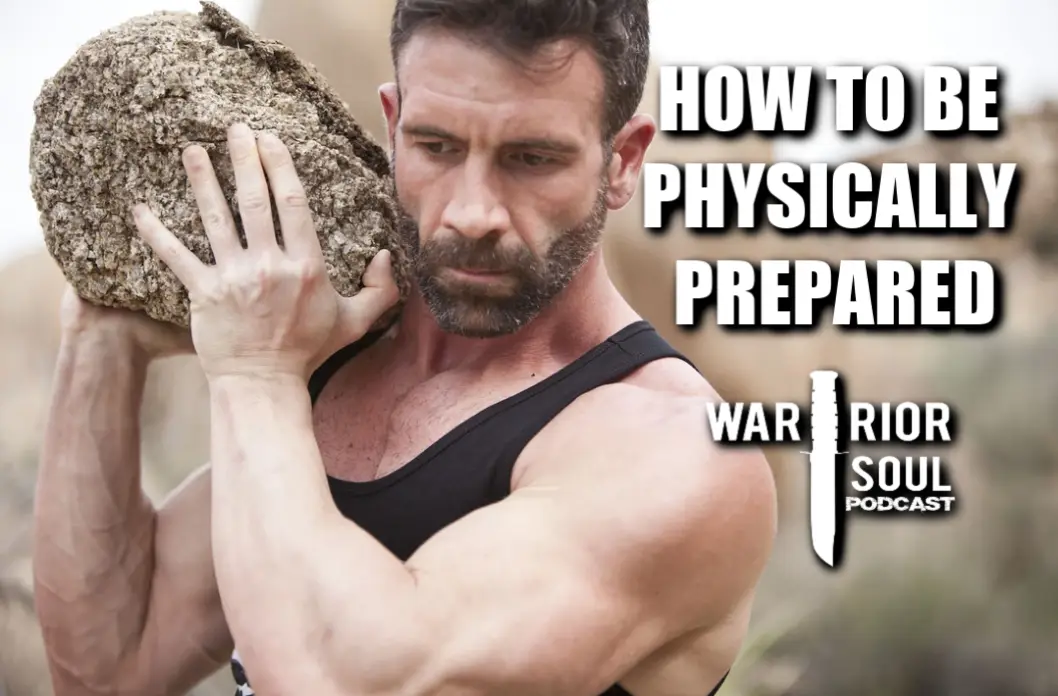
Being Physically Prepared | Warrior Notes
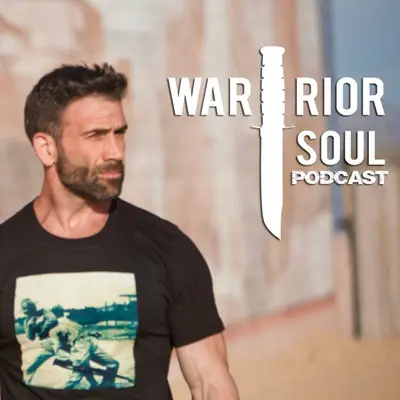
Hosted by Chris Albert
The Warrior Soul Podcast
The truth is that most of us are vastly underprepared physically to defend ourselves and our families.
If you get into a fight, or you get put into a situation where you need to protect yourself or your family, there’s not going to be a rest period to catch your breath.
If you need to escape the city you live in, and the roads get blocked off, you’re probably not going to be traveling over even ground. You’ll probably need to carry weight.
Why then, do most of us limit ourselves to training in air conditioned gyms, and resting 2-3 minutes in between sets?
Look, I get that there’s a lot of people competing in powerlifting meets these days. Powerlifting is one of my favorite sports and I competed for a long time.
But powerlifting alone will not prepare you for the known and unknowable obstacles that could put your life or your family’s life in jeopardy.
To be properly physically prepared, you need to be training, not only strength, but also general physical preparedness (GPP), and skills.
In this episode, I lead a discussion on each of these, but here are things you can do to maximize these three areas:
Strength
For a start, focusing on the big three: the squat, deadlift, and bench press is a good call. These lifts will help you to master basic form, and you should seek to perfect your form on all three of them.
Nevertheless, beyond beginner training, only focusing on the big three will leave many holes in your strength. There are movements that can help you to incorporate more core strength and functional fitness into your regimen.
Here are some of them:
Lower Body – Olympic Front Squat
This one is a hard one for most people because of the shoulder mobility required to do it, but it also mimics the patterns that most athletes need to work in order to be efficient at what they do. It trains thoracic extension, which will increase your strength and protect your spine. Of course, the back squat is also awesome at this, but if you are in a tactical or athletic situation, most of the time you will be lifting from the front. As such I recommend learning the olympic front squat and including it in your routine as a strength builder. Here’s a cool instructional video from our own Warrior Soul Agoge exercise library:
Single arm overhead kettle bell squat:
Lower Body – Deadlift
Of course, you should also learn the deadlift and all of its variants as well. This will help you to strengthen your posterior chain, protect your back, and it’ll turn you into a beast. Here’s a tutorial video on the conventional deadlift and the snatch grip deadlift. The snatch grip is a great variant because it also helps you to train thoracic extension and grip strength.
Snatch Grip Deadlift
Tire Flip
Lifting irregular objects is a fantastic way for tactical athletes to prepare for the unknown. Things like tire flipping can help to build strength and conditioning like no other. Additionally, as there is no eccentric portion to a tire flip, it does not tear into muscles like other lifts. So you can do it multiple times per week:
Upper Body – Overhead Press
The overhead press is one movement that I see getting completely screwed up. Again, this requires a good degree of shoulder and upper back mobility to perform correctly. Watch these videos closely and pay attention to that external rotation of the shoulder.
Fixing a messed up overhead press:
Upper Body – Dips
Dips are extremely important for training good body position during any pressing movement and thoracic extension. You can add weight to these, but I would wait until your mobility is good enough to train enough depth.
This video from Strength Camp gives a great tutorial on body positioning and what it should be during a dip:
Upper Body – Pullups and Chins
There’s always been a big debate on whether you should train kipping pull-ups or dead hangs. Of course you should be training dead hangs first and foremost to build maximal strength and your PFT score if you’re in the Marine Corps, but kipping pull-ups also help with generating power from the hang and can help to train you for tactical situations. So my suggestion is to train both:
Dead Hang Pull Ups
Kipping Pull Ups
4) Power
A lot of people confuse strength and power. Maximal strength is the amount of force you can apply against a load, while power is the max amount of force you can exert in the least amount of time. While maximal strength can help you with power, power is also a skill that should be developed on its own. Lifting “fast” is one method of developing power in your routine.
High Pulls
High pulls are great because they do not require the high level skill set that the olympic lifts do, and there is far less risk of injury. Olympic lifts take a good amount of time to master and if mobility is not optimized, there’s a big risk of joint injury if loads grow too fast. High pulls help to train the fast hip movement that’s required to develop functional power without the mobility demand.
Kettle Bell Swing
Another great way to develop power without the skills required for olympic lifting is via the kettle bell. Swings are a fantastic beginner exercise that help to train the hinge, which is an essential base movement to most total body movements required in any tactical or strength situation.
Kettle Bell Snatch
The snatch adds a small degree of skill, but again offers a quick and easy way to train total body power while minimizing chances for injury as long as you are doing the movement properly:
Kettle Bell Cleans
Kettle bell cleans provide much of the same benefit:
Sand Bag Cleans
Sand bag cleans add an element of reality. Chances are, if you’re cleaning something in a tactical situation, it won’t be completely balanced. Sandbags are a great way to train for tactical fitness:
Backward Toss
The ultimate in power, backward tosses allow you to practice real power by throwing an object through time and space. My favorite way to do this is with a tire. Here’s a workout where we incorporated these with some of the other movements in this article:
There’s a host of other methods to train power. So many that we could fill a book. But these should give you a good baseline to start from.
General Physical Preparedness
General physical preparedness is about combining strength with endurance. Think about it, applying your strength in a dire situation is not going to happen in a controlled environment. Your heart is going to be elevated, you’re going to be breathing hard, and your muscles are going to be screaming.
You need to be training for this sutation so that you can deal with these things when the time happens.
Here are some quick workouts you can do to prepare.
100 burpees
Set a timer for 10 minutes and try to do 100 burpees in that time. This is the easiest workout you can do because you can do it any time, anywhere.
HIIT Training
Frequency: 3 times per week
Description: High Intensity Interval Training (HIIT) entails short bouts of intense exercise followed by brief periods of rest. This type of training mimics much of what you will be doing in a tactical situation by raising your heart rate and then lowering it in intervals.
Examples:
Tabata Circuits: Tabata circuits involve doing any strength exercise for as many repetitions as possible for 20 seconds, followed by 10 seconds of rest, for a total of four minutes. This protocol works well with total body exercises like squats, deadlifts, kettle bell swings, burpees, and thrusters. You can either work with weights for resistance or you can do them with your own bodyweight.
The biggest benefit with Tabatas is that you can do them anywhere and the workout lasts a total of only four minutes. Don’t let the short work period fool you. Tabata workouts are some of the hardest workouts you will ever endure. So if you’re using weights, be sure to make sure that they aren’t heavy.
Complexes: Complexes are groups of resistance exercises performed at high intensity for set periods of time or repetitions. You can do complexes with barbells, dumbbells, kettle bells, or sandbags.
Examples:
The Dumbbell Bear is a complex that includes five dumbbell deadlifts, five dumbbell hang cleans, five dumbbell presses, and five dumbbell squats done every minute on the minute for 20 minutes. This will wear you out!
STRENGTH ENDURANCE
Here’s something that a lot of people do not understand: running 3 miles in sneakers and shorts DOES NOT prepare you for humps or patrolling with a full combat load. If you’re training for tactical strength, you need to be training strength endurance.
That means carrying heavy loads for distance over various kinds of terrain, and while wearing the gear that you will be wearing in the field.
This means including a loaded ruck march into the routine, and potentially working with loaded carries for distance.
Though these are very important, you should keep the frequency of these types of training exercises down to once a week or so. Training long distance rucks too often can cause overuse injuries, lack of mobility, joint problems, and lots of hormonal imbalance due to systemic stress on the body.
Examples:
Doing a 5-8 mile loaded ruck march once a week.
Carrying a 40-50 lb dumbbell or kettle bell around for 3-4 miles.
Skills
You should also be training Jiu Jitsu, grappling, wrestling, boxing, muay thai, along with training with your firearm regularly.
Programs and resources:
Warrior’s Obituary Society – our private mastermind where we focus on fitness, finance, relationships, business/career in one solid mastermind while we help you build the vision for your life.
Warrior Fitness – an all in one fitness course for the modern day warrior. Includes nutrition, training, general physical preparedness, and mindset.
Transcript
Machine-generated from the episode audio and lightly edited — may contain errors.
Chris Albert (link to this point)
This is Chris Albert, and I'm here to remind you of one thing. Someday, you're going to die. Now that's not some morbid statement or scary idea. It's solid fact. Your time here on this earth is limited.
And we need to be reminded of this as much as possible for one simple reason, to live your best life while you can. This is the Warrior Soul podcast.
You know, if you had to fight for your life or if you had to fight to protect your family, the literal truth of it is that most of us are are poorly prepared to do so. Very very poorly prepared to do so and that's the case for a lot of us whether we train a lot or whether we are sitting on the couch. If you're sitting on the couch you're way more unprepared than somebody who is training regularly. But I'll I'll tell you this story. About three years ago I stepped onto a jiu-jitsu mat for the first time and I could deadlift 600 pounds, I could squat over 500 pounds, I could bench press close to 400 pounds, and I was around two hundred pounds of body weight maybe around two ten.
And for all looks and purposes I looked like I was in the best shape of my life. You know, I I had a lot of muscle. I was very low body fat. And I stepped onto the jiu-jitsu mat, and I sparred with a 14 year old kid who was around a hundred and forty pounds. And the kid broke me in half.
Yes, it put up a good fight in the first couple of seconds. But before long, my lungs were burning. I couldn't breathe. I my muscles gave out on me. And this kid was wiping the mat with me.
And it was at that point that I realized that a lot of what I was doing training wise, because I was training often, But a lot of what I was doing training wise wasn't serving me, and it wasn't preparing me for a situation where I would either have to defend myself or somebody that I loved. And that was really when the game changed for me. That's when I got into jiu-jitsu. Now this episode is not gonna be a long advertisement for jiu-jitsu. What it's gonna be is a discussion of how we can better physically prepare for the trials and tribulations that life might present us.
The knowable and the unknowable. And, you know, we've had a lot of, modalities like CrossFit pop up over the past decade, and a lot more people are getting into jiu-jitsu. But there's still not enough of us doing it. There's still not enough of us preparing ourselves. So what I want to talk to you about today are ways that you can easily start.
Ways that you can easily add to the fitness routine you're already doing. And let me start by saying this, if you don't have a fitness routine, if you're if you're not doing anything right now, if you're just sitting on the couch, number one, anything is better than nothing. Anything is better than nothing. So if just getting to the gym or just doing a bunch of push ups or just doing a bunch of squats or just going for a walk outside is how you have to start, that's where you gotta start. There is no need to say, okay.
I've gotta go to the gym for an hour, alright, each day. That is, I think, in my mind, outdated, and it doesn't speak well for physical preparedness anyway because a lot of times the things we do in the gym alone aren't gonna prepare us for these things that I'm gonna talk about, whether you're getting into a fight, whether you're protecting your household, whether you've got to ruck for 10 miles to get away from something. The things that that you're gonna do in the gym, they're not gonna prepare you for that. So what I'm gonna talk to you about today are things you could start adding in. Right?
Little things you can do to to just physically prepare yourself, mentally prepare yourself to do something harder and more difficult. And we'll talk about three different areas. And the first one is gonna be strength. The second one is gonna be stamina and physical preparedness, general physical preparedness. And then the third one is going to be physical skills.
So let's talk about the first one when we talk about strength. Strength is something that a lot of us tend to focus on because it is the one that is most accessible to us. There are gyms everywhere now. When I was growing up, there weren't a lot of gyms. There was, like, one gym every other town.
I'm talking back in the nineteen eighties. They weren't as popular. But in the nineties, gyms started popping popping up everywhere. And in the two thousands, there's there were more gyms. And today, there's, like, four or five gyms in every city.
And there's gyms that have different personality types. You have your health clubs. You have your more CrossFit gyms. You have your hardcore power lifting gyms. You have, MMA type gyms, all that kind of stuff.
Right? But at the end of the day, strength comes from doing total body compound movements. The type of strength I'm gonna talk about today, functional strength. Right? So when we're thinking about functional strength, a lot of us focus on the big three lifts.
Right? The squat, the deadlift, and the bench press. Now those are great. They're great to start, and I started doing them at a young age. I started doing them at 12 because I went into a gym and I had some power lifters, you know, grab a hold of me and they said, hey, kid.
This is what you gotta focus on. You gotta focus on the squat, the deadlift, and the bench press. One of the things that happened as I got older is that I realized that just focusing on those three lifts actually left a lot of holes in my strength. Right? The back squat is great, but if you're looking to really develop some athletic ability, and let's say you're trying to develop some strength that you want to apply to jiu-jitsu, Well, the back squat's great, but you should also front squat.
You should front squat Olympic style. And this is difficult for a lot of guys because the mobility required for a front squat is difficult. It's harder to breathe when you're doing a front squat. But the thing is this, it enforces something called thoracic extension, which is the ability to extend our spine under stress, and it helps with athletic posture. If you look at the way that a lot of, a lot of athletes, their stances, the way they they they perform their movements, well, the front squat definitely applies here, particularly if you're doing it Olympic style, not California style.
Now when I'm talking about Olympic style, I'm talking about having, if you ever watch an Olympic lift or when they go into a power clean. Right? It's the front rack position that I'm talking about, where your elbows are bent, your hands are underneath the bar. A lot of people like to do the front squat California style. California style is where the bar is on your shoulders and you're folding your arms in front of you.
Now I prefer the Olympic style because it is much more applicable to jiu-jitsu, to wrestling, to football, to a lot of the the athletic stances you're gonna have to take. But a lot of people don't have the mobility to do it. Now there's ways of doing this with lifting straps. And before I move on, I wanna say I'm gonna put some videos up on the show notes for you guys to to take a look at this stuff. You can use lifting straps to put yourself into an Olympic position, Olympic lifting position on front squat, without having to get your arms underneath the bar.
Right? And you can prevent a lot of that elbow stress. The other thing is a lot of guys use a lot of ego. They're thinking, oh, I'm squatting. So because I am, gonna squat, I wanna put a lot of weight on there.
And the thing is this, you don't need to use as much weight on a front squat. It's really about that position and developing that core strength. Right? So my recommendation is if you don't have the mobility, use the lifting strap strap style. If you don't have lifting straps, of course, something is better than nothing.
You can go California style. But try and strive for the mobility to do that front rack position. That's really important. Right? And that's also something that's gonna help you with your physical preparedness.
Now I work in front squats in alternation with back squats. And when I was at my strongest, that was something I was doing to fill in those holes of strength. Right? It's called periodization. So if you're working on back squats for three weeks, then you could switch to front squats.
Right? You could also work in overhead squats, which a lot of people can't do a lot of weight with. I can't. I never could even when I had a 500 plus pound squat. You know, I think the most I ever did was two twenty five on the overhead squat.
And that's a lot, but still, right now, I rarely go over putting 20 fives on each side and it's still very beneficial for your core strength. Right? And it helps to put you in a good posture. And again, I'll put some some form videos on the show notes for this episode for you guys to take a look at. So you want to work in these variations that are gonna be a little bit more of a stressor on your body, on your posture, that are gonna work in and fill these holes of strength, fill in these holes of strength from time to time.
Right? So like I said, if you're working back squat for three weeks straight, try to do that variation. For the bench press, a really good variation you should be working in is the overhead press. Right? The overhead press.
Being able to, press from the standing position with no back support. Right? That's a really, really good thing. And that also requires mobility, but ego again gets in the way of a lot of people. They don't want to work the front rack position when they're in the overhead press.
They don't want to keep their elbows in, they flare them out to the side to try to put up as much weight as possible. And the thing is, form is so much better for training functionality. Form rather than ego is so much better at training functionality because it's the form that is going to get you what you want, is better reaction time, which is better power, which is better positioning. If you're getting into a fight, it's all about positioning. If you're using your ego and you're just cheating all the time, well you're gonna get yourself into a position where you're more likely to get injured when you're under stress and you're actually doing something.
And you're putting yourself into a position where you're going to get injured training. And the whole point of training is to make you stronger in case something happens. Put that ego to the door. Try the overhead press. That might be more difficult, people might not stare at you while you're doing it in the gym, because you don't have as much weight on as you're doing the bench press, but it's something that's going to help you.
The Z press. Now the Z press is like an overhead press, but you are sitting on the ground with your leg extended, and it's really good core work. Solid. Z is short for Zydrunas. Zydrunas Savickas, the famous strongman, made this exercise famous in recent times, and it's really good for, training from the ground, pressing from the ground.
Right? And if you look at something like jiu-jitsu or fighting, a lot of that is occurring from that position where you're sitting on the ground and you're trying to press up. So another really good exercise. You can also do the z press and the overhead press with kettlebells or with dumbbells. Alright?
If you don't have a barbell handy and and you're not going to the gym. With deadlifts, you can train straight bar deadlifts, you can train trap bar deadlifts, you can train snatch grip deadlifts, which are a little bit wider. Right? They help to train your grip. You could do sumo deadlifts, deadlifts from a deficit.
Right? All these variations, they help to fill in your holes of strength. Olympic lifts. Right? Now a lot of people don't have the training to do Olympic lifts, and I don't recommend doing them unless you've gotten some training, unless you've gotten some instruction from a certified coach.
But what you could do is something called the snatch grip high pull or the clean grip high pull. Right? Now both train what you're looking for, is the explosion. Right? The speed.
And I'll put some videos up. They're much easier to master than let's say the the squat clean or the snatch. Right? The snatch is really difficult to master, so is the clean. So trying these these high pulls, they can give you the explosion you want, they can give you the power, the speed that you want, without all the risk of injury that you would get if you weren't trained and you were trying these exercises anyway.
Right? On top of that, some strongman stuff. So tire flips are fantastic. More and more gyms are including tires, but you can get a free tire. If there's a tire yard out there or if there's a tractor company in your town, a lot of times they're trying to get rid of those things and they'll give them to you for free if you just bring a truck, and you'll be able to bring them home.
Right? If you get yourself maybe just a 300 pound tire or 400 pound tire, that's a good tire to train with. Right? And you can do so many things with it. You could do tire flips.
You could do dead lifts with a tire. Right? If you step inside of it and it acts like a trap bar. You can do hammer hits. You get a sledgehammer and that is fantastic.
Right? And then farmer's carries. If you've got some water buckets or you've got some heavy dumbbells or some heavy kettlebells, you can carry those around for distance. You could also pick up sandbags or kettlebells. One thing I like to do with my kettlebell is I'll go on like a mile long walk with my 55 pound kettlebell on my shoulder.
And again, that's something that's like simulating a ruck. You're moving mass over long distance. That's gonna build your strength up. If you have access to sleds, a lot more gyms have sleds. That's something we were early adopters of in Metroflex Gym Long Beach when I owned it, and it's still at Metroflex.
They were they're the pioneers, but you're seeing them at places like EOS Fitness and 24 Hour Fitness. Now training with that sled is another fantastic way to develop strength because you're using your squat, your your your your quads, your hamstrings, your calves, your upper body to push that sled altogether, and You're doing it under endurance. Now here's the thing I need you guys to understand about all of this stuff. Remember that if you are in a position where you're gonna have to defend yourself, you are in a position where you're going to have to fight, you're gonna have to move long distances, you're gonna have to do all this stuff, It's not going to be a situation where you're going be in an air conditioned gym, you are going to have the wherewithal to get yourself into the proper form, you're going to have the wherewithal to get yourself into saying, okay, I'm gonna do 10 reps, four sets, this. Right?
It's not gonna be a controlled environment. It's gonna be crazy. It's gonna be chaotic. Your your central nervous system's gonna be going crazy. It's gonna be going insane.
Right? And so in addition to strength training, you wanna be doing what's called general physical preparedness. K? Now what general physical preparedness does is it incorporates strength with endurance and stamina. Now this is what I'm talking about here as far as really trying to get functional strength because you're not gonna be in that controlled environment that says, okay, I get to take two minutes rest after this or ninety seconds.
Right? So what you wanna do is you wanna put yourself through circuits where, let's say, you're doing a a front squat, and then you're moving to doing 10 burpees, and then you're moving to doing, five deadlifts, and then you're moving to do three tire flips. Right? And then you gotta carry, like, a 55 pound kettlebell around with you for a little bit. Right?
Maybe it's not that intense. Maybe you're doing a bunch of kettlebell swings and then some burpees and then maybe sprinting 300 meters. But putting this stuff together is so important because again, you're not going get a rest period if you've got your life on the line or your family's life on the line. If you've got a firearm and you're just training at a static range and you are just there on the line, you're just pulling the trigger, popping at targets. That's not realistic.
What you want to do is get yourself to a range where you can move, where you could do burpees in between. Right? And, of course, you wanna have good range safety there. You wanna have somebody there looking out for you, making sure that you're not flagging the line or anything like that. But something where you're gonna you you might have to lift some weight and then do some burpees and then pick up a rifle and and throw some shots or or a pistol and throw some shots.
Right? That's something you want to be training with. You don't wanna just be doing that static static firing. Right? Same thing with anything else.
Right? If you're just going into the gym and lifting weights and you're there in a controlled environment, you are going to be vastly unprepared when it comes to actually defending yourself. Now if you are looking for ideas for how to incorporate general physical preparedness into your routine along with strength, I have developed several different programs for this. Alright? The first thing is this is something we work on in the Warrior's Obituary Society, which is our mastermind.
When we're putting our fitness plans together, general physical preparedness is something that everybody is expected to incorporate. And in the fitness module on that mastermind, we have a bunch of general physical preparedness workouts that you can take advantage of. And we're always putting new ones up there in the discussion section on our Slack channel. So that's one way you can get that. The other ways that you can do it is you can head over to warriorsoul.academy, and you can check out a couple of the other programs I've got.
I got one up there called Warrior Fitness, which is a co course. It's a twelve week course that I put together, very inexpensive, that shows you how to incorporate all of this stuff. Right? Nutrition, strength training, general physical preparedness, mobility, and skill sets. So you definitely want to go check those out.
Both of them are awesome. The Warrior's Obituary Society is amazing. Love the group. And maybe I'm biased because I run it. But also that course Warrior Fitness, extremely inexpensive, but it's got so much knowledge in there for how to improve yourself in every single way.
But here's a few things that you can do with just your body weight or just a couple of dumbbells or a kettlebell. The first one, I mean, the easiest general physical preparedness workout in the world is doing 100 burpees. Do 100 burpees, see if you can get those 100 burpees in under ten minutes. It is a fantastic workout. It's gonna work every muscle in your body.
It's also gonna work your lungs. Right? That's a really, really great one. Another good one is sprinting a 100 meters, doing 10 burpees, and then sprinting back, and then doing 10 more burpees. And doing that for as many times as you can do that in fifteen minutes.
Alright? That's another good one that just requires your body weight. If you got a kettlebell, a really good thing you can do with that kettlebell, like I said before, you can carry that kettlebell. You can walk a mile or two with that kettlebell. You can also do kettlebell swings, and you can combine that with burpees, and then you can head back over to the kettlebell and you can do kettlebell thrusters, which is a squat with a press on the end of it.
Alright? And what I like to do is I like to go 20 kettlebell swings, 10 burpees, and then five thrusters each side. Alright? And then keep repeating that process for as many times as possible in ten minutes, and that is a crazy workout. And we got a lot of good stuff like that up there in those programs.
So the third thing I wanna talk about today is applying strength and general physical preparedness. Because if you're training and you are training for strength, you're training for stamina, you wanna be able to apply that with skills. And it's really important that you train skills because let's say, you know, a lot of us, we trained MCMAP in the Marine Corps. Right? Or we trained army combatives.
And a lot of us got out and were like, yeah, man. Know MCMAP or I know our army combatives. But here's the thing. If you get into a fight, right, or if somebody's attacking you or attacking your family, your heart rate's gonna go up. You are going to lose your coordination skills.
You're going lose a lot of that stuff. And skills are all perishable. Right? And we know that with firearms training. We know that with a lot of stuff.
Skills are perishable. So if you are coming under attack and you haven't trained in a long time, well guess what's going to happen? You're going to forget a lot of shit. Right? Now sure, sheer rage or sheer adrenaline might take over, but a lot of times a lot of us we freeze up.
And one of the best ways to prevent yourself from doing that is getting yourself onto the mats, going to your local jiu-jitsu school, going to your local fight academy and training. Right? Actually getting out there and training. Now, particularly for this group, this is gonna fill a couple of different purposes. Number one, it's gonna make you more prepared.
It's gonna make you more prepared for a fight. But number two, and I think this is just as important, it allows you to get around a group of individuals with a particular mindset who want to do good things in their lives. I speak to so many veterans out there who are sick and tired of being lonely, they're sick and tired of not having the boys around and things like that. If that's you, get over to a jiu-jitsu school. Get over to a jiu-jitsu school.
Try to find a school that has got a good group of people in there. Try to find people or an academy that's got a great coach that's going to help to mentor you. Try to find a place that's going to be like that. It helps so much. I can't tell you how much it's done for me to be around those guys, those guys at my academy, to be around my coach, Jake Benny, because he's he's just a great dude.
Right? And, you know, that's the thing. I mean, being here on the Internet and and listening to podcasts, that's one way of getting mentorship. But getting it in person from a place like that, so important. So those skills, you want to actually apply those.
Right? You do that by actually doing stuff, and jiu-jitsu, for a lot of us older guys, is a great way to do that because it's not as hard on the joints as, let's say, like boxing or or a lot of the other sports like football or things like that or or flag football. And you can get in there. You can train with minimal risk, and you can learn a lot of stuff that could potentially save your life and your family's life. Right?
Other things, like I said before, if you've got a firearm, need to be training with that thing. Don't wanna just sit there and gather dust in your safe or in your closet or wherever it's wherever it is. You know, actually get out there and train with it. Having a weapon is one thing. Actually knowing how to use it use it and having the coordination skills and having the reaction time to use that thing, well, that's a different matter.
Right? So you wanna get out there, you wanna train as much as possible with it. Get outside and freaking ruck. Right? Go hiking, climb mountains, climb hills, do that kind of hard shit.
That is so important because, again, you know, if a disaster happens, you don't know what's gonna happen with your car, you don't know if the roads are gonna be passable, you don't know what the hell's what the hell the future brings. So don't put yourself into a position to where you're not gonna be able to carry mass over distance. Alright? Really, really important stuff.
So guys, I just wanna remind you, I'm gonna put a blog up with all of this stuff up there. You guys can jump on that. You can can use that. I also, again, want to point you toward the Warrior Soul Academy. That's up at www.warriorsoul.academy.
I've got all my fitness programs up there that you can take advantage of. Also the Warrior's Obituary Society. That's our private mastermind where we're not just working on fitness. We are empowering our members to live absolutely epic lives, worthy of epic obituaries. And in that eight week development program that's up front for all new members, what you get is we help you to outline your vision, to figure out what you really want in this life, to set your goals, to work on your fitness plan, customize your fitness plan, but also customize a personal finance plan so you can knock down debt, start investing, start building your dreams.
We help you to focus on your career. We help you to focus on your business if you have one, your relationships, and we do it all on a month in, month out basis, week in, week out basis. We've got live calls each week. We get together. We're pushing each other on those goals, keeping each other accountable.
We've got our private chat, which isn't on social media. You're not gonna get all distracted with alerts and stuff like that. It's on Slack. Right? We keep it really private so that nobody's looking over your shoulder.
And we've got a Voxer group where we're keeping in touch with each other over voice calls every single day. So hope you guys take advantage of that. I wanna give a quick shout out to our sponsors, F Bomb Nutrition. They make delicious macadamia nut butters. They put them in these packets that you can carry around with you, supplement your MREs, take them out to the field, take them with you while you're training, get some energy.
They've got meat sticks, they've got cheese snacks. Right? So important. So important. Right?
Having good nutrition that's accessible and easily portable. And I also wanna give a shout out to Save the Brave. savethebrave.org. They're a five zero one c three charity. They do camaraderie events for veterans.
They do a lot of events for gold star families. They got fishing trips. They've got golfing events. They are helping veterans around the country. Their board does not take a salary.
They are one of the best veterans charities out there in existence today, and I love those guys. Check them out over at www.savethebrave.org. If you're looking for more content from Warrior Soul, can check out our website at www.warriorsoulagoge.com. And here's the biggest thing above all. I mentioned my fitness plan, mentioned our products, but here's the thing.
I don't really care if you buy anything. Right? I don't care if you spend a dime with me. I'm not in this to get rich. I'm in this to help as many veterans and as many people as possible.
So if you do nothing else, please share these episodes out. Share them with somebody who can utilize them. And if you want to pay us the highest compliment, head over to iTunes and write us a written rating and review. It helps so much to drive the iTunes algorithms and to let people know that this show exists. I'll be back at you next week with some more awesome content.
Until then, get out there and live your best lives while you can. This is Chris Albert, and I am out.
Host of the Warrior Soul Podcast and founder of Warrior Soul. Worldwide trainer and nutrition coach, contributing author at Testosterone Nation and Muscle and Strength.