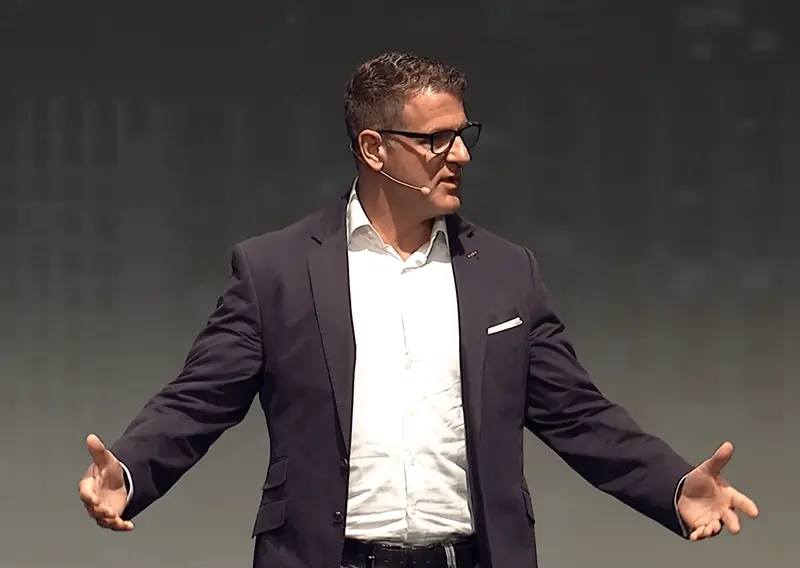
I am a complete financial idiot. Seriously.
Throughout my life, it’s always seemed like I never had enough.
Well, in 2019, the year that I turn 40, I’ve decided to change all that.
So I’ve committed myself to learning everything I can about personal finance.
In this episode, I take you through what I’ve learned and how I’m prepping myself for retirement.
I also give out some advice to the young military service members who listen to the show about how they can be financially set once they reach my age.
Note: As I state above, I am an idiot. So nothing I say in this episode should be considered financial advice. If you really want to learn about money you should read:
1) Tony Robbins, Money Master the Game
2) Andrew Hallam, The Millionaire Teacher
3) Benjamin Graham, The Intelligent Investor
Transcript
Machine-generated from the episode audio and lightly edited — may contain errors.
Chris Albert (link to this point)
This is Chris Albert, and I'm here to remind you of one thing. Someday, you're going to die. Now that's not some morbid statement or scary idea. It's solid fact. Your time here on this earth is limited.
You need to be reminded of this as much as possible for one simple reason, to live your best life while you can. This is the Warrior Soul podcast.
You know, one of the things that I'm really trying to dedicate myself to in 2019 is becoming more financially capable. And when I see that, I'm not necessarily meaning that I'm looking to to earn more money. Yes, of course, I'm looking to build my business and expand my business, but for all intents and purposes, when you're growing a business, most of your money is going back into the business. For example, with my business consulting firm, what we're doing currently is putting a lot of that money back into advertising and marketing, so that we can take on more clients. And that means that even though my consulting firm is doing really well, I'm not necessarily personally making more money, because I'm not looking to spend more right now.
But what I am trying to do is become better at saving the money that I do take in. And so what I want to talk to you about today is what I've done over the past few months since 2019 started in order to save more money and in order to invest that money. And again, I'm I'm not some financial guru. I don't have any real financial education whatsoever. I'm not a certified financial planner.
I don't have a degree in finance or anything like that. What I've been able to do throughout my life is to do a lot with a little. Right? Because, you know, never in my life... I've never been one of those guys who's had a massive salary or anything like that.
When I've run businesses, I've always put money back into my business. And for all intents and purposes, what I am trying to do and the purpose of running a business for me is to put off immediate pleasure so that at some point in the future, I will be set. I'll be able to have a passive income. I'll be able to have the savings I want. I'll be able to live the life that I want.
Right now, I'm in the thick of it, doing battle out there in the market and trying to to expand my footing. So while I'm doing that, I'm also trying to contribute to my savings and my retirement. So what I'm gonna go into, I'm not gonna make like specific recommendations on stocks or anything like that. What I'm gonna give you are are some really solid tactics that you could use right now to save more money. Alright?
In the first one is something that that I think a lot of people might be a little bit scared of, and that is to pay yourself first. Whenever I get my my check for the month, whenever I get my money for the month, I immediately take a percentage of it, and I put it into my savings and investments account. Alright? I take a percentage of it, and I immediately... That's a set percentage no matter what every single month, it is going into my savings and investment accounts.
And if that means that I have to scrape by and eat less that month, if that means that I have to, you know, not go out as much or not travel as much, not spend as much money on gas, no matter what happens, there is a percent... Set percentage of my income every month that is going into that savings and investment account. And a big... It's a bigger percentage because I actually started saving later because I had a period where I was earning no money at all and and I was living out in my car. And so I need to catch up at this point.
So there's a bigger percentage and that is a non negotiable. And a lot of people do this, but they do it at the end of the month after they've they've gone through their month and they've done everything. I do it at the beginning, so that it's not a question of if it's gonna happen or not. Right? It it is a non negotiable.
So set percentage going into my savings and investments accounts. The next thing I I do is something that a lot of people might look over, and I kinda just mentioned it. And that is that I've been cutting costs like crazy. So every month, I go through my statements from my bank and I look for places where I could have saved money. And I write those down, and that way for the next month, I know either to cut it out or to avoid doing it or to to to do something else, you know, as far as the...
I'm always looking for more ways that I can add more to my savings. And it's a big deal because, know, those little purchases that you make. If you're spending $5 a day on coffee, if you're out there and you're you're you're taking your car when you could be walking or taking a bike, or if you are, you know, spending monthly purchases like on subscriptions that you don't use anymore, that stuff can really add up over the year. And you could be robbing yourself of hundreds or thousands of dollars each year if you're not on top of that stuff. So that's the second thing I do.
I take a good look at my statements each month. The third thing I'm doing is I am reading as much as I can about financial education. And I've dedicated myself to reading at least a book every week or two on finance. And the thing about it is, I know a lot of people shy away from finance and they shy away from understanding money because it's hard. It's also really scary.
Right? I used to have this aversion of talking about money, and I used to have this aversion of... To thinking about even trying to save because I was living in this kind of desperation mindset. But one of the things that things that's changed for me this year is that I'm really trying to think in a mindset of abundance. Right?
So I might just have a certain amount coming in each month, but what I do with that money really counts. And if you are saving and you're investing wisely, regardless of what your income is, you could have a really good nest egg by the time you're retiring. So you guys who are in the Marine Corps or in the army or in the military right now, and you're 18 to 22, you've got so much going for you because you could save so much money. You could start investment accounts. You could start putting that money away.
And if you're putting that money away and you're starting it, even if it's just a few $100 a month, if you're starting it now, by the time you're my age, 40, you're gonna have a good amount of money that you're gonna be able to do things with. And and, you know, or you can keep contributing contributing to it, so that you'd save it for your retirement. It's gonna cost a lot to retire by the time you guys... Most of you guys are up in your sixties. Cost of living are going up, you know, all these things.
But but this is the the best time to start, and it starts by understanding what you're doing when it comes to your finances, and that means you gotta read. A few books that I have read and so far in 2019 that I think you should check out and some of these might be... You might be like, well, why the hell am I gonna read that book? They're they're great either if you're reading them or if they're on audiobook. Audiobook, I tend to like a little bit better because I can get through a book a little bit faster.
But Tony Robbins, Money Master the Game, really awesome book. That's what kinda set me on my path. And you know, I have a confession to make. I bought that book two years ago, and it sat on my desk because I was so kinda worried about just starting to read it. I kinda...
Like I said, I had this fear. But this year, you know, I'm turning 40 this year, and I'm I'm like, I gotta get this stuff under control. So I read the book, and then I listened to it on audiobook, and it really changed my mindset about all things related to money. What's possible? Whether or not you could become rich on a middle class salary and and honestly that is possible if you're investing intelligently and wisely.
I'm not talking about going in and putting all your money in a... Into cryptocurrencies or anything like that. I'm talking about slow, steady, non risky investments, you know, it's definitely possible to become wealthy, particularly if you start doing those when you're young. So that's a really good one. Another one is The Millionaire Teacher by Andrew Hallam.
Really really awesome book. That book will change your mindset on a a bunch of things. And then the final one is The Intelligent Investor by by Benjamin Graham. I've been reading that because I really wanna understand investing in stocks, and I'll give you guys a little bit of information about what what these books say about it, but I really want you to go check those books out. And like I said, I'm not a financial guru or anything like that.
So the third thing that I've started doing is is I've started investing, and a lot of people have a real risk aversion when it comes to investing. But if you look at the stock market over time, you know, from the beginning of the century till now, and you can hear about this in these books, the stock market has averaged eight to 12% per year. That's including all the crashes, all the downturns, and things like that. The big mistakes that people make when they're investing in the stock market or it... There's a few of them, and I got these from the books that I've read, and again, take everything I say with a grain of salt, you need to go read about this stuff, but the first thing they do is they try to buy stocks when they're high, or they try to buy individual stocks, and then they they end up selling them when when they're low.
And the reality is that what you wanna do is you you wanna keep your money in the stock market over time, and you wanna invest the same amount every month. And what happens is is when the stock market is low, that's discount season. That's discount season. That means you could get stocks at a cheaper price than they normally be. So, you know, a lot of people are scared of of a crash.
If you're young and a stock market crash happens, that is absolutely amazing for you because you could take the money you've saved up, you could buy stocks at a big discount, and they're going to to go back to normal. Everything goes back to the mean at which it was. And if you look at like 2008, 2009, when that crash happened, a lot of people got discounted stock prices, and in the recovery, they made a lot more money back. But it was those people who had their money in the stock market when the market crashed, they pulled it out. Those are the people who lost tons and tons and tons of money.
And, you know, to be honest with you, I I look at the cryptocurrency markets and and that's how people are with crypto. They're they're looking to buy stuff when it's high, and then sell it, and they end up selling it and freaking out when it's low. And that's why I think people are gonna get slaughtered there. But if you're looking at stocks, you you wanna invest the same amount of money each month, and you want to and and and you wanna invest both in stocks and in bonds. And the thing is I don't buy individual stocks.
I buy what's called ETFs, exchange traded funds. I don't buy mutual funds. I don't buy individual stocks. Mutual funds, they have tons and tons of fees attached to them, and that could really take away from your earnings. ETFs are low cost, and they allow you to buy the entire stock market.
So really good company to check out is Vanguard. Vanguard has total stock index that you can invest in and a total bond index that you can invest in. They've also got a total international stock index that you can bet... Invest in and a total international bond index that you can invest in. And if you're young and you just buy shares in each of those at certain percentages, and again, I'm not your financial advisor, you can figure those percentages out and your risk tolerance.
But if you you just invest in in four, you know, ETFs that cover the whole bond market and the whole stock market. You're gonna be really diversified, and you're gonna be good to go. And then when the stock market takes a downturn, don't take your money out of those. Try to invest more and get more shares of everything, and you're gonna be in a good place. In, you know, to be completely open and honest to what I did, I invested my money through Ameritrade, and I just bought Vanguard ETFs through there.
Now, once again, guys, I'm a blubbering idiot. I'm a real dumbass. Like, I can't explain how low my IQ is when it comes to finance. So don't take this as financial advice. Don't take this as anything, but take it as a call to go and read books by people who are a lot smarter about money that...
About money when... Or or a lot smarter when it comes to money than I am, and take it as a call to really educate yourself about money as much as possible. Money is a tool that can lead to freedom throughout your life. And, you know, especially for you young guys who are still serving in the military, you know, if you set yourself up financially for by the time you come out and you don't spend your money on stupid crap, like buying cars, motorcycles, all that shit that's gonna depreciate, then you could set yourself up for a really bright future. You can set yourself up to, you know, maybe start your own business or to have a really awesome nest egg that's gonna allow you to do a lot of things when you get out, or when you get older.
So that by the time you're my age, you don't have to scramble like I did financially to to get it together. Alright? I hope this is helpful, guys. Again, I can't emphasize this enough. Go educate yourselves.
Read about this stuff. You gotta approach it with the same attitude you would approach planning a patrol, planning a mission, planning anything else in your life. And if you neglect it, it's gonna come back and it's gonna come and it's gonna bite you in the ass at some point. Alright? Alright, guys.
So that's what I got for today. Like I said, like I say every episode, this is the Warrior Soul podcast. My name is Chris Albert. I'm the dumbass who's not a financial guru, who's telling you to go and listen to other people. But the reason I do this podcast is for those US military veterans out there.
I served in US Marine Corps, and I love The US military veteran community. And I do this podcast simply because I want to help the veteran community to expand its influence here in this country. There are no better group of people in this country than those who have put their lives on the line for it, and I just wanna make sure that you guys are living awesome lives. I really don't ask for anything in return. We do have a clothing brand called Warrior Soul, if you wanted to check that out, support the podcast.
It's up at warriorsoul.shop. And all I really ask is that you write us a review, and I'll be equally happy with that. If you head over to iTunes, you write a review about what you heard, or if you share these episodes out with people who could really use them and really listen to them. I am also deeply grateful for the good people over at f bomb nutrition, www.dropanfbomb.com. They make these delicious packets of macadamia nut butters.
They're so good. You can supplement them with your MREs, and you can get 20% off if you use the code Warrior Soul at checkout. Again, that's www.dropanfbomb.com. Use the code Warrior Soul at checkout and get yourself 20% off. And finally, the show notes for this episode will be up at www.warriorsoulagoge.com.
That's a g o g e. I'll put them up under podcast show notes, and I will link all of the books that I mentioned here today. Because once again, I need to emphasize that I am a blubbering idiot. When it comes to finance, you shouldn't listen to me. You should read for yourself.
Alright? Don't keep your stuff on hold. Allow yourself the freedom to have financial freedom when you get older. That didn't make sense. But either way, this is Chris Albert, and we'll be back at you very soon with another episode.
I am out.

Host of the Warrior Soul Podcast and founder of Warrior Soul. Worldwide trainer and nutrition coach, contributing author at Testosterone Nation and Muscle and Strength.