Podcast episode
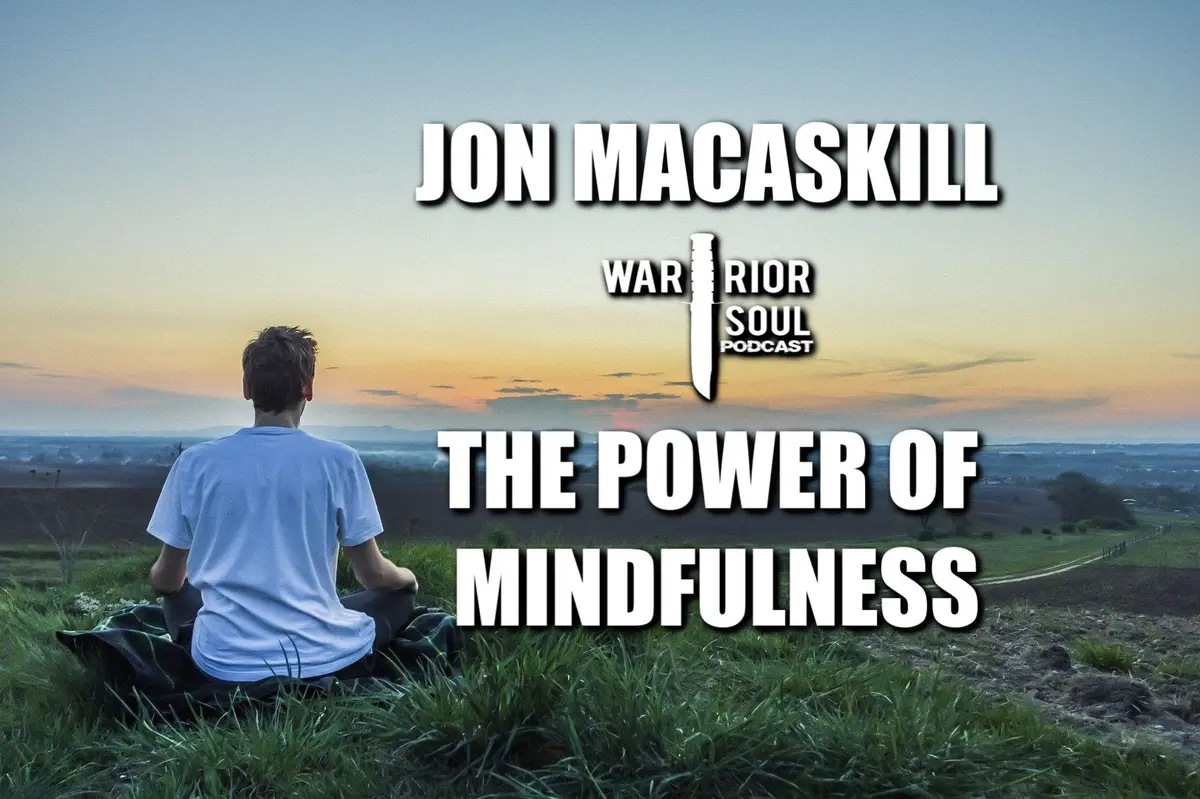
Jon Macaskill: The Power of Mindfulness
Hosted by Chris Albert
The Warrior Soul Podcast
Jon Macaskill is a retiring Navy Seal Commander who is working to spread the practice of meditation and mindfulness to the veteran community.
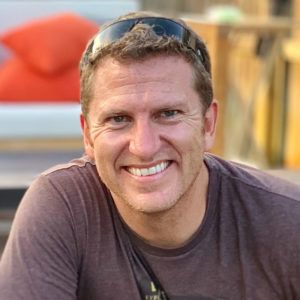
Jon Macaskill is a retiring Navy Seal Commander and Acting Deputy Executive Director of the Veterans Path, an organization that teaches veterans how to use the tools of meditation and mindfulness.
Many veterans, and others, shy away from meditation because it carries connotations of some hippy guy sitting in the lotus position and chanting. In reality, meditation can have little to do with spirituality and you don’t need to be a monk to do it.
Jon has used mindfulness meditation to sort his mind out from the stresses of being a Navy Seal officer.
As he came to the sunset of his career in the Seal Teams, Jon had a choice. He could go the traditional business route and get into commercial real estate or finance, or he could do something that was truly meaningful to him. Since meditation had helped him so much, he wanted to help other veterans to take advantage of this amazing tool.
In this conversation, we talk about Jon’s career in the Navy, his introduction to meditation, and his plans for helping veterans in retirement.
Find out more about Jon and his work with Veterans Path at https://www.veteranspath.org/
Transcript
Machine-generated from the episode audio and lightly edited — may contain errors.
Chris Albert (link to this point)
The Warrior Soul podcast is written, edited, and produced by me, Albert. Our mission is to provide tools, tactics, strategies, and ideas that help The US military veteran community to show up as the wisest, strongest, most capable versions of themselves in the civilian world. If you're not a veteran, stick around because anything we talk about will most certainly apply to you as well. This podcast is made possible with the help of f bomb nutrition. They make delicious packets of fats that you can carry around anywhere with you in little portable packets.
They make macadamia nut butters. They mix them up with chocolate. They mix them up with sea salt. They mix them up with coconut butter. They're absolutely delicious, and they're really good for you.
They don't have any sugar. They also make a lot of cheese snacks. They make meat sticks, and it's just a great company. These guys send packages of this stuff to the troops who are on the front lines overseas to supplement their MREs, and we didn't ask them to do that. They just did that on their own initiative.
Really great company. If you wanna get 20% off your first order of f bombs, head over to www.dropanfbomb.com and use the code Warrior Soul at checkout. This podcast is also brought to you with the help of Save the Brave. Savethebrave.org is a five zero one c three charity for veterans. They run camaraderie events that include fishing, golfing.
They also do a lot of work with gold star families. And unlike a lot of other organizations, their board doesn't take a salary. Really great organization that is doing amazing work. So go and check them out at savethebrave.org. With that, thank you guys so much.
Let's get into today's programming.
This is Chris Albert, and I'm here to remind you of one thing. Someday, you're going to die. Now that's not some morbid statement or scary idea. It's solid fact. Your time here on this earth is limited.
And we need to be reminded of this as much as possible for one simple reason, to live your best life while you can. This is the Warrior Soul podcast.
You know, one of the tools that has seriously helped me to excel as an entrepreneur, as a person, as a human being is meditation. Now, when I tell people that, a lot of times visions go off in their head and they're starting to think of me sitting there in a lotus position doing some crazy kind of chant or something like that. But it's not that at all. Meditation actually really isn't there to help you to get to some sort of zen or bliss. It's not there to make you high.
It's not there to create any kind of real altered state. It's actually there to help you to become a better observer of yourself and your thoughts. You see, a lot of what goes on in our brains is actually subconscious. You don't actually control most of your thoughts, they just kind of pop up into your head. And one of the skills you need to learn if you're going to keep yourself on the path is how to become a better observer of yourself and how to become a better observer of those thoughts.
Because in one way or another those thoughts are eventually going to lead to actions. I meditate for ten minutes every day in the morning and ten minutes toward the evening. My guest today is making it his life's mission after his military service to teach other veterans about the power of meditation. His name is Jon Macaskill. He is a Navy SEAL commander and he's about to retire.
He's actually still in the SEAL teams. He is working with an organization called the Veterans Path, and they are going around and they're teaching veterans how to master this very important skill. And make no mistake about it, it is such an important skill. You can learn about everything in the world but if you don't understand yourself then you're really not going to get anywhere. You've got to understand what types of things are going to come up that are going to get in your way.
The benefits of this work are not instant, it takes practice and in many cases it takes years to master. But trust me, is so worth it. Jon and I had a great conversation. We talked a bit about his Navy career. He's a graduate of the Naval Academy and one of the things we talk about in here is how if you're on active duty right now, if you're in the Marine Corps or the Navy, you can actually get appointments to the Naval Academy that a lot of people don't take advantage of.
So we talk a bit about that. We talk a bit about the journey. Right? How it is for him going through transition. We talk about some of the battles he's faced in his own brain and how meditation helped him.
And we talk about some simple techniques that you can implement right now in order to start to understand your brain a little bit better. It's a great conversation. I hope you guys get a lot out of it. One thing just before we get started, the only thing I have to ask you is this. Please head over to iTunes and write us a review.
That's the only thing I wanna ask of you today. I the podcast is growing so much. It's growing rapidly, but we need to do more. We need to keep this momentum going. And I wanna get this information, the information that we provide here on the Warrior Soul podcast out into the ears of more veterans.
And the only way to do that is if more people know about us. And by writing reviews, you are helping us by driving that iTunes algorithm. And in addition to that, if you wanna share these episodes out, please do. The more you do that, the more it helps us, the more it helps all of our listeners. So with that guys, let's get into this conversation with Mr.
Jon Macaskill. Let's talk about meditation and let's get into it. Jon Macaskill, welcome to the Warrior Soul podcast.
Jon Macaskill (link to this point)
Thanks, Chris. Great to be here. Appreciate it.
Chris Albert (link to this point)
Absolutely. You know, for the audience, we're we're gonna get a little bit into your background, I wanna talk to you about about all the awesome stuff you're doing right now. But could you give the audience just kind of a a quick three minute synopsis of who you are, what your background is, what you've done, and and how you came to this point you're at right now?
Jon Macaskill (link to this point)
Sure. Jon Macaskill, 42 years old, been in the Navy for twenty three years, almost twenty four. Enlisted in 1996, went from the enlisted ranks to the Naval Academy, and then ended up going from the Naval Academy into the Navy SEAL teams. Been in the SEAL team since 2003 and had multiple deployments doing what we do. And along the way, discovered mindfulness and meditation, I'm sure we'll get a little bit more into here in the podcast.
But got into mindfulness and meditation. And as I am starting my transition out of the military, I will retire here in August. I got connected with a nonprofit called Veterans Path, and I'm doing an internship with them right now as their deputy executive director. And with Veterans Path, what it is we do is we introduce veterans to the life changing and life saving practices of mindfulness and meditation to bring them back to a sense of peace, acceptance, transformation, and honor. That's where the word path in our name comes from peace, acceptance, transformation, and honor.
So I'm doing that, working here in Virginia Beach, living here with my family. I've got two little ones, an almost three year old little girl and an almost one year old little boy. And then my wife, Becca, is a former Navy orthopedic physician assistant. And she got out about a year and a half ago. So we're here in the Virginia area.
And when I retire, we'll be moving west out to Colorado. That's a bit about me.
Chris Albert (link to this point)
Outstanding. Let me ask you this because, know, we get a few academy graduates up here, but but we haven't had somebody who went in as an enlisted man and then and then got into the academy. We got quite a few guys out there who are still enlisted. How'd that process go? How'd you you ended up enlisting right out of high school and then you enjoyed it and you said I wanna wanna go to the academy?
Jon Macaskill (link to this point)
So yeah. A couple of things. I I tried to get into the academy out of high school and I didn't have the background that they wanted as far as knowledge in calculus and some of the basic courses that they wanted as a freshman at the academy. So I wanted to serve in the Navy, wanted to be in the SEAL teams. So I was like, you know what?
I'm gonna go ahead and enlist. So I enlisted. I was a parachute rigger just for a very short stint. While I was at a school for the Navy, a Naval Academy recruiter came by, talked to us, and then I spoke with our career counselor. And I was like, hey, I would like to apply.
And that application process is available. Okay. So my information is dated. So this is 1996, 1997. So the numbers may be off a little bit here.
But back then, there were 75 slots to go into the Naval Academy directly from the enlisted ranks for both the Navy and the Marine Corps. So 75 per 75 per the Navy, 75 per the Marine Corps. And those direct billets just aren't well advertised. So I guess what I'm saying is I got in because I was lucky that the billets weren't advertised very well back then. So it was a Secretary of the Navy nomination and then an appointment from there, from the enlisted ranks.
And then if they don't have the direct enlisted rank appointment, you can go through the Naval Academy prep school. You can get in and they will like, let's say that you've been in the Navy for two or three years and it's been a while since you've been out of high school and doing math, any type of real studies, the Naval Academy prep school can help to ramp you up and prepare you for the Naval Academy. I had only been out for a year, so I was able to come right in into the Naval Academy and still had kind of that school background. But in all honesty, I kind of wish I'd gone to the Naval Academy prep school because it was a wake up call when I got there. You know, that freshman calculus and freshman chemistry really kicked my butt.
Yeah. I had to put my nose to the grindstone for sure.
Chris Albert (link to this point)
Kinda hits you in the head. Yeah, man. When we're talking a little bit earlier about my studies with when I was working on my PhD and one of the things I did was I was a political science student who studied game theory and when I figured out that I wanted to study game theory, there's a lot of math involved there. So what I had to do at like, and I'm talking to them, I'm in my late twenties, like way out of high school, I've been studying political science, had to go into like basic calculus, linear algebra, all that stuff and refresh it. It's a butt kicker. But man, that's it's a good deal, like, as far as education goes because we're talking about one of the preeminent institutions in the world with with with one of the best educational opportunities in the world, one of the best alumni networks in the world that if you're an enlisted person right now, there's a pool of openings for you guys out there that you could take advantage of. And I don't know why more people don't do that, you know?
Jon Macaskill (link to this point)
Yeah. I mean it's just again, my information is dated, back then, the information was just not getting out there to the enlisted ranks about the direct accession into the academy.
Chris Albert (link to this point)
Now, let me ask you this because I also and I'm not sure if this is how it was, you know, twenty years ago, but I know for for if you wanna become a Navy SEAL for officers, there's a limited pool of openings to get into BUD/S. Right? Was that like that back then?
Jon Macaskill (link to this point)
Yeah. It sure was. As a matter of fact, my my class, so 2001, we had 16 guys go, and that had been the number from the academy for years. Like, I remember looking at the academy catalog when I was in high school and the number of guys who were going to SEAL training was 16. Several years after I graduated, they upped that because the academy had a really good success rate of graduating BUD/S students.
And not because they're better people or anything. It's it it honestly goes back to what you just mentioned. The academy has a good network. While you're at the academy, you know, you're you're brothers with the the people who are training to go to BUD/S. So you you really set yourself up for success in in the long term by going going through the academy.
I mean, there's obviously outstanding ROTC and and OCS fellow officers that are there at Bud's. Many many that are way better than what I consider myself. And I I think there's many routes, but the academy did end up increasing their numbers of of billets over time. I think it's somewhere in mid twenties, maybe even low thirties now from each graduating class that go. And yes, you're right.
Unlike the enlisted ranks where you go to SEAL training and you go as yourself, as an officer, you are going and you are taking a billet. There's a finite number of billets to go to BUD/S every year as an officer. So if you go, somebody else didn't go. Right? And that's really one of the things that drives me crazy about the process is if a seal off, or sorry, if a candidate shows up at Bud's as an officer and quits, that's somebody else's spot that is not coming back.
Right? They're not gonna say, well, this guy quit, we'll just bring somebody else in. That's a billet for the year. And it's kind of a wash. So it's unfortunate when an officer quits.
I mean, I say that, and I've had friends who have gone through and they quit. You know, going to BUD/S and quitting is not necessarily something to hang your head in shame about. It's just unfortunate in that if if an officer does quit, that's another officer who didn't get an opportunity to come in. That's all I'm saying there.
Chris Albert (link to this point)
So Right. That process is tough.
No. I get you there. I get you there. It's it's so competitive. And hats off to anybody who tries something like that.
Know, it's Right. Awesome. But so you do that, get into the SEAL teams and then you get a platoon and you do that for a bit.
Jon Macaskill (link to this point)
Right.
Chris Albert (link to this point)
I don't want to get too far into the specifics of your career and everything, but from what I hear about you, you were dealing with different bouts of depression and stress as you were going along, right?
Jon Macaskill (link to this point)
Right. Yeah, exactly. So yeah, I won't get too far into the details, but first deployment was a rough one. We lost a lot of guys, both between the SEALs and some of our brothers who were out there supporting us. And that was tough on me.
It was tough on my wife at the time. I came back with a pretty heavy load of survivor's guilt, which I carried for, heck, I still carry it to this day. It's just how I deal with it. And through the time in the Navy, ended up talking with different psychiatrists, psychologists, had me on different medications for anxiety, not being able to sleep, depression. And I think those meds have a purpose and I think they work with certain people at certain times.
I didn't like who I was on any of the medications that I was on. So finally I came across a psychologist who recommended mindfulness and meditation. I've told this story a couple times, so it sounds kind of rehearsed. But it was he was telling me about practicing mindfulness and meditation, and I didn't know what mindfulness was. And then meditation in my mind, the stereotypical meditator was a hippie or a monk.
And here I am at this or at least who I thought was this big bad Navy SEAL. And I felt like I couldn't be telling my guys that I was meditating. I felt like that was a weakness. Not that there's anything wrong with hippies or monks. It's just not who I am.
Chris Albert (link to this point)
Yeah.
Jon Macaskill (link to this point)
And so he sat me down, going back to the psychologist, he sat me down and he's like, well, here's the physiology behind it. Here's why it works. Here's some very high performing individuals who practice it. And so I took that and I was like, okay, well, I try this out. And I tried it out for a couple weeks and didn't get a whole lot from it.
So I went back to him and I was like, what else you got, doc? This isn't working for me. And he was like, well, you know, that's like going to the gym for two weeks and thinking that you're gonna be this this badass.
And so, you know, that was he was relating to the knuckle dragger in me. He knew that the the gym was where I spent a lot of time or at least used to spend a lot of time. And so ended up practicing for two months just doing super basic meditation using apps that were online on my phone, guided meditation, learning about what mindfulness was, reading about it, the differences between mindfulness and meditation. A lot of times people think those are synonymous. There are similarities and overlap between the two, they're not the same thing.
So learning about mindfulness and actually practicing being present in the here and now throughout my day, that's the mindfulness piece. And then sitting down in the morning or whenever I set aside time to actually meditate. Once I did that for about two months, that's when I started to see and feel differences in who I was, how I was handling stress. I mean, it's not gonna take stress away.
Chris Albert (link to this point)
Right.
Jon Macaskill (link to this point)
That's one thing people are like, Oh yeah, you don't stress because you meditate or you're mindful. That's not true. You're still gonna have stress. As a matter of fact, sometimes you'll even be more aware of the stress. But it's how you handle it.
It's how you take that on that is important. Anyway, so I started seeing differences in how I was handling it, how I was handling relationships, how I was communicating with friends and family. And then I had people coming up to me asking me what I was doing. And at first I was a little afraid almost to tell them that I was meditating, kinda like what I was mentioning before because of that stereotype. But finally, I'd started telling a few people and the response I thought I was gonna get was people were gonna be like, what?
That's weird. But what I ended up getting was, oh, really? Tell me more. So I started telling more people about it. And at the same time reading more about it, practicing more and seeing even more effects. And then at the same time, had a former six SEAL friend of mine, mentor of mine, sit me down because he knew that I was looking at retiring in a few years. And he's like, hey man, you need to start figuring out what it is you wanna do when you get out. So I took that on board because this guy, like I said, was a mentor of mine and anything that he said was kind of gospel to me. So I started looking at all the different industries that were out there, looking at, you know, commercial real estate, finance, private equity, whatever the case may be.
I was like, okay. None of this really jumps out at me. Great jobs, but it's not nothing that's really that I'm passionate about. So I was like, at the same time, talking to all these people about mindfulness and meditation, and then trying to find out what I was gonna do. And I was like, hey, you know what?
Boom. Kind of light came on. Why can't I do this for a living? Why can't I help people learn to deal with stress, anxiety, depression through these same skills that I've learned? I'm not looking to make millions of dollars when I get out of of the military.
I'm looking to continue my service just in a different form or fashion. So I thought, okay, I can do this. And then I thought, no, it'd be great if I could bring this to veterans and I'll just found a nonprofit that does this. And lo and behold, this organization, there's actually several of them, but Veterans Path in specific jumped out at me. Their values and ideals lined up with mine. And through networking and leveraging several transition foundations that are out there, I got connected with them. I got connected with Veterans Path. And now here I am in an internship role in the last few months of my military career, serving as their deputy executive director for Veterans Path, which is the organization teaching meditation to veterans.
So it's an awesome story. I mean, still can't believe it's happening, honestly. So
Chris Albert (link to this point)
Well, that's great. That's great. You know, one of the things I because I got into meditation, I gotta say, two and a half years ago.
Jon Macaskill (link to this point)
Yeah.
Chris Albert (link to this point)
And, you know, I had kind of the similar similar ideas about it that you did. Know, people would bring it up to me all the time and I'd be like, what the hell? Get that get that shit away from me. I don't know what I want to do.
Jon Macaskill (link to this point)
Exactly.
Chris Albert (link to this point)
But, you know, the thing is, I think a lot of people have a false expectation when they're gonna get into it. They expect like some kind of high or some kind of euphoria to come over them. But the reality is this, and I tell people this all the time, your mind can be a prison. Right? And and all these things that come up, all these underlying thoughts, all these scripts that get written, they can drag you into ways of thinking that aren't serving you.
And the more you know about your mind, the more you're able to observe yourself, the more you're able to detect when that's happening. Right?
Jon Macaskill (link to this point)
Yeah. Totally, man. So you you bring up a couple points here that for Veterans Path, I run a podcast as well. And I interview people who practice meditation or teach meditation or are somehow involved in the mental health arena. And almost every single person has mentioned they didn't call it that their mind is a prison.
I like that. I like that a lot. But they talked about negative thoughts, self doubt, kind of these negative stories that we tell ourselves about where we are in life, what others are thinking about us, what we should be doing differently. And we totally live in these mind prisons that you mentioned where we are never good enough. We are never doing enough.
We are never doing what we need to be doing. And I believe that meditation does help with that a lot in that you spend a lot of time in your mind just being quiet, doing that that introspection and saying, okay. Well, what truly is important? And when you ask that question after practicing meditation and mindfulness, I think you are more aware to to be able to answer that properly. And it's not well, at least to me, it's not the money.
It's not the clothes we wear. It's not these standards that other people are setting. And here's the thing, those other people aren't even setting those standards. We think they are and we think that we have to live up to their standards. That's not at all the case.
And I think that meditation helps you to calm down, bring that stress and anxiety down on me, which is that's why I got involved with it anyway, was to help with that. It does do that and it helps you to realize what is truly important in your life by allowing your mind to be quiet and you really are able to pay more attention to what's important to you.
Chris Albert (link to this point)
Right. And it's important to determine that because if you don't determine what's important to you, a lot of times the world is gonna determine that for you. Right? It's gonna
Jon Macaskill (link to this point)
Oh yeah.
Chris Albert (link to this point)
Bust expectations on you. And particularly in times of transition when guys are getting out because what happens and I know what happened with me, you know, I the military for me was an act of rebellion. Right? My mother didn't want me in the military. She definitely didn't want me in the freaking Marine Corps.
And so when I got out, I was like, alright, I did I I spent my time doing this thing. Now I gotta go please her and please everybody else and go to school. Not only did I go to school, I I went to school for a decade and Yeah. Worked on a PhD and I woke up in the middle of it saying like, well why am I doing this? Right?
And and that's the thing. You can end up somewhere you never wanted to be and you could become a person you never wanted to be if you don't determine what you want.
Jon Macaskill (link to this point)
True. You're living somebody else's expectation. Like you mentioned, you joined the Corps as a rebellion but then afterwards, then you kind of got back on track to what your mother expected of you, right? And I think in true introspection, I look back on why I joined the Naval Academy was like you mentioned before, hey, it's a great institution, one of the preeminent institutions out there, educational institutions out there. But I joined it out of pride. I wanted to be the best. And looking back, hey, if I if I attacked life now, like I like I did then, or rather if I attacked life then like I do now, would I have gone to the academy? Would I have made a lot of the same choices?
All in all, I'm happy that things worked out the way they did because I wouldn't be here speaking with you about mindfulness and meditation and the life saving practices that they are. But I definitely had a different mentality back then. I wanted to prove to my friends. I wanted to prove to my enemies that I a badass and that I could go to the Naval Academy if I wanted to. Now, I don't feel like I have to prove things to people.
Am my own person. I can talk confidently about mindfulness and meditation, and the fact that I, you know, I'm a former or still a SEAL doing that, and people don't look at me sideways or Right. And if they do, I don't care. So, you know, I'm more of my own person.
Chris Albert (link to this point)
Yeah. It doesn't it doesn't really matter what people think. Right? I mean, it's your life. It's what you're doing.
Yeah. It's your mind. You're the you gotta live with your brain. You gotta live with that voice in your head that's telling you these things. If anybody doesn't like that, they could really go pound sand.
Right?
Jon Macaskill (link to this point)
That's Yep. A
Chris Albert (link to this point)
Exactly.
You know, a few other things here as we're thinking about it. So when you got into meditation, you said you had difficulty with it at first. What what eventually started to click for you? When did when did it start to to make sense?
Jon Macaskill (link to this point)
Yeah. So I think as I was doing those apps, right, just basic apps, a lot of those guided meditations when you first start are like fifteen, twenty minutes long. And for me to sit still for fifteen or twenty minutes, just kind of not doing nothing, but trying to calm your mind, that was difficult for me. My mind, when I was thirty seconds in to a guided meditation, would be thinking about, okay, what could I be doing right now instead of just sitting here? You know, I'm a task oriented type person, type A personality.
I wanna get up in the morning and get stuff done. Boom, boom, boom. Well, once I realized that I was actually more productive throughout the day, the days that I was meditating, even if I was meditating for three or four minutes, I mean, that that would change just how I attack the morning. And then I would realize, okay, if I meditate a little bit longer, I'm gonna be even more productive. Days that I ended up meditating for fifteen to thirty minutes in the morning, I was able to crush a lot more because I was more focused, paying more attention to what was going on through the day, more creative, just everything came more into focus for me.
So I think once I started to see the results, then I wasn't as negative during the first few minutes of a meditation. That helped. Secondly, I listened to somebody talk about, well, it's natural for your mind to bounce around, to have that monkey mind. That's what it's called, right? And trying to turn your brain off to where it doesn't bounce around, that's like trying to get your heart to stop from beating, which you can't do.
But the very process of realizing that you sat down to meditate, you had something that you were focusing on, whether it's a breath, whether it's a bodily sensation, or whether it's a mantra, you had something that you were focusing on. And now you've lost that focus. That very act, noticing that you've lost focus and then bringing it back. Doing that over and over and over actually rewires your brain to where you can focus more often. And meditating does, in fact, become easy easier.
Yeah, I had a friend mention this weekend, the more you practice, the less you have to practice. So to me, what that means is, hey, it's basically you're creating new neural pathways in your brain that allow you to focus more. So meditating actually does in fact become easier as you do it more. What I recommend is people don't try to jump right into a half hour meditation. Jump in, try to keep your mind focused for two, three minutes on a bodily sensation.
Whether it's you breathing, whether it's you can physically feel your feet and your legs and doing a body scan, whatever the case may be. If you can stay focused for two or three minutes and then work your way up to ten, fifteen minutes, you're going to get better and it's going to become easier. So that's what I that's when I started to realize, okay, this is worth the time that I'm devoting to it is I it became easier to me, and I saw the results through the day. I was more productive and more focused.
Chris Albert (link to this point)
That's awesome. That's awesome.
Hey, guys. I hope you're getting a lot out of this interview. You know, the Warrior Soul podcast is built with the mission to empower its listeners to live absolutely epic lives. And that's why we recently created a group called the Warrior's Obituary Society. This group is built to empower its members to live epic lives worthy of epic obituaries. And it starts with an eight week development program.
And with this development program, what you're gonna do is you're going to outline a vision for your life. You're going to get very specific about what you want. Because without that specificity, you don't know where you're going, and you don't know what you're doing. From there, we help our members to develop specific goals, objectives that they are going to push toward, and that their fellow members of the Warrior's Obituary Society are going to hold them accountable too. From there, we're getting down into specifics.
We're going to help you to develop and customize your own personal fitness and nutrition plan to help to fuel your body and fuel your mind for the quest ahead. From there, we're going to work on your personal finances. We're going to help you to knock down debt. We're going help you to start saving money and to create a plan so that you can start investing in your dreams. Then we're going to get into your business and career.
We're going to help you to develop the skills that you need to develop yourself so that you can have a major impact in the field you choose. If you choose to go into business, we're going to help you to set up the foundations that you need to create your own company and get started on your path in life. From there, we're going to be working on your relationships, we're going to help you to develop a world class network, and all along the way, you're going to have your fellow members of the Warrior's Obituary Society pushing you in every single area. We meet once a week over a live call, and we're constantly communicating over our own private forum on Slack. We don't do anything over social media, and that's because I don't want anybody feeling like anyone's looking over their shoulders and I don't want you exposed to the crazy distracting alerts that you get on Facebook and some of the other social media platforms.
Normally programs like this cost thousands of dollars. This one does not. For the price, it is the best development program on the Internet. And that's because our mission here at Warrior Soul is to empower people to get more out of life so that they can in turn make the world a better place. We've got a great mix of active duty military, US military veterans, and civilians in this group.
We wanted to keep it really eclectic so that we get a lot of different types of views up there and a lot of different people with different areas of expertise. If you think that this is something that would be of interest to you, and that this is something that could empower you to live your absolute best life, head over to www.warriorobituarysociety.com. That's www.warriorobituarysociety.com and you can sign up today. And if you have any questions about it, just reach out to me at chris@warriorsoulagoge.com. That's chris@warriorsoulagoge.com.
I'm happy to even sit down with you for a phone call for a few minutes to see if the group is right for you. I look forward to seeing you guys in there, and let's get back to this awesome interview. Any particular apps that you like as far as for people to get started?
Jon Macaskill (link to this point)
Sure. Yeah. I recommend starting with apps like Headspace, Calm, Ten Percent Happier, Insight Timer, Waking Up. Those are those are kind of the the big five that I've used. And then one that is really great that I've gotten into, and I actually have some stuff published on there, is eMindful.
And eMindful is is not just an app, but it's a full service where you can actually do face to face video, live guided meditations, as well as stuff that's on demand, just like the other apps that are out there. So that's a that's a unique factor to eMindful, but those are those are, I guess, the six that I could recommend. eMindful, Insight Timer, Headspace, 10% Happier. I forget the other ones that I even listed, but those
Chris Albert (link to this point)
Yeah. I I use Waking Up Yeah. A lot. And the reason I like it is because Sam Harris is just really good at explaining things and kind of explaining the importance of it.
Jon Macaskill (link to this point)
He gets pretty deep.
Chris Albert (link to this point)
Yeah. Yeah. And and I like that he's got the option there. You could do ten minutes or you could do twenty minutes. And and for me, ten minutes Yeah.
Is like, you know, it's good. But but, you know, when I when I do it, what I find is that you have to get over that initial judgment you have on yourself because
Jon Macaskill (link to this point)
Totally.
Chris Albert (link to this point)
At first, your mind's gonna go all over the place and you're gonna be like, oh, I can't I can't do this. And if you're if you're coming down on yourself and saying, oh, I'm just a big gorilla. I can't I can't pull my attention. You know, then then you're you're gonna defeat yourself. But if you come into it without judgment, without judging yourself, without coming down on yourself, such an important thing.
Jon Macaskill (link to this point)
Right. Absolutely, man. And that goes back to that whole self doubt, negative self talk. Is is as soon as you sit down and you and you sit down or sorry. You sit down and you say to yourself, hey, what am I doing?
I'm doing something that's only for the weak minded, then, yeah, it's gonna be impossible for you to start meditating. If you are able to get out of that self talk, realize that these are practices that are ancient and they were done by the toughest of the tough. I mean, the samurais and the Spartans, they meditated to prepare for battle. And somewhere along the line, it got taught that meditation was for the weak. Why would that ever be?
Why would being introspective be for the week? It's not. Not at all. I mean, I think it's one of the harder things you can do.
Chris Albert (link to this point)
Right. And there's something about being calm. Right? Because when I was younger, I was into power lifting and all this stuff. And you know, I I try to go crazy before I was going to the bar, like, listening to the to death metal and stuff like that. But, like Yeah. As I got older, I found, like, I was much better power lifter if I was calm. And now that I'm into martial arts now with jiu-jitsu, I'm so much of a better martial artist when I'm calm and my brain's not freaking out and all these different things. Right?
Jon Macaskill (link to this point)
Yeah. I I mean, our our executive director, Dave Drake, he had a nonprofit before called Aikido for Veterans. And it was teaching it was essentially teaching mindfulness through the art of Aikido. I mean, that's and that's you you said you do it in jiu-jitsu. Right?
Chris Albert (link to this point)
Yeah.
Jon Macaskill (link to this point)
I mean, that's you have to be mindful in what you're doing in martial arts. And there's different so sure, there's mindfulness where you're focused on your breath. You're focused on something that you're seeing, something that you're smelling, something you're hearing, whatever. But there's also other modalities like yoga, martial arts, even sports. Sports, I mean, have to be there in the moment.
You can't be running up and down the basketball court, thinking about what happened yesterday or tomorrow. There's a lot of these physical modalities, other modalities that are ways of tapping into being mindful. But yeah, I totally believe in in in the other modalities as well for bringing that that sense of awareness. So good on you, man.
Chris Albert (link to this point)
Nice. Now I wanna make a little bit of a transition here because you've had a twenty year career, special operation, doing all this stuff, And, you know, you're coming on to the sunset of that career right now. What's going on in your mind right now as you're beginning to make that transition? What what types of things are you telling yourself and and and and how are you prepping yourself for this?
Jon Macaskill (link to this point)
Yeah. That's a great question, man. What am I telling myself? I'm telling myself it's going be okay. In the transition process, one of the things that people tell you is have a thousand cups of coffee with people who have done it before you learn from them so you don't have to reinvent the wheel.
And more often than not, what people have told me is you're going to be okay. And there's there's a, going back to that self doubt, there's a little bit in me that's like, oof, am I gonna be okay? So what I'm trying to tell myself is that I am. That said, in preparation, some of the things that are still points of anxiety for me are hanging up the uniform. I mean, you know, I've been in the military for twenty three, almost twenty four years of my life.
Once I hang up that uniform, you know, August 1, I retire. August 2, I'm no longer commander Macaskill. I'm I'm Jon Macaskill. And I'm not gonna be able to walk into a room with my name and rank and ribbons on that tell the story of who I am. I'm gonna have to basically let people know who I am by talking with them or having them get to know me, which is different than it is in the military.
Right? If I walk into corporate America and walk into a room, I'm gonna have to establish who I am by owning the room and getting to know people in the room. Whereas in the military, walk in in my uniform, it's got my rank, it's got ribbons that show basically everything that I've done and everything else. And then my insignia, right? The fact that I'm in special operations is another one that I'm gonna be hanging up.
So I think dealing with that change in identity, I think during our pre interview, called it a loss of identity. It's not so much a loss, but it's a change. And realizing that I have to shift to a new way of serving others. That I think is what we do in the military is after so many years, it becomes ingrained in you to serve others. And luckily enough, I've been fortunate to find Veterans Path and know that I am serving others and not only serving others, but serving other veterans in their path.
That I think is what people need to find is another way of being a service member. So service member to me, sure, you wear your uniform, you're a military service member, but can you serve in another capacity and still be a service member even after you've retired from the military? I think that's important for people to find a way to continue to give back because I think that's ingrained in us. And that's where people struggle is. They go out and they jump right into a job that they thought that they had.
Hey, you transitioned from the military, you've got all these soft skills. You would be great in X, Y, or Z job. But that's not all we wanna do. Right? We don't just want a job.
We want a mission. We want a purpose. And that mission and purpose comes with finding service. Right. That's what I'm I'm doing now.
Chris Albert (link to this point)
It's about finding meaning. Finding something else that's gonna bring in kind of meaning in your life. The only way you get that is by serving others. Right? The only way you get that is by serving a cause that's higher than yourself.
And, you know, some people some people will find that in something like commercial real estate. Right? Some people will find that in corporate world. It it's really up to you and your personality and and what you're gonna do. Right?
Jon Macaskill (link to this point)
Totally. And, yeah, please don't mistake me. I I I am not knocking those professions in any shape, form, fashion. It's just you have to find how that is your way of serving. I mean, people need real estate.
Right? They need people who are in commercial real estate to buy them the buildings. I mean, heck, I'm sitting in a coworking space right now. I wouldn't be sitting in this coworking space if if commercial real estate weren't a thing. So I'm thankful for them.
And and then they served me in that way. So you just have to find a way to make those jobs that you're doing a a new mission, a new purpose, a new meaning, like you said.
Chris Albert (link to this point)
Right. This can be an interesting question, but, you know, I'm sure that whenever when a transition comes up like this, there's a lot of noise going on. Right? There's a lot of things going on that that people telling you what you should do. Yeah.
Shiny objects popping up all over the place, and and this will go back to the meditation aspect and staying focused. But, you know, have have you had to deal with that with people saying, hey, Jon, you should go do this or have have a lot of shiny objects been popping up and saying, hey, you might wanna you might wanna take a look at this little contractor position over here, you know, we'll we'll get you this amount of money, that kind of stuff.
Jon Macaskill (link to this point)
Yeah, totally. And I think that comes full circle back to the meditation, man, doing that introspective time to really figure out what's important to me. That has been hugely helpful. That and a book that I highly recommend to any military member as they're starting to look towards transition is Designing Your Life. And designing your life, if you're familiar with design thinking, it applies design thinking to figuring out what it is you wanna do.
And part of the drill that you do is you walk around with this book for, I think it's three weeks, maybe maybe it's four. And and you write down every interaction, every task, everything that you do. And does that give you energy or does it take away energy? Does it put you in this state of flow or does it put you in this basically a state of zero? And then at the end of that period, you look back and you write you actually write down all the things that were positive and all the things that were negative.
And then you do a mind map and you write down something that's important to you in the center. And then around that you kind of design or rather draw more circles that are related to that center point. I wish I had it. I'll pull it out and show you. But basically, I had a mind map that showed me money, hey, that's nice.
Sure. But that's not my driving factor. Service, family, veterans, teaching, all these words that ended up being in the outer ring of this mind map, that was what was important to me. And then in the introspection that I was doing, was like, oh, what, you know, what can I do that's tied to all those important bubbles? That is what helps me to steer clear of those other shiny objects.
Because yes, it's not lost on me that I'm a SEAL. I'm an retiring O-5 Naval Academy graduate. There are opportunities out there outside of teaching mindfulness. Right? Some people are like, why would you ever go into the nonprofit space teaching mindfulness with your background?
Well, because that's not The other things that are out there are not super appealing to me and it's not what's important to me. And that again, comes full circle to having done that homework, having done the sitting down and really deciding what's important, and then being mindful about it. I mean, not to be cliche, but truly being mindful about it. I want to I wanna follow what's important to me because if I go over after those shiny objects, like you said before, you're gonna end up living a life that isn't yours. You're gonna end up living somebody else's story.
Chris Albert (link to this point)
So Right.
Right. And I think that that there's a lot of guys out there at all levels, they're facing that as they get out. Right? And and it could be the mom saying, hey, you gotta go to college. It could be, you know, their their buddies saying, hey, we got we got these contractor positions over here.
You can make a buttload of money doing this and doing that. Or or Yeah. It could be something else, know. And the the thing is, again, it gets back to knowing what you want. Having a vision for your life, Right?
It's so important to have a vision for what you actually want out of this life because you only get one, man. And you're not here for that long. Right? That is one thing that meditations help me a lot with is understanding my own mortality. Understanding the fact that
Jon Macaskill (link to this point)
Totally.
Chris Albert (link to this point)
I'm gonna die someday. Right. All this crap I'm worried about, that's gonna be in the past. My debt, my all my problems, all the all the bullshit I worried about, like, that's gonna be it's gonna be gone. It's gonna be lost particles in space.
Right?
Jon Macaskill (link to this point)
Yep.
Chris Albert (link to this point)
You gotta you gotta focus on what you what you're gonna do now, what you want right now.
Jon Macaskill (link to this point)
So Amen.
Chris Albert (link to this point)
Amen. Well, you're also going on this you said you're going on a cross country trip. Right? What are what are you hoping to do out of that? Right?
Jon Macaskill (link to this point)
Oh, man. Well, the biggest piece of that, so yeah. When I retire August 1, my wife and two little kids and I are gonna jump in our 31 foot RV, drive around the country and and really see this country, this beautiful country that I've served. I've driven across the country multiple times as I've been moved for the military, but I haven't really taken the opportunity to spend time in a whole lot of different locations and really see this country for what it is. I mean, it's beautiful.
I've seen it all in pictures. Now I want to go out and see it in person. And not only doing that, but I want to meet the people that are in these locations too. Right? So the intent of the trip is to spend time with family in these beautiful locations, meeting great people.
But then the secondary piece is I'm going to be working for Veterans Path as I do that and hopefully connecting with other nonprofit organizations that are either doing something similar or who are in need of a partner organization to do something similar, teaching mindfulness and meditation to vets. And I can offer that while I'm in a location x, y, or z to really make it kind of a family trip, but also a working trip where I still continue to feel that sense of service of giving back to my fellow veterans.
Chris Albert (link to this point)
That's awesome. That's awesome.
Thanks, Jon.
Before we go, tell us a little bit more about Veterans Path, how people can can get involved, how how veterans can get in touch and and maybe grab a hold of their services.
Jon Macaskill (link to this point)
Sure. Well, I mean, first off, could reach out to me. It's just Jon, JON,@veteranspath.org is the email. And then you can check out Veterans Path online, veteranspath.org. And then we are on all the different social media platforms out there.
YouTube, Instagram, Facebook, LinkedIn. I mean, you name it, we're on it. And then I do have a podcast for Veterans Path as well. And we're on all the major platforms. I'm the host, but I bring on some varied guests from Veterans Path retreat alums to Olympic gold medalists to very high performing corporate leaders.
So yeah, check us out on on all the major podcast platforms, man.
Chris Albert (link to this point)
Very cool. Very cool. We'll get all the links to that up on the show notes.
Jon Macaskill (link to this point)
And Thanks, man. I appreciate it.
Chris Albert (link to this point)
Absolutely. And, you know, Jon, I just want to acknowledge you, man. So number one, thank you for your service to the country, but also thank you for for continuing your service and and for, you know, trying to find something out there there where you can continue to be of service to our community and be of service to the country because honestly, the more veterans that get put into better places, I think the the greater impact they're gonna be able to have on their communities and the country at large. So, you know, that's what this is all about, man. It's it's not just serving for the time you're in, but but using what you get from your service to make this world a better place.
And I think that's an amazing thing you're doing.
Jon Macaskill (link to this point)
Well, thanks so much, man. I appreciate the support and I appreciate the opportunity to come on the show to spread awareness about what we do with Veterans Path and share my story a little bit about transition. If my story resonates with one person, one of your listeners, then this was well worth the time. So thank you for the opportunity, Chris. I sincerely appreciate it, man.
Chris Albert (link to this point)
Absolutely. And to all you guys out there, definitely check out Jon. Check out Veterans Path. Definitely check out the podcast. And, you know, a lot of these things we talked about today, I mean, are things that, number one are free.
They're available to you, right? Your mind is always available to you and meditation is always available to you. It's something you could do right now that could potentially change your life. And we're talking about small things that could potentially lead to big things. So definitely, definitely if you're even thinking about it, start a practice.
It could just take a few minutes of your day and it could change everything. You know, So guys, thank you so much for listening. Get out there and live your best lives while you can. And this is Chris and Jon, and we are out. We'll be back at you later on this week with some more awesome content.
Alright. I hope you guys got a lot out of that interview. I think that this is one of the most valuable tools that you can master, in terms of your personal success and for your happiness. This is so important for you guys, and I hope that you do take advantage of it. We'll have links up for connecting with Jon and The Veterans Path up on the show notes for this episode and I hope that you guys really do implement this in your lives.
Beyond that I just want to say this, you know, podcast is my passion. I consider it an honor to serve this community so I really appreciate the support that you guys have been giving the show. It means everything in the world to me to know that there's people out there who are being helped by the subjects we discuss here. If you want to support the podcast in any way, like I said, the primary way of supporting the podcast is by just sharing these episodes out, by writing us a review on iTunes. If you do that, I'm a happy man.
If you want to support the podcast financially, there are a couple of ways you can do so by getting yourself something in return. Number one is the Warrior Soul shop. We have some amazing gear up there, amazing t shirts, skivvy shirts, graphic design shirts, really really awesome stuff designed and printed by US Marines up in our Santa Barbara location and you can find that up at www.warriorsoul.shop. If you want to support yourself, we've got a number of my writings and courses that are up online right now and those are up at warriorsoul.academy. What am I talking about?
Well, I've got fitness programs that I've written over the years, fat loss programs, muscle building programs, I've got overall wellness programs. I've got courses on building your own business. If you want to build your own t shirt brand, if you're looking to build your own service brand, if you're trying to become a coach, I've got courses up there on that all at warriorsoul.academy. Beyond that if you want to join our private mastermind group, it is a fantastic group, the Warrior's Obituary Society. We've got about 16 individuals in there, all veterans, active duty and civilian and when you join that group, like I said, at the middle of the show there's an eight week development program in there that's going help you to develop your own fitness plan, your own personal finance plan that's going to help you to get on track to build your life.
If you are interested in that head over to www.warriorobituarysociety.com. Beyond that, let's say you just don't want any of this stuff and you still want to support the show. Well, we partnered up with Amazon and if you go to the show notes for this episode there will be a link up there where whenever you're buying something from Amazon, if you bookmark that link and you use that link, the show is going to get a small commission. So again guys, I wanna thank you so much. Like I said, I don't care if you spend a dime with us, as long as you're sharing and as long as you're reviewing, I'm happy.
And as long as you're listening, so make sure you're subscribed to the show. We'll be back at you next week with some more awesome content. I will be talking to you soon. Get out there and live your best life while you can and I am out.
Host of the Warrior Soul Podcast and founder of Warrior Soul. Worldwide trainer and nutrition coach, contributing author at Testosterone Nation and Muscle and Strength.