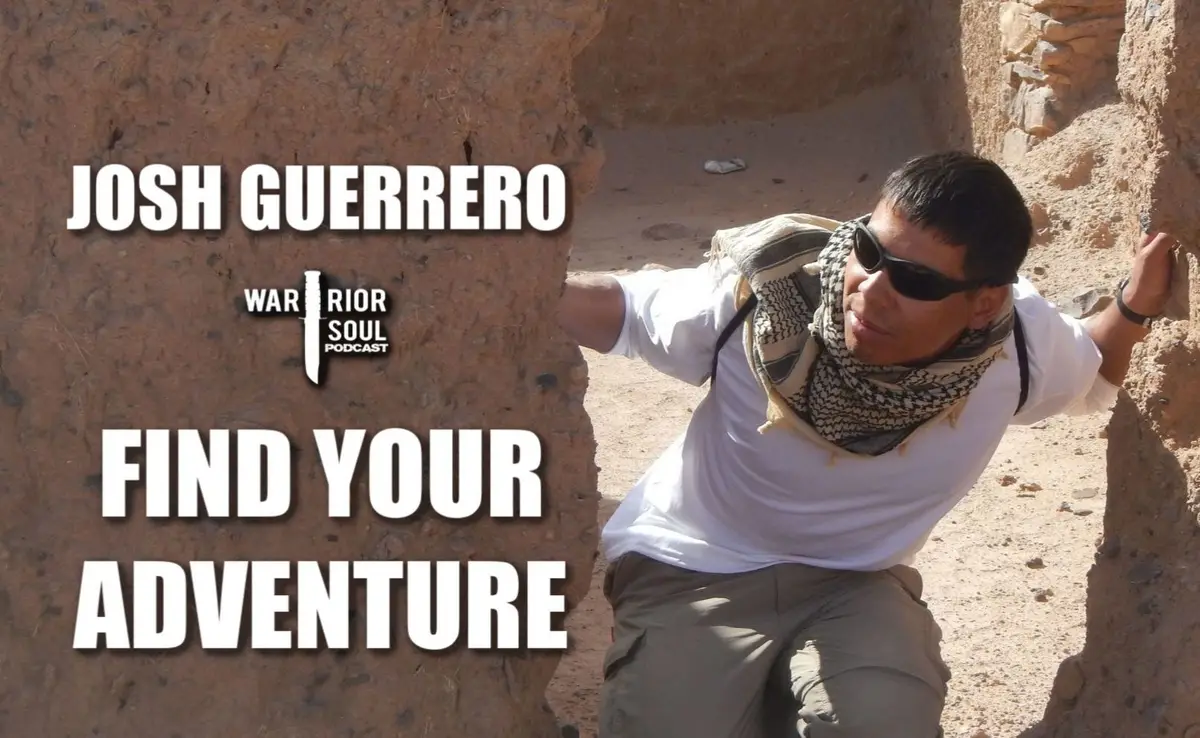
Josh Guerrero is a US Marine Corps Veteran, former Peace Corps Volunteer, and an archeologist. He's also the host of the All-Around Adventure Podcast.
Josh Guerrero’s resume sounds like something out of Indiana Jones…literally.
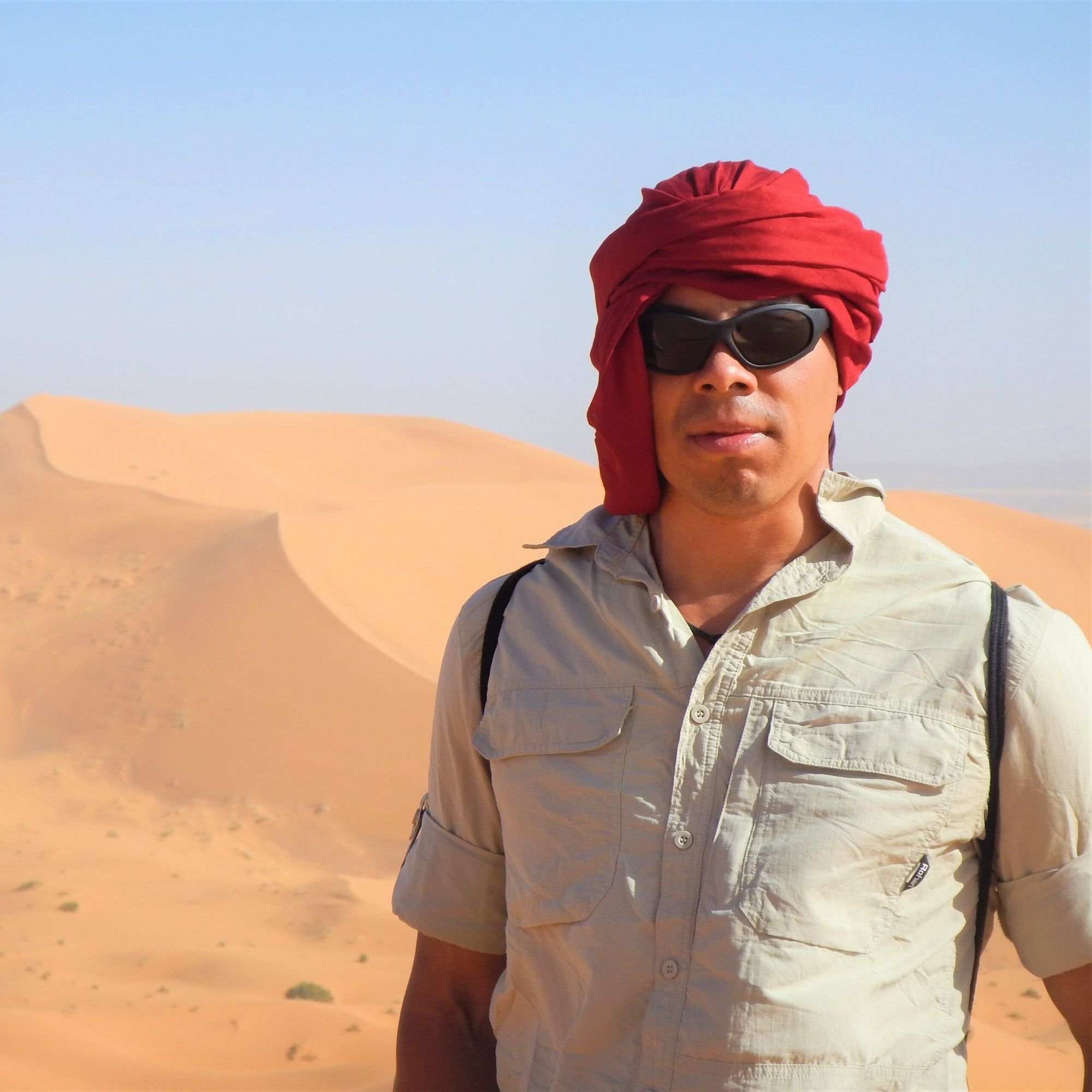
He is a United States Marine Corps Veteran, a former Peace Corps Volunteer, and he’s an archeologist. He’s lived in Africa and Europe, and he’s traveled to countries on multiple continents. He’s also competed in MMA, kickboxing, and Spartan Racing.
But Josh wasn’t always an athletic international man of mystery. After entering the Marine Corps, Josh actually lost track of his discipline and became so overweight that his command put him on remedial PT and ration control. Josh worked hard to redeem himself and eventually began running marathons while in the Marine Corps. Since then he’s fought in MMA, completed Spartan Races, and other endurance events.
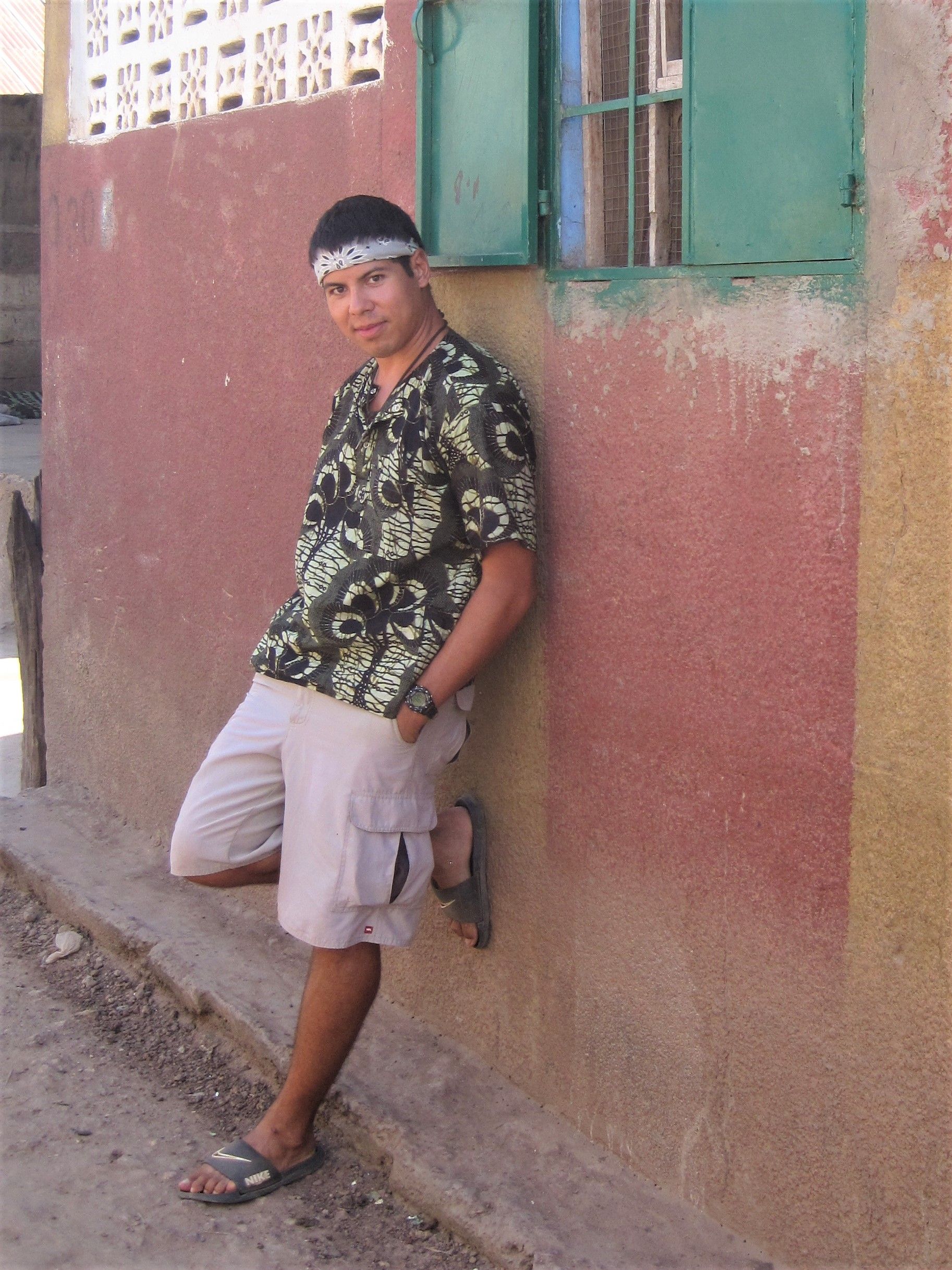
Now Josh is planning an epic trek across Paraguay and Uruguay on foot to raise money for American Veterans Archeological Recovery. This is an organization that trains veterans to become archeologists.
In this episode you’ll learn:
- how Josh overcame his weight problem in the Marine Corps
- about the United States Peace Corps
- how to become a Peace Corps Volunteer
- what life is like for a Peace Corps Volunteer
- how Josh became an archeologist
- how Josh and the AVAR are helping other veterans to become archeologists
- why Josh started the All-Around Adventure Podcast
To learn more about Josh’s podcast, his trek across South America, and the AVAR, head over to: https://www.allaroundadventure.com/dualtrek/
Transcript
Machine-generated from the episode audio and lightly edited — may contain errors.
Chris Albert (link to this point)
The Warrior Soul podcast is written, edited, and produced by me, Albert. Our mission is to provide tools, tactics, strategies, and ideas that help The US military veteran community to show up as the wisest, strongest, most capable versions of themselves in the civilian world. If you're not a veteran, stick around because anything we talk about will most certainly apply to you as well. This podcast is made possible with the help of f bomb nutrition. They make delicious packets of fats that you can carry around anywhere with you in little portable packets.
They make macadamia nut butters. They mix them up with chocolate. They mix them up with sea salt. They mix them up with coconut butter. They're absolutely delicious, and they're really good for you.
They don't have any sugar. They also make a lot of cheese snacks. They make meat sticks, and it's just a great company. These guys send packages of this stuff to the troops who are on the front lines overseas to supplement their MREs, and we didn't ask them to do that. They just did that on their own initiative.
Really great company. If you wanna get 20% off your first order of f bombs, head over to www.dropanfbomb.com and use the code Warrior Soul at checkout. This podcast is also brought to you with the help of Save the Brave. Savethebrave.org is a five zero one c three charity for veterans. They run camaraderie events that include fishing, golfing.
They also do a lot of work with gold star families. And unlike a lot of other organizations, their board doesn't take a salary. Really great organization that is doing amazing work. So go and check them out at savethebrave.org. With that, thank you guys so much.
Let's get into today's programming.
This is Chris Albert, and I'm here to remind you of one thing. Someday, you're going to die. Now that's not some morbid statement or scary idea. It's solid fact. Your time here on this earth is limited.
And we need to be reminded of this as much as possible for one simple reason, to live your best life while you can. This is the Warrior Soul podcast.
You know, one of the things I say over and over again, and I say it at the beginning of every episode, you heard it in the introduction, is that we don't have a long time to be on this planet. Right? We don't have a long time. This thing we call life, even though it might seem like it drags on at times and even though it might seem like it's going on forever, we don't get to be here forever. We don't get to be here forever.
Right? I'm gonna say that over and over again because you need to remember that. Everything in your life right now is temporary. You are temporary. And so the thing is as we travel through life what we really need to do is we need to allow ourselves to experience as much as possible, to be present, and to really take advantage of everything that we can while we still can.
My guest today is a man named Josh Guerrero. He served as a United States Marine and then he went on to serve as a Peace Corps volunteer. Now you might not know much about the Peace Corps but essentially what happens is it's a government agency that sends citizens abroad to take up residence in a remote area and then they will either teach or they will provide medical assistance or they will provide assistance with businesses and commerce in those areas. And a lot of times these volunteers are going off for periods of one or two years and they're living without running water, they're living without any of the modern conveniences that we all take for granted here. Of the things about us here in The United States, this is the greatest country in the world, we have so much opportunity, We also have a lot of choice.
You know, when you go to the grocery store, for example, think about it like this, if you're thirsty right now, you could probably walk down the convenience store, can get yourself a Gatorade, you could get yourself one of, you know, maybe 10 different types of water that they sell, or you could just go to your sink and you could fill up a glass of water. In a place like Ghana, where Josh was stationed, they've got to go out and they've to collect water every day, they've got to walk miles to bring it back. And clean water is a luxury. And you think about little things like bathing, not being able to bathe every day, not being able to take a hot shower. And a lot of us would crumble in that type of environment.
But Josh went, he lived it. And he got the bug. He got the adventure bug. So Josh has since been around the world several times. He works as an archaeologist, which is also really interesting.
He went from being a Marine to a Peace Corps volunteer to becoming an archaeologist. And we talk a bit about that. He's also involved with a nonprofit that helps to get veterans involved in archaeology, which I think is awesome as well. He's planning a huge trek right now. He's gonna be going from the interior of South America out to the coastline.
By now he will have announced it and he's just a great dude. I had the chance to be on his podcast, the All Around Adventure podcast, a few months ago. Had a great time, and we had a great conversation here. So you guys are gonna get a lot out of this episode. You're gonna learn about some career paths that you might not have otherwise come across, things like the Peace Corps or becoming an archaeologist.
You're gonna also learn a bit about the world today. So like I said, I hope you get a lot out of it. The only thing I have to ask of you guys today is this. I I need you to do three things. Number one, subscribe to the podcast.
If you haven't subscribed already, please do. Number two, I need you to write a review on iTunes. I can't tell you how much this helps to spread word about the show. My mission in life is to empower US military veterans to live their best lives. That means the more veterans who listen to this show, the more I'm helping them.
The more I'm helping them to live their best lives, to move on to the next stage of their life, to take advantage of everything that this life has to offer. And finally, I need you to share these episodes out. Share this episode out with somebody who used the information that they're about to get or any one of our episodes. My goal is to get the Warrior Soul podcast in the top 25 of all podcasts by the end of the year 2020. It's a huge goal.
I started out from scratch, nobody knowing I wasn't famous, nothing like that, and I've been slowly building this up with your help. And honestly, it is the greatest honor of my life to be serving this community in this capacity through this show. So if you guys can help me with that, I don't care if you ever spend a dime with Warrior Soul, If you just share our stuff and you write us a review, I will be a happy man. So with that, guys, let's get into this conversation with mister Josh Guerrero, the host of the All Around Adventure podcast, marine, Peace Corps volunteer, and archaeologist, a regular freaking Indiana Jones up in here. Right?
So let's get into it. Josh Guerrero, welcome to the Warrior Soul podcast, man.
Josh Guerrero (link to this point)
Hey, brother. It's, like, really great to be here. I'm honored that you invited me and looking forward to this because I just get to show up and talk because, you know, being a podcaster myself, I just know how much back end work goes into all the interviews that you have to do. So it's a little nice of a change of pace for me. So I'm liking it.
Chris Albert (link to this point)
Yeah, it is a lot of work, man. So a lot of people think it's just a matter of like just recording and then posting things. But I mean, it's there's so much work that goes into it between the graphics, the the web stuff, the trying to earn money from the whole damn thing, you know, that kind of stuff. Oh, yeah. There's a lot of work that goes into it.
Josh Guerrero (link to this point)
Yeah. Because I mean, it is one of those things where everyone just always sees the the final product, right? You know, it's never that behind the scenes, the hours and the hours of editing. And you know how it goes with being a podcaster is that however much time you spent actually recording an episode, it's gonna three times as long to go through and edit that whole thing and piece it all together. And, you know, yeah, a lot of moving parts like you said.
Chris Albert (link to this point)
So Yeah.
Josh Guerrero (link to this point)
Yeah. So I mean, so show some appreciation for your podcasters and your content creators.
Chris Albert (link to this point)
Yeah. Absolutely, man. Absolutely. Well, dude, I was on your podcast a few weeks ago, the All Around Adventure podcast. And, you know, your story is a really interesting one.
You you were in the Marine Corps, you're in the Peace Corps, and you're an archaeologist. So you you kinda sound like Indiana Jones or something like that. So I wanted to bring you on here a little bit about your story. You've got an interesting trek coming up that we're gonna talk about. But but let's go back to the beginning.
Where did it all start for you, man?
Josh Guerrero (link to this point)
Well, like you said, I was in the Marine Corps and, yeah, went on to do a few other things. I guess you can say I don't know what I wanna be when I grow up. But but yeah. So we'll we'll go back to to high school. I'm from a really small town in rural Michigan.
Population 1,100 people. You know, everybody knows everybody. You know, be careful who you ask on in a day because y'all just might be related kind of town, you know. And it was my sophomore year and that's when nine eleven happened. And I remember walking into history class and the wall mounted TV was on and which was pretty unusual because, you know, it's never on when you just walk into class and seldom we do even use the TVs in that classroom to begin with.
So I walked into the classroom and I saw that the first tower was on fire. And just being a little bit confused because, you know, just growing up, I've never seen what, you know, like an act of terrorism or a declaration of war would look like, you know? And then here I am now just seeing the single greatest act of terrorism that the world has ever seen, you know, playing out right before me too. And it was us it was around that time where, you know, being a sophomore, I was contemplating a little bit and thinking about what I was going to be doing after high school, you know, thoughts of college had come to mind because I was a pretty good student and had good grades. And so I could see myself going to college and I had thought about maybe the military route as well.
But when nine eleven happened, the decision was very clear at that point. Know, once I'm through this high school thing, I'm joining the military. And not only did I join the military but I also chose the Marine Corps because, you know, the Marine Corps has the reputation of being, you know, the toughest branch that we have. So I enlisted in the delayed entry program in my junior year, spent my whole senior year getting ready for boot camp. And three weeks, just three weeks after I walked across the stage at graduation, I was done a plane to San Diego to to start boot camp.
And following boot camp, I was stationed in New River Air Station, North Carolina, which is you know, just right down the street from Camp Lejeune. I was an administrative clerk with VMX-22, which is a test and evaluation squadron for the V-22 Osprey. Served there for four years and then, you know, got out and, you know, just went on to pursue, you know, other cool shit.
Chris Albert (link to this point)
What was boot camp like for you?
Josh Guerrero (link to this point)
Man, you know, boot camp was an interesting or interesting time. And I I I think that's putting it a little bit mildly because, you know, it was a really tough thing. But I definitely felt like I went in there very well prepared. And I definitely would have to give credit to the recruiters who are running point on the delayed entry program that I was a part of, you know, PT sessions were really hard. You know, we were, you know, tested a lot on what we'd expect, like actually in boot camp.
And, know, I just went in there with a good feeling. I mean, it was kind of tough because, know, being a young 18 year old kid and growing up in a small town where I'm really close to my family, really close to others in the community and having a pretty big extended family too that I was close with, just kind of being away from all of that and my support network that I've had my whole life up until this point, that was pretty challenging. But there was low points, there was a lot of high points, and my senior drill instructor was the absolute devil. To this day, if I can genuinely say that there's one man in this world that I'm genuinely afraid of, it would certainly be my senior drill instructor. I mean, I'd love to meet him again someday, but I felt like if I did, I'd probably just be on shaky legs, you know, standing in front of him.
But, you know, he really just put us through hell And, you know, looking back, I I was so grateful for that too because my platoon, not to brag, we were honor platoon. And I think that was probably because he was willing to invest just that much more into us and making it a little bit harder because you know, you had you have a t shirt in your company Warrior Soul Apparel that says hard times breed hard people and him putting us through those hard times, he he bred at hard marines and you know that and I think that's what contributed to a lot of success that I've had later on in life even to this day, you know, I still recall on some of the lessons that, you know, he instilled with us and been carrying that with me ever since.
Chris Albert (link to this point)
Yeah, you know, I'm friends with my senior drill instructor on Facebook. It's interesting. Yeah, it's I got I got friends with him and I'm friends with friends with the heavy hat. Yeah, I found them both. Found them like ten years later though because we didn't have Facebook when I was in when I was in boot camp, but so so you get through that.
You went to San Diego. What so get in you get in the Marine Corps, what was that like for you?
Josh Guerrero (link to this point)
Well, you know, it was a little bit nerve wrecking, I'd say, mostly just because a lot of the structure that I had in boot camp was no longer there. Because, you know, a lot of people would say that boot camp is hard and this, that, and the other, which, of course, don't get me wrong. It very much is. But there was a lot of structure, there wasn't a lot of stuff that you had to think about. You know, when it came to things like time management and keeping up with the routine, you know, your drill instructors did that for you.
Right. You know, they made sure that you were where you needed to be when you needed to be there and when you were when it was time to eat, they would get you to the chow hall. When it was time to sleep, they would wind things down. Winding down of course, that's kind of relative, I put that in quotations as well. But then when you get out into the fleet, know, you don't have that structure anymore.
You kind of got to figure that out for yourself. You know, I will say that kind of took a little bit of a while for me to kind of just get adjusted to and, you know, and I will admit that I got really, really complacent and maybe and definitely a little bit too comfortable in like my service and things like that to the point where, you know, I kind of let myself go, I became what you know, we in the Marine Corps referred to and I'm sure maybe the other branches refer to, you know, these types of Marines, soldiers, sailors as a fat body, You know, I got really fat and I ended up having to get put on a body composition program. And this was a very, very low point in my service because, you know, obviously, I'm very unbecoming of a marine, you know, in that state. And the marines that were assigned to me as part of this composition program, you know, they're getting up at zero dark thirty, having to meet with me at the squadron to go run with me, to do PT with me, and maybe taking time away from their families, you know, or maybe just taking just simply taking the time away from themselves too.
I mean, their morning routine was to come and try to get a marine to work out because he couldn't do it himself, you know. And so that, you know, kind of made that made me feel pretty bad about myself. And, you know, looking even further just simply that though, I also had a really tough realization and that is the fact that the state that I was in, I could be a liability to my fellow marines. Now, of course, you know, like I said, was an administrative clerk. I wasn't an infantryman, but, you know, first and foremost, I was a marine.
And I thought to myself that, you know, if I'm out on the battlefield and I see a wounded marine, I don't think I'd be able to carry them off. Like physically, I just don't think I would have been able to do it. You know, I let myself go that much. And also just thinking to myself, like, if we had to cover and move, and I was too slow.
Chris Albert (link to this point)
Let's let's break this down a little bit because I think cause we do have a lot of younger guys who watch right and guys who are thinking about joining and and obviously we've got the old crusty guys like me and yourself but but we got a lot of younger guys who are who are thinking about joining and getting it. One of the things I think that people don't realize is kind of what you said. Once you're out the fleet, things become a little bit more self structured and and you are responsible for yourself. And one of the things I've said on past episodes is that when you get into the Marine Corps, you have a choice. Right?
And your choice is to be the best that you could be or you can go off and you could join the guys and not to say that everybody who's on the in the smoke pit is bad. But but but you go talk shit in the smoke pit and freaking complain about everything. And then you can get fat and you can drink and you play video games all the time when you're not doing your work. So so what was it for you that led you down that path? What was the thing?
Right? What were you Were you just overeating? Were you were you drinking too much? Were you? Were you hanging out in the barracks with the wrong people?
What was it?
Josh Guerrero (link to this point)
You know, I probably think, you know, it was a combination of a lot of those things, you know, just, you know, and also this I wasn't a very good steward with like, my finances like either because I was, you know, like the Marine Corps was my first job. And so now I got like all this money. And so like, well, I can go out to eat here and there. And then, and of course, I wasn't very like, nutrition savvy or exercise savvy as I am now. So so you'll see myself doing a a lot of, like, going out and, you know, going to places like Hooters and getting chicken wings and all kinds of like, you know, other like, you know, stuff I wouldn't really, you know, go.
Chris Albert (link to this point)
Not much else for a boot to do in in in Cherry Point, right?
Josh Guerrero (link to this point)
Yeah, exactly. So and then also one thing that I think kind of sort of made me think, I guess, maybe kind of like letting me down this wayside thing is that my squadron was actually a non deployable squadron. Like, sole mission was to test and evaluate, know, the V-22 Osprey because at the time the Osprey wasn't operational yet. And and so I I also think that maybe just the thought that I wasn't gonna be deploying anytime soon kind of, you know, just sort of, you know, the idea of readiness wasn't really quite in my head too. And then, you know, there was other things too, you know, going back to me having a little bit more money than what I did before.
I could afford like the latest and greatest like video game systems and video games. Then also I found myself just not really managing stress like too well, which was kind of surprising because you know, especially when someone who comes from a stressful situation like boot camp, you think that you know, having a good, solid mindset and also just being, you know, with all the stress that you have to deal with in boot camp, you think I would have dealt with it a little bit better. But I would still kind of let just like the stress of, you know, fleet life and other things and being homesick and you know, this that the other kind of really gets me. So it's like after a day's work, just wanted to go I just wanna go back to the barracks. I just wanna relax and maybe go out to eat later and I got pizza, you know, showing up.
Chris Albert (link to this point)
Yeah. Just trying to get that trying to hit that comfort button all the time. Right?
Josh Guerrero (link to this point)
Exactly. So but then I ultimately saw what trying to just you know be comfortable you know ultimately led me. Like I said, I got fat. I got put on you know the body composition program and then just again recalling on the the the fact that if I did see a wounded Marine on the battlefield I probably wouldn't be able to carry him off. I probably wouldn't be able to keep up with anybody.
I'd be out of breath or I could slow someone down if I get hurt and someone has to carry my fat ass off the battlefield, you know. So so basically, could get marines killed in the state that I was in.
Chris Albert (link to this point)
No. Big time. Big time. Now now did this change? Were you able to turn it around during your career?
And and because you were put on that that that probably held your promotions back as well, right? You probably probably got stuck out of rank for a little bit. Were you able to turn this around? And if so, how did you do it?
Josh Guerrero (link to this point)
Oh, yeah, man. I definitely turned around. And fortunately, you know, I kinda had this tough realization pretty early on where I was able to start tackling it right away. And, you know, really one of the things that I started doing certainly a lot more of was running and also just, you know, spending less time like eating out, going to the chow hall a little bit more and also not just simply going to the chow hall, but also thinking about like what I was, you know, putting on my tray, you know, at at the chow hall, you know, you know spending maybe a little bit more time just going to the salad bar to get stuff rather than going to the to the dessert line and stuff like that. So so I definitely started like running more and I became kind of like one of that like one of those like weird Marines where I was you know, spending a lot of time just like out running and where, know, a lot of the other Marines, my squadron were doing what I had initially done, you know, just coming back and being in the barracks and, you know, popping open a few beers and, know, playing Call of Duty and all that stuff.
And so and then I had spoken to another marine who I was on duty with one night, a sergeant and he was telling me about how he ran the Marine Corps Marathon the year prior And I'm like, oh, that's that's pretty cool. And, you know, he showed me a couple of pictures and stuff like that. And then we had another Marine show up at the squadron and, you know, she's been like a runner her whole life has completed multiple marathons and just kind of hearing about their stories. I thought to myself, could I do that too? You know, I mean, is it is it possible for me to do that too?
And, you know, and at this point, I've never really like I wasn't a high school athlete or anything like that. I've never really taken on like a physical endeavor like that before. But, you know, I started training, and I ran into a couple of snags. I got IT band syndrome really bad, which you know, that's referred to as runner's knee that put me out for a few weeks. And you know, I looked into like certain supplements like glucosamine to help with that and different stretches.
And eventually I got myself into good enough shape where in 2007, I ran the Marine Corps Marathon in Washington DC. I wouldn't say I finished in the fastest time but I finished it. And just overwhelming sense of pride at that point because, like I said, I had really been low early on in my military career just, you know, with the state that I became in and just how I was simply a liability to the marines around me or the liability I could have potentially been for Marines on the battlefield should have come to that. And just kind of knowing that okay, now I'm in much better shape, I feel really good. And especially and what was especially important to me as a Marine at that point was, I'm now an asset.
You know, I'm someone that you know, someone would feel more confident, you know, having like, you know, watch their back on the battlefield. And not to mention that if like someone like a civilian saw me in uniform, they'd feel more hopeful than they would be dreading. Like, if they saw me if they saw me, like, you know, in my Charlie's as a fat body, they'll be like, oh, shit. You know, that's that's who has to go and fight on on our behalf. Damn.
But I think at that point with how I've was able to change things around, I think maybe someone would see me and actually feel a little bit more hopeful than they would, you know, the latter.
Chris Albert (link to this point)
Nice. So you were able to turn that around. Then and then so did you end up doing the Marine Corps marathon and completing it? Or did you do another marathon or anything like that?
Josh Guerrero (link to this point)
Well, it was just the Marine Corps marathon. And yep, I I did I did finish it. I think my time was like four hours and and fifteen minutes, and that was a hell of a lot a lot of fun. And then but that was like about within my last year. I think I was just starting my fourth year of my enlist, man. And then it was in like June 2008 is when I had ultimately got out and moved on to pursue other ventures.
Chris Albert (link to this point)
Gotcha. Gotcha. So around June 2008, you were deciding to get out now. Now, what were you thinking about doing when you got out?
Josh Guerrero (link to this point)
Well, you know, just probably just the normal go back, use the GI Bill and go to college. And it was something I actually did have squared away before I actually got out. Like I already applied to the school that I was interested in and the program I was interested in and I did get accepted. So that really kind of helped transition was because I knew exactly I had a plan and I had, you know, put I had put steps in place to actually, you know, execute on that plan. So so I got out.
I just I went back to Michigan which is, you know, where I'm from originally like I mentioned and I, you know, just went to be just a regular just Joe College student and I majored in elementary education initially and I was there for about two years and I actually rewind a little bit. I ended up getting my associate's degree while I was on active duty. So I had an associate's degree before I got out. So I only had two years remaining before I was able to get my bachelor's so So yeah, so I returned to Michigan, and I completed my bachelor's degree. And then it was around 2011 when I wrapped that up.
And then from there, that's when I went.
Chris Albert (link to this point)
Would you end up getting your degree and you said you started in elementary education, but but would you end up getting it?
Josh Guerrero (link to this point)
Oh, right. Yeah. It was elementary education.
Chris Albert (link to this point)
Okay.
Josh Guerrero (link to this point)
Okay. That that I got my bachelor's in.
Chris Albert (link to this point)
Yeah. Gotcha.
Josh Guerrero (link to this point)
Gotcha.
Chris Albert (link to this point)
And and so you you do that. And then, you know, college is done. Did you go in and think about trying to become a teacher? Or did you did you apply jobs like that? Or what were you thinking?
Josh Guerrero (link to this point)
Yeah, I did want to become a teacher. But at the time, the job market for teaching, especially in Michigan was just downright terrible. You know, there was they were closing schools left and right. They were trying to merge schools and there were far more licensed teachers in Michigan than there were jobs for everybody. And by the time I had finished up school too, I was kind of, you know, just coming out of like the hiring window for the next school year and didn't have anything lined up.
So I just kind of thought to myself, well, now what? You know, what am I supposed to do? And, and I didn't I didn't come this far just to, you know, simply be unemployed, you know? So I started looking at opportunities and I cultivated a little bit of an adventurous spirit at this point too because it was also when I was going for my undergrad that I had my first major international travel experience. I did a study abroad to Japan for a couple of weeks and that kind of really got me bit with the travel bug. And so I'm thinking to myself, well, I kind of want more of that too. Like, I want to get out there. I want to see more of the world and kind of cutting a long story short here because I could talk about this certain thing for a long time, but I ended up choosing to go into the Peace Corps because the Peace Corps has an education sector where they need teachers to go into rural places and like these developing countries to work with teachers and like villages and local communities.
And so I applied for that and I got accepted. I was invited to go to The Gambia in West Africa where I would go and live there for two years as a teacher trainer. So teaching other teachers how to become better teachers. So I that's what I did. And you know, that was the next big chapter.
Chris Albert (link to this point)
So yeah, the Peace Corps is an interesting way to serve the country because and and this is the thing, like, I think some people hear Peace Corps and they think hippies and things like that, but but you are serving the United States government when you're going to the Peace Corps, and and you are you're you're you're heading over there, and you're going into an area that is highly undeveloped and you are assisting either through education or through commerce or through something to help improve that country. Right?
Josh Guerrero (link to this point)
Yeah, definitely. Because there's different facets that Peace Corps volunteers can be called to try to serve in. Like I said, I was an education volunteer, so I'm working in the schools helping to improve, you know, the educational system. You also have volunteers who go there for health purposes. You know, they're working in like local clinics or they're working with their communities to teach things as different like different things pertaining to things like, you know, HIV and AIDS prevention to just good hygienic practices.
And you also have environmental engineers, engineers, volunteers, who will go in there and they'll show like they'll teach, like sustainable agricultural practices and things like that. And so there's definitely a lot of different approaches that are, or I guess, avenues that volunteers can be called to do when they go into these developing countries to try to serve. But for me, it was the educational side of things.
Chris Albert (link to this point)
That's awesome. That's awesome. And so what was that experience like for you? Were you were you with a were you with other members of the Peace Corps? Were you out there on your own?
Were you the only one in that village? Where was there a lot of direction you got there or were you still unstructured?
Josh Guerrero (link to this point)
Well, starting off, it was it was pretty structured and I was around other volunteers for the most part because the first three months, it's all training. You know, we're doing language training. We're doing cultural training and the like. And so we'll villages. Be But the village will have maybe, I don't know, six to nine other volunteers living within it. So we can still go and interact with one another during that whole experience. But once training is over, we all go to our own villages and it's just us. So so by the time the the three months is over, I I'm going I was sent off to a village deep deep into the country. I mean, granted, The Gambia is not that big.
It's actually the smallest country on the on the entire African Continent. It's about like half the size of New Jersey, so it's not that big. But I was placed in the the village, the farthest away from the capital, farther than any other volunteer, you know, was. And I think that was kinda done deliberately by my supervisor because she knew where I was coming from. She knew that I had the military background and she could recognize, I guess, my strengths, know, her words, not mine. And so she put me in that village way, way out there. And so I was there by myself. And it was a little bit of a tough transition at first because here I was in this rural village, the house that I lived in was a square hut, probably about the size of my bedroom that I'm in right now. It wasn't that big. There's no electricity.
There's no running water. I didn't have a flushable toilet. My toilet was literally a hole in the ground in the backyard. And, you know, so you you go over there, you you make sure your aim is on point and, know, you gotta like, you know, just squat just perfectly, you know, to do your business.
Chris Albert (link to this point)
Know, burying it or or did you empty that hole or or what was that like? Were you burning it like like you do or?
Josh Guerrero (link to this point)
Not quite to that extent. Actually, was a full on pit latrine. It was actually brilliant. It was just a really, really, really deep dug hole and they put had some sort of cement platform on top of it. So it sinks to the bottom.
Also I found that I was the first volunteer to actually serve in this particular village. So the house I was living in and this pit latrine, it was all brand new, you know, no one else had had been there before me. So when I got there, the pit latrine was was fresh for all intents and purposes.
Chris Albert (link to this point)
Gotcha.
Josh Guerrero (link to this point)
And so so basically anything that was down at the bottom of that hole, you know, it was it was done by me, you know. So so so that so that definitely helped quite a bit. But so it was a little bit of an interesting transition because, know, here I was suddenly deprived of all these, you know, first world, I'll pretty much just say pleasures that I was so used to up in this point. And I was about like I was about like 26 years old when I went to the Peace Corps. So for the first like so for a quarter century, I was so used to having electricity, running water, you know, Internet and all these luxuries.
Suddenly, all that was gone within the snap of the fingers. So you can say that it took a little bit of work, you know, just to get there and also to realize that I'm gonna have to live that way for two years. Yeah. And so yeah, that was a it was an interesting time.
Chris Albert (link to this point)
So so while you're there, right? You you're doing this job? Did you meet? Did you meet a lot of friends? Did you have acquaintances?
Did you form like a group or anything like that? What what was social life like there for you?
Josh Guerrero (link to this point)
Well, you know, trying to get along and and get to know my village as much as possible. Now what made it a little bit tricky was that, you know, my village was actually a little bit of a larger village than that of some of the other volunteers. You know, my village, the predominant tribal group was the Serahules and Serahules are known for being kind of like the entrepreneurs of The Gambia. Know, they're a minority ethnic group in the country but they're known for like their entrepreneurial endeavors and their skills, their trade and stuff like that. So my village was a little bit more you know, well off, you can say.
And I kind of put that in quotations too because that's relative. So it's a little bit larger, a little bit of a larger village. So it wasn't really the type of setting where I could really get to know like everybody because there were so many. So I really just kind of sort of kind of clung a little bit more closely to my host family. You know, had some older host brothers and, you know, my host father was amazing too.
And my host father had two wives because polygamous marriages are a thing in The Gambia, which I also found kind of interesting. And you know, just doing stuff with, you know, playing with like the younger kids that make up my host family too. And, you know, I had like kind of like some other like go to people that I would interact with in the village, you know, mostly some of, like, the village elders that, you know, spoke English pretty well and, you know, were also well traveled themselves. And but it was really one of those things where, you know, if I could, I would try to, you know, interact with some of the some of the other Peace Corps volunteers as best that I could. Because as much as I was trying to integrate with the culture that I was now a part of, I there were definitely days where I was just basically saying to myself, okay, I need to be American for a day.
You know, I need to hop on the bike, I need to, you know, ride a few miles to go to the next village where I know another Peace Corps volunteer is and just, know, hang out with him or her for a little bit. And like I said, just be American for a day. And so I did form pretty close connections with some of the other nearby volunteers and we were all kind of just struggling with the same things, like isolation was getting to us over time. A lot of physical discomforts that we had to deal with as well because it was so freaking hot there. It was like 107 degrees pretty much every single day and you know, like I said, there's no electricity in the house so there's no AC for me to you know, flick on or anything like that.
And you know, we also had to deal with like radical illnesses like I contracted dysentery, I contracted giardia and I'll leave everyone to just kind of go and look that those up for themselves because it's it fucking sucks. I'll just say it that way. Yeah. And so but the volunteers that I did go see, you know, I'm still friends with, you know, to this day, and they were also very good support network following Peace Corps service as well. Because, you know, I also had a really tough transition coming home from my time there and just trying to get adjusted to you know, life in the first world again.
But yeah, you know, it's just kind of like how, you know, Marines just as well when they're both when they're all together, going through a similar hardship together, you know, you tend to form pretty strong bonds, you know, that way. So it was kind of sort of the same thing with a lot of the Peace Corps volunteers that I had close to me. And, you know, also just getting together with them whenever we'd go to like the capital city, you know, we have a good times together. And, you know, like I said, strong bonds were formed for sure.
Chris Albert (link to this point)
So so after that two years, you mentioned the transition coming back was difficult for you. What was it like? Did you go back to Michigan afterwards? Did you where where do you end up settling down?
Josh Guerrero (link to this point)
Yeah. I did go back to Michigan afterwards, you know, to go spend some time with family and and things like that and just kinda get caught up there. But, yeah, it was a really, really hard transition. I would almost dare say that the transition of being back in The US was probably harder than the transition that I had when I initially left to go to The Gambia. And we actually have a joke in the Peace Corps.
We say that the Peace Corps is actually a four year commitment. One year to apply, two years to serving country, and at least one year to get readjusted to life back back home.
Chris Albert (link to this point)
Mhmm.
Josh Guerrero (link to this point)
Because actually applying was was terrible too. It was was it was easier for me to get in the Marine Corps than it was to the to get in the Peace Corps. Mhmm. You can believe that. But when I first got home, you know, there was that initial just like wow of, yes, I'm finally home.
I can see family and, lots of hugs and happiness and laughter and all that good stuff. But it didn't take very long before I kind of started observing things that kind of just sort of really got to me a little bit. And a lot of those were just first world problems that I was observing where you know, I was at a restaurant one time and you know, I had this grown woman she was complaining about like the tastes of her ice water. And I'm kind of thinking to myself, Oh, wow, you poor, poor thing. Yeah, the taste of your ice water that you didn't even have to work for that someone brought to you and you have ice cubes in it.
Because, you know, it made me think of like, my host sisters in back in The Gambia, where my host sisters were typically the ones that had collect water because there was just a series of taps in the villages. They would only come on for like a two hour window each day. And so like my 10 year old host sister, Nyuma, would be out there filling up water in like buckets and pails. I would have to help her like hoist them so she can balance them on her head and she would walk back to her house with that and one of my host's mothers would be there to like help her out. But it's just the fact that I was coming from somewhere where just to fulfill basic needs meant that you had to get get off your ass and work for them every single day.
And then it wasn't something that I could just simply, you know, waste or or anything like that. Like I had to ration water every single day. I'm I had to, like, take inventory of, okay. I I have this much that I could use for drinking. I have this much I could use to take a bucket bath and, you know, this much to wash clothes and dishes with, etcetera.
But, you know, here in The States, no one really has to think about that.
Chris Albert (link to this point)
Right.
Josh Guerrero (link to this point)
You know, you can you can just go to your tap whenever you want and have fresh clean water, like, at your disposal at any time, which there's a large percentage of the world population who don't doesn't even have access to clean water. So just hearing complaints like that about what to me were pretty trivial things and also people getting upset, like, if food's taking too long at a restaurant, you know, you know, the food that they don't even have to work for either. Because, like, my host mothers would spend it would take anywhere from about two to three hours of cooking every single day to prepare, like, you know, lunch and dinner. And that was cooking, like, with a a wood fire with, like, this big black cauldron trying to boil rice and just, you know, just to get something really, really basic for many people because they had a lot of mouths to feed, you know, with all the kids that they had and and stuff like that there too. So so that was a really tough transition for me because, you know, just kinda seeing what it's like in other parts of the world, the conditions that a lot of people have it, and what they don't have available to them that we have available in an abundance here stateside, and then a lot of people would choose to complain about those things.
It did take a really long time for for me to get over that. And even sometime, I would even say, today, I still kind of deal with that. And so but ultimately, I did kinda come to the realization that, you know, it's gonna be really hard for people to relate and experiences like that if they haven't, like, experienced those myself. So I would share aspects like that with people who were willing to listen. But ultimately, I just knew that, okay, if I can't change everybody or change everybody's view or perspective on the world, then at least I know what I can do with myself.
And that's what I use to keep myself in check this day. It's like, I mean, because, you know, I'm not immune to bad days either. Know, I do at times, I will admit, I will get frustrated with, like, pretty stupid shit every now and then. But what keeps me in check is pondering on those experiences that I've had, knowing that, okay, Josh, you really should have no reason to be complaining about the fact that you gotta change a flat tire on your car. Right.
So you got a car for crying out loud. Right. Where where over in my village, but you know my host father's probably walking really far to go collect something that he needs. Or once again my host sisters, they're carrying all these heavy buckets and pails of water in a 107 degree heat to make sure that their family has water to drink. There's no reason for me to be getting upset about something trivial like having to change a tire on my car.
Chris Albert (link to this point)
Well that and I think from the other perspective and this this is true for I think Marines coming back from deployment and other other service members come back from deployment is to remember that everybody has a different experience, right? And everybody's experience is relative. So like, you know, that person who's complaining about her ice water, she doesn't know, she doesn't know what life is like across the right, you know what I mean? So it's like, you know, just just kind of remembering that and I think that no matter what you do, it's never a good idea to go in anything with a chip on your shoulder, right? It's never a good idea to go in anything with a chip on your shoulder because again, all you're doing is alienating people.
Right? That's that's all that's gonna happen is you're gonna alienate people. You're gonna make yourself look like an asshole, and you're you're gonna get people who are going to be they're gonna be like, oh, what's this dude's problem? You know what mean?
Josh Guerrero (link to this point)
Right.
Chris Albert (link to this point)
Yeah. Hey, guys. I hope you're getting a lot out of this interview. You know, the Warrior Soul podcast is built with the mission to empower its listeners to live absolutely epic lives. And that's why we recently created a group called the Warrior's Obituary Society.
This group is built to empower its members to live epic lives worthy of epic obituaries. And it starts with an eight week development program. And with this development program, what you're gonna do is you're gonna outline a vision for your life. You're gonna get very specific about what you want. Because without that specificity, you don't know where you're going and you don't know what you're doing.
From there, we help our members to develop specific goals, objectives that they are going to push toward, and that their fellow members of the Warrior's Obituary Society are going to hold them accountable too. From there, we're getting down into specifics. We're going to help you to develop and customize your own personal fitness and nutrition plan to help to fuel your body and fuel your mind for the quest ahead. From there, we're going to work on your personal finances. We're going to help you to knock down debt, start saving money, create a plan so that you can start investing in your dreams.
Then we're going to get into your business and career. We're going to help you develop the skills that you need to develop yourself so that you can have a major impact in the field you choose. If you choose to go into business, we're going to help you to set up the foundations that you need to create your own company and get started on your path in life. From there, we're going to be working on your relationships, we're going to help you to develop a world class network, and all along the way, you're going to have your fellow members of the Warrior's Obituary Society pushing you in every single area. We meet once a week over a live call, and we're constantly communicating over our own private forum on Slack.
We don't do anything over social media, and that's because I don't want anybody feeling like anyone's looking over their shoulders and I don't want you exposed to the crazy distracting alerts that you get on Facebook and some of the other social media platforms. Normally programs like this cost thousands of dollars. This one does not. For the price, it is the best development program on the Internet. And that's because our mission here at Warrior Soul is to empower people to get more out of life so that they can in turn make the world a better place.
We've got a great mix of active duty military, US military veterans and civilians in this group. We wanted to keep it really eclectic so that we get a lot of different types of views up there and a lot of different people with different areas of expertise. If you think that this is something that would be of interest to you, and that this is something that could empower you to live your absolute best life, head over to www.warriorobituarysociety.com. That's www.warriorobituarysociety.com, and you can sign up today. And if you have any questions about it, just reach out to me at chris@warriorsoulagoge.com.
That's chris@warriorsoulagoge.com. I'm happy to even sit down with you for a phone call for a few minutes to see if the group is right for you. I look forward to seeing you guys in there, and let's get back to this awesome interview.
Josh Guerrero (link to this point)
Yeah. Yeah. So that was definitely something like I I had kinda come to the realization with, and that sort of what sort of brought me down and started to help with the adjustment a little bit more. So because I I know that at the end of the day, you know, there's some people like like, I it shouldn't really I'm not gonna make it my duty to go and, like, change people's perspective. I mean, especially if they don't really wanna try to change it or if they're just kind of content with like, I guess, who they are for the most part.
But you know, for those who are willing to listen and then I'm assuming for anyone who's listening to this podcast right now is probably interested in you know, self development and maybe enhancing their perspective and views on the world and so on and so forth. Realizing that, okay, maybe these are the types of people that I could kind of share these kind of experiences with because they could probably appreciate it, they could probably resonate with it and maybe they'll be interested in seeking out similar experiences like the ones I'm describing like you know as well. So it does kind of also made me think about being pretty deliberate and intentional with who I'm gonna try to you know, align myself with and, you know, that's how I connect with, you know, people like you who are out there getting after it and, know, kind of want to seek out these similar views perspective. So so there's a little bit of a deliberate intentionality that comes from, you know, this as well.
Chris Albert (link to this point)
What was the next move for you? So you did that, you came back, you're dealing with the transition. What was the next plan for you? What was the next thing?
Josh Guerrero (link to this point)
Well, I was hoping to maybe pursue teaching as well. But something kind of changed within me from having this whole experience. You know, there's this saying, and I'm not sure where it's from or where exactly I've heard it, but it's that he who has returned from an adventure is not the same as he who had left. So again, I just recognize so many changes within myself that, you know, what that was just made me made me a lot different and maybe just kind of like, look out, have a different outlook on my future, I guess I'll say because I feel like was initially the plan before I left for Peace Corps was go go to Peace Corps, have two years, something to do, get some experience, come back with a competitive edge to pursue teaching yet again. But interacting with this culture that I was completely unfamiliar with before I actually went there, I've never even heard of The Gambia until I was invited to go there. So here I am with this culture that, you know, everything is different. It's a different religion. You know, everyone there was practices Islam, where I'm Catholic, and, know, they all speak like a language that basically not even a percentage of the percentage of the world population can speak and just being completely fascinated with what I was observing.
And that just kind of made me think about it just made me very, very curious because, know, I'm a very curious person, you know, by nature. I'd say like, you know, we all are, you know, I think curiosity is a very, you know, deep emotion and characteristic of of all humans that we've had, like, pretty much since the beginning. And so so just seeing this a little bit more and just being a little bit more curious about this, I thought about maybe pursuing that a little bit more to the next phase of my education. So one thing led to another. Again, this is cutting a long story short, but I ended up choosing to go to England for a whole year to study archaeology.
Chris Albert (link to this point)
Nice.
Josh Guerrero (link to this point)
And so so I I went to the University of York, which is in the the Northern part of England, and I got into their master of arts in field archaeology program. And I only had a year to crank out of this entire master's program. And one thing that was actually really cool about this was that the GI Bill covers many foreign institutions. So for for my fellow veterans listening, if you still got that GI Bill and you're maybe looking for an adventure and a chance to get abroad, you could potentially maybe look at getting a degree from a foreign institution and you know, you'll get your tuition covered.
You also get BAH, you know, for which obviously the rates vary depending on where you are. And so that's what we did. I went to England for a whole year, got my master's degree. And now it's actually what I do professionally. Now I'm a professional archaeologist that operates here in the Southeast Of The US.
Chris Albert (link to this point)
That's awesome, man. That's awesome. So you went over there cranked out this master's program. And what was life like in England for you? Because I've been in England, I worked for a company in England for a while.
How did you find English culture, the English people?
Josh Guerrero (link to this point)
Oh, man, I loved living living in England. I mean, because yeah, it's amazing. And it's actually one of the it's one of the few places that I lived in my life that I wasn't ready to leave when my time was up. Because you think about like some of the other things that I've done up until this point, you know, Marine Corps, College Peace Corps, by the time my stint in each one of those was up, I was pretty much ready to move on. Yeah. Living in England, man, I wasn't I wasn't really quite ready to go.
I mean, I had a sweet flat. You know, I was close to the city center. You know, I had my go to CrossFit box, my go to gym. I did Krav Maga every single Monday. I had my yoga classes that I would go to on Sundays.
Yes, I do yoga. Don't laugh. And then I also had like my go to like health food store that I would go to like basically, I just really come to really call the place home. And you know, every time I would walk into the city center, I'm looking at building buildings that are centuries old. And and I just remember just how fascinated I was, especially with someone who was pursuing archaeology and just being in a city like this, you know, they still had, you know, walls that were built by the Romans, you know, nearly two millennia ago that were still surrounding the city center.
And I'll go into like a secondhand bookstore and someone like the cashier has like these leather bound books like on the bookshelf behind her cash register. She pulls one out for me and this thing was like written like over 500 years ago. And it's just casually sitting on a bookshelf behind her cash register. And I'm like, you do realize that that book predates my Declaration of Independence. Right?
Chris Albert (link to this point)
Right. Right.
Josh Guerrero (link to this point)
And so it was just so so amazing. And, you know, and the Brits were really cool. They were very chill. And I would pretty much say for the most part, you know, there wasn't really a whole lot of drama like observed that like, and I don't want to bash on like my own people here in The States. But you know, typically when I observe negativity, whether it's on social media or mainstream media, I think you know, we have a tendency to kind of just like out be like the rest of the world in that department.
Because like the Brits, they weren't very dramatic. Like anytime I had a British friend, like post something on social media, it's like, oh, getting ready for afternoon tea time and getting some delicious cake and and so on and so forth. You know, was all pretty upbeat and positive. You know, so it it was really chill. And, you know, wasn't really a whole lot of hustle and bustle.
Like even though York was a pretty large city of about 200,000 people, it's just I never felt like which was I guess you can say that's that's relative. I mean, coming from a small town of 1,100, it was pretty big for me. But again, it wasn't there are a lot of hustle and bustle. And I also really like that everyone there was pretty active for the most part. Like, the way British most British cities are designed, there is designed to accommodate like walkers, pedestrians, cyclists, like a lot more.
So they had designated bike bike lanes on every single street. People who are driving in cars know to look out for cyclists. And that's how I pretty much like got around. Didn't really, you know, take a lot of public transport. Bought myself a cheap bicycle at a secondhand shop.
I cycled everywhere. And you know, that was just pretty cool. So you look around like most of the Brits, they all look pretty fit too, because everyone is just making a point to just be mobile every single day and just, you know, get up and move. So it was pretty cool. And again, I just loved living there and I had a chance to see other parts of the country.
I went to the Peak District, which is one of their national parks. Mhmm. Really beautiful scenery there. Made it down to London a couple of times, which that's to the state
Chris Albert (link to this point)
London's awesome. I it's a it's a really great city. I used to work with London Real out there and and I visited a couple times and it was it was it was pretty awesome. I want to ask you this because I want to get in your podcast, but you know, your job is an archaeologist. Are you working with a university down in Florida?
Are you What do you what do you do on a daily basis is I know it's nothing like Indiana Jones, a lot of it's like, you're going out there and you're you're trying to painstakingly dig around things that can fall apart if you pull them out the wrong way and things like that. Right? Yeah.
Josh Guerrero (link to this point)
So not quite like Indiana Jones. I mean, you know, I'm not out punching Nazis in the face or or anything like that or battling with other forces of evil for these ancient magical mystical artifacts. But it's, it's very much a scientific discipline. And going to the first part of your question, you know, I work for the Park Service. And what we do is we do a lot of archaeology here in the Southeast, we go to various national parks, and we do what's called compliance archaeology.
And basically what that means is that let's say the park wants to build something and or do some sort of undertaking that's gonna involve disturbing the ground. We gotta test the grounds first to make sure that before they when that during the action of actually building whatever it is they want to build, you know, they're not gonna destroy any cultural heritage remains or you know, anything like that. So it's been so that's been given me the the opportunity to go to various national parks and also work in areas of the park that the public probably won't really ever get to see. You know, we can get pretty remote at times. You know, in fact, I've had certain parks that I would go to where I I would have to take a boat out to an island in the Gulf Of Mexico and we'd have the island to ourselves because no one else is there.
Or like I'm taking a helicopter to these remote sites like in the middle of this vast area of wetlands that you can't get to any other way unless you use a helicopter. So it's pretty exciting stuff. But basically, it can be pretty meticulous work because, you know, there's a lot of like data that we have to collect actually out in the field because it's not just simply about finding artifacts then and of themselves. It's about the context in which we find those artifacts. And, you know, because it's like how where would we find this artifact?
How deep in the ground was it? What is it exactly? And what and what can we identify what the artifact actually is? Can we date it? You know, how long it might have been there?
So, so and then so that's what my field days are like. But a lot of work is also in the lab, where I'm cleaning the artifacts, I'm analyzing them again, trying to determine exactly what they are. Because there's different like styles of there's different types of things like pottery, and things like that. And there's certain indicators to look for. So it's a really good mix because you know, obviously, you know, being kind of a marine and just being, you know, kind of like a little bit of a knuckle dragger, I love getting out there in the field and getting dirty and, you know, just immersed in myself in nature.
And and again, we're the only ones like out there. There's no one else around. So there's a lot of peace to that as well. And then then another half of it is, yeah, actually being in the lab just going through all the stuff. And sometimes I got to write reports, which is a little bit of the less glamorous part of what I do.
But you know, man, I love it. You know, it has been a very fulfilling career path for me. So sometimes it can get hard to work full time doing archaeology and trying to do this podcasting thing, you know, because I'm kind of living a double life there. But tell you what, man, it's awesome.
Chris Albert (link to this point)
So yeah, your podcast called the all All Around Adventure podcast. It's it's about travel going going places that normally people wouldn't go to. What made you decide to start the podcast though?
Josh Guerrero (link to this point)
Well, kind of going back to just, you know, just being of service. Really, mean, simple answer, like right there. I mean, I joined the Marine Corps with one of the core reasons being because I wanted to be of service. And I joined the Peace Corps once again to continue to be of service. And, you know, I think doing the podcasting thing, that's another way for me to be of service and also to add value.
You know, initially, I will say it didn't start out that way. Like, initially, Around Adventure was more or less of a personal podcast where I would just, you know, simply just tell travel stories and things like that, which, you know, was cool and all, but I just I realized I wasn't really providing a whole lot of value just talking about myself. I mean, maybe I was, but that wasn't the intent, you know? So that's when I started adding the personal development component to it because it was a journey that I was on, you know, with things like reading books and you know, following like influential people on social media and the like. And so that's why I started it.
That's when the podcast kind of came into the picture as well. And so I've been doing that for a couple of years. And basically, the whole purpose of the All Around Adventure podcast, we have the tagline, you know, amazing tales from afar and and the all important life lessons that go along with them. Because having these experiences of, you know, traveling the world, seeing some amazing things, interacting with cultures, and like you said, you know, getting to go to places that maybe a few people have, you know, before me has. So but I just learned I just found that I was learning so many things about myself, so many valuable life lessons that I was taking from those experiences.
And I've come to find that so many other travelers out there were experiencing the exact same thing. So I'm getting them to come on my show, extracting their stories and extracting their life lessons. And the goal is to hopefully, you know, to share these with other people so they can become all around better versions of themselves, you know, hence the name, All Around Adventure.
Chris Albert (link to this point)
That's awesome. Now, you've also gone on a lot of treks yourself, and you have a huge trek coming up, that you're planning right now. Can you tell us a little bit about that?
Josh Guerrero (link to this point)
Yeah, man, it's, I call it Operation Dual Trek. And what I'm doing is I'm going to undertake a challenge that I've never done before. You know, I've done a lot of, know, physical feats leading up to this point, you know, I've, as I mentioned earlier, I ran a Marine the Marine Corps marathon, you know, I've fought in an MMA cage fight in one before. I cycled across the entire country of The Gambia, which is about 300 miles and, you know, done some obstacle course races and stuff like that. But I've never completed a thru hike before.
And that's what I'm going be doing in South America. I'm looking to walk the entire length of two South American countries, Paraguay and Uruguay. And the combined distance of both these countries that I'm gonna be walking is a little over a thousand miles. You know, for all intents and purposes, you know, depending on how you look at it, it's probably not that far. You know, it's not as far as like, let's say, the Appalachian Trail or the Pacific Crest Trail.
But still, I've never done something like this before. And not only that, I'm doing it in in a foreign country. Like, I've never been to either of these countries before, and that's part of the appeal because there it's quote unquote uncharted territory for me. And I don't really know anybody who's been to either of these countries before. So they're a total mystery to me.
Right. And never been to South America before either. And so I've chosen to do this. I'm gonna be stepping off in June and the objective behind this and the reason why I call it Operation Dual Trek is because I'm looking to raise money for a nonprofit organization called American Veterans Archaeological Recovery. And what this nonprofit does is they take wounded veterans, they take them out into various archaeological digs and with the purpose being of, you know, getting them to interact with other veterans, giving them a mission because at this point, they've spent a lot of time protecting our country, protecting our way of life, and this will give them a chance to protect some cultural heritage through the work of archaeology.
And then it's not just like an adventure vacation, know, just come here, just dig and then we send you back and you know, you're just you're right back to where you were. You know, maybe if archaeology is something that you think you find that you might be interested in pursuing further, you know, they will give them like some insights, you know, give them a couple of references and as to where they can go from there. Or if they're gonna be say they want to go and just pursue something else now. Okay, well, here's how we can maybe help you with that next step. So it's a little bit more of a program than it is just like an adventure vacation, so to speak.
But there is some adventure aspect in it as well because AVAR as their acronym is, you know, they're looking to do some digs and taking veterans to some pretty amazing places around the world. One of them being is that they are teaming up with the National Park Service and I believe it's the oh goodness. Actually, have it right here. The American Battlefield Trust to go up to Saratoga because the Battle of Saratoga was a pretty pivotal moment in the Revolutionary War. So they're gonna try and get some veterans to go and do some excavation work up there.
But also in a lot of places abroad too, like, wanna go to Sicily. They wanna take veterans to is to Israel and also to England. So there's a lot of opportunities there. But the the reality is is to do that, though, it can get pretty expensive because they wanna cover the cost of food, lodging. They probably won't be able to cover airfare.
But so there's a lot of money that goes into that. And you know, they're a nonprofit. So what my objective is, is to raise money, you know, because obviously, I am an archaeologist, I found a lot of benefits and I can see how it's been beneficial. Not to mention, I've been on one of my earliest digs in my career was through AVAR and it helped me it helped set me on the path to the career and to what I'm working out. So yeah, they're they're doing amazing things.
And they're also going to be teaming up with the let's see what's the acronym Defense POW MIA Accountability Agency, which is an agency that works to try to recover the remains of right. So another thing that they do is they are partnering with the Defense POW and MIA Accountability Agency, which their mission is to find, like, those who are missing from from previous wars. You know, an example being downed pilots from World War two from the Pacific Theater. So they're working along with them in what they call Operation Keeping Faith. So combining, like, the DPAA's mission of finding those who are missing, you know, with AVAR's mission of, you know, looking out for the well-being of of our veterans.
So they're doing they're doing a lot of amazing things. And the money raised from this expedition, I'm not I'm not seeing any of it. You know, I'm I've I've asked AVAR to set up a separate GoFundMe account that they're gonna have sole control over and I'm self financing the the the total cost of this expedition. So all donations raised, I'm not seeing a cent of it. It's all gonna go exactly to what it's supposed to do because I'm not about to raise money to to have people help me pay for my trip.
You know, it is exactly for what I want it for because, you know, I'm close friends with the CEO of this organization, Stephen Humphreys. He's a former Air Force captain and a really good archaeologist. And so I just know that the money is going to be used for exactly what it's intended to.
Chris Albert (link to this point)
That's awesome, man. That's awesome. Why Paraguay and Uruguay?
Josh Guerrero (link to this point)
Well, again, mostly just because they're a total mystery to me. And I kinda have a little bit of a joke about Paraguay. I say that it's the country that Google forgot because, you know, how unlike Google Maps where there's that little, like, dude that you could drop somewhere on the street to get, like, a street view of that area. Whenever if you were to go down to to Paraguay and pull, like, that dude out, nothing is gonna highlight like, almost nothing highlights in this country, which makes planning a pretty difficult because I don't really know exactly what to expect. So to me, this is a very gonna be a very raw adventure.
Like, I'm not gonna have, like, a camera crew following me. I'm not gonna have a support vehicle. I'm gonna be self filming and things like that. And it's going to rely on me hopefully just trying to befriend people that I find across them along the way, because I'm probably going to need some made from people as I go. Because I'm not sure exactly, you know, how much I'm going to have in the way of like resupply points and stuff like that.
And, you know, so and again, it's just going along with me to simply just being curious, you know, again, curiosity is something that we as humans we have to the very deepest level. You can see that from the beginning when people thought about like, what's beyond the next hill and they started wandering that direction or where someone saw this massive body of water in front of them and decided to build something that could float to see what was beyond that horizon. You know, this is kind of the same thing for me right now, man. Because, you know, adventure, it lies deep within our hearts, I'd say. Mean, I'm sure you could probably recall yourself like getting excited about seeing a world map and wondering what's out there, you know?
So to me, like, that's just that's just really exciting. And, you know, and then also, I've never been to South America before too. And I have a goal. It's part of my bucket list to go to all seven continents. So I'm going to so this is where know, I'm gonna do my next expedition.
So and also, you know, we can the kind of another weird reason is because I'm trying to give myself a reason to actually learn Spanish because I grew up not knowing how to speak Spanish and having a last name like Guerrero, which literally means Warrior in Spanish, and not being able to speak the language myself. I know it's it's kind of a shame. Yeah. So give me another reason to learn.
Chris Albert (link to this point)
No, that's awesome, man. That's awesome. Well, well, Josh, number one, I want to thank you so much for coming on. I want to acknowledge you for your desire to serve in all capacities across the military, the Peace Corps and now what you're doing now. And we're going to get links for both your podcast and for this trek to raise money for veterans to pursue archaeology on the show notes for this episode.
So you guys at home, be sure to check this out. Any last words for our listeners, Josh?
Josh Guerrero (link to this point)
Well, just the thing that I want to say to any of my fellow veterans are listening. Another reason why I wanna do this expedition is because I want to I wanna showcase what we're capable of. Mhmm. You know, I think, you know, a lot of times when veterans, you know, if when they when they get out of the military and they don't they find themselves, like, you know, without a purpose and they might find themselves floundering a little bit, you know, just keep in mind is that we are capable of just doing incredible things. And I know that because we already have.
If you look at boot camp and just serving in the fleet, going on deployments, you have done something that very few people in this world can can achieve. I mean, like the veteran community, we make up just like a few percent of the world population. Only like that small of of a percentage has done what we've done. And so you're capable of doing so many amazing things because you already have. So just reflect on which of how far you've come anytime that you find yourself in a situation where you think that you might be stuck or you're not sure what to do, know that you have what it takes to get through it.
And then find that you get yourself a plan of action and go and attack. So that's last thing I want to say there.
Chris Albert (link to this point)
Outstanding. Outstanding. Couldn't have said that better myself. Well, Josh, thank you again, man. And to everybody out there, definitely check this stuff out.
Check Josh's podcast out. It's awesome. We did an episode together a few weeks ago. I thought it was a great episode. I enjoyed being on his show.
He's a great interviewer. And he's got some amazing personalities who come on to his show. And for those of you out there with an adventurous spirit who want to travel, definitely definitely a show you should check out. So listen, guys. We'll be back at you later on this week with some more awesome content.
And this is Chris and Josh out. Get out there and live your best lives while you can. Alright, guys. That is my interview with Josh Guerrero from the All Around Adventure podcast. I highly encourage you to go check out his podcast.
He talks about a lot of really great places. He also talks to a lot of great people. I've also got an interview up there with him, so you should definitely check that out as well. And, yeah, man, I'm also going to have all the links to his show and to his trek that he's gonna be completing, so you guys can go check that out as well. Listen, guys.
Again, I wanna thank you all for putting your faith into this podcast, for giving me your time, for following along on this journey. Like I said at the beginning of the show, if you can, please head over and write us a written rating and review on iTunes. Share these episodes out. And, if you wanna support the podcast in other ways, there's a number of ways of doing so. You can head over to warriorsoul.shop, get yourself an awesome piece of gear.
We got some great t shirts. Or if you want to help yourself, there's a number of ways we have for you to do that. You can head over to warriorsoul.academy, where you can take advantage of a lot of the fitness programs that I've written over my time period. I've got some great fat loss programs. I've got a great shoulder building program up there.
I also have some great business courses for those of you who are interested in learning how I put together a business surrounding this podcast, how I've built multiple brands including a clothing brand, you could definitely take advantage of that as well. We also have our private mastermind group, the Warrior's Obituary Society. And that is awesome. I talked about that earlier in the show. I won't chat your ear off about it now.
But if you're interested in that, you can head over to www.warriorobituarysociety.com. With that guys, I wanna thank you so much again for listening. We'll be back at you later on this week with some more awesome content, and I am out.
Host of the Warrior Soul Podcast and founder of Warrior Soul. Worldwide trainer and nutrition coach, contributing author at Testosterone Nation and Muscle and Strength.