Podcast episode
Josh Guerrero: A Life of Adventure And Service
Hosted by Chris Albert
The Warrior Soul Podcast
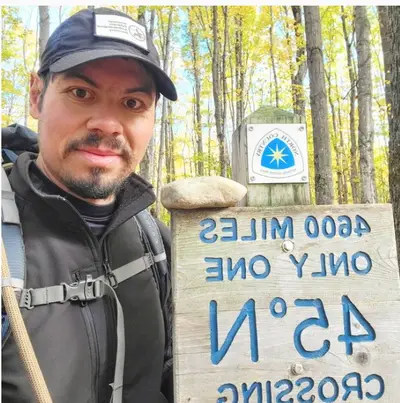
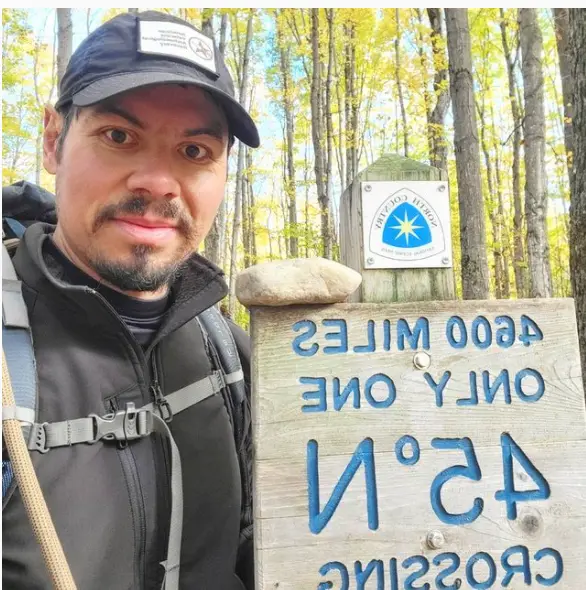
Josh Guerrero is a Marine Corps Veteran and Archeologist who hiked the North Country Trail across Michigan to raise money for American Veterans Archeological Recovery (AVAR).
Listen on Spotify at https://open.spotify.com/search/warrior soul podcast
Josh Guerrero is a Marine Corps Veteran, archeologist, podcaster, and adventurer.
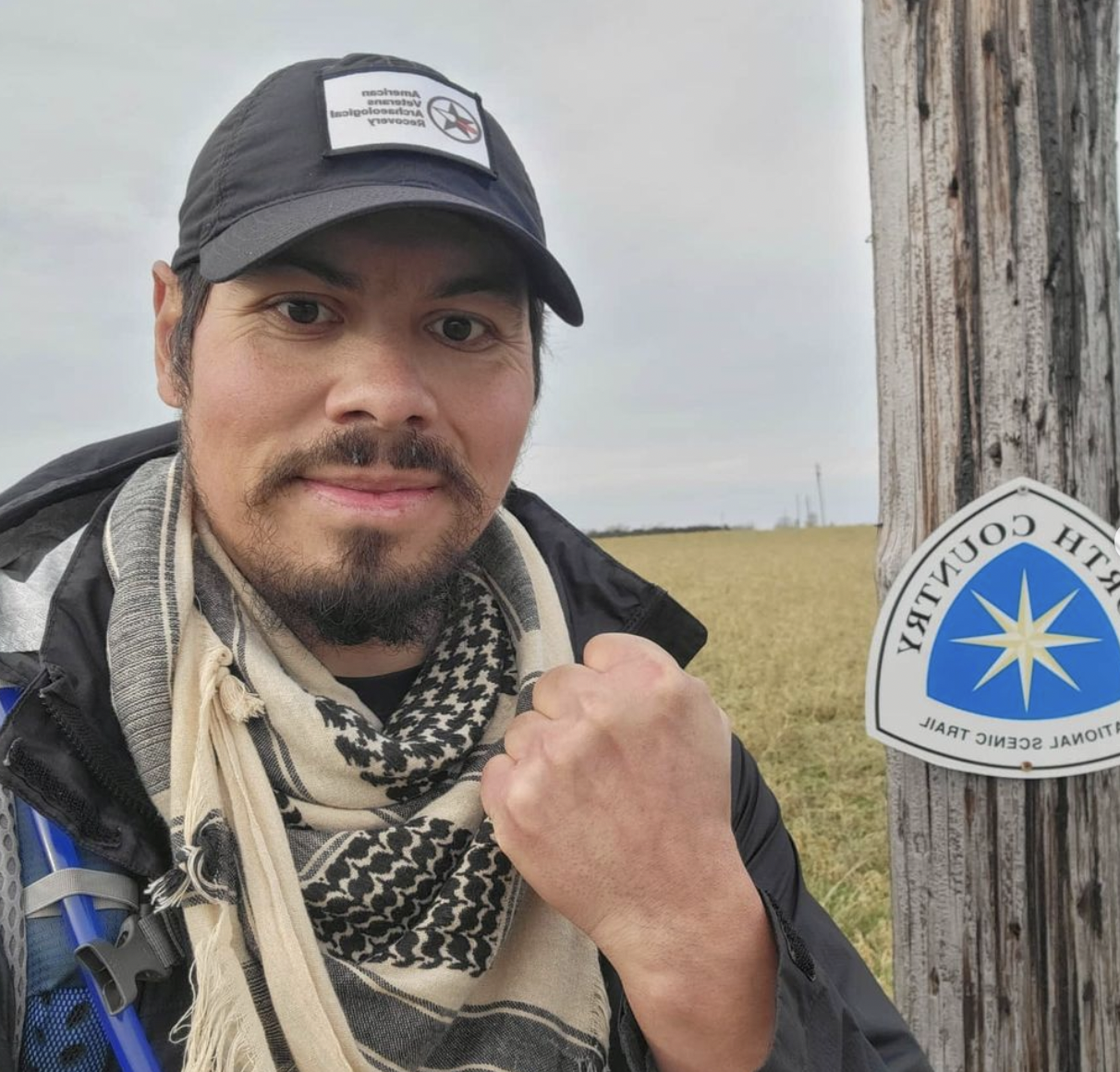
In his day to day life, Josh travels the world unearthing remnants from the past and has dedicated much of his time to training others to do the same.
The last time I had Josh on the Warrior Soul Podcast, he was prepping for a trek through South America to raise money for American Veterans Archeological Recovery (AVAR), an organization that provides training for Veterans in Archeology.
When the Covid 19 pandemic took the world in its grasp, Josh could no longer head to South America. Like a good Marine, he pivoted, and decided to hike across the state of Michigan along the North Country Trail.
Josh started the trek in late summer, and completed his journey in the second week of December. Assisted by "Trail Angels,"who provided him with food, supplies, and sometimes shelter, Josh averaged 15 miles a day during his trek.
Along the way, Josh raised money for AVAR through his GoFundMe at https://www.gofundme.com/f/wolverinewalk. He has left the GoFundMe open to continue to raise funds for this outstanding organization.
I caught up with Josh just a few days after he'd finished his trek. His powerful mindset and desire to help others through his passion for archeology and adventure is truly amazing, and I'm proud to have him as a Marine brother.
You can follow Josh on Instagram at http://www.instagram.com/allaroundadventure
Transcript
Machine-generated from the episode audio and lightly edited — may contain errors.
Chris Albert (link to this point)
What's going on, everybody? Welcome to the Warrior Soul podcast. My name is Chris Albert, and this podcast is where we deliver tools, tactics, strategies, and ideas to help The US military veteran community and anybody else willing to listen to live their best lives. And from time to time, I am on here talking about, you know, things that you guys can do out there, but I'm also talking to people from the community and people from around the world who do some awesome things. And today's guest is is somebody we've had on before.
His name is Josh Guerrero. He is a Marine Corps veteran. He started a podcast a while ago called the All Around Adventure Podcast. He's done some really awesome things. He's been around the world.
He's an archaeologist by training, and he just completed a really awesome trek. Josh, welcome to the show, man.
Josh Guerrero (link to this point)
Hey. Thanks for having me, Chris. Been looking forward to catching up with you.
Chris Albert (link to this point)
Yeah. Absolutely, man. So tell us what what's this trip you just took, man?
Josh Guerrero (link to this point)
Well, I decided to do a thru hike across the entire state of Michigan. And this was a little bit of a fallback plan because I wanted to do an arduous journey, a long journey to raise money for a nonprofit that helps veterans. And, you know, and the last time we talked, Chris, initially, the idea was to do one in South America for 2020. But, of course, I think we can all pretty much guess how that went. So so I had to shift gears a little bit.
I still wanted to stay true to the mission to raise money for this nonprofit called American Veterans Archaeological Recovery. So I decided to do one domestically, and I learned about the North Country National Scenic Trail, which is a 4,800 mile trail that runs from North Dakota all the way to Vermont. And the Michigan section of this trail is the longest section out of any of the states that the trail goes through. It's just under 1,200 miles long, which was about the same distance that I was planning on doing in South America anyways. So it seemed an ideal fit and a and a perfect place for me to still do something amazing, still have an amazing adventure, and still raise money for veterans.
So that's ultimately what I decided to do. And I started it on the Wisconsin Michigan Stateline in August 22, and I just wrapped up this past Wednesday. And I also made my fundraising goal of $10,000 for this nonprofit. So successful trip all around.
Chris Albert (link to this point)
Awesome, man. Awesome. So how do you how do you prep for something like this? What what what were you getting together?
Josh Guerrero (link to this point)
Right. Well, as far as physical training goes, I just kinda went along with the mantra that we've always had in the Marine Corps, that is train how you fight. So if I'm gonna be expected to hike miles upon miles day in and day out during this trek, that's exactly what I did in training. So I just grabbed my GORUCK GR2, put a 45 pound plate in it, and just did a lot of walking. And some other things to supplement that, a lot of mobility and flexibility and movement, you know, just kind of sort of to go along with that.
But that was really the bulk of what I did is just if I'm gonna hike, I'm gonna prepare by hiking. And then as far as gear goes, really tried to get as light as I possibly could without compromising other things too, like durability and so on and so forth. And then also, since I was self financing the entire cost of this trek, I had to be somewhat within a budget too, because I really I made the commitment to self finance the entire cost of this trek because I really wanted all the donations that came in for the fundraiser to go directly towards the nonprofit to help veterans. So had to get all the the gear, get get a tent, get a sleeping bag. I decided to go with the Osprey Atmos 65 for my pack.
And then, of course, I had to work out all the planning logistics, look over a bunch of maps, download apps that I think I might need to use on my phone while I'm out on the trail. So lots of moving parts, and that was a little bit of the fun part. It all paid off, of course, because ultimately it was a successful thru hike. I've I've had to do a little bit of learning along the way as we all do no matter what journey we start in life, but it all it all worked out well. And I was really pleased on how it all went.
Chris Albert (link to this point)
How long did it take and what time of year were you doing it in?
Josh Guerrero (link to this point)
Right. Well, let's see. So August 22 is when I started, and December 15 is when I finished. So just a little under four months.
Chris Albert (link to this point)
Yeah.
Josh Guerrero (link to this point)
And and that was that was about the time frame I was looking at because I kind of sort of guesstimated at first. I may be hiking about an average of about 12 miles per day. But then, of course, as the trek went on, I was putting in a lot more miles. I was averaging about 15 to 17 miles a day the further on I got. The longest day that I did was 20 miles.
Chris Albert (link to this point)
Mhmm.
Josh Guerrero (link to this point)
But, of course, I inevitably had to throw some days off in there so that way I could resupply, do a little bit of resting, you know, catch up on social media posts, and do other outreach stuff. So those were thrown in there as well, and I kinda sorta set it up to where after every four or five hiking days, I would throw in a zero day for that. And then I did take about a week off around Thanksgiving so I could be at home with my family for that too before I got things going again. So so, yeah, just about three and a half months is what it took me.
Chris Albert (link to this point)
That's cool. How much food were you carrying with you? I'm always fascinated by the food aspect of these treks. Like, were you carrying, like, MREs with you? Did you did you you got resupplied along the way?
Were you you stopping at certain points?
Josh Guerrero (link to this point)
Right. Well, yes. Actually, MRE MRE, strangely enough, were part of my my food pack. And then I also got a lot of other mostly just ready to eat stuff. I've decided to try to go stoveless for this.
Like, I know a lot of thru hikers like to bring, like, a gas stove or maybe, like, a small wood stove to, like, boil water and so they could put them in, like, dehydrated pouches, like Mountain House meals and things along those lines. But I really didn't care to do a whole lot of chores while I was out there. You know, if I was hungry, I just wanted to eat right away. So, yes, MREs were with me. There's these things that I got to call the Meal2Go bars from this company called GreenBelly, and I really wish I had grabbed some to show you.
But they're just these little square, like, oat bars and have they have a ton of calories in them, a lot of protein, a lot of fiber. Just like a single package is about 700 calories, so that helped me replenish a lot of calories lost. So that was really the bulk of what I took. And I did prepare resupply boxes that my brother could ship to me to post office post offices along the trail. But I ended up not really needing him to do that very much because, you know, it wasn't too terribly difficult to come across, like, gas stations or maybe just small grocery stores where I could get things like trail mix and beef jerky and protein bars and things like that.
But really, I found that I didn't really end up needing to eat a whole lot of food along the way. It was kind of weird. I just didn't really get very hungry being out there on the trail. And when I was moving, I wasn't really thinking about that very much. My mind was more or less preoccupied with getting in the miles and, you know, making sure I'm maintaining situational awareness while I'm deep in the woods.
But then when I would stop though, Chris, and have a zero day in a town or something like that, I was just a ravenous beast, and I'm eating up everything in sight. You know? I I don't think there was ever a time when I would go eat at a restaurant or at a bar or something like that and not order an appetizer and probably a dessert too just to get to get all those calories back in. But, you know, being an archaeologist, I've kind of found that that's not too uncommon to the way our ancient ancestors have always done things like nomadic people. You know, they would and just peep and just hunter gatherers in general.
You know, they would go days without maybe eating a lot because they're trying to gather enough food to make a meal or they're trying to hunt down a large animal. So it may be a while for people to go that people would go without eating, and then they would just gorge and just eat a lot once they have successfully made a kill or gathered enough food to make a big feast with. So I guess I was more or less getting back to the basics when it came to eating my food out on the trail.
Chris Albert (link to this point)
It's a there a lot of other people on the trail or was it was it just you?
Josh Guerrero (link to this point)
For the most part, though, it was just me. There were a couple of times where I would find some other long distance hikers, but very few and far between. And the only times I really saw other people out in the trail is when I got to more a more touristy area, like Pictured Rocks National Lakeshore in the Upper Peninsula. Very, very busy. It's a very popular tourist destination in Northern Michigan.
And so and the North Country Trail runs through the entire length of that lakeshore. So I saw a lot of people there and also to Tahquamenon Falls, another very, very popular tourist destination, and so I would see people there. And it actually was a little bit overwhelming seeing so many people because, again, before I made it to these locations, I would probably hike over a 100 to 200 miles without seeing another human, like, out there on the trail. So being around that many people all at once was a was a little bit overwhelming just because, you know, solitude was something that I was more or less encompassed with for so long.
Chris Albert (link to this point)
Wow. Wow. With with that, like so one of the things I was thinking about is you started in August, and you finished a few days ago, and it's December. Right? And we're talking, you know, Michigan.
The the climate there varies quite a bit during that time. You know, like, the summertime, there's a lot of bugs and things like that. And then, you know, you get into wintertime, it could be could get very cold. You know, gear wise, did you switch gear out along the way, and and and bring on some more stuff for the cold weather?
Josh Guerrero (link to this point)
Yes. Abs absolutely. And you're right, though. Michigan, our climate here can fluctuate on the drop of a dime, really. I mean, for the most part, though, being in the Upper Peninsula in the late summertime, I was pretty much able to just rock a shorts and T shirts a lot and much to the detriment because, yes, there were some low areas where I was kind of in like a bog and it would be like mosquito hell.
And these types of mosquitoes up there, they practically just eat deep for breakfast, you know? So, I would just like look on my shoulder and they're big enough to bite through your clothes too. I would see like maybe four mosquitoes on my shoulder at at at a time. And then also, being so close to Lake Superior, especially when I made it to the Eastern side of the Upper Peninsula, the trail follows the Lake Superior shore quite a bit, which was beautiful to see. But quite frankly, Chris, that lake scares the hell out of me because it could just change the entire forecast if it wanted to.
Like, it could the forecast could call for no rain or, like, almost a 0% chance of rain all day, but then that lake could just decide to throw one at us if it wanted to just throw a storm our way. So it was beautiful being along it, but it was eerie at the same time because I just knew how powerful of a force in nature that was. But then it seemed like we almost skipped fall. Like, the the weather just plummeted for the most part. Like, right after Halloween, and I blame this all actually on everyone who started raving about Christmas as soon as Halloween was over.
Because as soon as Halloween was over, it snowed. And and I had to, yeah, put my pants on, and I had to, you know, wear up a little bit more and switch out my baseball cap for an actual beanie to stay warm. And then during Thanksgiving break, that's when I had to bust out my thermal leggings and a few other layers too because when I started hiking after Thanksgiving, I was hiking and the temperatures would probably be in like the low 20s. And there were even a couple of times when I was in my tent where it would maybe be like fifties during the day, which is really nice hiking weather, but then at night, it would drop below freezing, and I would wake up in the morning and be scraping like frost off the inside of my tent. And then it took so much energy to just to get myself out of my sleeping bag and embrace the cold like that.
So so, yeah, so over the course of this trek, I was hiking in shorts and T shirts to having to be bundled up against the cold and the wind. So, yeah, a lot that I had to face weather wise along the way.
Chris Albert (link to this point)
How'd you keep your mind occupied with the solitude out there?
Josh Guerrero (link to this point)
Well, fortunately, I did have earbuds that I wore. And the Jabra Elite 75t earbuds, they got this really cool feature for hear through. So that way, even if I wanted to listen to something, I could still hear what's going on in my surroundings, you know, in case there was like other hikers or maybe a bear or something like that that I had to tune into. So podcasts and audiobooks were a pretty big thing just because dealing with the solitude, at the very least, least I could hear human voices, I suppose. That was one of the things.
Obviously, just a great opportunity just to take in a lot of information and learn a lot of things because it's like, what else was I really supposed to do? And I didn't really typically listen to podcasts or audiobooks during the first couple hours of the day just so that way, yeah, I can just kind of make it a more of a meditative experience being out in nature like that. But after a while, though, it kind of starts to lose its luster. It's like, okay, yep, just another tree, just another rock, just another root on the trail, just another this. You know, you've seen them countless times over.
So it can get a little bit stale at times. So so, yes, podcasts and audiobooks and music were, you know, a very welcome companion on the trail for sure.
Chris Albert (link to this point)
Which audiobooks?
Josh Guerrero (link to this point)
I dove into a couple of fics a little bit of fiction and a little bit of nonfiction. I'm really as far as fiction is concerned, I'm really enjoying Jack Carr's James Reece series where his main protagonist is a Navy SEAL that, you know, has his own set of adventures and threats that he faced. I'm also a really big fan of the Mitch Rapp series, which was originally started by Vince Flynn, but now has been taken over by Kyle Mills. As far as nonfiction is concerned, The Comfort Crisis by Michael Easter was a book that I've read, which was really good and also very fitting for what I was doing, you know, just being in this uncomfortable situation out in nature. You know, there was a lot of correlations between what I was experiencing on the trail as well as what I was re listening to on the audiobook.
I'm also a really big fan of Jack Donovan's books, like The Way of Men and also Becoming a Barbarian. And then, of course, I got his latest book, Fire in the Dark that I was listening to.
Chris Albert (link to this point)
Right now. That's an awesome book.
Josh Guerrero (link to this point)
Yeah. Yeah. Yeah. Real really good really good author and a really good writer that I that I like to listen to. I I also got into a lot of history books.
I'm I was listening to a book. The title is escaping me right now, but it was it was about pirates and the history of piracy and talking about some of the early pirates like Henry Avery and also leading into some of the Caribbean pirates like, you know, Charles Vane and and Blackbeard, of course. So dove into a a little bit of those. The Warrior Ethos by Steven Pressfield was another quick listen that I had out there. I also listened to As a Man Thinketh, which, again, the author there alludes me to.
So so when it so a lot of self development books when it came to nonfiction is what I tuned into.
Chris Albert (link to this point)
That's awesome. With did you run into any wildlife? Any bears?
Josh Guerrero (link to this point)
Unfortunately, no. And I say, unfortunately, you know, a lot of people would say, well, you know, that's a good thing. Right? You didn't come across any bears. But there's a weird thing with me, Chris, where when it comes to apex predators in the wild, I love seeing them, you know, from a distance, of course, just just just because it kinda just seeing an animal that's that powerful that, yes, it can it's just bears, alligators, all those apex predators, you know, they walk around and just no one messes with them because they're the top notch head honcho of their environment.
Like, alligators, for instance, when I used to live in Florida, I love seeing them because, you know, those were dinosaurs that have never had to evolve after being on this planet for millions of years. And same thing when I see bear when I would see a bear too because, you know, it's an apex predator that, you know, just dominates this space. So that would have been really cool to see. But the closest I I got to seeing them, though, was bear prints in the sand and also some bear scat every now and then.
Chris Albert (link to this point)
Mhmm.
Josh Guerrero (link to this point)
And then lots of coyotes that I've heard. There's been a couple of nights too where I've heard wolves howl in the distance,
Chris Albert (link to this point)
which They have wolves up in Michigan.
Josh Guerrero (link to this point)
Right? They they they they sure do. And I didn't see any wolves. Again and again, may may have seen wolf prints on the trail too. A lot of animals like to follow the trail because animals, they're not too dissimilar from humans.
They prefer the path of least resistance just how most people would. So so, yeah, either wolf prints or just really, really large dogs is what I saw on the trail. I'm probably gonna say it was the it was the former that I saw. But then besides that, though, most of the wildlife that I saw were just your your tiny creatures, you know, chipmunks and squirrels and the occasional white tailed deer I did see and did see a couple of bald eagles fly overhead, which was pretty cool. So but that's about the extent of it, though.
So as far as wildlife was concerned, not not quite as much as I was hoping for. No.
Chris Albert (link to this point)
It so when you slept, were you sleeping close to the trail? Did you sleep outside most of the time or or, like, do a hotel every once in a while?
Josh Guerrero (link to this point)
Yeah. Most nights were spent outside. And most of the areas along the trail, they allow, what's called dispersed camping. So you could pretty much set up your tent anywhere, you want. You know, they they have some guidelines like you want they want you to be at least 50 feet, off the trail.
But there were a couple of times where I'll be in, like, a really condensed area where there's either a lot of, like, steep rock features that the trails along or it's just so dense with vegetation that I pretty much you know, unless if I wanna just bushwhack an entire clearing where I would just have to set up right there on the trail, and it would it would just start getting so dark that, you know, I kind of had to do what I had to do. So, most nights were definitely spent outside. There were a couple of nights when I would make it into a town when I would rent a hotel for a night or two. But there was also a lot of times where I would stay with Trail Angels. And Trail Angels, it's a network of people along the North Country Trail where they will welcome hikers into their homes and put a roof over their head, provide them food, or maybe some trail angels will just provide transportation.
So, yeah, there was a couple of times where total strangers welcomed me into their homes and sheltered me, you know, as I was needing a rest or something like that. So that happened quite a bit, actually. Like, for for the the entire Lower Peninsula, when I wasn't sleeping on the trail, I was more or less staying with Trail Angels. And there was maybe, like, two to three nights the entire time in the Lower Peninsula where I had to get hotels.
Chris Albert (link to this point)
Okay. Okay. Where what's the longest you went without a shower?
Josh Guerrero (link to this point)
Five days.
Chris Albert (link to this point)
Okay. Mhmm. Nice. Nice. Probably probably felt good after that.
Right?
Josh Guerrero (link to this point)
Oh, no. Oh, yeah. It's just being out on the trail for that long. You know, so much stuff that people that we would normally take for granted, you know, you just feel so grateful to have it once you've been deprived of it for for that long. Everything from a hot shower to a comfy bed to a nice hot meal is just yeah.
You almost get teary eyed when you have it after, like, five days of not having those things.
Chris Albert (link to this point)
Yeah. Yeah. No. Absolutely. Absolutely.
So you got the trail angels. You know, you're going along the trail. What's the scariest moment that you had while you're out there?
Josh Guerrero (link to this point)
The scariest moment.
Chris Albert (link to this point)
Were there any scary moments?
Josh Guerrero (link to this point)
I I I would I wouldn't say that there was any moments that, like, scared me necessarily. If I ever really came across any trouble on the trail, it just more or less added additional stress to what it was that that I was doing. Know, You know, there was a couple of precarious moments where, like, I would have to, like, cross like a river, and the only thing that was going across the river was just like a log that someone just suspended over there. So just making sure I don't lose my balance and fall in precarious situations like that. But there was just stressful moments where and there's this thing that kinda sorta happened to me that I that I called the the curse of the last mile, where the last mile of any given day usually had something just annoying as hell to throw at me, whether it was loose sand on the trail or a lot of deadfall or in some cases, beaver dams would flood the trail, I would have to try to find some way to get around all the flooding to get back on the trail again.
So so just, like, kinda stupid shit like that is really what what I face. But I I can't really recall, like, any moments where I was just thinking to myself, well, oh, shit. Like, I'm about to die or I'm about to get seriously hurt or anything like that.
Chris Albert (link to this point)
You know?
Josh Guerrero (link to this point)
Yeah. Nothing like that really happened along the way. Just, again, some annoyances that I just had to sort of kinda deal with in the moment. That's about the extent of it.
Chris Albert (link to this point)
Was there any elevation?
Josh Guerrero (link to this point)
Oh, yeah. Definitely. Especially in the Western Upper Peninsula. There's a section of the trail there that goes through an area called the Trap Hills, which were probably like some of the greatest elevation gains that one would get on the entire North Country Trail. And so I would spend a good amount of time, yeah, just ascending uphill and definitely would get a little bit winded because this was still fairly early on in the trek.
So I was still kind of trying to build up some stamina and some strength in my legs with having to do all that walking. So it would tucker me out quite a bit. And then, of course, going up was fairly easy compared to going down because you'd have to go down these fairly steep inclines as as well. And, you know, it's hard on your knees. It's hard on your ankles and your feet and everything like that.
But that was still one of my favorite areas because once you're up on top of these vistas, you just got some incredible views that just really make it all worth it, man. It's like I tell you, you're up on these vistas. There's nothing in your way. It is just nothing but forest below you as far as the eye can see. And, you know, I'll probably have to send some photos your way if you wanna, you know, post them to go along with the episode.
Chris Albert (link to this point)
Yeah. Yeah.
Josh Guerrero (link to this point)
For sure. And and one vista, you know, that's where I decided to set up camp. And I I pitched my tent on top of this thing. You know, it had a view of, you know, the sunset going over this valley below me and 0% chance of rain that night too. So I just kept the vestibule off my tent, and I just stargazed as I was going to sleep.
So even though it was hard dealing with that elevation gain, it's just that was one of my most fondest memories of the whole thing just because, again, how remote I was and just the views that I've had. And I've and it was something I would never had expect that my state would be because, you know, growing up in the Lower Peninsula, I was just used to Michigan being flat farmland for the most part. And then to see Michigan like this, man, it was awesome. And so yeah. That's real cool.
Very cool.
Chris Albert (link to this point)
Tell me a little bit about this organization that that you're supporting through this trek.
Josh Guerrero (link to this point)
Right. American Veterans Archaeological Recovery or AVAR for short. They're a nonprofit that takes veterans out into the field to do archaeological digs and all around the world too. And, you know, there's a lot of ways that veterans can benefit from this, but I think kind of the three that sort of stand out to me the most that I usually like to share, you know, besides the travel and the adventure because, again, they're doing them on dig sites in many places around the world. But, you know, giving veterans a chance to connect with other veterans again, you know, because as we know, when we separate and we're no longer with the brotherhood and we don't have that camaraderie as close as we had before, it could be a pretty different difficult transition for many veterans.
So this will get them kind of working shoulder to shoulder again with other veterans to do archaeology. And then also just kind of give them a new focus, a new mission. Because, again, when we're on active service, we know what our mission is. It's very apparent to us. But, you know, once we leave active service, our next mission may not entirely be in sight.
And so, being out in the field doing archaeology gives veterans a chance to achieve tangible results because as you're digging, whether it's an excavation unit or a shovel test or whatever else, you can actually see the fruits of your labor as you start to unearth things. And also, it's a pretty cool feeling when you unearth an artifact that's been lost to the world for hundreds or maybe even thousands of years. So that's kind of a cool thing I think a lot of veterans would appreciate.
Chris Albert (link to this point)
Mhmm.
Josh Guerrero (link to this point)
And then also, one thing I like about this organization is they try to make it more of a program. And what I mean by that is it's not something where they just say, alright, come do this cool thing with us for a couple of weeks, and then we're gonna just plop you right back in the same place that you were before you came here. You know, it's to try to hopefully set them down a path to where they can achieve success in their lives. And for some, that may very well even be becoming a professional archaeologist. And, of course, and if that's the path that they wish to pursue, well, now they have some field experience.
They now have some references that they could put on a resume. And there's even been a couple of times where I've coached a couple of the veterans who've participated on digs, you know, because they want to go into go to school, start going to school. And so they would ask me what my experiences were like when I went to grad school to pursue archaeology. So really good organization all around. And, you know, they've done some pretty cool jig digs.
Digs that actually make me pretty envious of the veterans that got to participate. Back in July, they were in the South Of England. They were excavating the crash site of a B-24 Liberator bomber plane that crashed during World War two. And if that wasn't enough, their next dig after that was in Sicily where they were excavating the crash site of a P-38 Lightning fighter plane.
Chris Albert (link to this point)
Wow.
Josh Guerrero (link to this point)
So so I'm like, damn, man. I wish I could have gotten on those digs, but I was really glad that, you know, there was there were veterans that had a chance to participate on those digs and get to experience, something like that. So so, yeah, that's the nonprofit that I was raising money for. And like I said, I set a goal to raise, $10. And, the day of me finishing the trek, I successfully reached, that goal too.
And donations are still coming in. So I
Chris Albert (link to this point)
Yeah. Yeah. You're you're gonna go big man. Right? So, like
Josh Guerrero (link to this point)
Yep.
Chris Albert (link to this point)
Where where can people go and and donate?
Josh Guerrero (link to this point)
Alright. Yeah. If anyone's interested in donating, you can go to gofundme.com/wolverinewalk. Operation Wolverine Walk was the name of this trek that I took. I don't know if I mentioned that at the beginning.
Chris Albert (link to this point)
Mhmm.
Josh Guerrero (link to this point)
But so Wolverine Walk is where they can go on a GoFundMe to if they wanna leave a donation.
Chris Albert (link to this point)
Awesome. Awesome. What's next for you? What what are you working on next?
Josh Guerrero (link to this point)
Right. Well, you know, for first first and foremost, enjoying holidays with family. That's my immediate focus. There's a couple of other things I'm looking into. I'm potentially looking into some media work to maybe be an expert presenter in in in media, you know, organizations like History Channel, Discovery Channel, you know, they're always looking for experts, and so I'm kinda linking up with an old contact of mine who might be able to make connections for me.
We'll see how that goes. Potentially looking at, like, getting back in the field, doing archaeology again, but I probably might look in the private sector to do that. The last few stints that I did were with the federal sector, like the National Park Service and the Forest Service. So I think I might try my hand in the private sector. Now as far as, like, grand adventures go, it's it's kinda hard to to say at this point.
I'm not sure if I'm gonna be looking for another long distance thru hike like I did this time around because it did take quite a bit to to to plan it all and, you know, to put my life on hold for four months. So I think I'm going to kind of sort of get a little bit of variety again back to doing physical activity. I definitely want to do some hypertrophy training because I did lose a lot of mass out there. Like I lost 15 pounds in the three and a half months that I was out there.
Chris Albert (link to this point)
Oh, wow. Yeah.
Josh Guerrero (link to this point)
Yeah. So I definitely wanna get some hypertrophy training to, you know, start putting some size on again. And I really wanna get back on the mats doing jiu-jitsu again too because
Chris Albert (link to this point)
That's cool.
Josh Guerrero (link to this point)
That was that was another thing I had to put on hold as I was training and getting ready to go out there and do this. Getting back on the mats again.
And I also want to think about what Misogi event I want to do next. Misogi was a term that I learned that I read about in The Comfort Crisis. It's a Japanese term. I can't remember exactly what it translates to. But the idea behind it is once a year, you do something very, very physically challenging, and it could really be whatever you want.
But there's a couple of rules and guidelines to think about. The biggest rule is it has to be very hard, like you have a fifty-fifty percent chance of completing it, and the second rule is don't die. But there's a few other guidelines that he mentions in the book too. As far as one another thing, making it a novel thing where, you know, you're probably one of few people who would actually who's who's actually done or attempted something like you're doing. You know?
So things like running a marathon or maybe doing, like, an obstacle course race, you know, would be a very challenging thing for many people to complete, but you're doing it alongside so many other people. So it's not really necessarily a novel thing that you're doing. And then also, not telling a lot of people about it, you know, because I think a lot of people will go to social media to talk, you know, themselves up about it. And so they hold themselves accountable to other people to do it, but if you don't tell anyone, you're only accountable to yourself to actually go out and do it.
Chris Albert (link to this point)
Yeah.
Josh Guerrero (link to this point)
So so I like I really like that idea. So I'm thinking to be thinking about maybe a Misogi event for for 2022. I mean, obviously, Wolverine Walk was mine for 2021. So we'll see what I can come up with for 2022. But, obviously, at this point, you know, to for the sake of only holding myself accountable to it, not telling anyone.
Chris Albert (link to this point)
That's cool, man. That's cool. Well, dude, it's been great catching up with you, man. Really, really like what you're doing here. Are you gonna start your podcast again soon?
Josh Guerrero (link to this point)
We'll we'll we'll we'll see. You know, it's just it's been nice been to kinda sort of enjoy this production break, which which where I'm at. I mean, the podcast obviously is still open. People can go back and download and listen to all all the episodes. So it's just gonna be really a matter of, yeah, just kind of getting myself readjusted now that I'm back and, of course, get used to the fact that I don't have to wake up and go hiking every single day.
So Yeah. Yeah. Yeah. Yeah. So we'll see what the future has in store for me.
Whether or not I'm gonna continue down the whole travel blogging, podcasting space, or if I pursue something else entirely, it's still kind of up in the air.
Chris Albert (link to this point)
Well, one way or another, keep your voice out there. You got a great message, and it's super inspiring. You know, this this whole Misogi concept is is pretty awesome. I think that, you know, not only physically, you should challenge yourself mentally with new things. You know?
That's that's one of the reasons why I just got into comedy. Just trying to
Josh Guerrero (link to this point)
Oh, yeah. I saw that.
Chris Albert (link to this point)
Do a new thing. You know what I mean? And I think, like, more of us in the community start doing these types of things, I think, can have such a huge impact, you know, on the community, but also on the country. The country is just such a screwed up place right now, and I think, like, it's it's really time for for people from our community to be stepping up.
You know?
Josh Guerrero (link to this point)
Yeah. I I couldn't agree more, you know, because seeing everything because, obviously, I'm I was still connected through social media, and I'm seeing everything that's been unfolding in the country these past couple of months. And I can't think about the fact that, you know, veterans, you know, you may no longer be on active service, but, you know, your mission isn't over. Your fight's not over yet because this country still very much needs veterans. You know, we need people who have good leadership skills.
We need them in our communities. We need them in our schools. We need them in our homes, most importantly. And, you know, we also need just people with grit, you know, those that could spit on their hands and get shit done. And I think most importantly, over above all else, based on what we've been seeing is that, you know, this country just needs people who love it because
Chris Albert (link to this point)
Yeah. No.
Josh Guerrero (link to this point)
Absolutely. I I don't feel that from a lot of people who are who are in power right now. I just do not look at them or listen to what they say and get the impression that they love this country. I mean, I just don't. So, I mean but I know veterans do, and that's why, yeah, I really want them to step up more and more and put their voice out there as well.
Chris Albert (link to this point)
Yeah. No. Absolutely, man. Well, Josh, again, really great, really great talking to you. Throw that, throw that GoFundMe link out one more time.
Josh Guerrero (link to this point)
Gofundme.com/wolverinewalk.
Chris Albert (link to this point)
Awesome. Awesome. To everybody out there, I hope you got a lot from this conversation. Some of these concepts are are super valuable. The the whole Misogi concept, you know, going out there and trying to do some difficult things.
You know, if you've got an interest in trying to take up archaeology, I think Josh's organization is is a really great way of doing that. And, make sure you're keeping up and following Josh. What's your, Instagram handle again?
Josh Guerrero (link to this point)
All around adventure, one word, no dashes. You can follow me there.
Chris Albert (link to this point)
Outstanding. Well, guys, get out there and live your best lives while you can. This is Chris Albert and Josh Guerrero, and we are out.
Host of the Warrior Soul Podcast and founder of Warrior Soul. Worldwide trainer and nutrition coach, contributing author at Testosterone Nation and Muscle and Strength.