Podcast episode
How to Write a Best-Selling Book, with Michael Levin, CEO of BusinessGhost

Hosted by Chris Albert
The Warrior Soul Podcast
Subscribe to the Warrior Soul Podcast on Itunes and YouTube
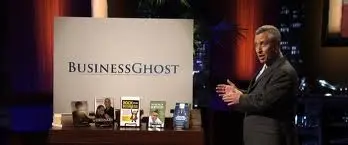
As one of the most established ghostwriters in the nation, New York Times best-selling author Michael Levin has written, co-written or ghostwritten more than 550 books, of which eighteen are national best sellers. He appeared on ABC’s Shark Tank in January of 2012.
In the past, Michael has published with Simon & Schuster, Random House, St. Martin’s Press, Putnam/Berkley, and many other houses. His works have been optioned for film and TV by Steven Soderbergh/Paramount, HBO, Disney, ABC, and others. One of his own novels became Model Behavior, an ABC Sunday night Disney movie of the week.

He has also made contributions to the New York Times, the Wall Street Journal, Forbes.com, Politico, the Los Angeles Times, the Boston Globe, the Jerusalem Post, Writers Digest, CBS News. Michael teaches writing at the University of California – Los Angeles and has taught at New York University.
Michael appeared on the first episode of Season Three of ABC’s Shark Tank, is a regular contributor to Huffington Post, and is most proud of having edited Zig Ziglar’s final book, Born To Win.
He has spoken on BBC worldwide radio and TV, discussing the Random House/Penguin merger and has been quoted in Inc. Magazine (April, 2016 and in a BloombergBusiness piece on ghostwriting.
He appeared twice on Fox News, in an interview with Tucker Carlson on Fox & Friends, and on Fox Business, discussing the 2016 election, and was the subject of an interview in July, 2016 on Forbes.com.
Please support Michael’s 2018 Boston Marathon run for Dana-Farber!
For every donation of $180 or more, you’ll receive 2 complimentary tickets to opening night of Tony Williams’ Urban Nutcracker: http://urbannutcracker.com
Donate right now at http://www.runDFMC.org/2018/ml8th
Transcript
Machine-generated from the episode audio and lightly edited — may contain errors.
Chris Albert (link to this point)
Going in three, two, and one. What's going on, everybody? Welcome to the Warrior Soul podcast. This is Chris Albert, and we're at episode number 64. And I've got an awesome guest for you today.
It's mister Michael Levin. And Michael is the CEO of BusinessGhost. He's also been a New York Times best selling author and he was a winning contestant on the Shark Tank. And we've got a lot to talk about today. First, I wanna get a quick note from our sponsors, f bomb nutrition.
A lot of people wanna do the ketogenic diet these days, but carrying around jars of fat just isn't gonna work it. And f bomb makes these awesome portable packets of amazing, delicious, healthy oils. They've got avocado oil, olive oil, coconut oil, MCT oil, but what I love the most are their nut butters. They've got this amazing macadamia nut butter. It's like a macadamia nut cookie crushed up into a little packet that you can carry around with you.
It's delicious. It doesn't have sugar. And if you want to try it out, you can go to fatissmartfuel.com and use the code Warrior Soul to get 20% off your first order.
This is Chris Albert, and I'm here to remind you of one thing. Someday, you're going to die. Now that's not some morbid statement scary idea. It's solid fact. Your time here on this earth is limited.
We need to be reminded of this as much as possible for one simple reason, to live your best life while you can. This is the Warrior Soul podcast.
Now we're gonna get into our conversation with Michael. And, Michael, how you doing today, man?
Michael Levin (link to this point)
Great. Thanks for having me on, Chris. Pleasure.
Chris Albert (link to this point)
Out there in, Brookline, Massachusetts. And, you know, it seems like there are it it's almost as if we're in this new time period where there's all these different media platforms. You got YouTube, you've got Facebook video, you've got Instagram, And people are expressing themselves in in different ways now. But it also seems like books are still relevant. And first off, are books still relevant?
Obviously, are because you wouldn't have a business if they weren't, but how are they relevant these days and why is it important to have a book?
Michael Levin (link to this point)
Sure, I mean for the book business, it's a terrible time for just what you said. The younger generations are all about video and not so much about printed word. So the book publishers are sliding and I think their numbers are really propped up by children's books and by the classics. I think Hemingway still makes more money for his publisher than 50 of the top current authors combined. So it's just a tough time to be a book publisher.
To be an author is the best time ever because people have so much respect for anyone who actually has a book. Here's my book. The other guy has a white paper, has a website that's identical with his competitors, has the leave behinds, whatever they are that look like everybody else's, but somebody's got a book. When you're the author, you're the authority and that's even more true today when people are reading, I think, fewer books than that.
Chris Albert (link to this point)
So a book is almost like a calling card these days. You can put it out there, you've got this book people can almost read more about you and learn more about your business that way, right?
Michael Levin (link to this point)
Yeah, and then you're Jay Abraham, my mentor and marketing guru, excruciating there says that a business owner or a CEO needs a book the way everybody else in his or her organization needs a business card. And when you have a book, you control the experience that the reader has. On a website, people can come move around, they can click here, go there, but with a book, you dictate beginning, middle, end. This is the story, this is the path you're gonna take. The other thing is that when people look at a website, they kind of glance at it, they'll poke around, but they don't really read all that carefully and all the guidance over the last five years of doing a website, more video, fewer words.
So if you have a story to tell and it's more complicated than can be told in a fifty second video, how do you differentiate yourself? Well, there's nothing like a book. We've done five fifty here at BusinessGhost, so I'm as big a believer in books today as I ever have been.
Chris Albert (link to this point)
So what do you guys do for authors and how do you work with them and how do you get them set up?
Michael Levin (link to this point)
Sure, we organize the book with them, we help them determine the audience, we interview them, we write the chapters, we send them the chapters for their review, we edit them, and then we publish. We do the cover design, interior design, all that stuff, ISBN number, barcode put it up on Amazon, so the one stop shopping, take care of the printing, the rest of it. But the key thing is that a book is kind of a coming out party for your next iteration of yourself. It's your 2.0, It's your coming out party. So the question is not who have you been or who are you now?
The real question is how do you want your market to perceive you going forward? That's really what the book is about. And so the process of writing a book, before we even write in one word, we go back to that first question and say, who do you want to be next in the world? This is how you've been known. This is what you're known for.
Where do you want to go? What would you like your image to be? What kind of clients do you want to work with? Do you want more of what you've got now? Great, let's do that.
Or is there a different higher level, more lucrative, better client out there and you want to get them? So our job is to help you identify what your message is going forward, find the language for that that will be the basis of all the marketing that you do from the language on your website to your elevator pitch and everything in between, all that derives from the language in the book. So it's sort of not just, you know, we're not just a bunch of writers. The other thing about ghostwriters is that a lot of writers hate business and they don't understand business people and they don't know how to stand up to them and we don't have any problem with that. We can politely but firmly stand up to you and sort of make sure that you don't drive the book over the cliff.
But the main thing is that we help you determine how are you gonna present yourself going forward? Who are gonna be? Who is the real you? What's the next you that's gonna step out into the universe and say, here I am, Iris.
Chris Albert (link to this point)
So so you're kinda like cultivating an image there and you're cultivating an image for the author and and it's almost like engineering a path for yourself with the book kind of being like a beacon light to lead you along the way, right?
Michael Levin (link to this point)
So that's beautifully put. The book is your beacon and the image I like is the lighthouse. Know, a lot of times people you're either a lighthouse or flashlight in the business world. If you're a flashlight, you're like, where are the prospects? Come here, come here.
Know, you're trying to, know, I gotcha. Or you're a lighthouse and you're this big beautiful lighthouse on the New England Shore and I don't know how the lighting has changed when I did that, but the thing is that you're sitting out a beacon, it's like this is who I am, this is how I help, this is how I serve, this is what I know, this is what I do and the ships come to you. I'd rather be a beacon than a flashlight and that's what you get to be when have a book.
Chris Albert (link to this point)
Well, we all know that the entrepreneurial journey can often be a really dark journey in the in the really rocky. I I can tell you I've I've fallen on my face flat on my face a million times been bruised, battered, depressed, happy. It's like a an amazing roller coaster. It's the best roller coaster I've ever been on in my life. But it might be a fatal one.
But I guess my question for you is, at what point in the entrepreneurial journey should somebody start to consider putting a book together?
Michael Levin (link to this point)
That's a great question. I think when you can afford it, you know. I'd love to say it's the first thing you gotta do, go out there and get your book, Iris and Beeley. I don't know if that's true because it's not cheap, you know. It starts in the low 20s and then goes into the 30s or 40s if you want something really big and complicated.
We do books as marketing tools starting at 19.5 for a smaller book up to about 29.5. So that's real money and if an entrepreneur, keeping the lights on is critical. So I'm not quite sure I would start with getting that. I mean the first thing, when I know about starting businesses, you don't start with a website and you don't start with books, you start with clients and customers. So you go out there and you hustle and you find people and you say to them, you know, I'll work for a third of what it would normally cost, just I'm gonna put up a website and then I want you to refer me out to other people or put your First make money, okay?
Don't spend money. Don't sit there, I want you to design my business credit be. Forget all that. The first thing to do is, and I know this because I did the same mistake everybody else did. I fell in love with the product, I started a business, I ended up with thirty three thousand dollars of credit card debt, no income, and that was not a happy day.
That was the beginning of my entrepreneurial journey and then learned how to start a business and did it the right way the second time and if I started another one, which please God I won't because it's like enough already, but if I do, I'll really know how to do it right back on. I mean, I'm twenty three years into this business, almost twenty four years and I sit here and say, why didn't it take me two years to get where I am instead of twenty four years? Well, that's life. Maybe a smarter guy would have gotten here sooner.
Chris Albert (link to this point)
Yeah, it's so funny because all it could have really taken is somebody tapping you on the shoulder saying, hey, don't spend all this money, work on getting some clients first, build it up slowly, you know, continue your law practice or whatever business you were in at first and then and then do it slowly like that. But in all honesty, we we get such blinders on and and we get tunnel vision and it's almost like it's an unstoppable force. You've got to fail at least a couple of times before you're gonna find the promised land and if the promised land
Michael Levin (link to this point)
You gotta squeeze you the stupid out of yourself, know? And the only way you do that is by spending time and money. You know, when I was fairly new in the business, it's about four years, mean I moved about every year so I can just think about where I live and that tells me what year it is. So you know, I met a guy who was a legend in the insurance business. He invented some sort of approach.
He was worth, or he had made $87,000,000 using that approach so that was what he was worth at the time, older gentleman. And I told him about a business idea I had and he said, well, you do is this, you don't just throw away what you've got. He said, Start the new thing on the side and then let it get so big that it squeezes out what you're doing.
Chris Albert (link to this point)
Right.
Michael Levin (link to this point)
And that's really smart. So I mean, if you have a day job, I'm not gonna tell you to quit your day job. I'm gonna say, you know, it's time to give up Netflix evenings and and weekends, so go to the gym, you know, but do what you have to do to take care of yourself. But my mentor told me twenty three and a half years ago, the secret of success is bust your butt. That's not the word he used, but that's it.
And you know, twenty three and a half years later I can tell you that's exactly, you know, that's all I know, you know. Yeah. That's all I've crossed your butt.
Chris Albert (link to this point)
Yep, same here, same here. So let's talk a little bit about your entrepreneurial journey. When did you decide that you wanted to be a business owner and and how did that come about? What was, I guess, you'd say the straw that broke the camel's back? What said, I'm done with whatever I'm doing right now.
I'm gonna go and I'm gonna make this happen.
Michael Levin (link to this point)
I never wanted to be a business owner, I still don't, you know? My dream was to write novels and sit by the pool and toss one in every, not into the pool, but to New York and Hollywood every year and you know, send me more money and it would be great. Sold three novels of Simon and Schuster in my late 20s when I'm still practicing law and couldn't sell a fourth one. Hated law, didn't want to be a lawyer. Worked for about a year and a half for two firms and one of them all but fired me and the other one did sit me down and fired And I just, you know, I just, I mean, I wanted to be a writer guy.
All I wanted to do was write. So I started that other business that I mentioned in 'ninety two and then in 'ninety three, no in 'ninety three and then in 'ninety four I was totally out of everything and I went into a program for people who are just jacked financially and I met a guy that first night, 01/31/1994, the night that changed my life. You know, it was a cold winter night here in New England and he stood outside the building where the meeting was held and after that with me for about twenty, twenty five minutes and he just saw he says later on, he says he saw something in me. And a couple of weeks later he took me and sat me down at a Dunkin' Donuts in Cleveland Circle in Brookline, took out a single sheet of paper and asked me, okay, how much money do you need to live on? What's your rent?
What's your what do you spend on food? How much is your T pass, the pass to get you on the transit? And we went through all the expenses, what's your debt? And you know, it was 900 a month on credit cards and no income. So we basically figured out on a single sheet of paper how much money they needed to earn and he owned four of the top restaurants in Boston.
He was a really smart business guy and he said, I work with a lot of you creative people. You can't do your best work if you can't put a print on the table or pay your rent. So he said, you're gonna offer writing classes. You're gonna rent space from somebody, you're gonna buy chairs and whiteboard and you're gonna offer private classes because you love to write and so make you a better writer. And so we figured out single sheet of paper and I wish I kept it, how much I needed to make an hour in order to support my life so that I would have twenty hours a week left over from my writing.
And that's how it started and I rented space and I went around Boston with flyers from them everywhere, filled up the first two classes, filled up more, filled up more, filled up more. And I mean my record keeping was so bad. It was supposed to have like fifteen people in the class and one morning, fifteen, sixteen, seventeen, eighteen, 19, I sold 21 spaces for 22 spaces. And yeah, it's like, but gradually that led, and I'll wrap this up, gradually that led to people saying, Consult with me, and then one day they started saying, Just write it for me. And then one day about seven years later, no, about ten years after the business started, I looked at the numbers, I realized I was making a whole lot more from ghostwriting than from teaching writing classes or consulting.
So I just said, okay, and I'm gonna renamed the company BusinessGhost and eventually I hired my first writer and now we have 22, now we have a team of 50. We do about 120 books a year. It's unbelievable. And I'm a guy who's a knucklehead in business and I now need a payroll of 50 and we serve incredibly high level people, people starting out, people at all levels. That's a
Chris Albert (link to this point)
so so really big question I have about, you know, the beginning of BusinessGhost is when did you start thinking about scale? Because I I understand the process of ghostwriting and and, you know, writing books for other people. But how did you come up with a system for scaling that concept to the point where you can actually create a company out of it and and and do it more on a on a bigger level?
Michael Levin (link to this point)
Yeah, I don't remember the exact moment but there was a moment where I realized, I guess, that I could sell more than I could produce myself. So I started bringing in one other writer and then eventually a second and so on. And I had an assistant, part time assistant and a full time assistant. And I started and I went on Shark Tank as you mentioned. And I didn't really need the money for the business.
It kind of grows organically. I don't need an investor. But the exposure that the show gave me was incredible and it runs every eight weeks on CNBC and the phone rings, whatever it does. And the sharks were incredibly respectful and polite to me and I later realized watching other episodes, that's not how they are a lot of the time. And one of them said, I think it was Robert Herjavec.
He said, you've done what point 0001% of writers has ever done. You figured out how to make a successful business out of doing writing, which you love. And I was like, wow, that's right. So the show, they didn't fund me, which is fine. I'm not like a fire hydrant nozzle, you can scale.
But it was like a national televised intervention on me to accept the idea that I wasn't just a writer guy who was shamefully running a ghostwriting business out of his back pocket so as to pay the bills. By now I'm married, I have four kids, so there are a lot more bills. And instead, a guy who's running a successful business. I mean, how did this happen? When I went to Disney to take Disney Institute courses on customer service, I went to Sandler to get sales training, which is Strategic Coach to learn how entrepreneurship works.
I listened to every audio and everything you could get on negotiating. I got sued twice because I had a faulty contract. So I learned how to tighten up my contract. Everything was just, there was no plan, there is no plan, it's just simply, the only plan is in cash flow and grow. Make enough money to pay for my family and then keep the business growing.
And now it's a super professional business. I have an incredible team. I'm incredibly proud of them. I'll be away next week and the ultimate test of an entrepreneurial business is can the entrepreneur go away? I'll be out of the country.
You know? I'll glance at the email, of course, because you know, I'm paranoid and all that stuff, but the team will be fine without me. In fact, they love it when I'm gone.
Chris Albert (link to this point)
So Hope they don't love it too much. So that's pretty awesome. And I think an important point there for the audience is this, you know, whenever you're growing, you're gonna get uncomfortable. Whenever you're you're you're going, whenever you need to grow, you're gonna get uncomfortable. And I think that's that's something to realize.
So if you're out there and you're trying to start something up and it comes to a point where you start dealing with things like contracts and you start dealing with things like employees and it seems a little bit overwhelming, that's the time for you to step up. That's the time for you to grow. That's the time when you have the chance to to grow your business or your project or whatever it is you're doing. Look for that that that chance to be uncomfortable because that's where where you'll you'll start to make it. A question about picking your team and and developing your team.
So a large part of your team is obviously writers. Right? And and the same types of creative type people that that you have. How do you strike that balance in your team between creative people and business savvy? Do you conduct trainings for them?
Did you have to cultivate that in your culture? How did that come about?
Michael Levin (link to this point)
Well, look for writers, it's a great question. We look for writers who are open to the idea of saying positive things about the business world. Now most creative people are, how do you say this politely? They're sort of allergic to business because they think that anything that has to do with money or business is going to corrupt their relationship with their muse. So we can't really work with those people who have that attitude.
Instead, and I had that attitude, I had to overcome it, and I did. So we look for people who have a background in business writing, number one, we look for people who are nice. We don't, you know, we're just nice people. And I like to say we borrow the line from the Ritz-Carlton, the ladies and gentlemen serving ladies and gentlemen. So high level of respect within the team and for our clients.
When it comes to hiring writers, they're interviewing the clients. So they have to have a positive attitude toward the business. You know, you see the big, you know, what, I mean, like the tenacity, the 1%, when that was going on. I mean, you know, what was the thing in Wall Street? Occupy.
Yep. You know, were protests against the World Trade Organization in Seattle and all of these people are, you know, declaiming corporations. What are they using? Their iPhones. What are they wearing?
Levi's. What are they wearing on their feet? Who made those sneakers? There's your phone. There's, you know, Steve Jobs coming back to tell us.
You know, it's like, you know, don't you realize that the very things you're protesting against have given you the easiest life in human history? So, you know, if you're, I'm not saying that the business world is perfect or anything like that, of course there are excesses and problems and so on, but at the same time, if you don't have a respect for what it takes to be a successful business person, you cannot work for BusinessGhost because you're disrespecting our clients. They put their lives into businesses, into their financial services firms, into their law firms, into their consultancies. You know, if you can't respect that, then I'm not going to pay you. So it's really that simple.
It's are you a nice person? Are you a great writer? Are you personable? You can conduct a great interview. Do you respect the concept of the business which most writers don't?
And then, and you know, this is a real problem for people because they go out and they hire an individual ghostwriter. They look at the website and says we do white, I do white papers, I do this, I do that, I do books, I do this, I do that and then I go oh great how much do you charge? $5,000 I mean the average writer will write a book and paint your house for $5,000 but when you get an average writer you're gonna get an average book. It's like, do you really want an average book to represent you in the marketplace? Is a great idea or not?
So it's sort like you have to have a writer who understands, who respects it and has the courage to push back and say, wait a minute, wait a minute, a minute, you just said such and such, the reader's gonna say, you gotta be kidding me. I mean, that's absurd. So, and then they're gonna go, yeah, I know, you're right, I guess you can't say it. No, you can't. So, you know, so you have to have, you have to be courageous as a writer and you have to be able to step up and say to the client, this is what I think.
And you cannot do that if you're afraid of the client or if you despise what the client stands for. And that's how a lot of creative people feel. That's how I felt. So I get it, you know, I'm not gonna hire those.
Chris Albert (link to this point)
No, that's a very big point. And I think, you know, again, everybody thinks of entrepreneur. I guess the people who have never done entrepreneurship before, they think of entrepreneurs and they think of guys in suits who are rolling the world and and pushing down the little man. But a lot of people don't realize the journey that it takes and and and you know that a lot of entrepreneurs are out there. They've come from nothing and they've built something up just based off of the strength of their own backs based off their sweat, their blood and their tears.
And you've got to respect that if you're going to be telling somebody's story. Let's talk about your process when you're working with an entrepreneur, you're working with an author. What kinds of things do you do when that person first comes in the office? They say, hey, I want to write a book. You know, I've got this great widget and I've come from this place to create this widget.
How can I tell my story?
Michael Levin (link to this point)
Right, now they may have created a widget, they may also have a financial services company they're trying to market. They may be a consultant and they're looking for more clients. They may be the CEO of the business and they're trying to explain their business to stakeholders, be it the media, the government, potential investors. And maybe a business that's been around for a while and is in danger of losing its culture because the new employees, the new hires have no idea, it's just not a job to them, whereas the 11 people who started it, it was, you know, blood, sweat, tears and toil. So there are a lot of different reasons why.
The first thing we do is we just listen for are you a nice person? Because if you're a jerk, we don't want your money being, you know, working with enough of those.
Chris Albert (link to this point)
Yeah, that's kind of like a marriage relationship. You're gonna be working with these people for a while so you gotta kind of like them, right?
Michael Levin (link to this point)
And at the same time I'm gonna be subjecting them to my team members and I have to protect my team members from jerks and from noxious people and from people who are inappropriate sexually over the phone, which just happened on a few occasions, or people just plain jerks. So you know, you can't screen all the time for them but you can tell when somebody's a little okay. So that's the first thing. The second thing we're looking for is is there a real business or personal purpose doing the book? And I always say to them on the first call, in the sales call, say, look, you know, I gotta understand why you want to do this because otherwise eight months from now you're gonna come back to me and say, you talked me into it.
I mean like, but you called me, what are you talking about? So I want to know why you want to do the book, and I want to know that you have realistic goals. If you tell me because I'm going be sitting next to Oprah, I'm like, well, I can't guarantee that. You know, I can guarantee that you're going to have a book that's good enough so that you could sit next to Oprah, but I'm gonna be a New York Times best selling author, do you really want to go and sell copies of the books? Well then you're not gonna get this, you know, we can jack your, we can show you how to jack your book up legitimately on Amazon or barnesandnoble.com and you can do that for no money and then you're a best seller and forget about it.
So it's like why are you doing it? What is a realistic outcome for you? What are you hoping? Sometimes our clients in low, you know, they say well I'd like to do such and such. I'm like you kidding me, you could do 10 times that.
So that's the first thing is let's get the objectives and then at that point proposal, agreement, deal, great. Then the first thing we do is we work out in a ninety minute call with you and I have a person who is the world's greatest at this. She's been with me for fourteen years. We plant more successful books than anyone in human history and she's a big part of the reason why. We want to know three things.
Who's the audience? Okay, we don't start off with what goes in the book, we start off with whom are you trying to influence? And the second question is where do you want to take them? Do you want them to hire you? Do you want them to think differently about you in your work life, in your career?
What is it that you want them to be doing differently as a result of reading the book, either with you or in their private lives? And then the third thing is what body of knowledge in your head will convince those people to take that next step with you or with their own, in their own lives, if only they knew that you know what you know. There's a knowledge gap. You have all this knowledge in your head. They don't know you have it.
The book is gonna connect them to you by closing that knowledge gap. And then we work that, and then we turn that into a table of contents which create the flow of information from you to the reader and we do all that in ninety minutes because we only work with people who are too busy to talk to us. And after five fifty books we have a kitchen tested process, which is great. Then we match you up with the appropriate writer. We only need an hour per interview, per chapter, so an hour on a phone call, we can get from you enough information so that we can write your entire chapter, the entire chapter that we're talking about in that call.
We don't do broad ranging topics and conversations about everything, we just stay in the table of contents. Now we're talking about chapter one, give us that out. So if it's a 100 page book and we believe in shorter books, today 100, 150, sometimes longer. A 100 page book, 12 chapters, eight pages a chapter or 10, let's say 10 pages, 10 chapters, ten hours on the phone we can knock off the interviewing in a day and a half with you or over three half days or a couple of weeks and we start feeding you chapters a week at a time. You go over them, you give us your comments immediately, you tell us what you like, what you hate, do more of this, do less of that.
We're working from the transcript of the call, we're not freelancing, we're not putting words in your mouth. The book has to sound like you, succeeds. If it sounds like you, it's a success. If it sounds like us, it's a failure. And then when that's done, we print it, we design it, cover, interior layout, ISBN number, copyright in your name, not ours.
Our name is not on the book, we're ghost writers, it's your book. We have no back end, we're work made for hire, we charge you a fee for the whole service and then we're out. TV movie rights, yours. Back of the room sales, yours. Speaking engagement money, yours.
New clients, all yours. That's it. If you're happy you'll tell your friends, maybe you'll come back and do another book, but that's how we get paid. Then we put up on Amazon, we put up on barnesandnoble.com, we give you 100 copies and we give you the phone number of the publisher for the printer so that you're able to order as many or as few copies whenever you want directly from the printer with no search option. I've basically just given you my whole sales pitch, that's
Chris Albert (link to this point)
I like it. I went to your website and one of the things I really appreciated by the video on your landing page is the honesty in it. You know, you say we're not the cheapest. We we're we're actually pretty expensive. We're the Ritz-Carlton of of ghostwriting.
And if you wanna work with us, it's gonna be an investment, but it's gonna be worth it. And and I definitely appreciate that honesty because nowadays you go around the different landing pages and you get this pitch. It's like, hey, do you want to write a book in three days? You know, we can get you on the New York Times at times bestseller list and this that. And I really did appreciate your honesty and I can see why you're good at what you do.
And just just from the service that you guys provide, I can see definitely how somebody who is successful in business, they're not gonna have time to sit down for a year and write down a a book or anything like that. So this is a valuable service that you're providing. You're actually extracting the knowledge from these these people, getting it out there into a coherent format. And and really, you know, you're not just providing a service to them, you're providing a service to everybody else and and getting this knowledge out there to the world because otherwise these people really wouldn't have time to do it.
Michael Levin (link to this point)
Yeah, no, that's exactly right. And there's another aspect, thank you for that Chris, I appreciate all that. The other thing that we do is that, you know, if you're running a business, it's hair on fire all the time. There's no downtime and there's always another crisis, there's always a fire to put out. You know how much time you have to think through who do I wanna be next?
Zero. And that's true for just about everybody. Most people don't take the time or make the time sort of like go on a private retreat and figure it out or bring in a facilitator. So one of the benefits of working with us is that you get to hit the pause button just long enough to figure out, well, where do I wanna go? What do I want next?
I'm doing this over and over again. Is this satisfying? Do I want to die at my desk x number of years from now doing exactly what I'm doing? Or is there a 2.0 for me? And we help you find that.
And I've had clients and a lot, and this kind of like shocked me. A lot of people in the business world have no idea what they're doing. I mean they know what they do, but they don't have a process. It's like they somehow get a client and they somehow get paid and they somehow do stuff for the client and somehow the client's happy and they're like fool another one. But the thing is that, you know, I've had, you know, this one super successful international business consultant say to me, until you came along I didn't know what I did.
And I, you know, I loved that. That made me laugh. That's like so funny. But it's true. We're so busy doing that we don't have time to stop and say, What do I want?
You know, what do want out my life? What should my life look like? What should my work life, what should my company look like? Where do I want to go from here? Because otherwise momentum will just sort of, you know, keep you kind of churning in the same direction, but you're never gonna get to say, want go now.
So when people work with us, they have the opportunity to have those kinds of conversations and figure out where they want to go next with their careers, with their lives and it's exciting. So that's something else they get out of working with us.
Chris Albert (link to this point)
So it's almost like an audit. Like you're doing a kind of like soul audit when you're writing this book.
Michael Levin (link to this point)
A little bit. I mean, you know, we get under the hood a little bit. I had a guy, financial services guy, I love this, very successful guy and we're going over the agreement and I'm telling him this is the confidentiality clause. He's like, yeah, okay, but you know about the deficit, you know, $20,000,000,000,000 deficit we have that's going to take down the country? Okay, I said, Oh, I didn't know that just that you know in this clause over here and he said, Yeah, but the deficit $20,000,000,000,000 He often talked about, he was obsessed with the $20,000,000,000,000 deficit.
I'm like, Okay, let me look at this guy's website. Not a word. He's like, Call him up, send us the deal. It's like, you can't stop talking about the $20,000,000,000,000 deficit, there's not a word about on your website. He said, I'm afraid if I put it on the website people will think I'm a nut.
I'm like, but you are a nut. You gotta hold it. Because the thing is that, you know, he can write a book and never mention the deficit but as soon as people sit down with him and it starts coming out of his mouth like The Exorcist, you know, there's no way that they're gonna run, they're gonna run-in horror out of his office. So you have to do is you have to fly your freak flag. You have to own your individuality.
And by that I mean in his case, we did a book that was 70% about the deficit and 30% about the domestic. Why? Because for the people who feel the same way he does, they will have finally found their man, their tribal leader in Seth Godin's phrase. And the other people were never prospects of this in the first place. And guess what?
All these folks hang together. They all go to the same golf clubs, all go to the same gun clubs, they all go to the same whatever clubs. And this guy gets passed around now from one guy to the next who feels that the $20,000,000,000,000 deficit is the be all and end all. If you're not taking that into account when you're investing, you know, you're dead man walking. So you know, it's like this, so now his website's all about the deficit and if you don't like it, leave.
But the thing is that if you do like it, has no competition because he's the only guy in the world who feels this way and has the courage to say this is who I am, this is what I stand for. So you know, that's a value values clarification. And you know what, computer is at 1% so let's keep talking but I gotta plug in because I'm not really
Chris Albert (link to this point)
It's all good man, yeah. You know the process you just described there, it's kind of like something I've seen a lot of people people teach and I teach some business classes for for London Real. We we teach to try to find your 1,000 true fans like Joe the Joseph. And that's so important. If if you've got something that sets yourself sets you apart, you can start to stand up to some of the bigger guys.
You can start to to create moats around your business to protect yourself and and to really set yourself up for some success.
Michael Levin (link to this point)
I gotta say, Chris, I've just destroyed all my credibility because I'm, you know, I'm like talking and sounding so passionate and introspective, but my computer's at 0% if I don't like to plug in. Because the thing is that, you know, there we go. It's like I'm great at what I do but at everything else I'm a knucklehead, you know? I mean like the cost cuts of my, the eight month, my kids are like, when are you going to get that fixed? I'm like, anyway, what's your next question?
Chris Albert (link to this point)
I know, man. It's it's it's cool. I I can tell you that, you know, I'll have my I'll on have my on days and then, you know, my my girlfriend will take me down. She'll bring me back down to earth because I'm a knucklehead at everything else too.
Michael Levin (link to this point)
So, Yeah. Wife says I have no fine motor skills. We have four kids, so I don't know. What's the where sorry. Where where do we go from?
Chris Albert (link to this point)
So the next question I have is about the New York Times bestseller list. Right? So it seems like whenever anybody sets out, they wanna get on that New York Times bestseller list, and it's it's big thing for a lot of authors. But how does somebody get on it? Is it that important?
And a lot of these New York Times bestsellers that we see, are they there because they're good books or are they there because they they had a lot of money and and they were able to to buy themselves onto the list?
Michael Levin (link to this point)
That's a great question. It's a great series of questions. Psychologically, people want to be on the New York Times bestseller list because people are competitive and they understand that in the publishing world that's sort of the top of the tree. If you're a New York Times bestselling author, that's like a baseball player can write H O F after the initials for Hall of Fame after his initials and after his name, when he signs his name, nobody else can do that. It changed my life when I became a New York Times bestselling author.
Found out at six in the morning and one Monday morning that a book that I had done had cracked the list for the first time and I was staring at Unbelievable. And then twenty minutes later, at 06:20, an agent called to yell at me for something. So and it's like, well, it only lasted twenty minutes. But oh well. But the thing is, so I mean, I need that credibility because this is my business.
You don't need to be a New York Times bestselling author to be credible at what you do. You can become an Amazon bestseller, which just means you can put national bestseller on your book. If you crack one of the top 100 sub lists on Amazon for an hour, you are a national bestseller for all time. Ask your list, 07:00 on a Monday night when there's no big game on or Tuesday night when everybody's home. Ask them all to buy the book at the same hour because Amazon re ranks every hour and give them something in exchange, give them access to an exclusive webinar that they'll do where you can just sell them more stuff anyway.
Tell them that you'll donate an extra copy of your book to a woman's shelter for every copy that they buy. So you'll send them two free copies with every one they buy. Guess what, now they're gonna give them out to your friends and their friends and market for you. So there are lot of ways, so that's what we tell our clients. So you can be a national bestseller in an hour and then you can put that, we can put that sticker on your book, national bestseller, and talk with it.
New York Times bestsellers, there are several ways that books become New York Times bestsellers. One is that they're just simply newsworthy, they're big and they're important. Know, Hillary Clinton's book is a New York Times bestseller. Why? Because everybody's buying So that's one way.
The second is that you can hire a marketing company and they can get you on 20/20 and 60 Minutes all those shows and they can pitch you to the shows, can't guarantee it but these friendships go back and they're able to make some magic happen. And when your book is on one of those shows, chances are, you know, you're gonna get a lot of bestseller attention and then all the other shows are gonna follow soon and they're gonna see you can go up the list. The third way to get on is that there are guys who can pay 150, 200, 203,000 and they will game the system. And they'll arrange to have copies of your book purchased at various outlets that the New York Times uses when it weighs its numerical algorithm or whatever it comes up. I tried to sound smarter, to determine what's the best seller.
So those are the three ways you could get on the list. Ultimately, you have to decide am I going into the book business, which means I'm gonna try to sell copies or am I using the book to build my business, which is the smart approach. I have a financial advisor, we did a book for him for $35,000 He went to Houston, he was in Southern California. He went to Houston the weekend it came out, went on the radio to promote the book and a woman bought an annuity from him over the phone after she heard him on the radio in Houston and his commission on the annuity was $42,000 So he paid off the book with one It's like how many books would you have to sell and were you making $5.10, $15 a book to make $42,000 Right. It's like the book business is a dying business.
Yeah. Except for my end of it. And it's only because the publishers are so stupid that I have a chance to have my business come along and work. Use the book to build your business. Don't worry about the New York Times bestseller list.
And that's just, it's an ego thing. It's I want a pat on the head thing. Well, know what, get the pat on the head somewhere else and just get the best possible book, have it out there making money, And then remember that, you know, it doesn't even matter if anybody buys a copy of your book. You want everybody to get it for free. Put it on your website as a free download that people can, so that they can just download it for free from your website and search for contact information.
You can drip market them, they've got the book as a PDF, zero cost, frictionless, done. That's a much smarter way to go. Don't worry about it. Know, if it happens, great, but it should not be the focus if you're using the book as a marketing or branding tool.
Chris Albert (link to this point)
Well, that's one thing I think in this information age, we're seeing more and more businesses giving things away for free and they're giving them out in exchange for contacts and and those contacts are what leads to sales. And I think that's that's really important thing to realize. And I also think it bodes well for for for your business in in that. Like I said, there's there's an opportunity cost to not running your business and sitting down and running and just writing all the time. And and I think that, you know, businesses like yours and and they're gonna become extremely important as we move forward in this age because there's gotta be other ways of extracting that information.
Michael Levin (link to this point)
Yeah, I think so. I mean it comes down to what's the highest and best use of your time. Even if you like writing and most people don't, even if you're good at writing and most people have never written a book before, do you really wanna go up that steep learning curve when you've got, how much money could you be making? How much time could you spend with your wife and for husband and family that you're not locked away in the room for the summer? Don't bother daddy, he's writing his book.
Oh my god. Is that what you want to be? Is you know, I was at a funeral for a guy, 69 years old, was a mentor of mine, was a lawyer I worked with, I was a lawyer in the 80s, died of a heart attack a couple of weeks ago. His whole family is sitting there, you know, like what just happened? And it's like, you know, we're not here for him.
You really want to lock yourself away for, you know, do something that's I mean, look, I a lawn. I don't mow my lawn. I hire people to mow my lawn, but it's my lawn. Yep, Yep. Do what makes sense and delegate everything else. And if it makes sense to write a book, do it and otherwise call me at business, you know, Michael at business goes back.
Chris Albert (link to this point)
Awesome. Awesome. Well, Michael, I seriously, this has been really informative. I think that, you know, definitely for people out there who are looking to write their books or who are looking to tell their stories, or business owners who are looking to expand their brand and to deliver a calling card, like a book, which is, like you said, probably the best calling card in the world. This is definitely something they should check out.
Real quick question for you, Michael. And this is something I I just wanna get into just because I think you're a really interesting person. But if you could go back and talk to yourself at the start of this, right, and and you were writing your story, right, writing your book out, what would the first chapter look like? Like, what would the first scene look like? Where where would that scene begin?
And maybe this is a crazy question, but but
Michael Levin (link to this point)
It's a great question. What I would tell myself from twenty three years ago is get educated as fast as you can. Take sales training, take marketing training, take customer service training, take entrepreneurship training, do it all now. And just, I mean, I wasn't married at the time, I wasn't in a relationship, wasn't in anything. To just spend half my time running the business and the other half essentially creating my own personal MBA, but not with spreadsheets of being which I don't understand, hire people to do the stuff you don't understand, but just get really get smart fast.
And so that you sort of do the best possible business owner. And then the other thing is don't take it all so personal because as you said at the beginning of the call, there's always stuff going on. There are always gonna be people who don't appreciate you, don't like your work, who aren't happy, think that you're gonna make them happy and then it finds out that they're not. It's very hard but you gotta let that roll off your back And making payroll is a struggle sometimes or it has been, it was in past years. Oh my God, that's just business.
And we've all been there and we've all had that experience and you'll be fine. The thing is, we just have to bust your butt and don't let anything distract you from your to do list. Never let anything come between you and your to do list. Whatever's on the list, you can do it now, you can do it later, you will be happy if you do it now. So just bust your butt and have faith and if there were any similar, this is the last thing I'll say.
I've got a buddy who runs one of the biggest food and vegetable companies, over $50,000,000 and started with nothing. And what he says is that getting to the top is easy, staying there is the hard thing. So, you you get lazy, you get other people get into your market, but all I can say is get up every day, bust your butt and it'll all be okay.
Chris Albert (link to this point)
That is absolutely sage advice. Michael, I wanna thank you so much for coming on today. It's at businessghost.com, correct? That's your website?
Michael Levin (link to this point)
And you can write to me you can write to me at michael@businessghost.com and then if you do, you'll see a little thing, I'm running the Boston Marathon. I'm 59 years old and I run my eighth Boston Marathon So for Dana as a fundraiser for Dana-Farber, so please go on the website, even if you wanna hire us, you just drop me an email, you'll see the link, it'll come up on my return mic and you write to Michael BusinessGhost, just say hi and then send a $100, do something because I'm trying to raise another 22,000 to make it a 100,000 lifetime.
Chris Albert (link to this point)
Real quick, the story there? Who's the run for and what was the part?
Michael Levin (link to this point)
Dana-Farber Cancer Institute is one of the top cancer research groups in the world. They're here in Boston and the runners raise 4 or $5,000,000 a year for basic research. Every penny goes to research. And so I'm trying to raise 22,000. I've raised 78,000 for them over the years.
This will be my eighth Boston Marathon next April. So the link to how they give is my email, the body of my email. So just drop me a note and say hi, then I'll write it back to you. We'll have fun.
Chris Albert (link to this point)
And I'll get I'll get the link up there on the show notes for this episode. I I wanna make sure that people are able to get to that. And and Thank you for doing that. And and good luck with the marathon. And and seriously keep doing this this amazing work. And for everybody everybody else out there listening, thank you for listening and get out there and live your best lives.
Host of the Warrior Soul Podcast and founder of Warrior Soul. Worldwide trainer and nutrition coach, contributing author at Testosterone Nation and Muscle and Strength.