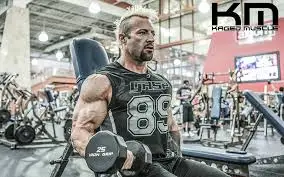
Kris Gethin is one of the world's foremost experts on natural bodybuilding with a focus on overall health...
Kris Gethin is an internationally renown business man, celebrity trainer, and physique transformation specialist.
Though he is known as a bodybuilder, Kris emphasizes functionality and overall health. Despite his muscular frame, he’s run ultra-marathons, spartan races, and competed in endurance events.
Kris’s philosophy is to take care of the inside as much as the outside and in this conversation we get into some hacks for gut health, brain health, and physical transformation. Beyond that, we also talk a good bit about Kris’s business ventures.
To learn more about Kris, head over to https://krisgethin.com/
Transcript
Machine-generated from the episode audio and lightly edited — may contain errors.
Chris Albert (link to this point)
The Warrior Soul podcast is written, edited, and produced by me, Albert. Our mission is to provide tools, tactics, strategies, and ideas that help The US military veteran community to show up as the wisest, strongest, most capable versions of themselves in the civilian world. If you're not a veteran, stick around because anything we talk about will most certainly apply to you as well. This podcast is made possible with the help of F Bomb Nutrition. They make delicious packets of fats that you can carry around anywhere with you in little portable packets.
They make macadamia nut butters. They mix them up with chocolate. They mix them up with sea salt. They mix them up with coconut butter. They're absolutely delicious, and they're really good for you.
They don't have any sugar. They also make a lot of cheese snacks. They make meat sticks, and it's just a great company. These guys send packages of this stuff to the troops who are on the front lines overseas to supplement their MREs, and we didn't ask them to do that. They just did that on their own initiative.
Really great company. If you wanna get 20% off your first order of f bombs, head over to www.dropanfbomb.com and use the code Warrior Soul at checkout. This podcast is also brought to you with the help of Save the Brave. Savethebrave.org is a five zero one c three charity for veterans. They run camaraderie events that include fishing, golfing.
They also do a lot of work with gold star families. And unlike a lot of other organizations, their board doesn't take a salary. Really great organization that is doing amazing work. So go and check them out at savethebrave.org. With that, thank you guys so much.
Let's get into today's programming.
This is Chris Albert, and I'm here to remind you of one thing. Someday, you're going to die. Now that's not some morbid statement or scary idea. It's solid fact. Your time here on this earth is limited.
And we need to be reminded of this as much as possible for one simple reason, to live your best life while you can. This is the Warrior Soul podcast.
What is going on everybody? I have a really excellent conversation for you today. It's with mister Kris Gethin. Kris is a fitness model, a natural bodybuilder, and he is somebody who has really brought talk of overall health and functionality to the bodybuilding game. I was a bodybuilder for a long time.
I trained bodybuilders. I worked with bodybuilders. And what I can tell you is that Kris is one of the most knowledgeable people in the fitness business. He he does he's not just about muscle. He's somebody who's looking out for people, trying to give the best advice possible so that you can be as healthy as possible on the inside and look as good as possible on the outside.
And that's something that I respect a whole lot because I'll tell you, there's a lot of bodybuilders out there that do some pretty unhealthy things. But we had an excellent conversation here. We talked a good bit about gut health, a good bit about longevity, a good bit about taking care of yourself. Those of you out there who spent time in the military putting that wear and tear on your body and on your brain, you know, there's a cost to pay for all that. And if you're not looking out for your overall health, well, then when we talk about longevity, and when I talk about longevity, I'm not just talking about living a long time, I mean enjoying yourself, being fully functional, having a brain that's completely online.
That stuff is so important. So you guys are gonna get a whole lot out of this conversation. Make sure you pull out your pens and pieces of paper because there's a lot of information here. So with that, let's get into this conversation with mister Kris Gethin and on the Warrior Soul podcast. Can't talk today, guys.
Let's get into it. Kris Gethin, welcome to the Warrior Soul podcast, man.
Kris Gethin (link to this point)
Thank you very much for having me. I really appreciate it, and thank you very much for putting up with me being on the treadmill desk here while talking to you.
Chris Albert (link to this point)
It's all good. That's the thing to do. I'm sitting down, I'm doing the unhealthy thing right now and you were moving about. Why is that important, Kris? Why have a treadmill desk in the first place?
Kris Gethin (link to this point)
Yeah. Well, I I believe in low level activity. Know, a a longevity is my game that I want to live a healthy life until, you know, a 100 years or older. And, you know, if I look at a lot of the blue zones, they participate in some form of low level activity. They're not necessarily just go to the gym or competing in some type of event.
So I kind of try to mimic what they do to a certain degree and have like a hybrid relation to what we do today. And that is kind of work out and do things that may not be healthy for us based on our environment. So I do whatever I can to counteract and I try to do some form of movements after food as well, which I've just eaten, because it brings my blood sugar levels down pretty darn quick, so that's another reason.
Chris Albert (link to this point)
Yeah, that's awesome. You know, one thing I tried to do is after every meal, I'll go for a fifteen minute walk just to level out those blood sugar levels and I've got a I've got a good friend who's a triathlete. His name is Mike Ergo. And one of the things he does at work is he uses the treadmill desk to warm up. And he'll he'll be on it for, fifteen minutes, and then he'll get it off, and that way he doesn't have to do a warm up or anything like that when he's going out for his runs, and he could use his lunch hour to get his workout in.
Kris Gethin (link to this point)
Yeah. That's smart. That is very smart. You know? Like, this treadmill desk only goes to about two miles an hour, so it isn't that much of a warmup, but it's a steady pace because I have to be able to type whilst I'm at my computer as well.
If it's any faster than that, it'd probably be as bad as my handwriting.
Chris Albert (link to this point)
Yeah. Well, I wanna wanna just let the audience know a little bit about who you are. You're you're a natural bodybuilder. You you worked with bodybuilding.com. You are a businessman, a a quite accomplished businessman.
And one thing about you as as a natural bodybuilder, I mean, we all know bodybuilding can kinda walk the line between, I guess, you could say fitness and being extraordinarily unhealthy. And I've I've been in that world before, but you are very good about taking care of your health and very good about putting advice out there, sound advice for people to remain healthy as they're pursuing bodybuilding and also remaining very functional.
Kris Gethin (link to this point)
Yeah, yeah, for sure. So, you know, I like to participate in things that could be potentially unhealthy. So, you you mentioned about your friend who's a triathlete, so I've competed in Ironman Triathlon, ultramarathon, bodybuilding, which can all be potentially unhealthy if you do take it to the extreme. So I try to look at it with a hybrid approach of how can I counteract the possible negatives with positives? Because I do want to live a very long, healthy life.
However, I want to kick ass while I'm there doing it as well. I want adventure. I want to seek that pain threshold and see what I'm made of. And in doing so, I've just found ways of kind of negating the negative effects of it. So with natural bodybuilding, obviously, competing completely natural for many, many years, obviously I'm not going to be anywhere near as big as the people that are in the untested federations, but I'm good with that because I'm able to go, you know what?
I'm going to go for a 12 mile run today in the hills, or go for an 80 mile bike ride, or go snowboarding, or participate in a Spartan or obstacle course race, and I can do so. And it makes me feel really good that I can be versatile like that, and that's what I try to promote to a lot of the people that follow me and my clients. Shouldn't just be an ornament that's upon a mantelpiece, and you shouldn't sit on your butt all day and just consume the calories and store them thinking that you're going to wither away if you do some form of cardio. I've done cardio every day, probably twice a day, for the past thirty odd years, you know, and it's just always been a part of me. And there's a lot of people that thought whilst I was a bodybuilder that you shouldn't do any form of cardio unless you're prepping for a show, and I thought that was wrong.
I actually felt better. I felt that I recovered better, getting the nutrients around my body, the blood flow, the oxygen to the brain. So I thought, why wouldn't I want to feel better and possibly recover better? So I've always encouraged that, and I just took it to quite the extreme by participating in these endurance events.
Chris Albert (link to this point)
Yeah, I think as far as things go, I mean, I agree with you a 100%, and the thing about cardio and getting out there and getting your heart rate up, there's something that does for your mind. Mean, it releases so many happy chemicals and our bodies, they're veritable pharmacies that we tap into to make us feel better, to put us in better moods, to make our brains work better. And I think that if you're able to do that, and you're able to keep that level of activity up, it can help you so much as far as everything else you do. Right?
Kris Gethin (link to this point)
Yeah. There's no doubt about it. Like, I'll admit, naturally, maybe it's genetically, I don't know, maybe it's from my father's side, I'm not the happiest person in the world. I'm not the calmest person in the world. I can be edgy.
I can have a temper. You know, I can have I I I deal with anxiety or used to, not as much now at all. And so I have to work at it. There's some people that are just always happy. They're cracking jokes.
They're just funny people to be around or very calming and chilled. I'm not one of those people, so doing some form of cardio every single day, especially first thing in the morning and again in the afternoon is my therapy. That's my AA batteries in the morning. I feel better. I have more confidence.
I'm a better person to be around and including myself, I'm happier with myself. So it's just a part of me. Just like some people need to work harder to read a book than other people, they'll just read a book a day. It's different for every individual. So I think for the people that are dealing with some sort of stress, anxiety, problems with energy, fatigue, then it's a necessity.
Chris Albert (link to this point)
Yeah, and one thing I wanna mention here, because you mentioned this at the beginning of the last topic you brought up is that, you know, a lot of these sports we look at in in not just bodybuilding, but but triathlon and endurance sports and and, you know, even Spartan racing and some of these other things can be extraordinarily unhealthy. And a lot of people don't realize this, know, back in the 90s, particularly if you read Ben Greenfield's Beyond Training book, you learn that back in the 90s, triathletes were dropping like flies from heart problems, from cardiac arrest, all types of different issues. And it was because of total body chronic inflammation. And the reason I bring this up is because the audience, you know, we're talking to right now consists of a lot of combat veterans from the United States Marine Corps or United States Army. And there's actually a lot of active duty military people who who listen to this this podcast as well.
And, you know, the typical military workouts we hear about are, you know, they go out, they do a lot of long, steady endurance runs. And then when they're out in the field, I mean, it's a lot of lot of punishing work. And then very little sleep, not the best nutrition in the world. So inflammation becomes a problem. Right?
And then if you add to that, you know, maybe sustaining a traumatic brain injury while you're in theater, that can make things a whole lot worse as far as inflammation goes. And, you know, what I want to talk to you about now is, you know, there's all these different modalities out there now to deal with total body chronic inflammation. And if you do these punishing sports, there's ways of doing them so that you can actually remain healthy and you can actually perform at a high level and not sustain some of the things we've seen so many different athletes sustain over the years, right?
Kris Gethin (link to this point)
Yeah, there's no doubt about it. So, you know, I've actually worked with a lot of military personnel, and I've always been surprised when they have their blood reports done how low their testosterone is because, you know, here you have these butch guys that are really disciplined, they're militant, but their testosterone levels are very low, and you've just made the perfect mention to lacking in sleep, overtraining, inflammation. Maybe they're not on the best diets in the world, dependent on where they are, So all this leads to low testosterone levels, which can lead to the early onset of aging, as we know. So you have to look at these things, especially if you're an active individual, whether you're an ultramarathoner or a triathlete or bodybuilder, you're going to eat more meals than the general population. So every time you do so, that signals what we know as the mTOR pathway, which isn't good for aging.
Then we have to counteract and look, okay, maybe it's a non training day for us out on the field or in the gym, so maybe that's an opportunity for us to fast. But we should always be looking at our gut health. Our gut, as you know, can lead to a lot of onset of inflammation, systemic inflammation. Acute inflammation is obviously very good, that hormetic response. But when we have the systemic inflammation going on within our gut the entire time, that can lead to a chemical response in our body.
And then our cortisol levels are constantly raised, which isn't going to be good for our health. So we have to, you know, I always get my clients to prioritize their health, especially their gut microbiome, because the inflammation that we deal with as active individuals there is unsurpassed, not only from the activity that we're doing, but from the foods that we're consuming with the frequency that we're consuming it.
Chris Albert (link to this point)
Yeah, it's amazing because almost everything goes back to gut health, right? Almost everything goes back to gut health. And, you know, if you're having issues with digestion, that could lead to issues with the brain, it could lead to issues with aches and pains around the body, it could lead to issues with performance, could lead to low insulin sensitivity and potentially go into pre diabetes and it could lead to heart disease and cancer and a whole host of different things. And it's just amazing to me how much we're learning about gut health, how important gut bacteria is. And and, you know, it's if you take care of that, it could lead to, you know, just just so much to be opened up for you in terms of health.
But if you neglect it, and I've been the victim of this with autoimmune disease and ulcerative colitis, you know, it can literally destroy you.
Kris Gethin (link to this point)
Yeah, there's no doubt about it. Like I used to refer and a lot of doctors did and still do refer to the gut as being the second brain. I refer to it as being the first brain because based on experience and being diagnosed with mold toxicity back in 2014, I went to Dr. Sponaugle's clinic in Oldsmar, Florida for six weeks to get fixed because I've exhausted every other avenue and possibility of fixing myself. I was sleeping like three hours a night on average.
I wasn't a good person to be around. I was that entrepreneur that was burning a candle at both ends and then tapping myself on the back for having a Warrior workout at the end of it. And, it it definitely wasn't good. So, you know, through that detoxification process and looking at the, all the scans that I had on my brain, on my gut, the stool samples, urine samples, saliva, blood, absolutely everything, it was the gut that we prioritized because that's where your hormones are affected and we're more gut bacteria than we are DNA. So that's why I refer to it as being the primary brain because ever since then, mentally I've changed.
I don't have the niggling injuries and inflammation that I had in my elbows, in my knees. I don't have the bloating, which gave me the brain fog because like I said, that inflammation can lead to a chemical reaction in the brain. That's when I thought, wow, this is where my brain is at because as soon as I started taking care and fixing that issue, everything else just fell into place. Know, if I look at the content, because I author books as well, I look at some of the books that I wrote during that time, I think, wow, who wrote that? You know, it's somebody completely different that I've separated myself from in a positive way since.
Chris Albert (link to this point)
And what steps did you take to take care of your gut health? What are some of the things these guys can do out there, whether they're in the barracks right now or whether they're stuck at home in COVID-nineteen quarantine?
Kris Gethin (link to this point)
Yeah, so it all depends what you have available too. Obviously, I try to prioritize humane raised, grass fed, wild caught, organic whenever possible, and then further from that, even though I'm on a carnivore diet experimenting at the moment, eat the rainbow. Eat as many good colors of prebiotic fiber with your meals and then look at your probiotics, sauerkraut, your fermented foods, your kimchi, your goat's kefir. Try to stay away from a lot of the dairies out there, especially that have high lactose. Remove sugars from your diet.
Eliminate it altogether. I don't care if you're an endurance athlete. You don't need a lot of the high fructose corn syrup and the artificial colors and flavors that are out there in these energy drinks. Try to stay as close to nature as you possibly can. And maybe look at a good probiotic supplement that I'm not affiliated or paid by these guys to say anything.
They do support the podcast. But the one that I found that really works is a company called BiOptimizers. They've got a good probiotic and if you have digestive issues, there's an enzyme as well. There's digestive enzymes that you can take that help break down the food because if you're an active individual, and you're moving all the time and you require the blood in your limbs, you're not going to have the blood in your stomach to help break down the food, so a good digestive enzyme can really help in that regard as well. But you just want to try to eat as close to nature as you possibly can and try to stay away from a lot of the sodas, energy drinks and stuff like that that's out on the market, but good prebiotic and good probiotic foods whenever possible.
If you have issues digesting certain foods, such as a quinoa because we regard that as being healthy, then you may want to look at soaking and sprouting a lot of these foods as well. And like I said, a good goat's kefir I find every day and you know, maybe some apple cider vinegar on some of your salads.
Chris Albert (link to this point)
Yeah, with the extra time I've had at home right now, I've been soaking a lot of foods, soaking a lot lot of quinoa, I've been soaking a bunch of grains and sprouting them, and then I've also been brewing my own kombucha.
Kris Gethin (link to this point)
Ah, perfect. Yeah. That's good. So I I like kombucha, and this is one of the things that really annoyed me. I absolutely love kombucha actually, but sometimes I'll wear a twenty four hour blood glucose monitor, actually I wear two of them to compare them both, and I just found that I had a huge spike with a kombucha, so making it yourself is probably a good idea so you can control how much sugar's in there.
Chris Albert (link to this point)
Yeah. It takes a lot of sugar to create the fermentation and you can't drink much of it, otherwise, yeah, you're going to be dealing with a sugar spike. One other thing I want to bring up here is that in the military, and actually it's gonna be a couple things. So number one, in the military, it's it's a joke that if you break a leg, if you if you lose an arm, they're gonna give you two motrin. Right? But but that's based in reality in that whenever whenever somebody's sick, it always involves giving them an NSAID. You know?
And and one of the things that I I've done a lot of research in on is is the idea that NSAIDs can be extremely horrible for gut health and extremely horrible for your body. What's your take on that?
Kris Gethin (link to this point)
Yeah, totally agree. So, you know, I had shoulder surgery about a year and a half ago. I didn't take any of the NSAIDs that they prescribed to me. I was working out with Laird Hamilton, the big wave surfer, just some months ago and he had hip replacements and he said the same thing, there's no way I was going to take the NSAIDs that was prescribed because it can totally screw up your gut microbiome for months and months and months later, can permanently as well. So I always stay away from the NSAIDs and look at different forms of modalities that can help with repair, reconstruction, inflammation.
You've got to look at natural herbs such as your turmeric. Obviously, isn't going to be a huge pain reliever, but it's something that can help with the inflammation. There's other sort of devices. If you've got a bone break, you can use something like a pulsed electronic magnetic field therapy, PEMF, that could potentially help with the healing. I went as far as using earthing devices.
I have earthing mats, I have earthing bedsheets, but you can actually have earthing pads that can work on the areas of inflammation or of damage as well. I've gone a couple of steps further than that since I've traveled overseas to have stem cells. There's obviously peptides that are out there like BPC 157 with TB 500 that has been shown to not only help with the repair of that injury and the damage that you've encountered, but it can potentially help with the gut health as well. So you could have a double edge of a positive sore day with that, but obviously you'd have to look and speak to a doctor to get that prescribed, but it's definitely something that I get some of my clients to look into because, you know, I'm dealing with people with injuries all the time.
Chris Albert (link to this point)
Yeah. I've been hearing a lot about BPC one hundred fifty seven, particularly in the midst of what's going on right now with COVID nineteen.
Kris Gethin (link to this point)
Yeah, so it's been shown to have some effects for the immunity as well. I don't use it for immune building itself. I'll look at different things, so I'll probably take about sixty supplements a day, but like this weekend I'll be going to have my glutathione IV, I have glutathione suppositories, I'll be having Vitamin C IV as well, so there's other things that I do specifically for immune health.
Chris Albert (link to this point)
And then you mentioned apple cider vinegar. One thing I see people do a whole lot and I was down in a for my day job, I was down at a warehouse in Florida a few weeks ago, and I saw this guy popping antacids like like they were candy, like, just chewing them down. And, you know, what's your take on that?
Kris Gethin (link to this point)
Anti acids, did you say?
Chris Albert (link to this point)
Yep. Yep.
Kris Gethin (link to this point)
Like drugs. Yeah. So he he probably need to stay away from that and look at the causing issue because that's gonna be just a Band Aid to the issue that he currently has, but I have no idea what his diet would have been. Maybe he's eating food, drinking bad, you know, sorts of hydration or dehydration, depending on what it is, that's having that effect. So I'd always look at the cause, but I wouldn't be fixing it with something like antacids probably.
Chris Albert (link to this point)
Yeah, yeah. A lot of times it's a lack of stomach acid that'll cause GERD or heartburn, right?
Kris Gethin (link to this point)
Yeah, yeah, exactly. So you'd obviously need to bring up that acidity. Maybe the water that he's drinking isn't good, So I always try to get my clients to have a reverse osmosis system put into their kitchen, you know, something like that will cost under a thousand bucks. And then you can actually have a remineralizing cartridge added to that, which is still very cheap. So, you know, that sometimes the the issue can be in the in the drinking water itself.
Chris Albert (link to this point)
Gotcha.
Kris Gethin (link to this point)
Gotcha.
Chris Albert (link to this point)
So another aspect of you is is that you are a a businessman, and, you know, you you've got your own gyms. I've been a gym owner in the past before. I know it's not an easy business to be in. What what what's going on as far as business goes for for COVID nineteen? How are you weathering in the storm?
Kris Gethin (link to this point)
Yeah. It's a tough storm. You know? Thankfully, I've got my finger in a few pies, But, you know, as a gym owner, it's tough. And I've actually gone out there and put some social posts and videos and lives asking people to support their local gym, you know, not just mine, because a lot of people, you know, canceling their membership.
Even though some memberships are frozen, you know, they're they're canceling because they're like, gotta save money. I I've gotta knuckle down, or I just don't need that right now. But if they can afford it, to support that gym because that is something that we will need when we come out of this because we have to build our immune health, we have to remove ourselves of the toxins into our lymph through activity. People need it for their mental health as well but if these gyms start closing down left, right, and center, you know, it could be a pandemic in itself. So all of my gyms are in India.
I got a franchise over there, and they closed down got closing in on four weeks now, and it's been tough. We're paying our staff, like, 50% of their previous wage, you know, so they're at least having something to get by, you know, but if this continues for much longer, you know, I I I don't I I'd dread to think where that's gonna lead. But like I said, fortunately, I've got other businesses that are doing okay during this time. I work from home anyway that can help support that and support myself at the moment, but it's it's very, very tough for the gym owners. I know a lot of gym owners around the world, and they're dealing with a lot of stress at the moment.
There's a local gym here, for instance, that has decided to rent out all their equipment, all their weights, their EZ bars. So I've gone and supported them and rented some myself and put them in my garage downstairs and then put the word out. And since then, you know, he's rented out a lot of stuff just to try to make ends meet.
Chris Albert (link to this point)
Yeah. I've seen that. I saw Dan Crenshaw actually rented a barbell from his local CrossFit gym, and then there there's a few different gyms out there that are doing that, and, you know, my heart is I'm still paying because I go to a jiu-jitsu gym out here and I'm still paying for that regardless of whether I'm going or not because I wanna see my jiu-jitsu school survive this whole thing.
Kris Gethin (link to this point)
Yeah. Good on you. Good on you. Yeah. We do whatever we can to support the local community, obviously, with the respect of our health and other people's health.
I try to encourage people, of course, we've got to respect social distancing, but social distance yourself from fast food restaurants and bad food and alcohol. It's funny, I actually put out a post on my socials about a week and a half ago saying, why are all the fast food places essential? They're packed. But, you know, I got a lot of hates because people say, well, there's a lot of people out there that are unemployed. They don't have much money.
They have nowhere to go other than a McDonald's. And I thought, well, these people definitely need need to get creative with shopping at the supermarket because you can do it very, very cheap and cooking at home because guess what? They've closed them all down in Europe. Like in The UK, there are no fast food restaurants like McDonald's that are open. So there's a lot of unemployment there.
If The UK can do it, then why can't The US?
Chris Albert (link to this point)
Right. Right. And, you know, it amazes me because, I mean, if if you look at what what's open, what's not, a lot of the a lot of, you know, small time restaurants, they're suffering big time. And and what's crazy about economics is how people retreat to unhealthy practices. And, you know, I grew up with my grandfather, he survived the Great Depression.
And one of the things he always taught me was that you you wanna try to eat at home. I have a my family's Italian, and he said, no matter what, you can survive as long as you as long as you know how to cook, and you know how to utilize ingredients, and you know how to make stretch them, and you know how to procure food. And he'd be out there, he'd fish, he'd hunt, he'd garden and things like that. But it seems right now, we're on the opposite. We're so dependent on that quick meal, on that quick fix that that we just go for it.
Kris Gethin (link to this point)
Yeah. Exactly. Yeah. I I totally agree with you, grandfather. You think about it before that, like, the dust bowl, everybody had a a garden.
Everybody was growing their own vegetables and and herbs. And then after the war, that just left. It's out of fashion now. I've got my own garden, I've got my herbs, I've got my own chickens here. I don't know why a lot of people don't do that a lot more because it's hard, it's difficult.
They don't think of the sacrifice, they just want the convenience of the success of going to the supermarket. However, they've got to be cognizant that even though, okay, it's not fast food, but is it full of antibiotics that's going to have problems with your guts? Is it full of glyphosate? Where is that fish coming from? Is it farmed or is it wild caught?
Because if it's farmed, it's going be full of omega-six pro inflammatory oils. So there's a lot of things that we've got to look at. And I tell you what you can control if you do have a garden, then you can control a lot of this, maybe not entirely the source of, you know, from your proteins to your vegetables, but you can have some type of control. And you can get a lot of good bacteria from the soil and gardening as well, so why not?
Chris Albert (link to this point)
Right. Right. You know, one thing I wanna bring up here too is, you know, the way the fitness industry, I think, has gone because you know, I admire you a lot. You're you're 45 you're around 45 years old. Right, Kris?
Kris Gethin (link to this point)
That's correct. 46 this
Chris Albert (link to this point)
You look great. You're moving well. You're able to be functional. You're you're you're talking about overall health. But I feel like, you know, for a time, the fitness industry was centered around these kind of short term goals.
Like, okay, I wanna get six pack abs or I wanna have a five hundred pound squat or I I wanna have 25 biceps, that kind of thing. And and I feel like with those types of goals, when people make that the center of their fitness journeys, what essentially happens is when bad times happen with the rest of their lives, those goals go out the window because they're nice to haves. They're they're they're they're luxuries. Right? But I feel like we have to switch our mindset, and we have to see fitness as as more of an opportunity for freedom, more of an opportunity to do the things that we wanna do with our lives.
And and I feel like fitness should make you better in everything you do, whether whether it's, you know, business, whether it's being a father, whether it's being a husband, whether it's it's you know, whatever you do, it should make you better at it. And and I feel for a time we got away from that. Do you see the fitness industry taking a different direction after this whole crisis and maybe getting back to overall health?
Kris Gethin (link to this point)
Who knows, Chris? You know, we can only hope so. I think, you know, one of the major issues that we're dealing with is, you know, social platforms such as Instagram. Now we have TikTok where people see other people, whether it be like a Bradley Martin, you know, lifting ungodly amounts of weight, or we've got Ulisses with the amazing six pack abs, and we want it right now. You know, we're not willing to put in the sacrifice.
We just want the success. And, you know, where fitness or bodybuilding or any type of sport should be a chapter in your book. Unfortunately, people see it as their entire book. But if what happens if they get injured? What happens as they get a little bit older and they cannot lift that ungodly amount of weights, you know, and and they've placed all their eggs in that basket where that is their purpose, and they lose that purpose, they're gonna be dealing with a lot of issues after.
You know, I was having a conversation with IFBB pro Guy Cisternino the other day about Dexter Jackson, you know, he's been competing for so many years. Now at 50 years old, he's gonna be retiring. You know? What's that gonna look like for him where his purpose has been solely bodybuilding? Bodybuilding entirely.
You know? He's a very laid back, chilled out character, so maybe it won't affect him that much, but there's a lot of people out there that it does affect because they put everything into that basket. But like you so rightfully said, it should be the flag bearer with so many other entities in your life. Like, I've always bodybuilded because it makes me feel better because I had major back problems from racing motocross for many years. So it aligned my back better.
So I was alleviated of the pain, I was alleviated of the depression that went with it because I wasn't able to move or work out or be active. And by getting the blood flow to my body, into my brain like I'm talking to you now, I'm able to retain content, which I didn't before. I sucked at school. I failed at everything at school and I hated school. But when I started working out and being active, I started to retain content, I thought, wow, I feel smart enough, so I'm going to go to college, which I did for several years and succeeded.
So, you know, it should be a tool, but it's just your pivotal foot and you should be able to use that pivotal foot then to dab your other foot into so many other areas of your life where you will have a transcendence effect.
Chris Albert (link to this point)
Yeah, you know, one of the things you said there, and it just flashed me back because when I moved out to California for I I was in school, and that's why I moved out. But when I got into the fitness slash bodybuilding industry through the gym, you know, one of the things that that really came up is that there were the the set of guys that I absolutely admired. And I always had this dream of, like, moving out to Venice Beach and and training at Gold's and doing all these things and being around these my idols, so to speak. And one of the things about what you see on social media and what you see in the magazines, it's not always the case in real life. And I've met some great people, some wonderful people in the industry, but I've also met some people that, you know, they it it really didn't add up to the image.
And what I wanna emphasize for people at home is that, you know, perception is not always reality. And some of the things you see out there on social media, it's just not the case in real life. And and I've seen everything from, you know, bodybuilders who who were so broke that they were they were doing ungodly things to to get by to to, you know, just just really horrible human beings at the time and things like that.
Kris Gethin (link to this point)
Yeah, I've experienced it as well. I lived in Venice, California for several years. I was working as a writer for Flex Magazine for some years, and I saw what bodybuilders got up to, there's no doubt about it, and unfortunately, you know, that's just the name of the game that people will deal with because they fail to look deep inside to see what their lifeline art is. Instead, they see this vanity project or facade that they're trying to live up to, especially like you said now with social networks, and a lot of it can be fake. Know?
People will hire the cars to make it look like they're flash, and they're an entrepreneur, and you can buy a program from them that will get you that car, much like when we used to look at the old before and after pictures in the ads of magazines with a supplement, and we'd associate that supplement with that transformation. Well, that's not actually true. Know, there's assistance there for sure, but you've got to put in the work. And it's the same with everything that we see today. You know, if you want that car, you want the materialistic possession, it's going to have to come from the sacrifice at the end of the day.
You may have to work 10 x harder than the person who actually does or does not have that car that you see on the social platform. We just cannot compare ourselves, and unfortunately, that's what everyone does today. It's a comparative generation, I guess, and it's just getting worse the more that we are exposed to it through social media, and people become addicted to it because studies have shown that it can release serotonin or these endorphins when you do scroll, And so when you get the artificial lights, the blue lights, and that dopamine fix of scrolling at the same time, it becomes an addiction and people just become, I guess, hollowed by it because they're not able to live up to other people's facade that they're putting online.
Chris Albert (link to this point)
Yeah. Yeah. And that's one thing. I mean, I try to keep my phone as far away from me as possible most of the day. I'll schedule times to look at it, and then after a certain point in the day, I'm sticking the blue light glasses on my face to try to keep that stuff out of my eyes.
Kris Gethin (link to this point)
Yes, smart move. I do the exact same thing. I don't have any alerts on my phone whatsoever except for my WhatsApp. That's my emergency, and I do a lot of my business internationally with the WhatsApp. But otherwise, I don't have any distraction.
I won't even take calls from my family during the day, because this is the time that I've got to progress and get work done because I like to relax in the evening, you know, for a good two hours before bed. If I want to go to bed not wired but tired, then I have to switch off, and the only way I can do that is through absolute efficiency during the day. So I won't be scrolling, I won't be commenting, I won't be liking, I won't have any distraction, I will get it done. Like you said, I'll have the blue light blocking glasses on for a good couple of hours before bed to make sure that I'm not taking in a lot of this artificial exposure. And, you know, I have the phone on airplane mode or I at least have like a DefenderShield case on it so I'm not getting blasted by the EMFs throughout the day, you know, because some of us are sensitive little petals and we've got to control our environment.
Chris Albert (link to this point)
Absolutely. I'm a sensitive little petal. I'm I'm not scared to say that.
Kris Gethin (link to this point)
Yeah. Well, that's two of us, buddy. See, and we're manly men.
Chris Albert (link to this point)
Yes. Absolutely. One more thing I wanna bring up here because and and training wise, you know, I was a big I was a massive fan of the Ronnie Coleman videos back in the day. I was, you know, watching him train front squatting ungodly amounts of weight, dead lifting ungodly amounts of weight. And then, you know, I I've seen Ronnie in person in recent years racked with injuries and and and things like that.
You you have remained, you know, very mobile. You you you your joints seem to be working really well. I was watching a a video of you split squatting a human being in your garage the other day, getting a home workout in. You know? What's the difference there?
I mean, it the weight that Ronnie was doing that has put him in this situation? Was it the training? Was it the nutrition? What's happened there?
Kris Gethin (link to this point)
I think I don't think it was a training style because like if we look at Dorian Yates, his training was textbook. However, you know, he dealt with bicep tear, tricep tear, quad tear, two rotator cuff surgeries, you know, So I don't think it's a training style, everybody. I think it's just the amount of weight pushing yourself, you know, year after year. There's only so many clicks of the pen that you get. And unfortunately, Ronnie had a very bad and unsuccessful first surgery, which led to more surgeries, which just led to so many more complications.
It was just very unfortunate that that first surgery just went completely pear shaped. For myself, I used to train much like the Dorian style of training, the HIT style of training, but it just didn't work with my structure. I've got my mother's structure, but my father's strength, and they don't go well together at all. So that's when I just started doing a lot more volume, a lot more of intensity with the shorter rest periods. And you know what?
Physically, I changed as well. I looked better for it, so that's the kind of training style that I adapted. And, you know, like I said, I've hacked my system. You know, I eat I don't just look at food as a calorie. I just think about the information that calorie provides.
And ever since I changed the way that I eat, making sure that everything is sourced correctly, a lot of the inflammation just naturally went away. A lot of the issues went away. I started focusing more on my sleep quality, so my recovery was better. Like other things, like I said, I had the stem cells, which obviously helped as well, which I'll probably do every several years moving forward, and I'm just a little bit smarter the way that I train. I don't push anything to the absolute extreme anymore.
I don't, you know, nothing that leads to overtraining. I guess I always prioritize my recovery because I know that's gonna dictate my performance.
Chris Albert (link to this point)
Nice. Nice. And another thing, I know you're an avid reader. What have you been reading lately?
Kris Gethin (link to this point)
Let me see. What is the latest book? This is the thing with me. I have to read like three books at a time because I find that if I read one book, I've got like ADD and I'll get bored pretty quick. I've constantly got at least three books by my bedside.
So I've got Boundless, which would probably take me another year to read. It's so big. You know, I like to read when I'm in the bath. I like to read when I'm traveling. I'm not traveling at the moment, but there's no way I'd be able to take that book on a plane anyway.
It's so big. By Ben Greenfield, and I am reading what else am I reading right now at the moment? It's seven habits. Seven habits of a tough something, I can't remember. Another one I'm reading is Elite Mind and that's by Justin Stenstrom.
Chris Albert (link to this point)
Oh yeah, he's a great guy. I've had him on a few times and went through the book. That's a great book too.
Kris Gethin (link to this point)
Right, got it, yeah. And I'm reading Dr. Joseph Mercola's latest book as well on like EMF and 5G. I forget the name of the title of the book, but that's the latest book that I just picked up and I'm reading at the moment as well. I'm sorry, I'm terrible at remembering a lot of the titles here, but I can remember the authors and Dr. Stephen Gundry as well is another book that I'm reading as well. Read his I remember the other previous one that I read, The Longevity Paradox, and I'm just reading his latest book, whatever title that is too.
Chris Albert (link to this point)
Yeah. I'm the same way. I I literally have stacks of books next to my desk, and then, you know, I'll read, like, two or three or four at a time. And right now, I'm going through The Rise of Teddy Roosevelt. I'm reading On Writing by Stephen King.
I read a bit of Montaigne every day, and I read a bit of Emerson every day.
Kris Gethin (link to this point)
Right. Okay.
Chris Albert (link to this point)
That's cool.
Kris Gethin (link to this point)
That's quite the backlog that you got there.
Chris Albert (link to this point)
I like to jump around like you. You know, if I find there's an opportunity cost if you're sticking with one book, you know, for a long period of time. Lately, I've been into biographies, just just reading about human beings who've done awesome things in the past.
Kris Gethin (link to this point)
Are you into any, like, sporting biographies as well or not?
Chris Albert (link to this point)
No. I haven't been I haven't been into those. I've been so in the past, since 2020, I've read Lincoln, which is a biography that's by by Donald. I read Titan, which is a biography by Ron Chernow. It's about John D.
Rockefeller, which is that you'd be really interested in that because Rockefeller was actually really into homeopathic medicine, but he was there's no other person on this planet who was more responsible for the decline of homeopathic medicine because he's he basically started the the medical establishment through his endowments. And it's really interesting toward the end of the book how he did that.
Kris Gethin (link to this point)
Interesting. Right. Okay. So because like there's some biographies that I've read that I was surprised that I really enjoyed them that much. And one of them was Andre Agassi's book because it was phenomenal how much these guys punish themselves physically.
It's unbelievable, absolutely unbelievable. And he hated tennis, but he was so success he's so good at it that, obviously, he continued to be a success at it, but but he absolutely hated it. I just remembered a book that I'm reading right now, actually, and, it's called 177 Mental Toughness Secrets of the World Class. Steve Siebold. I had to look at my Amazon account to see what was the name of it.
Yeah. So that's one that I'm reading right now as well, which is very good. And the other one that I read recently, and this was suggested to me by Ben Greenfield when I was with him recently, is Forbidden Healing. Forbidden Healing. That's a very, very good book as well.
Chris Albert (link to this point)
Awesome. Awesome. And the one one sporting biography that I did read that I think, you know, goes into a lot of the subject matter we talked about today as far as, like, business is Total Recall by Arnold Schwarzenegger. Because a lot of people think Arnold just showed up on Venice Beach and people started handing him stuff and things like that. But the guy was running businesses and and he made money before he ever ever made it in bodybuilding or acting.
Kris Gethin (link to this point)
Yeah. Yeah. That's right. That is a very good book. Haven't read that for years, actually, but I remember that is a very good book that everybody should read even if you're not into bodybuilding.
Chris Albert (link to this point)
Right. Right. Exactly. Exactly. Well, Kris, number one, I wanna I wanna acknowledge you.
I I I love the work you're doing. I love the knowledge you're spreading out there in the world. And, you know, I wanna thank you for for coming on and spending the time with us today. I I I know it's crazy times and all of us are are up to different things, but, you know, it's it's a real pleasure to talk with you.
Kris Gethin (link to this point)
No, it's my absolute honor. Thank you ever so much for having me on the show. Really, really appreciate it.
Chris Albert (link to this point)
And where can people find you?
Kris Gethin (link to this point)
Best place is probably come to find me on my Instagram. It's spelled, my name is spelled Kris, k r i s, Gethin, g e t h i n, and you can find, you know, find me there, everything else that I do is kind of centrally focused from the Instagram.
Chris Albert (link to this point)
Outstanding. Yeah. I love your Instagram page too. There there's some motivating stuff up there.
Kris Gethin (link to this point)
Thank you very much. Yeah. I just try to put content out there that I wish somebody had put out for me, but there's no such thing as the Internet back then when I was growing up in Wales.
Chris Albert (link to this point)
Yeah. That's what it's about, man. I mean, you know, back in the nineties, we didn't have much to grow off of as far as anything goes, whether it was bodybuilding, business or anything like that. You either got books from the library or you got series of cassette tapes and things like that.
Kris Gethin (link to this point)
Yeah, that's it. That magazines, but now, you know, we have this access to us, so, you know, it's worth taking advantage of it in a good way to, you know, share the positivity and be a crowd source of inspiration.
Chris Albert (link to this point)
Exactly. Exactly. Well, awesome, Kris. To everybody out there, you know, pay attention to some of the stuff we said today. I mean, if you are in your twenties right now, you are you have a huge bank account of health in front of you, and it's easy to squander that health just like it's easy to squander money.
So, you know, rather than than doing all the things that we talked about as being bad, like going out and and jumping on on some fast food in between your your your crazy workouts and and your long hikes and things like that. And rather than just drinking beer every night in the barracks or or drinking beer in front of your TV, you know, think about how this stuff is gonna add up to affect you when you're in your forties and your fifties and your sixties. And and you wanna think about how you're gonna live your life. Because I promise you, it doesn't matter how old you get. If you're sick, you're sick.
If you're immobile, you're immobile. And it's like being in a prison, that's your own body. So, you know, pay attention to some of this stuff, take action on it, and we'll be back at you next week with some more awesome content. And again, Kris, thank you so much.
Kris Gethin (link to this point)
No. Thank you, sir. Have yourself a great day.
Chris Albert (link to this point)
Alright. And this is Chris and Kris, and we are out. Alright, guys. I hope that you enjoyed that conversation with mister Kris Gethin. I really enjoy his content.
I really enjoy his philosophy. I think he is one of the best minds in the business, and he's also a really good businessman. So I hope you guys learned a whole lot from this conversation. Again, guys, I just wanna emphasize this. I don't care if you ever spend a dime with Warrior Soul.
I don't care if you ever buy a t shirt. I don't care if you ever do anything with us, but I do care if you share these episodes out. We're here three times a week trying to provide the best content that we can for you. And when I say we, it's just me. I don't mean to talk in the plural or anything like that.
Like, I'm any bigger than what I am. We're I'm here each week, three times a week, trying to provide this content for you. And, you know, I'm really just here to spread the word because once again, I believe that veterans are the sleeping giant in this country. And that when we wake up, this country is gonna be put on such a better track. And we're already waking up.
There's so many of you out there already doing great work, and I just wanna get more people involved. So if you can, please share this episode out. Please head over to iTunes, write us a written rating and review, and, you know, you can find the rest of our amazing content up at the Warrior Soul Agoge. That's up at www.warriorsoulagoge.com. If you wanna check out our private mastermind group, the Warrior's Obituary Society, check that out at www.warriorobituarysociety.com, and that's that.
Hope you guys are doing well. I'll be back at you soon with some more awesome content. And this is Chris, and I am out.
Host of the Warrior Soul Podcast and founder of Warrior Soul. Worldwide trainer and nutrition coach, contributing author at Testosterone Nation and Muscle and Strength.