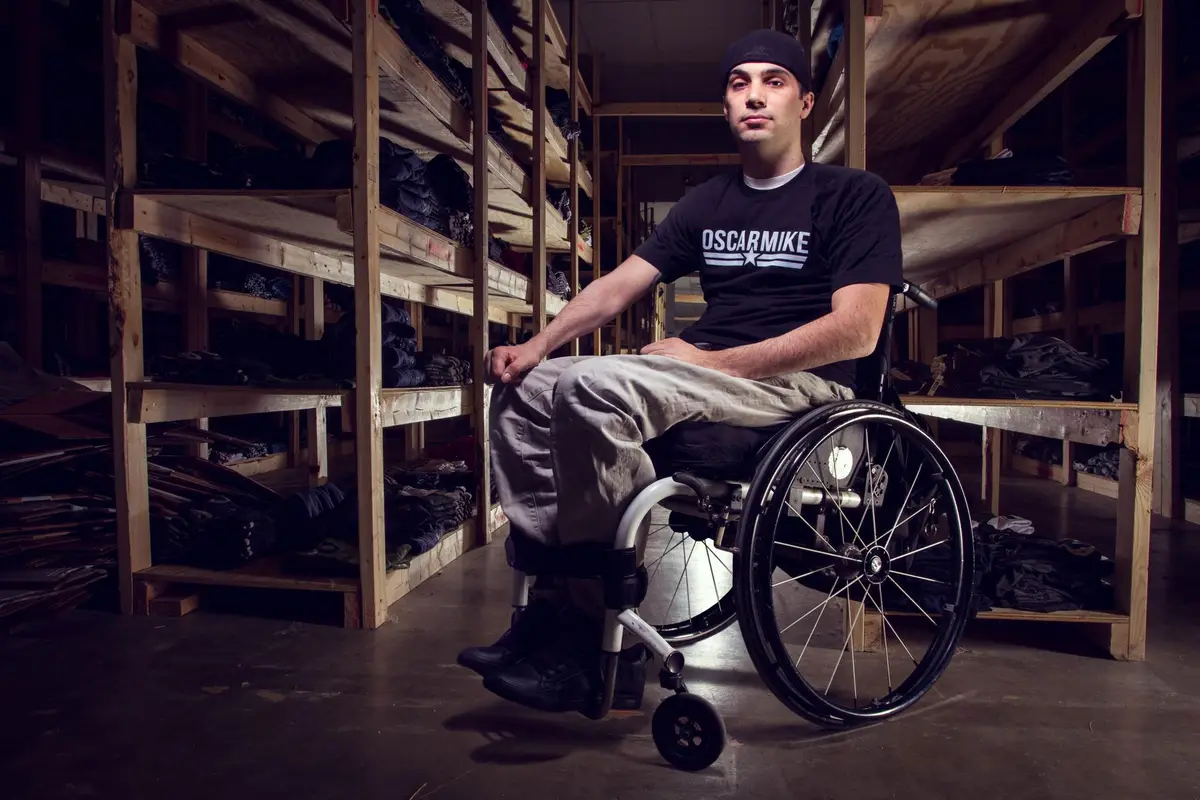
Noah Currier is a Marine Corps Veteran and the creator of Oscar Mike, a charity and clothing brand that encourages wounded veterans to stay active.
Noah Currier is a Marine Corps Veteran and the founder and creator of Oscar Mike, a charity and clothing brand that stands for “On the Move.” Noah’s story of tragedy and triumph is one of the most heart wrenching yet inspirational stories I’ve covered on this podcast.
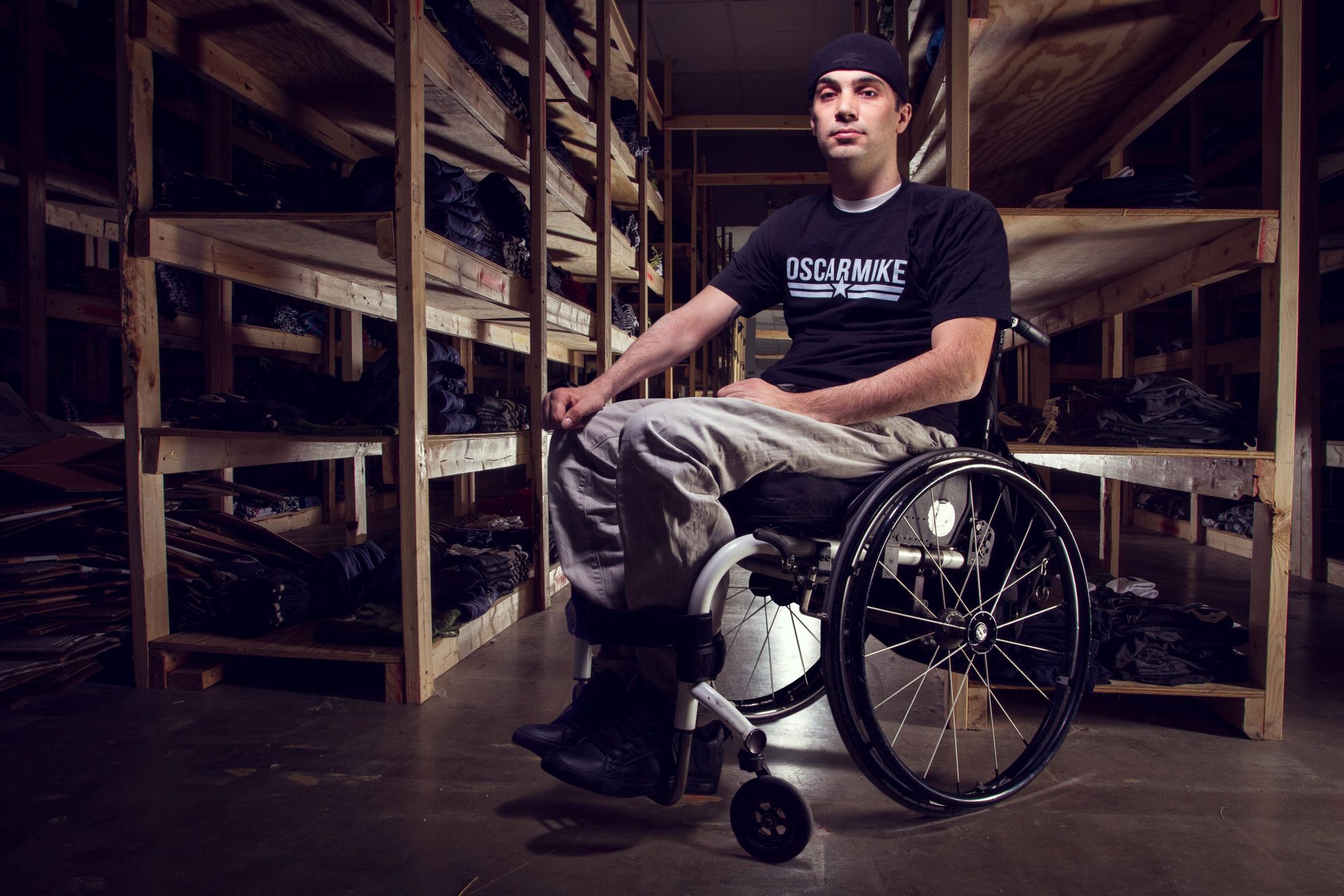
Three days after coming back from a deployment, Noah was in a car accident that left him paralyzed. Three months after that tragic event, his fiance was killed in another car accident.
Noah was left broken in body and spirit, and he almost ended it, but chose not to because of his mother. As he recovered, he created the idea for Oscar Mike, a charity that helps wounded veterans to stay active. To reduce the overhead costs of the charity, Noah created Oscar Mike the clothing brand.
Today, Oscar Mike is a massive success as both a charity and as a business.
In this interview Noah and I discuss:
- how Noah overcame the tragic events of his past
- how he came up with the idea for Oscar Mike
- the difficulties of starting and maintaining a business
- what he’s doing to stay active
- how his life has changed since beginning Oscar Mike
- where he’s taking Oscar Mike in the future
To learn more about Noah and Oscar Mike, head over to www.oscarmike.org.
Transcript
Machine-generated from the episode audio and lightly edited — may contain errors.
Chris Albert (link to this point)
The Warrior Soul podcast is written, edited, and produced by me, Albert. Our mission is to provide tools, tactics, strategies, and ideas that help The US military veteran community to show up as the wisest, strongest, most capable versions of themselves in the civilian world. If you're not a veteran, stick around because anything we talk about will most certainly apply to you as well. This podcast is made possible with the help of f bomb nutrition. They make delicious packets of fats that you can carry around anywhere with you in little portable packets.
They make macadamia nut butters. They mix them up with chocolate. They mix them up with sea salt. They mix them up with coconut butter. They're absolutely delicious, and they're really good for you.
They don't have any sugar. They also make a lot of cheese snacks. They make meat sticks, and it's just a great company. These guys send packages of this stuff to the troops who are on the front lines overseas to supplement their MREs, and we didn't ask them to do that. They just did that on their own initiative.
Really great company. If you wanna get 20% off your first order of f bombs, head over to www.dropanfbomb.com and use the code Warrior Soul at checkout. This podcast is also brought to you with the help of Save the Brave. Savethebrave.org is a five zero one c three charity for veterans. They run camaraderie events that include fishing, golfing.
They also do a lot of work with gold star families. And unlike a lot of other organizations, their board doesn't take a salary. Really great organization that is doing amazing work. So go and check them out at savethebrave.org. With that, thank you guys so much.
Let's get into today's programming.
This is Chris Albert, and I'm here to remind you of one thing. Someday, you're going to die. Now that's not some morbid statement or scary idea. It's solid fact. Your time here on this earth is limited.
And we need to be reminded of this as much as possible for one simple reason, to live your best life while you can. This is the Warrior Soul podcast.
You know, at some point every single one of us is going to suffer. Are well, none of us are immune to tragedy, to hardship, to difficult times, to obstacles. And we all have a choice when that happens. We can either allow the tragedy, the hardship, the obstacles to break us or we can use those obstacles to make us stronger. My guest today is no stranger to obstacles.
Three days after coming back from a deployment he got into a really bad car accident and became a quadriplegic. And then three months after that just as he was settling into his new life as a quadriplegic, his fiancee got into a fatal car accident and passed away. His name is Noah Currier. He's a US Marine Corps veteran and he is the creator of Oscar Mike. Oscar Mike is both a clothing brand and a five zero one c three charity.
And if you're familiar with the term Oscar Mike means on the move. And Noah is one of the most inspirational people I've met on this show. One of the most inspirational people I've had the pleasure of speaking to. I can't imagine what it must have been like, not just to experience that tragic injury, but to experience that tragedy as well in the aftermath. And speaking to him, know, I think put a lot of things in perspective for me and I hope that hearing the conversation puts a whole lot in perspective for you.
And I hope you enjoy this episode. Hope you get a whole lot out of it. I I don't have many announcements. All I gotta say guys is that if you like this podcast, if you've been enjoying it, please subscribe. Please share these episodes out.
And if you can, please write us a review. My goal is to get this podcast into the ears of as many veterans as possible, and I need your help to do that. So please do so. And with that, let's get into this conversation with mister Noah Currier, US Marine Corps veteran and creator of Oscar Mike. Noah, welcome to the Warrior Soul podcast, man.
Noah Currier (link to this point)
Hey. Thanks for having me on, Chris.
Chris Albert (link to this point)
Happy to have you here, brother. You're out in Illinois dealing with the freezing cold and the snow right now. Right?
Noah Currier (link to this point)
Yeah. Yeah. It's not fun.
Chris Albert (link to this point)
It's all good, man. At least we are in The United States and loving life right now, right?
Noah Currier (link to this point)
Amen to that, brother.
Chris Albert (link to this point)
Absolutely. Well, I'm sure most of my audience knows exactly who you are, but could you give us just like a quick three minute summary of who you are, where you come from, and what you're doing right now.
Noah Currier (link to this point)
Yeah. My name's Noah Currier. Grew up in a small town called Poplar Grove, Illinois, a little farm town and was a marine from 2000 to 2004. Was in the invasion of Iraq. I was with first light armored reconnaissance battalion and was hurt three days after I got home from the invasion when guy fell asleep at the wheel.
Another marine broke my neck in the accident. Went through a long period of, you know, like trying to figure out what the rest of my life would look like. It was a pretty, pretty dark six years, seven years, and and eventually found adaptive sports and started re you know, like, redefining my mission, I guess. And, you know, I I started an organization called Oscar Mike. Oscar Mike means on the move and radio jargon, and I just want other people to be able to to kind of find what I found and adaptive sports is is the key to, you know, figuring out what you're still capable of after your injury.
Chris Albert (link to this point)
Wow, man. And so literally, you know, three days after you come back from from that experience, you're you're thrust into this situation. When when let's talk a little bit about life before that. What what what was life like for you then? What made you decide to join the Marine Corps?
Noah Currier (link to this point)
Well, you know, my my dad who adopted me when I was five years old, he was a marine back in the early seventies. I think he joined in '72 and he didn't really talk much about it, but at the same time, just knowing that he was a Marine, I was always super proud of that and excited to become one. So I, you know, I knew I wanted to be a marine as far back as probably fifth or sixth grade. And yeah. I mean, I guess he's probably responsible for it.
Either that or Gunny Hartman in Full Metal Jacket because I watched that about a billion times.
Chris Albert (link to this point)
He got everybody, man. He got everybody. I watched that too. And the thing is, what what what's crazy about it is, like, it's not it's not a, like, pleasant story about the Marine Corps either. Right?
Noah Currier (link to this point)
No. But, you know, you really got a sense of their the the hardship that they show in there and then how they make a marine. And I think we all kind of put him up on a pedestal. That's what a marine corps drill instructor is like. And and that's the kind of man you want to break you down and build you back up.
And, you know, you wanna test yourself to to the max and that's the the form to do it.
Chris Albert (link to this point)
Yeah. It's him and Animal Mother, I think, are the two characters out of that that whole thing that that everybody loves. Right?
Noah Currier (link to this point)
Yeah. I mean, Joker's pretty great too, and I think every single platoon and every unit in the marine corps has one of him. You know what's funny about those movies, like Full Metal Jacket, is every single character in that movie is in every platoon in the Marine Corps.
Chris Albert (link to this point)
Yep. Yep. You know what's funny? I had I had Dale Dye on, and Dale Dye was friends with the author of that of that book, the original book.
And supposedly, Animal Mother is a little bit of Dale Dye, and what's it called? Also Joker has some elements of Dale Dye in him too. And and he was a like, Dale's for those of you who don't know him, he's a consultant on Hollywood movies. Like, he's consulted on on Band of Brothers and Saving Private Ryan and all those. He he's one of the guys responsible for making sure that Hollywood movies get get more accurate.
But he's he's got such a crazy personality when you talk to him. He's a real interesting dude.
Noah Currier (link to this point)
And wasn't Gunny Ermey? Well, I mean, he was an actual gunnery sergeant and drill instructor who was just there as a consultant and ended up taking on the role because he was If I could imagine how it all played out, he's sitting there correcting every single thing that happened and eventually they were just like, You know what? We want you to play the character.
Chris Albert (link to this point)
Yeah, the legend is that he got so frustrated with what was going on, he started going on there to show people how to act like a general instructor, and he had people throwing tennis balls at him while he was holding his bearing and and doing the whole thing.
Noah Currier (link to this point)
Okay. Yeah. I haven't heard that story, but that doesn't surprise me one bit.
Chris Albert (link to this point)
Yeah, man. That's such a great movie. And he was in I think he was in a couple of other ones too. I mean, I think he was a drill instructor in Boys at Company C or or and he was in the siege of Firebase Gloria, which is another great movie that not a lot of people have seen.
Noah Currier (link to this point)
You know, what's hilarious is seeing him in Saving Silverman.
Chris Albert (link to this point)
Saving what he he played like a didn't he play like a a gay coach or something like that in that?
Noah Currier (link to this point)
His character was so funny in that. And to see him go from, you know, like, all the other roles that he played to that, it was pretty hilarious.
Chris Albert (link to this point)
Yeah. Oh, man. That's awesome. So so you're watching Full Metal Jacket. You came through.
You got through boot camp going into the marine corps, going into the fleet. So you went in in 2000. That's just before September 11. Right?
Noah Currier (link to this point)
Yep. Yeah. I was about a year in a year in some change. Just finished doing a mountain structures course and well, it was actually September 11 happened while my unit was at Mount Town doing our our week long thing there. And yeah.
I just I remember that morning like it was yesterday, and I was just kicking some sleeping bags, giving everybody their, like, fifteen minute warning you know, reveille. And next thing know, this this Jeep is flying down the road. Yep. You know, the guy was yelling a bunch of crazy stuff. When he got up, we realized it was our first sergeant.
He's telling us to get inside and turn on the radios. And we did, and, you know, we're listening to scene unfold. And we went back to our barracks immediately and then we all flipped on our TVs and saw what was going on and started packing our stuff up.
Chris Albert (link to this point)
Wow. That's that's pretty insane. So He you
Noah Currier (link to this point)
were was telling you know, he was adamant. We're going to war. You know? Get your stuff ready. And Yeah. You know, he was just crusty old first sergeant who at the time, I think we all thought he was crazy and that that's not the way things happen, but he was right.
Chris Albert (link to this point)
I think we all had a we had a a pretty similar experience there. I mean, it was kind of the same thing with us as far as everything goes. We were getting alerts. We're like, you gotta you gotta get ready. Everybody's like, lock and load.
And then it was a lot of like hurry up and wait.
Noah Currier (link to this point)
Yeah. Exactly. We and then, you know, we went on got on the ships and I guess we were part of the the thirteenth MEU. And we just sat out there in the Indian Ocean hoping that we were gonna do something the entire time, seven and a half months of just waiting. And and we called it Operation Enduring Boredom because nobody really got to do anything until after that deployment.
Chris Albert (link to this point)
Yeah. And and that is my experience in the Marine Corps for for the most part. It's a lot of waiting and feeling like you're in the midst of this massive column that is doing things at some somewhere, but you are just a cog in the wheel and you're gonna sit there and you're gonna wait until it's your time.
Noah Currier (link to this point)
Yeah. Yeah. You know, I mean, until the invasion of Iraq, that's definitely the way I felt. Even floating over there before the invasion, none of us really thought it was gonna happen, you know, especially because our previous deployment, the last seven and a half months prior, it was just like, you know, just sitting around waiting and then nothing really happening, at least for our unit. And then the invasion of Iraq, I think none of us really thought that it was going to actually happen until about 02:00 in the morning on March 19.
You know what's crazy about all that too? If you don't mind me sharing something that just happened recently. Was at a friend of mine was graduating from the FBI Academy and I went down and watched the graduation. And after the ceremony, we were going in this room while we were waiting before we could start getting tours from our friends that graduated. And I'm sitting there and my dad was there with me and he looks over at me and he's like, Hey, is that General Kelly right there?
And I look over and I'm like, Holy shit, that's General Kelly sitting right there. And in civilian clothes, sitting at a table right next to me. We're just eating cheese cubes and waiting for the next thing to start. And then there's this marine amputee, single leg amputee who had just graduated too. And he introduced me to him and it was unbelievable.
I mean, I just sat there having a conversation with General Kelly that was so candid. And he he right away asked what unit I was in and when. And when I told him first LAR from 2000 to 2004 and I was in the invasion, he would he you know, it immediately reconnected and he started telling me about all the the decisions that he was making that were affecting my unit, you know, and hear that from the general's perspective, you know, and then how he he remembered, you know, very specific times where he would say, I remember I needed you guys to do this and that. And then from my perspective, I was telling him how it was affecting us. And I'm like, man, didn't know that you were the person that made that call.
But when you did, we spent the next forty eight hours going up and down the river looking for a spot to cross and, you know, this is what happened. This is how it all unfolded. And I mean, I wish I could have sat there with them for hours talking about it, but I only had about twenty minutes.
Chris Albert (link to this point)
It's interesting when you get around someone like that who has had so much authority, and what you start to realize is that their authority in large part is in their their ability to relate to other humans and to communicate because a lot of these guys, they have crazy memories. Like they're able to remember things like that, they're able to pull details out like that and it's it's really a talent that a lot of these higher up guys have.
Noah Currier (link to this point)
Yeah. And yeah. The the relation that they have, you know, the or care that they have for for others, you know, like some of them like General Mattis. I mean, that's what he's famous for.
Chris Albert (link to this point)
Right. Right. Exactly. Exactly. I had I had General Mattis' co author on Call Sign Chaos on here, Bing West, and, you know, he was talking about that, just that ability to to to relate to other human beings, to see things that other people don't, and to, you know, just just have that power of recall.
I mean, that's something I wanna work on like crazy too. And and, you know, you you're in a position now where where you're leading a lot of people. Right?
Noah Currier (link to this point)
Yeah. I mean, I I don't really view it that way, but but yeah. I mean, I'm in it with them. I'm participating in everything side by side with everyone. So, you know, I I guess you can call
Chris Albert (link to this point)
That's leadership, brother.
Noah Currier (link to this point)
What's that?
Chris Albert (link to this point)
Well, that's leadership. You know?
Noah Currier (link to this point)
Yeah.
Chris Albert (link to this point)
So tell tell me a little bit about Oscar Mike, how it came about because I know you had your accent. You said you had a a dark six years. Right?
Noah Currier (link to this point)
Yeah. Well, what so I just gotten back from the invasion. I was doing fine mentally. Felt like, you know, and I I don't think any of the effects of any of that kind of stuff even start to creep in for a while, You know, and usually it's it's after the transition out. But then I went from the invasion to being paralyzed to right when I got home from the hospital.
I've been with a girl for seven and a half years at that time and she fell asleep at the wheel on her way home to my house after work one night and she died in the accident. So it was just, you know, like that destroyed me. I felt like I was doing alright with mentally from the war. I was doing alright mentally from my accident. But when she passed, I just it it was the last straw. I I broke and and I broke hard.
Chris Albert (link to this point)
Holy crap, man. That how long after your accident did that happen?
Noah Currier (link to this point)
It was within a couple months of me getting home from the hospital out of rehab. So it was it was really fast.
Chris Albert (link to this point)
And, you know, I mean, I I couldn't imagine being in a situation like that where my significant other is somebody who I loved was was just taken from me in a time when I was at my most peak of vulnerability. What types of things did you do to recover from that?
Noah Currier (link to this point)
Well, I didn't really want to. You know? I think the the suicidal tendencies were were at their max. Did, you know, I I didn't want to reach out to anybody for help. I didn't want anybody's help.
I just had no desire to to continue on. You know, my my my purpose, my passion, my love, everything was gone. And so was my physical ability, you know. But before we started the podcast, you know, when we were talk you were telling me about jiu-jitsu and being sore and, you know, was telling you how much I miss jiu-jitsu because that was a big piece of of me prior to my accident. You know, my always just testing myself physically kind of, you know, turning my my body and mind into a sharp weapon, you know, was was what I what I really enjoyed doing.
And then that was all taken from me. Felt like, you know, now I've I figured out that it didn't have to to end there, you know, and I'm I'm glad that it didn't. And, you know, I think the only reason that I didn't end up following through even though I wanted to every day and was sleeping with my rifle, basically just talk trying to to get myself to pull the trigger. My mom was I was staying at my parents' house and my room was right down the hall from them And I just didn't want my mom to to find me like that because she was already you know, she if you could imagine, I I can only imagine what it's like being a mother and having to spend twenty four hours a day awake watching the news to see a glimpse of of your son's unit and the worry that comes along with that. And and then having to watch me go through rehab and barely surviving an accident to being a quadriplegic and paralyzed from the neck down to watching your son lose the love of his life.
And she was having a really hard time with all of it and you could just see it, how it affected her. So I didn't end up I never pulled the trigger and every day I would kind of be angry with her without her knowing the reason why I was angry. But I was like, this is all your fault that I can't pull this trigger. And, you know, in the end, it ended up being a blessing because now I get to do what I do and, you know, and and I wouldn't change it for the world now.
Chris Albert (link to this point)
Was was there a specific thing that kinda made the switch in your head that that kinda pulled you out of it, or was it just kinda like a gradual thing that that, you know, you woke up every day and it became a little bit easier to deal with?
Noah Currier (link to this point)
Now a friend of mine showed up unexpected at my house one day and just, you know, my I had some the the area of my room, they they remodeled the a two car garage into, like, a little studio apartment for me. And my friend just showed up unannounced, walks right in the door and he saw me sitting at the edge of my bed with my rifle and I quick put it down and just pushed the pillow over it. He it was already too late. He saw me and he basically, you know, pretended like like nothing had happened there and just talked to me like a friend normally would, or said all the same things that he normally would, except he told me that I should go to, this event, this skiing event for for people with disabilities. And it was coming up real, real soon.
So he signed me up or helped me sign up for it. And, you know, then I had this thing that I had to wait for, you know, to come around the corner and I went with him. At first, I definitely resisted. He had tried to get me to go the year prior too and I didn't go. I thought, man, I'm a quadriplegic, skiing is not going to happen.
And then I eventually agreed to it and I went and I was sitting there at the top of a mountain and I talk about this all the time. And I just say something clicked in that moment because I felt I felt like alive. I felt fear. I didn't know what the outcome was going to be when I started going down this mountain. I thought I was going to break everything I had left.
But that that fear and adrenaline that I had gave me something that I hadn't felt in a really long time. And and I quickly became addicted. I mean, I do have a a pretty addictive personality and you know, I got hooked on on that basically and and life again. I signed up for school almost immediately after that. I went skydiving right after that.
I signed up for the National Veteran Wheelchair Games. I started competing in things and the trajectory just changed, like, immediately.
Chris Albert (link to this point)
With there's something, I think, about seeing the world and how small you are in the world that that I think creates switches like that. Like like being on top of a mountain and seeing how that thing could kill you and and or being out in the middle of the ocean, for example, that that just kinda snaps you back to the present. And it kinda helps you to put your problems into perspective. Right?
Noah Currier (link to this point)
Right. Oh, I totally agree.
Chris Albert (link to this point)
Yeah. That's like I don't know. I think that that's one thing. Because the more we we stay in because I I work from home. Right? This is like a little tiny room. I live in a little tiny house in California on like the edge of the desert.
And I find like, if I don't get out of this room and I don't go out there into the world and I don't see the world, then the self talk, the story up in here, that starts to to take over a little bit. Right? The the story in your brain. And it really is a story you start to tell yourself, and that story starts to become more and more real the the more you you indulge it. And I think it's important for all of us to to get out there and get out of our heads at some point and and get into something else.
Noah Currier (link to this point)
Yeah. You know, the other thing that that one of the things that I I wanted to do, you know, when you're in the Marine Corps or any branch of the service and you're doing something really shitty or really hard, always make it through it. And the reason that you do is because you got all these guys and girls together, your left and right, that are going through it too. And I think it's often referred to as the suck and how do you make it through? You're looking around, you got all these people that are not only supporting you, but they're also not giving up and they're not giving up because you're there.
You're not giving up because they're there. So same thing with trying to figure out life after your disability. Wouldn't it be easier if you had a bunch of people who could relate that have chewed the same dirt as you to be to your left and right? And I use people all the time for that. My mind is always channeling all these people that I've met now, probably thousands that are living with disabilities who have had to endure and overcome.
Chris Albert (link to this point)
Sure. Absolutely. Absolutely. When so you got into adaptive sports. When when did the idea for Oscar Mike come about?
Noah Currier (link to this point)
Pretty quickly after. I mean, I I think I started thinking about it back in, like, two thousand nine ish, but then I shared it with a bunch of other people in, like, 2010 or '11. And in 2011, we built a ghetto website and turned my two car garage into an office and warehouse and launched it on Veterans Day eleven eleven eleven. We didn't have a clue what we were doing either. I mean, half the time, I still feel like I don't have a clue what I'm doing, but I mean it, man.
Been doing it for eight years now. In some days, I feel like I have a doctorate in it, and in other days, I feel like I don't have a clue.
Chris Albert (link to this point)
That's entrepreneurship, man. Mean, like, you know, when I I always tell people when I started this podcast, I literally woke up one day and decided I wanted to start a podcast and I watched a couple of YouTube videos about how to do it and, like, didn't have a microphone, didn't have anything. I I was literally, like, put a couple of pillows around my computer to try to improve the audio, and I was, like, speaking directly into the computer. And so my first, like, 10 episodes really suck, and my first website sucked, and everything sucked. But there's something about just starting something.
Right? There's something about just just diving in and and getting going even though you don't know everything you need to know because you're gonna learn as you do it. Right?
Noah Currier (link to this point)
Right. Yeah. I mean, heck that that's how we learn most things in life. And the the thing that even though I didn't know anything about what I was doing and because I didn't really have a whole lot of help in the beginning, I think it shaped how we're able to do what we do now. You know, I I had to design things in the beginning, so I had to learn how to use design software.
I had to learn how to make a website. I had to learn, you know, like how to do all the paperwork and the bookkeeping and, you know, like all of that stuff. And had I not done each of those things myself, you know, when you go to hire somebody, how do you know what the expectations should be? How do you know the time requirements? How do you know, you know, like all of these things, you know, unless you did them yourself at one point.
Exactly.
Chris Albert (link to this point)
And and that's the thing. Like, I think so many people are in such a rush to to make everything perfect, to to to get things going, but you got to do those little things. You got to go through that that period of mastery before you're gonna be able to have the skills necessary to move forward and to lead people. Right? And and that's that concept that comes in again is if you're gonna be able to bring people on your team, you gotta know.
You gotta know what what the quirks are in your bookkeeping. You gotta know what the quirks are in the design. You gotta have a feel and a vision for for where you wanna bring the brand to. You know, particularly with something like clothing because, there's a look and feel to everything that that you need to convey. Right?
Yep.
Noah Currier (link to this point)
Yeah. No. I agree a 100%. I mean, the vision with us has always been to like, to to push people to to get them active or on the move. And Oscar Mike and I feel like that messaging, you know, it's it's not it probably wasn't the the the easiest to grow an apparel brand with that kind of messaging.
You know, if you're starting from scratch and you're really trying to do that, I mean, something like that has probably been done a million times and by people with a lot more money to dump into the marketing and and all that, you know, but then I didn't want to design shirts or apparel with like silly slogans on them or or, you know, all the the off color stuff or just use humor to sell shirts probably because I'm not that funny of a guy either and I didn't want to have to constantly try to to be funny all the time. Yeah. Even though I appreciate that stuff, it also isn't, you know, the kind of stuff that I was into or where I'm very, very basic. You know? I like simple stuff and, you know, I think that you can see that in a lot of our brand too.
I don't I don't like a lot of, like, flashy things.
Chris Albert (link to this point)
Now now from my understanding, Oscar Mike is really two organizations. Right? There's there's the business and then there's a five zero one c three charity. Right?
Noah Currier (link to this point)
Yep. Exactly.
Chris Albert (link to this point)
And then one of the genius things that that you set up there is that your business helps to fund the five zero one c three. Right?
Noah Currier (link to this point)
Right. So, you know, in the beginning and it's not like that was a a big master plan from the beginning. In the beginning, me and my buddies just said, we've asked an attorney, a friend of ours, if he could help us file five zero one c three and get it going. He said, yeah. But it might take eighteen to twenty four months before you get the approval.
So we just asked him to file for an LLC on the same day because that could be done, you know, literally the same day. And we did. And, you know, we started selling some shirts, I mean, you know, a handful of them. And we just figured that that would be a good way to to start the momentum, get the word out there, get people, like, wearing the mission across their chest. You know, it's almost like asking people to carry a sign around except people get dressed every day and, you know, it's it's easier than walking around with a sign saying, you know, support this thing.
So eighteen months later, we got the five zero one c three. And at that point, you know, we had already had a bunch of designs and it was at a really interesting time because there there were a couple big charities that were being scrutinized and publicly for how they were spending their money. People that don't really know anything about business or large nonprofits We're really beating them up, especially on the Internet over where they spent money. And we just figured, you know, if we could absorb a bunch of overhead with the with the apparel company and a lot of the little tasks that a nonprofit that's growing would usually have to pay for, then our our ratio would be a lot better. So basically, you're going to donate a dollar to the nonprofit, if you have this apparel company that's just helping absorb all the overhead as a separate entity, then your dollar can actually go to programs.
Chris Albert (link to this point)
No. That's genius, man. That's a that's a genius model as far as things go. And yeah, man, I remember that because, you know, you got certain charities out there that that are doing great work. And and honestly, even the ones that are catching a lot of criticism are doing work.
Right? They're they're they're putting they're putting awareness out there. They're they're creating events and things like that. But, you know, a lot of people take issue with executives and five zero one c three charities making $500,000 a year, even though they might be providing tons and tons of value, you know. I mean, it depends, but it's about where your dollars are going.
It's good to know that if somebody donates to your five zero one c three, that dollar is gonna go to actual programs that are actually gonna reach veterans.
Noah Currier (link to this point)
Yeah. And, you know, I've definitely since since I've gotten into it and since I've learned a lot more about charities and business over the last eight years, I think when I first heard all that stuff, I was really put off by it all too. I couldn't believe what I was hearing and some of the executive compensation that was happening in the charity space. And then as I learned more and I realized what it takes, if you were to ask me, it's funny if somebody says, you're the CEO of Oscar Mike. Right? I don't really consider myself a chief executive officer, but because I feel like, you know, that that's just such a business title that has to get earned by working your way up a corporate ladder and I never did that.
I just started something. I don't think that automatically makes you a chief executive officer even though you could give yourself that title. So I think of myself as like, alright, today, if you told me, hey, Wounded Warrior Project needs a new CEO. Would you like to be it? And I think I would really have to take a step back and be like, man, that's a $400,000,000 a year organization with a lot of that's an enormous organization that would be extremely hard to run.
And you need top c level talent for that. And in order to do that, you know, those the people that you're going to put in those positions need to be compensated that way because, you know, if the CEO of Wounded Warrior Project I think when he got in trouble, was making somewhere around like $400. And you think about what they're bringing in in revenue and how big of an operation that was. And people were so upset about it. It's you know, if I if I was him, I imagine, you know, catching all that flack and then just being like, okay, so I could leave here today and I could go into the private sector or the for profit sector and I could be paid 10 times what I'm making right now.
Chris Albert (link to this point)
Right.
Noah Currier (link to this point)
You know, to do the same job. But I basically am making 10% of what I could be making to help veterans. So, you know, like I almost started feeling bad at that point. Like, man, I don't know what the answer is because how can you get top c level talent to run operations of that magnitude without compensating them fairly?
Chris Albert (link to this point)
Yeah. You know, in in something in some ways, I think that I wish that our education system required everybody to try to start a business for a little bit because I think that people just have such a misunderstanding of what it takes. Right? Whether it's a five zero one c three, whether it's an LLC, whether it's it's whatever you're doing, I think that people just have such a misunderstanding about what it takes to to run an organization like that. And, you know, it's it's not just in the charity world.
I mean, people have problems with with CEOs of Fortune 500 companies making the salaries that they make. And I just think that people don't understand that those individuals, they're responsible for so much. And and not just the the people within their organization, but their shareholders. And a lot of people have a problem with the stock market. But if the stock market goes down, that's not just a bunch of rich bankers that go down.
That's grandmothers with pensions. Right? That's that that's people's retirement funds, and everybody has an IRA, a four zero one k, or something like that. And I think that if people had a better understanding of how finance works, of how business works, we'd see maybe a little bit different of an attitude in this country about those types of things.
Noah Currier (link to this point)
Definitely. And I also think about how hard it would be to start something on your own. I was very fortunate because I get disability and I had something to sustain myself. But I think about it being a startup that didn't have a dollar to your name, but you had a vision and a dream or a goal and and having to compensate yourself, you know, like, I've never had to take a paycheck, which means, hey, you know, like, that's that's money that gets to be retained in in the business and the nonprofit because I don't have to rely on that for an income. But I can't imagine what it would be like to start from scratch without a dollar and have to, you know, pay the mortgage and and put food on the table.
Chris Albert (link to this point)
No. Absolutely. I mean and you think about that. I mean, like, a guy like Jeff Bezos who who started Amazon in his garage. You know what I mean?
That's there's always a time at the beginning of any business, and I wanna ask you about this because you you mentioned starting in your garage where you don't know. Like you just you you're trying to figure out the bookkeeping, you're trying to figure out the marketing, you're trying to figure out the product, and you know, then you get a few sales. Right? And a little bit of profit comes in, but then it's like, okay, I got a few sales, but now I need to grow. And I need to figure out what I need to do to grow.
And I need to figure out what I need to do to get a team in here. What was that transition like for you going from the garage to saying and and having it be like a a small business with you and your buddy to saying, okay, we need to build this thing up and because that's a place where a lot of people fall off and a lot of people die and I've actually I've actually been in that situation before where I was about to grow and then I made some stupid decisions and then all of a sudden I'm like, back back to zero.
Noah Currier (link to this point)
Yeah. For me, was you know, I talked three guys three other guys in wheelchairs into helping me out getting it started in my garage. And they moved to out of state to where I live. And they basically said I talked him into I was like, I'll pay for a rent for you guys for six months. You know, if you'll if you'll come down and help me out.
And and they they agreed to it and they gave me six months of their time. And anyway, they they moved out to to Illinois and then let's see what happened. They at the end of their six months, they they all had to move back home and I was ready. I wanted to move us into a warehouse and an office space, you know, and I probably still had another six months or another year before I could make that happen. But when they all left, I just kind of went like, I don't know what I'm going to do now.
I don't have anybody's support. I mean, I still had them over the phone and computers, but I didn't have my my little unit in the garage to keep helping me out. And then then there was time once we had enough designs and we needed, like, real shelves instead of, you know, just some stuff we bought at Home Depot, it it was it was quite the transition time. I really had to to probably talk some some people into working too much for too little, you know, in the beginning when we moved to the warehouse. And I'm surprised that it all worked out the way it did.
Chris Albert (link to this point)
Man, that's I mean, when you talk about a a situation like that, that's like when you're you're getting out of the comfort zone and then you realize that this thing is turning into, like, this this something that that it's beyond you. Right? Because at first, it's you. It's your baby. And then it's no longer your baby.
It's it's it's your teams. It's the worlds. It's your audiences. Right?
Noah Currier (link to this point)
Yep. Yeah. No. No doubt. I mean, we have people that support us all over the place that have never heard of me, and that's fine with me.
You know? Their thing, and it's, you know, it's all about the mission. And, yeah, it definitely lives bigger than you.
Chris Albert (link to this point)
Hey, guys. I hope you're getting a lot out of this interview. You know, the Warrior Soul podcast is built with the mission to empower its listeners to live absolutely epic lives. And that's why we recently created a group called the Warrior's Obituary Society. This group is built to empower its members to live epic lives worthy of epic obituaries.
And it starts with an eight week development program. And with this development program, what you're gonna do is you're gonna outline a vision for your life. You're gonna get very specific about what you want. Because without that specificity, you don't know where you're going, and you don't know what you're doing. From there, we help our members to develop specific goals, objectives that they are going to push toward, and that their fellow members of the Warrior's Obituary Society are going to hold them accountable too.
From there, we're getting down into specifics. We're going to help you to develop and customize your own personal fitness and nutrition plan to help fuel your body and fuel your mind for the quest ahead. From there, we're going to work on your personal finances. We're going to help you to knock down debt, start saving money, create a plan so that you can start investing in your dreams. Then we're going to get into your business and career.
We're going to help you develop the skills that you need to develop yourself so that you can have a major impact in the field you choose. If you choose to go into business, we're going to help you to set up the foundations that you need to create your own company and get started on your path in life. From there, we're going to be working on your relationships, we're going to help you to develop a world class network, and all along the way, you're going to have your fellow members of the Warrior's Obituary Society pushing you in every single area. We meet once a week over a live call, and we're constantly communicating over our own private forum on Slack. We don't do anything over social media, and that's because I don't want anybody feeling like anyone's looking over their shoulders and I don't want you exposed to the crazy distracting alerts that you get on Facebook and some of the other social media platforms.
Normally programs like this cost thousands of dollars. This one does not. For the price, it is the best development program on the Internet. And that's because our mission here at Warrior Soul is to empower people to get more out of life so that they can in turn make the world a better place. We've got a great mix of active duty military, US military veterans and civilians in this group.
We wanted to keep it really eclectic so that we get a lot of different types of views up there and a lot of different people with different areas of expertise. If you think that this is something that would be of interest to you, and that this is something that could empower you to live your absolute best life, head over to www.warriorobituarysociety.com. That's www.warriorobituarysociety.com, and you can sign up today. And if you have any questions about it, just reach out to me at chris@warriorsoulagoge.com. That's chris@warriorsoulagoge.com.
I'm happy to even sit down with you for a phone call for a few minutes to see if the group is right for you. I look forward to seeing you guys in there, and let's get back to this awesome interview. So you're at a point right now where where you've had a lot of success. You've experienced a lot of growth. Where are you gonna take the brand?
What what are things gonna look like for you over, let's say, the next five years?
Noah Currier (link to this point)
Well, I mean, we don't have to grow that big. I've I don't have enormous dreams. I mean, it's not like we're ever trying to become an Under Armour or something like that. I just want to be able to just to be sustainable. You know, I think that I watch what happens to CEOs that that grow their business, you know, like to $100,000,000 plus levels, billion dollar levels.
And that's it's it's overwhelming. You become beholden to too many people when, you know and I already find myself spread a little thin with participating in all of our events for the nonprofit and showing up every day to work, you know, working seven days a week and and going to all the events where I want to be able to continue doing what I do. But, know, who knows? I really don't know what the future is and I have no real exit strategy yet. I just I just want things to be able to to be fun and comfortable and, have people, you know, being able to participate.
I I don't want to ever have to tell people no, when when they're reaching out for, like sponsorships or help with getting to an adaptive sport or being a part of our programs. So if I can get to the point where I never have to tell anybody no, you know, and it's not an overwhelming number to hit that. There's only so many veterans that are living with severe disabilities that are going to reach out and want to go through the programs every year. I feel like it's a very reachable goal and we'll get there eventually. It might take a few more years, but where I want us to be.
And if we grow bigger than that, we'll, you know, we'll figure out when the time comes. Right now, you know, it's still every day just trying to figure it out. We're not we're not there yet.
Chris Albert (link to this point)
That's a great attitude. And and and, you know, I think that there's this thing about, okay, are you planning for five years in the future and things like that. And like, I find that if I'm planning anything beyond a quarter, then then I'm I'm kind of just aloof to what the goal is. Right? And and so I try to stay really focused on the next ninety days and then replan every ninety days and and try to make sure I'm on track with my vision.
And I think that's so important for somebody like you who's experiencing that growth because you have to keep the vision front and center. You have to keep the mission front and center, and you can't lose track of that. Otherwise, you're going to lose the identity of the brand. You're gonna lose the identity of the company.
Noah Currier (link to this point)
Yeah. And, you know, I have every I I have a million spreadsheets open on my computer right now.
Chris Albert (link to this point)
Me too.
Noah Currier (link to this point)
Probably an exaggeration, but at least a 100 open right now. And I have every scenario, every type of you know, if it goes this direction, that direction, I have every amount of growth on there, you know, where what we could do at each level, how we can impact people at each level, and, you know, and and also for where we're at tomorrow.
Chris Albert (link to this point)
Yeah. Yeah. The the big thing there, I think, is that you've gotta create systems in order to keep your brain focused on on where you're going because and those systems have to because you can get it it's like it's just like on a battlefield. Right? You you can get so attached.
You get tunnel vision. You can you can pull yourself in the wrong direction based off of emotion. But you need to take a step back, and you need to take a helicopter view of everything. And and you need to to get yourself out of the trenches sometimes and you need systems like that in order to help you.
Noah Currier (link to this point)
I agree a 100%. I mean, I two, three years ago, I got to hire a chief of staff here. And then another year and a half later, I got to hire a chief operations officer. Once I got those two people on the team, I was able to do a lot more of what you just talked about. And really, I didn't have to worry about calling our manufacturers and doing all the day to day stuff. Wasn't watching the people in the warehouse fill orders. I wasn't having to talk to every single person that called on the phone, you know, all those different things as as we're able to put a person in each of those positions to kinda take that that off of my shoulders, I was definitely able to do a lot more of the the dreaming and the vision planning and, you know, like stuff like that. So and and it is necessary.
Chris Albert (link to this point)
So unnecessary. It's so unnecessary because if you don't do that stuff, you know, that that goes back to the idea of leadership because you're the one, at the end of the day, who's kinda guiding the ship. I mean, you have to have those people around you who are helping you. But if your vision is not coming through, then then a lot of people if if they lack leadership, then everything can go off the rails.
Noah Currier (link to this point)
Yeah. And if you're in the trenches constantly, you can't you can't have that helicopter view because you're you're way down, which is, you know, it's that's the way every business starts, you know, especially if you're starting from scratch with nothing. You you have to do everything. You know, you're you got your hands in every single piece of the operation. So how can you really, you know, be developing systems and developing plans for the future and how you're gonna grow?
You're you're way too worried about the day to day and replying to a 100 emails and taking a 100 phone calls and, you know, all that stuff.
Chris Albert (link to this point)
100%, man. So you so right now, you've got your team. What what's your typical day like, Noah?
Noah Currier (link to this point)
I typical day, I show well, I start getting ready about two hours before I leave for work. I am a quadriplegic, so it takes me quite a while to get ready in the morning. It's not a fast process. Know, a funny story about that actually, my I was getting ready to do a thing with Shark Tank and, you know, we were just about to sign the contract. And I was I was pretty nervous about it, but I was also excited to to go in and, like, you know, meet Mark Cuban. And and I figured, you know, that was going to be a cool opportunity for us. And I just made a comment about meeting Mark Cuban. And my dad said something like, you know, he puts his pants on just like you do every day. I was like, the hell he does.
You ever see me put my pants on? Know, that guy probably you know, he didn't have to roll around in bed for a while to to get him up and you know, it's just a funny comment but it's so true. Know, it it the the thought of I was just talking with another quadriplegic who has his own PR business. And we were talking about quad fatigue or how if you're sitting in pain all day and it takes you so long to do all of these things, like even just to get to work. By the time you get to work, you're probably already exhausted from the process of doing it and getting out in your vehicle and transferring out of your wheelchair a bunch of times, you know, to get dressed and in the shower and in your vehicle and into work, that by the time you get there, you already have less energy and more pain than most people that are ever trying to do the same thing as you.
And then you get to work and start replying to your emails, you start putting out the fires from the day or the night before. You start talking with your staff members and having meetings and phone calls and podcasts, whatever else you're doing for the day. And then you go home, you work out for a little bit, make some food. By that time, time to get back on your computer, see if any other important things have come up by the time you left work and did those things. And then it's bedtime and you gotta start all over again.
You know, so that's a typical day, but I also have the nonprofit stuff and it's not just coming into the office. I mean, I run both out of my office here, but I also participate in all the wheelchair rugby tournaments, on with a lot of the other programming that we do with the obstacle course racing and the clinics that are compound and the fundraising, all of that stuff. So I'm still all over the place, but there is some structure to my days.
Chris Albert (link to this point)
That's I I mean, it it's really important to keep that kind of structure. Are you Is fitness kind of part of your company culture with the adaptive sports? Do you keep fitness facilities on hand? Do you guys work out together?
Noah Currier (link to this point)
Not really. And we work and most of us live kind of out in the middle of nowhere. So at the at the compound, we have a gym in what used to be like, when we got the facility, there was, this boathouse, which is just like a a small little garage to the facility that we turn into a gym. And during the wintertime, I use that a lot. And then during the summer, there's this so the compound is on this lake that has a five mile or four and a half mile road that goes around the water.
And I push my rugby chair around that every other day. And so, I mean, it's it's a big deal to me here in the office. Some of the the other employees for sure too, but I don't push that agenda on anybody. I just Mhmm. You know, by doing it, maybe they will too, you know, kind of thing.
We all encourage each other though.
Chris Albert (link to this point)
Right. Alright. Leading by example and and kind of affecting behavior through osmosis. Right?
Noah Currier (link to this point)
Yeah. And you know, it's funny. I I wasn't the one that started it. I wasn't or the the leading by example with like, diet and fitness. It was other employees at the office that got me to do it.
You know, I was I wasn't taking care of myself like you, you know, that I was telling you, I listened to your podcast about that and it really resonated with me because I was just, I just felt like I was working anywhere from, you know, eight to sixteen hours a day, sitting behind a computer and on my phone and I wasn't working out. I had lost all that for quite a while. And about a year ago that all changed. I started making it mandatory to work out. I was watching a couple of the employees in the office who had all changed their diets, whether they had gone vegetarian or they were on the paleo diet or or let's see.
Well, I think was went I went gluten free and I started losing a bunch of weight. As a quadriplegic, it's hard to not have a belly. We're not standing upright. We don't have any sort of torso muscle or control. So you develop a belly fast and you're skinny everywhere else and it all goes right there.
But I found that when I cut out gluten and most of my sugars that I lost that belly, I started pushing a lot more. I started working out a lot more. But that was all influenced by other people in the office and it was cool to be around them and have that kind of positive influence.
Chris Albert (link to this point)
That's amazing. Yeah, it's I mean, get good people around you. That's that's such an important thing. And the the, you know, I I admire you a lot because here's the deal, man. I I mean, I can't imagine what you've been through in your life and and, you know, the the physical limitations that you feel.
I've I've dealt with my own physical limitations with autoimmunity. Audience knows I've suffered from ulcerative colitis and and just went through a flare up, which, you know, at times is is horrible. But, you know, knowing what you've gone through both mentally and physically and to still be able to do everything that you're doing to keep such a full plate of things. And and, honestly, to still have the energy to try to to help the world out, to help your fellow veterans, to help your fellow human beings. I just think that's amazing, man.
And and, you know, I definitely admire you for that.
Noah Currier (link to this point)
I appreciate it, man. But, you know, I I surround myself with people that are just doing incredible things all the time. I mean, I I literally channel so many different people for the things that they have accomplished and I surround myself like right now it's rugby season, wheelchair rugby season. And we have the only all veteran team in the country And when I'm around these guys on the weekends traveling to these different rugby tournaments, I see what they're physically capable of. And, we're always pushing each other, you know, like that whole no excuses, just work harder.
Nobody my buddy Tim always says nobody cares, work harder. It's so funny. I mean, he's a little bit higher level than me and breaking the neck. So he's got a little bit less function than me, but he's probably you know, he's more independent than I am and I watch what he does and I'm just like, alright. I literally have no excuses because he's kicking my ass in in these areas and there's no excuse for that.
I just gotta work harder.
Chris Albert (link to this point)
Wow, man. Yeah. No. That's it's always when you get when you get around somebody who's got it, I mean, same thing here. We got on this morning.
I'm talking about how I'm sore going through jiu-jitsu and you're like, you know, and I'm like, I'm like, wow. You know, it's it's just crazy how you can put things in perspective by learning other people's stories and by being around people who've done it.
Noah Currier (link to this point)
Yeah. Perspective helps with everything. And if you ever need to channel any real perspective, like the ultimate, marines can always think about the the frozen chosen. I literally think about that one all the time because I'm like, man, I can't imagine. That's that's the ultimate.
You know?
Chris Albert (link to this point)
I tell you, I just read this book. It was called it's called Battle Cry of Freedom. It's about the civil war, and it's probably the best single volume ever written about the civil war. And, you know, people are talking about political division in our country right now. People are talking about how the state of affairs is is crazy.
And if you read that book, I mean, you'll find, no. It's not it's not that crazy. And Okay. You know, it and the battles those guys went through, I mean, literally having shoes rotting off their feet, not getting a u uniform change for three years. And some of them some of the the the both on the the union side and the confederate side, some of those guys fought for four straight years.
I mean, battle after battle after battle. And then you think about that and then listen to Dan Carlin's Blueprint for Armageddon about World War one. And, you know, you realize those guys are spending years in trenches that are built out of the bodies of their comrades and and and the stuff they went through and and not being taken off the line for for years. That's it's absolutely insane when you're able to do that and you're able to see, wow. You know what?
Things today are actually pretty great. And and Yeah. Everything I've been through hasn't been that bad.
Noah Currier (link to this point)
Yep. I mean, it's hard when you want to complain about something or you wanna be upset about something to always think about those things. But if you're able to and you start thinking about that, you can literally look around and go, alright. It's not that bad.
Chris Albert (link to this point)
Exactly.
Noah Currier (link to this point)
Exactly.
Chris Albert (link to this point)
And, yeah, it's funny. I I I read a lot of stoic philosophy. I try to read a little bit every every morning. And, you know, talking about about something very similar to this. Was reading an interview with Nick Palmisciano from from Ranger Up, and he was talking about he literally lost $500,000 of product to damage.
And he had to reimburse, I think it was $2,000,000 to to to people, to to to his customers. And he he he to the interview he did, I think it was with the Daily Stoic. And he was talking about how he's reading Marcus Aurelius. And Marcus Aurelius is he was an emperor. He had a revolt going on.
There were people trying to steal his his his throne, and he he was dealing with all kinds of crazy stuff at the time. But he was able to see that the situation was bigger than him and that that that, you know, it it wasn't necessarily about him. It was about Rome. And and I think that's a situation we've all gotta put ourselves through through. And I think, you know, in your situation where things got to that level where, you know, you experience such loss both both physically and and the loss of a loved one, you know, to some extent, you've got to to get out of your own situation and say, alright.
This life is bigger than I am. I'm gonna dedicate myself to other people or something bigger than myself. Right?
Noah Currier (link to this point)
Yeah. And it gave me purpose, which I desperately needed.
Chris Albert (link to this point)
Yeah. Absolutely. Absolutely. Well, dude, I think this is an amazing conversation. I I really enjoyed talking to you today, man.
And and, again, I just want to acknowledge you. I think, you know, what you're doing is absolutely awesome, and what you've been able to accomplish is absolutely awesome. And you're a humble dude. I, you know, I I could see that about you, but I hope you're proud of yourself, man.
Noah Currier (link to this point)
I appreciate all of that, man. And, yeah, I I definitely am proud of it. I I I am. When I'm able to step back and look at it all and watch what, you know, what people are able to do with us because of the work that we put in, I'm I'm very proud of it.
Chris Albert (link to this point)
Awesome, man. So where can people find you online? What social media platforms do you hang out on the most? And and, of course, we'll put your website up on the show notes. But where can people act interact with you the most?
Noah Currier (link to this point)
Well, I'll Oscar Mike has done all of them or at least the, you know, the main ones. Myself, I'm only really on Facebook. I think that there's an Instagram account that exists out there, but I've never really used it. Mhmm. I already find it hard enough to keep up with life as it is without all the social media stuff, but I am on Facebook.
And Oscar Mike is on all of them.
Chris Albert (link to this point)
Awesome.
Noah Currier (link to this point)
Awesome, man.
Chris Albert (link to this point)
Any last words for everybody out there?
Noah Currier (link to this point)
Yeah. Just stay on the move. Mean, I that's what it's all about. That's that's how you're gonna find your own purpose and and better yourself.
Chris Albert (link to this point)
You heard the man. Absolutely. Stay on the mood. Stay on the move and, you know, realize that this this life it can be amazing. It can be brutal, it could be horrible, but if you open up your eyes you can see how amazing this life can be no matter what your situation is.
Noah, I wanna thank you so much for coming on today. And to everybody out there, I hope you got a lot out of this episode. We're gonna have all the links to Oscar Mike and to get in touch with Noah up on the show notes for this episode, and get out there and live your best lives while you can. This is Chris and Noah, and we are out. Alright, guys.
I hope you enjoyed that interview with mister Noah Currier. I know that he is definitely an inspirational figure for me and probably has been an inspirational figure for all of you. You know, listening to that, listening to what he went through, and listening to how he overcame it, you know, we really don't have any excuse for putting everything we can into trying to live this life. It's really, you know, when we think about it, how little time we have and how blessed we all really are. It's astounding to me that anybody would let this life slip away and and, you know, frankly waste it.
I think that we all have a duty. We have a duty to people like Noah. We have a duty to our fallen brothers and sisters. We we have a duty to ourselves. I mean truly to try to squeeze everything we can out of the time that we're on this earth and that we're breathing.
Know beyond that guys, know as I said if you can, if you enjoyed this episode please share this episode out, Please let people know that the Warrior Soul podcast exists. I really don't care if you spend a dime with us ever. You know, as long as you're sharing these episodes out, as long as this information is getting into the ears of more veterans, that's what I care about. If you do want to support us in other ways, we have the Warrior Soul shop. That's about warriorsoul.shop.
We've got some great t shirts. We have warriorsoul.academy. That's where you'll find some of my writing, some of my fitness programs, some of my business courses that I've written. And you can also check out the Warrior's Obituary Society. That is our private mastermind that I mentioned toward the middle of the show that you can check out as well if you're looking to support yourself.
And then beyond that, I've been trying to come up with other ways that people can contribute. We have our affiliate products. If you go to www.warriorsoulagoge.com, there's a list of affiliate businesses that I love, that I admire. I tried to get you guys the best deals possible. One of them up there is Amazon.
So if you're gonna buy something from Amazon anyways, you might as well just bookmark that link, and then every time you buy, you'll just support the show a little bit. But again, if you choose to do none of that and you just want to write a review and you just want to share this episode out, I'm happy with that as well. I want to thank you guys again for your support and I want to thank you for listening. And we will be back at you later on this week with some more awesome content. This is Chris, and I am out.
Host of the Warrior Soul Podcast and founder of Warrior Soul. Worldwide trainer and nutrition coach, contributing author at Testosterone Nation and Muscle and Strength.