The past can be one of two things for you: it can be a ghost that constantly haunts you or it can be a source of strength.
It becomes a ghost when we find ourselves constantly going back and dissecting events. You wish that some way, some how, you could just go back and take advantage of that chance or not make the mistakes you did.
Its thoughts like this that probably keep you awake at night. Turning your mind into a machine that you can’t turn off. During the day, it steals your focus, taking you away from the present. And it keeps you from fully living because living happens in the now.
On the other hand, the past can also be a source of strength. This can happen when you find a way to become grateful for your past. Both the good and the bad offer up opportunities for gratitude.
Those opportunities lie in the lessons you learned and the opportunity to apply them to the present.
This episode takes you through exactly how to use gratitude to overcome one of the greatest obstacles you’ll ever know: the ghosts of the past.
Transcript
Machine-generated from the episode audio and lightly edited — may contain errors.
Chris Albert (link to this point)
This is Chris Albert, and I'm here to remind you of one thing. Someday, you're going to die. Now that's not some morbid statement or scary idea. It's solid fact. Your time here on this earth is limited.
And you need to be reminded of this as much as possible for one simple reason, to live your best life while you can. This is the Warrior Soul podcast.
When you think about your life, how are you thinking about it? What do you think about the events from the past? Do you sit there and do you tear apart your past? Do you wish you could go back and do things different? Do you wish you could just go back and relive some of those moments?
The thing about the past is that you can either learn from it or it can haunt you, and there's a fine line between the two. If you're allowing it to haunt you, a lot of times, you're putting yourself somewhere else when you should be focusing on the present. That's what we're gonna be talking about today in today's Warrior Notes. If you haven't been to this show before, this is the Warrior Soul podcast. My name is Chris Albert.
The reason why I do this podcast is because over the past decade and a half, The US military veteran community has faced a lot of difficulties, high suicide rates, high rates of depression, high rates of chronic disease, and high rates of homelessness. And the point of this show is not to raise awareness about these issues, but to give actual tools, tactics, and strategies for those of you out there who are looking to live your best lives so that you can apply these to your life so that you can become stronger, so that you can become better, and so that you can move forward into your life and accomplish what you want to. If you're not a veteran, stick around. Everything that we're gonna go through here in any episode is going to be able to help you. So definitely take notes.
And the only thing I ask in return is that you share these episodes out with people who can use them, people who can apply this information to their own lives. And if you can, pay us the highest compliment by heading over to iTunes and write us a rate and review. It really helps us spread word about the show, and it really lets us know exactly what you're thinking and how we're helping you out. The other thing I wanna mention here is that this podcast is made possible by the good people at f bomb nutrition. They make awesome, packets of fats.
Huge fan of their macadamia nut butters. They make macadamia nut butter with chocolate, sea salt, with pecan butter, with coconut butter. Really delicious. You can check them out over at www.dropanfbomb.com, and you can get 20% off your first order with code Warrior Soul. With that, let's get into the subject matter for the day.
As I said before, you can either use your past and learn from it, or you can allow your past to haunt you. I've been in both positions. And what tends to haunt us are the bad things. The good things can haunt you too, but the bad things can really haunt you. You know, that thing you didn't do, that mistake you made, that place you failed, that thing you never accomplished.
Those are the things that tend to keep us up at night. And a lot of times, what happens is that you think about it so deeply that you put yourself back there, and you dissect every single moment. Wondering if I just did this or if I just did that or if I just was able to do something, then my life would be very different today. And that's the thing. One of the things about time is that it's a constant.
Even now as you're listening to this podcast, the seconds are going by. Those seconds are adding up into minutes. Those minutes add up into hours. The hours add up into days. The days add up into months, and the months add up into years.
There is no way to stop time. So when you go back, and you put yourself somewhere else, and you dissect the past in such detail, that it keeps you from really focusing on the present, that's when the past is haunting you. And the thing is, can put you into a daze. That daze can cause time to fly by a little bit faster, because you're not living in the present, you're not taking things moment by moment, you're not learning as you're going. And so what tends to happen is that something will snap us back into the present.
Right? And that could be something that we missed out on. It could be a missed opportunity to spend time with your children. It could be a missed opportunity to spend time with your loved one. It could be a missed opportunity at work that sets you back.
But when it does happen, the big problem is that it's almost an annoyance. Right? You the the it's like the present comes and it slaps you in the face and it says, dude, you need to focus on things right now. And you don't wanna focus on things right now. You wanna go back to the past.
You wanna think about it. And your mind continually tries to drift back there, and it tries to dissect, and it tries to put you into this state where you feel hopeless because you made those mistakes back then. You feel like you don't have any choice but to think about it. And you feel like you have no control over the present. And it's also a lot like cheating on your wife.
Right? So the present would be your wife, and it's constantly beckoning you, and it's constantly telling you, come, spend time with me here, stay with me here. The past is like a mistress. It keeps clawing you, pulling you back, and sucking life out of you. Here's the thing, guys.
The present becomes the past. And so those missed moments, those missed opportunities, those days when you're not really there, those are days that you're eventually gonna want back. So a whole thing becomes a vicious cycle, and you end up spending your life somewhere else. Someday, when you're older, when you're sitting there, and you're at the end of your life, those ghosts of your past, they become regrets. Now here's the thing.
The reason why I'm going into this is because like many issues that I cover here on the Warrior Soul podcast, this is something that has been a problem for me for most of my life. When I was a child, I would long for those days when my grandfather was still alive. And, you know, he was taken from me by cancer. But I would sit there and I would dissect. I would say to myself, you know, maybe if I was able to tell him when I was very young to stop drinking, maybe he could have lived a little bit longer.
And that's completely irrational. But I would go over and over and over again in my mind, just thinking about it. And then I got a little bit older, and I'd put myself back to to seeing him on his deathbed, tubes coming out everywhere, you know, not able to get up to take a piss. You know, and he used to he used to keep a toothpick with him all times. He was a he was an old and Italian man.
And he was constantly he always had a toothpick. And even on his deathbed, he would have that toothpick in his hand. And I remember him being so weak that he couldn't even lift the toothpick. And he couldn't even, you know, raise it to his mouth. And over and over again, I'd bring myself back to that moment watching this this one strong man become weakened by disease.
And I'd think to myself, was there anything I could have told him at that moment? Was there anything I could have said to him to send him off with a little bit more peace? You know, and and this cycle continued throughout my life. There'd be other moments, other moments that I'd try to relive, other moments that I'd I'd try to tear apart, other moments that that I would dissect in such detail that that I'd spend days thinking about them. And during that time, you know, I'd wake up at times and I'd I'd I'd look at myself in the mirror, and I'd wonder where the years had gone.
The reason why I'm getting really personal on this with you is because I know that there's a lot of you out there who do this. I know that there's a lot of you out there who go back to the past, who dissect it, who are up awake at night, wondering what you could have done. And the first thing I want you to understand is that there's nothing abnormal about that. There's nothing that makes you pathological. Right?
And by pathological, I mean that there is nothing that that you you're not a psychopath. You're not mentally challenged. You're not, you know, anything that's negative. You are human. You are a person.
And this is a normal part of human psychology. It's not a helpful part, but it is a normal part of human psychology. And what I want to tell you is this. You have to understand that the past is one of two things. It's exactly what I just said.
Right? The the it has the ability to haunt you. It has the ability to tear you away from your present life. But it also has the ability to help you. It has the ability to make you stronger.
And it all depends in in how you look at it. You know, when I go back to to past failures, I go back to the fact that, you know, my military career wasn't wasn't really what I wanted it to be. You know, it's I served honorably, I got got an honorable discharge, but it really wasn't what I ever wanted it to be. And I'll find myself at times thinking that if I could just go back and and talk to myself when I was 17, 18 years old, I would have had a very different time, but I can't. I can't.
So what's the other way of looking at it? What's the other way to go about it? Well, I can go back and I could say, you know what I learned from my military experience? I learned that if you don't put your all into something, if you don't dedicate yourself to putting a 100% into what you're doing right now, then you're going to live on to have regrets. And from my experience, those regrets are horrible. They're horrible to have. And, now I can look back at a lot of my business failures. And I can either go back and I can say, you know what, if I didn't do this or if I didn't do that, then things would be very different. And I'd have a much more successful brand.
I would have much more financial stability. I'd have helped so many more people. But I can't. I can't go back and change that. So so what's a better way of looking at it?
Well, from my business failures, I got a veritable MBA, a real business education, learned in the trenches, and I'm a much better business person because of it. Everything I've ever done was self taught. I didn't go to business school. I didn't have a mentor. I didn't have, you know, a lot of the advantages that a lot of other people have when they go into business.
And I'm proud of all those failures because they taught me things that you can't learn in a in a classroom. And it's a challenge. It's a challenge to to really think about the past in that way. But it starts with something that's very simple. And that's called gratitude.
And I've talked about it a lot on these Friday episodes. You have to wake up every day, and you have to find things to be grateful for. Alright? And and you could be grateful for your family. You could be grateful for your house.
But you also have to be grateful for the bad things that have happened to you in your life. You have to look for those lessons that they've taught you. You have to search them out so that you can apply them to the present. And so when you find yourself drifting back to those moments, those moments where you wish you could change something. Right?
Maybe there was a moment of tragedy that you experienced. Maybe it was the loss of a brother. As hard as it is, you have to go back, and you have to figure out a way to be grateful for it. If it was the loss of a brother, be grateful that that man lived. Be grateful that you got to know him.
Be grateful that you got to stand side by side with him, and be grateful that you're still here to spread his legacy and that you have the chance that he does it. The chance to live a good life. The chance to do more. The chance to tell others His story, and the chance to honor Him by what you do here on this earth. If it's a failed relationship or a failed marriage that's something you're thinking about, and think about what you learned about what you want out of a partner.
Think about what mistakes you made, but then work on those weaknesses to make yourself into the best person you can be for the next person you're in a relationship with. Gratitude is is such a simple thing. And the thing is right now, everybody's talking about it. Right? And you hear it on podcasts, you hear it on, you know, in in in videos, you hear you read about it in books, and it's almost becoming cliche.
And the thing is, I think for someone who's cynical, a lot of times, you could look at it and you could say, well, how's that ever gonna help me? And the fact of the matter is, I was very much in that camp at one time. And it wasn't until I actually started doing it that I found a lot of help from it. Now, again, I'm not the be all end all of self help. I am also still a work in progress.
And like I said, one of the reasons why I do these episodes is not just to put this information out there for you, but but also to go through it in my own head. And I want you to understand that that I am in the trenches with you on a lot of this stuff. And above all, if you take anything away from what I just said, remember that there's nothing about this that makes you abnormal. There's nothing about this that makes you non savable. You have a beating heart.
You're taking breath into your lungs as you're listening to me speak right now, and you have the chance, the chance to live in the present and the chance to use your past to make you stronger. And this is just a request for you to take that chance and to move your life forward. I want to thank you for listening to this today. I hope you enjoyed it. Like I said, if there's somebody out there that you know of who who can really use this information, please share this episode over.
Plea let us know how we're doing by writing us a review up on iTunes. We've got a few different Facebook groups that you can join. We've got the Warrior Soul Fitness Academy, which is a place where our listeners talk about and discuss things they're doing right now to to become healthier and to become stronger. And I just started another group. It's called the Warrior Soul Podcast.
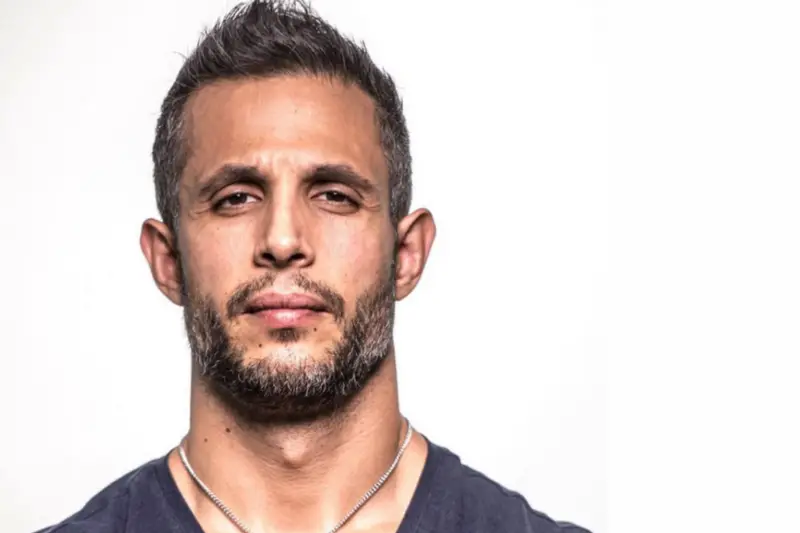
And I want that to be a place where we can discuss these episodes and where we can talk about these things and where I can can communicate with you and really hear what you have to say. So I'm gonna put some links up on the show notes where you can get to these. And, you know, be on the lookout for our next episodes. On Monday, we've got Paul Tokgozoglu, who is an entrepreneur and a US army officer. Really great guy.
He has kind of developed his own system for for social media marketing, and I'm always looking for people to to help you to find things that you might be able to do after your service. That could be business, that could be a career, that could be any number of things. But he's got a really interesting story. He was undiagnosed with autism and literally found out he was autistic while he was serving in the US Army, and that led to a whole lot of different openings in his life. He's also a really, really high level jiu-jitsu player.
Really, really great guy. So we back at you on Monday with that episode and many episodes to follow. So with that, get out there and live your best lives while you can.
Host of the Warrior Soul Podcast and founder of Warrior Soul. Worldwide trainer and nutrition coach, contributing author at Testosterone Nation and Muscle and Strength.