Podcast episode
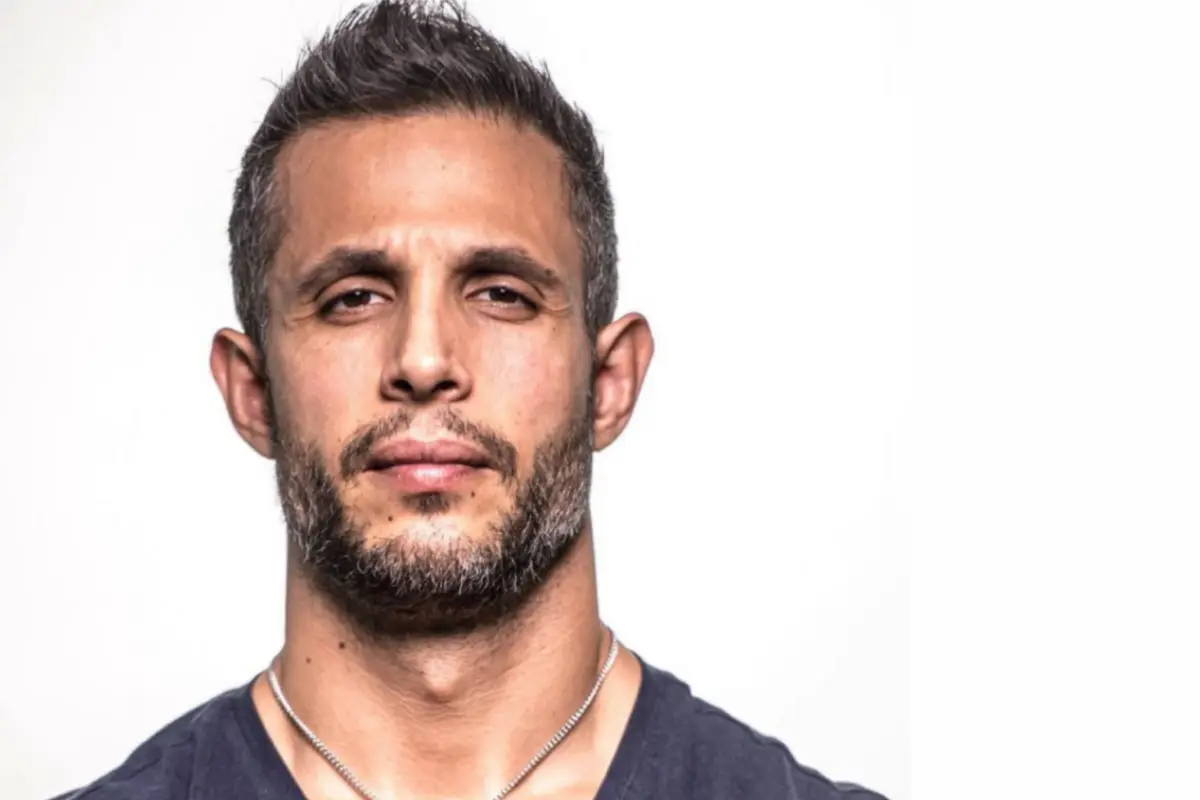
Sal Di Stefano: Mind Pump, Truth, and Self Leadership
Hosted by Chris Albert
The Warrior Soul Podcast
One would think that an industry that centers around biology would base it’s products and ideas around scientific fact. Unfortunately, that’s often not the case. That’s why Sal Di Stefano and Mind Pump Media exist, to bring the truth about fitness to the masses.
Sal and the other guys at Mind Pump are, in my opinion, some of the most intelligent people in the fitness world today. Sal got his start as a personal trainer and eventually went on to own his own gym.
After 17 years in the industry, he partnered up with Adam Schafer, Justin Andrews, and Doug Egge to produce Mind Pump. Their show is described as “Howard Stern meets fitness.” It’s raw, sometimes shocking, but always entertaining and informative.
In this episode we discuss fitness, finding truth in the information age, and rising above the victim mentality to find your purpose in life.
Transcript
Machine-generated from the episode audio and lightly edited — may contain errors.
Chris Albert (link to this point)
This is Chris Albert, and I'm here to remind you of one thing. Someday, you're going to die. Now that's not some morbid statement or scary idea. It's solid fact. Your time here on this earth is limited.
We need to be reminded of this as much as possible for one simple reason, to live your best life while you can. This is the Warrior Soul Podcast.
You know, as somebody who's been in the fitness industry and who's worked as a trainer and who's coached a lot of people, one thing I figured out early on is that the truth is really hard to sell. And that's because so many people out there are looking for shortcuts. They're looking for the next magic pill. They're looking for the next six minute ab routine that's gonna get them abs in six weeks or less. But you know, the fact that the truth is often hard to sell and the fact that there are a lot of shysters out there in the fitness industry offering quote unquote magic solutions.
There are people who strive to tell the truth. And last year, I started listening to a podcast called Mind Pump. Really, really great show. And it's a bunch of trainers who got together and decided that they were going to try to get the truth out there to the public about what it takes to get in the best shape of your life, to build muscle, to burn fat, and to live healthy. One of those guys, his name is Sal Di Stefano.
And what I appreciate about Sal is that he's absolutely no BS. Everything he does is really well researched, and the programs they put out there over at Mind Pump are absolutely amazing. And Sal's also a really great conversationalist. I mean, this guy can talk about absolutely anything, ranging from health and fitness all the way up to philosophy. And so I wanted to bring him on.
And the reason why I wanted to bring him on was to talk to you guys about the victim mentality and why it's so destructive to to your personality, to your soul, to everything you're trying to do in life if you live life as a victim. And this guy's awesome. He's he's a self made guy. Literally, him and his partners built Mind Pump up from the ground, and they're one of the most listened to podcasts on the Internet right now. Before we get into the conversation, I just want to say a few things.
First off, my name is Chris Albert, and this is the Warrior Soul podcast. The reason why I put this podcast together is to help US military veterans to live their best lives. And the reason why we do that is because over the past decade and a half, we faced a lot of dark things really high suicide rates, really high rates of chronic depression, really high rates of chronic disease, and a really high rate of veteran homelessness. And dealing with that, A lot of people have been trying to raise awareness about those issues. My goal isn't just to raise awareness.
I want to get you solutions. I want you to come away from each episode with a tool, a tactic or an idea that is going to help you to better your life, to become stronger, and to move forward. And so that's why I bring people on like Sal Di Stefano, to give you the tools that they used to become successful, and to help others as well. And that's something you'll find that Sal is very dedicated to is helping others to live their best lives. Then I think that that's something that really goes into making a person successful is how much value they're giving to others.
So, you know, the thing is, if you're not a veteran, please stick around. I definitely think that anything we cover here is going to apply to anybody. Focus on the veteran community because that's where I come from. And that's where we've seen so much of this stuff going on. So, please stick around and all we ask for in return is that you let other people know about the show.
If it's helped you out. If it's given you something that's made your life better, you know, please share these episodes out and head over to iTunes and write us a written review. It really helps to expose the show and it really helps me to get guests like Sal onto the show. So definitely do that. And I also want to say that this podcast would not be possible without the good people at FBOMB Nutrition.
They make awesome, delicious packets of fats. Macadamia nut butters, they mix them up with chocolate, mix them up with sea salt, mix them up with pecan butter and coconut butter, and there's no sugar in them, and they're so delicious. So you can head over and get your first order of F bombs over at www.dropanfbomb.com and you can use this the code Warrior Soul at checkout, and you'll get 20% off of your first order. With that, let's get into this conversation with Sal Di Stefano from Mind Pump. Sal Di Stefano, welcome to the show, man.
Sal Di Stefano (link to this point)
Thanks for having me on. I appreciate it.
Chris Albert (link to this point)
Dude, I I really gotta compliment you and and and all of Mind Pump. I really love what you guys have done. I I told you before we hit record, I've been in the fitness industry for a bit. I really didn't think that anybody could apply long form media to this type of content until I heard you guys, and I think your show is absolutely amazing.
Sal Di Stefano (link to this point)
Yeah. We you know, it's funny. We so we me and my partners, we've all worked in fitness for a very, very long time, and we, you know, we all had similar, I guess, issues with the fitness industry and how it's operated. And we wanted to provide really good quality information with integrity, which you don't get a lot of. Unfortunately, you don't see a lot of in the business of fitness. There's a lot of information that's being promoted that really doesn't have a lot of integrity, isn't really gonna help people that much. A lot of it's based on making people feel terrible about themselves or it's nutrition tips that aren't really that beneficial for you in the long term or it's promises you know to take this pill and you lose weight in thirty days type of stuff. So we wanted to provide really good information, but the problem is that when you provide good science based information, it can get boring and you end up talking to the people who probably don't need to hear it.
The people who need to hear the right stuff aren't the ones that are gonna tune into a real solid science based fitness and health program. And so we knew right away early on, we need to be able to entertain people and make it more of a conversation so that we can reach the masses. And so that's kind of, you know, I think what you're hearing when you listen to our show and you listen to this kind of long form conversation. It's really, we're trying to communicate a few important things in a way that's entertaining that the average person will want to listen to you. And so far, it seems to be working.
Chris Albert (link to this point)
Yeah, it's also harder to sell the science because a lot of times people don't want to hear the truth, and I heard you guys talking about this the other day, where sometimes if you have a weight loss client, you don't want to put them into a caloric deficit right away. You want to really get them at a baseline of calories, at some points you might even want to raise their calories because their metabolism is so slow. And that's really difficult for a trainer to tell somebody, and it's even more difficult to communicate that over mass media. And a lot of times, you're not telling people what they wanna hear, people get turned off.
Sal Di Stefano (link to this point)
You're right. You're 100% right. So you have to learn how to become a very effective communicator. This is something that took me years to really develop as a personal trainer is, okay, how can I sell this person on the right way to do this? Because it's hard, right?
Somebody comes to you and they've heard from a million different sources that, Oh, if I work with a trainer and start working out and do this with my diet, I'll lose 30 pounds in this period of time. And it should be, I just gotta work real hard and bust my ass for a short period of time and I'll get everything I want. And I know that that's not true. So I had to learn how to sell it very, very well. And you also start to understand that disappointment comes from expectations not meeting reality.
And some of the biggest mistakes I think that the fitness industry does is they sell these insane expectations like, you know, do our program and lose all this weight in a short period of time, take this pill, and it'll make everything super easy. And it's, you know, it's not gonna be a problem. That sets people up for disappointment because then what they do is they go to the gym, they bust their butt in the gym, they work super, super hard, they do the wrong things, they cut their calories really low, they get this metabolic adaptation where things start to slow down, they plateau really hard. And then because it didn't meet their expectations, they're extremely disappointed, discouraged, and they stop. Now on the flip side, if I take someone in and I do a good job of educating them and selling them the right way to do it, and I say something like, okay, I know you're here because you want to lose 30 pounds.
I'm having you track your food. It looks like you're only consuming 1,500 calories a day. This tells me that you're just not burning a lot of calories, both because you're inactive and because your metabolism is slow. What we want to do is we want to speed up your metabolism so that you burn more calories all the time so that later on, if you want to maintain your new leaner body, you can do so eating 2,000 calories or 2,200 calories, but it's going to take a lot longer. Let me explain to you what this looks like and let me show you what you can expect in the first thirty, sixty, and ninety days and then what it's gonna look like later on.
And then I explained this to them and now their expectations are a little bit different. Now they come and work out with me or they're working out and they're not expecting to lose a ton of weight right out the gates. What they're expecting is to get stronger. They're expecting better mobility. They're expecting to feel healthier, to have better energy, to sleep better.
They're expecting maybe a higher libido. All the things that happen is you start to get healthier and that's what they start to see and they start to feel real good about it. And then when the weight loss starts to happen, well, that's kind of a bonus and it's exciting. So the way you communicate what fitness can do when it's done the right way is extremely important. It's very, very important if you want people to be able to get on board and to stay on board.
Otherwise, you set people up for failure, for disappointment and failure.
Chris Albert (link to this point)
Yeah. And you know, I think that the way things are right now with social media, both in fitness and in the outside world, people have this tendency to really separate themselves into gangs. And tribalism exists so strongly in almost everything we do right now. When I first got into fitness, I used to be a social scientist, I studied politics, and I was doing training on the side, basically fell in love with it. But when I got into training, I was telling myself, you know, maybe this is going to be something a little bit less controversial.
But the fact of the matter is we have this tendency to separate ourselves into gangs and I'm keto and I'm vegan and I'm this or I'm that. And a lot of times when we see that, it's really hard to get the truth across because people are so into seeing things as black and white, or this worked for me, so it's gonna work for everybody else. Do you run into that a lot?
Sal Di Stefano (link to this point)
Yeah. We run into that all the time and that's a big problem because it can steer people in the wrong way. You know, when nutrition becomes people's religion mainly because nutrition is such an important part or food I should say is such an important part of our lives. I mean think about how integrated food is into culture, right? Like you can go to different parts of the world and they have completely different cultures around food.
And then think about events, think about special events. Like there's a type of food that you eat at a wedding. There's a type of food you eat at a birthday. There's types of, you know, there's appropriate foods for breakfast, lunch and dinner. It's also a way for people to connect and socialize.
So it's natural that people will turn food into a culture and then turn it into a religion. And so we need to move away from that and help explain to people that first off, there are some general truths when it comes to nutrition. For example, if you wanna lose weight, you need to take in less energy than you expend. So you can't get around that. And if for the most part, you're probably better off avoiding heavily processed foods, really for two reasons.
One, heavily processed foods tend to not be as healthy as whole natural foods. That's not always the case, of course, but it tends to be in that way. And so majority of the time, if you eat whole natural foods, you're probably gonna get more nutrition than if you eat processed foods. But really it's the second part that makes processed foods a good thing to avoid, which is that processed foods, a lot of money and a lot of energy and attention goes into making processed foods as palatable as possible. So palatability is the desirability of a food to be eaten.
So palatability includes the taste, the smell, the texture, the color, like everything about a food that makes you want to eat it. And what food manufacturers have learned over the decades is how to make things hyper palatable so that overrides your, you know, a natural system of satiety. So like, for example, if I give somebody a bunch of plain white baked potatoes without salt or butter, they'll only be elite so much before they'll get what's called palate fatigue where they kind of get sick of it and they can't eat that much more. But if I take those potatoes and I turn them into potato chips with salt and fry them and oil, they'll be able to eat far more because it overrides that palate fatigue because food manufacturers, again, they understand this and this is what they're trying to do. So if you avoid processed foods, you're far less likely to overeat.
So those are really the general truths. Now, that, there's a lot of stuff that can make nutrition or your food good for you or can make it bad for your individual body. What we need to understand is that the human body, each person kind of has this fingerprint of how they react to food and it's your immune system. This is something we're starting to learn a lot about now where you have your internal microbiome and how you react to certain foods and some foods may cause like an intolerance type of an effect where cortisol goes up and blood sugar spikes, even with foods that may not have sugar in them, for example. So this is why some people will feel so good eating a particular way and other people will feel bad eating that exact same way.
This was something I learned the hard way as a trainer. I had my own beliefs about nutrition as a personal trainer. I'll give you a good example. You know, I for sure thought you absolutely needed to eat some kind of animal products, meats, fish, or dairy because there's nutrients found in animal products that you don't find in vegetables. We could go down that path, but I think you get where I'm going.
And then I had a client who was a doctor, very intelligent man, who did everything that I told him. And he went on a volunteer trip. What is it? The Doctors Without
Chris Albert (link to this point)
Borders.
Sal Di Stefano (link to this point)
And he worked in a village that was vegan. And he ate what the village ate. And he came back and it was this high altitude. I don't remember where he was, but high altitude. He had to do a lot of hiking to get to different parts of to different villages or whatever.
And he comes back and he goes, man, goes, I felt phenomenal. I had more energy than I've ever had in a long time and I felt really good. I was eating this vegan diet. And so we went back and forth and he's a smart guy, so we knew how to plan his diet very well. So we went vegan and his performance improved.
And so I had to learn at that moment, well, there's general truth, but there's a lot of individual variants when it comes to nutrition. And not only that, but what's good for you now may not be good for you in the future. Your body changes, your microbiome changes, your circumstances change, and so your food should follow that as well. And then when it comes to exercise, we could talk about that in a similar fashion. When you look at all the different established successful modalities of exercise, I'll use a few of them.
For example, yoga has now become pretty established form of exercise. It's been pretty successful. You have, you know, your your traditional free weight training. You have kettlebells now, which have been shown to have some good success. You have calisthenics and body weight, you know, type of training.
Those are just a few examples. So when you look at those types of exercise, they're all successful for something for a particular reason and they all provide some type of benefit. Now, what would be a mistake would be just to look at that one modality and say, There's nothing to learn from any other modality. I'm just going to stay in this modality and I'm going to get everything I need from this one type of training. It would be like a power lifter saying that he's not going to get any benefit from anything from bodybuilding.
Like there's no benefit from any bodybuilding exercises because I'm a power lifter, so I'm just going to stick to power lifting. Well, that's not true. There's lots of benefits that you can get from different modalities. And some of them are better at doing some things than others. For example, if you wanna really work on hypertrophy of your muscles, if you wanna work on building more muscle, well, you should probably look at lifting weights and you should probably look at bodybuilders because that's kind of what they focus on.
If you want to improve your functional flexibility and increase your ranges of motion, you might want to look at yoga. Yoga done properly in the traditional sense where you maintain tension and you move through different poses is a fantastic structured way of getting yourself to have more what's called functional flexibility, flexibility that you have control over. And so this is the approach that we've tried to do with our show and our other media channels, is try to to bring that to light to people to show them that there's definitely benefits that come from different modalities. It's almost like gosh. When was it that the ultimate fighter the ultimate fighting championship first came out?
I think that was, like, 1990.
Chris Albert (link to this point)
Like, '94, '93, '94, sometime around then?
Sal Di Stefano (link to this point)
I think so. And I was a young kid. I was really young when that first came out. I think I was let's see how old was I? Was probably 14, 13, 14.
Mhmm. Big martial arts fan. I was a judo guy, so I did judo as a kid. My dad was a big martial arts person. And I remember seeing the ads for the UFC on pay per view because that's where they first aired it.
The way they advertise it was martial art versus martial art. Like who would win in a fight? A karate guy or a wrestler or a boxer or a kung fu guy? There's this huge debate in martial arts for hundreds of years where people would compare styles and say which style is better. And so it was this exciting thing and we watched it.
And I remember, you know, Royce Gracie coming out. He was a Brazilian jiu-jitsu guy. He's real skinny looking dude. He wasn't very fit or athletic. And here he came in and he just beat everybody because he had this style that was so successful.
But then as martial art as mixed martial arts evolved, what do mixed martial artists look like when they fight? They look like they know everything. They they take the best of each art and they apply it in a way that makes them very successful when they fight in the in, you know, in the octagon or in the ring. And that's kind of what we need to look at fitness and nutrition like. Like take the best from each of these modalities and integrate them in a mixed martial arts way where people are getting the best of all these different things.
So that tribalism attitude that we have in fitness, I mean, that exists in almost anything. Humans tend to do that. But what we're trying to do is we're trying to bring everybody in. All right, let's talk about what this modality does, seems to do very, very well or better than other modalities. Let's see what this way of eating seems to provide people that's better than other ways of eating.
Like let's say you have gut issues of a particular nature. Well, what type of eating will help you? Or let's say you have neurological condition. Well, we know that may be a ketogenic diet may work best or whatever. So this is the question that we try to have.
Chris Albert (link to this point)
Let me ask you this because, as I mentioned to you, most of our audience, they're combat veterans from the US Marine Corps, US Army. And in our population, we've been dealing with really high rates of suicide, really high rates of chronic depression. And this is a statistic that a lot of people don't know, but one in four veterans admitted to the VA system already has full blown diabetes. And we're seeing more and more links between what you eat and how your body is and the performance of your mind and whether or not depression will take root. In your discussion, in your work with your clients, in your work in general and fitness, have you seen this link and what are your thoughts on that?
Sal Di Stefano (link to this point)
Oh, there's for sure, it's pretty well established now that there's a physical component to depression in the sense that inflammation now has been closely tied to depression. The brain's ability to utilize glucose as an energy source has been connected to just feeling crappy or even depression. What you do when you when you look at the human organism, you have to understand that the human organism is comprised of a lot of different systems. Okay? We could divide the human organism to many, many different systems.
The endocrine system, you know, you have the digestive system, you have the emotional system, but all of these communicate and work with each other. They all influence each other. So I'll give you an example. If you're sitting there and you're perfectly healthy physically and everything's going great, and then you get a phone call that something terrible has happened to a very, very close loved one, could very easily measure changes in your body's physiology in response to this emotional state. We can very easily show hormone changes, chemicals will change, catecholamine production will change.
And then if we measure over time, we can see that there's a real physical effect from something that was emotional. I mean, people, you know, illness goes up, depression increases, but also the physical effects from depression go up from inflammation, your body's ability to deal with certain physical insults, your body's ability to handle viruses and bacterial infections, all these different things. But the reverse is also true. The physical also contributes to the emotional. So if you're physically feeling mean, think about it this way.
For anybody who's listening right now, who's maybe debating this in their mind and thinking maybe this isn't true, how great do you feel emotionally when you're sick? That's a very easy example. Like if you have the flu, speaking, tend to feel pretty crappy as well. Things tend to look pretty negative when you feel sick, when you're actually physically ill. So all these things are connected.
So that being understood, and again, this is not me saying this, this is pretty well established now in medicine, but that being understood, if you are somebody that is dealing with or struggling or contending with feelings of negativity, if you're dealing with issues with sleep, you're dealing with issues of anxiety or even depression, there are things that you can control, that you yourself can control. And one of them is, or at least that you should be able to control because there are circumstances where it can get pretty dark. But one of the things you can control is what you put in your mouth and your activity, like how I move and exercise. Now, if you're feeling pretty terrible, this might not be that you're gonna go to the gym and have this freaking awesome workout, but you can go to the gym and do something to take care of yourself. And that then will also feed into how you feel emotionally. So it's just something that you can control that's more black and white than the complex issues that we tend to deal with psychologically or emotionally. Those are far more complex.
Like the physical aspect, it's much simpler. It's like, okay, I gotta get up and move. I gotta do some resistance training. Definitely know what's not healthy for me. I might not know exactly what to eat to optimize my health, but I definitely know that eating donuts and drinking soda and stuff like that isn't great for me.
So I'm gonna at least avoid that kind of stuff and at least take care of your physical self and then watch it start to contribute to your emotional self in a positive way. I I experienced this myself about six or seven years ago. Somebody very, very close to me. This is a woman that was like another mother to me, got diagnosed at a young age with a you know, a terminal form of cancer. She had a type of stomach cancer that the survival rate on it was basically zero.
She she was she was definitely you know, the the statistics said she had about three or four months to live. And so when she told us all that she was ill, you know, that night I stayed up all night thinking about, you know, what I could do, how I could help her. And I had this realization if I wanna be able to help this person and help the family members around me who are also gonna be affected by this person's illness and then inevitable death, the best version of me to help them would be a healthy and fit version of myself. Like, I let myself go physically, if I just fed my if I just started feeding my emotions with food that wasn't gonna benefit me physically, if I was gonna just not be active anymore at all, that version of me, that less fit, less healthy version of me would not be able to help as much as a fit, healthy version of myself. And so I prioritized exercise and nutrition.
And so what I would do is I would go to the gym and my goal wasn't to, you know, increase my bench press or build muscle or burn body fat. I wasn't in the gym to sculpt my body and look like a, you know, look awesome. My goal was to go go to the gym and take care of my body so that I could help these people out. And so I would go to the gym and sometimes I would do meditation in the sauna. Sometimes I would do yoga.
Sometimes I would lift weights if I felt very frustrated and I felt lots of, you know, emotions that needed to come out. I'd go to the gym and just hit the weights real heavy. Sometimes I would walk on the treadmill and listen to something uplifting. But basically the idea was I'm going use this tool to optimize myself so that I could be the best version of myself to help out the situation. And so that's what you want to think about.
If you're in a dark place, if you're in a position where you feel like you can't provide for your family like you normally can, or you can't take care of yourself like you normally can, or you're just feeling really dark, use exercise and use nutrition as ways to move yourself in a direction that's gonna make you more resilient to being able to handle those things. You're gonna create a version of yourself that is stronger and more resilient. And then of course, again, like I said earlier, the science shows pretty unequivocally that a fit healthy version of you is far less likely to suffer from things like depression and anxiety. And in fact, studies when they compare exercise to the most common antidepressants in the treatment of low to moderate levels of depression, exercise is as effective and better in the long term, just because again, a healthy body creates a healthy mind, which then helps contribute to feeling better. So these are definitely effective, clear, simple tools that you can tackle right away that are not as complex.
When you're in a tough situation, and I've been there, man, when you're in a tough situation, you're looking at your state, you're looking at your life, mean, it's real complex. There's a lot of stuff going on. There's a lot of things that you need to tackle and handle that could be very difficult, that could feel overwhelming, but it's very simple to say, I'm gonna take thirty minutes out and go exercise. You know what I mean? It's a very simple basic thing like, okay, for thirty minutes, I'm gonna go move.
And I know that's gonna make me stronger and better able to handle all this other complex stuff.
Chris Albert (link to this point)
So many people deprioritize that stuff. They think they get to a point in their lives where the career, family, everything trumps taking care of yourself. But the reality is if you're not taking care of yourself, if you're not putting that time into yourself, your biology is gonna take the payment. Your biology is eventually going to react on you.
Sal Di Stefano (link to this point)
That's right. That's right. Think about it this way. About it this way. Imagine if you were Think about life and imagine if life was a fight.
Like, okay. I gotta get in the ring and I gotta fight yeah. I gotta fight life one on one. We're gonna throw down and, you know, I wanna win. I wanna win this fight.
Well, you gotta train yourself. Not just gonna go into the fight with no training. So imagine if you had six months prepare to fight life in the ring. What would you do? Well, you'd go you'd go take some boxing lessons.
You go do some jiu-jitsu. You'd work out. You'd feed yourself well. You'd get good sleep because you wanna bring the best version of yourself in the ring to combat and contend with life. Well, that I mean, that's just that's an analogy, but that's kind of what it's like.
And if you wanna help other people, you have to help yourself. You can't pour from an empty cup. So all you're doing really is you're making yourself the best version of yourself so that you can help as many people as possible.
Chris Albert (link to this point)
Right, right. And the other thing is this, and I wanna slam this home to a lot of the guys out there. It doesn't take much in the way of finances to get this stuff done. And if you you know, I've been in positions where I was living out of my car. I've been in positions where I had, you know, a $100 to my name.
And you know, the thing you gotta realize is you don't need that much in life to live a good life. Yes, you do need money. Yes, you do need to work hard, but you're never hopeless. And, you know, in life, you need you need learning, you need people, you need burpees, and you can get that stuff done with minimal resources. So don't think that you gotta go and you gotta spend thousands of dollars on this, or thousands of dollars on that.
The knowledge is out there, people like Sal are putting information out there, and and you could actually get a great fitness regimen with very few resources.
Sal Di Stefano (link to this point)
Oh, you you can get one for free. I mean, you can go like, are you we have a YouTube channel, Mind Pump TV. You can go on there, and we put entire workouts on there for free. We also have blogs and guides that we write that are totally free that'll break it down for you. Mindpumpfree.com.
That's where we have a lot of our guides. But it's not just us. I mean, we're we're in the information age. The information is out there, and it's it's cost little to nothing now to get it. And you don't need you don't need a gym.
I mean, if if if you're really that if it's really that difficult and you don't have the the resources to invest in the gym, you don't need a gym. You just need your body. There's lots of things you can do with your body, body weight that will strengthen your body and improve your fitness. And here's something I wanna When it comes to that, here's something I wanna communicate. The body does very, very well with frequency of training.
Frequency meaning you'll do better off with a little bit of exercise every day than you will with a lot of exercise twice or three days a week. So this is a myth that I like to tackle a lot because I think people get stuck in this myth and they think, okay, I need to go to the gym and I need to beat the shit out of myself for an hour and a half, three days a week to get good results. The reality is instead of doing an hour and a half, three days a week, you're probably better off doing twenty or thirty minutes every day. So make it part of your ritual, do something and modulate your intensity so that you don't overdo it because you're working out every day and your body will actually respond much faster. I mean, if you did, remember the body responds to exercise because exercise is providing a stress and the body is trying to adapt to that stress.
That's what happens when you get stronger. That's what happens when you build stamina and endurance. Your body is literally trying to adapt to the insult so that next time the same insult doesn't create the same amount of damage. It's no different than any other adaptation system in the body. For example, your skin's ability to darken when you're exposed to sunlight.
I mean, that's your body adapting to the sun so that the next time you're on the sun, the same amount of sun exposure doesn't cause damage and burn your skin. Now, if I wanna get a really good tan and I don't wanna burn, which approach is gonna be better? Getting a little bit of sunlight every day or going out and baking the hell out of myself real hard, right? Same thing with exercise. So it's not that it's actually, and believe it or not, it's actually easier to fit it into your life. And it's easier to be consistent when you do a little bit every day versus doing a lot every once in a while. A lot every once in while requires your schedule to be different. I gotta schedule all this time.
Okay, this day I'm working. And then of course you don't have that consistency of the cycle because there's days off in between where I'm not doing anything. It's hard to get back on track. If you just do, for general health and fitness, twenty to forty minutes of activity every day, which would include ideally some type of strength training, some type of cardiovascular, and a little bit of mobility work, you'll be pretty damn well off. Your body will respond and it'll continue to respond for a long time with just that absolute bare bones basic type of exercise approach.
And then once you get to the point where you're like, oh crap, I'm getting really fit doing this. I wanna take you to the next level. Well then of course you could take it to the next level. But it doesn't take much at all to get your body to feel a lot better.
Chris Albert (link to this point)
Yeah, absolutely. I tell people I keep a kettlebell around just around my office And when I don't have time to go to the gym, just swing that kettle bell around a few times a day. And it's pretty awesome. I wanna ask you this because we alluded to this and it's one of the reasons why I wanted to bring you on. You know, we're in this time and place right now where you could pick up an apparatus that's in your pocket, you can learn about absolutely anything.
And the reality is, I mean, we're literally, I think, living in in one of the best times for human beings ever throughout history. Why do you think so many people are are just unhappy or angry or what's going on with our society right now?
Sal Di Stefano (link to this point)
Oh, well, I think we're learning the hard way that having more things, having more money, having access to more food, more sex, we're learning the hard way that that's not what brings us, you know, happiness, if you will. I don't like to use the word happiness. I think the right word to use would be purpose. I think we're learning the hard way. Look.
Look at the suicide rate among celebrities. Remember, these are people who have all the money and drugs and women and whatever and access in the world, and they're killing and they kill themselves. Celebrities commit suicide all the time, and they have everything that you think would make somebody happy. And that's because, you know, one of the worst things that could possibly happen to somebody is they get everything that they think they want and then realize that that's nothing, that that's not at all what they wanted. You know, life needs to have purpose.
And the reason why it needs to have purpose is because life is hard. And I don't care who you are, you're gonna get challenged by life. Something difficult's gonna happen to you, whether it's something you do yourself or something that happens to you that you can't control. Life is difficult. And if you don't have a sense of purpose, how do you get through those difficult moments?
People find a lot of purpose in doing things for others. I'll give you an example. Like some of the hardest working people you will ever meet in your entire life are people who work for free and who are volunteers. Correct. People who make no money at all, who go out every day because they have a sense of purpose to help other people for, you know, whatever their particular charity or whatever is.
And these people wake up and bust their ass harder than people making lots and lots of money many times because they have a sense of purpose behind what they're doing. Family tends to bring that for some people. Like, knowing that I'm you know, I have two children and knowing that part of my purpose is to, you know, turn them or help turn them into great human beings to that who who themselves have purpose. That helps drive me to do certain things. And then the most classic way, which also happens to be one of the most successful ways is spirituality.
Spirituality brings a lot of people purpose. When people have a belief a higher power, many times that gets them through the difficult and dark times because they have a strong sense of purpose. You can't fill purpose with money. You can't fill it with activities. You know, that bucket is is you can't fill it with those things.
It's a it's a bottomless pit. You know? You you try to fill it with pleasure. Okay. You know, maybe if I just put myself in a constant state of ecstasis by doing lots of drugs all the time cause because that feels good in the moment.
Well, we know where that leads. So it's really about finding that purpose for yourself. What is your purpose? And purpose is what's gonna get you through the hard times and of course the happy times. You don't need anything to get you through those.
I think that's what people are lacking, you know, today. And I think part of it is we're distracted. You know, we're we're we're constantly distracted. We're constantly chasing, you know, the the the social media. We're constantly chasing the newest thing.
We're constantly chasing, you know, you know, money and things and not and and kind of forgetting the stuff that really I mean, you know, when they interview people on their deathbed, there's actually studies on this you can look up. When they take people who are terminal and they interview them and they ask them, you know, tell us what you, you know, what you valued the most in your life and tell us, you know, you know, the things that you could have done more or you should have done more. Like almost nobody says, I I made more money or I wish I bought more stuff. You know what I mean? It's all stuff like, oh, I wish I spent more time with my family.
I wish I did these things that I never did because I was too afraid to. Like, I wish I traveled to this part of the world, or I wish I learned, you know, how to play the piano or, you know, things like this. Other psychologic other studies on psychology show that when people spend money on experiences, they get way more out of them than when they spend money on things. So that's another big one. Like, you know, rather than taking know, if I if I make money, if I have like an extra, you know, $2,000 to spend, I can buy some really nice electronics, or maybe I can spend $2,000 and take a course learning something, or maybe spend $2,000 and go to a different part of the world and experience another culture.
Studies show that the people who spend money on experiences are far happier than people who spend money on things. So I just think it's just the consequence of, you know, the way society has gone where, you know, we we're really getting everything that we thought we wanted. You know what I mean? Like
Chris Albert (link to this point)
Right.
Sal Di Stefano (link to this point)
We got more money. We have so much food. People die of having too much food. You know what saying? Wasn't that
Chris Albert (link to this point)
Absolutely.
Sal Di Stefano (link to this point)
It wasn't that long ago that most people died from not having enough enough food. Now we got people dying because they have too much food. When you look at the average American home, they do these these studies where they do, like, what's called, like, a heat map, and they'll show how much time people spend in certain rooms of their house. Mhmm. And I think the average American spends, like, 90% of the time that they spend in their house and, like, 30% of their home or 20% of the home.
So it's something silly like that. Like, most of the house is just they would just have big space. You know what I mean? For no reason. Empty space.
Chris Albert (link to this point)
Yeah.
Sal Di Stefano (link to this point)
It's People have clothes that they that they that have tags on them in their in their closets where we have all this information accessible to us, you know, now because of, you know, technology. Like, we have everything that we thought we wanted, and we're starting to realize that that's not what gives us purpose. It's the it's the stuff that sounds cliche, you know, family, you know, spirituality, you know, learning things, experiencing things. These are the things that make us feel alive. These are the things that we need to chase.
Chris Albert (link to this point)
Yes. So many people just worry about about just just stuff that doesn't really affect them. And I think it takes a bit of perspective because, you know, a few years ago, I had the opportunity to go to Greece. I was I was teaching teaching a philosophy class, I was taking some students through. And I, we were sitting up there at the site of the Oracle at Delphi, that was kind of like the Disneyland of the ancient world.
And if you look around, there's nothing but rocks. Right? And what I was thinking while I was up there is we have all this evidence of ancient Greece, but we don't know much about the average individual who lived back then. And so you think about that, you know, those people had their own worries, their own bills to pay, their own relationships, and now we don't have much evidence of what their daily lives were like at all. And I think that some of us, we sit here and we worry about every single thing.
We worry about what kind of clothes we want to put on. Worry about what somebody's saying on Facebook about an issue that has little to do with us. And we worry about it so much that we don't worry about our own lives or our own purpose or or figuring that out.
Sal Di Stefano (link to this point)
Mhmm. Yeah. You know, this is an interesting thought experiment. The average lower middle class American today has access to things that the absolute richest kings and queens of two hundred, three hundred years ago didn't have access to. Like an average person today, lower middle class can go to a grocery store and can afford to buy fruit or vegetables or foods from all different corners of the world.
Kings and queens from hundreds of years ago didn't have access to that. The average person today who has internet access, which is very inexpensive, has access to the information of all recorded human history. The Rockefellers didn't have that back when they had more money than rest of the world had combined. So it's really a crazy time, but I think we're in a bit of a conundrum. We're in this kind of spiritual, psychological conundrum where we have, like again, we have everything that we thought we wanted and we're realizing that that's not what we really wanted, or at least that's not what we need.
So it is a very, very interesting one. I learned this lesson the hard way. I was a workaholic for most of my life. And it definitely was one of the contributors to my divorce. I went through a divorce after fifteen years. I have two children. And unfortunately, the way life works is you tend to grow and change when things get really difficult. Otherwise, there's no reason to.
So when I was faced with that very difficult moment in my life, I had to really self examine like, okay, well, what did I contribute to this? And really it was, I was chasing the wrong thing. And so now I'm at a point in my life where I'm realizing, okay, there's things that are truly important to me. And when it comes to money, of course you need to work hard and you need to earn a certain amount of money to provide yourself with certain basic necessities. But do I really need super fancy cars?
Do I need lots and lots of shoes? Do I need all I really don't care. It's not that big of a deal. I'd rather take some money and I'd go on a trip somewhere and check out a different part of the world or, you know, take a course from somebody who's gonna teach me something really cool or just spend some quiet time reading something that's really interesting. I get far more purpose in that, but it took something very difficult for me to learn that.
And unfortunately, I think that happens to a lot of people.
Chris Albert (link to this point)
Now, because I'm also a divorcee, one of the things that I realized after my divorce was that a lot of the things that led me into the marriage in the first place were the wrong things. Know, the idea that I had to do this or I had to do that. You were in a much longer marriage than I was, but did you come out of that with any realizations about who you are as a person and things that you wanted to do different with your life besides besides the working things?
Sal Di Stefano (link to this point)
Oh, mean absolutely. I you know I grew up in a very traditional Italian family and so I wanted a very traditional family. I know I was dating a girl who I'd been dating since I was 16 years old and so it felt like the natural thing to get married at a very young age. I was 22 years old when I got married, but I buried myself so deep in my work that I didn't really contribute to the relationship or my family in super meaningful ways. I mean, I've always been a loving father, so I've always been that dad, but I wasn't really a part of my kids day to day life.
That was all left to my wife. And so that was a big mistake, think. After getting divorced, I'm more active now in my children's lives than I was when I was married to their mother. And I make them much more of an active approach towards doing things with them, not just the fun stuff, but everything, school and you know, their homework and those types of things. Because I actually find that there's a lot of meaning in those things also.
You learn a lot from your kids and you develop a different relationship with them while you're doing that. I also have, know, I'm in a new relationship now with somebody that I, you know, very much in love with, and I value the relationship, you know, differently. I definitely tend to it differently. I don't take it for granted like I might have in the past. So I've learned I've definitely learned a few lessons, you know, through that process.
You know, I will say this, you know, luckily for me, me and my ex are on good terms and we make a very active approach in terms of both co parenting. So we really, really try and do a good job with our kids. Far more complex than when you're married. So for people thinking, oh, divorce is gonna be so much easier than being married. And I do understand that there's circumstances by the way when you know, that you need to divorce, but it's much more complex, much more difficult, takes a lot more planning and work.
But we do it and I spend a lot of time focusing on it. That's something that I've learned that I do now moving forward.
Chris Albert (link to this point)
Now with Mind Pump growing like it is, and you guys have really blown up over the past year and and you guys are expanding, you're putting products out now. I know it took you a little bit of time to to really monetize, but now you guys are going full throttle with with with your programs. How are you keeping yourself kind of grounded and taking care of yourself while this is all going on?
Sal Di Stefano (link to this point)
Well, my partners, all of us, we've all had businesses in the past. We're all serial entrepreneurs and we've all got a lot of experience in the industry. So we all started working together in our mid to late thirties. So we're all mature in our understanding of what makes a business successful. Like, if we all met in our twenties, for sure we would have burned each other out.
Like we would have lived and died and sleeped and breathe, work twenty four hours a day, and our egos would have gotten in the way and it would have been a very difficult process. And I don't think Mind Pump would be nearly as successful or as effective. Because we met later on in life and we started working together later on later on in life, we all understand the value of balance. You know, my cohost, Justin and then our producer Doug both have children. You know, Justin's married also.
And so we all value that for ourselves and for each other. We also, you know, we all have big egos, but we're also humble enough to know that there's some things that there's some things that, you know, Adam does better. There's some things that Justin does better. There's some some things that I do better and and and some things that Doug does better. And so we tend to back off and let the other person lead when it comes time for them to lead.
Or, you know, if we were in our twenties, I don't know if that would have been, you know, something that we could have done because our egos would have been too too big and too fragile. So we worked really well that way. And it's it's serendipitous. It's actually worked out quite well because we're growing quickly, but we're growing at the right pace. You know, had we grown this fast when we first started, it would have been too fast.
I think we would have fallen under our own weight. I don't think we would have been ready. So everything's kinda worked the way it's supposed to, and everybody has some balance in their lives. We're all very, very happy with what we're doing. It's been it's been perfect, but I think it I don't think it would happen this way if we all met in our early twenties when we were all just, you know, full of, you know, what they call piss and vinegar.
Chris Albert (link to this point)
Yeah. I tell people if I had money when I was in my twenties, I'd be dead by now. I was just not mature enough and not ready for it.
Sal Di Stefano (link to this point)
Oh, it's exactly. Same here. I mean, who know God knows what we would have done with this kind of success in our early twenties. It probably definitely wouldn't have been good. That's for sure.
Chris Albert (link to this point)
Yeah. We gotta wrap up here in a second. But, you know, number one, I wanna thank you so much for coming on and and and talking to us. But number two, I just want to ask you, as a lot of these guys who are listening right now, they're around 23, 24, 25. And, you know, we talked a little bit about, you know, that that difference in mentality when you get up past 30 and and and into your forties.
A lot of these guys are already thinking like they're old men because they're out of the military now. They've gone through one of the biggest things they do that they've done in their life. What's your advice for them? That guy out there who's who's 23, 24, 25, even 30 years old, who who thinks that, you know, the best years of their life has gone by?
Sal Di Stefano (link to this point)
Oh, that that's that's never that's never true. You you you can always have the best years moving ahead. I'll you what. Look at it this way. You're you're in your twenties.
You've now had some incredible training and some incredible experiences. Find some purpose and go for it. I mean, find something that stirs you, that really moves you, something that means something more to you than just monetary success, and go for it. And that may mean that you work hard, you build business, you meet someone, you start a family and you raise your family. It may mean that you go work for charity.
It may mean that you go become the best version of yourself in exercise or academically, but find that purpose and go after it. You are a powerful human being. Men have done incredible things in their thirties, forties, and fifties and even older. So you you got a lot of years ahead of you for doing some pretty awesome stuff, but also be empathetic towards yourself. Like don't don't judge yourself too harshly.
You know? The only way you're gonna get move the right direction is if you take a lot of chances and you and you figure out all the wrong ways that you're you know, all the wrong directions. So be okay with making mistakes. It's all part of the game. It's just like anything else.
Look, I had a client a long time ago, very successful man in his seventies. He was successful business wise, but also with his family. This guy was I looked up to him. He's a multimillionaire, great husband, kids, and and grandkids, and just always positive. And, you know, I asked him.
I said, can you is there can you give me, like, what's the one secret of success you have? Like, what made you succeed? And he says, well, he goes, I want you to ask me a different question. And I said, well, alright. What do want me to ask you?
He says, ask me how many times I failed. So I said, okay. I said, how many times have you failed? He goes, Sal, I've I've started businesses and gone bankrupt four times in my life. He goes, you know, life he's like, it's like a game of baseball. Like, you know, the pitcher throws, you know, as many pitches as you're willing to swing at with life.
So he goes, that's all it is. It's if you fuck up, you make a mistake, that's okay. You get another chance. That's the great thing about life is that you can keep swinging the bat. So that's really the secret to to success.
And so I I took that to heart, I thought that was pretty pretty good advice.
Chris Albert (link to this point)
That's absolutely amazing advice. A 100%. I mean, you know, you you learn more from those failures than you are from your you're gonna learn from your successes a lot of times. Sal, where can people hook up with you online? How how can they keep in touch with Mind Pump, and and where can they find your programs?
Sal Di Stefano (link to this point)
Awesome. So my personal page, my my my best way to get a hold of me on on social media is Instagram. It's Mind Pump Sal. But the podcast is Mind Pump. You can find it on any podcast platform, iTunes, Stitcher, Spotify.
If you wanted to try or check out some of those free guides that we have, you go to mindpumpfree.com, or you can go to our YouTube channel, Mind Pump TV. We do all kinds of exercise demos and workouts, cost nothing, totally free. And then if you're interested in some of our programs, what we do is we write fitness programs for particular goals. So we have some that are really good for bodybuilders or people who are interested in sculpting their body like a bodybuilder. We have programs for people who are more athletic minded and who wanna train functional performance.
We have programs for people who just like being strong or who wanna train like a strong man, for example. We have correctional exercise programs for people who have aches and pains or injuries or or back problems, knee problems, whatever. We have a lot of different types of programs that we wrote together with our combined experience, and some of them we've included other experts in them. You can find all those programs at mapsfitnessproducts.com.
Chris Albert (link to this point)
Outstanding. Sal, I really wanna thank you so much for coming on. And, you know, to everybody out there who's listening to this, you know, was some really great advice put out in this episode. And I definitely suggest you go and you check out Mind Pump. Sal's always Sal and everybody at Mind Pump are always putting out some great advice.
Wherever you are and whatever you guys are doing, get out there and live your best lives while you can.
Sal Di Stefano (link to this point)
Excellent. Thank you.
Host of the Warrior Soul Podcast and founder of Warrior Soul. Worldwide trainer and nutrition coach, contributing author at Testosterone Nation and Muscle and Strength.