Podcast episode
Accessory Exercise, SOF Training for Non SOF People, and Curcumin
Hosted by Chris Albert
The Warrior Soul Podcast
Each week, Chris Albert delivers a fitness Q and A from members of the Warrior Soul Fitness Academy Private Facebook Group. If you’d like to join, it’s free of charge and you don’t need to buy anything. Just hit this link and request to join.
Nicole from the group asked about accessory work. These are exercises that don’t include one of the main lifts like the squat, the deadlift, the overhead press, or the bench press. She asked which accessory exercises she should be doing and with what frequency?
The answer here is that it highly depends on what your goals are and on what your body needs. An athlete will need certain accessory exercises depending on her sport and where she needs to become stronger. Chris gets into the details on this and reveals how he programs accessory work into his routines.
Next, Chris brings up the popularity of SOF training for non special operations people. He brought it up because there are so many programs on the market centered on training like a SOF operator. The problem with these programs is that most people are not SOF operators and that their goals are very different. He discusses why athletes and fitness enthusiasts simply should not train this way.
Finally, Chris discusses the difference between curcumin and turmeric. Many people are getting confused about the differences between these two and the benefits they offer. Curcumin is far stronger than turmeric and more concentrated for anti-inflammatory purposes.
Transcript
Machine-generated from the episode audio and lightly edited — may contain errors.
Chris Albert (link to this point)
This is Chris Albert, and I'm here to remind you of one thing. Someday, you're going to die. Now that's not some morbid statement or scary idea. It's solid fact. Your time here on this earth is limited.
We need to be reminded of this as much as possible for one simple reason, to live your best life while you can. This is the Warrior Soul Podcast.
What's going on, guys? Welcome to the Warrior Soul Podcast. This is Chris Albert. And today, we are gonna go into our fitness notes for our Wednesday fitness notes edition. Welcome.
For those of you who haven't been to this podcast before, like I said, this is the Warrior Soul podcast, and the purpose of this podcast is to help US military veterans to live their best lives. The reason why I do this podcast is because over the past decade and a half of war, well, The US military veteran community has been through a whole heck of a lot. Really high suicide rates, really high rates of chronic depression and chronic disease, and high rates of veteran homelessness. And the reason, reason why I do this is because there's been a lot of awareness raised about these issues, but not a lot done as far as solutions. And I'm a big believer that the only people that could truly help us are ourselves.
Not some government program, not not some other organization. We have to make the choice to become better. So with each episode here, you are going to come away with a tool, a trick or a tactic that's going to help you to live a better life, to become stronger, to become a better version of yourself. And Wednesdays, each Wednesday I go into fitness. Questions about fitness from our private Facebook group, the Warrior Soul Fitness Academy.
You can join that with no charge, you don't have to buy anything, you don't have to buy any supplements, no programs, nothing like that. You can join completely free just by heading to the Warrior Soul Fitness Academy on Facebook group, not Facebook group, and, just requesting access. Now I don't have many announcements. I just want to give a quick shout out to our friends over at F Bomb Nutrition. Really awesome company.
They make delicious packets of fats, really awesome macadamia nut butters. They mix them up with chocolate, they mix them up with sea salt, they mix them up with pecan butter, and, they're really delicious. There's no sugar in them. They are also awesome people. They're sending boxes of this stuff overseas to the troops on the front lines so they can supplement their MREs with something nutritious.
If you want your own f bombs, you can head over to www.dropanfbomb.com. Use the code Warrior Soul, and you'll get 20% off your first order at checkout. Now with that, let's get into the material today. Today, we're gonna be talking about three different subjects. The first one is when and how often should you do accessory work.
Now accessory work, we know our three main lifts, the squat, the deadlift, overhead press. Some people include the bench press there. But, Nicole from private Facebook group wants to know when should you include accessory work in your workouts and how often should you include it. So we'll get into that. The next thing I'm going to talk about is something that I wanted to bring up and that's special operations training for non special operations people.
So there's a lot of programs out there saying train like a Navy SEAL, train like a Green Beret, train like a a SOF warrior, all these different things. And some of them are great programs. You know, I take nothing away from my programs like SOF SOFLETE and and, you know, some of the other Navy SEAL based programs. They're they're awesome. They're challenging.
But I want to talk to you about the difference between actually trying to prepare for a SOF selection course and trying to prepare for a sport. Even if you're a professional athlete, there's a big difference there. And, you know, also just trying to get fit. So we're gonna talk about that. And then finally, I wanna talk to you about curcumin versus turmeric.
Now if you've been around the anybody fitness minded lately, you probably hear a lot about turmeric and maybe you hear about curcumin. Curcumin is a growing supplement a lot of people are taking, and curcumin is made up of a few of the components you find in turmeric. But there can be a lot of confusion centered around the differences between these two. And I wanna go into these because there's some supplements out there that are just plain old turmeric, and then there's some supplements out there that are curcumin. And I want to make sure you don't waste your money using something that's not really going to help you, so we'll go into that.
So with that, let's get started. So first things first, accessory work. Nicole from the group asked, can you address accessory muscle work, please? Best frequently frequency movements, etcetera. So let's talk about that.
Now, total body workouts are kind of the mode right now. That's that's basically what most fitness professionals pointing to in order to get people to get to their goals a little bit quicker. So if you want to build muscle, if you want to burn fat, if you want to gain those benefits from your training, then total body workouts are really the way to go. Now, when I say total body workouts, does that mean that you're stacking those workouts with squats, deadlifts, and bench presses, and overhead presses each workout? No, it doesn't.
It doesn't. Generally, you'll try to work on one or two of those main movements in each workout. So each workout will only contain one or two of them. And then a rule I have is that I never put squats and heavy deadlifts in the same workout. Now I might do some light deadlifts after a squat or I might do some Romanian deadlifts, but I'm not gonna try and do a heavy five by five or a heavy five by three squat and then do a heavy five by five or a heavy five by three deadlift.
Right? So generally the way I'll set up my workouts is I'll center them around one of the main movement. So I'll have a total body workout that's centered around the squat. I'll have a total body workout that's centered around the overhead press. And I I do sometimes include, overhead presses and bench presses in the same workout.
And then I'll have a total body workout that's centered around the deadlift. And I'll generally hit one of those main sessions three days a week. Right? So, you know, three days a week for squats, dead lifts, overhead presses, or pushing upper body. And after those main exercises, then I'll usually work on my accessory work.
I'll do some HIIT training and things like that. And sometimes on the days in between, I'm also working on accessory work. So I might come into the gym to, you know, let's say, work on my arms a little bit, or I might come into the gym to, let's say, work on my deltoids, the caps of my deltoids a little bit. Why? Well, because I'm vain.
But I wanna answer Nicole's question here. She said, what's the best frequency? What are the best movements? And and all that jazz. Right?
So let's start by talking about the the best accessory movements. Now that you're gonna hate the answer to this question, but it really depends. It depends on a number of different factors. It depends on what your goals are. It depends on what your weaknesses are.
It depends on what types of injuries you've had, and if you're trying to avoid injuries. It depends on the type of sports you might be training for. You know, each goal is gonna have a different set of accessory work accessory movements that you should include. And, you know, for example, I just said that on on some days I like to come in and I like to work the caps of my deltoid. So I do a lot of side lateral raises.
I'll do a lot of rear deltoid flies. And a lot of people might look at that and laugh, but that's because one of the things that's important to me is looking good. I want wide looking shoulders, so I'll come in and I'll include those in my accessory work on my push day. Right? And if you're a power lifter though, you know, your accessory work is largely going to be based off of where you're failing in your lifts.
So for example, let's say you're working on your squat, and you are having an issue in locking out on the squat. Right? So you're you're not getting enough speed in your hips in order to lock out the the your glutes, and and your glutes are are your weakness on your squat. So you'll probably have to work in some glute extensions. You might have to work in some good mornings.
You might have to work in some Romanian deadlifts. Let's say you're having an issue with your posterior chain and your hamstrings are the limiting factor on your squat. Well in that case, again, you might have to use some Romanian deadlifts. You might have to use some lunges. You might want to be pushing around the prowler a little bit.
All of these different movements, they're gonna have different accessories for different weaknesses and strength. Now for myself, with my squats, I generally used to love, including Romanian deadlifts, and then I would include an isolateral exercise like Bulgarian split squats, or I would include, front loaded reverse lunges were were a favorite of mine. That would be so that I could really balance out my leg strength and work on areas like my glute medius, my hamstrings, to keep me strong in different areas of my squat. So I squatted generally, my back squat, I squat Olympic style, so I'm using a lot more glute medius and a lot more quad than most people. So I would do a lot of hamstring work just to make sure that my hamstrings were keeping up in strength and that I wasn't, going to create any muscle imbalances there.
And I would do a lot of glute medius work because I wanted to ensure that I could get good external rotation on my hips as I was going down to keep everything in line. So again, the accessory work is going to depend on what your goals are, where your weaknesses are, and what your body is currently like. If you have a lot of muscle imbalances, there's going to be exercises that you need to do to work those out. Now here's the other thing, she was asking about frequency and my philosophy on accessory work is this accessory work should be heavily periodized. What does that mean?
That means that those accessory exercises should change pretty often. So the accessory work I do, during a lower body workout one week, or on a push day another week is gonna gonna look very different from week to week. And so I'll generally change up the accessory exercises almost every week. On the other hand, my main movements, they pretty much stay the same, and I'll do variations of those in three week cycles. So when I say variations on the main movements, I mean from doing like a squat, to a front squat, to maybe a zercher squat to maybe an overhead squat.
I'll work on those in three week cycles, and that is to build up a strength cycle. It takes about three weeks for the central nervous system to get used to a total body movement. And so I will vary those up every three weeks, those variations on the squats, the deadlifts, and even the presses, in order to keep my central nervous system from getting used to the movement pattern. That's for a constant constant striving to try to get stronger. And that's something that Louie Simmons emphasizes heavily in his programming.
But the accessory work, I change it often. And the reason why I change it often is because I don't want to keep developing any holes in my strength. So if I'm only doing certain accessory exercises and I'm only working certain accessory muscles, I don't want more muscle imbalances to develop. Now, if there is an issue, let's say if you have shoulder impingement and you have a muscle imbalance in your shoulders between your anterior deltoid and your posterior deltoid. Well, and your posterior deltoids are weaker, then I might spend a lot more time working the rear deltoid from week to week, and I'll always include a rear deltoid exercise.
And that could be face pulls, that could be incline reverse flies, that could be bent over flies, you know, each of those will help to work the rear deltoid. But I'll generally change them up from week to week to try to keep challenging that muscle. So I hope that helps. I hope that wasn't too confusing. The the just to recap, the type of accessory work you do is heavily gonna depend on your goal.
As far as frequency, well, my recommendation is to try to actually vary up your accessory work each week, while there is some continuity between your main movements. And you know, I would also really really try to analyze yourself here. Try to figure out what accessory works gonna work for you. Try to do some some tests on yourself to see where your muscle imbalances are. Try to do an overhead squat test.
Try to see, you know, what your shoulder range is. All these different types of things they're going to plan to what types of accessory work you should do. Maybe even take some videotapes of yourself squatting, some videotapes of yourself deadlifting and doing the other main movements and seeing where your weaknesses are and then putting in some research into looking at what you need to work on accessory wise. Now, I hope that makes sense and if you have any questions about it just head over to the private Facebook group, the Warrior Soul Fitness Academy, and ask me a question. I'm always open to questions.
So the next subject of the day is SOF training for non SOF people. Special operations training for non special operations people. Now, the reason why I'm bringing this up is because there are a lot of programs out there that, you know, they they want you to train like a Navy SEAL or they're trying to tell you to train like a Navy SEAL or, you know? And I think it's really popular right now because we did just get through a decade and a half of war where, you know, Navy SEALs were front and center, you know, killing Osama bin Laden. And I think that, yeah, it's a it's a it's a big deal right now to to really try to emulate those guys as as it should be.
They're great American heroes. Right? Everybody who serves in special operations, everybody who serves in the military, great American heroes. Here's the thing, the purpose of something like a SEAL training or something like BUD/S is to weed out the weak. Right?
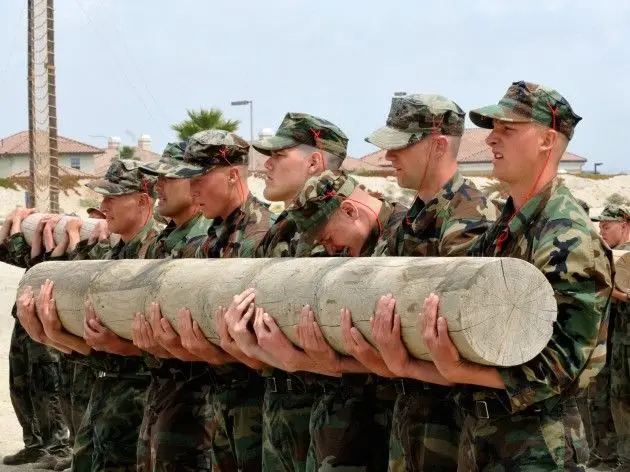
To weed out the weak. Now what does that mean? That means that the workouts are going to be punishing. And so when you're doing a a BUD/S prep course or if you're doing a prep course for let's say MARSOC selection or special forces selection or Air Force PJ selection something like that, what you're going to get in those prep courses is going to be a lot of really punishing training. And when you think about it, you know, a lot of these selections, the the, you know, BUD/S and and MARSOC selection and and special forces selection, they're they're weeding out a lot of people, you know, upwards of of 90% of people won't make it to the end, and they won't make it to the end because of injury or because of quitting.
And so, you know, it's really not going to serve you for a couple of different reasons. First things first, if if you're an athlete, your goal with training is to keep yourself from getting injured. So if you have a sport that you're training for or you know maybe you're a fighter or maybe you are, doing jiu-jitsu or wrestling or football or any of these other sports, if that's your reason for training, the goal for your training is to prevent you from getting injured in the first place. But if you're gonna put yourself through these crazy punishing workouts, then all you're doing is you're increasing the possibility that you're gonna get injured. Remember what I said, ninety percent of those guys entering into BUD/S, most of them are gonna fail, and most of them are gonna fail because of injury. And that's because of the the amount running, the amount of crazy exercise that they're doing. That's not going to make you stronger as an athlete. That is basically going to tear you down. So that's one reason to avoid trying to do some sort of SOF selection type of, of preparation.
Alright? Number two, let's think about this from a weight loss or a muscle building perspective. Again, your goal isn't to to break yourself down, your goal is actually to build muscle up. So when you put yourself through one of these punishing selection type programs, what you're basically doing is you're constantly ripping muscle apart. Now the the prep courses that are out there, they're they're doing this for good reason.
They're they're they're putting people through these types of schedules because they are trying to build tougher individuals. And if you want to do that type of training because of that, let's say you are eventually going to go into, one of these selection courses because you're in the military and you're gonna be try try to become special operations, then absolutely, you should be preparing like that. But if not, all I'm saying is that it probably won't serve another type of goal. Right? So you really have to think about what your programming is gonna look like to serve your goal, to serve your purposes in competing in your sport, or in helping you to drop weight, or in helping you to build muscle.
Right? So so don't get pulled into the hype. And that's not to say that these guys are putting a lot of hype out there. I think the guys at SOF SOFLETE do a great job in their programming. I've I've gotten a few of their programs.
They do a great job for, let's say, backcountry hunters. That's a great one. They've got a they've got a quick team that has quick workouts for people with little time. They've got a a strength, strength program that's great. But if you're on there and you're on the SOFLETE app, you know, my advice is only to go for that selection prep, program if that's what your goal is.
Alright? So the last thing is this. I wanted to talk about curcumin versus turmeric, and we're getting into the nutrition realm here. Now turmeric's a spice that has a whole heck of a lot of benefits. It's anti inflammatory.
It's it's known to really really help the internal organs. It's it's known to take pain away. All types of really great benefits. But there are a lot of different supplements coming out right now that are that are turmeric based. Okay?
So we're seeing a lot of these golden milks out there. Golden milk is kind of like a turmeric drink. It's like a turmeric tea, that you put together and it's it's usually milk mixed up with some turmeric and some some ginger. Right? And that's a great thing to to put into your body if you're trying to, reduce inflammation, if you're trying to beat some aches and pains and things like that.
But here's the thing. There's a difference between turmeric and curcumin. Curcumin is the compound inside of turmeric. It's kind of like the active ingredient, and that's where a lot of the anti inflammatory properties are found. And so when you get a curcumin supplement, it's like a concentrated form of curcumin.
So turmeric, there's going to be curcuminoids in them, in turmeric that you know will help with inflammation. There's plenty of benefit from you know making sure you're consuming turmeric, but when you're taking curcumin it's it's like taking an aspirin or like taking a Tylenol, right? It's very very concentrated And you'll find a lot of curcumin supplements out there, curcumin based supplements out there that are like natural headache relief or natural pain relief. And so I wanted to make this point because I see a lot of supplements out there that are just plain old turmeric and they're pretty expensive. And if you are just taking turmeric and you're expecting pain relief and you're expecting all these other benefits from it, you're kind of wasting your money unless you're taking a whole heck of a lot of it.
Now the other thing to remember about both curcumin and turmeric is that curcuminoids they're not very absorbable in the human body. Now we can make them absorbable, but by themselves, they're not extremely absorbable. And that's because they're fat soluble. So when you are taking curcumin or you're taking turmeric, what you want to make sure is if you're taking a supplement, should have something called piperine in that in it. That's, that's called black pepper extract.
Right? And if it doesn't, you want to make sure that you're taking a bit of black pepper with it. So for those of you who are doing the turmeric golden milk and you're trying to get something out of the the active curcuminoids in the turmeric, then make sure you're also including some some black pepper in the golden milk. And if you're taking a curcumin supplement, if it doesn't have piperine in the supplement, then make sure you're you're taking some black pepper with it or black pepper extract. Another thing that helps is if it's with fat.
So if you wanted to take that along with, let's say, your fish oil or if you wanna take it take it along with a little bit of MCT oil, that would also really help with absorption. So that's all I got for today, guys. You know, we are growing by the week. We're getting lots and lots more downloads. We're getting some amazing guests.
I just had Sal Di Stefano on from Mind Pump Media. Really awesome guy, and they've got a great show over there. Later on this week, I'm bringing on Remi Adeleke, who is one of the actors from Transformers two. He was also a Navy SEAL. He's got a really interesting story.
The guy grew up on the streets in the Bronx. He was born in Nigeria, and then really made his way up and and became a Navy SEAL and found religion and is living an awesome life right now. So I can't wait to bring his story to you. And, really looking forward to speaking with you again later on this week for Warrior Notes. If you can, please do us a favor and spread the word.
Share these episodes out with people who can use them. Let people know what we're doing here. And if you can, pay us the highest compliment by heading over to iTunes and leaving us a five star rating and written review. It really helps spread word about the show. Thanks so much, guys.
Take care.
Host of the Warrior Soul Podcast and founder of Warrior Soul. Worldwide trainer and nutrition coach, contributing author at Testosterone Nation and Muscle and Strength.