Podcast episode
Intermittent Fasting, Ice Baths, and Saunas
Hosted by Chris Albert
The Warrior Soul Podcast
Intermittent Fasting, Ice Baths, and Saunas for Recovery
The Topics:
Intermittent Fasting on Training Days
Intermittent fasting or IF is widely known as a weight loss tool. There’s also evidence to suggest that fasting can be helpful for longevity and brain health, but does all of this translate to being able to fast on training days for better recovery? In reality, there have not been many studies done on this and those that have been done are unreliable because they were done on Muslims fasting during Ramadan.
This brings inherent problems in trying to study the benefits of fasting on performance and recovery because Muslims also abstain from drinking water during their fasts and they eat only after sundown and before dawn for that month. That means that dehydration and a disturbed sleep cycle would also be present. In the studies that have been conducted outside of Ramadan there have been some potential benefits noted:
Fasting Combined with Exercise Enhanced fat loss benefits due to increased insulin sensitivity A 2010 study found that the fat loss benefits of fasting were enhanced when combined with resistance exercise. Fasted training enhances muscle adaptations that improve total body glucose tolerance.
Fasting Improved Recovery
A 2009 study on cyclists who trained in a fasted state for three weeks showed improved post workout recovery without loss of muscle mass or performance. Another 2009 study showed increased recovery response to the post workout meal for those who trained with weights in a fasted state.
Fasting Improved VO2 Max
A 2010 study showed a greater training induced increase in VO2 Max in those who’d trained fasted.
Things to Consider When Fasting
In all, while the research in this area is still very minimal, training in a fasted state does look to have many benefits for recovery and performance. There are some things you should consider if you intend to train in a fasted state:
- Stay hydrated. Fasting will deplete water in your system. Aim for at least half your bodyweight in fluid oz of water per day plus an additional 10 oz.
- Increase your mineral intake. In addition to losing water you will lose minerals. Add a pinch of himalayan salt to each liter of water that you drink.
- If you are a woman, be very careful with fasting as it can lead to hypothyroidism. You may want to consider supplementing with selenium or adding brazil nuts to your diet.
- Fasting does not mean starvation. Make sure that you are still eating adequate calories and getting the micronutrients your body needs!
What’s Better for Recovery: Ice Baths or Saunas
The answer: both are great tools, but to be used at different times. They work through similar processes: the release of heat shock or cold shock proteins.
Cold Exposure
Cold exposure helps to change your core body temperature. This causes the release of cold shock proteins to protect your internal organs and your brain. It also activates something called Brown Adipose Tissue or BAT. BAT is present in mammals and it is a defense mechanism to help the body warm up. Essentially it activates white adipose tissue to be burned as energy through shivering. Here are some of the benefits:
- Decrease of inflammation
- Brain protection. Studies have shown that cold exposure can slow the onset of neurological disorders
- Potential for enhanced fat loss
The best time for cold exposure would be at least 3 hours outside of any workout. You should avoid doing it immediately post workout as it could shut down inflammation, and inflammation is important immediately post workout to kickstart recovery.
Heat Exposure
Heat shock proteins are known to help the direction of amino acids to repair tissue. This means that they do have the potential to enhance muscle building and recovery.
Transcript
Machine-generated from the episode audio and lightly edited — may contain errors.
Chris Albert (link to this point)
What is going on, everybody? Welcome to the Warrior Soul podcast, and this is another episode of Warrior Fitness q and a. And the Warrior Soul podcast, for those of you who haven't listened to us before, this is basically a lifestyle podcast for US military veterans. And the idea here is this. There's been a lot of talk over the past decade and a half of veteran suicide and really high rates of veteran homelessness and a lot of bad things going on in the veteran community.
And there's been a lot of efforts out there to raise awareness about these things, but there's not been a lot of effort to actually impose solutions. And in our mind, the best way to help the veteran community is to help veterans to help themselves. My name is Chris Albert, and I'm a proud Marine Corps veteran and the founder of Warrior Soul. And whether you're a veteran or not, you're gonna get a lot out of these episodes to help you along in your way regardless of what your mission is. Today, we've got a really interesting episode for you.
It covers two of my favorite subjects. Number one is recovery, and it's a question centered around whether ice baths or heat saunas are better for recovery. And the other one is intermittent fasting, and we'll be getting into both of those. I just have a couple of different quick announcements that I've got to make. Number one, this podcast is brought to you by F Bomb Nutrition.
They make awesome, delicious, amazing packets of fat. And, not like fat, like gloppy fat or anything like that, but they make macadamia nut butters. And these macadamia nut butters mixed up with chocolate, mixed up with sea salt, mixed up with pecan butter. Absolutely delicious. No sugar.
Tastes like a crushed up macadamia nut butter cookie. And you can have them at any time you want because you can carry these things around wherever you want without a mess. And they're awesome people, they've been donating packages of this stuff to the troops overseas without us even even asking them. They came to us, asked if we knew of any deployed units, and so we put the information out to them, and they were able to get those boxes of f bombs out there to the troops. But if you wanna try f bombs for yourself, head over to www.dropanfbomb.com and use the code Warrior Soul at checkout.
That'll get you 20% off of your first order. In addition to that, I just want to mention that we run this episode each week along with our interviews on Mondays and our Warrior Notes on Fridays. The Warrior Fitness q and a is published every Wednesday, and we do this completely for free. All we ask is that you spread the word about what we're doing here, and you put people in touch with this podcast who can be helped by it. And if you can, pay us the highest compliment by not only sharing the episode, but also writing us a five star review on iTunes.
It really helps us to spread word about the show. So with that, let's get into the actual subject matter for today. So the first question I got, and I take all these questions from the Warrior Soul Fitness Academy private Facebook group on, Facebook. You guys can join that if you would like, and, I can also take your questions. But, the first question we're dealing with today is from Mr.
Michael Denman. And he said, what's the best method for recovery from full body exercise routines? Ice bath or sauna? And this is an interesting question. And it's interesting because our bodies have these crazy defense mechanisms.
When you play around with the core body temperature, the human body's first impulse is always towards survival. So what does it want to do? It wants to protect the internal organs. It wants to protect your brain. It's doing everything it can to keep your body alive.
So when you expose your body to extreme cold, or you expose it to extreme heat, which can both, play around with your core body temperature, some interesting things happen. Number one, what happens is your body starts to release either heat shock or cold shock proteins. Alright? Now, these proteins, they they do some awesome things for your body. Like I said, they're meant to keep your body alive.
But basically what you're doing when you either get into an ice bath or you go into a sauna, is you're tricking your body into thinking that it's in danger of dying. Right? And so when that core temperature goes up or it goes down, it's gonna make some moves to protect the brain and it does so by releasing these proteins. Now both cold shock and heat shock proteins have some benefits. I'm gonna go into each of them.
So number one, cold shock proteins. Now this is really interesting. You know, I I had an interview here with Scott Carney on the podcast, and he wrote a book about a guy named Wim Hof. And Wim Hof is a a really interesting guy. He has this breathing technique where he says he can go and he can, teach people how to tolerate the cold better.
And Wim's got a bunch of world records for for being underwater and in ice. And he's done marathons up the Arctic Circle. He's run across the Sahara, and he claims this breathing technique can teach anybody else to do what he's able to do. But there's some interesting, you know, historical facts here. Scott Carney notes this in his book.
Back when the Pilgrims landed at Plymouth Rock, that first winter they had in cold ass Massachusetts, a lot of people didn't survive. You know, Europeans had not been exposed to the elements like that. And they get through this winter, and just at the end of winter, they're standing there. They're all bundled up. And this, local Indian comes out, and he's dressed in a loincloth.
And he walks up to these guys, and he says, welcome Englishman. Do you have any beer? Now picture that. You're a pilgrim. You're you've been freezing your butt off for the past, you know, however many months, and Massachusetts.
It's in the late winter, early spring, and and early spring is still extremely cold up there. And all of a sudden, this guy walks out in a a loincloth, and he's perfectly comfortable. The basic gist of this is that we as human beings, we have something in us called brown adipose tissue, and it's present in all mammals. And supposedly, that allows us to tolerate the cold a little bit better. It also supposedly, and I say supposedly because there there is limited scientific evidence sent around this, but it also supposedly helps to burn white adipose tissue, which is the fat that builds up around our bodies.
And brown adipose tissue supposedly activates that white adipose tissue in order to keep us warm, to create kind of a shivering effect. And if you expose yourself to the cold enough and you're out there, you build up this brown adipose tissue and supposedly it can increase your tolerance to the cold. So it's just an interesting note there. There's a few other things about brown adipose tissue that are interesting. And and number one, it's supposed to help with fighting inflammation, right, and reducing inflammation around the body.
And all these things are are things you could build up through regular cold exposure by taking cold showers regularly, by taking cold baths regularly, by maybe taking an early morning dive. Now what they've also been able to show, with rodent models is that in rodents who have genes expressed for let's say Alzheimer's disease or other or dementia or some of these other brain disorders and I'll list some studies up in the show notes where you can take a look at this but supposedly exposing them to the cold and the release of cold shock proteins actually helps with protecting the brain and helps with protecting the cells in there that are dying off from these types of diseases. It could actually help delay the progression of these types of neurological disorders. So that's some interesting information for those of you those of you out there, you veterans out there who might be suffering from a traumatic brain injury, there's some interesting information there on something that you could do that's potentially very free, that could help you as far as, you know, healing traumatic brain injury. And I'm not saying that the science on that is certain at all, but the evidence is there that it can actually help with reducing brain inflammation and reducing the progression of disease in the brain.
So definitely something to consider there. When we're talking about recovery, yes, because of the anti inflammatory properties of cold shock proteins and activation of brown adipose tissue, there's definitely some evidence to suggest that taking a cold shower or an ice bath could help you with recovery. Now, I'll say that with caution, and, I'll explain why right after I talk about heat shock proteins. Heat shock proteins, like cold shock proteins or proteins that are released with a change in cold body temperature. You actually can release, heat shock proteins if you're if you're going through hypothermia, or if your your core body temperature starts to raise a little bit too much, right?
And so what starts to happen there is, with heat shock proteins, they're actually known to direct amino acids in the body. Right? They're known to direct amino acids in the body, and through this direction of amino acids they can actually help to repair certain types of tissues. And so potentially, again, this a big potentially, they could potentially help with muscle building and recovery. So if you're asking on whether it's ice bath or sauna that could help you with recovery, it's actually both.
So a heat shock protein could actually help you with muscle building and recovery. Here's my big cautionary tale on this though. One of the things that you need to be careful of when implementing something like cold showers or anything that's going to be anti inflammatory is that, you need to understand that you need some degree of inflammation in order to recover. Right? So if you for example, started to work out really hard and you train, train really, really hard and directly after your workouts you take a bunch of fish oil.
There's been studies to suggest that taking fish oil, even though it's quite good for you and anti inflammatory, taking fish oil directly after a workout could inhibit your recovery and keep you from progressing and keep you from building muscle. So my recommendation on the cold showers or the cold baths would be not to do it directly after a workout. I might do it, you know, at least three hours outside of a workout, or you could do it on an off day when, you haven't trained, and you can use that in order to to fight inflammation and to, to reduce your aches and pains. But, you know, I really wouldn't do it right after a workout or directly after any intense physical exercise. Heat shock proteins and and and exposing yourself to the sauna, that's a little bit of a different story.
As they seem to to work by directing amino acids, there could be a potential for better recovery and better muscle mass growth directly after workout by sitting in a sauna. But again, know, they're both tools neither is good nor bad. They're both tools that can be maximized at different points in time, right? The ice bath on days when you haven't trained or at least three hours after your workout, the sauna probably directly after the workout. Alright, so those are two big things to think about.
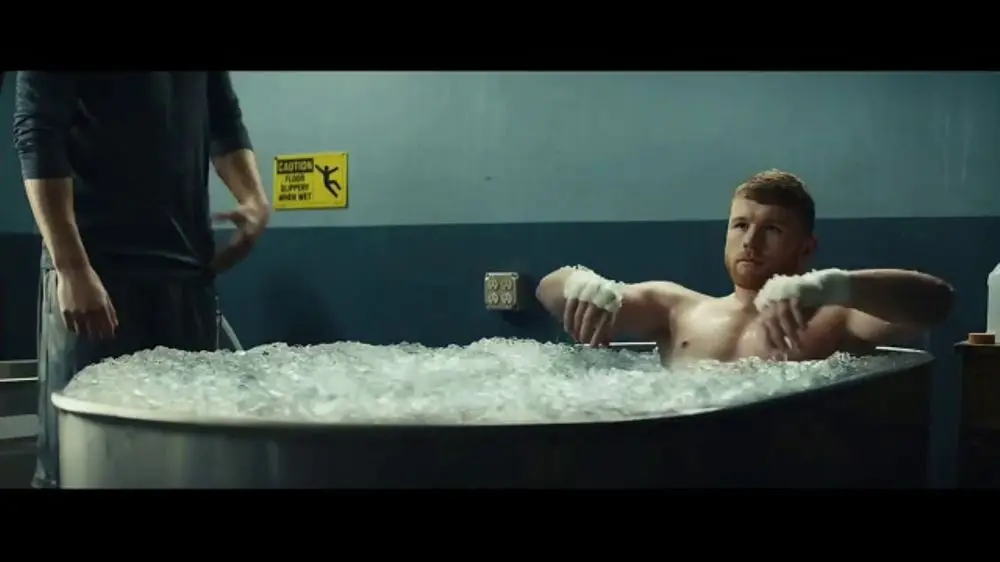
Now, as far as where to get your cold exposure or where to get your sauna exposure, there's a few different ways of doing it. The cold exposure, like I said, you could do a cold shower that's completely free. You could do an ice bath if you have a bathtub that's completely free. You could also do one of these cryotherapy places. Right?
And the cryotherapy is a really extreme form of cold exposure. You get into this machine and you know this machine works on you while you keep your head above it and you know it's I forgot how cold it is. I did one one time and it was freezing, really freezing. You have to wear socks and cover up certain things so that they don't freeze up. So so that's another way you can do it.
As far as the sauna goes, they have these different types of heat lamp saunas that you can get, red light saunas, and you know all that requires is a tent. You could also get saunas off the internet for actually surprisingly not very expensive amounts of money, but, a lot of gyms these days also have saunas that you can take advantage of. Though, make sure you're wearing sandals because some of those things can get pretty pretty dirty. So that's my take on both heat shock proteins, cold shock proteins, and ice ice baths and saunas. The next question I got here is this, and this is kind of related in some way, but it's from Maurice Elmore, a new addition to the Warrior Soul Fitness Academy, and he said, Are there any benefits to intermittent fasting on training days or is it best to do it on non training days?
And it's a great question because a lot of people are talking about intermittent fasting these days and there's been a lot of studies to suggest that, intermittent fasting can help people who are sedentary. There's been a lot of studies to suggest that it could help people who are afflicted by disease. There's been a lot of studies to suggest that it can help with weight loss, but there's actually not a lot of good literature out there to suggest that there's benefits to recovery for intermittent fasting. There's limited evidence to suggest that it can definitely benefit recovery, but I don't want to come on here and be like, dude yeah, intermittent fasting is totally gonna be great for your recovery because there's there hasn't been a lot of studies. The studies that have been done many times have been done on the Muslim population while they were practicing Ramadan, and I'll tell you why these don't make for good studies, and the results were very mixed.
But here's the thing, right, the Muslims practicing during the holy month of Ramadan, one of the things that they're not allowed to do during that month is to drink water. Right? They're not allowed to drink water. And if you know anything about human performance, you know that if the human body is dehydrated to any degree, that is going to inhibit recovery. It's also significantly going to inhibit performance potentially up to two thirds.
So if we're talking about people who are not getting any calories and they're dehydrated, that's a double whammy right there. Alright? The other big thing is this, you're not allowed to eat during Ramadan except after sundown and before sunrise. So guess what happens there? People tend to eat late at night when the sun's been down and a lot of times they'll do Ramadan feasts, lot of times, you know, they'll wake up very early to eat.
Right? So the sleep cycle gets disrupted. So you have not only, you know missing out on the calories, only missing out on the water, you get a triple whammy there. You're missing out on calories, you're missing out on water, and you're missing out on sleep. So that's an extremely difficult month and, it's not surprising that they're seeing mixed results as far as athletic performance during that time period.
But for our purposes, for those not practicing Islam and those of us who are just you know trying to get into fasting for its health benefits and for its performance benefits, you know that evidence doesn't do anything for us because we're gonna need to do a few things in order to get the maximum benefit from it. So my big suggestion if you're looking to fast, make sure that you're doing a few different things. Number one, make sure you're hydrated. Right? Drinking lots and lots of water, more water than you think you need to, while you're fasting.
And that's because the body gets rapidly dehydrated when you start to lose glycogen. For every gram of glycogen you store, you're storing three grams of water. Now what that also means, you're not only pushing out water, you're also pushing out minerals. So in addition to the water you're drinking, right, you should be drinking at least half your body weight in fluid ounces plus an additional 10 ounces per day. You also need to be making sure that you're getting a good amount of minerals.
And this is why I recommend for people who are fasting to take a pinch of Himalayan pink salt, and stick it into each liter of water that they're drinking. K? That's gonna help you with your mineral balance that will help you to keep from getting cramps, the headaches, all the uncomfortable things we associate with getting dehydrated. Just drinking water is not going to be enough here. Okay?
Now what are the potential benefits that we know of? Well, what's the studies that have been done have suggested that you get heightened insulin sensitivity not only from fasting, but you also get increased insulin sensitivity when you're fasting and you've trained while fasting, right? So what that suggests is that you're going to be better able to absorb nutrients when you do eat them, right? And this will also help you with reducing inflammation around your body, reducing joint pain, aches, all that stuff, but also with helping your body to recover a little bit more quickly. Because if you're highly inflamed that's going to extend your recovery time.
The other thing here is that by giving your intestinal tract a potential rest remember if you've listened to past episodes here, if you've watched me on the Warrior Soul Agoge YouTube channel, you know that inflammation is really centered around the intestinal tract. The intestinal tract is largely responsible for the inflammation that occurs around our body. That's because it houses most of our immune system. So by giving your intestinal tract some time to heal, you're also allowing your body to recover from a lot of the inflammation and there's less of an opportunity for inflammatory cytokines, these inflammatory proteins that that get produced by your immune system, to be sent out around your body to cause havoc, in your joints and and in your brain and all the rest of those things. So those are some things to think about as well.
So we know that heightened insulin sensitivity potential for reduced inflammation. There was also studies to suggest that in endurance athletes who did six weeks of training while either being fasted or eating a high carbohydrate diet. The fasted athletes demonstrated better muscle protein translation. That's better muscle protein synthesis after their workouts. Right?
And that that was, the result of muscle biopsy tests done on fasted athletes, during six weeks of endurance training and compared to, athletes who'd have been eating a lot of carbohydrate. Better muscle protein synthesis. And that's always better for recovery. Another study showed a a greater intramyocellular response to a post workout meal. Now what does that mean?
That means better absorption of nutrients into your cells. So, you that that would also most certainly help with recovery. But what I would suggest here is that that is probably the result of increased insulin sensitivity, right? Making those receptor sites on the outside of the cell much more receptive to having nutrition shoved into them by the by the hormone insulin, right? So that's another big positive as far as fasting goes.
The other thing is better glycogen retention and, and repletion. Now what does that mean? Well, counterintuitively, right, counter to what most people would think, the the human body, actually gets better at storing and retaining and then replenishing glycogen, in states of ketosis or in states of fasting. Right? I've talked about this before with the study done up at the University of Connecticut with Doctor.
Jeff Volek, right, and they did this on the ketogenic diet. And they had athletes, who'd been eating a really high carbohydrate diet for six months, and then athletes who'd been eating a very high fat ketogenic diet for six months. What they found amongst those athletes who'd been, not consuming many carbohydrates, is that they actually retained glycogen a lot easier and a lot more efficiently than the high carbohydrate athletes. The high fat athletes used less glycogen during exercise and they actually had equal to or greater than glycogen concentrations in their muscles than the high carbohydrate athletes. So that's an interesting note, and there's been other studies to suggest that even those who fasted and gotten to ketosis through fasting were better able to retain and were more efficient at utilizing their glycogen stores.
So what does that mean for all of you out there? Alright, so this is something that I really wish I knew when I was in the Marine Corps, because I used to just constantly try to try to stick something in my mouth to get some energy. And if I hadn't had a bit of an MRE, or if I hadn't had an energy bar, or if I hadn't had, you know, something in my body, I would constantly get tired when I was out in the field. But ever since I've adapted into ketosis and ever ever since I've been doing intermittent fasting, I actually don't have that problem. I don't get hungry.
I don't, you know, get brain fog. I don't start to I don't start to, you know, get lower energy at the middle of the day. My energy is more constant. I'm able to do a lot of things. And I do a lot of things all day long.
I mean I'm lifting weights, I'm running, rolling jiu-jitsu, I'm doing my business, I am very very active. And you know had I not had the ketogenic diet and had I not started intermittent fasting, I don't think I would have been able to be where I am right now as far as what I can do in a single day. So this is just something for for those of you out there to think about, as far as what, what you could implement if you are lacking energy. Right? And I'm not saying that ketosis or intermittent fasting is for everybody, but it is a tool, a potential tool to use that's going to keep you from being dependent on food, and that could make you, more independent by allowing you to utilize your own fat stores for fuel.
Right? So that's the the big thing. What I would say is that, if you are considering utilizing intermittent fasting on a training day, I would experiment with it. I work into it slowly. Alright?
I would, you know, try one day a week just to see how it goes. Alright? And then, make sure you're hydrated, make sure that you've got enough minerals in your body, and then get through the workout. Don't go super crazy with your workout at first. And then, you know, wait and see.
And then the next next week try another day or two. Alright? And then the week after that maybe out a third day. And then slowly your body can start to get used to it. Eventually I just really enjoy doing fasted training a lot more than I do doing training, doing training after I've eaten something in the day.
I'm just more focused, I'm more in the zone, I'm more ready to do the work. So that's my take on that guys. And that's actually all the questions we got for today. Like I said, guys, if you guys are interested in having me answer your questions here on this podcast, you can definitely join our free Warrior Soul Fitness Academy group. And in order to do that, just head over to menshealth.warriorsoulagoge.com.
And if you're interested in a little bit more, I've got this new program and it's called The Warrior Soul Agoge. And what that is is our private training group. And what I'm doing for this group is I am designing programs for them. I am introducing them to the library of programs that I've created for my athletes over the last decade. I'm also helping them to design their own diets.
I'm helping them to, put together their entire program. And, what we're doing at first is we're just trying to take on a small number of people, just 20, and each week we'll be getting together over live zoom calls. So if you're interested in that, you can head over to membership.warriorsoulagoge.com and it's up there for you if you want to take advantage of that. So with that guys, we've got some great interviews coming up for you. On Monday we've got Mr.
Kevin Ashworth. Kevin Ashworth is a really awesome expert on anxiety. So if you're somebody who suffers from anxiety you're gonna get a lot out of that episode. And then that's about it guys. I want to thank you so much for listening.
Take this information down. If you're looking for the show notes, can find it over at warriorsoulagoge.com under show notes and we'll be talking to you guys next week.
Host of the Warrior Soul Podcast and founder of Warrior Soul. Worldwide trainer and nutrition coach, contributing author at Testosterone Nation and Muscle and Strength.