Podcast episode
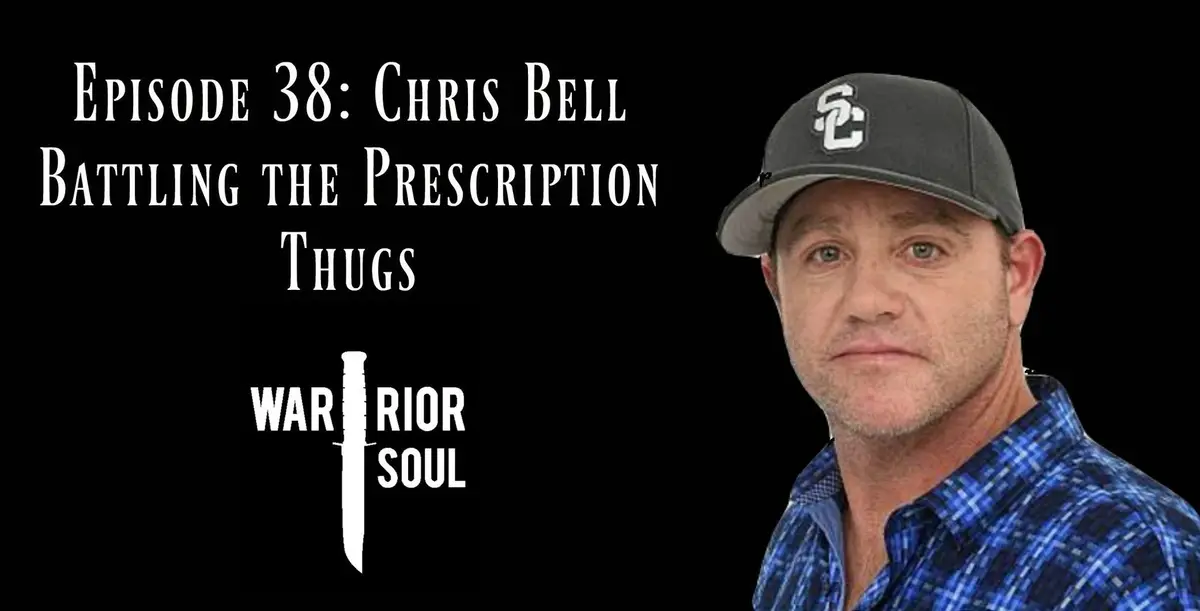
Prescription Thugs, Kratom, and Veterans with Film Maker Chris Bell
Hosted by Chris Albert
The Warrior Soul Podcast
When we think about plagues, we normally think about diseases from viruses or bacteria. We don’t think about these diseases coming from medicines. Someone in this country dies from an opiate overdose every 19 minutes. That’s pretty startling, but here’s something even more startling: 91% of those who survive an opiate overdose end up going right back on the drugs that nearly killed them.

Our Guest: Chris Bell
Chris Bell is a documentary film maker who is tackling this issue head on through his work. Initially known for his film on performance enhancing drugs, Bigger, Stronger, Faster, Chris decided to tackle the prescription drug abuse epidemic with the movie Prescription Thugs after being affected by it personally. His brother Mike, who was featured in Bigger, Stronger, Faster, was an addict who died shortly after the film was released.
Finding Kratom
Chris also had a secret that made it even more personal – he was also an addict. Affected by years of pain from arthritis and hip surgeries, Chris was popping prescription pills like crazy. Today, Chris is sober, largely because of a plant based product called Kratom. Kratom is a plant grown in Thailand that is used to aid in opiate withdrawal. It’s also currently on the target list to be scheduled as a schedule 1 drug by the Drug Enforcement Agency. Chris is also currently working to ensure that Kratom stays legal and we cover his current project: A Leaf of Faith. Additionally, we’ve got a lot of gems in this episode. Chris doles out advice on filmmaking, living your life to its fullest, fitness, and ketosis.
Transcript
Machine-generated from the episode audio and lightly edited — may contain errors.
Chris Albert (link to this point)
When we think about a plague, we're normally thinking about some sort of virus or a bacteria or rats infesting our homes and us getting sick from being bitten by those fleas. But rarely do we think about medicine as causing that plague. Over the past couple of decades, doctors have been prescribing opiates like they're candy. Somebody in this country dies from an opiate overdose every nineteen minutes. And a lot of times we think about things like heroin or legal street drugs.
A lot of people don't know that many heroin addicts started with prescription opiates. In this episode, we're bringing you Chris Bell, the creator of Bigger, Stronger, Faster, and the film, Prescription Thugs. Chris is not only a documentarian of these issues, he's also a former addict and has lost his brother to this plague. There's also a lot of gems in this episode. We go into Chris's career, how he became a filmmaker, and we get into a lot of things about health and fitness and especially ketosis, which is the subject that I've been interested in for quite a while between doing the work I do as a trainer and what I think its implications are for the active duty military community and the veteran community.
So, without further delay, let's get into this awesome episode, episode number 38 with Chris Bell. This is Chris Albert, and I'm here to remind you of one thing. Someday, you're going to die. That's not some morbid statement or scary idea. It's solid fact.
Your time here on this earth is limited. And we need to be reminded of this as much as possible for one simple reason, to live your best life while you can. This is the Warrior Soul podcast. Ladies and gents, thank you very much for tuning into the Warrior Soul Podcast. This is episode number 38, and we've got a really special guest for you here today.
We've got Chris Bell, the creator of Bigger, Faster, Stronger and Prescription Thugs. And he's here today to talk about a subject that is not only important to the veteran community, but I think is extremely important to our country as a whole. That is opiate addiction and prescription drugs in general. Chris, you've done so much work in just this area. I have to say, I'm a huge fan of all your movies, Prescription Thugs.
Chris Bell (link to this point)
Thank you. I appreciate it.
Chris Albert (link to this point)
Bigger, Faster, Stronger. You know, I was a bodybuilder and a power lifter and, you opened a lot of people's eyes on these issues. How how did you get into all this? How did... Mean, I know that's a big question, but just...
Chris Bell (link to this point)
It's pretty... It's actually pretty simple. So I always wanted to make films, narrative, feature films. And I actually, like, right around, say, in high school, I was always, the class clown. You know?
I was always, like, messing around and getting in trouble as a senior prank. We stole a 100 lawn ornaments, like, homes off of people's lawns and, you know, put them all around the school and stuff like that. There was always just something ridiculous going on, and I was just always into, like, entertaining people and being funny, like, trying to be funny or trying to be a smartass or whatever. And so, in school, in high school, I took a communications class and actually ended up getting kicked out of that class for pretty funny reason. One of my friends tucked his penis between his legs.
They told us to take a picture of something shocking. So my friend tucked his dick between his legs, and I took a picture of it. And they thought it was really a girl. So they're... It was, like, underage.
So they're like, oh my god. I can't believe... Like, no. I swear to god. It's Mike Raza, and he has his dick between his legs.
So I went back in the in the principal's office and stuff was, like, crazy. Right? So I was just always, like, that that kid or that guy that was kinda, like, lighthearted, having fun, and and never thought I could, like... Would turn it into, like, any money or anything. I just was...
You know, didn't really have any sort of clear path. But my father gave me a clear path one day when he said, you have two choices. Either you can go get a job working for the city, being like a post office worker or like a garbage man, you can go to community college because your grades suck and you'll never get in anywhere good. And so I had about a 68%, you know, GPA or whatever. In New York State, they don't do, like, four point o and whatever they do, percentage.
You know? So I was, like, at the lower end of my class. It was, like, 500 kids in my graduating class, and I was at, like, rock bottom. You know? So, I didn't think I really had much of a future, so I went to the community college because that seemed easier than getting a real job, and real jobs seem boring.
I never thought I was, like, destined to just have, like, a normal job. So I went to the community college, and I found, you know, this class communications. I took that, and I really excelled at it, immediately. We had to shoot, videos and stuff for it. And so I I became really tight with the teacher.
Right away, the teacher saw that there was, like, something different about me. And he was like... You know, took me aside very early on and basically said, you don't belong here. You know, you don't... You belong at, like, somewhere big.
And and no one really ever believed it. I would tell people like, oh, yeah. Like, I don't know why he told me this, but, you know, he thinks I'm I'm really talented at this or whatever. And it didn't really manifest itself until I made a music video for a friend of mine, and it won a national contest. And I was flown to California and realized the contest was actually judged by Francis Ford Coppola, Kathleen Kennedy, who's Spielberg's producer, and a lot of other, like, really famous people.
And I was like, oh, shit. I I guess I'm pretty good at this. You know? And so that's what really sparked me getting into filmmaking and go... I went to USC film school.
So that's that's sort of like the long roundabout story. And... But but what happened, like, to get into USC film school was kinda crazy. Was I was at a community college where no one's ever transferred to USC film school from my community college. But I had the backing of all those, you know, celebrities that were willing to, like, write me letters of recommendation to go to USC.
So I had, like, a letter of recommendation from Francis Ford Coppola who I've never met, but he saw my work. So I got pretty lucky, you know, got into the program at USC and kind of, tick off from there. But, like, even after I graduated from school, it was still, like, eight years before I made, you know, or more than that, like, ten years before I made a movie. You know?
Chris Albert (link to this point)
Did did you know you were gonna do documentaries at the time, or or were you gonna do something else?
Chris Bell (link to this point)
No. Graduated... Actually, I graduated USC in '97. I started Bigger Stronger Faster in, like, 2004. What happened was, I had this this, short film that's online somewhere I called Billy Jones.
Billy Jones was like an epic short film that I thought was just gonna launch my career into the stratosphere. It was about a kid that smokes himself to death to win a prize from his favorite tobacco company, and it was a scripted, you know, dark comedy.
Chris Albert (link to this point)
Mhmm.
Chris Bell (link to this point)
And it did really well. It won the Yahoo Film Festival, which is, the first and only time Yahoo ever did it, but it was a big deal at the time. Roger Ebert was the one that handed me the award one on one. And, you you know, for me, that was like, at the time, it was a huge deal. Quentin Tarant...
I got to meet Quentin Tarantino. He was at, you know, he was at this event for it and stuff like that. So it's all, like, really exciting when you're young. You know, you're all fired up and you think you're off to the races. But even after, like, winning that festival, doing that short film, which is a scripted thing, I had a script that I went out around town with and just, you know, month after month, I just kept hearing, like, sorry.
We're not interested. Like, people would be very interested in the script, but then, like, it would... You know, the interest would just start to wane as, like, they start buying other scripts or they read something new or whatever. And so the whole business is kinda crazy. So I just flounded around for, ten years trying to make, you know, a a scripted movie, and it didn't work.
So one day, was working at Gold's Gym, and one of my best friends from film school, his name is Alex Buono, he walked in the door to get a a membership at Gold's. And I was like, what are you doing here? And he's like, what are you doing here? And I said, well, I'm working. You know, I'm selling memberships.
He's like, why are you selling memberships, dude? You're way too talented to be doing that. And I'm like, well, wanna make movies, but it's just not happening. We got talking. He's And like, why don't you write what you know?
Make a movie about this place. I'm like, I want to, but I don't know how kind of thing. And that's how it started. You know? Yeah.
Chris Albert (link to this point)
It it seems to me though that, you know, just being there at Gold's Gym and and being in that position, it also sets you up for a lot of stuff.
Chris Bell (link to this point)
Gold's Gym is the mecca of bodybuilding. You know, today, I just was talking to, Josh Brolin this morning, who's amazing, by the way. What a nice dude, but he's playing Cable in the new Deadpool. He's And talking about, like, I got eleven weeks, bro, to put on... Pack on some weight.
And it's just such a cool environment. Like, we're... Like, not saying that to brag, but I'm just saying, like, how cool is that at your gym? You know? Like...
And it's like every day, there's some, you know, Magic Johnson training there or, like, 50 Cent training there. What What a great, fired up environment it is at the Mecca.
Chris Albert (link to this point)
No. Absolutely. I, you know, I grew up in... I'm an East Coast boy too. I'm from
Chris Bell (link to this point)
Connecticut.
Chris Albert (link to this point)
Oh, cool. You know, I grew up out there. And when I was in the Marine Corps, I used to tell myself, I'm I'm gonna move out there to California, and and I'm gonna lift weights and live by the beach. And so I ended up out here just because I went to grad school in Santa Barbara Yep. Which is beautiful.
Chris Bell (link to this point)
But Santa Barbara's nice.
Chris Albert (link to this point)
Yeah. Yeah. Yeah. Absolutely. But when I I moved down to LA because I actually opened up a gym called Metroflex Gym in Long Beach.
Chris Bell (link to this point)
And Oh, I was just at Metroflex. My girlfriend just competed there.
Chris Albert (link to this point)
Yeah. My my buddy Eddie, he still owns the place. We started it together, but at the time, I was poor as fuck. So Yeah. I, you know, didn't have a lot of money.
Chris Bell (link to this point)
Became a very popular gym. You should be proud of that. That's cool.
Chris Albert (link to this point)
I'm extremely proud of it. I, you know, I think of it as as one of the legacies here.
Chris Bell (link to this point)
But And that's like CT Fletcher. That was, like, his home gym where he started. Correct?
Chris Albert (link to this point)
I used to be his, nutrition coach. I was his nutrition coach in my
Chris Bell (link to this point)
What a great guy too. I can't say enough good things about CT. He's a cool guy.
Chris Albert (link to this point)
Yeah. He's amazing. And, you know, funny story about him. He literally walked into the gym off the street one day while he was on his... While he was walking to work.
And, he literally came from nothing. Like like
Chris Bell (link to this point)
Yeah. Oh, I know.
Chris Albert (link to this point)
Yeah. I'm just so happy for everything that's happened for him and for Mike and and a lot of other people went went through there. But it's it's an amazing scene down here in in Southern California.
Chris Bell (link to this point)
It's good if you're positive, you know, like, you can also go the other way and be negative. There's a lot of people out there that would go CT this and that. Like, they get... Know, like, people talk trash. Like, I always hear people talking trash.
I'm like, Cali Muscle or this guy. Like, I know it. I'm always like, why don't you embrace these people? These are people in our industry. I love all of them because I think everybody's unique in their own way.
Know, You I think everybody's just out there hustling and and doing good things. So I always try to keep a positive attitude with all these guys because I I think that the fitness industry needs more of that and less of, you know, like, people wanna fight Rich Piana. Like, Rich Piana's a great guy. He's so nice. Yeah.
People wanna fight... You know, people wanna show up at a a event and fight him. It's just dumb.
Chris Albert (link to this point)
He's, like, one of the nicest dudes I've ever met in my life. And and
Chris Bell (link to this point)
Super nice. Super respectful. Yeah. So it's like, just try to never say... I...
I've learned my lesson. Now, like I said, I try to never say anything bad about anybody unless they really deserve it, you know?
Chris Albert (link to this point)
Yep, absolutely.
Chris Bell (link to this point)
They'll call you out if lie or whatever, but you know?
Chris Albert (link to this point)
No, those are good, those are definitely good words to live by. So getting into, you know, probably want to start with bigger, stronger, faster or bigger, faster, stronger. Sorry, always screw up the words.
Chris Bell (link to this point)
It's bigger, stronger, faster.
Chris Albert (link to this point)
Bigger, stronger, faster.
Chris Bell (link to this point)
Yes, And, yes. Actually, I'll give you a little bit of... A little tidbit in the side. A lot of people say, I did this program called bigger, faster, stronger in high school.
Chris Albert (link to this point)
You know? I remember that. I do remember that.
Chris Bell (link to this point)
And I say, look. I know. I actually was trying to call the movie bigger, faster, stronger, but the guy who owns Bigger, Faster, Stronger, the company is trying to sue me. Now just so everybody knows, he has no case because one's a movie and one's a a business.
Chris Albert (link to this point)
Mhmm.
Chris Bell (link to this point)
And you can't, like, trademark, you know, like, if the name of your business is is Braveheart, you can't say, well, you can't make a movie called that because my biz... You know, unless you trademarked it in every every corner of the world, you know, every division. You know? He's being a he's being a freaking I it bigger, was trying to faster, stronger, and then the guy tried to sue me. So I just rather...
Just to avoid a conflict, just said screw it, you know.
Chris Albert (link to this point)
Yeah. That's that's a that's a whole other issue that the the trademark trolling that goes on with a lot of different things and that does
Chris Bell (link to this point)
Oh, that's just, yeah, crazy.
Chris Albert (link to this point)
Getting into the movie a bit, you know, during that movie, became pretty apparent that your brother Mike had an issue. Sure. With all your films that I've seen, you know, it's literally something that you've lived and that's hit you personally. How bad was it for Mike at the time? And can you get into a little bit of the background as to how he got started on prescription drugs.
Chris Bell (link to this point)
Well, so Mike, he was an interesting guy. He was very moody his whole life. So ever since he was like a little kid, if something happened, was always extreme. So he loved he loved you just as hard as he would hate you. You know?
So, if, he struck out in baseball, he'd throw the bat. You know? If, if you tagged him in hide and seek or something, he'd he'd, like, throw a temper tantrum so that he could win. You know? He just always was like that, you know, kinda kinda thing like up and down.
I think people like to call that, bipolar, but he was never really labeled bipolar until, like, way later in life, until he was, like, 35 years old. So I don't even know if he ever was bipolar or not. But he just exhibited, like, a different, mentality, like a lot of, just a lot of mood swings and and sort of, wild actions that, you know, I don't know what the answer for that is. You know? But it was never really diagnosed properly, never treated properly.
So when he got to be, like, high school age, he was always very rebellious. Like, he was the first guy to sneak out of the house and, you know, know, go to the KISS concert when he wasn't supposed to when he was only, like, 12. You know? And he just was always kind of a a rebellious kid. So when it came to trying drugs, I think that was a pretty easy thing.
He was also the fat kid. And if you know anything about drugs and addiction, drugs and addiction come from a couple things, lack of connection and also, like, trauma. So when you're young, you can have several kinds of trauma. They come from your parents or they come from your peers. You know?
So, Mad Dog was always the fat kid, and he was just tormented in school every single day. So what he'd do, he'd come home and he beat up his, you know, younger brother because it made him feel good. You know? And that's what happens with these kids. They're conditioned from, you know, school and from other things.
And and I feel bad because, like, you know, you don't know that that's what's going on or you don't know the extent of what what you're doing when you're young and you're making fun of somebody. But, you know, when you get older, you do realize it. You realize, like, how important it is to treat people good when you're young and when you're kids. But for for Mike, we knew very young that he had issues, but it didn't become a drug issue until he was a little bit older. And then when he was about, like, 18 or 19, he had some problems with his girlfriend after he came home from University of Cincinnati, and he was put on a drug called Paxil.
And very soon after he was put on Paxil, he tried to kill himself, like, three times.
Chris Albert (link to this point)
Oh, man.
Chris Bell (link to this point)
And that was just, like, right after he was put on that drug. And I know a lot of vets get put on that drug, and a lot of people get put on it for depression. I just don't think it's jump right into that. You know, wouldn't say, but I definitely would say, be careful. You know?
Chris Albert (link to this point)
Yeah. There's there's a lot of stuff that's just being given out like crazy.
Chris Bell (link to this point)
And That's the problem I have with it. You know, I I went on Joe Rogan, and I said, like, basically, like, psych meds don't work. There's no real proof that they work. And there really isn't actual scientific proof that they actually work. We know anecdotally in a lot of patients, they say, hey.
This makes me feel better, whatever. But, like, the scientific data is really hard to prove because there's no markers for mental health. What I feel now a little bit differently because I had, like, sort of a backlash from that. I just like to say, like, just be careful with them. You know?
Question your doctor rather than saying ask my doctor if this is right for me. Ask my doctor what's this gonna do to me. What does this actually do? You know, what... How is it gonna affect me?
So rather than tell people, like, not to take stuff, I just say ask questions, and it's up to you. You know? Because when I say tell people not to take stuff because I know it's bad for you, they don't listen. They just get mad at me. So now now I just want them.
Chris Albert (link to this point)
You know? Yeah. And I I think that's super important, especially when we're talking about something like the veteran population because you come back and you're dealing with a lot of different things and we can't get into why that might be. One of the big things that we've noticed over here in a lot of the guests we've had on the show, from talking to guys like Doctor Mark Gordon, who we talked about before we hit record here, who are doing work with traumatic brain injury, is we're finding that lot of the guys coming home, they've experienced some sort of low level traumatic brain injury, whether it be from just being in close proximity to an explosion, having your brain shake Yeah, back and forth inside your
Chris Bell (link to this point)
would imagine that's very, very common.
Chris Albert (link to this point)
Yeah. I mean, literally can cause inflammation that can shut down most of the hormones in your body, which as you know, from being experienced with talking to people about hormones, that can cause a lot of medical issues that look a lot like depression, a lot like PTS, and a lot like, some of the other issues that we're seeing veterans experience.
Chris Bell (link to this point)
Exactly. And then, when you're depressed and you get on these drugs, right, what they think... This is sort of a theory, but they think that, people that are really super depressed, they can't get out of bed depressed, and they get on these drugs. A lot of times they commit suicide because they feel just good enough to commit suicide.
And that's just really, really sad because, like, how do you even know if that's what the reaction's gonna be? You know? So with psych med, you're definitely you're definitely playing with some some very, you know, touchy stuff, you know, where you're like, I I I just try to say, like, I wouldn't mess with it unless it's like a last resort. You know? And I...
And for a lot of you guys, I'm sure that decision's, like, a lot different than me sitting in a chair, you know, here, like, not experiencing what you've experienced. I I don't even wanna really comment on that because I know there's a lot of people in the military that, they have to take psych meds because of what they experience, and they work for them. So I don't wanna, like, put that down. I just want to say that I do think that there is... They are overprescribed and they can be very dangerous now.
Chris Albert (link to this point)
What do you think is the most surprising thing that you've come across as far as, you know, your work with prescription drugs and and, and then you
Chris Bell (link to this point)
Yeah. You know what's weird is all the people that I thought weren't on drugs are on the most drugs ever, like housewives, military veterans Yeah. Athletes. Like, it's all the people that I thought, like, growing up weren't the people that did drugs. You know?
And then I realized, like, oh, but these are prescription drugs. So these are handed out like candy among housewives, military, athletes, you know, because there's there's close proximity to doctors in a lot of those cases. So, you know, a lot of pills are flying around this country. And I was just really shocked at the sheer amount of pills. And I was shocked when you hear things like the states of like Tennessee and Vermont and West Virginia and all these different, I think there's six states in The United States that have more prescriptions for opiates written than they have people.
Chris Albert (link to this point)
That's crazy. Yeah, we were looking at some statistics earlier today, me and Andrew, and just a few different things here. Since 1999, the amount of prescription opioids sold in The US nearly quadruple. That's from prescription opioids, drugs like oxycodone, hydrocodone, methadone have more than quadrupled since 1999, yet there has not been an overall change in the amount of pain that Americans report. So that means that they're getting prescribed these things, we're experiencing the same amount of pain that we had back in the day before these things came around.
Chris Bell (link to this point)
Yeah, Exactly. The pain hasn't changed. It's just that the game has changed because now you have increasing amounts of stronger drugs, and that's the issue. I don't think that opiates are the problem. What I think is the problem is the fact of how we prescribe opiates.
Opiates are prescribed off label for chronic pain. And when I say off label for chronic pain, I mean that they are not a good treatment for chronic pain. They're not supposed to be prescribed for chronic pain. But since a doctor practicing in The United States can pretty much prescribe anything for anything they see fit as long as they don't really put a label on it, then, you know, it's called off label and and they can do it. So when somebody comes in and say, doc, my back is sore, what the doctor should say is here's a prescription for some physical therapy.
Here's some Advil, you know, like, whatever, and go on your merry way. And that's not, you know, that's not really what happens. Like, they... Because the patient, will complain. So I think it's, like, both both faults, like, on both sides.
It's like the patients want drugs, and the doctors, it's an easy thing for them to give drugs. Now the doctors are doing a little bit better of a job of of tightening that down, and, hopefully, we'll see, you know, less abuse because of that, But, you know, it still remains to be seen.
Chris Albert (link to this point)
Yeah.
Chris Bell (link to this point)
There's still a lot of people dying. In 2015, we had fifty two thousand drug overdoses in The United States. Fifty two thousand people, you know, could fill up, the Staples Center and Madison Square Garden combined.
Chris Albert (link to this point)
That's insane. And yeah, I read somewhere else, it's like there's one death every nineteen minutes, I think, in this country from opioid overdose or something like that.
Chris Bell (link to this point)
Yeah. And then there's twenty two veterans a day committing suicide. How many how many of those veterans are on opiates and how many of those veterans are on prescription medication? Like, I think that if you looked at how many of the people that commit sue... How many veterans that commit suicide a day, that's a stat to learn, are on prescription medication, find out that number.
It's probably damn near a hundred percent.
Chris Albert (link to this point)
Yeah. And it's funny because, you know, we've had a bunch of different guests, one including Doctor Michael Lewis, and they actually have a pretty large sample of blood from service members. And they actually took the blood from a lot of the service members who, or went back into the blood banks to get the blood from service members who had committed suicide. You know, they found that each of them had been deficient in certain neurosteroids like, what we talked about with Doctor Mark Gordon. But they each, they're all deficient in certain things, deficient in certain nutrients. And it boggles my mind how doctors are so willing to put a chemical in somebody's body, but not say, Hey, you're nutritionally deficient in this and maybe we can head this off with this here.
Chris Bell (link to this point)
Think one thing that also veterans should know, and there's a couple veterans that I'm actually helping with this, If if they're experiencing PTSD, there's a lot of things that you can do with your diet that will help, you know, with that kind of stuff. One of the things that we're looking at right now is a ketogenic diet, is basically a higher fat diet, high fat, low carbohydrate diet, no grains, no sugars, really helps your brain function. And I find a lot of people, have less traumatic, you know, episodes of PTSD on a ketogenic diet. It also is responsible for basically killing inflammation. Will completely stop the process of inflammation in your body.
So if you're pre diabetic, pre cancer, all those things, it can just reverse that. So we're we're seeing a lot of medical benefits coming from the use of diet. And, actually, my next film that I'll probably start shooting, I think, in May, is gonna be all about, nutrition and basically how to eat because I think that that's one of the most important things. And if I can educate the world on one thing, you know, it's like, hey, don't do drugs and learn how to eat.
Chris Albert (link to this point)
Absolutely, dude. You know, you're speaking my own heart. I'm a huge advocate for the ketogenic diet. I talk about it quite a bit on the Warrior Soul Agoge. And, you know, I suffer from a disease called ulcerative colitis, which is, the symptoms largely come about because of inflammation. It is literally the only thing that's ever really helped me with it. The medication that they've given me for it has definitely not helped as much as my diet has and in fact, in some cases it's actually hurt me. I had prednisone withdrawal not too long ago where the doctor-
Chris Bell (link to this point)
And so do you do a ketogenic diet now or do you follow it like kind of, do you follow it a little bit now or?
Chris Albert (link to this point)
Oh yeah, I'm very religious about the ketogenic diet. Been on 80% fat, 10% protein, under 10% carbs. And I've been doing that for quite a long time now. I've also been
Chris Bell (link to this point)
How long?
Chris Albert (link to this point)
I'd say about four years. And the thing is my last, I don't look anything like a bodybuilder now because I've been doing martial arts. But I did the first classic physique competition that was here in The United States in the NPC. Took second and it was the best I ever looked. I was literally, I was only eating two meals a day.
I was living off of 80 grams of protein a day.
Chris Bell (link to this point)
Yeah, was crazy. Right? I wasn't even hungry, right?
Chris Albert (link to this point)
And that was the thing. Like when I first started it, I didn't quite understand what I was doing, and I was afraid to talk about it because, you know, a
Chris Bell (link to this point)
That's few the that's the thing is, like, people just need to do it, and you need to do it for three months. After three months, you know, all of a sudden, you're like... It's like, ah. It's like everything starts working better. Right?
All the digestion problems, any... Anything that you had starting out, the keto flu, like, all the bullshit goes away, and all of a sudden, you're in, like, this zone where you're like, I hate carbs, and I don't eat carbs. Yep. They, like, they slow you down. They get in your way.
You don't even look forward to cheating. You look at cheating, like, with disdain. Like, oh, I gotta go out to dinner with these fat fucks. You know? Absolutely.
And and, you know, I lost, like, I lost, like, maybe, I'd say, like, 20 pounds when I... Just now when I just started doing it again. And the 20 pounds that I lost, though, it's, like, all body fat. You You know, it's like it's 20 solid good... Like, I look way different right now from, you know...
Especially from prescription drugs because I was, like, you know, two hundred and fifty pounds of that. But right now, I weigh about one eighty five.
Chris Albert (link to this point)
Dude, it's it's seriously amazing because I... You know, I remember back in the day when I was eating, like, like eight meals a day and, you know, living off chicken breasts
Chris Bell (link to this point)
Ridiculous.
Chris Albert (link to this point)
Things like that. I remember the brain fog I had and and I was so sick, because I I
Chris Bell (link to this point)
clearly just had a craving. Right? And you're like, you can't even, yeah. Like, I couldn't even get the... Like, when I was on a bodybuilding diet, I tried it for a couple weeks, and I couldn't even get to, like, open a tupper where I'd be so hungry, I wanted to just bite my fingers off.
And it was only, like, I just ate two hours ago. You know? And so I was constantly hungry. I was constantly cooking. And with what I do, like, I just like to be free.
And so what I felt when I went on a ketogenic diet is actually freedom from food, freedom from spending a lot of money on food because I... That was my number one thing I spent money on. You know? So I'd rather spend money on, like, good food. You know?
Chris Albert (link to this point)
Exactly.
Chris Bell (link to this point)
And, and get get less of it because I need less of it, you know, and stuff like that. So I think, like, with the veterans, they should learn about stuff like that. They all should learn should learn about some alternatives, to some of these drugs. And one of the alternatives, it just happens to work out perfect because I'm doing a movie about it. One of the alternatives and one of the things I've been talking about a lot lately is kratom or kratom.
And you may have heard of that, spelled k r a t o m. That's a plant that's in the coffee family, and it works like opiate painkillers, but it is not an opiate painkiller. It's not, let's say it's... If it's addictive, it's about as addictive as coffee. The withdrawals from it are very, very mild.
You wouldn't even feel them. But but it works. It actually helps people detox off of opiates. And at certain doses, it actually works like opiates, to kill pain as well.
Chris Albert (link to this point)
Wow. So I've heard a bit about this. You know, I know that you are working on a film on it. Sure.
Chris Bell (link to this point)
If really, if people want to hear more information, if you just Google like Chris Bell, Joe Rogan, you'll see, one of the episodes I did with, of Joe Rogan's podcast. It's like an hour and a half long of just us talking about Kratom. So that has, like, a ton of information on it. And my... I I have a friend that owns a kratom company, and it's the only one that I recommend because there's a problem with the regulation of kratom.
And we can talk about that in a minute, but his company is naturalorganix. Is the website with www.naturalorganix.com.
Chris Albert (link to this point)
I'll I'll make sure all this stuff's in the show notes.
Chris Bell (link to this point)
Yeah. And and so just what I wanna say about about that is the reason... So the DEA has come in and tried to make kratom a schedule one drug because it actually works. But the issue really is regulation with it. Like, the Kratom companies themselves, since it's kind of a new substance...
New to America, should say. It's been around for two thousand years. Since it's, new to America, everybody's, hustling to make money, So there's not a whole lot of regulation in that world yet. And that's kind of the issues that are going on and that we're seeing with this film.
Chris Albert (link to this point)
Yeah. So let's get into that a bit because I know that you yourself, you've experienced a lot of issues with your own addiction and, you know, covered that a bit in prescription thugs. And I've heard you talk about this before, kratom is one of the things that's helped you to become sober?
Chris Bell (link to this point)
Yeah. It's one of the things that helps me stay sober, I think. But also, I just like to tell people and like warn them that that's only one part of the puzzle. I think that, you know, when I got sober, I went to AA and I went to a lot of meetings. I put a lot of work into my sobriety.
I went to rehab for ninety days. You know? I went to AA, after rehab for, like, two years. I haven't been to an AA meeting in about, I don't know, six or eight months, But I go to the gym every day, and that's, you know, that's part of it. But also, like, what I replaced the AA with is I actually help people pretty much on a daily basis through, like, Facebook, Instagram, and whatever just to stay sober, and that really helps me a lot.
So you can't just take kratom. You have to, sort of learn the rules of sobriety and and play by those a little bit. I wouldn't say I have to adhere to a 100% sobriety or they gotta adhere to exactly what I... What they say in AA anyway. But good luck if we're trying to get help.
We need we need to seek out help, and we need to be humble, and we need to, like, go to the people that are gonna help us, and AA is a great program for that.
Chris Albert (link to this point)
It's definitely true. I mean, you you need to work on yourself.
Chris Bell (link to this point)
Probably one of the best programs in in the world as far as, like, just a a cool place to go, especially for people like veterans. And I would really encourage, like, any veterans that are having any problems with, with anything. You know, it doesn't matter what it is really like. If you go into an AA meeting, you don't have to have a problem with with drinking. You just need support.
But the thing that's, like, so cool about, AA is I've met so many people, you know, through the program because everybody's, like, so inviting and so nice. And I thought I was gonna win that. It was gonna judge me. Know? But it's...
Everybody's done worse than you. So, you know, it's just kind of a place to be open, free, and talk about whatever you want. So just encourage people that, if they're gonna try something like Kratom to get off of opiates or to deal with their pain and they still have a tendency to wanna go back on pills, like, in their head, then they should probably do a little bit of work on their sobriety.
Chris Albert (link to this point)
I mean, other aspects too. I mean, probably if you're healthier, if you're more fit, if you're taking care of your body and things like that, you'll be experiencing less pain. And then, if you, I mean, there's a whole host of other things here too. Like somebody's had a hormone deficiency, if they haven't had a blood panel drawn, if their pregnenolone isn't pumping or anything like Yeah.
Chris Bell (link to this point)
Oh my God. Mean, know, Mark, you know, Doctor Mark Gordon, I mean, it's ridiculous what they do with our, you know, with our soldiers, with our guys. You know? Like, you guys should all get your blood tested.
You should all be on whatever you need to keep your levels the right spots and every... You know, like, nobody's doing any of that stuff, and it's not. You know, it's... That stuff goes a long way in our health in preserving us and keeping us around for a long time and keeping us healthy. And I think that it's the wave of the future.
I think this preventative medicines, anti aging stuff is going to be something that's taken a lot more seriously pretty soon.
Chris Albert (link to this point)
Definitely. And I I I think that, you know, with the amount of the the impact sports that people are doing and and, you know, the the the popularity of MMA, I think that's gonna bring a lot of light to it. Know?
Chris Bell (link to this point)
MMA is, it's it's crazy how they're like... You know, people are like, well, it's not as bad as boxing, and it's blah blah blah. Right? They don't know yet because it's it's new. Right?
So they don't really know, how bad it's gonna be, and I would just I would just hold off on making any comments about how bad it is. But I've seen some pretty bad MMA fights. The one thing that... I I love MMA. It's my favorite sport by far.
I like it better than football. You know? Mhmm. Yeah. And I think it's awesome to watch, but I feel like, some of these fights, like...
So in my heart as a fan, I wanna see it go. But some of them, like, man, I was, like, a couple too many punches. Yeah. But at the same time, I've seen dudes recover from the worst knockouts ever, and they just get right back up. So I was like, well, I wouldn't be a good referee because I would call it all the time.
But, you know, I think we might be a little bit better off, a little safer, calling it sooner, but, know, that's just me. We also have millions of dollars on the line and people's livelihoods on the line. Like, somebody gets one loss in the UFC, it could affect their entire career.
Chris Albert (link to this point)
You know? That's one of the things I wanted to mention here, and I definitely want to get back into kratom and where to find it and the issues about regulation in a second. But, I've heard you talk about your brother before, you said that one of the turning points was when he taught... When he took a blow to the head during a wrestling match.
Chris Bell (link to this point)
Yeah. Yeah. Actually, he was wrestling a guy. If you look on the Internet, go on YouTube, he was wrestling a guy named Perry Saturn. And, actually, you know, I was watching something the other day on the Internet about Perry Saturn.
He's broke right now. So my brother's dead. Right? Mhmm. Perry Saturn threw my brother out of the ring, and my brother landed on his head and, and basically cracked his skull.
He had arthritis in his neck ever since then. He was never the same mentally. And, you know, people thought... Like, people wanted to send me that video, like, as if I would be happy to see that Perry Saturn is broken, you know, all drugged out now. And to me, it just made me cry because I just thought, like, man, like, this guy, he didn't learn.
You know? It's like when you do something like that to somebody and you get... Like, he... He's already had his comeuppance a thousand times, and he still hasn't learned. You know?
So I... When I when I see these, like, old wrestlers and the thing, these people, like, still trying to... Like, that... That's my brother's problem. He didn't he didn't give up on wrestling when wrestling gave up on him.
You know, he... It was time for him to go and do other things with his life. He was he was only 37, but he wasn't making it in wrestling where he wanted to make it. And so, you know... But I understand, like, with the Perry side of it, I think people thought I would think it was cool to see him broken down and and beaten.
It's like, I just don't even have that in my heart to, like, think that way about people. I thought I would, but then when I saw him, like, this is really sad. This is like... This sucks that he's like this. You know?
And and all that stuff could be avoided. It's all drugs and alcohol. But, you know, for my brother, getting thrown on his head definitely was a... It was like a turning point. He already had these tendencies, these mood swings and stuff like that.
And that was just another turning point that made him worse. It made him do more drugs. I think the the main thing with that was he was humiliated. He would always say that he was gonna kill Perry Saturn. He was gonna hunt them down and find them.
You know? Why he doesn't... He's not gonna... No one's coming. He would, like, plot all these revenge things.
And I'd be like, you know, who cares? Don't be so angry at him. Whatever. It was like, he did it on purpose. You know, he threw my brother out of the ring on purpose, and that's why he was so mad about it.
But I I think that, you know, when we get to the end of all this research on traumatic brain injuries and everything, we're gonna find out that a lot of it, you know, the reason why all these guys are dying young, whether it's like my brother or like Aaron Hernandez, a lot of this stuff is gonna have to do with a lot of blows to the head.
Chris Albert (link to this point)
Yeah.
Chris Bell (link to this point)
Yeah.
Chris Albert (link to this point)
Yeah. And you hear Doctor Gordon talking about it. They found issues with traumatic brain injury in a lot of the serial killers that exist out there, a lot of violent crimes. There's so much going on, but the stem root is probably hormone deficiency and it's interesting.
Chris Bell (link to this point)
Sure, and then another way to fix those damaged brains, another way to fix TBIs is with a ketogenic diet. It all keeps coming back around to the same couple of things.
Chris Albert (link to this point)
Yeah, reducing that inflammation, getting it out of there and everything. Getting back into the kratom issue. So they want to schedule this supplement, this plant, I don't necessarily want to call it a drug right now, but they want to schedule this thing. And have you gotten any good reasons for why they want to schedule it?
Chris Bell (link to this point)
Yeah, it was an increase in poison control calls. So it went from like two up to like 600 in a couple of years. And that's actually, like, you know, I think, like, 10,000 people call a year because they ate laundry pods. You know? Like, more people more more people call the emergency room for having things stuck up their ass than for kratom.
Chris Albert (link to this point)
My girlfriend works in an emergency room, she can attest to that.
Chris Bell (link to this point)
Yeah. So so, you know, like, to say that kratom is a national health crisis, it's like, well, dildos. I mean, you know, it's like that's that's basically how dumb it is. So, basically, that was the thing. It's like they're saying it's a health crisis, but you know how everything is.
There's a reason... There... There's money behind it. There's pharmaceutical lobbies that they that don't wanna see this, you know, they they don't wanna see this out there because, it takes away from drugs like Suboxone or, you know, rehab centers that don't want people using this because, like I said, if you're if you're a real hardcore sobriety, you know, AA person or something like that, they hate things like this because what they do is they go, ah. People are gonna take that, and then they're gonna just go back to their ways.
You know? And they think that their way is the only way. So there's a lot of people that are that are definitely against kratom. There's a lot of reasons why people would wanna see it fail or not make it to the market or stay on the market. Right.
Also, I think I think part of it is the fault of the kratom in... Industry itself. A lot of these companies advertise their products like HappyKratom or Rainbow Kratom or, like, you know, trying to, give you the... Insinuate that you're gonna get high off of it. And, for me, that's not really the case.
I have talked to people in the movie that say they do get high off of it. I haven't really felt high off of it, but I definitely have felt, like, an elevated mood. I haven't felt, like, stony high off of it, but maybe it's a different different feel or whatever. I I don't know what high even means, really. So it's hard to tell.
You know? But it's definitely not something that you take and it impairs your driving or it was, you know, do anything where you you will... You'll know that you took it, but you're not gonna be out of control.
Chris Albert (link to this point)
Yeah. You know, it's it's pretty... That's pretty funny to me because, you go into the grocery store and you find poppy seeds. Now, know there's a lot of people at home that might not think that you can make a drug out of poppy seeds that you get for baking. But back when I was having an issue with opiates, I got to that point where I literally would make sort of tea with poppy seeds.
And that put me on my ass, like more than almost any other opiate ever had before in life. And, know, I was reading up on it and kids have actually died from making poppy seed tea. Really? Exactly. I mean,
Chris Bell (link to this point)
You can't get high from eating them, right? But it's something with like, they have to be heated.
Chris Albert (link to this point)
I don't want to say exactly what I did to them.
Chris Bell (link to this point)
Yeah. You don't want it to put that information out.
Chris Albert (link to this point)
But it's very simple and it doesn't require any heating or anything like that. There's
Chris Bell (link to this point)
The reason why at first I thought kratom didn't do anything was because I thought it was supposed to make you high and when it didn't make you high, was like, well, that's worthless. But then when I realized like, oh, it actually kills pain, It actually works. That's when I got excited about it. That's when I was like, okay. This is something that I need to look into more.
I was actually... What happened was I wanted to make this, you know, I was using this product, and I wanted to make a documentary about it just to sort of let more people know about it. And it was gonna be sort of a small little thing. And then all of a sudden, the DEA announced they were gonna make it a schedule one drug. So I'm like, oh, let's make a documentary about this.
And so we've just been putting that together for the past couple of months.
Chris Albert (link to this point)
Wow. And what kind of things have you found while filming the documentary? Know you're trying to talk to a lot of people who've been against it, trying to get their perspectives, which has been an awesome part of your thought.
Chris Bell (link to this point)
What I found was, like, couple things. Like, first of all, I found that, not everything is as clear cut as it seems. When I first started this project, I was like, screw the government. Screw these people trying to take, you know, these things away from us. We deserve this and blah.
And then I started looking into it, and I realized like, oh, well, the kratom, the industry itself isn't really regulated. You don't really know what's in there. Like, they don't really... These companies aren't really testing it. It only costs a little bit of money to test it and find out that there's no mold or bacteria in it.
Don't you think that you should do that? You know? And, kind of things like that that I was finding out along the way where you find out, like, okay. So everything's not just cut and dry. It's not just like the poison control numbers went up.
It's the poison control numbers went up, but also a lot of people are making a lot of money off of this. Mhmm. And the government wants to make sure that it's vouched for, regulated, and sold the proper way just like all the other supplements that are being sold. But a big part of it really, if you distill it all down and you say follow the money, it's that other supplement companies that are making and putting out products on the market and are part of lobby groups, they don't want a supplement to be on the market that doesn't have to go through the same protocol they do because that's unfair. You know?
They're like, well, hey. We got... Like, it's about $4,500 per batch to test the supplements. So if you have a supplement that's going out in, you know, like... I I don't know how much it is, but it's like per, you know, per half ton or something, you gotta spend $4,500 to test that batch.
You know? And so, like, that's the thing. It's like that's where people are skimping out on kratom. So not testing it for mold, bacteria, salmonella, yeast, and you would think that that stuff is important. That's why this...
I said the brand that I use, Urban Ice from Natural Organix, they are the ones that, they test all their products and they're like the only ones that I know that definitely test everything that comes through there.
Chris Albert (link to this point)
Wow. And how did you find out about it? What was your first experience?
Chris Bell (link to this point)
I met this guy named Kelly Dunn, and Kelly owns that company, Urban Ice. Mhmm. So I met Kelly, and we were talking about opiates. And he was like, I was a bad opiate addict. And I'm like, oh, what happened?
And we started talking. And then, while we're a rapper, he told me, like, you know, I used to be hooked on opiates. And I'm like, yeah. So was I? Like, how did you get off from me?
He said, I used to... I used Kratom. I was like, And so he started telling me about, you know, his story and everything, and he had seen prescription thugs. And that's sort of how we met in the first place was he had seen prescription thugs. There was a friend of a friend, and it's...
He wanted to meet me. So we met, and we started talking about opiates, then told me that he had gotten off of opiates with Kratom. And it just kinda like one of those perfect storms, like meeting the right guy at the right time. And I I used the product, and I actually loved it. I was like, this is something I think is great.
I think... You know? That's why I want, like, veterans to know about it. You know? I think that for your community, it's really important to know how to get out of pain.
Chris Albert (link to this point)
Absolutely.
Chris Bell (link to this point)
And, also, also, the other thing with kratom, I should say, is, like, to me, it's, like, the ultimate antidepressant, like, the ultimate. I have a friend who's a cop, and, you know, a lot of cops are a little bit bitter, a little bit pissed off.
Chris Albert (link to this point)
You know?
Chris Bell (link to this point)
A little bit chip on their shoulder sometimes. Not all of them, but a lot of them because they, you know, they deal with a lot of shit. So my buddy, he took kratom the other day, and he was like, I don't wanna take it when I go to work because, like, you know, I wouldn't wanna be on something or whatever. And then, like, couple days later, he's like, now I take it every day for work because it helps me deal with people. You know?
It helps me smile. You know? I think that that's interesting. I can... I've talked to people who are severely, severely depressed.
A friend of mine, was an addict, like, heroin addict, and he's been severely depressed lately. And, you know, he told me, like, hey. I take kratom, and I'm, like, walking on the street, smiling at people, waving at my neighbors. He's like, is that normal? And I'm like, yeah.
It's normal to be nice to people. We just forget about it because we're always in pain. You know? And I think, you know, Vince Lombardi, he said... Has this quote, fatigue makes cowards of us all.
And it's the same thing with with pain. Like, when you're when you're in pain, you can't be nice to somebody. You know? Like, you're in pain. So you you take everything out on on everybody else.
I just think the less that we're in pain, the more we can focus on ourselves, getting better, the more we can help other people as well. And the other thing I have been using a lot to get out of pain lately is, CBD oil, which I think is another thing that's a schedule one drug that's ridiculous.
Chris Albert (link to this point)
That's definitely ridiculous. And I just got my cannabis card not long ago and it's helped me so much What was with that?
Chris Bell (link to this point)
Where are you located?
Chris Albert (link to this point)
I'm in Redlands about 60 miles east Yeah. Of you, I
Chris Bell (link to this point)
Okay. So, yeah. So, yeah, out here in California now it's recreational, I guess, right?
Chris Albert (link to this point)
Yeah, two years. No, 2018 it's gonna be recreational. You still can't get it recreationally and if you go into the dispensaries, you definitely, you're not gonna be able to go in there unless you have a rec.
Chris Bell (link to this point)
Yeah.
Chris Albert (link to this point)
But after 2018, they're setting it up for that. I would still recommend trying to get your cannabis card if you do wanna use it because, and if you do have an ailment, because it's gonna be taxed, you know? And right now, if it is considered medication, it's not gonna be taxed, but...
Chris Bell (link to this point)
Yeah. That's such a weird thing as like, with prescription drugs and everything, like the whole tax issue with it. It's like, that's marijuana. So we're... Like, people are like, yeah, man.
Make it legal on tax. Get out of it. And you're like, yeah. But that's not fair because you're not doing that to OxyContin. You know?
Chris Albert (link to this point)
Well, that's the thing. You should look at that. I think there's this, like, moral aversion that people have from people taking... Either taking something to make them better, which you covered in bigger, stronger, faster, and making them feel The problem with getting high. Yeah. And I don't get that.
Chris Bell (link to this point)
People hate it.
Chris Albert (link to this point)
Yeah.
Chris Bell (link to this point)
And I know. We... Well, we should be living in a society where, like, it should be... You know, if somebody's like... If some...
You know, like, if somebody's happy, why why should we look down upon that? You know what I mean? Like, if somebody's like, oh, I'm gonna get high of it, that's great. But if they're gonna get high on meth and go steal a VCR, it doesn't make me happy. But, like, the...
The interesting marijuana is... It's been so poorly, like, singled out, and, obviously, that's cliche to say because everybody says that, but, like, it's just it's just the worst thing to pick. Like, it was the worst thing to pick to ban on anything they could have picked back in the day. Yeah.
Chris Albert (link to this point)
Absolutely. And and, I mean
Chris Bell (link to this point)
I mean, alcohol alcohol is just completely useless.
Chris Albert (link to this point)
Oh, it's completely useless.
Chris Bell (link to this point)
Completely useless.
Chris Albert (link to this point)
I've made more poor decisions on alcohol than anything.
Chris Bell (link to this point)
I I was an alcoholic for years. I was struggling with, alcohol dependency. And anybody out there struggling with alcohol, should also know that kratom helps a lot of people to stop drinking. So if you're having a problem and you can't stop drinking... Also, if you guys are vets and you can't afford, to get kratom, I understand that.
And if you'd like to try it, you can email me. And, you know, we're gonna go on the honor system here. I trust you guys. You guys can email me at biggerstrongerfaster@me.com, and I'll send you a bunch of samples. I have a hookup with with that company.
And if you can't afford it, I'll, you know, send you a bunch of samples, and you can try. Or if you just wanna see, you know, if it works for you, you know, then I'll I'll send you out some. Awesome. And you can try it out because a lot a lot of times people don't have access. And a lot of times when I hear from the vets, it's like, yeah.
Sounds good and all, bro, but I'm broke. You know? Yeah. I'm a vet. I'm broke.
And I'm like, I get it. So I just say, you know what? Hit me up.
Chris Albert (link to this point)
Yeah. And, you know, I'll definitely include that there in the show notes. I think, you know, as far as looking at what this drug does and how it helps people, Are there any addictive properties to it? Like, you get addicted to this?
Chris Bell (link to this point)
Yeah, sure. There's addictive property. Yeah, I think there's addictive properties to kratom. However, it's, what's the level of addiction? You know?
That's another thing that people are worried about. Like, oh, it gets you high and, oh, it's addictive. And it's like, well, there's a lot of things in our society that are addictive. There's things that are addictive that we're doing right now. We're talking on the Internet.
That's addictive. You know? There's just so many things that are addictive. It's really hard to to put addiction in a box like that and say addiction's bad. Addiction isn't...
It's it's like... It depends on how you define it, but, like, also, like, to be addicted... Like, some people are like, oh, I'm addicted to going to the gym. I'm addicted to this. And, like, any addiction can be bad because it can have diminishing returns or detrimental side effects.
We just have to decide whether or not that addiction is So far, kratom has not demonstrated to be negative to society in any way. I think that's what's really important. You know, there's not people killing people over it. There's not crime being caused because of it. It's only doing good things, only helping people, and that's a pretty easy way.
Even with marijuana, there's negative things to it that, can be associated with it. People can say, yeah. Ruined my family. My family spent all their money on it. And even with kratom, we can still have those things.
Like, I have in my film, the mother of a of a kid who commits suicide. This poor kid, Ian Mautner, was 20 years old, and he jumped off an overpass and killed himself. There's so many unanswered questions in that case that it's really hard to pin it down on, but that's how the mom would like to structure the argument. So, you know, there's a lot of complicated issues that arise out of some of this some of these documentaries and some of this stuff, but we just have to look at it logically and say, is it good or bad for society?
Chris Albert (link to this point)
Yeah. Whenever we hear about something like that, you need to know a little bit more about the case too. There's a lot of different things that could have been going on there, especially in a case of suicide.
Chris Bell (link to this point)
Sure, and there's like anecdotal evidence for a lot of things, but like if, you know, I always say this like, okay, if you have a one off story, that's cool. But if you have a one off story and it happened 30 times, then, like, maybe we should start looking into it. Maybe it's a trend and more... Maybe it's more than, you know, that. But we haven't seen that with kratom.
We saw one... Like, you know, five thousand kids committed suicide in 2013 when it happened or whatever the date was. And in that year, only one kid's death was blamed on kratom. The other four thousand nine hundred and ninety nine were blamed on something else. You know?
So to have a one off of something doesn't doesn't make it absolute Yeah.
Chris Albert (link to this point)
Exactly. And and and this stuff comes in pill form, or is it is it taken any other way?
Chris Bell (link to this point)
It's just a ground up leaf. So it comes in any form from a leaf to, you know, just a a ground up powder to a capsule. I take it in veggie caps. I prefer... It tastes gross, you know, so I prefer to take it in, veggie caps.
And I take it every day. And to tell you the truth, a lot of the veterans, a lot of people I talk to are veterans. I take it, and they love it because they're used to taking so many other drugs. I'm like, oh, can I take this? I don't take my antidepressant.
I don't take this. And I'm not recommending that anybody get off their pills that their doctor gives them. Yeah. I'm just saying that. It seems like when we administer kratom to veterans, they prefer it to a lot of the other stuff that they have to take.
Chris Albert (link to this point)
And we have to I just want to mention this too. You're associated with anybody who sells this stuff or you don't do it as a business or anything?
Chris Bell (link to this point)
No. I'm not... No. Business wise, I'm not associated with, Kratom at all. I just have a friend that's in the business that, like, he likes to offer helping people out.
So I I feel like that's a good service to offer people. Cool. It's like, hey. If you wanna try it, you know, here you go. But I don't I don't make any money off of selling it.
Chris Albert (link to this point)
Yeah. I just wanna mention that for the people at home so they're they're not like, Chris and Chris are gonna gonna make a thousand bucks off of this or anything, you know, with
Chris Bell (link to this point)
No. I'm just... I'm really just interested in helping people. You know? And I've had the opportunity.
Like, honestly, like, it was, I went on Joe Rogan. And, when I went on Joe Rogan's podcast, there was, like, an opportunity for me to get involved with someone. You know? There's so many people that listen to that podcast, and so much comes out of it. So there's definitely, like, a lot of opportunity where people, you know, wanted me to, like, do stuff for...
To make money. And I'm like, well, that just sort of blurs the line that now you're looking at something, you know, or, you know, we can't do that, you know.
Chris Albert (link to this point)
So, just one question, just getting back to your profession, your craft here. When you're starting a film like this and you're trying to cover the issue, where do you start? How do you get started on a project like that? What's your first step?
Chris Bell (link to this point)
Well, really, just, you know, look, you have an issue and you're like, okay, everything has to be a perfect storm, right? So there's gotta be money for it. There's gotta be diff... There's gotta be things able to fall in place. So, like, for this particular film, I had a couple guys that I want...
I wanted to work with on something, And then I met that guy, Kelly, and then there's, like, a nonprofit set up to help kratom, and we had some money from that. And it was like... There was... Everything sorta was coming together, and it became an opportunity. You know?
So it wasn't like, I wanna make a movie about kratom. And then, like, it just was like, let's go full blast. It was like a matter of a bunch of circumstances going on. We're like, wow. There's an opportunity here.
Let's do this. This would be awesome. You know? This could help a lot of people. And that was the main focus.
So, starting with the main focus being to help people, we're like, well, how can we first... How can we start doing this? And it's like, well, let's just get involved as activists. So it's almost like we started as, like, activists. We started just filming what was going on and filming the people that were lobbying for it and doing stuff like that.
But in general, like, when I when I start a movie, the very first thing that I do personally, if I just come up with an idea, like, of the blue, I write what's called a treatment or an outline. You know, it's basically an outline. I write a treatment for it, and that's anywhere from, like, two to 40 pages. And that's just gonna be, like, an outline of, like, what what this is gonna be. You know?
So for Kratom, I wrote, like, a 10 page outline. It's like, hey. This plan, blah blah. Basically, what I told you in the first five minutes of this podcast about it, and, that's the treatment for it. And I bring that around to investors and bring that around to people that wanna work on the film and bring...
You know, that's how you sort of, you get... You basically, that's how you get support. And that's what it's all about. Being a filmmaker, you have to be like a general. You have to go around and get support from everybody and then take your army into battle.
You know? And that's sort of how you make a movie is you gotta gotta basically be like, okay. I got this good idea. Now, a good idea with one person is gonna go nowhere.
Chris Albert (link to this point)
Absolutely.
Chris Bell (link to this point)
You need a good idea, and then you need to tell your friend, like, you got an idea from podcast. Right? And until you went and talked to Andrew, you didn't have podcast. Right? So, like, I I don't know how you're
Chris Albert (link to this point)
Well, what... Literally, what happened was I rolled out of bed, and I decided I was gonna start a podcast that day. And then I went through a tutorial.
Chris Bell (link to this point)
But you needed somebody. Yeah?
Chris Albert (link to this point)
Yeah.
Chris Bell (link to this point)
You needed, like, somebody else to make it happen, or you needed something else to fall in line. And you needed you needed you needed an inspiration, first of all, to do it. And then after that, you need other people to help you make it happen, you know?
Chris Albert (link to this point)
Yeah, absolutely. And I mean, if I didn't have the audience that I have, know, the veteran community that supports Warrior Soul, it's been absolutely amazing for us. And if I didn't have that vision for them and the love for them, I'd probably definitely put it to the side because it's difficult work. That's one of the things I admire about you is
Chris Bell (link to this point)
All this stuff, I don't think people realize how hard it is. Like, doing the podcast part if it's easy. Like, this part that we're just talking right now. Mhmm. It's like coordinating everything, and everybody's, like, busy, and it's hard to get in touch with people.
And then, you know, it's just... Like like, my schedule is just always crazy. And I'll tell you the truth, like, I... I'm hard to get to commit to anything because I just... I'm always...
I always wanna be working on my own stuff. Right? And so sometimes I forget that I have to take time to actually promote the stuff that I do do. And, also, I gotta give... I have to spend time to give back to people and help people that have helped me or help people, like, veterans.
You know? And so it's it's... Sometimes it's hard for me to commit to stuff, or I'll overcommit to stuff, and I feel bad because I can't do it. So what I just try to do, now is, like I said, I use it as part of my sobriety. I'm like, I gotta help people, so I gotta make sure, you know, make sure that I'm that I'm around for people and that I'm I'm available and accessible.
You know? And I... It's like I'm not accessible all the time, but I'm as accessible as I can be. You know?
Chris Albert (link to this point)
You know, and that's true even when you're not successful. You know, I was living out of my car a few years ago. And Yeah. The the thing that got me out of it was doing free YouTube videos, giving people fitness advice and things like that. Like, that's literally how I got myself out of living out of my car.
And I tell people
Chris Bell (link to this point)
Yeah. It's crazy. You know what? It's funny how you can go from so low. Like, people don't understand.
Like, I've... I was, so three years ago, let's say, yeah, three year... Like, almost... Literally almost three years ago as of, like, three days from now, you know, was when I got sober. And so, like, three years ago, I was an absolute mess.
Like, an absolute... You know? Was that I didn't think I was ever gonna get out of it. Thought I was gonna die that way. So three years ago, I thought I was gonna be dead.
So you thought about, like, living out of your car. Like, I know where you were at. You know? And to see where I've come and the amount of stuff that I've done in these three years, it's insane. And the amount of, confidence I've been be...
Been able to build back into myself. Like, I'm really proud of my self because I know how hard it was. And for somebody like you, you should know how hard that was. But it's only been three years. It seems like that was probably a turn you go for you.
Right? I remember that probably.
Chris Albert (link to this point)
It's only a few years ago, and and it's one of the things I try to think about a lot because I always try to remember how fortunate I am now. You know, I I look at my house. It's not that big, but but it's a castle to me. You know? It's it's a castle.
Chris Bell (link to this point)
Exact... You know, like, I live in Venice. I live in Venice, California. It's one of the mow... I think, I think it was just rated, like, Marina Del Rey where I live.
Like, one of the most expensive, like, places in The United States to live. Mhmm. It's like, I live here like a dummy, but, you know, it's expensive, so you can't really have a big house here. You can't really have Yeah. A whole lot of of anything here.
You you know? But it's it's cool. It's where I like to be. You know? It's like my...
It's my home. I've been in Venice forever. You know? So... But, yeah, it's like...
But I'm just proud to I'm just proud to be back on my feet again is, you know, what I'm proud of.
Chris Albert (link to this point)
What's the what's the one biggest piece of advice you can give to somebody who's trying to pull themselves back up and get back after it?
Chris Bell (link to this point)
Listen to your heart. You know? I would say just like listen, you know, basically, I I have this video that I tell a lot of people to watch. Well, there's a bunch of videos on the Internet. But if you wanna get...
If you want to pull yourself back together, pull yourself up by the bootstraps, there's a guy, and his name used to be not the Warrior Soul, but the ultimate warrior. Yep. Jim Jim Hellwig, who has passed away. But before he passed away, he left us a legacy of YouTube videos called the injections of inspiration. And to me, that was the original part of where I...
That was the original point where I decided to get sober. I would watch his videos where just like... Just tears would be streaming down my face, and I'd be I'd be so intense. I just wanted to, like, you know, punch a hole in the wall. And the reason I was crying wasn't because I was sad.
And reason the I was crying, it wasn't it wasn't tears of joy either. It was like tears of disappointment in myself because everything the guy was saying was true. You know? I was a piece of shit. I was a pump on a log.
I was like, every... Everything that he was saying in these videos, don't just sit there like this. Do this. Don't be like this. Do this.
And it just filled me with such energy. You know? And so I I always tell people, like, find inspiration. And that's one thing I can actually highly recommend is the ultimate warrior's injections of inspiration. Like, if you have a friend or you yourself are suicidal, go on the Internet, look up ultimate warrior's injections of inspiration, and you'll snap out of it pretty quick.
But for me, you know, that that... It was something like that. And, also, people, I think, need to understand depression is very deep. Depression is very real. It's not something that you just...
You can't tell your friends to snap out of it. So if your friends are depressed, just be there for them. Love them. Just know that they need you. You know?
And just like that... I think that's the most important thing. Be compassionate to, other people, and, you know, they'll also be compassionate to you when they see you, you doing that. But I think, like, in the end, we all need each other. And so, if you are, you know, if you are suffering or whatever, don't also...
Don't be afraid to reach out for help, and don't be afraid to ask people because I was just so scared to kinda walk into an AA meeting there and be like, look at this guy. He doesn't even know how to go to AA. You know? Like, I didn't know what to think. I didn't know what they're gonna say about me.
I didn't... But when you don't care, it's the best thing in world. It's the best feeling ever. You know? And you just go...
Just walk through life not caring. It's, like, such a better, less stressful feeling. You know? So I just try to, like, tell people that and just be, you know, be open to new things and and just do shit. Don't be scared. You know?
Chris Albert (link to this point)
How how big of a role was physical training for you, recovery?
Chris Bell (link to this point)
It's a pretty big role. You know, I I think, I like training. I like working out. I used to be a power lifter. I have two fake hips, so I don't do much power lifting anymore.
I just started deadlifting again, this past week... Past... Actually, past two weeks, making it a point to get in there and do some deadlifts. I have to train lighter because I have a torn rotator cuff Mhmm. Torn tricep, a bunch of other stuff I need to get fixed.
Yeah. So while I'm banged up for now, I'm just kinda going through the motions with my training. What I'm really meticulous with is the diet, which I think is much more important, man, when you're on point with a diet. You're training, you know, I I do cardio every day for, like, an hour. Mhmm.
That's just something that I've been doing every day, since I, since I got serious about the ketogenic diet because you're actually already burning fat when... So you're... It turns into a fat burning machine. And when you do cardio, most of the time, you're just burning glucose off, you know, excess glucose. But we're in in ketosis, you're burning fat.
It taps into your stored body fat, especially if you're not eating a whole lot of food. And so, it's more efficient to do cardio on a ketogenic diet. So that's why I do cardio every morning for an hour. And then my other training beyond that's like three or four days of, like, just lifting weights. You know?
But I... It's it's very important to me, not necessarily the physical training or pushing the body. It's more important to me to get to the gym and be around people. And Mhmm. You know, fitness through, like, community.
Like, that's why I love things like CrossFit. A lot of people will, like, you know, make fun of CrossFit or whatever. Like, CrossFit, power lifting, things like that where you can go in and be like a community. Like, even, like, you know, bodybuilding, if you go to Gold's Gym, I work out. Gold's Gym is amazing...
It's an amazing gym, but bodybuilding is a very selfish sport.
Chris Albert (link to this point)
Yeah.
Chris Bell (link to this point)
And you don't get a lot of that community. You'll have a couple guys, like, working out with each other here and there. Here and there, but, like, for the most part, like, the power lifters will be, like, 10 of them all lifting together. Yeah. You know, Olympic lifters, there's 10 of them.
They're all lifting together. CrossFitters are all, like, in a huge group, and they're all doing burpees together. You know? And it's like, I I like that kind of atmosphere. I think that that's cool.
I think it's also conducive to what you guys do in the military, power lifting or CrossFit, you know, kind of more suited. And you see a lot of guys from the military do CrossFit and do power lifting. You know?
Chris Albert (link to this point)
Yeah. I did power lifting and bodybuilding. I was a lot more attracted to power lifting because of that group aspect and having people root you on during your training.
Chris Bell (link to this point)
Bodybuilding is really cool, but it's really interesting and fascinating. But it's so hard to say you look great for one day and then what? Know, it's like, it's... I feel like the best people in bodybuilding are the people that stay in awesome shape year round and just kinda do photoshoots, and they don't really compete.
Chris Albert (link to this point)
You know?
Chris Bell (link to this point)
Yeah. Like, those are the best people to me because they just always look they always look like they're ready. You know?
Chris Albert (link to this point)
Exactly.
Chris Bell (link to this point)
I also think the bodies on MMA fighters, you know, the the physiques on the MMA fighters are outstanding. Like, I'd rather look like that any day of the week than any sort of bodybuilder. You know?
Chris Albert (link to this point)
Yeah. Yeah. Absolutely.
Chris Bell (link to this point)
Look like a like an... Like a dude, like like Conor McGregor. Conor McGregor has got a a sick physique. He's a little guy, but he's got a... He's sick.
You know? He's shredded. Mhmm. And these guy... And then there's a lot of guys even, like, way more jacked than him that look amazing.
Like, kinda like a Tyron Woodley who's just like a genetic freak. You know? But, like, yeah, these MMA fighters that are just... They they have awesome physiques. They they look good.
And I think that people like to call it, I think, functional. You know. I think everything's functional or it's either functions or it doesn't. It's either functional or it's me, basically.
Chris Albert (link to this point)
Well, thinking back to it, you know, I was probably two hundred, two ten pounds when I was a bodybuilder. And then, you know, going from that, being really strong, but then stepping onto a jiu-jitsu mat and being broken in half by somebody who was a hundred and thirty pounds, that would... That was a wake up jiu-jitsu.
Chris Bell (link to this point)
I was actually on a movie set with my friend Fabricio Werdum.
Chris Albert (link to this point)
Mhmm.
Chris Bell (link to this point)
And he's one of the best jiu-jitsu guys in the world. And... But he was asking so many questions when when we were on set. And I'm like, man, you ask a lot of questions. That's really good.
And he said, I'm just a white belt. And that stuck with me for, like, a for, like, a long time. You know? So I I actually say that sort of about everything. I'm stepping into somebody else's world, even in my own world.
Like, I'm just a white belt. I'm just... If you humble yourself to just, not think that you know everything, you're gonna be better for it. You're gonna learn... Be able to learn a lot more.
People that think they know it all... First of all, well, you don't realize if you think you know it all, everybody hates you behind your back. Yeah. And so if you know it all, don't tell people that you know it all because they hate you. And b, you're never gonna learn or grow that way.
Chris Albert (link to this point)
You know? Yeah, dude. I I mean, that's the biggest thing I think that jiu-jitsu taught me was that it's good to be a white belt. It's good to be humble.
Chris Bell (link to this point)
Where do you take jiu-jitsu? Who do you go train with?
Chris Albert (link to this point)
I go, a place called Pinnacle MMA out here in Redlands, and they have... They've they've produced a few UFC fighters. The the coach there, Jake Benny, he's he's just a great guy, fantastic individual, and, they have a really awesome family atmosphere out there.
Chris Bell (link to this point)
Yeah. I've been watching UFC since the first one way back in the day, '92 or whatever when he started. I remember that shit like it was yesterday.
Chris Albert (link to this point)
Yeah, dude. It's... It was
Chris Bell (link to this point)
I I loved all of it. I actually wrote a screenplay about the rise of the UFC when it first started. And I, you know, hopefully, I I have a TV show. Like, I have a lot of scripted stuff that I'm working on. Mhmm.
So I have a scripted television show that I just wrote. And, hopefully, if that goes, then I'll be able to make my MMA movie that wanna make. But I have... I basically have an MMA story that's... I wrote it a lot, like, a while back, actually, but after I did bigger, stronger, faster.
It's like Rocky in the world of MMA. Mhmm. It's a it's a true life story about Pat Miletich who is a badass and who's like... His story is so unbelievable. It's crazy.
It's crazy that no one's ever told it before. You know?
Chris Albert (link to this point)
Wow. Wow. What kind of stuff is going into it? Pops.
Chris Bell (link to this point)
Yeah. It's called Runt because he was the runt of the family. You know, he came from a a family of four brothers. He was always roughed up by them and beat up by them. And, two of his brothers, died.
One of them commits... One of them died in an accident. Wow. One of them committed suicide, and the other one ended up in prison. And Pat's the only one that made it out.
He ended up being UFC champion and, like, the best coach in the history of the the UFC, you know, in in the hall of fame and everything. Kind of before it all even started. But actually, his story, man, like, his story is so weird because it just perfectly intersects with, like, when the UFC was starting. So it's like a really cool, you know, really cool story that sort of intersects, with the UFC starting up and everything.
Chris Albert (link to this point)
So one of the things I I love about what what you're saying here in in in your story is that, you know, you're constantly looking for something, to push forward. Meaning like, you've got a project over here and you've got like two or three projects on the burner that you're working on. And I think that's so necessary
Chris Bell (link to this point)
I I think that, like, the world works like this. I I think that Hollywood, doesn't know a good thing when they see it.
Chris Albert (link to this point)
Mhmm.
Chris Bell (link to this point)
I think that somebody should be able to watch bigger, stronger, faster, and say, hey. This guy's got some real talent. Let's bring him in a room and grill him until we could figure out something else that we could do with him. They don't do enough of that kind of stuff because, like, I've had I've had so many ideas for so many years, and what's gonna happen now, I can actually feel it. I I know when it's gonna happen because I'm ready now.
Mhmm. It's like, I'll sell one thing, and will sell everything I'd ever written. You know? And, like, that's what happened with, like, Quentin Tarantino. Like, he had...
You know, for years, he was, like, writing and writing and writing, and nobody wanted to buy anything. And somebody bought like natural born killers and then everything he ever wrote sold. Know?
Chris Albert (link to this point)
The thing is I
Chris Bell (link to this point)
And that that happens with like all my friends. Like they've written scripts ten years ago. They go pull them out of their closet and like, well, now somebody's interested because now you're somebody, you know?
Chris Albert (link to this point)
Yeah. I mean, I think especially bigger, stronger, faster, it had such an impact on
Chris Bell (link to this point)
Well, thanks. I appreciate it, man.
Chris Albert (link to this point)
You literally changed a lot of people's minds on steroids and performance enhancement drugs.
Chris Bell (link to this point)
I think the interesting thing is when you set out to do things like that, it's like you don't set out to do that. You were just like, this is my reality. I'm gonna explain it to you. This is what I live in. This is what I deal with every day.
Like, you know, and I'm gonna explain it to you. And it just felt like... It just felt right when we were doing it. There wasn't any sort of like, you know, I hope this movie comes out and they legalize steroids. Like, that was...
It was nothing like that. I was just like, you know, I just want to let people know that this isn't as clear cut as they may think.
Chris Albert (link to this point)
Well, yeah. Here in the veteran community, like I said before, we've been dealing with a lot of issues as far as the military and testosterone replacement therapy. We're to a point now where a lot of these guys who are experiencing some of these issues from traumatic brain injury, they're not able to get OK'd for HRT, but at the same time, and I have no problem with this at all, but somebody can get the military to pay for their gender transition, which again, like I said, I have no problem with it. I just think that it's screwed up we... The way we look at these things because, these guys are literally...
Their lives, their jobs, they depend on their ability to perform. And if we're not giving them the ability to do that and we're disabling them at the same time through the job, we're really putting them out to pass through it.
Chris Bell (link to this point)
That's horrible. I think that that's something that people don't really look at. They don't look at it like that. They look at testosterone as cheating as an issue in sports and has nothing to do with the health of the person and it's not true. Until we change those perceptions and hopefully things like bigger, stronger, faster and prescription thugs and those kind of things do that, we mask drugs rather than get people in shape beforehand so they don't get the disease.
We just mask it when they get it. I think that we're gonna start building better bodies. And, you know, you can see it actually with the youth of America. If you look at in high schools and different things like the younger kids that are coming to the gym nowadays, they're better equipped. They're in better shape.
They're bigger. They're bigger, stronger, faster. Yeah. And, and you can you can kinda see that in the next generation coming up. See a lot a lot more people, like, in better shape when they're young, and, hopefully, they keep those habits throughout life.
Hopefully, more people get inspired by what's going on in the fitness world out there.
Chris Albert (link to this point)
Definitely, definitely. You know what, I want to be respectful of your time here. Just want to give you a chance to, is there any, what's the biggest, I guess, piece of advice you give to the guys out there who might be looking to become, documentarians or might be thinking about trying to do something big in their lives?
Chris Bell (link to this point)
You know, think about doing something big and don't, think that you have to do something big. Just do something because you wanna do it. You know, do something with purpose and passion. Pick things that, don't do anything that you don't wanna do. But, like, if you say I'm gonna do a podcast, then commit to it and do it every week.
If you say you're gonna do... You know, just commit to things and and do them. And I think the number one thing with making documentaries is, like, you know, I... I've gone through this a lot, and I still do. Well, I don't have this, and I don't have that.
And it's easy to make excuses. And don't make excuses because when you make excuses, it's so easy to just put it off. But if you make yourself so you can't make excuses, like, when you say, well, I I don't really know how to do that. I don't know how to edit. Well, it's like, learn how to edit.
You know, I don't know how to shoot. Learn how to shoot. And nowadays, if you have a story and you have access to that story and you really, really wanna tell it, it's like, bad do you really wanna tell it? Like, pull out your iPhone and tell it. You know?
There's there's ways to do everything. So, there's also ways... You know, if you have... If you're a veteran, first of all, people are compassionate towards that. People wanna help.
And if you're a veteran, you have a good idea for a documentary or, you know, something like that, then, you know, start, shooting some clips or start putting together some interviews or start, you know, compiling, like I said, an outline of something to give to somebody. But, yeah, if somebody is serious about, like, making a documentary, I think that they have to do the work. Like, I don't... What I don't think, I actually get offended by it is when people, like, reach out to me, and they want... They think that I'm gonna tell their fucking story.
Chris Albert (link to this point)
Uh-huh.
Chris Bell (link to this point)
Like, I gotta tell your story, dude. Like, you know, they... They're like, hey, man. I'm, like, a really good trainer, and I'm in the fitness business. I'm a veteran.
I'm like, okay. Well, that doesn't mean that I should tell your story. Like, you like, you need to tell your story, and I'll tell them that. And they always go away at that point because they want me to do all the work. They don't wanna do the work.
Now if I had somebody call up, like, hit me up and say, I really need to tell my story. I need to get this out there no matter what. I'm gonna do whatever it takes. How do I tell my story? How do I tell my...
How do you tell my story? You know, somebody that actually wants to do it themselves and says, like, look. You know, those are the people I look to help, the people that wanna help themselves and the people that aren't looking for, you know, the easy way out. Like, anybody can have an idea for a movie, but doing it's a totally different ballgame. You know?
Chris Albert (link to this point)
And they'll gain more in the long run from that. I mean, you know, you're not gonna learn anything from from having everything given to you.
Chris Bell (link to this point)
The thing is you're... You... I... You'll find out real quick that I'm... People aren't...
It's not just me that people just aren't really that interested in in telling your story. Like, they... We we get... We attach on the things that affect us. So unless your story really affected me, which it could, but...
And, you know, it's it's it's always rare to me that every time somebody's ever come to me with an idea, it's always been better suited than that person pursue that idea than me because it's always more fitted towards what they're trying to accomplish in life and not what I'm trying to accomplish in life. So that's why I always I always, like, tell people, like, hey. Like, people said, come up to me like, dude, you know what you should do? You should do a documentary on PTSD. And I'm like, no.
You should do it because you're you're obviously interested in it. That's why you're telling me to do it. You know?
Chris Albert (link to this point)
Yeah. Absolutely. Absolutely.
Chris Bell (link to this point)
That's why that's why I tell people, like, feel like they're interested in it. They should be looking to pursue it.
Chris Albert (link to this point)
Definitely. Definitely. And I imagine, like, walking around a place like Venice and and and being recognized, you probably you probably have a bunch of people come up to you and say
Chris Bell (link to this point)
You know, I I actually love that. I love talking to people and stuff like that. Yeah. If people try to pitch me stuff and things like... Usually, the problem is people people aren't any good.
They don't know how to pitch you. They don't know how to captivate you. They don't know how to hold your attention, and they're boring. Mhmm. And they're just as boring on paper.
So when they hand you that paper, it's gonna be the same thing. So, like, if you're gonna come up to me and, like, pitch me something, you better have, like, a couple sentences that knock my socks off. I'm like, holy shit. That's fucking awesome. You know?
And there are things that hit me like that. There are things that I think like that. Like, woah. That guy that guy just explained that so well. You know what I mean?
And I'll think about it for days and days, and I'll call that person. But it's the person that comes up and they said, well, what's it about? And they they stutter because they don't know... And I'm not really sure what it's about. And it's like, why would I be interested now?
You didn't put the work in. I'm always just interested in people that have done the work and people willing to do the work. You know?
Chris Albert (link to this point)
Absolutely. Absolutely.
Chris Bell (link to this point)
Well No bums around here.
Chris Albert (link to this point)
No.
Chris Bell (link to this point)
Mean And you can ask my brother about that. We don't... No bums around our family.
Chris Albert (link to this point)
Yeah. It seems like you guys you guys got instilled a really strong work ethic from from when you were young. And I admire the fact that you include your family in your documentaries and, you know, I come from an East Coast Italian family as well and reminded me a whole lot of that. And my mom worked three jobs growing up and, you know, that's the biggest thing that's ever affected me in my life. Do you feel like your parents really instilled that work ethic into you?
Chris Bell (link to this point)
My parents are two of the most awesome people on the face of the planet. And it's hard to not really give them all the credit for all of this. I I don't know really how they did it. They just were just... There was good people, you know, and they were...
They... For some reason, my parents say they're always like, I don't know how this happened, but, like, our kids never grew up and wanted to be normal or average. Our kids wanted to be, like, extraordinary. You know? They wanted to do...
Be professional wrestlers, and we wanted to all play in the NFL, but none of us were that tall. You know? And all... You know, just the... We didn't have the goals of other kids.
And, you know, some people think that's weird, and other people think that's awesome. So it just matter... Matters where where you fall. But we didn't wanna be doctors and lawyers or firefighters and policemen. We wanted to be, you know, pro wrestlers and documentary filmmakers and whatever.
You know? Like, so, and my, you know, my my journey is not complete. My my journey, started out, I went to USC to make films, and I haven't got to make films in the in the medium that I want to make films, in the medium I think that I'm best suited to make films, which is scripted stuff. And so I'm I'm right now pitching a TV show. Like I said, I have a movie coming up that I wanna do.
So I have other things that I wanna do that are goals for me. It's not just all about making documentaries. I actually feel like the other stuff is gonna be... It's gonna get crazier when we get to when we get to play with some toys, you know?
Chris Albert (link to this point)
Well, I definitely hope you do feel good about the impact you have had in in in the work that you are doing. And
Chris Bell (link to this point)
It always feels good, but I just feel like you just... Like, doing... You know, you do something and it's over and you move on. Do something and it's over and you move on. You just keep keep putting points on the scoreboard.
You keep stacking up chips, You know? Because at the end of the day, the only thing you'll ever have is your legacy and what you leave behind. And if you're not... You know? What are you leaving behind?
Like, I didn't do shit with my life. Yeah. It's a great legacy to leave behind. Like, I'm not into that. You know?
Chris Albert (link to this point)
Yeah.
Chris Bell (link to this point)
I gotta I gotta leave something behind that's cool.
Chris Albert (link to this point)
Exactly. Exactly.
Chris Bell (link to this point)
Something that people can be proud of. And even if that's just, getting up and going to work every day or serving your country, those are those are noble things to be very proud of. Even just taking care of your own family, doing something very simple. As long as you're fulfilled as a human being and that fulfillment usually comes from having connections with family and friends, it usually doesn't come out of fame and fortune. And so I like to always put that in perspective for a lot of people.
I actually get along a lot better with common people than I do with anybody that's famous or anybody that's in the film industry or anything. I get along best with your group, like veterans and and, you know, people of of that age. I I couldn't serve in the military because I have... Right now, have two fake hips, but I've always had arthritis since I was young. And I've always had issues, health issues, And so I could never enlist in the military.
I'm not saying that I was definitely gunner or anything, but it is something that definitely had crossed my mind. I just was never able to. So I always just say, like, whatever I can do to help veterans, you know, I wanna do. And and that's a group I always get along with.
Chris Albert (link to this point)
And and seriously, we thank you for it.
Chris Bell (link to this point)
This I think probably because of the work ethic too. You know? Yeah. Like, veterans are ass kickers. So you're like, okay.
They know what's up. That military lifestyle, like it's, it's like, I'm into that too. You know, I'm into structure and purpose and do it, getting things done, you know?
Chris Albert (link to this point)
Well, that's what I, you know, that's what I really like about this is working with veterans and having a company that caters to veterans because I've catered to both, you know, I was in the fitnessbodybuilding world for a while and in the, you know, working with veterans, having a veteran clothing company. And, you know, what I love about this population is that one, they're so supportive and so supportive of people from their community and succeeding. Two, you really hear like a real complaint. A lot of these guys are out there, they're busting their butts, they're trying to make it in the civilian world and they don't complain about much. I think that's so important. If civilians can take anything away from the veteran population, from the military, it's that idea of getting things done without complaining, fortunate for what you have.
Chris Bell (link to this point)
Yeah, yeah, exactly. Think people can complain. There's a ton of people that complain all day long, so, you know, it's good to have a group that doesn't.
Chris Albert (link to this point)
Well, dude, I want to thank you so much for coming on here today. You know, for those of you guys who don't know, you know, I reached out to Chris and Chris was just gracious in getting right back to me, because he heard that this was a veteran oriented podcast and he wanted to do everything he could to bring this information to all of you. And, you know, Chris, one, thank you for your work. Thank you for bringing these issues to light of day and it's absolutely amazing. For all of you
Chris Bell (link to this point)
I appreciate it. I just wanted to say thank you guys for what you guys do. And it's important for all of us to support each other.
Chris Albert (link to this point)
Thank you, Chris. And that was Chris Bell from Bigger, Stronger, Faster and Prescription Thugs dropping a whole lot of awesome gems for all of you. I want to thank you all for listening to this podcast and wherever you are, whatever you're doing, get out there and live your best life. This is Chris out.
Host of the Warrior Soul Podcast and founder of Warrior Soul. Worldwide trainer and nutrition coach, contributing author at Testosterone Nation and Muscle and Strength.