Podcast episode
Episode 39: Wounded by War, but Never Broken with Retired Green Beret Kevin Flike
Hosted by Chris Albert
The Warrior Soul Podcast

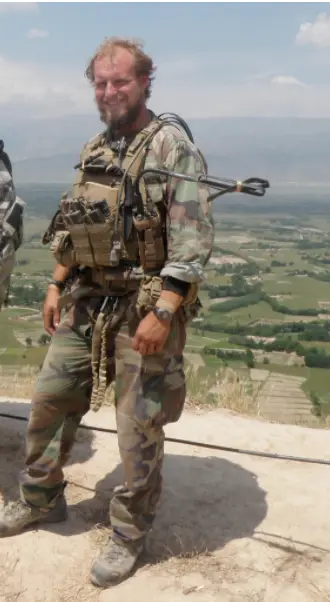
Kevin Flike is a medically retired Green Beret and graduate of the Sloan School of Management at MIT and the Kennedy School of Government at Harvard University. Kevin enlisted in the US Army in 2006 and volunteered for Special Forces training. In September of 2011, Kevin was shot through the lower abdomen while on deployment in Afghanistan.
Kevin was medically separated from the Army, but did not rest. He immediately began working to get into graduate school at MIT and Harvard. Today, Kevin is a wealth manager for one of the top financial services firms in the world.
In his life, Kevin has been through hardship, near death experience, pain, and giant obstacles, and yet he persisted each time until he accomplished what he set out to do. This is one of the most inspiring episodes we’ve put out. Regardless of who you are or where you’re at in life, you will get a lot out of this episode.
Kevin’s Website: www.woundedbywar.com
Kevin’s Twitter: @woundedbywar

Transcript
Machine-generated from the episode audio and lightly edited — may contain errors.
Chris Albert (link to this point)
What's going on everybody? Before we get into the introduction of this week's guest, I just want to say that I know there's a lot of you out there who are trying to make yourselves better, trying to make your bodies better, trying to perform better. And if you are, you need to come over to warriorsoulagoge.com. That's Warrior Soul. That's soulagoge.com.
We've got lots of amazing information out there. All the rest of the Warrior Soul podcasts are up there. Amazing blogs and videos on health and fitness and nutrition and living your best life. We've also got some amazing supplements over there, some training programs, and you can even sign up for our private fitness mastermind where you can get free workouts every day. So take the next steps in living your best life and get over there to warriorsoulagoge.com.
Sitting here right now in San Diego, California, and it's not your typical San Diego day. It's rainy outside. It's a bit cold. And it's not it's not a beach day. We'll put it that way.
But I'm thinking to myself how lucky I am because I'm sitting in shelter. And despite the fact that it's rainy and cold outside right now, I'm here and I'm warm. And most of you who are listening to this are probably warm right now, probably comfortable. And yet, so many of us look at that. We wouldn't consider ourselves lucky.
You know, life, it revolves between light and dark. And a lot of times, we get hit with darkness and we don't know what to do. You know, something bad happens, tragedy happens, or maybe not even something that bad happens. Maybe we missed the bus. And we forget we forget how lucky we are.
The guest we had on today was a gentleman named Kevin Flike. Kevin was a special forces Green Beret. Like Andrew, he served as an engineer and was deployed to Afghanistan. During his second deployment, Kevin was shot through the stomach, and he went through a really hard recovery. I believe he lost a couple of feet of his intestines and and ended up having to go through months of grueling physical therapy.
And at 27 years old, he was faced with the prospect of, you know, trying to rebuild his life from what it was when he was an operator and into something as a civilian. But Kevin didn't rest. He applied to graduate school and he didn't just apply to graduate school. He went to Harvard University and the Massachusetts Institute of Technology. The JFK School of Government at Harvard and the Sloan School of Management at MIT.
Two of the most illustrious schools in the country. And he continued to achieve. And a lot of people would look at that and say, you know, this guy was a Green Beret. He enlisted after graduating from college and didn't become an officer, but he he served in in his country's most elite force as an enlisted fighting man. And then he went on to these elite schools, and a lot of people would look at him and say, wow, that guy's got a great life.
But Kevin faced a lot of darkness during that process. And he had a lot of things that he needed to overcome. He went through the same hormonal deficiencies that Andrew went through and ended up falling to depression. But he decided that he was going to fix it. And because of that, Kevin today still lives an awesome life.
He's working for one of the top financial firms in the country. He's got a great wife and a great family. And he came on to this podcast to talk to all of you and to express a message of hope. Hope that anybody who listens to this is going to grab their feet, Grab their lives. And understand that they're in control.
You're in control of every single decision you make. And you're in control of when you quit or if you ever quit. The message for today is that Kevin was wounded by war, but he was never broken. And his message for you is to never give up. Regardless of what you're doing, if you want something, don't give up on it.
So I'm gonna stop blabbing my mouth right now, and we're gonna get into episode number 39 of the Warrior Soul podcast. With medically retired Special Forces Green Beret, author of the blog Wounded by War, amazing family man, and overall badass, Kevin Flike.
Chris Albert (link to this point)
This is Chris Albert, and I'm here to remind you of one thing. Someday, you're going to die. Now that's not some morbid statement or scary idea. It's solid fact. Your time here on this earth is limited.
We need to be reminded of this as much as possible for one simple reason, to live your best life while you can. This is the Warrior Soul podcast.
Chris Albert (link to this point)
If you're watching live on Facebook right now, this is a live presentation. It's one of the first live podcasts that we've done, and, we're honored to have Kevin Flike with us.
Andrew Marr (link to this point)
This is the first live podcast that we've done. This is the first of
Chris Albert (link to this point)
the first. It's the first live podcast that we've done. Slap me in the face for not being precise. I'm gonna be monitoring for any questions that you have and toward the end of the show, we'll be be trying to take some live questions from you guys. But first, we wanna start with a very special announcement from a very special person, the ultimate warrior.
Ultimate Warrior (link to this point)
Here's sitting in my gym here for a few minutes as I always do in a barn set off aside from my studio before I go in thinking about what I am going to get done today, what my plan is today. You know, it's a beautiful thing when you go to bed at night, getting ready to close your eyes. Day is over, taking a breath. You realize even if you fucked it up really bad, didn't stick to your plan, didn't do the things you said you were gonna do at the beginning of the day. It doesn't matter anymore because the time is gone.
You can't get it back, and you gotta get some sleep, man. You gotta go to dreamland. That's a beautiful thing right before you close your eyes, how you give yourself a break. Because you got all these grand visions in your head that tomorrow it's gonna be different. Gonna get up.
You're gonna get some exercise because you know it's good for your body. Not just your body, but it clears out all the junk in your mind so you can think more clearly. Folk, Folk. Not focus. Folk.
What you need to do, what you need to achieve, what steps next you need to take to become successful in the way that you want to, then morning comes. Morning always comes. There it is, man. Morning night. Morning night.
I was counting. Morning comes. You open your eyes. All of a sudden, you got a different mindset. By the time you get from your bedroom to the kitchen, there's mister ugly ass, mister resistance, riding you, poking at you, making fun of you, already convincing you before you even get to the kitchen to have one cup of coffee because you need to have your coffee to wake up, to even wake up every morning after that long night of sleep, already convincing you, mister big badass resistance, telling you that all those things that you wanted to make important today, all those things that you wanted to do because they give your life a purpose and a meaning and a worthiness, they don't mean shit.
No. Instead, all the superficial stuff, that's what's important. You see that cobweb up there in the corner? Gotta get that before you do anything else. You know those phone calls you gotta make to your friends to do the gossiping and the bullshitting just for wasting your time?
You gotta do that before you can do anything else. You know those paper plates you gotta pick up, you gotta make a list, you gotta put them on a list to make sure you don't forget them to pick them up for that silly ass little get together party you're gonna have this weekend. You gotta make sure you do that first before you do what's important to your life. Well, there's that program on today this morning. We're gonna have that special guest.
We'll make sure you watch that. You don't wanna miss your talk radio either. Three freaking hours, man, where you just you can't get away from it. It's the absolute perfect distraction. You gotta pay attention to that so you can know what's going on in the fucking world.
In a world that's with people who are making decisions that you have absolutely no control over whatsoever, but you can't miss that. Every day is an opportunity for you to start taking control of your life and fulfilling your destiny, paying attention to your inner voice, not the voice of that fucking dumbass mister resistance. You think that successful people have some lucky charm. Well, let me tell you something. I woke up this morning and I couldn't find my fucking lucky charm.
I and other successful people wake up every day doing the same thing, fighting, fighting back against the distractions, the fears, the doubts. And we learn over time. We build into a habit to spend more time having control instead of more time being out of control. It does matter. It mattered last night when you laid down and you put your head on a pillow.
You were gonna get up this morning and you were gonna make it matter. Everything you did today, we're going to do today was going to have a purpose behind it. It was going to matter. Don't fail yourself today. Don't fail yourself today.
Does matter. Never does it not matter. Never.
Chris Albert (link to this point)
So that was a little message from the Ultimate Warrior coming from parts unknown. That's a series called injections of inspiration from the real Ultimate Warrior, and that was suggested to us by our last guest, Chris Bell. Morning Warriors. And hold on.
Ultimate Warrior (link to this point)
I'm done with some more.
Chris Albert (link to this point)
Warrior's still speaking to us from the grave.
Kevin Flike (link to this point)
So I brought my ultimate Warrior wrestling buddy out, you know, in honor of that message that I've got and my WWF championship belt there. He's been providing inspiration for a long time. Injections of inspiration.
Andrew Marr (link to this point)
You know, in, The Warrior, he was talking about making a conscious decision, getting up every day, facing resistance, making your life matter, doing the things that you have set out that says this adds meaning and purpose and fulfillment to my life. And that's why I'm honored to bring the audience, our audience today, Kevin a friend of mine, a person who epitomizes everything that the Warrior was just talking about, where so many people probably would have laid it down or laid it up and said, I'm done. Kevin went to work. And he went to work, And he went to work. And he did it every day with the attitude that we should all aspire to.
And we're gonna get into the specifics of that. But Kevin is an amazing man, amazing father, amazing businessman, just an incredible person. And we wanted to bring him on here today to talk about his unique experience. So Kevin, brother, thanks for coming on.
Chris Albert (link to this point)
Kevin, you know, I've heard so much about you. I've read a bit about your story. I've read your blog, Wounded by War. Can we go into, there's a lot here and there's a lot of different phases of your life. Can we go into a little bit of your background and how you ended up joining the army and how you ended up, being in special forces?
Kevin Flike (link to this point)
Yeah, sure. So I'm originally from Upstate New York, a small town called Stillwater, New York. It's an incredible place to grow up, right outside of Saratoga, Albany area there. I went to an all boys Catholic military school for six years. So not your typical, high school experience there, but that really instilled some things in me.
You know, one of those was love of country. And the military obviously was something that was pretty prevalent every single day there. And so it was always my intentions to join the military and 9/11 happened in my senior year. And so I knew, you know, it's something I wanted to do even before that, then that just made it something that I had to do. It was my duty as an American, I felt like.
So when I went to college, I kind of thought that I would just do OCS afterwards, but I was in college in 2002 to 2006. And then that is when the, you know, the wars really picked up. The special forces really came to the forefront with the horse soldiers and all those books that were coming out. And the more research I did into that, I realized like that was exactly what I wanted to do. I wanted to be a Green Beret.
I wanted to be in those cultures. I wanted to learn the languages and I wanted to train these guys and then go out and fight with them.
And I just became more and more convinced throughout college that I needed to do this because, you know, I was one of the minority, opinions of supporting both of the wars. And I was a clinical science major, it's something we talked about every single day from 2002, 2006. And so I just knew that if I was going to support something that had such great consequences as war, verbally, then I physically needed to do it. And so, you know, if everything else wasn't enough, like that really put me over the edge as to what made me want to join the military and the special forces.
Andrew Marr (link to this point)
Kevin, what did you look into all the branches and all the different special ops arenas or did you just figure out right away that going Green Beret was what you wanted to do?
Kevin Flike (link to this point)
Well, so this will be the only time you'll hear me say this, but you know, interest in special operations of course started with the Navy SEALs. I think like everybody's, you know, I I went to this all boys Catholic military school. So during military science class one day when I was 14, we got to watch Navy SEAL Hell Week and like half the class is looking out the window and not paying attention because they're freshmen in high school and the other half is like why the hell anybody want to do that? And I'm like that is awesome. Like I want to do that so bad.
And so that was, I was really wanting to do special operations and you know that's when I started to get really serious about it when I was like 18, 19, 20 years old like having to start to think about what I was gonna do after I graduated college. That's when I really started to research all the branches, rangers, seals, green berets. And I just felt like for me that that was like exactly what I wanted to do. I I called the Peace Corps of Guns.
Chris Albert (link to this point)
So you knew this is what you wanted to do. Tell us about the process of actually becoming a Green Beret. Not a lot of people get through that. A lot of people drop. What got you through it?
How'd you get through that selection process?
Kevin Flike (link to this point)
So many people, select themselves out before, before they're actually selected out. So I was never going to do that to myself. And, you know, when things were miserable and they were miserable quite often in the special forces course, You know, I'd always had to sit back and remind myself like, all right, well, you know, man, you wanted this. Like you wanted to test yourself and now you're getting tested. So how are you going to react to this situation?
Andrew Marr (link to this point)
Yeah. The mindset and making your mind up ahead of time, you know, if if you don't do that and you start to have those doubts creep in, then you're done at that point. But if you've already made your mind up that no matter what I'm pushing through and I'm not gonna stop, they're gonna have to stop me. I mean, that's what I saw was the kind of dude that was able to endure that because I don't know of any other way that you could endure these difficult physical and psychological, you know, excursions. Yeah.
Kevin Flike (link to this point)
I think, you know, you have internal and external motivators in everything in life. And, you know, externally, like I was afraid to fail. I was afraid to tell people I quit the course. I was afraid of like what my peers would think of me. But I think there's always that internal, like you can have as much external motivation as you want, but internally you need to be motivated.
Like you said, Andrew, you got to make that decision up before you do anything and just realize that like you are gonna do this no matter what it takes.
Andrew Marr (link to this point)
What role do you play being an athlete, played in setting you up for success, transitioning into SF?
Kevin Flike (link to this point)
I think, you know, being involved in athletics my entire life was incredibly helpful. Obviously from the physical fitness standpoint, but also too, I mean, there's times when you're training for your sport or playing in a game and you just got to dig deep And the person who can dig deeper, like that's going to be the person who wins that game. And so it really taught me to push my physical and mental limits. And so when I went into the Q course, obviously I think that pushed it even further, but that had already been built up quite a bit from my time playing sports. And I also think, you know, from the teamwork aspect of just bonding with other people, pushing forward towards a goal, it's the same thing you do on a special forces team.
And then also too, the leadership lessons that I learned from playing sports were incredible. Just, you know, I was usually a captain of the team and I learned a lot from that. I've made a lot of mistakes. And so I really encourage young people, whether it's through sports or clubs or things like that, take as much leadership responsibility as you can. Fail early and often, because you definitely will.
Embrace that failure in your sport or in your leadership position and learn from that. And I learned a lot of hard valuable lessons about leadership. At least started the process up before I went into the military where my leadership decisions had ramifications of life or death.
Andrew Marr (link to this point)
You know, and I think, you know, it's only, like you said, it's only failures, you know, learning from it. If you use it as a opportunity and you say, okay, well how can I do it differently afterwards? And that's, that's what's, that's learning, that's growth, you know? And so I found that, you know, also similar in my life that being an athlete installed certain principles and values that made that transition into SF, you know, I think easier as opposed to somebody who might've just never played sports or maybe did not team sports, but individual sports. So, yeah, I think I agree, man.
Definitely helps into improving your leadership style capability.
Chris Albert (link to this point)
Awesome. Kevin, tell us a little bit about, the process of, you know, going from becoming a Green Beret to actually being a Green Beret and what it was like operationally and what was your, your, your experience there?
Kevin Flike (link to this point)
Yeah. I mean, I was pretty cognizant of, you know, standing in, in, in formation, putting my green beret on for the first time. I was like, this is awesome. This is incredible. Right?
But this is like just the beginning. I like barely know how to tie my shoes right now. And this was 2009 and like desperately wanted to get to war, as much as I, you know, like was trying anything, even as like, you know, a very young Sergeant with no experience in the army, when I reported to my unit out of first group was like, I heard your battalion, Andrew, actually was going to Afghanistan. So like as a young E5, I went to the battalion sergeant major's office to tell him I wanted to go to war. And he was like, Get the fuck out of my office right now.
You know? So, you know, I started doing things like that. But when I got to group, I was so nervous every day. Like I felt like I was going to throw up when I would dive into the compound before I got in because I was like, man, you know, at some point people are going to discover I'm a fraud here. And you know, it's very easy to see the new guys, right?
They have their E5 rank on, they don't have a combat patch. And I just remember like walking around the compound and guys like catcalling me and like just making fun of me throughout the whole time. So I learned pretty quickly, right, that I just because I had the Green Beret, I wore it in my head, it really didn't mean anything. I still had to become a Green Beret. I had to do Green Beret things to earn people's respect.
And so I just took the approach of, am going to shut my mouth and I'm going to do everything they asked me to do. I'm going to do it better than anybody else. And when I've earned the right to speak, I'll start speaking. And so I pretty quickly, I landed in, I was in Alpha Company, third battalion. And we very quickly, like I got there and nothing was going on, but as is usually the case of special forces, nothing's going on, nothing's on the schedule.
All right, fine, great. We're going load your schedule up. And that's exactly what happened. So I deployed right away to The Philippines and was there for a couple months, which was an incredible experience. That was my first experience really as a Green Beret, like living in this third world country, having to work with the local national governments.
I was an engineer on my team, just like Andrew was. And I say that's the worst job I'll probably ever have because when you're in a third world country, everything breaks and you have to be responsible for fixing it. But during that timeframe, we got orders that, when we got back, four months from when we got back, we were going go to Afghanistan.
Andrew Marr (link to this point)
Kevin, where were you at in The Philippines? And we usually call it the PI, so you guys hear me refer to it as the PI, means The Philippines, but where were you guys at specifically there?
Kevin Flike (link to this point)
I was in a Pagan, on the Western Part Of Mindanao.
Kevin Flike (link to this point)
It was one of their bases. So actually like we're in like hard structures, but somebody, when they put together the deployment, they didn't put in for air conditioners. So we were there in July and August without air conditioners. And I was the company Charlie at the time for two teams there. So, you know, I was responsible for the water.
I mean, just everything will go wrong every day. Our water pipes were behind their range, their shooting range. They got shot out every day. I just couldn't quite explain it to the base engineers like, I don't know, maybe we should bury these pipes or move it. And the guy goes, well, maybe you shouldn't shoot here.
And I'm like, it's your range, what are we supposed to do? So that's when I was like, all right, this is like what I signed up to do. And I have got to start figuring out creative ways to bridge these cultural gaps here.
Andrew Marr (link to this point)
So fast forward to that next appointment that was four months away when you guys got back. What were some of the, did you learn lessons from your time in The Philippines about how to come up, how to be resourceful and solve problems?
And did that help apply to the next mission in Afghanistan?
Kevin Flike (link to this point)
Yeah, I think it definitely did. Know, Green Berets, you know, you're typically just kind of put in these forward operating bases. You're very isolated from the rest of the world for the most part. I did both of my deployments to Afghanistan and Kunduz, Afghanistan. When I went there in 2010, there were not a lot of people that thought that a war was necessarily happening up there.
So when I went there in 2010, Kunduz is right on the border with Tajikistan. So we were practically at the end of the supply line there. And we were trying to build a base, trying to run missions and had about a roll of duct tape and some nails to build this thing. So just starting to get myself in that mindset that I was in in the PI about how can you be resourceful in terms of getting done what you need to get done? And then also how can you work with another culture that is completely different than you, has completely different priorities than you?
And yeah, by the way, you probably don't speak the language either.
Andrew Marr (link to this point)
So what were those lessons, man? I mean, what did you do specifically or what can you give some, add some takeaways about how you were able to bridge that gap?
Kevin Flike (link to this point)
Yeah. So some of the stuff that I did was just really start to see, all right, what do these guys like? Like what motivates these guys? And, you know, I held up the Ultimate Warrior doll, but one of the things that I found out that is these guys really enjoy professional wrestling. They love John Cena.
Well, I love Hulk Hogan and Ultimate Warrior, all right? So I had a long beard, I had long hair, and it was blonde and I was much more muscular. And so my wife sent over a Hulk Hogan outfit and pretty routinely, right? You know, if nothing was going on, I would just throw the Hulk Hogan outfit on. I would take my professional, my WWF championship belt and like kick the door down to their barracks and start wrestling these guys.
And they thought that professional wrestling was real. So like, every once in a while, like a chair would get swung and hit me in the back or something ridiculous, you know. But doing things like that to show these guys, it was, to me it was more than just going in there and training them. You know, was like, hey look, I value you guys as friends. I'm putting my life in your hands.
You're putting your life in my hands and I understand how that is. And so just building up these relationships, just, I think I probably drank like 10,000 cups of tea while I was over there talking to these guys, just hanging out. Another thing that I did, as I saw was such a detriment in The Philippines is try to learn as much of the local language as I possibly could. And I would have those guys teach me the language and just write it down phonetically. And so this way it kind of reversed the roles of teacher to student.
So it wasn't like me always telling them, Oh, you you guys should be doing this, you should be doing that. Now they were teaching me. I'd have them teach me about culture, about religion and things like that. And it just really showed that I cared about them on a deeper level. So when I ultimately screwed something up, which was, you know, we talked about failure earlier.
Well, you know, I think we could fill up a couple months of tape about my failures in life, but the, so when I did fail, when I did make this cultural faux pas on admission or something, they're like, Oh yeah, like that's, this is Kevin, like, you know, he's trying his best.
Chris Albert (link to this point)
At some point you became wounded out from the field. And, could you tell us a little bit about that and the aftermath of what happened and what that meant for you and what you had to overcome there?
Kevin Flike (link to this point)
Sure. Yeah. So that was, when we got back from that seven month deployment, we got home on a Friday, came back to work on a Monday and they're like, great job. You guys are going back to Afghanistan seven months and you're going do the same exact mission. So we went right back to the same place, trained the same guy.
In between that seven months off, we had to go to, Thailand for a month and a half. And then we also had two training iterations laid on also. So if you looked at a calendar, I think my team was going to be home for maybe three to four months in two years. I'd spend 18 out of twenty four months in Afghanistan. The second deployment was supposed to be an eleven month deployment.
It was supposed to be, it was going to be the longest special operations deployment of the war, which was a very hard pill for me and many of the teammates to swallow, especially after having just been in Afghanistan for seven months. But we went back and we were very receptive to learning from our mistakes from that first deployment. And we hit the ground running as soon as we got there. These were the same guys we had been working with seven months prior. We had spent, or that deployment prior, we had spent those seven months learning from our mistakes, learning what went wrong.
The majority of the team was the same. There were some new guys on the team, but we got there and we hit the ground running. It felt like we had really never left. And the progress that I saw from those guys, from when I first got there in 2010 to getting through that 2011 deployment was incredible. It was probably like one of the most proud moments of my life to see the progress that those guys made.
Andrew Marr (link to this point)
Can you describe the Commando mission and what that entails?
Kevin Flike (link to this point)
Sure. Yes, so the Afghan Commandos are the lead soldiers of Afghanistan. They're modeled after a ranger battalion. And I say that's kind of where the similarities end. You know, they're modeled after ranger battalion.
They are not ranger battalion. And so, you know, they're a light infantry unit, you know, specializing in, we would do movement to contact, which would basically be walking through areas that we thought were bad and seeing if we'd make contact with the enemy. Raids and really just kind of like their elite force. Something would happen. We'd get called up and helicopters would be spinning in thirty minutes and we'd be on our way.
And so typically on missions that we would go on would be about a 100 plus Afghan commandos, and then maybe 10 or 15 Americans if we were lucky and a couple interpreters. So that was another time too, where really, in my opinion, became pretty vital to understand the language, to be able to do some battlefield commands and, you know, it's not always going be an interpreter handy.
Chris Albert (link to this point)
As far as the trust issues and things like that, and being able to trust them to have your back. And I know you mentioned the, the ultimate warrior and, you know, doing the, the Hulk Hogan tactics. Was there, was there a good bit of camaraderie that developed between you and them over the deployment? Was it like, you know, did you take down that cultural wall that eventually disappeared to the point where you considered them your own or?
Kevin Flike (link to this point)
Yeah, I think, you know, there was a great bit of camaraderie, right? And one of the lessons that I had learned from going from the first deployment to the second deployment was yelling at people does not necessarily work. You know, 99 out of a 100 interactions need to be calm, level headed. And then that one time that you really need to yell at somebody, then that is like, then that's more impactful. If you're just yelling all the time, you're just going to get completely drowned out by these guys.
Especially, you know, I was a diplomat and I was a guest in the country, so I really couldn't be acting like that. But I think that the camaraderie built up pretty well between us. And I think that it progressed the more that we saw how they were operating and how the improvements they're making. But that is to say too, I definitely did trust the guys. I had no other choice.
Think as a Green Beret, you sign up knowing that the guy to your left and right is not going to be an American, which adds elements of stress that I think most people will never be able to understand. But I learned when it was like right to really push into the guys and when to lay off. For instance, on one mission, it was probably a couple of weeks actually before I got shot and we were walking, we walked probably 10 kilometers to the village. We assaulted the village all day and then we were walking out that night. It was very typical.
Most of us hadn't slept in almost two days, walked probably 20 or 30 kilometers throughout the day. And, you know, we're walking back to our HLZ and the guys are walking in a single file line, not in a tactical formation. They have their NVGs up. And I was just, I had had it. Like I had reached a breaking point and I called a halt to the movement and I turned around and I was like, all right motherfuckers, what's going on here tonight?
Do you guys want to fucking kill me? Because if you do, you can do it right now. And I just stood there. And then I was like, all right, none of you guys want to fucking do it? I'll turn around.
You can shoot me in the back if you want. I turned around and obviously nothing happened. And I turned back around and I said to the guys, all right, when we get back to the base, I'm going to fight every motherfucker in this platoon. I'm going to fight you two people at a time and I'm just gonna keep fighting you until everybody in the platoon is done because I fucking love you guys. I care about you.
I want you to live and I wanna live. And then I looked at my interpreter, was like translate every word of that. But I think it was just like having the maturity to know when that moment needed to happen and when that moment did not need to happen.
Andrew Marr (link to this point)
How'd they respond, Kevin?
Kevin Flike (link to this point)
They put their NVGs down and walked to the helicopter pad. And then I sat at the helicopter pad, or they walked to the HLZ and then I sat at the helicopter pad and nobody came. But I think the message was very clear that Kevin was very angry and wanted things to be taken a little bit more seriously.
Chris Albert (link to this point)
Nobody fought you?
Kevin Flike (link to this point)
No, there was no fighting me that night.
Chris Albert (link to this point)
No, no, no roundhouse kicks to the face or anything?
Kevin Flike (link to this point)
No, just, just the steel chairs when I put the Hogan costume on, probably a little extra harder hits the next time.
Andrew Marr (link to this point)
Leading up to the injury, Kevin, before that, what was OpTempo like for you guys?
Kevin Flike (link to this point)
Yeah. So the, difference is too between the first and second deployment. And I mentioned, I don't think people really understood how great the situation was in 2010 on the first deployment. So we really did not have any support logistically, air wise. We were only able to do two helicopter assaults throughout the seven month deployment, which really degrades your capabilities if you're trying to do this Ranger style mission.
But on the second deployment way back in 2011, everything had changed. We had air support, we were the show, we got whatever we wanted. We had people to help take care of the base so that I could actually get a couple hours of sleep a night as the engineer. And so with all of these extra resources thrown our way, I think the expectations were also increased for us. So our op tempo was pretty brutal and we would routinely go out, you know, anywhere between twenty four to seventy two hours, two or three times a week.
And it got to the point where I was starting to think to myself, I don't know how we can keep doing this. I just don't know if like our equipment or our potties are going to be able to hold up. You know, I think when people see Green Berets and Navy SEALs or Recon or Rangers, they just think it's like this Call of Duty video game. But you know, we are human beings at the end of the day too. And the op tempo was something that I think that wore pretty heavily on me and everybody else.
But ultimately these guys are never going to say, No, like don't give us missions. So it just kind of continues.
Chris Albert (link to this point)
That's leading up to you getting wounded. Tell us about the the actual event. What happened? How did it happen? And, what was the aftermath there?
Kevin Flike (link to this point)
Yeah. So we were doing a valley clearing operation in Northwestern Afghanistan, Faryab Province. And what we would do in these valley clearing operations is we would just get dropped off at one end of a valley through, by helicopter. And we would clear through the valley until we got to a designated pickup point, usually two or three days later. When I say clear through, we would go through the villages, we would talk to the people in the village, see what was going on, look for weapons caches, and we would just keep doing this throughout, you know, this session of small little mud hut villages throughout the way.
And, you know, I'd say probably like one out of five, one out of six times we get into a firefight. And, you know, even though we had been doing this for two years at this point, you know, we still took everything as seriously as we would because we were never going somewhere just because it was a great place that people wanted to give us hugs and kisses at. So we landed at the mouth of this valley about an hour before the sun came up. And as soon as we landed, I just looked up and I was like, just realized how bad the day was going to be because it was just these sprawling villages. There's these hills on each side, like mountains on each side that would be perfect for people to fight from.
It was the end of September, it was still pretty lush and pretty green. And the reality of how difficult the next couple of days really set in for me. And just as the sun had came up, one of my teammates and his squad of commandos, a squad is about 10 people, they came under heavy fire. They got near ambush. And luckily in that initial ambush there, only two of the commandos had gotten wounded.
But like after seeing these guys, I couldn't believe that they survived the amount of blood that had poured out of them. And people were pretty frantically deciding to decide like, what are we going to do here? How are we going to handle this? And after a couple, like five, ten minutes of deliberation, we were going to drop, do an airstrike on there. And once the airstrike hit, I kind of thought that was going to be it for the day. That was the excitement for the day and you would just kind of continue to push forward and get picked up in a couple of days. But it seemed like the airstrike really only emboldened the enemy. And so for the next ten hours, my team, the commandos, you know, found ourselves like pushing through the valley. Our support by far or overwatches on the mountaintops would keep pushing forward also with us to provide us cover.
You know, we found ourselves engaged with the enemy for about the next ten hours on and off. And in the tenth hour of the firefight, I was on a rooftop and I was on the western side of the village and my teammate, another one of my teammates was on the eastern side of the village with his squad of commandos. And we were taking fire from an open compound, or there was an open field that separated us. And so we didn't have any air on station at the time. We couldn't do anything about it.
We needed to keep moving forward and just couldn't keep eating 7.62 rounds like we were. So my teammate on the eastern side, you know, volunteered his squad and himself to go across this open field during a firefight to take this compound down, which I know you two understand how dangerous that is, but you know, it's like practically suicidal. And so myself at, you know, 27 years old, my infinite wisdom, I thought that I would just stand up on this roof that I was on and try to draw a fire to myself because I thought that I had less of a chance of getting shot. And, you know, my teammates had the same idea. You know, they were exposing themselves, taking their VS-seventeen panels out, which are these bright orange and pink panels, and waving them around, trying to draw attention to themselves. So everybody did this as soon as my teammates started to move out to the compound.
It worked much better than we had wanted it to. Bullets Like are ripping past my head, landing at my feet and the same thing for my other teammates. And I just kind of slowly walk around the rooftop. And my teammate made it to the compound, started clearing that. And I was still walking around like an idiot until my team sergeant called me and told me to get the fuck off the roof, were his words over the call.
Because I looked down at the Afghans and I was like, look, if we don't get off of this roof, we're getting a shot. These guys don't speak any English, but they knew what I was saying because they practically jumped off the roof. And I was the last person off. I wanted to go around. I wanted to get my squad back together and start to push forward into this dry riverbed that we were taking more fire from.
And so I was the last person off. I went around the corner of the compound and stood there for a couple seconds to try to get this vantage point as to how I could best attack this enemy position and get my guys ready. I stood there for a couple of seconds and a couple of seconds of exposing yourself in a fire cut fight like that can just be a couple of seconds too many. And it just all of a sudden felt like somebody came up and hit me in the stomach with a sledgehammer, suspended me or lifted me into the air. And while I was suspended, I thought to myself like, Oh my God, did you just get shot?
And as I slammed off the ground, I was like, Oh yeah, no, you definitely did just get shot there. And I just really tried to get my bearings about me and keep conscious because I was in so much pain. And I crawled back, put my radio on, or my headset back on. I called my teammates. I let them know where I was and immediately started to try to treat myself because I had gotten shot in the stomach, but the bullet hit my femoral nerve.
So it sent this intense fiery pain down my left leg. And I thought I had gotten shot in the leg also. So as soon as I got off the radio, I'm like, all right, you have like two or three minutes to live. So I was telling him to get to work. And I grabbed my tourniquet and started patting up my leg to try to see where the bullet wounds were, but there was nothing there because it was just, I didn't know it at the time that the bullet had hit my femoral nerve and all the bleeding was internal.
So there's really nothing I could do medically at that point, except for try to keep myself conscious. But keep in mind, I'm just sitting out in the open right here. And a couple of minutes went by, it felt like a couple hours had went by. And I got back on the radio and I called my teammates and I was like, You guys have got to get to me. Let them know how urgent it was.
They were desperately trying, but they were pinned down by a fire at that point. The firefighter really picked up. And when I got off the radio the second time, something happened that you don't hear about in the news. You typically only hear about the Afghan attacks. But when I got off the radio that second time, one of the guys I've been working with for two years runs around the corner of the building, exposes himself, and takes me and drags me behind cover so that I'm just not sitting out in the open with a gunshot wound to my stomach anymore.
So that was a very reaffirming moment for me there after all the questions I'd asked myself about what I was doing in Afghanistan. And when he dragged me back behind the cover, behind the building, that's when my teammates started to really flow in. And people started frantically going to work on me. And while they're doing this, people are coming up to my senior medic who's right next to me and asking him if I was going to make it or not. And my senior medic was like, I don't know, this looks pretty bad.
And I love to laugh about it now, but like I heard all of these conversations going on while I'm down on the ground with this gunshot wound to my stomach getting worked on. Guys started coming up to me who hadn't paid me a compliment in the three years that I was on the team, come up to me with tears in their eyes and telling me that they loved me. And, you know, after hearing those conversations and hearing the way my teammates were talking to me, I started to really start to think that, you know, I was experiencing my last minutes on earth there.
Chris Albert (link to this point)
Wow. That's a really surreal feeling. And I'm just kind of getting a little bit emotional thinking about it myself right now. You're 27 years old at the time. Yes.
Right? So 27 years old, you spent years kind of perfecting yourself for this profession, you know, working as a Green Beret, went on this kind of long journey to become a Green Beret. As after you'd realized that you'd been shot and everything had been settled down and that you realized you were going to live, what were your first thoughts? What was the first thing that came to your mind?
Kevin Flike (link to this point)
Well, there's a lot of confusion for myself, right? Because after my teammates stabilized me, you know, they sent me to a, sent me to, or flew to a field hospital and surgeons are cutting stuff off of me and they're asking me questions and they're like, Well, do you have any questions? And I was like, Well, yeah, am going to live or not? And the surgeon was like, Well, I'm not really sure. This is pretty bad.
Do you have any last requests? So I requested my last rites from a priest and asked him to save the bullet if they could. I actually have, this is the bullet right here that I got shot with. It looks like it's in perfect condition. But, you know, when he put the mask on me, I thought that was it.
Like I thought that I was done. And so when I woke up, I woke up in Landstuhl Regional Medical Center four days after I had gotten shot. Very, very confused. Like I think one of the first questions I asked somebody if this was like heaven or hell or what was even happening. And then having people tell me continuously what had happened to me, where I was, and my stomach had been cut open.
I had tubes hanging out of everything. I was in the most pain I had ever been in my life. I could barely lift my head off the pillow, but, you know, once I kind of grasped things a little bit, it was just this, the most emotional period of my life, like crying hysterically, but happy. I was in Germany there for about a week. And luckily one of the guys from the first group who had gotten shot and hit with two grenades, he came to see me.
He was in Bravo Company, third battalion. And he came to see me and started like a little small talk with me. And it was just great to see this familiar face because it's such an emotional time for me. And within a couple of minutes, like he just looks me in the eyes and gives me the best advice I've ever got. He's like, look man, plenty of people in shot.
Don't be a fucking pussy about this. And so like very quickly, I was like, I cannot feel sorry for myself here. Like, I don't need anybody feeling sorry for myself. So I think in that moment, like it set the tempo for my recovery. Mean, this is, we're almost six years later and that's the same advice that I give myself every day.
And that set the tempo for how the recovery was going to go right there in that intensive care unit with tubes hanging out of my body and my buddy telling me not to be a pussy.
Andrew Marr (link to this point)
That's a typical team guy talk, As I remember it. Quit, you think nobody else got shot before?
Chris Albert (link to this point)
No, that's great advice for anything bad that happens to you in your life. I mean, you get divorced, don't be a freaking pussy. Lots of people get divorced. Somebody dies, we're all gonna fucking die. You know what I mean?
That, I think that's probably the most amazing advice I've ever heard anybody give anybody, even if it wasn't very tactful. That's amazing advice. Yeah.
Kevin Flike (link to this point)
It's like when I, I went to Brooke Army Medical Center in San Antonio, Texas, after a week in Germany and I was more cognizant of the situation and what was happening. And like, that's when the advice really hit home too, because, you know, I was like, yeah, plenty of people get shot. I've seen guys here that have been burned from head to toe and they're missing arms and they're missing legs. And I had a lot of friends get killed too. And I was just a very lucky man to be in the condition that I was in and have that second chance at life.
So no matter how bad I felt that I had it, I knew other people had it worse. I saw them every day.
Chris Albert (link to this point)
And did you, did you want to continue in the army at that point? Was it in your mind that they might separate you?
Kevin Flike (link to this point)
Well, I had actually, made the decision before that second Afghanistan deployment that I was going to get out of the military. I had been, married the entire time. My wife and I had been together since we were 18. We got married at 23 in the Fayetteville County Jail and then went to Texas Roadhouse after. Very military thing to do.
Yeah, luckily she's still around. But I had kind of made the decision that I loved what I was doing, but I saw my marriage pretty much unraveling in front of my face. And with the op tempo that I described earlier, it just, to me, for me, it just wasn't sustainable for the rest of my life. It's like, it's kind of tough for me to admit that because I know guys do that for their entire careers. And at that time, I just didn't think that I could do it.
But I could have left that deployment early, but I extended my contract because I didn't want to leave my team man down. And as no good deed goes unpunished, of course, like right when I could have went home is when I got shot. So I had an idea that I was going to be separating, but at that point we really just had no clue what was going to happen. And so that basically extended my time out in the military by about another two years. So I was just going to come home from that deployment in ETS and figure it out after that.
Chris Albert (link to this point)
Do you have a plan for when you were, when you got out? Did you have a plan for anything or did that come after you got wounded?
Kevin Flike (link to this point)
I started thinking that I wanted to go to business school. And that was kind of one of the things I would do on my second deployment is just look at business schools and programs just to kind of occupy my mind and give myself a goal to think about, which I think is very important when you're doing any type of long term thing. And getting through deployment is like a long term goal in my opinion to get through the day to day grind. So I had this idea that I'd want to use my veterans benefits and go back to school. You know, probably honestly thought like, just really needed to clear my head and like disconnect and reconnect with my wife.
So I think even before I thought about going to grad school, were just going to go like backpack somewhere and kind of just, you know, get to know each other again after spending so much time away from each other. But the whole concept of going to business school came back to the forefront after I was wounded. And that became one of my goals, right? One of my goals that I had this long term vision of going to grad school at some point. I didn't know when it was going to happen, but I knew it was going to happen at some point.
And my wife bought me a book called How to Get Into a Top Business School. And every day after physical therapy, I would just go home and tear that thing apart and just reading it and making plans and thinking about, you know, what I was going to do. And really even like the thought of going to business school was one of the big reasons why I finally consciously, internally made that decision to stop taking my pain meds because I was like, I need to be able to take these exams and apply to these schools.
Andrew Marr (link to this point)
Kevin, what was the process and how long did it last, between getting shot and then getting out of the army and then trans trans traversing over into grad
Kevin Flike (link to this point)
Yeah. I got shot 09/25/2011. And my medical retirement date was 09/27/2013. So pretty much two two years timeframe, but I was on terminal leave. I'd started grad school in September. So I did my first, first month of grad school basically on active duty still.
And I, interesting story about how I got into grad school. It was in the fall of twenty twelve and I was really unsure that I would be able to go to grad school that next year, But my wife really urged me to apply as, you know, she has been one of the main drivers in my recovery process. And so we were like, all right, well, let's just like apply to some schools that, you know, we'd be really happy if we didn't apply anywhere else. So applied to Harvard Business School, to the Harvard Kennedy School of Government and MIT's Sloan School of Management. And it immediately was rejected by Harvard Business School.
Got rejected by the Harvard Kennedy School the first time I applied, but then I got waitlisted at MIT. So I flew across the country from Seattle to Boston unannounced and just walked up to their admissions office and was like, All right, thank you for waitlisting me. Now what do I have to do to get in? And so three months later, got my acceptance letter, But that was right at the end of June and my wife was six months pregnant at the time. So I was trying to out process the army in Seattle.
She was over back in Boston area, trying to find a place for us to live, trying to find a place to birth our child, you know, all those life necessities there. And I had, I'd say probably about a week or two in between moving across the country and starting grad school. And so I highly recommend that most people take more time off after their time out of the military.
Chris Albert (link to this point)
Yeah. So, so we're not just talking about grad school here. We're talking about the Sloan School of Management, correct? And the JFK School of Government at Harvard University, right?
Kevin Flike (link to this point)
I got in, I reapplied that fall, swallowed my pride as I, you know, I've learned to do and I was, got accepted the second time around. So I was able to pursue a dual master's degree, which instead of doing four years, I would be able to finish the master's in three years. So that basically meant that I spent three straight years in the library.
Chris Albert (link to this point)
So you did business over at the Sloan School and then at the JFK School, what were you studying
Kevin Flike (link to this point)
Master's of Public Administration.
Chris Albert (link to this point)
Why did you decide to do both? What was the thought process?
Kevin Flike (link to this point)
The thought process for that for me was, you know, I think that there's very good compliments between business and government, And I really wanted to understand the nuances of both of those interactions between public and private. And also start to really start to explore options as to how you could use private, private business to solve public problems. And also to, you know, was just a great way for me to continue my healing process and really figure out what I wanted to do going forward.
Andrew Marr (link to this point)
What was physical therapy or healing process looking like while you were in grad school and then trying to also, you know, help run a family?
Kevin Flike (link to this point)
Yeah, that was a pretty brutal, pretty extensive process there. You know, that was, there was times where, you know, you can only go a couple of times a week, but at the same time it was something that like, I just couldn't neglect. I couldn't be like, well, I can't go and do this for a month or two like that. So it was probably, I would say one of the more overwhelming periods of my life going into a situation at business school where I had no background in that. I had no really math background.
Having this new family, having this transition, and then also having, being in quite a bit of physical pain. So it was pretty overwhelming, but after a while I started to understand what I needed to do to make myself feel better. And that's a period where I really started to focus on my diet quite a bit. And that made a very big difference.
Chris Albert (link to this point)
What kind of changes did you make on your diet?
Kevin Flike (link to this point)
Well, one of the first things I did was I started counting my calories and I realized that I was eating like 5,000 calories a day and I wasn't working out three to four hours a day anymore like I was when I was on a team. So it's like, Oh wow, that's step one right there. But then gradually started doing things like cutting out processed foods, refined sugars, and really hammering home on that side.
Chris Albert (link to this point)
I want to get a little bit into some of the other health stuff in a second, but one thing I want to ask you is for those of us who are getting out of the military and maybe trying to get into college for the first time, or trying to get into graduate school for the first time, what kind of tools and tactics did you use to adapt to that level of work? Because again, we're talking about MIT and Harvard University so that there's a good amount of success there as far as difficulty in schools. What kind of tactics did you use to adapt to that work?
Kevin Flike (link to this point)
Yeah, I think, you know, whenever you're going to start something new, right? It's kind of like when you started your first job in the military, like when I first got to the team, when you started a new job in the civilian world, like you're going to just resign yourself to the fact that you're going to work like crazy and you're going to be working all the time because you don't know what you're doing and you have to throw yourself into it and then you have to just start to understand the whole process. And so I had to do that for the first term of school and then I could pull back. Like, don't I don't think it's great to work like a maniac all the time, but I think you'll have to do that when you usually first start something out. Then you can start to parse it back and you could say like, I need to read this.
I need to do this assignment. This is how I learn best. This is the best time for me to do work. But for me, I'm very much a hands on guy that has to fail at something or well, you know, do it, realize that doesn't work well for me and then change course. And so, I say to guys and women that are transitioning out of the military, that conceivably could be the best route for you.
Staying in the military could be the best route for you. But just, you have to understand that when you get out, it's going to be different and it's going to be hard. There's going to be, it's a completely different world that you're going be in. But if you can throw yourself into it, then you're going to have this, you can have an ability to start to understand the process a little bit more and it will get easier.
Chris Albert (link to this point)
So at this point, you're late twenties, early thirties, and you've got a lot of good things going on. You're at MIT, you're at Harvard. It looks like you have a really bright future in business or government or whatever you wanted to do, but there was still some darkness there, right? As far as things went. Tell us a little bit about how you reconnected with Andrew.
Kevin Flike (link to this point)
No, that's the, you know, think one of the lessons that I've learned throughout this process is, it's definitely put me in other people's shoes. So I've learned a lot about empathy and the, you know, experiencing addiction, depression, post traumatic stress, anxiety, all of these things that I normally wouldn't have had experienced, but now have much more of an understanding and I guess feelings for other people that have been experiencing them. And so I think on the surface level, everybody saw Harvard, MIT, everything is going great. You look good. People always say that to me, You're walking great.
But I don't think people truly understood the absolute grind that it was for me to do this. I wasn't sleeping at all, maybe three hours a night. And so to cognitively try to learn at that level when you're not sleeping was terrible, which added so many more elements of stress to my life. I started having a very bad anxiety and a lot of that was due to me starting to think about the future. I was in terrible amounts of pain.
I'd wake up every morning and barely be able to crawl out of bed. I'd have to stretch for like thirty or forty five minutes just before I could even think about taking on the day. And I didn't see an end in sight to any of that. And it was starting to become pretty depressing for me and started to even wonder to myself like, how am I going to be able to continue to go forward? How am I going to be able to go to work every single day and do this?
And so I think right when those thoughts were starting to get very cumbersome for me, Andrew and I had reconnected. We knew each other pretty well when we were back at first group. We used to train together a lot at the physical therapy center there. And I saw on Facebook what Andrew was doing with the Warrior Angels Foundation and was very interested in it. Just seeing everything, hearing Andrew talk about it, reading the research on the Warrior Angels.
And Andrew reached out to me and we made the connection. And it's the first time after three years and we did a phone call with each other. And I basically said that, I was like, Hey, people think that everything is great for me, but it's hard. It's a fucking grind every day. Like I wake up some mornings, I have no clue how I'm going to get through the day.
It's so difficult. And that's when Andrew kind of went through his experiences, what he had been going through, the work he'd been doing with the Warrior Angels Foundation. And Andrew very much encouraged me to get my blood tested also. And so that's how Andrew and I reconnected and we've stayed in contact ever since then.
Chris Albert (link to this point)
What did they find when your blood was tested? What was going on there?
Kevin Flike (link to this point)
Yeah, so when my blood was tested and, you know, I have tried like everything under the sun, right? Like I just could never accept anybody's answers of people saying like, Oh, well, you know, you're getting older now. And I'm like, Well, I'm like 32 years old. Like that's not that old, man. You know, Like, people are like, well, you know, you got kids now.
I'm like, how many people have kids?
Chris Albert (link to this point)
Nobody's Who's that? Yeah. I mean, forty, fifty, whatever, if you're unhappy and you feel something wrong with you, there's something going on.
Kevin Flike (link to this point)
Yeah, and so like nobody could really fully explain anything. And you know, people were working hard for me. Don't get me wrong, like medical professionals were working exceptionally hard for me. But like, you know, when I go in to do my acupuncture treatment and I bend the needles because my back is so tight and they've never seen anything like that. I'm like, there is something not happening right here.
So, you know, when Andrew said the blood testing, like, yeah, let's do this. And when it came back, my body was barely producing testosterone. My growth hormone levels were incredibly low. My cortisol levels were through the roof. And then my thyroid was barely functioning.
Like just these things that were having all these adverse effects and were the reasons why my body was in pain all the time, why I wasn't sleeping, why I was starting to have anxiety and depression. So pretty quickly, was a really quick turnaround where I had to consult with Doctor. Mark Gordon and was on the medical regimen. And within weeks of being on that regimen, there was noticeable difference, just completely different. I was in Manhattan for two months last summer.
That's when I started this process. I was doing full time training. And so I spent about a month doing the treatment program. So that's basically a month where I was not around my wife or my kids. But when I got home, after being on that treatment program, my wife noticed a difference in me, like a night and day difference in my mood, in my attitude, how I interacted with the kids, just every aspect of our lives.
And so this summer will be one year. I mean, this is a game changer for me.
Andrew Marr (link to this point)
Kevin, you know, when I hear you talk about that, can you speak on what is it inside you you think where now looking back at it, you know you were deficient in all of these hormones that are so important to how we're able to do and maneuver life. What do you have inside you and how can you share that with the audience that you were able to, despite that and despite the injuries and the physical pain, go to two of the premier graduate schools in the country and thrive in that situation and be able to learn in an area where you had no prior experience?
Kevin Flike (link to this point)
I think one of the main things was the perspective of how lucky I was to be alive and then to have things turn out the way that they did for me. Because in my two years that I spent after getting wounded from getting wounded to going to grad school, you know, I saw a lot of other guys who had been wounded and they didn't have the support that I had. They didn't have the family that surrounded them. They didn't have the wife that stayed with them, even though I had asked my wife for a divorce at one point and she wouldn't go for that. Those guys didn't have that and their recoveries did not turn out the same.
And I didn't want to, I didn't want to let I didn't wanna let people down who had helped me through that process. I didn't wanna let the guys down who had died and didn't have that that second chance. And, you know, one of the first things I did when I set up my office at home was was set up the pictures of guys in my company that got killed on the last deployment. So that if I ever felt like feeling sorry for myself or quitting, not studying, and then, you know, I was gonna let some people down there. But then, internally, I I just knew that, I had this incredible opportunity to go forth and inspire people, to come back from this tragedy that, you know, could ruin somebody's life.
And I I didn't wanna squander this opportunity to go out and inspire people.
Andrew Marr (link to this point)
Kevin, what advice would you give and do you give now to service members, veterans who are going through that similar dark process and in a time where last week, one of our first group, Special Forces Brothers, committed suicide, left a wife and two young children behind. A guy that we got extensive help through the foundation, took his life earlier this week. What advice can you give to somebody who's thinking, you know what, I don't think I have anything to live for and I have no meaning?
Kevin Flike (link to this point)
So I'd say the first thing is find help, right? You know, I think that that is one of the big reasons why things have turned out as well as they have for me. You know, I sought out the help with the psychologists at the First Special Forces Group and it was incredible. You know, my wife and I went through marriage counseling there and I think our marriage was better for that. I learned a lot of different things from that experience as to how I could help with what was going on in my life, like mindfulness meditation and things like that.
Those things actually helped me get off of my pain meds. So the first thing is get help. You cannot go at this thing alone. You don't go at anything alone in the military. You always have a buddy with you.
And so it doesn't have to be a healthcare provider. It can be one of your best friends, but you gotta reach out to other people and not take this walk alone. And then the second thing is, like, there is always something for you to live for and you just have to find it. You know, for me, I didn't have kids at that time, but I knew that I had this remarkable thing that I could inspire people with. Like, you know, when I was thinking about getting out of the military, right, like, I I just wanted to run away from the world responsibility.
But when I was laying in the bed in San Antonio, Texas and the outpouring of support from that small town, from, like, military high school, from that small college that I went to, people telling me how much they meant or I meant to them, I was like, you know, this I can't let any of these people down. And so for me, that was an incredible motivator going forward and kept me through those tough times because I spent a lot of times drinking way too much during those two years, very dark periods, even afterwards, a little bit at grad school where I'm, you know, kind of asking God, like, why did you let me survive just to be in so much pain and to, you know, to have such a painful and terrible life right now? So when when it when it gets to that level, like, you have to have those those little things that you find a reason to live for.
Chris Albert (link to this point)
Yeah. It's it's crazy what we do with our minds.
You know, I I used to make up stories to myself and say, you because I didn't go on one of the harder deployments that my unit did. Deployment to Iraq was very easy, but I used to make up stories to myself and say that my life was hell because I survived and I didn't go on that deployment and that this life here was hell for me. One thing you mentioned though, I think it's a tool that almost anybody can use is mindfulness meditation. Can you tell us a little bit about your practice and how you've utilized that and what it does for you and what it is?
Kevin Flike (link to this point)
So I learned that back in, I think, 2012 at the first Special Forces Group. And, you know, it's definitely something, it's a practice, right? Like you have to practice it. You have to consistently do it. You know, the first day you step on the range, you know, you're not gonna be a great shot.
You have to consistently go back to do it. And so that was one of the first lessons I learned. I was like, if this is gonna even work, I have to do this consistently. Once I started doing consistently, initially it was a pretty painful process because for the past five years, right, it was just like putting my head down, running hard, not really thinking, and I was getting to the next point. But that was like one of the first times where it's like very calm in my head and in my mind and you really have to confront your thoughts.
And it's very difficult I think for people and it was initially for me to sit there and and be, you know, with your thoughts thinking about things. And kind of given everything that had happened with deployments and getting wounded, it was actually it was kind of like a situation where it's almost, darkest before the dawn, you know, and it was very dark running through this process. But I think that it was something where I started to understand that I could control a lot of the way that I felt. I could control anger. I could even control pain in my body, that a lot of that was mentally being created.
So now that's a daily part of my routine. You know, I'm a big fan of the power of routine. Chris, I know you are. I read read, you know, I think mine very similarly mimics yours. 04:30AM wake up with, some bible study and meditation for a half hour.
And then for the next hour, I'm writing or doing something for my speaking engagements or for my websites. And then I'm on the boat to work and I'm reading the Wall Street Journal. And, you know, at some point in the day, I'm gonna work out for forty five minutes to an hour. But I think having that routine in your day is incredibly important.
Chris Albert (link to this point)
Yeah, absolutely. I think just staying busy, getting yourself out there, doing things with your body, getting into your body and going through that process of getting your heart rate up, can do so much for you too. Getting some sort of physical activity in there. But the mindfulness I think is something that's so vital because I think that's where it starts. You know, in a lot of ways, same kind of self talk that you probably did through football, being an athlete, you know, becoming a Green Beret, the positive self talk, you know, we can also do negative self talk where we start to drive ourselves down rabbit holes and into dark places.
And if you do that enough, you can completely turn your mind negative. And I think that one thing that mindfulness helps us to understand is when we're doing that, what types of thoughts we have that are not serving us, what types of thoughts we have that are bringing us to the wrong place.
Kevin Flike (link to this point)
I think you definitely are right on that. I noticed that where I could change my mindset and make it into like, all right, well, this is just happening and whatever, I'm going be fine. Or before that's something that might have affected you. But also too, it really gave me kind of control over my body. Your mind controls your body.
And I was able to gain control over my body and be able to be in much less pain because of the mindfulness meditation practice. So, when I started to find myself in some bit of pain, like throughout my body, I was able to go through the breathing practices. But I think it also too really connected me back to my daily activities, to things, to being more present, more in the moment in conversations with people, and just even like getting the chance to proverbially smell the roses.
Chris Albert (link to this point)
And what are you doing today? What are you doing for work? What's your career?
Kevin Flike (link to this point)
Yes, I work in the financial services industry here in Boston and I work for Goldman Sachs, a great firm, very excited about being there. An incredible firm that does a lot for veterans. They're one of the first firms to go out there and do a veterans initiative program to have an internship specifically for veterans. So I feel very blessed to be in this situation right now.
Chris Albert (link to this point)
That's awesome. And that's a pretty high intensity environment in and of itself. Are you an investment banker or are you doing other stuff with them?
Kevin Flike (link to this point)
So, I work in wealth management there for them. I think it's a high intensity environment, but it's also, you are surrounded by some of the smartest people in the world. My philosophy has always been, I surround myself with greatness, with people who are much smarter than me, high achievers. And I just like start to mimic them a little bit as I try to imitate everybody that I'm around. So, because I think that there's a flip side to that, right?
If you are not going to surround yourself with high achievers and you're not going to surround yourself maybe with people who are negative, no matter what, no matter how strong you are or what your personality is, then you're likely going to take on the personality or the tone of whoever you're with.
Andrew Marr (link to this point)
Kevin, we want to be conscious of your time and appreciative of it. Is there anything else that you'd like to convey to the audience out there or anybody else who's been in similar shoes that you've been in?
Kevin Flike (link to this point)
Yeah, When you are going through some hard times, right? When you are going through some of the darkest times of your life, it's very difficult to see an end to it. Somebody who's gone through hell and back, there is a light at the end of the tunnel and it burns brighter than you can imagine. You have to, it's tough to do while you're in the moment, while you're in the position, but everything that happens to you in life is just an opportunity for you to learn to better yourself. And so, I see everything that I went through and I feel very fortunate and very happy that I had the opportunity to get shot, to struggle, to go through the dark periods that I did in my life so that I can learn a lot of lessons. Be put in other people's shoes that I normally wouldn't have. And I think become a better person for it.
And so I feel blessed to have had all these experiences.
Chris Albert (link to this point)
That's amazing. That's absolutely amazing. And Kevin, where can people find you online? I know you run a blog called Wounded by War. Can you tell us a little bit about that and where people can find that blog?
Kevin Flike (link to this point)
Yeah. I think one of the things too we talked about earlier was that if somebody is starting to question or wonder what they have to live for, we'd said, we'll find a reason, right? And one of my reasons for continuously going forward every day was this ability to inspire other people and to work with other people. And I would encourage you, even if you're going through very tough and difficult times, extend yourself out there to try to help other people out. Because through helping other people, you can heal yourself also. And so, the spring of twenty thirteen, I had this idea to I thought that I could reach large numbers of people through the internet by starting a blog where I just talked about very candidly my experiences that I was going through, like how scared I was in combat, how terrifying things were for me, how uncertain I was of myself in combat.
And then also, too, transitioning to after getting shot, how difficult things were for me. Because on the exterior, people have always felt that, hey, things are just great for me and I was persevering through everything and I wanted, but it was a grind. So, I thought that if I could be very candid about it through this website, then it would inspire other people and then maybe they would also start talking a little bit too. And that could be therapeutic for them because it was definitely therapeutic for me. And so, the concept started out as a blog and it was just something that I really enjoyed doing.
I still really enjoy doing it. Writing is a passion of mine and it's just a platform to be able to go out and inspire other people.
So you can learn more about that at www.woundedbywar.com or woundedbywar on Facebook. And then it's woundedbywar on Twitter.
Chris Albert (link to this point)
Andrew, anything else, please?
Andrew Marr (link to this point)
We started off this podcast in a new and unique way by using some of the Ultimate Warrior's injections of inspiration. And joking aside, man, the Warrior, he brought some things home for me that I think breaks down life really easily. And it's finding meaning, giving yourself a meaning and a purpose, something to live for, but then making the decision that even when or if it gets tough and hard, and it will get tough and hard, you've already made that decision that you know what you're gonna do when confronted with situations of life or death or how to live on in difficult circumstances. To me, Flike is the epitome of somebody who has answered those questions, who has answered the call and has surmounted what was almost thought of as unforeseeable death.
And I think the life of inspiration Kevin lives now for himself and for everybody he comes in contact with is just that it's inspiring. And so Kevin, I say all that to say this, thank you, brother. I'm honored to know you as a friend and to have served with you and now for us to work together to bring these messages of hope, inspiration, and solutions. That's what you've been bringing to the table. So thank you for that.
Kevin Flike (link to this point)
Thank for all the work that you're doing. When I look back on my life, the people that have made significant differences, you are definitely one of those people.
What you've done with the Warrior Angels and how you've literally changed the course of my life so that I can go out and be the best husband, father, businessman, just person, citizen of this country. You are one of the people that is very much responsible for that. So, thank you.
Andrew Marr (link to this point)
Yep, absolutely. It's my honor. Well, this has been a great show. We've had Kevin Flike on. Warriors, this has been the Warrior Soul podcast, and we will see you next time.
Chris Albert (link to this point)
What's up guys? This is Chris again, and I just want to thank you for listening to that very special podcast number 39 with Kevin Flike. Such an inspirational story. And if you want access to all the rest of our podcast episodes, all of our videos, all of our articles, some awesome information on nutrition and fitness and tools and tactics to help you to live your best life. Come on over to warriorsoulagoge.com.
And like I said at the beginning of this episode, if you come over there right now, we've got access to our private fitness mastermind where you'll be able to get workouts every single day for free. Pre programmed workouts that are programmed for people who want to perform better, who want to lose fat, who want to build muscle, who want to do anything to help them become physically stronger, and to perform better. So come on over to Warrior Soul Agoge. That's warriorsoulagoge.com and get access to this amazing information. Till next time.
We will talk to you soon. Get out there and live your best lives. This is Chris out.
Host of the Warrior Soul Podcast and founder of Warrior Soul. Worldwide trainer and nutrition coach, contributing author at Testosterone Nation and Muscle and Strength.