Podcast episode
Rhett Power – How to Be an Entrepreneur
Hosted by Chris Albert
The Warrior Soul Podcast
Rhett Power comes from the entrepreneurial school of hard knocks...
Rhett Power is the co-founder of Wild Creations, a company that was named one of the “fastest growing companies” of 2010. He was a finalist for Ernst and Young’s prestigious “Entrepreneur of the Year” award in 2011, and today he coaches top entrepreneurs from around the world.

But Rhett’s outlook didn’t always look so bright. Rhett struggled for several years to get his company off the ground and he was down to his “last tank of gas” and last few dollars just before his company took off.
This is the case for many new business owners, including myself. It’s hard, difficult work, but it is worth it.
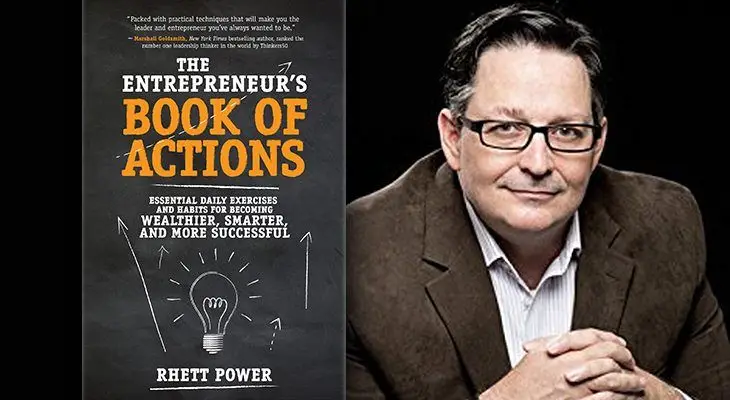
Rhett has since grown his life’s mission to inspiring and advising new business owners. His book, The Entrepreneur’s Book of Actions outlines a year’s worth of daily practices for business owners trying to find their way.
Rhett came onto the show to discuss his life and his advice for our audience of Veterans, many of whom are seeking to start their own businesses.
We discuss:
- how Rhett went from startlingly close to failure to running a multi-million dollar company in just a few days
- why you shouldn’t give up
- what new entrepreneurs should be spending their time on
- the similarities between product-based businesses and service businesses
- why success involves daily practices
To follow Rhett Power’s show, Power Lunch Live, click here.
Transcript
Machine-generated from the episode audio and lightly edited — may contain errors.
Chris Albert (link to this point)
The Warrior Soul podcast is written, produced, and edited by me, Albert. Our mission is to provide tools, tactics, strategies, and ideas to US military veterans and anybody else willing to listen to help them to navigate toward living their absolute best lives. If you find these episodes helpful, please share them out with somebody that you know of that can use them. And if you really like the podcast, please also head over to iTunes and write us a written rating and review. It really helps us to spread word about the show, and it really helps to get these tools in the hands of others who really need them.
This podcast is sponsored by f bomb nutrition. They make awesome delicious packets of macadamia nut butters. They mix them up with chocolate, with sea salt, with pecan butter. They're absolutely delicious, and they also have a number of other fat fueled snacks, like their meat sticks and their cheese crisps. They're amazing people who are sending boxes of this stuff out to the troops on the front lines, and they're offering 20% off to our listeners on their first orders.
If you head over to www.dropanfbomb.com and use the code Warrior Soul at checkout, you'll get 20% off of that first order. And I'm gonna keep the announcements short and sweet today. You can stick around to the end. I got a really special announcement about a brotherhood that we're creating here at Warrior Soul. So hope you enjoy this episode.
I hope you get a lot out of it. And without delay, let's get into it.
Chris Albert (link to this point)
This is Chris Albert, and I'm here to remind you of one thing. Someday, you're going to die. That's not some morbid statement or scary idea. It's solid fact. Your time here on this earth is limited.
And we need to be reminded of this as much as possible for one simple reason, to live your best life while you can. This is the Warrior Soul Podcast.
Chris Albert (link to this point)
You know, I've experienced sadness in my life many times. I've experienced grief from the loss of a loved one. I've experienced heartbreak from the loss of a woman. But I can tell you that there has never been such an empty feeling in my life as when I started out my entrepreneurial career. And I knew that my livelihood, my paycheck, my entire self respect was going to revolve around my actions.
But yet, I was not able to figure out exactly what to do. Staring off at a computer screen for hours at a time, frustrated, slamming my fist on the desk repeatedly because I just couldn't figure out what I needed to do to get my business to work. And unfortunately, that's the story of a lot of new entrepreneurs. You know, when you get in a business, it's a huge transition. You can no longer expect a paycheck.
You have to work for every penny, and you gain an entire new perspective on what money really is, which is an exchange of value. And if you're not able to provide value and you're not able to notify people that you can provide value, well then you're not gonna get the money. And it's a scary, scary experience, but it is a worthwhile one. And today's guest, mister Rhett Power, he is the founder and former CEO of a company called Wild Creations. It's a toy company.
And when Rhett started this company, he was coming out of a government career. He worked for USAID and he got into this business opportunity with a lot of hope. But at first, it wasn't so easy for him. He ended up getting into a position where the company wasn't taking off. He was traveling around to different trade shows trying to to get a deal that would allow the company to get enough money to move forward.
And he was down to his last tank of gas that he could afford, his last dollars. And a vendor had advised him to go to a specific trade show. And he went and he secured a deal that immediately changed his business and allowed it to grow. Now since that time, Rhett has had built this company and he since sold the company, but he was able to build that company into one of the fastest growing companies in The US according to Inc Magazine. And since that time, Rhett had a great career with Wild Creations and he's moved on now to start his own coaching business, helping other entrepreneurs to grow their businesses and to develop high performance daily practices that are going to help them to be on top of their game.
In the veteran community, we have a lot of business owners. Veterans are amongst the highest population of entrepreneurs in The United States. And guess what? I don't think we should be satisfied with that. We should keep going.
We need more veteran business owners. But it's tough out there. And so that's why I wanted to invite Rhett on. We need to have people who've been there in the business world, who've looked failure in the face, and who've clawed themselves out of that situation through determination and hard work to speak to our community. Rhett has since written a book.
It's called The Entrepreneur's Book of Actions. And this book consists of a year's worth of essential daily exercises and habits for becoming wealthier, smarter, and more successful as an entrepreneur. We had a great conversation here. We talked a good bit about Rhett's history, his background, but also his advice for those of you out there who are thinking of turning the corner and building your own businesses. Like I said before, I think we need more veteran business owners and I think that this podcast is going to give you a lot to think about if you are interested in building your own business.
So without delay, let's get into this conversation with mister Rhett Power, the author of The Entrepreneur's Book of Actions, founder of Wild Creations, and elite business coach. Absolutely. Absolutely. You know, I read a bit about your story. And I know that back in 2009, you'd opened up this company and you were literally sleeping in a van traveling from trade show to trade show, trying to get your company off the ground, and you were pretty much on your death ground.
But I want to hear about that time, the beginning of your business, what that was like, and and, what you learned from it.
Rhett Power (link to this point)
Well, it was a lot of power. There was a powerful motivation there not to go back to Afghanistan. Sleeping in the bed.
Chris Albert (link to this point)
Why why would you have had to go back to Afghanistan?
Rhett Power (link to this point)
I was gonna go have to get a job. And so I was gonna have to go back as a contractor or something. Was gonna have to dig myself out of this financial hole, you know, and, and, I'm, I'm, I'm teasing a little bit, but at the same time I am not because, you know, I didn't want to go back to a job. I didn't want to go back to working for someone else. I didn't want to go back and have to start all over again.
But, you know, to answer your question, there was just a there was just we just didn't want to quit. And we didn't want to give up. And we didn't want to throw in the towel. So that's, that's a really power that was a really powerful motivator for us to keep going to persevere to sleep in the van to save money. And we'll talk about the financial discipline.
And we'll talk about some of those things in a little bit, I think, when we get into the book. But it was to put everything on the table, give everything that we had to try to make this thing work. And that meant, if that meant eating cold can ravioli out of, you know, in the back of the van at night for a couple years, when we were doing our deliveries and doing our runs and going to shows, That's what it was. That's what we were going to do. And I don't think I knew that before going into it.
I had this kind of rosy picture of what this might look like. But once we got into it and the reality struck and we six months in the recession hit. And so there was a whole new reality for us in that. And so when you either give up or you say, okay, this is what I've got to do right now to make it and survive, and make this work, and I'm going to do that. I think everybody's got sort of a rosy picture of what entrepreneurship or business is going to look like when they first start, unless they grew up in it. My parents were teachers and they worked for the state.
I didn't have any idea what entrepreneurship was going to be like. But I got a real, I got a real reality check a few months in.
Chris Albert (link to this point)
That's one of the things because I mean, if you look around at the media escape, particularly in self help, we live in this time where I think it seems like everybody's trying to become an entrepreneur. And there's there's probably a million hours of content out there, a million pages written about how to be successful. But very seldom do we hear about how to fail and how to fail the right way, and what to do when your back is against the wall and you are on your death ground. And I think that a lot of people who get into entrepreneurship, especially, you know, myself when I first gotten into it, we weren't expecting that at all. Not expecting the work, not expecting the canned ravioli and the ramen noodles, not expecting all of the the the crazy things that kinda came along with it.
So so in your mind, as as people are more and more people are jumping into entrepreneurship, What are the things that they need to know beforehand?
Rhett Power (link to this point)
I think doing your homework, I think if you have partners, making sure your partners are all on the same page. Do they have the same desires, the same goals, the same vision for where this is going to go? I think that's key. I think your family and your friends, your spouse, your partner, whatever it is, need to know that the deal need to know what this is really going to look like, the reality of that. So I think being honest with them about that, the money constraints and what, you know, I know that from my side, I said, I told my wife, hey, know, six months we're going be in the clear, we're good, you know.
But that was just not knowing and that was having this rosy picture that then when we put together the business plan, that that's what we had projected. Right. And I believed it. I honestly, I believed it. I thought that's what I thought.
But making sure that you're open and honest and have those tough conversations when you need to have them and tell them tell people what the real deal is. Finding the you know right people to hang out with and who support what you're doing and get it and people who can be supportive. That's the way to make it work. I don't know that there's any secret, I think understanding you know doing the reading that you should do and talking to people who've been in business so that you have a I didn't talk to that many people who had done it, and if I had, I might have been I might be you and I might not be talking today because I might not have started a business, you know. But I think it's I think it's, know, finding out the real deal from people who have done it, I think is really, really key.
So that you go in with your eyes wide open.
Chris Albert (link to this point)
So do you think maybe going in a little bit blind to the horrors on the poverty side of things, you think that's almost beneficial? Or do you think you should have some awareness of that?
Rhett Power (link to this point)
I like to know things, I guess. I don't like surprises. Boy, have I gotten used to surprises as an entrepreneur. And my tolerance and my ability to deal with change and surprises is I've gotten a lot better about that in my old age. I wouldn't.
I was kind of joking that I maybe I wouldn't have started it. I would have still jumped head first in if I'd have known. I just I think I would have been prepared. I don't think I would have done anything differently though. I think I would have kept going and done the same thing because I think that that was sort of I think some of those characteristics are innate, right?
I think some people have a higher tolerances and persevere better than others, I guess.
Chris Albert (link to this point)
One of the other aspects of that story where you were sleeping in the van was that, you had a vendor who told you to go to a specific conference, and it was kinda like your last chance. It was a it was a trade show. And it was like your last ditch effort, and you ended up going to that trade show. And in a single weekend, you did millions of dollars of business. And that pretty much changed the story right then and there.
And one the things I know and I understand is that going from a state where you're near your destitute to going to a state where you have lots of business, that brings off, you know, it's awesome, but it also brings its own set of problems as well. What types of things did you have to think about at that point?
Rhett Power (link to this point)
That was mind blowing, by the way, that just was a mind blowing experience. That was a long ride back from New York to we actually ended up after the show going to New Hampshire to make a deal with Brookstone. But from New Hampshire back to South Carolina where we were based, that was a long sixteen hour van ride with my business partner to get our head around what had just happened. I mean, we we literally did. We went from maybe a $50,000 a year company to a $9,000,000 company.
I mean, you know, practically in a weekend and, it brought all kinds of challenges. Brought the biggest one that came to mind is we had no money to do any of it. And we had just said yes to all of this business. And it was like, I mean, the whole weekend, my partner was looking at me saying, we can't do this. We don't have any money to do this.
We can't afford to do this. I said, but we have to, have to do this. I mean, it was this, this whole debate of we, we don't know how to ship that product. We just signed a contract to ship product to 400 stores around the country. We have no idea how to do that.
And so it brought logistics problems, it brought staffing problems, it brought scaling, you know, we didn't know how to scale the product to what we needed. It brought vendor issues and money issues. It brought, you know, all these structural issues around how we do, how do we deliver what we just promised we'd deliver. And what still amazes me to this day is that everybody came to bat to help us. We got in the we got in the car the next week and went to it's like six vendors around the country.
And we went and saw every single one of them, and took them the POs and showed them what was happening in the business. And every single one of them said, we will give you credit. And the reason they had done that is because we have been paying our bills and trying to keep up with our bills and not getting behind. We've been good partners. Even though we were struggling, we had made that a priority.
And every single one of them said, hey, don't worry, we'll take care of you. You know, we're
Chris Albert (link to this point)
That's making a lesson right there. That's a huge lesson right there. You know, treat people the right way. So that they'll come to bat with you when when the time comes.
Rhett Power (link to this point)
We had a we had a FedEx rep who was based in the state. And she was young and hungry. She went back to the corporate people in Tennessee and said, we got to help this company, we got to figure out how to ship their product. They brought in the boxing specialist and the technicians to figure out how to box this product up, because it had breakable stuff in it. They dropped it and temperature controlled it and they gave us a technology grant for like $10,000 They brought in computers and helped us set up a production line.
I mean, everybody came to bat. And so I mean it made it work.
Chris Albert (link to this point)
That's amazing. That's amazing. And so now going to your book, The Entrepreneur's Book of Actions, which I have got right here. Yeah. Awesome.
Absolutely. I have been going through this and I have been doing the exercises myself. And and at the very beginning, there's a big emphasis on some of the things we've we've already talked about, which is getting your mind right before you go on this quest. And that involves, first and foremost, kind of figuring out what you want. Right?
What what do you want out of this? What do you what do you what do you want out of your life? Can you talk to me a little bit about how you came up with this list of actions and why did you do it in the first place?
Rhett Power (link to this point)
Well, did it. The main reason I did it is because I felt like these were things that helped me along the way. This was advice that I got from all, you you talked a little while ago about millions of hours of content that's out there. And, you know, I had, I read, I tried to study, I tried to figure it all out as, the business was growing and as we were evolving. And these are things that just over time that we found, whether it be from a coach, a mentor, or somebody I talked to, you know, a vendor.
These are just lessons that I learned along the way. And I wanted to share them. And what I found was that writing at some point along the way, I think around in 2013, really became for me cathartic. And it became a way for me to process things and think about things. I've got the worst case of ADD in the world.
So if I don't write things down and structure my day and structure my time, I I get distracted. Right? I mean, I can go off and follow a LinkedIn trail or an Inc article or something way down an hour or two and I've lost my way for the day. So this book was a way for me to structure my time and my energy and my focus and get it so that I knew what I was doing. I can manage it all.
And because you're over you know as an entrepreneur you're also you're overwhelmed right. And you can get distracted and you can focus on the wrong things. You can not manage your time well. So to me, this was the fundamental, these are fundamentals. If you get these fundamentals right, then everything else falls into place I think.
Chris Albert (link to this point)
Yeah, and you know, you mentioned that and I think that just like most of our audience is combat veterans from the US Army, US Marine Corps. Just like in battle, I think that if you get wrapped up and you get tunnel vision, you can end up in a place that you never wanted to be before or never wanted to be. You can end up on the wrong side of defeat. And I think that as you're getting into entrepreneurship, there's a million things that that come at you at the same time. I mean, fires that get started, orders that need to be fulfilled, orders that didn't get through, product that people aren't satisfied with, trying to to handle vendors, trying to handle a million emails coming in during the day, trying to handle all your phone calls.
And that can really keep you from working on getting the business to become what you wanted it to become in the first place.
Rhett Power (link to this point)
Right.
Chris Albert (link to this point)
So when you're when you're writing this down, were you thinking back to your starting days? Were you trying to deconstruct that and and really thinking about what you should have done at that point? Or did this stuff come to you in another way? Like, as you're expanding and you're you're building on what you have right now, have you seen these things come to play? And have they have they, you know, helped you along your way?
Rhett Power (link to this point)
Yeah, I used to take notes of kind of daily of our child, of my challenges, right? Things that kind of came my way. And I think everything in those in this book, you know, it's 52 chapters and it's an action every day of the year. So it's structured a little bit differently. Every single one of these issues are things that I face as an entrepreneur.
I think some of it is going back and deconstructing something that happened looking at it and trying to pick it apart and see where we did well, what we didn't do well. I think others are I think there are other instances in here where I learned a hard lesson. I got burned. I did something that I shouldn't have done. I said something I shouldn't have done.
I didn't do something I should have done. And I try to put them in here. Put these put those lessons in to help other people. And for me, this is all stuff that I either did well or didn't do well, and I learned from. And so that was the motivation.
Took, when I wrote the book, I took all of my notes from that period of time and from the other businesses since then that we've started. And really sort of said, okay, these are things I think are key to your success. And if you get these small basic things and none of this stuff in here is complicated, it's all stuff that we know. It's all stuff that we've read an Inc article about or a Forbes article about or a book about. Right.
It's all things we know we should do. But as you said, you know, we get, we get caught up in the whirlwind of the every day. And these are the things that we put aside. These are the things that we, we cut corners on.
Chris Albert (link to this point)
Right. And it is kind of that saying, it is simple, but not easy. I have definitely been that guy with my businesses who felt so overwhelmed that I would be sitting there for hours staring at a computer screen, wondering what the hell I should be doing. And I was wondering, should I be trying to do this social media stuff? Should I be should I be, you know, trying to start a podcast or things like that? And so, at the end of the day, you know, I think it helps. And and what this book does is it gives you something that puts you onto a road map and a road map to to getting your mind right and to take the actions that you need in small chunks to get to success.
Rhett Power (link to this point)
Right, it gives you that time because I think, you know, one of the lessons, the biggest lessons I learned in the business and you said it a little while ago was, we didn't grow for the first couple of years. We were just spinning our wheels. And that trade show changed it. What that trade show illustrated to us was it what it made us do actually forced us to do was we can no longer go make those deliveries. We can no longer keep going to those trade shows every weekend.
Because we had to spend the next six months, four months figuring out figuring out how we were going to deliver on this new business. We couldn't give up the old business. We didn't want to give up the old business. So what we knew is we had to get some people. Needed help.
We needed to delegate. We needed to do all of that better. And we needed to teach somebody to do what we had been doing so that we could grow the business. So basically getting off the truck, right? We had to get off the truck and out of the truck and get in the business and start thinking.
We had to start using our heads. And that was a really powerful lesson. But I think that that that that's what transformed business. When we started thinking and and and working on the main things, the things that we're going to grow the business, man, it just it skyrocketed.
Chris Albert (link to this point)
That is I think that is huge to understand, particularly right now because if you actually, if you look at what it takes to open up a business these days, it actually takes less than it ever has before. I mean, you can literally start a business with a website, an email inbox. You could do on demand fulfillment. You can you can, get somebody to to do the manufacturing for you and things like that. And it really doesn't take much. But what you have to start thinking about at a certain point is how you're gonna add infrastructure there and how you're gonna take all these daily tasks that you end up doing yourself and how you're gonna get them into the hands of good people who could actually do them better than you could.
So that you focus on what you need to focus on because you can't hire somebody to be you. You can't hire somebody to develop your vision, and you can't hire somebody to to to spread your message.
Rhett Power (link to this point)
Right. Now in the book, what I like about for me about the book was it forces me to work on something every day. And I was I was going to make that point early and I didn't, but it stops me. It gives me a reason to stop the chaos because you're not going get rid of the chaos. The chaos is always going to be there.
But what it does is it it forces you to slow down, take that twenty or thirty minutes every day for you and focus on things that are going to make you a better leader, a more efficient leader, a more effective leader. Right? And that's what the other main point of the book for me is, is that it forces you as a leader to stop and think and write and make your list. Think about the strategic stuff and that that's critical to you growing as a leader getting better as a leader. Because if you don't take that time out for you and your own personal development and your own thinking about the business strategically, then you're going to get caught in that perpetual cycle.
I know what that perpetual cycle feels like. And it feels like you're drowning. I I've been just, like you said, I've been at the computer thinking, shit, what's next? Like, I'm looking at, I'm looking at my to do list and it's like, I don't even know where to begin. It's it's that a loving feeling.
Right. And I think the point of the book was this would have stopped that and try to get you out of that cycle of this feeling like it's never ending.
Chris Albert (link to this point)
Yeah. That's a, that's a huge one. I want to pull it back just a little bit and, and, to ask you this, your, your company's called Wild Creations and, and, it's toy company, correct?
Rhett Power (link to this point)
What are we sold it so that I sold that company a few years ago. So.
Chris Albert (link to this point)
Okay. Okay. And what were you doing prior to that? What were you doing before that?
Rhett Power (link to this point)
Prior to that, I had done a lot of different jobs. I was a radio station, DJ and manager. I was, I was in sales. Did all kinds. I was in political consulting.
I mean, we did, I did a lot of things. But in 2099, I went into the Peace Corps
Chris Albert (link to this point)
Wow.
Rhett Power (link to this point)
And was in Uzbekistan in Peace Corps. And then after Peace Corps, I was worked for USAID overseas. And I worked on economic development programs. And for about six years in the Former Soviet Union in Central Asia, I worked on some really massive economic development projects where we were trying to get small and medium enterprises that had, you know during that period they were transitioning from a Soviet kind of a command economy to a market based economy. And our thinking back then was that if we help them do this, then we're not going to have an issue with young men turning to, you know, extremism.
We are going help create jobs. We are going to help stabilize those economies so that we don't have a problem with Al Qaeda and, the Taliban and Islamic movement of Uzbekistan and some of the groups that formed in that time. And so, I mean, it was fascinating work because I was working with companies, good companies that used to be state owned to all of a sudden one day this manager at this company got the keys and said, now it's yours. Know, nobody's gonna tell you how much bread to make anymore. You know, you've got to go figure that out.
And so that was that was fascinating. And we worked with hundreds and hundreds of companies that, you know, we are trying to figure out how to now be entrepreneurs and how to run these companies and how to create jobs and do what they were doing. So that was really interesting.
Chris Albert (link to this point)
Yeah. The reason I asked that, I just had Robert Greene, the author of the 48 Laws of Power and Mastery and the laws of human nature on the on the show. And one of the things about him is that he had over 80 jobs before his first book took off. And and one of the things he said was that, you know, for everything he did from, you know, private investigation to working in Hollywood to working construction, there was something there that had prepared him to do what what he's doing now. And could see that with what you've done with with USAID and and with the Peace Corps.
And and there's probably a million other instances out there of things that kinda prepared you for that singular moment when when you were able to make that deal. And the reason I say that is because there are no overnight successes. And I think people have to understand that.
Rhett Power (link to this point)
No, I credit several things in my life. I credit my parents for an incredible work ethic and making me work as a teenager and for things that I wanted. I credit the Peace Corps for letting me know that I can do anything. I can survive anything. You know, I can live in a small place and with no electricity and no water, and I can actually really enjoy it.
You know, just so there are all kinds of life lessons that I think kind of prepared me for, for that, for that, for that time in my life and for that for being able to get through it and suck it up. And I mean, hate that word, but in a way you do, right? You just say, okay, I'm going to make I'm going to make it. You tell yourself, you convince yourself that this is not bad, that this that we can, we're going to do this, and we're going to do whatever we have to do. And I think all those experiences, like you said, I know that's a great question.
Kind of prepare you for that moment, right?
Chris Albert (link to this point)
Absolutely. And, you know, as you just spoke about, had your exit from that company. And and and now you're in you're in coaching. Right? And Correct. You're helping others to develop their businesses. How are you finding that work?
And and when did you decide, okay, I need to take what I know and I need to go out there and I need to help other people with this.
Rhett Power (link to this point)
I love it, man. I found what I was what I'm what I meant to do. And it was all, you know, I'm not one of these people that has this grand life plan. You know, I'm not one of these people that had a plan when I was 20 and knew what I was going be doing when I was 45 or 50 or whatever it was. I've kind of, I'll say like, let life take me, but I've sort of followed my heart and my gut and kind of made a turn when a turn came up that I thought I needed to take.
And it's led me to this and coaching. I stumbled into it. I mean, I when I was in Peace Corps, I was I was teaching at this university. And I loved it. I mean, it was it was I loved teaching.
I loved preparing for the classes. And then I got into business and, you know, as a a as a manager and owner of a company, you're also a coach, right? And you're a, you're, you kind of play a lot of different roles and you're kind of a teacher again. And, so that is natural. And it, and it for me, I really enjoy it.
The business coaching is, is I have fun sharing my experience. Have fun, asking questions. I have fun. To me, all of it is is it. I'm not like a kid in a candy store because I, the other thing for me is it's different every day.
I get to see and hear different challenges. And so again, me, it's a with ADD like I have, it's it's great because I can, I'm not, it's not boring. It's not one thing every day. It's not the same thing every day. It's not the same challenge.
And, so working with people who have issues and who are trying to figure it out and who want to figure it out, is, is the best job. I couldn't ask for something. I don't think I could do anything else that I love, love more.
Chris Albert (link to this point)
That's amazing. And one of the things I wanna ask you about this because, like I said, we live in an interesting time. And if you look at the coaching industry itself, it's the second fastest growing industry next to tech. And and literally, you know, that's just the the the International Coach Federation statistics. I mean, I think probably a lot more because there's there's people who simply open up an Instagram account and they are a coach and they are a life coach or a fitness coach and things like that.
What is your take on this? Because I think that, you know, someone like yourself who is, you know, been there, done that, worn the t shirt, who's going into this after a life of thought and action versus somebody who's kind of just jumping into this and maybe take maybe taking a certification, but probably not. And then and then just kind of pushing pushing themselves out there as a coach. I don't wanna come at them, like like, in a hostile way, but what would you say to somebody like that who is maybe on that road and and what direction would you point them in to maybe get onto a better path?
Rhett Power (link to this point)
I well, I would I would switch the question around a little bit. Because I don't think you're going to change the flood of people coming in to the to the to the industry. Well, you will because I think they're going to find it's really hard to get clients and they're going find it. It's really hard. It's not an easy business.
And it's, know, there are a gazillion philosophies and there are million certifications and, you know, don't know what any of it honestly means. But what I would say to that, I would reverse that and say if you're hiring a coach, there are things and I hope I'm not stealing a question from you. But I would put the emphasis on if you're hiring a coach, are you thinking you want to coach that you do your due diligence before you hire somebody, because there are a bunch of people who are hanging their shingle out saying I'm a coach. And I think before you hire a coach, you need to know what your goals are for that coaching. Right?
Right. You have a clear understanding of your why you're doing it. And you interview that person thoroughly or multiple people. You find out their experience and their success and there you ask for references. Add, I mean, you do it as if you're hiring anybody else in your company. You take that same care in hiring a coach. And what what it ultimately comes down to is your gut feeling on, can they help me?
Chris Albert (link to this point)
Right. Exactly. Because they're not become part of your team.
Rhett Power (link to this point)
Right. Do they compliment? I mean, things I look for in a coach and I have a coach too. So, you know, it's it's it's, it goes both ways. But I look for somebody that has complimentary or opposite skills that I do that can push me to be better in areas where I am weak, right.
Somebody that can be open and honest with me and brutally honest. Somebody that can not sugarcoat it and blow smoke. You know, somebody that's going to say and call me on my, on my bulls, my, you know, my bull. Yes. You know, so I'm looking for all of that when I, when I look for my own coach and I think that that's, that's what I would say.
I don't know if you're going to change that flood of people coming in, but I think you, I think you can get people to have a make better decisions when they hire somebody.
Chris Albert (link to this point)
Right. Right. So when you're working with a client, and I am sure you work with people from across various industries, I am sure you work with different types of personalities. What is the first step you will normally take with them? You kind of look at what they are doing, what their lives are like?
Do follow the steps you laid out in the entrepreneurs books of actions?
Rhett Power (link to this point)
Well, yes, I mean, one, I think we depending on what what kind of engagement we're doing, because we're not only just coaches, but we have a business business advisory practice. So I'd say a fair amount of our business is business advising. And it's not so much coaching as it is helping them fix a marketing system or put a marketing system in place or a sales system in place or HR system in place or a financial system in place. So we do a lot of that and we help people in change management a lot who are came into the same kind of situation we got into. Right.
They're growing, they're growing quickly. So we're helping them sort of through that transition in that growth phase. That's a lot of what we do. The the the coaching aspect of it always comes into play in some way, though. Right.
So it just happens that I can sit down and have a conversation about your leadership, you know, as a CEO or the owner of the company. And that sometimes sort of transitions into some coaching work that we do. And and it depends on what they want to accomplish. A lot of a lot of what our philosophy on coaching is is that it's going to depend on what you know the CEO or the leader of that company wants. Right?
What they're focused on, what their goals are. And that's the episode that really drives a lot of our coaching is what they want to accomplish, what they see as their deficits, where they think they need to grow, where they need to be better communicators, whether they need to be stronger, have stronger skills in particular areas. So we work with them on improving those skill sets and those challenges as they're facing. Awesome. Awesome.
That's okay. That's okay.
Chris Albert (link to this point)
And and so with the with the coaching business, so you went from a product based business, right, where you're dealing with hard products, toys, and then now you're going into a service based business. What's similar? What's different?
Rhett Power (link to this point)
I think to me, there's not a whole lot of difference. And I'll say the reason why I think that structurally business is the same, whether you're doing a hard product or you're doing a service, right? You've got customers, you know, you've got to serve them well. You've got vendors, you got to pay your bills, you got vendors that you owe, you know, that service your company and help you do better by your customers. You've got employees, you got to take care of them, same kind of issues.
So to me, you've got to manage your money. You've to manage the finances. You've got to manage all of the same sort of things. In my case, this is a little bit easier because you're not, I'm not running back and forth to China every, every other month. I'm not, you know, I'm not trying to get a product to.
So this has actually been easier to me than the product based business. But that's the only difference is I'm not on a plane all the time trying to get a plastic part to fit into this piece here, or I am not going through speedy testing or I am not, you know, I am not running back up and forth to Toys R Us all the time trying to make a sale. So, you know, to me it is a little bit easier. It is easier to manage in that sense. But the fundamentals, I think, are the same.
And I think the fundamentals are the same no matter what kind of business you're in.
Chris Albert (link to this point)
Awesome. And, I want to ask this because we have a lot of our veterans out there in the audience who are in transition right now. So they're coming out of the military. They're trying to figure out what they're doing with their lives, what they're gonna do.
Are they gonna go to college? Are they gonna go and try to get a contracting position? Are they going to start their own businesses? And so a question is going center on a couple of things. Number one, if you want to become an entrepreneur and you don't have a business idea, what in your mind is the best thing or the first thing you should do to try to develop an idea, to try to figure out what you're going to provide?
And then number two, when it comes to actually making that choice, what should be the deciding factor as to whether you go down the entrepreneurial road or you decide I am going to be a career person or I am going to pursue my education?
Rhett Power (link to this point)
Great question. This is the golden age of buying businesses. And I and I actually believe that I mean, if you look at baby boomers, they're retiring in huge numbers.
Chris Albert (link to this point)
Right.
Rhett Power (link to this point)
Right. And that's the largest demographic, of the five working, the five people in the five demographics that are in the workplace today, baby boomers are the largest. They're retiring. You know, the 50 and 60 year olds, they're selling their businesses, they're retiring from their businesses. And so they're going to be more businesses for sale in the next five to ten years and more opportunities to buy really good businesses that are existing and doing really well, and could provide a really good lifestyle, and actually could use an infusion of energy and creativeness.
Right. So I think that that is an enormous opportunity. And there's more money available than there's ever been. It's easier to get into a business like that. So I'm actually really excited about the opportunities in the future of in the near future of people being able to, you know, that twenty twenty year old, 30 year old, 40 year old buying a bit of buying these existing businesses and they're not for sale for for things that you know for bad reasons.
They're they're for sale because people are retiring. Right. They don't have anybody to pass it to. So I think that there's a real real opportunity for for that. I mean, think that that is just incredible.
And I really believe in that too, because I don't think all of us are going to create the next Microsoft or create the next best thing. You know, that's just really rare. Most of us are going to run or can run really good local, regional, you know, type businesses. Right. And I think that there's a need for that.
And so I think that that's a tremendous opportunity. So the other thing I would say is, buy a company or look at a company that really excites you. And I'll give you an example. It's in it, I laugh at this every time I say it. We looked at dozens and dozens of businesses to buy when we when we came back from Central Asia.
And the funniest one I ever saw, it had a $3,500,000 EBITDA. It had state and local contracts. He had patents on body bags. This was a dead body removal company.
Chris Albert (link to this point)
Oh wow.
Rhett Power (link to this point)
Okay, and I guess when you pass away in South Carolina or probably in most states, a con the city or the state has a contract to transport. And he just transported. He transported from whatever happened to the morgue or to the hospital, whatever. And he was all he was 70 years old, he was retiring, he didn't have someone to pass it to. He wanted to sell it and huge.
I mean, just he was making money left hand over fist. I could not get excited about that. I just as financially attractive as it was, I I said, you know what, I can't wake up every day and do this. It's just, you know. Now on the flip side of that, my our attorney gave us a letter one day from this small toy company in Myrtle Beach, one product, no books, nothing to base the business on, no financials.
He said if you buy this, I'm going to disown you. This is a terrible company, a terrible investment. But we went down and looked at it anyway, we fell in love with it. And that's what we bought. And so, you know, I think you have to get into something you could get excited about.
And the reason we bought it is because we went to a trade show with him one weekend. And all can long we saw the kids lined up six people deep clamoring for this product. And said, You know what, that's gonna be fun. Yeah, that's good. I can get up every day and make kids smile.
Chris Albert (link to this point)
And that's proof of concept right there too. If people are lining up for it and getting excited about it, then then that's definitely something you want to be a part of.
Rhett Power (link to this point)
Right. And again, he was selling it because he was again, he was bolder. He wanted to go see, spend time with his kids up in New York. And he didn't want to do it anymore. And he you know, he was sort of a seasonal thing for him.
And he had no desire to scale it. He had no desire to put the energy into it that it was going to take. And so you can find gems like that all all over the world. I mean, you can find those kinds of businesses. And that's what I would say is find something that's going to get you excited.
I don't think you have to have experience in it. We didn't have experience in the toy industry. We didn't have experience in dead body removal either. We, you know, none of that. I'm not a person that says you got to have, you know, direct experience in the industry or the business you're getting into.
I actually think that actually helped us. I actually fired a consultant once because we, everybody said, oh, you've got to bring in a toy consultant. You've to bring in somebody that knows the business. And he was so condescending to us. Oh, you can't do things like that.
That's not how the business works. And we said, well, hell with the way the business is supposed to work. This is what we want to do. Right. And so we just weren't on the same page.
But I think that's sort of how we look at it, how I look at it.
Chris Albert (link to this point)
Let me ask you this, because I was reading something the other day. I think it's sixty seven percent of millennials who have less than $2,000 in a bank account right now. And I would have to say that that it's a large part of our audience being millennials coming out of the military, having not gotten paid tons and tons of money over the past few years.
Rhett Power (link to this point)
Right.
Chris Albert (link to this point)
What would you do if you wanted to become an entrepreneur, but you literally did not have the money right now? What would your steps be to try to get to a position to where you could eventually own your own business?
Rhett Power (link to this point)
Great question. I think it comes down to habits. So what I believe is, is that you look at all the bad habits that we have, right? I think the average American spends four or five, six hours a day on television watching television and on social media. We spend money on things we don't need, You know, if you want it bad enough, you're going to go you're going to go get that second job.
You're to work and save and not spend. You know, you're going to you're going to keep that iPhone an extra two years. You know, you're going to drive. I mean, until really in the last couple of years, man, I drove my, I drove cars into the ground. I buy a used car and I still don't, I still don't buy new cars.
I buy and I keep them forever. Right. You get rid of the car payment by driving an older vehicle. You know, you do things that are going to cut your costs. You look for ways not to spend and you save and you, know, you work that extra job, you work that those weekends, you find you start that side hustle, start that company, but you do it small and you build it and you continue working on another job at another job until you get it to the point where you can quit.
You know, you do everything you can to, and you find ways to make it work. I mean, that's what I would say. Cause if you really want it, you'll cut out those, those bad habits. You'll, you'll stop watching TV four hours a day. You'll go make, you know, you you'll sell those products on Amazon.
You'll box up those products on Amazon and send them out. You work that second. You know, you'll do what you have to do.
Chris Albert (link to this point)
That's awesome. That's awesome. And where does the future hold for you? I know you're currently traveling. I know your wife's job requires travel and you're out actually outside of the country right now.
What does the future hold for you as far as coaching, as far as other business ventures, as far as where you're going?
Rhett Power (link to this point)
Well, it's exciting. I'm joining the Marshall Goldsmith one hundred Coaches Group, which is a real honor. That's some of the best coaches, executive coaches and best executives in the world. That's a small group, but it's a very elite group. And I've learned one of my mentors, Mark Thompson is one of the best executive coaches in the world.
And so just learning from that group of people really exhilarating. Few of us that are in that group are forming a new company. So my company, Power Coaching is actually going to be merging into a new company called Access Strategies. And that is going to be, that's a real exciting, that's four of us are coming together with our coaching. All of our coaching companies are being merged into that one.
And so that's going to be that's exciting to me because we're we're all talented in different ways and have different experiences and different. So that and that's going to give us ability to go after larger client bases and more corporate clients and sort of grow on a larger scale. I think I'm going to keep the practice, my practice within that new company of the small, medium sized enterprises. That's where my passion is. But what's, what it's going to provide though is going to provide a whole another wealth of knowledge that I can lean on and I can count on to help clients.
I mean, what I love about it is it's going to be able to be able to with those new that new talent coming in, provide services, world class services to Main Street businesses that only, you know, if you hired Accenture or one of the big companies that you would, some of the technology and some of the tools are going to really help us help small companies.
Chris Albert (link to this point)
Awesome. I love I love the passion in your voice as you're talking about that and the excitement. That's that's amazing.
Rhett Power (link to this point)
That's that's what the future holds. I don't, I don't again, I don't think I can envision doing anything else. Because I think it's, I'm just having fun and see people grow and take their companies places that they hadn't even dreamed of. I think that's, that's good stuff for me.
Chris Albert (link to this point)
Definitely. And I I know you write for a number of different publications. Where where can people find you online? Where whether it be via Twitter, whether it be via one of the other social platforms?
Rhett Power (link to this point)
Well, great question. This Power Lunch Live, that's a new LinkedIn show that I do. Tuesday through Friday on LinkedIn. That is a live show. It's been a lot of fun.
Been doing that for about four months now. But I also write for Forbes so you can go to Rhett Power and check it, you know, go to Forbes then type in Rhett Power and that will bring up my columnist page. Also for Inc, inc.com, same thing, Rhett Power inc.com, and Thrive Global, and then CEO World. Also starting a new column at CEO World. And so you can find me there.
But the Power Lunch Live is every day and that's been a lot of fun and that's where I'd love people to come and take a listen.
Chris Albert (link to this point)
Awesome. And he's, you said that's up on LinkedIn. Is it also, is on your website as well? Is there a link to put on the website?
Rhett Power (link to this point)
So the new website for the show is powerlunch.live powerlunch.live. And that's got the upcoming schedule of guests. And so on LinkedIn, you know, LinkedIn has got this new platform, their live platform. And so you, the direct link to it, you can go to my LinkedIn feed and, and, and, we can connect on LinkedIn and then you'll get notified. But if you just go to the PowerLunchLive hashtag on LinkedIn, it will take you to all the past shows.
And then those shows are also up on my YouTube channel. And I'm turning it into a podcast as well. Since it is a video program, it is a live sort of broadcast program, I am converting the broadcast into just the podcast. So there a million ways to listen to the program. I turn a lot of those programs into articles for Forbes and Inc.
And so multiple ways. If you just type in Rhett Power in in Google, it will take you to all those.
Chris Albert (link to this point)
Outstanding. Outstanding. Any last words for the audience here?
Rhett Power (link to this point)
I would say this man, you know, success in my my view, comes down to prioritizing your work. It comes down to discipline. It comes down to good habits. And clarity of mission. Think if you focus on those things, you just you don't I don't really think it matters what kind of business you're in.
If you if you do those things really, really well, and you do those things really well every day, you're going to be successful.
Chris Albert (link to this point)
Outstanding. Rhett, I appreciate you coming on here, and I just want to acknowledge you. I admire somebody who has gone through the struggle, and who has come out the other end, lived to tell the tale, but then goes back and then helps to advise other others. And I appreciate that. And the fact that you came on to this show today to speak to our audience to veterans. We really appreciate that.
And you delivering your wisdom here. So thank you very much.
Rhett Power (link to this point)
Well, look, I think I think that that your audience a special place in my heart. And I think for most people in the country, they have a special place in everybody's heart. But I also think the military, having gone to military school, and I wasn't in the military, but I think the things that you learn in the military really serve you well in business. I think discipline and focus, and duty and that sense of all of that that work ethic. I think that that, you know, if you apply those things that you learn the lessons that you learn in military to business, you're not you're not gonna have the park man, because that's, that's the key to success.
Chris Albert (link to this point)
It's huge. Absolutely huge. Again, thank you so much. And to everybody out there in the audience, you know, listen to this episode, go back, pull out a pen and a piece of paper and write down some of these notes, because there's loads of advice that we just went through over the past hour or so that could absolutely change your perspective and your life. The other thing I highly suggest is going to check out Rhett's book, The Entrepreneur's Book of Actions.
It is a fantastic book that really breaks down daily activities that that you can do to put you on to that path. And I'm going through it right now. I'm I'm doing the exercises in my journal, and I found it extraordinarily helpful. So, guys, listen. Apply this stuff.
Don't just listen. Learn and apply. And, you know, get out there and live your best lives while you can. Thank you guys so much for listening, and we are out. Alright, guys.
So I hope you enjoyed that interview with mister Rhett Power. I think there's a whole lot of value there in hearing his story of perseverance and determination in getting his business to become successful. I think that it's really important that we hear from people like Rhett in the veteran community. He's not a veteran himself, but stories like that, surrounding yourself with people who've been able to obtain success, who know what it's like to start from scratch, You need to be able to do that, and that's one of the things and one of the reasons why this podcast exists, to bring those ideas, those strategies, and those people to you. Make sure that you check the show notes for this episode.
They'll be up on the Warrior Soul Agoge site. We'll have links over to Rhett's book. We'll have links to his podcast and links to his coaching website. I also wanted to talk to you guys briefly about something that we have going on here at Warrior Soul, and that is the Warrior's Obituary Society. It was created to empower men to live absolutely epic lives worthy of epic obituaries.
And what it involves is an eight week development program upfront. We work on your vision, your goals, we work on your fitness, we work on your relationships and we work on defining where you're going to go in this life. That is so important for you to figure out as soon as possible because without that, you don't really know what you're working for, and without knowing that, you start to lack motivation and you start to let yourself go in multiple areas of your life. Once our members get through that eight week development program, what they do is they take their seats as members of the Warrior's Obituary Society, and that's where the work really begins. We're holding each other accountable to goals, we're meeting each week on live calls, and we're pushing each other to become better and stronger every single week.
We have our own private forum. We don't do any of this over social media. There's not gonna be anybody looking over your shoulder. There is not gonna be any distractions. We we keep our forum on Slack.
If you ever use Slack before, it's a really awesome chat platform where you can keep up communications within your organization. We also have a Voxer group where we communicate via voice. If you guys are interested, let me know. I'm gonna put a link to it up on the show notes or you can DM me on Instagram at Warrior Soul Agoge or Warrior Soul Podcast. And you can email me at chris@warriorsoulagoge.com.
One of the things I did intentionally with this is I didn't make the cost extremely high. A lot of these types of courses out there on the Internet are worth thousands of dollars. I specifically wanted to encourage members of our community to join. There are so many of you who have so much potential and you need to take advantage of that while you're alive, while you're here, while you're breathing. We don't get forever here on this earth and we need to live now.
So hopefully I'll see you guys there and either way, if you're getting something out of this podcast, please please let people know that we exist. Share these episodes out with friends and head over to iTunes and write us a written rating and review. And with that, I want to thank you guys so much for listening. We're gonna be back at you next week with more awesome episodes on the Warrior Soul podcast. Get out there and live your best lives while you can, and I am out.
Host of the Warrior Soul Podcast and founder of Warrior Soul. Worldwide trainer and nutrition coach, contributing author at Testosterone Nation and Muscle and Strength.