Podcast episode
Warrior Notes: How to Be More Productive

Hosted by Chris Albert
The Warrior Soul Podcast
Many people overcomplicate productivity.
They invest in expensive programs and planners, set up complicated systems, and at the end of the day, they set themselves up for failure.
And when we fail, if we feel like we wasted a day or didn’t get everything done that we would have liked to, we can often fall into a negative thought pattern that leads to depression.
Beyond this, the thoughts of what we should have done stay trapped in our minds.
This tends to increase anxiety, interrupt our sleep, and in turn, translates to more lack of productivity the next day.
So one of the biggest factors in getting you to live a happier, healthier, and freer life, ironically, is by disciplining yourself to get those most important tasks in your life done in a timely and efficient manner.
But knowing this, where do most people go wrong?
It starts by understanding this: we chronically overestimate the amount of stuff we can do in a 24 hour period.
Essentially, we stuff so much into our workdays that we get overwhelmed and overwhelm leads to procrastination.
Generally, when you find yourself mindlessly scrolling on social media when you should be working, it’s not because you’d rather be looking at Instagram.
It’s because you just don’t know what to do at that moment.
So the biggest factor in avoiding procrastination is to make it as clear as possible what you’re going to be working on.
So what I want to do here in this episode is to give you a few best practices that you can implement right here and right now after you listen to this show to help you avoid procrastination and get more done in your day.
I’ll also include photographs of my daily planner in the show notes so you can see what I’m talking about.
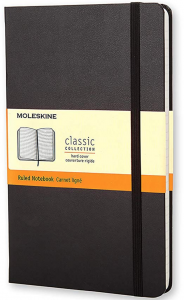
You don’t need an expensive planner, just get yourself a notebook. It can be a green monster, like those we used in the Corps, or it can be a moleskin.
- Planning – You need to set time aside to plan your months, your weeks, and your days.
- On the last Sunday of every month, I plan the month ahead. I just number the days on a single page, and I use it as a radar. Any big events or deadlines I have for that month, I note there next to the number corresponding with the date.
- Each week, on Sunday, I plan out the next 6 days. I do this by making six boxes on a page. Then I separate my tasks based on the day. For example, I Mondays are my writing days, that’s when I draft out episodes for the podcast, Tuesdays are the days when I record my solo episodes, I use Wednesdays to write out show notes, Thursdays I work on building new products, and on Fridays and Saturdays I handle podcast planning and calls with clients. Separating tasks like this keeps me from overloading too much in any given day.
- Each night before I finish work, I plan the next day by writing out the tasks I need to accomplish. I work in two blocks of time. In the early morning, I’ll work on my hardest tasks – creative work that I need to do for the show. Then at 11AM each day, I put on my workout clothes, train for an hour, and then I return to work. In the afternoons, I handle tasks that take less brain power, like phone calls and administrative tasks like posting videos or blogs. One very important thing that I do each day is I make it a point to connect with one important person from my network each day. That’s normally a note, an email, or a call just to check on them to see how they’re doing.
- Calendar, once everything is written in my journal, I put everything into my mobile calender and I stick to the schedule there.
- Flexibility – One big thing we all know is that any plan, even the best of them, are subject to change. Inevitably there’s going to be something that comes up like an emergency or a fire you’ve got to put out. What’s important here is that you don’t get discouraged. So when I’m setting up my calendar for the day, I ensure that I include buffer time. This is time for transition from one task to another where I can catch up. I make sure that I have at least an hour of buffer time at the end of each day to close open loops.
- Solo hour – one thing I learned as a squad leader in the Marine Corps was to be up at least an hour before any of my Marines. That gave me time to get myself straight, get my gear ready, and think. When my Marines finally got up, I could then be present to advise them and lead. I do the same thing today. I wake up at least an hour before anyone in my house is up. My clients aren’t awake, no one is trying to get in touch with me, and this gives me time to meditate, read, pray, and get my mind ready for the day ahead.
- Finally, when I’m working on something, I do everything possible to get rid of all distractions. I avoid social media unless it’s a scheduled slot for me to interact or post. I turn my phone on airplane mode, and I run an app called Brain FM that plays focus music to help me concentrate, be more creative, and calm my nerves.
Above all, the absolute key to success with this process is this: prioritizing your life. One thing we do as human beings too much is going after shiny objects that distract us from what we truly want to do. If you’re going after several different big goals, then your focus won’t be where it should be. Pick one main focus each month when it comes to your goals and focus on that.
Transcript
Machine-generated from the episode audio and lightly edited — may contain errors.
Chris Albert (link to this point)
Hey, guys. Before we get into this week's announcements, I'm just gonna throw an extra one up here, and I hope you'll forgive me because it's important. I wanna talk to you about a marine named sergeant Simon r Lakey. And sergeant Lakey served with Echo Company second battalion fourth marines. He served bravely amongst his peers.
He was recognized as being one of the best. And these are some of his words. He said, remember this, there's nothing in nature that respects weakness. Stay strong. Hard times are here, and more are coming.
And though sergeant Lakey served honorably, he served with bravery and with distinction. Many people didn't know that sergeant Lakey was fighting his own battles. And on a day in the year 2015, after long after he fired his last shot, he took his own life. And I don't talk much about suicide here on this podcast because this podcast is about life. But I wanna tell you about an organization that is helping veterans to truly live, and that's Save the Brave.
They're an awesome organization I had. One of the founders on actually, one of the founders and one of the board members on last week, Nick Velez, he is the founder of Save the Brave. He's also the owner of Bastards Canteen. Major Scott Huesing, who is the author of Echo in Ramadi, and who detailed his marines actions in the Battle of Ramadi in 2006. They're hosting a golf tournament.
It's gonna be on Friday, 10/04/2019 in Temecula, California at the Temecula Creek Inn. Now, I don't play golf. I probably am awful at golf, but I'm gonna be there and I'm gonna be playing. So if you guys are interested in this, you can get tickets or you can send your support. It's up at savethebrave.org/events.
That's savethebrave.org/events. And I'll have a link to this up on the show notes. Alright? Really important. Again, I'm sorry for the interruption, but let's get into this week's announcements and this week's episode.
The Warrior Soul podcast is written, produced, and edited by me, Albert. Our mission is to provide tools, tactics, strategies, and ideas to US military veterans and anybody else willing to listen to help them to navigate toward living their absolute best lives. If you find these episodes helpful, please share them out with somebody that you know of that can use them. And if you really like the podcast, please also head over to iTunes and write us a written rating and review. It really helps us to spread word about the show, and it really helps to get these tools in the hands of others who really need them.
This podcast is sponsored by f bomb nutrition. They make awesome delicious packets of macadamia nut butters. They mix them up with chocolate, with sea salt, with pecan butter. They're absolutely delicious, and they also have a number of other fat fueled snacks, like their meat sticks and their cheese crisps. They're amazing people who are sending boxes of this stuff out to the troops on the front lines, and they're offering 20% off to our listeners on their first orders.
If you head over to www.dropanfbomb.com and use the code Warrior Soul at checkout, you'll get 20% off of that first order. And I'm gonna keep the announcements short and sweet today. If you can, stick around to the end. I got a really special announcement about a brotherhood that we're creating here at Warrior Soul. So hope you enjoy this episode.
I hope you get a lot out of it. And without delay, let's get into it.
This is Chris Albert, and I'm here to remind you of one thing. Someday, you're going to die. Now that's not some morbid statement or scary idea. It's solid fact. Your time here on this earth is limited.
We need to be reminded of this as much as possible for one simple reason, to live your best life while you can. This is the Warrior Soul Podcast.
You know, a lot of people overcomplicate productivity. You know, they invest in these expensive programs and planners. They set up complicated systems. They go to really expensive courses that teach them how to get more done throughout their day. And I can see why.
There's an inherent fear there if you're not working on what you're supposed to be working on. Well, we all know that life is short. And if we're not filling up the page in our days, then we're wasting time. And when we do fail at productivity, if we feel like we wasted a day or didn't get everything done that we would have liked to, we can often fall into a negative thought pattern that leads to depression, feeling really down on ourselves. Beyond this, the thoughts of what we should have done that day stay trapped in our minds.
This tends to increase anxiety, keeps us up at night, we're staring at the ceiling, thinking about everything we could have and should have done that day, and then with the lack of sleep, that translates to more lack of productivity in the next day. We're tired, we're fatigued, and again, we're really down on ourselves. We start to wonder whether or not it's actually worth it. So one of the biggest factors in getting you to live a happier, healthier, and freer life, ironically, is by disciplining yourself to get those most important tasks in your done in your life done in a timely manner and in an efficient manner. Alright?
The the more we get done, the better we feel about ourselves, the more we can be present in our free time. But knowing this, where do most people go wrong? And I think it it goes back to what I said at the beginning. A lot of times, they overcomplicate the situation. And because they overcomplicate the situation and because they invest in these complicated systems, what happens with a lot of people is that they chronically overestimate the amount of stuff they can do in a twenty four hour period.
I've definitely done that before. I've had days where I've loaded task upon task upon task into my day, and then at the end of the day, I'd look at my list of things to do, and nearly nothing was crossed off. Again, I'd fall into that negative feedback loop, feeling really dumb, feeling really down on myself, telling myself that I was a giant failure. Essentially, I think the biggest problem comes down to that idea of overwhelm. When we're overwhelmed and we don't know what to do, that's what leads to procrastination.
You know, generally, when you find yourself mindlessly scrolling on social media when you should be working, it's not because you'd rather be looking at somebody's pictures on Instagram or videos of cats or whatever else you're looking at. It's because you just don't know what to do at that moment. A lot of your tasks seem so big and so humongous that, well, you get anxiety just about starting them. So I think the biggest factor in avoiding procrastination is to make it as clear as possible what you're gonna be working on for that day. You know, taking those giant tasks, chunking them down into doable steps, and then having a clear vision as to what you're going to get done during that day, and also being realistic about what you can get done.
Because like I said, if you try to stack too much on, what you're doing is you're setting yourself up for failure. So what I wanna do here in this episode is to give you a few best practices that you can implement right here and right now after you listen to this show to help you to avoid procrastination and to help you to get more done during your day. It's not going to involve any expensive planners or anything like that. The system I'm going to talk about, I'm also going to outline in a few photos and a few words on my show notes. So once you finish listening to this episode, be sure to go through the show notes and make sure that, you know, you take your own notes.
And the other thing I wanna say here is that this is a system that's worked for me. Everybody's different. And the point is this, you're gonna need to adapt this to your own priorities, to your own life. I'm a business owner. I have a little bit more flexibility in my schedule.
But what I also want you to understand is that just because I work for myself, that doesn't mean that I'm any better than you are at getting things done or structuring my day. In fact, I think those of us who don't have set schedules are actually at a major disadvantage to those of you who actually do work and and do have jobs and things like that. And the reason is because we have something that my recent guest, Craig Ballantyne, calls the curse of freedom. Right? We we don't have any set structure in our days, so there's a huge opportunity for us to just screw around and and waste hours or waste a whole lot of time without ever getting anything actually done.
So I'm gonna break this down into a few different steps, and the first one is this. Like I said, you don't need an expensive planner. You just wanna get yourself a notebook. It could be like the group big green monsters that we used in the Marine Corps. Mine yeah, I still have mine from back when I was a corporal, and I like to look back at the notes.
But what I use now is actually a moleskin. So it's a pretty it's like an eight by five planner that I have. It's small enough to fit in a bag. It's not massive or anything like that. But what I like about it is that it's lined, and you can get them lined or you can get them unlined.
I prefer the unlined, and it's got this little string that you can put there to to find your place in your journal. It's also got an elastic band to keep it closed, and I like it mainly because it's portable. But they're fairly inexpensive. I will put a link up on the show notes to where you can get one off of Amazon for for a really decent price. There are some journals out there that are super expensive, and I don't want you to try to get any of those.
But this one, I think, cost me think it was around $10.99. I'm not sure. I'll make sure to update that price for you guys. So once you've got that notebook together, the first thing you need to decide for any given period of time is what you're gonna prioritize. Now I understand that a lot of us have different goals for different facets of our lives.
Right? So for example, right now, I have business goals. I have a goal to get my my blue belt in jiu-jitsu. I have a goal to make sure that I am enhancing my relationship with my girlfriend. But at the same time, if I were to say, have five different professional goals, like, let's say I had three businesses I was working on, and I was trying to accomplish all those, that would divide my efforts.
And so what I'm gonna suggest to you guys is that you have one main goal for each area of your life, and you stick with that one main goal for a given period. The reason is, again, because if you're going after too many different things, what you're going to do is you're going to overwhelm yourself. You're going try and stuff too much into your months, your days, your weeks, and you're not really going to get anything done. So by prioritizing one main goal for each area of your life, what you're going to be able to do is you're going to focus, and you're going to make it easier to make decisions about what you need to get done each day. And you'll be able to set out clearer steps toward getting toward those goals.
And this is a big factor you have to understand about goals. Having the goal isn't what's special. Right? I used to be one of these guys who used to post my goals up in front of me. I I put them on the wall in front of my desk so that I could see them all the time, and that didn't do much for me.
Why? Because I was focusing too much on the result and not enough on the process. But when you have a clear goal in mind, and you're laying out that process step by step, then it becomes so much clearer as to what you need to get done each day. And that's what you need to focus on. Not on the result so much, but on the process to get there, and making sure that there's a clear process, a clear roadmap to getting to where you want to go.
Alright? So once you've decided on what you're going to prioritize for each area of your life, from there, what you gotta do is you gotta start planning. And you need to set a time aside to plan your months, your weeks, and your days. So for example, on the last Sunday of every month, I plan the month ahead. And what I do for this is I take a page in my notebook and I number out the days.
If it's a thirty one day month, I'll put one through 31. Alright? And I'll write, you know, July at the top or whatever month it is. And then on that page, what I'll do is I'll write down the biggest events that I have going on for that month and the days that they're occurring. Alright.
So if I've got a major project or a major deadline due, I put it down for the number on that month. If I've got my girlfriend's birthday coming up, or if there's a special date in mind, or anything like that, that goes on there. Essentially, use this as a radar. And then when I'm planning out my weeks and my days, I go back to that radar to make sure that I'm planning ahead for that particular event. Alright?
And then each week on Sunday, before the the week ahead, I plan out the next six days. And I do this by making six boxes on a page. And then what I'll do is I will separate my tasks based on the day. So for example, on Mondays, Mondays are my writing days. That's when I will draft out episodes for the podcast, or I will work on blogs, or I'll work on any major writing projects that I have.
Alright? On Tuesdays, Tuesdays are the days where I'll record my solo episode. So after I've written out the draft, on Tuesday, I'll come in and I will record that episode. Alright? On Wednesdays on Wednesdays, I'm using Wednesdays to plan out all my marketing.
So if I've got a marketing campaign that I've gotta do or if I've got a big social media campaign that I'm gonna do, that's when I'm planning that out. On Thursdays, I use for product and business development. That's when I'm designing new things. I'm working on existing products like the Warrior's Obituary Society. I'm designing new fitness plans.
I am hammering out things that are going to move my business forward revenue wise. And Fridays, I handle most of my phone calls. That's when I'll do a lot of my client calls with my one on one clients, and that's also when I will do a lot of my networking. On Saturday mornings, I'm using the morning just to close off any loops that I had open from the week if I didn't finish a project or if I didn't didn't get something done. And then on Saturday afternoons and evenings, I am using that time to spend with my girlfriend.
Maybe we're going somewhere. Maybe we're just hanging out. Maybe we're going on a date, but that's my free time to spend with her. And then on Sundays, I will also be hanging out with her, and I will be going to church and dedicating myself to prayer. And that is kind of my day of rest.
So what I want to emphasize about this is the reason why I have that separation of those main tasks is because that allows me to focus on the task at hand. So I'm not transitioning from, you know, let's say writing to automatically recording a podcast to jumping into another project, and they don't bleed into each other. This keeps my mind focused on what I have to do for each particular day, and it keeps me from being overwhelmed by sticking too many big projects into a single day. Now I also want to say that those are not the only tasks I get done on any given day, but they are the most difficult tasks that I will do that day. Alright?
And and I think this is important to understand. You want to be attacking your hardest tasks first. You want to make sure that you're prioritizing them, because those are going to require the most brainpower. And if you're trying to fit too many of these into a day, then what's going to happen is you're not going to be able to dedicate enough brainpower to those important tasks, and you're going to fall short, you're not going to do your best work. So by doing this, I'm separating out all my important tasks for the week.
I'm putting a 100% focus on those while I'm doing those, and then I'll talk to you in a second about how I plan out my days and the rest rest of the tasks I'll do that day. So like I said, each week I am planning out the week based on those buckets. Now each night before I finish work, I plan the next day by writing out the tasks that I need to accomplish. So when I'm setting up my days, I'm setting them up in two blocks of time. The mornings are spent on those most difficult tasks that I just mentioned.
Alright? So in the early morning, I'll work on my hardest tasks. Alright, creative work that I need to do for the show or creative work that I need to do for the business. Then at 11AM each day, I put on workout clothes, I train for an hour, and then I come back and I return to work. And in the afternoons, I'll handle the tasks that take less brainpower, like if I've got to connect with somebody on the phone that day, or if I've got some administrative tasks like, you know, checking out my bank account, or posting videos, or posting blogs, or posting on social media, that takes a lot less brainpower than the creative work I got to do.
So I'll save that for the afternoons. The biggest thing here, guys, is save your hardest tasks for when you're gonna be your best. I'm a morning person. That's when I work best. If you're a night person, maybe you're putting your hardest tasks at night.
But I found, I used to be a night person, what I found is that if I'm waking up early and I'm getting my hardest tasks done early in the morning, I'll do a lot better work than if I'm saving those for the afternoon or the late morning. And that's just what works best for me. So what I would say is, just like you're setting up blocks for your week, you know, buckets of of specific tasks that you're doing for each day in your week, set that up for your day two. Alright? For so for each day, contain two buckets, one where you're doing your hardest work, and the other one where you're doing the work that requires less brainpower.
Alright? And for me, personally, I like to work in a bit of physical activity in the middle of the day. I know that not everybody can do that. Maybe you're doing that in the mornings, maybe you're doing it in the evenings, But at some point, you definitely want to work in some sort of physical activity because that's going to clear your head, and that's going to help you to be more present for these tasks and and give you tons of energy. So for on each page in my journal where I'm planning out my days, I'll have my tasks written out at the top, and that's basically just like a dot followed by the task, the specific task that I'm doing.
And then underneath that, I'll have some open circles, and that's where I'm laying out my schedule for the day, so the important events. So for example, today at sixteen hundred, I am supposed to interview Robert Greene, very important podcast. I have some time scheduled before that to prepare. And then at eighteen hundred, I'm doing a live call with the members of the Warrior's Obituary Society. Once I've got that stuff down, what I'm also doing on each page is I'm writing out a radar.
So things I want to take note of, like, if I've got a big event coming up tomorrow, I will put it down on my radar. Or if I have a big event coming up that week or any kind of deadline that I need to keep in mind, I'll put that down underneath the schedule. So again, the way the page is set up, tasks are at the top, my schedule will be in the middle, and then underneath, I'll have a radar of things that I need to think about. One other thing I put on this page is anything that I want to study for that day. So if I've got a book I'm reading right now, I'm reading General Mattis' book, Call Sign Chaos, and if I have that written down under my study.
If I've got a book or an article I want to check out, then that's going to be under the study section, and I'll make sure that I have some time scheduled in my day for study. Once I've got that page written out, and again, if this is confusing, I'm gonna have this written out on the show notes. I will also go to my calendar, and that is my Google Calendar, and then I'll block out my time for each day. So I will have my production time when I'm working on my creative task that will be blocked out. Any appointments that I have for that day will be blocked out.
My training time is blocked out, And then I have buffers in my schedule. Alright. Now, what are buffers? And this is a big thing people ask me. What do you do if you just can't keep up with your schedule?
What do you do if you keep missing something or if you your your time drifts into other times that you have allotted? And this is the biggest thing you have to realize, guys, you're human. Right? So you're not infallible. That means sometimes you're gonna drift on your task.
Sometimes things are gonna fall off schedule. And so what I do is between each task, I'll make sure I have a buffer, like, for about fifteen, twenty, thirty minutes just so that I have some time to drift over, I can be flexible, I can get up, go grab a snack, you know, the restroom, get some water, that kind of stuff. Even take a rest, take a little five minute nap if I need to. At the end of my day, I make sure that I have about an hour long buffer, and I'll also make sure that I have about an hour long buffer in the morning. Alright?
And the reason why you want to do this is so that you have a little bit of unstructured time in your day to think. So for example, at the end of the day, I want to be thinking about what I need to do for the next day. Alright? And that's when I'll use that time to to plan. Right?
I'll I'll think about anything that I didn't accomplish that day or things that I didn't do quite like I wanted to, and I'll also think about any tasks that were really valuable that I'll want to include in future days. In the mornings, that buffer is there to help me to prepare. One thing I learned as a squad leader in the Marine Corps is that I always needed to be up at least an hour before my Marines were up. And the reason why I wanted to do that was so that I could get my gear straight, so that I could make sure that I was all settled. Because if I was just getting up when all my Marines were getting up, and I was fiddling around with my gear, and I was, you know, trying to I was all brain foggy and things like that.
Well, I wouldn't be there to advise them and lead them. So what I do now is I make sure that I'm up at least an hour before anyone in my house. That helps to give me time to get me settled. I get to hydrate. I get to meditate.
I get to do some prayer. I get to journal a little bit, and I get to plan for the day ahead. And just having that hour ahead of time before anybody's trying to get in touch with me, before I have to actually do anything, that helps me to really set up my day for success. And then that also helps me to prepare my brain for the hard tasks that I have ahead, because I do my hardest task earlier in the day. And I would encourage all of you to at least find an hour where you're unstructured, where you don't have to really worry about anything, where you could set yourself up for success.
Now again, this is what works for me. You guys are gonna have to figure out what works for you. But what I've tried to do here is just lay out a framework for you so that you'll be able to apply this so that you'll be able to create your own structure, your own system that is going to work for you. The biggest thing I would say is this, keep it simple. Alright?
Pick one main goal for each area of your life. Set your priorities. Alright? Each month, plan out your month with the big events. Each week, plan out your week.
Make sure that you're creating different buckets for yourself that are separating the biggest tasks that you have to do for that week, so that you're not getting overwhelmed. And then each day, structure your day so that you're doing your hardest task when you have the most brainpower, and you're saving those administrative tasks, the tasks that don't take as much brainpower for when you have lower energy. Alright, guys. That's all I've got here. I hope this was helpful.
Please let me know if it is. And I'm going to have all the stuff I told you I'd have on the show notes. So I'm gonna lay this system out in the show notes. I'm gonna show you what my pages look like from my journal, and I'm gonna have a link so that you can get one of your own journals up there. And again, if you got any questions about anything, just let me know.
With that, I hope you guys have a productive week ahead. And, you know, that's the biggest aspect of this podcast, guys, trying to live the best life that you can with the resources you have available. Alright? Trying to make things happen with the precious time that you have left here on this earth. And remember, a lot of people fought and died and paid the price and blood so that you could live the life that you live.
So don't waste it. Make every effort to be your best. And when you do fall short, treat it as a lesson. Alright? Learn what you need to learn to become better, to become stronger, to become smarter, and to become more productive.
Thank you guys so much for listening. We'll be back at you later this week with another awesome episode, and get out there and live your best lives while you can. Gents, before you go, I just wanted to mention the Warrior's Obituary Society. For a long time, I had aspired to create a community within Warrior Soul, full of men who are going after big goals. And what the Warrior's Obituary Society does is it empowers men to live their absolute best lives, lives worthy of epic obituaries.
The whole point of the group is to keep each member accountable. And when our members enter, they are brought through an eight week development program. That program focuses on their vision, their goals, their fitness, their finances, their businesses or careers, and their relationships, and their spirituality. Once the development program is over, then each member takes their seat as a brother in the society. And what happens from there is each week, each month, and each year, we're setting goals for ourselves.
And not only are we setting goals, because like I said, goals aren't important without process. You can't get the goals without process. We're laying out the processes that we need to take in order to get to those goals. And each brother is there to hold his other brothers accountable. Each week, there's gonna be live calls, there's gonna be challenges, we're reading books together, and we are going after our fitness together.
And the best part of this is this guys. It's one thing to listen to a podcast. It's one thing to interact on social media, but we really are the people we hang out with the most. And by creating this community, what we're doing is we're putting men together with other high performing men who are going to hold them to that high standard that they need to be held to if they're going to get to where they want to go. We've already kicked things off, and we've got brothers in this group from 11 different time zones, ranging from Hawaii all the way to brothers serving in Afghanistan currently.
And it's been an awesome experience so far. We've got a really good mix of individuals in there, ranging from active duty military guys to veterans to high performing like minded civilians. So if you guys are interested in this, go ahead and send me a DM on Instagram or email me over at chris@warriorsoulagoge.com. That's Chris, chris,@warriorsoulagoge, that's a g o g e, dot com. Now one thing I want to mention is that we're only looking for men who are committed to high standards, men who have a code, who will carry themselves honorably, and who are gonna put their best efforts into the group.
We don't expect perfection, but we do expect your best effort and not to give up on yourself. So like I said, if you're interested, message me, and we'll sit down for a call and see if this is right for you. With that, guys, thank you so much for listening, and we'll be back at you again with another awesome episode soon.
Host of the Warrior Soul Podcast and founder of Warrior Soul. Worldwide trainer and nutrition coach, contributing author at Testosterone Nation and Muscle and Strength.