Podcast episode
Senior Chief Thom Shea: Three Simple Things
Hosted by Chris Albert
The Warrior Soul Podcast
Senior Chief Thom Shea served in the US Navy Seals over 23 years of distinguished service...
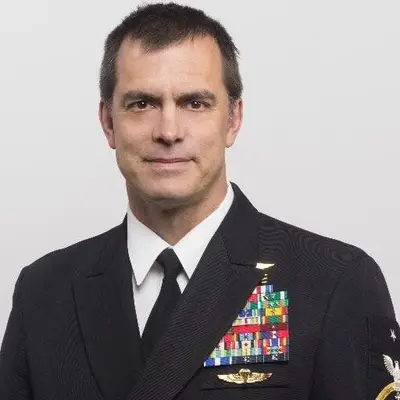
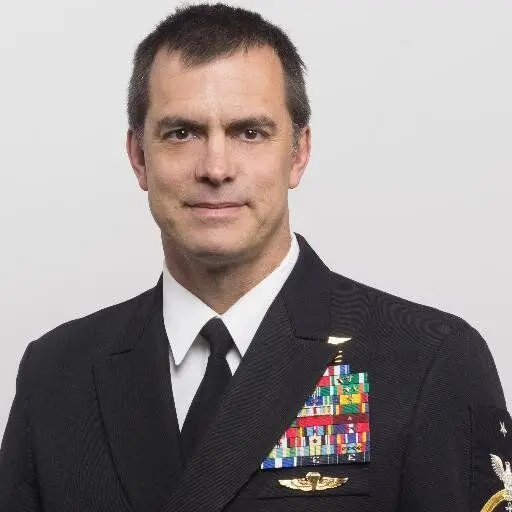
Senior Chief Thom Shea served as a US Navy Seal for 23 years over three wars, earning a Silver Star and a Bronze Star with a “V” device amongst other honors.
Thom entered Navy Seal training after failing out of the United States Military Academy at West Point, determined that he would never fail out of anything ever again. His position in the Seal Teams was hard-won, surviving five Hell Weeks, more than any Seal candidate has ever gone through.
Today, Thom has authored two books: Three Simple Things: Leading During Chaos and Unbreakable: A Navy Seal’s Way of Life. Thom is also the founder of Unbreakable Leadership, and he has trained thousands of people to overcome chaos by applying the rules of “three simple things” to their lives and businesses. In his off-time, Thom hunts and competes in ultra-marathons.
In this conversation, Thom and I discuss his amazing life, the rules that helped him thrive and survive, and how he transitioned to helping others in his post-military career.
To learn more about Thom and his work, visit https://www.unbreakableleadership.com.
Transcript
Machine-generated from the episode audio and lightly edited — may contain errors.
Chris Albert (link to this point)
This is Chris Albert, and I'm here to remind you of one thing. Someday, you're going to die. Now that's not some morbid statement or scary idea. It's solid fact. Your time here on this earth is limited.
And we need to be reminded of this as much as possible for one simple reason, to live your best life while you can. This is the Warrior Soul Podcast.
What is going on, ladies and gentlemen? Welcome to the Warrior Soul Podcast. My name is Chris Albert, and today, I have an absolutely outstanding guest for you. His name is senior chief Thom Shea. Senior chief Shea served in the Navy SEALs for over twenty three years.
He served as an instructor in multiple capacities. He served in the teams. He's also the author of several books. And the thing about Thom is he's an expert at people. He understands people.
We get into his entire history, how he became a seal. He actually had a massive failure early in his life. He failed out of West Point and decided that that wasn't gonna be the end of the game for him. He was gonna go on to become a Navy SEAL. He went through five hell weeks, and then from there on, you know, served in the teams after, you know, falling down numerous times.
We talk about a lot of different things here. We talk about leadership. We talk about life. And the lessons you're gonna get from this show, there's so many of them, but the lessons you're gonna get from this show are gonna be so valuable to you. You need to pull out a pen.
You need to pull out a piece of paper. We talk about home life. We talk about spirituality. We talk about leadership, like I said. We talk about governing yourself.
Right? Taking care of yourself, staying fit. So many amazing things. And this guy has so many interesting stories. So sit back, you know, grab a pen, grab a piece of paper, turn off everything else you're doing.
You want to listen to this episode and take note of everything. Alright? I'm also gonna have links to the show notes for every way you can get in touch with senior chief chi... Sorry. I can't talk today.
Every way you could get in touch with senior chief Shea on the show notes for this episode. So, again, sit back, grab a pen, grab a piece of paper, write this stuff down, and learn. Thom Shea, welcome to the Warrior Soul podcast. How are doing today, sir?
Thom Shea (link to this point)
Well, thanks, Chris, for bringing me on. I love what you got going on.
Chris Albert (link to this point)
Thank you. Thank you. I heard you were just on a hunt.
Thom Shea (link to this point)
I I tell you what, I I thought it was more important or one of the better experiences that I've ever had, even more important than leading men in combat is putting my 13 year old son in a stand hunting deer by himself for the first time.
Chris Albert (link to this point)
That's amazing. That's amazing. How did he do?
Thom Shea (link to this point)
He did really well, but the deer did not cooperate. Big bucks didn't walk in front of him. I had a couple that I could've shot, but I'm like, I... I'll I'll I'll try to stem my tide of killing and let him participate in it, but they never walked in front of him.
Chris Albert (link to this point)
Yeah. It's amazing how activities like that can help to develop an individual because, you know, I remember when I was a kid, I I didn't have a dad growing up, but my grandfather, he was this old Italian guy, he'd take me out fishing and and, you know, he used... We didn't go out hunting deer. He would sit in the backyard with a a derringer or b b gun and he'd take out squirrels. And he used to teach me about, you know, he grew up during the great depression and he would...
He he... You you walk into his house, he'd have freezer stocked with me. He'd have a, you know, a closet full of cans and things like that. And just taught... Those activities taught me so much about self reliance.
Thom Shea (link to this point)
Yeah, I like the word self reliance and I also like teach your kids to be prepared for rough times during good times. It's just kind of like when you're in the military, it's the same, prepare for the worst possible thing while you have opportunities to prepare, and kids don't get that opportunity very often because the world has become a little soft and not only my opinion, but a lot of veterans' opinions. But... So I I took that to heart. I have three kids, and my daughter just graduated from West Point last year.
Chris Albert (link to this point)
Wow.
Thom Shea (link to this point)
And she's going through pilot training now. And my middle boy just graduated high school, and my youngest is 13. And he's... He wants to be a seal, and I'm trying to talk him out of it desperately.
Chris Albert (link to this point)
Well, I'm sure we'll definitely get into that. For the audience at home, let's talk a little bit about your background. Where do you come from? What were you doing for the past couple of decades here?
Thom Shea (link to this point)
Well, I retired seven years ago. I was... Had been a seal for twenty three years.
Chris Albert (link to this point)
Mhmm.
Thom Shea (link to this point)
And that's... I can't remember a time when I wasn't a seal. I kinda remember being in high school and in college, but that's so far removed. I spent my life, either at SEAL Team two or SEAL Team seven Mhmm. Or I was a SEAL instructor for quite some time, and, my adult life was spent in war.
Chris Albert (link to this point)
Wow.
Wow. Do do you remember what made you decide to become a SEAL? You know, I... I've heard that you were in college and and and you you failed out of a class. Right?
Thom Shea (link to this point)
Well, I grew up with what used to be SEALs. They were Navy demolitions back in World War II. And so a guy that had been captured on Iwo Jima was a close friend of our families. And so I grew up with him and his precursor to SEALs as a young man. And graduating high school, I'd been heavily recruited to play football, and I ended up playing at West Point. And and you're right. I failed out of West Point in English in my...
After my junior year. And I had the great opportunity of having what I call a mentor ask me a simple question. Now that you're at the bottom, what would you like to do? Because everything is possible now. And I'm like, man, I want...
I always wanted to be a SEAL. And he goes, just go be a SEAL now. It can't get any worse. And that literally was why I did it. It couldn't get any worse than failing out and having to start over.
So I started over, and I wanted to get back to what I thought was that me that I was searching for at West Point.
Chris Albert (link to this point)
Wow.
Yeah. You think about something like that. I mean, West Point is a place where so many young people wanna go. So many... There's so many stories about it, so much legacy around it.
And you're there and, you know, you're playing football there, which is kinda like the center of everything because everybody comes to watch the football games. That that must have been a crushing defeat. But also when when somebody tells you something like that, that's also a really liberating thing because now you don't have this 8,000 pound monkey on your back. You can go and do whatever you wanna do. Right?
Thom Shea (link to this point)
Yeah. I'm a fan that I've never met anybody who's been successful that hasn't hit either a sandy bottom or a rocky bottom. And and that's what I had experienced first time in my life because I thought, you know, like every kid, I was the gift. I was a really good football player and at some point in time, was really, I did really well academically and I didn't think anything could go wrong and it did. And that becomes the defining moment that everybody, I'd literally say everybody has to hit bottom.
Hopefully, somebody is around them like you or, you know, if you own a company that you're around your people when they hit bottom so you can help them, or there's a parent around that's available, but it's needed. And from that bottom, really great options become available.
Chris Albert (link to this point)
Absolutely. Absolutely. So, you know, you grew up around seals and and, you know, I think at the time, you know, there there wasn't a whole lot of information out there about what seal training was or anything like that. What was that like for you showing up in in San Diego and and and going through the training training sequence?
Thom Shea (link to this point)
Yeah. People now don't remember a time when there wasn't cell phones. Like, there was no way to get information other than either a dumbass movie like Navy SEALs that was out at the time with Charlie Sheen. And there's a couple books written by, Richard Marcinko, who I know personally now, but that was the only information that you could find. And you couldn't even go to a recruiting office and figure out what it took to get through it other than talk to people.
And there were so few SEALs at... Like, still, there's not a lot of SEALs. There were so few that you couldn't go meet or talk to anybody. And so by the time I got to SEAL training, I had no idea of what to expect, which I think is a great... It's a great thing to be committed without knowing how it's going to work itself out.
And so I showed up to SEAL training. And I remember my first experiences, which is I think all veterans have this weird experience. You anticipate one thing and you get something entirely different. And so I show up to SEAL training and there were a bunch of people ready to class up, it's called. It's probably 130 guys ready to start. And the class that was graduating only had seven left.
Chris Albert (link to this point)
Seven.
Thom Shea (link to this point)
Wow. That was like a 137. This shit's gonna get real very quickly. And the the middle class that was in second phase only had about 22 left. And the realization of what I had committed to in my brain hit me there going, okay.
This is gonna get real. And I had... Like, I'm the only one that's ever been availed the opportunity to to be in five hell weeks. I just couldn't make it through. I got injured and got injured and got injured, and they couldn't make me quit.
So I was the only dumbass in the world that has been into five hell weeks.
Chris Albert (link to this point)
Five of those. So so was that because of rollbacks? Was it because of failures? Was it because of medical stuff?
Thom Shea (link to this point)
Or It's all medical. So I got a concussion in the first hell week Wow. On Tuesday. And then in the second hell week, and they don't... I like... Because I was an instructor later in life, but I like the fact that they don't really care.
Chris Albert (link to this point)
Mhmm.
Thom Shea (link to this point)
Okay. You're hurt. Either quit or keep going. Oh, there's bone fragments. Okay.
Either quit or keep going. So that gracious mentality of an instructor allows you to push yourself well beyond what you ever thought was possible. So I got to my... And so they make you start over. So if you phase out of something, you have to start from the very beginning.
There's a lot of reasons to that. One is you become part of the team, you're not injected into the middle of a problem and then make it worse. So I had to start over the second class and made it to hell week, and I dislocated my shoulder on Wednesday of hell week. And then they gave me an opportunity to to miss a class to heal my shoulder. So then I classed up again, class one ninety eight, which is a cold weather class.
We started in October and got pneumonia in hell week. And they weren't gonna pull me out, but they knew it was gonna be an issue. Like, if you make it to Wednesday night at midnight, you can roll forward. And I didn't make it. And so...
But they said, here's the deal. You have to start in a week. The next class starts right before we go on Christmas, but you gotta start in a week with pneumonia. And I'm like, I'll start, but I can't... I could hardly stand up.
So I got to start into that class, and I had pneumonia the whole time, made it to hell week again, and they woke up in the hospital on Wednesday, and they had removed me from training. And not that I quit, they just said, Hey, being unlucky and being injured is also a form of quitting, which is a huge learning point. And so I got to work at the hospital for nine months and every day for nine months, went into the Admiral's office and requested I go back to SEAL training. And I had pissed off summarily everybody at the hospital to the point where they said, Hey, just please go back. But I had lost a rank, I'd been demoted.
Because, hey, you're not allowed to submit a request shit anymore. I'm like, I don't care. I'm gonna submit another one. And I went from e five to e four from failure to dis... Failure to obey a lawful order.
Chris Albert (link to this point)
That's that's something about special operations in the seals because, you know, I was an infantry marine, and and doing something like that in our minds is like, you can't you can't move around the lines and things like that. But you special operations guys, that's kinda what they're looking for too in the first place, somebody who's willing to to bend the rules a little bit. Right?
Thom Shea (link to this point)
I don't know if that was the case. I was just not willing to give up because I had already I had already given up.
Chris Albert (link to this point)
Yeah.
Thom Shea (link to this point)
The West Point experience had already been me giving up, and I'm like, well, I don't want to sit in that pool anymore. Gotcha. And I would rather everything break apart and me be a fractured human being than to quit again. And I... I'm glad that I had gone through that experience.
I totally wish it had not taken five hell weeks to prove that out, but it did.
Chris Albert (link to this point)
It's good that you were able to see that because I think a lot of people who quit, you know, you're doing something that's difficult. You're thinking, hey. Oh, I could get some some hot coffee in in a half hour or, hey. I can go and do this, but you were able to see yourself sitting there dejected after failing yet again, and you're able to see what kind of path it would have would have brought you down. It's really beneficial that you were able to see that.
Thom Shea (link to this point)
Yeah, and I took that into the SEAL teams. I just... What I had learned from that, that was... I'd look back and say if it was profound or not, but keep... Make make everything 10 times simpler than than it could possibly be.
And not not a negative thing, but I kept thinking if I was tired and it was nighttime, how would I deal with any problem that I was facing? And I just kept things simple. Stay or go, that was a simple problem for me to solve.
Chris Albert (link to this point)
Right.
Thom Shea (link to this point)
And reduce the number of options possible so that there's only one left. And I kept doing that for my whole career, and it really was advantageous that I didn't have multiple options to pursue on a daily basis, which makes it catastrophic for human beings when there's too many options.
Chris Albert (link to this point)
Absolutely. Absolutely. Now, you went from there, you go into the SEAL teams. What year did you get into a team?
Thom Shea (link to this point)
Well, I had to go, I graduated, and then I had to go to the Special Forces Medical course called 18 Delta, which is about, gosh, thirteen months long. So I ended up at SEAL Team two in 'ninety six, I think. Yeah, 'ninety six. And then it was just train and train and train and train, and hopefully, you you get in a good platoon that the guys or the chief is somebody who wants to go to war. And a lot of people, especially if it's a military audience that listens, that's what everybody in the SEAL teams wants to go to war.
Otherwise, it's a waste of the time because you train so much, you're like, gosh, I wanna... If I'm training to play football, let's go play football. And some of the guys get lucky and get into platoons like I did. Every platoon that I was in, we got an opportunity to go to war, which was... It's a rare...
Even in the SEALs, you don't go every... Every deployment and actually go to war.
Chris Albert (link to this point)
Right. Right. Especially back in the nineties because, you know, I went into the Marine Corps in 1999, you know, Bill Clinton was still the president. We had a... It was kinda like still the the new world order kind of thing going on where we didn't think there would be any wars coming up and and, you know, that kinda stuff.
But there were... There was definitely some things going on that that, you know, required special operations and required people to be there.
Thom Shea (link to this point)
Yeah, what I got into was Bosnia when we were doing... We were capturing people that were convicted of war crimes before Kosovo kicked off. And then first real deployment, we were out on a ship with a bunch of marines, and we got called in to rescue the ambassador in Macedonia when the air war kicked off. I think it was 'ninety seven, I can't remember when. But it was a unique time.
We had small skirmishes that SEALs were involved in constantly.
Chris Albert (link to this point)
Yeah. Did... So, you know, you're going through all that. By the time nine eleven hits, what what were you doing then?
Thom Shea (link to this point)
I had done three deployments at SEAL Team two, and I was... Actually wanted to get out. And people in the military may remember, he was the secretary of the interior, a guy named Ryan Zinke. He was the XO of Unit two in Germany, and I had just done a deployment there. And I had submitted my papers to get out, and he said, Man, why don't you just come to SEAL training with me?
I'm going to go take over SEAL training. Why don't you follow me there? And so in a day, he cut me orders to go to be an instructor in SEAL training, and I reported 09/09/2001, right before the towers got hit.
Chris Albert (link to this point)
Wow.
Thom Shea (link to this point)
So the whole time, three years after the towers got, you know, crunched, I was an instructor teaching all those guys that you read about to go to war. And to me, was the most unique time I'd ever spent.
Chris Albert (link to this point)
Wow, that probably definitely upped the intensity a little bit on what you were doing there too, right?
Thom Shea (link to this point)
Not more. So what happened there was unique, skipper or the boss of the training came out and said, I don't care if anybody graduates, but we're sending guys to war, so I want you guys to only train them knowing that you're going to go to war with them. I don't care about the numbers. A lot of people do, like, it's a big numbers game. So Rick Smithers came out and said, I don't care how many we graduate, but we're going to war with these fellows, so be conscious of it.
Chris Albert (link to this point)
Wow. Wow. That man, think back to that time period. And for me, I'd been in the Marine Corps for a few years. I remember watching the towers drop on TV, and I remember that mentality switch.
I couldn't imagine being one of those guys who are in your class at that point going through that and then all of a sudden, how that kind of switch happened while you're just there, you know?
Thom Shea (link to this point)
Yeah, it's funny in that class, that class that was actually starting, so there's always three classes in training, and I can't remember which phase one of the fellows was in that everybody knows about it. A guy named Michael Monsoor was in training. He's the one that jumped on the grenade and got the Medal of Honor for it. And he was in training when the towers went down. Yeah. And he was a phenomenal student. And what that means is somebody that you look at, you know, that's not gonna quit.
Just somebody who's got enough resolve that they're gonna hang and be miserable five seconds longer than it takes to be successful. And it was unique putting men like him and a lot of other guys through training during that period of time.
Chris Albert (link to this point)
Wow. Where did you go after training?
Thom Shea (link to this point)
I went to SEAL Team seven. So I left BUD/S as an instructor, I think, in 2004. Went to SEAL Team seven, went to Iraq, and then I picked up a platoon as a platoon chief and took a platoon to Afghanistan in 2009, which what I call very epic combat deployment. And we definitely worked for the archangel Michael. All we did was go to war the whole time we were there for six months, and and most of the war that we were in was with the the marines and
Chris Albert (link to this point)
Helmand.
Thom Shea (link to this point)
Oh, wow. It was a great period of time for us. I don't know if it was great for them because they're in war every day. We we got to take breaks and relax, and they did not, but it's a good time.
Chris Albert (link to this point)
Yeah. Yeah. And and what did what did you take from that experience of working with them and working with a more conventional unit?
Thom Shea (link to this point)
Well, I don't call the Marines very conventional. The Army's conventional. The Army has barriers to itself. The Marines don't... That's... Like, if you ever meet a SEAL, no SEAL will ever cut a Marine down, because the marines are the only reason that we go to war, it seems like, that... Who we go to war with the most.
And the marines were trying to penetrate into Helmand Province, and they never have enough equipment. They never have enough, you know, water or food or they don't have airlift. And so we had airlift and we had authority. So, we, I would say we did 20 some missions in conjunction with God, I can't remember which Marines were there. But every mission was a super coordinated mission to get them further into Helmand.
The only reason we helped was we could, since we had airlift, and everybody, if they know what that means, we could land, we could move ourselves deep into Helmand Province, cut up some new earth so that the Marines could make their way to us, and then it would have more ground to secure and then retain it. And so we were like the spear, and they came up to all the follow-up missions. And like we normally take six to 10 Marines with us on each mission.
Chris Albert (link to this point)
Wow.
Thom Shea (link to this point)
Wow. That must have been awesome experiences there. Like, man, this is a lot easier than walking. I'm like, I I agree. It's a lot easier to land the helo there.
Chris Albert (link to this point)
Absolutely.
Absolutely.
So, you know, you you get through that experience, and then and then, you know, you come back from that. What what was the rest of your time in the SEAL teams like?
Thom Shea (link to this point)
Oh, I was... I came back at the October... Late October two thousand nine, and I had orders to take over our sniper course. So from 2009 until eleven, I was, you know, the guy in charge of our sniper training. And at that point, I picked up senior chief, and I realized that I wasn't gonna carry a gun anymore.
Chris Albert (link to this point)
Mhmm.
Thom Shea (link to this point)
And I had made an agreement to myself that when I'm not... When, I stopped carrying a gun, I would get out. And so Stacy and I, my wife, sat down many hours trying to discuss when's the right time to go. And so we decided. And at the end of twenty eleven, to find a way out.
So at that point, I had talked to my leadership. I'm like, hey, I want to get out, but I still have two years left on contract. What's... What can I do? And they gave me...
I was responsible for all the research and development of the West Coast teams, all the purchasing and new technology, acquisition. And so I spent two years, my final two years, doing all the the the weapons testing, which was fun for me.
Chris Albert (link to this point)
Yeah. That must have been awesome.
Thom Shea (link to this point)
And awesome for Stacy that I wouldn't go into war every other month.
Chris Albert (link to this point)
I wanna talk about that a bit because, you know, you've got children, you've got a wife, you're in a profession where marriages did not last long traditionally.
How did you keep it together?
Thom Shea (link to this point)
I don't think I did. And so I'm like every other SEAL or every SEAL that has a divorce. I don't know a SEAL that didn't get a divorce, maybe one out of one thousand. So my first marriage ended in a divorce and we had two kids and I was still committed to being a SEAL. And the first wife was not interested in me being a SEAL.
Chris Albert (link to this point)
Right.
Thom Shea (link to this point)
And something had to give, like either I was gonna die or I had to get a divorce. So... And I wasn't interested in getting out of the teams because I thought I was still had stuff to do. So I was going to be... I committed that I was never going to let a woman influence my career that way.
And then I met Stacy, which I look back and say, now I know it's sure, or it's true, that every warrior actually needs a woman who's committed to them to go war. And... Because I hadn't had that in my first marriage, but Stacy was very interested and committed to me being a warrior to the point where I was like, goddamn, give me a break, man. I don't wanna go to another I don't wanna go on another deployment. And she goes, hey.
You you're... You go on the... This next deployment. I'm like, goddamn. I'm never home.
But she made it very interesting to be married because she was interested in everything that I was going through, the bad stuff, the good stuff, the killing, the blood. She wanted to hear it all. And I wish other warriors had that level of support because it's huge.
Chris Albert (link to this point)
How did you find that? Because that sounds like sounds like you hit the gold mine there. Right? And I think a lot of guys, they aren't so lucky. A lot of a lot of couples aren't prepared for this type of lifestyle, whether it be the seals, whether it be the army, whether it be the air force, whether it be be the marine corps.
You know, I think a lot of people, they they jump into marriage before they they jump into their careers or they jump into marriage while they're in their careers. How did you find somebody that meshed so well with you, your personality, what you were doing, and somebody who could, you know, help you through a lot of the stuff you were probably going through at the time?
Thom Shea (link to this point)
Man, I, you know, I don't think we find things like that. I don't think it's a search. I think it's more of when you get to a point in your life where your life is not negotiable anymore, like what we were discussing offline about the shutdown. It's not negotiable. I'm not going to lay off my people.
And so what became not negotiable for me was I wanted to be a warrior. And if women weren't interested in that, you can smell it. You know what I mean?
Chris Albert (link to this point)
Right.
Thom Shea (link to this point)
So I made it to the point where I was only hanging out with people who were very committed to me being the best warrior I could, and oddly, people will fill that space if you allow them to. That's the only way I can reconcile. Stacy had been married twice, and I'm like, This ain't gonna work out. We're both coming from divorces. And she goes, I want somebody who is proud to be a warrior.
I'm like, Well, okay, let's see where this can go. And literally, that was just a conversation we had. She goes, I hate wimpy men, and I hate men that don't like who they are, and I want somebody who's tough and wants to be tough. That's so interesting. I regret it all now because now I can't take a day off, and she's like, What are you doing home?
Go do something. So that's the other problem with having a strong woman.
Chris Albert (link to this point)
That's amazing, though. That's amazing. And I think, you know, it's it's what you said there that I think people need to take to heart. It's it's, you know, knowing who you are and and not making any compromises about that and and being confident in yourself enough to say, I'm not gonna put my self worth into somebody else. Right?
Now I'm a big believer in the American family. I'm a big believer in in the institution of marriage. At the same time, you gotta be married to the right person. And if you're not married to the right person, there's nothing that can ruin your life quicker than than being in a bad marriage.
Thom Shea (link to this point)
Yep. I agree with that. Too many soldiers, marine or or sailor or airmen, don't know that.
Chris Albert (link to this point)
Absolutely.
Thom Shea (link to this point)
And they they become a detriment to their platoon, their team, their wing, or whatever. Literally because what goes on at home has a bigger influence than what we think. And like some of the sergeants and some of the captains and majors or commanders also don't understand it, so they don't know what to do with it either. But when you get a group of people that has a deep understanding of that, can... 10 can beat 300.
Chris Albert (link to this point)
Right.
Thom Shea (link to this point)
Literally, that's the truth. 10 people that have a great life can decimate 300 that are on the fence of their life.
Chris Albert (link to this point)
Right. Right. Exactly. It becomes cancerous. Now, you know, you go through decades of being a warrior, and then you come to a point where, you know, you're you're you're heading out into the civilian world.
And, obviously, you had some great support at home. You know, what was that transition like for you coming out of the teams and and figuring out what to do next?
Thom Shea (link to this point)
To me, it was the hardest because everything was very gray and unclear, and what the hell are we gonna do? And and Stacy's support was awesome, but what are we supporting here? But we started asking ourselves that question while I was still on active duty. So for two years, we were looking at, okay, where are we going to live? What are we going to do?
Go do interviews now. So I did a bunch of interviews with companies and with people and got to know what I thought business was. And I think I'm dumber now, seven years in retirement, about business. And what I recognized was that I think seals know the... I think every soldier knows this, but they don't recognize it and admit it.
I knew people. I knew how to make more from a shitty situation by affecting people than I could... I'm never going to get ahead on technology. I was never going to understand business because twenty years not doing it. So I started looking at how get...
How to teach people to be better. And so begrudgingly, my wife had... I had written a bunch of notes to my family during that 2009 deployment, and she had it it professionally edited and put it up on Amazon as a book. And I'm like, oh, fuck, man. I hate people that write books.
Literally, I admit it. I'm like, I hate SEALs or military guys that write books. But so the book was just lessons that I wanted the kids to know in case I died, and it struck a chord with a lot of veterans and a lot of businessmen and women, and it got me in front of people. And so I have now created a business of having... I have a couple Marines and a couple SEALs working with me that we just teach people through a process and method to get exceptionally, like rapidly better in five areas of their life, which I thought was necessary.
And so I just look at people. People are operating at 20% of their ability. What would 30% look like? It's an amazing thing to see, and it can be learned.
Chris Albert (link to this point)
What are those five areas?
Thom Shea (link to this point)
So I actually pulled them all from the SEAL teams. I just gave different words to put different words there. So you have to be fit. So physical is the first area, And it becomes not negotiable, just like Marines, and you have to work out and you have to take care of your body. Literally, otherwise, nothing else will make a difference.
Like you can't overcome an unhealthy body and mind with money. You can't So do physical is the first area. The second area is your ability to continue to learn. I call it intellectual capacity. And the third area is your ability to derive value or to get paid for what you do.
And then the fourth area, which we were just talking about, is the key relationships at home. And the fifth area is your spiritual understanding, which is very rough for everybody that I put through training, even some clergymen, the spiritual area is the most profound. So those five areas in the process, now we've just cut it down to two seminars. It used to take thirteen months. And most of the guys that I, some of the guys I put through training are now instructors, and we're just leading seminar series.
And I could go on for days.
Chris Albert (link to this point)
Yeah. No, I... And and kind of people are coming through these programs?
Thom Shea (link to this point)
For the first six years, it was CEO or executive level. And I don't know why it was that way in some professional athletes. In my mind, it was because those people always want to get better.
Chris Albert (link to this point)
Right.
Thom Shea (link to this point)
Most people at the top are never complacent. They always want an edge, and this represented an edge that they couldn't attain without going through a course. And in year seven or last year, we put on a seminar, we reduced the cost and put it over... It's about a quarter long... It's a two two weekend seminar separated by, you know, maybe sixty days and produces better results than the year long training.
But the people that come to that are men and women between 35 and 45 that want more. That's that's how I look at it. And now now that I I like the fact that more people can have access to it, but at... When it was a $130,000 for a year, it was very restrictive to who is gonna be capable of paying that.
Chris Albert (link to this point)
Right. Right. That's... Man, so some of the things you said there, first of all, I went into business trial by fire, never had a formal business education. I didn't have work, I didn't have a career path after I got out.
I started my own thing and just made a lot of mistakes as I went along and what I discovered was exactly what you said, which is business isn't anything but understanding people and understanding how to give people what they want, what they need. It seems like you've been able to translate a lot of the experience you've had into giving people something they want, something they need. And at times, bringing something they want, but once they're going for that thing they want, also giving them what they need that they didn't realize they needed in the first place.
Thom Shea (link to this point)
Yeah. Yeah.
And I had offers to help like, be COO of companies from the CEOs that I've been training. And I'm like, I'll be a better benefit to you if I don't work inside the company.
Chris Albert (link to this point)
Right.
Thom Shea (link to this point)
And the reason why I brought that up is... And there's a lot of... When we're talking offline, the struggle of the veteran now is trying to figure out not where they fit in, but where they get value. And I realized that I am more valuable when I'm not embedded in the day to day operations of an organization. I try to, and the money was wonderful. I'm like, wow, man, COO or CEO had I helped build and sell a company. And even though the money was good, I didn't enjoy it. Right.
And I'm like, man, I can't spend a lot of days not enjoying myself.
Chris Albert (link to this point)
Right.
Thom Shea (link to this point)
And... But there are also people that... I'm not saying don't do that. I'm just... Find out what you really enjoy in life and put your head down and go for it.
And 99.9% of the time, it'll work out the tenth time you try it, not the first time.
Chris Albert (link to this point)
Yeah. Yeah.
Thom Shea (link to this point)
But yeah, so I found something that I truly enjoy and it it is of great value to me and to my family and to the other people that are involved in it.
Chris Albert (link to this point)
Wow. Well, man, Thom, I... One, I could talk to you all day about this stuff, but I know we're we're cutting down on time. The the books that you've written, what are they called?
Thom Shea (link to this point)
Well, the first one is called Unbreakable, Navy SEAL's Way of Life. It was originally titled Spartan Woman because I wanted to pass on vital lessons to my kids, but I wanted them to understand that without a tough woman, men don't achieve anything. But the publisher didn't like the title, so he changed it to... Had to put a Navy SEAL thing in it.
Chris Albert (link to this point)
Yeah.
Thom Shea (link to this point)
So that was printed in '14. And then I was sitting on a panel of seals, and we were noticing that a lot of our brothers and a lot of your brothers were committing suicide. And we asked each other, what would happen if you died? And I was like, fuck, man. I'm not going to commit suicide.
They're like, well, yeah, but what happens if you die? What legacy are you giving to your family? Or what have you not said? Like, man, you know one thing, I'm sitting on this treasure trove of this technology that my SEALs and I or my buddies and I or my partners and I have created in this training program. And they said, Why don't you put it in paper?
Why don't you write a book about it? The whole linear process of what we put people through. And I was like, Man, it's the technology. It's what I've been getting paid to do. They're like, Well, put it down.
Not everybody's going to read the book, but at least you'll have passed that on to your kids. So the second book is the actual process and method that we've developed that we've put 2,000 people through this training, and it's called Three Simple Things: Leading During Chaos.
Chris Albert (link to this point)
Wow. Wow. And where where can people find it? Where can people where can people grab it?
Thom Shea (link to this point)
Yeah. It's on Amazon. So all... Both of the books are up on Amazon, Unbreakable and Three Simple Things. Or you can...
If you want a signed copy, unbreakableleadership.com is our company, and be happy to respond with a signed copy.
Chris Albert (link to this point)
That's awesome.
Thom Shea (link to this point)
Well, these...
Chris Albert (link to this point)
It sounds like there's some amazing lessons there. There's some amazing lessons with you. Where where can people also find your training? How can people get in touch with you for training?
Thom Shea (link to this point)
You know, we do have social media. Begrudging social media is on Facebook. We're under Thom Shea, t h o m s h e a, but the... And we're on LinkedIn as well. But the the best way is just type in, oddly enough, unbreakableleadership.com, and that captures...
It's like a funnel where it captures everybody, and we are very responsive. And we we have a seminar every month, and we're darn near booked out till June, which is a a great phenomenon.
Chris Albert (link to this point)
Awesome. Awesome. Now here's the hardest question you're gonna get all morning. You've got kids at West Point. You know, you you went to West Point for a little bit.
You served in the Navy. During the football game, who do you root for?
Thom Shea (link to this point)
When my daughter was there, I was rooting for West Point, but when I was in the teams, I was rooting for Navy. So I could play both sides. I'm not scared.
Chris Albert (link to this point)
That's awesome. That's awesome. Well, senior chief Shea, one, I wanna thank you so much for coming on this morning. I wanna thank you for getting on bright and early with me. And, you know, I wanna acknowledge you.
You know, our community, like I said to you offline before before we got on, I think is the sleeping giant in our country. And I think it's these types of tools, these types of understandings that is gonna awaken that giant up, and that is going to help us to do what we're meant to do, which is to help to make this country as great as possible.
Thom Shea (link to this point)
Yep. I agree.
Chris Albert (link to this point)
I wanna thank you for the work you're doing. I wanna thank you for the message you brought here today and the message you're continuing to bring out there to the world.
Thom Shea (link to this point)
Well, thanks for having me, and I am in full agreement. Our brothers and sisters, we are a long two forty plus years of history that is profoundly impactful to every human being that goes through it, and we need to stick together.
Chris Albert (link to this point)
Absolutely. Absolutely. And to everybody out there, I wanna encourage you to to pick up these books. I wanna encourage you to learn more about senior chief Shea and to head over to his websites. And we're gonna have the links for everything up on the show notes for this episode.
You know, get out there, put your best effort into everything you do, live your best life while you can because you don't have forever, And thank you so much for listening to this episode. This is Chris Albert and Thom Shea, and we are out. Alright, guys. I hope that you got as much out of that episode as I did. I I was absolutely fascinated with senior chief Shea with the lessons that he brought to the table here, and I know that there is so much value in this episode.
If you didn't listen with a pen and paper, like I said at the beginning, go back, grab a pen and paper, listen to it again, write this stuff down. There's just so many lessons we can learn from somebody like senior chief Shea, and I hope that you are taking them to heart. Like I always say, we are the sleeping giant in this country. This community is the sleeping giant in this country. When we wake up, we're gonna have a massive impact, and we're already waking up.
There's so many of you out there doing the hard work, getting out there, making an impact on your communities, making an impact on your families. Right? That's so important. So important. So please don't just listen to these episodes.
Go out there and take action. Like I said, I'm gonna have all of the links to senior chay... Senior Chief Shea's books, to his courses, to his instruction, to to everything related to senior chief Shea up on the show notes for this episode, and we'll be back at you next week with some more awesome content. Thank you so much for listening. Hope you had a outstanding Thanksgiving, and I'll be talking to you really soon.
Host of the Warrior Soul Podcast and founder of Warrior Soul. Worldwide trainer and nutrition coach, contributing author at Testosterone Nation and Muscle and Strength.