Toxic masculinity is a term that’s been thrown around a lot over the past few years, generally in very liberal circles.
For some reason, there is an idea out there that exhibiting male attributes is a bad thing. Mike and I decided to tackle this issue and have a discussion about whether or not this term is a myth.
Featuring Mike Ergo from the Transitions from War Podcast.
Transcript
Machine-generated from the episode audio and lightly edited — may contain errors.
Chris Albert (link to this point)
This is Chris Albert, and I'm here to remind you of one thing. Someday, you're going to die. Now that's not some morbid statement or scary idea. It's solid fact. Your time here on this earth is limited.
We need to be reminded of this as much as possible for one simple reason, to live your best life while you can. This is the Warrior Soul Podcast. What's going on, guys? So welcome to the Warrior Soul podcast. This episode, I'm joined once again by my friend Mike Ergo from the Transitions From War podcast, fellow veteran, and we take on a heavy subject this time around.
We talk about the myth or idea of toxic masculinity. And this is a term that's been thrown around the internet for a while. It's been thrown around in academic circles a bit, particularly amongst, you know, grievance studies and and, you know, left wing university officials and things like that. And it's a term I have a real problem with, you know, because I think we've got a generation of men who are growing up, and, know, they're they're we want them to step fully into their identities as men, and we want them to act like men. And there's this idea out there that somehow being a man is a bad thing, and particularly if you're a man, a Caucasian man, oh my god, you're you're screwed.
But but, you know, here's the thing, guys. I love everybody. You're black, you're white, you're Mexican, you're Chinese, you're anything. I absolutely love you. Right?
And and you gotta give me a real big reason not to love you. Right? And I think this idea that we're we should all be approaching each other with respect, it's something that, you know, doctor Martin Luther King Martin Luther King dreamed of. And I think a lot of the debate we're seeing out there right now, it it it particularly on the left side, you know, and not to pick out people who who are on the on the left, but, you know, particularly from that side, we're we're seeing something different now. And, you know, I have I have very conservative friends, obviously, and then I have some very liberal friends.
But the debate somehow is taking us away from being more unified, and I hate that. I hate that. And, well, you know, we're trying to do our part here and inform people. I don't know how good of a job we did here because, you know, neither Mike nor I are are experts on this subject. You know, I'm bringing on Ryan Michler from Order of Man in a couple of weeks, And, you know, he's he's more of an expert on this subject, but just kinda giving you my take on things, and and Mike has given you his take on things, and we're both kinda talking from our hearts here.
So I hope you enjoy this, You know? And thank you guys for listening and supporting the Warrior Soul podcast. Our mission here is to help veterans to live their best lives, US Military Veterans, and anybody else who's willing to listen. So if you like the show, please write us a review up there on iTunes. And, you know, if you wanna support the show, you can do a couple of different things.
Number one, you can check out our sponsors over at F Bomb Nutrition. Amazing people. They make an amazing product. They make macadamia nut butters. They mix them up with chocolate, with sea salt, with pecan butter.
Absolutely delicious. And they're sending boxes of this stuff overseas to the troops on the front line so they can supplement their MREs. Really awesome people. If you're interested in checking them out and getting 20% off your first order, head over to www.dropanfbomb.com and use the code Warrior Soul at checkout. The other way to support us is, you know, we've been a merchandise company from the beginning, and we create some awesome t shirts, military t shirts.
And a lot of them, for those of you who served in the Marine Corps, you're gonna love these things. So if you want to support the show directly, and you want to get an awesome t shirt in return, head over to warriorsoul.shop. And with that, I won't keep yapping. Let's get into this discussion about whether or not toxic masculinity exists with myself and mister Mike Ergo from the Transitions From War podcast. What is going on, everybody?
Welcome to the Warrior Soul podcast. I'm here with mister Mike Ergo and we are on what show is this that we've recorded again?
Mike Ergo (link to this point)
Oh, this might be five or six. I'm losing track.
Chris Albert (link to this point)
Yeah. And we have yet to come up with a name for the network, but we're working on that one. But but Mike, how you doing, man?
Mike Ergo (link to this point)
I'm feeling good today. I'm feeling good today. I got some good sleep. I had some gnarly workouts yesterday so it's always nice to know you can recover from them with decent amount of sleep.
Chris Albert (link to this point)
Yeah man, my workouts have been so so. You know what I mean? My run's been good but my my my my weight training workouts have been so so. I think it's because it's getting to be warmer out, and I wanna be outside. You know what I mean?
So I'm in Yeah. In I'm like, deadlift and I'm looking at this asshole over here trying to trying to flex. I wanna I wanna be outside looking at some squirrels running. But
Mike Ergo (link to this point)
Yeah. That's that's where that's where my training really shines. Even when it's raining, it's I I like being outside. I love it.
Chris Albert (link to this point)
Yeah. Exactly. Exactly. Well, dude, we got a a subject in half today. We're gonna be talking about the myth, or maybe it's not a myth, but I think it's a myth, of toxic masculinity. Yeah. That's a good one. Yeah. We're hearing more and more about that these days. It's it's it's it's all about being toxically masculine or not being toxically masculine. You know, I remember when I first heard this this term, and somebody I think I don't know if it was in a conversation or if I was watching the YouTube channel.
I was like, is that a joke? Like, what is that? What does that mean? But apparently, it's it's a very common term that's being tossed around in a lot of lot of different areas right now. Right?
Mike Ergo (link to this point)
Yeah. I had to look it up because I've heard the term thrown out there a bunch. And, you know, I couldn't really infer when people are just talking about it what exactly it was referring to, if it was referring to just the idea of of masculinity itself, certain traits of it, you know. So it it's been interesting kinda diving into what people are saying about it.
Chris Albert (link to this point)
Yeah. But, you know, let's get something out of the way at the beginning. And and this you know, we all know that there's a lot of men who haven't acted right, you know, from the dawn of time. Right? There there's men out there, you know, they have this idea that, you know, a lot of fraternity guys are, you know, just doing stupid shit all the time, harassing girls and and rape culture or whatever it's called.
And I here's the thing about it because, you know, I've been around college campuses a lot. I've been around been around fraternities. I've been around a lot of different types of people. And I think that when people are referring to to that culture there, that that idea of of men as being this this, you know, disgusting creature who's who's out there, you know, just just for sex and all this other stuff. I don't consider that masculinity at all.
Like, I consider that the immaturity of boys. Right?
Mike Ergo (link to this point)
Yeah. Okay. So it's like, well, there's it's interesting too being on on college campus. You think who who who is teaching this? Who who are the people coming up with these definitions?
Chris Albert (link to this point)
Right.
Mike Ergo (link to this point)
And it's usually not the people who are involved, you know, in blue collar work. It's usually not the people involved and who who, you know, were maybe athletically inclined who are on the football team.
Chris Albert (link to this point)
Right.
Mike Ergo (link to this point)
So we gotta see that the the conversation's usually being framed if it's or being taught by academics. And so who's more likely to be academic people? Maybe who are more inclined, you know, intellectually, but not physically.
Chris Albert (link to this point)
Mhmm.
Mike Ergo (link to this point)
Not always a case, but I'm just trying to look at, like, how this conversation would come about.
Chris Albert (link to this point)
Well, I I think it comes from you know, in in in modern theory, there is a segment of of academics who consider themselves critical theorists or postmodernists. Right? Now, the basic gist of critical theory is that there is no truth, right? And any kind of truth you want to tear down. Right?
So what they tend to attack are basic ideas, the idea of the idea of categories, right? So the idea that there's men and there's women, the idea that that gender is a scientific thing, right? They'll attack, you know, category the the when when I studied international politics for my PhD, you had a whole segment of critical theory that would that would give, like, feminist or gender based theories of war. Right? And, you know, it was it'd be interesting to to to read this stuff because it was it was always looking for, you know, the patriarchy involved.
Right? So there's this idea of patriarchy. And in critical theory, there's always somebody who's oppressed and then there's somebody who's an oppressor. Right? So Right.
The patriarchy are men. Right? And they're they tend to be like white men who are oppressing everybody else and creating war and doing all this other stuff. You know, that type of theory, it quickly devolves into, you know, finger pointing and, you know, blaming and doesn't really create any actual scientific reference. In fact, they think that science is part of the patriarchy.
And when you try to prove something scientifically, you're actually oppressing people. Right? So that's how they get around all that. And they're able to make up stories, and they're able to get them published and things like that. But that's where this really comes from.
Mike Ergo (link to this point)
I see. Yeah. So it it it's interesting. So that science can be used just as a tool to oppress other people.
Chris Albert (link to this point)
Well, it's not even science. It's it's a revolt against science. It's saying science doesn't exist.
Mike Ergo (link to this point)
And Right. Yeah. Yeah. It's just a like, from that theory, it's it's just been a tool to for some people, people in power to oppress people, other people.
Chris Albert (link to this point)
Okay.
Mike Ergo (link to this point)
Well, it's interesting because I I the more I dive into this, it seems like it's more of a a conversation of extremes. And it seems that this conversation is coming up a lot more now for a few reasons. You know, one is that, like you said, in the postmodernist theory and and and college campuses, identity politics is huge. You know? So if if you can be part of an oppressed class and this even I can even see people trying to, you know, get veterans to buy into this.
But if you can be a part of a oppressed class, you have status. So it's a it's in, like, a new way of establishing a hierarchy of who who is the most oppressed person or a group of people. They can have the the higher status.
Chris Albert (link to this point)
Right. And even beyond that, you and I as white, heterosexual, cisgendered males are supposed to hate ourselves and wanna set ourselves on fire. And if we don't, we're considered part of the problem.
Mike Ergo (link to this point)
Yeah. It's and the interesting thing is I've I've looked into this, and it looks like there's I see it in the same way that we see liberals and conservatives shouting at each other from, you know, almost like a verbal trench warfare here across the chasm. I see this as a conversation too that that weren't the sides I've heard the only sides I've heard is there is a one extreme and there is no such thing as as toxic masculinity. And on the other side is, you know, all masculinity is bad. And so then people shout at each other, like, toxic masculinity is masculinity.
And the other side said, no. There's nothing you're talking about that that there is no there's argument here.
Chris Albert (link to this point)
Well, how man, I and this is the thing. I think that, number one, I think masculinity is definitely under attack. Right? Oh, yeah. For sure.
And I think that I think that the big thing about this idea behind toxic masculinity is that, you know, there's the way our kids are getting educated these days. Right? The the the the way that our culture is being brought up. I mean, the idea that you're supposed to be, like, act like a man or or, you know. You know, yeah, behave like a man.
I think that that's that that whole concept is under attack too. And and it sucks because what we're seeing is a lot of young people who are afraid to step into their identities as men. We're seeing a lot of young people who are afraid to to to really, you know, act the way they should because there's there's so much against, you know, you actually taking up that role. If you're taking up the identity of a man in this society right now, you're literally putting a target on your back and saying, hey, fuck with me, mess with me, do whatever you want. Right?
And and and that kind of sucks. But if and so a lot of people are afraid of of stepping into that role. And I don't I don't know where that's going at all.
Mike Ergo (link to this point)
It's it's interesting. It's the interesting part of this is that, yes, I think that masculinity is definitely getting attacked, and and it's been I think it's energy that's been misdirected because you're right. I think it's there's a lot of fear around especially with I think as a result of the Me Too movement coming up that everyone's afraid of being accused as having to harass somebody. And so this that men and women are now interacting fearfully because, excuse me, guys just don't wanna be accused of of harassing anybody. So it's you know, a good analogy is like, you know, in baseball, getting up and and just trying not to strike out versus just trying to get a hit.
And so everyone's afraid of fucking up so badly that they're they're gonna back away from what it means to be masculine. Right. Interesting.
Chris Albert (link to this point)
Yeah. Even us here, we're we're, like, tumbling over our words because we're kind of afraid of what's gonna happen. You know what I mean? But, like, I think it's, like, it's freaking it's interesting because, you know, if you say that that there are two sexes and that they should act differently, that's a revolutionary thing right now.
Mike Ergo (link to this point)
Yeah. It is. That just just even saying that men and women are different could be setting yourself up, like you said, to be a target. So so I I looked on a website. I just googled toxic masculinity.
And then there's this website, tolerance.org. And they said that the term was based on studies that focused on violent behavior perpetrated by men and described a behavior, not just masculinity, but a behavior that results when expecting of when expectations of what it means to be a man go wrong. So it this seems to be talking about just misidentifying masculine qualities and attributing just aggression to being masculine. So the more I looked into it, it seemed like it wasn't what I could see that the term is probably being misused by a lot of people to describe all masculine characteristics, but it doesn't look like that. I I I'm starting to see a difference between what people are actually who are writing these definitions are saying toxic masculinity versus masculinity are.
Chris Albert (link to this point)
Right. And and but here's the thing. Like, so if somebody's out there and and they're they're, you know, taking up this this so called worst definition of what it's like to be a man. Right? Or or taking up these, like, extreme male characteristics.
Let's think about that for a second. Right? A dude who's, like, treating women like shit, who is is constantly like bullying other people, who is constantly being an asshole. Would you consider that person a man in the first place though?
Mike Ergo (link to this point)
Well, I wouldn't I just consider him an asshole, guess.
Chris Albert (link to this point)
Right. But he's not like living up to the best definition of a man. Right? Best definition of a man, like if you know if you if you know much about number one, testosterone is like cool. It's calm.
It's it it it it doesn't like to fight. It likes to to go out there and it likes to win. Right? But it's not like necessarily combative hormone, right? Estrogen on the other hand, or the lack of testosterone and high estrogen in a man, that man is going to be combative, that man is going to be moody, that man is going to be all over the place, Right?
So if your if your hormones as a man are completely screwed up, then you're going to take up a lot of the worst definitions of what it's like to be a man. Right? And my point is this, I think that if if somebody's out there and they're taking up a lot of these definitions of what, quote, unquote, toxic masculinity is, that's not really that's not really male identity. Male identity is something else. Right?
Male identity is is an honorable thing in my opinion.
Mike Ergo (link to this point)
Yeah. Well, we so I guess we haven't settled on a definition of of what it means to be masculine or what it means to to be a man. And I think that's where the conversation gets tricky because if people assume, oh, this is what it means to be a man, and it it means, like, some of these things they talk about, not being able to experience or show emotions, being aggressive or violent when it's not called for, having to intimidate others to keep their power. That mean that's that's where it seems like it can go wrong. So what would you say that the definition of being a man is?
Chris Albert (link to this point)
So number one, making sure that you are taking care of your family and your loved ones. Alright, I'd put that in male definition. Would you?
Mike Ergo (link to this point)
Oh, definitely.
Chris Albert (link to this point)
Alright.
Mike Ergo (link to this point)
What would you say that? But then also, I'm trying to I'm trying to think of this and play devil's advocate. I mean, would that not be something a woman could do too, taking care of your family?
Chris Albert (link to this point)
Yeah. But it happens in different ways. Right? Happens in different ways. So I think in in a lot of people would find this very controversial statement.
I think that for, you know, a family, there should be both male and female energy. And I say that as somebody I never had a dad growing up. Right? I never had a dad in my life growing up. And I think that having both male and female energy in your life as a as a child is is something that I think would, you know, is is is essential.
Right? Because I always tried to find that male energy. Right? I always tried to find men who who could mentor me, who could who could try to teach me different things. And and, you know, luckily, I had a grandfather, but, like, without that, I would have been lost.
Mike Ergo (link to this point)
Yeah. That's a good point because I think both I'm thinking of my wife and I, we we bring different different characteristics to it. You know? Like, I can I can help on like, my my what I bring to it is is to help my son, and and my daughter handle adversity, handle pain, handle struggles with a sense of dignity? Mhmm.
And not to say, you know, I I can't be comforting, but that's where my wife comes in. She's very nurturing. Right. And my kids crave that primarily from her. Right.
Chris Albert (link to this point)
So the ability to to deal things, you know, in in more of a calculating fashion. Right? And and and I think that's that's knowledge that's really important. And and, you know, and then so just to continue on with the definition, I think the having the ability to it's kind of a dichotomy, the ability to commit violence, but also the the ability to love. Right?
So being, you know, when you love, so in order to protect the things that you love, you're willing to commit violence. Right? Yeah. And being strong enough to protect those people that you love and you care about.
Mike Ergo (link to this point)
So yeah. And we and we're so it sounds like we're also talking about strength and leadership too. Mhmm. What's interesting about this is that I think where we we differentiate that at least in my mind, where I see the the term toxic masculinity referring to is is people who are weak leaders. You know, like, you think of you think of the the the characters in any kind of action movie where you have the hot headed person who's who's quick to flash a gun versus the person who who knows the situation and is a pro.
You know? You think of, like, the guys who don't need to pull out their gun. They just need to let people know that there there's there is a gun there.
Chris Albert (link to this point)
I mean, think about strong leaders versus versus weak leaders in the Marine Corps. You know what I mean? Like, you know, weak leaders, they go around screaming, yelling, all kinds of shit. And and, you know, those are the first guys who are gonna get lost on the land nav, of course. You know what I mean?
And then and then there's a lot of guys, you know, strong leaders come in. They're cool. They're they're asking questions. They're they're trying to trying to learn about their marines. They're they're trying to learn what drives their marines.
And, you know, they don't have to use fear. And a lot of these guys, the strong leaders, you know, they don't hardly ever yell. And when they do, you know, you screwed up, right? You know, you screwed up. And that that in my mind is much better idea of what a leader is and what exactly.
Mike Ergo (link to this point)
So so somebody like I might think of the leaders who you got the ones who scream a lot and eventually people just kind of get attuned to that. Just get used to it, acclimatized to that yelling. Whereas someone who doesn't yell a lot can get the same effect with somebody with maybe just look. Right. And then and if they do yell, then it's that much more effective.
Chris Albert (link to this point)
Right. Right. Exactly. Exactly. And and it's it's yeah.
And and they just have a much calmer way about them. Right? So I think that that, you know, that comes into play too.
Mike Ergo (link to this point)
Yeah. It was so what's interesting about this, and I keep saying interesting. What I really see about this is that as as I'm examining my myself and doing more and more introspection, as someone who grew up seeing things in black and white and getting that reinforced in the Marine Corps, it's either totally right or totally wrong that it seems like the conversation gets framed and uses as talking points between, you know, two different sides. One is that everything associated with let's say, you either have to be like a Rambo character or like a super effeminate character. And there's there's no room for any kind of nuance or no room for any kind of middle ground in that where you could be embodying all the the positive characteristics of masculinity, but I not
Chris Albert (link to this point)
mean, the thing is because the when we think about, alright, so who who is that Rambo character on the end? Is that somebody who's, like, antisocial or or, like, who's antisocial, mean to everybody, uses violence all the time, or uses violence to manipulate people and tries to intimidate as many people as possible. I mean, if you think about who that person is, that person is not gonna get very far Yeah. In in real society. Right?
Oh, exactly. Yeah. And so, you know, when you think of of and this is where I think the the whole theory gets gets thrown down is because you think that those types of people are going to be in charge. But, I mean, I don't even think Trump fits that definition. Right?
Because a lot of people will use Trump as, the epitome of toxic masculinity. I don't even think Trump fits that Rambo definition. Right? He's not antisocial. Right?
He's he's obviously people have liked him at different points in his life. Right? Prior to him becoming a politician, he was even friends with most of the top Democrats. Right? So and he's obviously cooperated with people.
He's obviously been nurturing. He brought, you know, five kids up and and raised a a pretty successful daughter. Right? So I'm not I I don't think that that caricature is is very accurate. You know what I mean?
Mike Ergo (link to this point)
Well, I just I don't see him as very masculine because he's never had he's never had
Chris Albert (link to this point)
Well, that's true too. I mean, he also skipped out on characteristics. Right. He he skipped out on his duty in Vietnam. He didn't he didn't sit in the military.
You know? I I don't see a lot of our presidents as very masculine, to be honest with you. Maybe maybe nobody since since George h w Bush. You know what I mean?
Mike Ergo (link to this point)
Right. Yeah. I was gonna probably bring him up too. Exactly.
Chris Albert (link to this point)
And yeah. So that's an interesting contrast to leaders. Right? Because George h w Bush, you look at him, he was very quiet. Right?
Very, like, very, like, you know, in in and I mean, the guy definitely did his duty during World War two. He had a completely different leadership style. So those are two different kind of characteristics there. Right?
Mike Ergo (link to this point)
Yeah. And I think what maybe what we're getting towards is that when we start confusing, like you said, antisocial characteristics
Chris Albert (link to this point)
Mhmm.
Mike Ergo (link to this point)
With masculinity, and that's where it gets thrown in us. Maybe what we could call as toxic masculinity is is just antisocial or narcissistic or just cruel tendencies.
Chris Albert (link to this point)
Right.
Mike Ergo (link to this point)
It's just people not understanding if people embody that. It's a failure of their role models or people providing that instruction on what it means to have strength but know how to use that appropriately.
Chris Albert (link to this point)
Right. Right. And I I mean, I think yeah. I think in a lot of ways, and you you you kinda just alluded that to that with with with the Trump example, but but toxic masculinity isn't masculinity at all. It's something else.
Right? Or what they're alluding to toxic masculinity as. Right?
Mike Ergo (link to this point)
Yeah. Exactly. And when I when I see the the like, that definition, it said it just describes a behavior that results when expectations of what it means to be a man go wrong. And so it's just people pretending or trying to say, oh, maybe this what it means to be a man's. It you know, maybe I have to yell at people or keep people down or just be an asshole because that's the what they equate with strength.
Chris Albert (link to this point)
So you think, you know, in order to to really get to what we don't wanna act like, which do you think we should try to define what masculinity is and and what we do wanna act like?
Mike Ergo (link to this point)
Yeah. Yeah. And I think a lot of this will intersect with leadership and the ability to regulate oneself.
Chris Albert (link to this point)
Right.
Mike Ergo (link to this point)
I think I think it has to do with and I I thought about this as we're talking. I've never really defined what it means to be masculine, but you look at the differences between men and women. Men, I say, are more likely to want to compete with each other. I look at the biological basis for this with different animals. You hear the term peacocking.
Male peacocks will display their feathers. And you look at these if you watch planet earth or any of these different nature documentaries, how you see the different rituals that male animals will go through to win over the female so they can reproduce. You see that with men too, whether it's through sports, through fighting, whatever kind of displays there are to win over females. And so maybe we can talk about, Okay, that's part of our biology, the fact that men are doing this. I don't think this should be condemned, but I think if we understand the context of it, then we can say, yeah, that's a normal thing. That shouldn't be demonized.
Chris Albert (link to this point)
Yeah. And and I think we also have to look at the multiple reasons why men do sports. Right? Like, sports like, if you play football, football from the outside looks like a a very violent sport. Right?
I mean, yeah, it is. Right? You you're hitting people and everything like that, but it's also a highly cooperative sport. It's a sport where you're learning how to if you're let's say, you're blocking for for an individual, you're learning how to protect things you care about. You're learning how to protect that individual.
Right? You're learning how to operate as a team. And if you don't operate as a team in football, you're you're I mean, you're gonna get wiped all over the field. Right? Right.
It's a it's an extremely cooperative sport. So, I mean, even though even though it looks violent from the outside, I mean, it's really in my mind, I learned how to care about people through football, to be honest with you. It was, like, kinda like my first real cooperative effort as a kid.
Mike Ergo (link to this point)
Yeah. And I think that so someone in playing a sport has an opportunity just like they do being raised from a boy to a man that you can take away different things depending on where your focus is or on like how your coach or your mentor or your role model shows you. Yes. There is a violent aspect.
Chris Albert (link to this point)
Mhmm.
Mike Ergo (link to this point)
But, you know, in the same way that somebody could potentially join the police force because it's like, hey. I just wanna shoot people. You know, that person probably not gonna get far. But those people will join for those motivations. It's the same with the military.
I've seen them. I think the stats are about there's, I don't know, maybe two or 3% of people who join because they're antisocial. And then they'll be that's an acceptable way for them to enact violence. But the point being that I think as as leaders, we can help younger people, we can help other people define what it means to be powerful but be responsible. You know, you can easily take away two things from football, either one that it's really violent and it's just bad or that, like you said, it's it's about cooperating to achieve a common goal.
Both things are there, but it's where you place your focus.
Chris Albert (link to this point)
Right. Right. Exactly. And what you learn from it. And even, like, in those situations where somebody wants to join the military to to try to kill people, I mean, you know, think about it.
How quickly do those guys get found out? They don't necessarily get raised up through the ranks, you know, because being in the Marine Corps is an inherently social thing too. I mean, for Christ's sake, you're shitting for in boot camp and there is no stall no stall in front of you. You know what I mean? Like, people are watching you take a shit.
Right? People see you naked. You're you're you're all up in other dudes, like, faces while you're naked and shit like that. And and maybe that that that sounds a little weird, but, I mean, it's an inherently social thing. You know?
And and so those people who are antisocial, I mean, they get found out pretty quickly, and they're not necessarily raised through the ranks. In in a lot of cases, they're ostracized.
Mike Ergo (link to this point)
No. Exactly. And the the people who do rise up or hold power are people who can, as long as that they they lead through fear alone. They don't inspire loyalty. And that's another definition or another part of how I see the difference between masculinity and this this this antisocial what what what people are calling toxic masculinity. I think the fact that it just has masculinity in there is it makes this a problem because, like you said, I don't think it is masculinity at all. I think it's just being an asshole, and we we see that being confused with masculinity.
Chris Albert (link to this point)
Right.
Mike Ergo (link to this point)
So the people who were are doing this, who who are, let's say, using their term toxic or embody toxic masculinity are people who rule through fear alone and intimidation. They don't inspire any kind of loyalty. Loyalty. Whereas someone who could be equally strong and masculine, but would also inspire and and have some wisdom and knowing what tools to employ when leading people.
Chris Albert (link to this point)
Right. Right. That's it's and it's an interesting term because of how it's being wielded right now because it's being wielded in terms that, you know, if if somebody's acting normally mascot I haven't seen anybody, for example, you know, tout the the guy who knocked out the guy from Turning Point USA on on the Berkeley campus the other day. Right? There was a guy from the conservative organization, Turning Point, who was trying to recruit people, acting very peacefully.
And then somebody, another person walked up to him and just knocked him out in the middle of of Berkeley the other day. Right? And that person was was was a leftist who walked up to him. And I haven't seen anybody tout that leftist as being toxically masculine. Right?
So it's it's kind of like a weaponized term that that's being put upon, you know, a certain political spectrum.
Mike Ergo (link to this point)
Exactly. And and this goes back to, I think, what I was trying to say earlier, but not doing so very graceful is that it just it's it's being used in this bigger frame of, you know, as this country gets more divided as just something to lob out there. No. You're just toxic. It's just that's just toxic masculinity and use the term just to dismiss somebody completely. But you're right, like not applying it when when it's inconvenient too.
That's, you know, we so if we're looking at, you know, seems to be framed more in the left versus right. You know, if you look at virtue signaling, you look at when it's acceptable to to do violence versus when it's not. You know, we look at this, like like you said, the the different kind of riots in college campuses and and Berkeley and this idea of it's okay to punch a Nazi as long as whoever you define as a Nazi is, you just define them like that.
Chris Albert (link to this point)
Right. Right. And that's that's an interesting thing too. That's another label that's getting thrown around. Right?
People people are trying to compare, you know, our current government to to Hitler. Right? And we're talking about somebody who who murdered millions of Jews. Right? And and we're going to compare Donald Trump to Hitler.
You know, that's not a very accurate definition if you really think about it. And, yeah, that that term is just kinda getting thrown around.
Mike Ergo (link to this point)
Yeah. So it's I think I think we could almost sum this conversation up as as this is this is an idea that put into a term that you can just totally dismiss, you know, a group of people, or you can totally dismiss someone just by saying, oh, he's, you know, he's just like you can use the term racist. Oh, he's racist or she's racist. Oh, that's just toxic masculinity as a way to dismiss somebody completely. Right.
The things that are thrown into the definition of toxic masculinity are all things that happen. You know, the idea of people believing it's weak to show emotions, the idea of people needing to be aggressive or violent to get what they want or to oppress other people, these are all things that happen. But they aren't things that are part of masculinity.
Chris Albert (link to this point)
Right. Right. Yeah. Yeah. It's definitely it's definitely, you know, something I think that that I find a lot of guys are struggling out there right now.
You know what I mean? And and I don't know if you see this in your work. Like, do you see anybody kind of struggling with these definitions? You know Yeah. In your work.
Mike Ergo (link to this point)
I see it as people just getting having to feel like they have to choose a side. Mhmm. Either digging in and and trying to go the extreme of like, no. I'm just gonna do, you know, everything I I think a guy should do is like, you know, grow a a long beard, eat more beef jerky, know, like
Chris Albert (link to this point)
Build stuff.
Mike Ergo (link to this point)
Build stuff. Yeah.
Chris Albert (link to this point)
Break things.
Mike Ergo (link to this point)
You know, go shoot stuff, like whatever it is in their head, no, I'm gonna go further this way because fuck you. And then the other side being like, well, I'm gonna completely capitulate and try to be the most effeminate person I can. And I see it I see it people just trying to pick a side instead of just being who they are.
Chris Albert (link to this point)
Right. Right. That's that's that's a pretty, pretty it's a pretty damaging thing, I think, about society right now is because we're losing our individualism. Regardless of what this debate is, we're losing our individualism to be in camps. Right?
To be in in, you know, camps that make us feel comfortable with labels. Right?
Mike Ergo (link to this point)
Oh, exactly. And labels. Exactly. Yeah.
Chris Albert (link to this point)
We're we're living our lives in service of labels. That sucks. You know what I mean? Yeah.
Mike Ergo (link to this point)
Exactly. What's it's weird when when you're forced to have to choose to be accepted by a group. You know? Are you one of us? Is essentially the the question people are asking.
And people, in order to be accepted by a group, might compromise who they are because they they want to be accepted by the group. You know, like, well, are you a democrat? Are you a republican? And your answer like, what you say depends on whether you're gonna get accepted to that group sometimes or not.
Chris Albert (link to this point)
Yeah.
Mike Ergo (link to this point)
So when people feel they have to choose and go against what they actually feel and think, that's where things get pretty weird.
Chris Albert (link to this point)
Well, yeah, you know, I feel for the guys. And maybe you don't feel this pressure as much if if you are kind of doing your own thing right now, but I feel for the guys who are out right now and they're out on college campuses. Yeah. Because, you know, if if you are, then you're in a situation where you're not necessary you don't have your your your your friends, your family around you. You're kind of in a new situation where you're you're struggling to be accepted.
You're struggling to figure out and find your way in this new and very foreign environment. And yeah it's an interesting thing.
Mike Ergo (link to this point)
I'm glad I'm on a college campus today too. It's a pretty explosive environment and I went to Berkeley you know where we see all these you know things happening like the when they tried to get the who was it? Like Milo Yiannopoulos to speak there and everybody fucking rioted and
Chris Albert (link to this point)
Were you there when that happened?
Mike Ergo (link to this point)
No. I graduated in 2010 and then again in 2012. And so by then, I was already long gone. But I think I threw people for a loop when I went there because I tried to be as much of myself as I could. And back then, I was still drinking and partying and wasn't totally comfortable with who I really was. But I brought it to the table enough by I was still a guy who liked to ride motorcycles, lift weights, go shooting, do these things. But I was also someone who was learning about how to sit in a room with people and allow them to express difficult things and feelings. And so if you imagine, I was in a, especially in a graduate program of social work, you don't typically have, it's 90 something percent female. And there's not, I mean, so if 10% male, but there's not very hyper masculine guys in there. So I think that just the fact that my presence alone is like, oh, wow.
Maybe you don't have to choose and be a certain way to still embody positive male characteristics.
Chris Albert (link to this point)
Right. Right. Yeah. I I think at the end of the day, it's not about being a caricature. It's about being yourself.
And I think it's about upholding values and sticking with those values. Right? Even when it's hard, that's a big thing. Even when it's hard to stick with them. And, you know, if if if you do that at the end of the day, yeah, you'll you'll be in a much better position to to consider yourself a man and be comfortable with the definition of being a man, I think.
Mike Ergo (link to this point)
Exactly, man. I think it just goes back to JJDIDTIEBUCKLE, right?
Chris Albert (link to this point)
Yeah.
Mike Ergo (link to this point)
The Marine Corps. Judgment, justice, decisiveness, integrity, dedication, tact, initiative, endurance, bearing, unselfishness, courage, knowledge, loyalty, and enthusiasm.
Chris Albert (link to this point)
It Jesus Christ.
Mike Ergo (link to this point)
It's funny, I only learned that shit after I got out because it just ironically as a way to like make fun of my other marines. Well So I know I learned ended up learning ironically, way more, like, more Marine Corps history and, like, knowledge than I ever did when I was in.
Chris Albert (link to this point)
You know, I remember, like, the classes that because I was I was at when I was at Parris Island, I I went to Parris Island in the summer. Right? And it's so hot. Like, and you're constantly, like, you're you're in these freaking classrooms and you're packed in. Everybody smells, and and you're just, like, sitting there.
And we're sitting there in this class, and this this dude is up there, and he's talking about Marine Corps history. He's talking about all these different things. There's certain things that I remember because I was, like, like, I was falling asleep, but I was in this, like, dream state. You know what I mean? Yeah.
Yeah. Was in the final. But there's so much that I think, like, I forgot because I was just, like, I was mentally asleep. You know what I mean? Drill instructors, if you're listening to this, make sure that you're you're waking your marines up before they go into these classes because or your recruits up before they go into these classes because I don't remember shit right now.
Mike Ergo (link to this point)
I just remember, yeah, everyone would say, hey. If you're tired, drink water. I'll go stand up in the back of the room. Hey. If you see someone fall asleep, hey.
Give them a big slap in the back of the grape. And so, like Yeah. And you can see you just hear this, like, you know, slapping sound, and all of a sudden, you look over and someone's just slapping some dude in the back of the head to wake them up, and they have this, like, oh, shit. Surprise look.
Chris Albert (link to this point)
Yeah. There's always that one recruit in the tune who wanted to slap everybody else.
Mike Ergo (link to this point)
Yeah, exactly. That's the toxic That's probably good. That's probably a good note to to leave off on.
Chris Albert (link to this point)
Yeah, exactly. Exactly. Alright, guys. Well, thank you so much for listening to this. It was a complex debate.
It wasn't even a debate. We're just a conversation complex conversation. And I think, you know, it's confusing times we live in. We're trying to figure this stuff out just like you guys are, and, you know, hope you enjoyed it. We're gonna go back to being nontoxically masculine, and I hope you guys all enjoy your days and, you know, that you're living your best lives while you can.
Talk to you guys soon.
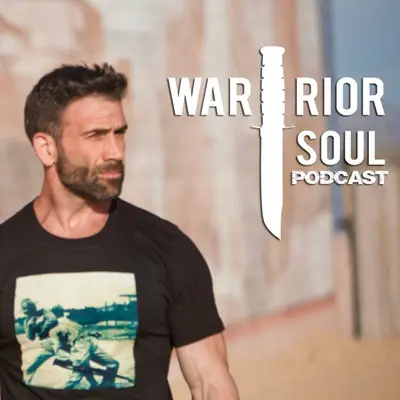
Host of the Warrior Soul Podcast and founder of Warrior Soul. Worldwide trainer and nutrition coach, contributing author at Testosterone Nation and Muscle and Strength.