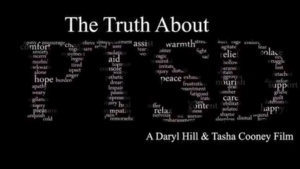
The Truth About PTSD
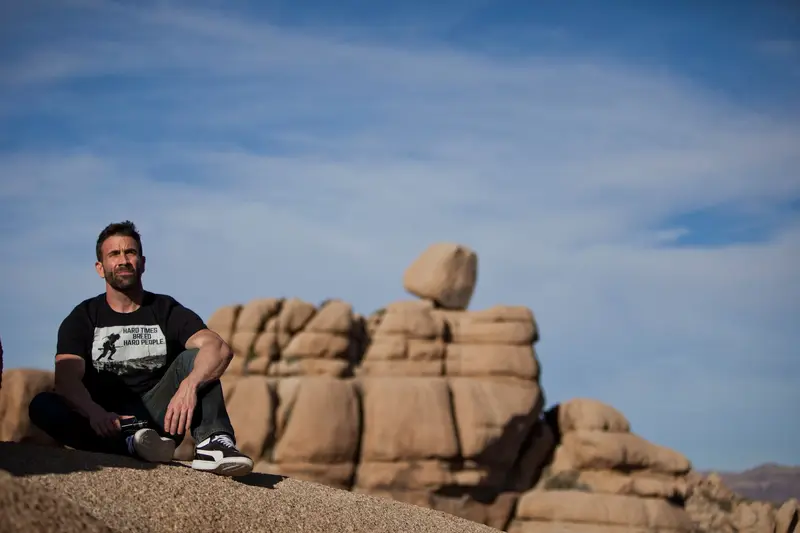
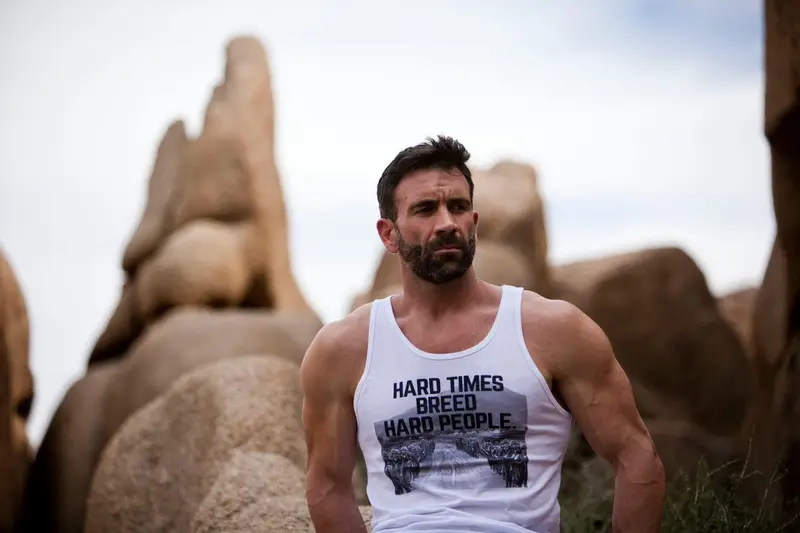
Daryl Hill is a Marine Corps Veteran and US Naval Academy Graduate.
Unfortunately, PTSD and suicide are two of the most commonly associated words with the US military veteran community. They are problems that have plagued us since the beginning of the Global War on Terror.
But many people have misconceptions about both of these phenomena. This is why Daryl decided to create his latest two projects: The Truth About PTSD and The War on Suicide.
Each of these projects takes an in-depth look at the human psyche and the fact that neither of these are exclusively related to military service.
In this conversation, Daryl enlightens us as to what he’s learned…
You can learn more about each project by clicking the link below:
Transcript
Machine-generated from the episode audio and lightly edited — may contain errors.
Chris Albert (link to this point)
This is Chris Albert, and I'm here to remind you of one thing. Someday, you're going to die. Now that's not some morbid statement or scary idea. It's solid fact. Your time here on this earth is limited.
And you need to be reminded of this as much as possible for one simple reason, to live your best life while you can. This is the Warrior Soul Podcast. You know, one of the most unfortunate things to come out of the past decade and a half is that when we think of veterans, two words that commonly get associated with our community are suicide and PTSD. And as I've gone about running this podcast and our YouTube channel, one of the things I committed to early on is that this show and our movement was gonna be about more than just keeping veterans from killing themselves. You see, what I wanted and my vision is that when you listen to this channel, you're gonna get tools and tactics and ideas to truly live your life because that's what we need to be talking about.
How do we get veterans to live? But that enemy, the depression, the post traumatic stress, it's still out there. And if it doesn't get handled, then we can continue to have a problem. My guest today is a man by the name of Daryl Hill. I've had him on the show before.
He's a former Marine Corps officer and a US Naval Academy graduate. And he just finished up two projects. One is called the truth about PTSD, and the other one is called the war against suicide. And, Daryl discovered a lot of things that people don't actually realize about PTS. And through his work and interviewing hundreds of people, both veterans and civilians who are afflicted with this condition, he's brought some knowledge to the world that I think could help a lot of people.
So I wanted to bring him on to the show to talk about both projects and to talk about how we should be moving forward. For those of you who are new to this show, my name is Chris Albert, and this is the Warrior Soul podcast. Number one, I wanna thank you. I wanna thank you for watching or listening to the show or watching on YouTube regardless of of where you're doing that. But I also wanna thank those of you who've stuck with me, who've who've been with Warrior Soul from the beginning, and and who never stopped watching.
I really appreciate the support you guys give us. And, you know, I think we're creating a movement. We're creating a community here that is going to help veterans to take their rightful place in this society, and that has to be done through living a complete life. And if you're not a veteran, please stick around because this movement is also about you. It's about getting people in general to live and to to succeed and to accomplish their visions in life. So the biggest way biggest thing I I have to ask you guys is please share these episodes out. Let people know about the show. And if you can, write us a review on iTunes.
If you're watching us on YouTube, please subscribe and hit that bell that little bell button that lets you know when we are posting, and, that's really helping us to grow here. Finally, I just wanna say that this podcast is sponsored by the good people over at f bomb nutrition. They make delicious packages of fats, macadamia nut butters, they make a mix them up with chocolate with sea salt. Absolutely delicious. You can get 20% off your first order over at www.dropanfbomb.com, and use the code Warrior Soul at checkout.
With that, let's get into this important conversation with mister Daryl Hill and the truth about PTSD. Awesome. I think we're live. What's going on, Daryl? How are doing, buddy?
Daryl Hill (link to this point)
I'm doing well. How are doing, Chris?
Chris Albert (link to this point)
Doing well, man. You've been really busy. You've been working on a couple of projects, and, one is the truth about PTSD. The other one is the truth about suicide. We've had you on the show before.
You were a marine corps officer, US Naval Academy graduate, and a, you know, a really, really big influencer in our community. What made you decide to go off and and start these projects?
Daryl Hill (link to this point)
It was about a about a year ago, I would say roughly. And I was I was in a transition point a little bit. I looked back and I reached out to one of my friends, a couple of different friends of mine. It was August of last year. I was just coming off working on this project with an entrepreneur and I realized I wasn't really servicing my tribe, like where I came from.
I was working with a lot of high level entrepreneurs, working with a lot of high level people, but there is just this calling on my side of it of like, hey, listen, I need to go serve my tribe. And to everybody on the outside, it was obvious. So friends of mine I talked to, they were like, dude, you need to go serve the tribe. The tribe over there like needs your help and support and they're going to listen to you. You And are going to be the guy that is going be able to break through and have those conversations with them.
I was thinking about that and a friend of mine had done some pretty cool work on some videos. Now, I don't consider myself a movie maker, producer, film director, whatever. But as a marine, you figure it out, how hard can it be? So, I had this idea of creating a documentary type effect to really tell people their journey through dealing with PTSD. What ended up happening was PTSD is not just a military thing.
There's a lot of people that are affected with PTSD. But a lot of times PTSD gets labeled as military individuals. Right?
Chris Albert (link to this point)
Right.
Daryl Hill (link to this point)
Have you found out to be the case, Chris?
Chris Albert (link to this point)
Yeah. I've seen, you know, a lot of times when people think there was one or two things that that really happens here. Somebody will sometimes think that just because you served in the military, you might have PTS. And that happened to me a lot when I was in school, right? When I was on around a lot of college kids who really had never been around military type people before.
And that was borderline insulting, you know, a pretty, pretty, pretty crazy. But then there's this other aspect, where you have military people who maybe, you know, they haven't gone through much or they didn't go through much during their service. And then you get a lot of those guys who who are still suffering. They're still still dealing with something, but they don't feel like they deserve to label it as PTS. And you get a lot of people from the civilian world who've gone through horrible things, crazy things that, are also, you know, kind of, they're kind of, resident to classify themselves as having PTS, right?
Daryl Hill (link to this point)
Yeah, 100%. So there's a lot of different forms of post traumatic stress that has happened. Any, you know, the definition really in my eyes of a post traumatic event is something that's altered your mind. You know, it's truly that clear. It could have been you were you were raped.
It could have been you you saw somebody killed. Could have been you felt your light was threatened. I mean, are some of the extreme ones, you know, on that side of it. And then there could have been times where financially, something happened, whether you had a bad business breakup, or the IRS came after you, or all of a sudden, you found yourself where the market changed, and you lost your house, or you lost 90% of your wealth. There's individuals out there that were wrapped up maybe in one market, real estate market at one time, maybe you had all the money in Bitcoin or that goes up and down, whatever, all of a sudden, it's gone.
There's traumatic things from that. There's traumatic things from relationships as well, where people witnessed things in a relationship in the past, all of a sudden that plays out over and over and over and over again with somebody. So I have examples of all the different ones and I really wanted to get to the heart, for individuals to kind of share their story about what they actually went through and how they came out through the other side. And that's really was the basis for the documentary and the interviews I've been conducting. I've done over 42 interviews now at this point.
And the the common theme behind these individuals, whether a military or not military, is that there was an event that happened at some point. A lot of times people actually don't even know what it is, And that event then alters their life when then moving forward. I I've heard some horrific things. I've heard some things that you would have thought that wouldn't make that much of an impact, but have ultimately, you know, changed this person's trajectory for the rest of their life.
Chris Albert (link to this point)
So when you were going into this, and and I also wanna get back to that notion of of coming back to serve your tribe in a second. But when you were coming into this, did you have a lot of those those prejudices, those preconceptions in your own mind? Or did you come into this with more of an open mind thinking, okay, I wanna I want there's something else here. I wanna go a little bit deeper.
Daryl Hill (link to this point)
Well, because of the work I've been doing the last now going on seven years is I already knew there was something deeper and I really wanted to kind of expose that to other people that are out there that aren't necessarily military. You know, there's individual
Chris Albert (link to this point)
And this was your work with entrepreneurs?
Daryl Hill (link to this point)
Yeah. I work with entrepreneurs. So but also, you know, the entrepreneurs, I mean, that I I've dealt with, you know, all kind of different things. Police officers, I've helped out. I've helped out lot of military guys, you know, pro bono just helping guys out.
Yeah. Like a lot of different things, so many different people. I've helped out their kids, you know, you know, I hope out strangers at times, you know, it's I I haven't there's not not been but there's there's a common theme that that's going on, like, inside the mind. And it's it's that of that initial event that actually happened to him. This might sound even, like, a little bit crazy, but I've I've had instances where I start working with a client where that original event, they actually remember they were actually in the womb of their mother, you know, I mean, like stuff like that, where they had they they developed anxiety when they're in the womb, like all of sudden, they wanted to get out because they heard something that was going on the outside.
And during the interview process, there was one interview in particular, his name was Brian Post, and he is an amazing friend of mine. He has been doing this type of work helping people for twenty years. And he was actually, in the womb when his mother, right, was like 18 at the time or something like that. And she saw her, father murder her mother, which is essentially his his grandmother. And he actually was born and he had anger problems his whole life.
Like his whole life, he had anger problems. And it was literally when when he did the work he needed to, he was able to trace all that back to that original, you know, development that happened, which then became his life's work, like, later on twenty years later, when he, you know, got the help he needed and then started working with other people.
Chris Albert (link to this point)
Wow. Yeah. I I hear about that a lot. I was actually I was born with the cord wrapped around my neck. And they I I mean, I went through I had a lot of, like, neurological problems because of it.
They they thought I was slow when I was when they used to call it slow back then. I don't know what the politically correct term is now, but they thought I was slow when I was a kid. Went through a battery of tests, battery of CAT scans, all this crazy stuff. And I have heard people tell me that it could potentially affect you as you get older emotionally, with anger, with with depression and a host of other things too.
Daryl Hill (link to this point)
No, it's true. And a lot of times people actually don't know where this stuff comes from, and that's through their culture. They think they know where it comes from. And a lot of people actually enter into the military because there's there's that, call to action for themselves in the sense of, like, they wanna, you know, make something on the stuff or they wanna change their history or they wanna go to college or they had some kind of traumatic thing that they're now running from. Or a lot of times people want to especially the Marine Corps is we wanna be like defenders.
We are naturally like defenders before we actually even go in the Marine Corps. So if I I kind of take myself for an example, like my whole life, like I have been like a defender. Like if somebody said something to, I actually was diagnosed when I was a little kid as being in this, the same kind of slow group as you're referring to. I went to mentally retarded school until I got into first grade. You know, my mom actually fought for me to be in regular school in first grade and, you know, it it was definitely a struggle, you know, academically, at times dealing with the reading comprehension and stuff like that.
My whole life, I struggled with that until I actually discovered photo reading. That's a whole different story. Changed my life though. Thanks to Tom Kavanaugh. And so basically, what ended up happening was I end up my whole life, like, trying to defend people that couldn't defend themselves.
You know? And it was it was almost like the if there is a bully that was there mentality, like, would always look stand up for the person if they're mentally retarded or if there was a kid that couldn't stand up for themselves. You know, I was always kind of like there. And you'll find that like a lot of marines already kinda have that. It's because there's a point in the time they wanted to stand up for somebody they couldn't actually stand up for.
You know, maybe they're a young kid or something like that. My gunnery sergeant that I'm really good friends with, I call him the gunny. He's he's amazing individual. And I think the first time, like, he remembered, we did work together and we were talking about this and because he was, like, seven years old. He remember being on the being on the street in Philadelphia, like, you know, fighting somebody off from their mom.
Like, they're they're somebody was trying to get after his mom. He's seven years old. He's out there fighting, you know, on the street of Philadelphia, you know, to defend his mother. And, you know, you you take that personality, you know, and you fast forward twenty years, you know, no kidding. He becomes like, you know, secret squirrel community in the in the marine corps and doing all kind of crazy stuff and, like, defender of the world, basically, the stuff he did, you know.
So, again, it's personality driven a lot of times from events that have happened like like earlier in people's lives.
Chris Albert (link to this point)
One of the things there that I think is is important to understand is that when you do have that thing in you and, you know, you have it with you through your childhood, and in your childhood, you're put into a place of discomfort, and uncertainty. Right? Because that's essentially what happens. You know, you're you're a kid. You're not feeling secure.
You're not feeling safe. You're not feeling like you you you have a path forward. When you get into the military, like you said, they they kinda give you a path forward. And and not only that, they give you a structure to harness all of that. Right?
There's a set continuum. You know, for for marines, we go in, we go through boot camp, we go through our series of schools, we gotta pass our MCIs, we have our NCOs there, and our officers to guide us. And then, you know, you have a set career path that you're supposed to go on. And then a lot of us, we call that the big green weenie. Right?
You get slapped in the face by it all the time. But at the same time, the big green weenie is also protecting you. Alright? And it is keeping you safe. And what I think a lot of us don't realize is that the second we we sign those papers to get out and we we end up in the civilian world, all that's gone.
Right? And so that structure is no longer there to harness it. And all of sudden, you're out there in the free world without, you know, that kind of support system. And so for a lot of us, I think, in many ways, it could bring us right back to that period of childhood where we don't feel protected anymore, and where you start to feel abandoned by your parents, and when you start to feel abandoned by by everybody you cared about and loved and things like that. And that's something I knew it's from my own experience, of course, but but something I mean, I think it's a theme in in what I I see a lot of people talking about.
You know, you go through some horrible things, but that support system is there, you know, for better or worse.
Daryl Hill (link to this point)
Yeah. There's a individual, you know, on this journey I've been super blessed and I came across his name as Ken Druck. That's D-R-U-C-K. And I would suggest to definitely look him up and love to introduce you to you, Chris.
He had an experience, when he was kinda early on as as a dad and, you know, he he he lost his daughter. And it was that living loss he talks about, you know, and he he never served in the military, but he would he's able to kinda relate on that perspective per se is because when when you lose something, you know, that's a part of you, you know, in this in this case, his daughter becomes that living loss, you know, and there's individuals out there that leave the marine corps, that's a living loss. You know, when you step out of that tree suit for the last time and you hang it up, it's it's kinda like it's a part of you and always be a part of you. But it's that living loss factor of, like, you can't just go jump back in the tree suit and run down. You know, it's not like a job, know, where you just, oh, I can go back to work, you know.
It's like, no, it's it's done. It's over. It's it's part of you, you know. And and and I get kind of chills on my spine thinking about this, but I remember, you know, in high school, it was always the toughest and funniest game to play a lot of times was the last game we play in high school, you know, you you sit around the locker room afterwards and guys are hugging each other and the seniors are crying and they're they're they're realizing, hey, this is the last time I'm gonna take on put put down this helmet. This is the last time I'm gonna put down these pads.
And there's a lot of emotions associated with that, you know. And I had been in locker rooms where we won our last game and locker rooms where we lost our last game. And the last games that they lost, like, was like a year of pin drop in there. You know, it's like somebody died, you know, and that was in this it might, you know, for somebody who hasn't been a part of that, they wouldn't understand that, you know.
A lot of times when you leave a unit even, you know, when you leave your unit, that you've been serving in in the Marine Corps, whether it's you're leaving one unit to go to the next unit or you're leaving the Marine Corps for good, you know, there is that living loss of like, hey, I can't go back to that, you know. And I think as as, you know, young individuals, we really don't think about it so much. You're like, oh, I got forever and got time on my side and all that stuff. But I I look at back to guys now, and I I tell them a lot of the newly second lieutenants graduate from the Naval Academy. We go over and talk to the football guys, and I tell them, hey, guys, you blink your eyes, it's gonna be gone.
You're gonna go from the second lieutenant to captain, and, you know, you better enjoy your time with your platoon out there, the marines you get a chance to serve with because it just goes by so fast. And, that's one thing, like, looking back, I mean, like, I would you know, as wisdom I would give to, like, younger marines and officers out there is, like, spend as much time as you can with your guys, you know, and make sure you do that extra stuff. Make sure you spend the time, do the PT, like organize fun stuff to do, because it's just gone in a split second. And and it's times like that, that guys look back on, that's what they remember.
Chris Albert (link to this point)
Well, 100%, man. I I I mean, I can't I can't emphasize that enough. Be present, you know. A lot of you guys out there, you have the greatest gift in the world, and that's youth. Right?
Youth. I would give anything in the world to be 18 again at Parris Island. Like anything. Right? Because knowing now what knowing now, I I wish I knew then what I know now.
That's what I'm trying to say. And and it's because you go into this state where you start to cocoon in your mind, and you're not present, you're not enjoying, you're you're not appreciating the deployment and what it's teaching you, you're not to appreciate you're not appreciating the classes and what they're teaching you, you're not appreciating your leadership and what it's teaching you, even the good and the bad leadership. The more you're present, the more you're gonna learn, the more you're gonna take with you. And the other other thing I wanna emphasize here is that that occurs at every stage of life. So even if you're not 18, and let's say you're 35 or 40 like I am, and and you are coming into the middle of life, appreciate that.
Right? There's gifts there. There there there's the ability to take care of yourself, the ability to take care of your body, to take care of your family, to solve problems, to do new things. So so that's a huge thing. Thank you for that, Daryl.
Daryl Hill (link to this point)
Yeah, I agree with you 100% on that. And I'd even add, especially if you're a parent that's out there. I mean, I look at now, I've got 13 and 12 and a 10 year old and, you know, I I I turn around and I went from having no kids to within three, four years, turned around, I got three car seats in the back seat. My daughter's got ice cream all down her shirt, and the other one's got it all around his face and complete mess in the back seat and just, you know, and it's just all of a sudden now they're like becoming like teenagers and they're like, see you dad, I'm going over to friend's house and I don't even see him, you know, and and they're just getting so big now. My son's just about looking me in the eyes now and just like, just overnight, you know, and that's a little bit, on the mindset side of things from the ages of like zero to eight, you know, that's when that mind is really formed, So that early childhood development side of things, whether you realize it or not, brain is basically sponge during that time and everything you take in.
So whether it's from a parent, whether it's from a teacher, whether it's from the coach that's helping out in a little league. I mean, these kids observe like everything. And once they hit about eight, that's pretty much okay, everything's locked in on this little person's personality. They go from being eight to like 18 real fast. So that's a little bit of the mindset side of it.
From about the ages of like eight to I think it's 14, it's like seven year windows. They then develop and they start forming like their little clicks per se. Like my son, I remember he never cared about the jerseys he actually used to look at as a kid. And all of a sudden, from the age of like seven, eight, he was like, no, dad. I just wanna wear seahawks stuff.
And the Seahawks were popular and went in Super Bowls and stuff, and Russell Wilson became his favorite player. Before that, he didn't care if he was wearing a Dale Earnhardt race car jersey, or a baseball jersey, it didn't even matter. Then all of a sudden, was just that one team. And that's what starts to happen on the mindset starts to form. During that is that that's like kind of tribe.
People try to associate with tribes. And then from about the ages of like 14, 21, then all of a sudden you see this click start to form, right? You see the the click start to form in like society. In in high school, a lot of times like, hey, here's here's the geeks, here's the jocks, here's the surfer guys, you know, here's the guys who like play video games, whatever. Like these clicks start to actually form amongst schools and amongst that kind of age group.
And then all of a sudden you get into like, you know, college and people start to start to dissipate a little bit, you know. They started to kind of like branch out on their own, they started to wake up and they're not so much programmed into like, you know, what each other's doing anymore. And they start to kind of like go start to go out on their own, you know, and start to like be more independent per se than they were before. And a lot of that's geared towards how the mine actually work thousands and thousands of years ago, because it was during the same time, it was like caveman style. Right?
I was like, you take the same mine that we have, that hasn't really changed, and we place it in today. Ages of zero to seven, eight, you're basically following your mom and dad around making sure it can stay alive. Then you go from there to modeling people that are having success. You start learning how to hunt, start learning how to take care of the cave, start learning how to cook if you are a girl, as a boy, you start learning how to hunt. Then all of a sudden, you start to hunt in tribes.
You start to hunt in your tribes and you go out chasing after the animals and whatnot, and then you move on to that stage, now you're starting your own family. Past the 21 age, you're starting to start your own family out there and develop your own tribe and start to hunt together and stuff like that. So as much as we think the brain and the mind has actually progressed in thousands of years, it really hasn't.
Chris Albert (link to this point)
No, not at all. Not at all. Well, let me ask you this. With the differences between what you witnessed in the military cases versus the civilian cases, was there a big difference in prognosis? And what I mean by that is whether or not they were able to overcome it.
Did you notice any differences there?
Daryl Hill (link to this point)
Well, the differences between dealing with somebody who has gone through some traumatic in the military and something that is not been associated with military, the key in anything else, it is like weeding, right? You ever pull a weed in a garden and you only pull the top part of the weed, what happens, it actually grows back. So it's super important that when you're pulling out a weed, you have to get all the roots that are underneath the ground. A lot of times people go to a seminar, or they go to a camp or a workshop, or they go to therapy or whatever. They are really just playing with the stuff on the outside of the ground that you can see.
The work that I do is we go on and actually underneath the ground and pull out that weed. When you pull out that weed, that thing is gone for good. It is not coming back. That is the most important thing. When you have somebody who has been in any event, no matter military or non military, is you have to figure out where that original origin comes from, where that person actually developed the root system for that and pull those roots out.
If you have somebody that has been in the military per se, and they have an event that happened to them whether in the military that they witnessed, there could have been like that one off event that the person actually witnessed that they have a lot of post traumatic stress about. Or that one event that they witnessed could have triggered something that happened when they were like seven years old that they saw or something they happened to saw when they were in high school or whatever it was. Maybe they saw a friend of theirs get murdered, Maybe they lost a friend of theirs to suicide. Maybe it is their dad died of suicide when they were younger, and all of a sudden now, they're thinking about suicide. All of a sudden, they saw a buddy come up on Facebook as being dead or in the newspaper or they go to his funeral.
All of a sudden that triggers inside his mind. It's almost like you're collapsing these anchors together on somebody. It's dominoes per se. You have to go back and knock over that original domino to get all those dominoes to basically fall. No matter if you're in the military or out of the military, there's that initial instance that something actually happens that we get to plan it, then you got to actually go and pull out.
Whether it's it depends as well on how traumatic something is and was it a repeated offense? For an example, I did an interview with a friend of mine and this is in the interview, Ronde, and the guy is amazing guy, Ronde Lambeth. He shared about how when he grew up, his dad was very abusive. He shared about how there was a time where his brother actually tried to stop his dad from abusing his mom. His brother got thrown off from his dad or whatnot.
His dad was actually a Marine. Ronde actually went into the army, became a big defender and he's still a big defender of today, helping people out with credit repair and all kinds of stuff and amazing guy. He turned around and this happened later on in life where he eventually, he lost his brother unfortunately to suicide. His brother committed suicide because of a credit report incident. When we interviewed him, I asked him like, hey, Ronday, what would you done differently to help your brother in this instance?
He said, I just want to let him know how proud I was of him and what he was able to accomplish in his life and after all the crap we actually had to go through as kids. That repeated stuff that happened to him as a child, I am sure that played out when he committed suicide because of just a simple thing that happened on his credit report. That makes sense?
Chris Albert (link to this point)
Yeah, that is crazy. That is insane.
Daryl Hill (link to this point)
Ronde basically turned around and started a credit report company that is honestly, I think it is most successful in the company. It is helpful to get a bunch of stuff from me to find credit report that was on there. I did not think it was ever going to come off. I can't thank enough. He started that company because his brother committed suicide and it's now helped thousands and thousands and thousands of people and he speaks around the world and he speaks to the NBA about their credit problems and helps them out and has celebrities flying to help them.
But he is so down to earth in that sense of like, just like he said, now I am talking to you and me, he is talking to these high level celebrity people that have the same problem. The reason I'm sharing that story is because you never know where that original thing happened. It's okay not to know. A lot of times, your mind actually will try to play tricks on you and hide where that actually came from. What I want to talk to you about next is called secondary gain that somebody has from an event.
Is a lot of times people have had an event that happened in their life, and all of sudden, they get a lot of publicity because of it. Sometimes, that secondary event has led them to making money, has led them to certain benefits, maybe a celebrity status, whatever it is. Now, all of a sudden, they feel like they want to hold on to whatever that thing is. There's an example of an NFL player who got a chance to work with the doctor from the White House and this NFL player got the treatment he needed to help with his TBI issue he is having from traumatic brain injury. The guy was an all pro linebacker who played forever.
All of a sudden, family, unfortunately, didn't want him to go through the rest of the protocol in this sense. Because if he went through the rest of the protocol, then he would have actually been able to get over the mental health depression and suicide ideations he's basically having today. Because there's so much secondary gain, he's going to supposedly get awarded this money and all this stuff from the NFL is coming type thing, that his family didn't want to lose out on that. Instead of the person actually getting healthy, that they chose to not actually finish what they started, which would have helped them from that. It's sad to say that's just one example, but there's a lot of veterans out there that actually applies to as well where there's been instances where they're holding on to that, it becomes their identity.
You as a Marine, of a sudden, becomes our identity and we never want to lose that. But all of a sudden, you are never going to lose that identity, you are never going to lose being that linebacker, you are never going to lose that identity of who you were, But there's there's that part of you that like needs to let go of the emotions, that are wrapped up in that identity. You know, they're essentially harmful, right? And those are the the things that cause the rage, the anger, the depression, the anxiety, you know, the fear, you know, and all those things you're talking about and sharing about before. I mean, that's that's where that stuff comes from.
Chris Albert (link to this point)
You know, to be honest with you, that was one of my problems, with the 22 challenges that were coming up. And the reason why I had an issue with it, and don't get me wrong, I think that everybody who was doing that stuff was had amazing intentions and and really great people and really wanted to help. But the thing is you're throwing around this number of twenty two veterans a day committing suicide. And everything I know about psychology tells me that if you keep repeating that number, it makes it more likely that other people will attempt it. And the reason is because we we get reinforced by our in group.
Right? So if you you have somebody out there like you, who you respect and who you love and and who you associate your identity with, and you're constantly hearing about them committing suicide and constantly hearing about them going through a bad state of affairs, then then that makes it exponentially more likely that other people are going to attempt the same thing. Now, I'm not saying to stop the challenges or anything like that. What I am saying is like, I think the whole thing needs to be rebranded. And I think we got to start talking about life rather than than than death.
You know what I mean?
Daryl Hill (link to this point)
100% agree what you're saying. The same thing with like nine eleven, you'll hear people say, you know, never forget, right? They're saying always remember, you know, and it's it's a simple just rebranding of that statement because what the mind actually doesn't hear is when somebody says like, like if I said to you, I don't want you to look at the blue tree that's on the wall behind you, automatically, your mind is seeing a blue tree on the wall behind you. But I said, don't look at it. And the same thing when somebody says, uses words like never like that, right? Or never forget, they're basically telling somebody forget. Like, hey, I want you to forget that, right?
Instead of saying always remember, where somebody is actually going to remember whatever that event was. A 100% agree what you're talking about because I I was actually having this conversation with some veterans yesterday. And, one of the things actually came up was about that, about talking about, like the suicide challenges in the sense of like people bringing up like every day and it becomes, like, more awareness about it. You know, I think, you know, if you look at the guys, this gentleman, actually, his dad was a marine serving Iwo Jima, and was telling me about, like, his time over there and the Ollie Hopk Campaign, his dad shared with him the stuff he actually went through and he never talked about any of it, you know, but it was just kind of some bits and pieces like over the years. And it was that generation like totally just bottled it up and really talk about it.
They bottled it up and went to the bottle, you know, or or they, you know, required about it per se. They didn't only talk amongst each other. So I think in now's now's society is we're very much more on social media, whether it's on Facebook or Twitter or Instagram or you name dozens of social media outlets that are out there that are popping up every day. And when you have this awareness factor of it, right? I mean, we used to have, you know, growing up as kids, maybe we saw 10,000 things a day that we're marketing.
That means a label, that means a logo, that means an ad, that means something place, product placement, a movie. And and now that is astronomically just skyrocketed because of social media, you know, and and everybody out there with their phone can now become, you know, an outlet for media. And when you have people just talking about suicide constantly, and making that like the big thing, like the the challenge that you're talking about, it is bringing awareness to those, individuals that are, you know, committing suicide, but it's also bringing awareness the factor that's an option. You know, suicide in America is a top 10 killer in America. It's number three amongst our youth.
I mean, this isn't just a military problem that we have here that we're facing. I had one of the interviews I did recently with Jody Jellis and she was sharing with me about a suicide that happened with somebody that was close to her. And it was super sad. None of them saw it coming. You know, they they didn't know it was actually gonna happen.
I just talked with, a woman last night and, she had I think it was somebody that she had done some work with. And she bumped in on the street, talked to them. They say everything is going great in their life. And the next day, the person didn't show up for work. They actually when they went to check on the person at their house, eventually, they had found them dead, and they had everything in their house, like, boxed up.
Like, they literally boxed up their whole life, so the person, you know, wouldn't actually have to do it. I interviewed one marine actually, and this individual shared with me how he had a plan to to kill himself in the sense of like, he was gonna go to the the morgue. He was gonna break in the morgue and actually shoot himself there. So they wouldn't have to worry about cleaning it up, you know. So people are really have thought about like what it is they're gonna do.
That marine also shared with me about how I made that conscious decision that wasn't the best option for him because, you know, you're dealing when it comes to suicide, that's a permanent, solution to a temporary problem that somebody's going through.
Chris Albert (link to this point)
Yeah. Yeah. That's rough, man. It's rough. Let me ask you about this because I think it's a it's it's considering our audience.
Stoicism. Right? And I'm not talking about like the philosophy of stoicism, but like the stoic kind of nature of people coming out of the military. And and I think men in general, I know that men have very high suicide rates. The the idea of not putting your problems out there and not reaching out for help and things like that.
How big of an impact does that have here? And and from the cases that you found as far as people who've gotten out of it, what got them to reach out finally, and to get help?
Daryl Hill (link to this point)
You know, honestly, I'll share a story that I was really shocked, but not shocked. So I think it was March, I think it was March this year. I ran a triathlon and a friend of mine put me up to it. I missed it last year and he's like, dude, you gotta come this year and do it.
And I said, I would do it. So I'm going to do it. Don't know if I'm gonna do another one. I didn't train for it. I mean, like, I went out and did 26 miles on a bike, ran, swung a mile and I think it was a six mile run or something like that.
It was a SEAL triathlon. So, you know, as a marine, you just kinda go out and do it. As as I'm walking out there to do the swim part, I see my old battalion commander. And I was like, oh my god, sir, what's what's going on? What are you up to?
Last time I had seen him, it had been five, six years probably. He was a full bird colonel at the time. He had taken over the Warrior, battalion there in Quantico, Virginia, which oversees, you know, a lot of guys who are going through transition whether, you know, they're on the West Coast or East Coast for, you know, gotten injured and whatnot. They've been through, you know, battle or whatever it is, but, you know, the the one who were, battalion. And he shared with me a story, you know, and you asked the question about, like, what it is that's gonna break through.
Here here's a guy who, you know, has has this persona that he has to ooze confidence and stoicism, you know, out there to the world. He had been the, the colonel that was there when, they went through Fallujah. Right? And he had witnessed all that, dealt with all that. And he's you know, I I told him about the project, told him about the war on suicide, told him about the, you know, the truth about PTSD and the movies I'm working on.
We're chitchatting about that. And he's like, you know, Daryl, he's like, I said, I'd love to capture your story if you'd be out for sharing. He's like, you know what? If I can share my story with the marines that are out there now at this point, so they don't have to go through the hell that I did for ten years. For ten years, couldn't sleep at nighttime.
For ten years, he would wake up in the middle of the night and have problems with his family because of it. And it was two years he retired, he put him for retirement. He probably could have stayed in a bit of general if he wanted to. But he put him for retirement because, you know, he just couldn't function anymore. He just couldn't do it.
And then two years after retirement, it was still going on. He's still having problems. He was probably getting worse for him. And he shared with me how his wife divorced him. And it was it was when with his wife divorced him and we basically look back on the carnage that happened in his life, you know, that, you know, he realized that I need to go for help.
And it was at this point that he kind of opened up and went and got some help and got him started and, you know, he's he's still out there doing cool stuff, still out there helping marines, still out there. He has tons of marines reach out to him, sure, all the time. He goes and speak speak at functions and does stuff, but really wasn't until that point that it happened. And my my message to anybody who's listening right now is, is you can learn something from from this colonel at this point. You don't have to be him.
You know, you can go for help a hell a lot sooner, right? You don't have to wait until you're you're divorced. You don't have to wait until you're turned into the bottle. You know, you don't have to wait to self medicate in some other form or use it, drugs and other things to cope with what's going on on the inside. You know, a lot of times at that point, and if you are at that point, it's okay.
You've got resources to reach out to and actually get help. You know, you got somebody like Chris, you got somebody like myself, you know, they're out there who wanna wanna get your resources. There's there's tons of nonprofit resources out there that are popping up all the time for guys to do cool stuff. You know, from I'm helping out with a program right now who's gonna actually be given, like houses away to veterans, you know? And it's like, hey, you're down on your luck, you need you know, you need to get your mental self, right?
How would you like to work with a naturopathic doctor from the White House? Well, then give me a call, you know? It's like, let's get you in front of that person. You know, there's there's options out there, guys, besides taking your own life and there's options out there, you know, that because here's the thing is like, if you if you do go through that, or if you have been through there like myself, I mean, I went through divorce myself and that totally sucked. Yeah, I went through dealing with financial issues because that, was, you know, packed up all my stuff, moved into a car, put all my stuff in like a CONEX box and like headed out on the road, and just kind of went internal there for a while and got back on my feet, you know, but at the same time, it's like, don't have to go through that, you know, there's other resources out there to help you, you know, get back on your feet.
And I would just, you know, suggest anybody out there who's listening to this right now is, you know, go for help sooner. And that's exactly what the colonel said. He's like, I'll tell him. He's like, I'll tell him, go go for help now. You know, don't don't wait, you know, because there's resources out there.
When I show the the documentary, the trailer to the commandant of the Marine Corps, and I watched his face just changed. I watched his state just changed. And he shared with me about, like, how both of his sons have, like, PTSD, that, you know, on that side of it, you know, it it like, hey, this is something that affects all of this and, you know, it's affected him, you know. So if somebody like that is willing, you know, leaders are willing to come forward and say, hey, no, this is a problem that I have, you know. I talked to one of my heroes, Sergeant VanDel, when I was a second lieutenant Butter Bar, right?
And one of my heroes, Sergeant VanDel, who went out and he ended up doing like 11 combat deployments, you know, and eventually retired out of the Marine Corps, but was absolutely lost for about two years there and was really, at a point now where he's been able to get the help he needs, you know, and he reached out and got the help he needed and went out there and did that, you know? And he's somebody I I look up to, you know? He's somebody who as a, you know, as a second lieutenant, you know, infantry guy, any any any company, any platoon commander, we've been lucky to have him, like, as a marine, you know? So what I'm getting at is like, you know, our leaders go out and they reach out for help too. You know, the ones who are the strongest are the ones reaching out for help.
The ones that are weak are the ones that aren't reaching out for help. And that's what I that's the way I'd actually represent. I know I've gotten help. I know I still get help today to reach out to people who are professionals. I got a chance to work with the naturopathic doctor from the White House myself and it was super cool, you know, to be on the other side for for once, because it's been a while to get some somebody to drop in like that.
And I've got my battle buddy still, you know, Gunny, Curtis Jones here, who's, you know, five minutes away from me and he calls me when he's having a tough day and I call him when I'm having a tough day. And we just talk, you know, and I think one of the things that you have, you know, inside the Marine Corps is you don't have to leave that behind. Go find yourself a battle buddy now that you can check-in with when shit's hitting the fan, you're not having a great day, because it happens. You can't talk to your wife, you can't talk to one of your civilian counterparts, find find a marine you can talk to in the area. I was I was, out yesterday and I I overheard I was talking to this one guy out of business.
I heard these veterans talking in the background. And, they were older, as we we like to call gray hairs, which I'm now becoming a gray hair myself. Right?
Chris Albert (link to this point)
Me too.
Daryl Hill (link to this point)
But I I saw these guys and they're older, probably sixties, seventies, and they were talking about veteran stuff. And I sat down with them and and they're like, hey, we we wanna give what we didn't get a chance to get, you know, as and when they were leaving out. And that's that Vietnam generation has done wonders for our generation now to make sure those benefits are provided, to make sure that guys are recognized, that they are getting the help they actually need. And, you know, we owe a lot of gratitude as, you know, veterans that are coming out now to that generation who's, you know, who wasn't actually looked after, who was, you know, spit on, who was, you know, couldn't find jobs, who was called baby killers when they came home. We owe so much that, you know, gratitude that generation for helping out ours.
Absolutely. Thank you if you are a Vietnam veteran that's out there getting a chance to listen to this.
Chris Albert (link to this point)
Absolutely. Absolutely. As far as specific resources, are there any specific places that people could call if they need help? Or, you know, there's the VA I know of. Any other organizations that come to your mind?
Daryl Hill (link to this point)
Semper Fi Fund, obviously, is a huge one to reach out for for help. I I've heard that, you know, the Wounded Warrior Wounded Warrior Project has actually turned the corner, you know, and they're doing things a little bit differently now because of new leadership and stuff like that. There's, there's a list of resources I have, Chris. What I'll do is I'll send you over.
Chris Albert (link to this point)
Awesome.
Daryl Hill (link to this point)
So you can actually put in the show notes or and share with the guys.
Chris Albert (link to this point)
Awesome. Awesome. Yeah. We'll get those up in the show notes. And and where can people go to to learn more about, these projects?
I know you have there's two of them that the truth about PTSD and the truth about suicide.
Daryl Hill (link to this point)
Yeah. So the websites themselves are actually thewaronsuicide.com. So if you go on there, you can watch the trailer and just opt in and we'll keep you updated, with the progress on on the movie side of it. And thetruthaboutptsd.net, that's .net, net. You can go there and opt in for that. I've got a fan page as well.
I share stuff on the seventeen seventy five Brotherhood fan page. My t shirt, thanks to thanks to Chris and the team out there, you know, help me out with that. Warrior Soul, baby, so go apparel. It's seventeen seventy five Brotherhood, there's a fan page and there's also a Facebook group. Feel free to jump in there, talk to other marines that are in there as well to kind of reach out.
You know, if you aren't not a marine, I I don't police it in that sense. People are fans of marines, but realize that you are talking with a bunch of jarheads, and they're they're pretty they're pretty vulgar at times.
Chris Albert (link to this point)
So we can be we can be. So, you know, what I want to do here is kind of just bring this full circle and acknowledge you, because what you've essentially done, and you know, we have we have kind of similar professional backgrounds. We both work with entrepreneurs. And I know that feeling of saying, you know what, I've I've got to go back, and I've got to help my tribe and protect my tribe. And I just want to acknowledge you for doing that.
There's a lot of us who who go out there into this world, and we try to do this stuff alone. Alright? But but the truth is we can't. We have this tribe. We earned that EGA.
And if you didn't serve in the Marine Corps, then then, you know, you earned that title, whether it's soldier, airman, sailor, whatever it was, you earned that title, and there's a brotherhood here. And when I say brotherhood, I include you ladies in there as well. And so, you know, the big thing I think to and the biggest thing I want to emphasize here is that you never stop serving. Right? You never stop serving.
When you find a purpose for your life, when you find a purpose for helping others, for serving others in some ways, that can bring so much light into your life. And I think that that you're definitely an example of that. So Daryl, I want to thank you for what you're doing. I want to thank you for your service. I want to thank you for coming on here today to talk to our community.
Daryl Hill (link to this point)
I appreciate it. I got a few parting gifts to share with the community and guys get a chance to listen to this. As I went out to 29 Palms to speak to some Marines about, you know, suicide PTSD stuff and just being in Marines and separating. And I share with, I have like a inner like mental strength training, which are audios that guys can actually listen to, to help them with whether it's dealing with trauma or you're just having a bad day, they're basically things just put on your headphones, sit back and listen to kind of chill out a little bit, help you get out of some of that anxiety state as well. So I'll I'll give you that link, Chris, and you can share that with the guys as well.
Chris Albert (link to this point)
Awesome.
Daryl Hill (link to this point)
Yeah, I look forward to it. If you want to reach out, darylhill dot com, that's easy place to get me as well. Got all kinds of free audios on there like Chris asked here. I got an awesome interview with Chris.
Chris Albert (link to this point)
We went on for a while. It was pretty badass.
Daryl Hill (link to this point)
Yeah, we did. But I look forward to helping out the tribe and that's what happened with me is I had a realization of like, hey, there's all these guys out there that need the help, you're uniquely positioned to help them. Let's circle back around in a circle of wagons. There's an event that's coming up and I think it's planned for October. We're looking for participants right now, guys who are and if you know somebody, you know somebody that this could apply to, but they're literally going to get a chance to work with not just to have a White House experience, getting a chance to work with a naturopathic doctor from the White House.
They're going to also get a chance to get celebrity trainers that are there on the leadership side to help on the mental side. This gentleman, I don't want to say names, because it's high level stuff, but they actually train the special forces. Another guy actually trains the British Intelligence Agency. He trains like the James Bond and stuff like that. They're going to be there as well, and participating and teaching and sharing my cool stuff.
I'll be there as well to get a chance to do what I do and help guys out.
Chris Albert (link to this point)
Where is that going to be?
Daryl Hill (link to this point)
It is going to be in California.
Chris Albert (link to this point)
So actually, out by your way. Then after swing out there.
Daryl Hill (link to this point)
Yeah, actually. So if you have anybody who wants to participate in that, and they are actually going to be helping veterans actually get not just back on their feet, but get into houses. So specifically, we are looking for a lot of guys, maybe they are down, maybe they are homeless at this point. Maybe you are sleeping on a buddy's couch, like I was doing, or sleeping in your car, like I was doing at one point, sleeping wherever you can, right? So maybe you're that guy, you just need that help, that mental tune up per se, and to get back on your feet. Then they have training at that point afterwards to help them get into work at that point.
What I mean by that is actually, like a transition period where they have people to help train you, get back into the workforce, if that's something that you want to do and have a place, you have your own place to live. I will definitely be right. As I have more information about that, Chris, I can send you over a flyer we have about that too. Then you can share that flyer with the community and the list that you have. But yeah, we are looking for about 15 veterans who want to make that transition, want to make that change. So if you know some guys.
Chris Albert (link to this point)
Awesome. We'll definitely put that out there. Well, Daryl, again, thank you so much, man. And, thank you for the value you brought here today. And to everybody out there, listen, this life, you gotta live it while you can.
Alright? We're we're no matter where you are, if you're you're 18, 25, thirty, forty, 50, 60, doesn't matter. You get a limited amount of time to be here on this earth, and you got to make the most out of it. So let's all put our minds to that. And, if you know somebody who has an issue, who has a problem, get them to reach out, get them to help.
So thank you guys so much for listening. We'll be talking to you very soon.
Host of the Warrior Soul Podcast and founder of Warrior Soul. Worldwide trainer and nutrition coach, contributing author at Testosterone Nation and Muscle and Strength.