Podcast episode
The Woman Who Defeated Her Own Multiple Sclerosis – Dr. Terry Wahls
Hosted by Chris Albert
The Warrior Soul Podcast
Be sure to subscribe on Itunes here, and subscribe on YouTube here.

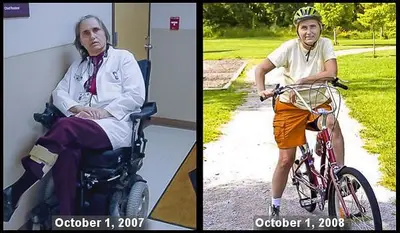
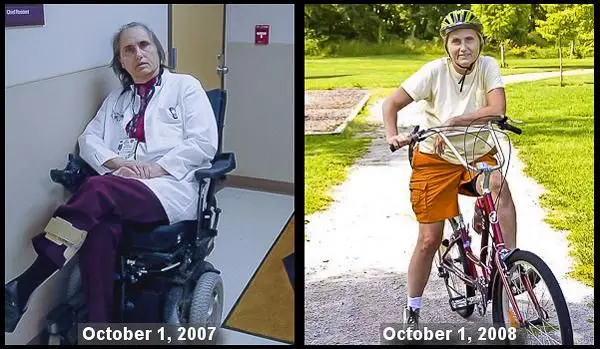
Dr. Terry Wahls is a clinical professor of medicine at the University of Iowa where she conducts clinical trials. She is also a patient with secondary progressive multiple sclerosis, which confined her to a tilt-recline wheelchair for four years.

Dr. Wahls restored her health using a diet and lifestyle program she designed specifically for her brain and now pedals her bike to work each day. She is the author of The Wahls Protocol: How I Beat Progressive MS Using Paleo Principles and Functional Medicine, The Wahls Protocol: A Radical New Way to Treat All Chronic Autoimmune Conditions Using Paleo Principles (paperback), and the cookbook The Wahls Protocol Cooking for Life: The Revolutionary Modern Paleo Plan to Treat All Chronic Autoimmune Conditions.
You can learn more about her work from her website, www.terrywahls.com. She conducts clinical trials that test the effect of nutrition and lifestyle interventions to treat MS and other progressive health problems. She also teaches the public and medical community about the healing power of the Paleo diet and therapeutic lifestyle changes that restore health and vitality to our citizens. She hosts a Wahls Protocol Seminar every August where anyone can learn how to implement the Protocol with ease and success. Follow her on Facebook (Terry Wahls MD) and on Twitter at @TerryWahls. Learn more about her MS clinical trials by reaching out to her team MSDietStudy@healthcare.uiowa.edu.
Clinical trials in which Dr. Wahls’ team is participating:
The links to our Nations MS Society funded research
http://www.nationalmssociety.org/About-the-Society/News/National-MS-Society-and-University-of-Iowa-Launch
Two studies in Bastyr University that are asking patients with MS or Parkinson’s disease about whether they are following the Wahls diet. These studies are based upon surveys that are completed every 6 months and do not require visits to the study site.
Multiple sclerosis
http://bastyr.edu/research/studies/complementary-alternative-medicine-care-multiple-sclerosis-cam-care-ms
Parkinson’s study
http://bastyr.edu/research/studies/complementary-alternative-medicine-care-parkinsons-disease-cam-care-pd
Brought to you by:

Transcript
Machine-generated from the episode audio and lightly edited — may contain errors.
Chris Albert (link to this point)
What's going on, everybody? Welcome to the Warrior Soul podcast. And I have to say that when I started this podcast, you know, with the aim of doing it to help veterans to live their best lives, I had a list of names that I wanted to interview. And I'm really proud to say that in the short time this podcast has been on, we've gotten a lot of those names. But one of the first ones that came up for me was Doctor Terry Wahls. Doctor Wahls, if you don't know who she is, she's a medical professor at the University of Iowa's Medical School. And, she has a really, really amazing story. She was a really active woman and she was a Taekwondo champion.
She was climbing mountains, riding bikes long distance, and she had two kids and a wife and and people that cared about her and an amazing career. And then she was diagnosed with MS, multiple sclerosis, and it was progressive multiple sclerosis. And if you don't know what that is, that's an autoimmune disease that really affects your brain and can affect your whole structure. She she got to the point where she was getting severe face pain and and her trunk strength was going down and this once strong woman was pretty much confined to a wheelchair because she had to be kept on the decline because her her trunk strength was so bad. And all this time she's, you know, still doing her work as a clinical professor at the University of Iowa's medical school.
She's still doing rounds as a medical doctor. She is still trying to take care of her family, and she's dealing with this disease. And you know, as somebody who's been affected by autoimmune disease, I suffer from ulcerative colitis, I've seen what autoimmune diseases as a whole can can do to people, can do to strong people. And, you know, I've got so many friends who are affected by Crohn's disease and ulcerative colitis and rheumatoid arthritis and lupus and Hashimoto's. And there's so many of these diseases that are out there, they're really affecting people's lives, and we're seeing such an increase in them.
And when you get affected by one of these things, it's almost demoralizing. You know, for me, when I was affected by ulcerative colitis, you know, at first, I I thought I had cancer, but you know? And I was thankful that it wasn't cancer, but I eventually realized that the symptoms have such an impact on you. Having to run to the bathroom 30 to 40 times a day with, bloody bowel movements, I don't want to get too graphic on that, but that's what people with Crohn's and colitis deal with. And everything that people with multiple sclerosis deal with as far as the neurological issues, the fatigue, the not being able to be physical like they want to be, and the brain fog and the fuzziness and the lack of energy.
Same thing with lupus and rheumatoid arthritis and all of these other horrible diseases. And the common factor with all these is that it's not a quick death sentence. It's not at all. And what happens is a slow decline. And somebody who was once strong and had control over all their faculties, you know, they can turn you into a shell of yourself.
And so I guess what I'm trying to do here is set the scene for you because that's not the end of the story for doctor Terry Wahls, and it wasn't the end of the story for me because I eventually read her book, The Wahls Protocol. And for Doctor Wahls, what she did while she was in that state, she went to work. She started researching her disease because the medications and the treatments the doctors weren't giving her, they weren't really having a great impact for So she she did some research and she found a novel idea. The thing that eventually worked for her was food.
Food helped doctor Terry Wahls to overcome her MS and to get back to where she is today, which is a super active person, somebody who's doing amazing work for the world and helping other people to overcome their autoimmune diseases and somebody who's living her life. And so you're gonna get a lot out of this episode. You know, we as veterans, we go to the VA and and we go with these ailments and we get handed medications, but rarely are we ever talked to you about lifestyle, about the impact that nutrition and food can have on us, our performance, our health, and our quality of life. And this is a huge example for all of you. So I want you to pay attention to this.
This is an amazing episode, and we have so much here that we can all learn from this amazing story and this amazing knowledge. And before we get into this episode, I just have a quick announcement from our sponsor, our amazing sponsor, F Bomb Nutrition. It's a great company that's run by some really awesome people. F Bomb makes these amazing portable packets of fat. And if you're doing ketogenic diet or the paleo diet or even if you just wanna get some healthy fats into you, they have these awesome packets of coconut oil, of olive oil, of avocado oil, and MCT oil.
And these are really important to get some quick fuel because, you know, you're not gonna carry around a jar of coconut oil or MCT oil if you're out and about, and it's gonna be super convenient if you do. But my favorites are their their fuel packets. They've got these really delicious nut butters. Macadamia nut butter mixed with coconut butter and sea salt. One of my favorite things in the world.
They are so delicious. I'm traveling in a few days, and I'm I'm taking a bunch of these packets with me. So if you wanna check them out and their amazing product, you can go to www.dropanfbomb.com or www.fatissmartfuel.com. And if for for all Warrior Soul listeners, which if you're listening to this podcast, you are by default, they're given 20% off their first order with the code warrior soul. So definitely check them out.
And if you get a chance and you like what we have here on Warrior Soul podcast, please like and subscribe on YouTube, and please subscribe to us and leave a review on iTunes. We really appreciate it. It helps helps the show out a lot. And with that, let's get into this interview with one of my heroes, doctor Terry Wahls.
This is Chris Albert, and I'm here to remind you of one thing. Someday, you're going to die. Now that's not some morbid statement or scary idea. It's solid fact.
[Music]
the Warrior Soul podcast.
I am extremely enthusiastic to bring you today's guest. For me, being somebody who suffers from autoimmune disease, having ulcerative colitis, when I was first diagnosed, I was told that I'd be suffering from this for the rest of my life and that I'd have to deal with the symptoms for the rest of my life. And there really was no actual hope or advice that I could get from the doctors who were around me. And I kind of really felt alone in the world. And it wasn't until I started actually doing research and and actually learning a bit more about nutrition and coming across the work of Doctor Wahls that I realized that there was one other people going through these types of issues and two, other people who have been able to overcome issues that were far worse than mine and that have been able to thrive. So first off, Doctor Wahls, I just really want to thank you again for coming on to the podcast. How are you doing today?
Terry Wahls (link to this point)
You know, I'm doing marvelous.
Chris Albert (link to this point)
Awesome.
Terry Wahls (link to this point)
Had a great day with my research team. So it's very exciting.
Chris Albert (link to this point)
That's so cool. And when things are on and know, I was I was an academic for a bit and and when you're into something and you're digging into something new, it's it's just a fascinating experience and that must be so exciting for you.
Terry Wahls (link to this point)
Well, you know, ten years ago, I thought I knew what my life was gonna hold for me. And things looked very, very grim. But as you know, things didn't go as I thought. And so I'm just so grateful to have my life back and hoping I can help others realize that they can get their lives back too.
Chris Albert (link to this point)
That's definitely so true. You know, our our audience is largely made up of US military veterans and who have suffered from injuries, people who have suffered from post traumatic stress, from from traumatic brain injury, and also larger and larger percentage of people who are suffering from autoimmune disease. Yes. I wanna ask you a little bit about your story. I know that that you grew up as an athlete. You were a high level Taekwondo practitioner and you you very active, went through medical school and all of a sudden something happened to you. What was that?
Terry Wahls (link to this point)
Yeah, you know, during before I went to medical school, I was into Taekwondo, competed nationally and then decided I needed to stop that when I hit medical school. And during medical school, I began to have episodes of face pain either on the left side or the right side of my face, lateral jolts of pain that would come on, bother me for a couple of days, then a couple of weeks, and then it would go away. More likely to come during high stress, not enough sleep. And gradually that became more severe. And I would begin seeing physicians and no clear explanation for that at that time.
Chris Albert (link to this point)
And what was the eventual diagnosis?
Terry Wahls (link to this point)
Well, so that began in 1980. In 1987, I had a transient period of dim vision. Again, back to my physicians, got a big workup, no clear explanation. And my intermittent bouts of face pain would continue to progress. In 2000, so twenty years after my first symptoms, I started getting weakness in my left leg.
Then I had another big workup. And at this time, then I had MRIs with lesions in my spinal cord and abnormal spinal fluid. So a diagnosis of multiple sclerosis was made at that point. And being an academic doc, of course, I was going to go treat my disease as aggressively as possible and sought out one of the best centers here in The US that was doing clinical research at the Cleveland Clinic, saw the best people, the newest drugs and went steadily downhill anyway.
Chris Albert (link to this point)
Wow. And what were your thoughts at the time? I know you've got a wife, you've got two children, career. What was going through your head?
Terry Wahls (link to this point)
When I had the leg weakness was getting worked up, I remember the neurologist telling me, he's a good friend of mine, says, Terry, this could be bad or it could be really, really bad. And then he sent me off to the MRI to figure out what was going on. And while I was laying in the scanner, I was wondering what really, really bad might be. So the next couple of weeks, I'm going through all the workups. And at that time, I'm rooting for a rapidly fatal diagnosis as opposed to a disabling diagnosis.
And so when I get the diagnosis of MS, I read the literature, go through the scientific papers. And I see that within ten years of diagnosis, one half will be unable to work due to severe fatigue and a third will have gait disability. And I'm agitated and restless. And finally my wife sits me down and says, Terry, you got to stop reading. It's just getting you upset.
We'll go find the best people in the country. You'll see them, let them take care of you, and let go of all this reading. So I did that for three years. You know and I had just one episode of weakness involving my right hand. And so if I'd been in a drug study that would have been like a huge success.
But the problem was, even though I'd had only one relapse, I was going steadily downhill. And I had severe fatigue. I couldn't sit up anymore. My trunk muscles were so weak. I needed a short reclined wheelchair.
My physicians told me I needed to take mitoxantrone, that I had already converted to secondary progressive MS. And that is actually when I decided the best medicine was not going to stop this decline into a bedridden and potentially demented life. And so I started reading everything that I could. I started reading animal models. I started reading about other causes of neurodegeneration and damage to the brain.
And I would ultimately begin experimenting on myself.
Chris Albert (link to this point)
Wow. That's, you know, just having been through, again, like I said, something a lot less severe, but having been through ulcerative colitis where I'm going to the doctor, at first I thought I had cancer.
Terry Wahls (link to this point)
Yeah.
Chris Albert (link to this point)
I was getting massive bleeding and and severely uncomfortable. But, you know, they they prescribed me the drugs, and there's so many veterans who listen to this podcast who who are suffering from various moments. I get pictures all the time of medicine bottles, like countless medicine bottles just stacked up. And it just seems like first answer is just to throw drugs at everything. And I've been told by doctors, it doesn't matter what my nutrition is.
It doesn't matter what my diet is. What matters is if I'm taking my medication. And, as we'll come Come on. I think during this interview, I you've got a very different approach, which I think is amazing.
Terry Wahls (link to this point)
Yeah. So I started at first experimenting with vitamins and supplements. I discovered the paleo diet after twenty years of being a vegetarian. I went back to eating meat. I still declined.
I could figure out that my supplements were helpful and that I was not as exhausted. And then I discovered the Institute for Functional Medicine took their course on neuroprotection, had a longer list of vitamins and supplements. And then in the fall of 'seven, I had this really big moment. Like I should reorganize my paleo diet around this list of vitamins and supplements that I knew that my brain cells needed. And so I did that.
Now, you know, sort of ironically, as you know, I've been working at the VA and had been in primary care that summer. My chief of staff had called me in and said, you know, we're going to assign you to the traumatic brain injury clinic. There won't be any residents. You'll be seeing patients there with the physical medicine rehab doctor, the psychiatrist. And I went home and Jackie and I talked about this.
And we both knew that I physically could not do that job. But I said, you know, when it comes to January, I'll have to go and neither I can do this or I can't. And then I'll finally have to apply for medical disability. So that summer, the following week, I stumbled onto the website for the Institute for Functional Medicine and took their course, started adding these extra vitamins and supplements. Then in the fall, I redesigned my paleo diet using this list of vitamins and supplements.
So in December, I'm on this new way of eating. And in January, I go off the clinic. And I can do it. You know, I'm watching my partners and that first week I'm getting through it. I'm like, you know, I'm really not too exhausted.
This is going to be okay. So by the end of January, I realized like this is going to be okay. I can learn about traumatic brain injury and do all of this stuff. And my fatigue is going away. My brain fog is going away.
In three months, I'm up walking with a cane. And in six months, I'm walking without a cane. And of course, now my partners have been telling my traumatic brain injury patients that, well, we'll give you psych drugs, we'll give you pain drugs, and you'll either recover or whatever you're going to recover. And I come in and say, you know what you guys, ladies, there's a whole lot we can do to recover your brains. And this is all about diet and lifestyle.
And so I'm driving people crazy because I'm into talking about B vitamins and fish oil and a paleo diet, nutrient density, getting rid of the sugar meditating and moving. And my partners are filing complaints. So I'm happy to go talk to my chief of staff and explain what I'm doing and why and take down boatloads of papers to explain the science behind what I'm doing. And fortunately, my chief of staff actually becomes very supportive. He says, know, look, Doctor Wahls is just telling us to do things that we should all be doing. If she hurts anyone, we'll do a peer review. But her advice is perfectly fine. And then it became apparent that the people that I was seeing, you could tell who I saw in the traumatic brain injury clinic and who I didn't see. Because the people I saw were much more likely to have their pain go away, their irritability to go down, their concentration to improve.
They're more likely to still have their job, still have their connections to their family. And they'd come back in six months. And the people that I hadn't seen because of the luck of the draw were more likely to have continued to spiral downwards. So I just kept getting more and more impassioned that there was a whole lot to offer our traumatic brain injury and blast exposed veterans. And, you know, within a year of my being at clinic, the medical director of the clinic began to support what I was doing. He was much more excited, much more interested. And we really began to stress that there was a great deal that could be done to improve the speed of recovery after blast exposure. Then in my primary care clinics, again, I'm zeroing in on talking about diet and lifestyle and much less interested in talking about drugs and teaching the residents.
So they've been going a little bit crazy because they're watching my partners zero in on drugs and I'm zeroed in on diet and lifestyle. But again, in primary care, the residents could see that the diet and lifestyle was just as effective as drugs for controlling blood pressure, for controlling blood sugar, for controlling pain.
Chris Albert (link to this point)
Yeah, we had on Doctor Mark Gordon from the Millennials. He's a friend of mine and also Andrew Marr, who is a Special Forces operator who had suffered from traumatic brain injury. And one of the things, you know, the way he treats veterans, he delivers nutraceuticals, lot of the same types of vitamins and anti inflammatories and things like that. One of the things he he's been looking into and finding is that Andrew, for example, was never really hit by anything directly. And but what was happening with him was he was a breacher, and he was blowing doors off of buildings every single day. And a lot of these guys who go out and they they're manning machine guns or around high level high, high explosives and maybe not directly affected by the blast, but having their brain shake back and forth in their head, finding more and more that it's inflammation that's shutting hormones down, causing depression and things like that.
So there's huge implications for what you're doing here for, I think, all veterans and anybody who may be suffering from any PTSD, TBI, depression, things like that.
Terry Wahls (link to this point)
Yeah. You know, I also saw that many, many of the people that I saw, whether it was in the traumatic brain injury clinic or primary care, in both Iraq and Afghanistan had been exposed to a lot of burn pits. And with the burn pit exposure, burning whatever waste they're encountering, depending on your genetic vulnerability, either that veteran was able to metabolize, process, and dump that trash out and not hang on to it. And so they didn't have sequelae. But there are also a number of vets who were not processing it very well.
So the body storing these toxins, these hormone disruptors in their fat, in their brain. Their weight goes steadily up. They develop central obesity, metabolic syndrome, high blood pressure, obesity, diabetes, mental health effects. And then they're med boarded out. It's not uncommon you'd see some guys and ladies who would put on 50 pounds or even 100 pounds in a year.
And my partners would all be sort of blaming this slacker person for putting on all that weight. And I'm the first one that says, it's probably related to environmental exposures and interacting with your genes that you couldn't process that stuff well. So we have to help you improve your detoxification process. We talk about nutrition and dietary approaches to ramp up their detox. And often people Then I'd get them on a paleo diet, put them on my diet, and they would discover that they could begin losing weight and that their blood pressure would normalize and their blood sugars would normalize.
Chris Albert (link to this point)
Yeah, you know, we're finding now one in four veterans admitted to the VA system has diabetes. And I've seen that before. We had Gary Taubes on here as well. Was a statistic.
Terry Wahls (link to this point)
You know, and I'm sure a lot of that has to do with what's called the compounds that people are encountering in their environment that promote the insulin resistance, promote the obesity, promote the development of metabolic syndrome and then diabetes. And so if you don't help them detox, that's going be very difficult to effectively treat both their obesity and their diabetes.
Chris Albert (link to this point)
Right. That's so important, think. And veterans just aren't educated on it. They don't get briefs about a lot of this stuff. They get asked questions like, were you around explosions?
Were you around fires? Things like that. But it's a simple questionnaire and, and, you know, the intake process, the VA, they, they don't really want to look beyond the, the immediate symptoms. And I think that's
Terry Wahls (link to this point)
Well, unfortunately, the vast majority of physicians, physician systems, nurse practitioners don't have any appreciation for the toxic exposures, the diabesogens, the hormone disruptions that are contributing to why these veterans have developed diabetes.
Chris Albert (link to this point)
Wow. So and I want to get into a little bit about what steps veterans can take and go into your book. But I want to ask you this question because I know at that time when when you were still in the wheelchair and and you were running, you know, your medical practice and and some of these things that had to be so hard, you know, you're dealing with neurological issues, you're dealing with a full full plate of work. And at the same time, you're trying to figure out what's going on with you. So I guess what I want to ask you is what is it about you that said, okay, I'm not going to stand for this. I'm not going to suffer here. I'm going to get around this pain.
I'm going to get around these difficulties. How am I going to fix this?
Terry Wahls (link to this point)
A couple of things.
Viktor Frankl is a Austrian psychiatrist, wrote this very compelling book, Man's Search for Meaning. And he was imprisoned in Auschwitz during World War II. And he talks about how he saw tremendous acts of cruelty and tremendous acts of love. And that between every event in our lives and our response to that event is a space. And in that space, we make a choice and that choice defines our character.
So I had the good fortune to have two kids who were quite young at the time I was diagnosed, eight and five. And as I'm getting more and more disabled, my kids, you know, they're still really pretty young, 11 and eight. And so I can either give up and succumb and model giving in to life's difficulties. Or I could try and model resilience in that no matter how tough life is, you just get up and keep going on and keep doing the best that you possibly can. And so that was sort of my life's mission was to try and demonstrate to my kids resilience.
Chris Albert (link to this point)
You can either allow it to put out your flame or you can use it as material to make your flame grow higher. That's a very big thing.
Terry Wahls (link to this point)
I mean, I think it's very helpful to understand what is it that's the most important thing to you. And then what can you do to help further that? And so, and there are plenty of times I was discouraged, I wanted to give in, I wanted to quit. I had too much pain I couldn't deal with. But I'm looking at, you know, I'm thinking, you know, if I want my kids to be resilient, they have to see me be resilient.
Chris Albert (link to this point)
And I know, you know, with your wife and your kids, there's so many veterans out there who are going through these difficulties and they're trying to relate them to their family members, to their wives, to their husbands, to their children. What would be your advice for anybody either going through this or a family member who's been dealing with this situation?
Terry Wahls (link to this point)
I would think a lot about what is is it that you want your health for and what's your higher purpose in life. I talk about this now with my vets. What is their life's purpose? What's the meaning of their illness? And I, you know, share that when life was a struggle for me, my life's purpose was having healthy resilient kids, which meant I had to model resilience in the face of adversity.
And so the meaning of my illness experience was, you know, I thought I was going to model resilience and toughness to my kids by being this world class athlete and climbing mountains and doing whitewater rafting. But God had other plans. And so it gave me a much, much harder task, which was being resilient in the face of profound disability and worsening pain. And so having people think and do some free writing journaling about what is your life's purpose, what is the meaning of your illness experience, Provided a lot of clarity for folks.
Chris Albert (link to this point)
In a lot of ways, that's almost turning your illness into a blessing because it's putting you on your proper life's path.
Terry Wahls (link to this point)
You know, and we talk about that. If you can find the gift in your present circumstances, however difficult these circumstances are, that will greatly enhance your resilience. And unless you're dead, there's always a gift somewhere. It may not be the gift that you really wanted. But there is a gift.
There are opportunities. There is something that's useful in all of this. And, you know, when I talk about the gift of my MS, my two kids who are now 23 and 26, they can't stand that I talk about MS as a gift because they still wish that we could have gone white rider, white water rafting and canoeing and hiking, all that stuff. So I'd rather say there was still opportunity and still things that we learned from all of it. But whatever your circumstance, as long as you're still alive, there are things that you can learn and ways you can use this experience.
Chris Albert (link to this point)
Absolutely. I think definitely you are an example, not just for your children, but but as somebody who is now helping, you know, thousands of people who are dealing with some of the same issues and who is produced and and I've read up on you some some pretty accomplished children as well. I think that's very blessed amazing thing.
Want to get into into the Wahls diet and the Wahls protocol. First things first, there are these things called mitochondria and you have a TEDx talk called Minding Your Mitochondria. It's something that a lot of people just don't think about. What are they and why are they so important?
Terry Wahls (link to this point)
About a billion and a half years ago, these ancient bacteria were being wiped out. 99% of life were wiped out because of the rise in oxygen. And there was a mutation that allowed for the development of something called the Krebs cycle, which utilized oxygen more effectively by a bacteria that was then engulfed by larger bacteria. And this new organism was very effective, very efficient, and it would eventually evolve into a multicellular organism, into animals, and of course, eventually us. These more efficient cells now have these old bacteria in them that are mitochondria.
And these mitochondria let the chemistry of life run more efficiently in those cells and allows us to have the cells that need the most energy such as our brain, our heart, our retina, have the most mitochondria per cell, like 10,000 mitochondria per cell. And so if organ, if your mitochondria are not working well, then the cells in that organ cannot work well and that organ becomes not very healthy. So if you've got chronic fatigue, chronic pain, your mitochondria in your brain are not working well. If you've got heart failure, your mitochondria in your heart are not working well. If you have problems with your retina, your mitochondria and your retina are not working well.
So my brain obviously was not working very well. So one of the first insights they had was I needed to work on manufacturing a diet that would provide very effective support for my mitochondria so they could work more effectively. At first I started out with vitamins and supplements to do that. And then ultimately as I shifted more towards, Okay, so what's the food that I need to eat? And I redesigned my diet around cellular health and cellular nutrition.
Chris Albert (link to this point)
And so looking over your diet, you have the Wahls diet, the Wahls Paleo, and then Wahls Paleo Plus, and all of them have varying degrees in them. What's the difference between each, and which should each person try to go for?
Terry Wahls (link to this point)
So I did this in sort of a staged way for most of us who are eating a whole lot of carbs, a lot of sugar, a lot of white flour and just getting people to give up the sugar, the processed foods go at least gluten free, lots of vegetables is step one. And I designed that specifically so that if for some reason you're a vegetarian, vegan for deep important spiritual beliefs, I've provided guidance so you can still follow the Wahls diet. Then after you've gotten the level one mastered, I'd say eighty percent of folks who have a health problem do the level one diet. They get great results and they can just stay right there. But if you want go on to the next level, then you do the Wahls Paleo.
And now I'm going to insist that you eat meat. We're going to add organ meat, liver, tremendously good for you. I'd like to have it two to three times a week. Heart, I want to add that at least once a week. Some seaweed, fermented foods.
If you're still having nuts and seeds, soak them because that will decrease the lectins. That's level two. And then for some people going into ketosis will be very helpful. So that's a high fat diet, low carb and a more moderate protein diet. That's really good if you have like Alzheimer's, seizures, brain cancer, you're worried about cancer in general, or if you have a progressive MS that's not been responding adequately to the level two diet.
Chris Albert (link to this point)
We just had Doctor Dominic D'Agostino on to talk about the keto diet and cancer and. It's very
Terry Wahls (link to this point)
powerful, very powerful. And I know here at the University of Iowa, we have a number of studies on using the ketogenic diet in cancer. Those studies are very positive. I've been helping some patients implement the ketogenic diet as part of their cancer treatment protocol. They've been very successful that way.
Sugar feeds cancer. So a low glycemic, ketogenic diet, definitely a very important part of an effective cancer treatment plan.
Chris Albert (link to this point)
Have you you faced a lot of resistance from from colleagues or, you know, medical community?
Terry Wahls (link to this point)
Yeah, you know what? It's sort of people were amazed because the university and the VA saw me become severely disabled and remarkably up and out again. And then they were a little confused by, you know, like Doctor Wahls, you can't treat everyone the same way. Like, well, we all have mitochondria.
We all have cells. Know, cellular health is good for everyone. And so I had to go to my chief of staff, review the science, the rationale. Fortunately, through some good conversation, he became a big champion. And then I started a research program.
Every year we're presenting our research findings and the results were extraordinarily positive. Then we did the next study. Those results were positive. Then we did the next study. Those results are positive.
And now I have a much larger study funded by the National MS Society. So the fact that I was wanting to do the research and present it every year and write peer reviewed papers, Now, you know, many of those physicians who just could not get their head around that I was using the same protocol for essentially nearly all the diseases I was encountering, they're now like, that was so brilliant. So I mean, really in the speed of the ten years I've been doing this, I've gone from being this eccentric oddity to being well respected and being viewed as a visionary.
Chris Albert (link to this point)
That's awesome. That's awesome. And what's fascinating to me about diet itself is that when I was growing up, I always looked up to my grandfather who came over from Italy. And he ate a lot of vegetables. He ate a lot of organ meats.
They used to eat these kind of nasty bits that people today would look at and they wouldn't want to eat them. Everybody wants kind of like a clean slice chicken breast or something like that. But it's those organ meats, the liver that's so full of nutrients so good things.
Terry Wahls (link to this point)
Yes, yes.
You know, our ancestors, before industrial food came along, a third of the carcass when you slaughtered an animal would be what we would call organ meat. And of course, no one's going to throw that away. If you had too much animal meat, you threw away the muscle meat. You didn't throw away the organ meat because that's where the maximum nutrition was.
Chris Albert (link to this point)
Yeah. And thinking about lectins, I hear about these a lot, having ulcerative colitis and certain types of vegetables to stay away from. What are they and how do you avoid
Terry Wahls (link to this point)
So lectins are a protein that has a sugar on it. About a third of the food that we eat have some level of lectins in them. Most traditional forms of cooking have evolved over time to reduce that lectin content. As we have industrialized our food supply, we've gotten away from these traditional means of cooking. And so the lectin content of our foods have sharply increased.
And the paleo diet reduces the intake of lectins by going grain free, legume free, dairy free. You have to also take out nightshades, potatoes, eggplants, peppers, tomatoes, and that because they also have lectins in them. And if you're still doing nuts and seeds and you soak them, now at least six hours, preferably twenty four and rinse them off, that also reduces the lectin count. So in my book, there's actually four levels. There's Wahls, Wahls Paleo, Wahls Paleo Plus.
And then if you've got rheumatoid arthritis, if you have inflammatory bowel disease, you need to take out the nightshades because lectins in the nightshades will be a problem. And I imagine that you've probably had to take those out for your diet.
Chris Albert (link to this point)
Yeah, I can't even go near And so that means it's nutrient density, but it's also digestibility. Able to extract those nutrients and doing so.
Terry Wahls (link to this point)
There's two components. There's the foods that you have to stress, the highly recommended foods, and then the foods you need to restrict because of the autoimmune nature. And for those of us with autoimmunity, we have to take out the lectin rich foods. So grains, legumes, dairy, eggs, those are the four that I chase. And then particularly if you have RA or rheumatoid arthritis, inflammatory bowel disease, you'll have to take out the nightshades. I can have tomatoes during the summer.
I'll have them once a week, heirloom tomatoes with my pesto. That's fine. If I have them every day, I'll get a flare of my face pain. So during the summer, I enjoy my heirloom tomatoes. I used to do red sauce.
I finally realized, no, I'd do better if I don't do the red sauce. I just have occasional tomatoes. I love the eggplants, but I've given up on those. But I can't have peppers. Sweet peppers don't seem to bother me.
Chris Albert (link to this point)
Really? Yeah. Like I said, I'm Italian and not having the tomatoes, so I make a mean marinara. But not having the tomatoes, it it me, but there's a lot of awesome substitutes. And and what I like about the way you you lay out the diet here, I mean, people are eating a good good amount of food every day.
They're not they're not starving themselves or anything like that.
Terry Wahls (link to this point)
Yes. I mean, I think it's much easier if we give people guidelines. This is what I want you to eat, big goals, lots of food. I do lay out there are some foods that you need to avoid. But when I say it's nine cups of fruits and vegetables, almost common question my vets would say like, is that per week?
No, no, no, that's per day.
Chris Albert (link to this point)
There's some guys who probably haven't looked at a vegetable in ages, you know, but Yeah. They could still have the steak. If you cook liver the right way, it actually can be
Terry Wahls (link to this point)
It's delicious. You know, my daughter was home and we made liver and onions for her. Lamb And liver, onions. And she's like, this is so good.
Chris Albert (link to this point)
What about protein? I know you're not huge on eating a lot of protein, but you do include the protein.
Terry Wahls (link to this point)
Right, right. So we need protein. We need fat to maintain and repair our bodies. If you have a high protein diet, protein also stimulates insulin. So you don't want to have a high insulin levels because that can drive inflammation.
So want to have sufficient protein but not more than what you need to maintain and repair your body. So for most people, it's like six to 12 ounces of meat a day, two palm sized amounts of food, and then a lot of non starchy vegetables. If you're overweight, then I suggest no fruit other than a half cup of berries or a cup of berries. If you're underweight and we're trying to get weight on you, then it may let you have more fruit.
Chris Albert (link to this point)
Awesome. Awesome. And as far as exercise goes, are there certain types of exercise that people with autoimmune disease should be doing? Certain things that should be avoiding? I know that distance, like extreme distance running, could be a problem for a lot of people.
Terry Wahls (link to this point)
Well, this really depends on where the person is at in terms of their physical conditioning. So people I see might be young, healthy, robust veterans who we could put in a high intensity interval training immediately, and they'll thrive and do very well. Or they may be so severely disabled because of their autoimmune condition that when I have them start exercising, they're laying on the floor, psyching in their gut, and counting to 10. And that's where they're starting from. So my advice is that I want people to begin exercise.
I want them to exercise every day. I want them to exercise that's a little bit difficult, but you're still able to do the same workout again tomorrow. Because if you can't, you worked out too much. There's a lovely exercise program, the seven minute workout, that I like directing people to. If they're young and healthy, say, you know, seven minutes, you'll be tired.
You'll probably have sore muscles. If you have health issues, maybe just do one rep of each one of these exercises. That's going to take you three minutes to get all the way through. And you may decide that you can only do one rep of two or three of these exercises. But you begin based on what your level of fitness is and what your health challenges are.
Then you gradually increase. Now ideally, I like to see people work on strength, work on balance, work on stretching. And then just work to increase the daily amount of activity, whether that's counting your steps or biking or walking or swimming. But strength, balance and stretching are the first three to stress.
Chris Albert (link to this point)
One more thing. And this is going to be, I think, important to those people out there who are parents who are suffering from these types of diseases. I know we don't necessarily know where autoimmune conditions originate, but is there a genetic component to that?
Terry Wahls (link to this point)
Oh, thank you. That's a great question. You can sort of look at any of our chronic autoimmune conditions or chronic degenerative conditions, whether it's high blood pressure, obesity, autoimmunity, mental health issues. And we keep finding more genes that increased your risk ever so slightly. Probably about 200 to 300 different genes for each of these chronic conditions. And each gene will increase your risk maybe a half percent to one percent to two percent.
The vast majority of folks with that particular gene don't get that disease. So nearly always, it's a very complicated interaction with your genetic vulnerability and a lifetime of diet exposures, food choices, toxin exposures, physical activity level, social network. And of course, you and I can't do much about our genes, but we can do everything about our diet and lifestyle.
Chris Albert (link to this point)
Right. So it's more epigenetic than anything.
Terry Wahls (link to this point)
Yeah. For example, with MS, if you have a child, a sibling or a parent with MS, your risk is three to five percent. If you have two parents with MS, so both parents, now your risk goes up to thirty percent. So still, even with two parents, seventy percent of your risk is due to these environmental factors.
Chris Albert (link to this point)
Right. So people do need to, I mean, with their children, they should be watching their diets. Should be making sure that they're
Terry Wahls (link to this point)
Right.
Chris Albert (link to this point)
Getting
Terry Wahls (link to this point)
They should be teaching their kids that, yep, you got the genes. But if we can get you on top of your diet and lifestyle, none of you don't have to have any of these chronic diseases.
Chris Albert (link to this point)
Right. Right. So you're not resigned to any of this take out the sugar, get rid of the gluten, raise the nutrients and
Terry Wahls (link to this point)
Eat these radical things known as vegetables.
Chris Albert (link to this point)
Right. Right. It's so very, very, very simple and straightforward, but so many people just don't seem to get it.
Terry Wahls (link to this point)
You know, it's so hard because our brains are wired to respond to sugar. And when we eat sugar or white flour or bread or white potatoes, the pleasure centers of our brains light up. And so we want to keep eating more and more and more of that. So we all become addicted to sugar and white flour. And that crowds out all the other food, which is probably why nearly every traditional society has abandoned their traditional foods in favor of sugar and white flour.
Chris Albert (link to this point)
With catastrophic consequences as well, too.
Terry Wahls (link to this point)
Absolutely terrible consequences. And that's why we see our children getting more and more ill, higher rates of autoimmunity, higher rates of mental health problems, higher rates of behavior problems, higher rates of diabetes, obesity. Kids, you know, college kids are having heart attacks.
Chris Albert (link to this point)
Yeah, that's absolutely insane. And and a lot of these veterans we're talking to right now are too young to be going through what they're going through as well. And and that's that's you know, I think we need to radically
Terry Wahls (link to this point)
And it can all be it can all be reversed. You you get the sugar, get the white flour, you'll go through withdrawal, you'll be miserable. You'll think I'm a doctor from hell for a few weeks. Ramp up the vegetables, begin moving your body. And what you'll likely experience is steady loss of weight, improvement in energy, improvement in mood.
And blood pressure will normalize. Blood sugar will normalize. Pain. The number one reason people get sent to our clinics was for pain control. You adopt these diet lifestyle programs and pain will diminish.
Need for narcotics diminish.
Chris Albert (link to this point)
I I know that we're running out of time. I I just want to ask you as far as the Wahls Protocol goes. I I know that you wrote this book to get this stuff out there and and Yeah. You guys are are doing your research and trying to trying to, you know, establish the Wahls Protocol as a potential thing that practitioners could do in a medical practice.
Terry Wahls (link to this point)
Yes.
Chris Albert (link to this point)
Where are you on that and how's the research going?
Terry Wahls (link to this point)
Okay. So we have a bunch of papers out. We're doing more research now. I run a seminar every summer in August. We have hundreds of people attend with a wide variety of health issues, ranging from autoimmune issues to mental health issues to weight challenges.
And we've been training health professionals, physicians, chiropractors, physical therapists, nutrition experts as well. So we're working on building a cadre of folks to help treat more and more folks. And I have on my website, terrywahls.com, links to people who've gone through that training. And we'll be having probably next month a webinar where we talk a little bit more about the seminar and what to expect. It'll happen next August.
Chris Albert (link to this point)
I'll make sure we put those links up on our show notes for this show.
Terry Wahls (link to this point)
Great.
Chris Albert (link to this point)
And just before we go, I just want to acknowledge you because you are a very, very brave person. Because, you know, there's a lot of people who would be going through what you went through and they give up. And you didn't do that. You you move forward. And not only did you move forward in in helping your own life, you're helping a lot of people around the world to make their lives better, including myself.
And I seriously have to thank you for that, Doctor Wahls. It's been a pleasure talking to you and thank you for your work.
Terry Wahls (link to this point)
Well, you know, I'm so blessed that the VA in the university kept redesign my job, allowing me to work. I've been blessed that my chief of staff believed in me and encouraged me to get the research program going. And so many people have helped me in my recovery, helped launch our research. And I'm grateful to have my life back. It's my mission now to let the world know that there's an excellent possibility that if you're suffering from a chronic health problem, you too could get your life back using a diet and lifestyle approach.
Chris Albert (link to this point)
And that goes for all the veterans out there and anybody else out there who's listening to this right now and who's going through a really hard time. If you think you're at the end of your barrel, keep moving forward. Don't give up. There there there's always a thing you can do to make things better. And when you do, you'll find that life is truly a gift.
And it's it's something that's worth living and it's worth living to its fullest. And that's best done, I think, by contributing to the world and helping other people out, just like Doctor Wahls is doing herself. So Doctor Wahls, thank you again for coming on here and everybody else out there, get out there and live your best lives.
Host of the Warrior Soul Podcast and founder of Warrior Soul. Worldwide trainer and nutrition coach, contributing author at Testosterone Nation and Muscle and Strength.