Podcast episode
Training Smarter to Be Stronger: Advice for Tactical Athletes and Veterans from Chad Waterbury
Hosted by Chris Albert
The Warrior Soul Podcast
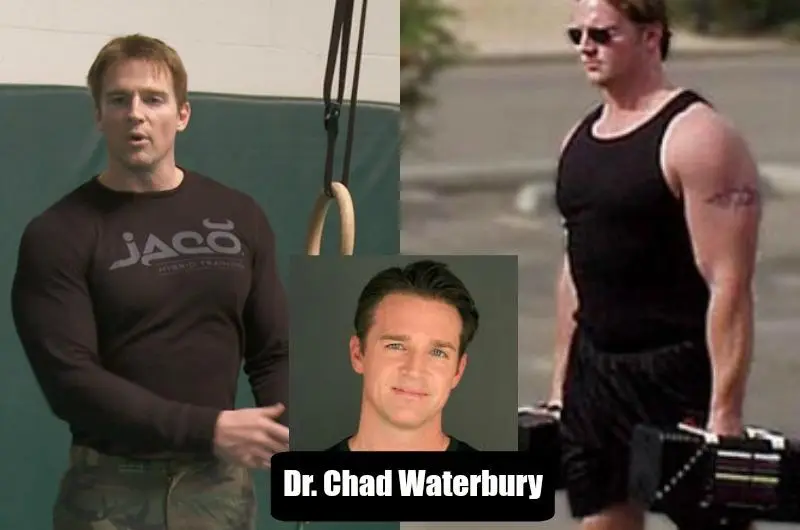
Dr. Chad Waterbury is a master strength coach who’s worked with some of the top athletes in the world. He’s a writer for Testosterone Nation and widely known for his techniques involving circuits and bodyweight exercises. Chad came onto the show to discuss his insights for warfighters and Veterans.
For Chad’s Corrective Exercise Ebook: https://amzn.to/2LnCpcw
Sponsored by FBOMB Nutrition: Get 20% off of your first order of FBOMBs by using the cod WARRIORSOUL at checkout! http://www.dropanfbomb.com
Transcript
Machine-generated from the episode audio and lightly edited — may contain errors.
Chris Albert (link to this point)
What is going on everybody? Welcome to this edition of the Warrior Soul podcast. This is Chris Albert. And today we've got a really special treat for you. We've got doctor Chad Waterbury on this episode.
If you don't know who he is, you should. The guy is an absolute strength and conditioning genius. I first heard of him about ten, twelve years ago. I started reading a publication called T Nation Testosterone Nation. And this is different than a lot of the other crappy fitness publications out there that are fit for mass consumption.
This is the creme de la creme of the strength and conditioning world, writing their thoughts out, giving real awesome applicable advice to the masses, and all the stuff in there is scientifically referenced. But Chad is the creme de la creme amongst that group of people, and he's been the strength and conditioning coach for Rickson Gracie's International Jiu-Jitsu facility. He's worked with a lot of fighters. He's worked with some downright savages. I knew a guy who was doing one of Chad's programs.
And Chad is known for doing a mixture of circuit training, hardcore strength training, and body weight training, and with with a lot of awesome recovery techniques worked into that. And his athletes are known for their explosive power and their athletic ability. And this guy is really awesome. He's one of my idols in the strength and conditioning world. And it was just a real pleasure to sit down and talk with him to pick his brain.
The reason why he came on here is he wanted to give his insights to both the active duty military and the veteran community for ways in which they could increase their performance, increase their tactical performance. And also, for those of us who are older and who are out of the military now, ways for us to continue to strength to to do strength training, to improve our strength, to improve our ability to burn fat and to build muscle, but also to improve our minds and to help us to stay healthier in our post military lives. So this is going to be an awesome conversation. Like I said, this guy is an icon and I think an absolute genius in this world. First off, before we get into that conversation, I wanna say that this episode is sponsored by F Bomb Nutrition, a really amazing company run by really awesome people and they make these delicious, awesome portable packets of nut butters and fats. Now, I'm always talking about the benefits of a high fat, low carb diet. We actually get into the benefits of adapting to fat burning as fuel in our conversation with Chad. And F Bomb, they've made a way to make it really easy to do that. These packets contain a macadamia nut butter base and they've also got some coconut butter in there.
And these things are absolutely delicious. I'm ripping one of these open a couple of times a day, pouring it into my mouth really easy, super nutritious, low sugar and they use nothing but the best ingredients. And again, they're really awesome people. They're sending packages of these things out to our troops on the front lines. They didn't need to do that.
They wanted to do it. They contacted me to get in touch with troops deployed abroad so that they could start sending those packages out. And again, just great people. I'm super privileged to have them as sponsors. If you're looking to try these out, head over to www.dropanfbomb.com and use the code Warrior Soul at checkout, and you'll get 20% off of your first order.
With that, let's get into our conversation with the awesome, the ingenious, Doctor Chad Waterbury.
This is Chris Albert, I'm here to remind you of one thing. Someday, you're going to die. Now that's not some morbid statement or scary idea. It's solid fact. Your time here on this earth is limited.
We need to be reminded of this as much as possible for one simple reason, to live your best life while you can. This is the Warrior Soul Podcast.
Chris Albert (link to this point)
What's going on everybody? Welcome to the Warrior Soul Podcast. And today is a really big privilege for me because the gentleman I'm on with is somebody I've been a real fan with for a long time. And I'll give you a little bit of a story. Back when I was owner and manager of Metroflex Gym in Long Beach, we had this kind of savage that used to come in and his name was John Rude.
And and it's like a twist of fate that his last name was Rude because if you ever saw this guy, he's a giant and a big muscular guy. And he's also really smart, smart, educated guy. But he would go into the back and he'd come up front every once in a while to refill his bottle. He was he was drinking a Biotest Plazma during his workouts and things. He'd go back there and I hear this crazy grunting.
And so one day I'm like, I'm gonna go back there and see what's going on. And I see this giant of a man just hanging upside down from some some gymnastics rings. And I was like, woah, that's crazy stuff. What's going on there? And he gave me the whole history and he said that he was working with a guy named Chad Waterbury.
And I'd heard of Chad quite a bit. I'd been reading a lot of different blogs, reading T Nation for a while. Chad was kind of one of the first guys, I'd say after the bodybuilding magazine phase of fitness, where the bodybuilding magazines had a monopoly on everything. He's one of the first guys bringing in alternative training methods and talking about strength and conditioning in some of the new and fascinating ways. He's been one of the big innovators out there and I'm not gonna go through his whole story because, I mean, you can literally find pages and pages of him out there on the Internet.
But, Chad, I wanna welcome you to the podcast today.
Chad Waterbury (link to this point)
Oh, Chris. It's my privilege to be here. Thank you for having me.
Chris Albert (link to this point)
Absolutely. So we were kind of discussing before we came on, you know, back when I first got into the Marine Corps. I it was 1999. And as I alluded to at that point, we had, like, one or two bodybuilding magazines to choose from really in the fitness world that wasn't wasn't a whole lot of information out there. It was kind of prior to the Internet kind of taking hold and and making information so widely available.
And at that point, I was doing a lot of long distance running. I was doing kinda like bodybuilder style workouts, and I was doing all the humps and the and the training that we had to do in the Marines. And a lot of us had tons and tons of injuries. I'm talking bad knees, bad backs, aging before we we well should have been aging. And, you know, in in in your opinion, from that time till now, what's changed?
What do we know now that's different?
Chad Waterbury (link to this point)
Well, hopefully smarter programming. I I don't know. We argue that point with how Instagram and all those other places have flourished. But back when I started writing for T Nation, back then, it seemed like there was a little bit more of a bar you had to achieve to get your name and your face out there and such. That's kind of So a circuitous answer to your question.
I'm already starting out kind of circling it. But I would say that you think, oh, well, with all this time that has passed and all this information, we know so much more than we did then. And in some ways we do, but a lot of bad information is still infiltrated. The internet because people are trying to be seen. They want to put the latest, craziest thing and the most extreme thing.
And it gets people in the mindset that they need to chase fatigue and they need to be in pain after the workouts and that's not how it's supposed to be. Training is supposed to make you better, supposed to make you healthier, not supposed to make you age faster. But if I just touch on one thing that you said, the first thing I want to touch on is lots of long distance cardio. Now, this is a really interesting topic because I think on one hand, some people could benefit from some steady state cardio, depending on what their, you know, the rest of their training program is. But when you're talking about a military guy who's getting tons of cardio, then you add more on top of it, it can be problematic and really age you.
You start aging your cells and it's like rusting out your cells. I mean, you look at people who are triathletes in their 30s and they look like they're in their 50s. But the real problem as well is that repetitive use or repetitive motion cardio will lead to repetitive motion injuries. So if you run for 50 miles a week, you're going to have all sorts of problems in your outer thigh and your hips and all that. So I certainly am not going to be bashing on cardio because I've actually learned a lot more about it over the last ten years and studying with people like Pavel Tsatsouline, who's got this great strong endurance seminar and all that.
But it's more of, for cardio, you want to take a real non traditional approach to cardio, meaning you want to do almost like a circuit for cardio. And I'm not talking about strength training. I'm talking about you might jog for four or five minutes, and then you might shadow box for four or five minutes, and then you might do some side stepping with a resistance band. You might do side shuffling. You might do some crawling.
To me, that's great cardio because you're not getting any repetitive use injuries. You're not doing the same motion over and over and over. So that's one thing that I would say I think that we understand more is that it used to be, Okay, you lift weights and then you go run or you sit on a bike for an hour. And that's not really a smart strategy. Because again, especially military guys and just athletes in general, they need endurance not just in their thighs, they need it in their upper body.
Military guys have to carry stuff, carry stuff overhead, all sorts of challenges their upper body needs. We need to build endurance in those fibers as well. A simple way to do it is make your cardio be more full body in nature. So hopefully that answers one of your questions. The other thing is that The whole high intensity just chase and fatigue thing is not ideal for most people because you have I'm going speak to military people here because this is a big part of your audience, but you have someone who is under a huge amount of stress mentally and physically, And when you go into the weight room and just do crazy high intensity insane workouts to failure, I mean, it is a lot of stress on your immune system, your joints and your recovery and all that.
So we need to find this middle ground here where you can get the strength training adaptation you need, get the functional strength and muscle you need without actually burning out yourself. And then you have cardio that, as I said, is not doing the same thing over and over. I mean, a military guy's walking and jogging and trekking all this time and then to spend another hour just running on the treadmill, I mean, you're just, you're going to have orthopedic injuries for sure. So you need a more intelligent approach to that. Yeah.
Chris Albert (link to this point)
I also know that you have a background in neurology as well, right?
Chad Waterbury (link to this point)
Yeah. Neurophysiology, right.
Chris Albert (link to this point)
Yeah. So one of the questions I have, because the signature injury of the last two wars have been traumatic brain injury. And a couple of friends of mine, Andrew Marr and Doctor Mark Gordon, they've been looking at this issue as one of the big issues as far as being related to the high veteran suicide rate. One of their theories is that it's not just getting knocked out that matters, it's brain inflammation in general.
Meaning, you're dealing with a 50 cal, you're getting shaken back and forth, or if you are getting shaken back and forth on a helicopter, if you're in proximity to explosions, could lead to low level injury which could lead to high levels of brain inflammation. My question for you is, given that kind of impact with repetitive use and the high stress and constantly chasing fatigue, what would be the impact there on the brain? Would that make it potentially more vulnerable to these types of injuries?
Chad Waterbury (link to this point)
Well, we can't say at this point, because we just don't have the research on that. And there's not a lot of research related to traumatic brain injuries and high intensity exercise. But just from my standpoint, I think that that high, high stress on the nervous system, whether you're doing real crazy high intensity interval training with super short rest periods, a la Tabata, You're doing super high intensity weight training, lots of failures, short rest periods, all this stuff. I can't see in any way, shape, or form that it would help. And in most cases, think it's going to hurt because the body needs balance.
Everything in the universe needs balance. So if you're thinking about someone who's very stressed, who's had a stressed brain, stressed nervous system, let's do things that are less stressful to the nervous system. That's why mindful meditation, they've shown as little as twelve or thirteen minutes a day with soldiers. It's so beneficial to boost their, to help overcome depression, to help with recovery, to just be a healthier state of the mind. And it just helps with recovery in general from exercise, all that.
And then getting back to cardio. If you do cardio in the right way and you're doing some low intensity stuff, you're just getting a light sweat going, you're doing different activities and not moving in the same plane all the time, this can be restorative. So you just don't want to add intensity and stress on top of more intensity and stress, and that's why soldiers and people who have traumatic brain injuries, they need to be more careful with the amount of intensity and stress they're putting into their exercise sessions.
Chris Albert (link to this point)
Absolutely. What about corrective exercise as far as prepping the body for these types of workouts when you are training hard? When you're working with an athlete, how often are you kind of programming in, working on their recovery and active recovery and things like that?
Chad Waterbury (link to this point)
Well, first of all, when it comes to active recovery or just recovery in general, the number one rule is to don't smoke them in the first place. That's where you have to get really smart programming, and that's why that's really, really important. Now, in terms of corrective exercise, I'll address that first. All of my clients, all my athletes, everyone I work with, they all do some sort of exercises that would probably be viewed as corrective exercise the beginning of a program. We turn on the glutes, we turn on the shoulder stabilizers, we turn on the spinal stabilizers.
You can call it corrective exercise. Some people would call it rehabilitation. Other people just call it smart training. But I use that for everyone. Have an e book called Powerful Mobility that you can get on Amazon and it's just $9.99 and there's a lot of good correctives in there for people who need it.
But I haven't worked with anyone who didn't need some sort of whatever you want to call it again, prehabilitation corrective exercise, whatever. We can all benefit from it because it's really hard to turn on key muscle groups with just doing squats and deadlifts and overhead presses. I mean, are all great. It's the foundation of any program. But to make the body be able to withstand heavy loads and to help protect yourself from the incidents of injury and all that stuff, you want to be sure that you have all the right muscles kicked on to support the hips, to support the spine, to support the shoulders and all that.
That's where that comes in. And in terms of active recovery, I mean, there's nothing better than just a quick nap, like a twenty minute nap. I mean, that's about as good as it gets. When you look at the positive impact it has on neurotransmitters and hormones and help with recovery, that's a great thing. If you can't nap, then as I mentioned before, just twelve or thirteen minutes of mindfulness or meditation is absolutely terrific.
If people want to know how to do it, there's plenty of apps out there. I'm not associated with any of them, but there's plenty of apps that can take you through guided mindfulness. But it doesn't even have to be that complicated. It can be as simple as getting in a quiet room and just trying to clear your head. Focus on your breathing.
If a thought rushes into your head, something that gives you anxiety or you forgot this meeting or whatever, just let it go, let it pass and just spend ten minutes or so just focusing on your breathing, focusing on how your feet feel, how your calves feel, how your hips feel, working all the way up to your head or starting in your head and working your way all the way down to the feet. It's things like that that are really important for recovery. And another thing that I'm going to say is that research has shown that by focusing on things that you're grateful for, especially before bed, you get better quality sleep, you get better recovery, it can help offset some depression, things like that. And I'm not saying that's all people need, but these are just simple things that people can do every day. You want to take it a step further and they say when you get up in the morning, same thing. Focus on the things you're grateful for, whatever it is. It's your job, it's your family, it's your kids, it's the fact that you have a roof over your head.
Doing that kind of stuff throughout the day makes a huge, huge impact. And I know it's easy for someone People probably think, Oh, someone like me is going to talk about contrast baths and cryotherapy and all that. It all can have its place, but it really starts with the brain. I mean, you know that. Your audience knows that.
So what I want to do is I want to make the brain healthier and giving it rest periods throughout the day where you're not stressed about things and doing the meditation and focusing on things you're grateful for, this makes a dramatic, dramatic impact on the brain in a positive way. And that's huge.
Chris Albert (link to this point)
Yeah, that is something that I've definitely incorporated into my life, both gratitude and mindfulness meditation. I went through periods where I was homeless living out of my car and, you know, didn't have a thing in the world. But the one thing that kinda stuck in my mind was that, thank God that I have a car to sleep in. Thank God that I'm in The United States right now and not somewhere else, you know, where where I wouldn't have the opportunity to come out of this situation that I was in. And focusing on that that whole time really helped me out of that situation.
I mean, and and it put me in an action mindset to be able to take advantage of the things that I did have in my life that that I could use and and could maximize.
Chad Waterbury (link to this point)
Yeah. And gratefulness and being happy, it's it's a choice. You know, it's Well, I want to say people have had traumatic brain injuries and things like that. That's more complicated. It's not like they want to have PTSD and things like that.
So I'm not talking specifically about them, but I'm just talking about just people, just life in general. We have a lot more control over our happiness and our gratefulness than we think. They've done lots of research on that. The happiest people in the world, least happy people in the world, and the happiest people in the world just focus on the things that they're grateful for. And everyone, if you're alive, you can be grateful for something.
I remember seeing a documentary and I can't remember exactly where the man was, but it was an older man who was just riddled with orthopedic injuries and was just as dirt poor as you could be. I think it was in Mexico or was in South America. And his whole day was he was carrying, he was pulling this heavy cart and he was completely hunched over and had just tons of, I'm sure, pain all day long, but they said he was one of the happiest people that they interviewed because he said that he got paid to do this all day long and he was able to put his kids through school with the wages that he made, again in Mexico or South America, wherever he was. And he said that just made him the happiest person in the world that he could do that. And it's just such a powerful example of things we take for granted.
Just, you know, it can always be worse. And a great way to make it better is to focus on the things that you're grateful for and focus on things that are good. And as they say, what you focus on grows. So be grateful, be good to other people, and lots of great things in life will happen.
Chris Albert (link to this point)
Absolutely. And it keeps you out of that mode of being the victim or playing the victim where, you know, you're placing the blame on everybody else around you and the environment and the world. You know, something I like to say is that this world has been testing living things since the beginning and we're no different. We're living organisms on a planet that has classically massacred living organisms en masse. We need to take every advantage that we can to own everything in our world and really drive our own purpose and really be mindful of the fact that if we are blaming other people, we're actually giving away control over everything that we could be changing in our lives.
Chad Waterbury (link to this point)
I agree completely. Yep.
Chris Albert (link to this point)
Now with meditation, and and this is something that that I've noticed with myself. When I am super stressed out, I'll actually catch myself not breathing. Like, I will be holding my breath and I'll be sitting here on my leg. And I'll be literally, I think I could go a few minutes without breathing, without even thinking about it. And since I've started meditating, I've been catching myself more.
Is this something when you're when you're training athletes, do you notice them when they're going into their their fight or flight mode? Are they are they inhibiting their breathing? And and is this something that meditation helps with?
Chad Waterbury (link to this point)
Well, yeah, meditation helps with everything, but specifically answering your question and some take home points for people is that with athletes, with fighters, they'll tense up. They'll tense up and as soon as they tense up and as soon as their brain goes to a state of alarm, they're going gas. They're going to gas in a hurry. And this is why, if you want to train an endurance athlete, and it can be a wrestler, it can be a fighter, MMA fighter, whatever it is, you want to be sure that when you're starting early on in the training camp that you're having them go through their sparring, do their techniques with a relaxed mindset. You need to really start to ingrain that in them and just be super relaxed and be calm and start to do the techniques that way.
And then once you do that and you program it the right way, then they're gonna be able to go faster and faster with that mindset to stay calm. This is a very important part of endurance development. So the other thing that I want to say though about that is that there was some really interesting research that was done where they had athletes throw a punch or sprint and I think maybe do a vertical jump. But let's just stick with throwing a punch and sprinting, so I remember those specifically. They had them do that at different ratings of perceived exertion.
So 10 out of 10 would be just as hard as you could possibly do something, like your life depended on it. Nine out of 10, of course, is a little below that and then they went all the way down to I think five out of 10. So theoretically, 50% of your max effort. They tested people's punching speed and punching power and they tested their sprinting speed and it was really interesting because they tested them at 5/10, 6/10, 7/10, 8/10, 9/10, and 10/10. And they found that the fastest performances, the fastest punching speed, the fastest sprints and the most powerful performances, most powerful punches came around seven out of 10 effort.
So when they told them to go about seven out of 10. So you think, why is that? That's surprising. It's because when you start getting close to 10, people tense up. And when people tense up, then they actually can't move as fast, and it just creates stress in the body. So you want to be fast and loose.
That's how you want to train if you're a fighter. You want to think fast and loose and then that's how you'll really build the type of endurance that you need and you won't gas. Another thing that's really important for endurance athletes is teaching them to use fat for fuel and Doctor Philip Maffetone has talked a lot about this. He's amazing with his endurance research and he's got a heart rate formula he recommends which is one hundred eighty minus your age.
That would be like the max heart rate you ever want to hit to be below that anaerobic threshold. Mean there's a time and a place where you absolutely should and need to go above that for short periods of time, but if we're just talking about sparring or doing things like that, to get people below that heart rate and to get them to perform well there, then the body starts to use fat for fuel. And the more that you can get the fat to be the primary source of fuel, then the less likely you are to fatigue. I mean, that's just the fact of science because when you're burning fat for fuel primarily, you're not going to get proton accumulation, you're not gonna get the blood acidification and all the bad things that go with it. Because as soon as protons start building up in the blood, this is correlated with the lactate threshold which is a whole another conversation and just for the people out there, lactate is not the problem at all.
Lactate is actually your friend during exercise. When lactate is accumulating, protons are accumulating with it, so it's guilt association with lactate. So that's why they measure the lactate threshold because they know that protons are going up. But I don't want to get off in this physiology. But when protons are increasing in the blood, bad things happen.
Your fatigue goes way up, it decreases the muscle contraction velocity, it decreases nerve transmission velocity and all that. So the point here is when you're trying to perform well, you want to keep those proton accumulations at bay. And one way you do that again is to train the body to use fat for fuel. The other thing about fat is even a lean person has days and days worth of energy to provide, so you're not going to run out of it like you're going run out of glycogen in your muscles. There's a limited amount in there.
So as soon as you see someone start to gas or get in that fight or flight stage, that's when you see their performance just absolutely plummet. We've all seen it in MMA fights, boxing matches, whatever, where someone is like, All right, they're maintaining their performance, then whack. They get hit really hard or they get stressed out or whatever, and then they start burning tons of sugar for energy, which makes protons accumulate in the blood. Then, like I said, all those things I just mentioned start to happen. So it's really important that you train people to be in a relaxed mindset.
And that's easier said than done because all fighters know, all soldiers know, as soon as you get whacked hard, everything goes out the window and everything goes to hell and you're in fight or flight mode. This is why those monks and all those people to just train their brain through these stressful situations is to keep their mind relaxed and focused in a stressful situation. It's easier said than done. But when you can do that or at least just improve your ability to do that, you're going to perform so much better and you're going to recover so much faster because it's going be less stressful on your body.
Chris Albert (link to this point)
That's so interesting. You know, we've had a number of experts on on fat adaptation here in in on the on the podcast and they definitely want to get into the the to the relaxed aspect of it. We've had on Dominic D'Agostino. We've talked to the guys who founded Ketgenics and all these things, the ketone supplement company. I've written extensively about ketosis and fat adaptation.
One thing I think that gets lost in the literature, for example, is when you look at that recent study that Doctor Volek did up at the University of Connecticut, the metabolic adaptations of keto adapted ultra endurance runners and talked about them being able to oxidize fat at really high rates of their VO2 max. One of the things I think that gets lost is the difference between the therapeutic form of the ketogenic diet that we see a lot of people going after that's ridiculously low carb and then maybe a modified Atkins version that allows some carbohydrate intake and higher protein intake. What's your opinion on this when it comes to fat adaptation for athletes? For example, is one of your fighters going to be very low carb?
The reason I ask this is because a lot of the guys who are listening to this, particularly the active duty military guys, they'll need to supplement themselves into something like adaptive state because a lot of them are living off of MREs and things like that. Though it is happening out there more and more, I mean, the Navy SEALs special operations are going more for ketogenic diets and doing a lot of research on fat adaptation and its benefits. As far as when you're working with an athlete and the ability to both burn fat for fuel and put the pedal to the metal as far as utilizing glucose if they need to, How would you construct that?
Chad Waterbury (link to this point)
Well, that's certainly a loaded question.
Chris Albert (link to this point)
Sorry, sorry. I know.
Chad Waterbury (link to this point)
Okay, well, let's break that apart a little bit. First of all, there's a time and a place for low carb diets. It depends on how they've been eating and what type of performance they need. Cyclists and marathon runners, they need lots of glycogen and things like that. Obviously, they can adapt and use fat for fuel.
But one thing is I think is pretty well accepted is that if you're going to drop carbohydrates drastically, you're going to get some loss of performance. You want to keep that in mind. The research isn't super clear on how long it takes to restore it. I saw some research recently where it said it took about four weeks for explosive athletes to restore their performance if they went really low carb. But there's other studies that have shown other things as well.
The key here is, as you said, you want to get people to use fat the best they can when they're doing their endurance training, their cardio training, and that gets back to doing what I mentioned earlier. You have to train the body to do that. It's just not as simple as just taking carbs out of the diet. Because even though the carbs aren't available, the body has to go through changes to make the use of all this, the new amount of nutrients that are available that weren't before you know and all that. So do the cardio.
As I said, the 180 mics your heart rate. Learn to really train and perform below that. That's going to help you better utilize fat for fuel. And the other side of the coin, which I haven't even talked about yet, is building your explosive power Yep. And getting stronger, building your functional strength because, you know, the stronger you are, all things being considered, then the easier it's gonna be to do a task.
Like for instance, we talked about the NFL combine bench press test which we can argue whether that even should be a test for someone like a football player, but their whole thing is to do as many reps as possible, two twenty five pounds. And you think, okay, that's an endurance event. Some guys are knocking out 30 reps or so or whatever. It is, but it doesn't mean you need to train for endurance to be good at that task. So one takeaway that I want to give your audience is when someone needs to do a strength endurance test such as that, or it might be for whatever reason how many squats you can do with your body weight.
I'm sorry, a body weight load on your shoulders. Sometimes people do that test, like that. If you want to get good at those sorts of tests, you want to just increase your maximum strength. Let me give an example that's probably better for the military. Military people want to increase their pull ups, right?
That's a big important thing.
Chris Albert (link to this point)
One is the CFT. Do have a situation where we do press an ammo box overhead for max reps.
Chad Waterbury (link to this point)
Yeah. Let me get to the pull up first before we do the overhead press. So the pull ups, if you can do let's say a guy or a gal can do eight reps, that's it, eight full range of motion reps before they have to stop. He or she wants to get up to 20 reps. So you might think, though, you need to start doing pull downs for 20 reps.
Start doing 20 reps worth of exercises to train those muscles in a similar way, but that's not going to be an ideal approach. First of all, there isn't a huge carryover between the lat pull down and the pull up, believe it or not. There's similarities, but you really need to hang from the bar to get better at the pull up. So in that case, let's say again the person can do only seven or eight reps, they wanna get to 20 reps, the best thing that they can do is increase their maximal strength with a pull up. So what I'm talking about is the most that they can do for let's say three reps.
So this means they're going to need to put on a weighted vest or use a chin dip belt or hold a dumbbell between their feet or whatever it is. But let's say that person who can do a max of seven pull ups for a three rep max, it's with, let's say, 25 pounds across his or her on a chin dip belt. So you want to get to the point where that person can do 50 pounds added for those three reps, or 60, or whatever it is, depending on how much time you have. And without even training the high rep range, trying to burn out as many reps as you can, just focusing on building your max strength, that is gonna be the best, fastest way to get up to 20 reps. People ask me that a lot.
Stuck at 10 or 11, how do I get to 20? That's how you do it. That's how you do it. Now, a very important caveat here is that the reason why the carryover is high between that maximal strength and that endurance is because that is high intensity endurance. Meaning, if you take a marathon runner, let's say a guy whose max squat is two hundred pounds, very thin and weak, and you increase his max squat to three fifteen pounds, let's say, a marathon runner, it's gonna have virtually no impact on running a marathon.
It's too far separated. So the further the endurance challenge gets from maximal strength, the less the carry over it's gonna have. And that's why the pull up, there's a high carry over because you're not doing pull ups for thirty minutes. Just trying to get to 20 reps. From a programming standpoint for strength coaches out there and things like that, that's what you wanna do.
Now the same can be said if you wanted to press something overhead 30 times, a certain load that you can only press seven or eight, ten times, that's what you want to do is you want to focus on building your max strength in that overhead pressing. But if we're talking about carrying your guns or carrying some of your equipment overhead for fifteen minutes straight, walking through you're walking through the swamp, whatever, you're gonna have to train that directly because the max strength is not gonna have a huge carryover. It can help, but the other thing is I'm not a huge, huge fan of going really heavy on overhead presses. There's a time and a place for it, but it can be a little tricky. Whereas like the pull up, it's a safer kind of way to add load.
But that's just what I wanted to mention here is if you need to carry something overhead for fifteen minutes, then you should just start carrying things overhead for as long as you can. Then when your technique starts to break down, then get adequate rest and do it again. Another thing with endurance is that it's better to get a higher frequency throughout the week. It's just like practicing something. It's better to practice five minutes, 10 times spread over a day than it is to practice for fifty minutes once.
So it's kind of like that with building the endurance fibers. And I want to take this opportunity to talk about something you mentioned earlier where people who have a lot of physical stress and trauma and are pretty beat up and all those things, they want to know better ways to train. There's some interesting research that shows, again, my friend Pavel Tsatsouline has written about this, that shows that if you do certain protocols aimed at the slow twitch fibers, you can actually increase your strength and increase your power if you do it the right way. What the research showed, this Russian researcher showed was you want to use a load where you fail between thirty to sixty seconds and you want to do one to nine sets a day. Obviously, there's a huge difference between that, but it just comes down to smart programming.
You might do three sets one day, one set the next, four sets third day, two sets the next. You want to stagger it. You don't want to just do a linear increase. As I said, that's another topic. But the key point though he found though was that you need really long rest periods between those sets to get the best benefit.
It takes five to seven minutes is what he recommended, but there really is no rest period that's too long. So again, an example I would give is let's say you have a guy with beat up knees or beat up shoulders, can't lift heavy, then what he or she could do is some type of body weight exercise, some type of light load exercise where they're moving very slowly and they're failing around the thirty to sixty second mark, and then rest plenty of time. It depends on what their schedule's like. Maybe they have time for a long workout, a ninety minute workout, and they can rest for seven minutes between each set. And during those sets, you can work other muscle groups.
This is not like you just have to sit around. So let's say you're doing it with a goblet squat and you can't lift heavy because your knees are hurting you. So you would do a load and do it nice and slow, and you fail around forty to sixty seconds, thirty to sixty seconds, whatever it is. And then during those seven minutes when you're waiting before you do another set, you can work upper body exercises. You could do some dips or some whatever it is, work your shoulders, work your abs so you can make the workout efficient.
But then get back to your second set at least seven minutes later. That's one way to do it. But another way to do it that I like to have people do, especially when they're trying to build muscle size, functional muscle size, is I'll have them do it throughout the day. So if it's a day where they're gonna do maybe something simple as calf raises, I wanna build someone's calf strength because calf strength is actually, it's a very important and often overlooked aspect of gait, of performance. Gait, when someone's walking, when someone's trekking, when someone's going, when someone's hiking, when someone's carrying gear, when someone's running.
People should be able to do 25 full range of motion reps on one leg, a single leg calf raise. You can just try this at home. Take off your shoes, stand there on one leg, you're barefoot, you're wearing socks, and try to do 25 full range of motion reps. And what some people do, what's really smart to do is, I don't know if you can see here, but they have those height measuring devices. You can get them real cheap on Amazon that attach the wall, you know, where they slide the plastic thing down to where your head is.
So these are great for testing this and for calf raises. So you do your first calf raise in front of that and you kind of adjust it to the top of your head at the top of the calf raise, right? At the peak contraction where your leg is straight and you're all the way up. And then you have to touch your head to that every time from there on. This is how I test people.
We test people in the clinic because people will say, Oh, I can do 25 calf raises, no problem. They don't realize that by the end of it, they're doing partial reps or 70% of what they were. This has to be full range of motion reps. This is very tough to do. And when you can't do that, you're more likely to have foot problems, ankle problems, knee problems, low back problems, poor performance, lots of things like that.
Now back to how I help people increase that strength is I have them do just one set of calf raises to failure like three times a day if it's a day where they're doing three sets and they'll do one in the morning, one in the afternoon and one in the evening. So there's a long, long rest periods in between, but the longer the better. It's going to help you build strength faster, build those muscle fibers faster. It's gonna manage recovery better. I talk a lot about this in my high frequency training, but the more you can spread it out, the better.
Another thing that I want to talk about is because I spent so much time for people who've read my stuff on T Nation over the years or other articles talking about high threshold motor unit recruitment, going after the largest motor units because they have the largest muscle fibers and how important that is. That is really, really important. Training heavy with the right exercises and training fast, this is good for everyone. Slower tempo sets the failure need to be reserved for, first of all, calves respond really well to it. But for someone who's weak and needs to build a lot of strength, you do not want to focus your time on this.
But for people who are beat up, I wanna give them, you know, their joints are achy, lots of trauma, they're older, they've been injured, whatever. You can do body weight exercises to failure. You can do light loads of failure. You fail between thirty and sixty second sets and you will build those slow twitch muscle fibers. You might think, well yeah, but big whoop, you know, it's like those are weak fibers.
The truth is that slow fibers per square inch or per square centimeter, however you want to measure them, slow fibers are as strong as fast fibers. It's just slow fibers are smaller, so you need more slow fibers to take up the same amount of space as the fast fibers. But at the end of the day, they're just as strong. So doing protocols to help them get stronger is great. And it's a way to build muscle and it will have carryover into things that you wouldn't think.
These Russian researchers had these guys do these slow twitch protocols I just covered and they improved their squat one rep max. They improved their sprinting speed. I mean, this is huge. But again, I can't stress this enough. For someone who is relatively weak or new to weight training, you do not want to spend your time on this.
This is for people who are already really strong and then it's going give them an added benefit or for people, as I said, who have orthopedic problems, can't go heavy, people whose joints are achy. I just want them to know that there are things that they can do to get a good benefit. But the reason why it's not good for people who are weaker or new to training is because they haven't developed the connective tissue strength that they need. They need to get those high threshold motor units recruited because when you're recruiting those, you're recruiting all the other ones as well. So there's the components of basic strength training.
Three full body workouts a week, focused on an upper body push, an upper body pull, a squat, deadlift or lunge variation. This is what people really need to focus on for the first couple of years of their training. And it'll stand the test of time even if you're advanced. For people who are going through a lot of stress, physical stress, this could be an athlete who's in season or whatever, you might need to dial that back to once or twice a week full body training because the other stuff that they're getting through their competition, you know, they can't overcome all the fatigue. It's kind of like fighters, MMA fighters, they're surprised to learn sometimes that the closer they get to competition, the less frequent they're doing their weight training.
You talk to those old school UFC guys, all those guys we've all heard about, they are retired now. They said that was one of the biggest mistakes they made, is they did too much leading up to the competition. So you really need to manage recovery. That's the key for a soldier, for an athlete, whatever. And as I said earlier, adding high intensity, very stressful training on top of a very stressful lifestyle, job duties, all that, you gotta be smart with it.
Gotta be smart with your program. And that's why I like full body training because it's the most efficient way to get the highest frequency of training. Because when you split it up and the body part splits, you work back and arms one day and chest and shoulders the other day and legs and abs the third workout of the week. That's fine. It might work for some people, but if you're really trying to build strength and muscle, I would rather have them work each one of those muscle groups twice a week.
And then if you do that sort of split, the one I just said, the chest and biceps or the back and biceps and the chest, tris and the legs, all different workouts, you have to do six workouts a week to work everything twice. Whereas you could just do two full body workouts a week, and you have more time to recover and do other things you want in life and relax and do active recovery and all that. So I could go on and on with that.
Chris Albert (link to this point)
That's a that's a big thing that I've always noticed with your writing is is that that that respect for time and and really keeping keeping time as a value and and not really not spending your life entirely in the gym all the time just with these these long drawn out workouts and things. I also, you know, with as far as what you're talking about, that makes body weight training a a really valuable technique there because you can start to do it almost anywhere. And if you're looking to get that that higher frequency kind of training with with, you know, in in in minimal impact, you know. Now I see kind of the logic in in going after those gymnastics rings. And and and I just started on the gymnastics rings a few months ago.
And and one thing I'll say is that after just a few minutes of a workout on there, I mean, I'm literally sore to the bone. It's ridiculous everywhere. Not just my upper body, but my glutes and everything are firing.
Chad Waterbury (link to this point)
Yeah. The rings are absolutely terrific. People want to use straps or whatever they want to use. The reason it's challenging is because it works so many more muscle fibers. You have to recruit all those additional muscle fibers to stabilize the rings because they're unstable.
It's great for that and it's great for joint health because it allows your wrist Let's just talk about the pull up. Because getting back to the military, doing a lot of pull ups, the one thing that's great about the rings is it allows your wrist to move freely, which takes stress off your elbows, which takes stress off your shoulders. Now, I want to mention here that I am not a fan in any way, shape or form of chin ups. So palms up, palms up, palms facing you, however you want to say it. When reps from a straight bar, it is really bad news, very high risk.
This is why most people, I don't want to say most people, but a lot of people have elbow problems eventually when they do them like that. If you're gonna use a straight bar, that's fine. Use an overhand grip so your palms are facing away. Do them that way. I love a hammer grip.
It's one of my favorite positions to do them from. But if you have the luxury and you can do the rings because then you can do all the hand positions and you can do the chin ups. You can do it with the palms facing you because the rings are gonna allow those little rotations that your wrists need and it's different for everyone. Little rotations your wrists need as you're going through the motion, which is going take stress off the elbow and as I said, it's going to take stress off the shoulder. Same is true with the push up.
You do them from rings, you do them from straps or whatever, you get a lot more stabilization, activation activation and stabilizing muscles throughout the core, throughout the shoulders. This is better for joint health. It's better for strength development because you're recruiting more muscle fibers but it's better for joint health because you're sparing the stress on the joints, you're letting the wrist move freely. I can't stress how important that is for the wrist to be able to move freely. Dumbbells, kettlebells, they all do that.
It's all great. But when you're dealing with straight bars, it can be really tricky. If you do a barbell overhead press, this is tricky, especially if you go heavy because it doesn't allow the wrist to rotate. And for some people that's fine, but for a lot of people it's not. Stick to dumbbells, kettlebells, things like that for doing overhead work.
The other thing I want to say about overhead work is use a split stance a lot. If the dumbbell or kettlebell is on your right side, then your left leg is forward. Left leg is forward, you're in a split stance. That position when you're pressing overhead is much less stressful to the shoulder. It puts the rib cage in a better position, the shoulder in a better position to do especially heavier work.
I like half kneeling stuff as well, so you're down on your right knee and you're pressing overhead. I really love a bottoms up kettlebell press, so this is where the handle is here and the bell is up here and it's very hard to hold it but you'll need a light load or light kettlebell but doing presses like that overhead from the standing position or from the half kneeling position or from the bench press position. People can look on my Instagram page and they can find videos of this stuff if they're not familiar with what I'm talking about. But I will say this, body weight training is absolutely terrific. You get more neural activation, you get more muscle fiber recruitment for the stabilizers and all that.
And you can use body weight training for virtually every muscle group. You can get really strong for it, and you can do it almost anywhere. But I will say this though, if you did nothing but body weight exercises, you probably aren't gonna have a strong enough posterior chain. That's the one thing that I'll say. So I'm talking about the muscles that run from your calves to the back of your neck, up the back of the body.
And there's an old strength proverb that says, Strong man is strong in the back of his body. So what I'm trying to say here is if you then add some sort of deadlift variation or for people who are built to squat, a barbell squat's fine or a goblet squat or kettlebell swings or whatever, just doing something to strengthen the posterior chain in addition to doing body weight exercises for virtually everything else, you're going to be fine. You're not gonna be lacking any development. But I just don't wanna say that it's black and white. It's just, oh, you only need body weight training because I don't think that that's true.
I think it's gonna, as I said, lack the posterior chain. So just throw in something for that and you're good to go.
Chris Albert (link to this point)
Well, I think it gets back to kind of what you were alluding to at the beginning. I think that with the rise of social media and kind of the Instagram guru, what happens is a lot of people begin to look at these these paradigms as as cults, and they they don't think of them as tools anymore. And and I think that that's true both of training and in kind of my area of nutrition, where we look at things as just cults, you're either in this tribe or that tribe or this camp or that camp, and we forget that these are tools that need to be considered and used for the functionality.
Chad Waterbury (link to this point)
Yeah, I mean, it's very easy for people to just want to sell one approach because it can be good for marketing. It's just like, Oh, you should never do this. This is what people like or listen to say, You should never do this exercise. Do this instead. Well, that's not real life and there's exercises that are appropriate for lots of different populations that anything can be beneficial if it's done right.
It depends on what the person needs. But with that in mind, you're right. Kettlebells are great. Sandbags are great. Body weight training is great.
Barbell stuff can be great. All this stuff, rings, it all has its place. Smart programming. It just depends on what your goal is and what your available training time is and previous injuries and all those things. But you want to have a lot of tools in the toolbox for sure.
Stick to following people who aren't just stuck to one dogma, I only use this sort of training implement because there are lots of beneficial training tools out there. I want to get back to something that we were talking about earlier though, change the subject really quick. I want to say that for people who have traumatic brain injuries, I want to stress the importance of high quality fish oil. I'm not associated with any brand out there. I really like Carlson fish oil.
I'm going totally blank here on another one. Nordic Naturals? Yeah, Nordic Naturals, exactly. Nordic Naturals, Carlson, these are all really good ones. You wanna not buy a cheap fish oil.
Biotest has their Flameout, things like that. But this is really important for people who have had traumatic brain injuries to make sure they're getting a good dose of that every day. You can consult with your physician. I don't want to give doses recommendations because it's up to your physician. Another thing that I want to talk about is oxygen therapy which has been shown to be beneficial for people with traumatic brain injuries.
So you go into an oxygen chamber and do some treatments like that. I've worked with a lot of people who have had traumatic brain injuries when I was going through my doctor physical therapy training and those are two things that can be really beneficial and I want your audience to know about that. And of course, there's lots of other therapies that they're researching right now, but as I said, keeping that brain healthy, keeping it as relaxed as possible throughout stressful parts of the day, a time of day when you know it's going to be really stressful, try to find time to do some mindfulness and meditation right before or right after it. Focus on the things you're grateful for. Be sure that you're exercising, doing things that you enjoy, whether it's hiking or you're walking on the beach or in the park with your significant other.
These things are very important for your brain health. I wanna mention those things.
Chris Albert (link to this point)
Absolutely. The fish oil is a big one that we've been harping on here. We had on Doctor Michael Lewis who wrote When Brains Collide. He's literally brought people out of comas with fish oil by pouring it into their feeding tubes while they were there.
There's so much research just demonstrating that our brain thrives off of high DHA fish oil. That's so important. There is a lot of research going into the hyperbaric oxygen as far as things go. I've talked to a few people about that. It's definitely a tool that needs to be explored more through the veteran community and I think also by the VA as far as things that can help us.
One, you know, before before we because I know you gotta sign off in a little bit, but I wanted to ask you also, what's where do you think is the best place for the layman to to kind of get information on training? I know I know we got T Nation and and a few other good websites out there, but there's also a lot of really, really bad stuff out there as as you mentioned. So where's a good place, maybe aside from T Nation or also T Nation, where people could go to really learn?
Chad Waterbury (link to this point)
Well, there's just certain people that I recommend your audience follows and looks into. My friend, Doctor John Rusin, he's got great, great information. I highly recommend him. There's a lot of good Brad Schoenfeld is really good for nutritional information.
And then, there's a lot of good ones. If I start naming names, I'm gonna leave people out. There's people that like Bret Contreras, his research on glute training, Ben Bruno does really good stuff and a friend Jason Ferruggia has good information out there. So those sorts of guys and the people that they talk about and the people that they interview and things like that, those are all really great stuff. Then of course, Stuart McGill, one of my mentors.
But with all those guys out of the way, if someone just wanted really great strength training information, you cannot go wrong with Pavel Tsatsouline. He is my mentor of mentors and I owe so much to him and he's taught me so much. He's known as the strength guy or the kettlebell guy, but he knows more about endurance training now than anyone I know. I mean, he immersed himself in three years of it and as I said, he now does seminars on it and stuff. But all the people associated with that and the great coach of the world and people like that.
Like I said, I could go on and I know I'm leaving people out, but I would just say this without mentioning any names because, you know, there's people out there that are a little crazy, but they have some good information. But I'll just say this, if it becomes clear that this person is just trying to do the craziest thing possible to just get you to look at his or her video, probably not gonna be the ideal person. Start with Pavel's books, if you haven't read those. If you have back issues, Doctor Stuart McGill, Professor Stuart McGill, his Back Mechanic book and his book The Gift of Injury he did with Brian Carroll, a power lifter, they're terrific.
Craig Liebenson has got really great information. Charlie Weingroff, I mean, can go on and on. But hopefully, that's enough names to give you That a lot of them.
Chris Albert (link to this point)
And then, you know, last thing is, you know, you've you've had your career now. You've been doing this for a long time. We what excites you the most these days? And and where are you looking to take your own practice? I know you've been in the fight world for a long time.
You've been you've been coaching high level athletes and and things like that for a long time. But but what's exciting you the most, and and where do you wanna go?
Chad Waterbury (link to this point)
Well, what's exciting me the most is that I get to see my friends and colleagues out there sharing their great information. As I mentioned, John Rusin is a guy who's just grinding it out every day. He's got so much good information. I like that it's easy to share good information if you find it. Because back in the day, fifteen years ago, it's like you're asking me, what's some exercise that would be good for core stability?
Or I've heard about this Turkish get up and how do you do that? Well, now it's so simple to share it. It's just a matter of knowing who's good sharing a good tutorial of it. But it's now so easy to get access to great information, but unfortunately, we're flooded with lots of not so great information as well. But that's what excites me.
But in terms of my own endeavors, what I'm doing is I'm doing certification courses now. So I designed a ten week corrective exercise certification course for the International Sports Sciences Association. So people can go to issaonline.edu to find that. I spent a lot of time working on that, so I'm excited about that and getting back to doing some seminars and I'm working on another certification course right now. If people, they want to go to my website, chadwaterbury.com or just follow me on Instagram or whatever, you won't have to remember all this stuff.
I'll be talking about various courses or things like that or links to it or whatever. And then as I mentioned earlier, my Powerful Mobility eBook on Amazon, that's a good place to start because it's less than $10 and it's a short little ebook but it has some good correctives in it and there's some links to stuff in there. It's back to my stuff that you can follow me or whatever. So those are the things that I'm really focused on right now.
Chris Albert (link to this point)
That's awesome. And we're gonna get the links to all that stuff up on the show notes. And, you know, to the NCOs out there, the the the corporals, the sergeants who who are leading your squads, you know, back back when I was in the Marine Corps, one of the things we used to do were hip pocket classes. And I think a really good opportunity for for for the NCOs out there to do to to to help their Marines, to help their soldiers is to, you know, pick up a book like this or or to maybe even get one of these types of certifications and to really be able to translate this information out there to your troops so that they can be more effective on the battlefield and so that they can leave the military, go into their civilian lives with less trauma, with less injuries and to allow themselves to really thrive in their post military lives and to also thrive in their performance while they're still in the military. Really awesome stuff.
Chad, anything you wanna end off with?
Chad Waterbury (link to this point)
Yeah. Chris, when you asked me to be on here, I mean, couldn't jump on fast enough. You know, I'm kinda late to the Instagram game. I just kinda started posting stuff basically this year. But, you know, I couldn't wait to get on because I wanna say to all the veterans out there, to all the military guys and gals out there that, there's no one who's near and dear to my heart than that population.
Mean, there's hardly a day that goes by where I just don't think about how grateful I am for our freedom and for all the sacrifices that are being made every second of each day and how thankful I am for that and they don't give nearly enough credit and I want the veterans and our military to lead amazing lives well after they're through with their service. And anything that I can do to help, I'm here to help. As you said, the corrective exercises stuff is really important for them because they get banged up and we need to keep them strong, we need to keep them healthy, we need to keep them safe and that's like I said, I thank you all from the bottom of my heart because it's really huge to me. Just thank you so much. I'll be forever grateful and I try to surround myself with people who understand that as well and are grateful.
Again, thank you very much.
Chris Albert (link to this point)
Awesome. Definitely thank you so much for coming on to the show and thank you for bringing this education and this awesome knowledge to our community. I just want to say to everybody out there, no matter where you are, no matter what you're doing right now, there is always an opportunity to make yourself better. There's always an opportunity to fix something that's wrong in your life. There's always an opportunity to express gratitude, just like Chad said during this episode.
And there's always an opportunity to get a workout in to to to, you know, work on your body to not wear and tear tear at it away, but to also, improve yourself step by step in a smart way. So wherever you are, whatever you're doing right now, get out there and live your best life while you can.
Host of the Warrior Soul Podcast and founder of Warrior Soul. Worldwide trainer and nutrition coach, contributing author at Testosterone Nation and Muscle and Strength.