Podcast episode
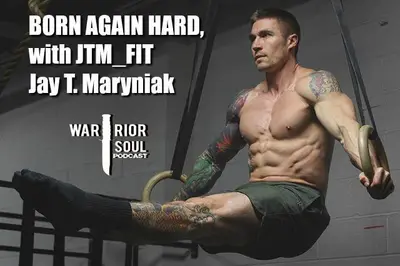
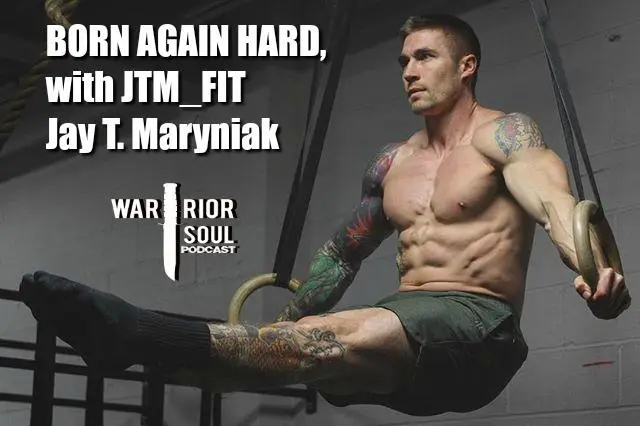
Born Again Hard: An Interview with JTM_Fit|Jay T. Maryniak
Hosted by Chris Albert
The Warrior Soul Podcast
In the world of Instagram fitness, there’s a sea of trainers out there taking selfies, flexing their abs, and performing exercises for the camera.
Then there’s JTM_Fit also known by his real name, Jay T. Maryniak. Amongst fitness pages, his page truly stands out for it’s displays of strength, power, explosiveness, and creativity. Jay’s also out there providing value every day with solid descriptions of his programming.
If that were all that was behind Jay’s story, he would be inspiring enough, but Jay’s also overcome a lot of his own demons to get to where he is today. At a very young age Jay found drugs and alcohol. He entered rehab at age 20 addicted to crack and came out the other side.
After getting sober, Jay began practicing martial arts and competing in Crossfit. While training for a Crossfit competition, Jay became seriously ill, got rushed to the emergency room and found out he had Type 1 diabetes. That didn’t stop him, and he continued training. Eventually Jay moved away from Crossfit and developed his own training methodology called The Functional Method. It involves powerlifting, kettlebells, gymnastics and several other modalities.
In all, Jay is a great guy with a really inspiring story who’s life is a testament to resilience.
To follow Jay on Instagram: @JTM_Fit
To join Jay on The Functional Method click HERE.
This episode was sponsored by:
Transcript
Machine-generated from the episode audio and lightly edited — may contain errors.
Chris Albert (link to this point)
What is going on everybody? Chris Albert here with the Warrior Soul Podcast, and we have an awesome episode for you today. We've got Jay T. Maryniak. Jay is an awesome awesome trainer and awesome athlete.
If you check out his Instagram page, JTM_Fit, it's one of the most inspiring Instagram pages out there. This guy puts together these awesome creative workouts. He's super powerful, super strong, and super explosive. And all of his workouts incorporate all of those things. He uses gymnastics rings, uses kettlebells, barbells, you name it.
He's doing box jumps. And he'll he'll put together these crazy, crazy flows, and and it's really, really cool stuff. But what's more interesting is his backstory. The guy, at a very early age became addicted to drugs and addicted to crack. And, know, by the time he was 20 years old, he ended up having to go into rehab.
He came out the other side okay, and he got into martial arts. And he started kickboxing. He started doing jiu-jitsu, And he even competed in a couple of kickboxing matches. But then he found CrossFit. And he got heavily competitive in the CrossFit world.
And while he was training for one of his CrossFit competitions, he actually started to get very, very sick. And turned out he had type one diabetes. And if you watch his videos today, the guy's got an insulin pump taped to his side. I really enjoyed talking to him. We come from the same area of the country.
He's from Westchester County, New York. I'm from Fairfield County, Connecticut. They're kind of like right next to each other. We even had like really similar upbringings. He grew up with a dad.
I grew up without a dad. Both our moms were nurses. So we spent a lot of time alone as kids. And I know how hard that can be for a lot of people. So for everybody out there, particularly those of you in the veteran community, Jay came on to talk about his life, his obstacles, how he overcame them, and how he's now thriving.
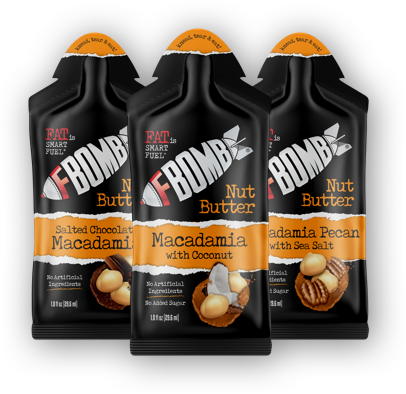
And you're gonna get a lot out of this. Before we move into that conversation, I wanna tell you about F Bomb Nutrition, our awesome sponsors. They make these delicious portable packets of fat, and what they're really known for are their macadamia nut butters. This one's a macadamia nut butter mixed up with coconut butter, and this thing tastes so awesome. I eat a couple of these every day.
They've also got macadamia nut butter mixed up with chocolate and also with sea salt. They also have some other fat packets out there. But for our listeners only, they're giving 20% off of your first order. If you use the code Warrior Soul at checkout at www.dropanfbomb.com. Really awesome company.
They're sending packs of these things, boxes of these things to the troops overseas. And it's been a pleasure for me to help them out with that. But they're so generous with their time, so generous with their product, and they really just want to help the world to eat better, they're all about helping out veterans. So, with that, I'm going to stop talking, and we're going to get into this episode with Jay T. Maryniak, and his name is JTM_Fit on Instagram.
You need to check him out, and I'll talk to you while you hear from me during the show. Let's roll the intro. Come on.
This is Chris Albert, and I'm here to remind you of one thing. Someday, you're going to die. Now that's not some morbid statement or scary idea. It's solid fact. Your time here on this earth is limited.
And we need to be reminded of this as much as possible for one simple reason, to live your best life while you can. This is the Warrior Soul Podcast.
What's going on, Jay? How are doing today?
Jay T. Maryniak (link to this point)
I'm doing well brother. How are you?
Chris Albert (link to this point)
Very good man. Very good. Been hot out here in California. We got up to like one ten, one fifteen last week and then, just outside, did a little bit of a run and I was inspired by you. I did a little bit of a ring workout, and I got myself some, some gymnastics rings after I was watching you on Instagram.
So it's been
Jay T. Maryniak (link to this point)
Nice. Good, man.
Chris Albert (link to this point)
Yeah. Yeah. I've got a bit of a powerlifting background.
So powerlifting and then I got into jiu-jitsu about a year and a half ago. And so, getting into jiu-jitsu was a little bit of a waste. Nice. I mean, just because the mobility and everything like that was off. But dude, you are so inspiring on your Instagram.
And and I have to say this. Was just watching a video of you. I think it was with a primal soldier and somebody else over in the the Onnit gym in Austin. And you were doing these these burpees to Superman push ups to jumping over this girl and then jumping over Primal Soldier. And I was thinking to myself the whole time if I were doing that, people would come out with broken bones and I would accidentally landed on somebody like But where come do up with this stuff?
Where do you come up with your creativity in your training?
Jay T. Maryniak (link to this point)
I don't know. A lot of it is obviously inspired by things that I see. Mean, I don't feel like anything, well, there's very little that I do that's completely original. I mean, I have a few things that probably a lot of, you know, I see people doing different things and, you know, and my mind just immediately grabs on to what I'm seeing. And I'm like, ah, but I could do this, this and this.
I could take it to the next level with this. And, you know, and so, you know, things just, just flow sometimes, you know, and then I have times where I can't think of anything and I have no creativity and it's a struggle.
Chris Albert (link to this point)
So yeah, it's kind of like, especially when when you're in, because I'm in kind of straddling this world between, you know, science and creativity, you know, being in the fitness world, being in in in, the veteran community where you kinda, you have to be humorous first off if you're in the veteran community and you're trying to put things out to the veteran community because we like to joke around, but a lot of times you come up with something awesome. And then for a few weeks after that, you're kinda like, what the heck should I do next? You know? And you kinda got the ghost of the last thing hanging over you. But but with you, man, I mean, like, every day I'm seeing something new out there.
Even if it's a basic thing, it gives value to your audience. And and that's one of the big reasons why I really admire you is because you're not just just going out there to show off. You're teaching through this this awesome new medium that we've been given by technology. And we're so blessed to live in a time and place where that's possible.
Jay T. Maryniak (link to this point)
Yeah, 100%. And that's really what I try to do with my page. Know, there was a time, you know, in my earlier days when it was all about just, you know, showing off and kinda doing the craziest things I could possibly do. And, you know, as I've evolved as a human being and as a trainer, as an athlete, you know, I've gotten to a point where I like to deliver the perfect combo to the people that follow me, right. Where I like to have most of it be, you know, science based, you know, experience, you know, coaching, teaching and informing and providing value to the people that follow me.
Then every now and then, I like to splash in something crazy, you know, like something something crazy that I can do.
Chris Albert (link to this point)
That's awesome, man. And, you know, you have a really, really interesting back story too. And when I say interesting, you know, a lot of people, look at somebody who's successful on Instagram or they look at somebody who's who's kind of at the top of their game, and they don't realize the kind of road that it took to get there. And I just kind of want to get into that backstory a little bit because I think particularly with you, you're somebody who's who's overcome a lot and in some of some of the obstacles you run into were a little bit of your own doing, But you're one of these people who who got yourself into a hole, and then you got yourself out of it. So so let's get into that a little bit.
Where'd you grow up first off?
Jay T. Maryniak (link to this point)
Sure. I grew up an hour north of New York City, so I'm in the suburbs. Yeah, grew up, you know, single mom, you know, I have an older brother and, know, grew up into a family where we didn't have a ton of money. And, you know, my mom was a nurse and she was trying to provide for her two boys and we lived in a wealthy area, right? So that's kind of where she's from as well.
So, you know, we were one of these people who lived in Westchester that didn't have much money and were struggling to kind of get by. Yeah, that's of how it all started.
Chris Albert (link to this point)
Then, yeah, because I come from a very, we were talking before the show and I come from a very similar area, in Fairfield County, Connecticut and I had a situation. I grew up without a mom or without a dad rather. I had my mom. My mom was a nurse as well, working hours. You know how that is, you know, they're working these 12 shifts.
And when you're a kid, you know, was I was by my home by myself at home a lot. I kind of got raised by the guys I hung around with by other teenagers, by people like that. And that's kind of what taught me. Well, I kind of learned a lot of the wrong things along the way. And, I think when you're a kid in that kind of situation, you get a lot of opportunities to learn the wrong things.
And I think, you know, in a lot of cases that that's what happened with you. Right?
Jay T. Maryniak (link to this point)
Yeah, I mean, 100%, that's crazy. We really had a very, very similar Yeah, story, that's insane. So yeah, same thing. My mom worked twelve, sixteen hour shifts and, you know, she obviously did the best that she could. She did a great job, you know, but yeah, there were a lot of times where me and my brother were kind of on our own and kind of having to fend for ourselves.
So yeah, there much easier of an opportunity for me to kind of get in trouble and kind of go down a bad path, you know, and that's just what happened, right? You know, I didn't necessarily like run with the bad crowd because I kind of was the bad crowd. You know, from a very young age, I was just acting out, getting in trouble, being disrespectful to my teachers. And, you know, I was just that kid, you know, from the start. And, you know, at a very early age, I found alcohol, you know, I found drugs and, I gotta say, when I, when I first picked up drugs and alcohol, it was like, it was like a spiritual experience.
You know, it was like for the first time, like, you know, here I was this kid who was just kind of like out of control and like never deal with his emotions. It was always cursing people off and, you know, whatever. And, you know, here I found drugs and alcohol and it like took away all that fear I had inside me. It took away all these insecurities that I had. Yeah, it was it was huge.
It's a huge part of my life, you know, from there from there forward.
Chris Albert (link to this point)
Yeah. It's like the old Pink Floyd song, Comfortably Numb, you know, and and and I Yeah. My friends as well, like, like, again, more and more and more similarities, but like, you know, I've got most of my friends that that I grew up with, they got into drugs heavily and, you know, ranging anywhere, like we started smoking weed at like, you know, 11, 12 years old and then eventually got into some of the harder stuff. You know, and luckily I kind of stayed away from the harder stuff, drinking and getting into these things at a very young age, it kind of takes you away from your reality. And when it hits you, you know, you're in this place where you're experiencing that comfort and you're experiencing the embrace of whatever substance is going into you.
And it kinda takes you away from that horrible reality you're in at the time. How deep down did it go for you?
Jay T. Maryniak (link to this point)
I went pretty deep. So just like you, eleven twelve, you know, that's when it began and, you know, it started off innocent, you know, smoking weed on the weekends, getting drunk on the weekends. From the very start, I was a blackout drinker, you know, from my earliest memory, there was never like an off switch, you know, once I started drinking, it was get as drunk as I possibly could and vomit everywhere. And, you know, that's just, that's just how I was. Right.
And so, yeah, it started as that sort of as like a weekend thing. You know, we'd all meet my buddies, we'd get together and whatever, steal alcohol from our parents or, you know, get alcohol from an older brother or something. And we'd just get hammered. By the time I was 15, you know, it became an everyday thing where I started, you know, we also had access to a lot of hard drugs, like pills and acid and all these different things. I started going to, you know, concerts at a very young age.
I started seeing, you know, bands like the Allman Brothers and, and, the Dead and Phish and all these different groups. And, you know, once you start kind of getting into that lifestyle, the whole, your whole world, far as having access to drugs and different things. And so, yeah, by the time I was 15, I was taking OxyContin on a regular basis. I mean, putting anything and everything on my nose, you know, I mean, ketamine, Coke, I mean, you just, you name it. I was doing it and, started selling drugs at a pretty young age and it got me quick, it got me quick.
And by the time I was 20, I was smoking crack. I was selling drugs. I was living out of my car. I'd reached a place in my life where I was like, how the fuck did I get here? How did this happen?
How did this happen to me? Because there was a time in my life I can actually vividly remember of being like, man, I'll never be a crackhead. You know, I'll never do that. You know, I'll never be a junkie, you know? And there I was 20 years old and I was everything that I didn't want to be.
And I found myself in a place where I just hated myself. There was tons of self loathing, and I was just completely out of control. Was unemployable. I couldn't show up to work anymore, so I was getting high 24/7. The substances that I was doing don't really allow you to sleep very much and you're not really eating a lot of food.
I mean, it was just a pretty bad life, man. And you know, I was really, really fortunate that I hit a bottom so young too. So by the time, you know, I was 20.5, you know, I had finally, you know, I was doing enough bad shit, you know, and hating myself enough and the person that had become that I was finally willing to make a change.
Chris Albert (link to this point)
Yeah. Man, it's crazy because, you know, I'm sure in that type of situation when you're that young, the the the the lifestyle becomes your normal. Right? And what do I mean by that? I mean, like, you probably grew up and and your friends were doing much of the same thing.
And and because they were doing much of the same thing, there's nobody there around you to say, hey, wait a minute. Like, you might think that you're invincible, and you might think that this is never gonna happen to you, but you look like shit right now. And and it's it's not going your way, man. And so, you know, because there's a whole lot here that I wanna get into, but but you still live in the same exact the same area, right, that that you grew up in grew up in?
Jay T. Maryniak (link to this point)
Yeah. Yeah. Still still in the same area.
Chris Albert (link to this point)
And so my quite because, you know, one of the things I I did, I I ended up moving across the country. After I got out of the Marine Corps, you know, I was falling back into some of the same stuff that I was in, before I ever got in the Marine Corps and it was getting worse. And so I ended up moving across the country. You've gotta be a very, very strong person to still be in that area and to to to be in a place where you're able to rise above and overcome a lot of that stuff? Because I know a lot of relationships probably had to sever and you probably had to move on from from, you know, a lot of the the friendships that you had.
Jay T. Maryniak (link to this point)
Yeah. I mean, that was one of the toughest things. Like when I, I know we haven't like fully tapped into the, to me getting sober, but, you know, when I, when I finally did, so I was 20.5 when I finally had enough and got into a rehab and came out, you know, that was the toughest thing was, you know, in rehab, they were like, you know, your friends aren't your friends and you gotta change everything in your life, you know, people, places, and things, you know, all these different cliche slogans that get thrown out at you when you're in a rehab facility. And it was hard to swallow. I was like, nah, you don't know what you're talking about.
These guys are my friends. And I truly believe that. And I'm sure, you know, at the end of the day, some of them were, you know, but a lot of them weren't. So, yeah, when I got out, here I am, you know, not even 21 years old yet. And you're telling me I can't hang out with my friends anymore and I got to change my whole life and I got to go to a 12 step program and I got to do all these things.
It very difficult and I struggled with it for the first year of my sobriety. I lived a double sided life where I was going to a 12 step program and I was, you know, I wanted to be sober. And I was also incapable of leaving behind my old friends. I was incapable of just saying, yeah, see you guys later. You know, so I was still hanging out with old friends, putting myself in really bad situations.
I'm very fortunate that I did not get high or drink during that time. And yeah, I mean, it took me, it took some time to really reach a place of acceptance of, okay, in order for me to live productive, sober life, I have to walk away from that old life. And that took me about a year, year and a half to finally have that acceptance within to start to walk away. And let me tell you, like once I did, I feel like my life truly began, if that makes any sense.
Chris Albert (link to this point)
No, it definitely does. One one quote because I definitely wanna get to that moment. But but one question I have is when you were were deep into this, were you were you still athletic? Were you still, you know, doing sports and things like that? Or or was it kind of like, did you let that go while you were deep into this?
Jay T. Maryniak (link to this point)
Yeah, so I let that go around thirteen. So I was a pretty good baseball player growing up and I was known, you know, I was known as a good athlete. And by the time I reached high school, I remember that I tried out for varsity baseball and I thought I was hot shit. You know, I thought I was really good and I should have made it and I didn't make it. And I remember in my head being like, you know what, F F all of you.
And I feel like that was actually like one of the turning points of my life where, I mean, I was still getting high at that point, but I wasn't doing it. It wasn't like consuming my entire life. And once I really quit all sports, I feel like there was no more structure. There was no more like positive positivity in my life. And that's when I really went down the rabbit hole, so to speak.
Yeah, so when I got sober during that time, I had not donated for a long time. You know, I was like one hundred and forty, I think around one hundred and forty pounds. I was smoking a pack and a half cigarettes a day. I mean, I was just not a not a healthy guy in any way.
Chris Albert (link to this point)
Man. And so when you when you finally when you finally got out of it and you finally came out of it, what was your first step? Like how did you get back into kind of reorganizing your life and figuring out what path you wanted to go down?
Jay T. Maryniak (link to this point)
Well, one of first things I did was I got into martial arts. You know, I can't remember it was, it was a long time ago. I can't remember exactly like what my thought process was, but, you know, from what I do remember, was like, I needed to get into something, you know, I needed to do something to fill my time. That was one of the things they suggested a rehab. So that, yeah, that was one the first things I did got into martial arts, started taking karate.
You know, I was like, yeah, this, this, this will be good. You know, I always liked, you know, I was always a little bit of a fighter and I liked fighting and stuff like that. So I was like, yeah, let me do this. You know, so I did that for a little while. And I remember I joined Planet Fitness at the time as well.
So I was, you know, doing the $9.99 a month and, you know, going to the globo gym and working out on machines, not knowing what the hell I was doing. Cause I had no workout experience. So like I had played sports as a kid, but I had no, I had no lifting experience, nothing. I didn't know anything, you know, like I was still the guy who smoked a cigarette before I went in the gym, smoked a cigarette when I got out. So, you know, but that was the beginning.
I had enough willingness to change my life that I was willing to just do those two things. And, yeah, and that's, that's where it all began.
Chris Albert (link to this point)
So you went, you got into martial arts and so you went into karate and was there a notion in your head that you would be competing in these things or was it just to get into something else?
Jay T. Maryniak (link to this point)
No, yeah, there was no competition really. Didn't think anything of it. Pretty quickly while I was doing it, so there were a lot of younger kids in karate and we would do sparring and I was getting beat on by like 15 year old kids because karate is point sparring. You can't really punch anyone in the face. And I remember getting beaten, I was being like, this is ridiculous.
Like, I need to just punch someone in the face, man. So at that time I was a fan of the UFC and MMA. And I was like, I wanna do MMA. I wanna do jiu-jitsu and Muay Thai kickboxing. So I started doing that.
So I left karate behind, got into, Gracie Jiu-Jitsu actually, and did some Muay Thai kickboxing and started doing that and pretty quickly gravitated to that. And that kind of became my passion and you know, did some some jiu-jitsu competitions. I did I did two, amateur Muay Thai fights, which was really cool experience. Yeah. So that was that was awesome.
Chris Albert (link to this point)
Yeah. I think, you know, just from my own jiu-jitsu experience, like getting into it at, you know, 39 years old and, you know, after many years of of power lifting and and doing like muscle based workouts and things like that, I almost wish that I did it before I knew anything about, you know, strength training or anything like that because, you know, my first day at jiu-jitsu, I walked in like I could, I could dead lift 600 pounds. I thought I was, I thought I was the man. And I got broken in half by a guy who was one hundred and thirty pounds.
Jay T. Maryniak (link to this point)
Like, that's all good.
Chris Albert (link to this point)
Like, And and, I think it would have been been awesome to learn the technique before, you know, trying to rely on physical strength or anything like that because that's that's been the weapon used against me so much, you know?
Jay T. Maryniak (link to this point)
Yeah. No. That's just awesome about jiu-jitsu. It's such a humbling experience. You know?
I remember when I first started too, I was I was always a relatively strong kid. You know, I thought I could just, you know, anyone that starts with Jiu-Jitsu, you know, of course you're just gonna rely on brute strength. You don't know technique, you know, and what else are you gonna do? But yeah, it's so humbling to just get your ass whooped by someone who's so much smaller than you. Yeah, you know, you stick around long enough, then you then you get to kinda, you know, then you see a new person come in and they think they're they're tough and you get to kind of humble them a little bit too, you know?
Chris Albert (link to this point)
Yep, absolutely. And during this time, while you're getting into martial arts, how were things going in your life? They going better? Like, you choosing new career paths? What was life looking like for you?
Jay T. Maryniak (link to this point)
Yeah, life was getting a lot better, you know? So I was still living with my mom at the time. So I wasn't fully out of my own yet, but, you know, I've been sober a couple of years and, you know, starting to feel better, starting to gain some confidence. You know, one of the things I struggled with, you know, before getting sober and into my sobriety is, know, self confidence and self esteem. I've always had just really low self esteem, low confidence, and always doubted myself.
So, you know, being newly sober, you and you take away the drugs and the alcohol, I was completely raw. You know, I was like a new person and I didn't know how to deal with all the things that I felt. Know, for so long I used drugs and alcohol as such an escape from how I was feeling. So it was intense. It was intense for the first couple of years of just kind of learning who I was as a person and kind of working through the insecurity and the fear and all these different things.
So at that time, you know, around three, four years sober, you know, I was starting to get better. I was trying to make some improvements in my life. At that time I was in the martial arts. I actually, got into CrossFit. I became a personal trainer as well.
So I became a certified personal trainer and that's where I started to begin my fitness actual career. Getting to training people, I started teaching, Muay Thai classes and teaching big group classes. So, yeah, think things were going well. You know, things were going pretty well at the time.
Chris Albert (link to this point)
And so as you're getting into CrossFit, because, you know, CrossFit, I mean, probably even like seven, eight years ago, maybe like even up to five, six years ago, was kinda like this new and novel thing. Right? Because we had the globo gyms for so long and we had, you know, Planet Fitness and and I think around your area right now, they got the Edges. Do they have the Edge where you're at?
Jay T. Maryniak (link to this point)
It's not. I think that's more of a Connecticut thing.
Chris Albert (link to this point)
Okay. Yeah. Yeah. Yeah. I think they have some in up in Westchester County, but, like, they're starting, like, working some Olympic lifting and kettlebells and things like that into those gyms.
But like, you know, up until that period of time, we didn't have much else. Right? There was just like, you know, globo gym, lots of machines, one squat rack, and then a sea of cardio equipment and stuff in most gyms. What was it like getting into CrossFit and what did you get out of it?
Jay T. Maryniak (link to this point)
Yeah, no, it was awesome. So at the time, you know, I was training for for some of my amateur Muay Thai fights. Someone was like, hey, you gotta you gotta try CrossFit. It's gonna take your conditioning to the next level. And I was like, yeah, absolutely.
Like, I wanna do the best I possibly could in my fight. So that's how I initially got into it. And, yeah, you know, to CrossFit gym for my first actual CrossFit workout and just got my freaking ass kicked big time. I felt that time, you know, it was, I liked it because it was so competitive. I did the Muay Thai and the jiu-jitsu, don't get me wrong, I liked it, but I realized after doing some of the competitions and my fights that I wasn't a fighter, man.
Like I didn't like, not so much in the physical sense, you know, I just didn't, you know, I would get super anxious before fights and, you know, which I know a lot of people do, but like for me, for whatever reason, it was just something I wasn't, I didn't want to keep going through, you know? So I was like, kind of starting to give up on the competitive aspect of martial arts. So when I found CrossFit, I felt like it was a perfect transition to still keep that competitive edge and still keep that fire going of heavier and go faster and beat my times and that kind of thing.
Chris Albert (link to this point)
That's interesting because I think, you know, given like given the situation you were in with your sobriety and dealing with addiction, you know, in some ways you might have been more open to understanding that as an obstacle for yourself, the anxiety issue. And I think a lot of people don't understand that and people who don't understand that as an obstacle, could tend to fall, put them into themselves into a situation where they might be more likely to fall into relapse, if they let it go too far. And so in some ways you might have caught yourself there and you might have said, you know what, this isn't putting me into the best mindset right now, I need to move on to something else.
Jay T. Maryniak (link to this point)
Yeah, no, 100%. Definitely, yeah, definitely could just kind of feel it like, yeah, this just isn't for me, you know. And, you know, there was pressure a little bit too. You know, I was kind of looked at as one of the better guys in the dojo and whatnot. And everyone just kind of thought that like, should be great.
I feel at it, you know? And so I guess there was a little bit of peer pressure with it, but yeah, at the end of the day, just isn't for me. And yeah, absolutely right, man. If you're not taking care of or addressing fear and anxiety and all these things, and you let them just build and build and build, yeah, you're definitely way more likely to pick up a drink or a drug again. So yeah, definitely I'm glad that I transitioned to something a little bit healthier for me.
Chris Albert (link to this point)
Now, there's another part of it. We've already covered a whole lot about you, but there's another aspect to this story and that has to do with, type one diabetes. And, a lot of people will follow you, will notice that there's a patch you wear sometimes on your side and that is an insulin pump and that you are type one diabetic. When that happened, what were you going through? Where were you at?
And how did you realize you had it?
Jay T. Maryniak (link to this point)
So I was training for a CrossFit competition. It was a small in house competition. So all the members of the gym that I was a member of, just, you know, in a small little competition. I was training for that, and I had done fairly well in a couple of competitions leading up to it. Just just small stuff, nothing nothing on a big level.
And I kind of knew, was like, you know what, man? I can definitely win something. I can definitely do better. And so I set out onto this particular one while I was training for it, like, I got to win this. And so I went into the competition.
You know, I did really well. I won the competition. And after the competition, I just was not feeling right at all. And I could not put my finger on it. I really laid it all out on the table for the competition.
So I thought, you know, I'm probably just beat up, you know, I just did like six workouts in like the course of six hours. And, you know, so I just, you know, I was like, all right, yeah, I'm probably fine. This will probably just go away. And, you know, fast forward about two weeks, you know, I lost about 15 pounds. My vision was gone.
Couldn't sleep at night because I was urinating so frequently and started becoming disoriented. And finally 03/11/2013, I drove myself to the emergency room and, you know, they took my blood sugar and my blood sugar was so high that they couldn't even read it on a meter. So it was over a thousand and boom, right then and there my whole life changed. They diagnosed me with type one diabetes and I remember sitting in the hospital bed. So this is before my family got there and my vision was so messed up at the time.
Couldn't make things that were like even like six feet in front of me. And I remember just sitting there crying and just being like, holy shit, you know, like what? I didn't really know what type one was. I knew it was serious and that was it. And I was just scared as hell.
Man, was hard to process at first. It was also just such a shocker too, you know, like how does this happen to me? Like, how did this just happen all of a sudden? So yeah, it was, it was crazy.
Chris Albert (link to this point)
Did you, did, I mean, did it come from a failure in the pancreas or anything like that? Or did they know where it came from? Or was there something chronically going on? What was it the result of?
Jay T. Maryniak (link to this point)
Well, they actually don't, I don't think they really know that about type one. They don't really know exactly why people get type one. What they do know is that tends to be genetic. So I one cousin who has it and then I have some distant cousins who have it. And generally it's caused by a virus or some kind of traumatic physiological event.
So sometimes people will go into a full blown diabetic state after getting rid of a cold or something like that. And for me, it was competition. It was so strenuous to my body that it just sent me into a full diabetic state. Although they said that I had diabetes for about a year before I was diagnosed. So for a year, I wasn't feeling right.
And it's funny, I look back at it and I remember a lot of times, like, my vision getting really blurry and weird. And I just thought, I don't know, I had allergies or something like that, you know?
Chris Albert (link to this point)
Wow. Wow. Yeah. I think, and and you think back on that and you realize that, you know, had you not been training CrossFit and had you not been probably looking after your diet, and had you eaten the wrong thing or done the wrong thing at that time, you could potentially not be sitting here today. That's insane.
Jay T. Maryniak (link to this point)
Yeah, that's funny. One of the things a doctor So when I finally got brought into ICU, one of the doctors came in and he's like, read the backstory on it and he's like, dude, how the hell did you compete in a CrossFit competition this sick? And I was like, I don't know, man. I wanted to win really bad. You know, sometimes it's all it takes. Right. You know, if the mind is determined enough, we could fight through a lot.
Chris Albert (link to this point)
And after you started getting treatment for that and started getting insulin, you know, what'd you feel like afterwards? Did it improve your performance? Did it improve everything in your life? Was there a period of sickness after that?
Jay T. Maryniak (link to this point)
So I stayed in the hospital for a few days. My vision did not return to normal for about two weeks. So it's interesting, like when you come out of the hospital after being diagnosed with type one, you know, you feel like a new person, you know, because you don't know, you don't know what a low blood sugar feels like. You don't know what a high blood sugar feels like. You just don't really know.
I felt like I didn't know anything about myself anymore in a way, you know, physically, you know, I was like, there was like this whole new world that I had to learn. And, you know, so I did, so I didn't work out for a little while after being diagnosed, getting out of the hospital, but then, yeah, when I, once I got back into it and feel comfortable, yes. You know, I started feeling good again and, you know, all my PRs, like at that time I was doing a lot of heavy lifting back squats and deads and all that stuff. And yeah, my numbers started going up and I just felt, I felt fantastic. And I started to finally put on some muscle again.
So put back on all the weight. Yeah, I noticed a very, really quick improvement. So, you know, I always wonder like how, how, how long I was, I was that sick for, you know?
Chris Albert (link to this point)
Wow. And with, so you come through this. You get through everything that you were doing with the drug abuse. You get through to sobriety.
You come around. You fall into type one diabetes. Was there anything in your head? Because I kind of like to get into psychology here. Was there anything in your head saying, like, I deserve this right now?
Or or was there any negative self talk going on in your head at the time? And and how did you defeat that?
Jay T. Maryniak (link to this point)
No, so with the diabetes, there definitely wasn't any negative. There was a little bit of, you know, why is this happening to me, man? You know what I mean? It was almost like the other way around. Was like, well, you know, like, you know, I got through all the drug addiction and all that stuff, you know, why is this happening now?
And so there was a little bit of that, but I got to say that I have a lot of really good support in my life, family, friends, particularly my mom has just been such a pillar in my life. And when I was actually in the hospital, I always remember this really shortly after I was diagnosed, she looked at me and she's like, listen, you're probably not going hear this right now, but you are the best person to have this disease. And she was so right. Here I was, I was 28 years old. I was healthy for the most part.
Right. I knew how to eat healthy. I was in great shape. All these different things. The transition for me being a type one as opposed to, let's say maybe someone who was five years old, right?
Or someone that wasn't in good shape, all these different things. It was so much easier for me and to not only transition into it, but to maintain a healthy lifestyle, was like, I was already doing that. So I always remember that. And it was so important for me to have that perspective when I first got diagnosed. And so, of course I had times in my earlier years of being diagnosed that I was like, this, this effing sucks like this, you know, being pissed, man, just real pissed at times, you know, not, it wasn't all the time, just, you know, when you have a really, really low blood sugar and you feel like crap, know, it's times like that.
But again, the perspective has just always been there for me because I have these people in my life that just always just illuminate the positive.
Chris Albert (link to this point)
That's awesome, man. And and, yeah, I think that's, that's so important. You know, in your story, we see the impact of being around the wrong people and then the impact of being, of choosing to be around the right people and putting good people into your life. That's that's absolutely amazing. And it's amazing what it can do to change your life and change your perspective and and to put you into a completely different place.
Let me ask you this because, you know, you're somebody who trains very hard and you also train smart and we'll get into that in a second. But having type one diabetes, what does your nutrition look like? Like, how do you set up your meals on a day to day basis and what types of things do you put into consideration to ensure that your blood sugar is going to be optimal so you can train and so that you can get through your day?
Jay T. Maryniak (link to this point)
Yes. One of the most important things is low glycemic carbs. So for instance, I'll give you just a quick rundown through the day, you know, I'd off and I pretty much eat the same thing every day. I'm such a creature of habit, in general, but also it's good to have that habitual, food process just to maintain blood sugar is better anyways. But, so I'll have a whole wheat English muffin, you know, an avocado, have a couple of eggs, maybe a banana, that kind of thing.
You know, lunch will generally be, you know, salad with some, some kind of proteins, some meat, you'll have some quinoa usually. So again, keeping it low glycemic carb and then dinner is usually, you know, salmon, maybe another quinoa, you know, obviously some veggies and stuff like that. So that's really just like a basic kind of sample of my meals throughout the day. The most important thing for me as a diabetic is generally the timing. So I need to be, I generally need to, if I'm in a new place, let's say I go traveling and, I'm meeting different foods and I'm eating at different times.
Like my blood sugars tend to get, tend to get crazy and out of whack, you know, so I'm sure you've probably heard, you know, diabetics, it's, it's good to have a routine and that kind of thing. And it really is. It's, it's really important. So, I mean, that's another thing that forces me to be more dialed in. And so in a lot of ways, it's, it's a, it's a good thing.
Chris Albert (link to this point)
Yeah. And and I think, you know, because a lot of our audience, like, they'll they'll they'll be like, okay. Well, why isn't he going super low carb or anything like that? And and the thing is, I think a lot of people have to realize you're one year on insulin. So that's, you really do have to keep a steady blood sugar if you're on insulin.
But two, in addition to that, the training and everything like that, I think it's going to be really important for you to maintain some some steady blood sugar rather than, than, than completely depleting it. Right?
Jay T. Maryniak (link to this point)
Yeah. Yeah. So obviously around training, you know, that's where things can get tricky as well. So, that's why it's also, it's important to at the same times every day as well, because, it gets kind of complex. So generally when I train, I don't have any extra insulin in my body.
So right now, the way my is set up is that I have a twenty four hour drip. So insulin drips into my body every hour automatically. And then there's, what's called a bolus, which is the insulin that I give for the actual food that I'm eating to cover those carbohydrates that are going into my body. So if I work out in a fasted state, so I've actually been testing this a lot lately just to kind of play around and, you know, just kind of see how my body reacts. And I've been testing with the fasting state and my blood sugars spike a lot when I work out in a fasting state, no food and kind of no fuel in my body as opposed to.
So usually I eat breakfast and I'll work out maybe two to three hours after that. So generally insulin will stay in the body for up to four hours, maybe a little bit longer. And so when I have that extra insulin in my body, then, then my blood sugars tend to tend to crash a lot. So sometimes it's tough to find the right balance. These general need to carb up before I actually work out, which is a good thing.
Right. A little extra fuel. Generally have to get my blood sugars above a certain level before I even work out.
Chris Albert (link to this point)
And is there is there a particular type of carb that you like to carb up with? Is there is there like a maybe like an intra workout drink or is there something some specific thing that you like to do or is it I know you can't do the really high glycemic carbs, but is it just like a banana? Is a piece of fruit?
Jay T. Maryniak (link to this point)
Sometimes high glycemic things can be a good thing, just to get my sugar up kind of quickly because there are times where it's just dropping so fast that, so yeah, sometimes I'll have a little, you know, Coke, water, banana, get the sugars up a bit and, yeah, take it from there. Cool.
Chris Albert (link to this point)
Now, one of the things about your training, because you said you were heavily into CrossFit and like some people who, I guess, who don't quite understand CrossFit versus like functional training, they'll look at your Instagram and will be like, that guy's a CrossFitter, but you're not really a CrossFitter anymore. You're you're more of like this kind of awesome hybrid thing that you've created. And I wanted to ask you because, you know, you kind of combine gymnastics, you combine calisthenics, you combine power lifting, all these types of different things. How did you come up with the paradigm, if you can call it a paradigm that you're currently following?
Jay T. Maryniak (link to this point)
Yeah, so doing CrossFit for a few years, I was just, I was beat up, which I'm sure most of us that have done CrossFit know what that feels like. And yeah, I got to a point where it was just too much volume. My body also didn't do well with Olympic lifts. I would always get hurt doing Olympic lifts. I was always tweaking something.
It was just it was just too much and, you know, nothing nothing against CrossFit because I actually like the sport and I really enjoy watching these elite guys go go after it. I think it's freaking awesome. But it just wasn't for me. It was just too much. So with that being said, I started just transitioning to I started taking out the Olympic lifts a bit and I was still lifting heavy, but then I was also like, I really enjoyed bodybuilding as well.
So I started incorporating just like your classic traditional bodybuilding movements. Then, of course, I love kettlebells and I love gymnastics, you know, so I just love doing everything. So I just kept playing around with all different facets of fitness and just kind of getting away from, you know, do a thousand reps as fast as you can, you know, and trying to focus more and more control and that kind of thing. And obviously, you know, as time has gone on, I brought in, you know, more mobility and prehab stuff to keep myself in the game. Because when hit 30, I'm 33 now, when I hit 30 years old, my body just wasn't quite the same.
And I know I'm still young that kind of thing, but that's when you really start to kind of really feel it. Feel it. And I remember I even had a conversation with a buddy of mine and being like, Hey man, like when did you start to feel your body just like kind of slowing down a little bit? And he was like, Yeah, probably about thirty, thirty one. So yeah, it started happening to me.
And then it became more of an urgency for me to start training in a more intelligent way. I was like, Man, I'm sick of feeling like shit all the time, because I have this ego where I got to compete at the same level as these beastly CrossFitters and this kind of thing. And so there was a big process of letting the ego go and deflating the ego and just doing what works well for my particular body and my physique. And over the past few years, I've been able to do that really well. Yeah, I've continued to make awesome gains and yet, I'm still doing everything I love to do, which has been awesome.
Chris Albert (link to this point)
Yeah, that's, you know, what you're saying in there. I completely identify with I mean, I'm, I'm 39 now, I'm gonna I'm gonna be 40 pretty soon. And, know, you five, six years ago, was one of the guys who founded Metroflex Gym in Long Beach. And so we had guys, Keith Fletcher in there, Mike Rashid, all those guys. And, you know, I remember doing leg workouts, and coming out of leg workout, you know, you're spotting 400 pounds for reps and then you go to the leg press and you're doing, you know, 500 reps on the leg press.
And I remember going through my day and not being able to complete a sentence like properly for a couple hours after that or not being able to really like formulate a thought and just being tired and like being broken down and feeling like really low energy. And I kept going with it for a few years, but a few but after a while I was like, how much longer am I gonna put my body at risk so I can impress, you know, somebody with my 500 pound squat on on Instagram? You know what I mean? It's not gonna go on forever. And so that's when I started like like really looking for things.
And that's how I eventually found you was because, you know, what you're doing, it's it seems not only like challenging, but it also seems sustainable. And it seems like it's put together in such a smart way. And and, you know, you're really not only training your body, you're also training your mind. You're incorporating like neuroplasticity. So you're allowing your brain cells to get smarter and and all these awesome things.
And and, you know, how do you set up your weekly programming, as you're going through this? Like, you do push pull? Is it mostly total body?
Jay T. Maryniak (link to this point)
Yeah. So, man, yeah. And then that was exactly what's happening to me too. It was like, yeah, like I don't need to do these five fifty pound deadlifts anymore. And then fucking a back flip and all this other shit.
I was like, this is just getting silly. It cool to do it and know that I can do that kind of stuff. But yeah, I was getting silly and just like you, was like, man, I gotta just take it back a notch. And so, yeah, that's when I started to kind of develop the functional method. And so the way I structured the functional method is I interchange it a little bit, but generally the structure is the same.
So I'll have one day that's, so for instance, like the first functional method that came out with, Mondays would be a full body day. And then Mondays would be, you could bring in any implement you'd like, you know, it could be some barbell work, it could be some kettlebell work, dumbbell work, body weight work. You know, I generally like to structure a full body day with a push pull, hip hinge, squat lunge and a core movement. So I like to just kind of have that structure and then just like flow and play with that. It could be any kind of movement, keeping that structure.
So that'd be a Monday, a full body day. And then a Tuesday would be a push pull. And then that's where I would kind of incorporate more of some traditional bodybuilding movements, generally hypertrophy based, you know, and then some explosive pushups and pulls and stuff like that. Wednesday would be ability day, so that's where we do our active recovery and kind of prepare ourselves for Thursday and Friday. And then Thursday would be a complex day.
So it would be either a kettlebell complex or a dumbbell complex. And that'd be a more intense kind of cardio metabolic strength training session, full body, and then Friday would be a leg day. So again, back to incorporating some of my style, you know, so there'd be some explosive leg movements, jumps, and then some bodybuilding hypertrophy work as well. And then, you know, Saturday would be another active recovery day. That structure, so again, I play with that structure a little bit and sometimes a leg day and a Monday, you know, things like that.
But I've found that, so I've been training that way for a few years now. And it's just like what you're talking about, right? Finding something that is going to be conducive to longevity and prosperity physiologically and neurologically was so important to me. And this structure just worked. I'm able to perform at a high level still.
I don't, of course I have times where I'm sore as shit. Know what I mean? Of course, you know, I'm not just like, you know, I'm not 60 years old yet. I mean, I'm still gonna, I'm still gonna push it hard. Not say you can't when you see.
Chris Albert (link to this point)
Yeah.
Jay T. Maryniak (link to this point)
Yeah. You know, but, I still want to, I still like to push it hard. Just like to lift. But, but yeah, man, that structure just, I just felt like I kind of had arrived and I found the thing. And then that's when, you know, so before that I didn't have any name to it.
It was just like, this is how I want to train. And then that's when I started to think, okay, yeah, I can really turn this into, into a program and really turning into almost like a training system. And then, so that's what I've, that's what I've been starting to do.
Chris Albert (link to this point)
That's awesome. And you have the functional method online, right? Is it as an online?
Jay T. Maryniak (link to this point)
Yep.
Chris Albert (link to this point)
And I want to mention that that we're going to put this up in the show notes, but that's going to be at thefunctionalmethod.com.
And, I believe you have the whole program. So when you sign up for that program, is this laid out in a week by week format? Is it something that gets updated weekly? How does that go?
Jay T. Maryniak (link to this point)
So when you sign up, you, obviously get a member login. And when you log into your account, you have the full eight weeks available right when you purchase. And so the way it's broken down, each week is broken down, you have video demonstrations of every movements you know, and that kind of thing. So everything is there for you and you have, you know, a lifetime access to the program. You know, I know a lot of programs will kind of, it'll be an eight week program and you only have eight weeks to do it, you know, which is, which is cool.
You know, you can see the value in that for sure. But I wanted to deliver something because a lot of people, you know, travel for work, you know, can't be a 100% consistent. So I felt like this was a better way to kinda deliver the content to everybody.
Chris Albert (link to this point)
Yeah. And I wanna see this too because a lot of our our viewers are active duty Marines, active duty soldiers, who who are looking to to just add something to their training and potential unit leaders and things like that who are looking to maybe look to try and incorporate some group training and things like that for their units. So, you know, when I believe, you know, there's not a whole heck of a lot of equipment besides the barbell, some gymnastics rings and some kettlebells and things like that that need to be used, right?
Jay T. Maryniak (link to this point)
Yeah, mean, it does look like kind of a lengthy equipment list, but yeah, you know, you need access to a barbell, squat rack, you know, some dumbbells, some kettlebells, gymnastics rings, you know, a couple other little things, you know, like some mini bands.
Chris Albert (link to this point)
Awesome.
Jay T. Maryniak (link to this point)
And stuff like, there are a few things you can get away with not having and still get a lot out of the program, but, yeah, kind of your basic stuff.
Chris Albert (link to this point)
And then you have an advanced version up there too for people who kind of have an advanced skill set, right?
Jay T. Maryniak (link to this point)
No, the functional method is actually, it's more of an intermediate to advanced level. So I like to kind of, I someone to have, I like someone to have like two years gym experience, before getting into the program because the program doesn't lay out, like specific, like coaching cues and stuff like that. We're not quite there yet with the video technology, on my site yet, but, so yeah, I like, I like someone to have some experience and kind of know what they're doing, before getting into the program.
Chris Albert (link to this point)
Yeah. So know how to squat, know how to deadlift, to do this.
Jay T. Maryniak (link to this point)
Yeah, exactly.
Chris Albert (link to this point)
Awesome. Well, we're gonna get wrapped up here in a second.
I just got a couple more questions for you. So looking back on on your life from from this point all the way back to to your days before you got sober, if you could go back and and aside from all the the sobriety stuff, but if you can go back and you could tie and I'm stealing this this question from my friend Brian Rose from London Real. He's gonna get mad at me, but if you go back to your 20 year old self, what piece of advice would you give
Jay T. Maryniak (link to this point)
It's tough question, man. I feel like I kind of tie it into the idea that I would never have changed anything. Right. So like I looked back and like, obviously I made a lot of mistakes and I went down a really bad path. But ultimately all that stuff just prepared me to be the person that I am today.
You know, like all of that, for lack of a better term, like failure, just like brought about all this success. And it's like, I had to experience every single piece of pain and torment that I put myself through to be the guy I am today. So I don't know, in some way, like the first thing that came to my mind was like, dude, this is me talking to my old self. Like, dude, just hang in there, man. Just keep doing what you're doing.
Just fucking keep hanging in there. And this this will pass, you know, that that kind of thing. That's just the first thing that came to mind.
Chris Albert (link to this point)
I appreciate that because, you know, like I said, a lot of a lot of guys are active duty military listed this, but a lot of guys who, who served and who are in the veteran community are also listening to this. So, Awesome. You know, hearing, hearing about your story, a lot of guys out there who, who might be in a really bad place, who, who might be dealing with, with their demons and might be dealing with a bad roll of the dice. It really does help to hear that someone like you was able to overcome what you did and, and to lean on your feet and to create something that is helping and that is inspiring people from around the world. So I want to acknowledge you for that.
And I want to thank you for bringing your message here to the Warrior Soul podcast.
Jay T. Maryniak (link to this point)
Thanks so much, honestly. It's amazing what the power of fitness has, you know, what it's able to do. Of course, you know, sobriety is essential for me and for all my success, but also fitness man and just truly gave me something to grab onto and stay motivated and to build confidence, and build esteem. And yeah, man, to watch it evolve over the years and see what it can turn into as far as a business, whether it be being a personal trainer or starting an online thing. Like there's just so much positivity involved and centered around fitness, man, that, you know, anyone out there that's listening, you know, maybe struggling, man, it's just, you know, grab onto something, and just go with it and, put your head down and just put in the work, you know?
And that's what I've done for the past twelve and a half years. I've just had really tough times and sobriety and whatever in life. And I've just always put my head down and continue trudging forward, you know? And then today, you know, I live a beautiful life, man. But it took, took a while to get here, you know?
Chris Albert (link to this point)
That's awesome. That's awesome. And to everybody out there, it is possible for you, you know, like he said, keep your head down, keep pushing forward. And remember that, you know, as hard as life is, we're only here for a little bit. So do what you can to get everything out of it.
And I wanna thank all of you for listening to this episode today with Jay. And, we'll get all of Jay's links up on the show notes. If you want to catch up with Jay on social media, it's, JTM Fitness on Instagram. Is it JTM fit or JTM fitness? I can't remember right off the top of my head.
Jay T. Maryniak (link to this point)
It's JTM_Fit.
Chris Albert (link to this point)
JTM_Fit. And Yeah. Seriously is, I think, the best fitness, Instagram page on on social media. You'll learn so much.
Jay T. Maryniak (link to this point)
Yeah.
Chris Albert (link to this point)
Thank you. And and, really, really awesome stuff. So ladies and gentlemen, get out there, learn this stuff, and live your best lives while you can.
Host of the Warrior Soul Podcast and founder of Warrior Soul. Worldwide trainer and nutrition coach, contributing author at Testosterone Nation and Muscle and Strength.