Podcast episode
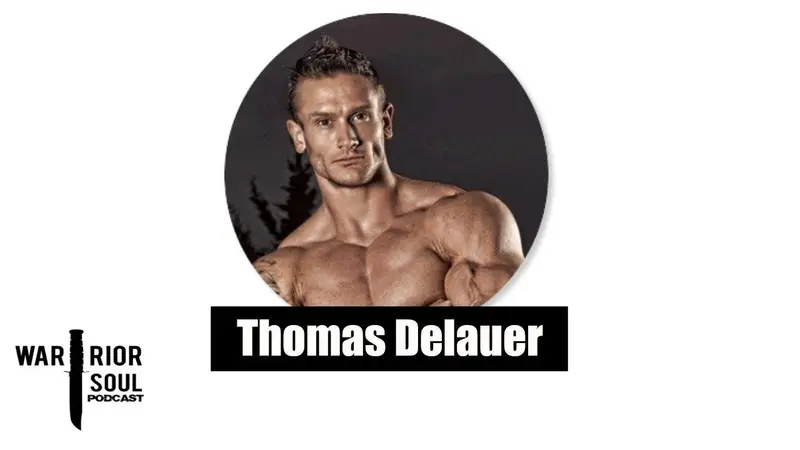
Thomas Delauer: How Veterans and Active Military Members Can Stop Inflammation and Fight Disease
Hosted by Chris Albert
The Warrior Soul Podcast
Thomas Delauer on How Veterans and Active Military Service Members Can Fight Inflammation Through Fasting and Nutrition:
Thomas Delauer is a fitness model and entrepreneur. He’s also one of the smartest people in the fitness industry when it comes to fighting inflammation through proper nutrition. Inflammation causes or exacerbates a number of issues that are prevalent in the veteran community including heart disease, diabetes, and even PTS and TBI. Thomas came on the podcast this week to talk about some easy and inexpensive ways that veterans can become healthier with some very simple nutrition tweaks.
To connect with Thomas:
YouTube: https://www.youtube.com/user/TheTdelauer
Instagram: https://www.instagram.com/thomasdelauer/
Facebook: https://www.facebook.com/thomas.delauer/?ref=br_rs
Website: http://www.thomasdelauer.com
Transcript
Machine-generated from the episode audio and lightly edited — may contain errors.
Chris Albert (link to this point)
What is going on Warrior Soul Nation? This is Chris Albert, and welcome to another episode of the Warrior Soul podcast. Today, we've got a really special guest, Thomas Delauer. Thomas is one of the top fitness models in the fitness industry. He's been on the cover cover of numerous magazines.
I think that's ranging in the hundreds. He's also got a really popular YouTube channel. Now this guy is not just one of these guys who's jacked and tan and and has a good set of abs and and looks good. He's really, really knowledgeable. In fact, he's probably one of the top experts out there on inflammation.
And if you go on his YouTube channel, it's absolutely packed with value. There's so much great stuff on there that he gives out to his subscribers every single week, and you can learn a lot just by listening to this guy. But the reason why we brought Thomas on was to talk about ways that veterans and active duty military service members can reduce their own levels of inflammation. I can't talk today, guys. He he came on basically to help you guys deal with chronic inflammation.
And if you're not aware, chronic inflammation is one of those things that is kind of at the root cause of a lot of the issues that veterans are facing today, ranging from post traumatic stress to traumatic brain injury, all the way up to diabetes. And a lot of people don't know this, but one in four veterans admitted to the VA system currently has diabetes. So what he's gonna go into today are some really low cost methods and some really practical tips for you guys to begin to be able to reduce your inflammation while you're on active duty and when you get out into the civilian world and you're beginning your civilian lives. Really quick note from our sponsors, F Bomb Nutrition. I got to go out and visit F Bomb about a week ago out there in Flagstaff, Arizona.
Really great people who absolutely want to help veterans. Now what do they do? They create these awesome individual packets of fat. Now they've got their fuel packets, not their fuel packets, their fat packets. Their fat packets are packed with things like olive oil, coconut oil, MCT oil, really quick, great sources of fuel that you can use.
But I also really, really love their fuel packets. Their fuel packets are packed with nut butter. They've got a macadamia nut butter base, and then they have a bunch of different mixtures that they use. So they've got macadamia nut butter with coconut butter, which is absolutely delicious. I eat three of those things a day.
They've also got them mixed up with chocolate, with sea salt, and also now with pecan butter. These things are absolutely delicious. They taste like a crushed up macadamia nut cookie in a little packet that you can put directly in your mouth, and they are awesome. They're also very, very good for you. Now there's no sugar in these things, and I'm always talking about the benefits of getting fat in your diet.
Sometimes it's hard to get good fats when you're out and about and on the road. And for our listeners, they've given us a discount code. If you use the code Warrior Soul at checkout at www.dropanfbomb.com, you'll get 20% off of your first order. So check out www.dropanfbomb.com. Use that code Warrior Soul.
Get yourself some delicious packets filled with nut butter, and you'll thank me later. So with that, let's get on with this episode of the Warrior Soul podcast with Thomas Delauer. This is Chris Albert, and I'm here to remind you of one thing. Someday, you're going to die. That's not some morbid statement or scary idea.
It's solid fact. Your time here on this earth is limited. We need to be reminded of this as much as possible for one simple reason, to live your best life while you can. This is the Warrior Soul Podcast. What is going on, everybody?
Welcome to the Warrior Soul Podcast. And today, I have the privilege of bringing on Thomas Delauer. Now, Thomas is a fitness model. He's been on numerous magazine covers. He's been in the industry for quite a while.
But at one time, Thomas, I believe was two eighty pounds businessman, who who's kind of hate life, and he really had a really profound transformation in his physique, in his lifestyle, and and in the way he saw his health fitness. But one of the biggest things about Thomas that I really like is that he's he's not just a set of abs and and a good pair of biceps and and and and a pretty face. He is one of the most knowledgeable people that I found on YouTube. He brings high quality content several times a week to his YouTube channel, and he has come on today to talk about a really important issue for the veteran community. And that is total body chronic inflammation.
If you don't believe this is important, hear me out on this. Currently, the biggest plagues that we're facing right now are, of course, PTSD and traumatic brain injury. Both are related in some ways to inflammation. In addition to that, and I've said this a bunch of times on this podcast, we've got twenty five percent of our population who's been admitted to the VA. One in four veterans who are suffering from full blown diabetes.
Now, this is in many ways related back to the food we how we treat our bodies, but also to this idea of inflammation and how inflammation can cause us to become more and more insulin resistant. So we're gonna get into some really cool things today. And Thomas, I wanna welcome you to the Warrior Soul podcast.
Thomas Delauer (link to this point)
I appreciate you having me. It's an honor to be here. It's an honor to speak to you and to all the veterans that are listening.
Chris Albert (link to this point)
Yeah, I just want to say, you know, Thomas jumped at the chance to come on here when I asked him. And, you know, when when you talk to somebody who's been on several magazine covers, you don't expect to get a reply right back within a few minutes, but but Thomas was eager to come on and really help this community out. So again, a big thanks there. I wanted to get started because, you know, I I watch your channel. I'm I'm a very, very big fan of your content.
And you have so many amazing home remedies that you put out there. You're you're kinda like the the weird anti inflammatory drink guy. You've you've got all this awesome science that you put out there, and you put it out there in in into, like, really digestible bits. Why should we be so concerned with total body chronic inflammation?
Thomas Delauer (link to this point)
Yeah. I mean, the simplest way to put it, it's it truly is the root of just about every single disease state that's in the body, Whether it be psychiatric, whether it be completely unrelated when it seems like it's not, mean, we're talking about the digestive system, we're talking about respiratory, we're talking about cancer, everything comes back to inflammation. And we always think of inflammation as just, in fact, of us don't even think about it. We just think it might be swelling or water retention, or maybe if we have a little bit of understanding of what inflammation is, we think about it as the swelling that happens when you bump your elbow or you bump your knee, but no one really thinks about what's happening at the cellular level. Our cells are living bodies just like we are.
They have inflammation that occurs at their level, just like we have at our skin or at our, you know, these visible layers too. So this is literally everything that is wrong with anyone that is sick. I mean, it all comes back down to inflammation and it's extremely complex and we can dive into a lot of detail on it. But the reason that people need to be focused on it need to be, I hate to say, concerned because I don't want to fear monger, tell everyone they need to be afraid of it. But when they understand that any time you are sick or any time you are suffering from any illness terminal or not, it is because of the level of inflammation that's in your body.
So we do need to be aware of it. I don't know if we should be sitting here, you know, freaking out about it, but we do need to be aware of what's doing to our body and how we can start to mitigate some of the issues with
Chris Albert (link to this point)
So a lot of our audience right now is they're either just getting out of the military or they're currently serving in the military. And and a lot of them are serving in in the combat arms. So just to give you a good idea of what they're they're going through right now, a lot of them, when they're out in the field, they're living off of MREs, which most of their they're packed with sugar. They're really hard to digest. And by hard to digest, they say that pain is MREs leaving the body.
And then they have, you know, they're dealing with a lot of different things. So they're dealing with a lack of sleep. They're constantly putting their bodies through through all kinds of crazy different things. And then, you know, there might be a little bit of alcohol going on in the off time there. There's also a lot of different types of chemicals that are around on a daily basis.
For somebody in this kind of situation who might be an active duty marine or a soldier, what are some simple things that they could do? Simple things that they could implement that would reduce the amount of inflammation that's going on in their bodies?
Thomas Delauer (link to this point)
Yeah, totally. Well, it can be a little bit difficult, you know, you're in the military and you already have pre ration meals are already set up for you. You're eating MREs. You can't just completely change your diet. So some of the things that you have to do are a little bit different.
I've worked with a lot of combat arms veterans. I've worked with a lot of people that are actively serving. And one of the things that is really becoming more popular is small bouts of intermittent fasting, because that is one thing that you do have a little bit more control over. Intermittent fasting is very, very powerful for reducing inflammation in the body, even if it's just temporary. And the thing is, you can't change your diet.
You can't necessarily eat a ketogenic diet. You can't eat more fruits and veggies. You can abstain from food for certain amounts of time while you are serving or even while you're home. It's a great way to slowly start indoctrinating these practices that are gonna help modulate inflammation within the body. Now, I mean, will say full disclaimer, if you're very, very, very active, if you're currently serving and you're absolutely just pushed to the limit physically, it may not be a good idea to employ some fasting tactics at that point in time.
But if you're on base, if you're just kind of going through the motions at this very point in time and play around with fasting, give it a shot, you might find that you end up feeling really good. But also, there's the added benefit of the cosmetic results too. I mean, you do get an amazing shape from it. But we also talk about the fact that inflammation is obesity at its very root. When we have fat cells, they are inflamed.
That is why we have obesity. Obesity in and of itself is inflammation. So every single tactic I'm gonna talk about today when it comes down to reducing inflammation just so happens to also be tremendous ways to drop some body fat and get in good shape too. And I don't care who you are, that's a good thing. So that's the big one.
Now, the other one that I'm a huge fan of, if you're at home, this might be a little bit harder to do if you're overseas, but apple cider vinegar, the acetic acid in apple cider vinegar is something that is so, so, so powerful. Huge abilities to modulate inflammation. And we're talking just one or two tablespoons of apple cider vinegar that's straight up acetic acid. Here's the cool thing, I don't know if you knew this, but apple cider vinegar has a lot of properties. We loved it.
We love it because it's got a lot of antibacterial, antimicrobial properties. But if you are pressed and you cannot get your hands on apple cider vinegar, you can get a similar effect just by consuming a little bit of regular white vinegar. Still has acetic acid. It's just not nearly as powerful as the apple cider vinegar is. So for every one tablespoon of apple cider vinegar, you'd probably need more than a quarter cup of vinegar.
But thing is, if you're overseas, you can probably get your hands on vinegar. That's a little bit easier. There'll be cleaning solutions, things like that. So those kind of things really have a big effect on inflammation. It can make a big difference in how you feel day in and day out.
The other thing that you're going want to be paying very, very close attention to is probably taking in some potassium or taking in some magnesium in conjunction with the MREs that you're reading. MREs obviously are very high in sodium for good reason. They're to be able to prepare you to get dehydrated. The whole idea of bringing in salt is to help you retain water so that when you do go long periods of time without eating or drinking, you'll be okay. However, it's not modulated.
Unfortunately, the military diet programs don't modulate our diets based on when we're active or less active. So it's gonna end up being MREs whether you're running or not running, which means that sometimes you have way too much sodium, which is never getting counterbalanced. So I highly recommend running to the PX or whatever you can and getting your hands on some potassium, just ninety nine milligrams and a little bit of magnesium too would help you out a lot.
Chris Albert (link to this point)
The apple cider vinegar, that's something I do every single morning. I'll drink a couple of tablespoons in a glass of water with some lemon juice and it makes me feel really good. One question I had on that is that it's also a detoxifier, if I'm correct. Doesn't it help to detox the liver a bit?
Thomas Delauer (link to this point)
Yeah, does. So it's again, it comes back down to the acetic acid and how it works. So it doesn't take the strain off the liver. You see, whenever we're consuming any kind of starches or carbohydrates or anything like that, we have these glucose transporters that actually carry the carbohydrates through the bloodstream to actually go where they need to go. When we consume acetic acid or apple cider vinegar, we don't get as many of those glucose transporters present.
Slows down the process of that, which thereby means the liver is not having to process carbohydrates for a little point in time. So what it does is it actually takes the stress off of the liver so the liver can focus on detoxing. The liver is always trying to detox our body. So whenever someone says, you know, you're trying to do a detox or anything like that, it's a little bit it's not quite that way. Our bodies have their own innate ability to detox.
We just need to give them the opportunity to. So if we stop the eating or we stop the glucose transport in this case for a little bit, it allows the liver a chance to actually detox. So when it comes down to the body's ability to actually detox, a lot of times we hear that we need to allow our bodies to detox or we need to detox our bodies. The fact that our bodies have a natural ability to detox already, we just need to be able to allow that to happen. And the liver is the component of the body that actually allows us to detox.
So when we're in a situation where we're constantly eating or constantly bringing things in, we are never giving our body an actual chance to detox. So apple cider vinegar slows that down, slows digestion down a little bit, and makes it so that the liver can actually do its job. It's the same premise as fasting, but just a slightly different mechanism.
Chris Albert (link to this point)
That's pretty awesome. Yeah, like I said, it really helps me out a lot. One of the things I suffer from is an autoimmune disease called ulcerative colitis, And it's it's made my life a living hell at different points of time, you know, been diagnosed with it for about ten years now. And apple cider vinegar, the ketogenic diet, fasting, all of these are things that have helped to keep me from constantly being in a state of flare where I am literally suffering so much. We get a lot of guys who are suffering from those types of autoimmune diseases too.
I hear a lot about the ketogenic diet on your channel, and I've been a big fan of the ketogenic diet for a while. I like the way that you speak about it though, because you you go into it as it is as a way of getting wellness. Right? As a way of improving your body, improving your brain. And could you speak about why that is so?
Why does the ketogenic diet help with inflammation and help with brain power?
Thomas Delauer (link to this point)
Yeah, totally. So ketogenic diet, first off, it's like you said, it gets a little bit of a bad rap from the wrong people preaching it. Know, people are always, anytime someone comes at something from purely a cosmetic body composition away, it gets a bad rap, and that's why I don't come at it from that direction. My wife suffers from autoimmune conditions. She has Lyme disease, which is not an autoimmune condition, but she has Hashimoto, which is a autoimmune condition.
So it's very near and dear to me, and understanding that is important. So when I started looking at the ketogenic diet, that was what was on the forefront of my mind, was exactly that. And when you look at the ketogenic diet and how that works, beta hydroxybutyrate, which is the main ketone body that's produced whenever we're in ketosis, is in and of itself very anti inflammatory. It's very metabolically easy to operate with, so it's used as fuel very, very easily. The mitochondria, which are components of our cells that actually create energy.
Whenever we move, whenever anything is happening, it's mitochondria doing the job. It's basically it moves very, very fast in the cell like a turbine inside the mitochondria and allows energy in the electron transport chain to actually occur. So it basically creates energy. Well, beta hydroxybutyrate can operate within the mitochondria significantly better than glucose can. Our bodies are quite honestly more designed to run on these ketones than they are designed to run on glucose, which thereby makes it a very efficient process.
When you have an efficient process, it's less strain on the body. It's plain simple. It takes a lot of effort to metabolize glucose. When we're metabolizing glucose, we're incurring a lot of stress. Stress causes more inflammation.
It's more stress on the cells. So we're basically streamlining it. It's like, you know, your body operating as a clean burning engine versus, a diesel engine with 600,000 miles on it that's just running very, very poorly, leaving a lot of just waste in your body. It leaves a lot less for your body to have to clean it up, which makes it very, very powerful. It gets into the brain very easily because it's a smaller molecule.
We have this thing in our brain called the blood brain barrier. Blood brain barrier's job is to protect the brain from just about everything in the bloodstream. In fact, a lot of inflammation isn't even allowed in the brain, believe it or not. I mean, the inflammation that flows through our body is so, so bad that our own brain knows that it's bad and sets up a barrier to even keep inflammation out of the brain. However, there are certain periods where you can get so traumatized, PTSD being one of them, one of these situations when you're really having issues where you do have a level of brain inflammation.
Well, beta hydroxybutyrate, the ketone body can cross through the blood brain barrier because it's small enough. Glucose can't. Glucose has to be broken down, has to be broken down into acetylcholine before it can go into the brain, whereas beta hydroxybutyrate can go straight into the brain and give you pure brain energy. That's why so many people say they feel so much better. There's symptoms of depression, there's symptoms of anxiety go down markedly when they're on a ketogenic diet.
Chris Albert (link to this point)
That's that's been a big factor for me, you know, just just having been on it. I've been on it for about five years now. And at one time, you know, I was doing the whole bodybuilder thing. And I was actually able to train for bodybuilding shows, maintain muscle. I was I was very, very strong, and I was eating very little carbs and very moderate protein and lots of fat.
And it it was the most amazing thing in the world to me, but the biggest benefit was that I had brain energy throughout the day. I was able to do all my entrepreneurial activities, get all my workouts in, and not have any kind of dip. And the reason why I talk about it here so much is because I know so many guys out there who are dealing with massive amounts of fatigue, like not being able to get through their day and and by the end of the day, like they just wanna crash out on the couch and watch some TV. And and and I think that's big. I know you coach a lot of high end executives and who who have a lot on their plate.
And so is is this something that you'd normally recommend for for somebody who's who's dealing with a lot in their lives? Or is it something that that you'd hold off on for certain types of people?
Thomas Delauer (link to this point)
No. It's yeah. Well, there's there's always a give it and a take. There's always some people that should and some people that shouldn't. I mean, I can speak from experience.
I run four companies. I have 14 employees across the country. I've got six right here in my office. I run at a pretty high RPM for the most part. And if it wasn't for being on a ketogenic diet, I don't know if it would really be possible or at least sustainable.
I'm someone that I have a lot of willpower when I put in the mind some, so I'm sure I could go at warp speed for a little while, but the sustainability just wouldn't be there. The ketogenic diet scale out me to feel like I have a constant level of energy. I would be lying if I were to say that I'm just like on cloud nine, like of a crazy high energy all the time. But one of the things that I can honestly say about the ketogenic diet is on a scale of one to 10 with my energy. I am consistently a seven and a half to an eight.
You know, it's like, that's the thing that I like about it. With carbs and living that style and a traditional American diet, I was like a 10, then a one, then a seven, then a three, then a 10, then a one. It was just never predictable. I have these periods of just being like cracked out on my carbs and then followed by periods of just wanting to curl up on a ball in the fetal position. You know, now it's like I wake up and I'm just good to go.
And I'm wired feeling great until it's time to lay my head down the pillow and go to bed. And it's just it's regulated everything for me, which is very, very tough for someone, as you well know, to maintain your physique, to maintain the physicality you need to maintain. Also, running companies is not easy. It's very, very tough. And that's why you see so many, you know, CEOs and so many executives that just let their bodies go to crap, because it's just as much as I would like to say, it's, know, bag on them for it.
I get it. It's hard. So the ketogenic diet has made it a lot easier to be able to manage that and stay a little bit more sustainable for the long term.
Chris Albert (link to this point)
When we're talking about trying to fight inflammation, it seems like a lot of the most interesting stuff that we're finding right now has to do with the gut microbiome. And a lot of the research that I look at, you know, as far as what types of inflammation we want to look at, what types of inflammation we want to be fighting, they just came out with a study this past week, I think, from Lund University in Sweden that actually, for the first time, demonstrated that metabolites were interacting with our gut microbiome in patients or in subjects who are obese, had high concentrations of BCAAs floating around in their bloodstream. They found that they had specific types of gut bacteria that were inhibiting absorption. So what are some good tips, tactics, tools that people could use to start to fix their gut? Because I think that's probably a necessary first step, right?
Thomas Delauer (link to this point)
Yeah, and you nailed it. I think I told you before we hopped on this that you know, my my background, my entire family's military, everything. You know, I have I eat eat, slept, and breathed it growing up, and it was this. So I understand what is happening with when I look at my, you know, my sister, for example, she is an air force captain, and she's actively recruits officers out into civilian sector. One of the things that they're always battling with, of course, is, of course, as you well know, depression.
And the thing is, is we have this thing called the enteric nervous system. Our gut is known as the second brain. We have more nerve endings for our autonomous nervous system in our gut than we do in our brain. So our gut affects our actual subconscious way more than even our brain does. So when our gut is unhealthy, it makes our bodies respond in a very negative way and can make you literally depressed because of the gut brain axis and that communication.
So I just want to just reiterate and really, really emphasize how important it is to take care of your gut. And that's probably one of the biggest things that is affecting people coming out of the military and transitioning into regular daily life as a civilian because their gut biomes are so messed up. They don't have the communication pathway to cope with a different kind of a stress that's in the civilian sector. Whole different world of stresses, as you well know. So when we're looking at the gut bio, what you really wanna start doing, the biggest tip that I can give people is don't rely on a probiotic.
Not probiotic is just going to add a little bit of extra bacteria into your gut. It's basically a drop in the bucket. We have hundreds of trillions of bacteria, and it's just constant in our gut. When you take a probiotic pill that has 30,000,000,000 CFU or 40,000,000,000 CFU, do you know how small that is compared to 100,000,000,000,000? Yeah.
It's literally less than like a drop in a five gallon bucket. And what's gonna happen is you're just going to have this massive surge of the rest of bacteria that's already in your gut, it's just gonna develop that, and it's just gonna be gone. And plus, that's not factoring in that most probiotics are destroyed before they ever even get into the system in the first place because of the hydrochloric acid. So what do you do? You rely on prebiotic fibers.
See, prebiotic fibers are the fertilizer. That's the fertilizer for the existing bacteria in your gut. And prebiotic fibers come from foods that we naturally get. Things like asparagus, things like artichokes, things that have like the fibers, celery. Anything where you see like kind of those strands, that's really important.
Those fibrous strands, that's prebiotic fiber. So asparagus has kind of stringy, sting artichoke kind of stringy, celery kind of stringy, mushrooms are also really good. You want to eat a lot of those foods, and you want to eat those in conjunction with your probiotics. So what if you look like this, you imagine this, you imagine a stomach that or just an intestinal tract that has, let's just say, making math simple, 100 good bacteria and 200 bad bacteria. If you were to go ahead and start feeding yourself prebiotic fiber, like lots of asparagus, lots of mushrooms, well, bacteria is going to feed on fiber no matter what.
So since you already have more of the bad bacteria, that's going to flourish even more because there's already more of it and it's going to exponentially grow and envelop the good bacteria. So that's why you want to make sure that you're doing what you can to be taking the probiotics in conjunction with prebiotics and doesn't do you much good unless you do that. But if you're at a baseline like one hundred and one hundred, 100 good bacteria, 100 bad bacteria, Again, making that simple. That prebiotic fiber is going to at least elevate those up enough to allow the probiotics to do their job. Does it make sense?
Chris Albert (link to this point)
Yeah. Yeah. And what you were talking about with, the probiotics actually getting enveloped is that does the same thing happen if you're eating fermented foods like raw sauerkraut or kimchi or something like that?
Thomas Delauer (link to this point)
That's a super good question, and it does to an extent, but the nice thing is you have a good level of prebiotic fibers that are naturally So existing in that's the whole point. So you've actually that's when it comes down to it, fermented things. You know what's so funny is one of the healthiest foods that you could possibly eat. It sounds so funny is if you go down the canned food aisle and you get canned or jarred asparagus that's been pickled. Really.
Yeah. It's it's asparagus got the prebiotic fiber, plus it's been fermented and pickled. And people are always just like, oh, it's bad. Well, it has tons of preservatives. Yeah.
But usually it's just sitting there in a brine in the saltwater with some chili flakes or something. And it's just, it's so funny. It's like one of the best foods that you can get, and it's so cheap because no one really knows the power of it.
Chris Albert (link to this point)
Yeah. That's probably so inexpensive and and A dollar.
Thomas Delauer (link to this point)
Yeah. It's a dollar 50.
Chris Albert (link to this point)
And then you go to Whole Foods and you try to get some raw sauerkraut and it costs you like $8 a jar, sometimes 15, 20 dollars a jar or something like that. Wow. Just saved a lot of people a lot of money. That's that's that's awesome. And that's a thing.
There's so many of these these things that people could do that are gonna be really good for them, but that are also also inexpensive. A lot of people think that they need to to to get some super crazy, super secret probiotic that's going to cost them $50 and it's going to last them a couple of weeks, you know?
Thomas Delauer (link to this point)
Yeah, totally.
Chris Albert (link to this point)
That's pretty awesome.
Thomas Delauer (link to this point)
There is a play a time and a place for for good quality probiotics. I mean, I'll go on record and say that, you know, they but it's but there's a step one and a step two.
Chris Albert (link to this point)
Definitely. Now, for somebody who's currently pre diabetic, or who is is facing to who's been diagnosed with full blown diabetes. What steps would you take now? I know you're not a doctor and we have to we have to see that here on this podcast. But if it were you who were facing pre diabetes or full blown diabetes, what steps would you take immediately?
Thomas Delauer (link to this point)
Yeah, well, I mean, the cool thing is I am pre diabetic, I still am. I was when I was overweight and I still am. It's not one of those things like, I mean, I can honestly say like, you're not gonna reverse diabetes, but you manage it, You manage it and you can take some of it. So I still, even when I eat very, very healthy, my my fasting blood sugar is higher than I would want it to be because of the years of metabolic damage that I did to myself. But it's way more controlled now than it used to be.
My fasting blood sugar used to be one twenty ish. My fasting blood sugar now is, you know, in the high eighties, low nineties. So it's still on the higher end, but it's manageable. I mean, ketosis, it's obviously much lower. So when someone so I can speak from experience.
So when someone is facing that, some of the things they're gonna wanna start doing right out the gate. There's some amazing foods that can just absolutely change your life without going on a ketogenic lifestyle or doing anything like that. And there's three of them. So one is red lentils, one is green lentils, and one is black beans. And they can all be made into can all be made into pastas.
And then if you are living in an area where there's a Trader Joe's, they have pastas that are made from those. They have a black bean pasta, green lentil pasta, red lentil pasta. It sounds crazy, but they are so low glycemic and they fill you up so much that single handedly I've monitored myself and done my own testing on my own blood sugar. I go a week without eating those, if I'm not ketogenic with a week with eating those and my fasting blood sugar drops 15 points just by incorporating those at nighttime. Now, some people will say it's certain amounts of the lectins that do certain things with hormone signaling, but honestly, it's just the fact that you're just getting good quality, very low glycemic carbs.
I'm trying to make this as simple as possible. Whenever I do any podcast or any videos, I try to give the viewers or the listeners some tangible things that they can do, because we only have a small amount of time together on these podcasts, so I wanna be able to make sure that viewers and listeners get something that they can take home out of this. But black beans are amazing, I mean, you can have refried black beans and fill yourself up and lower your blood sugar all throughout the process of keeping, you know, so those are really powerful things. People will say that, you know, they cause all kinds of intestinal distress and everything like that. You know, you have to warm up to them.
You don't want to go and eat two cans of black beans. Might get bloated, but that's gonna be really powerful. But the other thing that people can do is start just with their breakfast or watch more importantly, is don't think that you always have to eat breakfast. That's just this thing. We have this every time we eat, we are incurring cellular damage on our bodies and we're affecting our blood sugar.
But where it's ingrained in our mind that we need to wake up and we need to eat immediately. And a lot of times, if you wake up in the morning, you realize that you're not even hungry and people are afraid they're going to lose muscle, that they're going to lose their size, they're going to waste their way if they don't eat breakfast. But the reality is some of the things that you can do that are best for your diabetes or prediabetes are just getting up in the morning and having some kind of MCT oil or coconut oil with your coffee. Bulletproof coffee is a great thing. You know, when you mix your coffee with a little bit of coconut oil, a little bit of grass fed butter, you're still getting a few 100 calories, but you're not loading yourself up with with the carbs that you normally use to load yourself up with the sneaky things, the things like oatmeals, you know, those are so sneaky and they stack up as carbs stack up cereals, even the healthy leads, the healthy grains.
And the most important one that I really want to stress people is getting the gluten out of the diet. That is so big. And there's so many gluten alternatives now and so many gluten free options that the link between gluten and inflammation and gluten and diabetes is just getting to be pretty extreme. We definitely are seeing a solid link there, and it all just has to do with the antibody response. Diabetes is inflammation.
You have an inflammatory response that is causing the pancreas to respond differently. Type one diabetes is purely an autoimmune condition. It is autoimmune at its finest, which is purely inflammation. The body is fighting off its own insulin. It's fighting off its own response.
So how do you control that? Well, to make matters very, very simple, gluten causes an antibody response in our bodies. So our bodies end up on high alert because of gluten. Now I can spare the details, but essentially it has to do with the fact that we've been eating it so much for the last fifty years because it's in everything. And everything in those MREs is stuffed with gluten because it's filler and it's easy and it's cheap.
And I'm not saying anything negative about our great country, I'm saying that we have to feed a lot of troops. So when you put that in there, it's a filler to make sure that you're getting the calories that you need in combat. Unfortunately, the food that you need to sustain life in combat is not the food that you need to sustain life in the real world. And it's, if you go on eating that same way, you're gonna trigger a lot more of an immune response. And I would argue, I can't say this 100%, but I would strongly argue that one of the reasons that there are so many instances of diabetes with veterans is because of all the gluten and all the starches and all the refined carbs that have been absolutely just pushed on them for years and years.
Chris Albert (link to this point)
Absolutely. I agree with that one hundred percent. Not only diabetes, but also I think a lot of the brain issues that we're seeing coming out in recent years over the past decade could probably at some point be traced back to the amount of inflammation that's happening from the diet. I want to ask you one more question because I know we got to let you go. This this goes back to to you personally. At one time, you were two hundred and eighty pounds. Right? And and you did a video showing your stretch marks, show showing how, you know, you had you had pictures of yourself and your transformation.
What caused you to want to change? What was the thing that said, I'm gonna change right now? And I also know you're you're you're new dad, and you got a young family. What's driving you right now to to stay in the shape that you're in?
Thomas Delauer (link to this point)
Yeah. So the first part of the question, my call to action to really make a change. The interesting thing is, this always shocks people, is that I literally didn't have one. Like, it's so wild. I didn't wake up one morning and say, oh my gosh, look at myself.
I have to change. It was this like this light just hit me where it was just the right thing to do. And so I wish I could say that there was this super powerful thing where I woke up and I was just like, ah, if I don't change, I'm gonna die. There was some of that, but it had been trickling in my life for a year, you know, and just maybe it just finally built up to a point where I casually, very happily said, I think I wanna get in shape. It's so weird.
But then if I hadn't gone that route, the doors that just wouldn't have opened in my life just wouldn't have opened. So I've almost resigned to the fact that rather than trying to dig up and try to find what my call to action was, because I'm sure there is one deep down, I honestly have just accepted that this was just my path. This was my journey. This is what happened because I I don't have that call to action, and it frustrates some people because I'm not giving them this compelling story. But the truth is is I think life just guided me the way I was supposed to go because I am so grateful for every minute that I was overweight.
I learned so much about myself. And despite being unhealthy and unhappy, there were some amazing things that happened to me as a result of that. And I think it opened a lot of doors with meeting people because they they took me at face value versus, you know, how someone might look at me now being in shape and not knowing my story. In the second part of your question, what drives me now? It's funny that you mentioned my kiddo.
Mean, people told me my life was gonna change when I had a kid. I mean, I knew it was gonna change, but no one could ever explain it. How I look at fitness and health now is so, so different. It's still wild. I now look, driving force is literally like, don't like, holy crap, I don't wanna die.
Like, I mean, it's like almost this fear every day, almost an unhealthy fear where it's like, I used to be fearless when it came down to to anything. And I still have this very low level of fear when it comes down to going out and doing the extracurricular. But when it comes down to I've already lost my dad to cancer. I've already lost other family members to cancer. I'm like now it's like, I'm thinking about this all the time.
I'm just like, oh my gosh, if I don't get this, you know, see my kids next birthday, I don't get it's huge driving force for me. But I also have, you know, I reach over 20,000,000 people every week through my social channels. I have a lot of eyes on me and I motivate a lot of people. There's a lot of days where I don't wanna work out or I don't wanna stay close to my diet or I don't wanna be on track, but I motivate the heck out of a lot of people. And if they look that they mean this as much as I motivate them.
So that keeps me going really hard and heavy.
Chris Albert (link to this point)
That's that's absolutely awesome. Well, Thomas, I wanna thank you so much for coming on. And we know you're on YouTube and we'll definitely link your YouTube channel up. Where else can people find you on the Internet?
Thomas Delauer (link to this point)
Yeah. Well, it's probably having a hard time getting away from me, actually.
Chris Albert (link to this point)
You're all over the place, man. Most websites I open up, I see your face. It's like the first thing that pops up.
Thomas Delauer (link to this point)
Yeah. But it's, you know, for anyone that wants to dive a little bit deeper. Yeah, I mean, delauer.com is, you know, is a good place to go just for information on just my life and what I do and some of my businesses. Facebook, YouTube, obviously great. So that's really the best place to find me.
I mean, I think if people are really wanting to learn more about the ketogenic diet and everything like that, best place for them to go is definitely going to be the YouTube channel. And I really hope that they can get something out of that that changes their life, even if it's just one little bit of information that makes their life that much easier.
Chris Albert (link to this point)
Along with some really, really crazy drinks. Like, I had one the other night. It was apple cider vinegar and almond milk and turmeric and ginger. And I got it from Thomas, and it was actually pretty damn good. So Yeah.
Thomas Delauer (link to this point)
It's not not bad. Right? And then the one the one that I'm about to push out here in about fifteen minutes is gonna be what it's a keto tiramisu, but, like, making a ketogenic tiramisu. So keep an eye out for that one.
Chris Albert (link to this point)
Oh, dude. Alright. So I'm Italian. You you just turned. Yes.
This got me going. So you gotta do a keto cannoli. You gotta do a keto.
Thomas Delauer (link to this point)
That would that would be pretty darn cool. Yeah.
Chris Albert (link to this point)
That's Yeah. Yeah. Absolutely. Absolutely. I can make it happen.
I can make it happen.
Thomas Delauer (link to this point)
You can find a way.
Chris Albert (link to this point)
So alright. Alright, guys. Well, I am hungry now, and I will be stalking Thomas Delauer's YouTube channel looking for some keto cannoli and keto tiramisu. But again, Thomas, thank you so much for coming on. And for everybody out there, Thomas just gave a wealth of knowledge of really affordable things you can do to take the first steps toward fitness and fighting your own inflammation.
You know, and and the rest is up to you. You've got to push. You've got to find your own reason for doing these things. And above all, you know, you need to be really concerned with living your best life. And whatever that means to you, it means to you.
But you really want to make the most of the time that you have while you're here. So to everybody out there in the Warrior Soul nation, get out there and live your best lives while you can.
Host of the Warrior Soul Podcast and founder of Warrior Soul. Worldwide trainer and nutrition coach, contributing author at Testosterone Nation and Muscle and Strength.