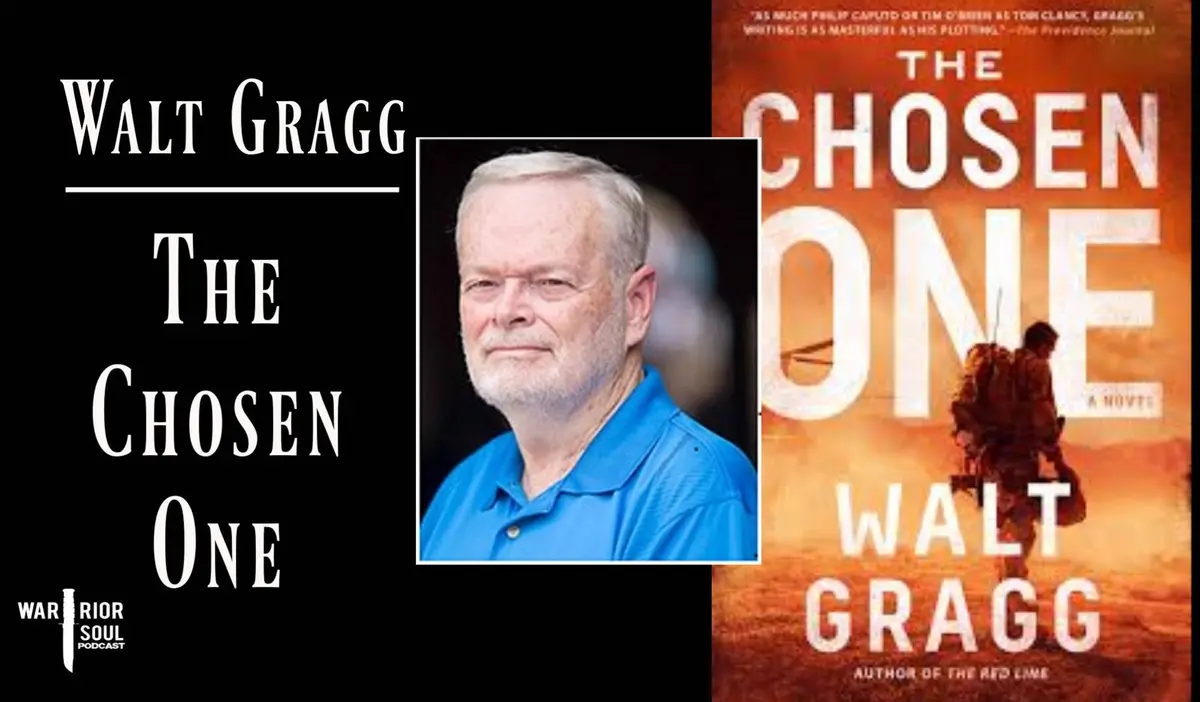
Walt Gragg is a military fiction writer. His latest book, The Chosen One is an absolute gem.
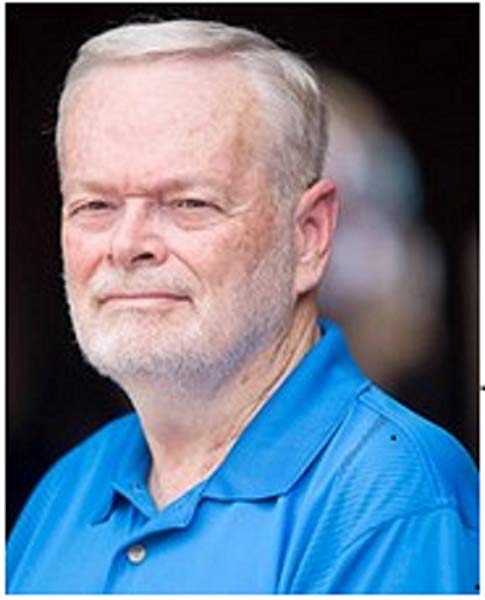
Walt Gragg is a United States Army Veteran, former lawyer, and military fiction writer.
His latest book, The Chosen One, follows the story of an unassuming holy man who gives rise to a worldwide Islamic fundamentalist movement that takes over the world and leads to a battle of epic proportions. The storyline also follows several characters in different theaters of the battle, including a Marine Force Recon officer who is tasked with delaying the Chosen One’s forces until US reinforcements can arrive.
This is Walt Gragg’s second time being on the show. Last time, he came on to speak about his first book The Red Line.
The Chosen One is action packed, enormously detailed, and captivating. It’s characters, particularly the Mahdi, an Algerian cleric named Mohammed Mourad, and Marine 1st Lt. Sam Erickson, are enthralling.
Walt Gragg’s books not only bring entertainment, but lessons for the avid military reader. There are many leadership lessons through it’s pages and the detailed descriptions of the weaponry and tactics used are outstanding.
In this conversation, Walt Gragg discusses his writing process. He delivers solid advice to aspiring authors, and he gives us some insight as to his next project.
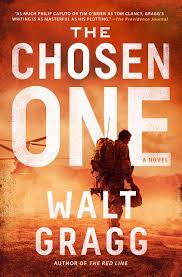
You can purchase The Chosen One by clicking this image:
Transcript
Machine-generated from the episode audio and lightly edited — may contain errors.
Chris Albert (link to this point)
Warrior Soul podcast is written, produced, and edited by me, Albert. Our goal is to empower US military veterans to live their absolute best lives, and we do that by providing tools, tactics, strategies, and ideas that they can apply into their lives to become wiser, stronger, smarter, more resilient, and more capable human beings in the civilian world. If you're not a veteran, stick around because anything we talk about here can obviously apply to you. And if you like what we have to say, any information we provide, and the guests we bring on, please head over to iTunes and write us a written rating and review. It really helps to spread word about the show and to get this helpful information into the hands of more veterans so that they can in turn improve their lives and shape the future of this country.
This podcast is brought to you by the amazing, the wonderful f bomb nutrition. They make awesome, delicious packets of fats. These are portable snacks that you can carry with you anywhere. It's so hard to find a low carb snack out there, but these guys have done it. They got macadamia nut butters, they mix them up with chocolate, they mix them up with sea salt, they mix them up with pecan butter.
They've got awesome meat sticks, and they've got these delicious cheese snacks that they put out there. Plus, they're an amazing company. They send boxes of this stuff out to the troops on the front line. It's not something we ask them to do, it's something they volunteered to do. So if you wanna get some of the best low carb, high fat snacks on the planet, head over to www.dropanfbomb.com.
Use the code Warrior Soul at checkout, and you'll get 20% off your first order. This podcast is also brought to you by the amazing awesome people at Save the Brave. Save the Brave is an organization that provides camaraderie events for veterans. They do fishing events. They do golfing events.
They do other sporting events, and they also do a lot of work to help gold star families. And look, we've all heard stories about veterans charities where the executive boards are taking these giant salaries, and I don't have a problem with that at all. But here's the thing, I wanna make sure that whatever organization I'm talking about is doing amazing work. Savethebrave.org is doing absolutely outstanding work. Their board doesn't take any salary whatsoever, and they are having an amazing impact.
They're focused on getting veterans to live their absolute best lives, and that's what this podcast is about, and that's why we wanted to work with them. So if you're interested in volunteering or donating to save the brave, head over to www.savethebrave.org and make your donation or your request today. Finally, this podcast is brought to you by Warrior Soul Apparel. This is a clothing company that I actually helped to start a couple years ago as we were beginning the brand Warrior Soul. We've got some amazing t shirts.
We've got skivvy shirts with some pretty funny funny sayings on there like, I love Jesus, but I cuss sometimes. We've also got some awesome hero shirts. We have the amazing hard times, breed hard people series, and these are just great shirts that I've helped create, and they support the show. So if you're interested in getting some Warrior Soul shirts, head over to www.warriorsoul.shop. And finally, if you're interested in joining a new group that we are putting together here at Warrior Soul, a group for those who are looking to live epic lives worthy of epic obituaries, stick around to the end.
We'll have some information for you to check out. With that, let's get into the episode.
This is Chris Albert, and I'm here to remind you of one thing. Someday, you're going to die. That's not some morbid statement or scary idea. It's solid fact. Your time here on this earth is limited.
And we need to be reminded of this as much as possible for one simple reason, to live your best life while you can. This is the Warrior Soul podcast.
What is going on ladies and gents? I hope you're all enjoying your holiday week. Today I've got a really great guest for you, he's a repeat guest his name is Mr. Gragg and he's one of my favorite fiction authors, military fiction authors. I love this genre of writing.
Now most of what I read is actually non fiction. I read a lot of history, I read a lot of business books, I read a lot of philosophy books, but I think that fiction plays an important role in any reading program. When you read particularly military fiction, if it's done by an author who knows his stuff, there's so much you can learn about leadership, there is so much you can learn about human beings because that's what literature is. It's a description of us as human beings and Walt's books are no different. If you go into any of his books, there are so many lessons you can learn about leading people, leading individuals and his latest book, The Chosen One, is no different.
It follows the story of a US Marine and several other characters as they face a rising Islamic fundamentalist movement that's literally taking over part of the world. It's a fantastic book, it's action packed and I always enjoy speaking to Walt because he's got so many different insights for those of you who may want to write your own books, and those of you who wish to serve or continue to serve in the US military. Walt's a US army veteran himself, he practiced as a lawyer for a while and now he's got a new career as an author, an acclaimed author at that. So this is a great conversation, guys. You guys are gonna enjoy it.
And, let's let me stop talking and let's get into this conversation with mister Walt Gragg, author and US army veteran. Walt, welcome back to the show.
Walt Gragg (link to this point)
Great to be here, Chris. I I really was thrilled when my publicist told me you wanted to do another one.
Chris Albert (link to this point)
Yeah. Absolutely. I've been you know, this this new book you have here, The Chosen One, it's it's an absolute gem. I've been reading through it for the past week or two and completely action packed, great follow-up to The Red Line. You know, with this story, I mean, this is this is an epic, like an epic story.
I mean, it you've got you've got an amazing villain in there. You've got some great lead characters in there. What made you decide to write about this one?
Walt Gragg (link to this point)
Gosh. I'm not sure. What I like to do, Chris, is to take I I like history. I like history a lot, and I certainly like military history, civil war, World War one, all of those things are are rather fascinating to see how people unfold in those events. And so when I started looking for something to do for the second novel, I thought, let's take a historical event and pull it forward and then give it a what if it happened now thing.
And so I and another thing that kinda fascinated me was all these end of days prophecies that religions have. You know, we had the Mayan calendar and and you know, Christianity has revelations and the rapture, and and seems like every religion, probably back to the dawn of man, has had a a fascination with the end of days. So I was looking at historical events and hopefully something that would tie to an end of days prophecy. And actually, the one that worked was Islam. And and and I want to assure readers this is not, oh, boy, let's kill all those Arabs.
Look, I mean, yes, a lot of them are going to die, but it's it's really not judgmental about Islam at all. It's simply presenting what is. I like to simply let the reader decide what they think of this. But there's a very interesting prophet prophecy in Islam. It's not in the Quran.
It's in a separate prophecy about the rise of someone called the Mahdi, m a m a h d I, and the reason it's historical, for us who are older like me, there was an old Charlton Heston movie back in the 50s, all those old epic movies he used to do, about the rise of a Mahdi in 1885 in Sudan, and the movie's called Khartoum, anybody ever sees it wander by. And so I went back and I started researching that, and sure enough, this Mahdi arises and he raises this fanatical army, and they actually wipe out the British, the head General Gordon, the head of the British forces, And I mean, it was real trauma in Britain in the eighteen eighties. So the prophecy says that the Mahdi, a guided one, a chosen one, will arise, will be appointed by Allah to conquer the world for Islam, and then lead it through its final days. Now once he conquers, and he's supposed to conquer violently, once he conquers, then the final years, which I've seen four different numbers of, five years, seven years, nine years, or nineteen years, will be apparently almost paradise like according to the prophecy.
So I looked at this 1885 incident, I looked at the prophecy and I thought, you know, this would be ideal for right now. So I wrote, so I decided let's do something with a fanatical army that believes in that they are involved in an end of days prophecy, that that, you know, that are absolutely committed fanatically to this this effort. And so there, here we are.
Chris Albert (link to this point)
And the way you develop that character, his name is Mourad in in the in the book, but the the way you develop that character, I mean, was it was really genius character development that you did there because you get to see this guy from where he comes from. You actually start to like him a little bit, you know, despite what he's doing and and all these things because you see the human element of him. And it's definitely not, you know, here's a thuggish terrorist and things like that. You see the psychological development. You see how these things kinda come into play, and you see why he's such a formidable character in the novel.
Walt Gragg (link to this point)
Yeah. What I loved about this novel, not just with Mehran, I certainly think it's also with my lead marine lieutenant Sam Erickson, and the reporter he's going to be involved with, Warren Wells and some others, that you get to look at how we become who we become. And I think that's a fascinating question. And I I I just actually, I think the favorite chap my favorite chapters I've ever written are Mourad's backstory. I think the reader gets the most interesting antagonist they're ever gonna see in a book.
He's, I hope, very well developed, and you're gonna struggle with like like you said, I kinda liked him a bit. You know? And I understood where he's coming from, and people are telling me that. But, boy, you know, the events he's involved in aren't great ones. And so it was really fun to write his story.
It was it was kind of a fun book to write, period. None of my books are easy to write. They're all about 500 pages, and they're involved. The Red Line had five major storylines going at once. This one has four.
Sam Erickson, who's a marine first lieutenant, reconnaissance, starts the book for us. And then there's an e six by the name of Charlie Sanders. Yeah, he's an e six. No, he's an e five, I think, who a Green Beret engineer. So he's really good at blowing things up.
There's a Navy Lieutenant Commander by the name of Bradley Mitchell, who's an F-18A pilot, or F-eighteen pilot, And finally, I have a Bradley platoon sergeant, Bradley fighting vehicle platoon sergeant. And the main thrust of the story takes place in Egypt as the book begins. I'm not gonna give away too much, but as the book begins, the Mahdi's first belief is that he has to first unite Islam, and then he can he can he can then conquer the rest of the world. So he goes after the less fanatical, more friendly Islamic country, and he attacks Egypt first, and Cairo is on the brink of falling when the second Marine Division makes a desperate landing a 100 miles behind his lines to try to take some of the pressure off of Cairo, and we get started from there. And a little bit of the book takes place in Saudi Arabia, but most of it is gonna be in Egypt.
Mhmm.
Chris Albert (link to this point)
A big reason why I love this genre, you know, particularly as it pertains to our audience, is it's not just for the storyline, but but some of the leadership lessons you can really get from this type of literature. And and and I think that goes with with, you know, if if you think about a book like Gates of Fire by Steven Pressfield, that book has been used to to to learn leadership lessons. It's been passed around, and I see a lot of that in here as well. Yeah. It's, you know, seeing people doing the hard thing, seeing seeing the the characters, how they develop themselves, how they put themselves into situations, how they show up.
And is that something you're thinking about as you're writing?
Walt Gragg (link to this point)
Yeah. Yeah. You know, I've got to admit, I got a little dinged by the hardcore techno thriller fanatics on the red line, because I'm not fascinated with technology. At my age, you know, I get just fine without technology for most of my life, and the world was, you know, was a struggle in those days, but it was okay. And so all this new stuff is great.
I enjoy, certainly enjoy having the internet and cell phones and everything, But, I I'm not that fascinated. You know, most of the modern day stuff, the espionage stuff, the the military thrillers are much too focused on introducing every button and switch on the latest, weapon. And I don't really care about that at all. The weapons, while they're important to what you're doing, obviously, it's the person behind the weapon that counts. Mhmm.
And so I and, you know, I was in the army for twelve years, and then I spent eight years as a Department of the Army civilian. And I know very well how interesting those guys are. And I was lucky enough to do a joint service assignment when I was at European command headquarters back in the Cold War. So I got to spend three years with Marines and sailors and airmen, up close, right next, you know, next desk over. And so it was it and so it was really neat.
It's to take a character like a cocky 23 year old Green Beret Charlie Sanders, who's very, very good at what he does, and put him out there and put him in situations that make him less than comfortable, and see how he reacts, and the same certainly with Erickson. I absolutely love the cover on this book. Normally, the writer has no say over the title of the book or the cover. And as you can see here, Eric, that's Erickson, he's got his head down, he's exhausted. And what's great about the cover is that at least that, you could say that particular moment on the cover matches three or four scenes in the book, because that's what we're gonna put Erickson through.
And it was really great with this one because my publisher kept my title and they sent me four covers and let me actually pick. With the red line, they changed the title to what it is. They picked the cover, but they were nice enough here. I had two fantastic ones, and this was the one that just seemed to fit the feeling I'm trying to give in the book perfectly. So I absolutely love the looks of this book, and said, I've had some great reviews recently.
I had fantastic one last week from the Providence Journal newspaper where he he he started his review in such a neat way. He said, when it comes to writing military thrillers, Walt Gragg is the chosen one. So I really love that. And then he went on to compare the chosen one to From Here to Eternity and Winds of War, which that's put me out there ways. I'm not sure I'm comfortable with that, but I'll take it, you know?
So this is really it's quite a ride when you're doing this. Getting published is brutal, aspiring writers take years and years and years, I get to break in, and then once you break in, you still got to fight to stay there. And in fact, sure readers don't know it, people in general don't know it, but 65% of people who are lucky enough to get a professionally published book, never get a second one, they're not even offered a second I got really lucky here, not only did I get the chosen one, but I got a two book deal, so there's a follow-up to The Chosen One, which I'm tentatively calling The Long November, that I'm writing right now, where Erickson and Sanders and Lauren Wells and a bunch are gonna come back. So we're very happy and pleased to have the comfort of three books, for sure, and hopefully more than that.
Chris Albert (link to this point)
And so you said there's four different story lines going through here, and we see that. And when you're creating the structure for these story lines, is there a particular formula you're following? Do do you have to keep things organized in your mind? Are you drawing things out on a on a board, or is it is it very much, you know, right as you go along?
Walt Gragg (link to this point)
It's really funny, because every writer is is different in how they do it. I I just did a I did five book signings last week. The book came out last Tuesday, and then I did five signings. Two of them were with Marc Cameron, who who was putting out on the same day, the latest Tom Clancy novel. And Marc would have done what you said.
He he very much outlines everything, very detailed about it, very precise, not me. I just, I know the beginning of the book, I know the end, and I haven't, I mean, I obviously had in mind Erickson, and I knew I would use Charlie Sanders. The other two just kind of appeared, I'm not much of an outliner at all. I kind of outline as I go, my wife and I'll sit down when I finish. I usually write like three or four chapters at once, and who knows which one I'm writing on today.
I might write chapter 17 or at least parts of it before I write chapter 13. Whatever just kind of gets flowing through my head that day. So I really get on a roll with my Green Beret guys, I might jump ahead and skip a few chapters and write where they come in next, even if it's a few days earlier, knowing kind of what's gonna be in between. So when we get to the next grouping of three or four or five chapters, we will just sit down and I'll do a little, just like four to six notes that I'll put on, actually on my manuscript, that I'm gonna write the chapter from. Make sure you cover this.
Make sure this happens to Sam Erickson, this kind of that, and then I don't even write the chapters in a linear manner. Sometimes I write the end of the chapter first, sometimes I'll throw a couple paragraphs in the middle, sometimes I'll write the beginning, it just depends on, again, what what words are coming out. And people say that sounds really complicated, but it's actually pretty easy for me because what it does is if I get any sort of writer's block on Sam Erickson, I jump ahead and write Charlie Sanders or Bradley Mitchell. And by the time I finish, there are one or two or three chapters I come back and Erickson's ready to go here. So I'm never really stumped on what to do because I I don't know.
I consider it like putting together a 150,000 piece jigsaw puzzle. You know? So and somehow when I'm done, the pieces all fit together. It's you can't just write it once. I probably look at every word 80 times.
So so sometimes I've got, you know, some rough chapters in the beginning, but by the time they're through, I I'm happy with them. And there are always sections you love more than others. It's kinda funny because my my editor is legendary. He's he's edit he edits edits all the Tom Clancy books. He's done W.E.B. Griffin, who did a lot of the marine stuff that was so famous.
Lots of huge writers. And he was when he was doing his edits, which turned out to be really small on the on the chosen one, He got to a section that I'm not gonna it would give us it'd be a spoiler if I told readers what it was. It it was involved Bradley Mitchell and the f f eighteen folks. He said, wow, that was really good, and to me, that was like a chapter I wasn't all that excited about, you know, so you just never know what's gonna grab the reader. Hope lots of different things do.
Chris Albert (link to this point)
One of the things I got from this is, you know, as you're reading this book, you actually feel like you're there on the battlefield at times, And it's really the descriptive language you use and the number of adjectives. I mean, there's adjective I was going through the sentences. I was actually looking at the pattern. There's adjectives in every sentence. Is that something that comes in at the beginning, or does it do you add those in as you're going along?
Walt Gragg (link to this point)
Usually, that happens during the rewriting. I I it's very interesting. You know, a lot of writers write a lot of dialogue, and honestly, dialogue is really fast to write. I can write 20 pages of halfway decent dialogue in a day, you know. Hi, how are you?
I'm fine. How are you doing? You know, you got half a page, you know. So that's the easiest to write, but I don't fall into the trap of trying to do what's easy. The hardest thing to write is action.
If I can write three good action pages in a full day, that's doing well. So the red line, and on the red line, people just raved about the action, and I'm kinda getting the same with this one.
Chris Albert (link to this point)
Yeah.
Walt Gragg (link to this point)
I work really hard in the action, and what seems to make the action word, and you're right at work, you're right, is that I use a lot of adjectives. So just saying the tank exploded, you know, that that's okay. But, you know, the tank, I don't know, picking an adjective, violently the tank, and rather than explode it, I might say rupture, you know.
Chris Albert (link to this point)
The hulking, it'd be like the hulking tank.
Walt Gragg (link to this point)
Yeah, exactly.
Chris Albert (link to this point)
Violently exploded, yeah, something like that.
Walt Gragg (link to this point)
That's a little, yeah,
Chris Albert (link to this point)
go ahead. No, I'm just saying I got that. Got that from the beginning as I was going through, and I was like, wow, this is extremely descriptive. You feel like you're right there with everybody and going through what they're going through.
Walt Gragg (link to this point)
That's the idea. That's what I want you to do, is be standing there on the battlefield with Erickson. But said, try to do with action is yes, I use probably more adjectives than most people, but I like it. And it does seem to make it come alive. And when you get to the action, I like to write, I like to mix the sentences.
You get some really longer, complex thoughts. You get some medium stuff. But when it comes to action, you wanna keep it short, short, short, short, short, you know. You know, the tank ruptured pieces, you know, period, that, you know, and pieces flew 20 feet into the air, two ton pieces flew 20 feet into the air. You try to make those sentences real fast, because with the action that makes it move.
The complex stuff is really good when you're trying to present complex ideas or just lay kind of a descriptive groundwork. I'm not a huge fan of description. I believe readers will figure it out. I mean, just because I see the door as being on the right side of the room and you see it on the left won't make any difference for the most part. When it does, I'll tell you.
But I do write enough description to get you onto the battlefield with them, and then hopefully, you feel a whole bunch of what they're feeling.
Chris Albert (link to this point)
And how how long does this take? How long did it take you to write?
Walt Gragg (link to this point)
Oh, I get asked that a lot. I can't tell you. Yeah. Because it's obviously, it's not it's not short. It's not quick and easy.
I don't like quick and easy books. I like something with depth. I like something that says something. And so I like to read something, books that say something. I like to write books that say something.
So it's hard to know, because I'll be doing various things. You know, I'm working on on the Long November while I'm also have The Chosen One coming out. And, you know, how much of each day I'm spending on each one depends, you know? So it's it's hard to know. I don't really sit down and say, okay, this is the day I started, and this is the day I ended.
There's never really an end. I mean, I'd go back right now if my editor would let me in and rewrite The Chosen One one more time, although he'd think that was silly, and he probably would too. That's just the way it is. You you just wanna make it better and better and better. So it's sometimes it's off and on, like I said, working on different books, having other different things going on.
Last week, I was on the road doing five book signings. There wasn't much time to deal with Long November. And so it's but it's you know, officially, I started it whenever. So I I don't I never really know, but I do get asked that all the time because the books are complex and and rather lengthy. I said, wanna give you some meat meat on the ball.
Chris Albert (link to this point)
Now, I wanna I wanna get into a little bit for for those at home who might want feel like they have a book inside them, and and who might feel like they they wanna go down this path. What would your advice be to somebody who was interested in writing a book? How how how should they start? Is it just just a matter of sitting down and writing, get your ideas out? Or is is there anything they should look to, or any any type of preparation you would recommend?
Walt Gragg (link to this point)
Well, that's a great question. If you're, if you can just sit down and start writing, it's, for me, was trial and error, right? I assure you the first draft of the red line was pretty awful, you know. But I had the story and I was saying I knew to go back and go back and go back and go back. And so even with Long November, I'm, you know, nobody writes perfect right off the bat.
You you what you wanna do is get the story down. You can always you know, my goal is to make the words leap off the page. I want them to leap off the page for the reader. And so when I I just keep going back and back and back through it till I till I get that feeling that they're leaping off the page. But for a new writer, number one, if you wanna start right away and and go and just leap into it, Write about something you know.
If you were a Marine, write about being a Marine, or, you know, if you did something else in life that you think might make an interesting story, just start with something you know, it makes it a little easier. And it cuts down the amount of research. I do plenty of research as I go. People ask me all the time, well, you do the research first or during, and it's both actually, but I do a lot during. What I would encourage them to do are two things, or at least one thing.
Number one, join a writer's group. Like here in Texas, I'm in Austin, the Writers League of Texas is excellent. They have classes every week. Most of them, you know, you don't have to be in Austin, you could be in Amarillo and take the class, because they'll have a podcast of the class. And you learn the techniques.
Number two, buy a book on, or some books on how to write, you know, just some good things. Definitely buy a book on how to format a manuscript, because there are a lot of rules about how you have to format it to send it. Your first goal is gonna be to get a literary agent, and that's a nightmare. Once you've got a completed book and you're really happy with it, and he, the biggest rule is it's got to be ready before you send it to anybody, make it the best it can be. But there's there are books on on formatting.
It's gotta be double spaced. This is how the pages should look. You know, this is how much you indent each chapter, all that kind of boring stuff. You gotta learn that too. But join a writer's group, take the classes.
There are multiple writer's conferences all over the country, just about anywhere you're at. The Writers League of Texas has one in late June. I go to a great one for thriller writers in New York called Thriller Fest, that's right after the July 4 for, oh, for four or five days, and they have classes there, you can learn a lot. Whether you've written one word or you've written five manuscripts, going to these things and going to the sessions and listening to the published writers talk about what you need to do to be successful is definitely something you should do. On top of that, you might wanna join a little kind of focus writers group, a lot writers, I didn't, but a lot of writers will join groups of four or five aspiring writers, and they will critique each other's work.
They'll help each other. The only problem with those is sometimes the people in the group are no more in tune to what to do than you are, and will actually sometimes lead you astray. So I would do those things, and just be true to your craft. There are lots of rules about how long it's supposed to be, what it's supposed to be, make sure you don't cross genres, you know, don't write a zombie apocalypse, military thriller romance history novel. Barnes and Noble doesn't know where to put it on the shelves, so they won't buy it.
If they won't buy it, a publisher won't publish it, and and if a publisher won't publish it, an agent won't take you on. So you want us to kind of stick with one genre. I do military thrillers, I try, I've got a little romance in this one, but I try not to cross genres too much. So there's lots of rules to learn along the way, but you can learn those as you're going. Write what you wanna write, write what you're enthusiastic about.
And don't give up, it's not easy, it's not as easy as it looks, and getting published truly is a marathon, not a sprint. I've met so many people at these writers conferences who've begun writing a few months ago, and they've decided that they're gonna get an agent this week and publisher next week, and their book's gonna be in the window at Barnes and Noble by Christmas. It doesn't happen that way, it just doesn't. Definitely keep your day job, okay? You know, don't think you're just gonna do this.
Well, most writers don't get rich. I'm certainly not. I do it because it's something I feel like I need to do. But published writers are often very happy to help. I mean, I've had help from Lee Child, is a good friend.
David Morrell, who wrote the Rambo books, is someone who helps me along the way. Steve Berry, who writes great historical thrillers, people like that. They're very all of them are very nice, all those kind of people are very nice, they're very helpful. And I go to these conferences, I go to both the Writers League and Thriller Fest, and work work with three or 400 writers, not so much on how to write, but how to pitch their work to the agents that are at the conferences, so they can get the agent's attention, what to do, what to not to do, and I'll work with them one on one sometimes and go over their pitches and do what we can to help them any way we can. In fact, I'll, I know this probably out of my mind doing this, but I'll be happy, I'll give you my email address right now for your viewers.
If they want to email me and ask for help or, I sometimes have time to read, Usually I'd want to see a completed manuscript because you can't get anywhere with fiction until you have a completed manuscript. Agents won't look at it, publisher won't look at it. So my email is wgragg1948@yahoo.com. And like I said, if they wanna get started and they want some help, that's wgragg1948yahoo dot com. I will be happy to help.
Sometimes things are a little hectic, usually like when a book's coming out, I've got a deadline for the Long November that I'm already starting to push, but we'll do what we can. A lot of writers helped me get in, and I have promised to pay it forward, and I'm serious about that. I try to help whenever I can. So if they want some advice, you know, come see me. But the easiest thing as a writer is do your homework, learn how to become a writer, have a great story, even if it's you don't have all of it, just kind of this basic idea, like, oh, Jesus, I'm gonna do this thing about this end of days, guys, guy in Islam, and see what happens.
Outline in detail if that works for you, don't whatever works for you, works for you. So don't worry about all the rules until you get closer to getting published, and then you might have to conform a little bit to make it fit the rules, but I break so many. You're not supposed to write over 100,000 words. My first book was, The Red Line was 154,000, The Chosen One's 146. That caused me to not get in as quickly as I'd like, but I got in.
Ultimately it comes down to the words on the page.
Chris Albert (link to this point)
When, so, and one thing I think a lot of people don't realize is that it's not as simple as just getting a book deal and then you get a major publisher and then they're doing marketing for you and then all of a sudden you got a a bestseller on your hands, right? There's a giant marketing component that happens after the book's getting published, right?
Walt Gragg (link to this point)
Absolutely. I'm with Berkley Publishing Group at Penguin Random House, which I think is the biggest publisher in the world, and they do a lot. For example, starting last Tuesday when the book came out, they are doing over a million impressions, they said, I'm not sure what that means exactly, on Amazon, Google, and Facebook of the book, and they're doing their part. But some publishers, like my publisher won't pay for the book signings. I had to pay the flight at Phoenix last week.
I pay for the book signings. I have a publicist at Berkley, but I also have a private publicist in Nashville, who does a lot of the things. I know, I think they're probably who you were in contact with, or who contacted you again, Chris. So you definitely have some expenses and you have a big time commitment. When a new book comes out, it can be very hectic for a while, but it's fun.
I mean, there are long days. As soon as I finish this, I have to gather all my reviews that I've gotten so far in The One, put them into an email, and get them off to my agent so she can contact her Hollywood agents to start looking for a production company interested in in the chosen one. So that'll take an hour or so, and then I've got to go down to a couple of bookstores here in Austin and do what they call stock signing, where you go in, you know, I'm sure many of your listeners have seen it, where they've got it on a bookstore and there's little autograph sticker on it. That's where most of them come from. The author drops by, signs the copy, they put a sticker on it, and I like to do that whenever I can.
I did them in Phoenix and in Houston last week, and in Dallas. I'll do them in San Antonio next week when I'm down there, and today I'm doing them in Austin, so it's already a pretty full day. I gotta admit the thing I look most forward to is not gathering emails from my agent or doing stock settings, it was being on your show. Said we, I really liked it last year, and I'm thoroughly enjoying today, you know. So this is this is still work officially, and it's part of my job, but it's a part I kinda like.
Especially when the reviewer has read the work. The only time on radio shows that I don't enjoy them is when a person hasn't read it, so they're kind of fumbling around, but those who've read it are usually very enthusiastic about whether it was the red line or the chosen one, and so I like doing them. Like I said, they have to all be scheduled and you work around them, geez, can I work on the Long November tomorrow? You know, that kind of thing, so, but it's all it's all part of this. A writer in a lot of ways is is a job, you know?
Gotta put the hours in.
Chris Albert (link to this point)
You gotta treat it like that. You know, you you mentioned that you're you're gonna be shopping this around to producers. If this thing goes on screen, it's gonna be epic. I mean, like, just the amount of action and and, you know, the the the scenes are gonna be absolutely incredible.
Walt Gragg (link to this point)
Well, who knows? I mean, there is a tendency in Hollywood to kind of mess up the book, you know? I don't know how many times I've walked out of theaters and heard somebody say, Wow, they sure, you know, that's sure nothing like the book. But, you know, I came really close with Red Line to getting they were gonna do a nine or 10 episode kind of Band of Brothers type miniseries with it. I I was the producer who had done the Transformer movies had it, but putting a deal together in Hollywood a book getting a book deal is slow.
Getting a deal on Hollywood is glacial. So you just it just never came together. Now we're looking at The Chosen One. Yeah, I think it'd be great for a movie or a I know I know they don't call it mini series anymore, but a limited series thing on Netflix or Amazon or HBO or whatever. So, we definitely pursue that also, but usually we wait until right about now when the books come out, and then we'll go after Hollywood and see what happens.
So it's not it's not the first thing we do, but it's something we always pursue.
Chris Albert (link to this point)
Hey, guys. I hope you're getting a lot out of this interview. You know, the Warrior Soul podcast is built with the mission to empower its listeners to live absolutely epic lives. And that's why we recently created a group called the Warrior's Obituary Society. This group is built to empower its members to live epic lives worthy of epic obituaries.
And it starts with an eight week development program. And with this development program, what you're gonna do is you're gonna outline a vision for your life. You're gonna get very specific about what you want. Because without that specificity, you don't know where you're going, and you don't know what you're doing. From there, we help our members to develop specific goals, objectives that they are going to push toward, and that their fellow members of the Warrior's Obituary Society are going to hold them accountable too.
From there, we're getting down into specifics. We're going to help you to develop and customize your own personal fitness and nutrition plan to help to fuel your body and fuel your mind for the quest ahead. From there, we're going to work on your personal finances. We're going to help you to knock down debt, start saving money, create a plan so that you can start investing in your dreams. Then we're going to get into your business and career.
We're going to help you develop the skills that you need to develop yourself so that you can have a major impact in the field you choose. If you choose to go into business, we're going to help you to set up the foundations that you need to create your own company and get started on your path in life. From there, we're going to be working on your relationships, we're going to help you to develop a world class network, and all along the way, you're going to have your fellow members of the Warrior's Obituary Society pushing you in every single area. We meet once a week over a live call and we're constantly communicating over our own private forum on Slack. We don't do anything over social media and that's because I don't want anybody feeling like anyone's looking over their shoulders, and I don't want you exposed to the crazy distracting alerts that you get on Facebook and some of the other social media platforms.
Normally, programs like this cost thousands of dollars. This one does not. For the price, it is the best development program on the Internet. And that's because our mission here at Warrior Soul is to empower people to get more out of life so that they can in turn make the world a better place. We've got a great mix of active duty military, US military veterans, and civilians in this group.
We wanted to keep it really eclectic so that we get a lot of different types of views up there and a lot of different people with different areas of expertise. If you think that this is something that would be of interest to you and that this is something that could empower you to live your absolute best life, head over to www.warriorobituarysociety.com. That's www.warriorobituarysociety.com, and you can sign up today. And if you have any questions about it, just reach out to me at chris@warriorsoulagoge.com. That's chris@warriorsoulagoge.com.
I'm happy to even sit down with you for a phone call for a few minutes to see if the group is right for you. I look forward to seeing you guys in there, and let's get back to this awesome interview. It's awesome. With so with a book like this, you said you're working on the next one right now, the Long November. When do you think the Long November is gonna be out there?
Walt Gragg (link to this point)
Oh, it'll probably be at least a year or two. It won't be anything too fast. The process of getting them out there is quite complex. I signed the deal, the two book deal for, The Chosen One in the Long November, in August last year. So it came out fifteen months after the deal, after the deal, which is really quick.
The red line took almost three years after I signed the contract before they brought it out, so and that's not unusual. So, you know, once I get, if I ever get a big name, then it'll be quicker for them to bring them out, but I'm perfectly happy. It gives me time to make sure the books are where I up to the standard I want them to be too. I don't wanna just throw something out there because we need to throw something out there. And I know everybody's run into to writers where it's obvious that happened to them.
They just the publisher wanted something in a hurry, and book number three or number six or whatever just kinda not very good, you know. So it it happens. Not every book can be perfect, but you want it to be the best you can put out. So I'm kinda glad we're not gonna rush it. It'll be at least a year like I said, maybe two.
Chris Albert (link to this point)
And what do you hope people get from this? Is there a big lesson from this book, or is there is there any overall theme that you want people to get from this?
Walt Gragg (link to this point)
Yeah, like I said, I'd like them to look at how we become who we become, and what that causes us to do. It's, you know, our, yes, obviously there's always the biological element to who you are, but there's also, you know, the societal element to who we are, and I don't glorify war. I I certainly did in the red line, and I don't in this one. This is not an intent to go, oh boy, war's fun, war's perfect, All my characters are superheroes, they're not, they're, I like to write about ordinary people in extraordinary circumstances. And like I said, I think the most interesting people, some of the most interesting people in the world anyway, are people who've served or are serving.
I mean, they're just, for the most part, a great bunch. I mean, there's always that sergeant major you don't take too very well, but, you know, the average guys are just, you know, they're down to earth for the most part. They're very human, they're very real, and so I try to present very, very real characters here. I try to present people that you can relate to, especially if you were a veteran or etcetera, in active duty. But let's see, the message from this one, you know, I know my message in the red line was war bad, not war good, but in the chosen one, like I said, it's more of that, again, we are who our experiences make us, and look at the results of that, and realize there's not, that sometimes it makes us what we don't wanna be, and that, you know, Mohammed Mourad would never have done this if they'd have just left him alone.
If he'd have just been allowed to stay in his little isolated village in Algeria, he would have been just nothing but a very smart, but very meek and mild guy, and yet, through outside forces, he was turned into the Mahdi, and think it's, that's what I really liked about this one, is that you get to look at people and where they come from and where they end up. And that's the one here. And like I said, I hope it's a book people enjoy. Yes, I want you to learn something from it, but I want you to enjoy it more than anything. If I don't entertain you, then I have no right to ask you to read it.
So that's primary thing I want them to get out of it, they put it down and go, Boy, I wish there was another 100 pages. Or boy, when's it I cannot tell you how many emails I got after the red line from people who said this was, if not the best book I ever read, pretty darn close. And when's the next one coming? When's the next one coming? So finally I get to say, okay, the next one's here.
And I'm hoping they do that with The Chosen One too.
Chris Albert (link to this point)
Yeah, I think there's something else there too, when you're thinking about the circumstances that create a person. I mean, we hear about this all the time when it comes to bad actors, bad leaders, things like that. And there's always this element of people who say, well, we did that first or you did that first. And and what I think one of the lessons here is is that it doesn't mean that you shouldn't stand against it. If that person's committing to acts that are going to be detrimental to the world, it doesn't mean just because they came from a certain place or did something, they still need to be stood against and there's still gonna be conflict, right?
Walt Gragg (link to this point)
Right, you know, one of my observations in life, it's been rightly or wrongly, that we don't have a lot of control over our world, we have some, but our our path for decision making is typically pretty narrow. We we get options, but, you know, I can't, you know, I can't all of a sudden decide I'm going to raise my own RV and attack Oklahoma, you know? Right. You know, there are limits, and so one of the things here is sometimes you're forced into situations. Most of the time, you're forced.
Sam Erickson has no real desire to be landing on that beach in Northern Egypt, but that's his job, and that's what he does, and he's gonna do it the best he can. Like I said, I don't think Mohammed Mourad really wanted to be the Mahdi. If you remember early on, he he resists the idea, and and yet he he just can't get away from it, and it makes him his circumstances as the readers will see when they in the backstory, which I think is one of my favorite scenes in any book, is the scene with with his village at the end there. And it's time to do what he's gotta do. And so it's, that's part of the story is you have control, but your control is rather narrow, and you are guided by outside forces a lot.
Like I said, none of I can't think of many marines or soldiers who really are eager to rush into battle. I'm certainly not after they've done it once, and that they do this because it's what they're there to do. They do it because of the guy that's next to them in the zodiac boat heading for the beach. And so that's part, certainly a part of a good element of it, I'm glad you picked up an interest. It was definitely something that was interesting.
This was kind of interesting to explore in writing this book, was how these people are reacting to this scene. Charlie Sanders at the hotel, I love that scene. Think you've gotten there, haven't you? Sanders is in the hotel there by himself.
Chris Albert (link to this point)
I don't think I've gotten to that part.
Walt Gragg (link to this point)
You haven't gotten to, oh, well, just spoiled it for you. But there, you know, I will tell you, Sanders is gonna find himself cut off here shortly. But, and how he reacts to that is very fascinating. So it's just fun sometimes to do, and I hope it's, I mean, it's not a light read, but I hope it's an easy read.
I try to make it, even with complex sentences, I'm not trying to show off my vocabulary, which I'm not sure I have anyway. So I'm just trying to write a story that people can read easily, and, you know, again, walk right into, be standing there in the front lines with Erickson. That's, you know, that's the goal, hopefully. If you don't like it, you don't like it, not everyone will, I'll tell you right now, no one's ever had a book that everybody liked, but I think most will, and I hope when they're done, they'll feel like they got their money's worth, and they'll want another one, And they'll reflect on what they've learned in this one, I hope.
Chris Albert (link to this point)
Yeah, absolutely. Well, I am enjoying it. I am, like I said, going to be curling up with this on Thanksgiving weekend and finishing the whole thing, and right now, people can find this on Amazon and Goodreads, right?
Walt Gragg (link to this point)
Yeah, and it's in Barnes and Noble. It's also in some smaller bookstores, some of the better ones. Like in Austin, we have a great independent bookstore called Book People. There's a wonderful one in Phoenix called Poison Pen. Houston Has Murder by the Book.
They've all got autographed copies, if you wanna go get one there. So the easiest thing to do is, if you're not gonna get it on Amazon, is to call the bookstore you're gonna go to and see if they've got it in. They'll grab a copy for you and, you know, put it aside, and you can just walk into customer service and get it. And there's a pretty good chance in certain cities you'll get an autographed copy. So, and if you want an autograph, quite honestly, if you'll mail it to me, you know, you're buying it for a Christmas present for somebody, and you'll mail it to me with a return envelope with postage on it, I'll be happy to to to sign it for someone, or sign it for you.
It doesn't have to be a Christmas present, but I mean, I was I I guess I could give you my address. I don't usually do that.
Chris Albert (link to this point)
We we don't have to put that up here yet right now, but
Walt Gragg (link to this point)
Alright. Well, maybe they get they can
Chris Albert (link to this point)
I don't want people showing up to your house in Austin?
Walt Gragg (link to this point)
Yeah. Let's hope not. But actually, that was a that brought up an interesting thing. I was really thrilled that it got the November 19 release date, because that's a date that's that is reserved for the top writers and the top books to get ready for Christmas sales. And so I was kinda, as soon as they offered me that, you know, last October, I think, when we settled on the dates, it's like, oh yeah, I'll take that.
So it made me feel like, geez, they at least, I know my publisher believes in book quite a lot. I know my agent does. I I sometimes question whether my wife does, but that's another issue now. She loves it. This is actually, this is actually her favorite.
I love The Red Line a little better than The Chosen One personally, because it's my first book. But my wife and my daughter and a number of people, it's kind of fiftyfifty, half say The Red Line's best, half say The Chosen One's best, and that make you feel like that's great, that was my goal, was to make people think, you know, like them both, but but have a favor.
Chris Albert (link to this point)
Awesome. Awesome. And and for everybody out there, if if you wanna help Walt out, if you get this book, make sure you head over to Amazon and write a write a written review for them. Those Amazon reviews help so much in getting the book out there. You know, it helps with the Amazon algorithms and things like that.
And Walt's Walt's got some great stuff out there. I love the red line. I'm really enjoying the chosen one right now, and I think this would make a great Christmas gift for people for anybody who's interested in this genre. Awesome. Well, Walt, I wanna, one, thank you so much for coming on again.
And number two, just wanna acknowledge you. I mean, getting work like this done is not easy, and you you've definitely done a great job with this. Any last words for our audience?
Walt Gragg (link to this point)
No, other than say life isn't easy so it you know, it's considering what most of us go through, writing a book might be on the downside. But yeah, I really appreciate you having me on Chris. As soon as the publicist told me you were interested in having me on again, I was like, I'll definitely take that one. And this is, I'm getting to do a lot of veterans and a lot of military shows. I'm doing another one.
I'm doing Veterans Today, Friday evening, I'm gonna be, I think on their radio show. So it's it's great because while I don't just want veterans in active duty to read it, I'd like the whole world to read it. Even even people that don't like this genre necessarily like my books. And so, you know, you wanna buy, know, you wanna buy six and put them into Christmas stockings? That won't break my heart.
So and I hope every last one of you enjoy it. Chris, I'm so thrilled you're enjoying it. And again, I was thrilled you asked me on. Nothing I like better than, especially doing the podcast. Absolutely.
I don't need that call. So thank you so much. Again, I hope everyone enjoys it. Have a great Thanksgiving, have a great Christmas, and we will maybe see you with the next one.
Chris Albert (link to this point)
Absolutely, absolutely. And everybody out there, make sure you check this book out. It's called The Chosen One. The author is Walt Gragg. And we'll be getting the links up on the show notes for this episode so you guys can go check it out and also write reviews.
And to everybody out there, you know, think about some of the things that Walt talked about on here. I'm sure there's some of you out there who do have books inside of you. It takes a lot of effort. It takes a lot of work, but at the same time it definitely looks like it's worth it. So definitely take advantage of what Walt said up here about offering help and this is all about life guys, so get out there and live your best lives while you can.
Thanks again Walt.
Walt Gragg (link to this point)
Absolutely. Thanks, Chris.
Chris Albert (link to this point)
Alright, guys. Well, I hope you enjoyed that absolutely outstanding conversation with Walt Gragg. Always enjoy speaking with him, and I definitely suggest you go check out his books. Number one, The Chosen One. It's that's his most recent book and also his previous book, The Red Line.
I'm gonna get links to both of those up on the show notes for this episode, which will be up at warriorsoulagoge.com forward / podcast show notes. And in addition to that, I want to tell you guys how appreciative I am of all of you. Seriously, doing this podcast is the great honor of my life. I really love serving The US military community and The US military veteran community. And it's because I see how much potential there is out there.
How much potential there is out there for us to step up in this country and to truly have a positive impact here through leadership, through contributing to our communities, through raising our families the proper way, and through pursuing our own means in making this world a better place. There is no greater pleasure than when I get a note from a veteran or somebody else who's listened to one of my shows and who lets me know how this show has empowered them to live their absolute best lives. One of the things I really wanna ask of you because we need to get this show into the ears of more veterans is if you can, please head over to iTunes and write us a written rating and review. I can't tell you how much that helps to spread word about the show and to get the show in front of more veterans who can use this information. I know a lot of you don't listen over iTunes.
A lot of you listen over YouTube or Stitcher or some of the other applications that are out there, but it's iTunes that really drives the notoriety and drives the downloads. So please, if you can, just head over to Apple Podcasts on your computer and just put a review in that way. Biggest favor in the world to me. If you wanna send me a Christmas present, that's all I ask. Beyond that, if you wanna support the podcast in other ways, you can head over to our shop, warriorsoul.shop.
You can buy yourself an awesome t shirt. We've got some great gear up there that's designed, printed, made by US military veterans in our print shop up in Santa Barbara, California. And on top of that, if you want to support yourself, we have the Warrior's Obituary Society. A group that is dedicated to helping its members to live absolutely epic lives worthy of epic obituaries. We've got our patented eight week development program that is laid out to help you to improve in every single area of your life.
And then beyond that, we're continuing pushing you to be your best by holding you accountable to your goals. So definitely check that out. When you join, you're going to be able to customize your own first class fitness program, your own first class finance program. You'll be focused on getting to your goals. We have an entire accountability system.
We stay in touch over Slack. We don't do anything over social media, and we're meeting for live calls once a week. And this doesn't break the budget. I've kept the price very reasonable because I want as many people from our community to join as possible. So with that guys, I wanna thank you so much.
We've got some great episodes coming up for you. We've got an entire episode dedicated to helping you to lay out goals for 2020. And then when the year starts, our next round of interviews start. We've got Pat McNamara, former Delta operator and absolute badass coming on in the first very first episode of the year. So stay tuned for that.
So thank you guys so much for listening. This is Chris Albert with the Warrior Soul Podcast. Get out there and live your best lives while you can, and I am out.
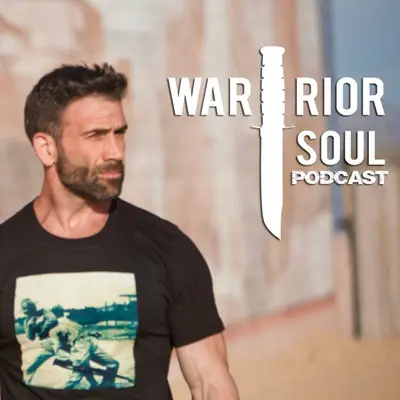
Host of the Warrior Soul Podcast and founder of Warrior Soul. Worldwide trainer and nutrition coach, contributing author at Testosterone Nation and Muscle and Strength.