Podcast episode
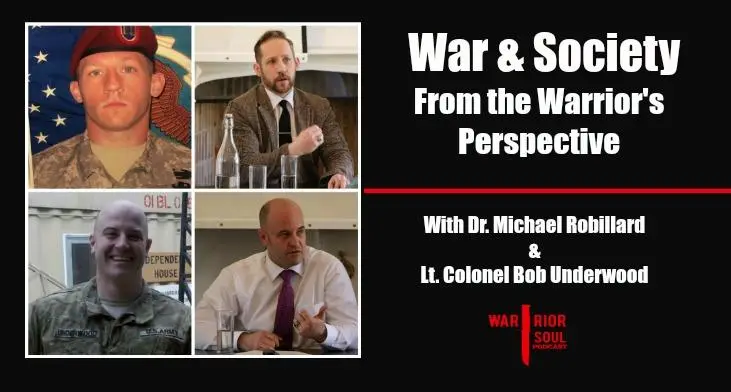
War & Society from the Warrior’s Perspective w/ Dr. Michael Robillard and Lt. Col Bob Underwood
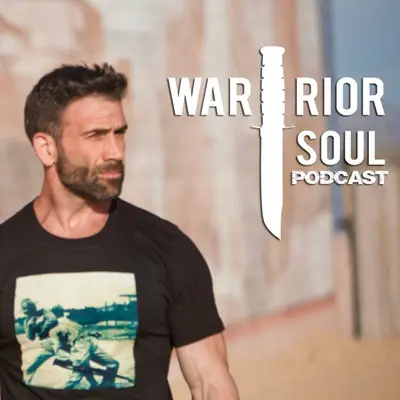
Hosted by Chris Albert
The Warrior Soul Podcast
In this episode of the Warrior Soul Podcast we discuss a subject that has affected most of our audience in one way or another: war. We read about war, and we see it depicted in movies. We also hear it spoken about on the news and in political commentary, but the fact remains that a very small percentage of our population in the US ever experiences war. Our guests today are no strangers to war. Dr. Michael Robillard is a philosopher from the University of Oxford who previously served as an infantry officer in the US Army’s 82nd Airborne. Lt. Colonel Bob Underwood is a doctoral candidate in philosophy at the University of Oxford and is currently serving as an Armor Officer in the US Army. Together Michael and Bob have created the Homofurens Podcast where they explore society’s relationship with war and how this relationship affects warriors.
To learn more about the Homofurens Podcast: CLICK HERE
For the Oxford Security and Politics Initiative: https://www.oxspi.com/
Transcript
Machine-generated from the episode audio and lightly edited — may contain errors.
Chris Albert (link to this point)
Welcome to the Warrior Soul podcast. This is Chris Albert, and this is where we discuss tools, tactics, ideas, and issues to help US military veterans and anybody else who's willing to listen to live their best lives. In today's podcast, we're gonna be discussing a subject that has probably colored the lives of most people who listen to this show, and that is war. When we think about war, it usually falls into one of two perspectives. We either think of war as an intensely evil and awful thing that should never happen, and that all war is wrong.
Or we think of war in an overly romanticized view, where we see it as a game or as a rite of passage. And it's funny because, you know, in our society where we have so many thousands of pages of literature and so many history books, so many movies and so many TV shows devoted to war, or combat, or violence. So few of us have ever actually served in combat. And so today, I wanted to bring on a couple of friends of mine. Doctor.
Michael Robillard is a philosopher from the University of Oxford. He got his PhD from the University of Connecticut and prior to that, he graduated from the United States Military Academy at West Point and served as an infantry officer in the famed eighty second Airborne and served in combat in Iraq. And Lieutenant Colonel Bob Underwood is currently serving as a United States Army armor officer and he is pursuing his PhD in philosophy at the University of Oxford currently. Together, Doctor. Robillard and Lieutenant Colonel Underwood have developed they've developed the Homofurens podcast.
It's a podcast about war and society. And they get into what homo furens means in the conversation. But above all, we have an in-depth discussion about war, about how war affects our society, about how war affects the warrior, and about our differing perspectives on war and where the reality likely lies. And so it's a really good discussion. Hope you guys get a lot out of it.
Before we get into the show, I just want to give you a note from our sponsors. FBOMB nutrition, amazing company. These guys have really supported our show so much. They've also been supporting the troops out there. They've been sending boxes of their product out to troops serving abroad.
Really, really great people. Ross and Kara run the company. And their product is this awesome, they have these awesome portable packets of fats. I'm always talking about the benefits of a high fat diet or including healthy fats in your diet whether you're keto or not and these packets contain a macadamia nut butter base and they've got different mixtures that they have. Macadamia nut butter mixed with coconut butter, macadamia nut butter mixed with sea salt, mixed with chocolate, mixed with pecan butter.
Absolutely delicious. They taste like a crushed up macadamia nut butter cookie without all the sugar. And for our listeners, they are giving 20% off to anybody who goes over there for the first order, And you can go over to www.dropanfbomb.com. And if you use the code Warrior Soul on your first order at checkout, you'll get 20% off. Again, I can't say enough about these guys.
They're absolutely amazing people and love to support them. And I love that they're sponsors of our show. And with that, let's get into today's today's discussion. I can't talk, guys. Let's get into today's discussion about war, philosophy, and society with doctor Michael Robillard and lieutenant colonel Bob Underwood on the Warrior Soul podcast.
Chris Albert (link to this point)
This is Chris Albert, and I'm here to remind you of one thing. Someday, you're going to die. Now that's not some morbid statement or scary idea. It's solid fact. Your time here on this earth is limited.
We need to be reminded of this as much as possible for one simple reason, to live your best life while you can. This is the Warrior Soul Podcast. Guys.
Chris Albert (link to this point)
Welcome to the Warrior Soul Podcast. Bob and Michael, welcome to the show.
Bob Underwood (link to this point)
Hey. Thanks for having us on.
Chris Albert (link to this point)
Awesome. Awesome. And, you know, whenever we have any active duty military on, of course, there needs to be a bit of a disclaimer here. So so, Bob, I wanted to start the show off by just letting you do that.
Bob Underwood (link to this point)
Yeah, thanks, Chris. So I'm Lieutenant Colonel Bob Underwood. I am an active duty army officer. I'm in Oxford, the University of Oxford right now getting my PhD on fellowship from Fort Leavenworth. But I'm doing this in my free time and nothing I say here should be taken as a an official position of the United States government, the United States Army, or anybody that I work for back at Fort Leavenworth.
This is just whatever I say here is the world according to Bob Underwood and that's it.
Chris Albert (link to this point)
Absolutely. You know, right off the bat that that brings up some good questions here because we've got an infantry guy and we got a tanker and both have decided to pursue or get and pursue PhDs in philosophy. One, why did that happen? Why why were you guys interested in doing that? And two, why did the army let that happen?
How'd you how'd you finagle that one?
Bob Underwood (link to this point)
Yeah. So why it happened? At least for me, the short answer is the the two things that I loved. I am a tanker, but more specifically, I'm a reconnaissance guy, right? Like, that's what drew me to tanks because that's what those reconnaissance in the army.
At any rate, so reconnaissance is a thinking man's sport. And philosophy seems to go right along with it. It was something that they both kind of came part and parcel for me. And then I've had, you know, I'm not, the army has been very good to me. So that's why I've stayed in and I've been able to make my way.
It started with going back to teach at West Point. So after my troop command in the eleventh Cavalry Regiment, I went and got a master's in philosophy and went and taught. That's a pretty straightforward kind of thing, right? Everybody's pretty familiar with that kind of pipeline. And everybody looked at me cross eyed, all my bosses were like, Oh, you're gonna kill your career and stuff like that.
And I kind of did. So, know, put me behind times and stuff like that. And then the army got this new program about five years ago that I'm in right now, which is really pretty amazing. I had a friend that was in the program. It's one of those things where any veteran knows when shit's too good to be true, right?
And you read the message on this program, the advanced strategic plans and policy program. And you're just like, no, this can't, there's got to be a trick. And you know, got to be a hitch in this giddy up. And so I emailed the buddy that was in the program and he told me, you know, apply this year, apply every year until you get in. It's awesome.
And it's been amazing. I applied to the program. I applied as a moral philosopher. So I wrote all my applications as going to study moral philosophy. And they accepted me in the program and they signed all the waivers for me to go to Oxford because by regulation, I'm not supposed to go to a foreign school, but the army signed all the exception of policies that I needed.
And then I ended up at West at Oxford for I've been here two years, and I've got one more year until I finish. And then I'm off to do other things.
Chris Albert (link to this point)
Wow, that's absolutely amazing. The stars really align on that one. And then, Michael, you you went through your career in the army, and then and then you decided to come out and and get your PhD. What what what was the thinking behind that?
Michael Robillard (link to this point)
Very much the same sort of arc as as Bob's initially. We were we were both at West Point together. We were both philosophy majors, but we met what, two years ago, maybe? Yeah.
Bob Underwood (link to this point)
So Our our past been in the same room, like, 25 times without Yeah.
Michael Robillard (link to this point)
Yeah. So, you know, I was I was initially a military history major at West Point because I thought to myself that I plan to stay in and be some sort of hotshot general someday and and I need to to learn my my military history and my Clausewitz and my my Sun Tzu and whatnot. And so I started studying under Fred Kagan, who is the son of Donald Kagan, the two military historians. Fred was the chief designer of the surge. And it was really great, great tutelage.
But I found that I was really, really bad at memorizing things and keeping them straight in my head. And that the more the more abstract and the more theoretical the the the discussions of war got, the the better I could could grasp it. So then I eventually crossed over.
Chris Albert (link to this point)
That is my dog going to kill me. Dog. Yeah. Yeah. Yeah.
Yeah. Hold on one second, ladies and gents. I'll be be two seconds. I just gotta make Ferocious.
Michael Robillard (link to this point)
Yeah. So so I I just found the things that the more abstract thinking just just appeal to me. So I eventually crossed over to philosophy, and I was one of two philosophy majors graduating in the class of 2002. And my original intention was to to go to the eighty second, go to Fort Bragg with the intention to crossover into the special forces community and then try to get back to to teach at West Point as a as a uniformed military officer and then continue on from there. So after my initial time in the eighty second, I'm getting back from Iraq, I decided that I wanted to to keep the philosophy dream alive, but I wanted to do it on my own terms. So I got out in 2007 and got a master's degree at the University of Victoria in British Columbia, and then started getting my PhD at University of Connecticut and finished up there in 2016 just as this four year postdoctoral fellowship came along at Oxford concerned with counterterrorism ethics.
And I felt like that was a a good overlap that I could fit into where it's it's sort of a building a bridge between the space of theory and the space of application. So I applied for it, I got it, and I've been here ever since.
Chris Albert (link to this point)
Yeah, that's you know, what's interesting about this to me is that a lot of our audience, were enlisted combat veterans. And so lot a of them are heading off to school right now. And after I was an enlisted marine, after my enlistment, I went in and I got my master's degree from the University of Connecticut, pursued a PhD in political science at the University of California at Santa Barbara. And I have to say that stepping into that world, the the the the modern college campus here in The United States and even college campuses abroad, it can be a really a really really scary thing, especially if if you believe in in values and you're not nihilistic and you're not completely off the deep end leftist and and anti United States and anti government. How did you guys experience going from the military and into this this academic realm, this this this other place?
Michael Robillard (link to this point)
Well, I at least in my experience, I found that before I went to University of Victoria, I actually took a year and a half off to do more undergrad classes at Bridgewater State University in in my my home state of Massachusetts. And I found, you know, it's a very blue collar commuter school. So there are a lot of veterans that were doing the same thing I was doing or doing the same thing you were doing. So I felt that that kept people, The faculty and the students in general kept them pretty, pretty grounded, I suppose, with, you know, people were a bit older. They they had a little bit more life experience.
So they were less. I guess maybe swayed by. You said some of some maybe some of the. The Utopianism that you see in in some other types of far left disciplines within philosophy, particularly analytic philosophy, it I find it to be quite exceptionally rigorous and quite immune to some of the the more postmodern type of arguments that are often I find very flat footed. I think there there can be good postmodern arguments, but they you really have to to Be introduced into that and take your time with it and to to separate the.
The. Quality points from the the rhetorical nonsense. But I I found at least within analytic philosophy programs at University of Victoria and University of Connecticut, it was very much about the argument first and being able to justify your positions. And that was it. You know, it it didn't wasn't infected with some of the excess excesses, I think, of of a lot of postmodern thought.
So that's at least my experience.
Bob Underwood (link to this point)
Yeah, I can speak to the strangeness of it for sure. Like, so unlike most of the other kinds of PhDs that you could get, philosophy has no, like everybody knows, right? Philosophy has nothing to do with the real world. And so there's no industry that spins these guys off. And so if you're going to be an academic philosopher, if not doing something else, Mike and I were doing in the army stuff, These guys go straight from undergraduate to graduate school to, you know, and so they're 24 or 25.
And they're really, really smart kids, but they've got the only thing they've ever known is university life. And the first time I went back to graduate school, I was fresh off my second deployment to Iraq. I went to Iraq in 'five and 'six and then troop command and then hit Georgia State in 'seven. And it was hard enough for me to adjust just to the chain, you know, just to the I remember one of the kids that I had the sort of the best initial relationship with, I couldn't, I fell over when he told me that he was only 21. Right?
And I was like, this is just crazy. Right? It me feel old was the first thing. And then the thing that I found most, what eased the transition the most for me is one, the discipline of philosophy. When it's done well, like Mike said, it's argument first.
And don't get after you for saying the wrong thing. They get after you for not being able to back up what you say. And that's, you know, so if, you know, the one place where reasonable people can disagree is when you're doing philosophy correctly, right? It happens all the time here at Oxford, right? You have these really smart guys, they're like, well, we're just, you know, it's stuff that doesn't matter to a lot of people.
But, you know, depends on what people are actually saying and listening to what they're saying, and whether or not it follows and those kinds of things. It's not just, Oh, you've said the wrong dog whistles. And so now I'm going to shut you down. The other thing that I always have found really appealing is the actual philosophers that I get to work with. So the students are one thing, but the people who do philosophy, like the professors that we're teaching us, I have never found any.
I've just never come across any. And I've come across some really hardcore leftists. The program I went to at Georgia State was known for its program in continental philosophy. My very first class in philosophy at Georgia State was on Marx. So, you know, and I have a different opinion than most people on Marx, but partly because of that class.
But, you know, I've thought I was going in to study the enemy and all these other people were going in to study marks. And, but it was a really well done class. There was a lot of, you know, sort of authentic kind of dialogue and challenge. It wasn't just, you know, here's the five words that we all believe, here's the five things we all believe. And let's, you know, let's yell at the people who don't believe those things.
Chris Albert (link to this point)
Yeah, you know, and I think just from my experience in academia, studying Marx and different forms of Marxism from from world system theory to others, and other bents on the philosophy, If you look at it less as a, like a way of seeing the world and more of a theory, a theory of history, I think that that brings some more room for debate and more room for productive discussion. The problem I see with a lot of the social sciences and the humanities is that, as Michael had alluded to, there is kind of a postmodern bent in academia these days to the point where if you make a cogent argument that disagrees with the ideology, and you make or you find empirical evidence that disagrees with the ideology, what they say is they're going to toss the empirical evidence out, tear down whatever source of reality or positivist belief you think you have, and they're going to go with their preferred argument. That just kind of seems to me what it was. And in my experience, you know, in 2011, as a a political scientist who was studying game theory and quantitative methodology, I kinda saw the writing on the on the wall, and that's one of my reasons for for leaving academia.
But do you think that the social sciences and the humanities are are going to survive what's going on out there? Do you think that that that they're that these educations that they're delving out, are they still going to be valuable to those who try to pursue them over the next few years in the next decades?
Bob Underwood (link to this point)
Oh, wow. Well, I think, look, I think the value of the humanities comes not necessarily from degrees in humanity, but the subject matter that studies, right? So people are still going to write novels that are worth reading. People are still going to develop political theories that operate in the world before they become subjects of academic debate, those kinds of things. What's interesting to me is what you just described.
I mean, if I'm a certain kind of postmodernist, right? If I was a Foucauldian structuralist, could have perfectly described what just happened to you as what has been going on for a long time, right? So I think that what's interesting about it is how they, right? So some of these programs get, or these degrees get caught up in, and they can't see that they're doing it to themselves. Right. So they'll talk all day long about power structure and how power influences knowledge and stuff like that.
You come along and there's more one kind of knowledge challenges power. But in terms of the usefulness of a humanity degree, true in 1960, is it today that you don't get a humanity degree because it's going to give you a paycheck. It never will. If you want a paycheck from the humanities, then you find the media outlet of your day that gives you access to an audience that wants to hear or read what you're laying down. So I don't think the humanities are going to go anywhere.
I think the study of humanities depends a lot on where you end up. And there's probably pockets of excellence in and out of different places.
Michael Robillard (link to this point)
I would say,
Chris Albert (link to this point)
oh, I was going to go ahead and say, Michael.
Michael Robillard (link to this point)
So I was going to say that I guess my answer to that question is the same answer I give about. Thoughts regarding artificial intelligence. People always say, you know what? What do you think is going to happen? Do you think it's we're inevitably doomed towards level in AI and a Terminator two type scenario?
Or do you think Ray Kurzweil is right and we're we're inevitably destined for the singularity and our is going to be uploaded into the digital over soul and we're going to live forever. And I think that neither of those answers are correct. I think that it's an open ended question, and I would say it's an open ended. It depends upon. Present decisions of present persons right now in academia and beyond.
So I would say the same thing with respect to the humanities and the integrity of academia itself. I don't think it's inevitable that it's going to sort of completely be overtaken by sophistry nor do I think it's immediately gonna be safe if nobody does anything. I think it's it's open ended, and it depends upon individual persons having both the the the epistemic humility to recognize when other viewpoints are correct or to at least allow to consider different viewpoints, but also requires epistemic courage to speak what one believes is true and to bring coherent arguments to defend those views even in the face of social pressure or shaming. So I think it's I think it's open ended. I don't think it's inevitable one way or the other.
Chris Albert (link to this point)
Now both of you both of you are army officers. Both of you have have served and you're both. You both come together now on this podcast, the Homofurens podcast. Can we talk about that a little bit? One, what what are homo furens?
And number two, what's the reasoning behind the podcast? What's what are you guys doing with it?
Bob Underwood (link to this point)
Well, name I'm trying to talk about the pernicious influence of the humanities in the twenty first century. I know where you're going with this. Yeah, if you Google Homofurens right now, you'll get some nice videos of French interpretive dance. Actually kind of for anybody who's been in the army or the Marine Corps, it's probably kind of humorous. It's just a bunch of ballet guys doing calisthenics, right?
Like the eight count pushed up and the side straddle hop and all that stuff. And it's really kind of funny. But it's troubling to me because homo furens is a term coined by J. Glenn Gray, who was a philosopher who fought in World War II. And he wrote a great book called The Warriors. And the term is just a metaphor for how the experience of combat changes everybody, right?
So you start as Homo sapien, you go to war and you come back as Homo furens. And so that's where the name comes from, is that trying to frankly recapture that name and put it back into the conversation about what, you know, what war is like, what it does to the warrior and what it does to the society that sends the warrior to fight. So that's really where the name comes from. And that ties into the purpose of the podcast. Like, we're interested in understanding, among other things, the impact that war has on the people that fight.
Chris Albert (link to this point)
And do you think that there's a a tin out there as far as the way people perceive the way that war impacts the the warrior? A lot of people see it as is mainly negative. A lot of people will see it as something that can destroy a person's personality, destroy a person's future, destroy a person's any bearing on themselves. But we're also hearing a lot of stories of positivity and and also from people who believe that war made them better. War made them better human beings or made them enjoy their current lives more and and give them an appreciation to for what we have here in The United States.
What's your take on these disparate views of of how war impacts the warrior?
Michael Robillard (link to this point)
I think so we have a a good friend of ours, David Reese, who was in the eighty second the same time I was, and and he's also a a philosopher. And he talks a lot about the complex and and sort of conflicted view that veterans have, particularly with with nostalgia surrounding their military service. So, it's this really odd feature. And it's definitely complex and it's definitely mixed. And I think that there are definitely features of one's military service that can be purpose giving, can be identity giving, can hone and bring out the the the martial virtues that William James speaks about in the moral equivalent of war. So James argues that one of the the the dangers of perpetual peace was would be that there would be no forum by which the martial virtues, the courage, and sacrifice for the group could find proper expression. So what James suggests as an alternative is trials against nature as some sort of surrogate for these types of things so that people can actually experience what it's like to demonstrate courage, demonstrate sacrifice. And to to that end, I think that these are good warrior virtues, good martial virtues to have within within persons to have those capacities. Then at the same time, I think that.
If it's at the expense of. A unjust cause, then then whatever personal virtues that that might inspire, it's still not. Ultimately not worth it, that the cause for which one fights has to trump any sort of self virtue that might come as a consequence?
Bob Underwood (link to this point)
Yeah, I think to just kind of continue what Mike's saying there, Chris, is I think the most important thing to do about the veteran experience or about the experience of war is to just tell the truth about it. And there's sort of these two sort of easy sort of pop culture narratives out there. You've got the veteran as victim, right? That everything is terrible, shattering, that nothing good ever happens in war and that everybody that goes comes back all messed up. Then you have the veteran as hero, I guess, for lack of a better term, right?
That everything was great. It It changed me in so many ways. And, you know, I got off drugs and I quit my wife and all that stuff all because I went to combat. And there's probably examples of both of those right out. And what's really actually going on is that all of us have this range of experiences where there's things that I did in combat that I'm really proud of.
And there's things that I did in combat that I'm not too proud of. There's things that you know, love about being in the army. And there's things that I think absolutely, if you know, if I could snap my fingers and change tomorrow, I would change tomorrow because they need to be changed. And so the power of war to focus you, to give you an outlet, do things that you take to be worth doing, to have the experience of camaraderie that seems to be lacking in most modern, the alienation of most modern societies. I think there's a lot to be said about the good things for it.
It's at least worth asking the question if there's other ways to figure that stuff out, You know, like Mike was talking about, but I think there's, you're on the money when you say there's more than just bad out there. And there's more than just good out there. And the way to figure it out is to just start telling the truth and giving people the space to say, yeah, I went and fought in Iraq and everything was fine. We muddled around a little bit, but we did some good stuff too. And, you know, everything's okay.
I still love my wife. I still, you know, can hold a job and I and, and I'm, and I'm going to vote the way I want to vote.
Chris Albert (link to this point)
Yeah, that's one of the things that was bothering me, especially like a few years ago, when we were kind of, like, at the height of having having the number 22 published all over anything to do with veterans. One of the things that really concerned about that concerned me about that was the idea that we were actually lending social proof to veteran suicide. And what do I mean by that? Well, Cialdini, a famous psychologist, he wrote about plane crashes and how if a suicide was published on the front cover of a newspaper, it would be more likely that there would be a plane crash in that geographic area because it would be more likely that the pilot would commit suicide. And we're all prone to different signaling with social proof.
And so if there's this narrative going around that that you have to be a damaged veteran, that you have to be somebody who's on the verge of breaking or somebody who's on the verge of suicide. If you're publishing the fact that 22 veterans a day are committing suicide, how much more likely are you making it that other young veterans are going to commit suicide and that other young veteran veterans are going to fall into that that narrative of, oh, I'm broken or oh, no fucks given, bro. Like that kind of stuff. And that that kind of stuff pissed me off big time.
Michael Robillard (link to this point)
Yeah. Yeah. There's a so there's a philosopher named Ian Hacking at the University of Toronto who has this article called the the looping effects of human kinds. And he has this idea that there are these sort of archetypal social kinds of people. There's sort of the idea of the the the Asian violin prodigy.
And that that that's it's sort of like a a socially carved out lane that sort of shapes the way that that people know that that is sort of a a predetermined sort of social identity. There there's sort of a there's an inertia or there's a it's causal. Right? The idea of of this this type of person is causal. And you might think that there's something similar to that, that if there's this idea of the the the broken veteran that that can't get his act together or the broken veteran that is about to be suicidal, and you have somebody who's a veteran who's sort of teetering on the the edge of that, but then that meme sort of infects their consciousness as as a viable narrative.
It has, I think, it can have a a type of inertia or causal effect. So I think there's also a danger with this with respect to any type of linguistic prescriptions of either PTSD or or moral injury is that by naming things or or or over diagnosing or over sort of framing certain behaviors in terms of of a negative psychological states. When you when you sort of throw those names out there into the world, they have causal efficacy. And I think they can. It's at least arguable that they can sometimes be more pernicious than beneficial.
Bob Underwood (link to this point)
The other thing that's so frustrating about it is that most of these conversations are had by people who have no idea what they're talking about. Right? So, you know, if you pull out and read any kind of, you know, psychology manual for diagnosing post traumatic stress, or moral injury, or any of the actual literature about how this stuff shows up and what it does and the brain chemistry that goes on and stuff like that. We're usually talking past each other, right? We've got sort of these pop psychology ways of talking to each other about what we see in the other person.
And really what needs to happen is we needed to talk about when you should tell somebody to go get help. That's really useful, right? You've done, you know, you've made, I'm your friend. You've made me concerned. Do you think you need to see somebody?
That kind of conversation is useful. But, you know, these big data statistics of like 22 veterans a day and stuff like that. One, I can't remember now off the top of my head. But I'm pretty sure that statistic was false in an important way. And I can't remember how it was false. But one of the things that always drove me crazy about it was it's not disaggregated from other statistically relevant categories that these kids would fall into, right? So one, males of the age of like 19 to 28 or something like that are statistically the most likely to commit suicide anyway. Right?
So there's just so many different ways to explain the phenomenon. And we get latched on to these explanations, and then people start treating each other accordingly. And I think you're off and running with sort of the social tipping point and the social proofing that you guys are talking about.
Michael Robillard (link to this point)
Yeah, I I find the 22 push ups to me and the, like, the base of it is talking about some sort of veteran family reunion at Fenway Park and these sort of social instances, these social demonstrations of solidarity with between the civilian space and and the military. I worry if this maybe it's not just with respect to veterans, maybe this is just symptomatic of a generation of of of slacktivism, I suppose, where you have instances of social signaling on Facebook, on social media. I have the I have the I support the troops, but not the war bumper sticker. I have the the T shirt that's to support the troops. And that's it.
Like, I've said that that satisfies my my duty to the veterans or to the military. And I feel like there's a there's something off about the more the more we have these sort of social signaling events. I don't know if it's helping to drive a wedge in the civil military divide or or helping to close it. I I feel like there's there's something just a bit off about about these types of signaling moments that don't they don't have the the the institutional weight to really affect things. They're kind of just window dressing.
Yeah.
Chris Albert (link to this point)
Go ahead, Bob.
Bob Underwood (link to this point)
I'm sorry. I don't think it's an institutional thing. I think the veteran is theater. Right? So it's a way for people to sort of voyeuristic participate in, you know, in the family's reunion on the baseball field.
Michael Robillard (link to this point)
Right.
Bob Underwood (link to this point)
You know, those kinds of things like it's, to me, it's not about institutions. It's about the lack of authenticity, right? The fact that hardly anybody knows these people in any real way. That's it.
Chris Albert (link to this point)
Yeah. Yeah. I you know, as far as back to those statistics and number one, I want to mention that, you know, I have no problem with anybody who is putting on the '22 push up challenge. I think that everybody who was involved in this stuff, they they meant really, really well. And I'm not insinuating that anybody was purposely trying to trying to hurt anybody.
Michael Robillard (link to this point)
Yeah. But but yeah, yeah, me neither. I'm sure there are very well meaning people. It's just like this. Yeah, there's something off about it. I don't know how else to.
Chris Albert (link to this point)
Well, here's the thing, because I think you delved into something that was really interesting here as far as the veteran is theater aspect of things. And I think war in general, there's there's a whole voyeuristic thing going on. And, you know, if you look at our our our movies, you know, Hollywood, they'll come on, they'll they'll they'll criticize gun owners, they'll criticize war, they'll criticize, you know, policies. But if you look at the movies, they're extremely violent. People die like crazy.
And and I think there's an inherently human voyeuristic aspect that that where we get very, very obsessed with war, where where we get very obsessed with viewing war, where we get very obsessed with with people who go to war but don't necessarily want to go to war ourselves. And I think that's one aspect of of this. The other aspect, I think, is that all of us are currently living in echo chambers. And and, you know, I live in the in the People's Republic Of California, as it's so lovingly called by many people out here. And I'm a conservative.
But, you know, I have friends across the aisle. I have friends who are so called liberal. I have friends who who who have many different political beliefs and things like that. And what I've been finding is that because we're so polaristic, meaning, you know, the the left is so leftist right now, and, you know, the the right can be very, very right wing now, we're all kind of retreating into our our echo chambers, and we're retreating into these spaces where we can say our views without having them called into question, and without having that any kind of productive debate. And more and more, I'm seeing that from from both sides.
Of course, I'm seeing more and more from from, I believe, the left, but that might just be my perspective as a conservative. But I think that that it's a combination of those things. The combination of that voyeuristic, I wanna watch it, but I don't wanna do it kinda thing. And then, you know, I just wanna spout my beliefs without being criticized kinda thing as well.
Bob Underwood (link to this point)
No, I think that, I mean, the problem, right? The alienation of being a human being in a world where there's 7,000,000,000 people and something new to look at every seven seconds. This is a really tough issue for me because one of the things that I want to do is I want to tell the truth. And I think one good thing to talk about in terms of this issue is though, if you guys know about the SOFREP guys that got the body cam video from the attack in Niger, I gotta be real careful with this because I should say, I should repeat my disclaimer. I have no inside knowledge of what happened in Niger.
I'm not part of that chain of command. I don't know anything about what happened in Niger. The guys from SOFREP got ahold of the body cam video and they put it out on YouTube. So you can go on YouTube and see that ambush go down and watch these Green Berets get killed. And I have a lot of friends.
Best friend is a former special forces. Again, I don't have any inside information, but watching his friends on Facebook talk about this issue, right? You get even within that community, right? Even within a special forces or former special forces community on Facebook, you get echo chambers on this one issue, right? Whether or not we should be looking at this and whether or not we should respect what went on without dragging, letting the video out on YouTube and stuff like that.
So I think we all see the problem, right? We all see the problem and it's really hard to figure out a way to get past the echo chambers. And I really think that it's just false to think that it's one side or the other. I am probably as a result of the education that I've had, like I'm on the other side of the aisle you, Chris. Over here in The UK, I see The US media in a different kind of light. Man, I can't find anywhere. Like there are some reporters that I give time of day to, like who wrote this or who's speaking right now.
But man, I can't find on any side, right? It seems like at some point somebody's gonna say something and I'm just like, man, that is obviously false. Yeah. It just can't possibly be true. But what to do about that, man?
If I could solve that, could probably run for president.
Chris Albert (link to this point)
I think it's an understanding that when you attach yourself to an ideology and you're rigid about that ideology, you cease to speak the truth. Right? When you when you when you attach yourself to any sort of ideological perspective that that you're going to be extremely rigid about, and you're not willing to bend on it, then then it goes back to to what you were saying before is not being able to speak the truth. And I think regardless of what your beliefs are, as long as you're willing to have a productive argument to have your views called into question, doesn't matter if we're on different sides of the aisle. What matters is that we're talking about it, and that we're actually having a productive discussion about it, rather than pointing fingers at each other and saying, you know, this is your fault, that's my fault.
This is that, you know, that kind of stuff. Yeah.
Michael Robillard (link to this point)
This is what I really think, you know, the value of philosophy is. I mean, philosophy sometimes it's referred to as the long discourse or the long dialogue and Lou Pojman, who is one of my, mentors at West Point, he really, really stressed that that it's, it's not about winning, it's not about scoring points, it's about you and your interlocutor are both aiming at the truth and you're both contributing your particular the best of what reasons and justifications you have and the best that they have. And then together, there's with the appropriate attitude and the appropriate epistemic virtues, it what emerges is a better total picture that is beneficial to the whole. But it but it requires, amongst other things, I think, a a set of attitudes and a set of dispositions prior to to the idea of of winning an argument. Most disagreements I I see in public discourse, I don't think people are actually disagreeing.
Mhmm. I think it it I I don't think people give enough give their opponent enough time to to to get on the same page so to disagree. I think most of the time people are talking across one another and they haven't even they haven't even settled on a space of disagreement yet. Mhmm. So I think that hopefully, as as things sort out in in the twenty first century with the this sort of new media that we're on, these echo chambers will will become more opened and and we can have more dialogues.
But I think what what will a precursor to that is a set of attitudes and dispositions in persons prior to any particular medium or ideology.
Bob Underwood (link to this point)
Yeah, I think one of my first mentors in philosophy, a guy named Tim Challans, who was just this great iconoclast at West Point. And he told us one day, he's like, look, you're not doing philosophy unless you can understand the other argument in a very particular way. And he said, look, most people will argue against other positions thinking the other position is only true if you're stupid or evil, basically, right? So either you just think stupid things or there's something, some defect in your character makes you susceptible to the ideology. And the really important thing about philosophy is that you have to approach the other side, understanding it as, okay, if I was really smart and I really cared about what was going on and I was properly motivated, why would I believe these things to be true?
And if you can't understand the other side from that perspective, not just the facts that tell them they're right or wrong, but also why good, smart people would think these things, then you're not breaking down any kind of echo chamber and you're not ready to do philosophy. Right? You can't do philosophy until And that's not to say that philosophers always do that. I can think of times where there's people in philosophy rooms, you know, talking past each other in exactly that way. But the disposition to approach the other side from, okay, why would a smart person believe that and get into that space of why somebody who's smart, cares about their family, wants basically what the world would think those things is probably a way to start.
Chris Albert (link to this point)
Yeah, I think it goes back to some of the math training I got in my graduate, my graduate studies. And that was not just to look at the results, but to look at the assumptions apply. Right? So So how are they getting to these results? And I think that that's that's a big thing.
That's a that's a huge factor because, you know, having different assumptions can put you in a completely different universe. Right? That's that's a huge thing to consider.
Bob Underwood (link to this point)
Yeah.
Chris Albert (link to this point)
I know we're getting to the end of our time here, and I wanted to ask you guys each one more question here because, like I said before, we have a lot of prior enlisted guys here and a lot of current enlisted guys who who are listening to this show. What would your advice be to to that young enlisted soldier, that young enlisted marine sailor, that airman who's out there who is looking to further their education? What what what would you say to them as far as what they should be doing while they're in the service? And then and then what types of things to look into to to find something that they're going to like after they get out of their service as far as college education goes?
Michael Robillard (link to this point)
It's a good question. I would say, I remember I remember when I got out, I I talked to a variety of civilian professors, and a lot of them really looked at me like I was crazy. Like, you know, what what are you what are you doing here? Like, what what's why why would you pursue this? But I had one one professor I who I talked to, and he he had some good advice.
And he said because he told me a similar story when he was a very blue collar type guy trying to get into philosophy and and hit a lot of barriers. And he he said one day that he he was determined to go as far as they would let him. I'll I'll go as far as they let me. And he ended up making career out of philosophy as an academic. So I thought that was some, you know, pretty good advice just that, you know, I'm I'm at least gonna give it a try and I'll go as far as they let me.
And I think that that's, you know, it's at least a good good mantra or good ethic to to work by because, you know, if somebody has the the discipline to have served in the military, then they have an entire set of skills of especially the the capacity to follow through on things and to complete things. And I think that that gives military servicemen a tremendous advantage over, folks in the civilian world that haven't gotten a taste of of what it really means to to possibly be in life and death scenarios and to be able to follow through and to get something done to completion. Not 90% done, but to get it done to standard all the way through. I think that's a a very valuable character attribute, and I think it's translatable into an academic space. So I think if any professors or or advisers give veterans any type of resistance or or dismissiveness, then I think they should at least have faith in their capacity to follow through on things, know that that's translatable, and to to go as far as they will let you go as far as they'll let you.
Bob Underwood (link to this point)
So I I think the number one thing I would I would tell soldiers, and I've in fact, I've advised soldiers along these lines over my career, is that there's a real difference between the expectation of a military professional career and what you're going to school to do. And the best way to understand it is nobody goes to school, especially if you've got high academic ambition. Nobody goes to school to prove how much they know. Right? And for someone coming out of the enlisted side of the military, this is a real hard thing sometimes to get around.
Because think about your very first day at basic training. Right? Or the first day you stood in front of a drill sergeant or drill instructor, right? The whole premise of the conversation is how you have fucked up something you already should have known, right? Everything just starts from the word go.
It's like, why are you standing there? Why aren't you standing there? Right? And it's all these things that nobody, that everybody treats you like you should have known, right? And that builds in a certain way of being that can be really, really inhibiting when you get into academic life.
Right? So don't let that sort of pressure to be already something provable, already something worth listening to. That's not why people go get an education. People go get an education to actually learn something, to learn something about themselves and to learn something about the world. So don't get in front of yourself, right?
Don't feel like you're going to college to prove anything to the world. You're there to learn. And if they're young enough and they've got no real world responsibilities, right? They're coming out of the army, or the Marine Corps, and they've avoided all the traps of the barracks and stuff like that. They've got a life ahead of them.
They got the whole rest of their life to settle. Right. They got the whole rest of their life to settle. Right. I don't think you, Chris, regret going to UCSB trying for a PhD. Not at all. Turned away from it. If I understood your biography, right? Right. Yeah.
Right. And so try, you know, underwater basket weaving. No, underwater basket weaving wasn't for me. Okay, great. But you know, they're, they're not regretting it. And they learned something, they learned something really important.
Chris Albert (link to this point)
Awesome.
Well, guys, I want to thank you both for coming on today and taking the time out of your schedule to talk to our audience. The podcast is called Homofurens. And and what was the subtitle of the podcast? There was a subtitle. Right?
Michael Robillard (link to this point)
Subtitle was podcast about war and society.
Chris Albert (link to this point)
Homofurens, a podcast about war and society. And that's with Bob Underwood and Michael Robillard, both out of the University of Oxford right now. And they've got some really interesting concepts. Both have really interesting stories and some really awesome subject matter on there. I definitely recommend everybody go and check that out.
And to everybody out there right now, I hope you got a lot out of this conversation. I hope that you learned a lot today. And with that, get out there, apply it, and live your best lives while you can.
Michael Robillard (link to this point)
Cool. Thanks, Chris.
Host of the Warrior Soul Podcast and founder of Warrior Soul. Worldwide trainer and nutrition coach, contributing author at Testosterone Nation and Muscle and Strength.