Your past can be a ball and chain. Many of us carry emotional baggage into everything we do even if we do not openly realize it.
In this episode, I discuss some of the heavy emotional baggage I've been carrying around, how it's affected my life, and what I'm doing about it.
Transcript
Machine-generated from the episode audio and lightly edited — may contain errors.
Chris Albert (link to this point)
What's going on, guys? Welcome to the Warrior Soul podcast. This is Chris Albert. And today's gonna be well, I don't know how this episode's gonna go. I've been thinking about this, thinking about talking about it.
And, you know, some things are just really difficult to speak about. Even when you're doing what I do on this show week in and week out, which is to try to speak as honestly as possible about the things that are affecting this community, that are affecting each and every one of us, and trying to do so from my own experience. I'm gonna try to put this out there in in plain language so that it's as easy for you to understand as possible. But I think that you're not gonna have a problem understanding it because I think a lot of you are probably going through it as well. For those of you don't quite get what I'm talking about, well, there's a reason there.
And and what I want you to understand here is I'm not saying this to, like, alienate you or or to put you in other group or anything like that. It's just that unless you had this experience, you you you don't know. So the other day, I was sitting down, and I have been trying to to do things to try to overcome a lot of the mental blocks that I have. And one of the things I tried to do was to sit down and to think about a very traumatic event that happened when I was a kid. Essentially, I I I don't want to get into detail because it involves another person, but I'll say this.
I saw something when I was five years old that I never should have seen. Never ever should have seen. And that thing, that incident, it left an indelible mark upon me. One that I think I've been carrying around for for a long time, for over thirty five years. And essentially, what happened was I went and I brought myself back there somehow.
Like, I was literally there. I was in the room while the incident was happening. And when I think about it, it's it's it's so difficult to talk about. I've tried to talk about it with family, with my partner. And when I when I try to talk about it, my speech begins to to get slurred.
I start stuttering. I start shaking. I start sweating. I start becoming that child again, becoming that five year old who couldn't talk about what he'd just seen because it was that horrible. I carried that with me, carried that with me for a long time.
And I'm still carrying it with me today. I carried it with me through my service in the Marine Corps. I carried it with me through my teenage years. I carried it with me through my twenties, through my thirties, and now into my forties. And it's there.
And for a long time, I didn't want to admit that it was there. I didn't want to admit that I was carrying this thing around because there's shame there. Something I've talked about on the show is is how to deal with shame, how how to how to overcome shame. Right? Well, this type of shame is is something that is a lot harder to get rid of because it's embedded in your brain.
It's embedded in your mind. It's there, and it's made its home. And it's really difficult to root out because even just talking about it brings you back to that state that I I I just mentioned. Right? It's very, very, very uncomfortable.
And I'm talking about this with all of you today because I know that there are so many of you who have similar thoughts, similar things that you're carrying around with you. And and it might not be from your childhood. It might be from your military service. It might be from something else. But whatever it is, it's it's there.
And I think one of the big mistakes that we make, particularly, I think, as people who try to be strong in our lives, people who try to exhibit strength is that we keep carrying it without acknowledging it. Right? We keep carrying it without acknowledging it. And the more you don't acknowledge it, the stronger it gets. And before you know it, you're you're carrying around a monster inside of you, and that monster will invade every aspect of your life.
It'll it'll try to keep you from being happy. It'll be there tapping you on your shoulder when you're experiencing something great just to remind you that it's there. And you might not be openly acknowledging it, but you are. It's there. It's in your behavior.
It's in the things you do, but also in the things that you don't do. The the the chances you don't take because those chances make you too uncomfortable. The the words you don't say to your loved ones because those words, they just don't carry the significance that you would like them to in your own mind. They keep you from enjoying life. And like most things on this show, I haven't figured out all the answers to this.
Right? But one of the things that I'm trying to do and trying to do not just for myself, but for all of you who are out there suffering is is to try to search for some answers. So that's a big reason why I brought Jeff Tejcek onto the show on Monday. And if you haven't listened to that episode, I suggest you do. Jeff is somebody who's trying to bring EMDR therapy to the world.
And he's trying to make it so that you can do EMDR therapy in your own home. Right? And and we talked about and we talked about how you could go to www.virtualemdr.com/access and use the code hero if you're a listener of the show, and you can get thirty days free. One of the things Jeff said in that episode though is that, you know, EMDR by itself really isn't enough. Somehow, we've all got to find the strength to talk to somebody, to to have a conversation about what's going on in our brains.
And I really, really want to encourage those of you who do choose to to try that free tool to go out there and to seek other ways of of dealing with your situation and talking with somebody. But beyond that, I I also wanna say this. You know, one of the things I've I've always said on this podcast is that nobody in life has it easy. Every single one of us is gonna face tragedy. We're all gonna face hardship.
We're all gonna face hard times. And one of the things that I want to encourage those of you who who are suffering out there is is this. Just because you're suffering, it doesn't mean that that thing has won. Doesn't mean that that devil beat you. What it does mean is that you've got some work to do, and there's an immense opportunity there.
An immense opportunity to triumph, to make this life into everything that you want it to be. And once you do that, there's an immense opportunity to help others. You know, this show is the greatest thing that I've ever done with my life. The greatest thing that I've ever done with my life. I I, obviously, I'm very proud of my service in the Marine Corps.
I'm very proud of my education. I'm very happy with my job. But being here and recording three times a week for an audience that I know is listening, you know, those those notes that I get from veterans who who are on a path and who chose a different path because they listen to the show. That's that's seriously what keeps me going and what wakes me up in the morning and what forces me to improve myself day in and day out. And I want you to understand that there's light at the end of the tunnel for all of us as we come together as a community, as we wake this sleeping giant up, as we use our positivity and our strength to have an impact on this country and to teach others about how precious life is and to teach our children how to make their own way in life and and and to make this world better for others.
That is the great gift that lies for you on the other side. And that doesn't and I always say this doesn't necessarily mean that you gotta start a show, that you gotta be in media or anything like that. That carries with you through every interaction you make with another human being. Every time you try to help someone out, every time you try to teach, every time you try to impart your wisdom on this world, you're carrying that with you, and I hope you understand that. This is a struggle.
It's a fight. It's one that we are all in the middle of and and trying to win right now. And, like, every fight has its ups and its downs. And, you know, you take a look at the world right now, take a look at society, take a look at where it's at, you see the impact of what happens when people don't try to get help, when people don't actively go out there and try to help their fellow man. You see you're seeing what happens right there on the news.
And I, for one, I don't wanna stand by and just watch it happen. I wanna help to improve this world. I wanna help to make it a better place, and I wanna help this country be everything that it can be. And that occurs one lesson at a time, one interaction at a time, one changed mind at a time. So that's where I'm at, guys.
And I hope for those of you who were able to understand what I just said, I hope that makes sense. I hope that even if you don't entirely understand what I'm talking about here, obviously, I am talking about PTS. Obviously, I am talking about mental health. I think this is something that's that's been vastly neglected in this country, And it's something that we all need to work on as a society. And when we do that, we're we're all gonna be in a better place.
So thank you guys so much for listening. I'll be back at you later on this week with some more content. This is Chris Albert with the Warrior Soul podcast, and I am out.
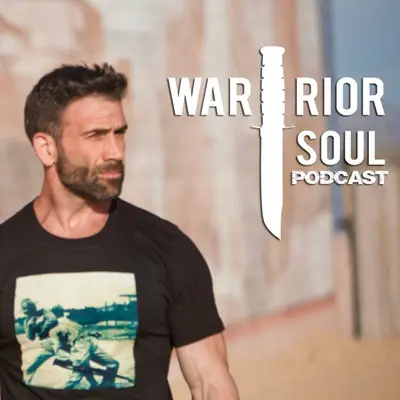
Host of the Warrior Soul Podcast and founder of Warrior Soul. Worldwide trainer and nutrition coach, contributing author at Testosterone Nation and Muscle and Strength.