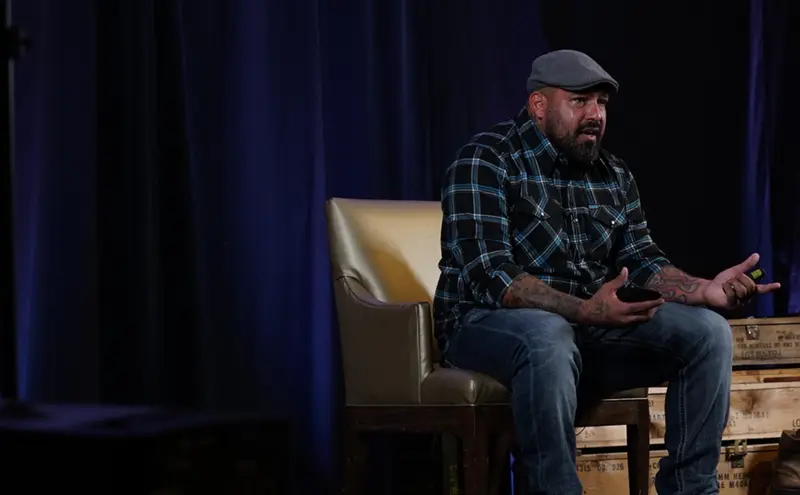
Podcast episode
Why Capitalism is Awesome with Matt Sapaula

Hosted by Chris Albert
The Warrior Soul Podcast
Matt Sapaula wants to teach people why capitalism is amazing.
Known as the “Money Smart Guy” he’s made it his life’s work to teach people how to be more financially literate and to educate his mentees on the power of running their own businesses.
He shows them the power of capitalism and entrepreneurship.
Matt got his start in the United States Marine Corps and began selling insurance on the side. After leaving the military, he dedicated himself to becoming the best salesman he could be.
As he grew, he also began leading and educating agents that he took under his wing. Matt is also partners with Patrick Bet David of the PHP Agency, the fastest growing financial services agency in the US.
Matt’s Bio
Matt began his career in the financial services industry by working at a large brokerage firm in southern California in transition from active-duty service in the United States Marine Corps. In the Marines, Matt’s dedication to his country, his unit, and his duties propelled him to become a decorated military veteran while serving in Somalia, Africa, through Asia and the Persian Gulf. This time also gave him the values, discipline and drive that he brings to the financial services industry.
His drive and quest for knowledge led him to becoming one of the first military veterans to utilize the GI Bill to undergo DePaul University’s Financial Planning program. Matt believes highly in personal and professional mentorship and sought personalized training from senior experts in the financial planning industry, including from New-York Times best-selling author, Douglas R. Andrew of Missed Fortune 101 and Last Chance Millionaire.
To learn more about Matt: http://www.moneysmartguy.com
To Follow Matt on social:
Instagram: http://instagram.com/moneysmartguy
Youtube: https://www.youtube.com/user/matthewsapaulainc
To learn more about Kill the Victim, Murder the Tyrant, Build Your Empire Click HERE!
Transcript
Machine-generated from the episode audio and lightly edited — may contain errors.
Chris Albert (link to this point)
This is Chris Albert, and I'm here to remind you of one thing. Someday, you're going to die. Now that's not some morbid statement or scary idea. It's solid fact. Your time here on this earth is limited.
And we need to be reminded of this as much as possible for one simple reason, to live your best life while you can. This is the Warrior Soul Podcast.
What is going on, everybody? Welcome to the Warrior Soul Podcast this week, and I've got a really awesome guest this week. His name is Matt Sapaula. He's a US Marine Corps veteran, and he's known as the money smart guy throughout social media. Now, Matt owns an insurance agency, and he's been in this business for quite a while.
And then he partnered up with a guy named Patrick Bet David over at the PHP Agency. If you don't know who Patrick Bet David is, he's all over YouTube, talking about capitalism, talking about running a business. And I wanted to bring Matt on this week because I watched one of his videos and it was absolutely inspiring. You know, his goal is to educate people on financial literacy. And one of the things he's trying to slam home to communities that he works with is that capitalism is an awesome thing.
It allows you to be able to pursue your dreams, to pursue a life that you want. And it really is the best way to go. And so what he's been doing is educating people on financial matters, mentoring people, so many people on how to run their own businesses and how to run their own insurance agencies. And it's he's just a really great guy. Like I said, he's a US Marine Corps veteran, and we had a great time talking today.
Before we get into that conversation, I just want to say a couple of things. If you haven't been to this podcast before, this is the Warrior Soul podcast, and my name is Chris Albert. And the reason why I started this podcast a few years ago is because, well, over the past decade and a half of war, The US veteran community has been facing a whole host of different issues ranging from really high veteran suicide rate to high rates of homelessness to high rates of chronic disease. And there's been a lot of people out there trying to raise awareness about these issues. But here's the thing, I want to do more than just raise awareness.
I'm not just trying to stop veteran suicide, I really want to help all veterans to truly live. And that means that we need to be delivering solutions rather than just raising awareness. And that's what this podcast attempts to do. I tried to deliver tools, tactics, and strategies to help The US veteran community to live their best lives. And if you're not a veteran, hang around here because all of these tools can really be applied to anybody.
So that is what we're about. And on Mondays, we release interviews like this with awesome and amazing people. Last week, we had captain Dale Dye, who is a military adviser to Hollywood. He's helped create things like Saving Private Ryan, and The Pacific, and Band of Brothers. And we've had a lot of other amazing guests on as well.
And this week is no different with mister Matt Sapaula. In addition to that, we also have our Wednesday fitness notes. That's where I answer questions about fitness and health and nutrition. That's my background. I am a trainer and strength and conditioning coach.
And then on Fridays, we do our Warrior notes, and those are just short episodes that go into a mental tactic that you can use to gain better mental strength and be better prepared for this life. So in all, I hope you find all of these episodes helpful. And all we ask for in return is that you let people know about the show. You spread the word about it, share these episodes out. And if you can pay us the highest compliment that you can by writing us a positive written review over on iTunes.
It really helps with the show growth, and it really helps to get people to understand what we're about. Beyond that, I just want to say that this podcast would not happen without the good people at F Bomb Nutrition. They make awesome delicious packets of fats, and I'm a huge fan of their macadamia nut butters. They mix them up with chocolate, they mix them up with sea salt, with coconut butter. They're so good.
Sugar in them at all, and that's my dog barking. But we're gonna keep going. No sugar in them at all. And, you know, you can get 20% off of your first order of f bombs over at www.dropanfbomb.com when you use the code Warrior Soul at checkout. And with that, I'm gonna stop talking right now, and let's get into this conversation with my devil dog brother, mister Matt Sapaula.
Matt Sapaula, man. How you doing?
Matt Sapaula (link to this point)
Outstanding. Semper freaking Fi, devil dog.
Chris Albert (link to this point)
Semper Fi, my man. Dude, so last week, I watched one of your videos and it just inspired the hell out of me. You know, And, I haven't been in this game for a while. You know, a lot of times I'm looking around on the Internet and and my bullshit detector is like way up to here. But I was like, this dude is a real honest dude who really wants to help people.
So I did some some more searching, found out you were a veteran. And I was like, this guy's gotta be on the Warrior Soul podcast, man. So thank you so much for coming on.
Matt Sapaula (link to this point)
Dude, I'm just humbled that you even said that, brother. So I appreciate it. Honored to be on.
Chris Albert (link to this point)
Absolutely, man. So let's get a little bit of the backstory. You served in the US Marine Corps. When did you start, man?
Matt Sapaula (link to this point)
So I was 91 and '99, that was my time. Officially got out in '2 because I was in the reserves. But active duty straight up. Eight years in Marine Corps, you know, my duties was the Persian Gulf War. It was Operation Restore Hope in Somalia, Africa. I was in instructor duty. A helicopter mechanic crew chief door gunner and a 50 cal.
So that was part of my thing. I was part of the fifteen Marine Expeditionary and thirty first Marine Expeditionary Union out of Okinawa. So the last two years of my time was straight up instructor duty, which I think was the most glorious freaking field part of my Marine Corps career is being able to teach Marines, being able to teach the new up and coming Lance Corporals and Corporals how to make sure that they are operating in a field of combat and come back home safely to their loved ones. So that was my time and it was just packing a whole lifetime of stories and experiences in eight years.
Chris Albert (link to this point)
Wow. Yeah, it's funny how the military comes full circle like that because everybody has an impact on the next generation. Everybody has an impact on the next generation and the things that one generation learns, it gets passed down and then so on and so forth. And it's kind of like this evolving body of knowledge that we're constantly going through.
Matt Sapaula (link to this point)
Right, right. Because you know, maybe your first enlistment, you're kind of figuring out I'm a private first class, I'm a Lance Cooley just triggering my MOS. I only have maybe a year, two years in a fleet. By the time you know, two and a half years in a fleet by the time you get up, I got done with MCT and got done with my helicopter training school and crew chief school and door gunner school. And then you're in the fleet.
And I remember coming out of school and like, dude, those are fricking helicopters. I fly in one of those. Can I go and says, Yeah, you want to go on a float? Yeah, what does a float do? Yeah, they deploy all over the world.
I want to go. What's next thing you're going out? And then next thing know, went out. And next thing you know, we're on our way to Australia. We go to Hawaii, unaware Australia, Singapore unaware Australia.
And then and I next thing know, whole you know, the whole ship's captain's wiz so I can't even bear the whistle right now, but the whole ship's captain's this is the captain speaking. You know, we are being redirected. Right? And they say, oh, we're we're going into combat. We're going into war.
And he's like, well, I thought we're about to have fun. I'm about to take some pictures. I'm about to go visit Australia. Right? And next thing know, we're going into war.
Chris Albert (link to this point)
Oh, Oh, man. And you were headed up to the Persian Gulf from there?
Matt Sapaula (link to this point)
Yeah. Yeah. Persian Gulf. And you're you know, and it's kinda weird when they say, Sapaula, go down to legal and then make sure your SGLI is intact and make sure your will is signed. My what?
18 years old. That means the last thing an 18 year old, 19 year olds think about doing is making sure their beneficiaries are in order and their will is signed. Are gonna give all your money? So I'm like, what? My SGL?
My mom. Don't have nobody.
Chris Albert (link to this point)
Yeah. Yeah. What what was that that experience like? Because, you know, the Persian Gulf War is it's it's you a know, it was so much, I guess you could say enthusiasm around that. I I was a little kid when that was going on.
And I was watching it going on on TV. And you're like, you know, that that there there was so much kind of pride that we were were protecting this country Kuwait. And, you know, you're watching it on TV. It seemed like the media was completely behind it. What was it like actually being out there?
Matt Sapaula (link to this point)
Well, just the same situation with all my combat tours, especially coming up. I I didn't know what the heck is going on. I didn't know what the big picture was. Mhmm. What the hell is Kuwait?
What the hell is Somali Africa? What are what's me dealing with the UN? All we knew is this is our mission. You know, and when our company commander says, you know, 30% of you guys are coming back, that's why you need get this stuff filled out. You're like, you're kind of freaking out.
You're writing letters home. You know, brother, I didn't know what those I didn't even know the geography of where we're at. I mean, Persian Gulf. What the hell is Persian Gulf? You know, so, you know, the lack of you know, it's not like the Marine Corps recruited some of the smartest people in in in The United States where multicultural middle class kids come from nowhere just looking for a job, just looking for a career after high school.
So I think for the most part, I understand it now, but when I was going through it, the geography, not even knowing the geography or realm that I was in. It was just, you know, how do I just survive the next day and how to make the most of the information that they give us and do our mission and come back home.
Chris Albert (link to this point)
Yeah. Yeah. And it's funny, you know, talking about the Marine Corps is kinda like this multicultural society. I was looking at my playlist a couple of weeks ago and I've got NWA, I've got Ice T, I've got Waylon Jennings, I've got David Allen Coe, and all these things that just don't go together and I got that from the Marine Corps. It's just like being exposed to so many different types of people and just a great time in your life. And aside from the obvious dangers and everything like that, you're young. You don't have any bills really. You don't have to worry about paying rent.
You don't even have to worry about what you're gonna put on that day because you know what you're gonna put on that day to wear. It's a great time where you can just focus on mission at hand and learn And being around people that you know and that you like and that, well most of the time like. But it's a great time that I think a lot of young people while they're in just don't get. And us, as older guys can look back and we can say, damn, that was a good time in my life.
Matt Sapaula (link to this point)
Yeah. Yeah. Especially right now in this era where racial tensions are so high. You know, I reflect back on my Marine Corps career. Did I see the fact that the guy was white?
Yes. Did I see a guy was black? Yes. Did I say a guy was brown? Yeah.
But I saw them for who they were, but that's not who that's not what they were. Right? The outside is, you know, white, black, brown, but what did they teach in the Marine Corps? We're all green. Right.
Dark green, light green. Because at the same time, brother, bullets and bombs, it's not racist. If you're in the way, you don't have your head down, if you're not doing your job, it's gonna come after you. And so I learned to embrace our differences, not to be divided by them. And I think of America today was to look at things like that.
I remember, yeah, listen to Tupac about thug life. You you talk about those different Biggie, Biggie Smalls, all those different things. And I'm thinking about reflecting on that, you're right. Because you go into a barracks, one side you hear country music, other side you hear heavy metal, other side you hear R and B, other side you hear hip hop. But you know, at the end of the day, we ran in the same formation, man.
Chris Albert (link to this point)
Yeah, man. And it's the funniest thing because I remember first time going out Libbo, was in ITB, infantry training battalion, right? And you know, you're talking to these guys and you don't recognize where they come from really. You might hear the accent or something like that. We're all getting ready to go out for liberty and I'm from the East Coast.
I'm from Connecticut. Know what I mean? We have an Italian guy dressed a certain way and everything like that. So I'm there. I show up.
I got leather shoes on. I got jeans. I got a button up shirt. Got my hair spiked up with whatever I could because it was high and tight, you know what I mean? And then my buddies show up and you got a dude who's dressed in baggy clothes with his collared shirt tucking in, but even though it still looks kinda, you know, it looks kinda hip hop.
And then you got a guy who's wearing cowboy boots, a huge belt buckle, and everything like that. You don't realize it until you get dressed up for the libbo.
Matt Sapaula (link to this point)
That's so funny. Yeah. You see that your differences or the guy that wears Corcorans in his jeans. You know what mean?
Chris Albert (link to this point)
Yep. Yep. Yep. Exactly.
Matt Sapaula (link to this point)
You know?
Chris Albert (link to this point)
Exactly. Well, dude, how did you how did you first get interested in finance and and money?
Matt Sapaula (link to this point)
I got interested in finance because I took a green monster, a green logbook, and I did my do my my my best to track my money. Mhmm. And I get a $400 check or $600 check or $800 check every two weeks. I know it sounds kind of crazy for me even to say that, but I remember those are my checks. And I kind of put it out in a ledger where my money would go.
Just I do my best. And this is the days before direct deposit. So you had it in the Navy Federal Credit Union or you had cash in your wallet. Right? You cashed your checks before you got direct deposit.
That was until I decided to get married. Right? And then the whole budget just flew out the window. You had a kid, boom, budget flies out the window and you realize, dude, I can't even support my self as a corporal in the Marine Corps in the military, E-4, over two years, over four years, over six years. Then I need to get promoted, man.
And how do you get promoted? Well, gotta go through meritorious boards and you gotta take the hazardous duties. You gotta go deploy more. So I deployed to make another extra $100 here and have CPA, have all that extra stuff. I remember Sergeant Satchel, when I was in Okinawa, he had six kids as a Sergeant in the Marine Corps and it was locked on Okinawa.
He's from Chicago, he's locked in Okinawa. Couldn't really come back to Stateside because he loses overseas pay. And so I really started understanding, man, dude, we are getting locked in pigeonholed in our career because of finance, financial our financial situation, our economic understanding or lack thereof.
Chris Albert (link to this point)
Right. And that's not that's not, you know, just the military. There's people out there doing jobs that they absolutely can't stand for for the paycheck just just to have it come in. They're they're stuck there. Know?
Right. That's a common story amongst the American middle class right now. Right?
Matt Sapaula (link to this point)
Yeah. Yeah. And my first wave of understanding that shock value was my experience in recruiting. For most guys, they're 17 to 19 years old in the Marine Corps. That's our first full time job.
Chris Albert (link to this point)
Right.
Matt Sapaula (link to this point)
So I'm realizing, man, and it wasn't until a retired master sergeant who approached me of all places in the bathroom of a Best Buy right there in Lake Forest off of Oslo Parkway up to 405. He approaches me, I'm in the bathroom with my kids and they're going to I'm helping them do their thing. And he asked me a question, Are you gonna stay in the Marine Corps? Said, I'm a fricking lifer. Of course, that's the knee jerk reaction, right?
Chris Albert (link to this point)
Yeah.
Matt Sapaula (link to this point)
And I really, really believe I was a lifer, that's what you were told, especially coming back from a couple deployments because now you're salty. And he said, wait. He asked me a couple questions. Chris, he says, you like money? I'm like, yep.
He says, you like a lot of money? Yep. Then here's what hit me. Well, do you know the rules? No.
Well, do you know anybody that knows the rules? No. But you like money, like a lot of money, but you don't know the rules and you don't know anybody with the rules. It's like you're talking out of two different sides of your mouth. Because if you like the Marine Corps, if you like sports, read books and you're surrounded with it, right?
You listen to your right? But if you like you say you like money but your actions prove that you really don't like money. Do have anybody help me out with that? I said, no. Would you like some help?
So anyway, make a long story short, he recruited me into the insurance industry, my seventh year in the Marine Corps because I realized a career jammer wasn't gonna get me to the next financial level of my life. And based on the lifestyle I wanted to live, the freedom I wanted to have, I realized, man, wrinkle. Because I was exposed to another world, which is the rich side of San Diego, the rich side of Orange County, the rich side of Newport Beach and Balboa Island and Laguna Laguna Niguel, listen, I don't want me to be on a USS warship. I wanna be on that guy's 80 foot yacht.
Chris Albert (link to this point)
Yeah.
Matt Sapaula (link to this point)
So yeah.
Chris Albert (link to this point)
It's interesting to hear you say that because, you know, most of my time I was out at Lejeune and, you know, the I think the rich side of Lejeune was the Marine Corps.
Matt Sapaula (link to this point)
You Battalions.
Chris Albert (link to this point)
Yeah. Yeah. And and I mean, when you're young private and you're just heading out and there's so many things that you can waste your money on. There's car dealerships all over the place with ridiculous interest rates. There's there's and and this might not sound politically correct, but there's women all around the base who are looking to get a piece of your paycheck, looking to get a piece of that pie. And I saw a lot of guys get tied up with all kinds of BS like that. There, and then there's also the ancillaries. I mean, had the liquor stores, the strip clubs, and there was a place where you could give your blood for money.
Matt Sapaula (link to this point)
Yes.
Chris Albert (link to this point)
Yes, yes.
Matt Sapaula (link to this point)
I used that money to get my first tattoo, man.
Chris Albert (link to this point)
Yep. Yep. And and and so in that environment as a young Marine, you could have everything set up because like I said before, you don't really have to worry about many bills when you're younger. You don't have to worry about too much. You could have yourself set up if you play it smart, but if you're not smart about it and you start spending your money on crap, then in that case, you're gonna get yourself locked up into one of those situations and by the time you get married, by the time you start a family, you're gonna be tied up and you might be stuck in a position.
Right?
Matt Sapaula (link to this point)
You know, I realized, Chris, after ten years in the armed forces, eight years active duty, two in the reserves, 25 feet in reserves. I realized that uncle Sam paid me a $250,000 over ten years of my life. And I've got nothing to show for it, but a bunch of stuff in my 1997 Nissan Maxima. Obviously, the only good thing that came out of it was my son, who's now 23 years old. But that was it.
But I couldn't rub two quarters together. Remember DPP, the deferred payment plan, which is now A fees. Getting Owing money. If don't owe money, if you owed money, they just jack it out of your checking account and they write a page 11 on you because you're not paying your bills.
Chris Albert (link to this point)
Right.
Matt Sapaula (link to this point)
So the shock there is two, three months before I was supposed to get out and we take those TAPS class, those transition assistance program classes, TAPS class, that's when I received my first financial education class. This financial planner comes on base, all of us are getting out and he starts telling us about the compound interest and how to budget and how put your money on. Was, Dude, where were you at the beginning of my career? Because I don't need a budgeting class two months before I'm supposed to get in. Got $0 coming at me.
Right? So, today still hasn't changed. And that's why I'm doing what I am doing today, educating veterans and entrepreneurs alike to be more money smart.
Chris Albert (link to this point)
That's awesome. So when you when you got into selling insurance in in in the insurance industry, what types of did did your mentor give you give you training? Did he did he know, how how did you start with that?
Matt Sapaula (link to this point)
So I started I I I would fly my missions at night so I could be at the financial firm during the day. So I had volunteered a flight night, you know, night crew. So I'd fly it from, know, I have to be on base at sixteen hundred and we get done at zero one zero dark, know, zero two zero dark thirty, right? And so that allowed me to sleep for about five, six hours to get to the financial firm by 09:00 Pacific time. So I can start just understanding this world and wow, they're all rich people aren't jerks and some of them are of course, but wow, that's what it's like to make that type of money to help a lot of people and the lingo they're saying on the phone and the clientele that they were helping.
And I was just getting used to being around normal people, which I thought was kind of cool. And he showed me his presentation. I would sit and take notes on his presentations. And after listening to about a dozen times, I do same joke, the same intonation, same that's how he would He taught me a system of storytelling to educate a client to trigger them emotionally. And that's why people buy insurance.
So that's why people put money away for retirement or for kids college education. Because insurance and retirement services aren't something that people wake up every day and buy. These are still things that people need to be sold. And so you sell it in a way that engages them so therefore they're empowered to buy, right? Lots of guys in insurance industry sell, sell, sell, sell, and they never get anywhere.
So he taught me that process. And then, so I did that for twelve years and then about 2010, 2011, that's when I went into the media with TD Ameritrade and MSN Money. But yeah, that's what he initially taught me.
Chris Albert (link to this point)
What types of obstacles did you have in your own head during that first year or so while you're doing it? Like what did you put up resistance? Did try to say that the system wasn't gonna work for you or anything like that? What was going on there?
Matt Sapaula (link to this point)
Oh yeah. I mean, a whole lot of self doubt because the Marine Corps, even though you had doubt, you kind of kept that to yourself. You kind of kept that to yourself and you still follow through with whatever the mission was because you had camaraderie there with your brothers. In a civilian life, you have self doubt, but nobody else is doing it but you. So you're kind of like wondering if this is the right thing to do or not.
When some I remember a client, I think objection handling was in handling, dealing with people's excuses. I couldn't deal with that. It's like, I don't want to do it. Well, I got to think about it. Listen, AmeriCorps, we never said I'll think about it.
You know? So, you know, people My family, this, my wife this, we still did it anyway. So I just realized civilians, man, it's like there's a whole lot of, can I really do this? Can I sell? Do I gotta choke everybody out?
So me adapting to the current new battlefield that I was in was learning this new skill of not scoping my target, but learning skills to communicate to my target, Right? Learning to grow professionally with my mouth and my brain in my ears and I need to shut up and I need to learn how to ask more specific questions so I can hone in. I can zero in on their situation. And so I think with me coming out the Marine Corps, I had no problem with not having a boss. I think that was a very freeing thing.
But I think just dealing with people, that was the hardest thing for me to deal with. And I think today I still have some residual with that. And I'm still working on it today.
Chris Albert (link to this point)
You're still working on that today, really.
Matt Sapaula (link to this point)
I'm still working on it today because it's that knee jerk reaction when people give me excuses that the Marine in me still kicks in. The athlete in me wants to kick You're you're Like when you're spotting somebody, Creates your spot, come on, just give me two more. Right? Give me one for the Marine Corps. People don't know how to do that in a civilian level, comes to their finances.
So how do I translate that from physically and vocally to mentally and from a coaching coachability standpoint?
Chris Albert (link to this point)
Did you ever accidentally knife hand anybody?
Matt Sapaula (link to this point)
Right? Double knife hand, man. Maybe turn into a back slap, but pretty close.
Chris Albert (link to this point)
So there was this kind of learning process and like you said, it's a lifelong learning process, trying to deal with your own resistance, deal with your own psychology. And you know, you've been able to grow into a very major business and you've done that by also recruiting others kind of duplicate yourself. And when did you start realizing that that was something that you could do or or that that was something that that you should be doing to grow your business?
Matt Sapaula (link to this point)
A client was sitting across from me from a boardroom, and he goes over to sit next to me on the chair next to me for a specific reason for him saying, like your chair. What's reason between my chair and your chair? No, it's the same chair. But the difference between your chair and my chair, I as your client, I get up from my chair, I go back to my dead end job that I dread. But you get up from your chair because you're on your own business.
You do what you want. You go take your wife out for lunch. You go vacation. You can say, gonna make a lot of money this year. I like your chair.
I like the life that you're living. I like your chair brother. So I'm like, Louie, you're asking me to teach you what I do. He goes, I'd love to do what you do. I'm like, dude, I don't know how to teach him, man.
I guess you get licensed. I got licensed California, I'm in Chicago now you get licensed. I don't even know how to tell you how to go and find your clientele. Just kind of fell into this thing. So what I realized that people love the life I was living, I didn't have a way to teach it.
And ironically here, Chris, I've got my first notes from 1998 that I took as an entrepreneur. Oh man. Right? And I've got notes in this thing. And by the way, I was a very bad student.
If I was a good student, I would have been in the Marine Corps. But I became a good student because I know if I wasn't being a good student to grow and develop that financially speaking, I'd be broke. And today, you know, these days to put into a nice blueprint for our guys, but I didn't have a system or a process to teach what I knew, condense it into thirty, sixty, ninety days and give it to other people. And I realized that people want to do what I'm doing because most people today are overworked, they're underpaid, they're underappreciated, they're undervalued, they're not happy. And so what I realized that the blessing that somebody gave me coming out the Marine Corps or to give me a choice to get out the Marine Corps, to give me an opportunity to go in business for myself, even I was in the insurance industry, it was still a blessing just to be an entrepreneur.
Chris Albert (link to this point)
And when you take people on as agents, do they is there any perception amongst them that as far as adjusting to this new type of work, do they have problems adjusting to the concept that this is work and that that you do need to to be disciplined about it? And and what types of obstacles do you commonly see there?
Matt Sapaula (link to this point)
Two different two major obstacles. Number one is the guy that's having their having to wrap their mind around digesting money and financial strategies and being able to communicate complex things in a very simple way. Right? And the first person they got to sell is themselves. Because the people that we generally recruit are people that love the lifestyle, but man, they don't want to do the work.
Right. Right? It's like, dude, you want to make a $100 a year, but you want to take a $5 an hour mentality to this thing, dude. If you wanna do a 100,000, 200,000 income type reality, you've got to do that type of work too as well. You gotta be a student of the business.
You gotta show up on time. You gotta take notes. You gotta attend conferences. You gotta grow yourself professionally. So I think that again, that's where my people skill has to evolve and coach people because the Marine in me was just to put them to bootcamp.
I just wanted to get them information or as you said earlier, I want a knife hand them. The flip side to the obstacles of that is the guys that do get it. Become students of the business and they end up making a lot of money. They end up making 6 figure incomes. The obstacle I face there is that they make so much money in such a short period of time and they think they work.
Everybody ain't working, man. Like one of our first ladies, she's an accountant and her first month here with us, she's about to make $89,010 thousand dollars in a month. It's more money she's ever made as an accountant. Think by the time the whole month ends up, she might make like 12 or $15. She's, I'll make more money four months here, five months.
I'll make more money here in one month than I will in four or five months, six months at my job. So what I have to sell to her is that business is all about ups and downs. Job gives you salary, right? But business gives you commission and profits and revenue, but you still have to keep the foot in the gas. You just can't hang around the office.
Bureaucracy, you show up, you get paid. Military, right? You do the least amount as you can to get away. You skate just to get your paycheck and you skate, you do the least, but you get a paycheck. In business, you do the least, you don't get paid.
Eat. You better max out. So that's the dichotomy that I'm facing. Guys that don't get it, they'll never ramp up in business and that's an obstacle. Second part of that is they do get it, they make a lot of money.
I gotta convince them to get to back to work, which is more fun. I think that was more fun.
Chris Albert (link to this point)
And what types of is there any traits you look for in agents, you know, specific types of individuals or personalities or anything like that?
Matt Sapaula (link to this point)
Yeah. Think a competitive drive. They gotta be competitive. They have to have a deep desire to wanna be somebody. Gotta have a chip on their shoulder. You know, they have something to prove. You know, I don't like guys that are entitled, take off.
You know? If you're entitled to success, be gone. Are you entitled to to do successful work here because you have a pedigree or you have a college or you you know, you have a resident? Forget about it. That's what I love about this field or the field of capitalism and the system of free enterprise and entrepreneurship.
It's the level playing field, man. I don't care if you got a PhD or an MBA or a college degree, GED can kick your ass because he's willing to do the work. So that's what I love about this industry. So those are some of the things because I don't have a college, I still don't have a college degree. My wife and I, we run a multimillion dollar business.
We bring 7 figures a year. We still got a lot working. By the way, we don't think we make the 7 figures as a lot of money either. I asked my wife the other day with a business and a family of now coming on five kids. Expecting one in February.
I said, well, let me just Yeah. I told her, babe, when did you start feeling a little bit of freedom? When do you start feeling a little bit of financial freedom? She says $750,000 a year. That's with four kids and the savings and we pay our taxes and we're creating jobs and we're putting money away.
She started feeling free in seven fifty years. And by the way, it's getting more and more like that because I remember growing up, was cheap to The cost of living was inexpensive than it is today.
Chris Albert (link to this point)
Right. It was a lot less expensive.
Matt Sapaula (link to this point)
Yeah. Lot less expensive.
Chris Albert (link to this point)
Yeah. And I remember, you know, a $100,000 was a lot. You know, a $100,000 a year was a lot of money for a lot of people. And now it's, you know, people are complaining about it and and it's it's it's interesting and it's it's crazy how times have changed.
Matt Sapaula (link to this point)
100%. I I think I think the fact is, you know, I think it's a four out of 10 people making a 100,000 a year are feeling paycheck to paycheck.
Chris Albert (link to this point)
Wow.
Matt Sapaula (link to this point)
Yeah. Think according to USA Today, the financial freedom number to have your head at least above water was between one seventeen and one thirty four a year.
Chris Albert (link to this point)
Yeah. And it's crazy when you think about that on the global scale because, something like $33,000 puts you in the 1% of Of the world. Of the world. Yeah. Right? That's insane to think about.
A lot of the world, they live on way below that. Yeah. And and it's it's it's crazy. So, you know, I was looking at some of the the PHP agency videos. Right?
And and I'm looking at at, you know, the way you guys do things and it seems like it's like awesome, like a party, like people are people are so happy and and you guys are doing doing these kind of rallies and everything like that. Tell me a little bit about the the PHP agency, why you ended up partnering with them, why why it's different? Why is it different from the rest of the insurance industry?
Matt Sapaula (link to this point)
So I got introduced to Patrick Bet David by a mutual friend who's a pastor in LA, West LA. His name is pastor Dudley Rutherford, who my sister introduced to him because she was working for him as a director of ministry. And by the way, the reason why my sister ended up in LA is because she was formerly in Orlando as an Orlando magic girl and a dancer for Disney. She wanted to be a Laker girl. And so instead of being a Laker girl, found Jesus.
Anyway, make a long story short, she introduced me to Patrick Bet David through pastor Dudley Rutherford. And here's the thing, in order for me to teach other people how to do what I did, I needed a system, I needed a process, and as you pointed out, I needed a culture. Right. The typical age Let me ask you this question, Chris. If I said the word financial advisor, I said the word insurance agent, and I needed you to put an illustration in the brochure, an illustration for Webster's dictionary about who the typical insurance agent looks like based on age, gender, and nationality.
So let's start with gender. What do you think the typical agent is, male or female?
Chris Albert (link to this point)
Typically, probably male.
Matt Sapaula (link to this point)
Yep. Typical male. Older or younger?
Chris Albert (link to this point)
I would say probably younger. Most of the ones that I've ever dealt with were like mid twenties, something like
Matt Sapaula (link to this point)
And then what nationality? Ethnic background?
Chris Albert (link to this point)
Usually Caucasian.
Matt Sapaula (link to this point)
Yep. So you got two out of three. Right?
Chris Albert (link to this point)
Mhmm.
Matt Sapaula (link to this point)
So so it's it's typically male. It's typically Caucasian. And it's typically the typical insurance agent is 59 years old.
Chris Albert (link to this point)
Oh, gotcha.
Matt Sapaula (link to this point)
Yeah. So this year, one out of four insurance agents are out of the industry based on just natural attrition and retirement. Right. So the industry is facing as a whole because the current industry had failed to recruit another generation of insurance agents that's going to work under their wing to take over. It's like the Marine Corps not recruiting 18, 19, 20 year olds anymore.
And expect a bunch of Sergeant Majors and Majors to run the military. Forget about it. So that's what the insurance industry did. And so number one, what makes us different is the average age is 33 years old and we are a multicultural agency. 53% of our company is Latino.
Oh, wow. So there's a, I'm Filipino by ethnic background, but there's a good 40% of my business that's Spanish speaking. And what I love about our system is that we're able to recruit and train and develop agents to go back into the marketplace, to go back into their demographics, educate the marketplace and give them the hey, if you don't know anybody in the marketplace that does this type of work, do consider me the next time you think about money.
Chris Albert (link to this point)
Wow. Wow. And is that something that was a strategy from the beginning or or was that developed over time? Was that something you guys ran into and and just saw?
Matt Sapaula (link to this point)
For me, I I got invited in 2007 to the first ever multicultural conference in in Vegas at the MGM Grand sponsored by Allianz. And Allianz is pretty big. It's one of the largest financial groups in the world. Everybody in Europe knows who Allianz is, a l l I a n z. Okay?
And so I walk into MGM and for the first time ever, I see African American, Latino, I see Asian, I see women. Women is a big minority in our demographic marketplace, which of our company is 53 women. PHP Agency is 53% women. The highest income earners in our company are women. And the industry just failed to recruit a multicultural demographic.
And that was a 100% the reason why PHP Agency was started in October 2009. It's going to be our birthday this Saturday. Nine years in business. Oscar de la Hoya is an active investor in our company that invested into the infrastructure or he invested $10,000,000 into the infrastructure of our company to grow it.
Chris Albert (link to this point)
Wow.
Matt Sapaula (link to this point)
And so 100%, it was intentional from the get go.
Chris Albert (link to this point)
Wow. And you guys have like there's like a multimedia platform too. I mean, the Valuetainment channel that Patrick Bet David does that's that's centered on around a lot of what PHP agency does. There there seems to be like a real educational backdrop to to everything you guys do. Right?
Matt Sapaula (link to this point)
Yep. Yep. It's how to do this, how to hire employees, how to negotiate your next office lease, how to deal with anxiety and depression, how do you so there's a lot of things that helps any entrepreneur successful regardless of their with PHP and TMA. That's why our CEO called it Valuetainment.
Chris Albert (link to this point)
Nice. And then so with what you're doing with with Money Smart Guy, what was your goal with Money Smart Guy? What what what have you been trying to do with that and how how have you been adding to that bigger picture?
Matt Sapaula (link to this point)
The initial goal in 'eight, 'nine was because they couldn't say my last name in the media. Chris, God bless you, man.
You said my first and last name properly. What a devil dog.
Chris Albert (link to this point)
I did some research on that.
Matt Sapaula (link to this point)
With the media, they see my last name, Sapaula. They said Sapaula, Samula, Spatula. What the hell are you? Read my freaking last name.
Sapaula. Anyway, I was doing work with the Federal Reserve Bank of Chicago and they had something called the Money Smart Week because they did so much work with the Federal Reserve Bank of Chicago providing free financial literacy classes, they ended up calling me the Money Smart Guy. So initially the Money Smart Guy was just because that was just my nickname. It became a handle because people couldn't spell Matt, two t's not one, or pronounced Sapaula. So Money Smart Guy just became the brand because it's so much easier to say.
So my goal to answer your question is that the Money Smart Guy is injecting capitalism, free enterprise, entrepreneurial principles to the veteran community in transition or to any entrepreneur out there that's looking to grow a business. So the whole world transition and a lot of us, regardless of you in the military, just sat down with an athlete, Spice Adams two days ago and professional athletes are in transition. Like they were at this height of income and esteem of platform and exposure, and then rapidly they become a has been.
Chris Albert (link to this point)
Yeah, it's something like seventy five percent of ex NFL players file for bankruptcy in two years after they retire, right?
Matt Sapaula (link to this point)
That's right. We interviewed Antoine Walker who had a $100,000,000 career drafted by the Celtics, went to win a championship in Miami. Today, broke. You know? And by the way, it's usually the good guys that end up being broke because they can't say no to their crew.
Right. Right? And so now, got a job with Northwest Dimitri. He tells a story, gets recruited to speak at different colleges, student athletes about to go pro about how to be smart with money.
Chris Albert (link to this point)
Nice. Nice. And and so you're you're focusing with your content on on that veteran community there. I think that's awesome. You know, and one of the reasons why I think that's awesome is because one of the reasons why I started this podcast was because about five, six years ago, you know, when the veteran suicide issue was being brought forth, I saw a lot of people talking, putting the number 22 everywhere, trying to raise awareness, raise awareness, raise awareness, but nobody was really given solutions.
Right? And I had a real problem with that. And and what I see you doing here is you're actually giving viable solutions. You're actually showing people how they can set themselves up, you know, and and money is not the key to happiness. But if you don't have money, I've been there before, you're not very happy. Yeah, So
Matt Sapaula (link to this point)
yeah, money is definitely, know, when people say it's not all about the money, well, kinda is because we live in an economic world. And so money ain't gonna buy you happiness. You're right, it won't buy you happiness, but it sure removes a lot of distractions and arguments. So my challenge is how to be more money smart when it comes to this type of conversation. Because when you're considering that most people have depression when it comes to lack of money or lack of resources. And what I realized too, brother, is that the windshield, if you're going forward, the windshield is a whole lot easier to look at than the rear view mirror. Right. And all that shit you've been through, that's depressing to look at.
And by the way, if you're going forward and you're looking at the rear view mirror, you're bound for an accident. Yeah. So that's why I love entrepreneurship because I try to distract guys with competition. I distract guys by starting a business. I distract guys so they could be more hands on and create a new baby.
You know? And they have a new patrol, they have a new mission, they have a new agenda that they're now pursuing and they want to develop something instead of having a service dog, which is awesome. Now you have a service business
Chris Albert (link to this point)
That gets your focus on what's going on right now in the moment. Keeps your head out of, you know, all And that stuff from the that's an important point that I think it was Evan Hafer brought that up a clubber talks that the CEO of Black Rifle Coffee.
Yeah.
He was trying to to talk about, you know, even though he it's very centered on being a veteran, Black Rifle Coffee is more about more than just being a veteran. Right? It's becoming a worldwide brand right now. And it's
Matt Sapaula (link to this point)
Yeah.
Chris Albert (link to this point)
It's because he's focused on that that that windshield rather than the rearview mirror. With with what you're doing right now, what are some of the biggest mistakes you see young guys making when they get out of the military when it comes to to financial success?
Matt Sapaula (link to this point)
I think that the number one is they don't plan for finding a career or a way to replace the money that they were really making in the military when they get out. And they just lean on the GI bill to live on, they lean on, know, guys are living on $1,600 a month, dollars thousand 100 a month for the post nineeleven GI bill. Okay. But here's what I understand too. Like a lot, there's a lot of guys or I see a lot of guys every day with a ton of education, but they're still not bringing in money.
Chris Albert (link to this point)
Right.
Matt Sapaula (link to this point)
So if especially if you've a family, especially now if you're single, I totally get it, you know, shack up and that's an area to be broke because you're only responsible for yourself. But number one is with that, while still in the military, they buy a car with four year financing or they buy a house. I think one of the worst things veterans can do is actually buy a house. Why the hell are you gonna buy a house with a VA loan, you're obligated to pay for it for thirty years, you only might be in the military for four years in this specific area. Right.
To me, that's a big rip. And then they leave the Marine Corps, they leave the military. It's not like the obligation to pay that mortgage is done or pay your car payment is still done. You still have to pay those things and that adds just another barrier of stress, a burden of stress on a family, on young service members leaving the military. So that'd be number one.
And just not being prepared for that transition from a reality standpoint. And the reality is even though if you have six months to get or a year to get or three months to get up, they think they just don't need to work with urgency. So brother, three months passes by just like that. Six months passes by, a year passes by. Just don't think you don't need to make the decision now and start fostering planting those seeds now.
So therefore, when you do get out, you have a year of making the right decisions versus starting from scratch when you get out.
Chris Albert (link to this point)
Yeah, there's certain things that are held up, you know, as carrots too. Even when you join the military, I mean, the concept of a VA loan to buy a house, right? That's something that goes back to like World War II where, you know, veterans the American dream, the GI Bill, right? I have to admit, I'm somebody who fell prey to that. I hid out in school forever, man.
I got two masters.
Matt Sapaula (link to this point)
Yeah, of course.
Chris Albert (link to this point)
I was working on a PhD. I was living off of that post nine eleven GI bill and just doing it. And I've seen a lot of veterans who are just going back to school just to get the GI bill. Yeah. Even when they have families. And, you know, I think that one of the things you need to understand, number one, a college degree isn't what it used to be.
Matt Sapaula (link to this point)
Yep.
Chris Albert (link to this point)
It isn't what it used to be. It's not a guarantee that you're gonna make a living, right? Not even a guarantee that you're going to eke out a living. Number two, you know, think that you have to understand your purpose in a lot of ways. You really have to focus on finding that first before you commit yourself to going to college, buying a house, settling down because you don't know what your purpose is when you're just getting out of the military and then tie yourself to a geographic location or tie yourself to degree.
It's kind of a, you know, limiting your options.
Matt Sapaula (link to this point)
Yep. And and what I'm realizing too now that I've been out now for a minute, it's going on with 17, 16, 17. And so I've been out longer than I was actually in, which is kind of a weird evolution. But yet I still carry some lot of the military stuff with me, Marine Corps mindsets with me. That the the Marine Corps man, what a short period, what a short chapter that is of your life.
Chris Albert (link to this point)
Right?
Matt Sapaula (link to this point)
And you gotta deal with you for another twenty, thirty, forty, fifty, sixty years, Lord willing. So, know, one of the great things about the Marine Corps or a military career is that you got exposed to so much in those three, four, five, eight year, whatever it was, that most people never lived throughout their lifetime. And so I think a lot of military service members getting out don't give themselves enough credit for the work ethic and leadership and the type of person they're going to be to any company, let alone a business. Because we starve for recognition. Like how many times you've been in formation?
Like what the hell? He's getting a NAM, he's got a Navy accommodation medal. I was busting my ass harder than he was. How come I I'm not up there getting an award. I'm getting a medal on my chest.
Well, here's a scenario now. We're in business. As an entrepreneur, you can get reward for what you do, man. And and I I don't think enough guys Unis has enough credit. They can do it.
Chris Albert (link to this point)
Right. Exactly. You know, and that brings up another point and I know we got to wrap up pretty soon. But I wanted to ask you this because just the way political times are. Yep.
You're dealing with a multicultural segment of society with PHP Agency. Right? Yep. There seems to be this concept out there that democratic socialism or socialism might be a better way than capitalism? And, you know, from what I've seen in Patrick Bet David and and yourself, you're trying to educate people about the virtues of capitalism and what it can do for people.
Mhmm. What are people not getting?
Matt Sapaula (link to this point)
I think a lot of folks love the handouts. We love the benefits. We love those type of things. But the flip side to that, there's a there's a cost to that. And in understanding capitalism, like if it's a level playing field and if you're willing to do the work, why should somebody else benefit from my work when they weren't willing to go after it?
Right. So capitalism for us, both Patrick and I, we do not have college degrees, but yet we run this 9 figure company. He's a deca millionaire, I'm a multimillionaire. But the degrees never defined us, But having a shot to be a capitalist and entrepreneur has. And so, one ways of I'm teaching my kids, because the kids are going to school all the time and they're being exposed to a lot of liberalism, a lot of socialism and your father.
Matter of I had him wear his shirt. I'm a capitalist. I believe in capitalism. And just the basic principles of you bust your tail, you get rewarded. You work long, nobody gets in your way.
But you're the one that benefits from all that work versus having to take out a percentage of that, that So there's things that we believe that socialism, sure that's left wing. Capitalism, right when this is meant to be. But I think if you're flapping both wings together, man, this country can elevate and take off. Right. Know, so there's there's there's bits of both that we both agree with.
But if I'm gonna say, you know what? If it's all left to me, the the tenants and the principles of capitalism is what we resonate with the most.
Chris Albert (link to this point)
And I think that there's this misperception out there that if you're wealthy, you somehow stepped on somebody's throat to get there. And and, you know, with you particularly and with Patrick, I think the reverse is true. You you've gotten wealthy by helping people. Yeah. By really taking care of people and treating the members of your agencies the right way and getting them motivated to do work for themselves and all this different stuff.
And I just think that there's so many misperceptions about what capitalism is that it's this evil thing. When the reality is it could be the great equalizer. It could be the the real thing that that that helps us all to get to where we want to go.
Matt Sapaula (link to this point)
A 100%. It is a great equalizer and it's provided, the fancy word is economic mobility. That I can start from being broke, but if I understand the principle of capitalism, I can take the little bit of money, the little bit of knowledge I have, apply it, get a return on that money financially and entrepreneurially and get myself to the next level. That's why guys like us can go like this and teach others to do the same because we're leading with moral authority of what capitalism has done for us without crossing somebody, without being the, you know, what was the thing with a Wall Street, that movie Wall Street, you know, greed is good.
Chris Albert (link to this point)
Greed is good, yeah.
Matt Sapaula (link to this point)
Yeah, but to an extent, you know, there's greed in all of us. I mean, the reason why people are running over each other on Black Friday is because they're not necessarily buying gifts for other people, they're buying gifts for themselves at the best price. That's greed. But if you're using that greed in a positive direction, again, that's what doesn't lead, because what leads in the news today? Crisis, controversy, conflict.
Right. Those three c, if it bleeds, it leads. Right, big toe. Right? Because that sells advertising, that sells eyeballs, you know, and so what we do necessarily isn't what's exposed.
Chris Albert (link to this point)
Now, I know you're all over social media. You're money smart guy on Instagram, on Twitter as well. You're also on Facebook. Correct?
Matt Sapaula (link to this point)
Facebook. Yep. LinkedIn. Yep.
Chris Albert (link to this point)
Facebook, LinkedIn, and YouTube. If somebody were to want to inquire about working with you, working with your agency and things like that, where would they go?
Matt Sapaula (link to this point)
Yeah. I'd say go to our website, money smart guy. I instructional videos on my YouTube page. We're building a new playlist right now. A couple of new playlist that we're building is the money smart millionaire series.
Episodes for veterans and other entrepreneurs and how to get a business, start a business. One of the videos is very popular for us, how to start your own independent agency. So I'm showing the things that we've done in our life to save people time, money, a lot of headache. If people want to go in business for themselves inside the insurance industry or those principles are free to use if you're having a desire to open a coffee shop or a restaurant or a franchise is the same principles because money being money smart, being an entrepreneur, that is a mindset, right? The mindset of a rifle in a Marine's hand is different than a rifle in a foreign country with some other guy holding the same rifle.
Why? Because when you have an ethos, morals and values and principles that's behind how we operate as marines. You know, the honor and courage commit and all that stuff behind it. So, but yeah, I'm a smart guy. We have a place to find me.
If you wanna get ahead financially and entrepreneurship is a vehicle that you're considering, we have a great series for that.
Chris Albert (link to this point)
Awesome, Matt. And one more question here. If you go back to meet the the 18 year old Matt Sapaula, prior to to stepping on the yellow footprints, prior to, you know, everything, what would you tell him?
Matt Sapaula (link to this point)
I say number one, find the right relationship for your life in terms of girlfriend. How many times we see in the Marine Corps, you you're getting this girl, this girl, because their hormones are taken over. But listen, man, sex, you're talking about 18 year old man, right? Right. Sex is a small part of a relationship.
It's a very important part, but it's a very small part in building a life with someone. Thank God my wife and I today, we've been together seven years now. We've been married three and a half, going on four. She has been a Godsend to me. And as much as there's distraction with women and especially in this world with Instagram, so many girls putting themselves out there unfortunately in ways that aren't in my opinion, me know.
And by the judge me on that because I'm raising twin girls till the age of 17. I'm trying to teach values of my kids that you don't get the right eyeballs by putting your ass in your flesh up on Instagram. You're gonna get the wrong eyeballs. You're get the wrong character. And if you wanna build a character, principled, valued more than life, if that's something that you're interested about Matt at 18 years old, which I know you have a programming for, that's why you listen to the Marine Corps, is that you gotta find the right personal relationship in your life to not be distracted.
So that's why I give a lot of props to like LeBron James, even though I'm not a big basketball fan. And of course, I'm a Jordan fan, right? Chicago. But I give props to LeBron James. There might be things that I may not know, but listen, he's been with the same girl since high school, all this crazy, on top of his game, all this money, and he's still with the same girl.
All the money in world, all the power in the world, still with the same woman. Very proud of him. And so I think you need to find out what you're looking to attract and love, not just because she's got a cute ass, whatever the case may be, cute face, whatever. That is fleeting. And so I'd be happy on that because that then will lead you to commitment.
Because I believe just your business life is just an extension of what's going on in your personal life. Right. If you show up your personal life, your business will express it. And I think if you get that part of your life, get connected with your spiritual life. You discover what that is, what that means to you because listen, you can't figure this out all on your own.
You're thinking a lot, but you don't. That would be the first couple of things I'd tell my 18 year old self. Yeah.
Chris Albert (link to this point)
And it's it's always wise to remember there is nothing that could break you more than a bad relationship or the Oh. Oh. Nothing that can break you more than that. I'm talking from vast amounts of experience.
Matt Sapaula (link to this point)
One of the hardest things to have to deal with, man, is a broken heart. I remember my heart feeling broken very first. Know, big bad marine. I remember sitting in a pay phone. Remember back in day, made a pay phone with a phone card and I just I remember the the the the helicopter turns, Sapaula, let's go.
And I'm just remember just feeling my heart just sink. I'm like, what the hell is going on?
Chris Albert (link to this point)
Dude, especially on Okinawa, man, because it's an island and you can't get off that much. You can't get off that thing. Worst. Sitting there in Okinawa is like, you're you're in this tropical paradise, but after two weeks, it's like, what the hell?
Matt Sapaula (link to this point)
But What base were at in Oki?
Chris Albert (link to this point)
I was up at Schwab on UDK.
Matt Sapaula (link to this point)
Oh. So sorry for you, brother.
Chris Albert (link to this point)
There was one woman on the whole base. It it was awful, man. You sure look good. It was what it was, man. You know, that just typhoon parties, all that stuff. It was it was Punch of liners. Yeah.
Yep. Yep. It was good times, man. But, yeah. Yeah.
That's that's definitely if you're young and you guys are are living your life, just live your life. Don't get yourself wrapped up in anything until you have the knowledge, the ability, and the room for a relationship like that. And that's advice for from a couple of old guys.
Matt Sapaula (link to this point)
Pretty old guys. Yeah. Then and then you bring a kid, you make a mistake with the wrong woman, you have a kid in the world and then you have conflict for at least another eighteen years. By the time you're our age, get the wrong girl, you have a kid with her, you get married, you divorce, your financial life is ruined, your military career is set back because it is. You don't think it is, but you know, there's a lot of decision.
You can be like, I wanted to do MSG. I want to become a Marine security guard. I want to guard an MSG. I couldn't do that being married. You gotta be a single guy for three years.
Yep. You know? So there's a lot of doors. Doors are wide open at 18 years old. You make the wrong decision, boom, a lot of those doors close and some of them never open back up again.
Chris Albert (link to this point)
Yeah. No, definitely, man. Definitely. And you wanna stay present on the moment where you are, and when you're doing something like laying your life down for this country, you really wanna be present. You don't want your mind wrapped up with too much useless crap.
So 100%. Well, dude, I wanna thank you so much for coming on today. It was a real inspiration talking to you. And like I said, I'm gonna put all the links to every way to get in touch with you, to get in touch with your agency, everything like that up on the show notes. Any last words before we go, Matt?
Matt Sapaula (link to this point)
You know, listen, I I especially in this time in a country we're at right now, there's a lot of indecisions, there's a lot of, you know, political craziness, you know, racial divide, whatever the case may be. Listen, I here's one thing, I can care less of what your color is. I just care about if you worry about one color and that color is green. Because you've solved the money aspect of your life, you solve the personal life, you remove a lot of arguments, you remove a lot of conflict, get the money aspect, you're less squared away. The income, he that controls your income controls your life.
If you're able to take back control of your income and who controls it, then you become the master of your own destiny. So
Chris Albert (link to this point)
Outstanding. Solid advice.
And for everybody out there, you know, take these notes down. Go I I really highly suggest you go over and check out some of Matt's videos and and and and see what he's about even more. And, you know, apply it and get out there and live your best life while you can.
Matt Sapaula (link to this point)
Awesome, brother. I'm putting you on my Instagram stories right now, brother.
Chris Albert (link to this point)
What's up, everybody?
Matt Sapaula (link to this point)
We're so podcast right, Chris. Love to be on the show. Yep. Wonderful.
Chris Albert (link to this point)
What's going on everybody?
Matt Sapaula (link to this point)
Awesome, man. Cool. I got you, man.
Host of the Warrior Soul Podcast and founder of Warrior Soul. Worldwide trainer and nutrition coach, contributing author at Testosterone Nation and Muscle and Strength.