Akshay Nanavati is an author, speaker, and United States Marine Corps Veteran who developed the concept of Fearvana.
Akshay Nanavati is an author, speaker, coach, and veteran of the United States Marine Corps who developed the concept of fearvana.
1. find your worthy struggle
2. live your worthy struggle
3. fall in love with every minute of the journey
The main idea behind Fearvana is that, if you don’t go out there and find your struggle, another struggle will find you anyway, but it will do so when you’re unprepared and unwilling to face it.

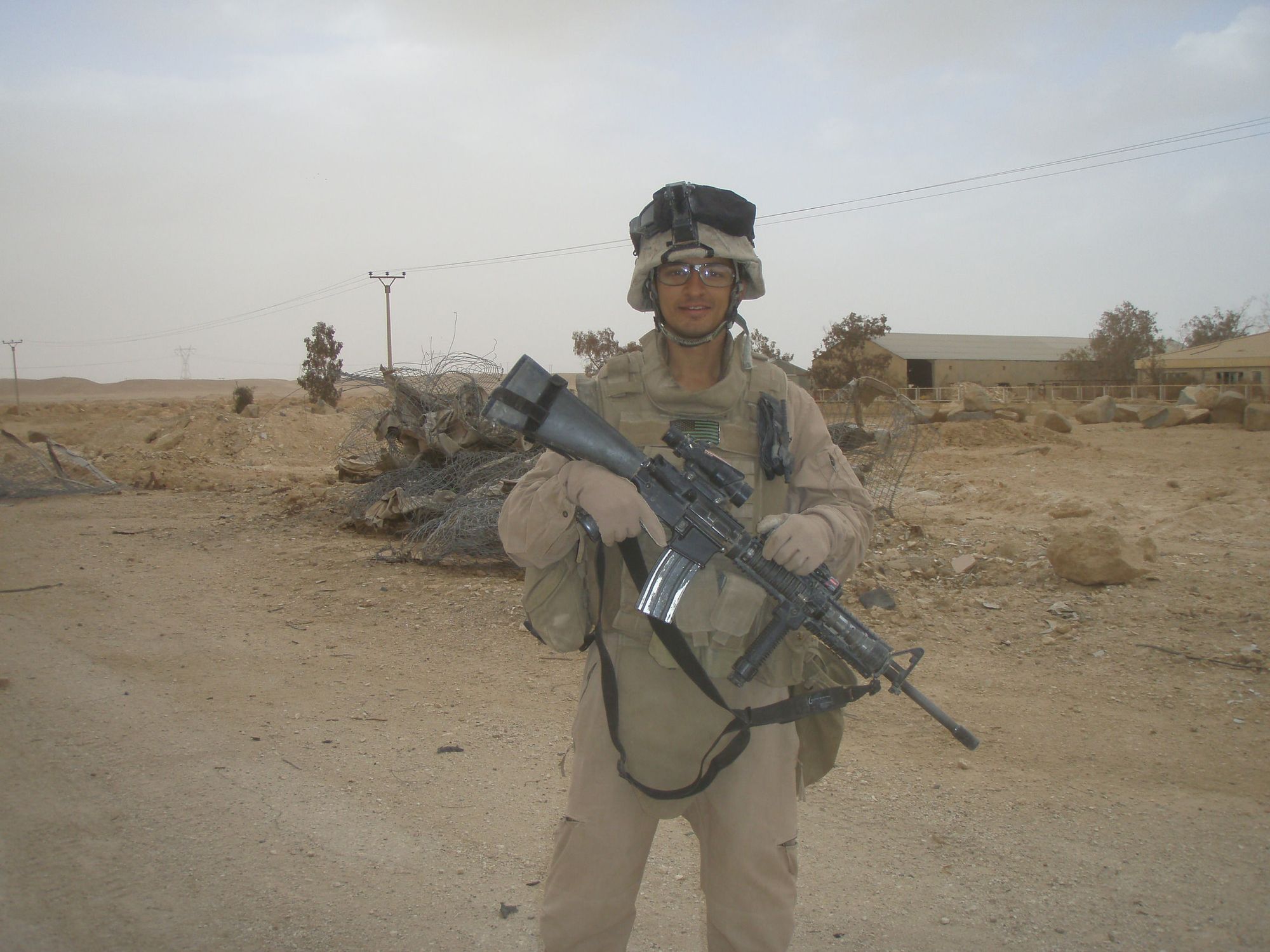
Fearvana is based on hard-won wisdom that Akshay obtained after years of going down the wrong path. Like many veterans, Akshay returned from combat with many demons.
Those demons led him toward alcohol abuse and a severe downward spiral. After he hit the bottom of the barrel, he decided that he needed to do something. He put years into studying neuroscience, spirituality, and the depths of his own endurance.
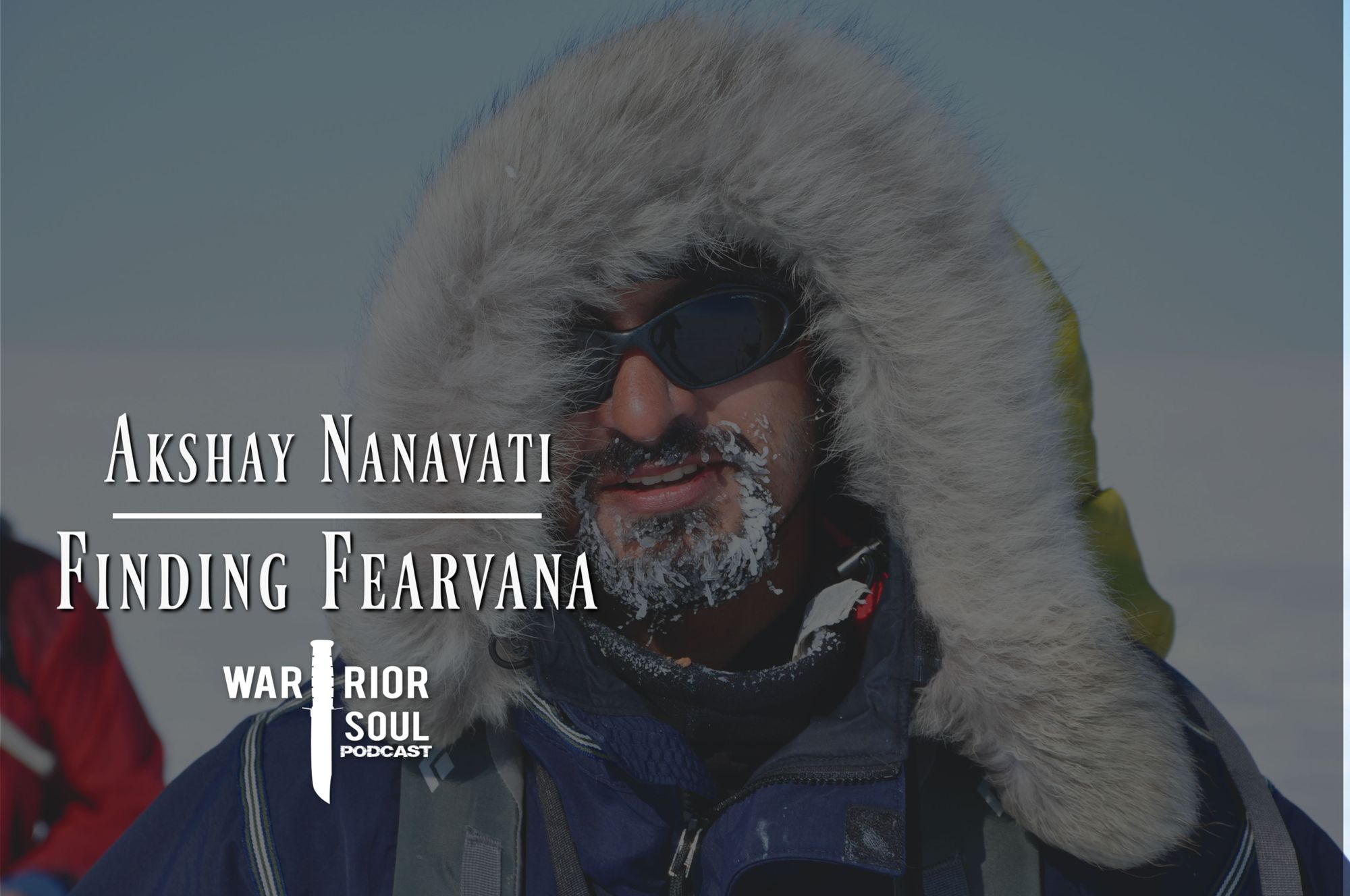
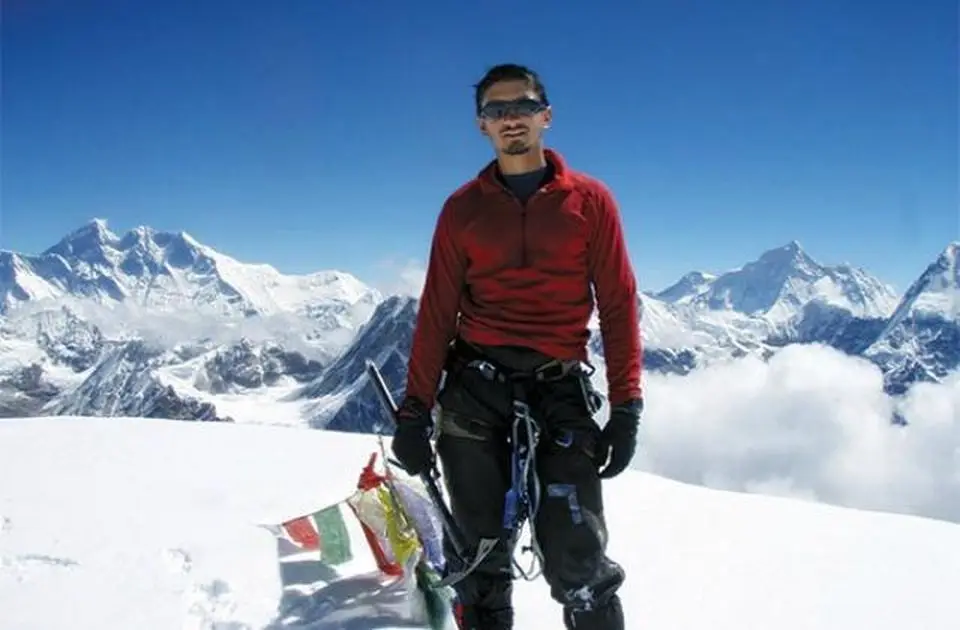
Since embracing Fearvana, Akshay has become an ultra-endurance athlete. He’s trekked across the arctic, climbed the world’s highest mountains, and stretched what he thought were the boundaries of his own capabilities.
To learn more about Akshay and Fearvana, check out his web site at https://fearvana.com/.
Transcript
Machine-generated from the episode audio and lightly edited — may contain errors.
Chris Albert (link to this point)
The Warrior Soul podcast is written, produced, and edited by me, Albert. Our mission is to provide tools, tactics, strategies, and ideas to US military veterans and anybody else willing to listen to help them to navigate toward living their absolute best lives. If you find these episodes helpful, please share them out with somebody that you know of that can use them. And if you really like the podcast, please also head over to iTunes and write us a written rating and review. It really helps us to spread word about the show, and it really helps to get these tools in the hands of others who really need them.
This podcast is sponsored by f bomb nutrition. They make awesome delicious packets of macadamia nut butters. They mix them up with chocolate, with sea salt, with pecan butter. They're absolutely delicious, and they also have a number of other fat fueled snacks, like their meat sticks and their cheese crisps. They're amazing people who are sending boxes of this stuff out to the troops on the front lines, and they're offering 20% off to our listeners on their first orders.
If you head over to www.dropanfbomb.com and use the code Warrior Soul at checkout, you'll get 20% off of that first order. And I'm gonna keep the announcements short and sweet today. You can stick around to the end. I got a really special announcement about a brotherhood that we're creating here at Warrior Soul. So hope you enjoy this episode.
I hope you get a lot out of it. And without delay, let's get into it.
This is Chris Albert, and I'm here to remind you of one thing. Someday, you're going to die. That's not some morbid statement or scary idea. It's solid fact. Your time here on this earth is limited.
We need to be reminded of this as much as possible with one simple reason, to live your best life while you can. This is the Warrior Soul Podcast.
What's going on ladies and gents? You know I was just sitting here thinking about how awesome it is to do this show. You know I've been going through a rough period the last few weeks. I've been going through an autoimmune flare up. I've been anemic.
I've been losing a lot of blood. I've been extraordinarily sick. And, you know, it's been a rough patch for me. But what drives me, what keeps me going is knowing that you guys are getting something out of the work we do here every week. The work that we do to empower the veteran community, to get our young men and women who serve this country and to turn them into wiser, stronger, more capable human beings in the civilian world so they can take their rightful place as leaders in our society.
That's what drives me, and it is such a privilege to do this show every single week. And if I did not have this, I don't know where I would be. So I just wanted to thank all of you. We're having a record month of downloads this month. That means more people are sharing the episodes, that means more people are writing reviews, that means more people are coming back and listening again and again and again.
So again, I want to thank you. I appreciate you guys so much. And I just wanted to say that before I got into introducing this week's guest. My guest for this episode is mister Akshay Nanavati. And this guy is awesome.
He's developed a concept called Fearvana, and he's got this saying. He says that if you do not go out and find and embrace your struggle, then your struggle is going to find you. Now there's so much truth to that statement. You can choose to either wait for struggle, and then when it shows up, allow it to break you, or you can go out and you can find the struggle and embrace the struggles you're currently facing in life, and you can allow them to make you stronger. That's a concept that goes back thousands of years.
If you go back to the stoic philosophers like Epictetus, Marcus Aurelius, Seneca, there's also a lot of influence on religious doctrine. And if you ever read the book by Viktor Frankl, Man's Search for Meaning, a book that I'm constantly talking about because I think everybody needs to read it, that's essentially what he gets back to. You know, you can live an amazing life regardless of your circumstances if you choose to embrace the struggle around you. Now what Akshay has done is he has taken this concept of fearvana, and he's turned it into an idea that can empower anybody. He's got a great book.
And a little bit about it, his backstory, he served as a US marine, served in Iraq, came back, fell into alcoholism, you know, the typical veteran story. And then he decided that he wanted to get better. So he put years of research into studying the brain, studying neuroscience, studying spirituality, and he went out and he went on a search. And he's trekked across the Arctic, he has done a lot of crazy extreme endurance stuff, So he's an extreme endurance athlete, and, you know, he's embracing fear whenever he can. But you don't have to do that kind of stuff to do it.
You can face whatever it is in your life right now that's causing you fear, and you can get the same kind of thing, and we talk about that today. We'll have the book and
Akshay Nanavati (link to this point)
everything up on the show notes
Chris Albert (link to this point)
so that you guys can access it. Like I said, this is a great interview. I'm not gonna delay any any longer, so let's get into this conversation with mister Akshay Nanavati. Welcome to the show, man.
Akshay Nanavati (link to this point)
Thanks so much for having me here, brother. Always a pleasure.
Chris Albert (link to this point)
Absolutely.
Chris Albert (link to this point)
Where where are you calling in from?
Akshay Nanavati (link to this point)
From New Jersey.
Chris Albert (link to this point)
Jersey. What part of Jersey is that?
Akshay Nanavati (link to this point)
A place called Basking Ridge. I don't know if you're familiar. Little suburbia. Nobody's here Nobody comes here for any reason.
Chris Albert (link to this point)
My mom's from North Bergen, Union City.
Akshay Nanavati (link to this point)
Oh, roger that. Okay.
Chris Albert (link to this point)
So she's up there. She or she she lives in Connecticut now. I'm from Connecticut originally.
Akshay Nanavati (link to this point)
Okay.
Chris Albert (link to this point)
But but grew up going down to North Jersey a lot.
Akshay Nanavati (link to this point)
Gotcha.
Chris Albert (link to this point)
And then my my grandmother, she lived in in in her older age, lived in Toms River, which is like yeah. It's way south, like, past the Pine Barrens.
Akshay Nanavati (link to this point)
Familiar with the area a little bit.
Chris Albert (link to this point)
Nice. Nice. And so so you joined the when when did you join the Marine Corps?
Akshay Nanavati (link to this point)
I joined in 2004. And it's six years. Yeah. I had just moved to The US. Actually, I joined, I wouldn't I wasn't even a US citizen.
I was I joined I enlisted as a green card holder.
Chris Albert (link to this point)
Really? Really? And where did you come from?
Akshay Nanavati (link to this point)
From India. I was born in India. Moved from India to Singapore and then to The US when I was 13.
Chris Albert (link to this point)
Really? Wow. Wow. And what was that experience like for you?
Akshay Nanavati (link to this point)
You know, I mean, it was when I I didn't I didn't see it as any like, I didn't experience any anything as a barrier. In fact, it was only a positive. And and when I was in boot camp, which, you know, in boot camp, you don't get praised a lot, if at all. They don't really pay pay you compliments. Yeah.
But I actually I actually got a few compliments from drill instructor from other platoons who were just like, man, this is awesome. You're not even an American and here you are fighting for the country and joining the marines. It was kind of like a a a, you know, like a badge of honor. So if anything, was like a pro, you know?
Chris Albert (link to this point)
I always thought that was really cool that that people who would not even be citizens who'd come to the country decided to to serve and to put their lives on the line for it. I think that's absolutely amazing.
Akshay Nanavati (link to this point)
Yeah. It was post nine eleven too, right, when I enlisted. So it was almost inevitable that I would get deployed, and obviously, I did.
Chris Albert (link to this point)
But it was So you knew that that was gonna happen. Right? See, when I went
Akshay Nanavati (link to this point)
in up as 03. I mean, I came in 03 ready to go, man. I volunteered to go every chance I could after boot camp and coming into my unit. That's awesome. Yeah.
Chris Albert (link to this point)
When when I went in, was it was 1999. And I think people forget, like, at that time, like, we didn't even think there was gonna be a war. Like, we said, okay. When we're in, I remember when I was in the school of infantry, were like, we have to constantly be prepared for a war with China and and things like that. But but we didn't know there was gonna be
Akshay Nanavati (link to this point)
Yeah.
Chris Albert (link to this point)
Anything happening, you know, two years later.
Akshay Nanavati (link to this point)
Yeah.
Chris Albert (link to this point)
And and I remember being just such a huge surprise because, like, up to that point, the only people that really had combat experience to me, was a few people from, like, Kosovo, couple of guys served in Somalia. Yeah. We had a guy in my unit who was in Haiti, served in Liberia, but it was like, it was all scattered. Right?
Akshay Nanavati (link to this point)
Now Yeah.
Chris Albert (link to this point)
Military's full of combat veterans.
Akshay Nanavati (link to this point)
No. It's OIF and OEF. Yeah. Absolutely. Absolutely, man.
Chris Albert (link to this point)
So for those who who don't know who you are, give us give us a quick introduction to your story, what you do, and and what your message is.
Akshay Nanavati (link to this point)
Roger that. Yeah. So my story and what my message is around this concept I created called fearvana. And the idea of fearvana is fear and nirvana, two seemingly contradictory ideas. Right?
They're often framed as opposites. But I've come to learn through a lot of life experience, a lot of research in neuroscience, psychology and spirituality that they're actually complementary. And the idea of Fearvana is to develop a positive relationship to not just fear, but the suffering and struggle of any kind and using it as a tool to live a more blissful, meaningful and ultimately even enlightened life. And I discovered this not just from being in the marines, but I mean, before joining the marines, I struggled with drug addiction, lost two friends to that lifestyle. I was in this place, was cutting myself, burning myself, just in this very dark place.
Got out, joined the marines. After joining the marines, I started looking for positive ways to experience that high that I once looked for through drugs. So I went like mountain climbing, cave diving, skydiving, ice climbing, rock climbing. I mean, you name it. I fractured four bones in three months from rock climbing, skydiving, all of it, you know.
Just just like exploring exploring my ultimately not just nature, exploring myself and nature was the playground to do so. Deployed to Iraq as an infantry marine, came back, struggled with PTSD, depression, alcoholism, was on the verge of suicide. And that was that low moment, man. When I hit that low moment, it was was the transition point that led me down this path of research to that that brought me to where what I do now with Fearvana. And ultimately finding meaning and purpose in my own suffering and realizing that it's actually something beautiful and the focus should be on post traumatic growth, not post traumatic stress disorder.
And that was kind of my own learning on using trauma and adversity and suffering and pain as a tool for growth and a tool for bliss.
Chris Albert (link to this point)
Right. That's a great story, man. And, you know, one of the things I notice about society these days, there's a lot of people out there who are out there trying to chase meaning and purpose. They're trying to find it in so many different ways. They're taking self help courses.
They're trying all these different reading a million books. Right? Following all these people on social media. It seems like there's a million different messages that we can get from social media as to how to improve our lives and how to how to, you know, really improve ourselves. But at the same time, it seems like people are getting more and more lost.
Right? And and and they're not finding it, even though they're searching so hard for it. Why do you think that is?
Akshay Nanavati (link to this point)
Great question, man. I love that question. I think partly because we're searching so much externally. And externally is what the world tells us how to live. Right?
In social media world, we follow everybody. This person says this is what it takes to be happy. The external world is telling us what it really takes to be happy. And we are creatures that are we're ultimately being shaped we are shaped by our environment. I mean, with a high degree of self awareness, even if have, insanely high degree of self awareness, we are still at the effect of our environment.
Our brains, our subconscious brains, they respond to the external stimuli and shape our patterns of behavior. We're all ultimately just creatures of habit. Right? Like from the day we're born, we're soaking in external external stimuli and that's shaping our response to the world and how we react and we react and live in the world. So with social media, we're just getting bombarded with more nonsense ultimately, more stuff on telling us how to live our life.
This will make us happy. It feeds us instant gratification. And there's all this kind of thing about like don't compare yourself to others, right? And that's also garbage because our brain naturally does compare ourselves to others. If you fall if you like when we look at something as simple as like a blender, why do I like one blender over like I like it because I compare it to another one, right?
We operate everything in our brain in reference to other things. We like one vacation because we have a reference to another one. Our brain operates in references. So social media is just feeding this nonsense that like, you know, it's feeding our it's triggering our referential brain saying this is how things are. This is what will make us happy, and we follow that.
The reality is we gotta go dig deep within, and we dig deep within by finding that meaning through suffering, through struggle. Right? I mean, when I joined the marines, man, I had I had a good life before that. My parents were great parents. I didn't have an abusive child like childhood, gave me everything, couldn't have asked for more, you know, but I had no clue what I wanted.
I was this lost kid, hence, delving down drugs, you know, looking for easy way out. Through the marines, I started to find the beauty and suffering. Like, that was me that's why so many so many of us struggle when we come out because in the marines, one of many things, but one reason is why there's, like, this meaning to it. There's a purposeful struggle to it. We complain about the adversity all the time.
Right? Marines, we're gonna bitch when we're out in the field. That's just what we do. But at the same time, we kind of love it. You know what I mean?
You know that. Like, we love it and it's a there's a beauty to that. So Yep. Having that is is what it takes, you know, seeking that struggle.
Chris Albert (link to this point)
That's one thing I tell people is that, you know, I I look back on my life and I can't think of a time when I was generally happier than I was when I was in the Marine Corps. You know, sense of self worth I had, the ability to just focus on one thing. Mean, you don't I really have to worry about too much. It didn't have bills at the time. Exactly.
Didn't have to worry about rent, didn't really have to worry about what I was going to wear every day, right? You're by your friends, right? You know, a lot of the time that downtime or the hurry up and wait time. Yeah. You you just spent sitting on your pack, a dip in and talking with other people, right?
Akshay Nanavati (link to this point)
Yep. So it's got that human connection, right? You got clarity of focus, clarity of purpose. You like you said, there's no choices you without it's a psychologist called this the paradox of choice. When there's too many choices, we don't know what to do and we don't make a decision, which is one of the reasons why we're, again, more lost than ever before.
And the marines and the military takes away that. No choice. So there's clarity. There's community. There's a mission.
Separate from, again, all the politics of all the wars and if you just remove all the politics, on the ground out there, there's this meaning to what we do. There's this doing it as one together with this brotherhood. There's this high you kind of get from living life at a more intense level than you do in the mundane. And so it kind of it taps into so many human needs, right, that that it makes it a very addictive experience, which is why it's hard to get out. And so many of us struggle.
Yeah. I mean, god knows I miss it too, man. So I get it.
Chris Albert (link to this point)
Yeah. That or I think and for the younger guys who are listening to this as well, who who might still be in, one thing I think happens is that we build up this image of what it's gonna be like on the outside, you know, when when nobody's running around telling us not to put our hands in our pockets or or telling us Yeah. To do this or doing that. We think it's gonna be this Yeah. And that keeps us from being present in the moment.
You don't get enough out of your experience while you're there. And then you get out and you're left with this this kind of anticlimactic feeling. Like like the past few years just kinda passed you by, and now you're in a position where you're entering a new realm, a new world with with no no one handing you a new purpose or anything like And and I think a lot of guys have a lot of regrets about getting out because of that.
Akshay Nanavati (link to this point)
Dude, it's such a good point, man. And absolutely true, know. Because when we're in it, like again, we're in sometimes these circumstances in the training or in war where it's the grass is always greener. Right? Like I'm sitting here in some swampy thing, it just sucks.
I'd rather be without this and not have people tell me what to do. But there's so much beauty in the simplicity of that existence, you know. And we think there's freedom when we don't have these rules. But the real freedom is in structure. The real freedom is in discipline.
I mean, when I got out, people think, oh, you're a marine, you're disciplined. But I actually took a one eighty, which I'm sure you or many of us can relate to. Like, oh, sweet. Right? No freedom.
I mean, no discipline. I don't don't have to follow any rules. Let me go hog wild. Right? And that was what caused me more problems.
And now what I've done in building my business and creating a life that I've now now live is basically replicating the structures, the systems. The hard part is I have to do it myself. It's not imposed upon me. But now that I've been able to do it, that's the freedom. Freedom isn't structure.
Freedom isn't discipline because if you don't have that freedom, you're basically surrendering to your subconscious brain. You're surrendering to your brain, which one, like, the Nobel Prize winning psychologist, his name is Daniel Kahneman, wrote this great book, Thinking Fast and Slow. He says that the brain is naturally lazy. It's gonna retreat to the easiest course of action. So if you don't have the freedom of structure, you actually you're imprisoned by laziness.
You're imprisoned by that. That's the real prison. And then you're inevitably gonna see the problems we see in terms of mental health, our happiness, like everything. Right? That's the real struggle.
That's the real suffering. If you don't seek out that meaningful struggle through the discipline, through structure, you're gonna suffer anyway. And that suffering is far, far worse. And we see that all the time.
Chris Albert (link to this point)
Right. Right. Kahneman Kahneman and Amos Tversky, they they both won a Nobel Prize for developing what's called prospect theory. And a lot of that talks to us about the psychology of framing. Right?
And you tend to frame your experience based on, you know, fear of loss, based on whether or not you think there's gonna be a loss involved. And a lot of times that can seriously affect your decision making. In fact, they've made a whole study of this. I worked on my PhD in in political science and went through a whole psychology section where this affected our our line of thinking about how political decisions were made in huge ways, and and Mhmm. That's a a really valuable contribution that he made.
Akshay Nanavati (link to this point)
Yeah. I don't I to be honest, I don't remember that specific part. I I read thinking fast and slow a long time ago as research for my own book with Fearvana, but I I remember loving it. And and so and, I mean, I used it as a great deal of research to write my own book. But the yeah.
Their work is amazing. Learned a ton from really fascinating stuff.
Chris Albert (link to this point)
Good. So we get to this point, we get out, we're we're we're not finding the meaning that we want. And so because we can't find meaning, we search for other things, right? And that's something that Viktor Frankl talks about. If you can't find meaning in your life, then you're gonna opt for more hedonistic pleasures things And like so you're at this point when you got out, you're waking up on the couch, you got an empty bottle of vodka next to you, you can't figure out what the heck you're gonna do. Tell us about that time in your life.
Akshay Nanavati (link to this point)
Yeah, so this was years after the war actually that I was at that really low moment. When I got back from Iraq, right after I got back, I went to grads went to grad school. I actually when I got back, I volunteered to go back to Iraq and Afghanistan every chance I could get. I was like, man, this sucks being here. Just send me back, you know?
I wanted to go back every chance I could get. And you know how it is, Marine Corps admin is not always the easiest in the world to work with. So it was a challenge to and I was like, come on, man. I'm a sergeant who's been out to Iraq. So why why would you not send me back?
You know? Right. But anyway, it ended up happening. So I actually went to master's in journalism because I wanted to go back to war as a war photographer, as a war journalist. And then I met my wife at the time in now my ex wife, I met her in grad school.
And, you know, then came so that kind of plans changed. I was like, alright, let me try to, you know, get married, settle down. Had a job for a little bit, but then when all those sort of structures faded away and as I was building my business, that's when sort of the demon started to rise. Know, I didn't have the freedom of structures, so now the demon started to rise. That, and soon after that, we struggling, to be again very frank with you, I was having physical issues with my wife at the time.
And it wasn't anything physical, it was a psychological problem, you know? So
Chris Albert (link to this point)
Like sexual issues or?
Akshay Nanavati (link to this point)
Sexual issues, yeah, exactly. Yeah. Sexual issues, but it wasn't a physical issue, it was a psychological thing. So she was like, Look, let's figure this out, you know? And so I went to the VA and started seeing the therapist there.
That's when it still things started to get worse and worse and worse. And the drinking just started to get really, really bad. Then after like, and I would usually just sneak it, like my wife would be passed out and I would just be sneaking down, like hiding booze in under the kitchen sink or this, that, and other places, you know. And after, like, days of binge drinking, I would just drink till, like, just, you know if she wasn't in town, I would just drink nonstop. If she was, I would drink all night, you know.
But one morning after days of this, it was just I woke up and I was like, this pattern of drinking and sobering up is never gonna change. So I was about to, like, literally just go over to the kitchen, pick up a knife, and slip my wrist because I was like, there's no point going on.
Chris Albert (link to this point)
Yeah. You stay in the book that after your therapy sessions, you'd often feel worse.
Akshay Nanavati (link to this point)
Yeah. I would often go drive straight to the liquor store to drink more. And, you know, I take responsibility for my behavior. I can't blame anybody else. But what I came to learn in my research later on is that our general and our conventional approach approach to therapy is deeply flawed.
Our approach to mental well-being is deeply flawed. Like the therapist that I worked with, I know the VA sometimes does get demonized and stuff like that, but the therapist I worked with were great people, very loving people, good human beings, but they're just operating from a bad playbook. And we all do the best we can with our knowledge and awareness. Right? Like, they genuinely cared about me.
I could tell that. But only as I kind of navigated my own learnings that I learned that just their methodologies were flawed and to some degree, you can't necessarily blame them for that. They were doing the best they could with their own awareness. But yeah, the methodologies were deeply flawed and that's what kinda led me on my own path when I really hit these hit these low moments that I was like, look, something's gotta change. I gotta figure this stuff out.
You know? And so I started researching myself.
Chris Albert (link to this point)
Yeah. Yeah. And so was there, like, a singular moment that that you said, okay. I'm I'm in this state right now. I'm drinking myself to death.
I'm having suicidal ideations. Was there was there a single moment where you said, alright, I'm not gonna tolerate this anymore. I'm gonna I'm gonna change Yeah.
Akshay Nanavati (link to this point)
You know, that that that moment when I was literally on the verge about to to slip my own wrist, That moment was a shocker to me. It it shocked me that I even thought that. But what what what I share, and I share this in the book, is that I still drank after that. Like, it wasn't, you know, that was the trigger, but, like, it wasn't, it wasn't that suddenly that happened and everything transformed and became better overnight. It's a climb out of that abyss.
The climb means sometimes you take five steps forward and maybe two steps back or three steps back, or sometimes even seven steps back, But then you get back up and take two more steps. You know what I mean? So it wasn't like it just magically shifted. I do always say that that was the trigger when I actually pondered, genuinely pondered and was like wanting to take my own life. That was the the the trigger point for change, but it was a slow climb out of that abyss.
It wasn't that it just radically changed overnight. And then I started researching, then I started figuring out, then I was like, okay, this something's gotta change. But, you know, the demons would rise back up from time to time, man, and I have to like, I had to develop a positive relationship with those demons. That was the real shifting point when I started to learn that the real problem is not post traumatic stress. The real problem is the assignment and the label of disorder to post traumatic stress.
And figuring that out was the true transformation.
Chris Albert (link to this point)
I want to talk about that. But first, I want to mention this too, because I mentioned you went to grad school, you got married, and I'm sure the idea was to settle down suburban New Jersey and have a family, go to work every day, do your thing, right? And I think a lot of times when guys come back there's this idea that there's a script that they've got to follow. Right? And the script says, you didn't go to college, so go get your education.
And then, know, find a find a woman find find a woman doesn't necessarily have to be the woman of your dreams, but but settle down, right? And then, and do your thing and fall into this conformity status with what society expects from you. And I think, you know, deep inside me, I did the same thing, right? I went to grad school, I got married with a girl from Connecticut, brought her out here to California, recreated like my childhood upbringing for a while. That led to divorce too and eventually led to me living out of my car for a while. But like, I think we fall into these patterns of trying to do what other people expect of us. It's such a mistake. After you go through such an extreme situation.
You know, one of the most extreme situations known to man, you know, combat, to to expect that you can just settle down into that kind of life. Right?
Akshay Nanavati (link to this point)
Yeah. And you're right, man. This is what we were talking about earlier. Right? Like, that we like, whether it be a veteran or not, we all are framed in this paradigm of how how how our life should look like, you know.
And exactly, even for the veteran community, you come back and you're told this is the way. And it's not even like, again, we all do the best we can with our level of knowledge and awareness at the time and our abilities. Right? But Ian, even with a high degree of self awareness to be able to do kind of rise above that, you're still trapped. We are still I mean, even like now, I'm very self aware, but I'm still trapped by the by certain things that I have to recognize, oh, I'm only thinking this thing because I believe this that, like, the world tells us how we should be.
So you're absolutely right, man. We kind of fall in this paradigm of how what the path should be afterward. Mean, this will this will be sort of the right path or the path to happiness. But I mean, even mine, when I came back, wasn't that conventional. Like, it was to a certain degree, but I knew I was still seeking something more.
But what truth is, like, example, one month after I got married, I went and spent I spent a month in Greenland dragging a 190 pound sled for 350 miles skiing across this world's second largest ice cap in temperatures as low as minus 40 degrees. It was awesome. It was intense. And truth be told, it was me seeking other avenues to experience the intensity of war. You know?
That's what it was. I wanted to go back to these intense environments where your life is on the line. I mean, it wasn't war, but it was like, in a way, that's what I was seeking. Right? Like, so I went I mean, in Greenland was intense.
The year after my trip out there, a British explorer was killed in one of these storms that were brutal storms that we got stuck in while we were out there that could have easily, you know I mean, it did kill somebody the year after my crossing. So I was I was seeking that and and I kept running. And ultimately, what I was doing was I was just running away from myself. And the thing you gotta be careful of, even the positive things we do, like going to Greenland, running multi marathons was positive compared to, let's say, drinking and drugs or anything like that. Right.
But even sometimes the positive things can be a way to run away from us run away from ourselves.
Chris Albert (link to this point)
Right. Right. And you end up either way, you end up working really hard for things that don't necessarily mean
Akshay Nanavati (link to this point)
That don't know. Exactly. That you don't know. You're just running away. You don't you're following a path assigned to you the war by the world around you.
And the only way you can figure that out, is you gotta you gotta take some time for stillness. And that doesn't I mean, look, there's value in doing a ten, twenty minute meditation, but I mean, like, really going deep within. Like like, mean, I I I again, I take a lot of things to an extreme level. I'm not saying everybody's got to go do this, but like last year, or not even last year, a few months ago, I spent seven days in pitch darkness, isolation, and silence. Just sitting in a dark room for seven full days to confront my fear of stillness, just to be completely so I'm not saying you gotta necessarily go that level, but you gotta go into places that are highly uncomfortable.
That's why I talk so much about suffering. Like, and now I'm an ultra runner. Right? So I'll run like 50 miles, 80 miles. I do these long runs and when you're at these experiences of intense suffering, you will find something else within.
That's the same thing that drew us in the marines, Right. That's why we love the suffering of that. And then you find that purpose there. So now you gotta seek it out though, but the difference is in the marines, it's assigned to you. Like you wake up and you go you might not feel like it but you have to get your ass out on the run, right?
Because you're told to. It's easy when you're not forced to, I'm not gonna go today. Who's gonna stop me? There's not some, you know, not some staff sergeant or somebody chewing your ass out to go out for a run, you know? So it's easy to not do that, but you gotta So the challenge is then you gotta create that discipline yourself.
But when you do, the rewards of that are the same rewards that we get from joining the marines, and you'll find far more peace by actually seeking out that inner war. You know? That that's the real path to peace is actually the pursuit of war. And I'm not saying the external war, but the inner internal war and pursuing that internal war. That's how you really find that peace.
Chris Albert (link to this point)
Right. So so the goal is not the absence of suffering. You need you need suffering, some sort of suffering in your life.
Akshay Nanavati (link to this point)
Without a doubt. Yeah. And you gotta seek it out. Like, the thing is, it's happening anyway. If you don't seek it out, it's gonna find you anyway.
So seek out a meaningful suffering.
Chris Albert (link to this point)
Right. Right. And so when you are in this state, right, you're you're you're you're climbing out. Right? You you you've realized that you had a problem.
You're climbing out of that hole. You're still drinking. What were some of the ways that you started bringing suffering into your life? Was it the ultra endurance stuff? Was it was it was it other things?
Akshay Nanavati (link to this point)
So at first, it was starting to, like the first healing was running. Running has been my salvation without a doubt. Then it was building a business, then it was writing a book. Writing a book was one of the hardest things I ever did, man. Writing a book was miserable.
So because as I started healing myself and learning all this stuff, I I realized that I had to share it. You know, I had to share it with others because of course, I'm not the only person that suffered. Everybody's gone through it in some way. So writing that book and now what I continue to do is running, working out, building the business, continue to do these things that I do, spending seven days in darkness, you know, spending stuff like like, now I still do things like like skiing across Greenland. I'm in fact going next year.
I'm planning two polar expeditions, one in Northern Norway under the Northern Lights, and then skied across the Patagonian Ice Cap, eventually skied in the North Pole. So I'm still doing these things that I was doing, but I'm not doing them as a place of running away anymore, you know? So I'm doing them from a very different level of consciousness than I was back then. And so that's like my worthy suffering today is basically fitness and business and business ties also into my nonprofit work. I have a nonprofit foundation, so we support like amazing causes.
I've worked with these these this group as former former child soldiers in West Africa to young girls who are victims of sex trafficking in India. And just, again, people who have experienced suffering in its, like, darkest forms, and helping them transform that into an experience of meaning and and now pursue a meaningful struggle from their experiences.
Chris Albert (link to this point)
And and while you were while you were bringing all this stuff into your life, were you still working a full time job while you're doing it?
Akshay Nanavati (link to this point)
No, I had quit my I quit my job. So when I after coming after finishing grad school, I had a I got a corporate job for a year and a half. But the day I signed up for that job was the day I signed up for the Greenland trip. So I I was like, I knew exactly what day I would quit that job was because I I was like, okay. You got a year and a half now to start kinda building your side hustle and then ski across and then because I was gonna I mean, I blew, like, 15 k to go ski across Greenland, you know?
So I didn't have a lot of savings coming back from this, but I started building my business and it was going well, but then it's kinda started tanking as my, you know, my inevitably, as I started drinking more and my mind and spirit was tanking. And then as I healed, again, my business started growing as well. And now I'm in, you know, I'm in a I'm in a good space and things are going well.
Chris Albert (link to this point)
Hey, guys. One of the big messages behind Warrior Soul is that life here on this earth is short. You don't get to be here forever. And so because of that, you need to make sure that you're making every moment count. You have no reason not to.
That's why we've created a group here at Warrior Soul called the Warrior's Obituary Society. It's a group of men who are empowering each other to live absolutely epic lives worthy of epic obituaries. It starts with an eight week development program. In that development program, the first thing you're going to do is outline your vision. You're going get very clear about what you want out of this life.
And from that vision, you're going to derive very specific goals that you're going to work on. From there, we work on very specific areas of your life. We help you to develop a fitness program that's customized to your needs and your goals. And then we help you to work on a finance plan so that you can stop spending your money on trash, start saving money, start knocking down debt, and start building up your dreams. From there, we're working on your relationships, we're helping you with your business and your career, and we are helping you to build a world class network.
In each week of the development program, you're going to get assignments that are going to get you closer to your goal, and they're going work on a specific area of your life. Each month, we're doing challenges as a group. We meet once a week on a live call, and then we communicate over our own private Slack workspace. We don't do anything over social media because I don't want any members getting distracted by a bunch of alerts, and I don't want anybody feeling like anyone's looking over their shoulder. If this is something that seems interesting to you, head over to www.warriorobituarysociety.com.
That's warriorobituarysociety.com. Lots of these types of programs out there cost thousands of dollars. This is not one of those programs. I wanted to open its access as widely as possible to those in this community who wanna build their absolute best lives. So check it out and if you have any questions about anything, free to DM me on Instagram or you can email me at chris@warriorsoulagoge.com.
That's chris@warriorsoulagoge.com. Now let's get back to this interview. So tell me about the business itself and that journey.
Akshay Nanavati (link to this point)
Sure.
Chris Albert (link to this point)
You know, when we think about business in today's day and age, a lot there's lot of stuff you can do.
The entrepreneurship's a great road for people. There's also people who I think shouldn't be entrepreneurs. Absolutely. Should back back the heck away from it because Yeah. They're probably not gonna be the road they should go down.
But but when you were deciding to put a business together, you know, what was your product? What was your product idea? You know, how did you go about putting that together?
Akshay Nanavati (link to this point)
Sure. So when I started my business, when I had the corporate job on the side, I was getting trained as a life coach because after coming out of Iraq and kinda started to get into, and all the stuff I had done like mountain climbing and all that stuff, all that stuff was pushing me into ultimately mastery over the self. So that's what kind of led me down the personal development and personal growth path. And so becoming a life coach seemed like I didn't really know what I wanted to do. I wasn't sure. I thought, okay, maybe this will be the this will be an interesting thing to go do because I was, you know, personal growth was kind of resonating with me.
So I was getting trained as a life coach and that's how I started. That's what I was building my business is getting coaching clients, working with people one on one. And, know, I didn't have like a systematized structured business. I wasn't one of those entrepreneurs that you hear that when you're seven years old, you already start selling stuff in the lemonade stand. You know, all that kind of stuff like many entrepreneurs have there.
I started when I was seven years old kind of story. And and that's awesome. Good for them. But I wasn't one of those guys. Was I was figuring stuff out and just doing what I had the bare like, basically the bare minimum to just pay the bills.
And we're living a good quality of life. We were still traveling. You know, my now I slept with my wife at the time. We had gone to, The Caribbean and stuff. So we were just making and spending whatever I needed, you know?
But no structure, no systems. Now it's much more, it's a much better spot. So now I sell digital information products, they get paid as public speaker. I don't do a lot of one on one coaching anymore, but I have my book as well. I mean, well, the book doesn't make money, all the profits go to go to the foundation for my book.
So I don't make money off the book, but we support some beautiful causes, as I said. But now I have digital information products. And and that, you know, the knowledge economy is one of the fastest growing economies in the world. It's it's it's easy in that you're just selling your knowledge and expertise, but by no means is it like falling into the don't fall in this trap with a lot of people like, oh, that just because you're selling your knowledge, it's easy to make money. There's a lot of that nonsense online.
Right. It's garbage. Like, nothing worthwhile is easy. It's it's freaking hard. It's really hard.
But that's kind of what I do now. Where I'm going now, the next phase is building kind of like this Fearvana Empire. So what Richard Branson is to the Virgin Empire, I'm building with Fearvana. But unlike Virgin, I'm not planning on getting like mobile and airlines or stuff like that, staying in the space of well-being and enhancing and transformation. So enhancing mind, body, spirit and our collective experience of life.
So creating like a Fearvana Academy, Fearvana Fitness, Fearvana Festivals, Fearvana Retreats, like a whole ecosystem under this Fearvana brand is the next phase that I'm going into as we move into 2020 and beyond.
Chris Albert (link to this point)
That's awesome. That's awesome. So are you attack attacking each each part of this empire one by one? Are you working Like the working on all of them at the same time? Or is there
Akshay Nanavati (link to this point)
No. Mostly one by one. I mean, like, it's focused one by one. So right now, I have digital information products, you know, scaling those funnels and then using what I make reinvest into this. So the next immediate step is creating this tech educational platform through the Fearvana online academy.
And once we get enough of a name following the Branson model, the licensing play of how he play how he did Virgin. I mean, what he's done with the Virgin is absolutely brilliant, like how he built Virgin. So following that model and I'm and like the key thing that you that I've learned, I mean, we all know from the Marines is nothing great happens alone. Succeed as And one so partnering with people who are way smarter than me. I have a business mentor who's built, you know, incredibly successful companies.
He's mentoring me. I have partners in gamification and behavior design, tech partners. All people are way smarter than me. I'm basically doing the Branson thing. I do all this crazy stuff like skiing across ice caps and spending seven days in darkness to to grow my brand and build the the the the ethos of fearvana and and that funnels into brand growth and brand recognition that will then funnel into my business growth as well.
So it all kind of and then my business growth allows me to go do these next crazy adventures because the things that I do are not cheap. So Oh, no.
Chris Albert (link to this point)
Absolutely.
Akshay Nanavati (link to this point)
It fuels into itself. But, yeah, that's where it's all going.
Chris Albert (link to this point)
How do you find those partnerships?
Akshay Nanavati (link to this point)
It's been an evolution, man. Like, you know, I can't you I wouldn't say it's all luck, but you have to learn to leverage luck when it comes your way. Is that let's put it that way. But partly, it's just like starting the process. I mean, when I came out of this darkness, right, like, was at no connections, nothing.
Right? Like, I mean, you know, no platform, nothing like that. And then I reached out. I was like, I started reaching out to people, like shooting sharing my story. That's how I got the foreword from my book from the Dalai Lama.
Like, getting the foreword from my book from the Dalai Lama was a game changer, man. Like, but it was a pure cold pitch, you know, just sharing my story coming from that place of authenticity.
Chris Albert (link to this point)
Does he have, like, an email address or, like, did you have to climb a mountain to go meet him or anything like that?
Akshay Nanavati (link to this point)
Like, Batman Begins scale to Yeah. No. I mean, I reached I I just did a lot of research, found a name and a contact in the in the office of His Holiness and shared my story. Six months of five to six months of just healthy persistence building relationships, you know, got that for it. Then building relationships with the next person, getting endorsements from my book.
Once I got endorsements from the book, I got 20 pretty legit endorsements from my book. People like Seth Godin, Jack Canfield, Marshall Goldsmith, Keith Ferrazzi, amazing human beings that have all touched my life. So genuine people that I respect and admire that I reached out to. Then I used that to get media and publicity for my book, you know. So I got on a lot of podcasts, got a lot of TV.
I was on Inc, Forbes, entrepreneur.com, Fast Company, lot of media. Then used that to fuel the next media win. So people started hearing about me. So then they started reaching out to me. Then I shared what I was up to, and then we would be like, hey, let's do these things, you know.
So really just hustling, grinding, playing the long game. And and and once you find that right connects, like, I have a partner in artificial intelligence, amazing platform. She's created this AI emotional intelligence coach. So it's like art it's like an AI form of therapy called Wysa. Amazing platform.
Like, what she's done is incredible. And I truly believe it's a really valuable resource for anybody struggling with any kind of mental health issues. And she had I mean, how we met was I I can't even remember, to be honest with you, but one of these things led to the next, led to the next, led to the next. And then here I was, you know, and I was like, I love what we're doing. Let's let like what you're doing, let's partner.
So when you build up, when you work hard enough, you build up a reputation, you get this, you stay in the grind, people will see what you're doing, you come from that authenticity, come from a genuine place of service. And if you're in the fight, like, people winners wanna be around winners. You know what I mean? So if you if you are showing that, people will come to you, you will chase the right people. And then and then now it's like, it's a little easier for me to now reach out to somebody and say, you know, hey, I'm doing this thing because I'm more well known now, you know.
But even like my business mentor, he read Fearvana, invited me to go speak at one of his retreats, loved my loved what I'm doing with Fearvana. Like, he loved the book. He gives it out at his retreats. He he then was like, I'd love to I mean, I asked him, can you would you mentor me? He said yes because he believed in me.
And this this guy's an amazing human being, and he's also a master at business in a way that I'm certainly not. So, you know, so you just stay in the hustle and and then you you you'll find one step at a time. But really also just focusing. If you're starting out wherever you're starting out, focus on one mentor, one mentor in something. Like you have to, I would say, like you cannot do this alone.
So get one mentor in something. Like if you're focusing right now and running, when I was running was my main focus, I got a running mentor, a running coach. I got to a point now I'm pretty good at doing that on my own, I'm good to go, you know? So I have business mentor. Business is like my area of most discomfort.
I can handle running on my own, but I don't know anything about scaling an empire that I wanna scale. Like, that's a whole new world to me, and I can openly admit that. So I get mentors who have done it, and then I follow along.
Chris Albert (link to this point)
That's a that's a really important note for for everybody out there listening because I think as veterans, a lot of times we have this thing in our mind like, oh, I'm not gonna associate myself with nasty civilians. I'm not gonna do this. If anybody has a different perspective than mine, screw them. And got guys, I have a group, it's called the Warrior's Obituary Society and we work with men who are trying to help themselves to live their best lives. I've got guys in there who are like, I'm not gonna mess with anybody who's not a fan of POTUS and doesn't like this and doesn't like that.
And here's the thing guys, no matter where you are or what you're trying to doing, you need people. You need other people to You help you along on your can't go into life with this kind of Rambo mentality. And I need to listen to that too because my business career has always been war. Like going to war on my own, trying to do this, trying to do that.
Akshay Nanavati (link to this point)
Absolutely.
Chris Albert (link to this point)
I've but but the reason why I'm a podcaster today is because I went and I worked with London Real for for for three years. I was a lead instructor of their academy. Right? Mhmm. And the thing I learned from that is that, you know, I'm watching other people build their empires.
I'm watching other people build their teams, and and you can't do everything on your own. Yeah. It's impossible. Yeah. It's impossible.
You also can't sit back and wait for things to happen. I think so many people feel like they post enough on social media, they get enough followers, things are just gonna happen and they're not. You know, you've gotta reach out to people. A lot of people ask me like, well how do you get how do you get such amazing guests? And it's because I reach out, I ask, I make a pitch, and there's value in it for them as well, you know?
Akshay Nanavati (link to this point)
Yeah. Like you said, man, and you gotta ask. You gotta I mean, make A lot of people Like I know in the veteran world too, we feel like if I ask for help, it means I'm weak. It doesn't. Like, it's the only way you're gonna grow is ask like, I ask for help in everything.
If I don't know it, I'm like like this business mentor. I was like I literally asked him, would you be open to mentoring me? Like, because I have, like, I don't know what I don't know how to do any of this. It's not weak and you're only gonna grow faster. You're only gonna do anything much faster to ask for it.
And also the willingness to question your own paradigms. You know, like you said, like sometimes a veteran, veterans will be like, nah, they're civilians or like nasty or this person is, they don't agree with me on this. If you stay trapped in your own belief system and your own world of view and your own way of thinking, that's as far as you're gonna get. You know what I mean? You've gotten where you're at.
You're gonna have to do something differently to get to somewhere different. You're gonna have to become a new person to achieve new goals. In order to become a new person, you have to let go of certain elements of this current person. So the willingness and this I I talk about this with so many people like the willingness to be wrong about things is so rare and so important. The greatest the people who are successful are those in any measure of success, financial, physical, whatever, are being the ones who can say, hey, I'm I can be wrong about this thing.
This thing that I'm currently doing is clearly not working. Let me question myself. Let me say, hey, I'm wrong. But it is hard to be wrong. Right?
I mean, people fight, die and kill for their belief systems. We kill each other for belief systems. That's what we're doing. That's how wars are happening because we're killing for beliefs. Right?
But if we can pause and say, Hey, maybe this belief is wrong. Maybe this paradigm is wrong. Maybe this mental model is wrong. Let me look at a different way of thinking. That's how you're going to actually get to the next self, your next greatest version of yourself and ultimately use that to whatever to create the goals you want to get to.
So question everything. Question yourself. Question your paradigms. Being coachable is something that will be like, okay, hey, can say, I don't know this. Can somebody help me?
Cool. Like, tell me tell me like, follow along with someone who's done what you wanna do. Figure out what they did, how they did it, what were their belief systems, what were their mental models, and then use that to scale your own growth at anything.
Chris Albert (link to this point)
Absolutely. Now, you mentioned before stillness, right? This idea of stillness. And you mentioned keeping yourself in dark room for seven days.
Were you fasting at the time too?
Akshay Nanavati (link to this point)
I did. It wasn't a complete fast. I did smoothies. I didn't do Smoothies. I didn't do food, just smoothies.
Yeah.
Chris Albert (link to this point)
So why would you do something like that? Because know a lot of people, they would walk over hot coals before they'd be locked in a room and not have any stimulus for seven days. Why would you do something like that?
Akshay Nanavati (link to this point)
To be honest with you, what happened was I went through a divorce last year. It was very, very challenging. It was a hard time and I ended up breaking my sobriety. So I drank again and I was like, Something's clearly missing within myself. I got to figure some stuff out.
So I wanted to go deeper within. I wanted to go, like, experience stillness at its most intense level. What I originally was going to do was a silent retreat. These are a lot more popular. People go spend ten days in silence.
But in those places, you're still looking at the world. And so while I was doing research, I stumbled into this concept of a darkness retreat. And because you're in darkness, you're shutting off one of the primary senses with which we engage with the world, your visual sense. So ultimately, you have no external stimuli to attach your consciousness to. You can't look at things and say, That's a wall, that's a tree, that's a human being.
You have nowhere else to go externally so you're forced to go internal. You're forced to go within. I like to say that your soul becomes a mirror to itself. So I wanted to go within and see what shows up and and and go and practice stillness in the most intense way I could possibly find. And it was Tense.
It was challenging, of course, but absolutely worth it.
Chris Albert (link to this point)
Was this something that you did in your own home, or what or or did you actually have to travel? Did they have a retreat set up?
Akshay Nanavati (link to this point)
Yeah. I went to a place in Germany to go do this that's called the darkness retreat. Because even if you try to do this in your own home and let's say sit in a room and have somebody bring you, like, there's there's ambient light. So beyond just the stillness of the darkness, it's actually really important to be in pitch darkness, like not even this much, like not even any light at all for even one second because neurologically, pretty interesting things happen to your brain. Among many things, but one of the things that happens neurologically when your brain is in an extended period of darkness for that that period for, you know, for a long period of time is it starts to naturally release DMT, which is one of the primary ingredients in Ayahuasca.
And so you have these trippy like, you go on these trips that were surreal. I mean, like, as an example, I think it was day five or day six of the darkness retreat. There was I went through this moment where it was blindingly bright, blindingly bright. I felt like I needed an eye mask to sleep. I was literally touching my eyelids, just touching my eyelids because I couldn't tell if my eyes were open or closed.
And I was trying to cover them because it was so bright that I felt like I I but but, obviously, I couldn't cover them because it wasn't actual light, but it was like the light was as real as anything else you could possibly imagine. I mean, it was it was surreal. That was one of many many surreal experiences that I experience that I went through in the darkness.
Chris Albert (link to this point)
Interesting. Interesting. And so coming out of that, what was it what was it like coming out of that? What what happened, you know, the day you got out? Day day seven, you were released and and walk out in the light.
Akshay Nanavati (link to this point)
That was the most I mean, I got I had many interesting things happen in the dark. I was also journaling in the dark, so I had so many interesting things that came through. But the coming out into the light for the first time in seven days was one of the most profound experiences of my life and definitely the most profound experience of that seven day darkness retreat as well. I mean, I remember coming back out and looking at the world with those eyes and just saying to myself that I I I wish I could look at the world every day through those eyes. Like, my two thought processes were, one was that, and the other one was just feeling this visceral and deep sense of gratitude for every bit of pain and suffering I've ever experienced in my life because I realized, and I kinda knew this through my work with Fearvana, but in that way, I experienced it in such a visceral way that you cannot really see the light this way unless you've been in the dark, you know?
And of course, I mean that literally, but also figuratively, right? Like, you cannot really experience the light in that way unless you've been in the dark. And it was so profound to feel that just viscerally, having experienced that after spending seven days in pitch darkness.
Chris Albert (link to this point)
Yeah. That's that's interesting because, you know, as somebody who's been depressed before, who's been down and out before Yeah. I can tell you that that that feeling of coming out of depression and and seeing the light itself, that's a great feeling. Right? When you actually get through it and you start to find meaning and purpose in your life.
Yeah. It's amazing. Let's get back to to stillness, though. When we're thinking about stillness, you know, I I meditate. I try to to I try my best to try to empty my mind and to try to get things out of it.
What are some ways that people who who wouldn't go on a retreat like that Yeah. How could they get back to stillness?
Akshay Nanavati (link to this point)
Yeah. So one way is exactly what you mentioned, meditation. But there's two kinds of meditation and often the second kind is not talked about. The first kind is where you, you know, you sit still, you close your eyes, and when a thought shows up, you let it float away and you anchor your mind to, let's say, you're breathing. So you breathe in and out deeply and every time a thought shows up, let it float away and you bring your thought, let's say, back to your breathing.
So your breathing becomes an anchor. That's one way and that's the more common way to approach meditation. And if it's not your breathing, you can do as a guided meditation as well. The other way, is each both both have their value. The other way, which is not done, but I think it's equally important, is where you actually don't let your thoughts float away and you don't anchor them to anything.
You just let them go wild and go where they go. So I learned this exercise from an endurance cyclist friend of mine. What he would do is he would sit still in a room staring into a wall for up to twelve hours. I think he would do it for either twelve to twenty four hours and he would, let's say, hours, sit still staring into a wall and then go riding for twelve hours. So you're just staring into a wall letting your thoughts go where they go.
It's an incredibly challenging, but incredibly powerful exercise in stillness. I haven't done it for twelve hours. I mean, I did spend seven days in darkness, but I haven't done the staring first time I did the staring into a wall exercise, I set a timer on my phone for forty five minutes, put my phone to the side, and I actually thought the timer on my phone is broken. I was like, is my phone battery died? Is the timer broken?
Because this feels like it's really long. But let your thoughts go where they go, and I guarantee you some fascinating stuff will show up.
Chris Albert (link to this point)
Right. And I think the the problem in today's society is that if we're in a situation like that, and we're not actively trying to let our thoughts go where they go, what we do instead is we pull out the phone. Exactly. Try to see what's going on on Facebook, what's going on on the news, things like that to try to try to
Akshay Nanavati (link to this point)
Cannot be still.
Chris Albert (link to this point)
Yeah. Block that that journey we're supposed to take. Right?
Akshay Nanavati (link to this point)
Exactly. We're constantly running away from ourselves and our environment makes it that much more conducive. And I'm not gonna say I'm like perfect at like not doing that. It's especially now when I get busy with work, I'll be checking an email, maybe I'm expecting an inborn email or some and then everyone's on their mind like, woah, woah, woah, let's let's pause for a minute, you know. So I'm not saying I'm perfect at it in in this.
So the environment will cultivate that. So you have to be very conscious and it's a relentless battle, man. Like, cause it's in the sense I can go go to a stimuli, like go into a darkness retreat where you have almost no choice. Again the beauty when you create restrictions, when you when you have constraints, like in the marines, right? Again, there's constraints.
You have to essentially go do it. So you do it. You know, in the marines, if you're out in the field, you don't have your phone or whatever. Right? They take it away.
You're you're stuck. You don't have a choice. So you embrace that and you make the best out of it. But in this world, when you have that, you have to set your own restrictions and own own rules and follow them to a tee, man. And because otherwise, yeah, the environment is that much more conducive to distractions all the time.
And so you really gotta you really gotta fight hard to to allow yourself. Like, these days, sometimes when I drive, I'll listen to no music, no no phone, and just ponder. Let my thoughts go as I'm driving, as I'm thinking, you know? And and even when I run, a lot of times now when I run, I don't listen to music or podcasts or anything, and just let my thoughts go and see where they take me.
Chris Albert (link to this point)
Yeah. I love running so much, but the problem, I have ulcerative colitis, and so a lot of the times, my runs get heavily interrupted. And it sucks because it's such a great such a great way of just emptying your mind. Yeah. Are there other activities that that you've come across that that could, you know, maybe substitute or or, you know, have the same kind of effect with you know, for those people out there who can't run?
Akshay Nanavati (link to this point)
Yeah. You know, I mean, I I I like endurance sports for those reasons because they're these long extended moments. So, I mean, if, you know, we can substitute cycling, swimming or anything, but even if not that, like some form of exercise. Exercise is one of most valuable things you can do. And and the beauty in it, it simplifies life.
When you're in the exercise mode, like, the only thing that matters is the thing in front of you, you know? If you're lifting a bar, for example, in the gym, your world is that bar, you know? And so exercising in the gym and, like, even just neurologically, one neuroscientist calls exercise miracle growth for the brain, what it does to your synaptic connections, your neuronal wiring. Another neuroscientist said that if you could put the effects of exercise into a pill, it would be the best selling pill of all time. So exercise is one of the best things you could do.
It also, on a spiritual level, it trains you how to suffer. I mean, that's why in the marines, we go we we go through in boot camp and infantry school. Exercise teaches you how to suffer and it teaches you how to suffer well, which is the most important skill to master. The ability to suffer well, as I like to call I like to say to suffer well, to smile in the face of suffering, is the most important skill to live a happier, more meaningful life. Because if you can suffer well, it won't matter whether life hits you in the face or whether you're seeking a meaningful challenge like joining the marines, running ultra marathons, building a business, anything worthwhile is hard to do.
But if you can smile in the face of that suffering, you'll be able to enjoy the struggle even when it sucks, which again, marines can kind of relate to that. You can't there is beauty even in the even in the suck. Like we say, embrace the suck. Right?
Chris Albert (link to this point)
Yeah. Yeah. Exactly.
Akshay Nanavati (link to this point)
Exactly.
Chris Albert (link to this point)
Yeah. Nice, man. So where can people find you? Where can they find your digital products? And and where can they learn more about you?
Akshay Nanavati (link to this point)
Yeah. The book is book itself is available on Amazon, Fearvana. It's in Kindle, paperback, Audible. You can find me at fearvana.com. That's fearvana, fearvana.com.
I have digital products around mastery. I have also some digital products around how I got so much media exposure from my book. If you're building a brand, have a product that'll help you build and scale your brand and use publicity and the power of media to do that as well. So fearvana.com, you can find me and reach out to me and I'm here to help in any way I can.
Chris Albert (link to this point)
Nice. Let's check that out, man. Awesome. Awesome. Now for everybody out there, I definitely recommend the book.
I'm listening to it right now, getting a whole lot out of it. Big things I think we talked about today, number one is understanding that, you know, in this suffering is where you're going to find that that meaning and purpose you're looking for.
Akshay Nanavati (link to this point)
Mhmm.
Chris Albert (link to this point)
If you're going out there and and just kinda chasing meaning and purpose, you know, through I think a lot of people set goals constantly trying to set trying to to get to a point where they're happier and and and finding that purpose, meaning a greater relevance that they want. But the problem is that if there is no meaning in the first place, the goal's not gonna mean much. And that's why you see people constantly dropping goals every year Yeah. Over and over and over again. The other point here I think we came to is that, you know, this constant stimuli to our brain, you know, the the the idea that we constantly have to be doing something, that we constantly have to be posting on social media or reading something or doing this or doing that, it's not the best way of getting to where you should be or where you want to go.
Akshay Nanavati (link to this point)
Yeah.
Chris Albert (link to this point)
And you need moments of what Akshay called stillness so that you're you're allowing your brain to to really travel to where it should be. Alright?
Akshay Nanavati (link to this point)
Absolutely, brother. Yeah.
Chris Albert (link to this point)
Awesome, man. Awesome. So, Akshay, number one, I wanna thank you so much for coming on. Number two, I wanna acknowledge you for the work you do. It's great to see a fellow marine getting out there and making things happen and influencing so many people.
And I wish you the best, man.
Akshay Nanavati (link to this point)
Thank you, brother. Thank you for having me on the show. A real pleasure speaking with you.
Chris Albert (link to this point)
Absolutely. And to everybody out there, get out there and live your best lives while you can. We'll be back at you later on this week with some more awesome content. Alright. There you have it.
Our interview with mister Akshay Nanavati. And I hope you got a lot out of that interview. I hope you do check out that book, Fearvana. We are going to have the link for that up on the show notes as we do with any author who comes on to this podcast. And again, I just want to thank you guys so much for coming on here and listening each week for spreading the word about what we're doing here at Warrior Soul and for empowering other veterans out there so that they can live their best lives and come back and take their rightful places as leaders in our society.
That's what this movement is all about and I couldn't do it without each and every one of you. So again, thank you so much. We'll be back at you later on this week with some more amazing content.
Host of the Warrior Soul Podcast and founder of Warrior Soul. Worldwide trainer and nutrition coach, contributing author at Testosterone Nation and Muscle and Strength.