Podcast episode
Austen Alexander: Walking the Road Less Traveled
Hosted by Chris Albert
The Warrior Soul Podcast
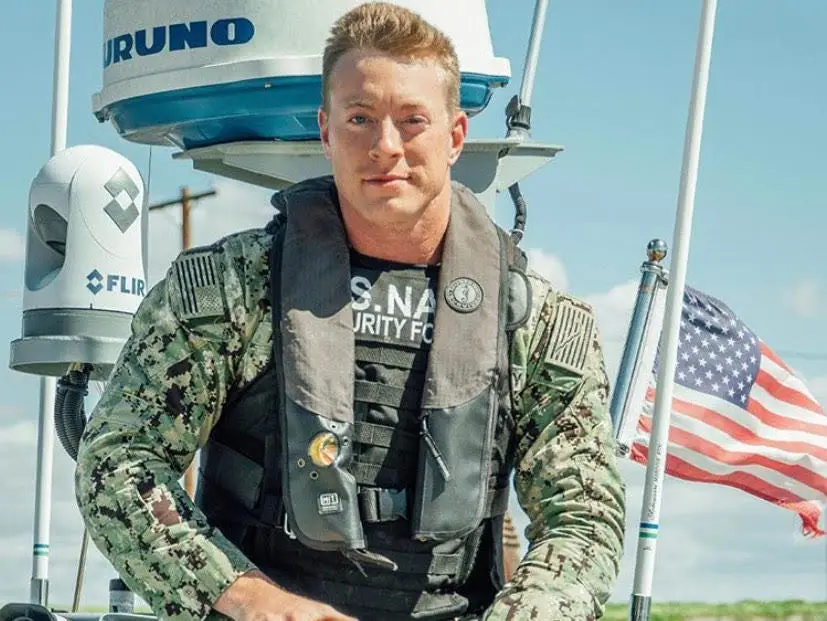
Austen Alexander is an active duty Sailor in the United States Navy, a YouTube Creator, and a bodybuilder...
Austen Alexander is an active duty sailor in the United States Navy who is serving with Naval Security Forces.
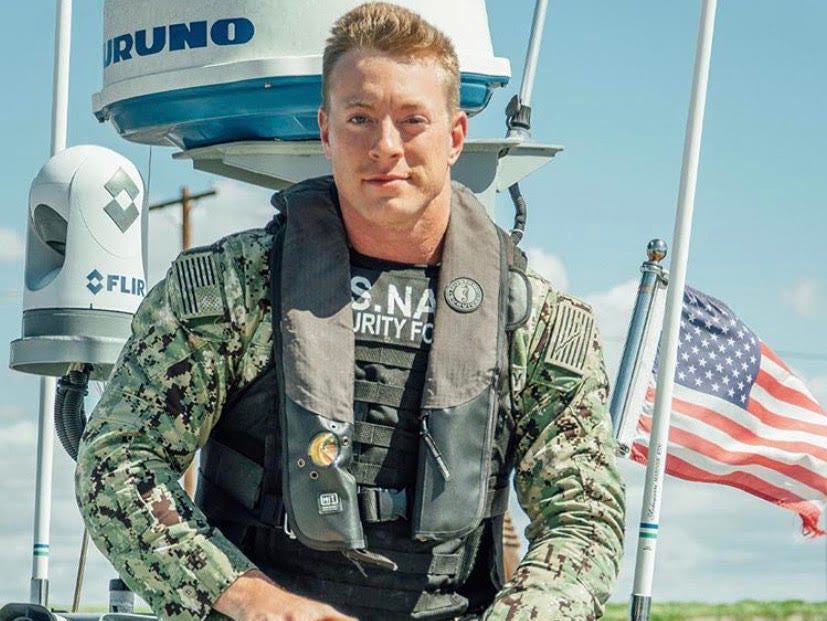
A few years ago, Austen began chronicling his life as a sailor on YouTube. Since then, his channel has grown massively to over 186,000 subscribers.
Though Austen made it look easy, it’s definitely not easy. He keeps up with his YouTube channel and his business while maintaining his full-time job as an active duty sailor.
Austen is currently planning on what he’s going to do once he leaves the Navy, and we sat down to discuss his life and his plans for the future. We cover:
- How Austen got into YouTube
- What made Austen join the Navy
- Austen’s fitness regimen
- Austen’s daily routine
- How he balances his nutrition and training regimen with his job as a Sailor
- Austen’s plans when he gets out
- Austen’s advice for those looking to get into media
- Books Austen is reading at the moment.
Check out Austen’s YouTube channel at https://www.youtube.com/channel/UCm_KYd9ls02FktHoE_R_1Qg
Follow Austen on Instagram at HTTP://instagram.com/austen_alex
Transcript
Machine-generated from the episode audio and lightly edited — may contain errors.
Chris Albert (link to this point)
The Warrior Soul podcast is written, edited, and produced by me, Albert. Our mission is to provide tools, tactics, strategies, and ideas that help The US military veteran community to show up as the wisest, strongest, most capable versions of themselves in the civilian world. If you're not a veteran, stick around because anything we talk about will most certainly apply to you as well. This podcast is made possible with the help of F Bomb Nutrition. They make delicious packets of fats that you can carry around anywhere with you in little portable packets.
They make macadamia nut butters. They mix them up with chocolate. They mix them up with sea salt. They mix them up with coconut butter. They're absolutely delicious, and they're really good for you.
They don't have any sugar. They also make a lot of cheese snacks. They make meat sticks, and it's just a great company. These guys send packages of this stuff to the troops who are on the front lines overseas to supplement their MREs, and we didn't ask them to do that. They just did that on their own initiative.
Really great company. If you wanna get 20% off your first order of f bombs, head over to www.dropanfbomb.com and use the code Warrior Soul at checkout. This podcast is also brought to you with the help of Save the Brave. Savethebrave.org is a five zero one c three charity for veterans. They run camaraderie events that include fishing, golfing.
They also do a lot of work with gold star families. And unlike a lot of other organizations, their board doesn't take a salary. Really great organization that is doing amazing work. So go and check them out at savethebrave.org. With that, thank you guys so much.
Let's get into today's programming. This is Chris Albert, and I'm here to remind you of one thing. Someday, you're going to die. That's not some morbid statement or scary idea. It's solid fact.
Your time here on this earth is limited. And we need to be reminded of this as much as possible for one simple reason, to live your best life while you can. This is the Warrior Soul Podcast. So for those of you who are still in the military and you're thinking about getting out, one of the things I want you to understand from this podcast is that there are a world of choices out there for you. There are so many different things that you can do.
And it doesn't just have to be that traditional path of getting out of the military, going to college, or you know going to learn a trade or whatever everybody else is telling you that you need to do. There's a lot of different things you can do out there and we live in this time and era where you have the means of production for so many things in your pocket. There's so many things that you could do with your phone or with your computer. That includes opening up a business but it also includes being involved with companies as a remote worker. It includes investing, it includes so many different things.
The problem with going one of these alternative routes is that it's not easy. It's a lot of work. You've got to train yourself, you've got to be extraordinarily disciplined and not the same kind of discipline you have in the military where somebody is going to be guiding you along on your path like your NCOs or your officers. This is another kind of discipline, you have to be a motivated self starter. My guest this week is somebody who's cutting his own path and cutting his own future for when he gets out of the Navy.
His name is Austen Alexander and he's built him self up a massive following on YouTube and on Instagram and he is building basically a media company right now. He's also getting into a bunch of other things. What I wanted to do was sit down with him, talk to him about how he got his start, talk to him about what his plans are for the future because he's still an active duty sailor, and to give you some insights as to what it takes to start something like this along with some of the things you should look out for. So Austen and I had a great conversation. We talked quite a bit about what he's doing.
We talked quite a bit about, you know, how he got into the business, how he started looking out for sponsorships and things like that, and you guys are really gonna enjoy this episode. I'll have all the links up to Austen's stuff on the show notes for this episode. And again, if this is one of the paths that you wanna take, I highly suggest you pull out a pad, a piece of paper, a pen, and start taking notes while you're going through this. Just a couple of notes here. Please, if you have not subscribed to the podcast yet, please subscribe to the podcast.
Please share these episodes out with people can use them. If you haven't been here before, our mission here at the Warrior Soul podcast is to empower US military veterans to live their absolute best lives. We do that by delivering tools, tactics, and strategies to help the veteran community to show up as wiser, stronger, more capable versions of themselves in the civilian world. And if you're not a veteran, stick around because anything we talk about here can obviously apply to you well. But what we're really trying to do right now guys is spread the word.
So please subscribe to the podcast, share these episodes out, and if you have not yet, head over to iTunes and write us a written rating and review. Now with that, guys, let's get into this outstanding conversation with mister Austen Alexander. Austen, welcome to the Warrior Soul podcast, man.
Austen Alexander (link to this point)
Thank you very much.
Chris Albert (link to this point)
Great having you on, man. Is... You're down in Seal Beach. Right?
Austen Alexander (link to this point)
Yes, sir. I am. Seal Beach, California.
Chris Albert (link to this point)
That's a beautiful area, man. I used to live down in Long Beach. Lived there, and I lived in San Pedro for a while.
Austen Alexander (link to this point)
Okay. Yeah. I used to... We had an apartment over in Long Beach for a while. First year I was here.
Chris Albert (link to this point)
Really? What part?
Austen Alexander (link to this point)
Right off of Pine.
Chris Albert (link to this point)
Oh, nice, man.
Austen Alexander (link to this point)
Yep.
Chris Albert (link to this point)
Nice. Yeah. That's a good area too. I... That's like downtown area.
I lived there for a bit. I lived in North Long Beach, which was awesome. A lot of people have bad perception in North Long Beach, but I loved it down there. And then ran my gym out there, Metroflex. It was a...
Which is an gym.
Austen Alexander (link to this point)
Yeah. I've been there several times. I love that gym. Nice, man.
Chris Albert (link to this point)
So how long you've been in the Navy for?
Austen Alexander (link to this point)
It'll be this December. It'll be seven years.
Chris Albert (link to this point)
Wow. Wow. How's it feel?
Austen Alexander (link to this point)
How does it feel to be in still?
Chris Albert (link to this point)
Mhmm.
Austen Alexander (link to this point)
It feels it feels good. You know, it took me a while to adjust to it just because I'm from a very small town. You know, it's a lot of things I had to adjust to. But I'm pretty good at it. I've gotten especially good at embracing the times that are bad when you're working long hours or whatever.
So I feel like it's been good for me because anything else that happens in normal life, doesn't compare. You know?
Chris Albert (link to this point)
Yeah. No. Absolutely. And you've probably been a lot of different places. How many how many different duty stations have you had?
Austen Alexander (link to this point)
I've had three different duty stations. I was in Bahrain. Well, technically three, but I really say four because I went to Bahrain for two years. And then I went to Lemoore, California for about two months. And then I deployed from there on the USS Carl Vinson aircraft carrier.
And then came back to Lemoore for probably another three or four months. And then I got stationed out here in Seal Beach.
Chris Albert (link to this point)
Nice. Nice. I was at was at Naval Support Activity Bahrain for a while too.
Austen Alexander (link to this point)
Okay.
Chris Albert (link to this point)
That's an awesome duty station. I absolutely loved it out there.
Austen Alexander (link to this point)
What year were you there?
Chris Albert (link to this point)
- 2000 So I was I was with marine security forces at the time, and we were jumping ships up to Southern Iraq, like the Qarabdala, the Shatt al-Arab, Mina al-Bakr Oil Terminal, and stuff like that. Yeah. It's a great place. I mean, the, the barracks there were awesome, and then they had that play.
It was a... Was it like the Desert Dome or something like that? That was
Austen Alexander (link to this point)
still there in 2003?
Chris Albert (link to this point)
Yeah, man. It was there. It was like a it was like a little rudimentary bar. We'd just go there because part of the time I was there was Ramadan, and you couldn't go off base. Yeah.
So, so we'd sit there and we'd drink.
Austen Alexander (link to this point)
You... They don't they don't serve alcohol there anymore, but they have really good... They revamped it. They have lots of good breakfast sandwiches and and stuff like that. That's where the security go for training and stuff now.
Chris Albert (link to this point)
Yeah. Yeah. And then I was making I was making so much money there. We would go out to like, the Ritz the Ritz Carlton there, and we'd we'd do the the big dinners and the smoke the hookah and stuff like that. Yeah.
It's awesome stuff, What made you decide to join the Navy in the first place?
Austen Alexander (link to this point)
I'm saying at the at the time, I think this was back in 2011 or 2012, I was cutting grass and making pieces.
Chris Albert (link to this point)
Mhmm.
Austen Alexander (link to this point)
And I just had a desire to better myself. I just felt that I couldn't keep doing that forever or I didn't want to. From a small town, a lot of people, they don't like to get out. They don't like to go places and travel. And I did.
I wanted to get out and go places. And when I think about something, I'm usually just going for it with minimal thinking. And that's pretty much what I did. I said, consider the Navy for about a day and a half, and then I said, sign me up.
Chris Albert (link to this point)
Nice, man. And so so you just went to the recruiter and were like, sign me up. Let's do this. Was was security forces the original plan there?
Austen Alexander (link to this point)
No, it wasn't. Buddy of mine, Taylor Austin, went in there with me. He pretty much begged me to go. I said, I'm not joining the military. And then when I finally got in there, I started to think.
Then that's when a day and a half later, decided to join. But I went in there and the recruiter handed me a pamphlet. It was a Navy SEAL pamphlet. He said, try this. Of course, I looked it up.
I didn't even know what it was, to be honest. And I said, Okay, this seems kind of cool. I said, all right, let's do this. So I went to MEPS. They disqualified me for it because of my eyesight.
Said, Okay, what's the next best option? They said, You have DIVER and EOD, which is Explosive Ordnance Disposal, over to you. And I said, Okay, well DIVER looks pretty cool. So I go in there and qualified for Diver and they made me pick a backup job, which was information technician, which is kind of like intelligence. And I came back and I was officially in DEP, the delayed entry program.
And my recruiter said, Okay, they set your date out seven months. You have seven months to get contracted for DIVER. So at that point, I started taking these tests called physical screening tests. And in the Navy, we have physical readiness tests. But the PST is definitely an elevated version of that.
And it qualifies you to go into these special operations or special warfare jobs. And I started PSTN, got into great shape. That was when my mindset kind of shifted like, hey, I'm going to be something bigger than myself. I want to take some pride in what I'm doing. I started training hard.
At that point, I didn't really have the nutrition aspect like I should have, but I started training hard almost every waking hour. Was training. I was going on long runs. I was CrossFitting in the morning and lifting in the afternoon, and It was a good time. And that's when I went through a big change.
And finally, I earned that diver contract. And I was relieved because that means I wasn't going to be an information technician. I'm not really an intelligence guy. I don't think I would like that job. And yeah, I to my shift off to boot camp 12/09/2013.
Chris Albert (link to this point)
Oh, shit.
Austen Alexander (link to this point)
That's crazy. Yeah, 2013.
Chris Albert (link to this point)
Where'd you grow up? What geographic area?
Austen Alexander (link to this point)
Alabama. Upper Northwest Corner, Florence, Alabama.
Chris Albert (link to this point)
So you weren't near the ocean much, were you?
Austen Alexander (link to this point)
No. Not at all.
Chris Albert (link to this point)
And and could you swim well?
Austen Alexander (link to this point)
I could not. No. But at the beginning... So it took me about seven months to get qualified. I think in April is when I stepped in.
And by December, by November, I had earned that contract. So I was in the pool almost every day at the YMCA. I had the hours down. I was scheduled. I would go work, I would cut grass for eight hours, get off, and then go swim.
Either that or swim before work. And I met up with a crew of people that were in the same position as me, and trying to better themselves. And we swam. We all swam together, ran together, trained together. It was a good time.
So that's where I got the water confidence that I have now is from swimming every day for about seven months at the YMCA.
Chris Albert (link to this point)
That's awesome. That's awesome. And and did you play sports in high school or anything like that?
Austen Alexander (link to this point)
I played a little bit of basketball. I think it was b team basketball from about ninth to tenth grade.
Chris Albert (link to this point)
Nice. Nice. Yeah. I... Man, I gotta say, one of the things about joining the military when when you sign that contract and you make the commitment and you're committing to something bigger than yourself, it really helps you sometimes to grow into the position because you're stepping into this new area where, you know, what you did in high school doesn't matter anymore.
Right? We we... Whether you're an athlete or not, whether you're just a wallflower, whether you're a nerd, doesn't really matter. And that's the cool thing about joining the military is that that you get this chance to kind of rewrite yourself. Yeah.
Austen Alexander (link to this point)
Exactly. And I think it's great. Every command, I feel like that. As you're moving duty stations, you pretty much get to reroute yourself. You're stepping into new shoes.
I find myself setting goals around when I'm leaving or when I'm rotating out. So I like it. I think it's a good way to keep up with yourself and make a change if you need to and set goals depending on your rotation.
Chris Albert (link to this point)
So I I know that you said you don't have any plans for when you get out. Right? You you you... You're not really like a plan kind of person of that aspect. Right?
Austen Alexander (link to this point)
I do. I have I do have plans. Yeah. But they could change. The past year, two years ago, I thought I wanted to go into freelance videography.
It changed from videography to marketing YouTube really blew up and took off and now I'm sitting here trading stock options. It bounces around but I do want to be more free. I don't want to have a nine to five unless I have to.
Chris Albert (link to this point)
Yeah. I'm the same way, man. I'm the same way. I haven't had a nine to five for about twelve years now and I don't think I could go back.
Austen Alexander (link to this point)
Yeah.
Chris Albert (link to this point)
So as far as as far as turning the video camera on and and getting onto YouTube, what what made you think about doing that?
Austen Alexander (link to this point)
I always had an interest in filming myself and just filming things, whether it's whatever I was doing, filming stuff, filming myself and my friends. We used to make some stupid dance videos back in the day and I just remember looking back at the footage and thinking that it was so cool that you could record things like that and rewatch it. So throughout the years, I picked up the camera more and more. And I used to run a little show for a class in high school called Current Events. And we would report about things that are happening in the economy and the business world, news world, whatever.
And I filmed and I edited that. And I started selling the tapes for like $5 to $10 and I was getting a lot of sales. So that kind of got me interested in entrepreneurship a little. When I joined the military, I put the camera down. Didn't get a chance to do it as much as I wanted.
And then finally, at the end of my time in Bahrain in 2016, I believe, I finally picked it up again. And I started recording things. Of course, was a little GoPro. I started making videos and then went on deployment, didn't make another video for a long time. And finally, I whipped up a deployment video and posted it on YouTube.
And... Because back then, I thought, you know, nobody wants to see what I'm doing. Nobody cares. If I post something on YouTube, it's gotta be worth watching. You know, I didn't think anything that I made was was worth watching.
And finally, you know, that video, it picked up. Next thing you know, I had a thousand subscribers on on YouTube. And I just started... Well, my girlfriend, Sarah, she was... She's really hard on me.
And I I kinda like it. You know? It's it's... She's like the... She's not in the military and has never been in the military, but she keeps structure. And she schedules a lot of stuff for me. She pushes me to do stuff, and I do the same for her. And she said, you have a thousand people that are waiting to watch what you put out. She said, you need to make a video right now. So that's what I did.
And I went... I didn't know what I was gonna film about. Didn't know what I was gonna say. I just turned the camera on and started talking. And it was just my my history in the Navy, what I'm...
Who I am and what I'm doing. And then from there, it just took off. I started posting two or three times a week.
Chris Albert (link to this point)
With YouTube, you know, you said you got to a thousand subscribers. And, you know, at a point... At that point, it's like, oh, man. I got a thousand subscribers. And then sometimes you look at the other networks or or the other channels and they're like, you know, 2,000,000, 3,000,000 subscribers.
What what were you thinking at that point, and what what made you think, you know, this is something I could do. This is something that can can really take off here.
Austen Alexander (link to this point)
When I really just started... That's a hard question. I don't think that I ever came to the point where I was like, Hey, I can really take this off and I can really grow this. At that time, I was just posting. I was focusing on the views more than the subscribers.
And I would post a video and get 300 views and I just so ecstatic and excited. And I think it wasn't until the first paycheck that I got that I was like, well, I'm getting paid to do this. This is crazy. And it was, like, $48 or something like that. And, yeah, I mean, every single video is a struggle.
You know? The people that have been... You know, have all those subscribers, they've been doing it for a while. You just have to be patient and be consistent and then trust the process. Trust that what you're putting out is is true to you and that you you enjoy doing it.
Chris Albert (link to this point)
Yeah. It's like... I mean, because I've... I have a YouTube channel too, I've been doing it for a while. I've been around a lot a lot of big time YouTube guys.
I have friends with CT Fletcher and Mike Rashid and and a bunch of other influencers. It it's interesting because I think a lot of people get into it. And then when they don't get like a million subscribers up front or they don't get a million views up front, they just stop. You know?
Austen Alexander (link to this point)
Yeah. At the end of the day, it shouldn't be about just trying to get views or just trying to get subscribers. It should be something that that means something to you. That's something that that, we're doing, right? Exactly.
I see a lot of people start and I tell them, I said, before you start, before you waste your time, if you're not consistent, don't even waste your time. You have to be consistent. And I was doing it just because first of all, I enjoyed the film. I enjoyed seeing what I had created.
It's not an easy process. Every single video is a struggle. I'm editing a video right now and it's a struggle even after 150 videos on my channel. So it's a new battle every day. Every video, it's a new battle to get it filmed and edited within a timely manner and you have to enjoy the process to keep going.
Chris Albert (link to this point)
How do you come up with your content?
Austen Alexander (link to this point)
I have a vision board. This year, I want to focus more on growth. Last year, it was more kind of like vloggy stuff. And I noticed all my biggest videos, the top viewer, top subscriber gainers, and the top ad revenue videos are challenge and videos that appeal to the mass amounts of people. So this year, I try...
I'm trying to base my video creation on that.
Chris Albert (link to this point)
Nice. And, you know, fitness is obviously a a big part of of what you do too. As far as, you know, your own fitness journey, what's that been like? I know you mentioned, you know, when you were trying to get in the Navy, you wanted to be in the best shape possible. Has that...
Has... Have your goals changed since being in the Navy? Have have... Or or since you've been on YouTube, has that made your fitness goal changed at all?
Austen Alexander (link to this point)
Yes. So I've been through... I've been a runner. I've been a CrossFitter. I've been a bodybuilder.
I've done a bodybuilding show, a little bit of power lifting. So my goals, when I read the comments from people on YouTube saying, oh, you inspired me to do this. You inspired me to lose weight. I try to make the fitness content where it appeals to people so it's not strictly one thing. I always say, You can do whatever you like, just stay active.
Do a CrossFit WOD. Go in the gym and lift some chest. Deadlift some heavy weight. And I try to make it appeal to lots of people. So specifically, I think what I like best is bodybuilding because I can see myself changing.
And that's what my fitness is geared towards. But YouTube videos have me doing PRTs in uniform when I don't even have to be in uniform. They have me doing CrossFit WODs, Bear Complexes. It's fun because it's different for me. And I want to show people that fitness is multifaceted.
You don't have to just stick to one thing.
Chris Albert (link to this point)
Absolutely. Absolutely. I started out as a bodybuilder years ago and you know, got into that game. And and it really is one of those things that that I think to introduce so many people to fitness, just trying to get that physique, trying to look a certain way. And that's appealing.
A lot of people to down talk it, but but honestly, I think something that's gotten that many people and inspired that many people to get into fitness and at least open the door, I think that's amazing.
Austen Alexander (link to this point)
Yeah. I I mean, you hear people down talking all types of fitness stuff, especially CrossFit. But I think it's good that we have all these different forms because bodybuilding is not going to appeal to everybody. CrossFitting is not going to appeal to everybody. If you can find a subject or a type of fitness that kind of brings you into the mindset, then I think it's great.
We need more people that are into fitness and take care of themselves.
Chris Albert (link to this point)
Alright. And one of the things about the military, having been in the Marine Corps, I I loved fitness while I was in the Marine Corps, but I wasn't very good about fitness while I was in the Marine Corps. I'll give you an example of that. I was, you know, I I kind of fell into the habit of I smoked a pack of cigarettes a day. I was dipping a can and a half of Copenhagen a day.
Was drinking beer on the weekends that kind of stuff. And and you know, the military I think presents some unique challenges to anybody who wants to get into bodybuilding because you know, a lot of times you're surviving off MREs. You're you're dealing with chow hall food. How have you managed all of that? You're probably not doing the smoking and the dipping like I was, but as far as the diet portion of it.
Austen Alexander (link to this point)
So the diet portion, yeah. Last year, I was prepping down for a show in June and I did pick up dipping. And for about seven or eight months, I was doing it because the diet because the nicotine, it wouldn't help curb my appetite. So I was probably doing a can a week but still using it. So the diet portion, that's why I like being on shore duty because I can pretty much eat what I want.
I bring my meals into work, either that or go get a chipotle chicken bowl. But on deployment, it's it's not easy. You know, you... Like you were saying, you're usually eating MREs or galley food. And for me, you know, I had already picked up a little bit of information like, you know, high protein foods, lower sugars, lower carbohydrates, depending on what your goals are.
And I was able to kinda swing that and manage that on the ship. Of course, I had an occasional cake or whatever because you you... You're eating because that's one of the only forms of morale that you have, you know, is food. So I would say how... If I was telling somebody how to manage it, if your own deployment and a source of morale is food, just be sure you're balancing it with staying active.
If you have a piece of cake, do some extra cardio. You know, I know how I know how hard it can be to to say, you know, stay away from the cake, especially when you're on deployment or out in the field or or whatever. But you just kinda have to balance it out with staying active. Hope that answers your question. Does that make sense?
Chris Albert (link to this point)
Yeah. No, absolutely. And that morale portion, I think is a big thing. Because I think you have to play tricks on yourself to keep your morale up a lot of time. But it's also a trap you could fall into, because that's how I basically got into smoking and dipping and drinking, right?
It was because I'd be out there and the one thing we had control over in the field was what we were putting in our mouths. When I couldn't smoke, I would dip, right? So it was like this little rebellion against the man kind of thing. And then the other aspect is when it... When they were like, you know, if you see other people dipping and smoking, you wanna be part of the crew and and everybody looks happy when they're doing it.
So Yep. You want a little portion of that happiness too. Right?
Austen Alexander (link to this point)
Yep. And it was... You know, for me, it was... We'd... I'd hang around the the harbor or whatever, throw a dip in, just talk with the guys.
It was a it was a good time.
Chris Albert (link to this point)
What were you dipping?
Austen Alexander (link to this point)
I would switch between Copenhagen, Red Seal, and Grizzly because I didn't... I felt like, you know, if I was dipping on one for a while, I didn't... I wouldn't get a buzz.
Chris Albert (link to this point)
Gotcha. Yeah. My my squad leader for a while, he had a standing rule. The only thing he'd allow us to dip was Copenhagen snuff.
Austen Alexander (link to this point)
Why is that?
Chris Albert (link to this point)
Just because... He was from Kentucky for... And and he just... He had a thing about Skoal. Yeah.
And I I think really it was because he wanted to bump some dips off of us while we had.
Austen Alexander (link to this point)
Oh, yeah. Probably. That's smart right there.
Chris Albert (link to this point)
Yeah.
Exactly, man. Exactly. So so, you know, you said you meant you'd done a bodybuilding show too. How long ago was that?
Austen Alexander (link to this point)
It was August 2018.
Chris Albert (link to this point)
Nice. And how did that go for you? What was the experience like?
Austen Alexander (link to this point)
It was fun. Know, it was hard. It presented a new set of challenges that I've never faced before. Dieting to such an extreme level where I was hungry all times of the day, doing an hour of cardio every two, three days. It was a new form of discipline for me, and I liked it.
I felt like at that point, my mind was sharp. I was way better at scheduling, better than I am now. You know, when you're when you're on task, when you're on when you're on track to hit a certain target, I feel like it makes all the other aspects of your life kinda line up too. I felt like that's how it was when I was prepping down.
Chris Albert (link to this point)
Yeah. Did you do Classic Physique or did you do Straight Bodybuilding?
Austen Alexander (link to this point)
Classic Physique.
Chris Albert (link to this point)
Nice. Yeah, that's a newer class that's come around in the last few years and it's kind of taken off. I think it's probably one of the most popular classes out there, right?
Austen Alexander (link to this point)
Yeah, really like classic physique because you have to have a well balanced physique in order to step on stage. You've got all the guys that like to get big up top but the people that don't like to train legs, and... Which is typically the physique guys, I feel like.
Chris Albert (link to this point)
Yeah. Yeah.
Austen Alexander (link to this point)
So, yeah, that's why I like classic a lot.
Chris Albert (link to this point)
Now when you were... Because, obviously, you have your day job here and and, you know, long hours doing that. So so how did you motivate yourself to train? What what what kinda kept you going during that time period?
Austen Alexander (link to this point)
I know that... Though, during, show prep
Chris Albert (link to this point)
Yeah.
Austen Alexander (link to this point)
I... You know, at the time, I was prepping down for a show. I was prepping my meals every single day. I was doing the cardio as well as filming for YouTube. And sometimes it it wasn't easy.
You know? I would show up to work, and I was angry because I had to be at work. I was angry because we would get held two or three hours late or whatever. And I just told myself, Hey, I'm going to do this, so it's going to suck. You just got to kind of embrace it.
Chris Albert (link to this point)
Most of your meals were like chicken, things like that?
Austen Alexander (link to this point)
At the time, was flexible dieting. So I think my macros were like two ten protein, two eighty grams of carbs and maybe 70 grams of fat. So, you know, from time to time, I could sneak a Reese's in up until almost a week before show day.
Chris Albert (link to this point)
Nice.
Austen Alexander (link to this point)
Yeah.
Chris Albert (link to this point)
And did you, did you continually lower your carbs up to the show day, or did you just get more cardio in as you were going along?
Austen Alexander (link to this point)
Yeah, was being coached. He was having to coach me at an aggressive rate because I picked him up about eleven weeks out from the show. I said, Get me lean. He said, Okay. Every week, carbs and fat would go down and cardio would go up.
I definitely got lean and I felt great. I've never dieted based on flexible dieting. I told him, don't want to do this. Just give me foods to eat. He said, Trust me.
I said, Okay. So I did. And I was incredibly lean and I was still eating bananas, Reese's, Halo Top.
Chris Albert (link to this point)
Halo Top's great, And, you know, you mentioned you have a girlfriend, and and she's been with you. Was she with you during the time when you were training for that show?
Austen Alexander (link to this point)
Yes.
Chris Albert (link to this point)
She was. And and how was that? Because of the relationship aspect of training personal can be a little bit intense. Right? Very.
Austen Alexander (link to this point)
She has a history with... Well, I'll just say she's not the type to go for body composition. She works out for the mental part. So she didn't necessarily agree with me just trying to look good and trying to get super super lean for the show. But we don't really go out to eat regardless.
She's pretty picky with her food. And I love to go out to eat. But at the time, you know, it was it was okay because I would just sit there and eat maybe some lean ground beef or turkey and and some broccoli and she would have some popcorn or something. So it didn't really affect us a whole lot because the relationship aspects that are taken away during prep didn't really apply to us.
Chris Albert (link to this point)
Hey, guys. I hope you're getting a lot out of this interview. You know, the Warrior Soul podcast is built with the mission to empower its listeners to live absolutely epic lives. And that's why we recently created a group called the Warrior's Obituary Society. This group is built to empower its members to live epic lives worthy of epic obituaries.
And it starts with an eight week development program. And with this development program, what you're going to do is you're going to outline a vision for your life. You're going to get very specific about what you want. Because without that specificity, you don't know where you're going and you don't know what you're doing. From there, we help our members to develop specific goals, objectives that they are going to push toward, and that their fellow members of the Warrior's Obituary Society are going to hold them accountable too.
From there, we're getting down into specifics. We're going to help you to develop and customize your own personal fitness and nutrition plan to help to fuel your body and fuel your mind for the quest ahead. From there, we're going work on your personal finances. We're going to help you to knock down debt. We're going to help you to start saving money and to create a plan so that you can start investing in your dreams.
Then we're going to get into your business and career. We're going to help you develop the skills that you need to develop yourself so that you can have a major impact in the field you choose. If you choose to go into business, we're going to help you to set up the foundations that you need to create your own company and get started on your path in life. From there, we're going to be working on your relationships, we're going to help you to develop a world class network, and all along the way, you're going to have your fellow members of the Warrior's Obituary Society pushing you in every single area. We meet once a week over a live call and we're constantly communicating over our own private forum on Slack.
We don't do anything over social media and that's because I don't want anybody feeling like anyone's looking over their shoulders and I don't want you exposed to the crazy distracting alerts that you get on Facebook and some of the other social media platforms. Normally programs like this cost thousands of dollars. This one does not. For the price, it is the best development program on the internet. And that's because our mission here at Warrior Soul is to empower people to get more out of life so that they can in turn make the world a better place.
We've got a great mix of active duty military, US military veterans and civilians in this group. We wanted to keep it really eclectic so that we get a lot of different types of views up there and a lot of different people with different areas of expertise. If you think that this is something that would be of interest to you, and that this is something that could empower you to live your absolute best life, head over to www.warriorobituarysociety.com. That's www.warriorobituarysociety.com, and you can sign up today. And if you have any questions about it, just reach out to me at chris@warriorsoulagoge.com.
That's chris@warriorsoulagoge.com. I'm happy to even sit down with you for a phone call for a few minutes to see if the group is right for you. I look forward to seeing you guys in there, and let's get back to this awesome interview. Wanna switch gears here a little bit and and kinda talk about, you know, you mentioned you have plans for getting out and and you mentioned you're trading stock options right now, which is is pretty cool. I think a lot of guys they they think they have a plan for getting out, but they don't necessarily understand what it's gonna be like because Yeah.
You know, I remember when I got out, was like, oh man, everything's gonna be great. Nobody's gonna tell me how to dress. I'm gonna be able to go and drink beer whenever I want to and all this stuff. Then went and I did that for a while and it wasn't so great. Then, you know, you wake up six years later and your life's gone nowhere and things like that.
But but, you know, as as you're going into this, are you what types of things are you thinking about? Are you thinking about finance? Are you thinking about, you know, how you're gonna build your business after this, things like that? How are you kinda mentally preparing yourself for that transition?
Austen Alexander (link to this point)
Yeah. I know it's gonna kinda be a kick in the nuts when I get out and that check is taken away from me. But at this point, you know, YouTube has overpowered the income from the Navy. The stock options, I'm still kinda learning. I just started about January 1.
So I trade with smaller numbers. But I want to continue to amp up the YouTube, especially when I get out, especially when I have time to edit, film, and maybe post three or four times a week. But I know it's going to be a slight kick in the nuts. Hopefully not anything worse than that. But I've been saving for the past two years.
I've been really managing my money, and I feel like it's going be Okay. And the people that reach out and say, hey, it's going to be Okay, gives me some reassurance because I know everybody that gets out of the military, they go through this transition. And yeah, I think it'll be Okay. If it's not, then I'll probably just go homeless for a bit, live in a box, and figure it out from there.
Chris Albert (link to this point)
One thing I gotta say, you know, as far as things go though, I mean, that's not something to really be... I I was homeless for a little bit, and and I lived out of my car for for a few months because I had a really, really bad business failure and then a divorce on top of that. Right? And, you know, what I gotta say is like the lead up to it was a lot worse than actually have it happening. Right?
Yeah. When I actually got to the point where I had nothing left and I was sitting there in my car and I was trying to figure things out. I'm like, wait a minute. I got nothing to lose right now. I could do whatever the freak I want.
And and, you know, just just put a lot of focus in me to say, alright, I'm gonna fix this situation. And and, you know, that's kinda how I got started on on where I'm at right now, you know?
Austen Alexander (link to this point)
I didn't know that. It's crazy.
Chris Albert (link to this point)
Yeah, man. It was a it was a rough time period and and, you know, made a few mistakes and things like that. But it's like, I think it was one of the best things that ever happened to me. Because you get into that situation, it's like, man, life is... When you get out of it, it's like, holy shit, life is beautiful, man.
You know? There's so many things we can do. And and I think the problem is so many people just get stuck and they can't see the road in front of them. And it just takes a little bit of of maybe getting getting a little bit uncomfortable to see the road ahead and to see that if you just take a few more steps, you're going to be able to get to where you want to go.
Austen Alexander (link to this point)
Yeah. That's crazy. I've always heard that if you hit rock bottom, it's going to make you realize that you never want to hit rock bottom again. And it's really going to change you, change the way you think, change your outlook on things. And I wouldn't say rock bottom, but I was in a tough spot financially about three years ago, leaving Bahrain.
And I told myself I came out here to California, I said, This Navy check is not enough. I said, I have to find a way to get myself out of this debt and to make more money. And, yeah, it was a tough road. I'm sure nothing like what you have gone through. But for me, I think that was my little rock.
That was my little bottom that I realized how to change something.
Chris Albert (link to this point)
Yeah. And and I think it's relative for everybody. You know what I mean? Because, you know, there's some things that could happen to some people where they're they're gonna be suffering a lot, and their mental mental, their mental wellness is gonna be suffering from it, you know. And for a situation like that, you know, when you're you're in so much debt and you're trying to figure a way out of it, you know, the the cool thing is that we live in this time and space right now where you could do so much, where you could turn on a video camera and broadcast yourself and and show an aspect to your life.
There's going to be people out there who relate to it. And that's the cool thing.
Austen Alexander (link to this point)
Yeah, I agree. I tell people all the time that they say, What am I going to put on YouTube? I said, Just post your life. There's a market out there for everybody. You have kids playing with slime on YouTube that make millions and millions a year.
Chris Albert (link to this point)
Absolutely. And just be real. Be you know? And that's the cool thing there. One thing I like about you, you're associated with some good people like Nick Bare, Bare Performance Nutrition, really great guy.
I've had him on as a guest, really great company. When you get into a situation like you're in where you're gaining a lot of influence and and a lot of people are are putting eyes on you. I know that a lot of times you get reached out to by a number of different people, number of different companies, some of them good, some of them bad. Were you able to sort that out pretty quickly as far as who you wanted to be associated with and who you weren't? And and did you have any any...
I I don't want you to name names or anything like that, but like, were there any experiences that people should watch out for?
Austen Alexander (link to this point)
Yes, 100%. I'm glad you asked that. Yes, there are all kinds of businesses when you gain somewhat of a following or influence, there are all kinds of businesses that will go after you and they'll try to take advantage of you. They'll say, Hey, if you shout out this hat, we will give you this hat for free. Social media is...
To me, I don't want to water it down with companies that I don't even believe in. I'm looking at this flag. It's made by Brave American. I mean, great company. I've been watching them for a year or so.
So yeah, you really have to look out for who you really want to work with. And what I tell people is if you're trying to grow your social media, if you're trying to grow and influence somewhat on social media, go ahead and look out for the companies that you would wanna work with. Because companies will will come in here and they'll say, hey, you know, will you shout out this mouse for a free mouse? If you're shouting out, you know, products and stuff all the time and and you're just kinda watering your content down, then nobody's gonna wanna follow it. For me, BPN, I've been following them for the longest time.
I said in May 2019, I commented on one of Nick Bare's videos. I said, I'm gonna meet Nick Bare by December thirty first thirty first twenty nineteen. And then by September, I was a part of the team. I was flying down to Texas to meet meet everybody. So I had my eyes on BPN for a long time.
So if you're gaining influence, building a following, pick the companies that you would want to work with. Yeah, and that's my tip. And watch out for companies that aren't after you. They're just after your following. I think you want a company that believes in you, believes in your content, and enjoys what you do.
So that's a huge part of a relationship between athlete or between a partner and and a business.
Chris Albert (link to this point)
That's important to understand too because I think, you know, so many people out there are like, oh, I wanna get a sponsorship or I wanna get this or I wanna get that, that, you know, you gotta realize you have a certain amount of capital with your your audience. Right? And if Yes. You're wasting that capital promoting all these different things that don't really relate to your brand or don't really relate to your audience or aren't gonna help your audience, then you're wasting that capital, right?
Austen Alexander (link to this point)
Yep. I agree. So many people are quick to just want to put athlete or sponsor or ambassador in their bio when the company is not really giving them anything. The company says, Hey, we'll give you this hat if you put so and so ambassador in your bio. That's worth a lot.
You should treasure that. Should treasure your social medias. People work hard to build them. And you don't wanna just give it away to the first company that comes by and says, hey. You know?
Chris Albert (link to this point)
Alright. And the other thing is, you know, you mentioned you had your eye on BPN for a while, and one of the other things just haven't been in the industry for a while. I I see people doing is, you know, they'll message companies and they'll be like, hey, can you sponsor me? I'm super great. This my YouTube channel and this is how awesome I am.
But what they don't do is they don't show what kind of value you can bring to the table for the company itself, Right? And that's really important is you're bringing value to BPN. You're you're you're you're you're actually helping BPN on its mission. And you've gotta be able to express that and how you can do it. Right?
Austen Alexander (link to this point)
Yeah. Yeah. There's... A... You can send them a pamphlet or like a analytics pamphlet or not really like a welcome aboard package, just kinda like an introduction to you.
It shows your name, who you are, your analytics, how much you've grown, you know, growth, what you can provide to the business. And if you're pitching your services or your influence to a business or a company, they're gonna wanna see that.
Chris Albert (link to this point)
Right. Right. Exactly. Exactly. And and you've gotta be able to outline that stuff.
And if you're not there yet, be patient. Right? Be patient. Exactly. Yeah.
As far as... I wanna wanna finish up with a couple of questions here. So number one, what kind of stuff are are you reading right now? Are... Do you read a lot?
And and if you are, what what
Austen Alexander (link to this point)
That's a big thing. I have two books in my work bag I'll grab really quick. Of course, I listen to most of my stuff on Audible, but I like to have physical books in my hand as well. So one is Dark Pool Secrets by Stephanie Kammerman. This is about trading stocks and stock options. I finished this probably about two weeks ago.
It's still in my bag, 25 Hours a Day by Nick Bare.
Chris Albert (link to this point)
Yeah. I wanna get that book. That's... And I wanna bring him on to talk about that. How how is it?
Austen Alexander (link to this point)
It's great. It's... Tells a story, you know, if you've been following Nick or if you were interested in what he's doing, it tells pretty much... It's a summary of what he's done and what he's doing.
Chris Albert (link to this point)
Yeah. He's got a... Just an amazing story to build what he did from from pretty much nothing. That's just so awesome. Exactly.
Austen Alexander (link to this point)
One thing, if somebody is listening to this and is trying to grow a YouTube or a personal brand, I recommend looking back at your favorite influencers and look at where they started from. I've watched some of Nick's old videos and they're like mine. Just the way he speaks, what he does on camera is completely different. And it's good to see where they start from because I can really relate to that. Yeah.
Chris Albert (link to this point)
No. Big time. I... If you ever go back and you look at, like, Gary Vaynerchuk's first video, like, Google that. I mean, he started out.
It was just him. Like, his camera wasn't working properly. He was sitting there and that's the thing. Everybody started. They hit start.
They weren't sitting there like, oh, I gotta get the lighting perfect or I gotta get this or I gotta get that. That's a big thing, man. Because when I wanted to start a podcast, I waited years because I worked with London Real for a while. Brian Rose out of out of The UK. And I was like, oh, man. This guy's got this studio.
I need this studio, all this stuff, but you don't. You gotta start somewhere. You gotta build up to it. Right? Exactly.
Yep.
Austen Alexander (link to this point)
It's huge. And the third one is called Million Dollar Brand. It's about Amazon, selling to Amazon. I like to keep my mind thinking about multiple multiple things. So those are three books that I'm physically reading.
I listen to a lot more on Audible.
Chris Albert (link to this point)
Yeah. I'm I'm that way too. Certain books I'll listen to on Audible. If If it's a novel, I actually like listening to novels on Audible. But certain other books I have to take notes, have to have it in my hand and everybody's different that way, right?
Austen Alexander (link to this point)
Yep, for sure.
Chris Albert (link to this point)
Another question here, as far as your daily routine, what's that like?
Austen Alexander (link to this point)
I wake up every day at 06:06. We'll take the dogs out, I'll have drink, It involves a little caffeine, a little green drink. It's by BPN, actually, strong greens. And then I'll sit down here and wait for the markets to open at zero 06:30. And I'll play the markets I'll play the market over for first two hours or so.
And then I will eat breakfast and let it settle before I go to the gym. I head to the gym about 10:30. Get done 11:30, a shower, and I'm at work by about 12:45 or 12:50. And I work until about 09:30, come home in bed by 10:30, wake up again the next day, zero six.
Chris Albert (link to this point)
Nice. That's pretty structured, man. No TV, nothing like that.
Austen Alexander (link to this point)
Right? I don't... I get antsy when I watch TV. I may watch a few YouTube videos just to get ideas. But if it's not, I feel like I'm in that zone or if it's...
If I'm not producing something, then I get kind of anxious. You know?
Chris Albert (link to this point)
Nice. And then as far as, personal habits that have benefited you over the past few years, whether it's meditation, whether it's journaling or anything like that, do you do any of that kind of stuff?
Austen Alexander (link to this point)
I do. I like to write down my thoughts and I have a little bit of a diary/journal on the back of it. I write down when I'm mad at myself, I write down what I did, why I'm mad at myself. I actually have some things in there about scheduling. But it helps me get the thoughts out, helps me kind of vent to myself.
I can go read it and then understand what I'm doing. I like the morning walk with the puppies. I try not to bring my phone because it's kind of just like me and them, it's peaceful outside. Nobody's really working... Waking up for work yet.
And I just... That's kind of a breather for me, about fifteen or twenty minutes. And, yeah, that's pretty much it. I like to I like to listen to the Audible and read the books at work. Listen to Audible on the way to work.
Sometimes I listen in the gym. And also, the gym is is a huge part. I I do my thinking. You know, it helps me relieve so much stress. So that's a very important part of the day.
Chris Albert (link to this point)
Really big deal there. Yeah. Just getting into your body can help you to get more present and put some of those worries and all that crap that's in your way out of your head for a little bit, right? Well, Austen, I... Number one, I just wanna acknowledge you.
I I love what you're doing. I love the fact that you're you're bringing light onto military life and and educating so many people about what life is like for you and what you do. I also want to acknowledge you for taking a chance and going out there and making the decision to chronicle this stuff because like I said, there's a lot of people who think about doing it. There's a lot of people who like to do it. There's very few people who actually do very few people who actually stay with it, you know, even through that initial phase of where, you know, I don't know if I'm gonna get the views.
I don't know if I'm gonna do this. So great job, man.
Austen Alexander (link to this point)
Thank you, Chris. I appreciate it. Thanks for having me on today too.
Chris Albert (link to this point)
Absolutely, brother. And to, everybody out there, where can people find you online? They... Your YouTube channel, your Instagram. Is there any other social media accounts out there?
Austen Alexander (link to this point)
Not really. I have a LinkedIn, but I don't really use it a whole lot. YouTube is just Austen Alexander, a u s t e n Alexander. And Instagram is at a u s t e n underscore Alex. Those are pretty much the two platforms that I use actively.
Chris Albert (link to this point)
Awesome, man. Awesome. Well, thank you again, And to everybody out there, thank you for listening. We'll be back at you next week with some more awesome content. Get out there and live your best lives while you can. This is Chris and Austen, and we are out.
Austen Alexander (link to this point)
See you.
Host of the Warrior Soul Podcast and founder of Warrior Soul. Worldwide trainer and nutrition coach, contributing author at Testosterone Nation and Muscle and Strength.