Podcast episode
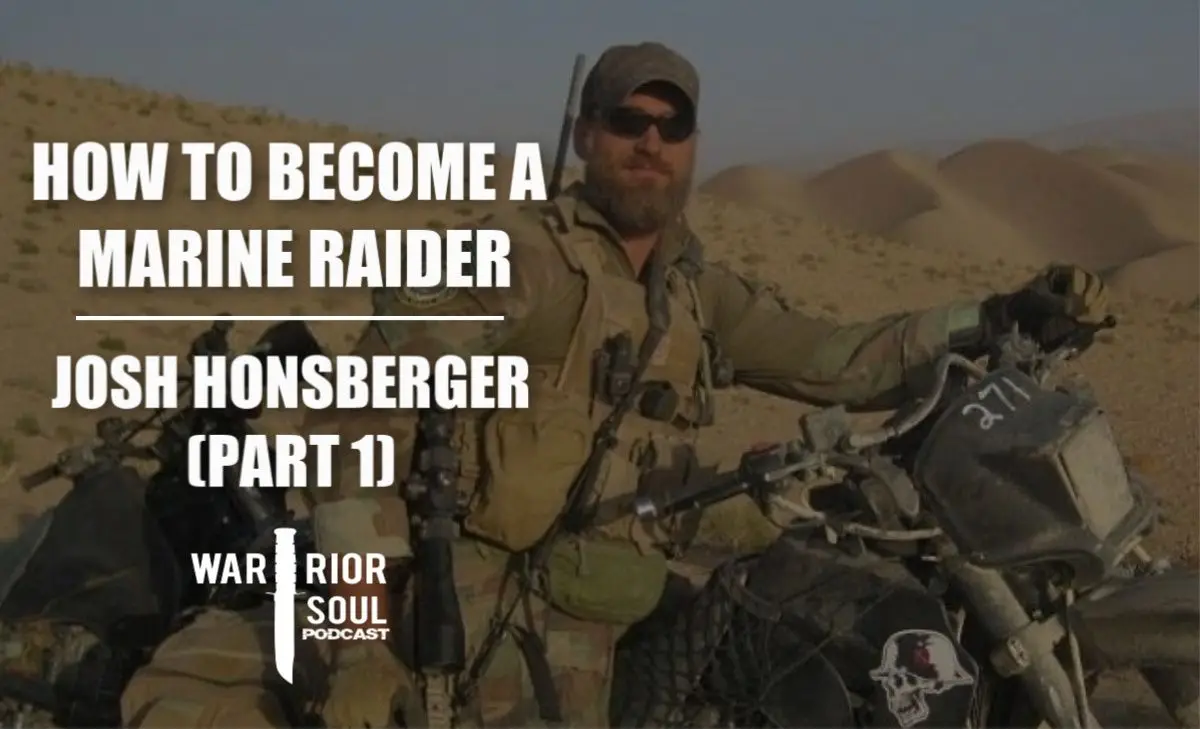
Becoming a Marine Raider | Josh Honsberger, Part 1
Hosted by Chris Albert
The Warrior Soul Podcast
Josh Honsberger a Marine Special Operations (MARSOC) Veteran. He is also a trainer and coauthor of Raider Prep along with Nick Koumalatsos
Josh Honsberger is a Marine Special Operations Veteran, trainer, author, and entrepreneur. He is the coauthor of USMC Prep, Raider Prep, and Recon Prep along with Nick Koumalatsos.
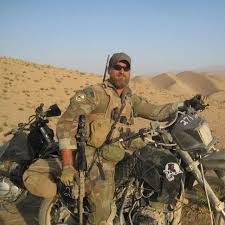
Josh served for 13 years in the United States Marine Corps. He spent five years as an infantryman, 3 years as a weapons instructor at Quantico, and 5 years with Marine Special Operations Command (MARSOC).
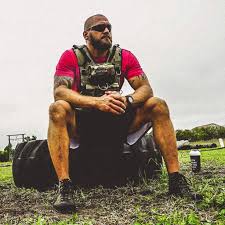
In this episode, Josh and I discuss how he got into MARSOC, the hurdles he had to overcome, and the training he did to prepare. We’ll be following up this episode with a follow on tomorrow about Josh’s career in MARSOC, a catastrophic injury that ended his career, and how he pieced himself back together.
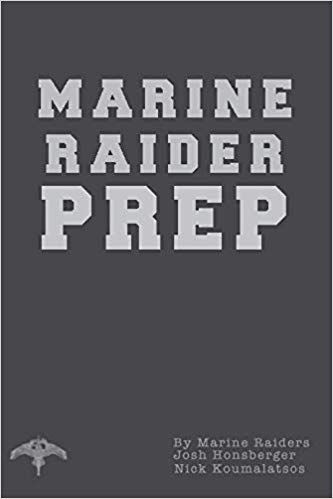
Learn more about Josh and Nick’s Marine Raider Prep programs at https://www.nickkoumalatsos.com/raider-prep/
or click on the image of the book.
If you enjoyed this episode, you’ll love:
Transcript
Machine-generated from the episode audio and lightly edited — may contain errors.
Chris Albert (link to this point)
This is Chris Albert, and I'm here to remind you of one thing. Someday, you're going to die. Now that's not some morbid statement or scary idea. It's solid fact. Your time here on this earth is limited.
And we need to be reminded of this as much as possible for one simple reason, to live your best life while you can. This is the Warrior Soul Podcast.
The Warrior Soul Podcast is written, edited, and produced by me, Chris Albert. Our mission is to provide tools, tactics, strategies, and ideas that help The US military veteran community to show up as the wisest, strongest, most capable versions of themselves in the civilian world. If you're not a veteran, stick around because anything we talk about will most certainly apply to you as well. This podcast is made possible with the help of F Bomb Nutrition. They make delicious packets of fats that you can carry around anywhere with you in little portable packets.
They make macadamia nut butters. They mix them up with chocolate. They mix them up with sea salt. They mix them up with coconut butter. They're absolutely delicious and they're really good for you.
They don't have any sugar. They also make a lot of cheese snacks. They make meat sticks, and it's just a great company. These guys send packages of this stuff to the troops who are on the front lines overseas to supplement their MREs, and we didn't ask them to do that. They just did that on their own initiative.
Really great company. If you wanna get 20% off your first order of f bombs, head over to www.dropanfbomb.com and use the code Warrior Soul at checkout. This podcast is also brought to you with the help of Save the Brave. Savethebrave.org is a five zero one c three charity for veterans. They run camaraderie events that include fishing, golfing.
They also do a lot of work with Gold Star families. And unlike a lot of other organizations, their board doesn't take a salary. Really great organization that is doing amazing work. So go and check them out at savethebrave.org. With that, thank you guys so much.
Let's get into today's programming. What is going on Warrior Soul Nation? We have a really special week of episodes coming at you right now. So we're gonna suspend our normal programming for a bit. And this week, we've got two guests coming on.
One guest is gonna be in a two part series. And those two guests are Josh Honsberger and Nick Koumalatsos. Now, Josh and Nick both serve together on the same team in MARSOC. They're both marine raiders, and they work together today. Josh is a trainer, and he helps Nick write the marine corps boot camp prep and the marine raider prep programs that they sell.
And they're great programs, fantastic for those of you who are thinking about joining the Marine Corps or eventually becoming part of Marine Special Operations. They're really great programs that will get you prepared but will not break your body. The reason why I wanted to bring Josh on and Nick, well, has a really interesting story. We've had Nick on before and I'll talk about that when we bring Nick on's bring Nick's episode up. But Josh has a really interesting story.
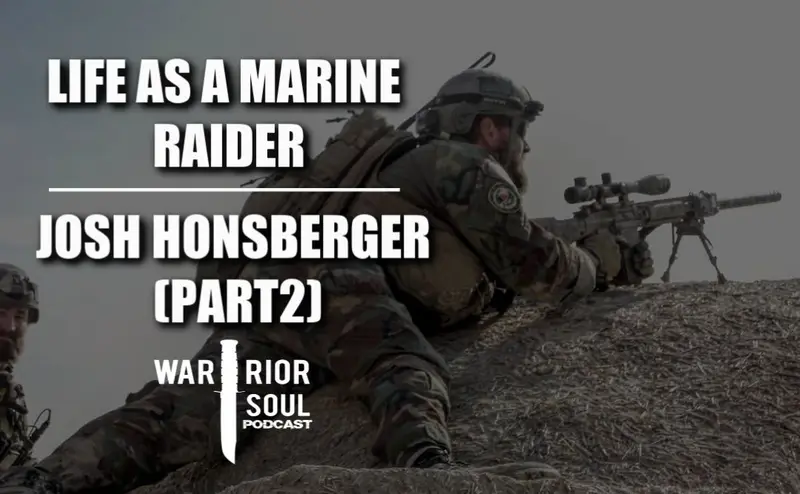
He, has an interesting story as to how he got into marine special operations and that is what we're gonna talk about in this episode episode. So interesting story as far as what occurred during his career as a marine special operator. He had a really catastrophic accident in training that that cut his career short and we're going to talk about that in the next episode. And we'll actually talk a bit more about his career as a marine special operator in the next episode. In this episode, we're gonna talk about how Josh became a marine raider in the first place.
He he started off in marine corps infantry, and then eventually transitioned into marine special operations. And when Josh and Nick came into marine special operations, it was still a very new thing. Things weren't as solidified as they are now, but but a few things do continue as far as, you know, some of the difficulties of getting in, the difficulties of prep, the difficulties of knowing what you're getting into. So this episode is gonna be very much for it's it's for everybody because I think everybody needs to hear some of these lessons, but particularly those of you who might either be considering joining the Marine Corps and then becoming part of Marine Special Operations or those of you who are currently in the Marine Corps and considering moving into marine special operations. So this episode will be very informative for you.
And then tomorrow, I'll be publishing the second episode in this series with Josh again. We're gonna talk about his career as a marine special operator, and we're gonna talk about the how he recovered from the absolutely catastrophic accident that happened to him while he was in jump school. And and it's a crazy story, so make sure you listen to this episode, but also make sure you come back tomorrow and listen to the next one. And then later on in this week, we're gonna talk about the impact of having a career in marine special operations with Nick Koumalatsos. Specifically, we're gonna talk about low testosterone and how that happens, and how it can happen not just to a marine special operator, but to any one of us, and what you should do if you're experiencing low testosterone and hormonal problems as a man.
So really awesome week of program, really awesome week of guests right now. Josh is an absolutely outstanding individual. Really, really like this guy a lot. Really honorable dude, really good dude, wants the best for everybody, really wants to put good information out there into the world. So you guys are gonna love him.
And with that, let's get into our discussion with Mr. Josh Honsberger. Josh Honsberger, welcome to the show, man.
Josh Honsberger (link to this point)
What up? Thanks for having me.
Chris Albert (link to this point)
So I've been following you a bit looking looking at some of the stuff you and Nick Koumalatsos have been doing. I've been checking you out. You're you're real close to where I am. You're out in Murrieta, right?
Josh Honsberger (link to this point)
Yeah. Yep. I think you're just, I don't know, maybe an hour up the road or something like that.
Chris Albert (link to this point)
Nice. Nice. Yeah. The Inland Inland Empire, California. A lot of people don't don't understand the Inland Empire.
They think everything's like LA, San Francisco, and and San Diego. Right?
Josh Honsberger (link to this point)
This is definitely not beach country, palm trees, or sandy beaches, man. This is like high high desert mountains and totally different. Yeah.
Chris Albert (link to this point)
Pickup trucks, Americans, that kind of stuff.
Josh Honsberger (link to this point)
It's definitely different, you know?
Chris Albert (link to this point)
Yeah. Exactly.
Josh Honsberger (link to this point)
I like it.
Chris Albert (link to this point)
Real quick for our audience. I know you served as a as a marine raider. Just wanna give a a quick background on you, where you came from, how you ended up joining, and what life's been like.
Josh Honsberger (link to this point)
How far back you wanna go?
Chris Albert (link to this point)
What made you join the Marine Corps?
Josh Honsberger (link to this point)
Naiveness and aggression. Honestly, I always had some weird infatuation with the military in general. I really don't maybe know what it was in particular. My grandpa, you know, he served in the army back in Korean War days. Was a tanker.
And I had a friend I guess I had a friend at the time when I was going through high school. So it was like, you know, junior year where you're kind of figuring out like, am I going to college or am I going this or am I doing this? And college was definitely not something that was on the books for me. It just wasn't my bag, man. Like I wasn't terrible at school.
I wasn't great at school. It's just I didn't find that drawing of interest of anything just yet that was like, I want to go do this, I have to do this. Military was something I wanted to do. And it army, you know, for a while with my grandpa. I think that was kind of like, you know, trying to follow in footsteps and gain some loyalty.
And then I had a friend, pretty close friend that her grandpa, Yeah, grandpa was in the Korean War. And I just started talking to him a little bit, you know. And I really didn't know the difference between, you know, Army and Marine Corps, like Navy. I knew there were different branches and stuff like that, but I wasn't, you know, I had no loyalties at that point yet. And I started talking with him and didn't really say much, you know, but he had like three or four purple hearts, which was, you know, now looking back on it, I understand it's just kind of crazy.
Sorry, I need to plug this in.
Chris Albert (link to this point)
It's all good, man. It's all good.
Josh Honsberger (link to this point)
These magnets fall off the computer. So, you know, so yeah, he had like three or four Purple Hearts and I was talking to him one day just real loosely, nothing crazy. And he had this picture that hung above the mantle and I asked him about it one day, you know, because it was kind of like this crinkled up thing. It had a crease in it It wasn't perfect, but it was hung above the mantle like it was pristine, you know, expensive piece of artwork. And come to find out he was doing door to door like clearing.
And he had actually he had cut it out. It was one of the things he had cut out, you know, of someone's house. It was a war trophy. And somehow in there it just, it kind of clicked. Was like, Shit, that sounds pretty cool.
You know, that's a cool story. And from there I just was like, All right, I'm going in the Marine Corps. That drove me. I signed paperwork when I was like 17, you know, my mom signed my rights away. When I was 17, you know, and then-
Chris Albert (link to this point)
My mom chased me with the broomstick and tried to break my leg.
Josh Honsberger (link to this point)
She was definitely not, you know, really stoked that I was going to do it, but I think she understood that it was something I wanted to do and I was driven to it. And, you know, we talked about it quite a bit. You know, it wasn't like one day I just went down there and signed paperwork away from her, and then we kind of talked. And I think she was just more or less trying to assist me in getting her doing what I wanted. And, you know, this was, what would this have been?
This would have been October 2000. So nothing had happened yet. You know what mean? Like, know, I, you know, pre war days, you know, so. Yeah.
Yeah.
Chris Albert (link to this point)
I went in in 1999 and it was this different just a different different world. Clinton years. Right?
Josh Honsberger (link to this point)
Yeah. It was like, yeah, we train and we go do this and we go do that, but there's really not like a there wasn't a direct thing that, you know, anybody was really tying anything to at that point. At least in history, you know, that we knew it. So
Chris Albert (link to this point)
So, you know, and where'd you grow up? Did you grow up in California or did you grow up somewhere else?
Josh Honsberger (link to this point)
Buffalo, New York.
Chris Albert (link to this point)
Buffalo, New York. You're an East Coaster too.
Josh Honsberger (link to this point)
Was in golden cold country, dude. So, yeah. I'm drawn to like the tropics, you know, and then, you know, out here, warm weather. And I love the city, I love the people, I still have a lot of family and friends but it's just too cold.
Chris Albert (link to this point)
Yeah.
Josh Honsberger (link to this point)
Yeah.
Chris Albert (link to this point)
That's what I said. I'm like, I don't ever want to be cold again. I'm gonna come out here though. Though the mornings out here have been really cold lately. I'm like, gotta put on my jacket, get on my sweater.
Josh Honsberger (link to this point)
Yeah, man. Like, you know, I talked to people that are around here, you know, and I'm all bundled up and it's I'm like freezing and it's 50 degrees in the morning. What's wrong with this guy, you know? It's cold. I'm not afraid to say it's cold anymore, you know?
I'm not afraid to put another sweatshirt on and a bee and he's vulnerable, so yeah.
Chris Albert (link to this point)
Exactly, exactly. So you went in, you went into the infantry, right?
Josh Honsberger (link to this point)
Yeah.
Chris Albert (link to this point)
Start out. And so you were there for a few years and you came in at this kind of, I guess you could say kind of lucky time where MARSOC was just kind of forming up, right?
Josh Honsberger (link to this point)
Yeah. I mean, ended up coming in September 11 was actually while I was in boot camp. So it was, I don't know, a month in, maybe somewhere in there. Don't know. So everyone else seems to remember exact dates and times and not like, I think it was about a month in because I was there in August.
So I want to say about a month in was, you know, September 11 and I did about an enlistment with 3/8 on the East Coast. And then I went up to Quantico for a little while and was doing quite a bit of instructing and some curriculum development for a bunch of different courses that were up there. I'm doing some traveling and stuff for them. And then I, you know, hopped on MARSOC, you know, after that.
Chris Albert (link to this point)
And and so when you first heard about it, was it did how did you get the information? Were you because I remember, like, at the time, like, it was kinda like this thing. And it was like, not everybody, like, knew much about it. It was brand new, like, you know.
Josh Honsberger (link to this point)
I had I knew nothing until one day or so. So when I was in Quantico, was at Small Arms Weapons Instructor Course. I don't if you've heard Small Arms Weapons Instructor School. So Solace, HRP, Foreign Weapons, Sniper School, you know, like I was in that section of Quantico. So I was teaching all those schools.
Not sniper school, but all the other ones, you know, I ended up teaching and working for. And they literally, they just came down one day and they were like, okay, you know, we want you, you, you, and you. This is what we're looking for. This is this new thing that this is, you know, this this new unit that's going to be formed. Who else wants to go?
And, you know, at the time, no one had a clue. So it was FMTU, I think it was called. So I forget the abbreviation, but I know it was FMTU, think is what it was. And then FMTU ended up being Third Raider Battalion. And I couldn't go though because even though this new special unit was being formed, I didn't have two years on station yet.
So and they were they did everything they could to get every guy that was teaching at any of those specialized schools. Because when FMTU, you know, Third Raiders first stood up, that's a lot of stuff they were doing. Was like the training aspect of it, the fitness. So that's kind of where they started to pull people from for that portion of it. But I couldn't go because I didn't have two years on station. So I had to wait.
And then, you know, they started doing selections. Were like, okay, well, you know, then they started opening up the door to selections. And we had one guy go to selection before me, who's a good friend of mine, you know, we had kids, our first babies at the same time. Then as soon as he came back, I had before he even came back, I had already had paperwork in, you know, that that was where I wanted to go. Because then there was an actual track of like, okay, you know, we're not just coming down here to take people anymore.
Here's an application process and a track. Know, You now you need to go ahead and do some formal paperwork. And so I started paperwork.
Chris Albert (link to this point)
Awesome. And so, you know, it took them a bit to form up a schoolhouse and get everything together, right? Had to just gather resources. And I think I was listening to an interview. You were in the second class of schoolhouse that they put together.
Right?
Josh Honsberger (link to this point)
Yep. Yeah. Yeah. So by the time that they started so they started running some selections at first, which would have been, I think, which would have been like where went through and then a bunch of other guys, you know, I was, you know, teased with and I know. And they kind of ran selection for some of those guys to make sure it was a vetted process still.
And then they opened up the doors, you know, to other people. So I went I don't know where I fell in the selection process, you know, as far as what number that would have been, but it was pretty early. And then, you know, past selection, you know, got selected. Pass selection doesn't mean you get selected. Contrary to a lot of people.
You know, pass selection, get selected, and then I went straight to the schoolhouse and I, you know, joined up with the second ITC plus back in 2009.
Chris Albert (link to this point)
Wow. So I gotta ask you this, because there's a lot of guys out there who they're currently serving the infantry. And as you know, in an infantry unit, you're out in the field, you get a whole host of different characters in there. Lots of people smoke, lots of people drink, lots of people play video games, that kind of stuff. What was it like for you saying, okay, I've got this ambition, I want to go do that.
How did you get around just being with the status quo and getting to the point to say, all right, I'm gonna do this extra training. I'm not gonna go play those video games. I'm not gonna do this. I'm not gonna do that.
Josh Honsberger (link to this point)
I think what started to segue me into that mindset or that process or that outlook on my career path at that point was, I had left the infantry battalions for, you know, at this point it had been a couple years. So I was up in Quantico as teaching pretty high level schools. I mean, was MOS producing schools, one of them, you know, HRP was another one. Foreign weapons didn't even exist in the Marine Corps, you know, like, I wrote the program for it. So I had my career had started to develop differently where I started I was surrounding myself with people who were, you know, higher achievers, higher intellect, higher responsibility, you know, just by nature of who they were.
Nothing to do with rank. It all had to do with the person themselves. You know, they were, you know, driven people, high achievers, willing to work, not complainers, because we were all chosen to be in the places that we were at. So that's kind of like my career started to shift a little bit. And I didn't really realize it at the time because I was in it, you know, just like anything else.
And it's pretty funny. I talked to Nick Potter and I actually had orders came up and I had orders back to the infantry unit. It was East Coast again. And dude, I went into like panic mode. Like, shit, man.
I was like, Oh man, I do not want to go back and babysit 18 year old kids. I don't want to be responsible for some kid's actions. Not a kid was me at one point, you know? And I wasn't a troublemaker. Didn't get, you know, in trouble.
But there was plenty of people getting, well, you know how it is, right? So I didn't have to answer to any of that stuff because the people I was working with were responsible, you know, they took care of themselves. They did well at their job. And I just felt I didn't feel like I was better than everybody else. I just had gotten to that point in my life where I wanted to be surrounded with people who were other high achievers, you know, who cared about the career, cared about themselves, and wanted to further advance and continuously like do better and be better.
And, dude, I sat down and I got an R3 Oscar code and because I denied orders. And dude, this was before I even put in a package for selection, you know? I sat down with the recruiter and I had a Chief Warrant Officer V who was a gunner in the Marine Corps at the time. He was the highest gunner in the Marine Corps. He's like, Hey, you can't do this.
And I said, Well, listen, there's another option. There's another venue I want to do. I didn't know if I was ever even going to make it past the paperwork side of selection, right? Like I had no clue. You know, wasn't beating my chest thinking like I'm the greatest guy in the street, of course they're going to take me.
It was I just knew that that's what I wanted to do. And I think I really maybe just didn't even understand the really ramifications that could have happened. Yeah, so I signed papers for an eye through Oscar code and, you know, some little lance corporal time with me, he's like, hey, you just need to understand, you know, you'll never pick up rank again. You'll never have a choice of the duty station ever again. And whatever comes up, you're gonna have to take or there's gonna be further on legal legal action.
And I said, Alright, cool story, man. I just signed the paperwork. And wow. Yeah. Looking back, I don't know what the hell I was thinking, honestly.
Like I really don't. But it was just something in me that said, you know, my path is going to change. You know, it could have not very easily been that, you know. So then, and then I was like, you know, I to go to Selection. And I started the paperwork.
And the same kid in the office was like, can't you can't turn this in. And I said, Well, I want to. You know, like, this is where I want to go and this is what I want to do. And dude, I don't know how or what had happened. I don't know what aligned.
I don't know who was looking at. I have no clue. Paperwork went through and I had a suit in front of the board, you know, with the recruiters and at the time, you know, like whoever was in charge, you know, you know, the selection process at the time, who was receiving paperwork and I just talked to them and they said, All right, you know, fuck, give you a shot. But here's the deal, you don't pass physically, mentally, emotionally, you know, everything Selection's looking for. And we don't take you on the backside of this.
You're at the mercy of your fate that you had signed that-
Chris Albert (link to this point)
At the mercy of the big green weenie.
Josh Honsberger (link to this point)
Yeah, man. And I just said, okay, cool story. Like, when am I going to selection? You know? And I started to figure out like, when was I going?
How was I going to go? And this is back when like, there was no knowledge, was no understanding, there's no website for selection where you didn't look up criteria.
Chris Albert (link to this point)
Other aspect to this I want to because because because I remember at the time the Marine Corps was kind of openly hostile to a unit, a a special unit. Like, had recon. It was
Josh Honsberger (link to this point)
just war.
Chris Albert (link to this point)
Yeah. They they're they're they were they were kind of openly hostile to the idea of creating, like, a special unit of marines. And just thinking about that, that's like for you to do that and to have the courage to say, hey. I'm I'm gonna go with this. That took a lot because I've been I've been at the mercy of the big green weenie before.
A lot of us have. And and that that's fear right there, because you know they can make your life miserable.
Josh Honsberger (link to this point)
I had just had my first daughter too, you know? I don't know. So that's And then I said, Okay, now that I've made this decision, you know, and I need to figure out, you know, what is the criteria? You know, because like I said, there was no website to go to. There wasn't, you know, years of population of people that had been through the pipeline that you could maybe ask a question to or something like that.
The only thing that existed was there was sheets of paper, literally like old emails and the sheets of paper. I think it was 10 pages long or something like that. It was SFAS. Did ever hear that?
Chris Albert (link to this point)
No.
Josh Honsberger (link to this point)
No. It was Special Forces Assessment Selection. I don't know who wrote it. I don't know, you know, who was the program designer behind it, but it was like the thing that, you know, dudes were being passed around. Guys would use it before they went to sniper school, you know, they would kind of go through the program.
Chris Albert (link to this point)
And the internet wasn't like what it is today. Like there was no YouTube or anything like that, right?
Josh Honsberger (link to this point)
No, man. And if there was, I didn't know what the hell it was. You know what I mean? So I had, you know, our schoolhouse was right next to the Sniper's Schoolhouse and I had some really good guys that were friends of mine that were at the Sniper's Schoolhouse. And, you know, and we would like, you know, obviously we shared information and things like that.
There was nothing to hide. You know, we would help each other out for curriculum things. And I went to them and I said, Hey, you know, like, can I get your land out points? Because I need to start running, know, I need to start refreshing my stuff, right? Like you need to knock yourself down a peg and relearn the basics and then make sure that you can, you know, properly, you know, perform the basics and master the basics like anybody else and what they should be doing.
And I would do PT, like CrossFit in the morning because that's when CrossFit was like huge and booming, you know, and we had a couple of officers over there that were they bought into the CrossFit, you know, game. I mean, everything under the sun. But it was good because I did those, you know, in the morning and then my schedule was flexible enough because was an instructor there. So, you know, we either had a class on deck or we didn't. And depending on that, I would do, I don't know, like four or five rucks, six rucks a week, maybe something like that.
And, you know, full uniform and 35 pounds, 45 pounds in the back. And I just started with a notepad and paper and I started assessing myself, you know, to see where I was at because I didn't know what the standard was. You know, no one knew what the standard was. You just knew that you had to push yourselves as much as humanly possible to what you could do, not to what, you know, a paperwork or a website told you you had to do. Because you didn't know.
You just had to put in the work. So that's what I did. And, yeah.
Chris Albert (link to this point)
I want to talk a little bit more about that. But the one thing I just want to come back to you real quick, because we mentioned like regular infantry and stuff like that. And one thing I want to say is this, like there's nothing wrong with being regular infantry. What my point whole was at that, like, I think every marine has a choice, and that is to to do your job to be good at it or to go to the smoke pit and complain about life and talk about how much it sucks. And I think too many guys take that latter choice, and then they complain so much that it becomes a way of life.
And if you do that, Marine Corps is not gonna give you any opportunity. It's not just gonna come around and say, hey, let's make your life easier. Right? You you actively have to seek out opportunities to improve. And and so for you young guys out there who might still be in, think about that choice.
Think about that choice of whether you're gonna go out there and take the initiative to improve yourself because Josh, he went out, he figured this stuff out for himself. And a lot of that stuff is stuff you got to do. You just can't wait for those opportunities to hit you in the face.
Josh Honsberger (link to this point)
Yeah, man. It's unknown and it's scary. Like to say that I was not, you know, scared or concerned that many a days is an understatement because I didn't know what the fate it was gonna be, right? And just like you said it, is that you gotta go out and, you know, there's a point in time in your career where you gotta start looking out for number one, right? And it's not a selfish thing.
So I think for a long time and what people get, you know, kind of stuck into Can you still hear me?
Chris Albert (link to this point)
What was that? Yeah, can still hear you brother.
Josh Honsberger (link to this point)
You know, what people get stuck into is that if you look out for yourself to better your career, or better yourself, or further educate yourself, or diversify yourself from your signatory MOS, that you're being selfish and that you're not being the troop leader that you should, and that you're not being, you know, the right squad leader and the right this and the right lab because you're being selfish. Well, you know what, man? Like sometimes being selfish is what it takes. You you gotta better yourself a little bit to become the best human being you can, to be the best in your MOS that you can, diversify yourself. Then you get that much more knowledge to spread.
You know, you have that much more stuff to pass down to these young kids who are coming up to the ranks just, you know, where you used to be, you know, three, four, five years ago. So
Chris Albert (link to this point)
Right. And you did a full enlistment before doing this too, right?
Josh Honsberger (link to this point)
Yeah. Enlistment in half. Yeah.
Chris Albert (link to this point)
Yeah. So and and it's just thinking about that because, you know, I just haven't been in I I know what the Marine Corps is like when you're trying to advance yourself, and they you have a different program than what they've laid out for you. And man, I admire you for that. That's insane.
Josh Honsberger (link to this point)
It's, you know, and it doesn't always have to be. I'll circle back to what you're saying. You're right. There's nothing wrong with continuing a twenty year career in the industry. And I have plenty of really, really close friends of mine that are still in that, you know, our Master Sergeants now, like Gunny's now, you know, Bocky Master Sergeant, Pindon, that they've been, you know, you know, a 69, you know, in that field for seventeen years or so now.
And those are some of the most intelligent guys that I know. And it doesn't always have to be that you're striving to go recon or go MARSOC, go to sniper school, find a school, you know, either within your MOS or close enough to your MOS or something that can, you know, diversify you to be a benefit, you know, to be a force multiplier. Like be the biggest force multiplier that you can be to one, yourself, to, you know, your team, your squad, you know, and to your company, you know, to whatever kind of group organization you have, depending on what your MOS is. Know, just continuously always try to push yourself to learn, to grow, and to be better.
Chris Albert (link to this point)
Let me ask you this because, you know, how did they how did they source the cadre for the school? How did they they source the instructors?
Josh Honsberger (link to this point)
For selection or for ITC?
Chris Albert (link to this point)
For ITC.
Josh Honsberger (link to this point)
For ITC was a lot of it would have been a lot of recon guys at the time. So maybe it was, you know, guys that had been in teams, you know, for quite a while that were building up some of the cadre. And then depending on what we were doing, right? So obviously, I mean, a ten month school. So there's a lot of iterations, there's a lot of things in courses that are covered in topics, right?
I mean, there's, but depending on what section we were in and what school phase we were going through, it was a mixed bag between contractors, you know, some guys that were, you know, former, you know, 18 guys, you know, that maybe had got out and they caught a contract with, you know, some company and they were teaching. And then it was always coupled with team guys and, you know, guys who were just coming off the deployment and they were kind of hot filled on the backside of the schoolhouse. So that was that's what comprised our cadre. It was former team guys, current team guys, you know, we just saw like a delayed from the rotation or some contractors that were, you know, more than likely coming off of an X-ray program, not an X-ray, eighteen years program, who were, you know, I don't know.
Chris Albert (link to this point)
Nice. And when you're going through school, so obviously you said you were self assessing, you trained a lot. When you got there, did you feel like you were prepared?
Josh Honsberger (link to this point)
During the course or?
Chris Albert (link to this point)
Yeah, yeah.
Josh Honsberger (link to this point)
For sure. I mean, not, I wasn't in charge of my, you're always in charge of your own physical state of readiness, right? But there was a curriculum and a pipeline that I was going through. So I had to learn and what I think a lot of guys have to understand, which is what I had to do is that you have to build yourself for that specific event or that specific program or that, you know, that course that you're going through. And that's what that course was doing is they were continuously building and growing and developing us into being what it is that they wanted us to be.
So the more that you resisted that. So I knew some guys that yeah, we all have anomalies, The guys that can go and run, you know, twelve, fifteen miles and act like nothing happened when they're done with it and then they can continue on for the rest of the day, right? So take that 10% out of the equation. But there were some guys who, you know, they would go to the gym, you know, after a fourteen hour day, you know, during this course, and they would go do like bodybuilder type workouts, you know, like do, you know, Monday's chest day, and bis, and chest and tries, and, you know, do squats on Wednesdays. I'm not against you trying to, you know, further strengthen yourself or condition yourself or prepare yourself, but there's also a process.
And, you know, if you develop yourself, you can develop yourself out of a state of readiness, you know, for that process. And there were some guys that actually did that, you know, and I think that's a really key thing that a lot of people need to understand is that, you know, before you go to maybe selection, you have to train and equip and prepare yourself to successfully complete a pass selection. And then once that is done, you have to prepare yourself for the next phase or the next evolution. And that's, you know, for me at that point in time, it was ITC. And then when that is done, you know, you're now on the teams and you need to figure out, you know, what is it you need to do to properly prepare yourself because it's all different, you know?
I mean, it's like guys when you go to BUD/S, you know, like if you don't train like that once you're on the teams, don't prepare yourself like that once you're on the teams, you know? It's a process and it's a thing you're going through. It's an evolution. So prepare yourself for that. And then when you're done with that, whatever your next thing is, you're gonna have to shift a little bit and prepare yourself differently and learn how to flush that out of your brain, and prepare for that, you know, to be the best one you can.
Chris Albert (link to this point)
It's interesting how the concept of physical training has changed because, you know, back in the 90s, it was like long endurance runs, learn how to how to do well on the PFT, working some humps, and then bodybuilding stuff, right? Like, go do some curls and shit like that. And, you know, it's funny because there was like this revolution that I think occurred that occurred like, maybe like 2004, 2005, CrossFit and stuff, people were doing more functional stuff. And today you see it all over the place. But back then it was like, hey, yeah, go run as long as you can, then do some pull ups, do some push ups, and then hit the gym and, know, wear some some bright colored spandex and stuff.
Josh Honsberger (link to this point)
Take anybody else that you require such a high you know percentage of output at any given thing. That's not how they train, that's not how they work but I just think it was just a lack of knowledge you know and not that there wasn't a lack of knowledge out here in vast verse of, you know, strength and conditioning. It was just, I think the military lived in a bubble and they thought that they were just so special and different that they didn't have to train and equip themselves in accordance like every other, you know, athlete, you know, training and equips themselves, that they were, you know, some sort of weird anomaly. I'm thankful now that, you know, the ties and turns and guys are training and preparing themselves a lot differently, you know.
Chris Albert (link to this point)
How big of a factor is overtraining when it comes to prepping for something like this or when people get out into the teams?
Josh Honsberger (link to this point)
Huge. I believe it's absolutely huge. You know, there's the adage of like, you know, train till you puke, you know, if, you know, 110%, you know, one more rep and leave everything in the gym. Well, I mean, that's good and all, but is that setting yourself up for success for the next training evolution or that next day? You know, that's kind of what I was talking about by those guys, you know, some guys that would go, you know, to the gym afterwards.
It's not that I'm against people continuously trying to better themselves. It's know that there's a point in time where the body is taxed. And you might not maybe feel it or recognize it. But internally, I mean, you're knowledgeable, you know, human being on this kind of stuff too, is there's a lot of things that are going on internally that maybe those alarms just aren't going off in your head, you know, to know, to give you that sign to stop. And, you know, the Marine Corps or the military in general or law enforcement knows is really good at pushing human beings past the point of optimization, right?
Like somebody told me at one point is that, you know, what is it? Perseverance does not equal optimization or something like that. Human resiliency does not equal optimization. That just because you can do it, and just because you can push yourself out as far doesn't mean it's optimal. One for your health, two for recovery or the next day or, you know, follow on training because, you know, so I don't have anything to teach.
Chris Albert (link to this point)
Yeah, that and, you know, I'm good friends with Andrew Marr, Green Beret, who's worked with the Warrior Angels Foundation. And I've also spoken quite a bit to doctor Kirk Parsley, who who I know Nick also had on the show. And, you know, when you think about some of the things that that guys are going through these days, you know, with with traumatic brain injury and brain inflammation, a lot of the conditions for having a really bad traumatic brain injury actually start with the amount of inflammation that's already in your body. And so if you're just tearing things down constantly, and then you go out and you know, you're handling explosives or you're in proximity to explosions, or even if you're manning a 50 cal, and getting jerked back, that can shut down a lot of hormonal cascades that in your brain. You combine that with lack of sleep, lack of rest, lack of recovery.
It's a recipe for having a really messed up decade when you're in your thirties and forties.
Josh Honsberger (link to this point)
Some of those are by nature of the job or the duty. You have a field op and you have, you know, an all day hump and then you're setting up camp and then, you know, you're preparing the guns and then you have a night shoot and then you have, when the shoot is done, we all know, you know, there's cleanup, there's procedures and stuff that happens. So you're right. I talked to a lot of guys and they're like, Well, I'm going to the field for three weeks. Not I'm gonna get sleep.
I'm not gonna be in MREs, this and that. And I was like, I got it. You know, those are uncontrolled variables, you know? Like, so take this knowledge and take the understanding like things you just said and try and sneak in things here or there, you know, hydrate yourself even more. Or, you know, if you can bring, you know, some vitamins or something like that that can just kind of put some good healthy stuff in you.
Or if you can bring, you know, some supplementation of, you know, whatever it is that you need, you know, for your body, food wise or chemical wise, do that, right? Like some of those variables are things you can't control, but take that knowledge that when you're back from the field and say, Hey, you know, maybe I'm pre taxed more than I want, more than I think I am. Maybe because I just got back Friday morning, you know, like hitting the bars until four or five, 6AM, maybe not comfortable for me. I mean, it might be fun. I'm not denying that.
I was that age at one point, I was that guy. But, you know, hindsight and learning, you know, maybe take a little bit of time to take some sleep and put some vitamins and good nutrients and food back in your body. Because, I mean, we all know, I mean, you sign a contract, you know, I try and tell guys, it's like, it's a commitment for a long duration, you know? And if you keep looking at it on the short end of, you know, we all have these attainable goals, like, oh, you know, I got this many more days until I'm out of the field, or this many more days until I'm done with deployment, but how many more days until, I don't know, until you're dead or until your enlistment's up. Like you have to look long range for your health.
And that's where I think, you know, people lack sometimes is looking into the future for their health. What's better ten, twenty, thirty years down the road? What's optimal?
Chris Albert (link to this point)
And that's the thing because I think you and I are about the same age. When you're 23, 22, 19, you feel like you're invincible, right? And you really are compared to someone like me who if I catch a cold, I'm on the floor like quivering and twitching and shit like that. So like, you know, and that's what I'm saying, like, you know, that time when you're 23, 22 and you go out, you hit the bars, great, awesome, you're having fun, but there's gonna be a cost to pay at some point. And that cost might not come in the next two years, three years, four years, but when you turn 35, 40 years old, that cost is gonna be there. You're gonna feel it. And and it it come I we've got, you know, I don't wanna beat that horse, but the the suicide rate that happens when guys get out, this the this the the the state of health, one in four veterans admitted to the VA system, twenty five percent of us have full blown diabetes when we get admitted. And that's of all ages, twenty five percent. So it's like this stuff that you do when you're young, there's a cost there.
Josh Honsberger (link to this point)
There is. And it'll hit you like a ton of bricks. Like you were just saying, you know, things creep up at me now and I'm like, Ah, you know, I always try and play it off like, Well, maybe it's just this, maybe it's just that. I realized like, No, man, it's because, you know, there's been traumatic events. There's been this, there's been that.
And I don't try to use it as an excuse anymore. I try and use it as like a platform of knowledge and understanding of where, how I can understand that and what do I need to do? What's my roadmap to success? What's my roadmap to my best human optimization as possible, you know, so I can limit some of these factors.
Chris Albert (link to this point)
It's like having a bank account, you know, you can only make so many withdrawals, man.
Josh Honsberger (link to this point)
I've made plenty. Do not get me wrong. All the guys listen like, oh, don't act like you weren't young. Trust me. I was the guy that was at the bar, like, you know, five, six times a week when I was 18, 19 years old, 20, you know?
I lived it. I got it. So, I mean, I understand it.
Chris Albert (link to this point)
But Hey, guys. I hope you're getting a lot out of this interview. You know, the Warrior Soul podcast is built with the mission to empower its listeners to live absolutely epic lives. And that's why we recently created a group called the Warrior's Obituary Society. This group is built to empower its members to live epic lives worthy of epic obituaries.
And it starts with an eight week development program. And with this development program, what you're going to do is you're going to outline a vision for your life. You're going get very specific about what you want. Because without that specificity, you don't know where you're going, and you don't know what you're doing. From there, we help our members to develop specific goals, objectives that they are going to push toward, and that their fellow members of the Warrior's Obituary Society are going to hold them accountable too.
From there, we're getting down into specifics. We're going to help you to develop and customize your own personal fitness and nutrition plan to help to fuel your body and fuel your mind for the quest ahead. From there, we're going to work on your personal finances. We're going to help you to knock down debt. We're going to help you to start saving money and to create a plan so that you can start investing in your dreams.
Then we're going to get into your business and career. We're going to help you to develop the skills that you need to develop yourself so that you can have a major impact in the field you choose. If you choose to go into business, we're going to help you to set up the foundations that you need to create your own company and get started on your path in life. From there, we're going to be working on your relationships. We're going to help you to develop a world class network.
And all along the way, you're going to have your fellow members of the Warrior's Obituary Society pushing you in every single area. We meet once a week over a live call, and we're constantly communicating over our own private floor forum on Slack. We don't do anything over social media, and that's because I don't want anybody feeling like anyone's looking over their shoulders, and I don't want you exposed to the crazy distracting alerts that you get on Facebook and some of the other social media platforms. Normally, programs like this cost thousands of dollars. This one does not.
For the price, it is the best development program on the Internet. And that's because our mission here at Warrior Soul is to empower people to get more out of life so that they can in turn make the world a better place. We've got a great mix of active duty military, US Military Veterans, and civilians in this group. We wanted to keep it really eclectic so that we get a lot of different types of views up there and a lot of different people with different areas of expertise. If you think that this is something that would be of interest to you and that this is something that could empower you to live your absolute best life, head over to www.warriorobituarysociety.com.
That's www.warriorobituarysociety.com, and you can sign up today. And if you have any questions about it, just reach out to me at chris@warriorsoulagoge.com. That's chris@warriorsoulagoge.com. I'm happy to even sit down with you for a phone call for a few minutes to see if the group is right for you. I look forward to seeing you guys in there, and let's get back to this awesome interview. So you and Nick have developed these prep courses and these prep books for MARSOC, for Marine Corps boot camp prep for these things. And when you were starting to put these together, were you thinking in your head, okay, these are the things that I would have done had I known a little bit more or these are the mistakes I made and I don't want other guys to make these things?
Josh Honsberger (link to this point)
All the above?
Chris Albert (link to this point)
Yeah.
Josh Honsberger (link to this point)
I mean, it was A lot of it was just, I care about human beings, right? That's where I lie, right? Like that's where my loyalty is, is I really just genuinely care about human beings. And whether or not it's an 18 year old kid about to go into the military or whether it's a 20 year old, you know, guy that's to go recon and wants to go MARSOC or is at a different place in his life, right? Like, I care that, you know, they're doing something that's going to benefit them and set them up properly and for success.
And that's what these programs offer is that, like I was saying, when I did mine and Nick did his and probably when you went to boot camp too, like, there was no prep. It's like you said, you just run, you do this, you do that, but it's very few things. And, you know, we sat down and dived into a lot of stuff, where the shortfalls were, and then also, you know, where is, you know, what are the requirements for that stage? Whether it be, you know, going into boot camp, going into recon, going into MARSOC, you know, what are the requirements that are going to be, you know, charged upon that person? What are they going to have to do physically?
And obviously we know some back channel information, you know, because we've been through some of these programs or all of them actually, collectively we've been through every single one. But, you know, we don't divulge back channel stuff, but we don't divulge things that are behind the curtain. Not because it's secret squirrel. Some stuff is designed for you to kind of find out, you know, on the fly. So we built it to requirements that are publicly posted.
That way there's no, you know, confusion or concern about, you know, giving away information that's not publicly known. So we found the end state of what someone's gonna be required to do and we just reverse engineered it. You know, in order to develop that person as best as humanly possible. Now, you how training is, know, you're telling about, you know, your Metroflex gym and things like that and all the stuff you've done and you're currently doing, the throughput and the input is on the individual. Right.
The program has been linked. You know, the science is there, the numbers are there, the criteria the program has been developed. Now it's on that individual to perform it and to do it. We had really good success, like really, really good success.
Chris Albert (link to this point)
That's awesome. That's awesome. And, you know, what you see there about the throughput being through the individual because, I mean, I do my own training. I do a very different different, modality, I guess you'd say, as far as the types of people I train, but it's always on the individual to be able to do it. And the thing about this situation is you got to remember what you're trying to become, right?
That's the thing. It's you got to fit that mold that they're trying to create for you just like you said before.
Josh Honsberger (link to this point)
Yeah. You got to train to those specifications, you know. It's not you creating a program anymore. The requirements have already been developed and there is a program and a pipeline whether it be twelve or thirteen weeks, you know, boot camp or whether it be, you know, BRC or A and S or ITC, like that course is developed and it's not gonna deviate. It's not gonna change, you know, more than likely throughout the entire time that you're there.
So you know the requirements, you know, the secret's out of the bag. Like, you know what you're going be required to do physically at least. So at least put that in your favor, you know? And I think a lot of other factors of a human being develop when they push themselves to those physical requirements. You know, they understand what it is they're capable of.
They understand what they're not capable of. They understand how to push themselves. They understand how their body develops, how they recover, like you were talking about, you know, when they do intensive type workouts, when they're doing two days, how do they feel the next day? You know, are they ready for it? You know, because our biggest thing is I tell guys, you know, they come and they're like, Well, know, you where are we at right now?
Today's January. Let's just say, you know, guys, I'm leaving in April and I have to do this program because, you know, I want to go in April. What if you're not ready by April? You know, what if you go through the program and you know, you run your own PT test and you run your own standards test? What if you're not ready?
Are you still going to go? I mean, why would you set yourself up, you know, for almost failure, you know? So do these programs and prep yourself as far out as humanly possible. You know, if you're a 16 year old kid and you think you're going to go in the military, well, I tell you what, the USMC prep one, it's not going to fail you know, for doing your sports, but find out where you sit and set yourself up for success.
Chris Albert (link to this point)
That's the definite truth there. And I can't speak to MARSOC at all, but I can tell you guys, you 16 year olds to who are thinking about going to Marine Corps boot camp in addition to all the physical stuff, prep yourself mentally, don't get married at 17 before you go, try not to have a girlfriend and yeah, I can't think of anything else.
Josh Honsberger (link to this point)
Yeah, that's it. Mean, you're right. I mean, you know, and guys will say, you know, and this is the unfortunate part sometimes is, you know, the big guys that, you know, maybe have been in for like two or three years and they're like, why these guys run a program to go to boot camp? Know, all you have to do is three pull ups, 28 mile run, three mile run, and this and this.
I'm like, so you're telling me that, you know, you've been in the Marine Corps now for a couple years and you're telling kids about to come in who potentially might be in your platoon, your battalion, you know, your team, that don't worry about it, just meet the bare minimum. I mean, come on, man. Is that really the guy physically, mentally, emotionally that you want behind you? I don't know. I want the guy who's like snuffing, sniffing and trying to just be as best as he can because, you know, my nephew went, he ended up going in the postcard, you know, but what I told him is I said, Hey man, the first couple of years in the military really sets you up.
You know, if you can go in being the highest guy in the PT level, being the highest guy in this, highest guy in that, you know, think about if you came out of boot camp, you know, at, I don't know, E3 or E2, you know, and you're three months, six months ahead of these guys now on a rank structure, And you've developed your mind to not meet the bare minimum. You've developed your mind already that you want to be the guy who perseveres and is a high achiever. And you're setting yourself up, you know, for at least a four year career that you can't get out of. So, you know, if you got a job, if you were going to get a job or, you know, I don't know, some regular job here, and they were like, Hey, you're gonna work with us no matter what, you know, four years. And your success is depending on how well you do, you're probably going to put forth everything you can.
Absolutely. To be good at, you know, to rise up.
Chris Albert (link to this point)
Well, that's that's how and how can people how can people grab these programs? Where where can they go?
Josh Honsberger (link to this point)
You can find them on Amazon, right on their own Kindle, you know, Kindle version, PDF version. There's hard copies you can buy. Nick's website, nickkoumalatsos.com. Figure out how to spell that Greek name, we can post it but it's at his website. I always make fun of him.
Chris Albert (link to this point)
You know, so Little secret there. If you go alexanderindustries.com, that pops it up if you can't spell Koumalatsos.
Josh Honsberger (link to this point)
Usmcprep.com, raiderprep.com, reconprep.com. It all ends up funneling into, you know, one site. Google it.
Chris Albert (link to this point)
We'll get we'll get links to that up on the show notes.
Josh Honsberger (link to this point)
Yeah.
Chris Albert (link to this point)
Well, man, number one, you know, thank you for coming on and and thank you for for talking about that experience. I mean, we we didn't cover your career at all, and we're gonna have to have you come on and and maybe talk about some of that stuff later on and talk about the transitions and getting out. But this is this is like, I mean, if I was an 18 year old kid and and or just a 22 year old marine thinking about doing selection. I there'd be so much here to go off of. And and I highly suggest you guys out there, you know, it's about personal development, about making yourself into the the best person you could be, the best marine you could be, the best whatever you're gonna be.
Yeah. Right? No matter what it is. And so, you know, these are resources that didn't exist back, you know, as little as ten, fifteen years ago that that everybody can take advantage of who wants to go down that path. So I can take advantage of them, guys.
Take advantage of it.
Josh Honsberger (link to this point)
Yeah. I mean, that's my biggest thing now is just developing yourself into being the best human being you can be, to be the best person you can be. And then it's multifaceted like everything else in life. I mean, yeah, my segue into the strength conditioning and training is an interesting story. We'll have to cover that maybe in the next one if we're out of time here, but
Chris Albert (link to this point)
We're gonna have to have you back on. We're gonna have you to back on to talk about that, because I think that definitely want to hear about that. And being a fellow, being a trainer myself, that's always an interesting story and definitely want to talk about your life getting out and how that was.
Josh Honsberger (link to this point)
So Awesome.
Chris Albert (link to this point)
And with that, guys, you know, I want to thank you guys so much for listening. Like I said, get your hands on these resources. And, you know, the biggest thing, life, right? Life is hard. It's difficult sometimes, but it's worth living.
And sometimes the part about living it means that you're not just as comfortable, you're seeking a little bit of struggle there. And, you know, if you guys can go out there and put a little more effort in, force yourselves to grow, then you are going to get the most you can out of life, just like Josh did over his time. So thank you guys again. We'll be back at you next week with some more awesome content. And this is Chris and Josh, we are out.
Alright, guys, there you have it. That is part one of our interview with Mr. Josh Honsberger. Just as a reminder, tomorrow, we are going to be publishing part two. And in part two, we're gonna get more into Josh's career.
We're gonna talk about some of his deployments, and we are going to talk about the injury that ended up ending his career. And you guys are not going to want to miss this. This is an absolutely incredible story. So make sure you guys tune in tomorrow. Few different things.
For those of you who have been supporting us and listening to this podcast regularly, I have to thank each and every one of you. The podcast is growing at an exponential rate. Downloads are increasing like crazy every single month, and that means more and more of you are subscribing. And here's the thing, what that means is that this information is getting into the ears of more veterans, more active duty military members, and more people. And that's what this podcast is about.
It's about helping our listeners to live their absolute best lives. And the way that continues to happen is through you guys spreading the word. So I don't ask for much of anything in return. You're not obligated to ever buy anything from Warrior Soul. All we really ask of you is that you share these episodes out and that you head over to iTunes and write us a written rating review.
I can't tell you how much that helps, and I know a lot of you don't listen on iTunes, but iTunes is what drives the algorithms. So if you can, if you could please head over to iTunes, write us a written rating and review. It helps so much to spread word about the show and to get this information into the ears of more veterans. If you do wanna support the podcast in other ways, we've got ways of doing so. You'd head over to warriorsoul.shop.
We've got some great Marine Corps gear, some great Marine Corps t shirts designed and printed by Marine veterans up in our Santa Barbara location. We also have the Warrior's Obituary Society, which I talked about in an announcement earlier in the show. That's a way for you guys to support yourselves. And then beyond that, you should definitely head over to warriorsoulagoge.com. Get yourself signed up for the newsletter and join our private Facebook group so you can stay on top of everything.
Big thanks again to our amazing sponsors. We've got F Bomb Nutrition. They make awesome delicious packets of macadamia nut butters. They've got these amazing cheese snacks, these amazing beef and pork sticks that you can take with you, low carb, nutritious snacks that you can use to fuel your active lifestyle. And you can get a 20% discount by using the code Warrior Soul at www.dropanfbomb.com.
Big thanks as well to save the brave, savethebrave.org. They put on, I guess you could say camaraderie events for veterans. They're a five zero one c two five zero one c three charity. They run fishing events. They run golfing golfing events.
They're doing some great work for veterans and for gold star families. And unlike a lot of other certain organizations, nobody on the board takes a salary. They put all their money into their charity work. So check them out over at savethebrave.org. And once again, thank you guys for listening.
I'll be back at you tomorrow with the second part of this episode with mister Josh Honsberger once again. And then the day after that, we're gonna be releasing our interview with our second interview with Nick Koumalatsos, and we're gonna be talking about testosterone. So stay tuned for the rest of the week, guys, and talk to you soon. Peace.
Host of the Warrior Soul Podcast and founder of Warrior Soul. Worldwide trainer and nutrition coach, contributing author at Testosterone Nation and Muscle and Strength.