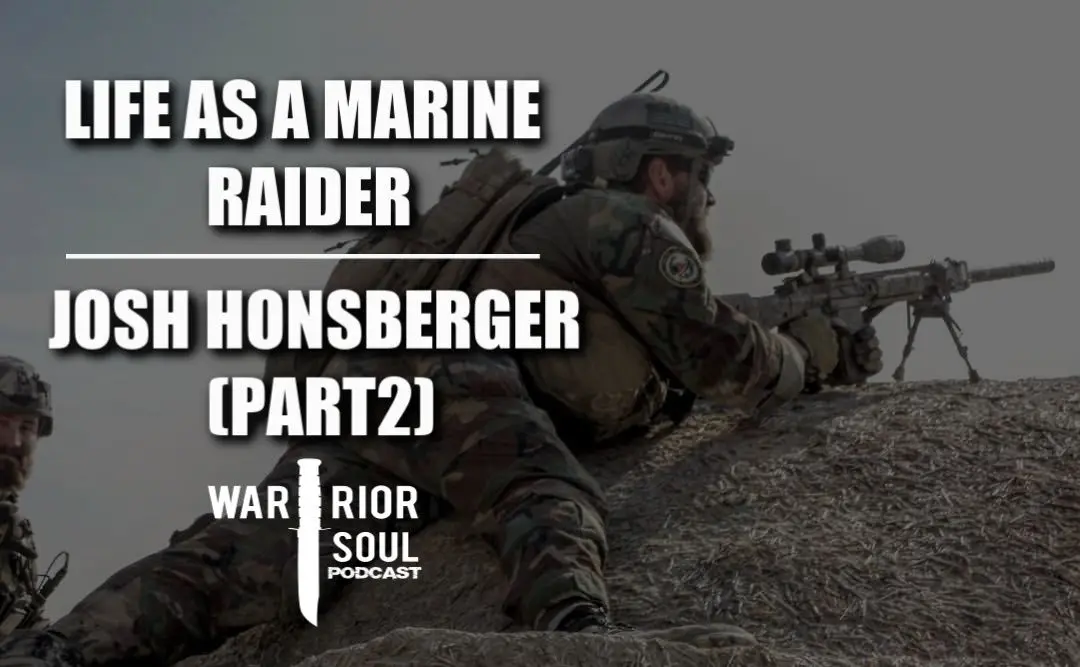
Josh Honsberger served as a Marine Corps Infantryman and as a Marine Raider. He is the coauthor of Raider Prep with Nick Koumalatsos.
Today, we continue Marine Raider Week with the second part of my interview with Josh Honsberger. Josh enlisted as a Marine Corps infantryman and then later transitioned to MARSOC. He is the coauthor of Raider Prep with Nick Koumalatsos.
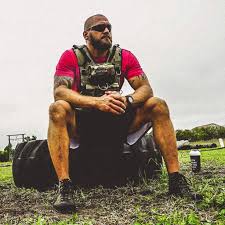
In this episode, we cover:
- Josh’s career as a Marine Infantryman and as a Marine Raider
- His deployments
- How he kept his marriage together
- How a catastrophic injury ended his Raider career early
- How he put his life back together afterward
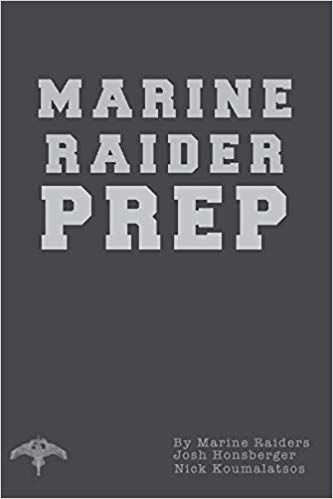
Since leaving MARSOC, Josh has also gone on to become a trainer. He currently works with Nick Koumalatsos, his MARSOC Team Mate, in producing prep programs for those wishing to join the Marine Corps and those who wish to become a Marine Raider. To learn more about these programs, head over to www.raiderprep.com.
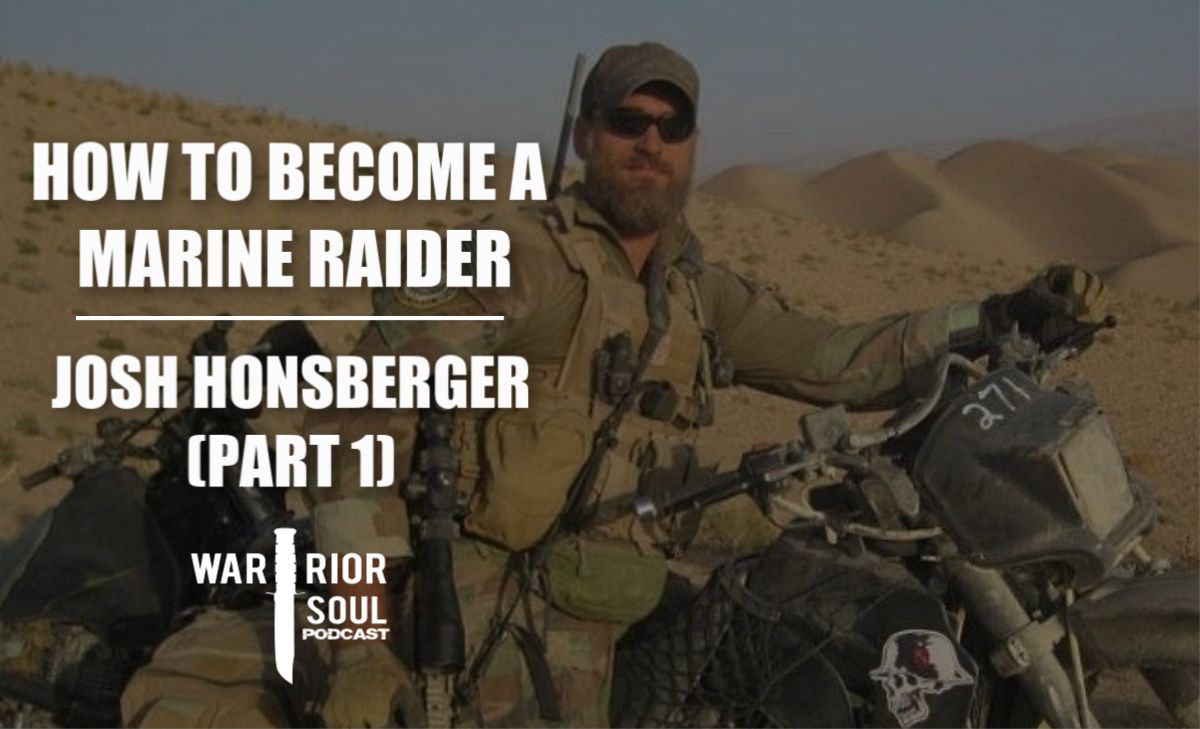
If you have not done so yet, be sure to check out our first episode with Josh by clicking on the image below!
If you enjoyed this episode, you’ll love:
Transcript
Machine-generated from the episode audio and lightly edited — may contain errors.
Chris Albert (link to this point)
This is Chris Albert, and I'm here to remind you of one thing. Someday, you're going to die. Now that's not some morbid statement or scary idea. It's solid fact. Your time here on this earth is limited.
And we need to be reminded of this as much as possible for one simple reason, to live your best life while you can. This is the Warrior Soul Podcast.
The Warrior Soul Podcast is written, edited, and produced by me, Chris Albert. Our mission is to provide tools, tactics, strategies, and ideas that help The US military veteran community to show up as the wisest, strongest, most capable versions of themselves in the civilian world. If you're not a veteran, stick around because anything we talk about will most certainly apply to you as well. This podcast is made possible with the help of F Bomb Nutrition. They make delicious packets of fats that you can carry around anywhere with you in little portable packets.
They make macadamia nut butters. They mix them up with chocolate. They mix them up with sea salt. They mix them up with coconut butter. They're absolutely delicious and they're really good for you.
They don't have any sugar. They also make a lot of cheese snacks. They make meat sticks, and it's just a great company. These guys send packages of this stuff to the troops who are on the front lines overseas to supplement their MREs, and we didn't ask them to do that. They just did that on their own initiative.
Really great company. If you wanna get 20% off your first order of f bombs, head over to www.dropanfbomb.com and use the code Warrior Soul at checkout. This podcast is also brought to you with the help of Save the Brave. Savethebrave.org is a five zero one c three charity for veterans. They run camaraderie events that include fishing, golfing.
They also do a lot of work with Gold Star families. And unlike a lot of other organizations, their board doesn't take a salary. Really great organization that is doing amazing work. So go and check them out at savethebrave.org. With that, thank you guys so much.
Let's get into today's programming. Alright, guys. This is part two of our interview with mister Josh Honsberger. Josh Honsberger served in Marine Special Operations. He's a marine raider.
And in the interview that we published with him yesterday, it was discussing how Josh got into the Marine Raiders. Talked about how he got into Marine Corps infantry, talked about what he did to prepare for selection for school, talked about some of the troubles he went through as he was trying to transition over to the Raiders. We talked about a lot about the training and, it's it's just a great great interview that you need to listen to before the second part. Another thing about Josh is he creates those Marine Raider prep programs, the Marine Corps boot camp prep programs with Nick Koumalatsos. Him and Nick served on the same team in MARSOC and, yeah, both great individuals.
Josh is an absolutely outstanding individual, really like the guy. And, in this interview, we're going to talk more about his career and we're going to talk about a catastrophic injury he received later on in his career that that pretty much took him out of special operations and man, when you guys hear this, I was literally sitting there with my mouth wide open listening to what happened to him and I was absolutely astounded that he was able to survive that and you guys need to hear that. It's absolutely insane and you need to hear what he did to bring himself back. So really inspiring guy. In addition to this interview, there's a third part.
We're calling this Marine Raider week, for Josh and Nick Koumalatsos. Josh's teammate Nick Koumalatsos is coming on later this week. We are going to be talking about testosterone. Testosterone. A lot of guys who served in the military and who served in in special operations in general are dealing with low t and low t is a really common thing amongst men these days.
And so Nick has come across some solutions and we're gonna be talking about those and things you guys should do if you're facing low t. So awesome week of content this week. If you haven't listened to that first episode with Josh, definitely do so. Definitely listen to this one today and definitely stay tuned for the second interview we did with, Nick Koumalatsos. Nick has been on before.
So with that, let's get into the second conversation with Josh Honsberger. Alright. What is going on everybody? This is Chris and I am back here once again with mister Josh Honsberger. And, if you didn't listen to last week's episode, we talked quite a bit about how Josh got in the Marine Corps and then eventually gotten to MARSOC.
That is a hell of a story. And you guys, if you haven't listened to that episode, you need to listen to it. Also, if you were somebody who is considering trying to join the Marine Corps or trying to get into special operations, you should also listen to that episode, and you should also definitely check out some of the resources that Josh has built along with Nick Koumalatsos to, help people to do so. This week, we're going to get into Josh's career. We didn't talk much about Josh's career, and he's...
He had quite an eventful career and had a few different things that that we're gonna talk about today. But how are doing today, brother?
Josh Honsberger (link to this point)
I'm good. I'm good. Everything's right.
Chris Albert (link to this point)
Thanks, man. So where we left off, like we said, you had dealt with some issues from your command. And you were prepping up to head off to training, you got through training. And just to start this off, what was training like for you when once you got in there?
Josh Honsberger (link to this point)
Like going through the courses themselves, like ITC and stuff Yeah. Like It was intense, to be honest. You know what mean? It was not... Nothing I didn't expect, right?
Because not that I knew what was behind the curtain, because no one ever does upon contrary belief. But I just, I tried to keep, and I still do, to keep like the most open mindset as humanly possible to the fact of no matter how much I want to know what's coming next, the only thing that's gone, that I'm going be allowed to know what's coming next is what is going to be given to me, right? Whether that was like a given evolution, whether we were on evolution and, you know, we're moving towards the next phase of the training objectives, you know, or whether it was the next day or the next week of training. So I kept an open mind of like, don't... Whatever comes at me is going to come at me.
And I think like keeping just such an open mindset, you know, I just allow I was allowed to receive it and not get, you know, in a panic or freaked out about the future of something that hasn't even happened yet that I don't know is going to happen. You know, and I think that's what happens to a lot of guys. They get so wrapped around the anticipation aspect of, you know, what's about to come up that they forget what's in front of them, you know, and they just deviated off tracks somehow.
Chris Albert (link to this point)
And just to recap, you're at a point right now where you had pretty much burned the ships. Right? Because your command had told you, you're not gonna pick up rank. You're you're you're not gonna do this because back then... Or...
And still, like you said, the Marine Corps is openly kinda hostile toward toward MARSOC and special operations, and and, they weren't a big fan of you heading over there. But at this point, you're in the middle of training. If you go back, your career is is not gonna be what you want it to be. Right?
Josh Honsberger (link to this point)
I didn't even really have a go back, to be honest. You know what I mean? Like, it it... I I didn't have a bad command. So I I kind of clarify that, I guess, is like, I didn't have a bad command that they were out to dun me.
You know, they were dunning for me of like trying to destroy me. It was like, this is just the black and white aspect of what has happened. And they were like alerting me that, Hey man, this is the way it is. I want you to be known that this is what's going on. So, you know, they weren't done it for me.
And I actually had a couple of guys that I was working with. One was an officer that he went over and one was another enlisted guy that, you know, we had been teaching together for a while that he ended up, you know, both of those went up to Warsaw as well. And yeah, but I didn't have... Dude, there was no fallback, man. There wasn't like a plan B, no secondary, no tertiary.
It was plan A all the way. So that's the way I rolled it, you know?
Chris Albert (link to this point)
Yeah. I had Robert Greene on, the author of the 48 Laws of Power. And he wrote a book also beside that called, I think it was 33 stat... Strategies of war. Right.
One of the things he talks about as a strategy is is burning the ships. And he talks about how Cortez, when he was trying to to take over one of the kingdoms, he literally burned the ships in the harbor as they were going in. And that's kind of a good analogy for what you were at there.
Josh Honsberger (link to this point)
Yeah, man. So I just pushed forward. And I was no like, I was not like God's gift to the man, you know, that I was this, you know, perfect specimen to be going through the program and I didn't have anything to worry about. No matter who you are, you know, you're assessed and evaluated every day, you know, and every day could be a cut day, you know. Something physically could have went wrong that, you know, I didn't plan for.
You know, I could have aced everything and I'd have broke a leg or something like that. And could have, you know, got knocked out at that point and then sent back to wherever. But that point, I don't even know where I would, to be honest.
Chris Albert (link to this point)
Now, you mentioned this earlier that this notion of behind the curtain. I think that one of the things both you and Nick Koumalatsos are really good at is keeping things that should be behind the curtain, kept behind the curtain even though you do the prep courses and things like that. But one thing I wanna ask you is maybe for for the marines out there who are considering this, you know, and there's probably no comparison at all. It's probably comparing apples to oranges. But let's say compared to, like, ITB.
Right? What was it like? What was it like compared to ITB?
Josh Honsberger (link to this point)
Oh, man. I don't even know if I can place a friend reference, to be honest. And not because they're just so different. It's just such a long time ago in my mental timeframe to try and remember it. But it really is just unknown.
The more that you get comfortable with the unknown and, you know, conquering and facing whatever objective or whatever task is in front of you and doing the best that you're humanly possible at that given... Whatever that thing is that you're engaging on, I just think that that's the way you have to go into it. And it just is when you're coming out of boot camp and you're going into, you know, SOI and all that kind of stuff, you didn't know what was ahead of you. Like there was no steps. You didn't have a clue.
So you received the information as it was given, you know, and you studied if it was material or you physically did what was required of you to the best of your ability because you knew you had to pass it or you wanted to pass it and you wanted to achieve and excel. And that's just how I approach it. It wasn't like lazy, I was trying to figure things out. It was just, I'm gonna shut my brain off a little bit, you know, and I'm gonna work out what's in front of me, what's what's required of me.
Chris Albert (link to this point)
Alright. So it's literally like, okay, I'm gonna get through the next task. I'm gonna get through the next task. I'm gonna get through the next day looking at the the the few feet in front of you rather than looking ahead and saying, okay. I've only got thirty two weeks left or or so many days left.
Right?
Josh Honsberger (link to this point)
Yeah. I mean, that's always in the back of your head as you're like, okay. Well, you know, graduation day or completion day, you know, is this date. Because that gives you the long term objective or focus of like, I need to push, you know, eight months longer, nine months longer. But that thought, you know, is only entertained for a short fraction of time.
And then you have to reel it back in and you have to think of the milestones, you know, that are in front of you. Because when you start to look so far ahead of you, you know, you get sidetracked, you get deviated, and then, you know, now you're just too far off track and you're not really focused on what's in front of you. And the premises behind anything you're doing, and I call it just life in general, but I was trying to drive it back to the military because that's my personal frame of reference is, you know, you just have to, you know, they always say master the basics, right? Well, it doesn't mean master that I'm the best and someone else sucks and they're the worst. It's just do what you can as best as humanly possible and you move on from there.
And that's kind of what you have to do.
Chris Albert (link to this point)
Yeah. Now, with your body, what was the wear and tear like on your body in training?
Josh Honsberger (link to this point)
Exponential. I went into it old, quote unquote. You know what I mean? Like I was, let's see, 25, I think. You know, and anybody that knows like military stuff, right?
Like '25 means you've probably been in for, you know, seven years if you went and ran out of high school. And, you know, a lot of the guys that I was going through with, majority of them were more in the, I'd say like 22 racket. Now, for your general scope of like regular human populace, you know, a three year difference is not that big of a deal. But a three year difference when you're coming from, especially, you know, like infantry backgrounds, I mean, that's three more years of just ground and pound and weight on your back and, you know...
Chris Albert (link to this point)
Knees, all that crap.
Josh Honsberger (link to this point)
Knees, hips, all the regular stuff. Thankfully, man, I never got hurt like that. You know, I mean, you know, you get banged up, bruised up, and, you you get some shit that's wrong with you, but nothing that was ever really too detrimental to take me off my mark. So...
Chris Albert (link to this point)
Now, so you get through training, right? And this is what I really want to talk about today, because, you know, there's this idea of accomplishing this thing. And then it's... You get through training, now it's time to to actually step up and go out to a team. Alright?
And and, you know, I I... I've talked to other members of special operation special operations before, Green Berets, you know, you go through this whole thing and then, you know, you show up, you're a newbie all over again in your team, right? And so what was that experience like?
Josh Honsberger (link to this point)
I think because I was, again, older, you know, quote unquote. And like I had been to other schools. I had been around the Marine Corps for a little bit. And I had been in a training instructor capacity for a couple years. I traveled and taught some, you know, field literacy guys and things like that, you know.
I kind of knew going into it, but I was like, all right, this is basically phase one, you know. Like, it's just like going through boot camp and then you get to your your adventure time, you know, you're like, you're stoked you got through with what you got through. But that's just the beginning, you know. Now just understand the most basic principles of what is going to be required of you. Then you need to start, you know, expounding on anything that you can.
And really it's up to the needs of the team. Just like, you know, Green Berets, you know, they go through the 18 series course and stuff like that. Like, you're at the needs of what the team is requiring. You know, if they happen to lose a Charlie, you know, like an engineer in the team, well, guess what, man? You're probably gonna go in there and you're gonna be selected to go to that team, you know, partially based off of the fact that, you know, they think that you would make, you know, a good Charlie or a good engineer or a good weapons guy, you know, something like that.
Chris Albert (link to this point)
So they decide whether you're gonna be a weapons guy or an engineer or anything else once you get to the team, right?
Josh Honsberger (link to this point)
No. I mean, that... So when I went through, you know, that was just kind of a frame of reference. When I went through, it was like we got to the team and, you know, we didn't have guys that were really going through 18 series type courses yet. It was, Where did you come from?
You know, like, because a lot of them, we had a pretty senior team. Nick was on my team and a bunch of other guys. And we had a really senior team, so everyone kind of had a diverse background already. Some guys had particular skill sets. You obviously have your SARC, you know, the events you like the long course and short course for AT and guys.
We had one guy that went to like a Charlie course, you know, for an engineer. But that wasn't determined at that point in time. Nowadays, guys are going to, you know, language courses and things like that. They're going more to like an 82 kind of pipeline, but for us, it was not. No.
Chris Albert (link to this point)
And so from the time you got to your team to the time you were first deployed, what was the time like there?
Josh Honsberger (link to this point)
You're reaching back in the brain. It would have been eight months, I think, if I'm not mistaken. About eight months, somewhere in there. They had just gotten back after, you know, from a deployment and more than a couple months into the preparatory phases of, you know, the next deployment. So, like, again, at that point in time, it was about, you know, when you came back, had about a year before, you know, that particular team was gonna be deployed again.
Unless you went individually and augmented somewhere and did something else. That team had about a year, first six months where you as an individual kind of, you know, doubling down on your career or refining, tuning some skill sets that you might have to... Only in order to maximize the team. And then the latter six months, you know, was collectively, you know, the team all came back together. Everyone was done with their individual schools.
And now it's six months of exercises. Let's just put it that way, right? Like a work up? Yeah, different phase type work ups where you're back with a team and, you know, you're re getting in sync together, you know, and going through all the documents and protocols that are required before some of the close. So ours was pretty intense, man.
Like we were gone, you know, I don't know, three weeks out of the month we'd come back. We'd be back for a week, you know, basically just offloading gear, repacking gear, know, re inventory, you know, the deal. Mean, counting guns, counting weapons, counting gear, packing back up, and then we were gone for another three, four, five weeks. So... Wow.
Chris Albert (link to this point)
And so lots of training going on. Lots of, I'm sure trying to tune yourself up. Probably lots of studying going on too, right? Academic stuff as well.
Josh Honsberger (link to this point)
Yeah. Because you're just, you're trying to really figure out how the bees move and how it operates. And, you know, you're trying to figure out the other guys in your team, you know, you're sniffing each other out, not in a negative way or anything. You're just trying to figure out because you know you're about to be going down range with that guy. If you haven't been on that team before, you know, I need to know everything about you as much as I can.
You know, because we're gonna be doing a lot of interesting things for the next, you know, ten months. And, you know, I need to know what his pros and cons are, you know, just meaning like what he's good at, what he's not so good at, what the skill trade is, what he lacks, what he might need help on. And then yourself too, trying to find the gap fills in yourself of, Hey, what am I really missing, you know, educationally, you know, physically wise, whatever it is, just try to prep and be ready then.
Chris Albert (link to this point)
Nice. Now, I'm gonna... Because I'm gonna need you need you to guide me here a little bit because even though even though I was in the Marine Corps and everything like that, like all of the all the other special operations groups that, you know, the SEALs, the the the the Green Berets, it seems like they have this kind of media aura around them. Right?
Josh Honsberger (link to this point)
Yeah.
Chris Albert (link to this point)
The Marine Raiders, MARSOC, there's a lot more mystery there. And and I think that's a good thing. Right? There... The the...
That's a really good thing for for the unit. But as as far as deployments and and op tempo and things like that, what was that like when you're on deployment? Was it was it... It was probably really intense, but but, you know, how intense?
Josh Honsberger (link to this point)
It's intense. I mean, you you... You're you're... It's ten... It was ten months.
Right? I mean, so, again, give or take, have that hunt, you have the long window view of, you know, ten months and then you have the short window view of, you know, what's in front of you, what's your objectives at hand. And, you know, our stuff is a little bit different. I mean, that deployment we're doing a lot of... Oh my god.
Blanking on the name right now. Totally blanking on the name right now. There's an acronym for it. I'll figure it, don't worry about it. It's gonna bother me.
Something very simple that I should know. Anyways, you know, you get in and you go straight in and there's no time, there's no lag for non mission events. I mean, we were... We didn't even have our full team on deck yet. Know, and this was a little left seat, right seat, know, with the team prior to us, you know, we were trying to figure out demographics of, you know, the human terrain, physical terrain, op tempo, just, you know, the little fog that we were on ourselves.
And I think, I don't even think we were there for a week, man. And, you know, that deployment was all on dirt bikes, all on motorcycles for ten months. Me and some guys that have never ridden dirt bike before, You know, so we're trying to, you know, get them spun up on a motorcycle or on a dirt bike, old, you know, like Haji mobile, you know, inside the little fob that we had. So we feel comfortable enough to take our own team guys out on operations. And less than a week into it, I think, we went and tried to do some ridiculous mission that shouldn't have ever fucking happened to be quite honest.
But, and I mean, we were blown up like maybe two and a half clicks, I think it was down the river. I mean, we got, you know, choking off motorcycle. We had a couple ANA guys, you know, get blown up in a Ford Ranger and it was just like, you hit the ground running, you know, there is no lag time.
Chris Albert (link to this point)
Now, this is gonna sound super freaking immature, but you're on dirt bike and you're in special operations. And there's got to be a thought that comes in your head. You're riding around on a dirt bike and you're got to be like, I mean, I know what I'd be thinking. I'd be like, I'm a fucking ninja right now. You know?
I... There's got to be that thought that came into your head at some point, right?
Josh Honsberger (link to this point)
Sometimes, yeah. But really, it's like, I'm on an entirely new vessel that at that point in time we had not trained on. Gotcha. What are my, you know, I mean, I knew how to ride, right? Most of us all knew how to ride.
So it wasn't that big a deal. It was a couple, but our biggest thing was like, how do we maximize this new vessel that's taking me from point A to point B? One, to the best of my ability. What are my weaknesses now? What are my strengths, you know, that I have obtaining, you know, since I'm doing this?
And just so much other shit in front of me that like, it didn't cross my mind until a little bit into it. And then finally I had this thought. I remember one day and I was riding, you know, and I'm looking and I was going through, you know, normal day and I just had that thought kind of click in. I'm like, Where the hell am I right now? I'm like, I'm in the middle of the Middle East on a Chinese made, you know, a 125 cc dirt bike.
And I'm rolling through the hills of Afghanistan and I'm about to go do this mission and what the hell is going on? How did I even get here, man? Like, is this even really real? You know? So there was moments like that, but a lot of times it was...
Don't know, I just really didn't really think about that until really until way after the fact.
Chris Albert (link to this point)
The, so when it comes to the dirt bikes, you mentioned this, you weren't, you guys didn't realize you guys were gonna be on dirt bikes when you got there or there was, there any knowledge of that beforehand or anything like that?
Josh Honsberger (link to this point)
No, we did. The team before us was on them. And, you know, so we did. I mean, we knew it was gonna happen. But it's like other pre deployment stuff, you have certain measures that you have to hit, you have to obtain.
No one else was doing it really at that point in time. And it was like, do you know how to ride? Do you know how to ride? Do you know how ride? Do you know how to ride?
Who doesn't know how to ride? You know, and if this person doesn't know how to ride, does he have a skill set or capability that someone else could pick up on until he learns, you know? So we knew we were gonna ride just... I don't know, some of the guys, I guess, just weren't prepared.
Chris Albert (link to this point)
Now, as far as... Because I know you sustained some really bad injuries. When did those occur? Did they occur during that first deployment? Were they later deployments?
Josh Honsberger (link to this point)
I mean, on deployments, other than being blown up and things like that, I'd never, you know, nothing was ever, you know, shot in a shrapnel, things like that, thankfully. But it was post or after what ended up being, I lost deployment, I had gotten a bad parachuting accident down here in San Diego. So that was really, really the big one, I guess.
Chris Albert (link to this point)
Gotcha. We'll we'll talk about that that in a second with... So back... And again, I'm gonna be like around around these dirt bikes for a second here because I'm trying to wrap my head around the whole thing. But you know, so you get guys who are riding these things, they're they're they're going across the train, people get thrown off of them, people sustain injuries from those and things like that.
Josh Honsberger (link to this point)
Yeah, man. I had for I think the latter three months or so, four months of the deployment, I had a lag bolt that ended up being my right peg in the dirt bike. Like it just it's what we had, you know what I mean? And I had this our mechanic that we had, he was, dude was awesome. I mean, he was just a jack of all mechanic stuff, man.
Dude was really good. And he's like
Chris Albert (link to this point)
Afghani or American?
Josh Honsberger (link to this point)
No, he was one of our guys. He was one of our support guys. He was really good. And he just, he found this really like nice steel, thick bolt and welded on. That was my right peg.
It held up for a long time until one day, you know, we were out for a couple of weeks and we were coming back. And when we were coming back it was, you know, goat trails, you know, that kind of zigzag, you know, through the mountains. Tiny little trail, just enough for basically the dirt bike. And I was taking up tailing Charlie and it was nothing glorious. And it was like something off of America's Funniest Home video.
I literally was just... I was going like normal and I, you know, I was pushing on the pegs to keep my lean on the bike so I had to pitch right, you know, so I wasn't falling off the hill or off the mountain. And all the pegs sheared off and away I went and tumbling down the side of the mountain probably getting 35, forty, fifty footfall, something like that, you know, just kind of started tumbling down the side of the mountain, you know? It happens, you know? It's...
It happens. And I got up and I was like, Shit, what do I do now? I mean, I've got to try and kick the bike back over. Kick the bike back over. One, I gotta get back up the hill, you know, and hopefully, you know, the team, you know, I try to radio in and, you know, comms are kind of shitty and things.
Oh my God, man. I just want to get back up there on the trail. But then when I got back up, you know, realized I don't have a right foot peg. So, you know, I just kinda had to hold, you know, hold the foot up the whole rest of the trail to get back.
Chris Albert (link to this point)
Now, did you guys ever get fired upon while you were riding or?
Josh Honsberger (link to this point)
All the time. Yeah.
Chris Albert (link to this point)
And and so there must have been like an SOP or something like that to jump off and and and immediately engage or
Josh Honsberger (link to this point)
Yeah. I mean, was depending on where it's coming from and what was around you at that point in time. Motorcycle isn't really a great place for cover, as you could expect. But you utilize what you have, you know? Then utilize the terrain around you just like like if you were on a foot patrol, right?
So we had to approach a lot of what we were doing. Although we were technically vehicle mounted, a lot of the SOPs that we kind of fine tuned and tweaked as we went along geared more along the lines of maybe like a foot patrol type SOP. Gotcha. You know, other than the fact that now we had this other mechanism that, you know, we didn't really want to leave behind. So you can't, you know, scatter, you know, and go too far.
As far as that, it's, you know, we kind of just use those redefined like foot patrol SOPs.
Chris Albert (link to this point)
And then so you get through that deployment and then how often were you going back and forth? How many times over your career did you go back and forth?
Josh Honsberger (link to this point)
Total five deployments.
Chris Albert (link to this point)
And was it always Afghanistan or were there there time around?
Josh Honsberger (link to this point)
Yes, Iraq, Haiti, Southeast Asia in there. So kind of all over the place. Gotcha.
Chris Albert (link to this point)
Gotcha. And so between that time, you know, when did you meet your wife? When did you end up meeting her?
Josh Honsberger (link to this point)
I was up in Quantico. I was teaching at the time up in Quantico. She Yeah. Made the transition with me, you know, into a new life. It is what basically I consider, a new factor of life, you know.
Because she didn't know me when I was in the infantry. So she did not understand, you know, going to the field and, you know, I mean, she understood the deployment. So I volunteered for deployment while I was up in Quantico because I just was, you know, kind of feeling like it was time to, you know, go on another deployment. And so she knew what deployment time was like, but she didn't know what like the rotation wise was when, you know, when you're training and doing a workout, you know, for an appointment. So trying to get through as best as I could and tell her, you know, what she was kind of in store for, even though I didn't fully know, but she's great, man.
She's been my biggest, you know, supporter throughout my entire career, but also really my life. So, thankfully.
Chris Albert (link to this point)
And that's awesome because, you know, we hear stories of so many marines and and and so many soldiers, you know, marriage marriage usually doesn't last long in that environment.
Josh Honsberger (link to this point)
No. No.
Chris Albert (link to this point)
What... Is there any advice you have as far as, you know, aside from really finding the right kind of woman, you know, as far as keeping that alive and and and and navigating yourself through that?
Josh Honsberger (link to this point)
Yeah. Other than finding the unicorn, You know, it's one of the things like I've talked with her about it a bunch too, you know, because with Nick, you know, we've done some seminars, you know, for veterans who are transitioning and we did a husband and wife panel, you know, one time. And the question always comes up, you know, and I don't... I think it was an open line of communication between the both of us. Was it always working, open, and perfect? Hell no. Right? But that was always the objective was an open line of communication, of honesty, and coming from a place that, you know, I was trying to see things from her perspective. And I can't speak for her, but you know, was kind of like she was trying to do the same for me.
And with that, then we had, you know, no shit in the scene. We were coming from the same playing field, you know, as best as we could. And we maximize, you know, not that anybody else does, I'm just saying for us, you know, we maximize our time together and we truly enjoy and love our time, you know, together. Taking day trips, taking, you know, week long trips, weekend trips, you know, we... Anything we can squeeze in, we squeeze in, you know, either family time or me and her time.
I don't know. Other than that
Chris Albert (link to this point)
That's that's an important point though because I think a lot of guys when they're... When it's time for family time, they're not really there. Right? They're not present. Their their head's somewhere else.
They're thinking about something else. They're on their phone. They're they're doing all this stuff. And I think one of the things that's really important is if you're gonna do couple time or family time, you've gotta be present. You gotta be there.
You you can't be off in the distance. And and that really... If you wanna get something that's gonna gonna get a woman angry at you, don't
Josh Honsberger (link to this point)
Yeah. No. 100%. You know? Yeah, 100%, you know. And I will be honest as well, is that most of the faltering time as far as like, you know, being open, not the honesty part, because I'm pretty honest.
I'm very honest. But the opening willingness to like have communication and dialogue sometimes. Now we're fine. But there was definitely points of times, you know, throughout the career or, you know, pre or post deployment of work up that I was just more reserved and, you know, I wasn't, you know, as open and I don't know if I really understood it at that point in time. Because like you said, I mean, even when I was home...
I mean, we were gone for four or five weeks and I'm back home for a week. Like, I'm trying to decompress, you know, from four weeks of being gone, four weeks of, you know, fake mission prep. And now I come back into a home and, you know, I have, you know, a wife and two kids, you know, little ones at a time, that the only thing that they want is they want me. They want me as a human being, man. They don't care that I'm in the military, you know, they don't care that I'm doing, you know, a job in special operations.
Like none of that matters, man, you know? And they want me as dad. They want me as... She wants me as Josh. Like she wants me as the husband.
So that's what I feel like you should always, you know, try and give them. So all that other stuff's got to get checked at the door before you step foot in that home at home. And, you know, when I would come back for those weeks or when I would come back from deployment as best as I could, I tried to understand that she runs the house, man. Because she's the one that's in it every day. She's the one that's disciplining the kids or feeding the kids or teaching the kids.
And, you know, rather than me trying to come in this, you know, barrel chested dad, like, you know, I'm dad, listen to me. It's like, Hey, you know, how are you running this and how can I best assist you in the time that I am going to be home, you know, to make this family work? And I think that's an ego check for a lot of guys and it's not easy. And it wasn't easy for me.
Chris Albert (link to this point)
Right. And the thing is too, I think what you're talking about is different than being passive and just being like, okay. She's in charge. I'm gonna let her take this whole thing. Exactly. It's you facilitating her leadership in the household, in her role as as the homemaker, the mother, things like that.
Right? And helping her, right? Being part of
Josh Honsberger (link to this point)
You just hit it right on the head, man. It's not, but a lot of people, and me included, at some point in times, I would view it as being, you know, passive or being weak and not being a strong male figure in the home. But you're right, it's not that. It's how do we best make this family situation work, you know, and maximize our time, you know, together. Because it's not gonna be no good if I come back for a week, you know, or two weeks and I come in and try and, you know, discipline and get angry and run the roost like I do it and change and shake everything up.
And then when I leave for another four weeks, it goes back to the way it was. Like, then the kids are going to be confused, you know? That's no good.
Chris Albert (link to this point)
Right. Exactly. Exactly. And I think a lot of guys, when they're not completely in charge, they're like, hands off, you know, I'm just I'm just gonna sit here and things like that. That's a mistake, you know?
Josh Honsberger (link to this point)
Yes. Again, you are very correct. Like, you know, I wasn't sitting on the couch, you know, just drinking beer with my feet up watching football. Like, I don't know, you run the show how you do it, woman. You know, that was not the case either.
It was just, I was stoked to see my family. I was happy to see my wife and kids. And I was trying to maximize that time, man.
Chris Albert (link to this point)
Hey, guys. I hope you're getting a lot out of this interview. You know, the Warrior Soul podcast is built with the mission to empower its listeners to live absolutely epic lives. And that's why we recently created a group called the Warrior's Obituary Society. This group is built to empower its members to live epic lives worthy of epic obituaries.
And it starts with an eight week development program. And with this development program, what you're gonna do is you're gonna outline a vision for your life. You're gonna get very specific about what you want. Because without that specificity, you don't know where you're going and you don't know what you're doing. From there, we help our members to develop specific goals, objectives that they are gonna push toward, and that their fellow members of the Warrior's Obituary Society are going to hold them accountable too.
From there, we're getting down into specifics. We're going to help you to develop and customize your own personal fitness and nutrition plan to help to fuel your body and fuel your mind for the quest ahead. From there, we're gonna work on your personal finances. We're gonna help you to knock down debt. We're gonna help you to start saving money and to create a plan so that you can start investing in your dreams.
Then we're gonna get into your business and career. We're gonna help you to develop the skills that you need to develop yourself so that you can have a major impact in the field you choose. If you choose to go into business, we're going to help you to set up the foundations that you need to create your own company and get started on your path in life. From there, we're going to be working on your relationships. We're going to help you to develop a world class network.
And all along the way, you're going to have your fellow members of the Warrior's Obituary Society pushing you in every single area. We meet once a week over a live call, and we're constantly communicating over our own private floor... Forum on Slack. We don't do anything over social media, and that's because I don't want anybody feeling like anyone's looking over their shoulders, and I don't want you exposed to the crazy distracting alerts that you get on Facebook and some of the other social media platforms. Normally, programs like this cost thousands of dollars.
This one does not. For the price, it is the best development program on the Internet. And that's because our mission here at Warrior Soul is to empower people to get more out of life so that they can in turn make the world a better place. We've got a great mix of active duty military, US military veterans, and civilians in this group. We wanted to keep it really eclectic so that we get a lot of different types of views up there and a lot of different people with different areas of expertise.
If you think that this is something that would be of interest to you and that this is something that could empower you to live your absolute best life, head over to www.warriorobituarysociety.com. That's www.warriorobituarysociety.com, and you can sign up today. And if you have any questions about it, just reach out to me at chris@warriorsoulagoge.com. That's chris@warriorsoulagoge.com. I'm happy to even sit down with you for a phone call for a few minutes to see if the group is right for you.
I look forward to seeing you guys in there, and let's get back to this awesome interview.
Josh Honsberger (link to this point)
Yeah.
Chris Albert (link to this point)
Now now I wanna get into this because your career ended up getting cut short because of an accident. Right? Right. And we alluded to it a little bit earlier. There was there was a parachuting accident down in San Diego.
What happened?
Josh Honsberger (link to this point)
Dude, was actually, I was going through jump school through MPC, which is jump school that the SEALs go through through their pipeline. It's a five day short course instead of the three week course up at Benning. And I was third jump of the day, I think it was. And we're jumping about 2,500 feet in the air, you know, roughly somewhere there out of little casas. And I ended up suffering a open femur fracture in air, you know, the elevation was, 2,500 feet, you know, somewhere in there.
And yeah, so I, it was a statifying jump, you know, so when I went to jump out of the plane, the best that I can recollect. And I also had a couple of really good friends of mine that were in the stick behind me, or the other group of guys, you know, that were behind me getting ready to jump. So I piecemeal all this together from whatever I thought I could recollect and from them. And, you know, we hit some pretty good turbulence as I was jumping out of the plane and, you know, all the stars ironically aligned enough for me to kind of get bounced up inside the plane. I had a cord that was wrapped around my neck and then I had a cord that was wrapped around my left leg.
So thankfully the cord around my neck was more favorable. It did not decapitate me, but the one that was around my left leg, it broke the femur in half, so it shoot a femur, compound fracture and shot the bone out the back of my leg, tearing through the hamstring and, you know, any reference of inch and a half somewhere out there, it protruded outside the back of my leg. And then I exited the plane like I was supposed to, you know, like you're supposed to. Meaning I just got sucked out of the plane and kind of went with the rest of the motion. So the rest of the stick came out with me and all that happened in a fraction of like, fractions of a second because the rest of my stick came out.
So I was one man, two, three, four, and five all came out in my same stick. So there was a little bit of a delay between me, you know, one man and two man, but not much because we were jumping to a really small DZ. So I was unconscious. You know, I ended up regaining consciousness. The best that I can remember was basically when my parachute caught lift.
So when your chute catches lift, no one's ever, you know, jumped out of a plane before, I'm sure we've all thrown those little, like G. I. Joe guys, you know, out your second story window when you're a kid. You know, you throw it and then the moment that it catches lift, you know, that little guy starts swinging, swinging down. So when my chute caught lift, that jolt, what I believe that jolt is what brought me back to consciousness.
I was holding my reserve and I kind of knew something had happened, but I didn't know what. I looked up. Thankfully, the chute was intact. You know, it wasn't twisted. You know, I didn't have to worry about bicycle kicking and trying to get out of the spinning, you know, twisted chute or nothing.
So then I fell right into just like safety check mode and personal check mode. Is that, you know, I checked the chute, you know, make my risers are good, still holding reserve. I started looking down at my body because I realized something had happened, but I was just confused and what. And looked down at my torso, my arms were good, you know, and my right leg was good. I panned over to my left.
And when I panned over to my left, I looked and, you know, blood was just kind of like floating to earth. Like, did it just slow down? And I watched it like, like come out and kind of float down to earth. And I was like, okay, something's not right. And I immediately just took my hands off reserve, pinched femoral, you know, because I didn't know if anything was clipped or hit or whatever.
And I went straight into self aid, you know, like the old school self aid, you know, buddy aid cornerback. I went in straight into self aid because I'm at whatever elevation I was at falling to earth. And I didn't know how severe it was. So I kind of tried to like move it a little bit to see what was going on. And it felt like a garbage bag full of jello.
And I was like, okay, I'm not moving that anymore. And literally, I just kept, I kept pressure. I maintained pressure on my femoral with both my thumbs as best as I could. And, you know, as I'm coming down, it was a circle chute. So anybody who's jumped before, you know, the swear ones and the ones that civilians jump with, you can turn, you can do all really nice things.
Circles? No. You can crack. Maybe. If you're good enough. But in my mind, what I had to do is I had to make believe that I could turn my chute because that... It kept me... It just kept my mind going, right? I was in total shock as far as pain is concerned.
I had zero pain. It has nothing to do with me being some sort of weird superhuman. It has everything to do with I was, one, jumping out of the plane, so my adrenaline rush skyrocketed. And two, shock had set in. But three, thankfully, I was consciously aware enough to go back through my training and understand that, you know, I had to, you know, pinch femoral.
I had to do this. I had to do that. And I was yelling down to the ground crew, you know, traction, tourniquet. I didn't know if they could hear me. I didn't know if it mattered.
But to me, it kept me, it made me feel like I was kind of potentially in charge of my fate, to be honest. And, you know, I didn't know... I just remember it kept going through my head, you know, I was like, if something is going to happen, if femoral is clipped or whatever is happening, like I wasn't going negative, but I was like, Man, I am going to touch earth again in my lifetime. Know, it was like, that was my short term objective was I'm going to make it far enough. You know, didn't know how severe it was, but I want to touch earth and then I will develop another objective, you know, once I touch the earth.
And then I started thinking, well, you have to land. So anybody that's jumped before and watched the video, right? Like static line is a PLF and parachute landing fall for people who don't know. And I just... In my mind, I said, Okay, left side's compromised.
So right side, guess what, buddy? You're going take the absorption as best as I can. So I kept committing to pinching some more on the left leg. I did a right side PLF as best as I thought I could. And upon landing, what I ended up doing is I basically I blew out my labrum and one hundred and eighty of your slap tears in the labrum torn bicep rotator cuff.
And I ended up having axillary nerve damage right at the brachial plex, which controls basically your lat, your chest muscles, all kind of stuff. And so I made third, man. So that was cool. And I, you know, go ahead.
Chris Albert (link to this point)
It's cool. Yeah. That... That's...
Josh Honsberger (link to this point)
I I have to not stop because I start to go almost catatonic at that point, and it's like a linear
Chris Albert (link to this point)
Yeah. No. I'm just thinking that... I mean, I'm thinking about what you were going through there, and I'm almost getting nauseous listening to it. And I'm not somebody who easily gets nauseous over this kind of stuff.
That type of injury at, you know, 2,500 feet in the air, and you are coming down and just thinking about the impact upon landing. And for you to be able to keep a stable mind and do self aid at the time. I mean, that one speaks well for you as a person, but you're training. But two, I can't imagine going through something like that. And just just the the thoughts that would have come up in my own head had I been in that situation.
And I'm not as... I'm not afraid to say it. I would have completely freak... Freaked out, man. That would have been absolutely insane.
Josh Honsberger (link to this point)
It's one of those you never know until you're faced with it. Not that you want to be, you know? But but you just never know. Right? Like, I mean, if if I would have never been in that situation and let's just say the tables are reversed and you were telling me that, I'd probably tell you the same thing, Like, Oh, that sounds terrible, bro.
I'd be freaking out, man. But, you know, I don't know. You just don't know. And I just was going through my phases of what I thought I might be able to control, I guess, if you want to say. And then, yeah, I was on the LZ and they started, you know, they were telling me what was gonna happen, you know, and and...
Chris Albert (link to this point)
How long did it take them to get to you once you're on the LZ?
Josh Honsberger (link to this point)
Seconds. I mean, the the ground crew is incredible. There there there was some... I don't know what phase in the SEAL pipeline they were in, but there was some 18 deltas that were there. There were some civilian EMTs that were there.
And I don't know where the ambulance fell into the equation, but there ended being an ambulance there. You know what I mean? My timeline, exact timeframe was off, but it was quick. Like, it was quick. So someone was there when I landed, you know, they did the whole collapse of my chute and like, you know, and they were right up on me right away and they were, you know, asking me what's going on and I was just trying to give them directive as best as I could of like what I perceived my injuries to be, how I felt, where the pain was coming from, you know, and they did all their checks and then obviously they saw that and, you know, blood and they, you know, they started to apply the traction splint and anybody who's ever been through medical training, you know, like you always hear about, you know, pulling traction is incredibly painful, is what you hear.
So that's what I was expecting. You know, I fell back into my realm of like training and understanding like, okay, now I'm really gonna feel the pain because I'm on the ground, I'm laying down
Chris Albert (link to this point)
The adrenaline's wearing off.
Josh Honsberger (link to this point)
Yeah, you know, and I didn't know what. And I remember looking at two of the guys, two SEALs, you know, who they were, man. I don't know. And I remember looking at them and I was like, bro, whatever you do, don't fall over. And I just grabbed, I grabbed one on one side and I grabbed one on the other.
I grabbed their ankles on their boots. And I was just like, Whatever you guys do, do not fall over because I'm gonna start pulling. Whatever happens, man, like just don't don't fall on me. So they pull traction and...
Chris Albert (link to this point)
You have the torn labrum. Your shoulder's messed up. All that's messed up up there. They're trying to get to you. And and I wanna talk about that, but before...
Did they know you were injured before you hit the ground? Did they did they see something had happened? Or
Josh Honsberger (link to this point)
They knew that I ended up having a bad exit. So I think they knew that like, Hey, go check this guy out maybe when he gets there because he had a bad exit. That was the extent of what they knew. Because like I said, I was one man in the stick and two, three, four, and five all went out. In the timeframe that they were allowed to go out because we were just the way that DZ is set up.
So they had no clue how severe it was at all, whatsoever. And yeah, man, I remember reaching back too and they were like, Bro, you wanna feel it? I'm like, Fuck yeah, man, I wanna feel it. So I remember reaching back, I actually had a picture of it. I'm like, Who's got a camera on?
And he's like, Why? I'm like, Take a picture of that shit, man. Wanna see what it looks like. Well, I have a picture of my fingerprints, my bloody paws, on the back of my hamstring. Just I wanted to feel it, man.
Like, I mean, I don't know.
Chris Albert (link to this point)
I gotta see that picture. You gotta...
Josh Honsberger (link to this point)
I'll send it to you. Yeah.
Chris Albert (link to this point)
So so they got to you. They put you in traction. And and so at this point, you're probably feeling the pain like crazy. And then they they bring you back and they they bring you to the base aid station?
Josh Honsberger (link to this point)
No. So they put me up in an ambulance, you know, they got me in an ambulance and I was, you know, in transit somewhere, man. I had no clue what was going on. I just knew that I was messed up enough that like, it didn't matter what I knew or didn't know at that point. Like, come to find out they took me to Scripps Mercy, incredible surgeon, incredible surgery.
I almost bled out on the way to the hospital. I had one of those, another moment where I was laying there and I started to feel warm and I got embarrassed, dude. I was like, Oh my God, I just pissed myself. I'm like, There's no way that this just happened and I just pissed myself, you know? And then my thought was, No, no, didn't piss myself.
That's blood. And I was like, Oh shit, I'm bleeding out, you know? But the indicators didn't go off yet, you know? Like, so it was like, you know, my readout, you know, my O2 levels and everything, my heart rate, you know, it hadn't caught it. Then by the time I caught it, you know, the EMT guy was getting up, he was looking and I'm like, Dude, I'm bleeding out, you know, like, what do I have?
And, you know, I just was going through my mind and like, Shit, like, I just survived this and then now this is going to happen. But he... Whatever, he packed me up some more gauze pads and gave me some oxygen and made it to Scripps and called my wife from there. And I was sitting on the gurney and I remember having to sign some paperwork, you know, because they were doing femoral taps, you know, blockers. And really, really nice old lady, you know, like the helpers that they have at hospitals and stuff.
And she was like, Sweetheart, is there anybody you can call? And I said, Yeah, yeah, I have my wife. And I'm like, What time is it right now? She's like, Honey, it doesn't matter what time it is. You need to call someone.
And I was like, Yeah, what time is it? You know, because I was on the West Coast and I'm stationed on the East Coast. So I'm like, Wow, my wife is probably putting the kids down to bed and it's bath time. Just shit like, you know, a regimented program. She's like, I don't think you should care what time it is.
I think you need to call her. So I called her and she was doing bath time. And, you know, I just told her, I said, Hey, whatever you do, do not Google what I'm about to tell you. But I said, You need to call Nick. Know, Koumalatsos, I'm like, You need to call Nick.
You need to tell him that this is what happened. I had a bad jump and I have an open femur fracture and I'm going into surgery. I don't know where I am, but you called him and he'll know what to do. You know, like he'll be able to set you up. I said, but don't Google it.
I love you and we'll talk soon. And, you know, I passed the phone to the old lady and she told her where I was.
Chris Albert (link to this point)
She definitely Googled it, didn't she?
Josh Honsberger (link to this point)
Totally, I had to at least put the disclaimer out there, you know? Yeah. So, yeah.
Chris Albert (link to this point)
So, oh man. That's intense. That is intense. Now, you go through surgery and then did your wife come out to San Diego or did
Josh Honsberger (link to this point)
Yeah, there's a whole lot on that, but yeah, she ended up getting a silicone care. I had a case manager that was like at my bedside as soon as I woke up. The dude is really awesome, incredible human being. And, you know, he ended up working and getting her to come out to San Diego. And she was, you know, living with me there, you know, in the hospital, you know, pulled up a bed, you know, and was at the hospital with me for, I don't know, five days or something like that.
And then I got released kind of, but like I couldn't fly, you know, due to blood clots. And I hadn't even had all my appointments yet with my surgeon. But they deemed me good enough, I guess, to exit the hospital. Then... And that's five days later.
Yeah. That's some other stuff that kind of happened, but I mean, I got taken out of the hospital unbeknownst to some other things that like I shouldn't have been. But I got put up at a naval aid station in Coronado up at the Naval Lodge. And I lived in that hotel for, I want to say a week and a half maybe, something like that. One of my guys that was out there with me on training, they let him stay, you know, for a couple extra days to help me out.
My wife was there, she was helping me. You know, I just laid to bed for a week and a half just eating painkillers and hanging out.
Chris Albert (link to this point)
So one of the things that happens with the human mind, particularly when there's a lack of stimulus around, is that's when it starts to process its thoughts. Things tend to come up, memories tend to come up. Where was your mind at that time?
Josh Honsberger (link to this point)
I have a lot of loss of memory, to be honest. I would have never been able to tell you that at that point in time because I thought I was firing on all cylinders. I was still here, you know, I was good as, you know, as new. I had people visit me in the hospital that I don't remember. And my wife's sister ended up flying from, I think she was living in Seattle at the time, flew out with her daughter and stayed there at the hotel for like two days or something.
And I have a very small fraction of even remember her being there, you know. So, I lost a lot of the memory, I guess. Ironically, I didn't really go too negative. I had this euphoria about me that I was like, okay, this is it. You know, like this is it meaning like this is a career ending.
Like this is my exit, you know? Whether it's wanted, desired, called for, uncalled for, it didn't matter, you know? And I just kind of came to that conclusion and my biggest upset was that I physically was not myself. Could have cared less about my career being cut short. Although it sucked, right?
It was more or less aspects of me as a human being were now removed, that I was not this physical human being that could even walk at that point, you know, was in a wheelchair. And those realities were kind of starting to set in. Trying not to go too far down the negative rabbit hole of, you know, am I going to be able to do this or that? Because, you know, I mean, you hear the stories, you know, when people get in the hospital and, Oh, you're never going to do this, you're not going to do that. Trust me, man, there's way worse off than, you know, people with missing limbs and things like that.
But it was the same stuff that they told me, man. Like, Hey, you know, don't worry about, you know, running again. Don't worry about deadlifting again or squatting again. Like, you know, it's just the way it's gonna be, man. Like, you need to focus on trying to figure out how to walk again, all this kind of stuff.
Basically, what I ended up doing is I gave it in a positive way. When I got back to the East Coast, I had the most phenomenal human beings that I attribute basically like my life to, my abilities in life to. I had three people that were my staff. Not my staff, but I mean like that were, you know, like, my training, you know, coaches and, they put Humpty Dumpty back together again, you know? But I gave them myself.
Myself. I I gave gave into into my my ego. I gave into what I thought I knew about my human body. And I allowed them to teach me with all their knowledge, skills, expertise, education. I mean, these were world class human beings and, you know, occupational therapy, physical therapy, strength conditioning coaches, sports medicine.
These guys are top notch, man. And as strong as I was and as capable as I was at my job, at that point in time, that was not my training and my education. So if I would have walked in to my recovery with an ego of, you know, I know my human body and I know how to do this and I know how to do this. I don't think I would have came out the same way that I did.
Chris Albert (link to this point)
That's an important point too because, you know, there's this book out there. It's called King, Warrior, Magician, Lover. I don't know if you ever read it before or anything like that.
Josh Honsberger (link to this point)
No.
Chris Albert (link to this point)
No. It's by a couple of psychologists, and they talk about the archetypes that men go through. And they look at these these archetypes as like stages of life. And, with each archetype, you take knowledge that that they end, but but you take the knowledge along with you to the next stage. Yeah. One of the things I think you're talking about here is is is submission and acceptance.
So this thing happened, there's nothing you can do about it. And you accepted this new state of being, which I think is really important as you're going through a transition. Because when you try to fight it, and you try to say, okay, this sucks, and I'm gonna be all crazy now because I can't do this, then then, you know, that's where a lot of of negativity comes in. But you literally looked at it as like your next mission. And you said, okay, I'm gonna be a white belt here from a jiu-jitsu frame of mind, and I am gonna learn everything I can about putting myself back together and bringing myself back to being a functional human being, right?
Josh Honsberger (link to this point)
100%. And I was like, don't know, Kids go through a phase where they just ask questions, right? Like there's a certain age in kids where they just... Man, it's like everything's a question because they're hungry for knowledge and they're also comfortable with you to ask the question so they can learn. And that's kind of like the mental state that I put myself in because I was asking every question under the sun.
I questioned everything that they did to everything they told me to do, everything they told me about me, I questioned the hell out of it. But my approach or my line of questioning was not, I wasn't questioning them that I didn't think that they were knowledgeable or capable as I was questioning them from the point of, I want to know why you're doing this to me. I want to know, you know, what your desired outcome of why you're doing this to me so I can understand it because this is my body and I want to rape your knowledge, man. I want to understand me. I want to understand why you're building me back up the way you're building me back up because I didn't know anything.
And that was fun. Maybe it wasn't fun for them sometimes because I was just pounding with questions. But they took it all in stride, you know? And they just, you know, they taught me as they performed. And it was just this beautiful relationship, man.
I can't really describe it any other way than that. It was pretty amazing and it was fun. I mean, it's messed up as it was and as long as it was, it fun. Because I had good people on my side and my sole objective was, again, I remember telling Nick this, you know, all I want to do is I want to be able to run and play with my kids. I don't want to be, because there was a long period of time where I was in a wheelchair, right?
And then, you I'm out of the wheelchair in a straight line cast and I just remember sitting there looking at them. And they were young at the time, like, I don't know, three, maybe somewhere in there, and 1.5, you know? And I'm looking at them and run and play and jump and just be kids. And I was this bump on a log sitting in a wheelchair. And I'm like, I can't do this, you know?
And I just can't do this. And I'm going to do everything in my human power to not live in this state as long as I have to. I want to get out of it, but I want to get out of it properly. Because if I don't do it properly, if I don't do it properly the first time, I'm going to be back, you know, in the chair. I'm going be reduced, you know, to another rehabilitative state again.
So that was my drive, man, was my kids.
Chris Albert (link to this point)
Sure. How long did it take you to walk again?
Josh Honsberger (link to this point)
I don't know. Seriously, I was in and out of wheelchairs for, I would say three months. Know, weight bearing in between here and there. But crutches were really hard for me because, so this happened in May and I had my torn labrum, bicep, rotator cuff, and axillary nerve damage. I didn't get surgery on this for seven months.
So I was in a recovery state where I was expected to be on crutches with a one hundred percent blown out and non functioning shoulder. So I had, I just, I worked around it and I used it to how I could, man. It fell off. It looked like my 10 year old daughter's shoulder looks right now. It was straight numb.
Like it was gnarly. So, yeah.
Chris Albert (link to this point)
And so, yeah, you couldn't use any of the aids like parallel bars. You couldn't do any of that kind thing.
Josh Honsberger (link to this point)
I was using them. Yeah. I was using. Like, it was just it was blown. I mean, I don't know how looking back, I don't know how I was using them. I don't know how I was doing what I was doing, but the staff at the time and the surgeons at the time, they said, you know, they wanted to wait because it severe enough, but not severe enough that if they compromised now my right shoulder, now I have, you know, cross body extremities, know, lower left leg, upper right shoulder. Now I really have shit's creek.
You know, because my shoulder, you know, would have been in the sling. My right leg would have been in a straight leg cast. And now I'm just, I got one good leg, one good arm, and they just didn't want to further compromise, I guess that was their directives, you know. And I questioned it a little bit because I was like, Man, figured you just want to heal me up. And...
But that was what they wanted to do. And so I said, cool. We're just gonna do it.
Chris Albert (link to this point)
And so you're doing this and of course you already said to yourself, okay, this is the career. It's done. When when did that come down the pipeline, and when did you start thinking about... Because you have this recovery thing in front of you. You know your career's career's coming to an end.
When did you start thinking about what was gonna be next? What the what the next mission was going to be?
Josh Honsberger (link to this point)
Every day, every moment of every day, you know. That was the beginning of, you know, the thing everyone talks about is the transition process. It's like, it mentally started for me pretty, you know, pretty early after the injury. Now it didn't actually come to reality, you know, until like almost two years later. But it was on my mind every day, you know, and I had this physical thing that I was trying to overcome, you know, a bunch of surgeries and trying to learn how to do daily activities again and life function again.
And I'm also trying to reinvent myself again, right? Like who am I now? Like who is me as a human being? Strip the uniform, the rank, the this, that, like who am I as a human being? I thought about it every day and every day I did not have an answer.
Like if I told you that I had an answer, it'd be a straight out lie. I didn't have one. And I didn't know. And I had no clue. I had no direction.
Everything was an unknown. But what I had in front of me was the physical stuff so that, you know, my mental transition part of figuring that out just kept getting pushed farther and farther to the right because I just had so much, you know, other physical stuff that I had to overcome.
Chris Albert (link to this point)
So you know, you're in fitness now, right? As a trainer. How did that come up? Was it working with these people who would help put you back together that kind of inspired you toward that? Or was it something else?
Josh Honsberger (link to this point)
It was that 100%. I watched not just their knowledge and their education and their expertise shine through. But what really got me was their interpersonal communication and dealings with, not just with me, it was every other operator that came through those doors that I got to see. And I got to see from a different angle, something that I had never seen before. Maybe other people have seen it, but like I was in there ten hours a day.
You know what I mean? Like I was in there and I was in there for a long time. And I would go through my rehab and then I would sit, you know, on the rehab chair, you know, not taking up someone else's spot, but would sit there and I would have conversations with these guys. And then I also got to be like the slide on the wall is I got to watch them, you know, communicate and deal with people that they were instructing and teaching and coaching at that time. And I was able to see like how much care and, you know, passion into the actual person, not just the aspect of lifting weights and getting stronger, getting faster, getting more capable.
Their driving, their passion was building human beings. And, you know, has kind of always been one of mine that I understood, but I didn't really understand fully. Then watching me and watching the turnaround of myself of being not, you know, being, you know, so capable, I'll put it in air quotes, right? Being able to do what I was required to do, let's just put it that way. And then being not known to a level of not being able to do anything and then, you know, building myself back up to being able to do, you know, functioning, you know, things again.
I wanted to be able to be the guy who could maybe do that for someone else because I think that that's just a purely amazing thing. You know, taking someone who needs assistance, who needs help, who's maybe a little confused and derailed on his pathway of where to go, how to do it, but you can see the better in that person. And if you ever, no matter what parallel you're able to do it on, if you're able to assist that person, I think that's an amazing thing, you know, and it doesn't mean that you're better than them. It just means that you have a different scope of knowledge maybe or a different way of looking at it. And why not hand off that ability and help another person and watch them transform.
I just think it's an amazing thing.
Chris Albert (link to this point)
Yeah, I mean, as a trainer as well, I agree with you 100% being able to see that change, being able to see somebody transform like that, I mean, that's that's kinda what what what... What's always driven me in this in this career. And, you know, it's it's funny because, you know, I'm working with a young veteran right now who's trying to get a career in fitness. And one of the things he's always saying is like, he looks at people and he's like, oh, like, you know, that this person's so fat, or this person's doing this, or this person's that. And I'm like, well, dude, they don't have your story.
They don't have your background. They don't have your experience. And, you know, that that person is a transformation waiting to happen. Right? That person is a set of behaviors waiting to be adopted.
And and that's really the mentality you got to approach with it, you know?
Josh Honsberger (link to this point)
It's an amazing thing when you can, you know, impart it upon somebody, you know. The individuals that imparted it upon me forever transformed my life. Like not just physically, but like because my physical abilities allowed me to do X, Y, and Z again, therefore, you know, my mental, you know, know, frame of your point, know, went way up, man. Like, I elevated myself mentally because my physical, you know, abilities were re elevated, you know, again. Yeah, I mean, so that's why I do it now.
And yeah, it's beautiful when you get to see someone get a, you know, lift more weights than they've ever been able to do or run faster than they've been able to do or, you know, lose the 20 pounds or whatever. But you know what, that's a byproduct of watching their life transform to the better.
Chris Albert (link to this point)
Now, I know we're we're coming up on a bit of time here. And and I wanna I wanna get to a couple of different points. So number one, where are you at physically right now? Because I know that that's that's still gotta be a battle every single day, with the aches, the pains, the the the things that come up. And and number two, you know, looking at you from Instagram, you seeing your training routines and things like that, you've been able to continue to put yourself back together.
How were you able to do that? How were you able to to... Once once all the aid stopped from everybody else, what what led you to be able to continue to build the ship back up, so to speak?
Josh Honsberger (link to this point)
Continuous drive and determination to not slide back down the mountain of inabilities. And now that's taking different shapes and molds, you know, over time. Some days it's just stretching enough and hitting the hot tub and riding, you know, a stationary bike. So I feel better, right? And I can move because maybe the previous day knocked me out or an event knocked me out.
But it's... I just kept trying to educate myself and by no means am I like some PhD wizard on human health and fitness, just like you are. Mean, is, you know, is my, just a constant drive to be a little bit better than I was yesterday. And that's not making fun of myself or whatever. That's just a drive and a continuous push to not accept where I am.
And that doesn't mean that I'm not happy with where I am because I'm happy to be able to walk, run, move, skip if I want to, know, deadlift and squat. But I'm not going to get comfortable here because the moment I know, the moment I get comfortable in the place that I'm at is the moment that complacency is going to creep in because I'm going to get comfortable. So complacency is going to creep in and comfort and, you know, complacency can grab you by the balls and fucking take you down. And I know that that's possible. So I just, I hit it every day.
I train in some manner or another every day. And that's different, you know. Some days it's straight up, you know, like kettlebells and dumbbells and weights and free weights and bikes. Other days, my training consists of weed whacking two acres of property. And I don't know, like playing with my kids for a little bit and going to the park and doing this and doing that.
But I strive to be as active as I can and be able as I can, right? Like I enjoy the outdoors. So, I don't want me slacking and lacking, preparing myself to limit my abilities of what I want to go do or what my kids want to go do. Right? They don't have a choice in that.
They just know that they might want to go find that mountain over there and they just want to see what the top of it looks like. And you know, I don't want to be the fat winded dad who's like, Well, I bet you it looks really beautiful from up there, sweetheart. I want to be the guy who's like, alright, let's go see what that looks like, you know. And that's my drive is to be able to show them things, explore things with them and with myself.
Chris Albert (link to this point)
That's so important because it allows you to bring meaning to what you're doing. And I think so many people, they look at fitness as like a pastime or a luxury, or a hobby. And I think the thing about hobbies is is when shit hits the fan, you drop it like a hot egg or a hot potato. Right? Yeah.
If actually means something, then you're not gonna let it go. It's something you're gonna be doing for the rest of your life.
Josh Honsberger (link to this point)
It's in my approach is it has to be sustainable. That's it. No matter what I do in life, whether it's my eating, you know, whether it's my lifting, my training, my lifestyle, it needs to be sustainable. And like you said, it needs to be something that's, it's not gonna go away. Like my wife knows if I skip a day of doing something physical, no matter what it is, she knows.
She's like, Hey, are you working out this morning? You know, like a subtle hint, you know, or, you know, like, just knows it's like, it's my church, you know, it's my happy place. Like I go in there and I get out when I need to get out and I, you know, felt my body the way I need to do it. And so her being as much of on board as I am is a builder. I don't want say allowance, right?
But like having a wife, having a team member that's understanding and knows that that's such a benefit to who I am as a human being is a thing too, you know, is that she knows that that's part of me.
Chris Albert (link to this point)
That's so important. That's so important. Now, you know, as you've gotten your fitness career, you know, going through through the requisite trainings and things like that, and then, and then taking on clients and things like that, what did you start to learn at that point? Were there other new things that came up as far as dealing with other people, other feelings of empathy, things like that that came up? What was that like?
Josh Honsberger (link to this point)
I think I learned maybe more about myself, honestly, right? Like a lot of good intentions and a lot of approaches and a lot of ways you want to go do something. I think the biggest thing is I had to learn just no matter what is to be flexible. Because, you know, just like I had, you know, injuries or ailments or a long day or whatever it is, you know, someone that you're training might have that same thing. Just because you don't see the twenty four hour window of that guy or girl's, you know, day doesn't mean that that one hour or two hours or whatever that you have with them that they are in, you know, 100% pristine tip top physical, mental readiness and ability to do what you thought you had planned for them, right? Like they might have, you know, I don't know, had a sick kid, you know, throughout the night. They got a lack of sleep, they went to work, they had a shit day at work that mentally derailed them on top of the physical derailment, you know, then they get to you physically in person and as much drive and determination that they have that they want to hit hard because it was a hard day and it was a hard night. Well, you need to be able to see through that and realize like they might want this but because of the precursors, you know, from the day or two days prior, I need to adjust a little bit or I need to pull back here, you know, raise this lever here or change up some of the exercises or the intensity. And you really need to just read the human being.
Chris Albert (link to this point)
Yeah.
Josh Honsberger (link to this point)
I think that's the funnest part. Absolutely.
Chris Albert (link to this point)
Absolutely. Now, the one other thing I wanted to touch on here, and I think we talked a little bit of it, a little bit about it last week offline, but like, dealing with the hormonal impact of your career. And that's something that Nick Koumalatsos talks quite a bit about, something my friend Andrew Marr talks a lot about as far as dealing with, you know, essentially what happened for to Andrew was a complete shutdown of his hormonal cascade, because of exposure to explosions and things like that. You having having experienced injuries like you did, having having probably been knocked off of a dirt bike a few times and things like that. Did you experience anything like that? And and if so, how are you how are you dealing with it?
Josh Honsberger (link to this point)
In short, yes. Originally, was a sense of denial, to be honest. Just like I use maybe like a TBI as a reference, right? Like some guys think like, you know, there's no way that my brain's been affected because I've never been in a catastrophic, singularity event. Well, as you just described and as you know, it's not always just a singularity thing that derails it.
It's exposure or, you know, minor knocks, you know, over duration of time. So for me, was like, it was kind of a male prowess, you know, it's like, yeah, I'm good. I'm just kind of going through a rough patch or, know, maybe I need to train harder or maybe I need to, you know, alter my training. And actually Nick was really the one. He was like, Hey man, I hate to break it to you, but that's not it.
You know, like I think it's this and I think it's a little bit more. And, you know, we have very open conversations, you know. Now I don't mind talking about it, you know, to other people, obviously. But at that time it was like, I had one confidant and that it was not even really my own self in the mirror. So, you know, he's like, All right, let's just go get it checked because the best worst information you can find out is you can go get a check and you can realize it like, Hey, you're good.
You know, and what did you... You know, and now you understand that you're good there and maybe you need to change something else. And I went to the doc and dude was in the tank. Think it was around like 212 or something like that. And like, like my levels were two twelves.
And I didn't know what the hell that meant, you know? And like the doc looked at me, he's like, bro, that's low, man. Like that's,
Chris Albert (link to this point)
It depends on the doc you go to too, because some docs will be like, You're in the range. Range is crazy.
Josh Honsberger (link to this point)
Yeah. And I didn't know because I didn't have a point of reference. I didn't have a frame of reference. And, you know, thankfully he was able to square me away and he helped me out and he took care of me. And I just, I jumped on the wagon, you know, right away.
And as many guys know, I know how your listeners know, like the VA man, like their range is obscure, let's just say that. Talk to any outside practitioner, their ranges are different. That's what I would recommend anybody who falls into that Realmage Network. You need to go check out an actual practitioner outside the network. And I think my biggest turn of my education of myself came when I went off.
So I went on, you know, like hormone replacement and I started realizing like, all right, like I feel good again. I feel like myself again. I don't feel as angered. And I was not like an angered punching holes in the wall kind of guy, but just your day to day stuff of getting, you know, flogged up and angered, it started to go away. And, I was in Hawaii at the time and, I had some other stuff that came up.
I had a retinal detachment and basically I fell off, quote, at my hormone replacement because other things happened to me. That was when I immediately realized that holy shit, it does help. It does bring you back to, you know, quote normalcy or male homeostasis, man. Like, I went instantaneously in the tank again. Anger levels like went up, my energy level went down, my brain falling, my confusion was through the roof.
Communication was like zero again, frustration. And that was my... It was kind of my trigger of like, okay, you know, this isn't just in my head that I think this is working. This isn't just in my head that it's a benefit to me. This is no shit in my body telling me that, man, I'm sorry that I'm not functioning this way, but I need some help.
That help is to your hormone replacement.
Chris Albert (link to this point)
That's so important. That's so important. And you know, compliance if you do choose to get on to a program or something like that, compliance with the program is so important because you don't realize that, you know, particularly if you're taking an exogenous testosterone, there is a feedback loop that will shut down your natural production of testosterone if you had it. And so coming off without, you know, any guidance from a doctor and things like that, that that's not the way to go. You know, you've got to stick with it, you got to stick with the program, once you choose to do it.
And, you got to, really have the wherewithal to take care of yourself. And if you don't, it'll show up.
Josh Honsberger (link to this point)
Yeah. And that's it. Your doctor's prescribed orders. Don't think you're gonna double down and it's gonna get you an exponential boost here or there. Follow it.
It's a chemical reaction to things that are taking place that you are not educated enough to know for the most part. And I came off effectively with a doctor because we were gonna, you know, try and get pregnant again with a third kid. I followed the protocol. I adhered to his measures. You know, I came off the way he told me to come off and we had other stuff that we had put in place.
And by successfully, you know, through natural measures, you know, I've had, you know, a third kid now and, you know, he's been back on. And so it's... Don't get completely sniffed, right? Like there are measures where you can come off appropriately and properly if your doctor's, you know, orders prescribed ways. You can have children again, know, for those of you or people, you know, that are concerned about that.
You can get back on and you can keep functioning and operating, you know, in a good status.
Chris Albert (link to this point)
Awesome. Awesome. And, you know, beyond that, man, this has been an awesome conversation, intense conversation.
Josh Honsberger (link to this point)
I I can get along winded and go down rabbit holes, but, you know
Chris Albert (link to this point)
No, man. That's... There were no rabbit holes here. I mean, everything... I mean, wow.
Just to remind everybody, where can people find you? Where can people find your programs? You know, you've got that awesome Marine Raider prep program that you have out there with Nick, Marine Corps boot camp prep program. Where can people find those?
Josh Honsberger (link to this point)
Just through myself on Instagram is my best line of communication for anybody like that. It's my name, Josh Honsberger. My... In the link in my bio, you know, has... It's a Linktree account, so it has all the programs with hyperlinks.
It has all the training, you know, there's daily training that's in there for guys. It's cheap, you know, it's $10 a month. You know, we write training programs and, you know, people can follow that if they'd like or just like an actual program itself. They're all hyperlinked in there. So Instagram is the best.
You might be able to find me somewhere else, but I don't... I'm a one source kind of guy. Like I stick with that. Keep it simple. It sustainable.
Right? And that's the way I operate.
Chris Albert (link to this point)
Well, number one, I want to thank you for coming on twice to enlighten us about you, you know, your life, your career, but also enlightening us about Marine Raider prep and and and for those guys who are considering that career path, you know, and I just want to acknowledge you as a human being, you know, your strength, but also your positivity. I think that in this day and age, it's hard to get people to be positive. And you just seem to have this mindset about you, that you're not going to let anything bring you down. You know, it's refreshing. And it's awesome, man.
So thank you so much. And above all, thank you for your service. And everything that you've done.
Josh Honsberger (link to this point)
You say it just in your opening, man, you got one life to live, right? Like, I'm going to do everything in my power to not let it bring me down. I don't know when this is going to end. I don't know how far it's going to keep going. But I know I have right now in this moment, I'm going to make it as beautiful as possible.
No matter who I'm with, who I'm around, who I'm speaking to. So it's all tied together.
Chris Albert (link to this point)
100% man. Well, to everybody out there, like I said, definitely go check Josh out on Instagram, definitely go check out his linktree in those programs. And, you know, think about some of the stuff he talked about here today, you know, having that white belt mentality when you're going through a transition. Being accepting of the fact that you got to learn something, being accepting of the fact that, you know, you might have to humble yourself for a bit, as you're learning something else. A lot of the relationship advice he gave here, I think was absolute gold.
So, you know, go through this again, take some notes, and we'll be back at you later on this week with some more awesome content. Thank you everybody for listening. And this is Chris and Josh out. Dude, that injury, when I was listening to that, I'm not kidding you guys, I I was literally sitting there with my mouth wide open. I could not believe that that happened and that he was able to come through that.
Absolutely insane. Hope you guys got a lot out of those two interviews with Josh. Like I said, if you hadn't listened to the first one yet, please do so. There's a lot there as well. And like I said, later on this week, we are also going to have on mister Nick Koumalatsos, and we're gonna be talking about testosterone.
Josh and Nick served together on the same team in MARSOC. So Nick is a great guy. He's got a massive YouTube channel. He's doing amazing things, runs seven businesses, and he kind of pulls the curtain back on everything, with his content. So definitely want to listen to that interview. We're gonna be talking about testosterone.
Testosterone production in HRT, Nick has let everybody in on talking about his HRT protocols. If you guys are getting a lot out of the Warrior Soul podcast, you know, I see this all the time, but it's it's through you guys that this grows. Right? Our downloads are increasing literally every single month. This month, we beat our previous record halfway through the month, And that's amazing.
And it happens because we get more and more of you sharing these episodes out. Our mission is to empower The US military veteran community to take charge in their civilian lives so that they can help transform this country. That is our mission. And the only way that that happens is if more veterans listen to this show. So please, we don't ask you for much.
You don't have to ever buy anything from us ever. But all I do ask of you is that you share these episodes out with people who can use them. And I ask that you head over to iTunes and write us a written rating and review. The more reviews we get, the more the I... ITunes algorithm favors us.
So please head over there and do so. Beyond that, if you do wanna support us in other ways, you can head over to warriorsoul.shop. You can get yourself a t shirt. We make some amazing gear. It's designed and printed by US Marine Corps veterans up in our Santa Barbara shop.
And if you want to support yourself, check out the Warrior's Obituary Society. I did an announcement on that earlier in the show, and you can do that over at www.warriorobituarysociety.com. Listen, guys. Thank you so much for listening. It is one of the great honors and privileges of my life to be able to do this show and produce it for all of you.
So thank you for those of you who've been supporting us from the beginning. And I will be back at you later on this week with another amazing interview with mister Nick Koumalatsos. Talk to you guys soon. This is Chris. Out there and live your best life while you can, and I am out.
Host of the Warrior Soul Podcast and founder of Warrior Soul. Worldwide trainer and nutrition coach, contributing author at Testosterone Nation and Muscle and Strength.