Podcast episode
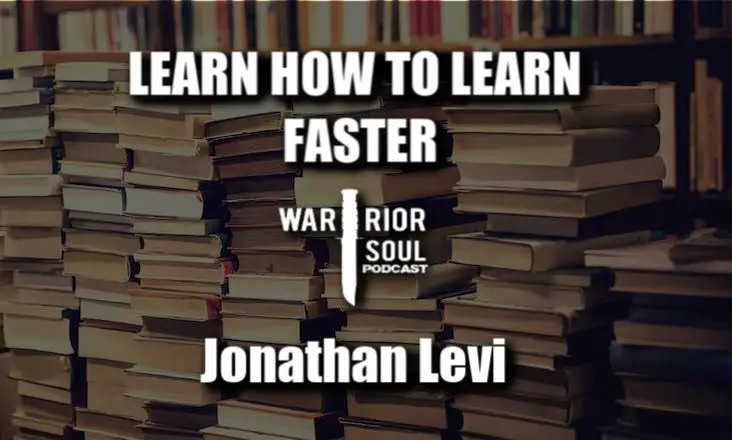
Learn How to Learn Faster: Jonathan Levi
Hosted by Chris Albert
The Warrior Soul Podcast
Jonathan Levi is a learning and speed reading expert who is teaching people around the world how to learn more efficiently.
Learning how to learn is one of the most vital skills you could ever grasp.
Schools teach us WHAT we need to learn without ever teaching us HOW.
This is absolutely insane because learning is the one skill that could help you to improve your life in every single way. This is particularly true in the military, where you get a new job that you have to learn every few years.
Memory and speed reading expert Jonathan Levi joins us today to discuss the secrets he’s learned about learning faster and more efficiently.

Levi is an entrepreneur and angel investor who founded the Super Human Academy. He’s also one of the top performing instructors on Udemy. In 2015, Jonathan gave an inspiring Tedx talk on this subject which you can view at
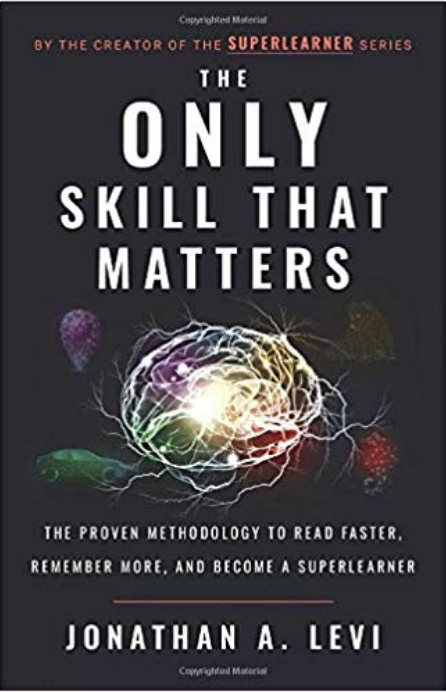
You can get Jonathan’s book The Only Skill That Matters by clicking the image below:
Access Jonathan’s courses at http://www.superhumanacademy.com
If you enjoyed this episode, you’ll love:
Transcript
Machine-generated from the episode audio and lightly edited — may contain errors.
Chris Albert (link to this point)
What is going on Warrior Soul nation? This is Chris Albert with the Warrior Soul podcast. And, you know, the Warrior Soul podcast, our mission is to empower US military veterans and anybody else willing to listen to live their absolute best lives. And when we think of things like that, we think of increasing health, wealth, and happiness. Right?
The the three main things when we think of living a better life. And a lot of times when we think of the skills necessary to get there, lot of people want to learn how to build a business, lot of people want to learn how to invest, a lot of people want to learn how to create better relationships, how to improve their bodies, how to strengthen themselves, how to train, how to eat better. And when we think of all these things, there's one root thing that could help us to do everything that I just mentioned better. And that's knowing how to learn. I mean, think about it this way.
If you could read faster, if you could learn more efficiently, there are so many things that you could do. You could learn languages, you could learn how to market yourself, you could learn how to conduct your finances. There are so many things you can learn, and learning is the base skill that drives all of us. And for those of you who are still in the military, learning's the the the biggest thing you need to do constantly. You're constantly learning new skills, you're constantly retraining skills that you already have, and, you know, in the military you change jobs every few years, so it's a constant learning process.
And You gotta learn on the fly, and if you can't learn the job, well then you end up failing. And when you fail, particularly in the military, there's lives on the line. So the subject matter for today is not something to be neglected. And what I did was I went out and I got one of the preeminent experts in the world on the subject. His name is Jonathan Levi, and he is the creator of the Superhuman Academy.
He's done multiple TEDx talks on the subject of how to learn, how to learn more efficiently. And he says that we were the biggest mistake that schools ever made were that they never taught us how to learn. They just stuck us in a classroom, sat us down, expected us to sit there for eight hours, and meanwhile we all got bored out of our minds and didn't learn a thing. I know I didn't learn a thing through my elementary and high school years. I forgot pretty much everything and really didn't get focused until I was an adult.
And I know that's the same for a lot of you. I hear a lot of guys saying, you know, I'm dumb as rocks or this or that. And the thing is this, you don't have to be that way. You don't have to. You can learn how to learn.
It's a skill. And we're gonna talk to you about that today. John, I just wanna say this before we get into it. Jonathan's Superhuman Academy actually gives 50% off of all their courses to active duty military. And as you'll hear in the interview, he actually extended that to veterans for us.
So if you guys email the Superhuman Academy, you want to take one of their courses, they are outstanding by the way. You can do that for fifty percent off being a veteran or being active duty military. So just wanted to put that out there. We'll get links for that up on the show notes, and you guys are gonna get a lot of this. So make sure you pull out a pad, a piece of paper, take some notes, and let's get into it.
Jonathan Levi, welcome to the show, man. How are you doing?
Jonathan Levi (link to this point)
I'm fantastic, Chris. Thanks for having me.
Chris Albert (link to this point)
You're out in Israel, right?
Jonathan Levi (link to this point)
Yes. That explains the very sexy Blue Blocker glasses to all our video viewers in Tel Aviv, so it's evening for me.
Chris Albert (link to this point)
Right, right. And just so everybody knows, one of the things about blue light, if you're staring at computer screens, we're gonna get into a whole bunch of this stuff today, I hope you guys have your pens and paper ready. When you stir up blue light later in the day, it can actually trick your brain into thinking it's daytime and keep your brain from producing all the chemicals that are gonna help you to get to sleep, right?
Jonathan Levi (link to this point)
Yep. Yeah, absolutely. And these are one of six different pairs I have with different varying gradients. Because you also don't want, Dave Asprey has told me, you don't want perfect white light during the day either, junk light, right? Like there's nothing natural about fluorescent lighting.
That can actually give people headaches. It can cause all kinds of like adrenal fatigue and nasty stuff.
Chris Albert (link to this point)
Particularly in the wintertime, you know, with those people who are in the East Coast or maybe up in the Pacific Northwest where it's getting darker earlier and earlier and they're in office all day long, right? Not even seeing the sun, getting any natural light, right?
Jonathan Levi (link to this point)
Yeah. And that's another thing, right? It's like not only are we getting unnatural light, we're not getting the natural light. I actually went to a naturopath last week and he prescribed, you're gonna love this, he prescribed me to be outside barefooted in the sun for at least thirty minutes a day. This was a prescription from a doctor and I did it and I feel amazing.
It's like you need grounding, first off, like literal. I'm not talking about earthing and spirituality, although we can get into that. But literally your body needs electrical current to be able to escape and you need that vitamin D, big time.
Chris Albert (link to this point)
Big time, big time. Yeah, I try to do that every single day, get outside. Luckily I live in California so in the wintertime I can get outside, take my shoes off, get some sun, stuff like that. But it's so important and if you're not getting that vitamin D, I mean vitamin D is responsible for so many things around your body, you're really selling yourself short. So big questions.
You know, I I've been a fan of yours. I've just had the chance to come out to your show and and have you coming on here now. Number one, you know, how'd you end up in Israel? Did you grow up there? Did you end up moving out there?
Jonathan Levi (link to this point)
My dad is Israeli, so I grew up speaking a little bit of Hebrew here and there, and I spent a lot of summers here and always had fond memories. And I got accepted to an international business school, and I figured I'll go do, it was a condensed program, so I didn't have time for an internship. I figured I'll make my own internship. And I kind of knew going to this international business school, like no one has heard of it in The U S so I kind of realized like this is a decision that's probably going to lead to other decisions that it's going to lead to me expatriating, which I was okay with. And so I came here for a couple of months.
I just fell in love with the city. Really loved Tel Aviv. Felt like I was a happier person and a better version of myself. I don't know if you're in Northern or Southern California, but either way, you know that in California we have a tendency to Everyone kind of wants to be something they're not.
Chris Albert (link to this point)
Right.
Jonathan Levi (link to this point)
I think, you know, in Silicon Valley it's like every entrepreneur wants to be a VC and every VC wants to be an entrepreneur. And in LA, it's a whole different thing.
Chris Albert (link to this point)
Yeah, I've lived in LA for a while. I was in the fitness industry and every personal trainer wanted to be an action star or an actor or something
Jonathan Levi (link to this point)
Yeah, like so I found that I'm just a happier version of me here. And it also tempers some of my worst qualities. It's really hard to be materialistic when you don't have Amazon Prime or Trader Joe's or everything is twice the price, so you're just like, I'm not gonna buy anything here. It's really easy to live a more minimalist lifestyle and I like that. It's really easy to be grateful every day when this country is a miracle, living here is a miracle, and it's super easy to be grateful living here.
Chris Albert (link to this point)
Yeah. That's a I mean, I really wanna get out to Israel. I actually, 23andMe, I just found out I was Jewish.
Jonathan Levi (link to this point)
No way.
Chris Albert (link to this point)
Yeah.
I grew up thinking I was That was awesome. Yeah. Yeah, man. Grew up thinking I was Italian and German. And I do have Italian in me but I'm mostly Ashkenazi Jew.
And want really, really want to get out there and check it out. I've been around the Mediterranean, I've been all over The Middle East, but never to Israel. So with your story, was watching your TED talk yesterday and I know you ended up going to some great school, went to Berkeley, ended up getting into entrepreneurship early on, you sold a business early on. But you mentioned this idea of learning and you kind of muscled through, muscled into that school through force of will, muscled yourself into this situation where you were able to sell a business early on, but you kind of did so with a handicap. One of your premises is that we're all doing so with a handicap because we're not really learning how we should be.
How did you get into this and how did you figure this out?
Jonathan Levi (link to this point)
Yeah, well, I definitely had a handicap and I definitely had crutches. I needed prescription stimulants to get through high school and college. There was no way I was sitting in that classroom and getting passing grades if I wasn't drugged out most of the time. And you might hear that story and think that I'm against ADD medication, that I think it's a necessary evil for the way that education works. We're not meant to sit in classrooms and some of us more than others, but it's really hard on a 16 year old kid to sit in a classroom and have to pay attention for eight hours a day.
So I always struggled growing up with learning inside and outside the classroom. It wasn't just in the classroom that I wasn't catching up with students and wasn't able to understand what was happening. But outside the classroom, I wasn't understanding the social skills and then the athletic skills and all these other things. And it really kind of culminated for me at 13 where I had nothing to be proud of. I wasn't able to make friends.
My grades were terrible. I was contemplating suicide because I was like, I just don't wanna be this person anymore. I'm sick of it. And I realized slowly, I realized piece by piece, I realized that I can actually change who I am and that learning was the way to become a different person, a better person in my case. And it took a lot of lessons and a lot of trial and error and a lot of muscling through, as you said.
And I got really lucky because when I got accepted to business school, was here in Israel and I was already really nervous, really anxious because I knew that my old technique of taking a bunch of medication, locking myself in the bedroom door, in the bedroom and locking the door and catching up to everything that every other student had understood in the lecture wasn't gonna work. Because in business school you have zero free time, you're constantly networking, you're doing case studies at night, you're traveling, you're going to events. I was like, I don't know what I'm gonna do if I don't have the time to just work twice as hard as everyone else. And I met someone who actually, he and his wife had been training problem students in speed reading and memory techniques. And I hired them as private tutors.
I was like, this is amazing. And it really wet my appetite and helped me understand that first off, as I'm sure you know, having done this podcast for so long, there are real life superhuman skills that you can learn. There are superhumans, there are the Michael Phelpses and the Dean Karnazes and people who can do literally superhuman stuff. But then for every one of those, there's another Wim Hof or Nelson Dellis, who are real life people who have learned how to do superhuman things and will tell you like, yeah, I was actually pretty average before. And so it opened my whole world and I took that skill and kind of doubled down if you will. So they taught me a fair bit about speed reading and memory.
Then I took that and figured out what else can I learn about the brain, about memory, about how we learn, about how we remember? I solved a lot of different problems for myself from physical maladies to social maladies to business maladies. And I just keep doing it. I feel like now for the last almost decade, every time I have a problem in life, I just treat it as a learning challenge and I learn my way out of it. So I'll give you some examples.
Like six years ago, I knew nothing about podcasting, online courses, online marketing, video production, video editing, like none of this stuff. And today we have 4,000,000 downloads in a podcast, 250,000 paid enrollments in our courses. Our courses are some of the highest rated in the industry. Like I knew none of this stuff. I didn't know anything.
And I wish I'd had help. Like I had some mentors here and there that I learned from, but for the most part, like I had to learn my way out of it. I also went nine years being single my story that I was telling myself was I just haven't met the right one. I haven't met the right one. And I even remember telling my friends, this is so frustrating because everything else in life, the more effort I put in, the more results I get.
But it seems like with this, the more effort I put in, the more I seem desperate and the worse results I get. But then I changed my mindset and I said, what if this isn't an opportunity and a chance problem? What if this is a learning problem? What if I just don't know what I need to know to be in a healthy and happy relationship? And so I changed my mindset and I started learning, like, what does it take to be in a healthy relationship?
What is a healthy relationship? How does that get defined and how do I know? And I did all these things that we do, that we teach in our courses to learn. And within three months I met my wife, who I'm now happily married to. And it really kind of, it convinced me that any problem that you have, asterisk, you know, if you're terminally ill, learning will probably not.
Although we did have a student whose mother was terminally ill and he applied these skills and he managed to get ahead of the primary care physician for his mother and read all the clinical research. He managed to get her into a clinical trial that the doctor didn't even know about. Her cancer was still terminal, unfortunately, but he managed to significantly improve her end of life care because of this clinical trial. There are some problems I'm sure learning can fix, but for the vast majority of our problems, emotional, economic, social, intellectual, academic, you can solve them through learning.
Chris Albert (link to this point)
That's amazing because with our audience here, so most of the audience we're talking to here, combat veterans, US Army, US Marine Corps. And I've talked to a lot of guys every single day and a lot of them feel like they're trapped. They're trapped by their own intellectual ability. A lot of them feel that they don't have the intellectual ability to do other things in their lives after their time in the military. And a lot of times people feel like they're stuck.
And it goes back to the same old story we're taught where if you don't meet those certain requirements when you're in school, You're not a good student. Not keeping up with the other kids. You're not able to get that GPA by the end of your high school career, not able to get into college, then you're stuck in a certain path in life. But we're in this kind of different time and place now where I think, you know, in a lot of ways, things like podcasts and the Internet, similar in revolutionary scale to the Gutenberg press, right? Where we have all this ability to take in new types of information.
I think people can make so many changes if they learn that skill a little bit better or change their mindset a little bit about that skill.
Jonathan Levi (link to this point)
And the human brain is the most adaptable organ known. I mean, on the human body for sure. I'm not sure there's probably some more adaptable newts in the creeks or whatever, But the human brain will adapt to whatever you throw at it. And we know, first off, there's a huge misconception that we lose neuroplasticity as we age, we do not.
You can decide tomorrow to become a London taxi driver and study for, they call it the knowledge, where you need to know every single street and every corner and every everything, and your brain will actually change. You can, heaven forbid, of course, undergo a traumatic brain injury, have to have a piece of your brain removed and the rest of your brain will change how it works. There are tons of studies on people who have had, projectiles in their brains. They have to lose a piece of the brain. And suddenly after a few months, that function that's supposed to be gone comes back.
The brain is wildly plastic. You can teach it new tricks and studies have actually shown the techniques that we teach, things like the memory palace and how to create visual mnemonics and how to use your visual memory, they actually rewire the brain and the way that it works. So if you study the brain of a world memory expert, someone who could memorize pi to 10,000 digits, for example, and you study the brain of an average person, same foundational hardware. Some parts are slightly enlarged or decreased, but no more than say someone who meditates every day for a year. Right?
Like we know meditation changes the brain, changes the prefrontal cortex, cortical gratification, all this cool, crazy stuff that we all want. You know, we all want our brains to not be reactive and be happy all the time and be producing, happy hormones. But that's actually not what's happening. That's not what is making that person able to do that incredible feat. It's literally, they use their brain totally different than you and I, or than most people, I should say.
I use my brain this way. No, I've learned to. Their brain's lighting up in different ways. It's wired up in different ways and they're using different parts of the brain than other people when they're memorizing information. And I hate to just go on a podcast and tease information.
I wanna share what it is that they're doing. How many times have you heard people say, Gosh, I wish I had a photographic memory?
Chris Albert (link to this point)
Tons. Tons. All the time.
Jonathan Levi (link to this point)
Well, good news, you do. We all do. It comes standard. It's not even an upgrade. It comes standard.
It's like one of those features that you never knew you had in your car until one day you press a button. You're like, Oh my God, there's a glove box here. I didn't know that. We all have a visual memory. In fact, research has shown that memory is inextricably linked to visual stimulation, which is why I challenge you, if you're listening to this podcast, you're driving around the city or whatever, this idea that I'm sharing right now around visual memory will be anchored to wherever you are.
And five years down the line, if you drive down that same street, hit this same corner, you're going go, Oh, this is the place where I learned about visual memory. You can't help it. It's how your brain works. It's part of the survival architecture of the human brain, and by the way, all mammalian brains. So you have a visual memory and what we teach and what these world memory champions do is rediscovering how to use that visual memory in very novel ways that have been around for two thousand five hundred years.
So how do I create visualizations for the first 10,000 digits of pi? And then how do I store them in my brain in a way that I can remember?
Chris Albert (link to this point)
That's awesome. And, you know, one thing I wanna mention here because, you know, you you kind of got onto this path because you went out there and you you took some chances in life. Right? So trying to get into those schools. Also entrepreneurship, huge chance.
I mean, you you eat what you kill, and if you're not able to kill, you're not able to learn how to kill, then you're not gonna be able able to make any money and things are gonna fail, right? Of the things that a lot of our listeners being men is a lot of men get older, they tend to take less chances. They don't have that risk taking factor in their lives anymore. They settle down into home. They live a lot more quietly, don't try new things.
But part of this is about going out there and actually seeking new challenges and trying new things, right?
Jonathan Levi (link to this point)
Totally. Yes. And there definitely a neuroscience component to that because I see that in myself. I think back and I was like, when I was an 18 year old kid, was like, yeah, I'll just start a company and I'll put this much money here and I'll do that. And there is an element of like your prefrontal cortex thins as you age.
So like you ever see a 15 year old kid skateboarding without a helmet and you're like, how stupid? Like, what does he think? He actually thinks he's invincible because our perception of risk changes as we age. And we've seen a 100 different ways that things can go wrong. But at the same time, I think you need to, within your risk appetite in life, you need to engineer in calculated risks.
So I think a lot of people look at entrepreneurs and they say, Oh, I can never do that. I'm not a risk taker. I don't know about you. I don't take a lot of risk when I start my businesses. I've started two businesses that have exceeded $2,000,000 in sales.
I've never put more than $2,500 on the line, and of course my time. But I've never put 50 k down to start a business. It's always been like, I could scrape together $2 here and start this. This business, I started with a couple $100. And so it's very calculated risks and it's also, you don't burn the ships.
Although I think in life, saw you did a podcast episode about burning the ships. I think there is a ton of value in certain situations to burning the ships, but no one's telling you to burn the ships when you have two kids and a wife and you have a side project you wanna try. It's like you burn the ships when you can see land, not in the middle of the Atlantic. And so, yeah, I think here's the problem. I think we need systems. We need accountability.
We need to be accountable to ourselves and others because otherwise these dreams are just dreams. They just live in the drawer. And there's a saying in Hebrew, Better a public failure than a dream in a drawer. I think that's true. So I think we need one to be accountable to ourselves, right?
Like if you have that dream of being an entrepreneur or changing industry, put a big fat timeline on it. Like, I'm gonna do that by 2025. By 2025, I'm gonna be self employed. I don't know how. And then be accountable.
Tell it to your wife. Tell it to your kids. Tell it to your friends. That's when it becomes real. That's where the rubber hits the road.
Chris Albert (link to this point)
Right. Because then everybody knows you're doing it. And if you don't do it, then then you're a liar. Right? And, nobody wants to
Jonathan Levi (link to this point)
tell is a really powerful motivator. I mean, you know, you're you're part Ashkenazi Jewish.
Chris Albert (link to this point)
So Exactly. Exactly. Hey, guys. I hope you're getting a lot out of this interview. You know, the Warrior Soul podcast is built with the mission to empower its listeners to live absolutely epic lives.
And that's why we recently created a group called the Warrior's Obituary Society. This group is built to empower its members to live epic lives worthy of epic obituaries. And it starts with an eight week development program. And with this development program, what you're gonna do is you're going to outline a vision for your life. You're going to get very specific about what you want.
Because without that specificity, you don't know where you're going, and you don't know what you're doing. From there, we help our members to develop specific goals, objectives that they are going to push toward, and that their fellow members of the Warrior's Obituary Society are going to hold them accountable too. From there, we're getting down into specifics. We're going to help you to develop and customize your own personal fitness and nutrition plan to help to fuel your body and fuel your mind for the quest ahead. From there, we're going to work on your personal finances.
We're going to help you to knock down debt. We're going to help you to start saving money and to create a plan so that you can start investing in your dreams. Then we're going to get into your business and career. We're going to help you to develop the skills that you need to develop yourself so that you can have a major impact in the field you choose. If you choose to go into business, we're going to help you to set up the foundations that you need to create your own company and get started on your path in life.
From there, we're going to be working on your relationships, we're going to help you to develop a world class network, and all along the way, you're going to have your fellow members of the Warrior's Obituary Society pushing you in every single area. We meet once a week over a live call, and we're constantly communicating over our own private forum on Slack. We don't do anything over social media, and that's because I don't want anybody feeling like anyone's looking over their shoulders, and I don't want you exposed to the crazy distracting alerts that you get on Facebook and some of the other social media platforms. Normally, programs like this cost thousands of dollars. This one does not.
For the price, it is the best development program on the Internet. And that's because our mission here at Warrior Soul is to empower people to get more out of life so that they can in turn make the world a better place. We've got a great mix of active duty military, US military veterans, and civilians in this group. We wanted to keep it really eclectic so that we get a lot of different types of views up there and a lot of different people with different areas of expertise. If you think that this is something that would be of interest to you, and that this is something that could empower you to live your absolute best life, head over to www.warriorobituarysociety.com.
That's www.warriorobituarysociety.com, and you can sign up today. And if you have any questions about it, just reach out to me at chris@warriorsoulagoge.com. That's chris@warriorsoulagoge.com. I'm happy to even sit down with you for a phone call for a few minutes to see if the group is right for you. I look forward to seeing you guys in there, and let's get back to this awesome interview.
Yeah. And I think there's something to be said, you know, because a lot of these guys, as they're getting out, they're just, you know, they did their four years and they're 22. Right? They're heading out in the world. And before you're going to head into that job, so to speak, or you're gonna settle into this kind of routine life, I mean, there's something to be said for for taking a chance and going out and traveling and moving to Israel or or, you know, trying to start a business because, you know, when you're 22, you can still live on your friend's couch, you can still, you know, do that kind of stuff. It's a lot easier to do that when you're 22 than when you're, you know, my age 40. So there's there's a time to try that stuff. You also do a lot of like acro yoga, martial arts, things like that. That's a big learning component too because a lot of times if you learn something that makes you better at learning other things, right?
Jonathan Levi (link to this point)
Absolutely, yeah. I do wanna add one thing on the 22 thing really quickly, but I'll file a mental marker here to come back. I heard a really cool exercise the other day. I'm really big on goal setting. We're recording this on December 30.
I already have all my goals lined up for 2020. And someone shared with me a really nice idea, which was, I think it originally comes from Ben Hardy, which was just think about yourself ten years ago and just think like how much change a person can do in ten years. Like ten years ago, I was just graduating college and I was running a totally different business and I was living in a totally different country and all these different things. And for a lot of these guys in the audience, ten years ago, you were 12 years old. Now we have a tendency to go, okay, well it's different because ten years when you're 12 to 22 is different from 22 to 32.
And I would argue, no, it's not. Neurologically, doesn't have to be. In terms of your life choices, That's up to you. The difference between 22 and 32, you could be a father of two kids. You could be a business owner. Those are arguably bigger changes than 12 to 22. And I think that continues, right?
So like, let's say 52 to 62, your whole life could change. You could become a retiree. You could be volunteering. You could sell off your business. You could move to a room, but like you can create these quantum leaps every ten years.
It's just a mindset thing. And I think too many people do what I call the pre fix life, right? Like the fixed menu of like, this is what you do at this age. As opposed to being like, I had a friend the other day tell me, who's my age, 33. He goes, yeah, I don't think I'm gonna get married for another five years.
And part of me was like, ouch. But the other part of me was like, good for you. Like, you have a goal, you're building your business, you're doing whatever you wanna do. You're not falling into the pressure. And so I think the same is true of someone just now finishing who is like, Oh, I should just go get a job.
Take the year to travel. Go the a la carte route.
Chris Albert (link to this point)
Right. Yeah. So important. So important. And I think don't be in a rush to get old.
That's the big thing.
Jonathan Levi (link to this point)
Oh my gosh, yes. Or just never do. My dad's 73 years old and he's more of a child than me in terms of childlike spirit, let me tell you. Coming back to your question, all learning has value, I believe, not just because it's good to know more stuff, but you'd be amazed how the pieces connect. So a good example for me was, I remember I said when I first learned how to speed read, I fixed a bunch of physical maladies that I had.
So I had some pretty bad joint pain in my, knees and my shoulders are unstable from birth. And I had just taken these as like fixed problems. But, you know, when I, when I discovered this, I was like, I wonder if those are actually fixed problems or just in my head. So I read a bunch of books on kinesiology, on bio kinetics, on mobility, muscle maintenance, really dug deep into it and basically learned like how to use my body properly. And it turns out I wasn't using my knees or my shoulders properly.
Wasn't using my spine properly. Most people don't use their spine properly or their abs properly. Although guys finishing in the military probably actually know how to use their spine and their torso and hold their bodies correctly. But in any case, so I fixed that problem and I thought that's really cool knowledge and really valuable. I never thought that all that information about the ways that muscles and joints move and all the different pieces and the proper movement patterns and how to hold my body would help me in Olympic weightlifting.
But they did. Then they helped me in acro yoga. And then I did, I've only done one golf lesson in my life. A girlfriend at the time for my birthday bought me like a full day tutorial. And I go out there and I'm like, I'm asking really silly questions that I'm sure the instructor had never asked.
Like, okay, so just so I understand that the force is coming from centrifugal in the hip at this point. And he's like, I mean, I never thought about it that way, but yeah, it's centrifugal force driven from the hip. I'm like, okay, am I like extending my patella out this way to drive that force? Lo and behold, that first swing, I get like five meters away from the hole, 300 yards. Guys, like, I've never in my life seen anyone do that.
And he actually he asked my girlfriend. He's like, this is you're playing a joke on me. Right? Like, plays golf. Like, no.
I just I I saw how you moved your body. I asked questions to verify because I can't feel what you're feeling. And then I just did what you did. The guy was like, That's ridiculous. Now, remainder of the shots weren't all quite as good.
But exactly as you said, you never know when this knowledge is gonna come up. You mentioned Gutenberg's printing press. I had filed away a bunch of knowledge there around that because I found it interesting in the same way you do. And when I was writing my most recent book, The Only Skill That Matters, it was like, Oh my God, this is a perfect metaphor for what's happening with the explosion of knowledge and how the evolution of human consciousness has changed. And so I was just able to boop, boop, boop, boop, you know?
You never know. On top of all of that, learning is like a muscle, right? And not so much because learning one thing is different from learning another thing. It's not so much that like learning trigonometry is gonna make it easier to learn Russian, but what it's gonna do is give you the confidence. So I used to be a really lousy learner.
And today I can dive into something like, I've learned all at, at a intermediate level. I'm not a virtuoso at any of these, but piano, guitar, I speak four languages. And you can't do that unless you have that confidence to go in and be like, Oh, Russian's one of the hardest languages on the planet to learn. All right, let's go. You know, if you go around believing that you're an inferior learner, you just won't do it.
Chris Albert (link to this point)
Right. And one of the things too, I think, is that there's so many choices as to what to learn, right? And some of those things in this day and age, I mean, there's some things you can learn that'll that'll pay so many dividends, but there's also some things that if you focus too much on them, they'll take you down some some dark places, some some roads that you
Jonathan Levi (link to this point)
Video games, for example.
Chris Albert (link to this point)
Right. Exactly.
Exactly. You know, you'd mentioned, I think, I was listening to a podcast you're doing, you mentioned quantum physics or quantum mechanics, and you were going down that road and I had, I had a quantum mechanics guy on here and we talking and he's talking about alternate dimensions, alternative realities, that kind of stuff. And I'm like, great, but I don't know if I really want to sit here and think about all those possibilities,
Jonathan Levi (link to this point)
I had the same experience. After a couple of really intense psychedelic journeys, I maybe flew a little too close to the light and saw things that I wasn't ready to see in terms of the nature of our reality. And I thought, okay, I'll read about quantum physics and I'll learn about quantum mechanics and that'll help me understand what I was seeing and what I was feeling. And it totally didn't. All it did was like, yep, what you saw, all these alternate realities and experiences and the problem of reality being paper thin, that's all real.
And some of the smartest people on the planet agree. So there's no easy way out of these big scary questions. And I was like, okay, that's enough quantum mechanics for me.
Chris Albert (link to this point)
It's terrifying.
Jonathan Levi (link to this point)
It's so hard to maintain your grasp.
Chris Albert (link to this point)
It definitely gets crazy. And you'd mentioned psychedelics. We've talked a bit about psychedelics here. We've had a couple of people on here who take people on ayahuasca journeys. I've done a DMT journey myself.
Do those have a place here? Maybe if not psychedelics, I mean, other chemicals that might help the brain or change the brain like neurotropics and things like that.
Jonathan Levi (link to this point)
Yeah, absolutely. So psychedelics are a really interesting thing, I think, for trauma and especially in your community. There is so much amazing and interesting work that I'm sure you've talked about for PTSD. A lot of it actually happening in Israel. If people haven't seen A Trip of Compassion, amazing, amazing movie about how Israel's dealing with PTSD using MDMA.
As far as the brain and learning are concerned and substances, man, it's almost like art. You have this palette of all these different colors that you can use. If you just want to sit still and focus on one rote task, you have amphetamines and even less kind of serious substances like Ritalin all the way to, if you need creativity, microdosing LSD to, I always forget the name of this, piracetam and everything You in have natural, not natural. You have stimulants, you have depressants. So it's this crazy wide world.
I like to call it designing your state of mind in the same way that if you wanna have a spiritual experience, you can design a state of mind. What I would advocate for everyone in the audience though, is a safe experimentation protocol, which is one, talk to your doctor. I know you think you can't tell your doctor. It's kind of like a marriage, if you will. I know you think you can't communicate openly about this, but you can.
And you can go to your GP and be like, Hey, I know you're gonna try and talk me out of it, but I'm considering doing LSD. I'd like to get some blood work done to make sure I'm healthy enough. So that's an important thing. Set and setting, really, really important for any of these drugs. Even caffeine is a drug with side effects.
Ensure that you're in the right state of mind to do these drugs and then do your homework. You know, there are so many substances and compounds out there. The FDA does not regulate, supplements. It very loosely regulates, let's put it that way. And so you gotta be careful.
The brain is a really sensitive instrument. It will recover for most things that you give it, but it's also the, I mean, you know this probably from your DMT experiences, the human brain is the most potent instrument for torture you can And so if experimenting with Yerba Mate as opposed to coffee, great, that's awesome, that's safe, that's time tested. If you're experimenting with piracetam or aniracetam, these substances that have been around for fifty, sixty years, or even Ritalin, Adderall, these have been around, they've researched. If you're trying that hot new licking the toad for getting more productivity, Less proven, so be safe out there.
Chris Albert (link to this point)
Yeah, Exactly. There's a load of stuff. You can always dabble, but remember that if you take too much of something, you can't take less of it. Right? So you can find yourself in a hole.
Yeah. So you built this this cool empire, and it it all started with Udemy. Right? Started putting courses out there on Udemy. And, you know, I've been watching a bit of your journey there, and and you've got really unique marketing.
You've got really unique way of going about things. When did it first come in your mind that you were gonna put a course out there on something like this?
Jonathan Levi (link to this point)
It's really funny that you ask. So I I hired these two people as as private tutors. I went to business school, was completely empowered by this whole methodology and wanted to learn more. I then went about to do a startup, and in the process of doing that, decided I should learn more about coding. So I figured how am I going to learn how to code?
Googled around online, found a company called OneMonth. At the time they only had one course, it was $50 And I took this course, learned a little bit about how to program enough to be able to understand what my partner was building. And I thought to myself, like, this is really cool. It's like me and I could see in the comments that there were thousands of other people taking the course with me. And it's like me and thousands of other people pay $50 These two guys sitting in an apartment in New York City record it once and we all can get value out of it.
And they're making thousands and thousands and thousands of dollars. They've since become really good friends of mine, Mattan Griffel and Chris Castiglione. And I thought that's a really cool idea. I kind of filed it away. The startup idea didn't work.
Decided to move to Israel, leave Silicon Valley, leave the idea behind. And along about then I thought, you know, I needed some runway. I'd sold my previous business. I had some income coming in from here and there and investments, but I figured if I just had another thousand dollars a month, I could, if it takes me ten years to find my next big entrepreneurial idea, that's fine. Like what I wanted to do was buy myself infinite runway so that I would not have to make a decision based on money.
And, I was living really cheaply. I had a roommate and not living like someone who just sold an Inc. Five thousand company. So I was living frugally and figured however long it takes, it takes. So I built this course and I discovered Udemy because Mattan Griffel had mentioned in his rails course, he's like in his credentials, like we have one of the top selling courses on Udemy as well.
Didn't know about Udemy, but I put a course up on there and I knew nothing again about marketing or, or any aspect of this, but it took me about a month to learn and build the course. The first version, put it online. And in the first four days we made $500. I thought that's amazing. So I took myself on vacation with some friends where I didn't have internet And I checked at the end of the month and we'd made $2,200 And I was like, that's great.
And then the next month it was 5. And then the next month it was 8 and then everything just went crazy. And it took me fourteen months to decide maybe I should build another course. I have other things that I'd like to talk about. And then it took me probably another eight to ten months after that to decide that I would actually do this full time and stop all the different other stuff that I was doing and start doing a podcast and book.
So I reluctantly kind of got pulled into it by ultimately realizing I have this tool that I teach in one of our courses called the Career Criteria list. So like my idea is my thought and experience is that if I tell you like, what's your perfect dream job, Chris, it's asking you like design a house. Like you're not an architect, but what you can tell me, you can't draw the whole house out for me. But if I ask you pointed questions like Chris, do you want modern architecture or rustic architecture? You can tell me.
Do you like light colors or dark colors? It's really easy to come up with it in the way that they do those sketches at the police academy of like
Chris Albert (link to this point)
Fine. Go ahead.
Jonathan Levi (link to this point)
So I have people go through this exercise of must have and must not have in their dream career. Right? So Must have the opportunity to do public speaking, must not have to manage people, must be location independent, must not require whatever. And at the end, you end up with a rough image. And I kind of like, you know, the saying goes like, the shoemaker goes barefoot.
So I've used this technique. And then eventually I realized like, I have this criteria list and what I'm doing part time in this business actually matches pretty much all of it. So I double down on it.
Chris Albert (link to this point)
Awesome.
Jonathan Levi (link to this point)
That's awesome.
Chris Albert (link to this point)
And you know, when you're doing something like that, so you know, you start with Udemy, you're putting the course out there and then and then you figure out that the podcast will probably be the best way of getting information out there on the long form. Right? And then from there, just kind of branches off and you get into YouTube and stuff like that.
Jonathan Levi (link to this point)
Yeah. Well, I think I mentorship a lot. Anthony Metivier was a couple years ahead of me and he's also in the memory space. And he invited me onto his podcast and I thought, Wow, that was a lot of fun. I should do one of those as well.
He told me about his books and his premium level courses and I was like, Gee, I should do those as well. So I definitely had a lot of mentorship and continue, by the way, to have a lot of mentorship. It's a lot in going to different groups and masterminds and things like that, to learn from what other people are doing.
Chris Albert (link to this point)
So important, so important. You gotta you gotta go out there. You're not gonna have all the all the answers in your head. No. You gotta go out there and you gotta find people who are gonna help you along on the way.
Jonathan Levi (link to this point)
Don't that's be shy. Like, don't be afraid to ask. Don't be afraid to be like, I don't know. I don't know the answers.
Chris Albert (link to this point)
Exactly. And actually, that's one of the big reasons why I run a podcast in the first place is because I get to talk to great people like you and I'm sure you do yourself. You get to talk to so many amazing people, teach you so many things, right?
Jonathan Levi (link to this point)
Big time. I'm actually thinking about doing another podcast around like, basically entrepreneurial life balance and how other entrepreneurs are using free time that they create. Because I'm a strategic coach with Dan Sullivan and the whole thing is about creating entrepreneurial freedom. It's about freeing up my time, freeing up my money, freeing up who I get to work with. And my big question that's really surprisingly hard for me is how do I use that freedom?
So I'm taking a free day tomorrow, Tuesday, middle of the week, what do I do with myself? And I want ideas because I don't have the answers. What are other people doing? What are the hobbies they've taken up? Where are they volunteering?
How are they using that time that they've created for themselves? Because you're not using it, if you're using it for Netflix, like what's the point? I might as well have just worked in my business every single day, eighty hours a week.
Chris Albert (link to this point)
Exactly. It's about knowing what to know, right? Knowing what to do. Knowing knowing how to spend your time. That's so important.
Totally. Well, how do how do people get in touch with your courses? And and, obviously, you have the Superhuman Academy podcast, but how do people find your courses? How do they sign up? What kind of courses do you have offering right
Jonathan Levi (link to this point)
Yeah, so pretty much everything I do is at superhumanacademy.com. We've got courses, podcasts, people can check out the book, which there's a link in the header, superhumanacademy.com/book as well. I do want to let your audience know we have a 50% discount on everything we sell for active duty military personnel. But if you're recently out, just send us an email anyway and my customer service people will take care of you. We're really big about supporting not just in The US service people, but everywhere.
So doesn't matter if you're listening from another country, drop us an email. And that is 550, not 15. And people can check me out there. They can check me out on Instagram, entrepreneur spelled n e w e r at the
Chris Albert (link to this point)
Nice. Yeah. I'm definitely gonna jump on that and we'll we'll get all that stuff on the show notes because this stuff is so valuable, guys. Awesome. You whether you're just whether you're out or if you're in the military, if you're trying to advance your career and you're trying to to some of you guys I know want to do special forces in docks, some of you wanna join MARSOC, I mean, you're gonna have to learn, right?
And and that's a huge factor in in trying to to advance yourself in military or any other organization. So this stuff can definitely help big time. Any any last notes, Jonathan? Anything any gems, tips or anything like that you wanna share with the audience before we jump off?
Jonathan Levi (link to this point)
Yes. People often ask me like, okay, what do you do with all these learning techniques? Like, you know, have you learned 50 languages? Have you read all the books in the library? And you can do all those things and I sometimes like to dabble in those things.
But ultimately, the real reason to do this is the humor, right? It's to be able to remember people's names and listen to someone's story and next time you talk to them, remember to follow-up. It's to remember the kids' names of everyone in your local circle or in your tribe or whatever. It's really about the human element. That's the origin of memory, is remembering the relationships of those that matter to us.
And that's what I advocate people use this for more than anything else.
Chris Albert (link to this point)
That's huge. I mean, because if you're able to remember something about somebody else, if you little things, the the name, the the kids, the kids going through something right now, that that helps so much to to foster a relationship. And that's really what business is. It's relationships. Right?
You're trying
Jonathan Levi (link to this point)
The world would just be a much better place if we all remembered the name of the waiter that always waits on us at our favorite cafe.
Chris Albert (link to this point)
You know? Exactly. Exactly. Awesome, man. Well, Jonathan, I wanna thank you.
As we're recording it, it is December 30. And I wanna wish you a happy new year. Absolutely, man. And and to everybody out there, like I said, Jonathan's got a great show, the Superhuman Academy Podcast. There are so many brilliant people who go on to that show.
Really awesome people. I got to go on that show. I'm not as brilliant as most of the guests, but if you were guys interested in that, you can check me out on there and be looking forward to putting this out there. And on the show notes, we'll have everything you guys need to know to access the Superhuman Academy to get your hands on those courses because, like I said, I think this stuff is so important for all of us. Jonathan, Thanks thank you so much,
Jonathan Levi (link to this point)
for having me. And everyone listening, please leave Chris a review. We podcasters live on their reviews. So go on iTunes right now. Weaver Warrior Soul.
Chris Albert (link to this point)
Awesome. Yes. Do exactly what he said. Awesome, ladies and gents. Thank you so much.
We'll be back at you later on this week with some more awesome content. Alright, ladies and gents. There you have it. That is our interview with mister Jonathan Levi coming to you from Tel Aviv, Israel to teach you how to learn. And I thought that was a great interview.
I thought he did a great job of laying things out. And you should definitely check out his other resources. You should head over to superhumanacademy.com. You should check out his TEDx talks on YouTube. You should check out some of his courses on Udemy.
Like I said at the beginning of the show, he's giving 50% off to all active duty and to all veterans. If you email, the company, they will do that for you. So don't neglect that. Learning is the most important skill you will ever obtain. It will help you in everything else you do, in anything that you want to do.
So definitely take advantage of that and definitely perfect that skill throughout your life if you wanna live the best life possible. Speaking of that, here's the deal, guys. The Warrior Soul podcast has been around for three years now, and we are making a big push to try to get into the top 20 podcasts in 2020. The top 20 in 2020. That's my new slogan for the year.
And we do this to help the veteran community and help anybody else who's listening. We try to create content that you're not gonna find on other veteran related shows, and that doesn't mean there's anything wrong with those other shows. It just means that we're trying to do something different. We're trying to empower you with knowledge, and we do this for free. So the only thing I ask of you, you don't of course, I love it when you buy our products.
I love when you buy our clothing. I love when you sign up for our masterminds. But the only real thing that I would love everybody out there to do, because I know not everybody's gonna buy something, is absolutely free. And that is putting a review up about the podcast. If you put a five star review up about the podcast, you are basically helping other veterans to get in touch with this show.
You're helping to get this information into their ears. And as you know, over the past decade and a half, the veteran community has gone through a lot. What we're trying to do here is we're trying to create solutions to those problems. We're trying to help veterans to help themselves. So if you guys could help us out just by going to iTunes and writing a written rating review.
Now I know a lot of you don't listen on iTunes. I know a lot of you listen on on Stitcher or some of the Android apps. If you can get over to an iTunes account and just write a review there, it would help so much. That's what drives the algorithms. And, you know, if if you need any help with that, just let us know.
We'll help you get on there. We'll help you find it. Just send me a note over Facebook. I'm happy to help you guys out with that. Beyond that, if you do want to financially help us out here, you can also help yourself.
We have amazing clothing at our Warrior Soul shop. It's they're t shirts designed and printed by US marines. They are absolutely awesome. We've got skimmy shirts. We've got graphic shirts.
They're they're they're really great. They're comfortable to wear. They fit well, and you can find them up at warriorsoul.shop. Really easy to remember. And then, if you want to support yourself, we do have our mastermind, the Warrior's Obituary Society.
And what I tried to do here is create a club for our listeners to come in to empower themselves to live epic lives worthy of epic obituaries. Now we've got a great mix of veterans, active duty, and civilians in the group, And what we do is we get together every week to push each other on our goals. We have live calls every single week. And then we've got an eight week development program for all new members. So what that development program does is it helps you to outline a vision, get real specific on what you want, and then it helps you to create goals specific goals that you're going to go after.
We help you to really really create like and this is one of the better parts about the program we help you to customize your own fitness plan. There's such a wealth of fitness knowledge in this. We help you to work on your finances to create a savings plan so that you start knocking down debt, start investing so you can start building your dreams. We focus on relationships, we focus on your career, your business, we work on specific skills, we get things, other resources from other companies like the Superhuman Academy, and we help to bring this information to you guys. Right?
So I put a lot of content out in the group that normal people don't normally get on the podcast. So if this is something you're interested in, normally programs like this, they go for a lot of money. This is not one of those programs. I've kept the price very reasonable to get as many veterans into this group as possible, and you can find more information about it up at www.warriorobituarysociety.com. So definitely check that out.
And then beyond that, if you wanna check out our Patreon, you can always support us on Patreon at www.patreon.com forward slash Warrior Soul Podcast. We've got some great tier prizes for you. Thank you guys so much for listening. It is one of the great honors of my life to do this podcast to serve this community, and it's you guys that get me out of bed every single morning. A lot of you know I've had a lot of medical problems over the past six months.
My health has been in a lot of jeopardy, and through it all, it's been this community that's driven me and supported me. So I thank you, and I love you all. God bless. I'll be talking to you with I'll be coming to you with more awesome content later on this week. I'm getting teared up over here.
Talk to y'all later. Peace.
Host of the Warrior Soul Podcast and founder of Warrior Soul. Worldwide trainer and nutrition coach, contributing author at Testosterone Nation and Muscle and Strength.