Podcast episode
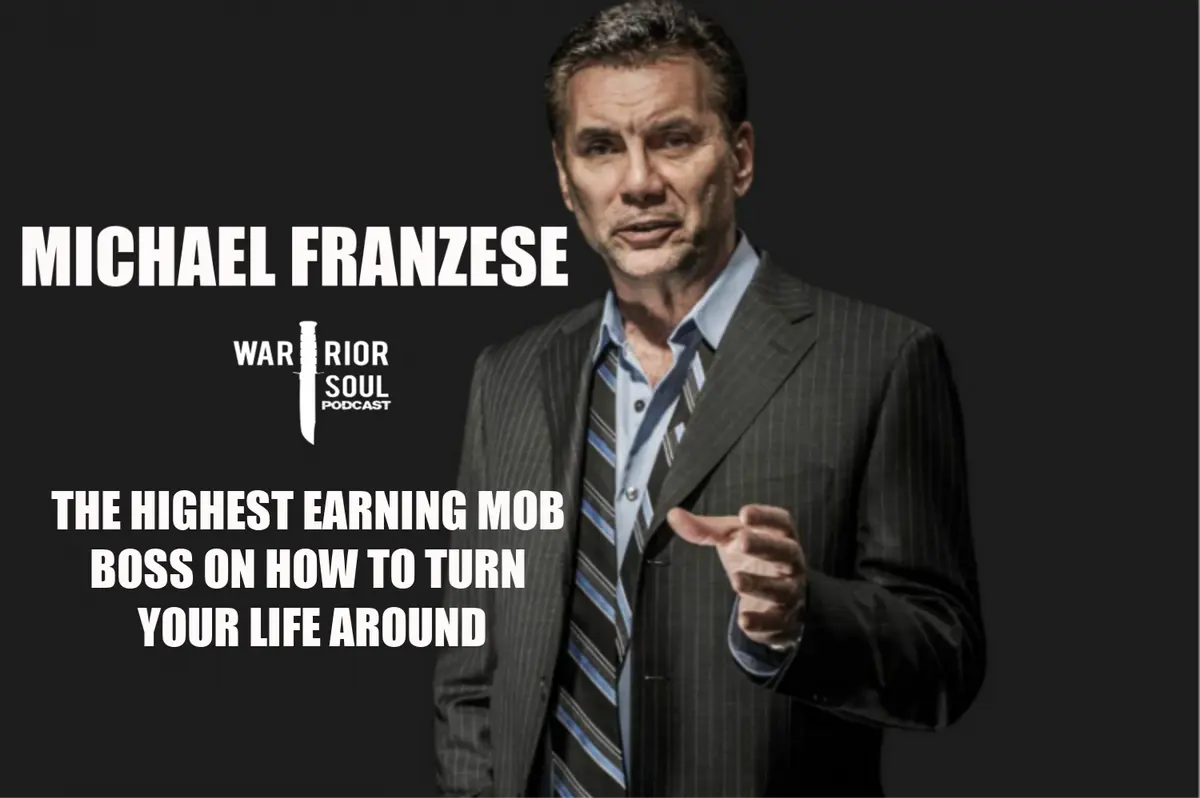
Michael Franzese: The Highest Earning Mob Boss in History
Hosted by Chris Albert
The Warrior Soul Podcast
Michael Franzese is a former Capo Regime from the Colombo Crime Family. He is considered the most prolific mobster of all time next to Al Capone. At the height of his mob career, he was earning between eight and ten million dollars a week
In the end, however, Michael says that “the life” wasn’t worth it. His family’s life has been ruined because of his and his father’s, notorious mob boss Sunny Franzese, crimes. Michael spent ten years in prison and his 103 year old father just got out of prison after serving a 50 year sentence.
Michael has since found God and has become a Christian minister. He is also a motivational speaker who works on educating people on gambling addictions, and he is a business coach.
In this episode we discuss:
- becoming a made man
- Colombo Crime Family
- Gambino Crime Family
- Rudy Guiliani
- John Gotti
- Sammy the Bull Gravano
- Finding Christ
- Veteran Suicide
- Gun Rights
- Building a Business
- Prison
- PTSD
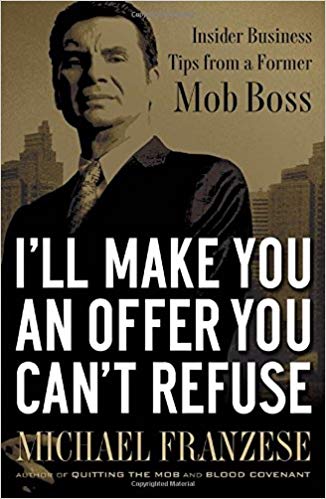
Get Michael’s book, I’ll Make You An Offer You Can’t Refuse : https://amzn.to/2utvvvq
Transcript
Machine-generated from the episode audio and lightly edited — may contain errors.
Chris Albert (link to this point)
Warrior Soul podcast is written, edited, and produced by me, Albert. Our mission is to provide tools, tactics, strategies, and ideas that help The US military veteran community to show up as the wisest, strongest, most capable versions of themselves in the civilian world. If you're not a veteran, stick around because anything we talk about will most certainly apply to you as well. This podcast is made possible with the help of f bomb nutrition. They make delicious packets of fats that you can carry around anywhere with you in little portable packets.
They make macadamia nut butters. They mix them up with chocolate. They mix them up with sea salt. They mix them up with coconut butter. They're absolutely delicious and they're really good for you.
They don't have any sugar. They also make a lot of cheese snacks. They make meat sticks, and it's just a great company. These guys send packages of this stuff to the troops who are on the front lines overseas to supplement their MREs, and we didn't ask them to do that. They just did that on their own initiative.
Really great company. If you wanna get 20% off your first order of f bombs, head over to www.dropanfbomb.com and use the code warrior soul at checkout. This podcast is also brought to you with the help of save the brave. Savethebrave.org is a five zero one c three charity for veterans. They run camaraderie events that include fishing, golfing.
They also do a lot of work with gold star families. And unlike a lot of other organizations, their board doesn't take a salary. Really great organization that is doing amazing work. So go and check them out @savethebrave.org. With that, thank you guys so much.
Let's get into today's programming.
Chris Albert (link to this point)
This is Chris Albert, and I'm here to remind you of one thing. Someday, you're going to die. Now that's not some morbid statement or scary idea. It's solid fact. Your time here on this earth is limited.
And we need to be reminded of this as much as possible for one simple reason, to live your best life while you can. This is the Warrior Soul podcast.
Chris Albert (link to this point)
You know, something I heard professor Jordan Peterson say once is that a good man is not a harmless man. A good man is a man who has the capability to do harm but then chooses not to. He chooses the higher road and then uses that capability to protect those he loves, To defend those who are maybe less capable than he is. My guest today is a good man, but he wasn't always a good man. His name is Michael Franzese.
And in the past, he's definitely done harm. He's the former Capo regime of the Colombo crime family. He's known as one of the most prolific mobsters of all time. In his prime he was earning between 8 and $10,000,000 a week from the various crimes he was committing, including a gasoline racketeering scheme that he had. But Michael eventually paid for his crimes, went away to prison for a decade, and in that process he found God.
And today he's serving society. He is he runs a ministry, he is a speaker, he's written numerous books, and he's completely walked away from the mafia lifestyle and he's dedicated himself to helping others to stay out of trouble and to find God and goodness in their own lives. This was a really interesting interview because Michael is such an interesting character. He's known as the guy who took the mob from the street to the boardroom. There literally wasn't anybody who was comparable to him in the amount of money earned except for Al Capone maybe.
And when you adjust for inflation and things like that, I think Michael was even out earning him. So in this conversation, you're gonna get a lot. You're you're gonna get a lot of maybe Machiavellian type tactics that Michael used in the past, but you're also gonna learn about how Michael turned his life around and began a different life, a good life, a life where he's serving society rather than trying to tear it down. So get ready because this is going to be a great one. It's an outstanding conversation and I really really enjoyed it. So let's get into it. What is going on everybody? Welcome back to the Warrior Soul podcast. This is Chris Albert, and I am joined today by mister Michael Franzese.
Michael was a Capo regime in the Colombo crime family, and he was known for being one of the most prolific mobsters in history. As far as earnings go, he is up there with Al Capone. He's known for being one of the highest earners in history. And there's been a lot of comparisons with him between if you've ever seen the godfather with with Michael Corleone, the the famous character from that movie. Michael, welcome to the show, and thank you so much for being here.
Michael Franzese (link to this point)
Well, thanks for having me, Chris. Appreciate it.
Chris Albert (link to this point)
You know, I I I've been going through your history. I've been going through hundreds of interviews you've done of of of senior transformation. And, you know, when we think about the mafia, I grew up in on the East Coast. My mother was Italian. I wasn't raised by my non Italian side of the family.
So when I talked to relatives and they would talk about the mafia, it was like it was like a a form of worship. It was like a, you know, they they admired you guys. And, you know, when we think about you and the transformation you've made, one of the things I wanna start with is that with everything we're gonna talk about today, I know that you're not condoning that lifestyle. It's something that that you've transitioned from and you found God and you are living a very different life today. Right?
Michael Franzese (link to this point)
Yeah, Chris. Excuse me. And I like to make that clear. I never glorify the lifestyle because I don't believe it's it's a lifestyle that should be glorified mainly because, you know, families are are are devastated in the process of of guys like us becoming members of that life.
But I also wanna be clear is that I don't, you know, I don't denigrate some of the guys in that life, you know. I mean, I happen to be one of them. I just happen to be very blessed and fortunate as to where I am now. So it's more of a lifestyle that people should understand. It's not a lifestyle that should be glorified.
So but I wanna make that clear, because I I did have many friends in that life. Unfortunately, most of them are gone. They're either dead or in prison. But, you know, and I feel for them and their families. But, you know, I've just just been very fortunate.
Chris Albert (link to this point)
And you weren't supposed to you weren't supposed to be in this life. You weren't supposed to be a mobster, right? Your your father didn't want it for you. Your father was an underboss in the Columbian crime family, got a lot of press at the time. But you were actually a pre med student at Hofstra, right?
Michael Franzese (link to this point)
Yeah. I mean, I never aspired to be part of that life, even though I grew up in it. My dad was a very prominent figure, you know, a major target of law enforcement, very high profile. So I grew up in that life and and saw a lot as a as a kid, but never wanted to be part of it. I mean, my dad wanted to keep me out of it.
He wanted me to go to school. He actually wanted me to become a professional. A doctor was his chosen profession. And I was an athlete in school, so I was on that course, you know, for all the stuff that was always going on with him. You know, and there was a a big circumstance in our life that kinda changed my direction.
Chris Albert (link to this point)
What was that circumstance?
Michael Franzese (link to this point)
Well, my dad had been indicted several times in the state of New York for some very serious crimes, and he went to trial and was acquitted in all those cases. But then in 1966, he was indicted for masterminding a nationwide string of bank robberies in federal court, eventually convicted and sentenced to fifty years in prison. And for me, you know, my dad was 50 when he went in. That was kind of a death sentence, I thought. And he told me he was innocent, and we would have to work hard to try to prove his innocence.
And my dad thought that, you know, a way for me to help him would be to be part of his life so that we could, you know, raise money, track down witnesses that he alleged lied about him, and that I totally believe. And that was really the change of course for me.
Chris Albert (link to this point)
And and just so the audience knows, I saw a picture of your father the other day on Instagram, and and today he's he's in his hundreds. Right?
Michael Franzese (link to this point)
Yeah. He'll be 103 on February 6.
Chris Albert (link to this point)
Wow. Wow. So that that didn't turn out to be a life sentence. He's he's out now and and and I gotta say that you guys have really good genes because he looks fantastic for a 103 year old guy.
Michael Franzese (link to this point)
He really does. I mean, his family is, you know, they live pretty long lifestyles, but he's outlived them all. But he did do forty years on that fifty. You know, he did all his time. He maxed out.
As a matter of fact, my dad is still on parole. And if you know in the federal system, they've abolished parole. I believe he's the only person left on parole, and his parole ends in June of this year. So he will have done his whole 50, whether in prison, on parole, amazing. Amazing.
Chris Albert (link to this point)
Wow. Wow. And so when when you decided to come in, I again, I've listened to a lot of these interviews. He he went through a recruit process and then eventually, you became a a made guy, right? And one of the things I heard is that in the ceremony, it was Halloween night nineteen seventy five where you became a made man, that there there was five or six individuals who went through that ceremony with you and you're the only one left alive, right?
Michael Franzese (link to this point)
That's correct. There was six of us and the other five were all gone, they're all dead.
Chris Albert (link to this point)
Now, I gotta ask you this because, you know, being the guy who's known for bringing the mob from the street to the boardroom, what do you think it was about you, your vision, your ability to think, your business acumen that that made you so successful?
Michael Franzese (link to this point)
It had to business, you know, go through high school and two years in college, which most of my associates hadn't gone through. And I had a head for business, and I knew how to use that life to benefit me in business. And I think I was able to take, you know, the knowledge that my father provided, and my experience with that life, my business head, and kind of put it all together and do some things differently than we've done in the past, and as a result, you know, made a significant amount of money.
Chris Albert (link to this point)
Yeah, that's one of the things that that, you know, a lot of people when they think of the mob, they're thinking of, you know, shaking down local local restaurants or local establishments and things like that. But you had a very different take. You were going after the big fish. You were going after the government. You were going after big corporations and things like that, right?
Michael Franzese (link to this point)
Yeah. I mean, you know, my targets were always, you know, never the man on the street or never the business owners. But, you know, I went after banks, unfortunately, insurance companies. The federal government was my biggest mark, I would institutions that could afford to to take a little bit of a hit. But, you know, I I do wanna say this.
One of the reasons my former life survived for over hundred years under some very difficult conditions is because we were able to infiltrate every fabric of society from the man on the street with the numbers business right up to the White House. And, you know, we we controlled the, you know, major unions in this country, which gives you a tremendous amount of not only wealth, but power, power politically in every other way. So we were able to do that. You know, a lot of the guys in my former life, I don't sell them short. If they would've went into a legitimate business, they probably would have been very successful.
It was just that kind of a lifestyle. And, you know, it it bred some of those type of guys to where they would have been, you know, pretty successful, I think, in in the legitimate world.
Chris Albert (link to this point)
You know, when you're thinking about that, because, you know, as you're coming in, a lot of this is is based off of who you know, your relationships, the people around you, your ability to build a team or a crew around what you're doing. Right? So you have to be a good leader and you have to be a really good networker too.
Michael Franzese (link to this point)
Yeah, you know, it wasn't always about, you know, in our lifestyle, we tried to get close to people. We tried to get people in our confidence. You know, we didn't turn them off. We weren't looking to buy everybody. You know, we made a lot of good relationships.
I mean, I had friends in in very high places as the saying goes, and so did some of my associates. So and people just didn't like to be around us, you know, they really did. I mean, whether it was the thrill of the the power they felt with us, you know, I can't really explain it, but we we attracted a lot of people on a very high level.
Chris Albert (link to this point)
And that's one of the things I think, you know, with our audience, like I said, most of our audience is combat veterans, US Marine Corps, US Army. One of the things that I heard you say is that what you miss about the lifestyle is the brotherhood you had with with other people who were in it, the the camaraderie. How was that? How did that feel as you were coming up?
Michael Franzese (link to this point)
Well, know, Chris, that was really the most attractive part of the life for me. You know, for me, was all about being bonded, you know, not only as father and son, but in a very special way through this blood oath that I took with my dad. You know, having this brotherhood of guys around me, you know, when I came into the life, they said, hey, Mike, wherever you go in the world, you don't have to worry. You'll have a brother there because we're everywhere. Don't ever worry about your wife, your sister, your mother.
We always have your back. And to me, there's nothing more powerful than this bond, you know, among men, or among people of, you know, similar purpose in life that have each other's back. And when people ask me, what do you miss about that life? Is it the money and the power? And it's really not, Chris.
I mean that. I mean, I'm comfortable. God's been good to me. But it's that camaraderie, that that brotherhood that I shared with so many of the guys that was very, very powerful for me.
Chris Albert (link to this point)
And I think that's so important for those guys at home to understand that because, you know, when I talk to a lot of veterans and as they're coming into their civilian lives, you know, they end up getting married, they kind of shed a lot of the things they focus on their jobs, they focus on what they're doing, but they they leave that kind of male brotherhood behind. And, you know, what I see you doing now, and we'll talk about that in a bit with with your ministry and and your contributions to society now that you've changed your life, you're kind of developing that kind of camaraderie again. And I think that's so important for guys to try to rekindle in their civilian lives.
Michael Franzese (link to this point)
Well, you know, I think that's very important, you know. And and, you know, in the military and I and I told you, Chris, I've been a great supporter of minutes military my whole life really, because I realized, you know, what they're doing for our nation, for our country, for our people, and they're heroes. And, you know, it's hard. You know, we have to deal with our families and so on and so forth. But, you know, like just this morning before you and I, you know, got on this call, I mean, a brother had texted me and said, hey, we need to talk today.
I'm going through some struggles. And, you know, you just gotta have each other's back and and pull each other up because this world is pretty hard to navigate at times. You know, things come and hit us, distractions come from anywhere, sometimes we can't control it. And you got to have somebody that you can trust and lean on and talk to, and it is very helpful. And, you know, what I missed from my former was a camaraderie.
But as you said, we'll get into that. I've been able to kind of duplicate that now in a better way in the ministry that I'm involved in. Absolutely.
Chris Albert (link to this point)
Now, as you were coming up, know, just to give people a little bit of a sense of the numbers here, you got involved in a gasoline racket that was raking at certain times 8 to $10,000,000 a week. Is that correct?
Michael Franzese (link to this point)
That's correct. We devised a scheme to defraud. It was very simple in its concept. We defrauded the government out of tax on every gallon of gasoline. Now the execution of that was, you know, pretty complicated, but that was the concept.
We're basically, you know, stealing tax money. That was it.
Chris Albert (link to this point)
And and the thing about you is, you know, when you came in, they said the books were closed for a long time as far as making made men. Right? And then you were very young compared to a lot of the other mobsters and and and and people like that at the time. So there must have been was there a lot of jealousy or anything like that? People who were kind of, I guess, say jealous of your position and jealous of what you were doing?
Michael Franzese (link to this point)
Yeah. And so the audience understands, they had not brought guys into the family for about twenty, twenty five years. And the reason for that, it was kind of security reasons. The only way a a family would be able to make another guy or bring him in is if they replace somebody, somebody that passed away. But in in the mid seventies, they opened the books, they said, and they were they were recruiting and bringing more guys into all five families in New York.
So I came in under that wave. But I came in with guys that were waiting twenty years, you know? They were all a lot older than me. And then of course, you had the old timers that have been around in that life. So when you start, you know, it's like anything else.
When you're a young guy and you start to get success and and people start to notice you, and you're coming up against some of the older guys, there's resentment there. You know, hey, I paid my dues. I've been here twenty five years, you know, who are you to come up and come against me? So I I had to deal with that. And, you know, you had to had to be just had to know how to navigate the older guys because you know, Chris, you didn't wanna make enemies in that life.
Right. You really didn't. It's not a life that you, you know, that's that's good if you make enemies. Let's put it that way.
Chris Albert (link to this point)
Right? Everybody has fangs. Everybody could hurt each other one way or another. And if you did cross somebody, there'd be a price to pay.
Michael Franzese (link to this point)
Right? It could be, you know, and and, you know, things work against you. There's a lot politics in that life, so you don't wanna breed contempt among people because one day you may be put on the spot. And if you, you know, somebody that's deciding your fate is somebody that resents you or you came up against or you were disrespectful to, well, they'll remember it at that point, and the consequences could be severe.
Chris Albert (link to this point)
And this concept of of a made guy, one of the things I heard you say is that, you know, if if you're sitting down with somebody and you hear another made guy tell a lie, you couldn't tell him you couldn't say call him out on a lie. You couldn't say that that was a lie. Otherwise, you lost the argument, right?
Michael Franzese (link to this point)
That's correct. You know, respect among us was a very big issue and disrespect was really not tolerated. And so if we had a sit down where we were deciding something, whether it be a business deal or or anything even more importantly, and you knew another made guy was lying through his teeth, you couldn't call him a liar. Because if you did, you'd automatically lose the argument. So you had to learn how to be respectful, learn how to get your point or get your way, but doing it in an intelligent way so that you presented your argument in a way that you couldn't lose.
And there was a skill involved in that, you know, negotiating skill that was involved in that that, you know, I was able to, you know, I think do a good job with because I sat down with so many guys so often and a lot of the older guys because lot of people wanted to get involved in the gas business. And I had, you know, a lot of work either keeping people out or keeping people happy. So I was sitting down with older guys all the time.
Chris Albert (link to this point)
So you really had to become like a student of human nature. You had to to really be able to read people, read their personalities, be able to tell what type of guy a a person was, and and really kind of pre maybe maybe have a good radar for what they were going to do or what their actions would be or how to deal with them, right?
Michael Franzese (link to this point)
Oh, absolutely, Chris. That was critically important in that life. You know, when you were going to sit down with somebody, had to know their personality, their temperament, You know, in order to get what you wanted or succeed in that sit down, that meeting, you really had to be prepared, or you would you would just get wiped out. Because, you know, the older guys, they they knew the life. They were students of the life, and they were around for a long time, and they knew how to put you in a situation, maybe trip trick you or trap you.
You know, one thing I learned going in, I I learned this, which has been a a major benefit to me throughout my life is to be a good listener. Be very slow to speak, you know, listen, make sure you hear everything before you respond. And when you do respond, keep it short. You know, don't get into things where, you know, I got this skill two reasons. Number one, from being on trial so many times and listening to, you know, mistake themselves.
Then of course, sitting down with people that were, you know, a lot more cagey than I was. Let's put it that way.
Chris Albert (link to this point)
That's so important. Rather than coming in like a hothead or trying to be the loudest person there, you wanna you wanna sit back, you wanna observe, you wanna be able to learn as much about the people who are there before you act. Right?
Michael Franzese (link to this point)
Oh, yeah, Chris. You know what? I learned two skills that that really benefited me. There's not times when you're the smartest person in the room, and you you don't want anybody to know that. So you keep quiet, and you let everybody else do all the talking, and then you just get them in the end.
And there are other times when you're not the smartest person in the room, and you don't want people to think that you are, or do you want I'm sorry. You want people to think that you are, so by saying very little and observing in some facial expressions, you kinda put them, you know, on notice that, hey, I know what I'm talking about, and I know what you're saying, but even though I don't. And it's an effective strategy, you know, it worked for me so many times. Then by listening to that person, you you you learn everything. So by the end of the conversation, you know as much as they do.
Chris Albert (link to this point)
Absolutely. And and one of the things I've heard I've heard you had interactions with John Gotti. And one of the things about John Gotti was that you had to make him think he won the argument. Otherwise, would be otherwise, he was it was it wasn't gonna be good for you. Right?
Michael Franzese (link to this point)
Yeah. You know, John had the kind of personality that he just could never lose. So if you were up against him in any kind of situation, you had to made him make him think that he was winning the argument. And you had to know going in, okay. I'm either gonna get this or settle for this, but I'm a let John think he won.
Because at the end of the day, you just wanna come out of there with what you wanna come out of there with. Doesn't matter who thinks what or who says what. And, you know, that was and sitting down with John, I I guess I like John. You know, he was he he wasn't good in business because he really didn't understand it. He was tough to deal with.
But socially, he was a lot of fun. You know? He was great. I mean, we we had, you know, been in places together. We had a couple of drinks, And he he was a great guy in that way.
But business wise, very difficult to deal with.
Chris Albert (link to this point)
Now I wanna ask you this because again, like what you said, you were you were taking in more money than than a lot of these these these guys had ever seen. And you're at the top, but then problems started, right? So you started getting indicted, you started having legal troubles. How did that all start?
Michael Franzese (link to this point)
Well, know, my dad was back in the sixties, Chris. He was he was the John Gotti of his day. He had as much publicity in the sixties. Obviously, we didn't have social media back then as Gotti had, you know, in the in the eighties and the nineties. So my family name was very prominent, and it kinda, you know, came on to me.
And so when I started making some money, I became, you know, I got the attention of law enforcement, the media, the whole thing the same way. So, you know, in that life, it's not good because then you become a prize for law enforcement, and they wanna take you out. They wanna cut you down. So but yeah. You know, so that all came on me, and I think I had 17 or 18 arrests, and I ended up with a total I was just thinking about.
I was actually indicted seven times. I had two federal racketeering cases. I went to trial five times. So they just kept coming at me, Chris. And I was beating all these cases.
I was winning in court, but still they just kept coming at me. And, you know, it was only a matter of time I knew that I would take a fall.
Chris Albert (link to this point)
Now when when you're going through that, you know, because obviously, when you're making money, you're obviously spending more money. You you obviously had really, really high lawyer fees, probably putting a lot of their lawyers charged by the hour. Right? So they're they're they're putting on the billable hours onto your case. What's going through your mind when when this starts?
What's what's your mentality while the government's starting to come after you?
Michael Franzese (link to this point)
Well, you know, understand this. I didn't like the government, obviously, because, you know, to me, I saw them as the enemy through that point. So but I was always a fighter, and fortunately, I had the resources to fight. So they never really had a strong case against me, Chris, honestly. They were you know, Giuliani indicted me on a a racketeering case that wasn't a a strong case, and I was acquitted in court after a lengthy trial.
You know, I had three or four state cases that I will all either either acquitted or dismissed on. So I fought, you know. And the one thing that I I was taught, my dad was never good in defending himself. He left everything up to his lawyer. And as a result, he didn't put up a good defense.
Well, I learned from that. And I said, look, nobody's gonna railroad me. I I'm gonna work hard. I had an understanding of the of the law. So I worked along with my lawyers.
I hired investigators, and I put up a very strong defense. And as a result, I was fortunate, and I was able to, you know, to beat all of these cases. So but it was a lot of work, a lot of money. I mean, my case is between my my fines, my restitution later on, my attorney's fees, I went for over $30,000,000.
Chris Albert (link to this point)
Wow.
Michael Franzese (link to this point)
And that's why I feel for these guys today, a lot of them, you know, even if they're not related to anything at organized crime, I mean, it's it's very, very costly to fight a case. So people say, well, you you're free. Yeah. But look at the the the expense. Look at the on your life that you had to go through, especially if you were innocent.
So it's a tough system to beat if you're not prepared and you don't have good resources.
Chris Albert (link to this point)
The other thing is, you know, when your father was in your father's day, guys were getting like five to ten years. But when RICO started, I mean, your your case could add it up to to a hundred and fifty years, right?
Michael Franzese (link to this point)
Well, that's a great point. You know, I mean, Giuliani, when I was indicted on that RICO case, he told me in the courtroom, if I convict you, you're gonna get double what your father got. That's a hundred years. And if you look up the time that guys were getting in the eighties, they were getting hundreds of years, fifty years, seventy years, a hundred years. And remember, they they abolished parole at that point.
So you're doing 85% of your time. There's no good there's no good time that's that's gonna work towards parole. So it was it was life and death practically. You had to work hard or or you're going away forever. I realized that.
And so I put all my efforts. I mean, I literally, in the Giuliani case, I was on trial for several months. My preparation, I worked twenty four hours a day almost for, you know, a year and a half to to win that case. I put everything I put into it. And, you know, obviously, the result was good.
But look at the toll it took on me, my family, you know, the expense. I mean, it was rough.
Chris Albert (link to this point)
Now you ended up serving ten years. How how did that come about? How did you just get ten years?
Michael Franzese (link to this point)
Well, here's the thing. After all of these these, you know, victories I had, the one case that they had coming up in the Eastern District Of New York, another federal case, was this whole, you know, gas case, I I would say. And my partner in that became an informant, and he implicated me and, you know, had me as the mastermind of the whole case. So I knew it was a difficult case. However, this same informant testified me against me in the Giuliani case, and I was acquitted.
So the government was very leery that they would take me to trial again and lose because we just beat their major witness in another big case across town. So I had leverage at that point in time. And what happened, Chris, it's good to have leverage with the government. They wanted a conviction on me. And when I told my lawyer, I said, look, every time I beat them, they come back at me again.
I said, I'm gonna take a plea. I'll give them some money. I'll do a couple of years in prison. Let's negotiate the best deal I can. And he didn't realize that my my overall plan was to try to quietly walk away from that life because I knew it was only a matter of time if I stayed there that, know, I'm either dead or in prison for the rest of my life.
I became too much of a high profile guy. And basically, that's what's happened. We negotiated a plea over several months where I got a ten year prison sentence, which at that time was like a blessing, I gotta tell you, to get only ten years. I had a $15,000,000 restitution with forfeitures and so on and so forth. And I went off to do my time.
And at that time, I wrapped everything up. Everything that was outstanding against me, the government couldn't prosecute me for unless it was a a murder. Okay? And I wasn't worried about that. So to me, it was a way of wrapping everything up and then doing some prison time, which I knew I would do anyway at some point, and and just try to move away from that life and and and live out my life.
That's what it was all about.
Chris Albert (link to this point)
Hey, guys. I hope you're getting a lot out of this interview. You know, the Warrior Soul podcast is built with the mission to empower its listeners to live absolutely epic lives. And that's why we recently created a group called the Warrior's Obituary Society. This group is built to empower its members to live epic lives worthy of epic obituaries.
And it starts with an eight week development program. And with this development program, what you're gonna do is you're gonna outline a vision for your life. You're gonna get very specific about what you want Because without that specificity, you don't know where you're going and you don't know what you're doing. From there, we help our members to develop specific goals, objectives that they are going to push toward and that their fellow members of the Warrior's Obituary Society are going to hold them accountable too. From there, we're getting down into specifics.
We're going to help you to develop and customize your own personal fitness and nutrition plan to help to fuel your body and fuel your mind for the quest ahead. From there, we're gonna work on your personal finances. We're gonna help you to knock down debt. We're going to help you to start saving money, and to create a plan so that you can start investing in your dreams. Then we're going to get into your business and career.
We're going to help you to develop the skills that you need to develop yourself so that you can have a major impact in the field you choose. If you choose to go into business, we're going to help you to set up the foundations that you need to create your own company and get started on your path in life. From there, we're going to be working on your relationships, we're going to help you to develop a world class network, and all along the way you're going to have your fellow members of the Warrior's Obituary Society pushing you in every single area. We meet once a week over a live call and we're constantly communicating over our own private forum on Slack. We don't do anything over social media and that's because I don't want anybody feeling like anyone's looking over their shoulders and I don't want you exposed to the crazy distracting alerts that you get on Facebook and some of the other social media platforms.
Normally programs like this cost thousands of dollars. This one does not. For the price, it is the best development program on the Internet. And that's because our mission here at Warrior Soul is to empower people to get more out of life so that they can in turn make the world a better place. We've got a great mix of active duty military, US military veterans and civilians in this group.
We wanted to keep it really eclectic so that we get a lot of different types of views up there and a lot of different people with different areas of expertise. If you think that this is something that would be of interest to you and that this is something that could empower you to live your absolute best life, head over to www.warriorobituarysociety.com. That's www.warriorobituarysociety.com, and you can sign up today. And if you have any questions about it, just reach out to me at chris@warriorsoulagoge.com. That's chris@warriorsoulagoge.com.
I'm happy to even sit down with you for a phone call for a few minutes to see if the group is right for you. I look forward to seeing you guys in there and let's get back to this awesome interview. Now you look at a guy like you versus, you know, some of your compatriots. Right? You you were able to walk away to a guy like like Sammy the Bull Gravano, who who, you know, obviously had a lot of publicity because he he turned on on John Gagotti.
He turned on on his family. The guy killed, you know, I think it's like 30 something people and ended up not doing any time when doing witness protection, got popped for selling ecstasy, just got out again, right? Why were you able to make that decision to walk away and say, I'm gonna turn my life around versus somebody like that or or maybe some of your other compatriots who who who continually got wrapped back up into life?
Michael Franzese (link to this point)
Well, you know, look, when it comes to Sammy, and, you know, I I've made it a a point, Chris. I I don't try to make my way by bad mouthing other people. But, you know, you bring it up, I'll just comment on it. You know, Sammy admitted to 19 murders. He admitted to it.
And he actually, when he became an informant, I believe he put 35 or 36 of my former associates away in prison. And he did some time in the program, and now he's out and, you know, he's doing interviews and so on and so forth. Hey, you know, God bless him. Let him make his way. But, you know, for me, the the what's bad about that is, you know, how does the government make a deal with somebody that admitted to 19 murders?
I mean, basically, he said, I'm a serial murderer, but because I'm cooperating and I'm gonna testify against John Gotti, you know, you're gonna give me this kind of a break. So in that case, you know, lies with with prosecutors that would make a deal like that. And of course, Sammy got out, and, you know, it's very hard to make a break from that lifestyle. So when he got out, he went back to what he knew best. And he started, you know, this ecstasy ring and then ended up back in prison again.
So, you know, in order to walk away from that life, there has to be some life changing, transforming experience in order to break the hold that that life has on you. Because, you know, Chris, I'll be honest, you know, I felt horrible when I betrayed my oath in a way. Now I didn't put anybody in prison. I didn't nobody ever went to prison because of anything I ever said to law enforcement, government, or anything else. That wasn't my way.
I was offered that. I was offered the program. I didn't wanna do that because I wasn't looking to hurt people. I just wanted out of the life. So, you know, I mean, I spoke to the government.
I tried to patch things up with them so that they would leave me alone. I can go on and do my life, but never to the point of putting anybody in prison. That's not what my deal was. So, you know, it's very, very hard. I mean, I would go to sleep, you know, walking away from that life, and I'd wake up back in it because I felt I was betraying my oath, betraying my associates.
It was a horrible feeling because remember, I took a blood oath. I was mentally, physically, emotionally involved in that life, and it's a whole subculture from everything else that exists. And so it was so hard to break that hold that that life had on me. And it was only through my faith that I was able to do that, and that wasn't easy either. You know, it took a long time before my faith overtook my allegiance to that life.
Chris Albert (link to this point)
How did that start? Was was it in prison where where you found your faith? Was it was it any particular moment, or was it a slow was it a slow build up?
Michael Franzese (link to this point)
You know, it it was my wife and my mother-in-law that were strong Christians, strong people of faith that introduced me to the faith. But I wasn't really buying into it, you know. It was okay, it sounded good, and I respected them for what they believed, and I grew up as a Catholic, okay. But I always felt, you know, look, I'm my own person. God helps those who help themselves, and I gotta do my thing and and see how it works out.
But there was a moment that lasted several years. Now, what I mean by that, you know, I did five years in prison on that on that conviction. I got out on parole for thirteen months. It was the worst thirteen months of my life because it became public that I was walking away, and my dad kinda disowned me, contract on my life, the feds were all over me. I had a I had a really rough thirteen months on the street, And I violated my parole.
You know, the government was upset with me because they wanted me to cooperate. Honestly, I was playing a little game with them, make them believe I was, but then at the end, I wouldn't do it when they really pushed me. And they were upset with me. I fall into a trap, violate my parole. And they told me, Franzese, that's it.
You're done. We got new witnesses against you. We're gonna indict you on another case. You'll never see the street again. You're gonna lose everything.
That that it was just it was just bad. And they they put me in a six by eight cell that first night. And Chris, it was the first night, first time in my life that I ever felt hopelessness. I said, there's nothing I can do. They got me.
They beat me. I'm gonna lose everything I got. I'm gonna lose my wife. We're only married, you know, a short time, six, seven years. We had we had two little children.
I said, I'm gonna lose the girl I did all of this for. I'm never gonna see the street again. It was the worst feeling in the world. And, you know, and I like to say this because I wanted people to understand how intense it was. You know, I used to demean people that was suicidal.
And I'm ashamed of that now because I know there's reasons for that. But I would say, hey, you're weak. You can't face up to your problems. You're a weak person. I don't do that anymore.
Because that night, I felt so low. I wasn't suicidal, I wasn't that brave, but I wanted to lay my head on that pillow and not wake up because it was too painful to think of the loss in my life and the future being 39 or 40 years old in a six by eight cell for the rest of my life. I said, just take me. I I can't even think about it. And I was at such a low that night that, you know, without getting into all the dramatic stuff, but a prison guard kind of handed me a bible.
And that's when my journey started. And I ended up spending almost three years in solitary. It was twenty nine months and seven days to be exact. And it was during that time, for a number of reasons that my faith really strengthened and grew, and I came out of there a believer.
Chris Albert (link to this point)
Wow. Wow. And you know, that's that's such an important point to make because, you know, a lot of the guys who are listening right now, they've gone through their own struggles like that. And and, you know, a lot of us, I mean, if you asked me back in the day, if you asked me about suicide, a lot of us in our community would have said, okay, you're weak. That that that's not a way to go.
That's for for for for cowards and weak people. But, you know, those things come up. Life is a crazy, crazy thing. And, you know, it it it's a fact of life that if you're looking out at the world and and you're waiting to be broken, the the world will break you if you look for it. But, finding something like this that could potentially change your life, that that could could give you hope and put love back in your heart, that's that's such an amazing thing.
Michael Franzese (link to this point)
Oh, it is, Chris, you know, and and again, I you know, not too long ago, about a year ago, you know, I spoke at a church and a a young a young man handled me that day. He hosted me, and I had met him before, had everything in life going for him. I didn't realize he was struggling so difficult so hard with depression. He had a beautiful young wife, children, was had a great position in the church, presented himself so well. And we found out that, you know, he spent the day with his family, even had it on video, everything going for him with his kids at the park, looked like he was happy as can be.
And that night he committed suicide. He took his own life. Community was devastated. I was shocked. You know, the pastor of the church, we were shocked.
We realized that he was suffering with depression, but so intense that a guy that seemed to have everything going in his life took his own life. And it struck me so hard because, you know, I realized there are sometimes people have such pressing things, But, you know, there has to be something inside of you that you really believe. There has to be that love. There has to be, you know, hope. Without hope, what do you have in life?
I mean, really, without hope for things turning better, without hope for life beyond this life, what do you really have? So those things have to have to be inside of you. And I I don't see how people really get beyond their struggles without having God in their life that they believe in. And, you know, it's not a fairy tale. It's not trying to give yourself something just to, you know, to strengthen you.
I, you know, I don't kid myself. Believe me, if I didn't believe and I said this is all nonsense to me, I wouldn't believe. And you know, and the last thing I'm trying to do to you, I don't impose my faith on anybody. I I don't do that. I just don't try to turn anybody into a Christian, but I do I do try to direct them, because I think it'll be life transforming for them if they can believe the things that I believe and experience what I've experienced in my life.
Because, Chris, I should be dead or in prison for the rest of my life. I really should. If you if you look at the course that's gone over the years, there's only one reason that I believe I'm here. And that's because God had a different plan and a purpose for my life. None of it makes sense.
None of it makes sense. And, you know, look, I firmly believe it. Like I said, I'm not trying to impose my my faith on anybody. I'm just trying to tell people, look, if you're struggling, if you got challenges in your life, if you feel hopeless, there is a way to turn that around.
Chris Albert (link to this point)
We we talked a little bit about about your father and and just bringing this concept in is in how, you know, it seems like you had somebody looking out for you. You know, you had an incident with your father where your father kinda threw you under the bus. And I've heard you mention that and you forgave your father and you guys are good to get it today, but I've heard you say that that was kind of the seed in your mind that said, if he hadn't done that, you'd probably still be involved with the life. Right?
Michael Franzese (link to this point)
Yeah. There's no question. I mean, you know, I I hate to say this because if my father was listening, he'd be very hurt by it because he denies it, but I know it's true. You know, he he did betray me.
He kinda threw me under the bus. And it just goes to show you how life can interfere in in the love even of a father and son when something else, you know, comes into play. It's a terrible thing. And I realized that if that life can separate father and son, that we had such a close bond, and I loved him, and I know he still loves me, and I still love him. But there was something, an outside source that was so powerful that it was able to separate us.
So I never said anything about that. It wasn't until two years later that I met my wife and things started to change. But yes, if that incident didn't happen, I don't believe I would have ever walked away because I would I could have never ever thought my father had my father think that I was betraying him, never. But I believe also that that was a way of God breaking that hold that my dad had on me because he really did. I mean, you know, whole life, my young life was formed by my trying to please my dad.
And I mean that. I mean, that was my motivation. I wanna make my dad happy. I wanna please my dad. It formed my whole life.
It made me a better student in school, it made me a better athlete, made me a better kid at home. You know, I was a good kid in the house, probably the best kid in the house of all my brothers and sisters, they've all had issues. I was probably the one that you know, they relied on the most and took care of my mother and the whole bit. But it was all to please my dad. And so he had such a hold on me that I believe God had to break it, and that's when he did it.
Because otherwise I wouldn't have walked away.
Chris Albert (link to this point)
And and I wanna see this because, know, a lot of times people think you went, you did your time in prison, you get out, everything's everything's good to go. The government was still you still owe the government quite a bit of money when you got out, right?
Michael Franzese (link to this point)
Yeah. They had a $103,000,000 fine on me, yes.
Chris Albert (link to this point)
So so when you're coming out and you're trying to rebuild your life and the reason why I wanna get into this is because, you know, a lot of these guys, they're listening, they're going through their own transitions. They're trying to to get in school. They're trying to, you know, head into the civilian life. They're trying to set their lives up. How did you get through that period?
You know, owing the $103,000,000 to the US government, how did you get through that and on to where you are now?
Michael Franzese (link to this point)
Well, know, Chris, it's a good point. I mean, I had as many struggles and challenges when I got out of prison, maybe more than before I went in. You know, you don't rebuild your life, you don't walk away, you know, overnight with that. I mean, even until today. I mean, there's there's repercussions from my former life even until today.
You know, it doesn't go away. But, you know, look, I always persevered. I always believed in myself because I believed God had my back. And, know, my wife and I, she was tremendously supportive. And I'll tell you what's important, Chris.
You gotta be held accountable by people that have your best interests at heart. Accountability in this life is so important. You gotta have an accountability partner, a wife, children, whatever. Because look, I say this, and I don't wanna be offensive, but, you know, I didn't get a lobotomy when I walked away from that life. I still have a lot of things in my head that at times are not right.
For instance, you know, I could go back into the gas business and steal taxes from the government, and I wouldn't have any moral issue with it. I just wouldn't. But I won't do it because my wife holds me accountable. I don't wanna go back to jail. My children hold me accountable.
My ministry holds me accountable. Without that, I might still be a rogue guy. I don't I don't know. Accountability is so important. Accountability to God is important because he's always there and there's no way to hide.
So having this accountability is what helped me get from, you know, where I was to where I am today, and hopefully it will continue. But I want your your listeners to understand, it's not easy. You're still gonna face struggles. You're still gonna face challenges. You know, God never promised us heaven on earth.
He promised us heaven and heaven. But he did promise that he'd have our backs all the way through. And I have found that to be so true. And that's what keeps me going because I know, you know, at the end of the day, it's gonna end up okay for me no matter what happens here on earth.
Chris Albert (link to this point)
And so now, you know, you you've gotten your you have your ministry, you're you're a speaker, you're you're setting up legitimate businesses. You know, in your mind, and and you mentioned that you still have some of those things in your head. And one of the things I always say is that that a good man is not a harmless man. A good man is somebody who has the ability to do harm, but then chooses to go the right way. Right?
And and and that's a that's a really important point to make here. As you're going into your your new business career, you've got projects, you've written books, you know, have you been able to apply a lot of the things you've learned from your mob career to this new life in a positive way?
Michael Franzese (link to this point)
Oh, absolutely. You know, a lot of the business skills that I learned on the street, especially the negotiation, negotiating skills, you know, I brought with me and they've been very helpful. How to communicate with people in a respectful way has been very helpful to me. You know, I always say, look, I I give everybody respect. With me, you have to lose it, but you got it right up front.
And and I think that's that's the way people should look at at other people. We always be respectful. We always be no matter what part of life they're in, they could be a janitor, they could be the president, people get treated the same. And, you know, so a lot of the things that I learned in that life have been very, very helpful to me later on. And, you know, again, I want people to understand that, you know, you don't you still have some innate things that you have to fight against.
You know? And I'm sure that, you know, when when when people in the military come back, if they were deployed overseas and they've seen some stuff and it's you know, they got images in their head like I do of certain things, you have to overcome that. But it's gonna be there. It gets better throughout time. If you're continuing to do the right thing, you're continuing to have the right people supporting you, you know, it gets better in time and those those images fade like they do me.
You know, my wife tells me, she told me the other day, know, who are you fighting with last night in your sleep? I think that's when things come out with me. But she tells me so many times, there's times when she'll hit me, wake me up and say, hey, you okay? I think, you know, subconsciously, that's when some of the things that I've seen on the street, or that I was engaged in on the street come out. And so I mean, it's always there, but it does it does get better, Chris.
It really does.
Chris Albert (link to this point)
Now as far as as far as skills, you you mentioned negotiation. Are there any other skills that business skills that our audience should focus on if they're looking to to find success? Anything they should particularly focus on in trying to learn?
Michael Franzese (link to this point)
Well, know, I wrote a book about that and it was a business book. And really, you know, what the book, what I did in that book, because I said, how can I write a book that's different from everybody else in business? Because I have a different perspective on business, having learned most of my business skills on the street, you know, in in legal and illegal ways. So I realized that when we were on the street, you know, the mob philosophy or ideology is that of Machiavelli. You know, and the bottom line with Machiavelli is the end justifies the means.
You could do anything you have to do to be a success. You just have to always appear to be upright, honest, and have an integrity. And but you can do whatever is necessary to succeed. That's kind of the Machiavellian way, and that's the way we followed on the street. And I became a tremendous believer or advocate of Solomon in the book of Proverbs.
I think his teachings are brilliant. And if you can absorb Solomon and live your life the way Solomon laid it out, do your business the way Solomon laid it out, I believe you can have tremendous success. And so, you know, I've gotten away from Machiavelli's ideology and kind of taken on Solomon's ideology, and that's what works for me. So it'd be kind of hard to get into now because I wrote a whole book about it, but you know, I
Chris Albert (link to this point)
And that's making an offer I can't you can't refuse, right?
Michael Franzese (link to this point)
And I think it would be why because it's not only, you know, business skill, there's kind of life skills in that that book that I go into that I think could be helpful.
Chris Albert (link to this point)
Outstanding. And we'll get we'll get that linked up on the show notes. Few other things I just wanna get into here. You know, you you mentioned that government corruption and and and your your father was framed. Right? And and that gave you kind of a lifelong, I guess, could say, grudge against the government, grudge against corrupt law enforcement. Is that still going on today? And and, you know, what do you think about let's say, you know, the and I don't wanna drag drag you into politics, but the way the the impeachment thing's going on right now as far as due process and things like that.
Michael Franzese (link to this point)
Well, I'm glad you brought it up. And I wanna make one point clear because I do a lot of I've I've learned or I've tried my best to stay out of politics on social media. You know, I have a fairly big following and a lot of stuff gets posted, but it becomes such a flashpoint and people don't understand. I I just wanna make my position. I'm conservative in my thinking and my leaning, obviously.
I'm a Christian. I I have conservative values. You know, with Trump as president, it's not personal. You know, I'm not going out to dinner with Trump, and I'm not singing his praises personally as a man. I don't know him.
But I believe in his agenda for America. And what's important for me is what's good for my country, what's good for the future of my children and grandchildren. And I believe that his policies, okay, promote what I believe is right for my country. That's it. And if it was another person with a different name doing the same thing, I would do that.
I don't get into his personal life and there's things that he does that I don't approve of. I think he puts his foot in his mouth quite often. I kinda understand why because he's he always seems to be on the defensive fighting back. I get it. It's not that.
But here's here's here's what gets me. I have never now you're talking from a guy on the street that's seen a lot, and I wanna make this clear. My father 100% framed. I will take that to my grave. My father was not a bank robber.
I I investigated that case thoroughly for over twenty years. We uncovered so much evidence to prove that he was set up and framed. Okay? Me? I went to jail for a crime I was guilty of.
Pled guilty, did my time. No problem with that. That's the government's job. The police, law enforcement, they're out to get criminals. And if a criminal does something wrong, they are to be indicted, prosecuted, and if they're found guilty, sent to prison.
I believe in that. Even myself, I have no gripe there. But I can tell you this, I have never witnessed the the level of corruption that I see going on in Washington at such high levels as I've ever seen in my life. And the thing is, it's so out there. It's not people don't even hide it anymore.
The hypocrisy is just it's mind boggling to me. And, you know, I guess as a person of faith, I guess as a person that's experienced it all, and I see this and I say, how could this be happening? How could people be so, you know, out there and and and just lying and stealing and cheating? I I just don't get it. And we keep putting these people back in office.
And this is on both sides. You know? Yeah. I'm concerned. I'm I don't consider myself a republican.
I'm an independent. Look. I liked, you know, president Obama early on. In his first term, I would have voted for him, not in the second term because I thought he let me down in in some of the things I thought he was gonna do for America. I was a Clinton advocate for a long time.
I love John F. Kennedy. So it's not a Republican Democrat thing. It's just my values, a conservative. But and I don't I don't wanna ramble on, but I'm I'm I don't you know, another thing.
I think one of the greatest and I'm not saying this because I'm on your show. I've said this over the years consistently. One of the greatest errors in our government is not taking care of our veterans. When I hear some of the things that these veterans have to go through, these are people that, you know, gave up their their lives to protect our country, whether they were in active duty or not, they're prepared to go, and this is what they've done, and this is what they're doing. And to treat them, you know, medically, and the ways that we treat them is just it's mind boggling.
I don't understand how a nation, a civilized nation, can treat people that defend their country like that.
Chris Albert (link to this point)
Yeah. It's it's definitely I mean, you look at what's going on and and if you if you are somebody who who wants the best from America, you know, and and you see what's going on, you see how people are dragging this out into what's essentially a personal grudge, it it it's very frustrating. One more question on on just on this subject. You know, we had the there was a big rally yesterday in Virginia as far as gun advocates go. And and you having been on both sides of the law, right, having been been a criminal and having been somebody who who who has turned their life around and is now an upstanding member of society, How do you view the gun debate?
Do you do you see do you think that making guns illegal will allow for less than get to get into the hands of criminals?
Michael Franzese (link to this point)
Absolutely not. I'm a I'm a second amendment advocate. I don't own a gun. Okay? I'm a convicted felon, and I don't own a gun.
But I'm an advocate of of lawful people having the right to bear arms. Listen. There are over 300,000,000 gun if today, okay, in the next hour, if you told me to go out and get a gun, Chris, and bring it back to you, I can do it. They're not gonna stop, you know, they're not gonna stop people getting guns illegally, okay, by making them illegal for everybody. They're just not.
As a matter of fact, for me, there'll be more of a gun trade, of an illegal gun trade out there because people are still gonna wanna have them. It's ridiculous. It really is. The second amendment was put in there for a purpose. And look, listen, you know, when you look at it today, I know what our founding fathers were thinking, you know, that they never wanted the government to become so powerful that they can overcome the people that they represent.
You know, today, I mean, I don't think people on the street can ever defeat, you know, the the might of our military. But look, in in situations where, you know, lawful people, law abiding people were able to bear arms, they've been able to save lives. And why shouldn't we have that privilege and and that right in America? You know? And and people don't understand this.
I think they just pander to what they think people wanna hear. Illegal guns are gonna be in the hands of everybody for the end of time, illegal weapons. And there's no there's no, you know, making them illegal for law abiding people that's gonna change that. It's just it's ridiculous for people that that advocate against gun owning by legal it's just ridiculous. They don't get it.
They've never been on the street. They don't understand it. It's not gonna prove anything. Same like the drug business. You know, they can make drugs legal.
You think there's not gonna be an illegal trade on the street? You think it's not even gonna of course, it will. It doesn't make sense.
Chris Albert (link to this point)
Right. Right. And then you add to that, know, there's people like you and your former life out in the world who will see that as a business opportunity by creating a black market around it or more of a black market than already exists. Right?
Michael Franzese (link to this point)
Absolutely. Absolutely. And you know, I think that people, they have an understanding of the street. They understand the criminal mind. They don't understand the black market, you know?
And they wanna just, you know, everything they wanna legislate. Everything's gotta be a law. Everything's gotta be legal. We have so many laws on the books. I mean, you know, that that's not the answer to everything.
Chris Albert (link to this point)
What what else do you have going on and and what can people expect from you?
Michael Franzese (link to this point)
Well, a lot of things. I mean, I I was in Las Vegas yesterday. We have a a show now that'll be premiering in April in Vegas called The Mob Story. And it's really the the history of the mob in Las Vegas set to music and dance. It's a great show.
We had a six month run about a year ago, and now we're coming back on the strip in Las Vegas. I'm now going into a personal coaching business, I would say. Because over the years, so many people have wanted me to be a personal coach and mentor to them, and it's it's kind of difficult. So I've created a environment which I can do that in an organized way. And we're gonna be introducing that in in February.
I'm just getting involved in a television show with a major production company. It's gonna be a TV series based upon my former life. And it looks like now I'm just given a green light, which I've resisted over the years to have a movie developed on my life personally. So, you know, we had a lot of things going on and, you know, of course, my my speaking career and my ministry is, you know, God has been so good in that regard. I'm speaking now all over the world.
I'll be in The United Kingdom over the summer. I'm doing a, you know, a tour there in various parts of the world, and I'm writing another book. So look, you know, I just want you to let your viewers, your listeners to understand, I'm I'm probably the most blessed guy, most fortunate guy that's walking around right now in many ways because I've had so many, you know, blessings fall upon me with my family and my business and my ministry that I'm just thankful every day. I really mean that even on the rough days, I'm still thankful cause I know I got a lot more than I deserve.
Chris Albert (link to this point)
Yeah. And the big thing to understand is that, you know, I think that's because you opened yourself up to it, you know, and and and you've you took the opportunity to to really let God in your life and and whether you're religious or not, you let goodness into your life. You open your mind up to to see another way, another way to live, and you work for those opportunities. And, you know, for that, I I really want to acknowledge you because, you know, you're somebody who who I look up to as someone who's literally turned their life around, who walked a really bad path, and then who went through to hell yourself here on Earth, and then who is now now trying to do your best to redeem and to to serve others. So again, thank you so much, Michael.
Michael Franzese (link to this point)
Well, I appreciate that, Chris. But again, it's it's always the people that have around you. You know, I always say one of the one of the my most telling quotes is that you are who you hang out with in this world. And I've been fortunate to have, you know, people that love me and that have really meant the right, you know, meant well for me and and wanted to keep me straight that have kept me straight. And then, of course, you know, it it all comes down to your faith.
And for me and my faith in God and, you know, Jesus Christ has been my hero in life. And and, you know, I say this and I I I direct people towards Jesus to look at his qualities as a man. You know, in the gospels, they talk about Jesus of Nazareth. And you look at his qualities as a man. He was truly a man's man.
He's a man to to wanna emulate in your life. And he's all about love and goodness, and and he was a strong man. And he's been my hero. And the fact that he, you know, I believe he's world has been my motivation in life to do the right thing, to do it for him and to do it for the people around me. And like I said, I've been so blessed to have the right people around me to keep me accountable, both in my family, my friends, in my church, and that's been the the key for me.
So, you know, that you people that are struggling out there, remember that we're we're not meant to do this alone. You know, I know I spent three years in solitary, and Chris, that wasn't easy. We were not meant to be solo creatures. We were meant to be social. And we need to have people around us that hold us accountable, that love us, that wanna see us stay on the path that we care about.
And that's what keeps you straight. That's it. For me, that's that's the secret. It's God and good people.
Chris Albert (link to this point)
Absolutely. Well, again, Michael, thank you so much. Thank you for for giving out your wisdom today and for being with us today. And, you know, to everybody out there, definitely check out some of these resources, the books that Michael's written, the the his his website, his new projects, and and go back to this episode with a note with a notepad and a and a pen and really take some notes here because I think he went into some really solid stuff today and I think that we can all can learn, we all can learn from this. So Michael, thank you again for coming on today and to everybody out there, you know, keep the faith and get out there and live your best lives while you can.
Michael Franzese (link to this point)
Well, Chris, and thank you. And thanks for what you do, you know, encouraging a lot of the veterans, lot of people in the military. And anytime that I can be of help, and I I mean this sincerely because I believe in in in really supporting veterans and our people that are in the military right now. Any way that I can be of help, if I can, just call on me. I'm there.
Chris Albert (link to this point)
Absolutely. And where's the best place to reach you on social media? Is it Twitter or Instagram?
Michael Franzese (link to this point)
Yeah, I'm on Twitter and Instagram and Facebook, you know, you gotta be on all of those when you do what I do. So yeah, that's you can reach out me there, you got my email, you know, I answer that email directly. So anytime just give me a holler and I'll do my best to be there.
Chris Albert (link to this point)
100%. All right, thank you guys so much. We'll be back at you soon.
Michael Franzese (link to this point)
All right, Chris, thanks. God bless.
Chris Albert (link to this point)
Alright, guys. That is my interview with Mr. Michael Franzese. And that story to me is absolutely fascinating as is Michael himself, the way he's been able to turn himself around, way he's been able to capitalize on the rest of his life. And that is something to remember.
You know, he spent a decade in prison, his father spent fifty years in prison. But no matter what, as long as we're breathing, we still have a chance to turn things around. We still have a chance to make things happen. And that's what you have to remember. And that's what this podcast is all about.
You know, a lot of you guys are so young. You have so much life ahead of you. Don't sell yourself short on what you can still accomplish. There are so many opportunities in front of you and so many possibilities if you just open your eyes to them. And, you know, guys, as far as things go here at the Warrior Soul podcast, that is our mission to make you realize and understand the possibilities that are in front of you.
So I really appreciate you guys coming here and listening to this and spending that time with us because the more you do, the more in turn, you're going to be able to get out there and make things happen, not just for yourself, but for the people around you, for your community and for this country. You know, the only thing we ask from you guys in return, I I don't care if you ever buy anything from us or or anything like that. You don't have to spend a dime with me. The only thing I really ask of you is that if these episodes are helping you, that you share these episodes out. That you find somebody who can use this information that you know of, and just send an episode over to them.
Just let them know that the podcast exists, that we're here to help them as well. And then the other thing is, and this is completely free as well, you head over to iTunes and write us a written rating and review. I can't tell you how much it helps the show and how much it helps to get this information to the ears of more veterans because through those reviews, we're driving the iTunes algorithm, and we're getting iTunes to share this podcast with more people. So if you can, please do that. If you want to support the podcast in other ways, you can do so by heading over to our clothing shop over at warriorsoul.shop.
We make some amazing graphic shirts, some skivvy shirts. They're all designed and printed by US Marine Corps veterans up in our Santa Barbara shop. And then if you wanna support yourself, we made an announcement earlier in the podcast about the Warrior's Obituary Society. That is our mastermind when we're empowering each other to live absolutely epic lives worthy of epic obituaries. Listen, guys, I consider it one of the great honors of my life to do this show, to be able to sit down here with people like Michael and to be able to serve you, you as a community and you as individuals.
Individuals, many of whom who have gone out there and sacrificed a good amount of their lives in service to this country. My job is to help you to make your life as awesome as possible, and I thank you for allowing me to do that. With that, guys, we'll be back at you later on this week with some more awesome content. And this is Chris Albert, and I am out.
Host of the Warrior Soul Podcast and founder of Warrior Soul. Worldwide trainer and nutrition coach, contributing author at Testosterone Nation and Muscle and Strength.