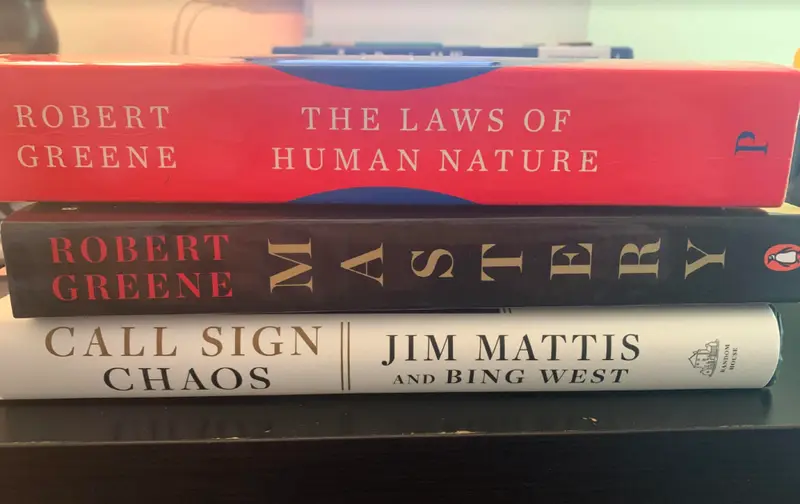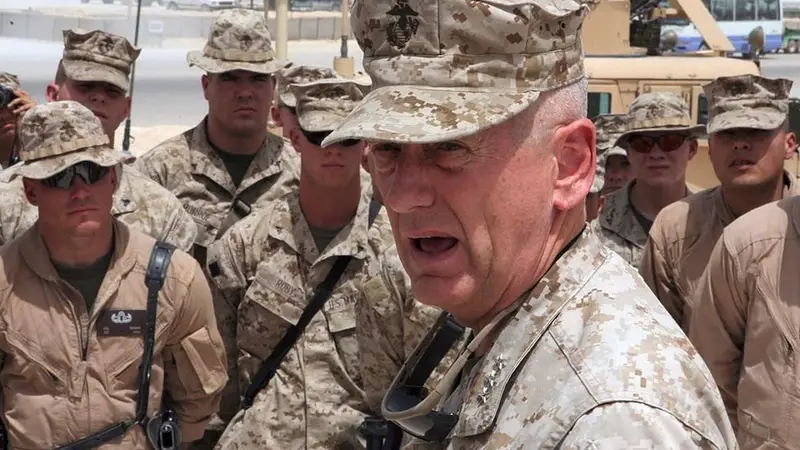
Bing West is an author, former Reagan Administration Undersecretary of Defense, and US Marine Corps Veteran of the Vietnam War. He recently coauthored Call Sign Chaos with General Jim Mattis.
General Jim Mattis’s recently released memoir, Call Sign Chaos, didn’t cause the stir that the media hoped it would.
Rather than a tell-all about the Trump Administration, General Mattis and his co-author Bing West, decided to make the book the culmination of General Mattis’s long career of service, and rightfully so.
This book is probably the most important memoir of a military leader of the past half-century, and it is a gold mine of information for those who want to learn how to lead effectively. It is among 12 masterful books written by Bing West.
This week, I had the honor of having Bing West on the show to discuss the book, it’s place in history, and what readers should take from it.
We discuss:
- Bing West’s history as an author and as a US Marine
- The three levels of leadership: direct, executive, and strategic.
- how General Mattis learned his leadership habits
- how General Mattis’s renegade background served him as a leader later on in life
- how General Mattis’s singular focus on his job makes him unique
- and a whole lot more
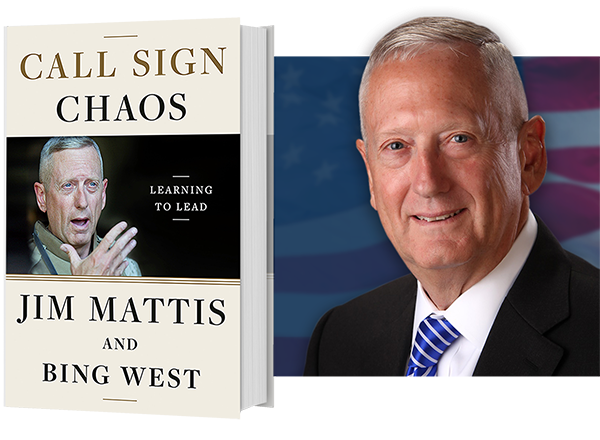
To learn more about Bing West and his other books, head to https://westauthors.com/
Transcript
Machine-generated from the episode audio and lightly edited — may contain errors.
Chris Albert (link to this point)
The Warrior Soul podcast is written, produced, and edited by me, Albert. Our mission is to provide tools, tactics, strategies, and ideas to US military veterans and anybody else willing to listen to help them to navigate toward living their absolute best lives. If you find these episodes helpful, please share them out with somebody that you know of that can use them. And if you really like the podcast, please also head over to iTunes and write us a written rating and a review. It really helps us to spread word about the show, and it really helps to get these tools in the hands of others who really need them.
This podcast is sponsored by f bomb nutrition. They make awesome delicious packets of macadamia nut butters. They mix them up with chocolate, with sea salt, with pecan butter. They're absolutely delicious, and they also have a number of other fat fueled snacks, like their meat sticks and their cheese crisps. They're amazing people who are sending boxes of this stuff out to the troops on the front lines, and they're offering 20% off to our listeners on their first orders.
If you head over to www.dropanfbomb.com and use the code Warrior Soul at checkout, you'll get 20% off of that first order. And I'm gonna keep the announcements short and sweet today. You can stick around to the end. I got a really special announcement about a brotherhood that we're creating here at Warrior Soul. So hope you enjoy this episode.
I hope you get a lot out of it. And without delay, let's get into it.
This is Chris Albert, and I'm here to remind you of one thing. Someday, you're going to die. That's not some morbid statement or scary idea. It's solid fact. Your time here on this earth is limited.
And we need to be reminded of this as much as possible with one simple reason, to live your best life while you can. This is the Warrior Soul podcast.
Alright, ladies and gents. I'm not gonna go too long here. Our guest today is mister Bing West. Mister West is a veteran in the United States Marine Corps from the Vietnam War. He's also a former undersecretary of defense from the Reagan administration, and he is a prolific author of books on war.
He coauthored Into the Fire with mister Dakota Meyer, the first living recipient of the Medal of Honor since the Vietnam War. He is also the coauthor of a little book called Call Sign Chaos with general Jim Mattis, one of the most anticipated books of this year, but also, in my opinion, one of the most important memoirs written by a military leader in our history here in The United States. Mister West, it was an absolutely awesome guest. It was an honor to host him, and we get into a whole lot on this show. So without delay, let's get into this awesome interview with Bing West.
Mister West, welcome to the show.
Bing West (link to this point)
Thank you very much.
Chris Albert (link to this point)
I have to tell the audience I grew up in New England, and I tend to pick up accents very easily. So if I end the show by sounding like I'm from Boston, it's mister West's fault.
Bing West (link to this point)
Yeah. Well, as long as New England with Tom Brady, the ageless one keeps going on to another Super Bowl, I'm cool with that.
Chris Albert (link to this point)
Awesome.
Awesome.
Couple of things. You know, I wanna get into this outstanding book, Call Sign Chaos, that you co authored with General Jim Mattis in a second. But and I'm sure that most of our audience knows exactly who you are. But but for the audience, can we can we talk a little bit about your background, where you come from, and how you got started as an author?
Bing West (link to this point)
Sure. Well, I'm when I I was born when World War two was beginning and my two uncles, my brothers and my mother went off to fight in the Marine Corps and when they would come back from the islands with others, there was a spare room in our house. My mom thinking, well, they can be babysitters for me. So I was brought up by marines coming back from Guadalcanal, Iwo Jima, and Okinawa. And and my mother thought this was perfectly normal because this these are just, you know, the brothers that she had known.
She had no idea what was going on over there. And the first inkling she had was after the battle of Okinawa and it was going really tough. She looked at me and I was five at the time and said, well, you should do something for the war effort because she didn't want me sucking my blanket all the time. And with that, I threw my blanket out the window and said, that's for the dirty yellow bastards. And then she knew she knew something was happening up there in the attic.
So, of course, after I got out of college, I had a choice of law school. I went down to go to law school and looked across the street and it said Marine Corps recruiting. I went in and said I wanna be a marine. I came back with my suitcase. My mother looked at me and said, joined the marines, didn't you?
And that was it. It was just kind of predestined, I think, that I'd become a marine.
Chris Albert (link to this point)
My mother chased me around with a broomstick after I joined the marines, trying to break my leg. Did she do anything like that to you?
Bing West (link to this point)
No. She know she she know she know what happened, so she shipped off to Vietnam.
Chris Albert (link to this point)
And so, so you spent time in Vietnam. You, fought for four hundred and eighty five days in a remote village, as part of a joint team. And how has that experience colored you?
Bing West (link to this point)
Well, I wasn't there all the time. The Marines had me going to different places and writing up the battles. I was an infantry officer and they felt that other infantry officers had to know what the small unit fighting was all about compared to the way we fought in Korea and World War two. But I kept visiting this one unit that was out in the middle of nowhere. I need to tell you nowhere.
And there were just 12 marines and 5,000 Vietnamese. And every single time I go back with them and we go out, we'd strip down. I mean, you wouldn't wear a helmet. You you we'd jump up and down before we went on patrol and everyone would listen to if if they could hear anything clinking. And then you'd go out and and you get into a fight every night.
And in the end of the first 15 marines who first went in there, seven were killed in action. So I guess, you know, I don't dwell on a lot of things, but obviously that kind of combat and and knowing that knowing that every other guy, you know, won't be there after a while. I think it it it kind of colors how you look at life, you know, number one, you don't take it for granted in certain ways. But number two, you're a little bit careful all the time because it can it can be on the second.
Chris Albert (link to this point)
And then from there, you went on to continue serving and you served as a as a civilian as the Undersecretary of Defense. Forgot for exactly which department it was within the Department of Defense, but you're an under secretary of defense with the Reagan administration. Correct?
Bing West (link to this point)
I was really lucky under under president Reagan. And it was so different then. I I mean, can you I can't imagine it today. I was only 41 years of age and when I had somebody from overseas, they wanted to see the president, we had arranged it. Sometimes, I would literally just walk down the corridor of the West Wing which which puts the fear of God, I think, or humility into everyone because the carpeting is so so soft Mhmm. And and the walls are a little bit confining and here are these classic pictures from the '17 and eighteen hundreds and they're they're the secret service agents when you walk into the door and you walk into the Oval Office. And and the president was was always very reserved, relaxed, ingenial. And they used to say, what do you got for me today, Red? And I would have spent two weeks with my staff working up big briefing books.
And I'd open up the first page to begin, and he'd say, oh, he said, so this is what that's all about. Alright, I got it. Let's talk. And that was such he was such a pleasure to work for. I mean, just an extraordinary man.
Just he he was what you want in a president. He he understood basic things he wanted to get done. He didn't get involved in details. He he always kept enough of a reserve that you knew you were talking to the president of The United States, but he never he never puts you ill at ease. He was just a remarkable human being.
Chris Albert (link to this point)
Yeah. I had his son Michael on the show last year and just, you know, just an icon of a man president Reagan was. And we talked about that quite a bit and the legacy that that, you know, Michael's still working on today as far as trying to preserve our our history with Normandy. So it's just it's amazing that you had the chance to do that, and I can't imagine that feeling walking down the hall there to the overall Oval Office and seeing President Reagan there.
Bing West (link to this point)
Well, one thing you learned and and with Jim Mattis, you know, when we wrote the book, we have part of it in there, his dealings with president Bush and president Obama. One thing that happens to every human being when they're dealing with the president, I don't care whether he's republican or democrat, you all any any sensible human being begins to think of every single word you're about to say. Yeah. And that that makes a lot of conversations very stilted. You don't just blurt out what you're really thinking.
You're you're aware that you have to have a certain amount of gravitas and you have to be very careful that that doesn't become fawning or that you don't pull your punches too much because you're dealing with such power.
Chris Albert (link to this point)
Yeah. That's that's definitely something that I think everybody has to learn at some point as far as things go when you're dealing with somebody over you who has to make really difficult decisions. You can't you can't color things the wrong way. And that's just kind of the ultimate ultimate point there. And then you get into writing.
And I think I think it's 12 books that you have out, including call sign chaos, but also a book with Dakota Meyer and and a few others there. Right?
Bing West (link to this point)
Correct. I I wrote about the village, which is on the commandant's reading list, I guess, even today, fifty years later, which was about these 12 marines in the Vietnamese village. Just because if if you're gonna be a writer, it's somewhere in you and it's gonna come out. And I think it's that simple. And it was always there.
I had a regular career in government and then in business, but but always there was that itch to write. And then then with Jim Mattis, I happened to bump into him because I decided after that I would cover the two thousand and three invasion of Iraq and so with retired major general by the name E-Tool Smith, E-Tool had killed two North Vietnamese with his entrenching tool. He was he's really a character. He and I decided we'd write about this and and we flew over to Kuwait And the marine said, what are you two guys doing here? And we said, we're gonna write a book.
And they said, well, I said, you you better meet the general you better check this out with the general. So we they drop dropped us off at Jim Mattis' tent. And and he comes out and he says, what are you guys doing? Are we gonna write a book? Oh, okay.
Why don't you take the tent next to me? And I'll see I'll take care of you. And that was it. It was that informal. And and then his assistant division commander comes along, and he's John Kelly, and he's from Boston, and I'm from Boston.
So immediately, we start chatting, and John later became the chief of staff for president Trump. And then sitting in the next tent is Joe Dunford. He went to the same high school I went to, Boston College High School. And Joe is now the chairman of the joint chiefs. So from then on, in the course of the next fifteen years when I was writing about six books about Iraq and Afghanistan, I kept bumping into them and bumping into Jim Mattis everywhere I went.
And so, after Jim's career was finished, it was natural the two of us sat down and I said, you know, Jim, you really you know, we should really write a book about what you've learned about leading. And so, sat down and started writing the book.
Chris Albert (link to this point)
You know, as as I was reading this book, because I've been reading a lot of history, I've been reading Plutarch, I've been reading Xenophon, and one of the things I got about this book as I was reading it was that, yes, this book is talking about the last twenty years, thirty years. But at some point, you know, hundred, two hundred, three hundred years from now, it's it's a good possibility that future military leaders are gonna be reading this. Were were you guys thinking about that as as you put this book together?
Bing West (link to this point)
Not that far out, but but it's funny you should mention Xenophon because I the first book I wrote about going in Iraq when we invaded and went up to Baghdad, and I called the book the March Up, which is taken from Xenophon when he had to march out of Mesopotamia three thousand years ago. And I I said that, you know, the Xenophon today that we have is Jim Mattis.
Chris Albert (link to this point)
Yeah.
Bing West (link to this point)
So it's And funny how those things come around. But Jim and I Jim and I, when we wrote it, said, what's our audience? And we said, we're thinking of a twenty four year old male female, 24 year old, 25 year olds, who probably has been in the military, but not necessarily. Yeah. Who's trying to decide what is he or she gonna do with his or her life?
What what what where are they gonna go? What are they gonna do? And how are they gonna do it? And we thought, you know, Jim said, why don't why don't I just say what I learned going along because the one thing that nine out of every 10 people listening is is gonna be true for, if not 10 out of 10, that you're gonna have to manage others. Not only just get along with others, but at some point you're leading others.
And so we kind of fell into this, let's make this all about what did Jim Mattis learn about leadership at every level. So we start and we we we basically start when he was thrown in jail and then he fell off the cliff and thought he was gonna die. So we start with when he was 19 and 20 and kind of a wild man. And then we then we go into the marines and then we divided the book into three levels. We said, okay, what is it about leading you have to know?
First thing is, when you're dealing face to face with others, and we call that direct leadership. And then we said, now there comes after that a point where you have so many people under your control, can't possibly just deal with everybody. And that's executive leadership. And then finally, if if you end up the way Jim did it at the top, then you have to deal with policymakers. And that's an entirely different kettle of fish.
That's policy leadership. So we divide the book into those three, direct leadership, executive, and policy.
Chris Albert (link to this point)
And throughout the book, you know, there's like you said, there's there there's those three levels. And you see that there's almost like this dichotomy. There there is a a discussion of the direction of the country and the importance of alliances.
And then there's also and and policymakers could potentially get something out of that if they listen to it. Right? Then there's also this it's almost like a guidebook for the young marines, the the the the the corporals, the sergeants, the the lieutenants who are coming into this craft. And it's it's almost, in my opinion, almost a guidebook for how to deal with people in so many different ways. Right?
Bing West (link to this point)
I think that, you know, both Jim and I believe that is the essence, Chris. Everything else is secondary to that. It's how do you get along with that other person, especially if you're in a position of leadership over the other person. How do you do it? And and we spend more time on that than anything else. And we start with what you have to do as a human being. So we start by saying, don't care who you are.
I don't care if you only have two people. I don't care if you're by yourself, really. There are three things you have to start with. Number one, you have to be competent. You have to know your damn job.
Chris Albert (link to this point)
Mhmm.
Bing West (link to this point)
And that really means I mean, you know and I know if you're if you're if you're in the infantry, if you're a grunt, if you're in the marines or something, but it would pertain to any job. The the troops are gonna look at you as the second lieutenant or sergeant. They're gonna say, does he really know his stuff or is he gonna get me killed? So you have to start by really knowing your craft. And then the second thing is, and and this is easy for us, and yet it seems so hard for a lot of civilians, you have to care about your people.
Mean, every one of us is an individual human being with an individual destiny, and God will judge everyone as an individual. So, you have to care about them and and where they're going. And the vast majority of people who come into the military and and Jim was in charge of recruiting for a while and he was very aware of this, 75% of everybody who comes in leaves after four years. So they're 22 years of age and their their military service is over. So you have to be asking yourself, what am I gonna do as a leader that helps them when they're no longer in the military?
And the same would be true in any business, anything else you're doing. Most of the people you're with eventually move on to something else. You have to help them and they then in turn trust you because they know you're not just out for yourself. And then the last thing that we sort of basically said at at fundamental leadership pertains all the time, you have to determine for yourself what your convictions are, what your red lines are that you won't walk over and you won't walk somebody else over or you're gonna fire them. And Jim's fear Jim keeps saying, you know, every organization has to keep a firing squad because even the only perfect man we've had, Jesus, had one of 12 go to hell on him, you know.
So that you you you can't just say, you have to stand for certain things and you're everyone has to know. You're not gonna cheat in certain ways. You're not gonna let somebody else cheat. And and they have to understand you walk across that line, you've walked across that line, and and you're not gonna tolerate it. So those are the three things.
You have to be competent, you have to care, and you have to have conviction.
Chris Albert (link to this point)
Absolutely. And there's there's a lot of other nuggets in here that I am across, and and the first one is is not dwelling on mistakes. Using them as as I think you call them tuition payments. And and General Mattis describes in the book, you know, he he made a lot of mistakes, but he said every time he made a mistake, the Marine Corps promoted him. And had he dwelled on those mistakes, it it it would have been catastrophic.
Bing West (link to this point)
The one thing he didn't say though, and I, you know, I'm I'm not picking any, you know, I just the Marines the marines really are tolerant of mavericks. I mean, some of the stuff that Jim did and what he said and they still promoted them, I mean, some other organizations wouldn't have.
Chris Albert (link to this point)
No.
Bing West (link to this point)
So he he he was in the right organization, you know, because they they they're pretty tolerant of of he he says you have to protect the mavericks, but a lot of organizations grind their mavericks down.
Chris Albert (link to this point)
Big time. Big time. The the the thing I also noticed here was that the idea of having a clear picture of where you wanna go. And I remember when I was serving in the Marine Corps, we we were always talking about the commander's intent. Everybody had to know the commander's intent.
And from what I got from this book, he he he levels that at at a bunch of different levels from from the top of the government to to the senior leadership down to to the private PFC. And every mistake that he covers in the book, I think, also, you know, talks about the fact that there wasn't a clear vision there or or a clear idea of where we're going. Right?
Bing West (link to this point)
That's the that's the second level. When he gets to the executive level.
Chris Albert (link to this point)
Mhmm.
Bing West (link to this point)
That's that whole vision thing, that whole what's my intent becomes absolutely paramount. And that that occurs when you get to the level where you don't know everyone working for you intimately. And then you have to stand back and say, well, does everyone understand where we're going and why we're going there? And so, Jim would spend an enormous amount of time writing until he fell off. Boy, talk about writing. We we spent six years on this book.
Chris Albert (link to this point)
Yeah.
Bing West (link to this point)
Six years. It really ticked us off that people come out and say, well, you know, talk about president Trump. This book had nothing to do with president Trump. This book this book had to do with leadership and and people rushing through it looking for gossip. That's ridiculous because we weren't into that game.
We had started in 2013 Mhmm. With this book, and the one and and we kept crafting it. We went over every sentence once or twice to make sure we really believed in that sentence and it made sense. And Jim is really big on that, that if if you're a leader, you have to write something in plain English that everyone under you can understand and repeat back to you. And if you haven't done that, then how do you expect the others really to know what the heck they're supposed to be doing?
I mean, you can't be in charge of a company and say we're here just to make money. Woah. Woah. Woah. How are you supposed to do that? What what what your intent you know, come on.
Tell me something specific. And and the minute you start to write and you know every this is true of everyone listening to us. You know, the first time you write down that brilliant thought and then walk away for a minute and you walk back and you sort of say, woah, what happened to all the brilliance? You know, that that sentence doesn't make any sense. Mhmm.
And that's why you have to write and rewrite and rewrite until you have something so that everyone understands and that's why Jim's letter to all his troops when we were going to Baghdad has become famous. I mean, it's become the letter that everyone, 23,000 marines and sailors have cherished to this day. Because it laid out exactly paragraph by paragraph, this is what I expect you to do, this is how you will behave, so that they everyone could understand it. Every corporal could turn around to the general and say, sir, this is my mission, and I know what I have to do.
Chris Albert (link to this point)
Absolutely.
And, you know, you mentioned the the kinda media fervor as far as trying to find something about, you know, trying to get a tell all on president Trump and trying to get all this stuff. But, you know, I like you said, I think they really missed the point of this. This is this is one of the most illustrious military careers of of the past century. And for anybody to come in here and say, okay. I expected you to do this or I expected you to do that.
I mean, they're completely missing the point. And I think you guys hit the nail on the head in in really figuring out who your audience would be.
Bing West (link to this point)
Well, thank you, Chris. We, basically, what Jim said was, look, you have a commander in chief, he's called the president. He's still there. He's the president. He's making big decisions.
If every general who worked for him ran out and read a book write a book or criticized him to something, then legitimately, not only would this president, but any president will begin to say, wait a minute, who are these guys? They they sit here and they tell me, oh, I'm just from constitution and then they run out and trash me or something. So Jim is really tough. He's really been critical of the generals who after they retire, stand out there as as political pundits. He he says that is not what you should do, and it's not what he would do.
Chris Albert (link to this point)
Right. Right. Now I wanna ask you this because, like we said earlier, you you wrote the book with Dakota Meyer about Ganjgal, and you also have, you know, this book in in a whole host of other books. As as you're approaching works like this and and thinking about all the powerful men you've been around, all the powerful people you've been around, when you think about guys like Dakota Meyer and and guys like General Mattis, are there are there particular traits that, you know, kind of translate between the two of them, or is there is there anything that that you see in somebody early on that really stands out to say, okay, this guy is gonna be something?
Bing West (link to this point)
I would distinguish two things. Dakota represents people who won the Medal of Honor. That that is one act at one moment that requires extreme bravery. That's different than a career, if you see what I mean. Every that that's that's like somebody running for a touchdown one time or something. It's The bravery issue is one issue. The dedication issue of a gymnast is different.
So I would distinguish between courage and bravery on the one hand with a singleness of purpose that extends over decades that is what you what everyone what everyone saw in Jim Mattis. I mean, you know, he he wasn't called the the Warrior Monk for nothing. That is not that he wouldn't well, he's not much for a good time. I mean, Jim Jim works. Oh, my god.
The man works. Yeah. He worries me. You know, he he must work sixteen, seventeen hours a day just focused on on the country. I mean, that that that is his life.
And when and and the reason the troops loved him on the battlefield is that they knew that there are really two Jim Mattices. There's there's the Warrior and then there's the Statesman. But the Statesman came after the Warrior. We have to distinguish here.
Chris Albert (link to this point)
Mhmm.
Bing West (link to this point)
The the where where Jim made his reputation was on the battlefield. And he made his reputation there as we as as you look when you read the book, how dedicated he was to practicing getting everything right long before the first shot was ever fired. And how he always was trying to figure out a way of putting the enemy on the horns of a dilemma, so that Jim could go one way or the other and the the enemy couldn't defend both places. That that that was kind of ingrained in him, how to screw up the enemy's mind. And, you know, so he he did create chaos.
Of course, that isn't why he got that name, but, you know, but but I would distinguish between acts of bravery that that earn you the silver star, the navy cross, the medal of honor, which is the ultimate act of bravery, as an a single act, and that's what you get written up for, versus the generalship that you see with Jim Mattis that extends over decades of intense dedication and an unyielding study, unyielding study.
Chris Albert (link to this point)
And for a man like Jim Mattis, who you know, the point of this book, it's it's leading up to that that him taking over the position of secretary of defense, talking about how his his work had prepared him. These were tuition payments that that had to be paid off. And in a state where he is in right now, where he's he's a researcher, he's he's kind of in semi retirement. Do you think that a man like that can ever fully retire?
Bing West (link to this point)
No.
No. No. The it is it is in Jim's DNA to serve. Period. That that's that's who he is.
He'd be he'd go bonkers if he couldn't serve. I keep trying to get him to take up golf. I'll never I'll never succeed. Look. He he he works out.
I mean, you're you're a big workout guy. So, you know, I I play golf, but I get I get about five miles walking carrying my bag every day, you know. People say, yeah, yeah, yeah, that's why you're excusing yourself. But, yeah, Jim Jim works out an hour every time every morning, period. It's it's ingrained.
First thing I'm gonna do, I'm gonna work out, then I'm going then he's gonna return his all his emails, then he's gonna read. And the other thing that, you know, we try to point out throughout the book with with all the different people we've known is that if you don't read at some point, you're gonna become incompetent and you won't be able to lead anymore. Because any book any book is somebody like Jim Mattis, and maybe me, taking six years of their lives. I mean, we worked four hours a day on the phone with each other going over every single sentence in order to have a two and a half hour conversation with anyone who reads the book. Book takes about two and a half hours to read.
Mhmm. So, the way you can learn is, my God, if somebody's gonna spend six six six years of his life to have that two and a half hours, think of how much he's trying to pass on to you that took so long for him to learn. And that's why Jim has read something like 7,000 books. And you go to his house I mean, it it, you know, where where he is now out in Washington and a lot of books about Lewis and Clark and the Indians. I mean, we all have favorite subjects that we go back to, so that he's very widely read, but then he has his favorites as well.
But reading saves an awful lot of mistakes. As Jim says, you know, learn from reading for God's sakes, not from putting some of your own poor troops in body bags because you were too stupid to learn.
Chris Albert (link to this point)
Absolutely. And one thing I I also see from this book, and and I see it unfortunately, it's it's more of a rarity these days, but but this book, every chapter is important. Every paragraph is important. A lot of books these days, you know, the the first chapter is important. It gets into the meat of everything, and then and then the rest of the chapters, they're kind of redundant or or just seem like they're filler.
But in this book, I mean, literally everything in here is important.
Bing West (link to this point)
Well, thank you. Because we we worked awfully hard at that. We we basically, wrote between four hundred and five hundred thousand words. Now, that's about four books. And then we just cut it all out until we had we just kept slashing away until so, Jim and I began to argue about semi about semicolons and colons.
You know, we were we were down to the fine detail of, is this important? Does this say something? Does it make sense? And do we tell a good story? I mean, I'd say we must have 50 different stories in here.
And if you notice, the style is we'll we'll tell a story, a war fight, you know, war fighting or, you know, any whatever it happens to be. And then Jim will draw back from that and say, you know, and this is basically what I learned from that, but he won't preach. You know, we just add that, then we go right on to the next story. There's people who love stories, and and Jim has an awful lot of stories to tell.
Chris Albert (link to this point)
Yeah. Yeah. That's that's definitely apparent in the book. And for for the young guys out there, so most of our listeners here are probably in their their mid to mid twenties to mid thirties. And they're guys who've served in the military, have gotten out.
They're they're starting their lives up right now outside of the military. What would you say to those guys? What would you say to them as far as advice for reading this book?
Bing West (link to this point)
Oh, simple. If you if you get you wanna see how a guy like Jim Mattis matures over time and how you learn, and then you can you can almost underline different parts of that book because it's gonna happen to everyone. As they progress in management, they're gonna have to figure out different ways of dealing with different kinds of people. And that's that's the beauty with Jim. He wasn't just on the front lines.
He was on staff. He had some crummy jobs that he had to figure out how he's gonna do something with. So he ran the gamut, and he always kept thinking, okay. I can add something here. And the one time when he couldn't with that one particular job, you know, he he walked over and said, you should get rid of this job.
Get rid of everybody. Fire them all. Get get them out of here. And he did.
Chris Albert (link to this point)
Yep. Yep. He, I I remember that part. He he completely dissolved the the
Bing West (link to this point)
the Joint forces command. Yeah. So let's go away with this. It doesn't make sense.
Chris Albert (link to this point)
Yeah.
Exactly.
Now another another big question here is from a macro perspective. You know, you look at the country as it is today, and seems like we're in this place of uncertainty. We don't know what's gonna happen with our leadership. And one way or another, it seems like the political divide is almost irreparable. But for a guy like Jim Mattis and and and as a leader, he basically was somebody who was respected by both sides, who who, you know, navigated, I think, some of the toughest political waters of of history without, you know, without the the the drama and craziness that we've seen a lot of other other individuals navigate those waters.
Do you think that there's other leaders out there that could fit this bill? Is that something that that could come to pass in our future? And what's gonna happen if there's not?
Bing West (link to this point)
Wow. Well, I will start by saying this bothers Jim more than anything else. The divisiveness in our country. I mean, it really bothers him. He's come out and said, what's what's on what's our real national security issue?
Ourselves. Not the enemy. It's it's what we're doing to ourselves, the divisiveness. But he he know more than anyone else has a magic wand about this. Gee whiz.
I mean, I I am flabbergasted at at the viciousness. And and the other thing he would say is this this whole thing about saying that the other guy's a liar or a cheat or something. Come on. You can't have you can't have a United States if if that's the way you talk to each other.
Chris Albert (link to this point)
Right.
Bing West (link to this point)
And and so Jim is is very, very irate about the attitude that people can take that somehow they can forget that we have to be civil with each other. But the solution, Chris, boy, no. He Jim doesn't have a solution any more than anyone anyone else has a solution right now. I mean, this is this is crazy. You know?
Chris Albert (link to this point)
Yeah. And I think it comes down to a lot of the principles that you guys cover in this book. Training young people to be leading. Training training young people to to be able to manage and deal with other people. Right?
Bing West (link to this point)
Also, your vision. And and here here, he's been he he is very sharp about saying that president Bush, president Obama, and by implication, president Trump, of them took the time to really write out what is what are what are our real end states? And practically speaking, how is what we're doing and how we're using our military getting to that point? And and so, you know, he he he thinks we kind of dropped the ball. I mean, you know, okay.
We went into Afghanistan. Why are we going to Afghanistan? To get those bastards who who who who killed 3,000 Americans and other other nationalities in New York City. And what do we do instead? And because we we go into it in the book, we let them escape into Al Qaeda when when Jim was there with a force that could have stopped that. And then we turned around and said, our duty is to is to make a nation out of Afghanistan? I mean, we you know, where all that come from? And then we go into Iraq.
Why did we go into Iraq? Well, because he had, you know, he had weapons of mass destruction. Well, we discovered that Saddam didn't. But, okay, once you're in there, at least for gosh sakes, you know, have some sort of notion what you're going to do instead of just blundering. And then, with Iran, he he felt the same way.
Gee whiz. Iran is our enemy, our real enemy. You don't you don't cut a deal with them and say, kumbaya. And by the way, you know, he does indicate, well, maybe I didn't get along with everyone. That is in the end, President Obama let him go.
You know, he was, in essence, well, gentle word is not fired. He was just told, gee, you're you're you're suddenly retiring. So he was because president Obama wanted to cut a deal with Iran and wasn't sure that general Mattis was in favor of cutting this kind of deal. And then, of course, he resigned with president Trump because he he Jim believes that we really have to stand by our allies and we can't be wishy washy about it. So Jim Jim might say, I'm an I'm an equal equal, you know, opportunity guy.
I've been fired by both sides.
Chris Albert (link to this point)
Right. But Right.
Bing West (link to this point)
So he's he so he doesn't have the solution. It's it's not like he has some magic pill we can all take, but it's what bothers him more than anything else is a lack of civility toward each other.
Chris Albert (link to this point)
Yeah. And I think, you know, what you mentioned earlier about working with with somebody like president Reagan where anybody who was in his presence, you know, felt like they were the center of the world. There's a big difference there, and and it's something we lost over time.
Bing West (link to this point)
And and it it goes a little bit farther, I think. The question is what kind of world do we want America to be too? Because either you are gonna be a capitalist nation where it's the individual and the individual's work and freedom to do that that is what drives the nation or you become more socialist and you you you you figure out a different way of of doing things. But that'd be a huge left turn that, well, right turn, but it'd be a huge turn for the nation that you have to think it through carefully, not just stand up there all the time and say, I'm gonna promise you this, I'm gonna promise you that and somebody else is gonna pay for it. I mean, that can get a little bit nutty, you know, but these things are far beyond where we go.
I mean, our book is about leadership. It's not about the politics of the country.
Chris Albert (link to this point)
Right.
Bing West (link to this point)
Exactly.
Chris Albert (link to this point)
Exactly. Well, number one, I wanna thank you for coming on here today. Do you have any other projects coming up that that that you're working on right now?
Bing West (link to this point)
Well, I do. I'm just finishing up a book on a novel about Afghanistan that has a marine platoon, a CIA team down in Sangin, a place I really hated. And they bump into the drug lords and you can imagine all hell breaks loose. So I'm finishing up that novel right now.
Chris Albert (link to this point)
Outstanding. And where can people go to learn more about you, Mr. West?
Bing West (link to this point)
Oh, thank you very much. We have a website, my son, Owen, who also was a Marine Force Recon and he was the assistant secretary of defense for special operations forces under secretary general Jim Mattis. And and our our website is called West Authors.
Chris Albert (link to this point)
Awesome. Awesome. Any any last notes for our audience out there? Like I said, a lot of these guys have served or are currently serving. Any any last bits of advice or or anything else?
Bing West (link to this point)
No. I think, I mean, I hate to say it, you know, sounds so self serving, but, honest to God, Jim Mattis wrote a damn good book where he just tried to, sort of, say, look, if you're gonna lead, these are the principles you should follow. And he's a good guy. I mean, he's not a faker. You know?
He everything everything he everything he says, he really did.
Chris Albert (link to this point)
Well, absolutely. And I have to see, I'm reading this book, finished my first first reading of it on September 10. And, you know, like I said, it just kind of impressed upon me at the end of reading it. Everything was important from the beginning all the way through the end. Regardless of who you are, whether you've served in the military or not, whether you served as an officer or as enlisted, whether you did four years or you did twenty, I think that anybody can get a lot out of this book and so I highly recommend reading it.
We're gonna have links to the book and to Mr. West's website up on the show notes. But again, Mr. West, I wanna thank you so much for coming on here and spending the time with us. And to everybody out there in the audience, I wanna thank you for listening and apply these lessons that you learn and get out there and live your best lives while you can.
Alright. Well, I hope that you guys enjoyed that interview with mister Bing West. It was an absolute honor to host him on this show. The man has written about so much when it comes to war, when it comes to the military. He's also given a lot of his life to service.
And I think that the latest book, Call Sign Chaos, really speaks to that idea of service, of devoting yourself to a single purpose and having such focus on it that you are dedicating everything that you have to leaving your mark here on this earth. And that is the point of our latest project here at Warrior Soul, the Warrior's Obituary Society. It's a group for men and empowers them to live absolutely epic lives, lives worthy of epic obituaries. And when our new members come into this group, they get an eight week development program. And in that program, they're laying out their vision, they're laying out their goals, and they're focusing on different areas of their lives, their fitness, their personal finance, their careers or businesses, their relationships, and really organizing this together so that it all lines up with your vision.
And once the eight week development program ends, the work actually begins. That's when we are getting together. We're pushing each other toward those goals, holding each other accountable each week for accomplishing something. Listen, guys. It's easy to let this life slip by, and you could wake up years or decades later wondering what the heck happened, what happened to your dreams, what happened to all those things that you wanted for your life.
And a lot of us, we fall into the trap of going through life like a zombie. What I wanted to do was to create a group here that's gonna keep you aware, that's gonna keep you working toward those things that are most important to you, And that's gonna help you to prioritize your growth in a world where it seems like everything else is trying to take you away from that. So if this is something that piques your interest, let me know. I'd like to get onto a call with you, and you can message me over at Warrior Soul Agoge on Instagram, or you can email me at chris@warriorsoulagoge.com. A lot of these types of courses or programs, they cost thousands of dollars.
This doesn't. I wanted to make this as open as possible so that we can get as many men involved as possible who are going to contribute to the positivity within the group. And that's all I got for this week, guys. Again, if you liked this episode, please share it out and let somebody else who might be interested in listening to it, know that we exist here at Warrior Soul. And if you can, pay us the highest compliment by heading over to iTunes and writing us a written rating and review.
It really helps to spread word about the show, and the it really helps to get this information into the hands of more veterans who can use it to build absolutely epic lives. So with that, I wanna thank you again for listening, and get out there and live your best lives while you can.

Host of the Warrior Soul Podcast and founder of Warrior Soul. Worldwide trainer and nutrition coach, contributing author at Testosterone Nation and Muscle and Strength.