Podcast episode
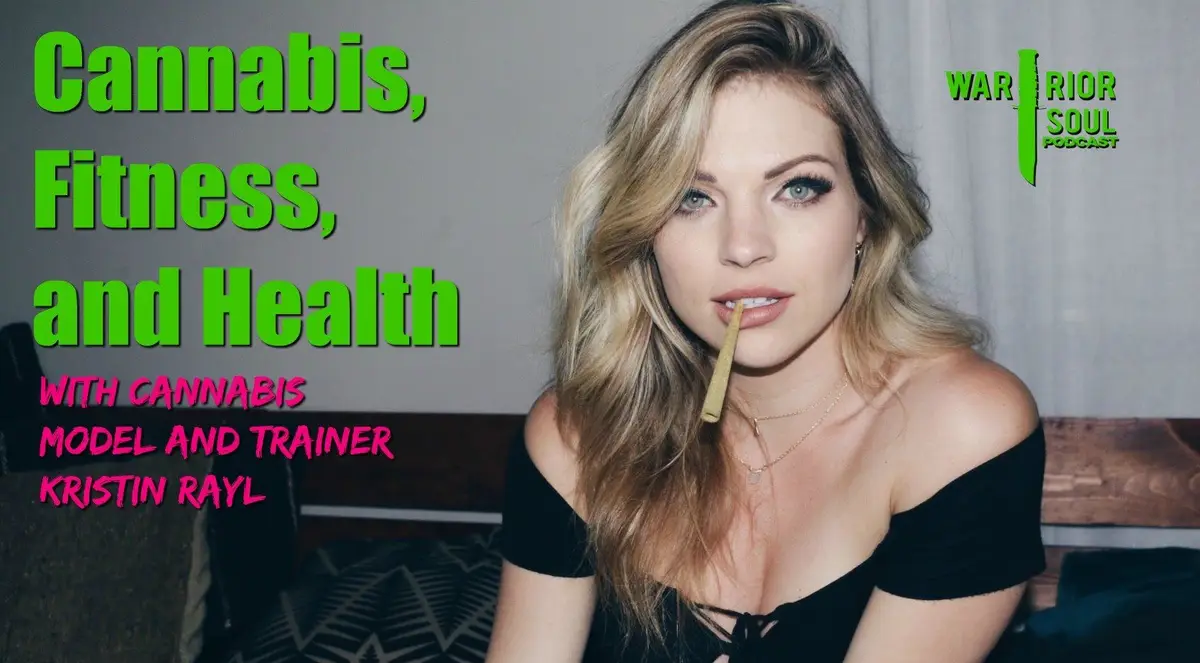
Cannabis, Fitness, and Health with Trainer and Cannabis Model Kristin Rayl
Hosted by Chris Albert
The Warrior Soul Podcast
One of the big issues we’ve been working on in the Warrior Soul Agoge and on the Warrior Soul Podcast is in educating veterans about utilizing cannabis as an alternative to pharmaceuticals in dealing with mental and physical pain, trauma, and chronic disease. This week’s guest is no stranger to pain or chronic disease.
Kristin Rayl is a Personal Trainer and Cannabis Model and Advocate for applications of Cannabis to treat chronic diseases and chronic pain. She is also an expert social media marketer, brand builder, and sales manager within the cannabis industry. Originally from Indiana, Kristin moved to California in order to pursue Cannabis as a treatment for her own chronic conditions including endometriosis and fibromyalgia. Her focus is on encouraging others to see the benefit of switching from pharmaceuticals to plant based medicines. With her fitness background, Kristin brings a unique approach to the cannabis industry that combines fitness, healthy living, and cannabis use.
For Kristin’s Instagram: @KristinRayl
For Kristin’s Web Site: https://www.kristinrayl.com/
Transcript
Machine-generated from the episode audio and lightly edited — may contain errors.
Chris Albert (link to this point)
What's going on everybody? Welcome to the Warrior Soul podcast and this is where we deliver tools, tactics, ideas and discuss issues to help veterans and anybody else who wants to listen to live their best lives. Today we're going be talking about a subject that we've talked about quite a bit before, and that is the use of cannabis. And you know, in the veteran community, none of us are strangers to pain. Most of us aren't strangers to pain in both of its forms, both mental pain and physical pain.
But one of the problems in my mind as far as the issues we've been facing in the veteran community over the past decade and a half is what society deems acceptable ways of dealing with this pain. You're told to go see a doctor and either take a pill that will alter the chemical balance of your brain and your body for the rest of your life, or you're told to go to the doctor and take a chemical that will embed itself in your DNA and cause you to be addicted to that for the rest of your life. When it comes to cannabis, we know that it comes from a plant. We know that it is not addictive or not nearly as addictive as the opiates that were given out like Tic Tacs over the past decade and a half to veterans and Americans in general. And we know that it is highly effective in helping people to deal with both mental and physical pain And that you could use it in multiple forms, whether psychoactive or non psychoactive with THC versus CBD.
And so today, I wanted to bring a friend of mine, Kristin Rayl, onto the show as a guest. Kristin is still a very young woman at the age of 25, but when I first met her, she was even younger, about 21, 22. And she was a client of mine who was looking to cut her path as a fitness model here in Southern California. But Kristin had been dealing with pain for most of her life. She suffered from an extremely painful condition called endometriosis and on top of that also had another extremely painful condition called fibromyalgia.
One of the things I was most concerned about when I was working with her was the idea that this young woman who was dealing with these issues was going to have to try to fit her body into that preconceived mold that the fitness industry had for fitness models. This this crazy lean female body that they were trying to market. One thing that I'm extremely happy about is that Kristin saw that, and she chose instead to go the healthier route. And today, she's still a model. She looks fantastic.
But she's a cannabis model. She's working in the cannabis industry. And she spends her time educating and helping people to find the benefits of medical cannabis. I wanted to bring her on today to discuss her story, her struggles with pain, how she overcame those struggles, and to discuss a number of different issues that veterans face as they choose cannabis over pills and to talk about the cannabis industry in general. And so this is a really interesting conversation.
We go down a number of different holes, number of different paths and you know, we get into the fitness industry, get into health in general, we get into best practices with cannabis, what you should try and use, what you should keep on hand, how to start that kind of stuff. We also talk about the idea that cannabis is not a cure all and then it's not some magic potion or anything like that and sometimes it takes a number of things. But the bottom line is that this is definitely something that can be helpful to many people out there, veterans and other Americans included, and that it's something that should be on the table without stigma, without facing social repercussions because you chose to take a plant that's shown to be harmless over a pill that's been demonstrated to cause harm in a number of different cases. Before we get into the conversation, I just want to give you a note from our sponsors, F Bomb Nutrition, amazing products developed by two amazing people out of Flagstaff, Arizona. I'm always talking about the benefits of a high fat ketogenic diet, and they've made it easier than ever with their awesome fuel packets.
Sorry, I get all tongue tied once I get toward the end of these intros. These are packets of, they have oils, they have olive oil, MCT oil, coconut oil but they also have these awesome packets that contain macadamia nut butter mixed with a number of different things. They got macadamia nut butter mixed with coconut butter, so delicious. Macadamia nut butter mixed with chocolate. Macadamia nut butter mixed with sea salt.
And these things taste like a crunched up macadamia nut cookie in a little packet that you can carry around with you and you can access at any time. I have them every day, part of my regimen, and Warrior Soul listeners can get 20% off their first orders when they go to www.dropanfbomb.com and use the code Warrior Soul. And beyond that, I just want to say that they're such amazing people. They've been sending boxes of this stuff out to the troops on the front lines, and nobody asked them to do that. I didn't lobby them to do that.
They asked me if they could do that. So I wanna support them. They've been supporting us for a while now, and make sure you go check them out. So with that, let's get into this conversation with Kristin Rayl about medical cannabis on the Warrior Soul podcast.
This is Chris Albert, and I'm here to remind you of one thing. Someday, you're going to die. Now that's not some morbid statement or scary idea. It's solid fact. Your time here on this earth is limited.
And we need to be reminded of this as much as possible for one simple reason, to live your best life while you can. This is the Warrior Soul Podcast.
Alright, Kristin, thank you so much for coming on the show. How you doing today?
Kristin Rayl (link to this point)
I'm doing awesome. I'm preparing today for the California Cannabis Award, which will be going on this evening, so that's very exciting.
Chris Albert (link to this point)
Outstanding, it's also another very important day today, it is my birthday.
Kristin Rayl (link to this point)
Happy birthday!
Chris Albert (link to this point)
Oh, thank you so much.
Kristin Rayl (link to this point)
I didn't know that.
Chris Albert (link to this point)
Yeah, yeah, so I wanna thank the California Cannabis Awards for honoring me And so big reason I wanted to bring you on to the show. I've known you for a few years now. When you came to me a couple of years ago, knowing your story, you're a very young woman right now. You're only about 25. And back then you were even younger and you have a history of dealing with pain, chronic pain, chronic issues.
Can we hear a little bit about that story?
Kristin Rayl (link to this point)
So basically long story short, when I was about 13 or 14, I started developing symptoms of endometriosis, which is a pain and inflammation disorder that women can have around their cycle. And it basically feels like you're giving birth every month. And they threw painkillers at me and all that and then started hormonal treatments for that. And then they put me on the Depo Lupron shot for about six months and that basically chemically castrated me for a while and put me into a menopausal state. Mind you, I'm like 15 at this point.
I also throughout that had a couple surgeries for it, like laparoscopic surgeries to go in and they laser off the scar tissue around the uterus to help with that. And so then about a year later, I don't know if it's necessarily related to the hormone issues. Yes, I started developing symptoms of fibromyalgia. It took them about two years to actually diagnose me. So by the time I got diagnosed, I was 17.
Basically my symptoms started, I just started experiencing chronic pain throughout my entire body. There would be, I was a gymnast, I actually had to stop doing cheerleading, stopped doing gymnastics. I was physically unable to do it anymore because I was in so much pain. I would remember I would just like curl up in a ball and lay there and just cry because I would be in so much pain and they couldn't really figure out for a long time what was going on and they pretty much took the cop out route that most doctors do sometimes and do the whole fibromyalgia diagnosis, which to me, in my opinion now that I have kind of figured out what was actually wrong with me, to me that seems like a we can't figure out what's wrong with you, so we're gonna call it fibromyalgia because you fit this group of symptoms that everybody else has and we still can't figure it out. So they diagnosed me with that and started the whole guinea pig treatment of putting you on XYZ meds and then switch the combination over and over again until we can find something that works for you and really nothing ever worked.
I was just heavily medicated. Painkillers, Xanax, Valium, Lexapro. They put me on Lamictal, like Gabapentin. If there's a drug out there for fibromyalgia, inflammation or pain, I've probably been on it.
Chris Albert (link to this point)
Wow.
Kristin Rayl (link to this point)
Yeah. So for years of my life, I was in kind of like a pharmaceutical haze, is how I look at it. Definitely wasn't there mentally, I had to kind of relearn how to feel emotions when I went off the medications, which kind of brings me on my journey to I kind of got tired of being in pain and my doctor couldn't figure it out, and at the time he was actually telling me not to exercise, which is why I stopped with the cheerleading and the tumbling and all of that. And then I went kind of sedentary. So on my own, I was like, okay, this doesn't make sense.
I need to be moving. I need to stretch. I need to exercise. So I started doing that. And then I kind of like needed something to motivate myself, so I set a goal to try out to be an NFL cheerleader for the Indianapolis Colts.
And when I did that, I hired a trainer and she helped me to start exercising in the gym. And that's when I started weights. And that helped a lot with my pain, a lot. I started getting more motivated and I was able to get up every day and kind of like move. I was still in pain, but I started having momentum.
And then along the way, I would like here and there try. I've used cannabis on and off my whole life since I was probably, I don't know, 14, a little skater punk kid. But when I was older, I started reading and hearing how it can help with pain. So I would try it here and there and I would definitely like the stuff I was getting in Indiana at the time was terrible. So it wasn't medicinal like it is out here.
It's much stronger and has an actual medicinal property. It's still like medicinal but it's not as good. So I started experimenting with that and I noticed improvement. And then I just on a whim, packed up all my life and moved to California. And that's when I really made the decision to go full on the natural route and to pull myself off of the medications and to try using plants and nutrition and exercise to heal my body.
Yeah. So I took myself off of painkillers, barbiturates, everything. It was a nightmare. It was very, very hard mentally and physically coming off of those medications.
Chris Albert (link to this point)
Well, you know, the thing is because we've got our audience here. A lot of us are combat veterans. A lot of us are dealing with depression dealing with chronic pain. A lot of us are heavily medicated and over the past decade and a half, the VA has been passing out medications like crazy. For you being at that age that you were, you know, some of the most sensitive years of your life being on something like Xanax.
I've I've popped Xanax before I'll admit to that not being prescribed by for it and it made me feel awful. And I said, am never taking this drug again. What what was that like going through that age being so medicated dealing with with this pain?
Kristin Rayl (link to this point)
It was I still look at it like the hardest thing I will probably ever have to go through, especially like I was in high school and you also have to factor in. I went to a very small school. There was a lot of people that didn't understand what was going on with me because on the outside, I've always like held, maintained my happiness and tried to be positive as much. Even if I'm in pain inside, I was always trying to be positive and happy on the outside. And so it didn't look to people like I was sick.
So the hardest part about it was kind of being misunderstood and not people not knowing actually what was going on with me. Because I'd be walking through the hallways at school every day in chronic pain, being on all these medications, not having mental stability and control over my emotions because I was basically just a zombie. I would get, I remember I would get so angry sometimes and I would just like have crying spells and I was majorly depressed and I actually, I tried to kill myself. A lot of people don't know that. When I was in high school, tried to commit suicide because I was so depressed and I felt alone and I felt like no one understood me.
So it was very, very, very hard. And I feel very blessed and lucky to have been able to pull through that because now I honestly feel like nothing, anything could get thrown at me and I'm like, I got it. I can handle it now because it definitely taught me strength and resilience and how to kind of come from the pits of pain and darkness and what I felt like, I felt like I was living in hell. And I remember there was the period of time in my life where every day I would wake up and I would pray like, please God, just like, can this be the last day I feel this? Like I can't take it anymore.
And it was just really, really, really bad. And those medications that they had me on, it wasn't just Xanax, was like Lexaproste, antidepressants, SSRIs, barbiturates, like it was on a cocktail, literally. And so emotionally, I wasn't myself. I was the drugs. And I will look back at some of my behavior patterns.
I always analyze myself. I look back at some of my behavior patterns. I would react with anger. I had a short, very, very short temper when I was younger. And I also, at the same time, would be very depressed and I had no confidence and I just felt like miserable constantly.
And it's like, I look back at that and it's almost like there's a dark shadow over that period of time in my life. And I kinda feel like I missed out on that. And that's why I'm 25, but I feel like such an old soul because I had to grow up very quickly. I didn't have an option to just be like, yes, was carefree in a sense, but I was mostly trying to distract myself from the things I was feeling inside.
Chris Albert (link to this point)
Yeah, it's you know, I have an autoimmune disease. My mom, she's she's had fibromyalgia. She's she's overcome it herself as well. And I've had some friends who suffer from fibro. And one of the hardest things is is you don't people don't see that you have a disease.
People don't see that you're in pain. It's it's it's really hard for people to relate to. And, you know, I've had friends who had fibro and and you're dealing with people telling them they're faking it, telling them that they're they're they're they're just making it up in their heads, telling them it's a psychosomatic symptom. Did you encounter that and and how did you deal with it?
Kristin Rayl (link to this point)
Absolutely. I was bullied very, very badly. I didn't have a I had a lot of acquaintances. I was the cheerleader in high school, but I didn't have a lot of true friends in high school. I pretty much, like, maybe had three that were actually understanding of my situation.
But it was really hard because people couldn't get it. They I got called a hypochondriac. I got told I was faking it, doing it for attention, those things. Just like and I look back. I was like, dang.
Like, how did I make it through that? Because I was definitely being bullied, like, on a whole another level because I was a kid around kids in high school. People don't feel like and when you become an adult, you learn not to be an asshole. And when you're in high school, you don't really like, you don't understand the impact it can have on others. And so it's more like, let me try to be the cool kid because you're you don't have that emotional intelligence yet
Chris Albert (link to this point)
Mhmm.
Kristin Rayl (link to this point)
In the maturity. So it was it was definitely hard because I got told that I was, like, lying and faking it. And it's like, when you're in chronic pain and someone's telling you you're full of shit, you're just like, are you serious? I I I can't. It's really hard to say like, okay, this is what I'm experiencing.
And I and it's sometimes I have to remind myself, okay, like, I have to, like, let go of all that because it's just not their fault necessarily that they couldn't understand me throughout that. And so, like, I've had to do a lot of work myself on forgiveness and moving through that and letting that go because it was very, very hard for me and it was something I held on to for a while.
Chris Albert (link to this point)
Absolutely. And and so were you over the disease by the time you moved to California? Or you still dealing with it quite significantly?
Kristin Rayl (link to this point)
I really have only been what I consider pain free for about a year and a half now. In October of this year will be my second year that I started the testosterone supplement because I saw Doctor Rand McLean here in Santa Monica and he did hormonal profile, found out I had no testosterone and was like, okay, we're going to put you on bio identical hormone replacement therapy because it's and we're not going to put you on an excess amount, just enough to be a normal woman your age. And so I'm on like a tiny, tiny dose. I do the injections, simple, do it once a week.
And then what I remember one day, it was almost like eight weeks after I started it and that was in October, I woke up one day and I felt like I woke up for the first time in like ten years. It was a whole I can't it's so weird. Like I don't know if you've ever like had too much caffeine and you just like are very energized. It felt like that. Just one day I woke up and I was like, wow, like, have energy today.
Wow. My body feels good. It was so amazing. And I hadn't felt what it felt like to be without that inflammation and that pain in so long that I just didn't know. I was like, how do you how have I not felt this?
I felt like I was like, dang. I've been missing out for like ten years now, but now I have a second wind. And so I I lived in California for a couple years in pain and then luckily, I found that doctor and he solved solved the puzzle finally.
Chris Albert (link to this point)
Yeah. My my friend, my good friend, Andrew Marr, former Special Forces operator, and he is the author of a book called Tales From The Blast Factory. He had mentioned that, you know, and he was in a really bad state. Traumatic brain injury, was drinking a bottle of whiskey every night. His wife and children were scared of him, and he was extremely depressed.
And he after he did his first testosterone injection, Like this was a guy who, you know, was in the depths of despair. And he said he came out to California to met with Doctor. Mark Gordon, who's another great doctor out here in California. And he got his first testosterone injection and it was a quick acting testosterone. And while he was driving back from Doctor.
Gordon's office, the music was playing. He said he started singing to himself and everything seemed like it was just so much better. And it's crazy how how big of an impact that hormones and hormonal balance has over all of us. I mean, we're literally not ourselves. We're a set of chemicals that make up our brains, that make up our bodies and that determine our behaviors and it's amazing the impact it can have.
Kristin Rayl (link to this point)
Oh, absolutely. It's so interesting because I I've always been somebody that had drive and ambition and had goals, but my body would never allow me to do that because my hormones were literally basically non existent. And even females need testosterone like a little bit and testosterone is definitely, for me, I've noticed that now that I am my hormones are balanced, I can actually go through with the drive that I feel inside. Because when you're on testosterone and you say you have low or no testosterone, that drive factor, that get up and go isn't there and that in itself can be depressing. So when I went on testosterone, like, I'm stuck.
I can't get up. I'm exhausted. Like, I wanna do this, but my body's not allowing me to. That completely went away and it was just night and day difference. Like, I can't even if I if I wish sometimes I could, show people what I felt inside in some type of way where they could understand because it's very, hard to unless you're experiencing it yourself.
But it's just literally like a switch went off one day and I was like, wow, I'm awake. And now I'm it's like, okay, have an opportunity to actually do all the things that I want to do and I can take what I've learned along the way and share that with others, which is why I am in the cannabis industry and the fitness industry and love sharing that with others because it's just so crazy to me how many people have similar stories like your friend who had depression and was having all these issues and now he's completely normalized almost. I guess there's nothing that's normal, so to speak. But he feels more himself.
Chris Albert (link to this point)
Absolutely.
Kristin Rayl (link to this point)
It's definitely interesting because I definitely for the like, when I went on testosterone and got my hormones balanced and my chemical profile was in like a like balanced anti inflamed comfortable state. I'm like, okay, now I can be myself and I don't have to worry about my body not functioning properly.
Chris Albert (link to this point)
Absolutely. When when did you start to see cannabis as a solution? When did you start to see it as a solution rather than just something you took to ease your pain or something that that that as a drug, you know, when did you start to see it as something that could help?
Kristin Rayl (link to this point)
Well, was reading articles about it before I moved to California and I moved to California when I was 21. So that was four years ago and I just was reading about it and people had had similar experiences. I started learning about the cancer research with cannabis. And this is like way back in the day when it was very still taboo. Now it's much more mainstream.
Now I can actually post it on my Instagram without people judging, but it's back in the day, was completely different. So it's still very taboo when I was I'm from Indiana where it's it's like, no. No. Like, it's reefer madness, like, very throwback, like, old school beliefs a lot of the times with the whole cannabis situation. It's very illegal there.
So using cannabis in Indiana is like you're going rogue, it's very hard to it's not the same like it is here. So when I moved to California and I started, I actually just went and got a job at a dispensary almost right away. And being in a dispensary, you're then in front of CBD, you're in front of tons of cannabis, you are seeing patients come in every day that have seizures, PTSD, anxiety, depression, pain, cancer, all these different issues and you're seeing them come in and they use their cannabis and they feel better. And then when you yourself are using the CBD and the THC products and you're having improvements in managing your symptoms, I don't think it's a cure all, but it's definitely for me, I would much rather use something that's natural, that works well with my body, than use something that's going to actually change who I am. I feel like when I use cannabis, it just kind of elevates who I am versus the medications kind of like put this cloud over that and dull me down and put me in this like darker place.
Cannabis kind of raises me up and allows me to elevate above whatever I'm dealing with, say it's pain, anxiety, I always have had chronic anxiety, I still do and that was, I don't know when it started, but I just always remember having it. So it's really amazing to me that I haven't had to use anxiety medication in over five years. I've just used it. So and meditation I use like now I've been messing around with the Wim Hof method. I don't know if you know what that is.
Chris Albert (link to this point)
Yep. Yep. I know it big time.
Kristin Rayl (link to this point)
One of my friends just got me onto that. So I've been experimenting and I definitely think it's been helping. So for me, I'd rather just go at it natural and the cannabis to me. I saw that firsthand with myself and others, I was like, okay, this is definitely the alternative that I'm gonna choose. And I, at that moment decided to stop caring what anybody thought about my use of cannabis.
And my parents even had a hard time at first. Now they're fully on board, they're full supporters, they saw my transformation and they see that it definitely aids in my ability to function day to day without having to be like in pain or in this like anxiety bubble that I can get into sometimes.
Chris Albert (link to this point)
Yeah. You know, the the the stigma surrounding cannabis, I mean, it astounds me. You know, we were talking about this before we we clicked record, but most certain this video is going to get flagged and demonetized by YouTube. But beyond that, you know, in the veteran community, we have a lot of extraneous circumstances. A lot of guys want to go into law enforcement, for example, when they get out of the military, and they're still dealing with a lot of chronic pain, a lot of chronic issues.
And so they take what the VA gives them as far as pain goes, but cannabis is off the table. And then, you know, there's a lot of VAs in different states that are actually testing and trying to to catch veterans who are using it in order to put their their benefits into question.
Kristin Rayl (link to this point)
And so are they testing for CBD as well? Or are they just testing for THC?
Chris Albert (link to this point)
You know, I don't exactly know. But I I I've heard and I'm not quite certain as far as the differences between the tests for THC and CBD or there's different metabolites and things like that. But I know that they are testing veterans and I know that they are denying veterans benefits based on whether or not they've they've taken cannabis. And that's one of the reasons why we created the shirt, the Warrior Soul shirt, plants over pills, because I think that's a tragedy. If you are forcing somebody to take a pill, but will deny them something that could potentially help them.
And I'm not somebody who thinks that cannabis is a cure all either. I just think it's a real big affront to personal freedom. And it's denying the science that shows that cannabis can be extremely helpful for these types of situations.
Kristin Rayl (link to this point)
Oh, absolutely. And it's, I still work in shops, I'm in shops all the time in California and I see people come in that have PTSD and it's really sad when you hear their stories and they're like, this helps me so much. I don't wanna take these medications. People don't want to. And it's not necessarily like some people would prefer the pharmaceuticals, that's their choice, but it's the fact that they just don't have the option.
That's really, it's really tragic. And even outside of that, in other situations, like you said, law enforcement, people that do government jobs, there's so many jobs where they drug test you and they stigmatize you, oh, you're a cannabis user, so you're not fit for the job. It's really tragic to me that that is still a thing because there's so much research backing cannabis for medicinal value. Even if you're just using CBD by itself from hemp, which I believe is, it's up in question, they keep changing it. But it's mostly legal in almost every state as long as it's from hemp, not with any THC.
However, it's interesting that the CBD works better with THC. But I know people that use CBD just and that's all they can consume because they get drug tested or they're not allowed to. If you look at like MMA fighters, they can use CBD now.
Chris Albert (link to this point)
Mhmm.
Kristin Rayl (link to this point)
For a long time, couldn't, but now they can.
Chris Albert (link to this point)
Well, one of the problems too is with the law enforcement tests, they're they're not just doing a blood test, they're doing a polygraph. And so if somebody's a really honest person, and they're asking you like, and those polygraphs, I mean, that's voodoo science. I mean, right off the bat. And so if somebody's a really honest person, and they're feeling guilty because they took CBD, that could show up on the polygraph. I mean, it's it's ridiculous.
So a lot of guys who are really qualified for law enforcement are getting denied. And I'm not saying that, you know, if somebody's a chronic user or they're abusing drugs, they should be in law enforcement. What I am saying is that if somebody's using this for medical use and they they they're it's helping them and it's helping them to live a normal life, then I don't see why that needs to be stigmatized.
Kristin Rayl (link to this point)
That's that's Right. It's very interesting because to me, when I was taking Xanax, when I was taking Vicodin, when I was taking Valium, those affected me physically and mentally. I was unable to perform my duties. With cannabis, I could do anything. I feel like like when I exercise, I take cannabis before I work out.
I if I'm going to do something and I know I'm gonna be stressed out, I will use CBD. They have CBD flowers. I use tinctures, lotions, topicals. I use CBD all the time because it helps me that in particular is what helps me with my anxiety. So I'm dosing CBD all day.
So for somebody not be able to do that and it's like, okay, would you rather than take a Xanax and then because when I took Xanax, it made me feel drunk almost. So that like it's okay. Okay. You can go drive. Say you're a police officer and you have anxiety, so now we're gonna give you Xanax and you could go functional now, but you're not allowed to function on something that actually doesn't affect you cognitively.
Because CBD by itself doesn't even change your mind at all. It's non psychoactive. So you can use it and not even notice that you it's almost like taking an Advil.
Chris Albert (link to this point)
Right.
Kristin Rayl (link to this point)
So it's not you can't even compare CBD to things that alter your mind. It's just so bonkers to me that this is still an issue. In 2018, we're here and it's still like government controlled and they haven't allowed it. It's really unfortunate for a lot of people.
Chris Albert (link to this point)
Absolutely. And I wanna get into that a little bit later and talk about, you know, some of the situations still existing here in California, some of the changes that have been made over the past year. But I want to get into this unique kind of niche that you're in right now, which is the combination of fitness and cannabis. And you'd mentioned that, you know, you take you take cannabis as a pre workout. One of my favorite things to do is to smoke a sativa before I go on a really long run.
And then I come back and get into a cold shower, and I'm ready to work after that. I'm writing, I'm doing doing fitness articles, I'm recording videos, feel like a million bucks. To my mind, you're the only person who's really combining these two things. And I think it's really awesome what you're doing. How did that come up for you?
Kristin Rayl (link to this point)
It happened naturally. Honestly, I was using tons of cannabis when I first moved to California. I would consider myself like if you would say, okay, that chicks is a stoner, that would have been me When I first moved here because I was still in so much pain, so I was constantly using a large amount of cannabis. And most people will be like, okay, like, okay, I'm not going to work out high. Well, I was like, okay, why not just try it?
So I don't even remember the first time I did it, but I just remember just slowly using cannabis before I worked out and I would use the sativa like you said, because sativa is more energizing, it's more in your mind, it gives you that motivation, creativity. And for me, when I started doing weights with cannabis, I noticed that that mind to muscle connection that you experience when you've been weightlifting for a long time, it's kind of like a meditative thing that I go into. But I felt like that was so much more amplified. And I was like, wow, this is almost like taking pre workout because I don't like the pre workout supplements. I don't take I barely take supplements at all.
I just take like the essential vitamins that you need, but that's it. I don't take pre workout, don't take protein, none of that. Because for me, my body just doesn't function well and things like that. So in order for me to have that energy, it's so much easier for me to just, okay, I'm going take a couple hits of this sativa and then I'm going to get after it. And I definitely notice on days when I don't use the cannabis, it's almost like if you're somebody that uses pre workout and then you skip your pre workout, it's the same effect to a sense because I noticed that I have more of a connection to my body when I am medicated.
Now you see like there's medicated yoga events and things like that, but there's not a few people talk about it, but there's not a lot of us that talk about the fact that you can lift weights and run and exercise and amplify your experience with your body. And it's like I started jiu-jitsu about six months I'm still a beginner. Long way to go. But I've only trained high and it's amazing. And it's like people like they like question all the time like how do you do that?
It's not for everyone. I will say that there are some people that might not be able to control their body as well when they're high if they're new to cannabis. But for me, I've been using it for so long and using such a high quantity when I was medicated that my tolerance is very high, so it doesn't bother me at all. And like I said, I think it amplifies my experience. And then along the ways of just doing that, I was like, okay, this is gonna be my thing because I love fitness and I love cannabis and I love sharing my knowledge and helping others in both worlds.
I was like, okay, how can I combine this? And that's when I went to Instagram and I post stuff all the time about cannabis fitness, little modeling,
Chris Albert (link to this point)
but yeah, no, that's a I mean, I mean, it's refreshing to see that because I was in the fitness industry. Was a bodybuilder. I coach pro bodybuilders, coach pro fitness models and and it's refreshing to see somebody who's utilizing the fitness modeling in conjunction with doing something like this, which is raising consciousness about cannabis. And I think that that's unique out here, especially in California where there seems to be like this set path for fitness models. Like, you have to have a certain look.
You have to you have to do certain things. You have to do certain competitions and you seem to be defying all that.
Kristin Rayl (link to this point)
And I No. I hate that whole world now. Yeah. I have it's really interesting because I I was telling one of my friends that I was going to be doing a podcast with you. Was like, this is the guy that actually put the bug in my head to not compete at all.
And I'm so glad that I never did again after we we had our we were doing the conditioning coaching and the prep that I'd never finished. I'm so glad I didn't finish because I look back and I'm like, wow. Like, that world is so to me, at least for me, it was very toxic. I I was like 30 lighter, like, than I am now when I was at my leanest that I've ever been. And I look back at that and I'm like, I felt fat.
I felt not confident. I was criticizing myself beyond belief. I hated the way I looked and I was constantly striving to look better, but I was peeled to the bone. I'm like, I eat whatever I want now. Like, I eat healthy.
I don't think about dieting. I think about, okay, I'm gonna eat this healthy food. I'm gonna enjoy myself. I indulge sometimes. Like, I'm very much carefree in that and I feel like I've got myself in a very, very good healthy balance mentally because I'm not I don't even care what I weigh.
I think I weigh myself once every couple months just for fun, just to see because I'm curious and I feel like I look and feel the healthiest I've ever been. And I'm not worried now I'm like, oh, I'm not shredded. I actually don't want to be shredded anymore because I feel like it's just, especially hormonally for women, it's not safe to be lean and shredded and under 12% body fat for that long. Very unhealthy. Right.
And that whole world is like, people don't understand the physical destruction that happens to your body and to your mind when you're in the whole competitor world. Some people take it well, but most people that I've seen to come across have had similar experiences, at least for women, where you start getting this toxic mindset and it's very refreshing now. There's this whole like body positive movement happening on social media and the women's empowerment and people are a lot more accepting and especially like you have people like for being exactly who they are and not having to fit this like stigma of, okay, I wanna be this magazine cover model and have shredded abs and have this look. And to me, I have no interest in doing that. Like I when I tell people I do modeling, I never say I'm a fitness model. I say I'm a cannabis model because I'm a cannabis model that is also fit. But I don't necessarily I'm not like trying I would never like, oh, wanna get sponsored by this clothing company and be this fitness model because I just I can't do that anymore.
Like, I don't wanna have to be like, okay, have to get shredded to this photo shoot. I do photo shoots all the time with my body the way it is now and I never have to diet. I just keep doing my balance that I have and my routine works for me and I don't have to change anything. I don't stress about it. It's so much better now than it was before.
So I'm so glad that I'm not necessarily like a hardcore Instagram fitness model. And it's like you said, like, is a set path. There is a set thing that you have to do. It's very hard and it's a cutthroat world.
Chris Albert (link to this point)
Yeah. And that's one of the things I I mean, what I appreciate about your Instagram is is you you look a lot healthier than a lot of the fitness models I see out there. And it sucks because I remember when we first met, you were very young and I was seeing in my mind, okay, this girl, she has she has a history of significant health problems. And if she continues down this one path, that could make all of her problems way worse. And I've run into so many people like that.
That was one of the big decisions I made where I wasn't going to do competition prep coaching anymore. Because I said, this isn't helping anybody. It didn't help me. I almost killed my like, not literally commit suicide, but I almost killed myself because of a competition.
Kristin Rayl (link to this point)
I remember I remember you being very sick.
Chris Albert (link to this point)
Yeah. Yeah. And and it was the very first classic physique competition. I looked great, but my girlfriend, God bless her. She's she's a nurse.
She was an emergency room nurse at the time. And she's one of these people where if your arm's hanging off by a ligament, she's not gonna tell you to go to the hospital. After my competition, she was like, you gotta get to the hospital. Wow. It was it was that bad.
But I remember, like, looking at you and I was like, you know, this girl, if she continues down this path, it's not gonna be good for her. And I'm just so happy for you that you found this other route. And I'm so happy for you that you didn't go down that path, that that that horrible path that we see so many other people going.
Kristin Rayl (link to this point)
And that world just sucks you in. It's it's so interesting being on the other side now. And when you're in the world, you don't know that that's what's going on. But when you exit and you come into like, well, I'm I feel like I've just like, I I don't have any complaints with my life. Like, I do exactly what I wanna do every day and I'm happy and I'm not stressed.
Like, I have stress, but I'm not stressed about my body. I'm not stressed about how I look. I'm stressed more about like, okay, how am I gonna get all this done in one day? Which is good, good thing. But like when I was doing Fitness World, was like, okay, how am I gonna eat?
When am I gonna eat next? I have to vlog this, I have to vlog that, and it's just like this it sucks you in and you become obsessive, at least for me. I'm a little like, I can be a little overachiever and kind of overkill with something sometimes. So when I was doing dieting, I was like, very much obsessive. And then it's not fun either.
Missed out on many things where like I would go to an outing like now if a friend calls like, hey, let's go grab a drink, I'll have a drink. It's like, I don't have I'm not like, okay, I can have a drink because I have to be under this amount of body fat and have this much amount of water. I like I can't live that life anymore and I'm so it's I really appreciate you saying saying that because it has been so much better and I wish more people could see like when they get out of that, that it's there there is a healthy place. There is a healthy place especially like it's very hard for women. And being in like the social media world nowadays, if you scroll through Instagram, there's all these hot bodies all over Instagram.
So if you're not confident and you're obsessing over that, it almost like for me, it makes it worse and it just feeds that. And if you're feeding that, then it goes dark really fast. And so for me, like, stepping into the light Yeah. Is much better and it's much safer for myself mentally to be over here on this side than on the other.
Chris Albert (link to this point)
Absolutely. What is the life of a cannabis model like? What what what's your what's your week like normally?
Kristin Rayl (link to this point)
So every day I wake up and I smoke a joint every day. That's the first thing I do. This morning, I actually had a CBD joint, which is very CBD dominant. It has only point 8% THC. Most THC flowers have, like, 25%.
So it had barely any THC at all. So I started that because I knew we would be doing the podcast and I wanted to be more mentally sharp. Sometimes I feel like the CBD because I I always had like on ADHD as a child and they put me on all the ADHD meds, but I'm not on anything now. And I feel like CBD also helps me with that, as well as like keeping my diet very anti inflammatory. But for me, like starting my day with that, it just gets me going.
I've got my mind's very sharp now. So then I go throughout my day and I'll do calls. I do a lot of different things in the industry. So I also do sales and marketing for Juju Royal, which is a company here in California. And then I also work at shop a couple days a week.
So I'm doing things all I'm all over the place. My schedule is different every day, but everything I'm doing is involving cannabis. So my day is very hectic. Sometimes people are like, how do you fit all of this in your schedule? But I manage it, and it's fun.
And I everything I'm doing to me is fun. So it's not like I I don't feel like I'm working. I feel like, okay. I have a photo shoot, and it's gonna be four hours. I have to get ready for two hours.
Then I go. I did the photo shoot. I come home, and I get on my laptop, I start making phone calls, emails. I have to go to networking events, lots of meetings. It's very fast paced, especially the cannabis game now is very much more business minded and there's a lot of entrepreneurs that have come from the business world into cannabis and so now it's much faster than it was when I first got in, is very much more relaxed.
Now it's recreational and it's very much a money making business now as far as the recreational side goes. So that's very fast paced and I'm always on the go with that. So it's it's fun and it's it keeps me on my toes.
Chris Albert (link to this point)
Wanted to ask you about this because here in California, yes, we we we've just instituted recreational cannabis and I'm debating in my mind as to whether it was a good thing or a bad thing. And there's a few different reasons for it. Number one is like I've been hearing that it's created cannabis deserts in the middle of California where certain counties haven't allowed it at all. They have more loopholes not to allow cannabis to come in. And then the other aspect of it is as a medical patient who has a medical card.
I'm wondering am I going to be paying more for cannabis now that it's become recreational and not just for me, but I know, you know, there's there's people out there who need their thousand thousand gram doses, thousand milligram doses. And in order to feel okay, and and I worry about that. I worry about those people are utilizing this for things like cancer, and severe Crohn's severe colitis. What's your opinion on this?
Kristin Rayl (link to this point)
So for me, the I think it's good and bad. I think that it's a good thing now that it is booked at in a way where people aren't stigmatizing it as much because it is recreational. Anybody at any time can walk into recreational shops. I think that's a good thing. However, with that said, I think that the way the government is regulating certain things is not good.
For example, like you said, that there are people that need one thousand milligram doses. With edibles in particular, the regulation in California is that now the edibles can't be over one hundred milligrams and each piece can only be ten milligrams. So it has to be like 10 pieces, ten milligram pieces, one hundred milligrams max. That is the rule for edibles. There is no wiggle room.
There are people that have cancer in chronic pain situations where they are terminally ill and they just want to feel comfortable while they're experiencing that. And those people need the one thousand milligram, they have like, Korova is one of the companies that used to have this black bar, And it's one thousand that for people that are terminally ill, is so important that they get that because it's either they take that or they take like this big handful of painkillers and then they become a zombie and get sick and makes things worse for them. Those people need those high dosages. And now there's all this taxing that is being done to the cannabis. So the like I am in a shop two days a week and I see every day people come in complaining about the cost.
There is three tax brackets for California, so there is the recreational, you pay the full tax, which I believe is 29%, which is a lot. And then there's the recreational, which is when you have the recommendation from your doctor. That's what I have. And that's what most people have. And that gives them like the middle tax bracket.
And then there's the third one, which is the government issued, like you go you go downtown and you get registered with the state as a medical use patient. And when you do that, then you get the biggest tax cut. But you're still paying a tiny bit more in taxes. And all the companies right now have to raise the prices in order to pay off the taxes on their side because everybody's getting taxed on like, it's all the way across. It's from seed to sale, everything's being taxed.
So it's a lot more expensive for companies getting our licensing, getting their regulations. There's so many things that happen right now in all these companies that are transitional. And then there's companies that are being like phased out. So a lot of people come in, they're used to getting a certain medication, but now that company got shut down because the government didn't give them a license for whatever reason. It's a good thing I think that they are one of the things they're doing now is regulating like the pesticides a lot more.
So cannabis will become cleaner, which is also why the prices are going up right now, especially because people are having to put more funding into clean up their cannabis. And I think that's a good thing because I don't, I always get very irritated when I see companies that don't have clean test results. And now you can actually like, there's places you can go and publicly see the test results for certain companies. And there are definitely some companies out there that I've used myself and I know people use consistently that are not, they're testing dirty with the pesticides. And so those companies have to, they're like aggressively trying to clean up their products, which is definitely bumping up prices as well.
So I think like I said, that's a good and bad thing. There are some good qualities, but there's a lot of bad, especially if you're a medical patient, it's a little rough right now. I think eventually it will get smoothed out as we go and figure things out, but it's kind of like the wild west out here right now. Everybody that works in the industry is just like it's just a big stress stressful situation for everybody right now as far as like from the medical side, from being a patient, even on the vendor and the production of cannabis side, it's the mess with all these new regulations. So it's definitely one of those things where it's like, this part's good, this part's not, like maybe we should figure this out and have a different look at it.
The edibles thing really pisses me off.
Chris Albert (link to this point)
Yeah, and that's the thing. I mean, I was taking I wasn't taking the thousand milligram doses Korovas, but I was definitely taking the Korovas the smaller the smaller cookies and all of sudden they just disappeared and and those things like I relied on those those, especially during when I was in a flare up, I relied on those things big time.
Kristin Rayl (link to this point)
Yeah.
Chris Albert (link to this point)
And then a lot of times having to switch from from one thing to the other, not not being sure about the dose, not being sure about how the company's making the edible and things like that, it it makes it hard. In your mind, what what is the most economical way to go about your cannabis usage if you are using it for therapeutic purposes and things like that?
Kristin Rayl (link to this point)
It's really hard to say because the like the CBD stuff is expensive. CBD in general is very, very expensive. Like you can get tinctures and it's like can be $100 for a bottle of tincture for CBD. That's really high quality CBD. For me, I use a lot of flour.
That's what helps me a lot. Because I actually like to be high. Some people just want the CBD and those people are gonna be spending a lot because CBD is expensive. Even if you go to like Whole Foods and get the CBD that they have there from hemp, it's very it's not cheap to use CBD products, which is unfortunate. I'm hoping that eventually, one day, we'll have a lot more access to it because the government likes to restrict CBD growth.
So there's only so many sources in The US that people get their CBD from. Because of that, there's a limited supply, so the price is very high. And it's really unfortunate for the medical side because it's like like I said, it's kind of hard to say like what works best for you because everybody's consumption is different. Like what works for one person might not work for the other. So say the people that need like the one thousand milligram, like Korovas that aren't going to be around anymore, it's really hard to say what they're going do.
Most people are going to have to go more towards concentrates, I think, as far as like dabbing, because those are, if you've ever, I don't know if you've ever tried concentrates or like the dabs and the oils, but those are very, very potent forms of cannabis. So if you're somebody that like say you need those edibles and now you don't have access to that, I would go myself to the concentrates because they are very, very strong. And when you use the concentrate, you're very high for a very long time. So if you need that extreme dosage, that'll do it. And it's, they're still expensive though.
So it's hard to say like, if you're someone on a budget, it's going to be very, very hard for you to get your medicine, which is that's why I just like get it. It's so severed. It's like there's not any programs for people like that, that can help them out with the cost because it's not like it's covered by your insurance. Your pharmaceuticals are but not your cannabis.
Chris Albert (link to this point)
Yeah, I'll be honest, I had a syringe of concentrate in my refrigerator for a really long time and it scared the living hell out of me. So I was like, I don't know. I just gave it to somebody else. But yeah, that was didn't didn't didn't yeah. I was I was a little bit worried about it.
Kristin Rayl (link to this point)
Concentrates are a whole another level. When I was in pain, I used them a lot more. I'll use them on occasion. I have friends that are huge concentrate users. One of my close friends, she uses concentrate for her anxiety and her depression.
And she will take a dab in the morning, take a dab in the afternoon, and she's the she's the most high functioning pot easer I've ever been around because she uses a lot of for the as far as the doses, but for her, it's easier for her to use that than to go on the Xanax and the medications that slow her down because she also we both do cannabis modeling, so we're both very fast paced with our lifestyle. So for her, it helps her a lot too with just using the concentrates. So if I'm with her, she'll like, we'll use the concentrates together. And I definitely noticed that when I use the concentrates, I feel like if I have stress at all, it's like completely just like someone just pushed it down for a while.
Chris Albert (link to this point)
Yeah. And it's a good idea to keep CBD on hand too in case you do fall into a hole or something like that, right?
Kristin Rayl (link to this point)
Yeah. So the CBD, that's interesting that you brought that up because I use CBD a lot like I said, but when you use CBD with THC, so say, like, you're somebody that's gonna use concentrates for the first time, concentrates are very heavy. And once you're there, you're there for a while. So if you get too high, you can actually use CBD to bring you back down a little bit. And for me, when I use the combination of CBD and THC, it gives me the high, but when I'm in the high effect of cannabis, I have a very level headed high and my mind is much sharper.
So like sometimes if I'm just using THC, I definitely like will get the giggles or be a little slower cognitively if I'm like heavy dosing, like for example, taking dabs, you take dabs, you're going to be very high. So when I do that, I don't like to be that way. I like to always be sharp mentally as much as possible. So I will add the CBD with that just to kind of counteract that, but still be able to get the medicinal quality when I am using those concentrates.
Chris Albert (link to this point)
Absolutely. You know, covered almost everything I wanted to wanted to cover here, but I wanted to get into how people can get in touch with you where you're going to be over the next few weeks or if you're going to different events and things like that. And the primary way is your Instagram, right?
Kristin Rayl (link to this point)
Yeah. So the primary social media platform I use is Instagram. I will be starting vlogging. Have some recorded, but I'm getting prepared for that.
Chris Albert (link to this point)
I told you to do that a while ago.
Kristin Rayl (link to this point)
I know. I know. But for cannabis, it's tricky now with the YouTube going after all the cannabis users. A lot of the cannabis influencers on YouTube got shut down. So they actually created a new platform called the WeedTube, and that's being developed now.
They they have to get like funding and all that to get it more up and started. But once that launches, I'll be launching on WeedTube. And that will be where I do my vlogs because obviously, YouTube is not a cannabis friendly platform anymore. Instagram still is. Sometimes they still shut people down.
So I'm gonna keep using Instagram as much as possible. Hopefully, they never do that to me. It's always like it's it's it's very, like, stressful sometimes because you'll see these big cannabis influencers have this big platform and then they get shut down. I have to start all over again. So hopefully that never happens.
But my Instagram is my name, Kristin Rayl. I'm sure you'll tag it out somewhere.
Chris Albert (link to this point)
Yeah.
Kristin Rayl (link to this point)
But if you follow me on there, I post stories. I go live on Instagram a lot. Post pictures all the time. Like today, I'm gonna be at the California Cannabis Awards, which is in Downtown LA. So I'll be posting tons of stories about that as I go throughout that and posting pictures once I can get those as well.
So I'm constantly posting content on that. And then occasionally, I'll put stuff on Twitter not very often if I have an opinion to share.
Chris Albert (link to this point)
Well, again, Kristin, I want to thank you for coming on today. And I just want to acknowledge you as far as what you've been through and where you are right now. Like I said before, it's really refreshing to see you have come so far from where you came from, and to be doing something that you love while inspiring people to live healthier and to feel better.
Kristin Rayl (link to this point)
I really appreciate that. It's definitely been a journey. And I feel very, very blessed to be where I am today because I'm, like you said, I'm living the life that I want and I feel like every day I live my dreams and it's mind blowing. Literally have happy tears all the time. I'm like, how is this my life?
But it's definitely amazing to have been able to pull myself out of that place of darkness and pain and suffering. And I always hope that I inspire others to be able to do that themselves and to have hope that there is a better tomorrow, there is something out there that can help you, you just have to be willing to take the time and the effort to find the answer for yourself. And that's what I did. And I now I'm on the other side and it's it's a very magical place.
Chris Albert (link to this point)
Absolutely. And to everybody out there listening to this episode, wherever you are, whatever you're doing, understand that there is a path in front of you that you can take. There's always options out there for you. You just have to reach out, listen and find what they are. And I want to thank you all for listening today and get out there and live your best life while you can.
Host of the Warrior Soul Podcast and founder of Warrior Soul. Worldwide trainer and nutrition coach, contributing author at Testosterone Nation and Muscle and Strength.