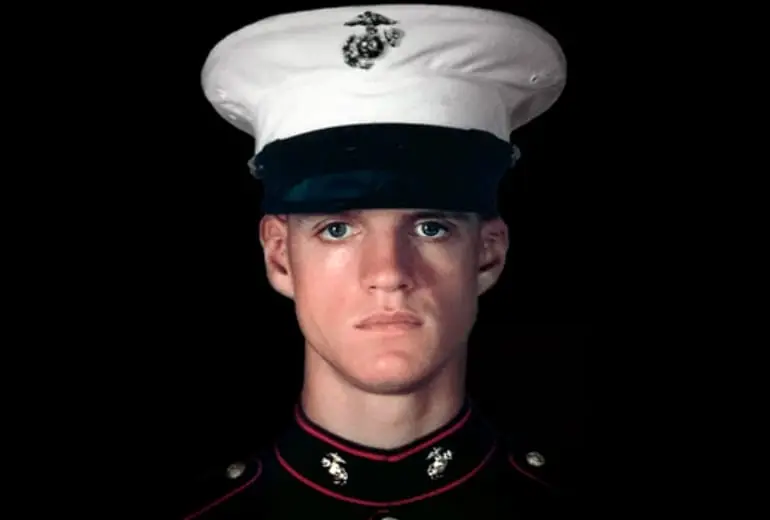
On April 14, 2004, Corporal Jason Dunham threw himself onto a live grenade to save his fellow Marines.
Corporal Jason Dunham sacrificed his life to save the lives of his fellow Marines by throwing himself onto a live grenade. That act of heroism led to him posthumously receiving the Medal of Honor, the first Marine to be given the nation’s highest military award since the Vietnam War.
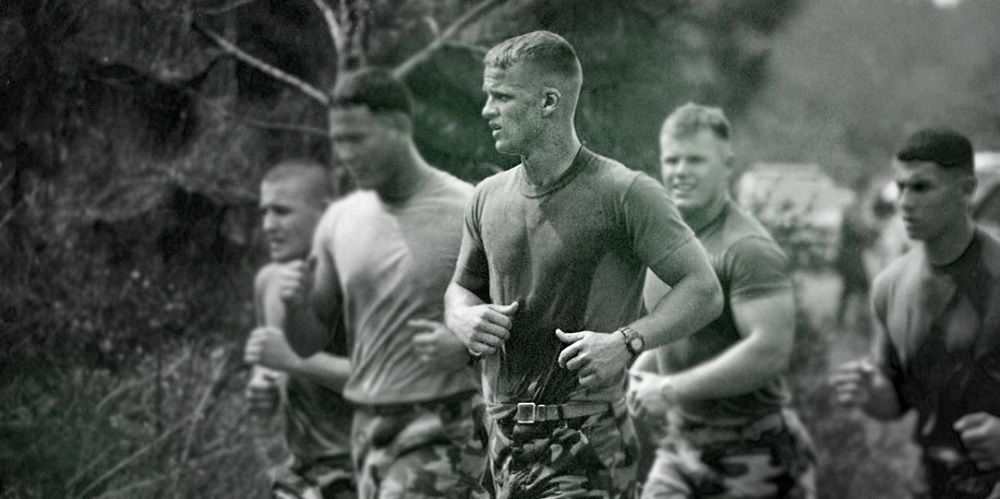
Jason Dunham’s story of sacrifice and bravery is a story that will go down as legend in Marine Corps history. Generations of Marine recruits will learn Dunham’s name as an example of physical and moral courage.
Jason Dunham will also be remembered through the men he saved. PFC Kelly Miller and Lance Corporal Bill Hampton were with him that day and would have likely been killed by the blast that Dunham’s body absorbed.
Both of them, wracked with survivor’s guilt, still go through their own battles, but have come to see Jason Dunham’s sacrifice as a gift.
Today, filmmaker David Kneiss is working to bring Corporal Jason Dunham’s story to film in a documentary called The Gift. This project originally started shortly after Corporal Dunham’s death, but the pain was too much to bear so close to the tragedy.
Kneiss, who had a chance meeting with Dunham on a flight prior to his death, kept in touch with the Marines from Jason Dunham’s unit. He decided that 2020 was the year to bring the project to life.
Now Kneiss is raising money to continue filming and hopes to bring the documentary to the screen within the next two years.
I brought David onto the show to talk about Corporal Jason Dunham’s life, the Marines he saved, and this amazing project.
If you would like to contribute to the Gift Documentary, click here.
If you enjoyed this episode, you’ll love:
Transcript
Machine-generated from the episode audio and lightly edited — may contain errors.
Chris Albert (link to this point)
Warrior Soul podcast is written, produced, and edited by me, Albert. Our goal is to empower US military veterans to live their absolute best lives, and we do that by providing tools, tactics, strategies, and ideas that they can apply into their lives to become wiser, stronger, smarter, more resilient, and more capable human beings in the civilian world. If you're not a veteran, stick around because anything we talk about here can obviously apply to you. And if you like what we have to say, any information we provide, and the guests we bring on, please head over to iTunes and write us a written rating and review. It really helps to spread word about the show and to get this helpful information into the hands of more veterans so that they can in turn improve their lives and shape the future of this country.
This podcast is brought to you by the amazing, the wonderful f bomb nutrition. They make awesome, delicious packets of fats. These are portable snacks that you can carry with you anywhere. It's so hard to find a low carb snack out there, but these guys have done it. They got macadamia nut butters, they mix them up with chocolate, they mix them up with sea salt, they mix them up with pecan butter.
They've got awesome meat sticks, and they've got these delicious cheese snacks that they put out there. Plus, they're an amazing company. They send boxes of this stuff out to the troops on the front line. It's not something we ask them to do, it's something they volunteered to do. So if you wanna get some of the best low carb, high fat snacks on the planet, head over to www.dropanfbomb.com.
Use the code Warrior Soul at checkout, and you'll get 20% off your first order. This podcast is also brought to you by the amazing awesome people at Save the Brave. Save the Brave is an organization that provides camaraderie events for veterans. They do fishing events. They do golfing events.
They do other sporting events, and they also do a lot of work to help gold star families. And look, we've all heard stories about veterans charities where the executive boards are taking these giant salaries, and I don't have a problem with that at all. But here's the thing, I wanna make sure that whatever organization I'm talking about is doing amazing work. Savethebrave.org is doing absolutely outstanding work. Their board doesn't take any salary whatsoever, and they are having an amazing impact.
They're focused on getting veterans to live their absolute best lives, and that's what this podcast is about, and that's why we wanted to work with them. So if you're interested in volunteering or donating to save the brave, head over to www.savethebrave.org and make your donation or your request today. Finally, this podcast is brought to you by Warrior Soul Apparel. This is a clothing company that I actually helped to start a couple years ago as we were beginning the brand Warrior Soul. We've got some amazing t shirts.
We've got skimmy shirts with some pretty funny funny sayings on there like, I love Jesus, but I cuss sometimes. We've also got some awesome hero shirts. We have the amazing hard times, breed hard people series, and these are just great shirts that I've helped create, and they support the show. So if you're interested in getting some Warrior Soul shirts, head over to www.warriorsoul.shop. And finally, if you're interested in joining a new group that we are putting together here at Warrior Soul, a group for those who are looking to live epic lives worthy of epic obituaries, stick around to the end.
We'll have some information for you to check out. With that, let's get into the episode.
Chris Albert (link to this point)
This is Chris Albert, and I'm here to remind you of one thing. Someday, you're going to die. That's not some morbid statement or scary idea. It's solid fact. Your time here on this earth is limited.
And we need to be reminded of this as much as possible for one simple reason, to live your best life while you can. This is the Warrior Soul podcast.
Chris Albert (link to this point)
The President of The United States in the name of the Congress takes pride in presenting the Medal of Honor posthumously to Corporal Jason L. Dunham, United States Marine Corps, for service as set forth in the following: Conspicuous gallantry and intrepidity at the risk of his life and beyond the call of duty, while serving as rifle squad leader fourth platoon Company K third battalion seventh Marines Regimental Combat Team seven first Marine Division on 04/14/2004, Corporal Dunham's squad was conducting a reconnaissance mission in the town of Karabilah, Iraq, when they heard rocket propelled grenade and small arms fire erupt approximately two kilometers to the west. Corporal Dunham led his combined armored team towards the engagement to provide fire support to their battalion commander's convoy, which had been ambushed as it was travelling to Camp Husaybah. As Corporal Dunham and his Marines advanced, they quickly began to receive enemy fire. Corporal Dunham ordered his squad to dismount their vehicles and led one of his fire teams on foot several blocks south of the ambushed convoy.
Discovering seven Iraqi vehicles and a column attempting to depart, Corporal Dunham and his team stopped the vehicles to search them for weapons. As they approached the vehicles, an insurgent leaped out and attacked Corporal Dunham. Corporal Dunham wrestled the insurgent to the ground and in the ensuing struggle saw the insurgent release a grenade. Corporal Dunham immediately alerted his fellow Marines to the threat. Aware of the imminent danger and without hesitation, Corporal Dunham covered the grenade with his helmet body, bearing the brunt of the explosion and shielding his Marines from the blast.
In an ultimate and selfless act of bravery, in which he was mortally wounded, he saved the lives of at least two fellow marines. By his undaunted courage, intrepid fighting spirit, and unwavering devotion to duty, Corporal Dunham gallantly gave his life for his country, thereby reflecting great credit upon himself in upholding the highest traditions of the Marine Corps and the United States Naval Service. Welcome to this episode of the Warrior Soul Podcast. And today we are going to be talking about a very special Marine, the life of a very special Marine named Corporal Jason Dunham, whom, as you know, was posthumously awarded the Medal of Honor for throwing himself upon a grenade and saving his fellow marines. There is currently in the works a project called The Gift.
It's a documentary about Corporal Dunham, but not only about Corporal Dunham, also about the lives of the marines he saved. What their lives have been like since, what they've gone on to do. And that is why the documentary is gonna be titled The Gift. Because it literally was a gift. Corporal Dunham gifted these Marines their lives.
Not only that, he gifted his life to all of us. His sacrifice. This story, and I mentioned this during the podcast, when you are a marine or a marine recruit and you are going through training, we in the Marine Corps we thrive on story. We hear about people like John Basilone and Chesty Puller and it's stories like this that I believe truly impart on us the lessons of sacrifice and leadership that every Marine needs to understand. And through Corporal Dunham's sacrifice, you know, this this legend, this this story, it's gonna affect generations of Marines for decades to come. And so what I wanted to do was I wanted to invite David Kneiss, who is a United States Navy veteran, but also a filmmaker, who is working on this project, to come in and to talk about corporal Dunham, his story, the marines whom he saved, as well as the marines who were impacted by him and his life. And I wanted to do that to introduce you guys to Corporal Dunham and to this project. In addition to the coverage I'm giving here and I'm sure many of you, probably most of you listen to this podcast as well, on the Jocko podcast, he actually had on, the marines who corporal Dunham helped save along with corporal Dunham's commanding officer, Lieutenant Colonel Trent Gibson. And that episode is one of the most emotionally intense episodes I've ever listened to.
And so you guys should also check that out. In this episode we talk a bit about Corporal Dunham's life, we talk about the fact that David actually had met Corporal Dunham on a flight before he had passed on and we talk about the impact that this story is going to have on Marines, the Marine Corps in this country. So I hope you guys get a lot out of it. When you're through listening to this episode, please head over to the show notes, so that you can grab the links to support this project and also to follow along as it comes to fruition. So with that, I'm not going to delay any longer.
Let's get into this conversation with David Kneiss and the life of corporal Jason Dunham. David, welcome to the show.
David Kneiss (link to this point)
Hey, Chris. Thanks for having me, man.
Chris Albert (link to this point)
Yeah. No problem. No problem. I've been seeing everything that you've been putting out there as far as this documentary goes. And Mhmm.
A lot of people who listen to this show probably also listen to the Jocko podcast where Right. We were talking about corporal Jason Dunham and and the story behind how he received the Medal of Honor.
David Kneiss (link to this point)
Right.
Chris Albert (link to this point)
Before we get into that, I just wanna talk a little bit about who you are and your background and and what you've done in the past. Could you give us a a quick three minute Yeah. Synopsis?
David Kneiss (link to this point)
I I basically I got out of the Navy and went back to school. We're from Connecticut. Finished up, started working at ESPN as an editor, came out to Los Angeles to get into film. Got stuck at Fox Sports for ten years as an editor. But I've always been interested in writing and and directing work.
So I did a documentary on a teacher I had from high school who was Maria Quezon, and that was twenty years ago. That was kind of my first thing. And I've kind of been doing a little bit of that ever since, and, you know, this story came about after a chance meeting with Jason on a flight, And I found I found out later that he was killed, and his mom actually reached out to me. She gave me a call. And next thing you know, I'm in Upstate New York at their house, and here we are fifteen years later.
Chris Albert (link to this point)
So you actually met him on a flight while he It was still
David Kneiss (link to this point)
was a red eye, and I think it was a red eye. It was so long ago. I don't remember. I sat next to this kid, and he had a high and tight, and I knew he was a marine. You could tell.
And, you know, me being a former navy, we started shooting the shit, and we just talked all night until we, you know, hit our connection flight, and I said goodbye to him. And he was just one of those kids that was just, you know, an unbelievable person. You know, you meet these people in your life very, very, you know, off not not very often. And as he left, he he was leaving the plane. And I said, hey.
You know, because I knew the world would start soon. I said, hey. Take care of yourself over there. And he kinda had this shit eating grin on his face, you know. It's like, yeah, no worries, man.
And off he went. And then, you know, I found out later through a friend that actually turned me onto this website, icasualties.org. So and I hadn't even heard of it, and it lists all the KIAs at the time. So I went home that night, I started looking down the list, and I saw this one one name stand out from, you know, kid from small town in Upstate New York based out of 29 Palms. And I didn't remember his last name.
I just remember, you know, his first name. So I Googled his name and hit the images, and his picture popped up. And I was just, you know, he was such a nice kid. I was just like, man, you know, that's unbelievable. I can't believe he's he's dead.
You know? So, you know, I sat down and wrote a story about it, and, I posted it on the Quezon Veterans web website. I knew these guys really well and I knew they'd wanna hear something like this. And you know, that story ended up in his hometown paper and his mom called me and I didn't know who it was. I let it go to voicemail and then I listened to it.
And you know, this is Deb Dunham and I'd like to talk to you about my son. And I honestly didn't know what to say to her. So I didn't call her. And two weeks later, she called again, and I still didn't answer the phone. And I literally sat there for about a half hour.
And then I finally said, you know, you gotta call this woman. So I called her and it was a two hour conversation, you know, with her and her husband, and they invited me up to to their house. And I got on a plane and I went up there, you know, and and we've been friends ever since. And then as his marines came back, I them. And they were more like my little brothers, you know, they're all ten-fifteen years younger than me.
So I tried to do a documentary back then. But it was too soon, you know.
Chris Albert (link to this point)
Let's let's talk a little bit about the the circumstances behind, corporal Dunham's death, and and kind of the the things leading up to the reasons for the documentary. For those who don't know, what happened?
David Kneiss (link to this point)
Basically, happened this is the story that I've been told and reading after action reports. Lieutenant Colonel Lopez headed out on a mission that day to the police station in Nueva. You know, they had built a police station, and they had got all these recruits together. So they were there to check the situation out, see how the building came out, and pay some of these guys. So they all went there.
Dunham's squad was providing security outside. After that wrapped up, Dunham was supposed to take his squad to a water treatment abandoned water treatment plant to look for a, you know, like a FOB or forward operating base or a a place where they could set up during the day or even at night. But when Lopez left and they started to head back to their firm base, they were ambushed. Small arms fire, RPGs, Dunham's guys, they heard it. Their staff sergeant, John Ferguson, pulled Dunham, you know, let's go.
They got up. They got mounted up, and they started heading to the ambush site. On their way, they were attacked. RPG came flying across the lead vehicle. Dunham stopped all the vehicles.
They dismounted, took cover, and Ferguson split up the squad. Dunham, I want I want you to take your guys up the street and start checking those vehicles. And Ferguson has told me, he said, you know, I knew he was listening to me, but he saw us as he kept looking at this one vehicle. And as soon as I was done telling him, he went straight for it with two of his marines, Billy Hampton and Kelly Miller. Came around the passenger side.
Miller was on the or on on the driver's side, Miller was on the passenger side, and Hampton was coming up the middle. As soon as Dunham reached that board, this guy jumped out and grabbed him by the throat. And Dunham was a big kid. You know, he was ripped. He kneed this guy in the chest and took him to the ground running around.
And right before that happened, Miller saw the RPGs in the backseat in in AKs. So he looked up to warn Dunham, and that's when it went down. So he he came running around. He had an asp that his brother sent him, you know, a police baton. So he extended it, came running around.
Dunham had him on the ground and was punching him, and the guy kept fighting back. So Miller hit him in the a few times, but the guy kept going. And by now, Hampton is standing above the two of them while they're on top of the insurgent because Hampton was gonna take the headshot, but he did he wasn't sure if he should because he didn't want ricochet or anything to hit the other guys. So as Miller put a knee into the guy's chest, he put his hand on Dunham's back because Dunham was off to the left, fumbling with something, and he was choking him with with a baton. And as he was doing that, Dunham said, no.
No. Watch his hand. And then hand then saw he's he till his day, he wonders, you know, at that time, I was wondering why Dunham had his Kevlar off, and it was on the ground. And as soon as he said that, he laid down on top of the Kevlar, and boom, they went off. And Hampton and Miller were thrown across the street.
So when they came to, you know, they didn't know what the hell happened. So that's pretty much how the incident.
Chris Albert (link to this point)
So essentially what happened was they they were wrestling around with this insurgent insurgent in the tussle released a grenade and Dunham had the the clearness of mind to grab his Kevlar, place that Kevlar on top of the grenade and and put his body on top of the Kevlar.
David Kneiss (link to this point)
Right.
Chris Albert (link to this point)
And he absorbed the impact of the grenade and then that saved his entire team. Saved around him and at the time he had not passed away immediately. There was there was a bit of a battle after that. Right?
David Kneiss (link to this point)
Yeah. Well, let let me back up a minute. The most interesting thing about this is a month before this incident happened, corporal Dunham was sitting around with his lieutenant, Bull Robinson, and they were discussing what to do if you were faced with a live grenade. And Dunham said, well, I think if you took your Kevlar off and placed that down on it and then laid on because of your body Kevlar, it could absorb the bat the blast, and you you might be able to live.
And the lieutenant said, no. There's no way. He said, you wouldn't have time. He said, I bet you I could do it. He said, I'll be right back.
So he went and got his gear, came back, stood there, loosened his chin strap. And he said, okay, lieutenant, time me. So I told him go. Dunham swoop his head down. The chin strap came forward.
He caught his helmet in midair and slammed it on the deck in less than two seconds. So he had practiced this, you know. So when it happened, they knew. They knew what he did. All his guys knew what he did.
But yeah, after the initial blast, he was medevaced out of there. I I believe he was sent to Al Asad first and then eventually on to Germany. He in in the expectant ward. And for people who don't know what the expectant ward is, that's basically where you're you're gonna go if if you you they know you're not gonna live. So they put him in that room with some other marines and soldiers, and there was a nurse, Heidi Kraft, or a psychologist who went in there and sat with him, and she held his hand and talked to him.
And at one point, she said, If you can hear me, squeeze my hand. And he squeezed her hand. So she ran and got the doctor. And they immediately pulled him out of there and put him on a flight to Germany, where he went to Germany and was assessed there. And I think they knew that he wasn't gonna make it because they immediately got him to Bethesda, where where he was met by his parents.
So when when his parents showed up at Bethesda, you know, the Navy doctor was pretty blunt with them and said, listen, what you see is what you get. There's I mean, there are miracles, but if your son survives this, he'll never be the same. He won't know who he is. He won't be able to dress himself, feed himself, take care of himself. What you see is what you get.
And if it was my son, I would let him go. So they had to make that decision, know. And Dan had had a conversation with Jason before he left on that deployment. And Jason said to him, you know, if anything happens to me, and I'm in that kind of a state, don't be like that. And he had it in his in his living will as well.
So they had to make the decision. I don't think Deb knew at the time until her husband sat her down and told her. And he he was very he didn't he didn't want his wife to hate him. You know? That's what he has told me because it's I mean, what do you it's you gotta make a decision, right?
And it's it's a hard decision, but they made that decision and go. So
Chris Albert (link to this point)
I I can't imagine what that must be like for a parent
David Kneiss (link to this point)
Yeah.
Chris Albert (link to this point)
To have to make that kind of a decision, to have to to to determine whether or not you're gonna keep your son who's who's just in his twenties. Right. And and and or whether or not you're gonna pull the plug. That that must have been so difficult. And and for anybody out there who's ever been through that, I can't imagine.
Just crazy.
David Kneiss (link to this point)
Yeah. It was I think it was devastating for them. You know, I mean, I I still I talk to them all the time now. And, you know, Dan has told me it's like it it never goes away. You know?
Yeah. It's gotten better. It's fifteen years. But it never goes away. There'll be the loss of a child like that, especially under those circumstances.
I mean, very tragic.
Chris Albert (link to this point)
The marines who were with Dunham after that, what what happened with them? Well, what was the immediate impact on them? And and, you know, I I know that there had to be some talk of whether or not a medal of honor was gonna be given or or or written up for.
David Kneiss (link to this point)
I think that was pretty pretty immediate. You know, staff sergeant Ferguson knew what went down, and he told captain Gibson at the time, retired as lieutenant colonel. And they went and told lieutenant colonel Lopez, and he's right away, he's like, write it up. So Bull Robinson sat down and wrote it up. Getting back to Kelly and Billy, though, they were also medevac.
They were hurt pretty bad. Didn't know Kelly did They didn't know about Kelly. He had a artery in his arm that he was bleeding out that they didn't know about. So he was probably worse, and they got they got both of them out of there. Billy ended up in Germany.
They both ended up in Germany, but, you know, they were separated from the battlefield. So even though they were both in Germany, they didn't know. But Billy managed to go up and see Jason while he was there, and he talks about it in in the interview we did. And it's it's it's very it's emotional to hear him talk about that. You know, you're you're sitting there standing, know, before your squad leader and he's, you know, head swollen and and he he's just severely injured and you're alive And, you know, I think that's where a lot of his because he asked us that question now, seeing why him?
Why not me? You know? And he he he also says, you know, if he could speak to him now, the question he would ask is why? You know, what made you think I was better than you? You know?
So he carries that with him. They both do. But he got at least he got to see him Those final days there. It was he it was very hard for him to do that. Know?
Kelly didn't get to see him, but they were both medevac to the The States eventually. I think they both went to Bethesda and then on to San Diego. But, yeah, the guys who didn't get hurt, it's the I mean, it affected all of them. All all the guys in kilo because he was such a leader, you know, and I mean, his his senior officers will tell you that. I mean, this, you know, Ferguson will say that he had that it factor.
You know, for for a kid of such a young age to have that kind of leadership ability is, you know, He said it took me ten years as a marine to get where he was at 22. You know? He's he was the marine. He was the squad leader, and he didn't have to do all that grunt work, you know, filling sandbags or doing whatever. But all his guys will tell you, you know, if there was a task to do, all the other squad leaders were doing something else.
And while we did all that crap work, but Jason was right there with us. He stood there with us and did it with us, you know, so they really respected him.
Chris Albert (link to this point)
And he was initially in in security forces before he transitioned over to a line company. Right?
David Kneiss (link to this point)
Yeah. Correct. And I've I've also been in touch with a lot of those guys. They've been reaching out as well. I don't know what time frame where he when he ended up at twenty nine Palms because I know he was with three four for a while before he went to three seven.
So I'm still trying to uncover but yeah.
Chris Albert (link to this point)
Yeah. And that takes a remarkable leader to to be able to come into a new unit and to be able to to pick up the slack where or where somebody else might have left off and and to deal with entirely new guys and then a new on the job training situation, you know. With so with this story, know, it's it this happened a long time ago, fifteen years ago. And now your job as a documentarian is to to bring this story back to life and to to present it to the public. And and what when I know you said you were going to to make a movie about this years ago, and then you had to table it because it was just too intense for the time.
What what brought it back to life? What was the thing that said, alright. I gotta do this now.
David Kneiss (link to this point)
You know, the experience of meeting him and finding out he was killed had a had a pretty big impact on me. You know, I was in the military during the Gulf War, and I I had a lot of friends who served in the marines in the Gulf War. There was something about, I don't know, it just affected me to the point where, you know, it's like, you know, you knew someone that was such a good soul, and he ended up dying. And then meeting his marines and becoming so close to them and interviewing them as hard as it was, you know, six months after the fact, right? They get back from deployment and I've I've got them sitting down doing interviews and it was just, you know I I have interviewed, you know, Vietnam veterans and that's emotional.
You know, stuff that happened thirty years before You know, these these guys went through this six months before that and it was just it was devastating to interview them and if that affected me, you know I I had a personal stake in it. It was like I cared about these guys. You know, I cared about the story. I cared about what happened. You know, those guys went on more deployments and I I cared even more because they now we were friends, and I was always watching, you know, and these guys, okay.
You hear about a story. Because they went to Ramadi after that. It's like, alright. We lost two marines in Ramadi. Now I'm online, like, who was it?
You know? And these guys would call me from Ramadi, you know, on a sat phone. So I tried to do it then, but it was I was like, you know what? These guys aren't ready. I and I wasn't ready.
You know, I wasn't ready to take something like that. I had two small kids at the time. So I kind of put it on this. And I said, you know, maybe in the future, we can open this up. And I've always felt a responsibility to Deb and Dan Dunham because I never finished it.
I put a cape keepsake video together for them. Good stories about their son, interviews I did with these marines, and I gave back to them and they loved it, you know? But personally for me, I felt like I was letting them down. I never finished that story, you know, and for fifteen years, I watched the, you know, the the transgression of coming back from war, getting out of the Marine Corps, going back to your hometowns, and I'm still in touch with these guys, and I'm watching it happen, you know. Not not all of them, but the drugs, alcohol, you know, suicides, and depression, post traumatic stress, and all of that TBI.
And it just and then that affected me, you know, because I now I care about these guys. And it's like, you hate to see somebody like that you care about go through something like that, you know, especially one marine in particular who I knew from the start when I first interviewed him, I'm like, gotta keep an eye on this guy. He was one of Jason's good friends. And he showed up on scene, you know, minutes after it happened, and he didn't know it was Jason. That's how bad it was until the corpsman, you know, took off his blouse, cut off his blouse and he saw his tattoo, and he knew.
But he know, he went back to his hometown and started with the meds from the VA, you know the painkillers for his injuries, and then when they cut him off of that, some son of a bitch turned him on the meth, know intravenous. And for the last six years he's been on the tear in and out of jail, know. We tried to get him into rehab three times, and it's just devastating because I don't know that guy. I know the guy that used to be here in California and you know we'd spend weekends together at cookouts and stuff. I know that guy.
But this other guy, it just breaks my heart to see him like that. So you combine all that stuff and me staring at those drives every April when the anniversary comes around, you know, that little voice in my head saying you need to finish that. You need to you need to finish that. So, know, a year ago, I sat down with my co producer, Rick Milewski, who came out, he's an AV guy too. We came out here together.
We met at Southern Connecticut State and he said, we need to do our own thing. And I'm like, yeah, we do. He said, what about that Dunham story? I said, do you wanna help me with that? He's like, yeah, it's a great story.
It's kind of a sense of, you know how a chef prepares food for everybody every night, right? And he doesn't know how good it is. I don't know if it's good, try it. When you're so close to something like this, for a while I was like, well, I don't know if it's a good story. Is it a good story? Because you're in it, you're in it.
You're so close to it. So we decided, yeah, let's do it. So I called Deb and Dan and I told them, I said, this is what I wanna do. I said, I understand, you know, people have come at you to do other things in Hollywood or whatever, but I wanna do a documentary, and I want Jason's Marines to tell his story. And then once we learn who your son was, the story's gonna shift onto those Marines who are now living.
How did they pick those pieces up? How did they move forward? You know, all the stumbling blocks along the way. I mean, they're all doing great now. But, you know, it took a long time for them to get there.
And they all say it, you know, it's good you're doing this now because we've all had that time to let it sink in and reflect.
Chris Albert (link to this point)
Yeah, and that's the truth. Because if he did it right after or just a few years after the story wouldn't have been complete, really, because it really is about, you know, his memory, what it's become. And, you know, the thing that being a marine, one of the things about marines is that we thrive on story. You know, we thrive on story. You know, we remember guys
David Kneiss (link to this point)
You learn in boot camp.
Chris Albert (link to this point)
Yeah. Right, exactly. Remember guys like John Basilone, you know, and and Chesty Puller. And and you know, stories like this, they carry so many lessons. Lessons that so many young Marines are gonna learn.
This lesson in leadership, this lesson in self sacrifice. You know, what does it take?
David Kneiss (link to this point)
Right?
Chris Albert (link to this point)
Right. Getting rid of your ego and living for a higher purpose. Know? And think that whether it was providence or whether it was your own decision making, that's turning out for the best the way you're doing it. But the other thing is, you know, just thinking about the challenges here, right? When when when you do have time extended from the story and luckily you you got to sit down with a lot of these guys afterwards as well and you knew these guys. The challenges you're facing right now in getting this this documentary out there, what does that look like? What what do you have to do now as you're as you're putting this thing together?
David Kneiss (link to this point)
There's there's a lot of challenges, you know, because in order to do the story we wanna do, you know, if if you handed this off to a production company in Hollywood, they're gonna do it like something that you're gonna see in the history channel or whatever. But because it I have such a personal stake and I feel such a responsibility, I'm not willing to just take somebody's money and have them turn around and say, okay, then this is what we're gonna do guys, you know? So I don't care how long it takes. I'm not doing this for money. I'm doing this to honor Corporal Dunham and his marines and future marines, you know, who are gonna watch this and, you know, there's gonna be more wars.
Right? Right. There's gonna be guys going through these things together. So, you know, the challenge is there, but I've surrounded myself with such a good group of guys. And that was, you know, on purpose.
I said, I want a crew of veterans. I wanna know why these guys are there. I don't want people there for nine to five. You know, this is and you know, I look at Jocko as a great example of, you know, how to take charge and take, you know, leadership and and take ownership. Right?
You take ownership of this prod I took ownership of this project. You know, I it's only been really me, you know, working I mean, this is every day. You know, I have a full time job, but this is a second full time job. So I'm putting in eighty, ninety hours a week, but I don't care. You know, I'm gonna do whatever I have to do in order to tell that story.
You know, if it takes a year, great. If it takes two years, three years, whatever it takes, it's gonna get done, know, and that's my mentality on this. Luckily, we've had people, you know, donate and other private investors reach out that we're still talking to. So, you know, it seems like every everything, you know, when I started this, it was like, okay, this is gonna be tough And now we're at a point where this thing is moving on its own. And I feel like I'm just a passenger, you know, every day something new pops up and I'm like, wow, I can't believe that's happened.
You know, I can't believe we got on Jocko's podcast so these guys could tell this story, you know? So every every day there's like a new opportunity that comes up. I've also had people reach out that are, you you're like, okay, what's this person about? You know, so you have to weed through all that. So there's a lot of challenges.
Chris Albert (link to this point)
Yeah, that episode that you guys did over on Jocko's podcast, was so intense.
David Kneiss (link to this point)
Yeah.
Chris Albert (link to this point)
Just listening to it. I mean, it's a I think it's a four or five hour episode. But the whole time I was sitting there and and just like, wow. I just can't can't imagine what the feeling was like in that room bringing these guys together.
David Kneiss (link to this point)
I was sitting on the floor for the whole thing, and I had my DP in there shooting as well. And, man, it was it was heavy, you know? I don't know if you can hear it, but Jocko I mean, Jocko was, you know, everybody had tears, You know? I I thought Jocko had allergies or something. I just looked over and he was sobbing, you know?
When we got to the part where Jason they had let Jason go, and it was hard for those guys to do that, you know? But Jocko was so gracious and, you know, he understands. He's been there. And the interesting thing is before we started the podcast, you know, Jocko told Trent Gibson, lieutenant colonel Trent Gibson, you know, we have a similar thing here because I lost my guy, Mikey Monsoor, Medal of Honor recipient. You lost Jason Dunham.
So I understand, you know, what you're what you went through and continue to go through. And he said that to Kelly and Billy and Ferg, you know? And he told him straight up before we started, he's like, you know, I just want to let you know this is going to suck. But everyone at this table has been through this, and we're here together, and we're going to do this together. You know, he was just a true gentleman, which is very gracious with these guys.
And I think that's why he's so successful with his podcast because those guy, people who go in there, know they're good, you know, and they know he understands.
Chris Albert (link to this point)
Absolutely. And, you know, we got to we got to hear from Lieutenant Colonel Gibson and the other guys during the show. What what impact did that have on them? How have they been since coming in there? And and I guess it it was almost like listening to them, and and maybe this is the wrong term, but it was almost like listening to them emotionally regurgitate everything that had been building up over the past fifteen years.
David Kneiss (link to this point)
Yeah. It was. It was hard for it was especially hard, I think, for Billy Hampton. You know? I mean, I interviewed Billy and Kelly over a year ago for four hours, and we unpacked it.
And it went well, and it was fine. And, you know, afterward states, they they were like, wow. You know, I really I needed to do that. You know, I needed to get that out. But to I think to have the you know, all four of them in the room for Hampton Miller, Trent, And, you know, they were all there when it happened, and they're all unpacking it together.
I think that was really hard for them, you know, and I think it was hard for Trent. And he's an amazing group. He's and he told me that he never used to be a hugger. You know, he was he was a hardcore marine officer. I mean, I saw him give a speech at the National Museum of the Marine Corps in o seven, and it was an unbelievable speech.
Right? But that was a different Trent. The Trent now, you know, is the Trent who's has been reflecting on what he went through, the marines he lost. And he said, you know, never used to be a hugger. And there's a story behind that.
I had a young lieutenant who got hit, and he was in the a tent, and he was dying. And he was still raring to go patch me up and get me out there. Know, let's and I lied to him. I told him he was gonna be okay, but I knew he was gonna die. You know?
And this young lieutenant was a hugger. He'd hug his guys, you know, hey, what's up? And he said, since that time, I've become a hugger because of that, you know, so and I witnessed that at their reunion in Phoenix last year. I can't describe, I mean, you would get this, but I can't describe for, you know, the average civilian, non veteran, the feeling in that room when you've got your commander and you've got all these Marines coming in fifteen years later. The love in that room where this guy would walk in, he's in his mid thirties now, who was a young Marine fifteen years ago.
Trent would see me walk up to him and he grabbed him by the head. He's like, how you doing, man? You know, and he would just hug him. And just witnessing that, you could feel it in the room. You could just feel the emotion and the love in that room that this man still has for his Marines.
You know, other branches aren't like that. You know, the SEAL teams might be, I don't know. But the Marine Corps a special breed, you know, and they still hold on to that. So it was amazing to witness that, you know, we shot some of that. Yeah.
Chris Albert (link to this point)
And, know, honestly, again, it goes back to this idea of of story and, you know, being able to to to use this to educate other marines and and I'll see other service members as well, you know, it's to to show them what sacrifice really means. And I think that, you know, what comes out of this is is gonna have such an impact on Marine Corps history.
David Kneiss (link to this point)
Absolutely.
Chris Albert (link to this point)
Such an impact on on future fighting men and and such an impact on on just the esprit de corps that that we all love so much and and what makes us marines, you know?
David Kneiss (link to this point)
I I think, you know, there's there's a twofold thing to this, you know, for for marines who served in combat that see this, I hope they take something away from it like, you know, because we're gonna show how these guys have moved forward. You know, all these guys talk about the we named it the gift because they keep talking about in interviews. You know, Jason gave me this gift and I've seen it. You know, we were in San Diego, Jocko's Kelly Miller had his little boy there, and I couldn't help but stare at that little boy and think, man, you're here because of what Jason did. You know?
If he hadn't done that, your father wouldn't be here. And that really hit me seeing that, you know. So I hope soldiers, marines, whoever suffers from any kind of battle fatigue or whatever you want to call it, post traumatic stress and is having a hard time. I hope when they watch this, that they could take something away from it to say, you know, yeah, these guys struggled. Look what they went through.
They were standing next to their squad leader, a guy they loved, who took a grenade for them, and they gotta live with that. If they can do that and move forward, so can I? You know, I and I hope people that's what they take away from it. Combat veterans. On the flip side, on the civilian side, I hope civilians take a hard look at it and and take something away from it and understand the costs and the struggle that all these guys have gone through because, you know, and I say this on the Indiegogo, you you you hear that that that phrase, you know, thank you for your service.
I hear it all the time. And I don't blame people who say it, who don't know anything about the military. They don't know what else to say, right? And it's nice. We all like to hear that, you know, thank you for your service.
Okay. Well, I didn't do anything, but thanks. I don't think people truly understand what those words mean. And I'm hoping when they watch this and learn what these marines went through, what Jason did, the next time they say those words in an airport, in a restaurant, wherever they are, that those words will have new meaning for them. You know, they're gonna remember Jason Dunham, Kelly Miller, John Ferguson, Trent Gibson, Billy Hampton, and they're going to walk up to that young Marine in an airport soldier, airman, whoever, Navy, and they're going put out their hand and say thank you for your service, but they're going to know why they're saying it.
You know, I hope. I hope. Right.
Chris Albert (link to this point)
And then here's the other aspect of it that that, you know, I I think is is something that's equally important because we have a lot of both veterans and and young service members who listen to this show. And a lot of you guys who are still in, one of the things you have to remember is that your time in isn't isn't forever. Like, it's a very short period of time in your life. And it's easy to get wrapped up in all the bullshit that that that comes at you every single day, particularly in an infantry line unit or if you're you're in the in the Marine Corps, you're gonna deal with a lot of BS. At the same time, what you've gotta be able to do is you've got to look at what you're doing and see the importance in it.
See how this time of your life can really shape the rest of your life. Right? And and it's it's a real opportunity for those out there who are in the service right now, regardless of what branch of the military you're in, to become more present, to understand that, you know, this time is is gonna be important. You're gonna learn so many things and and you need to look at it as as something that you're you're you really need to put effort into getting something out of for yourself.
David Kneiss (link to this point)
Absolutely. Because because we you don't think about that when you're in. You know? You don't it's just a job. Right?
You're doing your thing and you gotta go to point a to point b, you know, do this, do that, and you go through the motions and you're doing your job. It's not until later, for me anyway, when you look back and reflect on what you did. And you know, somebody told me once after I got out years after I got out, they're like, oh, you were in the Navy. What'd you do? I was like, oh, it's boatswain's mate.
What do they do? Stand watch, you know, and and I was a helmsman. What's a helmsman? I drove a ship. You drove a ship?
Yeah. Well, what kind of ship? Guided missile cruiser. How big was it? I don't know.
600 footer. You drove a 600 foot warship? And that's when it dawned on me. Because you're when you're doing it, you're just doing it because it's your job. Right.
But you look back now and you reflect, you're like, yeah, guess I did do that, you know. And I look at these guys who were, you know, young Marines leading men, you know, you're 20 years old and you're a squad leader, you're a corporal. The corporal's a backbone of the Marine Corps, right? You're 20 years old and you've got these souls in your hand. You have this immense responsibility.
And that'll be probably the biggest responsibility you will ever have in your life. You know, I mean, a CEO of a company doesn't have that kind of responsibility, where you have those lives in your hands. And it amazes me, you know, that these guys do that at such a young age, you know?
Chris Albert (link to this point)
Right. It's a it's it's it's a huge huge factor in in that I think everybody needs to recognize, particularly particularly those of you who are still in.
David Kneiss (link to this point)
Mhmm.
Chris Albert (link to this point)
When it comes to getting this out there, obviously there's a lot of people who who have to get involved. You've you've been able to build a team around this. Right. I know that, you know, we had Vincent Vargas on the show, other people. Can you talk to me about what that was like getting people on board, trying to get people on the team?
David Kneiss (link to this point)
Yeah. You know, I had a plan from the beginning. I'm gonna go back to Jocko again because I read his book, Extreme Ownership. And, you know, all those fundamentals in that book, we we a lot of them we learned, you know, starting in boot camp. And, you know, you learn them then.
You don't you're like, okay. Why are we doing this? I don't know. But later in life, I look back and I'm like, okay, I don't run away from things. I look at it head on instead of, you know, if you hadn't had that experience, you might say, oh, I can't do that.
That's just too I can't do that. But I don't have that mentality anymore. And you know, then refreshing myself with his book, you know, like, okay, let's take ownership of this. Right? So I had I have a friend, two seven Marine, who's a musician, John Preston.
And about six years ago, he called me up and I met him in '4 when Dunham thing was going on. He was gonna do some music for me then. He called me about six years ago and said, you know, wanna make another run at my music. You know, I wanna, you know, help veteran issues and do things. And I said, okay.
So I worked with him and produced a lot of behind the scenes stuff and you know, promo stuff for the for the social media. So as I was doing that, that's when I really started to take notice of the veteran community. And I'm and I told John, I said, bro, there's there's a movement going on out there, man. I said, this isn't the Vietnam generation that sat around and kind of waited. What's the VA gonna do for me?
I was like, this generation is taking charge. These guys are starting companies. They're starting nonprofits. They're starting groups. They're starting, you know, bands, music, businesses, whatever, you know, grunt style, know, Black Rifle Coffee.
These guys are all doing this. And they're taking their, you know, some of their proceeds and they're putting it back in to helping veterans. I mean, we've never seen that before in the history of, you know, our veteran community. So I saw how these guys operate, you know, and from the get go, I'm like, I need to get these guys behind us. You know?
I need to get Vinny Vargas. I need to get Jocko Willink. I need to get Scott Huesing. You know? I need to get these guys in the veteran community to see what we're doing and understand, you know, we're not just a group of people who work in Hollywood trying to do a project.
We're a group of veterans trying to do a project that's going to help veterans and even educate, you know, the civilian world. We and we need to we need to relate that to these guys in the veteran community. So I reached out to my friend, Jamie Kaler, who was a naval officer. He's a comedian and actor now. I said, can you put me in touch with Vinny?
Yeah, here's his number. I text Vinny. Take a look at this trailer. Right away, he got back to me. Bro, are you kidding me?
What can I do? So we started talking, and I said, are you interested in coming on to help produce? Absolutely. So I got him in, and we've been working. You know, he's been really helping me with social media stuff.
We were having lunch one day, I said, alright. Step two, we need to get on Jocko's podcast. I need to get these guys on there. He's like, well, I have his email. So I said, perfect.
I sat down on a Sunday night, wrote a long email to Jocko. This is who I am. This is where I'm from. This is my connection to this story. This is what we wanna do.
Would you be interested in having the the two marines who were standing next to corporal Dunham when that grenade went off and lift? Twenty four hours later, I'd be honored. I put my ops director on this email, let's set it up. And I was like, wow, unbelievable. He flew with these guys all in, paid for the hotel, and did it.
So that was the start, you know, and now I have other people in the veteran community contacting me. Scott Huesing, you know, I spoke to Rudy Reyes there for a little while. There's just so many, you know, who are sending me messages and the messages I get from other marines and and even army, you know, navy, any military person, they just send me these unbelievable messages, you know, like I just watched that trailer, man, and man, I needed that. It it was like I was back with my bros for a minute, you know, and I really needed that today. And I was like, wow.
That's and I got an I got a message from James Castaneda, and you you see him in the trailer. He's the guy in the middle who says, I just wanted to do my job that day, but I couldn't. And now I guess I have to live with that, you know? And that part always gets me. He sent me a text on Veterans Day.
The day we launched Indiegogo and it was a picture of him and his kids and he said for years, my kids have been asking me to go to their school and talk about my experiences and I always shied away from me but after watching the trailer, it made me realize what Jason gave me and it's these two beautiful kids that call me dad, man. I saw that and I I had tears in my eyes And I said, that's why we're doing this. That's why we're doing this. So, you know.
Chris Albert (link to this point)
And that concept, the the gift concept, realizing what what Jason gave those marines, but not only what he gave those marines, what he gave all of us. Think that that More veterans need to realize that too.
David Kneiss (link to this point)
Mhmm.
Chris Albert (link to this point)
Because, you know, if if you've done your time, you got out, you know, it's it's not just about sitting there and and saying, I served. You also have to realize that that that a lot of these guys who sacrificed themselves, all these guys who sacrificed themselves, they did it so you can live an amazing life you get out of service. That's why being in the military should be one of the greatest things you do in your life. It shouldn't be the only thing.
David Kneiss (link to this point)
Mhmm.
Chris Albert (link to this point)
You owe it to people like Jason Dunham to to to live the best life that you can. You do.
David Kneiss (link to this point)
Right. Yeah. And I think it's you know, and I think that's hard for guys, you know, like Kelly and Billy because they they they it. They're like, it's it's hard, man. It's hard to move forward, you know, because of like Kelly says it best.
He's like, sometimes I used to think I wish it was that had had ate the grenade because I feel like it's harder to live with it than to just, you know, not be alive. You know, he he doesn't Jason doesn't have to carry that and I can't imagine what it's like to carry that every day but they're now, it's fifteen years on and they're starting to realize a lot of things, you know? And I'm sure, you know, wives and children have helped helped that a long way because they they they all thank their wives like, you know, this woman has stood by me. You know, I look at my kids, and I love my kids to death. You know, it's like, man, if he hadn't done that, I wouldn't have any of that, you know?
But it's still hard for them. It's always there. But they I think they're learning how to manage that and and pick up those pieces and move forward and and take that experience as awful as it was and try to, you know, they say they they all say it to to do good. You know, I've been given this opportunity. Someone handed me my life.
Now it's up to me to do good, to be a good man, to do the right things, you know, educate people about what he did, what he gave me, you know, whatever I have to do to better myself and help people around me, you know, be a better man.
Chris Albert (link to this point)
Absolutely. Now, I know you got the Indiegogo campaign going on right now. And you've raised a bit of money. I know that campaign is going on for another day or two.
David Kneiss (link to this point)
Yeah. It ends tomorrow at midnight, I believe. Thursday night at midnight.
Chris Albert (link to this point)
So Okay. And and are you guys gonna be continuing to to take donations after that?
David Kneiss (link to this point)
Absolutely. I'm looking into that now, setting something up. If we have to do another campaign, we'll do another campaign. I've been talking to some private investors who you know, one is a former marine. Oh, I shouldn't say former.
Right?
Chris Albert (link to this point)
Yeah.
David Kneiss (link to this point)
One is a marine who who served from 2000 to 2004, who's now a real estate investor, and he's done quite well for himself. And we're in serious talks with him, And he wants to come on and help fund this thing. And which is which is a blessing, right? Because our biggest fear was to take money from someone who would turn around and say, okay, this is how we're doing it. But to have a guy call me or reach out to me on Christmas Eve, he reached out to me because of an article he read on military.com.
He said, you know, my name's so and so. I was a marine from 2000 to 2004. I wanna contribute, and and I wanna talk to you. So two days later, I I I was on the phone with him for two hours, you know, and he had a lot of great questions. He wanted to know who I was, why I was doing it, what my motivation was, and I wanted to know who he was, you know?
And the minute he told me he was a marine, he understood the story, and he feels compelled because he's a marine to do something because he can, to give something back. Right? So I I got Vinny and our other co producer Rick, and we did a conference call with him. We and we're all meeting in about three weeks to discuss, moving forward and and seeing what we're gonna do. But it's it's like it's a blessing.
It's like this is like the perfect thing. Right? This guy's a marine. He wants to let us do our thing because we've been doing this for, you know, twenty something years. And he doesn't wanna be hands on.
He doesn't wanna tell us how to do it. He knows. He's already listened to my, you know, my speech of, you know, what I told you now. He said, okay, I get why you're doing it. And I, you know, I understand.
So I don't and I don't think a lot of people in Holland ever I can't get you know, I had a meeting with a guy in Beverly Hills, who was a nice guy and listened to me for an hour, but we were done. I'm like, he's not the right guy. In my heart, he could sit there and say, yeah, we'll do this, we'll do that. But I'm like, he doesn't understand. He doesn't understand the gravity of this story and what happened.
He try to, and that's not his fault. But I just want someone involved who understands that. I think the biggest Hollywood person who would, would be somebody like Peter Berg. I think his experience working with Marcus Luttrell on Lone Survivor had probably changed him, probably gave him a better understanding of what our service members go through and what our veterans continue to go through and what they carry with them for the rest of their lives. So we'd love to talk to him.
Chris Albert (link to this point)
Peter, if you're listening out there, where can people go to learn more and keep up with the project?
David Kneiss (link to this point)
I think the best place would be Facebook and Instagram. On Facebook, you can type in kilo O42, which is Jason Dunham's call sign, or at the gift documentary, I believe both come up. And Instagram, you can type in at the gift documentary. We're also on Twitter at the gift doc. So I need to set up another site so we can start taking some more, donations and continue to take donations.
Chris Albert (link to this point)
Awesome. And, you know, as far as, you know, for our listeners out there, any last bit of advice or words or message that you want them to get from this?
David Kneiss (link to this point)
Yeah, you know, for veterans, I hope when they watch this documentary that they'll take something away from it that'll help them. You know, there's a lot of, I'm sure there's a lot of guys out there who haven't reached that point where they're ready to talk about things or might be suffering from some stuff. You know, and I just want you to know that, you know, they're not alone. And I hope there's they see something in this that allows them to stand up and say, yeah, you know, I I can talk about this now, you know, and from the civilian side, you know, I hope they have a better understanding of what these guys go through, guys and girls. You know?
And it's not easy. You know? So they they understand have a better understanding of, you know, just combat and and war and and, you know, the struggles these guys face. And so the next time they do say, you know, thank you for your service, they'll understand what those words mean. You know?
So
Chris Albert (link to this point)
Well, David, number one, I I just wanna thank you for for being the steward of this story.
David Kneiss (link to this point)
Thank you for having me.
Chris Albert (link to this point)
Yeah. Like I said, I think this story is gonna have a major impact, not just on those who go to see it or on those who know the story, how this story is gonna be passed down through generations of Marines and generations of service members. Thank you for doing that. Thank you for your service. Keep us updated on this project because definitely definitely think it's going to be absolutely amazing.
David Kneiss (link to this point)
That's awesome. Thanks, Chris.
Chris Albert (link to this point)
And to everybody else out there, I want to thank you for listening to this. Know, definitely head over to the links we provide on the show notes. If you can give a donation, anything's gonna help to get this project get off the ground. And, you know, take that message. Remember the gift you've been given and and live this life.
You know, live it the best you can. Give what you can give into making this world a better place. And with that, guys, we'll be back at you later on this week with some more awesome content. This is Chris and Dave out.
David Kneiss (link to this point)
Thanks, bro.
Chris Albert (link to this point)
Alright, guys. There you have it. That is our interview with David Kneiss, the steward in charge of this story. And as I said during the interview, I believe that this story is gonna have an impact on generations of marines and warfighters who are tasked with putting their lives on the line for us, for this country. So if you want to support this project, you can head over to the show notes for this episode at www.warriorsoulagoge.com podcast show notes the gift And we'll have links for you to be able to do so.
I don't have many other announcements, for today. The one thing I wanna say to you guys is this. This podcast, its mission is to empower US military veterans and anybody else who's willing to listen to live their absolute best lives. And we do this on a week in, week out basis. And if you've been with us thus far, you know, I I appreciate you guys so much.
I appreciate your support. I appreciate the notes I get from other veterans who've been helped by this show, who are turning their lives around. And my one ask of you is this. If you're getting benefit from the work we do here, I want to get this information, this show into the ears of more veterans so we can help more. My goal is to become a top 20 podcast in the year 2020.
And the reason why I want to do that is not so I could become famous, it's not so I can become rich. I'm not going get rich off of a podcast. The reason I want to do this is to help as many veterans as possible and in turn put this country on a better path. So if you have gotten something from this show, I ask of you is to head over to iTunes and write us a written rating and review. Let people know that we exist.
Let people know how we've helped you. The more reviews we get, the more that this show gets into the ears of more veterans. And then beyond that, if you can, please share these episodes out. Share them out with other veterans, share them out with other people who you think could use this information. And again with that, I want to thank you all for listening.
If you want more content from the Warrior Soul Podcast, head over to www.warriorsoulagoge.com. Again, that's a g o g e. Special thanks to the sponsors who make this show possible. F Bomb Nutrition, they make delicious packets of nut butters, macadamia nut butters, they make fats, they put coconut oil, olive oil, MCT oil in the packets that you can carry around with you. Their nut butters are amazing.
Their macadamia nut butters are amazing. They mix them up with chocolate, with sea salt, with pecan butter. They've got meat sticks, they've got cheese snacks, and you can head over to www.dropanfbomb.com. Use that code Warrior Soul at checkout and you get 20% off your first order. And then a special thanks to Save the Brave at savethebrave.org.
They are an amazing organization. They provide camaraderie events for veterans. They put a lot of effort into helping Gold Star families. Just a really great nonprofit. There's a lot of nonprofits out there for veterans.
A lot of them are doing great work with savethebrave.org really really amazing group and guys like Scott Huesing, Nick Velez, the work they're putting into this community is helping so many veterans to live amazing lives. So definitely go check them out, give them some support. And with that guys, just want to say again, thank you. Get out there and live your best lives while you can. This life is a gift and don't waste it.
Talk to you guys soon. This is Chris, out.
Host of the Warrior Soul Podcast and founder of Warrior Soul. Worldwide trainer and nutrition coach, contributing author at Testosterone Nation and Muscle and Strength.