
Podcast episode
THE GRAND INQUISITOR AND THE THREE TEMPTATIONS OF CHRIST
Hosted by Chris Albert
The Warrior Soul Podcast
"The Grand Inquisitor" by Fyodor Dostoyevsky is a chapter from the book The Brothers Karamazov
Fyodor Dostoyevsky is one of the greatest writers in history. His masterpiece, The Brothers Karamazov, is a philosophical novel set in 19th century Russia that covers themes of morality, free will, and God. In this episode, we discuss one of the chapters of this book titled “The Grand Inquisitor.”

Click to purchase
This chapter is a poem that one of the characters Ivan recites for his brother Alexei. In the poem, Jesus Christ returns to Earth during the time of the Spanish Inquisition. Amidst the burning bodies, Christ begins performing miracles. The crowd recognizes him and begins worshipping him, but the Grand Inquisitor sees him and orders his guards to take Christ to a dungeon. The rest of the chapter is a one way dialogue between the Grand Inquisitor and Christ.
During the dialogue, the Grand Inquisitor chastizes Christ for denying the three temptations of Satan, and for giving his followers free will. His argument is that, because Christ gave his followers free will, the church now has to show miracle, mystery, and authority to enforce belief in him.
What we get from this dialogue is an understanding that freedom is not easy. It requires responsibility, action, and the ability to think. This is why human beings have willingly surrendered their freedom throughout history. Many find it far more comfortable to live with an authoritarian dictator running your life for you.
It also highlights the temptations we face in our own lives to submit to dictatorial rule, whether that be from governments or by submitting to our own hedonistic desires.
I highly suggest that you at least read The Grand Inquisitor, if not The Brothers Karamazov as a follow on to this episode.
If you enjoyed this episode, you’ll love:
Transcript
Machine-generated from the episode audio and lightly edited — may contain errors.
Chris Albert (link to this point)
The Warrior Soul podcast is written, produced, and edited by me, Albert. Our mission is to provide tools, tactics, strategies, and ideas to US military veterans and anybody else willing to listen to help them to navigate toward living their absolute best lives. If you find these episodes helpful, please share them out with somebody that you know of that can use them. And if you really like the podcast, please also head over to iTunes and write us a written rating and a review. It really helps us to spread word about the show, and it really helps to get these tools in the hands of others who really need them.
This podcast is sponsored by f bomb nutrition. They make awesome delicious packets of macadamia nut butters. They mix them up with chocolate, with sea salt, with pecan butter. They're absolutely delicious, and they also have a number of other fat fueled snacks, like their meat sticks and their cheese crisps. They're amazing people who are sending boxes of this stuff out to the troops on the front lines, and they're offering 20% off to our listeners on their first orders.
If you head over to www.dropanfbomb.com and use the code Warrior Soul at checkout, you'll get 20% off of that first order. And I'm gonna keep the announcements short and sweet today. You can stick around to the end. I got a really special announcement about a brotherhood that we're creating here at Warrior Soul. So hope you enjoy this episode.
I hope you get a lot out of it. And without delay, let's get into it.
This is Chris Albert, and I'm here to remind you of one thing. Someday, you're going to die. That's not some morbid statement or scary idea. It's solid fact. Your time here on this earth is limited.
And we need to be reminded of this as much as possible for one simple reason, to live your best life while you can. This is the Warrior Soul podcast.
You know, one of the reasons why I read is because I want to understand human beings. I want to understand human nature. And so a lot of the books I read, like books by Robert Greene, like books on stoic philosophy, Marcus Aurelius' Meditations, like social science, you know, I did a PhD in social science because I want to understand the way people perceive the world, the way people make decisions. And I also want to make better decisions, Better decisions for myself, better decisions about how I'm going to carry myself, how I'm going to navigate this world. Though I read a lot of non fiction, there are certain fiction books that I've read over my time that I believe have given some really, really amazing clues on understanding human beings.
One of those books is a book called The Brothers Karamazov by Fyodor Dostoyevsky. And that book is about a group of brothers who have a very lecherous and deranged father, and each of these brothers has their own personalities, their own tempers, and the book follows them through this story. And it occurs in the nineteenth century in Russia, under the czarist regime. And Dostoyevsky, he lived during the nineteenth century in Russia, he lived under an authoritarian regime, under the czar. And one of the things about his writing is that you can tell he understands human beings.
You can tell that he understands people. And within that book, there's a chapter. And the chapter is called the Grand Inquisitor, and it's a very famous chapter. And in the Grand Inquisitor, it's a conversation basically between two of the brothers, Alexei and Ivan. And Ivan is the older, more mature brother who served in the military, and he's highly educated, very smart.
Alexei is a monk. He he's a Russian Orthodox monk and or he's training to be a monk, and he's younger. He is has a really great character, but he's not as worldly as Ivan. And in this chapter, Ivan is telling Alexei a story, and the story is called the Grand Inquisitor. And the way the story starts is back in the times of the Inquisition in Spain.
And the Grand Inquisitor is a cardinal, and he's the one who's in charge of seeing to all the executions, all the people burning at the stake, all the tortures that are occurring in the name of the church. And as it starts, the Grand Inquisitor is walking through the square. And what happens is, Jesus Christ comes back to planet Earth, and and he's walking through the square as well. And as he's walking as he's going through the square, people are recognizing Jesus Christ. And he starts performing miracles.
He comes across a funeral procession. And in that funeral procession, there is a young girl who's died. And Jesus walks up to the funeral procession and brings the young girl back to life. And this is occurring amidst all these people who are burning at the stake and being executed and all this stuff. And and the Grand Inquisitor sees Jesus, recognizes him, sees him perform this miracle.
And of course, the Grand Inquisitor is flanked by his guards, and he says to his guards, seize him. Get him right now. And when the people the people saw Jesus, when he was performing these miracles, they would fall down, they would kiss his feet. But as soon as they saw the Grand Inquisitor, they immediately took their attention off of Jesus, and they fell to their knees in complete fealty to the grand inquisitor. Right?
Even though Jesus is standing right there, and you see this this power dynamic occurring. Right? Even though the Son of God is standing right there, this man with so much power, well, they they respect him, and they follow his his authority. And so the scene continues, the story continues, they bring Jesus down to this dungeon, and the rest of the chapter is a one way conversation between the Grand Inquisitor and Jesus. He's got Jesus tied up down there, and he says, why'd you come back?
We don't want you back here. You know why we don't want you back here? Well, it's because you made a lot of mistakes. Right? And so what happens is the Grand Inquisitor begins talking about the three temptations that that Jesus denied the devil on.
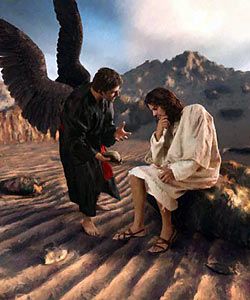
Right? When Jesus went out to the desert, he fasted for forty days and forty nights, the devil appeared to him, and the the the devil gave him three temptations. The first one was to turn all the rocks in the desert into bread. By turning all the rocks in the desert into bread, the devil said, well, if you do this, what you're going to be able to do is you're going to be able to end hunger for everybody. Nobody's gonna be hungry again.
Just do it. And Jesus denied him. Right? Man cannot live on bread alone. Right?
And then the devil gave him another temptation. He said, Well, if you don't want to do that, then go and toss yourself off this cliff over here. Toss yourself off this cliff over here and have the angel of God come down and sweep you up back to safety. So that everybody will have to believe that you're the Son of God. And Jesus, once again, waved him off and he said, no, I'm not gonna do that.
Right? And then the devil gave him one final temptation, and that was to take the sword of man. Right? He said, I'll give you the sword of man so that you'll be the ruler of all the world, and you'll be able to exact peace on earth for all time. Right? People will live under peace under your rule. And Jesus once again denied him. And the Grand Inquisitor is going through this with Jesus and he says, well, you're an idiot for doing that.
You're so dumb. Why did you do that? Because you did that, because you denied the devil, and you didn't take these temptations. Well, guess what? We have to provide the people with bread.
Right? The church provides people with bread. Because you didn't toss yourself off the cliff and have the angel of God rescue you and and force everybody to believe in you, giving people free will. Well, guess what? We have to make the people believe in you.
Right? And he said, well, because you didn't take the sword of man and and end war for all time, well, guess what we have to do? We have to ensure the security of the people. We have to take care of the people. We are creating peace on earth through our authority.
And he basically says to Jesus, you know what? You shouldn't be here right now. You shouldn't be here right now. They don't want you. They don't want free will.
What they want is miracle, mystery, and power. We provide miracle, mystery, and power for them. And you, what you need to do is you need to go back to where you came from, and you need to never come back. And as the Grand Inquisitor ends this, he he at first, he said he was gonna execute Jesus and have him burnt on the stake for what he did, but then he had a change of heart and he said, you know what? I'm going let you go, but never come back here.
Otherwise, we are going to execute you. And at the end of it, Jesus walks up to him, gives him a kiss on the cheek, then walks out. Now, when you think about that story, and I highly suggest you read it, if you don't want to read the entire Brothers Karamazov, which is a very, very long book, you'd read that chapter to get at what I'm seeing here. And that will take you about a night. It's a really short chapter, right, about 26 pages.
And as you do that, as you as you get into this, one of the things I want you to think about is this idea of free will. You know, one of the things I've been saying for a long time is that freedom is far more difficult to live under than tyranny. It's far more difficult to live under than tyranny. And when it comes to tyranny, well, the hardest forms of tyranny to break is tyranny that's self imposed. Right?
And when you think about it, human civilization has been around I mean, recorded history has been around for about six thousand years. Right? If you look at the history of human civilization, how we've lived, well, for the vast majority of that time, we've lived under authority. We've lived under authoritarian regimes, regimes that were largely controlled by, you know, single men who were responsible for the state. Right?
And and time and time again, we descended back to that. When you think about the history of The United States, right, this constitutional republic that we live live under, well, this idea hasn't been around for very long. In fact, you know, it's a fraction, like a a moment of time in the grand swath of human history. And one of the things to understand there is that the human brain doesn't change very rapidly. We've had the same brains for about fifty thousand years.
So this idea of freedom, it's still new to all of us. Even though, if you're alive today, you're in The US or if you're in Western Europe, this is all you know. Our nature says something different. It means our nature brings us back to that desire for things like miracle, mystery, and power. Miracle, mystery, and power.
What we want a lot of times is somebody to take care of us. Somebody to be responsible for our decisions. Right? And when you think about what freedom is freedom is the opposite of that. Freedom says that we're responsible for our decisions.
If we screw up, we're responsible for it. We're responsible for making our own way on this earth. And the reason I'm telling you this is because it goes back to absolutely everything that we do on this podcast. This idea of personal responsibility, this idea that you are in charge of your life, you are in charge of the direction you take, you are in charge of where you end up. For a lot of people, that's a scary, scary, scary thing.
A lot of people don't want that. If you look at society the way it is today, and a lot of the debates that are out there, right, this idea that, you know, when you take guns for example, right, there are a lot of people out there who believe that the state should solely be in charge of our own personal security. The state should have a monopoly on the use of force. And there's a lot of people out there who don't believe that, myself included. But you want to think about why those people who don't believe that that the rest of us should have guns.
Why do they believe that? Well, if you look at our country and the way it is, we live in relatively the most secure times in the history of the world, right? Those people can't perceive that at some point the government may try to turn against the people, they can't perceive the idea that at some point they may have to be responsible for their own personal security. And what you get is a lot of people who really don't ever wanna touch a gun. They don't want to deal with guns.
They don't want to even be in the same room with a gun. A lot of times that makes people uncomfortable. And, you know, if you really think about it, well, even, you know, myself included, even the most ardent second amendment supporter would say that, well, if somebody doesn't want to train with a gun, if they don't want to become proficient with a weapon, well then we don't want them to have it either. But you're getting more and more people who are making that choice. Making that choice to say, I don't want to be responsible for this.
I don't want to be responsible for my own personal security. I'm going to outsource that. I'm going give it to somebody else. Right? And that is what you're dealing with.
Right? They don't want to be responsible for making that decision. You know, the same is true when we think about issues like medical care, right? There is a lot of people who believe that the state should be responsible for providing medical care. And what I can tell you, being in the VA system, which is very much like the NIH in Great Britain, a state run medical system, one of the things that happens there is you have far less choice.
You have far less choice. I'm sure most of you who are listening, who are in the VA system, you understand that. You understand the idea that, well, if you want to get on certain types of medication, and I have ulcerative colitis, I have asked my doctors about certain types of medication, well, if it's not on the VA formulary, they are not going to let you get it, right? You are not going be able to get it. But what I'm doing is I'm trading my choice for the health care I get from the VA.
Right? And it's a choice I've had to make. But it's it's it's that idea there. You are trading your choice, you're trading a little bit of your freedom for the government giving you something. Right?
For for somebody else to give you something. And this translates down to personal responsibility too. When you look at the fact that obesity rates in this country are so high, when you look at the fact that one in four veterans in the VA system has full blown diabetes and something like sixty percent of adults out there are pre diabetic. Well, essentially what's happening out there is people are outsourcing their health entirely. And they're saying, you know what, my doctor is going to be responsible for this.
When I get sick, when I get a chronic disease, the medical system, the doctor is going to be responsible for solving this problem for me. When the truth is, you can probably head off a lot of these problems prior to them getting so bad that you have a chronic disease or you have something going wrong with you. And so it's this idea of freedom, I think that scares people. That scares people. Now, what do you do if you want to I guess you'd say maybe I'm putting this wrong.
The way I'll start this is by saying this. How do you keep yourself from falling into these traps? How do you keep yourself from falling into these traps? Well, one of the things that that I believe in is in developing fierce self reliance. Right? Fierce self reliance. Putting yourself into a position where you're going to say, you know what I'm gonna do? I'm gonna own my health, right?
And we talked about Jocko. Jocko says in discipline there is freedom, right? That's a big reason why he says that. Discipline equals freedom. That's a big reason behind his concept of extreme ownership, right?
If if you are truly gonna be free, what you have to do is you have to own everything in your world. You have to own it. You have to say, you know what, I'm responsible for ensuring that I'm going to be in the best health, best shape possible. I am responsible for making my decisions in terms of how I'm going to educate myself, how I'm going to inform myself as a human being. I'm responsible for making my way in life and seeing to my personal finances.
And what we have to resist is that constant temptation to say, you know what? This isn't my fault. This is somebody else's. Because there's a lot of people out there who are blaming the world right now. They blame the world for where they're at.
They blame the world for their lack of success. They blame the world for everything. I was watching a TV show the other day, I think I was in the gym on a cardio machine, and this woman on a talk show was saying the reason why she was having such problem so many problems losing weight was because of President Trump, because of all the stress he's bringing upon her. And the thing is, to you and me, that sounds ludicrous, right? How could the president of The United States be responsible for your inability to lose weight?
But at the same time, she was getting applause. There was a lot of people out there saying that you you you agreed with her. And you're seeing this more and more. People want to outsource their responsibility for the problems, responsibility for things go wrong to a boogeyman. And that happened over and over again in authoritarian regimes.
You know, for Hitler, was the Jews. For Lenin, it was the capitalist class. And there wasn't even really a capitalist class in Russia at the time. What he ended up doing was was taking land from the land owning peasants, right, and and putting them in gulags and executing them. Right?
When you think about Maoist China, you had started with the land owning peasants, but then it switched to the mandarins, and then it switched to the older class of people who were in charge. When it came time for the cultural revolution, which you had were 19, 20 year old kids taking over hospitals and throwing doctors out, and then delivering babies and performing surgeries on their own, which became a disaster. Right? But we have to stay away from this idea of creating a boogeyman, outsourcing our responsibility to some phantasmic thing that is out there that we believe is making everything wrong. And we tend to do that.
You can do that in your personal life. You can blame all your problems on your parents. You blame all your problems on an ex wife or an ex girlfriend. You blame all your problems on everybody except for yourself, right? And when you do that, you're putting yourself into a situation where you're going to live your life putting blame on others and not doing anything for yourself. So the big thing, the big message I'm trying to get home to you here is this. What you need to constantly be aware of is our tendency to willingly accept tyranny in our lives. Our tendency to willingly give up our freedom for a sense of comfort. Right? Because freedom is not comfortable.
It's a lot of things. Right? So a lot of good things. It brings options. It brings choices.
It allows you to go wherever you want to go. But it's not comfort. It's not happiness. Right? It's like the the the it says the freedom to pursue happiness.
Right? You're not guaranteed happiness itself. And what I'll leave you with here is a story I heard when I visited Philadelphia. And when Benjamin Franklin was coming out of the Constitutional Convention, they ratified or after they came up the first draft of the constitution, somebody asked Benjamin Franklin, Mr. Franklin, what would you give us?
And he said, A republic, if you can handle it. Essentially he was saying, We're giving you a republic if you don't screw it up. And I think that we get closer and closer to screwing it up than we know. Not because we don't believe in our ideals, but because we're not ingraining them into ourselves. We're not giving ourselves a sense of responsibility.
And above all, we're not teaching that to our children. So this is a highly philosophical episode. I hope that I didn't go too far off the reservation, and and I hope that you guys, got something out of this. But, you know, let me know. Let me know in the comments.
Maybe we can have a discussion on this, and and talk about it because I think this is so important. It's so important for our country. It's so important for us as veterans. People who put our lives on the line for freedom to understand this because if we lose it, it's not going be easy to get back. It's not.
And these are things that I'm thinking about more and more as I'm getting older. So let me know what you guys think. If you enjoy the Warrior Soul podcast, if you like what I talk about here, if you like these discussions, if you like the interviews we bring you, well, I want to plead with you. Head over to iTunes and write us a written rating review. Even if you're listening on YouTube or if you're listening on on on SoundCloud or any of the other platforms, try to do this on iTunes because iTunes is what really drives the algorithm. Of course, I appreciate any positive feedback that you give me, but but iTunes is what really drives the show. So please, please head over and write a review for us there. If you want to support the podcast, you can head over to warriorsoul.shop. We've got some amazing shirts designed and printed by US Marine Corps veterans up in our Santa Barbara print shop.
And if you want to support yourself, you can come over and you can join the Warrior's Obituary Society. That is a group of us who get together and empower each other to live absolutely epic lives. We're the epic obituaries by holding each other accountable. Every member who comes in gets put through an eight week development program. That's where you're going to learn how to customize your own fitness plan, your own nutrition plan.
That's where you are going to learn how to start taking care of your finances and start building this foundation for freedom that I've been talking about here. In the group, we have live calls each week, we're talking over Zoom and we also have a forum that we're constantly communicating over and we don't do anything over social media because I don't want anybody looking over your shoulder and I don't want you to get distracted with all those alerts. So if you're interested in that, head over to www.warriorobituarysociety.com. That's warriorobituarysociety.com. And we've got great content coming up for you next week.
We've got an awesome show with Jonathan Levi, the host of the Superhuman Academy podcast and he is an expert on learning, learning things quickly. He has taught himself four languages, he has taught himself how to speed read, how to do some amazing things with business and he runs these courses that teach everybody out there how to learn more effectively. And he is giving a 50% off discount for all of his courses to The US military veteran community, so definitely check that show when it comes out. And with that guys, I want to thank you so much for listening. We'll be back at you next week with some more awesome content.
Talk to you later.
Host of the Warrior Soul Podcast and founder of Warrior Soul. Worldwide trainer and nutrition coach, contributing author at Testosterone Nation and Muscle and Strength.