Podcast episode
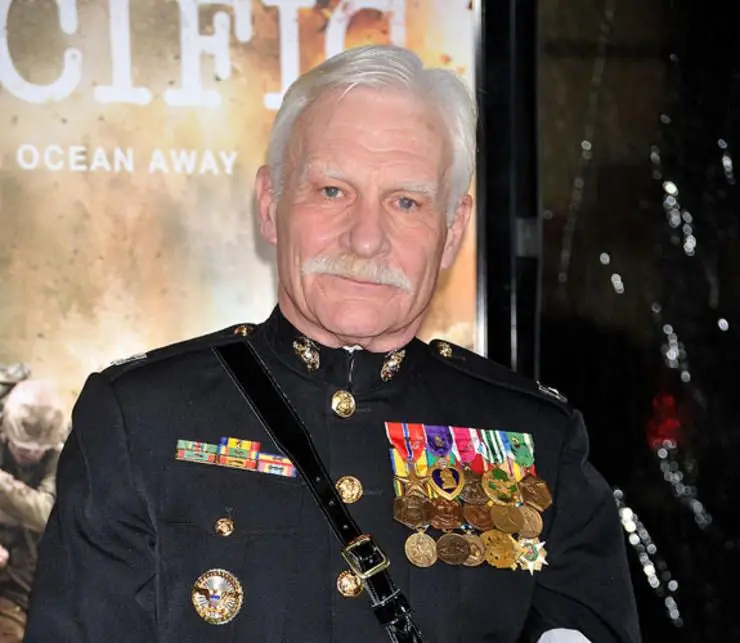
Dale Dye: US Marine Corps Veteran, Actor, and War Movie Advisor
Hosted by Chris Albert
The Warrior Soul Podcast
35 years ago, US Marine Corps Combat Veteran Dale Dye set out on a mission: to help Hollywood create a better war movie.
Our Guest: US Marine Corps Veteran, Actor, and Hollywood Consultant Dale Dye
Since he left the Marine Corps 35 years ago, Dale Dye has had a single mission: to help Hollywood to create better war movies and change how America views the common grunt.
Dale is definitely qualified for the job. He served in 31 major combat operations during the Vietnam War. During his Marine Corps career he rose from Private to Master Sergeant. He was selected as a Warrant Officer, and then went on to receive a commission through the Marine Corps’ Officer Candidate School.
Like many other Veterans, Dale was frustrated with the way that war movies depicted soldiers and marines. So he set about doing everything he could to infiltrate Hollywood and create more accurate and authentic war movies.
Dale was an advisor to Oliver Stone on the film Platoon where he also acted as Captain Harris. He’s gone on to help create such gems as Saving Private Ryan, Band of Brothers, and The Pacific.
In this episode, we discuss Dale’s career in and out of the Marine Corps, how he got his start in show business, and his advice for other veterans who want to get into show business. We also discuss his current project No Bettter Place to Die a film that tells the story of the 505th Parachute Regiment of the 82nd Airborne Division during the Battle of Normandy.
To Connect with Captain Dye:
Warriors Inc. Warriors Publishing Twitter: @CaptDaleDye
To Support No Better Place to Die
Transcript
Machine-generated from the episode audio and lightly edited — may contain errors.
Chris Albert (link to this point)
This is Chris Albert, and I'm here to remind you of one thing. Someday, you're going to die. Now that's not some morbid statement or scary idea. It's solid fact. Your time here on this earth is limited.
We need to be reminded of this as much as possible for one simple reason, to live your best life while you can. This is the Warrior Soul Podcast.
You know, less than 2% of all living Americans have ever served in the military. And that means that a lot of Americans learn about the military and they learn about war through the movies. And as veterans, there's certain things about war movies that could drive us nuts. Right? So if we see somebody wearing the ribbons on the wrong side and their uniforms all messed up, or if we see somebody carrying the wrong weapon system for the wrong war, or if we see somebody, let's say, hiding for cover, while they're getting a 50 caliber machine gun shot at them and they're hiding behind a plaster wall.
Right? Those types of things drive us crazy. But there are a lot of movies who get it right, and there's a reason why they get it right. And that's because they get people like Captain Dale Dye to help them. Captain Dye served in over 31 major combat operations in the Vietnam War.
As a marine, he rose through the ranks as an enlisted man from private all the way up to master sergeant. Then he received a warrant as a warrant officer, and then eventually got that warrant transferred to a commission. As a commissioned officer, Dale led marines for the rest of his career. And then after his career, he decided that he wanted to do something. He went to Hollywood, and he went there with a dream, and that was to help to create a better war movie.
And that he did. He brought us such gems as Platoon, Saving Private Ryan, Band of Brothers in the Pacific, all of which were products of his consultation. And when Dale works with a group of actors on a movie, it's more than just, you know, determining where the ribbons go or, you know, advising as to whether this weapon system should be carried or that one. He really tries to get the actors to get into the psychology of what it's like to be a soldier or marine serving in combat. So he works with them extensively through his methods, and he basically tries to transform that actor into who he was while he was a young marine serving in Vietnam.
In this conversation, we get into Captain Dye's story. We talk about his service and his coming to Hollywood and how he got his first break in show business. We also get into his views on leadership, and we talk about some of the projects he has in the pipeline. One really awesome project that he has coming up and that he's currently working on is project called No Better Place to Die. And one of the more interesting tidbits that you'll get from this conversation is that one of the characters in the movie Full Metal Jacket was actually loosely based on Captain Dye when he was a corporal serving in Vietnam.
And, I'll let that come out during the conversation. Won't give you any clues about it right now. But before we get into the conversation with Captain Dye, let me just give you a couple of very, very quick announcements. Number one, this is the Warrior Soul Podcast, and my name is Chris Albert. If you haven't been here before, welcome.
This podcast was started a few years ago because we as a veteran community, we've been going through a whole heck of a lot over the past decade and a half. Extremely high suicide rates amongst the veteran community, extremely high rates of chronic disease, high rates of homelessness, and what I saw was that there was a lot of people who were trying to raise awareness about these issues, but very few people who were actually delivering solutions. And so what I wanted to do was to create a platform that could deliver actionable solutions and inspire veterans to live their best lives. I'm not trying to prevent veteran suicide here. What I'm trying to do is to get all veterans to truly live.
And so what you're going to find here on the Warrior Soul podcast are amazing interviews like this that talk about veterans and other people who've gone on to find success or, those who've come across techniques that could help others. You're also going to find advice on health, fitness, nutrition. Those come out on our Wednesday q and a sessions. And then on Fridays, we do our Warrior Notes episodes, and these are concepts to help you to build mental toughness. If you're not a veteran, please stick around.
This podcast can help absolutely everybody. We focus on the veteran community because that's where I come from, and that's where I noticed a lot of these issues and the need for this information. But all people are welcome to listen because you'll get a lot of value out of each of these episodes. The only thing we ask in return is that you spread the word about the show. Let other people know that we're here, that we're doing this work, and share episodes out with people who could really be helped by them.
And if you can, pay us the highest compliment by writing a review for us on iTunes, Stitcher, or whatever platform you're listening to this podcast on. In addition to that, I wanna let you know that this podcast cannot be made possible without our amazing sponsors, f bomb nutrition. They make awesome delicious packets of fats. I'm a huge fan of their macadamia nut butters. They mix them up with chocolate, with sea salt, with coconut butter, with pecan butter.
They're so delicious and they don't contain any sugar. And the company's run by really amazing people. They've been sending boxes of this stuff over to the troops overseas to help them to supplement their MREs. And we didn't ask them to do that, they just really wanted to help. Our listeners can get 20% off of their first order of f bombs when they go over to www.dropanfbomb.com and use the code Warrior Soul at checkout.
With that, let's get into this amazing conversation with captain Dale Dye on the Warrior Soul podcast. Captain Dale Dye, how are doing today, sir?
Dale Dye (link to this point)
I'm doing fine, Chris. Thanks for having me on so we can have this little discussion.
Chris Albert (link to this point)
Well, I appreciate you coming on. And and, you know, prior to to getting on here, I was really thinking about it. You've got a really tough job because, you know, very a very small percentage of the American population ever served in the military and even smaller percentage of that ever served in combat. And you need to translate those images and that feeling out to the masses somehow. And have you ever thought about that?
Dale Dye (link to this point)
Yeah, I have. In fact, I've thought about that for about the past thirty years. It's It's a tough deal. I mean, anybody who's ever been in combat, Chris, knows that there is no way in hell anything can translate the feelings, the images, the taste, the smell into something that people who haven't been there can consume with some sort of in-depth understanding. So, yeah, it's a it's a horribly difficult task.
But in my view, one that really needs to be tackled. It it is the seminal moment for so many young men and women in their lives. It is crucial to how people live their lives. And and it is a unique experience above and beyond combat, the military experience, something that we've lost as a common denominator due to the loss of the draft, that I think we should take a moment to understand the service and sacrifice of those few young men and women from our population who volunteer to serve. Look, that's something that's really spectacular.
It's really something selfless to do. And it's something that I think deserves a certain amount of recognition and understanding. The problem has has always been that there's a tendency to fictionalize it to the extent that it becomes really false, a false narrative that bothered me thirty years ago and it bothers me today. Although I like to say I've been able to fix it a bit. And I think I have.
So so without belaboring the issue, yeah, I think about it every day.
Chris Albert (link to this point)
You know, and there's there's the obvious things like wearing your ribbons on the wrong side of your chest or or you know, carrying around the wrong weapon system. But also Yeah. The idea that there's this stereotypical way that I think Hollywood views the military and in large part, a lot of times that's inaccurate. And I think you've been able to really translate that psychology, way someone carries themselves, the way they talk, the way they speak, the way they interact with each other. You've been able to really translate that to the screen.
Dale Dye (link to this point)
Well, I hope so, because that's what I wanted to do. I mean, for years and years, there was a certain hubris on the part of Hollywood writ large, if you will, that, you know, no nobody who ever wore a uniform could have a creative bone in his or her body. So therefore, we don't need to listen to them when it comes to dramatizing the military experience. That was that was the original hurdle I had to get by. But once once past that, what I realized was that Hollywood's big problem was relying on military expertise and military advice simply for those superficial things that you mentioned, which side the ribbons go on, what order they're in, whether or not a guy could carry an M16 and the D Day invasion in 1944.
Those things were typical gaps, but those could be fixed by anybody with, you know, the ability to research a little bit if they cared to do that research. What bothered me was that they were passing by as irrelevant or unimportant. Who we are, how we think, what's in our minds, what's in our hearts, what's in our guts, because that's really what forms the soldier, the eternal soldier. And I think those things have been the same throughout our national military history. But Hollywood did such a bad job of exploring those things, or if it did explore them at all, it brought cliche, it brought whatever seemed to them having no military experience, no combat experience, whatever seemed to them to be dramatic. Now, I knew that the reality of who we are, how we think, how what we feel, how we relate to each other was was a really unique experience, was a really unique aspect of a human story.
And I wanted to go there because I thought that was fair and that was proper and that was appropriate to recognize those things and how different they are and how wonderful they are actually. And so that's what I decided to do. That's what I decided could make my service to an industry different. And look, it would be wonderful if I could convince all the 18 to 35 year olds to never did anything but read Sergeant Rock and his Combat Happy Joes of Easy Company, and comic books. If I could convince them all to to read thick tomes of military history or books that examined that psychology of which I speak.
If I could do that, that would be great. But there's not a hooker's chance in hell of me doing that. I mean, it's not in the it's not in the nature of the youth in our American society. What is in the nature is the popular media. Americans have always loved film.
They've always loved radio drama. They've always loved escapism, if you will. And so my connection was, look, if if that's how they're going to learn, if that's how they're going to pay attention, then let me find a way to tell the real story through those media. And that's kind of how I went at it.
Chris Albert (link to this point)
Well, you yourself, you you've had a a really, really rare military career in that. You rose from the rank private all the way up to master sergeant, then became a warrant officer, and then got that transferred to a commission to be a commissioned officer. And you served thirty one combat operations in Vietnam. And Yeah. You know, you were out there in the mud dealing with this stuff. And and you've seen every rank pretty much all the way up from from private to captain. And
Dale Dye (link to this point)
Yeah. I touched all the bases. Yeah. Right.
Chris Albert (link to this point)
Yeah. I mean, like, that that in and of itself is rare and that makes you, I think in my mind, the person to do this job, the perfect person to do this job. I also know that, you know, early on you were you were a combat correspondent too. Right? Getting out there with the ground in the field.
Yeah. How did that play into what you do?
Dale Dye (link to this point)
Well, it was it made me perhaps a little more observant. Not only did I have to run to the sound of the guns, there wasn't there wasn't much respite because my job was to get out there and be with the guys who were who were on the pointy end of the bayonet. So it got me into a lot more fights than the average guy, simply because getting in those fights was my job. But I think I think most importantly, it made me an observer. I mean, I'd always been a sort I'd always had a sort of a literary bent.
I come from a long line of Irish storytellers and who drink too much and sit around and tell stories. And that's kind of my heritage. That's in my DNA. And so I would see things, I think, on a little deeper level than just observing what was happening on the left flank and the right flank and dead ahead. I would observe people and and how they reacted and what what what formulated the way we think and what formulated the way we relate to each other. I was conscious of those things and was absorbing them into my mentality.
So, think that assignment was probably the genesis really of me realizing that there are stories to be told here. And if you tell them properly, if you give folks that insight, if you use your experience to tell them what it means and how it was formed and how we think and what we do and why we do this and that situation and not the obvious, which is another thing. I think that I think that that business of being conscious of observing my surroundings and the whys and wherefores and the deep material in in conflict. I think that that stood me in good stead.
Chris Albert (link to this point)
Yeah. The Navy SEAL, Jocko Willink, he's he's a big media guy now and he talks about detachment and that being necessary to lead people in combat. And I could see how, you know, maybe being a little bit detached and and being able to observe things for what they are rather than getting tunnel vision that could really play into your talents as a leader on in in on the combat field.
Dale Dye (link to this point)
Yeah, it can. And he's right. Look, if you're if you're leading in combat, you have to detach yourself to a certain extent. It's probably the most difficult thing a human being can do because you have to ignore your emotions. You have to ignore the feelings that come bubbling up in extremis.
That's what he's talking about. And you have to be you have to be able to think clearly beyond how you feel about things. And we have a tendency to be a touchy feely society. You know, just makes me ill. I want to gag every time a reporter rushes into a scene of chaos or a tragedy.
And the first thing that idiot does is stick a microphone in somebody's face and say, well, how do you feel about this shit? Of course, he feels terrible about this. I mean, it's obvious. But that's not the story. But at any rate, now I'm off on a tangent.
But what I really, I really think that whereas I recognized that detachment as necessary, and I respected it, I respected a person who could do it. I recognized how difficult it was. And that's the human drama. That's the human story.
Chris Albert (link to this point)
Yeah. And I I do think that's important for what you do now because, you know, if if you're looking at a movie and and it's just all based on on, you know, the tunnel vision view of of what's going on and you're not getting the bigger picture, it could really take away from from the meaning behind the violence you're seeing on the on the screen or or the scene you're seeing on the screen, And it can take away from from the significance of the story.
Dale Dye (link to this point)
Yeah, I guess so. I'm I have always been a fan of films, television shows that acknowledge the big picture. I get that because that's required in context. But focus on that individual facing that dilemma, that human survival story. Because the neat thing about human beings in those situations, most human beings in those situations, is that they're able to say, they're able to detach for a moment and say, look, it is not completely about my survival.
It's about the mission that we have here and my little role in it. And it's about making sure that I don't let the person on my right or the person on my left down that I do my part. That's that's classic. And that that is a human being who has decided that it's not all about me, that it's not the sun doesn't rise and set on my posterior. I've got a responsibility here.
I've got an obligation here. I've got people who care for me and I must care for them. That's the neat part. That's the part that makes soldiers worldwide, but in particular, American soldiers so special, I think. That's why I want to celebrate them.
Chris Albert (link to this point)
Absolutely. And that's something we definitely see from a from a lot of the projects you've worked on. I mean, Saving Private Ryan to to the Pacific. I mean, the the that that those opening scenes where you're you're seeing people move up onto the beach and you're seeing just the the the absolute intense craziness of combat, but also, you know, you're seeing that from the eyes of the of the people doing it. I think that's that's absolutely amazing.
Dale Dye (link to this point)
Yeah, I like to call it the the asses and elbows perspective, because what you see when the incoming is zipping about six inches over your head, you see the guy's butt in front of you, and you see the soles of his boots, I mean, and I've always thought that was a really unique perspective. And I've been able to talk a bunch of really brilliant directors into looking at it that way, using the camera as the guy who's behind. And I think that assuming some context, I think I think that really is a unique look at a life and death situation.
Chris Albert (link to this point)
Now, when you got your start in this, I you didn't come to Hollywood to be an actor. Right?
You
Dale Dye (link to this point)
No. I didn't.
Chris Albert (link to this point)
Had this in mind as far as what you wanted to do. Right? How how was that coming to Hollywood for the first time and and trying to get this idea across?
Dale Dye (link to this point)
Well, I think I think the classic answer here is that you can when you're ignorant, you can do a lot of things people tell you you can't do. And that was certainly my situation. I mean, all I knew, all I felt for sure was that Hollywood was getting it wrong. And it was my story, my life, things I'd lived. And I said, there must be a way to to let them know they're wrong and therefore, and when you do that, provide a way that they can get it right.
That was that was kind of my thought and it was nebulous. I mean, I had no idea who to talk to, how to try to pitch this. And so what I did was I just came out to LA as ignorant as you know how to be, a real bumpkin in the whole Hollywood milieu. And and I started trying to talk to people who somehow worked on motion picture so I could get a get a feel for who to do, who do I go to, who do I say you're screwed up and here's how to unscrew it. And I mean, I literally talked to everybody, I did everything I could, I talked to grips and gaffers and prop people and armory people and the caterers, anybody I could find until I began to get an inkling of who the power brokers are, who the creative guys are, who do I go to and say, Look, I think I have a better idea.
But once I found that out, and that's producers, directors and writers, actors, I hadn't thought about yet. Once I found that out, I began to try to contact these people and they're difficult to contact because everybody wants a piece of showbiz and a moment of fame and money and so on and so forth. That's what makes it such a hard club to join. And here I am, this guy with no motion picture experience, who spent most of his young life in uniform, and therefore was created, was considered to be not conceivably creative in any fashion. And I'm trying to tell these guys that they're wrong, and I've got a better way to build a mousetrap.
And of course, what they're saying to me is, hey, kid, look, we have made war movies for decades, and we've made a zillion dollars doing it. So what's your deal? Who the hell are you? And that was really a difficulty. But I kept at it.
I mean, in typical marine fashion, you know, no hill too high, hey, diddle diddle right up the middle fixed bayonets, and that's where I was that's the way I was going at it. Well, that's not a usual approach in Hollywood. And so, after a while, began to get, you know, have you have you talked to this idiot Dye? I mean, who the hell is he? What's he doing over here?
And it was it was the tough sell. I mean, people just really yeah, yeah. You want to train actors and you want to make them understand soldiering. Look, it's called acting guy. You know, they get paid to pretend.
I said, Yeah, but but but the story, if I can teach them how to interpret it is so much better, so much more moving, so much more dramatic. Yeah, yeah, yeah, get off the lot. So it was a tough deal. And I had, I had learned through these contacts that I'd made to kind of pay attention to the showbiz press, what we call the trades. Those are things like Daily Variety and The Hollywood Reporter, where you get little news nuggets about things that are going on, and I was looking for an opportunity.
I was looking for some way I could get in on the inside and sell somebody who understood that there might have been a better way if I could just find that person. And one day I did. I saw a little announcement in a Hollywood trade paper that said heretofore a relatively unknown writer director by the name of Oliver Stone was going to do a movie based on his own experiences as a combat infantryman in Vietnam. And I said, well, there it is. I've got to find this guy.
If anybody's going to get what I'm trying to sell here, he will. And through a long series of machinations that I can't tell you about because I think the statute of limitations is still in effect. I was able to get to Oliver Stone. I was able to get him on the phone. And I did my best two minute pitch of what I think is wrong with most military movies, and how we might be able to fix that.
And he, you know, he kind of liked the left handed approach, which he had respect for the fact that I found him, and that I was pitching this. And we had a meeting, you know, we kind of sniffed each other's butts like a couple of strange dogs and and tried to figure out our bona fides. And and he decided that I had a point, that what we needed to do was train these young actors the way we were trained, and let them experience the things we experienced as young men in Southeast Asia in combat. And so, he allowed me to do that, and I took about 33 actors, think it was, who were relatively unknown at the time, but you'll certainly recognize their names today, Johnny Depp, Forest Whitaker, Charlie Sheen, Johnny O'Reilly, or Johnny O'Neill, John C. McGinley, sorry, Tom Berenger, Willem Dafoe, and live with them for three weeks in the jungle, no outside contact whatsoever. We lived like 1960s era grunts in Vietnam.
And when we brought them down out of the mountains, they were who Oliver and I were at 19 in combat. And we made this little $5,000,000 film called Platoon and brought it home, and we won four Academy Awards, including Best Picture and Best Director. Oliver was kind enough to recognize my role in making that film. And suddenly, all of those people who are ignoring me and throwing me off the lot, who are calling me and saying, hey, we've got this war picture. Can you come in?
So that's kind of how it happened.
Chris Albert (link to this point)
So that's a combination of of, you know, absolute fierce determination, planning, you know, can absolute perseverance, but also a little bit of luck, right? I mean, like in this
Dale Dye (link to this point)
Yeah, sure. And everything, you know, it's like it's like surviving combat, Chris. I mean, there's always an element of luck involved. But I think I think the I think the element was tenacity. I believed in the mission. I believed that there was a better way to do this. I believe the mission was proper and appropriate. And and I just am not and never have been a quitter. The Marine Corps flat beat that concept out of my body and mind a long time ago.
And I was either going to do it or let it kill me, one of the two. And I knew that if I failed, you know, I might end up as some corporate cubicle rat working for a defense contractor, and I'd be a suicide in six months. Or I develop into a barfly and, you know, haunt the local VFW post. So, I really had to get this done because it was right, it was the right thing to do. It was a continuation of my service to the country and to the men and women that I served with.
I know that sounds high flown and cliche like, but that's really how I felt. So it was a of tenacity.
Chris Albert (link to this point)
If you're approaching, you know, something a project like the Pacific, for example, where it's based off of books like A Helmet for My Pillow and and With The Old Breed, and you know that Yep. You know, you've got that legacy behind you and you need to translate that to that actor's mind. That has to bring about a a huge sense of mission. And, you know, my question for you here is when you're dealing when you're working on a project like that, that's an actual depiction of of somebody's life events. You feel like the actor initially has that sense of importance, or or do they have to have it trained into them?
Dale Dye (link to this point)
They absolutely have to have it trained into them. Look, actors, unless you're getting a guy who this is his first experience with making a film, telling a story on film, It's a job. It's a weird job and a difficult job, but it's something they do for a brief period of time. And so they bring only as much intense to these they think the job requires. Well, that's not enough. In my view, they need an in-depth understanding, they need to see the mission, they need to understand that it's not about them and how many lines do they have, but it's a larger story and it's an important story. And they have a crucial part in telling that story, and they must do it effectively, and they must do it insightfully.
And and the doing of it is the mission, the doing of it properly and appropriately is the mission. And the mission is important because it's a real story of men who sacrificed, sometimes sacrificed their lives to get it, to get a mission done. And now you're telling the story of that mission, and you must understand how important that is to do it right. So, answer is, the short answer is, they have to have it trained into them. And that's my mission.
Chris Albert (link to this point)
Wow. And, you know, I know that you have just just created your own film to No Better Place to Die. And that that's based off of of World War two. And and we're losing, you know, a World War two generation, I mean, to age, to death. Yep.
That level of significance has to be increasing as as you're working on that project and knowing that we're losing that generation to history.
Dale Dye (link to this point)
Well, is. I mean, I just got back from Europe where I I took a group of people sponsored by World War Two Museum in in New Orleans, and we had one or two of the older gents around. And I've been around them all my life. Hell, I grew up and I was born during the war. So I knew these guys and I still know these guys.
And it's sad that we're losing them without telling more of their stories. I mean, we did I think we did a great job with the Pacific. I think we did a great job with Band of Brothers. I think we did a great job with Saving Private Ryan. And if you think of Saving Private Ryan and the incredible beach assault that we did in that film.
I am going to do what happened before the beach assault, which is the airborne assault to hold vital bridges and block German counter attacks against the beaches. In particular, a bridge that was taken and held by a small unit of the eighty second Airborne at La Fière. That's no better place to die. So, what you saw in Saving Private Ryan on the beach, you're going to see under canopy and coming out of C-47s on D Day in No Better Place to Die. And that story needs to be told because it it those the actions of the of the paratroops, the airborne troops that jumped in and went in in gliders, really saved D Day.
Had the Germans been able to counter attack across those barriers, the rivers and the bridges and the hills and so on and so forth, they would have driven Omaha, Utah, Sword, Gold and Juno right back into the sea. And so that's an important story, and it needs to be told before we lose all of the guys who lived it.
Chris Albert (link to this point)
Absolutely. And, you know, just the imagery in my mind, you know, I I I've got some ideas from from your previous films of of what World War two was like. And when I was a kid, you know, prior to ever enlisting in the military myself, I I used to watch a lot of of war documentaries, and and we see that in black and white. But I imagine, you know, seeing that brought to life in color and a dramatic depiction, that is got to be some some amazing filmography you're working on, too.
Dale Dye (link to this point)
Well, that's the mission. And here's the neat thing about the film. My director of photography is himself a combat veteran. I'm a combat veteran. I'm trying to hire as many real combat veterans behind the camera and in front of the camera as I can find.
So I'm trying to do a film that's about a significant part of American military history told by young understand combat, who understand the military experience, and who will bring that motivation and that insight to the film. So I think it's going to be a unique experience all around. And if I don't screw it up, it's going to be an eye popper, I think.
Chris Albert (link to this point)
Well, I absolutely can't imagine you'd screw that up. And and, you know, I
Dale Dye (link to this point)
better not.
Chris Albert (link to this point)
That's an awesome opportunity for for for for veterans. Do you think that they'll they'll be taking on the acting roles or do you think you're going to have to bring in actors to to be able to take on the lead roles?
Dale Dye (link to this point)
I've I've got to bring in three or four name actors, what we call A list actors, because if I don't do that, I won't get the money. That's that's investors buying insurance. But everything else, all of the smaller roles where I can find a veteran who can do it, I'm going to hire him.
Chris Albert (link to this point)
Yeah. You know, that brings up an important point here, I think, far as discussing Hollywood and filmmaking as it pertains to war movies. You know, I think that recently, as in recent years, Hollywood's focused so much on on just Navy SEALs and and special operations. And Yeah. They focused on and and they I think they've largely avoided doing war movies, you know, as as it it just seems like they're they're almost abhorrent till and I'm trying to put this in the right way, but I guess I'll put it bluntly, to making The United States look good. And and do you see that changing at all with the
Dale Dye (link to this point)
Well, Holly Hollywood has no vested interest in making The United States look good.
Chris Albert (link to this point)
Mhmm.
Dale Dye (link to this point)
So that's wrong. But they do have a vested interest in telling exciting, visually impressive stories. And there is a tendency to think that all the exciting visually spectacular stories are involved around high speed, low drag operators like SEALs and, and force reconnaissance Marines and special forces soldiers and, and Delta Force and anybody else that can find that's kind of elite special. I understand that and I understand that from a storyteller viewpoint. But I also understand that it really ignores the guys who do the heavy lifting and the guys and gals who do the heavy lifting are down there, Rudy in the rear rank with a rusty rifle, you know, the guy who just goes where he needs to go and does what he needs to do and doesn't bitch and doesn't whine and puts up with all of the horror of deployment downrange and combat.
That to me is the common American story. And that's the story that I want to shine light on. Will I do special forces, special operations films? Of course, will. Sure.
That's a major part of our military heritage and our military history. And those forces are writing a lot of the history right now today. But, but I think I think we do ourselves a disservice when we ignore the fact that 90% of the men and women, the few men and women who serve in the American military uniform aren't those guys.
Chris Albert (link to this point)
Right. Right. Exactly. And I my as far as raising money for this film, do you think that there's there's an increased interest these days in films like like No Better Place to Die given that we're we're we're changing our political climate, so to speak?
Dale Dye (link to this point)
Yeah, I suppose so. Yeah. I think I think there is a knee jerk out there. I don't want to speak politically because it just pisses me off. But Yeah. But there is a knee jerk out there. There is a groundswell of what I like to call American nationalism. And I and I think that's fine. It certainly is fine for the making of movies like I make.
And and that's good. But but here's the problem with translating or monetizing to use the cliche with with turning that into the money that's required and movies are expensive these days. Christ, you know, you $100,000,000 is getting to be chump change to make a major motion picture these days. Fortunately, my films, I make them so that they don't cost that much. But but they still cost a lot.
And so if you if you are not going to the studio system and and that's that brings you a lot of baggage, you got a lot of people in there who now want to tell you how to make your film. I'm not I'm not going there. Because I've been there, frankly. So, you have to go and find investors, have to go and find folks who say, look, I really think this is a great story. I think it's a story that needs to be told.
And I've got a bunch of money that I can risk that you'll tell the story properly and that I'll get my money back. The plain fact of the matter is that showbiz is probably the biggest crapshoot for any investor that there is. And finding folks who are willing to roll the dice and to take a chance on something that is so subjective as, you know, as a film going to be popular, is it going to make a lot of money? That's a very subjective thing. Finding those guys is difficult.
But much like, you know, when I when I decided I had a better way to build a mousetrap in Hollywood, you just have to be tenacious. You just have to keep searching for them. You have to do things like hire A list actors for a couple of roles, which then appears to be insurance for those investors who say, oh, well, everybody will come to see that guy. And and that's that's kind of the way it's done if you want to do it outside the studio system.
Chris Albert (link to this point)
What's your advice for for young veterans who were thinking about coming out to Hollywood and and trying to make it big?
Dale Dye (link to this point)
Don't. But but that that said, I I know that I know that that's because it's a really rough game. It's a tough game. And and and people don't necessarily play by any established rules that has to do with the ego and the money and so on and so forth. But but here's what I really would say, and here's what I often say to folks who ask me, you know, I wanna be the next Captain Dye, and I wanna be an actor, and I wanna okay, wait. The deal is this, understand that it is show business with the emphasis on the second word, business. So, you have to understand that you need to bring something to the table. Yeah, but I've got talent, yes, I know you do. But you need to focus. And that's the most difficult for young men and most difficult thing for young men and women who want to be in the movie business, the television business to understand. There are hundreds of jobs, hundreds of skills and crafts and trades that go into making these stories.
And you need to focus on which one is going to play to your strength. Are you a visual guy? You might want to be a camera guy. I want to be a camera operator. Are you a technical guy? Do have a huge interest in and background in military uniforms and history? Maybe you want to be a prop guy. Maybe you want to work in the wardrobe department to get the uniforms right. So what I say is, don't just come out here and say, want to be in show this, focus, what the hell do you want to do, Either in front of or behind the camera.
And then now you've got a path. You have an azimuth upon which to walk. And you can go instead of just bumming around out here trying to get a break. And that's kind of the the broad brush advice that I give.
Chris Albert (link to this point)
That sounds like very, very sound advice. I mean, you know, you got to think 500,000 people come to Hollywood every year and then get turned away and then head back. I mean,
Dale Dye (link to this point)
and Yeah, and their and their self confidence is ruined and their self imagery is ruined and they feel like failures and yeah, it's that's what I mean. But if you come with a focus, it's easier to do.
Chris Albert (link to this point)
Yeah, I can corroborate that. I was a personal trainer in LA for a while and the self confidence and self imagery thing, had to deal with that with clients every single day.
Dale Dye (link to this point)
Yeah. Got it.
Chris Albert (link to this point)
One one thing I want to because I know we got to wrap this up in a little bit, but I also heard that one of the characters in in Full Metal Jacket was loosely based on you as a young marine.
Dale Dye (link to this point)
Yeah. And here's how that goes. The guy who wrote the book on which Full Metal Jacket was based, it was a book called The Short Timers. And it was written by a guy who was in my outfit in Vietnam, a man by the name of Gustav Hasford, who is now deceased, unfortunately, but a really great guy, another one of those observant guys who served with me. And when he wrote the book, he picked up a bunch of us, the guys who served around him and made us characters.
And I have I have a first copy of his book that he autographed for me and sent to me, And he said, you might want to. He said, you might recognize a few things in animal mother. And so to some extent, I guess Goose was was basing that character on me.
Chris Albert (link to this point)
So animal that's like one of the most beloved characters, you know, whenever I mentioned Full Metal Jacket, I mean, of course, gunnery sergeant Hartman, but animal mother is is one of the most beloved characters from the whole thing. That's that's
Dale Dye (link to this point)
I I can't say it's true to life, but I can say that it's probably how Gustav Hasford viewed me when we were young corporals and sergeants together. I'll say that.
Chris Albert (link to this point)
That's awesome. That's awesome. And, you know, that it must I mean, just having an attachment to that. I know it's not a film that you were personally involved with personally involved in, but having an attachment to that and seeing your friend go through that process, I know that he himself got in a little bit of a battle over over the credits and things like that. And probably learned a great deal from that as well.
Dale Dye (link to this point)
Yeah, sure, I did. I mean, I was already involved in it. In fact, Goose wanted me to be the military adviser on that film and was trying to sell it to Stanley Kubrick. But I was I was doing Platoon. I couldn't I couldn't break away to to commit to that film.
And, you know, thank God because Lee Ermey and God bless him, very good friend of mine. I mean, he and I were the two real veterans in Hollywood for a long time. Lee walked in and just iced it. I mean, he he knocked that that role of Gunny Hartman right out of right out of the park. And and so I've I've never begrudged it.
I've always thought, well, Lee, you know, the the fact that I couldn't do it, it really was helpful to Lee. And and then the overview is certainly helpful to the film because he he is that film.
Chris Albert (link to this point)
Absolutely. And one more question I wanna I just wanna ask you because this will pertain to some of the young leaders out there who are still serving in the military. We have this idea of acting, and I've heard you talk about this in interviews before.
Dale Dye (link to this point)
Mhmm.
Chris Albert (link to this point)
But, you know, when I in my experience in the Marine Corps, part of my job as a leader was also acting. Right? And and and
Dale Dye (link to this point)
Yeah.
Chris Albert (link to this point)
Sure. And putting a little bit of dramatic effect, dramatic flare to what I was doing. In your opinion, what can active duty military members take active duty military leaders take from actors in doing their jobs?
Dale Dye (link to this point)
Well, look, they they have to understand that a lot of acting is basically trying to convince people that you're telling the truth when you're actually lying a little bit. And that's the nature of the beast. I think young men and women who are still willing to wearing the uniform have to understand the power of the imagery. The fact that that what people see is often very, very important in terms of whether or not they'll pay attention to what you're preaching. And so the image that you convey at all times is a very important thing.
I mean, you you and I, as Marines have heard, you know, you're a Marine 24/7, you're always on duty. You can never afford to let your guard down. And in my view, you can never afford to let your image down. Now, that makes it a very hard life to live. You never start to get to relax or if if and when you relax, you have to be completely out of sight, of your subordinates and your superiors, so that you can be somebody else for a little while.
That's a very difficult thing. But images are crucial, and the image you convey must be the appropriate image. Now, that sounds, that sounds like cliche, and it sounds like, oh, you just mean I gotta walk around and be a lifer all the time, and no, it doesn't mean that at all. It just means that your demeanor, your behavior, the image that you convey is like an actor must do in two hours, one hundred and twenty minutes. He's got to always be that character.
And you must do the same sort of thing. It makes life difficult, but it makes leadership a lot easier.
Chris Albert (link to this point)
Wow. That's that's absolutely amazing. And, you know, Captain Dye, number one, I wanna thank you for your service. And and number two, I wanna thank you for for continuing your service throughout your life and and really bringing these stories to life for the rest of America. I think it's absolutely amazing.
Dale Dye (link to this point)
Well, thank you. It's it is a mission. It I can't say it's been easy. It continues to be difficult, but the neat thing is it's rarely boring and it's important. And if you can find something really important to do with your life after you've taken off the uniform, then you're in good shape, and that's where I am.
So, thanks, Chris. I appreciate it.
Chris Albert (link to this point)
Absolutely. Where can people find you online? I know you've got a couple of websites up between Warriors Inc and
Dale Dye (link to this point)
Oh, yeah. If they're interested in the new film, No Better Place to Die, it's at nobetterplacetodiethefilm.com. You can look for my books. I'm also a novelist, I've written about 12 or 13 novels, and they're available at Warriors Publishing Group, which is another effort. I formed that company, that publishing company, to give veterans a chance to write and tell their stories in book form.
So warriorspublishinggroup.com, if you want to see my books. And then I'm I'm all over the I'm all over the Internet, whether I want to be or not. So all you got to do is just look for Dale Dye and he'll come up.
Chris Albert (link to this point)
Outstanding, sir. Well, again, thank you so much for spending some time with us this morning. And God bless you, sir, and Semper Fi.
Dale Dye (link to this point)
God bless you and Semper Fi. Thanks very much. I appreciate it.
Chris Albert (link to this point)
Alright, guys. You just listened to our interview with captain Dale Dye, and I hope you got a whole lot out of that interview. If you can, please pay us the highest compliment and write us a review up on iTunes and share this episode out to others who can use it. And I wanna thank you guys for listening, and we'll be back at you next week with a whole bunch of new awesome content. Talk to you guys soon.
Semper Fi.
Host of the Warrior Soul Podcast and founder of Warrior Soul. Worldwide trainer and nutrition coach, contributing author at Testosterone Nation and Muscle and Strength.