Podcast episode
Dealing with Survivor Guilt and Imposter Syndrome Amongst Veterans
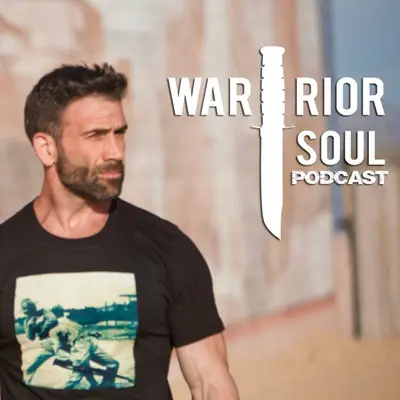
Hosted by Chris Albert
The Warrior Soul Podcast
Survivor Guilt and Imposter Syndrome
We often hear about survivor guilt and imposter syndrome in the veteran community, but rarely do we explore why we experience them or where they come from.
To tackle this issue, we’ve brought on Andrew Merrell, MA, LMFT. Andrew is a therapist who works with men in the public eye who are struggling with their identities under the pressures of prestige and fame.
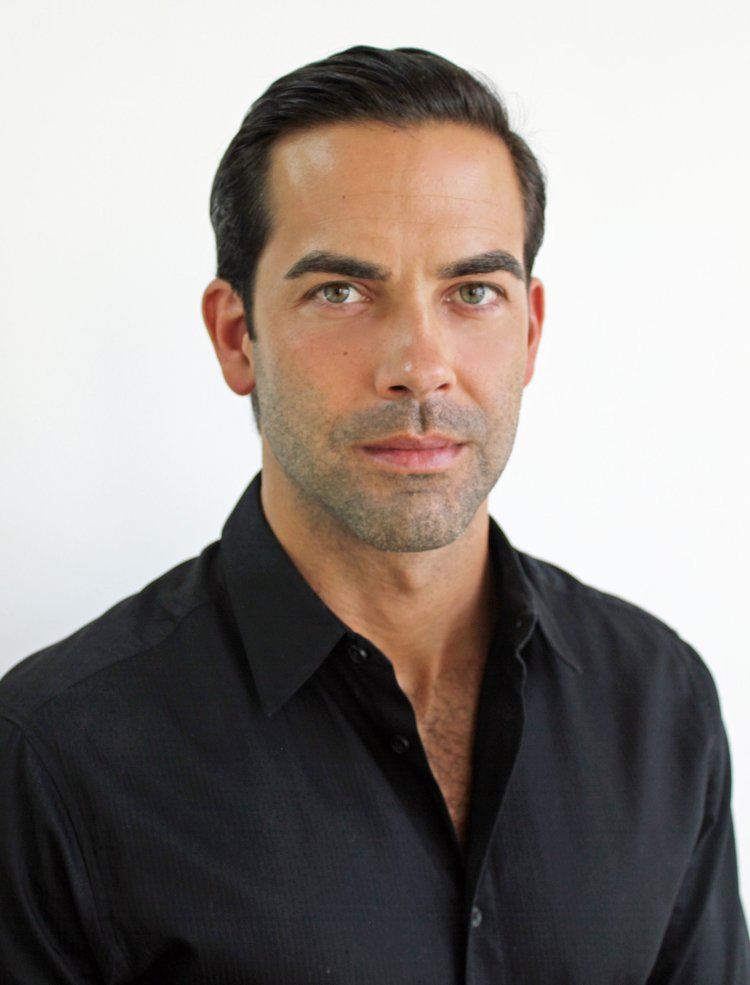
Andrew’s perspective on this is valuable because he deals with men every day who do not feel like they deserve what they have. For veterans transitioning into the civilian world after experiencing the death of friends, this is a familiar feeling.
Many veterans enter their civilian lives with the feeling that they do not belong. For some, this can be a feeling of guilt due to the fact that they lost friends in combat. For others, it can feel as if they are impersonating someone else by trying to fit into a new identity.
As Andrew mentions, these are two separate phenomena, but both have an impact.
To Learn more about Andrew: http://aimpsychotherapy.com/andrewmerrell
Transcript
Machine-generated from the episode audio and lightly edited — may contain errors.
Chris Albert (link to this point)
This is Chris Albert, and I'm here to remind you of one thing. Someday, you're going to die. Now that's not some morbid statement or scary idea. It's solid fact. Your time here on this earth is limited.
And we need to be reminded of this as much as possible for one simple reason, to live your best life while you can. This is the Warrior Soul Podcast.
What's going on, everybody? Welcome to Warrior Soul Podcast. And this week, I have a really interesting conversation for you. It's with mister Andrew Merrell. Andrew is a therapist out in Los Angeles area who specializes in working with men who are in the public eye, so to speak.
They are men who've obtained a good degree of notoriety or fame, and who are now struggling with their identity as a result of that fame and notoriety. And Andrew really works on a lot of different issues with these men, but but consistently, there's this idea of impostor syndrome, meaning that a lot of these men don't feel like they deserve the success they're getting or they don't feel like they deserve to be in the position they're in. The reason why I wanted to bring him on, we were on a phone conversation a couple of weeks ago, and he had discussed with me a lot of the issues that that we deal with here on this podcast and in the veteran community. And he had some really good ideas. So I thought that you get a lot out of this.
We touch on, of course, impostor syndrome. For instance, I know there's a lot of you out there who are heading into the civilian world or you're in the civilian world and you're going to school or you're taking up a new job that that potentially you don't feel like you deserve. And I also know that a lot of you out there are dealing with another issue, and that is survivor's guilt. The feeling that the feeling of guilt that arises because potentially you survived a trauma that a friend of yours did not. And these are common things out there in the veteran community, and Andrew brings a lot of clarity to these issues, and you're gonna get a lot of advice from this interview.
So pull out your pens, pull out your paper, make sure you're sitting down, take some notes as you go along because I think you're gonna get a lot out of this. Before we get into this conversation with Andrew, I just wanted to say a couple of things. Number one, this is the Warrior Soul podcast, as I said before. And on this podcast, we help US military veterans to live their best lives. And each episode brings about some piece of advice or or or an idea or something that you could do to improve your quality of life, your happiness, and your potential for success.
If you're not a veteran, that's absolutely fine. Stick around because everything we discuss here could potentially apply to anyone. We just focus on The US military veteran community because over the past decade and a half of war, we've dealt with very high suicide rates, very high rates of chronic depression, and extremely high rates of chronic disease. So I hope you guys get a lot out of this. All we ask for really in return is that you tell other people about the show.
You share these episodes out with people who could be helped by them and that you potentially write us a review on iTunes. Let us know how we're doing. Let us know how the episode helped you out. In addition to in addition to that, I also want to say that this podcast would not be possible without the good people over at f bomb nutrition. They make amazing, delicious packets of fats, really awesome macadamia nut butters.
They mix up with things like sea salt and coconut butter. So delicious, and they're sending boxes of this stuff overseas to the troops on the front lines so they can supplement their MREs. If you want to get 20 off your first order of f bombs, can head over to www.dropanfbomb.com. Use the code Warrior Soul at checkout, and you'll get 20% off. Beyond that, if you wanna support the show, you can head over to warriorsoul.shop.
That is our merchandising area. We make some amazing military moto shirts for those of you who like to wear moto. And, you know, particularly if you're in the Marine Corps, have served in the Marine Corps, if you've got a friend or brother who served in the Marine Corps or sister who served in the Marine Corps, they'll love these shirts. So head over to warriorsoul.shop if you wanna get some of that gear. We've also got stuff for other military branches too, but a lot of our stuff is geared toward marines because we're all marines here.
Other than that, guys, I'll stop yapping. Let's get into this conversation with his with mister Andrew Merrell. Andrew, thank you so much for coming on the show today.
Andrew Merrell (link to this point)
Oh, my pleasure, Chris.
Chris Albert (link to this point)
We connected a few weeks ago, and Andrew is a therapist from out in the Los Angeles area. And he specializes in working with men who who are kind of in the public eye. And and the reason why I'm bringing that up is is because a lot of these guys, they're they're athletes, actors, people who attained a good degree of success. And what we're going to be talking about today is a lot of the similarities between that population and and what goes on in the veteran community, particularly with those of you who've gotten out and are heading into new lives. And, you know, some of this stuff is going to potentially get a little bit complex.
We're gonna try and try and break it down as as simply as possible and and on a very human level here. And I think this is gonna be a great discussion. But, Andrew, number one, you know, we were talking a little bit before we got on here, and we were talking about the ideas of survivor's guilt and impostor syndrome, and a few other things when it comes to identity amongst the young men and women who served in the armed forces and who are now heading off into their civilian careers. In your experience, what leads to these types of things? Specifically, I'm talking about the survivor's guilt and the impostor syndrome.
Andrew Merrell (link to this point)
So those two phenomenon, it's important that we make distinctions between them. And I think the question that you're asking is really about their origins. And so if we look at how people have experiences across time, they become saturated in a particular set of experiences and patterns. So if we're talking about something like survivor's guilt, there's an experience where there's an intimate relationship that is developed. And that happens between a set of men and women who are in service, and there is a bond that has a certain kind of intensity.
And because there's a particular pattern in that relationship, and there's a particular intensity, there's a set of duty and loyalty that goes hand in hand with that relationship. And so that individual, that person who is having an experience in combat, and there's a loss, A fraternal bond is broken, because someone passes, someone has particular event. And in that event, whether witnessed or not, there is that loss. Survivor's guilt, its origins are sourced to the incredible bond that's created. And that might seem obvious.
But in the circumstances that veterans have specifically, there is such a connection, there is such a fire of kindred spirit and loyalty, that it transcends things like compassion. So what I mean by that is, there's such a woven connection that that person believes that they are one in the same with that other individual. And so when there is that passing, when there is that loss, that death, then that person can experience it as their own in some way. There can also be an unconscious belief that there was something that they could have done differently, that may have changed the outcome. It can also mean that they believe that for any number of reasons, be it fluke or phenomenon that they could have or perhaps even should have been the one who passed themselves.
And that is a really complicated thing for the psyche to attempt to consume. When I talk about the psyche consuming something, it's really about your mind understanding what took place, because acceptance is a critical part of being able to transition and move forward.
Chris Albert (link to this point)
Right. Right. And in a lot of cases, this could be very late, right? Where you don't even realize your mind is doing this, right?
Andrew Merrell (link to this point)
Absolutely right. So if we're talking about this really intense relationship, and there is an experience where a person finds themselves passing in service, then that individual could be so focused on their efforts, their mission, their next day, their next week, their next month, there can be a dormant experience of that grief and of that loss. And through a variety of different things that we could give examples of, dormant nature of that grief and loss can be subterranean for years.
Chris Albert (link to this point)
Right. And, you know, just and I was kinda talking to you about my own experience, because, you know, for the most part, I I felt like I had a really easy ride in the Marine Corps. Right? So I I really enjoyed my service. I I loved being there.
And, you know, when when we got deployed, even when I was in Iraq, I had a fairly easy deployment. And, you know, and I'm talking about 2003 and the the day I got back, the day my battalion got back, we ended up Saddam Hussein had been captured. And I was like, alright, war's over. I'm I'm gonna head out. I'm gonna move on to the next thing.
I'm gonna start that college thing, and then I'm gonna get all these injuries taken care of. And I had to have my my ankle taken care of my I had to have ankle on my or surgery on my ankle. And ended up leaving the Marine Corps. And then, a year or two later, my unit was back, and they were in Fallujah, and they had a much worse experience where I lost some friends, I lost some marines. And, you know, that that hit me very, very hard.
And actually, you know, started on this, and I didn't realize it while I was doing it, but it was kind of a self destructive path where I started taking a lot lot of Alcohol and drugs started, you know, womanizing like crazy, and, you know, my life was kind of falling apart. And as my life was falling apart, years later, I and I'm talking this this lasted for probably a decade of my life. I was telling myself, you know, this is my personal hell because I was supposed to die there. Right? I was supposed to die with my friends.
Andrew Merrell (link to this point)
Yeah. So I think you're you're offering a really important difference between part of the examples that I was giving about when there is a particular kind of intimacy in the relationship. Right? There's a really very connected fraternal bond with a brother in service. And now you're bringing up this other piece where, course there's friendships and there's relationships, but there's a distance. And then within that distance, there is that loss. And this belief of with your example, like here's this crew of which I used to have a very important relationship and I should have and could have been there. And so what happens is the mind, the mind doesn't want to stay there. The mind doesn't want to think about that. The mind doesn't want to process it.
So what does the mind want? The mind wants to distract. It wants to numb, it wants to avoid. And an easy way to do that, which is something that you've talked about is substance. Whether that's alcohol or other things, there is an evasion of the complexity of that thought.
And the evasion shows up with things like substance. And it can show up with other things, right? There's other forms of distraction. There's other forms of addiction, behavioral addiction, like pornography or gambling, right? And certainly alcohol.
So there's this filling of a space. There's a hole in us that is asking to be filled. And it is often very convenient to return time and again, to something that we can easily get and easily use. And it has a consistently desirable effect. And alcohol is a great example of that or substance is a great example of that, because we know what it does.
We know we can get it. It's not a complicated use process. And we often don't tune in to how it negatively affects not just us, but the people around us.
Chris Albert (link to this point)
Because this is such a it it could be such a latent thing where somebody doesn't even know they're they're doing this. Right? And and, you know, we're talking somebody could could start by just, having a few beers at night to try to go to sleep or or maybe maybe popping a couple pills or even getting prescribed something like Ambien or something like that to to to try to get to sleep. Number one, what are some early signs of this? What How does somebody know they're actually going through this if it is so late?
Andrew Merrell (link to this point)
To make sure I specifically answer your question, when you say going through this, do you mean survival's guilt? Survivor's guilt, yeah. So, there's going to be some apathy that's going to show up. There's going to be a, there's often symptoms of depression. I would often say that anxiety can show up in unique ways. That anxiety for the men we're talking to and talking about can also be hypervigilance, which I'm sure is something that you talk about with your family, your audience here all the time.
So there's a perception of threats. We also know that hypervigilance and forms of anxiety actually cause depression, because the body gets so revved up, and there is such an excitement and stimulation in the body assessing for threat and other forms of anxiety. That then perpetuates depressive symptoms, which is basically mind and body fatigue. It's like driving a car 100 miles an hour until the gas tank runs out. Of course, that car is going to sputter to the side of the road.
So that aspect of depression. And I bring that up specifically because apathy is a key component. Apathy goes hand in hand with depression. And apathy is the lack of passion. There's an absence of love for the things that we may have conventionally liked.
There's an absence of desire to be in connection with other people in our lives. There's an inability to find hope or excitement for the next employment opportunity or the next dinner with a friend. So it's not just that we find ourselves like glued to the floor or to a couch or to a bed or to a bottle. It's that we just don't have a desire to go do that next thing. Take that next indicated step to somehow move us up and out of that experience. And that's, sorry, go ahead.
Chris Albert (link to this point)
Oh, I'm sorry. I was saying it's kind of like just life has lost its zest or you're not, you're not getting that excitement. You're not getting that, that, that same adrenaline rush that you used to get, for, for doing new things.
Andrew Merrell (link to this point)
Absolutely. And, and listen, you you're someone who knows about aspects of things like nutrition and things like that. So think about the times when you eat that chicken breasts that you've just cooked in a pan with like no salt and pepper. Maybe you're, maybe you're, you're shredding, whatever, whatever this purpose is. That's it there's it's tasteless, right?
That's a great way to describe some components of apathy. Like you're not excited to eat it. There's nothing about it. That's stimulating it at all. Now imagine like a bucket of spicy chicken wings.
Chris Albert (link to this point)
Right.
Andrew Merrell (link to this point)
Right. That is that passion or the zest that you're talking about. So that's just perhaps a cheesy metaphor, but I find those things kind of helpful.
Chris Albert (link to this point)
Made me hungry. I'm I'm looking for some spicy chicken wings. So so and, you know, we're we're we're defining these things, and we're we're trying to look at these things as as very separate. Now we've mentioned we just talked about survivor's guilt. When we're getting into something called impostor syndrome, what's the difference here?
Andrew Merrell (link to this point)
So this is a really passionate place for me in particular. Imposter syndrome, it's important to talk about first what that really means and differentiate what we're talking about and even the language that we're using. So imposter refers to fraud. Impostor means and implies that we are presenting something that is false. And syndrome has this pathological vibe to it.
It implies that it's faulty. There's something wrong with us, that we have been injected with something negative. So if you combine those two things, what we're actually saying when we say imposter syndrome is that it's my fault that I am showing someone something fraudulent. And I have a lot of problems with that. So the reason why I have a problem with that is because we can't always source that falseness with the person.
It is unjust to only think that the person that we're talking about relative to imposter syndrome is located solely in that person. Because the world society has a lot to say about who we're supposed to be in the world. What we're labeled, what we're called by other people. Think about civilians in your world that can't possibly understand the kind of extraordinary life and experiences that you've had. Those are the kinds of people, that's the majority of people that are going to be looking at and labeling something like imposter syndrome.
It's enforced by the majority by society upon a minority. And that's an important thing to recognize when we're talking about veterans of the armed service.
Chris Albert (link to this point)
So a lot of times, we're we're you know, when we're talking about veterans who are getting out, they're going into school, and they're they're hitting the university campuses for the first time, and they're they're trying to get the next chapter of their lives together. And a lot of these guys, they're facing environments that are are are, you know, quite honestly, hostile to to their identity. And and, you know, the the university campuses are very, very I guess you could say that the ideology is very antithetical to somebody who would have served for, you know, The United States Of America. And I think that in a lot of cases, these guys get a number of reactions to this. It's it's number one, feeling like, okay, do I is this the right place for me?
And should I be here? Right? There's a feeling of intense loneliness that comes along with it. But also, think in a lot of cases, these guys are coming from places where, you know, maybe they did college wasn't a possibility for them right when they got out or right when they were, you know, 18, 19 years old. They, you know, wanted to go in the military first to to volunteer, obviously.
But but also, maybe there was a financial aspect to it, where they don't feel like they were good enough to get into college when they were 18 and 19. And so I think a lot of guys also have a little bit of a feeling of inadequacy when they're heading into these these college classes. And then beyond that, you know, in a lot of cases, they're having a professor tell them how the world works when that professor has never seen half of what they've seen.
Andrew Merrell (link to this point)
You're absolutely right. And I I love the way you just articulated so many pieces of that. I I when we think about these individuals, these men and women who are entering an environment like a college campus, they are instantly going to be surrounded and engulfed by peers that do not have the same wisdom and experience that these men and women have. They're coming in with an extraordinary set of life experiences. They've demonstrated a set of nobility and altruism and commitment and loyalty that so many of their peers around them haven't even begun to experience.
So there's a certain amount of elevation that I'm not afraid to say exists for veterans who are in a campus environment, where their peers, these men and women sitting in class with them, their their greatest trauma has been getting broken up with two months ago, or getting ghosted by some girl on
Chris Albert (link to this point)
Tinder.
Andrew Merrell (link to this point)
Which pales in comparison to these folks, your folks, your audience, you walking into this experience with knowing that they've just had two, four, maybe more years where they have lived as heroes and heroines in with cohesion, with a certain level of commitment and intensity, a level of purpose every minute of the day. And that's hard to relate to. It's hard to connect to Joe and Jane American in a history class. So there's a level of, and we're obviously this is tying into the components of imposter syndrome where somehow, for some reason, there is a shaming or a blaming or a laying of responsibility on your brothers, your military brothers, because they're in the minority. And that is a grave injustice.
Chris Albert (link to this point)
Right. And so this is this is something and you'd mentioned this before we hit record. It's not necessarily coming from within them. It's it's something that's being imposed upon them. Right?
So it's it's the space in their head, so to speak.
Andrew Merrell (link to this point)
We're talking about the origin, the origin of that labeling. Right? So, so yes, I think it's really important to recognize that the belief system that comes around imposter syndrome, or we can just sort of shorten it to feeling like a fraud, feeling different, feeling like, there's parts of your lived experience that no one can relate to. No one can possibly relate to. There is an injection of that belief into these individuals, your family, who are walking in there and feeling like somehow they are wrong.
They are being pathologized. And the source of that is not necessarily inside them. It's being forced upon them by that external world, by those peers, those fellow students sitting in front behind to the left and to the right. And so it's really critical to recognize what part our peers play in that moment and what part we play. And so that gets into, okay, well, what is the actionable next step?
Right? Because we're talking about these as phenomenons, not necessarily about, okay, what do we do once we name and define them? And so let's say we got someone named Joe Joe's walking into a history class. He's got these people all around him. Joe needs to look at himself and say, all right, what am I super imposing on myself?
What am I layering on myself? And what about my question? Because if I can question pieces of that, then I can soften their edges. It'll impact me a little bit less. And then if I can turn to the person to my right and begin to develop a relationship with that person, and then through simple acts of vulnerability, allow that person next to me to know what I might be facing.
That's not only the start of a friendship, but it's the start of the eradication of the illusion. We're basically in combat with the illusion of being a fraud, of being that imposter.
Chris Albert (link to this point)
Right.
Andrew Merrell (link to this point)
And if we are in active combat against our sense of feeling like a fraud, then it's going to reduce and potentially be eliminated.
Chris Albert (link to this point)
So the way I see a lot of guys approaching this is is they'll actually start to put up walls. So, you know, and very much, I think it's there's like this clothing thing that goes on much like a lot of other minorities out there in the country, you know, your clothing becomes part of that wall. So, like, you'll have guys come in, they'll they'll have a very bellicose type shirt on that says, you know, I don't know. It'll it'll be like a very, very, like, bellicose offensive t shirt. They'll have their hat on.
They'll try to try to separate themselves from there. And and nothing against dressing that way, because I honestly do dress that way a lot of time. And I have a t shirt company that sells bellicose shirts. So but but, you know, I think that that in a lot of ways with their body language and, you know, the way they interact with other people, I think a lot of guys have a hard time owning this without seeming like an asshole.
Andrew Merrell (link to this point)
Right?
Chris Albert (link to this point)
Without without, like, putting you know, just pushing people away. So so what are some simple steps they could do to maybe, you know, rather than pushing people away to to draw people a little bit closer so they can actually maybe maybe learn from these guys and and and girls who are who are out there and and who have had more of this life experience.
Andrew Merrell (link to this point)
Yes. So your question is sort of predicated on them desiring that. Right? Them wanting to have some of those more some of those connections and some civilian connections and creating some transitional relationships out of service.
Chris Albert (link to this point)
Right. You know, and just in my experience, it's because being there without doing that, it's an intensely lonely thing. It's an intensely lonely lonely experience for four years, you know? And and, you know, maybe they don't think they want this, but but if they did want it, what what what would they do?
Andrew Merrell (link to this point)
So the first thing I would say is that individual needs to well, should we just call him Joe again?
I'll call him Joe.
So Joe needs to first recognize that he's a porcupine. So a porcupine exists in the wild, to make statements to potential threats that they're dangerous. Right? Picture a porcupine, whether it's a cartoon porcupine or like something from national geographic covered in spines. Those spines are only truly dangerous if they're touched.
Chris Albert (link to this point)
Right.
Andrew Merrell (link to this point)
So Joe is basically communicating. Like, don't mess with me. And what that's doing is that it's creating, just like you mentioned, it's creating a force field. And so by building those walls or by having those spines, you're keeping everyone else. But that also means that you're only keeping yourself inside. So there's this defense against the world. And what that does is it succeeds at doing what Joe wants to do, which is like, no one come near me. I don't want relationships. I don't think you can understand me. And I don't think I can understand you.
That means that Joe just continues to live on an island. So specifically first step, which is what I'm just sort of talking about is he needs to recognize what he's doing. He needs to fully accept. All right, I'm defending against the world. I am pushing people and keeping them at a distance.
Because in order to take any thoughtful step to change that, Joe really has to understand that he's doing it. The second part of that is Joe needs to ask himself if he's ready, because to do that prematurely doesn't matter if this individual is a combat veteran or a celebrity athlete. They need to be ready. They can't just think or maybe, because it can be scary. It can be scary to let defenses down when you haven't done that for years.
And it can be scary to start thoughtful, vulnerable conversations with other people. If you're not fully ready and passionate about it. And this may sound obvious, but I think you can hear by my voice that I'm putting emphasis on it. And that's very intentional. People just pretend to be ready to create those new relationships.
Then there is a huge risk of failure, which means those spines will suddenly become bigger and longer.
Chris Albert (link to this point)
Right. Well, I could see how this would be very important for you and your position and the people you work with. Because literally, if if they make a mistake on this, I mean, could be it could be news. Right? It could be out there in the media, and and that's something they definitely don't want, and they'll have a whole another invasion into their privacy and into their lives.
Andrew Merrell (link to this point)
Absolutely. It's the difference between TMZ and a lawsuit or a record deal or an NFL contract.
Chris Albert (link to this point)
Right. Right. Exactly. And, you know, for for for the veterans listening at home, I mean, I think the difference here is, you know, between, you know, what do you want your life to look like? And I think a lot of us, as we go about our lives, we don't we don't admit to what we want our lives to look like.
We we try to bring around this this kind of hard image that, you know, we're okay with dealing with everybody not liking us. We're okay with everybody dealing with with looking at us in a certain way. But you know, what I want everybody out there to know is that that, you know, regardless of where you are in your life, you can begin to work for the life you want to live. Right? The the life you want to live and you can start to look at the world in a way that that brings about possibility rather than a world that brings about limitation.
Right? Because a lot of people, I think, just look at their lives as, okay, I can't do this because this, or I can't do this because I hate people. But if I'm able to to start to to work to talk to people, to let people in a little bit, I can open the door to something that could be potentially great. Right?
Andrew Merrell (link to this point)
I I mean, you've been watching me nod at you. I I I love what you just said, and I I still appreciate how you articulated There's there's a quote that I like to talk to my clients about very early on in our relationship together. And it's something that I'm really passionate about because it has really informed my trajectory as a man and into manhood and in accepting certain aspects of vulnerability and my own past as it relates to aspects of addiction and other pieces. And it's a really simple quote. And it goes, once there was a man who was afraid of his shadow, then he met it.
Now he glows in the dark.
Chris Albert (link to this point)
Wow.
Andrew Merrell (link to this point)
And a lot of people can have a different set of reactions, create a different set of meaning or impact around that. I'll tell you mine, mine is recognizing that the pieces of me that I at one time called weakness, or one time called fear, or mistake. Those are things that are shadow. And if we hide, repress and deny our shadow, we stay fractured. But if we pull, if we embrace, if we accept the things that we call mistake or weak, we pull that in and integrate it.
If we accept it as part of who we are, then we can become a whole. And I love that the quote talks about the wholeness of our complete acceptance of self, of the things about us that are illuminated, the things about us that we may think are dark, pull that together. And I love that it talks about glowing because glowing is a self generated source of light. And so to make that easy, what that means is if we integrate all those parts of ourselves, we accept the vulnerability. If we erase the mislabeling of, of our weakness, as just parts of who we are, we don't evaluate it as good or bad.
We just say, this is effing me. That will then allow us to have the kind of confidence and radiate in a certain way in our social relationships that can allow us to connect, to meaningfully connect.
Chris Albert (link to this point)
And not only that, I think in a lot of ways, it's also very good leadership advice too, you know, and particularly for those of you out there who are still in, know, your vulnerabilities, understanding your weaknesses and even, you know, letting people know what your weaknesses are so that you know, people on your team can fill in for you or or help you along. I think that's that that's a really important aspect of leadership itself. And and, you know, for those of you moving into the civilian world, I think that if you wanna take up the same types of leadership positions that you once had in the military, this is gonna be really important too.
Andrew Merrell (link to this point)
I would also encourage you and and the audience to think about that word weakness. Right. Think about how that's been injected into us to use as a measurement tool. And I understand that there is a certain kind of rationale around, but like, what are my strengths? What are my weaknesses like that?
Get, but if we overly used and pathologize areas where we can grow as weakness, then we may in fact, just allow those things to sit and rot as things that we may be insufficient with. Haven't mastered yet. Maybe it's a skill or maybe it's a component of what we, how we talk to ourselves or inner dialogue. Who knows what it might be, but if we only refer to it as weakness, then we'll never love it. We'll never accept it.
We'll never allow it to be a part of ourselves.
Chris Albert (link to this point)
Right. Right. And it's something you have to, you, you actively should be seeking these things out if you do want to grow. Right.
Andrew Merrell (link to this point)
Well, right. I mean, if we're talking about things like anxiety and depression and imposter syndrome and survivor's guilt, none of those are weaknesses. Those are, those are conditions or states that we can have a transitional experience with. They're not weaknesses. Right. They're they are, they are things that we experience and for very good reason.
Chris Albert (link to this point)
Right. And I don't know my friend, Mike, you know, he talks about, because I had mentioned Mike to you. Mike from the Transitions From War podcast, he's he we kinda act as co hosts on each other's shows a bit. He talks about, you know, he had this epiphany while he was doing triathlon, where his pain the pain he was feeling, he he he stopped trying to drive it out of his head, and he kind of brought it in and became comfortable with the fact that it was there and admitted it admitted that it was there. And admitting that it was there and that it was in front of him and that it wasn't gonna go away was part of his own healing process.
And and so now he's he's a little bit what's the word? Because, you know, he went through through a whole heck of a lot. And and now rather than trying to deny it or push it away, it's just about keeping it there, being okay that it's there, and being more comfortable that it's there.
Andrew Merrell (link to this point)
Yeah. I mean, I love the way you just described that. It sounds like his experience has been about acceptance.
Chris Albert (link to this point)
Mhmm.
Andrew Merrell (link to this point)
So and the journey of acceptance starts with asking questions. It starts with inquiry. So trying to locate. And once you locate and can name what we're talking about relative to pain, irrespective of whether it's physical, physiological, psychological, social, we have to ask questions, we have to literally be in curiosity to find it. Once we find it, we have to excavate.
Once we excavate, we have to accept, right? So it's looking for it, finding it, mining it, and then doing something with it.
Chris Albert (link to this point)
Wow.
As far as, we and we were talking a little bit more about about identity prior to coming on to prior to hitting record. And I think that that a lot of what happens with these guys as well is that they get taken out of a place where they're actively doing things all the time, and they get brought to a place that's almost kind of it's kind of like a a waiting ground to become something else or or waiting for something else to happen. In your experience, you know, when you get to these kinds, and that's essentially what a transition is, right? It's a waiting ground trying to become something else. In your experience, when you're going through transition, how do you how do you deal with that kind of psychology that says, okay, I'm gonna wait here until something happens.
And and how do you get around that and start to say, okay, I'm not gonna wait here any longer. I'm actually gonna do something.
Andrew Merrell (link to this point)
So what we're talking about is particular to the scenario in the environment of the fraternity of men that we're speaking to is that they basically come from a rainforest into a desert. Right? So they've come from a place that has been fertile and lush with purpose, with a schedule, knowing self, knowing other, knowing a predictable routine. I mean, that may be a misnomer, right? So like certain forms of predictable routines with some populated experiences of the unexpected and certainly crises and combat.
But there is, there's an intensity, there's a connectedness. There's at least a certainty of certain components of lived experience. And there's a lot of that. It's loud, it's all over. Fills our senses. And so to walk out of that, it's instead of transitioning through a variety of climates, often it can be like stepping out of the edge of a rainforest and stepping onto sand, where there's landmarks. There doesn't seem to be any resources or refreshment.
It feels isolating. It feels dry in the sense of, there's an absence of excitement. There's a loss of intensity. There's a loss of things to interact with. Right.
Do you see how those metaphors work in those ways? So what you're asking is how do we transition there? Well, everyone is going to have a different experience, which is a bit of a boring answer, but we have to recognize that every person that crosses that threshold from that metaphorical rainforest into the desert is going to be a different man or woman. And so the first thing to do is if you're standing there by yourself, pat your pockets. So metaphorically, what does that mean?
That means what tools do you have? What tools are available to you in this new environment that are inherent to you? And then everyone's going to have something different in their pockets, right? Someone may be walking out with two new best friends, right? Someone else could be walking out with a certain set of experience and skills that they have mastered that they never had before. Someone else may be walking out saying, listen, here's this one thing that I know that I loved about serving my country, and I want to try to replicate that in my next thing. So the metaphorical padding of the pockets is just assessing self for what do you inherently now possess that you didn't possess before that no one can take from you.
Chris Albert (link to this point)
Right.
Andrew Merrell (link to this point)
Right.
Chris Albert (link to this point)
And so it's like, you know, and and I think you kind of have to go deep on this because I get a lot of infantry guys, I served in the infantry, and I get a lot of infantry guys who say, well, I'm not good at anything except except killing people. I'm not good at anything except shooting. I'm not good at anything except infantry stuff. How is that going to translate to the civilian world? But there's a whole host of different things that go along with that experience.
You know, how you deal with people, and dealing with people in the most intimate circumstances that you could possibly be in. Leading people under some of the most stressful circumstances that you could possibly be in. And there's so much, regardless of what your experience was, I guarantee that that during your four years, you were in charge of more things than anybody else your age in other professions. And I think that people need to realize that.
Andrew Merrell (link to this point)
One thing that comes to mind for me as I hear you expressing that is, if we go back to Joe, Joe was walking out after, after four years, I would say to Joe, Joe, what was it like day one of bootcamp?
Chris Albert (link to this point)
Right.
Andrew Merrell (link to this point)
You didn't have these skills. You didn't have these relationships. You didn't have this passion and purpose to be in service, to use your mind and use your body in the ways you just did for the last four years. So this is day one of something new. You've been here before.
You've been here before in that first twenty four hours that you walked into service is this is different, but it is also the same. Right. And other people have had that. And I don't want to make a civilian comparison, but I'll say one small piece of that. Everybody, including myself has had a first new day of being a new person. Everyone, the lucky ones at least.
Chris Albert (link to this point)
Right.
Andrew Merrell (link to this point)
And I would argue that the men and women listening to you right now have a certain kind of hunger and thirst for community, for what's next, for how can I be that next enhanced version of me? And this may be an oversimplification, but those people listening to you, they care about what you say that may have some of those traits that I just mentioned are already capable of greatness. They've already done exceptional things. And so if we're talking about a transition into something new, I can't think of another community of men and women that has already demonstrated inability to do something extraordinary.
Chris Albert (link to this point)
Absolutely. Absolutely. No, I and I know we're we're coming close to time, and and I wanted to try and get into this just a little bit here. But but you also deal with with male identity a lot in your work. And and, you know, particularly in these new situations that that a lot of these guys are getting into, having a hard time dealing with with the the image that they carry and and people's reactions to to who they are as well.
And it kind of gets back to to the walls that I I was talking about before, but but but also, you know, just their natural state of being and and what they look like and, you know, what they're doing and the way they carry themselves. You know, for example, what you would term as as confidence, in some cases, if expressed by a man in in a university setting, that could be that could be termed as, I guess we said toxic masculinity before. We talked about the the you know, that was something that Mike and I had talked about the the last episode. But but how does somebody, I guess you could say, own their identity here, as they're stepping into these new situations, saying, you know, I wanna I'm I'm owning the fact that I'm a man. I'm owning the fact that I'm I'm a man who served my country and who's done things that other men wish they could do or or haven't had the strength to do.
How do you own that in a way that's not threatening?
Andrew Merrell (link to this point)
I'm gonna do my best to to answer that, efficiently based on some time. There's so many beautiful components of the question that you just asked. I think where I would choose to start is with a little bit of anger that I have. And the anger that I have is directed toward those that wield toxic masculinity as something that can be used to blame the man that is exhibiting what they deem to be those symptoms. And the anger that I have about that is that it does a great disservice and injustice to the man that is being pointed out with a finger and said, that is toxic masculinity. And the reason why I have the anger about that is because it somehow ignores the most critical components of what those people are pointing at and calling toxic masculinity, which is how that man may have possessed certain constellation of characteristics that that individual pointing is seen.
Chris Albert (link to this point)
Sorry about that. I'm turning that off there.
Andrew Merrell (link to this point)
No, you're good. So if we think about toxic masculinity as a conventional stereotypical, like bro performance that is stoic and patriarchal and sexist, right? Like that is sort of what most people like to use to define toxic masculinity, where there is a flight to aggression instead of understanding and dialogue, where there is an exaltation of masculine conditions or traits, where there is a sense of superiority that that person possesses. And so the anger that I have is that it ignores the fact that that man was once a young adult was also once a boy.
Chris Albert (link to this point)
Right.
Andrew Merrell (link to this point)
And the world had a lot to say about what Joe age five should be doing and not doing.
Chris Albert (link to this point)
Right.
Andrew Merrell (link to this point)
So I know we're, we continue to run short on time, but we cannot have a conversation about toxic masculinity without really talking about the sources of that man's lived experience and what he was told was okay and told was not okay.
Chris Albert (link to this point)
Right. And to some extent, whether or not it's even toxic, because a lot of times what what some people would consider toxic could could be very noble behavior. That's just just, you know, some people find as threatening. You know?
Andrew Merrell (link to this point)
Yeah. I'm nodding a lot because I agree with you very passionately. I think, you know, in the same way that there is such this popular discourse around aspects of identity in a variety of places being on a spectrum, so too is masculinity. And some men by nature simply present in a very stoic way, in a way that is declarative and dominant, and that should be celebrated if that is authentically that person's place. In the same way that we would also want and expect there to be respect for someone who may present their masculinity in a different way.
Chris Albert (link to this point)
Absolutely.
Andrew Merrell (link to this point)
So just to shame one end of that spectrum to me is BS. I don't know if I can curse on your show.
Chris Albert (link to this point)
You can curse like crazy. We curse all the
Andrew Merrell (link to this point)
It's bullshit. Bullshit to only celebrate one end of the spectrum of masculinity and not also have some reverence and respect for those that present on the other side of the spectrum. Now, parentheses, there are certain components of toxic masculinity that can be really destructive, but that's not what we're talking about right now. The example that you gave basically says, here's Joe coming out of four years, presenting in a way where he is making declarations socially. He's presenting dominantly.
He's presenting in a confident way And he deserves to be because of the services he's performed for our country and the experiences. So to shame that, my first response to any kind of shame around that would be the person who's pointing that finger is ignorant and deserves to ask questions before leveling that accusation.
Chris Albert (link to this point)
Right. Exactly. Exactly. Well, Andrew, number one, I want to thank you for coming on, you know, and I want to thank you for for really, I think, being of service to to to the audience here today. I mean, your insights have been really, really valuable here.
Are you on social media or anything anything like that? Twitter or or or Instagram?
Andrew Merrell (link to this point)
I'm not. I avoid that for lots of reasons, largely based on my clients. But I do have a website. It's www.aimpsychotherapy.com. It's aimpsychotherapy.com.
Chris Albert (link to this point)
Absolutely. We will get that up on the show notes. And again, thank you so much for coming on here today. And you know, definitely going to see if we can get you on again and talk a little bit more deeply about some of these other issues as well. Because there is a whole lot here that that I think needs to be brought to light, particularly for this population.
Andrew Merrell (link to this point)
Chris, you know, you you say thank you to me. I I don't think that's deserved. I gave you an hour talking about some things I'm passionate about. I think that the thanks really is to you for being in conversation and having dialogue for your family, For your brothers and sisters in service and allowing them to have opportunities to talk about and listen to certain subject matter. And if there's one person that's listening to this and thinks, Oh wow, like maybe therapy isn't boring.
Maybe therapy isn't some old guy sitting across from me smiling and nodding. Then that one person gets access to care. You know, they jump onto some resource and Texas or Kansas or, or New Jersey, and they find someone close to them and have meaningful dialogue. That'll be the thank you.
Chris Albert (link to this point)
Absolutely. Well, I very much appreciate that. And for for all of you out there, you know, I hope that you learned something today. And I hope that you begin to to really explore this stuff because we can't live in in ignorance of our own mind. We have to we we really do have to, you know, own these aspects of our personalities.
We really do have to start searching for different things that that we can do to move ourselves forward. It's it's not worth just sitting there and waiting for something to happen. So listen, guys. We'll be back at you next week, and I want you all to get out there and live your best lives while you can.
Host of the Warrior Soul Podcast and founder of Warrior Soul. Worldwide trainer and nutrition coach, contributing author at Testosterone Nation and Muscle and Strength.