Podcast episode
Episode 33: The Power of Ketosis. Discussing the Diet and Exogenous Ketone Supplements with Rob and Gary from Kegenix

Hosted by Chris Albert
The Warrior Soul Podcast
The ketogenic diet has been growing in popularity lately both for its ability to induce fat loss and it’s ability to increase mental and physical performance. With its rise, we also find many promising advancements in the supplement industry in the realm of support for those who want to try the ketogenic diet. We also find some false promises.
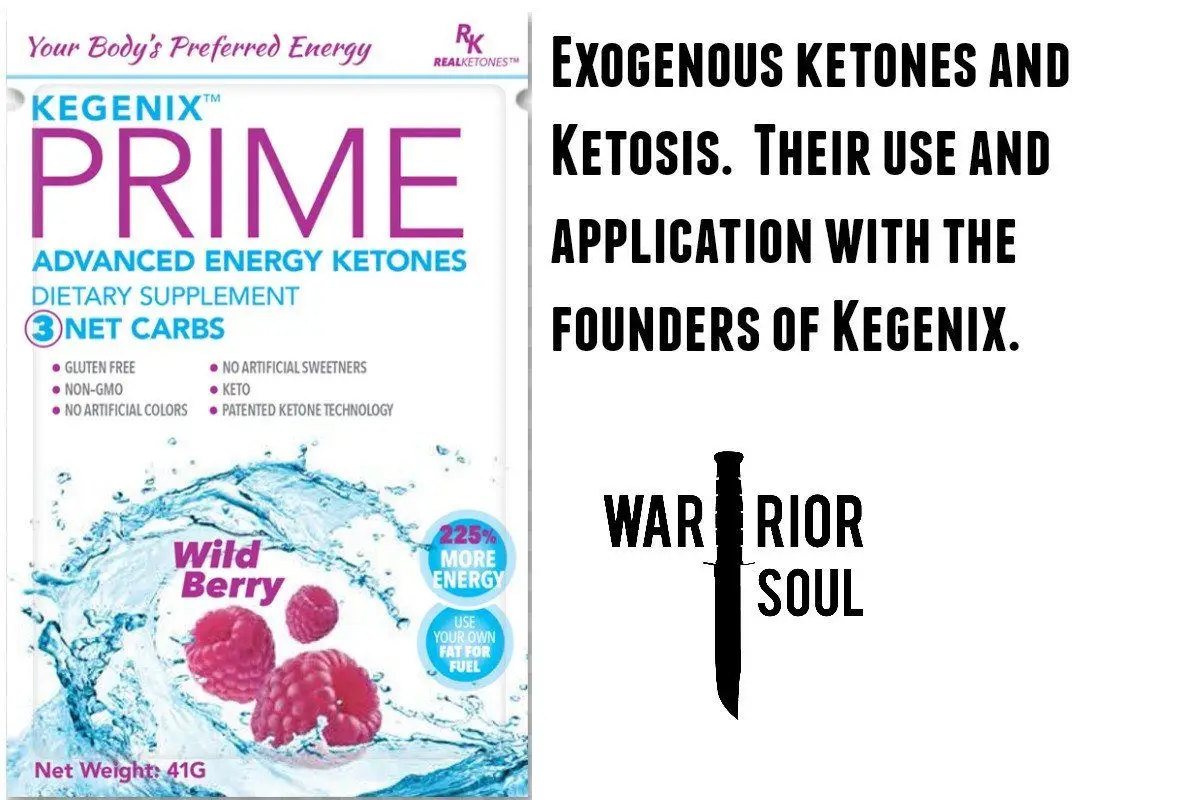
In this episode we discuss ketosis, ketones, and one of the more promising supplements with the founders of Kegenix. Kegenix makes a supplement called Prime that contains beta-hydroxybutyrate (BHB). BHB is one of the two main ketones produced by the liver, and these salts were developed by Doctor Dominic D’Agostino, one of the premier researchers on ketosis. We discuss the value of ketosis and its application for fat loss, health, performance, and for active duty military members.
To learn more about Kegenix, click the image:

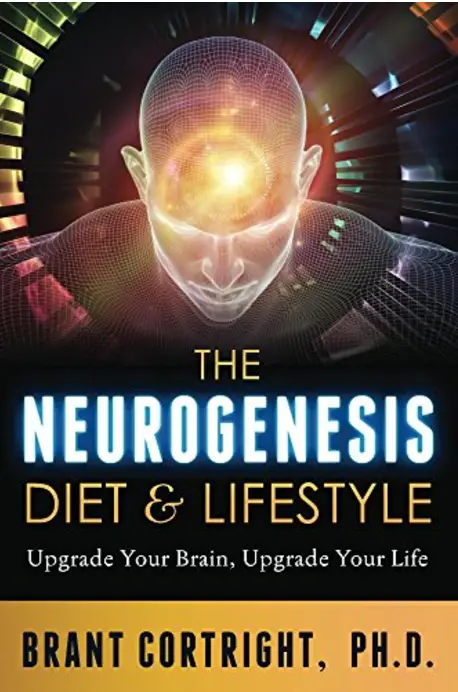
For the Warrior Soul Keto Camp book and course, click the image below:

Transcript
Machine-generated from the episode audio and lightly edited — may contain errors.
Chris Albert (link to this point)
What's going on? Welcome to episode number 33 of the Warrior Soul podcast. This is Chris Albert, and today we have some really special guests. Actually, three guests. The first is my good friend, Matt Cooper.
Matt is a biohacker from up in San Francisco and he's coming on the podcast today because we are dedicating this episode to ketosis. And Matt is also my co author on our new book KetoCamp. Now, what is ketosis and why is it so important? Well, ketosis is where your body switches from burning glucose to burning ketones. And ketones are fatty acids that have been converted from the liver into from your fat stores through the liver into little bits of energy called ketones.
And there there there's two types of ketones. There's beta hydroxybutyrate, and then there's acetyl acetone. Now the reason why I'm going into this is because the other two guests on this episode have created a product called Kegenix. We've got Rob Rogers and Gary Millet from Kegenix and these are exogenous ketones that you can take that will put you into ketosis. Now, why would you want this?
Well, one of the main difficulties that people have with a ketogenic diet is actually getting into ketosis. It actually takes a bit of time for your body to switch from burning glucose to burning ketones. And during that time you can get lower energy, get headaches and a few other kind of negative things. But those things are really temporary and once you're adapted you start to feel really good. With Kegenix you automatically start getting ketones into your bloodstream that get absorbed up in your brain.
So you don't have that problem with switching over. So if you're beginning a ketogenic diet or just if you want to burn more ketones and less glucose, Kegenix could be a really valuable tool. We go into a lot of different things here in this podcast and different applications, particularly we focus on the applications for active duty military, with my background as a Marine Corps Infantryman and Andrew's background as a Special Forces Operator, we both agree that if we had this product back when we were in the military, things would have been a lot easier energy wise. I just remember feeling so brain dead after eating MREs and living off of them for a while that, it was really hard to focus and, you know, all those days kind of, using tobacco to try to stay awake, coffee and and anything else I could get my hands on energy drinks, all these things. I really wish I had something else that was a lot cleaner, that I could have used to get a more steady supply of energy.
The other thing I want to mention here is that we try to make everything in this podcast as understandable as possible. There is quite a bit of science behind ketones and ketogenics and and ketosis in general. So what we try to do is stray away from those really big words and and keep things down to layman terms. But that also means that in some places we may have oversimplified some things or or maybe missed something. And if you find so, just just let us know and and we'll be sure to try to cover that kind of stuff in our other content.
And if you're interested in trying out Kegenix or learning more about ketosis, we're gonna have a lot of this information loaded up on our show notes, you can find at www.warriorsoulagoge.com under the podcasts blog. And remember that this is episode number 33. Additionally, Matt and I have just finished our book, Keto Camp, and we are putting out the book along with a very special 30 recipe cookbook and an entire course on ketosis. In it, you're gonna find an entire guide on keto adaptation. So you're gonna learn how to get yourself into ketosis.
You're gonna learn how to maintain ketosis once you're in it, and you're gonna learn about what types of supplements and micronutrition you should be taking along with a ketogenic diet to stay as healthy as possible. We also include training plans for the adaptation phase and the maintenance phase. And we show you how to tailor the diet to your own needs. If you're an athlete, maybe a pure ketogenic diet isn't gonna work for you as well as a cyclic ketogenic diet would. So we show you how to do all of them, and we show you how to tailor your macronutrients and tailor your diet according to your lifestyle.
We're also including membership in a private Facebook group where we'll be able to mentor you through the process and handle any questions that you have. So if you're interested, this out. It's at www.warriorsoulketocamp.com or you'll be able to find the link on the show notes for this episode. So that's that as far as announcements and without further delay, let's get into the show. This is Chris Albert, and I'm here to remind you of one thing. Someday, you're going to die. Now that's not some morbid statement or scary idea. It's solid fact. Your time here on this earth is limited.
And we need to be reminded of this as much as possible for one simple reason, to live your best life while you can. This is the Warrior Soul Podcast. All right, everybody. Welcome to the Warrior Soul podcast. This is Chris Albert, I am here with my good friends, Andrew Marr and Matt Cooper.
And we have some special guests here today. And I just want to tell a little story about this. A couple of years ago, I was a bodybuilding coach and I was in Las Vegas for the Olympia and I was at the expo. One of the things I like to do is go around and take a look at the ingredients of all the different products that were on offer there. And I was walking around and I'm looking and everything's pretty much the same thing when you go to an expo like that.
And, one thing you got to realize is that this isn't a giant convention center and people are handing out protein supplements to bodybuilders, like lots of protein supplements. So people are taking these things with reckless abandon. And by the end of the day, that giant convention center smelled so bad that I mean, I'm talking people are taking non digestible protein, bodybuilders it was really, really bad. But there was one product when I walked up and I looked at the label, I was like, what really they did this? I can't believe they actually did this and it contains ketone salts, beta hydroxybutyrate.
And I tried it and it made me feel absolutely amazing. And I have Rob Rogers and Gary Millet here today from Kegenix. And I wanted to give them a chance to come on and talk about their product, to talk about ketosis, to talk about, the impact that this product, can have on people, on the industry, and also on veterans who are operational out in the field, in active duty military or operational out in the field. So Gary, Rob, I want to thank you both for coming on. We also have Matt Cooper here.
Matt is a biohacker from up in the San Francisco area. He's also my co author on the new KetoCamp book that we have coming out. And of course, Andrew's here as well, retired Special Forces operator. So guys, thank you so much for coming on. Can you tell us a little bit about Kegenix and why you guys came up with it?
What was the idea behind it? And where'd you find this?
Rob Rogers (link to this point)
Well, first, Chris, it's great to see you again. I remember that expo like it was yesterday. And, again, you look great. Cooper, Andrew, it's awesome to meet you. Heard a lot about you, Coop.
We've talked, quite often. Very impressed. And then, Andrew, of course, we've, read a lot about you and incredibly impressed with what you're about. Let me surmise, I guess, real quick, and then Gary can jump in. I I guess the quote the real quick version is we have been following doctor Dominic D'Agostino.
I'm a former pro athlete. Gary is a former, collegiate jock, if you will. So we knew about supplements. We didn't know anything about selling supplements. We were really serial entrepreneurs.
We've owned a lot of businesses. We owned one previous business together, previously. But after reading, and more Gary reading about doctor, D'Agostino and and this thing about ketones, and what they were doing for the Navy SEALs, and and Gary can get into that, It it was really interesting, but you guys probably remember four years ago when you even said the word ketone, it was negative.
Chris Albert (link to this point)
Right?
Rob Rogers (link to this point)
Yeah. You know, ketoacidosis, people would think, raspberry ketones. Shavu is not a ketone. So that really Dominic, which is, you know, obviously one of the the smartest people in the space, he's really the one that got us into it. You know, we heard about this patent.
Gary and I went down to the University of South Florida a few times, and really we took a leap of faith. It was the amount of money we put into it. People thought we were silly, and we didn't know what we were doing because not only did you have to, we we ended up licensing the technology from, University of South Florida, but then you had to turn that into a product. And, so therein lies the story. Gary, you got one anything?
Gary Millet (link to this point)
Yeah. Hey, Jeff. Thanks everybody for having us on the program, and it's it's actually nice. I I haven't seen any of you guys before, so this is great to to see face to face even though we're we're connected by video. So thanks for having us on today.
Andrew Marr (link to this point)
Thank you.
Gary Millet (link to this point)
The the challenge that that that we see is that you've got two things going on at the same time. One is that we I think everybody on this call would agree we're at a tipping point in our worldwide health. We we see all the symptomatic responses of our society getting sicker and sicker and sicker. And we see right now, I I saw a statistic the other day that a hundred and thirty three million Americans have one or more chronic diseases. That's forty seven percent of our population.
And I don't know if that just is stuns me, but I imagine it stuns to all of us on this show. But when when you take a look at the hockey stick situations with type two diabetes, you take a look at the obesity rates, which has gone from eleven percent in 1960 to right now, it's seventy two percent in 2017. And when you take a look at that overweight calculation, there's nothing that explains that besides diet. And so when you start to really research and get back into us as human beings and and you really take a wide eyed look at this, back in the nineteen fifties, sixties, we were just simply lied to. The sugar companies bribed the Harvard scientists. I think we've all heard that story with Ancel Keys. And then we developed this absolutely upside down food pyramid, which had at the very bottom all of these carbohydrates and to eat, you know, 12 shares of that a a day.
So we've got from a society and and really a human culture that used to eat a lot more fat, and it used to eat less protein and far fewer carbs into a a society in which all of that has been flipped. To where the American diet consists right now between 6070% carbohydrates and the balance being protein. And then we had a few things happen along the way. The Atkins diet came along, which was high protein, low carbs. And wow, one out of ever 11 Americans was on that diet.
I don't know if you knew that. It stunned us when we found out that that was the largest follow-up diet in the history of man. And so one of the things we now, however, is that we we ended up from that huge amount of protein, there was some adrenal burnout and some kidney issues, and so that kind of spent itself. But I think what intrigues Rob and I about this whole area of of ketogenics, the whole science behind it, is we believe that's the way man naturally evolved. And when you really trace back and find out that every fetus, all of us on this call and every one of the people listening, we were born in ketosis.
And that is the only way we as human beings develop the size of brain we actually currently have in nine months. Can you imagine the size of brain we developed in nine months? It never would have happened on glucose and carbs. Just not enough energy, just not enough nutrition. And so when you really get down to it and and and and you were talking a little bit about, you know, some gut health issues, right? Some colitis and things like that.
Chris Albert (link to this point)
Yes, sir.
Gary Millet (link to this point)
What's very interesting is when I ask all of you, name me one allergy to fat.
Andrew Marr (link to this point)
You can't.
Gary Millet (link to this point)
You can't. If I say, name me one allergy to carbohydrates, we could spend the rest of the hour naming them together.
Matt Cooper (link to this point)
Yeah,
Chris Albert (link to this point)
No, I mean, few things there. One, absolutely, I can name you off 10 different types of carbohydrates, 10 different foods that I'm currently allergic to that would cause me to be sick over the next twenty four hours. But beyond that, in ketosis aside, just looking at the data since 1976, when we started really looking at a high carbohydrate diet for heart health, You look at the statistics, just the serious statistics of people suffering from heart disease and diabetes, it's done nothing but go up. So whether we're going to sit here and debate about a ketogenic diet or not, you cannot deny that the data is telling us that we're all doing something wrong. And it boggles my mind.
My girlfriend works in a hospital and she's I told this story last week. She's got a friend who's a surgeon And he's a cardiologist and he runs marathons. He developed heart disease. Not only did he develop heart disease, he developed colon cancer. Now this is a guy who followed all the protocols for marathon running, did distance running his whole life, ate whole grains, fruits, everything his whole life.
And I'm not saying that fruits are bad or anything like that. But if it was just him, this would just be an anecdotal story. But if you look at the data from triathletes competing back in the 1990s when the high carbohydrate diet was all the rage, they were dropping like flies. So something we were doing is wrong. And one of the reasons why we bring this stuff up here on the Warrior Soul podcast is because in the veteran community, we're currently going through a plague.
There's a plague of depression. There's a plague of post traumatic stress and there's a plague of veteran suicide and symptoms from traumatic brain injury. And we could all sit here and say, that's the consequences of war. But man has been going to war for thousands of years. And when we sit here and we do not arm ourselves and arm our bodies with the tools to become resilient and recover, I think that we're setting ourselves up for things like this.
I'm not saying that we can prevent all the horrors of war and post traumatic stress and traumatic brain injury, but if you look at what we've been feeding our service members, sugar, preservatives, high carbohydrate MREs. And if you look at that diet and you examine what's causing a lot of this stuff, Andrew here went through traumatic brain injury and what he discovered was one of the leading problems with why his traumatic brain injury was so bad was inflammation. When you look at the diet, we're not setting these guys up for resiliency or success.
Andrew Marr (link to this point)
Well, Chris, you also when you look at it, the protein, man, I can't tell you from the time I started lifting weights around 10 years old until very last six months. I was told take as much protein as possible. Mhmm. Two grams per body weight if you're really serious about it. And then you find out, you know what?
Glyconeogenesis, which I'll have Gary and Rob kinda expand on. But basically, it says, if you take in an excess of such amount of protein, guess what that gets converted to in your body? Sugar. And so it's the same thing as eating carbs, which, again, I and I would say the majority of us had no idea. And so, you know, Gary Rob, what was kind of, what was it like when you guys first understood that and then found ways to to kinda offset that through this this product that we're talking about?
Rob Rogers (link to this point)
You know, it's interesting as a former pro athlete, I used to play pro baseball and beer point Andrew, I started lifting weights probably too young, but I think I started lifting weights at eight. And exactly like you said, I was I was taking still taking anywhere from one to two grams of body weight. And so I got in an argument with Dominic and Gary because basically, I said, you guys are telling me for the last twenty five, thirty years, everything I did was wrong. And this was prior to having the product. Dominic just laughed and he goes, yeah.
And so Dominic, who's a very big guy, and I'm a guy that spends two to two and a half hours, you know, five to seven days a week in the gym. And he's sitting here going, ma, I work out two or three days a week. And I you know? And then he tell me what he eat ketogenically. And I just said, this goes against everything I've ever been told.
So, yeah, even today, imagine four years ago, as I said earlier, you know, as Gary said earlier, the ketosis is basically exploding. But four years ago, again, there was nothing. And but sadly, today, and Gary and I travel all over the world, the information out there is it's it is wrong. People are are learning more, but it's still so bad. And, Andrew, to hit on what you said, inflammation, and, Chris, that's one of the biggest benefits I've seen.
You know, I can go to the gym now and work out two hours. And in in my younger days, I'm 52 now. I'm stronger at 52 than when I was playing as a pro athlete in my twenties, which to me is crazy. But I go to the gym in my twenties and thirties, and I'd leave there after a hard workout, and I'd be sore. You know, I might be sore for two or three days.
And I go work out now, I leave. And I tell Gary all the time, I'm not even sore. And, so, obviously, being in ketosis, but taking the supplements had a major impact.
Gary Millet (link to this point)
You know, Andrew, let's let's go back to a comment you just said a a few minutes ago about glyco neogenesis, if you could. This diet I think a lot of people, they you know, diet is kind of interesting, and we've all gone through the 45 different fat diets that we've seen in the last, you know, ten years. Right? But the reality is it really always comes down to one very basic thing, biochemistry. And if you get the biochemistry right, that's what the body wants to see. The body doesn't care if you're a vegetarian.
It doesn't care if you're a carnivore. It doesn't care whether you call yourself a vegan. It doesn't care what you call yourself. It is irrelevant to the body. The body just understands what's the basic biochemistry that it's gonna operate on, and and and you can call yourself anything you want.
K? But what I think is really important for, I think, your viewers, Chris, is that maybe we should take just a couple seconds and explain the difference in the biochemistry because that's where the boat floats. And if there's really two energy systems that the body is supporting, it'll either use glucose, I. E. The synthesis of carbs into glucose, and then the cells will uptake that glucose vis a vis this hormone called insulin. And that transport molecule has to attach with glucose in order to be transported into the cell to be used. Okay?
That's one system of generating energy within the mitochondria of the cell itself. The second process is interestingly enough, one that synthesizes fatty acids into either fatty acids themselves that the muscles can use or into ketones. And then ketones, of course, can be transported to almost every cell except for the liver and the red blood cells and platelets. But here's a couple of things that I think would be very interesting to elucidate for the listeners is if I was just to describe the two differences in the fuel substrates, here we have carbs and glucose, and then we have ketones and fatty acids. So if I was to say, okay, well, let's let's see which one would you prefer.
K? So let's kinda do a quiz for you guys. K? So would you prefer to have a fuel that produces two and a half times the energy per gram or a fuel that produces two and a half times less fuel? Which one would of those would you dare?
Andrew Marr (link to this point)
I'll go with more.
Rob Rogers (link to this point)
Yeah.
Andrew Marr (link to this point)
Okay.
Gary Millet (link to this point)
Perfect. Okay. Andrew was first at that question.
Andrew Marr (link to this point)
Guys, you're you're lagging behind here. So here here You're running on suboptimal fuel sources. Yeah. Well, I saw you
Gary Millet (link to this point)
But here's the second question. Would you rather have a fuel that creates 10 times the free radicals or one that that generates 10 times fewer free radicals. And for people, free radicals are what damages your cell membranes and a bunch of other things. So which one of those would you Fewer.
Andrew Marr (link to this point)
Number two, hands down.
Gary Millet (link to this point)
Okay. Hands down. Okay. Here's another one. This one fuel source, you can only store about 2,000 calories of.
And the other fuel source, can store about 500,000 calories of. Which one would you pick there?
Chris Albert (link to this point)
The second. Yeah.
Gary Millet (link to this point)
So okay. Chris was no. I'll keep peachy,
Chris Albert (link to this point)
Andrew. Mhmm.
Gary Millet (link to this point)
And here's the next question for you is that if you were able to take pick a fuel that didn't require the combination of a complex transport mechanism to get it into your cell to process versus a fuel that went right in, didn't require a transport, didn't even require the, say, the brain to call for it. It just went in as soon as the blood level got high enough. Which of those would you prefer?
Rob Rogers (link to this point)
Yeah. Yeah.
Andrew Marr (link to this point)
That one. The one without the the middleman.
Gary Millet (link to this point)
The middleman. Exactly. So, guys, the the quiz score is the fact that every one of you picked fatty acids and ketones over carbs and glucose because in reality, carbs and glucose is a dirty fuel. It's not very efficient, and the reality is you can't store much of it. And that's what that's what I think is so powerful about what we're learning is that we evolved as human beings on that fuel of fatty acids and ketones, and we were born into it.
So the question that Rob and I have asked ourselves and and and what's beautiful about what you guys are asking is the same question. How do we get back to it? And how do we get our bodies oriented towards the fuel we evolved with? And that's our quest. Right? Is that helpful?
Matt Cooper (link to this point)
Yeah. I think it is kind of ironic too when you bring that up because it's almost like we're going back to when we evolved and taking a step back in order to take sort of a quantum leap forward as human beings to optimize our health.
Andrew Marr (link to this point)
Great.
Matt Cooper (link to this point)
And I think that if you look at the data, I believe this is the first time in quite a while that we're actually going to be projected to live less. Our average lifespan is actually turning down. And I think when you look at the diseases that killed us in the past, it was all things like the fact that, you know, we were much more opened up to bacterial disorders and diseases, infections. The fact that we didn't have hospitals saw a lot of people like, you know, the average lifespan went down because people were to die during birth, others as well. But when you look at the data now, we're actually experiencing a rise in what you call neolithic diseases, things like type two diabetes, a lot of neurodegenerative disorders.
And so I think that when you talk about, the ketogenic diet, exogenous ketones, things like that, I think that anything that can help us get away from that is gonna help us move forward. And, I'm glad you did mention, mitochondrial function, Gary, because the one common denominator across all diseases, being out of shape, every negative aspect of health you could think of is going to be damaged mitochondria.
Chris Albert (link to this point)
Hey, Matt, can you explain that, the the mitochondrial density, just for viewers and and mitochondrial health?
Matt Cooper (link to this point)
Yeah, absolutely. So if you throw it back to Bioglass, the mitochondria are going to be the powerhouse of the cell. And that is from a cellular level outward, essentially, where your energy is produced. And so in a nutshell, anything you can do to support your mitochondrial health is actually going to help you become a super ager. It's gonna help you get in better shape.
It's gonna help you burn fat better, get more energy, think more clearly. And as Gary mentioned, when you make that shift over from being more of a carb and sugar burner over to being more of a fat burner, which is more parallel with our own genome, you actually support your mitochondrial health, which in turn supports literally everything else.
Andrew Marr (link to this point)
Awesome. Awesome.
Chris Albert (link to this point)
There's a lot of science being done on that right now. There's a lot of science being done on mitochondrial density and ways of increasing mitochondrial density. And one of the things I've noticed is when I went on to the ketogenic diet, it was completely by accident. I did it out of desperation. I was in the middle of an ulcerative colitis flare up.
I decided that I was going to systematically eliminate every single thing I was eating at the time in order to try to come out of the flare up. And prior to being in that flare up, I was eating eight meals a day, 60 grams of protein per meal, you can do the math on that, plus about 45 to 50 grams of carbohydrate per meal. And you can do the math on that too. And I wasn't including, I had no fat in my diet. The only fat I had might have been coming from the chicken that I was eating at that time.
And maybe the one egg yolk I was eating. And I remember walking around being in a, like a complete date where I had literally, I would forget things. There was a time when I was driving home from the gym and I lived in Orange County and all of a sudden I looked up and I was in Downtown LA, like that's how bad I was. And I would fall asleep randomly. I was, it was the craziest thing.
But when I switched, was, one, I was fully expecting to lose every bit of muscle mass and strength I ever had. And then two, I was expecting to be completely energy depleted. But after a few days I was astounded because my energy went through the roof. Now this is just me and I'm not saying that everybody else is going to have this experience, but this is what people are experiencing when they've switched over. And it's this type of thing that Matt's talking about with increased mitochondrial density.
I was never an endurance athlete in my life. I was never somebody who could run or do anything. After doing the ketogenic diet for a while, I completed a Spartan beast, 12 and a half miles, nearly killed me, but I did it. And I was able to do things like that while maintaining a lot of strength, squatting four zero five pounds for repetitions while training for a Spartan beast. I was never able to do that in my life.
It was just, I was so astounded with what this can do.
Andrew Marr (link to this point)
Gary and Rob, I've tried or I've gotten to ketosis in three different ways and the only thing that I know of, but there maybe there's four. It's by fasting, by actually eating a ketogenic diet, and then by using the Kegenix product. And again, those are seeing the benefit in all of those. But I can say specifically taking the exogenous ketone, my gosh, in the morning, I took it and thirty minutes later, I was hitting on all cylinders. And I mean, an increased amount of energy and clear mindedness that lasted me through the day.
But here's what I really loved about it. I never thought about eating, not once. Is pretty common that people are finding your customers are reporting back?
Rob Rogers (link to this point)
Yeah. They hit what Chris said. That's a great story, Chris. To answer your question, Andrew, yeah. It's very interesting product.
I'll compliment Gary. This version, which we call Prime, is Gary's baby. And he really did he he developed an incredible product. But, yeah, you know, I don't wanna I don't wanna say everybody because, again, just like you guys are talking about and you guys are so smart, everybody's body is different. But what we are seeing is because of the product, the salts or the beta hydroxybutyrate that's putting in the product gets absorbed immediately into the blood.
So that's why within ten, fifteen minutes, the ketones are going straight to your brain. You get this rush. So you get this energy. As a founder, Gary and I are the founders of the company, when you talk to Dominic and heard the saying again about ketones, you almost don't believe it. Because again, it goes against everything you believe in.
And back to what we were talking about, I was like, a former athlete, why haven't I heard about this before? When I played, I was in the era of steroids and good or bad, I didn't take them. Maybe I should have, but, but that's that's the era I played in. And I was like, okay, so why didn't I hear about ketones? Ketones almost sound better than steroids. But again, when you take the supplement, you feel the energy. And yes, Andrew, it's pretty common about the appetite suppression.
And Gary will get into this because this as you guys know this thing, this which is very popular right now, this intermediate fasting and and the benefits. I'm a guy that I just had to eat every two or three hours. Mhmm. I was just always hungry. And if you told me I could go fourteen hours, without eating, I say one, you're insane.
For two, I'm dead because there's just no way that was gonna happen. And on the supplement, the ability to go twelve, fourteen hours without eating, you can do that.
Gary Millet (link to this point)
And so I I don't know if you wanna hear any more on that. Let me ask you a question. Would it be helpful for everybody on your on your podcast to kind of understand the place exogenous ketone supplementation has in a ketogenic lifestyle?
Andrew Marr (link to this point)
Absolutely, absolutely.
Gary Millet (link to this point)
Yeah. Andrew, you kind of led us into that And as a kind of precursor to how do we today in today's environment take advantage of science? And so Andrew is absolutely right. The first way I experimented with getting into a ketogenic diet was fasting and the second way was changing diet. And both of those are tough.
And the period of time that you get to that point where you're really feeling good again can be anywhere from three days to two weeks, just depending on your metabolism. But in my particular case, it took me about five days to get to a point where actually I was feeling better instead of feeling really crappy. And so what exogenous ketone supplementation allows us to do is do something the body has never been able to do and that is to take in ketones directly and utilize those ketones, which kind of blows that myth out of the water that I think we should talk about is we've all heard this myth. K? And that glucose is the preferred body fuel.
Okay? Well, we've exploded that That myth is dead. Okay? We've taken a stake and put it through the heart. So here's what happens with exogenous ketone supplementation, specifically the engineering we did with the Kegenix Prime. Okay? So there's two major component parts. Well, there's actually four major component parts, but let's start with the first two. The first one is exogenous ketones themselves in the form of beta hydroxybutyric acid. However, you can't take beta hydroxybutyric acid. It would burn a hole right through your stomach. With a pH of 1.3, it's probably not gonna work too well.
Andrew Marr (link to this point)
Mhmm.
Gary Millet (link to this point)
So we've engineered that into a a salt mixture. And when I'm talking about salt, I'm really not talking about, like, table salt. I'm not talking about putting a chloride or a sorbet or any other molecule with it. I'm talking about taking the exact ion like a calcium or a sodium or magnesium or a potassium ion and combine it directly to the ketone. Now what happens with that is, as you can imagine, is and you guys are all athletes so you know this, when you go into a ketogenic lifestyle, you need more electrolytes.
Well, what better way to supply the electrolytes than combine it directly with the ketone? So in the product, we start with what we call quad BHB salts. And so when the body digests this BHB salts, it takes in the ketone itself directly into the blood and then it releases the specific ions you need for electrolytes without any waste. So now you have sodium, potassium, magnesium, and calcium, the four main electrolytes in a blended manner that actually helps support that ketogenic lifestyle. So that's the first segment.
We also integrate and engineer into the product is mid chain triglycerides in a specific configuration. What happens is those travel the path through the hepatic system, the liver. And through that, they are so very close to producing acetyl CoA or the first step in the ketogenic process. And three steps later, what they've done is they've created acetoacetate, which is another ketone. Okay?
Now what's really important here that's kind of fun is that we've experimented with this a lot. And if you're in ketosis and you take beta hydroxybutyrate salts alone, it can shut down your actual natural ketogenic process. And the reason for it is the body is detecting, wow, I got too much of this and I don't have enough of that. And then enough of that is the acetoacetate component. So when you integrate that MCT with the BHB, what happens is your body believes it's in natural ketogenesis.
And so now it's developed acetoacetate. The body looks at that and says, hey. I'm in a ketogenic equilibrium. I've got acetoacetate. I have beta hydroxybutyrate, the two energy ketones.
And then it will flip flop back depending on what the body needs. But the other thing that Dominic was very helpful with is that he'd done a lot of research on metabolites, things that make ketones work better. And so what we've done with Prime is we've integrated and engineered with that those metabolites that really take advantage of ketones to actually you know, Andrew, when you take that and you go, wow, I feel like a million dollars. It's all of those components working in kind of a synergistic manner that actually bring ourselves to almost, would say, a super level of ketogenesis. And for those of us who are in in in ketosis already, if we titrate that product over a span of one and a half hours, two hours, we elevate our ketone levels by one to two millimoles per liter, and it stays there.
Andrew, you just said yourself, how long does it last?
Andrew Marr (link to this point)
All day. Yeah. I mean, twelve hours, you know, minimum. I and that's just because I I ate in the evening, you know, it's pretty routine. So I ate again, but it wasn't like I I had to.
It was like, well, I feel great. It no no crashes in energy, no residual, you know, negative side effects. And again, our audience knows us. We don't talk about anything if it if it's not true or or don't promote anything if it's not providing a serious value. And this is exactly what this product was doing for me.
And and I know Chris and others as well. So incredible, incredible value, you know, that that you guys put together. Yeah.
Gary Millet (link to this point)
We've talked many times, Matt, about how important it is to have the right science. I mean, you just can't get past science that works. I mean, that's where the game plays. And so we wanna compliment the biochemistry of our body. We wanna utilize that biochemistry.
So when we developed Prime, Kegenix Prime, we wanted to complement the ketogenic process and add one more layer of something that we all struggle with and that is compliance. Right? Everybody's been through that. If we've all been on a ketogenic diet and we didn't have prime to help us through those periods of time where, you know, maybe you wanna maybe you wanna enjoy a few more carbs. Maybe you wanna go out and party with some friends. Okay? The the problem is you don't wanna spend the next four days getting back to where you were before you did that. And isn't it neat that at the end of the day, we can get back to that state in sixty minutes?
I think that's probably one of the best features of the product is it allows us to have a diet that doesn't shackle us to the strictness of a conventional ketogenic diet. It allows for a lifestyle that's much more normal.
Matt Cooper (link to this point)
Yeah. And and I think to put it in lay terms for everybody watching slash listening, is that supplementing with exogenous ketones is almost akin to, like, installing software on your body that puts you in a higher threshold of ketosis or, in the event, will have ketosis can help you reenter ketosis. And I think that's the easiest way to think about it. If you're already on a ketogenic diet, it's only gonna enhance things. And if you've temporarily gone off the diet and or having trouble getting into ketosis initially in that rough setup phase, it can absolutely ease the transition.
Speaking of intermittent fasting, that's something that I've done for years now. And one thing I would like to point out is that sometimes when I've purposely gone off the rails and ingested being more carbohydrates for some type of athletic performance, or like Gary said, done it simply for, you know, just for lifestyle purposes, like for fun or social reasons, I've done more prolonged fasts. Sometimes it's as simple as, like, eighteen to even twenty four hours. And, most recently, actually, for more of my immune function, I wound up doing a forty hour fast. And one of the things that helped get me through that was actually Kegenix.
And I didn't have any sort of ill effects. I didn't have any sort of suffering. I didn't even feel like I was, like, missing the food. I'm not recommending that to people at home necessarily, but definitely for anybody who's trying to do fasting and struggling with it at first, until your hunger hormones reset and you can get used to that, I would definitely recommend doing exogenous ketones in conjunction with, or intermittent fasting.
Chris Albert (link to this point)
Yeah. Well, that's the thing. I mean, especially for people who are new to this, when they try the ketogenic diet, go through the adaptation phase or they start the adaptation phase and people are like, Oh my God, I have a headache. I feel like crap. I'm nauseous all the time.
And then they demonize the diet itself and that's part of the process, but something like this can definitely help. And there's some things in here, I just want to mention your proprietary bio enzymatic blend. There's some things in here that are pretty ingenious. I mean, you're including alpha GPC, increased permeability across the brain blood barrier. They'll help the ketones get in there a lot quicker.
You got a CdL Carnitine in here, which is actually going to help with the mobilization process. That's pretty amazing, right? I mean, to have all this stuff in one product and then this mix of amino acids here again is going to help with the permeability. And then, the caffeine and green tea extract, you know, when we're talking about the longevity of that awesome feeling, I mean, those two combinations, that's going to create some pretty cool longevity because of the L theanine and the green extract. So you've got a pretty complete product here.
One thing I also want to point out to the viewers though, is that given that this is something that's hot right now, I'm talking about ketosis in general, the fitness industry is going to be the fitness industry. And the vultures, I think are already circling on products that are not as complete. And I've seen some pretty horrifying stuff ranging from like products that were solely based on seed oils, which are going be really high in omega-six and raise inflammation. And don't even include, include ketone salts, to some other pretty crazy stuff out there. Gary, Rob, you know, what do you think about, and I don't want you to, I know you're not going to go off into competition, but what do you think about the fitness industry in general right now?
And how do you think your product is changing perceptions out there?
Rob Rogers (link to this point)
Yeah. You you know, when we you brought up the beginning of the show, Chris, where we met, we got I'd asked to be at at mister Olympia's show. We weren't even envisioning going there. And, I guess, to the show's credit, they they heard about the supplement, and, you know, they basically really were aggressive to get us to come there. So when we went there, it was very interesting, because it I didn't think we were fit.
Because, again, when you think of that space and you see the beautiful bodies and these ginormous bodybuilders, carbs carbs carbs and protein. And, it was interesting because we didn't do any marketing and no one really knew who we were. And if you looked at our packaging, it was so early. We put that together really quick, so we certainly didn't do anything to promote ketones. But it was very interesting.
Word got out. And by the second and certainly the third day, the the booth was just inundated. But it was by people, they they were like, this is too good to be true, and there's no way, that you guys created this product. We were very interested because we we didn't think anybody would even know a lot about ketones. But even back then, there was I'm talking about three years ago, the knowledge about ketones was a lot higher than I thought. But what was most interesting to me was the number of these big bodybuilders that were coming in, one of which was Ryan and was telling us the story of how ketones had changed his life. And I said, I find this so fascinating. You're telling me as big as you are that you're in a ketogenic state? He said, absolutely. And I said, that just goes against everything that I've been taught.
And I go, so why don't we hear more about that in this community? And he goes, you will. He goes, it's gonna explode. But he goes, I'm so glad that people don't know about it now because it gives me such a big advantage. And because he was talking about when you typically get cut up for a show and this isn't my element, but he said, I used to be so tired and I'd feel sick.
And now now that I'm in a ketogenic state, he goes, I just blow everybody away. And I so I would say since that show in that in that community, yeah, the knowledge of ketones is is really exploded. But you're talking about with ketosis that's on what's called a hockey stick. And it's a curve that hasn't been seen for a long time, probably back to what Gary said, the Atkins diet. So with that craze, you could just imagine the people now that want to get part of it, sure. So to your viewers, yeah, they have to be very careful because in the supplement space, there's a lot of good companies, incredible companies. But unfortunately, there's a lot of people that are companies that just want to take advantage of a high craze. So there are a lot of products out there that aren't very good, so you just have to be very careful about what they're saying.
And to what you said, Chris, Gary again did a phenomenal job of putting this product together, and it is. I'll I'll flat out say it is by far the best exogenous ketone product that's in the market, and it's only gonna get better.
Gary Millet (link to this point)
Yeah. So Chris, you're mentioning is so true that we found in the supplement market is there's as much misinformation as there is good information. As you get a trend like the ketogenic trend, is there gonna even be more misinformation? And I think it comes back to what you guys are trying to accomplish with your e book is you're trying to give them information that's actually true and accurate. And what we wanna do as a company, we never wanna be the company who ferry dusts a product and says, hey, it has some ketones in K? Because just like anything else, it there's products that that say it has something in it but don't do anything. So there's thresholds of ingredients that are required to be blended together and engineered together that when they are, you get a result that you three are getting and Robin and are getting and all everybody who we hope is taking prime is getting. What we really wanna always separate ourselves out is we always wanna be on the side of something that works and works well. So when people talk to us, they'll say, you know what? This is the best thing I've ever taken. This has helped my life. It's helped my parents' life, my kids' That's where we wanna be focused.
And so our product engineering is all about making something that works. And I think that's a very, very good point to make.
Rob Rogers (link to this point)
But I wanna hit on one thing is the company, when Gary and I started the company, the premise of doing it really was we were blown away at the problem with kids obesity. And that's really why we started the company was how could we impact kids obesity? And the challenge with that is you can't affect the children until you start affecting the parents. And so if the parents are gonna eat bad, unfortunately, the children are gonna eat bad. And so we kinda got sucked into this weight loss space, and I'm sure we'll talk more about all the other benefits that ketones have over weight loss.
But this isn't a given. We didn't just do this and say, hey, you can take the supplement and then continue to eat that. Our whole mission as a company is, yeah, the supplement is amazing, but it's also a lifestyle change. And we're talking you know, the biggest person, company, industry we're attacking is sugar. That that's our our enemy. And if people can just try and cut back on their sugars Mhmm. There are good carbs. You guys you know you don't more than than we do.
But if you can cut back on the sugar and you can cut back on the bad carbs and with a supplement, you can make dramatic changes to your health. And but we are about our our premise of our company is it's a lifestyle change. You know? It's not just taking the supplement and continuing to eat that. It it's more than that.
Andrew Marr (link to this point)
I think spoke on the the children, Garrett. Let is this a product that's acceptable for a child to take? And if so, you know, what's the earliest that you would recommend a child, you know, substituting or or starting this this supplement?
Gary Millet (link to this point)
Well, I I think that that's a great question. You're you probably are gonna wanna start them with less than a full packet. I mean, you guys have all felt what the effect of it in a full packet is.
Andrew Marr (link to this point)
Mhmm.
Gary Millet (link to this point)
So what is interesting to that effect is that, you know, we've all heard about this syndrome called chronic fatigue syndrome. It's sort of like one of those medical terms that they give when they can't figure out what's really going on. That's like the metabolic syndrome. Like, you can't figure it out, you have metabolic syndrome. But it used to be, and I've changed my opinion on so many things since I started this journey, is that let's take somebody who's sitting on the couch and they tell you, I can't get up.
We're saying to ourselves as athletes people, just get up and go out and do something. Right? That that was my opinion before. But what if you can't get up? What if you physically don't have the energy to get up?
I mean, I've changed my opinion so much about that. We one of the key elements of prime is it helps you get up. And and if you take the first step of getting up, maybe you can take the next step, and that is to cut out your sugar. And then you take the next step of reducing your carbs. Take the next step of starting eating dietary nutritional fat, pretty soon you've taken these baby steps into better health.
Well, that's even more important for children because children that are obese, they don't feel like getting up. They don't feel like doing the same thing other kids do. And that's that's the parents' fault. But you know what? If if all of us on this call could do something to help that, this product can help them get up and feel better.
And so back to your questions, if you can take I I would say if you take somebody five and up and you start giving them a quarter or a half packet and seeing how that impacts their activity, When you feel more active, you are more active. We've all had that same thaw and true.
Andrew Marr (link to this point)
Mhmm.
Gary Millet (link to this point)
So what if we can just do that for kids? What if parents could just start their kids who are obese feeling better? Because when you start feeling better and then you start looking better, you actually end up emotionally better. And I think that's a big part of show children obesity is that they have so many pressures on them that it makes them spiral down instead of spiral up. Our job is to help them spiral up.
Chris Albert (link to this point)
One thing I wanna point out too is that if you're a first time user of this product or anything that has MCT oil or ketones in it, you don't just want to dump it in and then chug it because you're going to be having some issues if you do that. So so you definitely wanna start with a partial partial dose and then build yourself up.
Andrew Marr (link to this point)
It is a great detoxer. I would have to admit.
Chris Albert (link to this point)
Yeah. Yeah.
Rob Rogers (link to this point)
And Yeah. It's that point. And that's another great point, Chris, is everybody's body's different. So some people are gonna be able to take, you know, to take a full pack the first time and be perfectly fine. Some people, yes, they're gonna have to kinda work their way up.
So we always tell people start out with a half a pack, and then depending on how your body, starts feeling, then you can wean yourself to a full pack. But, you know, Andrew, back to the kids. It's it's so funny. I was just in Indiana with my niece who's an athlete, and she's about nine. She's like, can I take this?
Because I wanna be a better athlete. And she's a swimmer, phenomenal swimmer. And, so, yeah, she's a she should start taking it. So, absolutely, children. Obviously, they check with their parents and maybe even their doctors, but we've seen a lot of children take it and and having very good results.
Matt Cooper (link to this point)
One one thing I did wanna, give you guys some extra props on, just sort of an unexpected use for Kegenix Prime. One thing that Chris and I and Andrew are actually talking about for is the use of the ketogenic diet and also exogenous ketones as a metabolic therapy. And one thing I'd like to I think we'd all like to get across here is how it's useful not only for people who are looking for physical transformations, but also, you know, mental performance as well. But in addition to that too, part of why it can also help certain kids is also because of its effect on the neurological system. And when Gary talks about helping someone just get up, I think one of its most profound therapeutic uses is going to be on the neurological system. In in one example, have I have a client who had a concussion earlier in his life. He's about early thirties now. I think he was about when he was a teenager.
And so he actually lost his sense of smell since that concussion. And a combination of a more of a primal ancestral diet, creating sort of a cumulative, constellative effect with the the ketogenic diet and also Kegenix Prime also not only gave him some great, you know, fat burning results, energy results, but it actually helped him regain some of his sense of smell more recently. I felt it was pretty profound because, you know, here's someone who's not known what it's like to smell anything in his life, which could be a blessing workers depending on the smell. But he's talking about looking forward to smelling coffee in the morning. And I think that that is that's pretty cool use for your guys' supplement too.
You know, that that maybe doesn't get as much coverage by the mainstream fitness community as Chris put it.
Rob Rogers (link to this point)
I agree. That is a great story. As we said, there's such a problem with obesity, it's kind of hard not to be brought into that with ketones and certainly the supplement can do. But another big area we've seen tremendous results is with people with diabetes. And I can't tell you how many people that have taken supplements that are type two diabetics on metformin that are no longer diabetic and have been cured and go back to their doctors and the doctor's like, what the heck has happened?
They've obviously lost some weight, they feel great. And sadly, think what would have happened to lot of these guys and gals that go to the doctor if they had gone before and said, Hey, should I take this supplement? Many times we hear the doctor say, No, keep doing what you're doing. And the ones that are fortunate to not listen and go on the supplement have had great results.
Gary Millet (link to this point)
The other thing I think would be kind of interesting to talk about a little bit because of Andrew and your experience is this whole concept of traumatic brain injury and post traumatic stress syndrome. And those are very, very big neurological issues. Okay? So one of the things that I think would be helpful to understand is that the brain is the most complex organ we have, and it's also the most energy rific if I might, right? It consumes between 2533% of all of our energy.
So it's hungry all the time for something that it likes.
Andrew Marr (link to this point)
Mhmm.
Gary Millet (link to this point)
So when we were talking a little bit before about preferred energy sources and how we've kind of explored the myth that glucose is not the preferred energy source, let me add something that could be helpful for the community that is really interested in what do I do with my brain? How do I impact my neurological system? What power can exogenous ketones and the ketogenic lifestyle have on that? I think when you take a look at it, and this is what we found in terms of pathways that might be most interesting to the listener. When you have a brain that is utilizing glucose, it has to signal out to grab glucose and grab insulin, and then it has to pull it across the blood brain barrier, physically pull it. So expending energy in a mechanical event of that signaling and pulling that across blood brain barrier. Here's what they found about ketones. And this came in research that they're doing on Alzheimer's and dementia, is that when your blood level of ketones gets to 0.5 millimolar higher, you realize the ketones automatically go to the brain and are pushed through the blood brain barrier. They aren't pulled.
It becomes a passive effect into the brain. That's that's really huge because in in the case of what you're talking about, Matt, about the concussion, if the body has the ability to just simply, when it raises its ketone levels, to push more ketones into the brain, what does that tell you about the preferred fuel of the brain and what it wants? It wants to suck every ketone out of your body it can. That's really where it is at. And that's what's so exciting about studying that neurological effect of ketones is that the brain wants them, the neurological tissues want them, the heart and kidney piece want them. And so essentially the fatty acids get relegated to the muscle because the brain and the neurological system wants to suck all the ketones you could make. And that right there is such really great evidence for people suffering from some type of mental or neurological trauma.
Matt Cooper (link to this point)
So Gary, on that note, since you hit on the pathophysiology of it all, do you think that in the near future we'll see sports medicine integrate nutritional ketosis and or exogenous ketones into concussion protocols for, say, the NFL or MMA?
Rob Rogers (link to this point)
Yeah. I'll hit on that, Matt. We have had you can just imagine corporately, we have just exploded. I mean, So, our days are eighteen hour days, which I know, Chris, after reading your incredible book, you're very similar. So when we first started this, we spent a lot of time, Andrew. We didn't hit on this with the military. We were probably down we were in the East Coast probably every other week.
Once they heard about what we were doing, they they asked us to come down there. And when Gary and I first went in, this sergeant got up and started hugging us, which I thought was odd We didn't know him. He goes, You guys figured it out. He said, No, the military has been studying ketones and ketogenesis for years because they've known about the benefits, and you guys are the first ones that have actually developed the product. So, yeah, I think between that, Coop and we have we've been approached with people in the NFL and, people doing special things with concussions.
I I personally think, yes. I think one day ketones are gonna play a huge benefit in sports and anything that have to do with concussions. And I think one day, and hopefully, we can spend more time with Andrew, the military going forward. I think we're gonna have a huge impact there.
Gary Millet (link to this point)
I guess my recommendation would be this, is that if you really think about it, any athlete, especially any contact athlete that has even a chance, and this go people for in the military for sure because that's certainly a contact sport in my opinion. Why wouldn't you supplement? Why wouldn't you have ketones in your blood all the time? Isn't that sort of like having your first aid kit on board? That's the way I look at that.
So what if you didn't need it? So what? But what if you do? Because what we've seen in in traumatic brain injuries is that the brain gets closed off to being able to process energy. Well, it doesn't get closed off to processing ketones.
Why not have I'll tell you what, if I had children that were in the competitive athletic space, there's no way my child would go on to a competitive athletic field or an event that didn't have ketones in their way. No way.
Chris Albert (link to this point)
Yeah. I just got to say, we've had expert after expert on this podcast, experts in brain health who have discussed what they believe are the essentials to brain health. Every time it's fat, right? We've had Doctor. Michael Lewis on here, the author of When Brains Collide.
He's helped take people out of comas with omega-three fatty acids. We just had Doctor. Brent Courtright, who talks about neurogenesis and the idea that we can actually keep growing our brain into our old age. And again, the secret there is fat and the type of fat. And I think we're seeing it over and over again.
And what I would just want to emphasize to everybody out there is, if you're a young Lance Corporal or specialist or a private in the Marine Corps or in the army, and we understand that it's really hard to do a ketogenic diet. And so what we want, what we're just trying to do is put information out there to you. But what we're really trying to get to is those policymakers, the policymakers who've just taken office right now, who are just starting to set their sights on what they're going to do over the next four years with the Veterans Administration and with the Department of Defense, understand that when we went into combat mode over a decade ago, there are some things that led to us having the problems that we have today. And what we're suggesting here is that we take a look at the entire system and start to change it because again, it wasn't working. I know we're over the hour mark here, and I would just want to give everybody a chance to to deliver their their their last comments and things like that.
Wanna be real respectful of of your time, Gary and Rob. But, Andrew and Matt, any final questions?
Andrew Marr (link to this point)
Well, I I would just say, you know, as a risk mitigation factor, it's like like Gary said, it it's a no brainer, no pun intended. If you're in a contact if you're in a contact sport, if you're around explosive, you know, blast waves, at a chronic state, you need to you need to take certain precautions. So you can look at it as a risk mitigation. Or if you're the young guy, you say nothing. Touch me.
That's fine. Look at it as a it is a enhancer of your capabilities. Right? So it is it is human performance is being enhanced for all the reasons that that we've said in this. And, again, on a personal note, in social situations, it's very hard to keep on a ketogenic diet and lifestyle.
What happens if there's a birthday or we wanna go out with friends on a Friday? My daughter, we just celebrated her seven year old birthday two days ago. Well, we don't have to beat ourselves up for the next week or feel like garbage for the next week afterwards trying to get back into ketosis. We can use in a superior product that Gary and Rob have come up with and trump that system and go right back into it within within minutes. And I've I've seen the benefits all all firsthand.
So those aren't really any questions. I just wanted to hammer home those points. And Rob and Gary, thank you so much for coming on, giving our audience the opportunity to to hear more about this, why it's important, but more importantly, some practical applications that they can instill in their everyday lives to feel and perform better. So again, thank you guys.
Gary Millet (link to this point)
Thanks, Andrew.
Andrew Marr (link to this point)
Yeah.
Matt Cooper (link to this point)
I just wanted to in closing, I would say what I love so much about the ketogenic diet as as a one diet method. And also, in addition to that, exogenous ketones that I see their use and you guys can correct me if I'm wrong. It's more like a spectrum. Whereas Andrew already kinda riffed on, you have just day to day social, simple health, energy, fitness benefits, things that allow you to just show up more more fully in your day to day life. And then as we sort of like opened up, you know, a a radical on without going too far down, there's also clinical settings both with the neurological system, concussion protocols, traumatic brain injury.
We've seen it used for autism spectrum disorders. And even someone like Nick Persson and Speedosporter, Martin Morenovich, will use it for advanced nervous system training. A friend of mine and co collaborator Ryan Priceinger of Cosmic Animals actually used it to open up DNA pathways more and to detox the neurological system. What I'm getting at is what new uses or what is the future you guys see for the ketogenic diet and exogenous ketones in settings maybe for the athletic community and then for general. Do you guys see any like new frontiers for it or anything like that?
Rob Rogers (link to this point)
Yeah. Gary, can you know this? Yeah. I do, Coop. I think this is just the fringe.
I I think this is just the beginning. And I think this is gonna explode. You know, we've seen so much news come out in the last eighteen months about, unfortunately, the food pyramid that we were all taught. It's not it's not anybody's fault where we are today. It isn't.
We were all just top law and, and shame on the people that did that. And so what we're trying to say to people is it's not your fault. Let's start taking baby steps as Gary alluded to. The supplement certainly does that, but yes, I think this is gonna explode. And I think there's gonna be so many things as Gary alluded to, as your listeners can look up, there are so many studies out there on all these incredible benefits of what ketones can do.
And I think this thing is just gonna get bigger and bigger. I personally believe it's gonna be bigger than the Atkins diet. As Gary said, one of eleven people were on that. We're talking to people all over the world. And so, you know, The US, yes, is seventy percent of the population obese.
Yeah. But I tell you what, there's problems all over the world. And we're getting inundated daily from people all over the world that have heard about the supplement. So word-of-mouth really spreads. So I think, again, I'm repeating, but I think it's just beginning.
I think there's gonna be so many benefits.
Gary Millet (link to this point)
Matt, you really brought up a good topic. We don't have time to spend too much into it, but the ability to utilize exogenous ketones with various protocols and other various supplementation, it opens a world that's never been opened before. And it used to be that if you were in a glycolytic state, you were in a glycolytic state. And if you were in a ketogenic state, you were in a ketogenic state. But what happens when you could be in both?
And so one of the things you and I talked about, I think in our last conversation, was this concept of dual fuel. So we're doing a lot of experimenting right now with dual fuel. How do we get, now that we can hack, literally hack the energy systems, that's like hacking your car's engine. Right? Now we can hack that. What can't we do?
So when do we need to drive full blast with carbs? And when do we need to drive full blast with ketones? Or what do we need to combo? You know, this opens up a new area of science that I can't hardly wait to get involved in it. And I appreciate all the thoughts that you've given us on that too because this is such a brand new world.
We're on a new frontier. And I just think it's exciting because the protocol we wanna use for not only people who have chronic ailments that they're dealing with, but people who wanna just perform better in their everyday life. There are so many different ways we can slice this and dice this. And what we can do with being able to do that is amazing.
Andrew Marr (link to this point)
Awesome. Awesome.
Matt Cooper (link to this point)
Thank you guys for the eloquent answer and just for coming on and answering everyone's questions in general. I appreciate your time. No.
Rob Rogers (link to this point)
Thank you. And Andrew, Chris, thank you for what you've done. You guys, we can't thank the military enough. Gary and I are incredible fans. And even though we weren't in the military, we are so thankful what you guys have done. Thank you.
Chris Albert (link to this point)
Well, thank you guys. And where can people find you on the internet? What's your website address? And are you guys on social media?
Rob Rogers (link to this point)
We are. So you go to Kegenix, which is kegenix.com. And we're all over Facebook, Twitter, Instagram. So you just type in Kegenix, you'll find us.
Chris Albert (link to this point)
Awesome. Awesome. Want I to thank you guys so much for coming on today and to everybody out there that's listening to this on our private Facebook group as well. Thank you and for all our general listeners who are going to get this on iTunes and on our website. Thank you guys for listening.
I just want to say Matt and I are going to be doing a live webinar this Friday to talk more about ketosis and to handle any questions that people might have. So definitely stay tuned to that. The way you get onto that is just to sign up for our Warrior Soul Agoge private Facebook group and we'll post the link up for that. And we'll definitely be posting all the links up for Kegenix and how you can come in contact with this awesome company and this awesome product. To everyone out there, thank you so much.
Continue living your best lives, and we will talk to you all very, very soon. Till next time.
Andrew Marr (link to this point)
Thank you.
Rob Rogers (link to this point)
Thank you, guys.
Host of the Warrior Soul Podcast and founder of Warrior Soul. Worldwide trainer and nutrition coach, contributing author at Testosterone Nation and Muscle and Strength.