Podcast episode
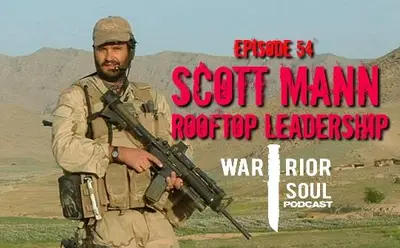
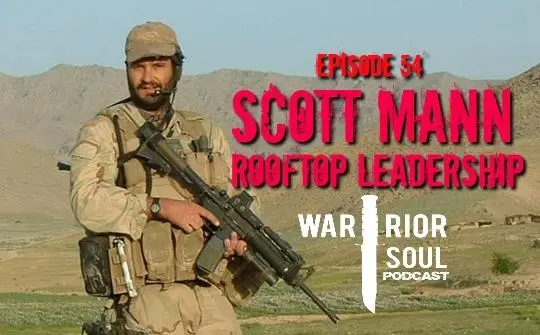
Episode 54: Scott Mann – Rooftop Leadership: Advice from a Green Beret on How we can All Become Better Leaders
Hosted by Chris Albert
The Warrior Soul Podcast
Scott Mann is a retired Green Beret officer who has trained over 15,000 Green Berets, Navy Seals, and FBI Agents.
Since his retirement, he’s made it his mission to teach other leaders in both the civilian world and government the “game changing” techniques he applied in combat, while also teaching veterans how to transition into the civilian world.
Scott is a regular contributor as an expert on major news networks, and his books include Game Changers, his treatise on how to defeat violent extremists, and Mission America: Straight Talk About Military Transition.
You can learn more about Scott and all he does at www.mannup.com.
Scott’s Tedx Talk on Roofop Leadership:
Transcript
Machine-generated from the episode audio and lightly edited — may contain errors.
Chris Albert (link to this point)
What's up everybody? Chris here, and we have another amazing episode for you today with Scott Mann. Scott is a Special Forces Green Beret veteran. He's an author. He's a motivational speaker, and he's an expert on leadership.
If you haven't watched his TED talk on rooftop leadership, it's an absolute it's one of the best TED talks I've seen. He brings up so many emotions, and he gives us some amazing insights in this episode on leadership, how we can all be better leaders, the direction this country is going because of a lack of leadership currently, and how storytelling is a huge part of leadership and how we can all be better storytellers. I'm so excited to put this episode out. I have to warn you, we had some issues with the audio due to the connection we had with Scott. It's it got a little bit garbled up, but we fixed it.
And so we reduced all the background noise, got rid of the hiss, hired an audio engineer for this episode because I thought it was so important. And you're gonna get so much out of it, and I can't wait to present it to you. But first, I have a couple of really important but really short announcements. First things first, my brother Andrew Marr, another special forces Green Beret. He wrote a book.
It's called Tales from the Blast Factory, and this is probably one of the most important books for veterans and those who love veterans out on the market right now. It's available on Amazon. The hard copy is gonna be available early in 2018. But we are trying to spread the word about this because this is the only book right now that's giving people real insights into the impact of traumatic brain injury on veterans and others who sustain them. A lot of people don't know this, but when you sustain a traumatic brain injury, the symptoms look a lot like PTSD.
And you're actually about three times more likely to commit suicide after sustaining a traumatic brain injury if you aren't treated properly. Andrew's book goes not only into highlighting the problem, but it addresses the real solutions that Andrew found that helped him to heal. And here's the big issue here. Traumatic brain injury is actually probably a lot more ubiquitous than we think it is. Andrew came back from Afghanistan without a scratch on his body.
The reason he got traumatic brain injury was because he was exposed to hundreds of low level blasts over his multiple tours. Basically, if your head is jarring back and forth in a rapid motion, you can sustain a traumatic brain injury. And if you think about it, there's so many veterans whose jobs in the military actually entailed their heads getting rattled back and forth. You think about machine gunners, those who operate heavy heavy machinery. And that accounts for a lot of the reasons why this veteran suicide rate is so high even amongst those who've never served in combat.
So I'm gonna encourage everybody to get out there, check this book out. You can learn more at www.talesfromtheblastfactory.com. Alright, guys. I have one more announcement for you, and it's gonna be a quick one, but it's something I'm very passionate about. And that is about our website, the Warrior Soul Agoge.
And that's spelled a g o g e. And the reason why we called it such a weird name was that the Agoge was the ancient Spartan Academy, through which young boys became Spartan warriors. Now why do we go this route? The reason is because there are hundreds of websites out there that are meant to entertain you. There's hundreds of websites out there that are meant to entertain veterans with humor, with combat footage, with so many different things, and there's nothing wrong with that.
Those websites helped to build communities. They've helped to build brother and sisterhood, and they're pretty motivating at times. But what we what we wanted to do was something different, cause we knew if we went that route, there's so many people who could do it better than us. We wanted to help you to optimize yourself, to give you the information you need to live your best lives. And we do that through all of our media, through our podcast, through our videos, through our articles.
And you're gonna find so much information on there about optimizing yourself mentally, optimizing yourself physically, and optimizing your performance. Making sure that you're gonna be able to do all the things that you wanna do in this life, and all the things that you promised yourself you would do back when you were younger. And the reason why we're doing this is because we see so much potential out there in the veteran class. We know what kind of leadership skills the military brings to the table. And we know that each and every one of you has something inside of you that you can contribute back to this society.
The only way you can do that is if you're being the best version of yourself. So anytime we put out a piece of content, we ask ourselves a simple question. Is this going to help wake up the warrior inside of our audience? Is this gonna help them to become the best version of themselves? So if you're interested in waking that part of yourself up again, and in living your best life, head over to warriorsoulagoge.com.
Chris Albert (link to this point)
This is Chris Albert, and I'm here to remind you of one thing. Someday, you're going to die. Now that's not some morbid statement or scary idea. It's a solid fact. Your time here on this earth is limited.
We need to be reminded of this as much as possible for one simple reason, to live your best life while you can. This is the Warrior Soul Podcast.
Chris Albert (link to this point)
Hello, everybody. Welcome to the Warrior Soul podcast. This is Chris Albert, and I'm here with my brother Andrew Marr. And we're here today with Scott Mann. Scott is an author, a speaker, a philanthropist and an expert on leadership.
Served in the Green Berets, he's trained Green Berets, Navy SEALs, FBI agents, you name it, Scott has done it. He has remarkable TED talk out there and is the author of several books. Scott, how you doing today?
Scott Mann (link to this point)
Hey, what's up Andrew?
Andrew Marr (link to this point)
Not nothing brother. It's so good to hear from you. Scott, you're an incredible storyteller. How did you develop that skill?
Scott Mann (link to this point)
Well, I appreciate it. First of I didn't say, I didn't say hey to Chris as well but
Chris Albert (link to this point)
It's all good, man. Marines get the short end of the stick.
Scott Mann (link to this point)
Never gonna shaft you, It's gonna be on. So, no, I appreciate that. You know, I guess I've always kind of thought of myself as a storyteller. I never formally but, you know, I grew up in family from Appalachia. Grandfather was a Baptist minister and so there was always storytelling in my family.
I found storytelling in special forces to be extremely powerful just, you know, because of the places that we would work were normally kind of off the grid tribal societies before nine eleven. And, you know, all of those cultures, I don't care where you go in the world, you're always gonna find fires and story, fire pit and story, and that just goes hand in hand with working with indigenous people. And and oral storytelling is a huge part of the work we would do in special forces. But it was really when I got out, guys, that I realized that that for me coming out of transition and even some of the dark places I I was at, telling my story, finding my voice and telling my story was the way forward for my life and what I needed to do next. And that's kind of the rest of history.
Chris Albert (link to this point)
I noticed that trust is a huge theme in a lot of your work and you're speaking and you talk about trust a lot as part of the art of leadership. What does trust mean to you and why is it so important?
Scott Mann (link to this point)
Well, know, from a I started working heavy into trust guys when I wrote my book Game Changers, which was about the village stability program that we put in place in early two thousand ten up until about 2013 over in Afghanistan where we were moving back into villages and kinda getting back to our roots, not just in special forces, but really across the special operations community. Marines were doing it as well. And so I started looking hard at social capital, you know, in ways that how do you connect with people and inspire people to do things when you have no authority over them when conflict is high. And social capital being everything from hospitality, reciprocity, all of the things that make a community and people work together, trust was at the epicenter of it everywhere I looked. And as I continue to write my book and study on it, and then even after I retired in The United States, I started to see there is an epic erosion of trust in our country today.
In the West, you only have to turn the news on for thirty seconds, and you can see that the trust erosion is so bad that I I'm on record now as saying, believe America is going tribal.
Chris Albert (link to this point)
You said you believe America is going tribal?
Scott Mann (link to this point)
I do. I believe we are going back to our our our tribal roots. I believe that, you know, humans come from kind of a clan society, honor based society where in groups and out groups form around status and resource scarcity. Humans have been doing that for a long time, tens of thousands of years. You know, here in The United States and other places in world, we've created societies that we got beyond that to some degree and we started bridging and creating trust that goes beyond our in group, right?
We could trust beyond our ethnicity and our religion and our socioeconomic status out of many come one. We developed a constitution and a rule of law that enables us to value the individual, not the in group. And and so from a social perspective, our country is an amazing amazing thing. But as you look around today, the thing that holds all that together is trust, this bridging trust. And I I believe it's eroding.
And as as that erosion happens, you don't necessarily get an absence of trust. What you get is a trust that goes back to kind of who we are which is being tribal. It goes back to trusting only the people in your in group and the out group is now the enemy. And if you look around, man, you see these in group and out group just popping up all over the country. And I think it's maybe the greatest enemy we face these days.
Andrew Marr (link to this point)
Scott, as a leader and entrepreneur, how do you leverage those current status to achieve an outcome that you desire? How how are you doing that right now in these troubled times?
Scott Mann (link to this point)
That is a great that is a great question and that really is what, you know, when I looked around after I retired guys and I I really did intend to go fishing, I even bought a place on the river and that is not true yet. But as I looked around, I you know, I've got three boys, Cody Cooper and Braden. My oldest son's about to go in the army as a lieutenant in a couple years and he's on a ROTC scholarship. And I just started thinking, you know, I I'm not good with where things are today. I I feel like what we're handing our kids is worse than we found it.
And with the erosion of trust the way it is, how did, know, what can be done about it? And so I recommitted myself after retirement from the army to what if we took, you know, what if I took the skills I learned as a green beret and that my brothers used in those rough places to restore trust in dilapidated Pashtun villages and restore trust there where people not only trust each other again, but they trusted us. What if I started training people on that in corporate America? What if I trained entrepreneurs on that? What if I trained law enforcement on that?
I mean, there's plenty of folks that are teaching leadership like Navy SEAL leadership and things like that, that's awesome. But, you know, special forces have kind of a neat skill set of assessing and restoring trust when conflict is high. So that's what I do. I mean, I believe that we need to go back old school on our skills. We need to be able to get back to interpersonal communication, storytelling, active listening, empathy, reciprocity, and make deep level human connections and meet people where they are and bridge the leaders who can bridge in a trust to put in an environment beyond their end group, I believe are the most relevant, relatable people in the world and I believe they're the ones who are gonna crush it in 20%.
Chris Albert (link to this point)
For everybody in our audience who doesn't know exactly what a Special Forces operator does, could you describe that mission for us? Because I know this plays plays a massive role in what you do in training people to understand these concepts.
Scott Mann (link to this point)
Yeah, I mean, you know, we so many, we have special operations forces like Navy SEALs, Army Rangers, Green Berets, and they all do amazing things. What makes special forces or, you know, their nickname Green Berets different, they typically parachute in below the noise. They offset away from the chaos and and they typically they just walk into an environment with, you know, 12 guys and 18, and they get surrounded by the enemy on purpose. They they immerse themselves in the language, the culture, they connect at exactly the right spot. It might be a village elder or tribal chief.
And and then they they stay and stay until the relationship and the time is just right. And then they help a little guy stand up against the big guy from the bottom up or the inside out. It's it's relationship based warfare. And and and, you know, the people that we work with are indigenous folks. They do not have any authority over them.
We have very few resources. And our mantra is go in with 12, come out with 12,000. And it's all based on relationships, it's all based on connections, it's all based on movement. And, you know, frankly, I think we can do more of that in that country.
Andrew Marr (link to this point)
I agree, Scott, you know, and I also think one key asset or component to the Green Berets of Brotherhood that we belong to is being resourceful without resources. You know what I mean? And figuring out how can I use what I have to drive an outcome that's different from the one that's currently being created? But as we go to your rooftop leadership mantra and the TED talk, which was fabulous and we'll have it in the show notes, you gave three key components of the rooftop leadership. And the first one was connect with humans as if your life depends on it.
Can you illustrate, better illustrate that and give us some examples of how we can apply that in our own lives?
Scott Mann (link to this point)
Yeah, you know, humans are, it's a really good question and I appreciate you bringing up rooftop leadership, you know, because I believe the way that we had to inspire people to go up ladders and defend their community in dangerous times when we had no authority over them is the same form of leadership that we need today. We need to inspire people to do things, big things that are and when they don't want to follow, right? And that's not an easy thing to do and inspire them to do it not because they have to but because they choose to. And, you know, connecting as if your life depends on it is the first way to do that. I tell a story about Major Jim Gant, who was a Green Beret working in the Kunar River Valley and made amazing connections with a tribal chief there who was nicknamed sitting bull and and they ultimately, you know, got in the head of very senior Al Qaeda leadership because of the relationship.
And Jim made that connection because his life depended on it. He had to make that connection in five or ten minutes or he would have been dead. But but we are so casual about our connections today. People are walking around with their heads and their phones, they're not dialed into each other, they're not present. And so in doing that, we leave a lot of value on the table.
And the reason we leave value on the table is because humans are the most social creatures on the planet. We are wired to be social according to Daniel Lieberman in his book Social, 77% of measured conversations involve other people. The brains, the preferred state of rest is thinking about other people. We naturally form in groups and out groups to survive. We are teaming mammals and so recognizing that instinct and turning it back into a skill, I believe is one of the most powerful things you can do and what I tell people to kinda wrap that question up is meet people where they are, not where you want them to be.
It's that simple. When you talk about how do you do that is we spend so much of our time today trying to jam our agenda from the top down that starts in DC and it goes all the way to corporate America and even with our kids. And, you know, I'd say take a different approach. Take a take a Green Beret approach and get people where they are, it costs you nothing, and start there and you'll be surprised the level of reciprocity that manifests the moment you do that and people, they wanna follow you, they're hungry for that.
Andrew Marr (link to this point)
You know, I had the opportunity when I was in the Q Course in Robin Sage for our audience who doesn't know, that's the last phase of the Special Forces Qualification Course. Jim Gant actually came and spoke to us, and this is an individual that demands your attention and your respect immediately. And he started off the talk with, these lessons that I'm about to give you, people, men that I love gave their life for, and it will make all the difference in your life. And talk about not needing to wonder what I was going to listen to or focus in next, and then he began to gain that firsthand account of what Scott just talked about. It was powerful.
And, but meeting people where they're at is so important because it's saying, you know what, that's taking the judgment and it's throwing it to the side. And it's saying, okay, great, you're here. Here's where I'm at. How can we work together? How can we cooperate?
And I think it's so important that such a great tenant. The next one I want to talk about Scott was he talked about leading your tracks and it just really moved me when I heard it in the speech but I wanted to get your take and a little bit further into it on this forum.
Scott Mann (link to this point)
Yeah, thanks. No, that one is special to me too because it's about, you know, the biggest hero I've ever had in my life. It's my dad, Rex Mann, you know, most of the things I learned about leadership, a lot of the things I learned, I learned from like Jim Gant said, you know, men who were way better than me taught me and I, you know, I managed to let a lot of it sink in, but my dad taught me a ton about leadership before I met my first Green Beret. And, you know, when it comes to my view on life and leadership, I believe that all of us are here to do something bigger than ourselves. I just believe that.
I believe in purpose based leadership. I believe in punching above our weight. And it was my father who showed me that from the time I was a little boy, he was a firefighter in the forest service and he always would, talk to us, he would take us out in the woods, we lived in little log in towns and he would point at animal tracks or whatever and he would say, boys, look at that, you are just like that, you need to leave your tracks in this world. I don't care what you do, but make sure you leave your tracks behind you. You know, it was really when he was battling cancer, stage four non Hodgkin's lymphoma, and I saw in those moments when death was right at his door, a man who was, you know, had such grace and such humility and such courage in the face of, you know, a certain outcome because of the tracks he had left.
And I realized very late in my life, I was a major at the time, that, you know, when we leave our tracks, when we put those indelible impressions in the earth that serve people will never meet, That's the greatest gift we can give as leaders. People when we serve people, we'll never meet. And if we can ask ourselves, you know, fifteen years after you passed on, the person who maybe held your hand when you took your last breath, if they were having coffee with someone who wanted to know more about you and you'd never met you, what tracks would they describe that you left? And I encourage people to write that down because that chapter is unwritten and there is a certain sense of power that we get as leaders. Once we know the tracks we're here to lead, it helps us so much derive the different purposes that we have in life and business and it's a powerful thing, you know, my dad never got the memo on the cancer thing.
He's stuck around, he's still around eight years later restoring a chestnut tree that's been extinct for a hundred years, but he's quite a guy, and he certainly taught me how to lead my tracks, and now that's my journey in life is to help others lead their tracks.
Andrew Marr (link to this point)
Absolutely incredible, and just empowering, insightful experience, you know, that that you're giving, and from there, talking about cultivating essentially a point of no return. In the military, it's a MDL, getting yourself or giving yourself an MDL for your life. What does that mean to you, Scott? And how can you better expand that and give a practical application to the audience?
Scott Mann (link to this point)
Yeah, you know, the MDL, I mean, you guys know it well, the mission decision line. And, you know, where that that little point came up one time was in it. I was at I was giving a talk out in California and someone asked me, they said, well, how do you guys find the courage to go up those ladders, to go into those missions, when people don't wanna follow you? Like, how you know, I understand what you're saying and that's really important, but but when when people don't wanna follow you and everything's going crazy, you know, that's a really hard time to lead. How do you guys find the courage to do that?
I and I thought it kinda the question took me back a little bit, guys. And I and I started thinking about it and I thought, you know, we do have things in our world in the military that we're pretty lucky in the sense that we think, you know, people that came before us figured out how to kinda take the emotion out of these big things. And one of them is a decommissioned decision line on a on a larger level if you think about it. You know, you're flying in on a mission at night on a helicopter and everybody I can remember being extremely nervous on some of my first missions and not wanting to let my guys down, and they would be calling off phase lines in that helicopter as I'm checking them off on my map, listening to my headset, and the rest of the team hearing the phase lines as well, you know, alpha bravo or phase line California, whatever, the roads and valleys, and know, I'm getting more and more nervous as we approach the target. Then as whenever I would hear that MDL call, the mission decision line, that's the point of no return.
That's when they're as as far as the mission proceeding, there's pretty much no plan b. It's on like donkey Kong, and we're going. And all of the preparation and the training and the rehearsals and ambiguity is now gone. There's nothing but clarity of mission here all in. And it's always funny whenever that would come, every time I'd look around the chopper, I would just see big sets of white teeth spinning back at me because everybody knew we were going and there was just almost ecstasy in that clarity.
And I think today we need that more than ever as leaders. We have so many choices and so many, you know, defaults and and contingencies that we don't we don't walk the rope without a net someone and that's what people want to see when the chips are down, they want to see a leader who's willing to go up on a rooftop by himself, if you need be. And I think having an MDL so like in practical terms, I tell people like if you're working on a project or moving towards a certain goal, you know, agree in a on a line whether that's in time or space or success criteria or whatever, you know, and when you get to that point, you cross it. There's no turning back. Everybody's all in.
We're all committed. We're going. And, yeah, and I think that will that will take the emotion out of a lot of this and and allow you to have this the strength of your condition and just follow through with your with your task.
Chris Albert (link to this point)
Scott, what what are some of the biggest mistakes you see leaders today making in in terms of what you just laid out, what they're not doing, and and some things that they are doing that are creating, you know, foot traps that are getting them stuck?
Scott Mann (link to this point)
Yeah. That's a great question and we don't have to look far for those examples. Yeah. You know, I just I think that the so called leaders that we have today, and I know I'm generalizing a little bit here, but when I look at our institutions that we have traditionally trusted, politics, corporate America, you know, that that world. It seems to me that we are losing faith.
It's been measured recently and we are losing trust in a lot of our leaders. Why is that? I think because we're looking at an unprecedented era of narcissism in our in our in our appointed leaders. They have started to, as my dad Rex says, they've started to strut. They've started to believe their own press.
I think the worst thing a leader can do is to start to believe their own press or they believe what you know, folks are saying about them, either in a good or bad way. And normally with these kinds of leaders, they they start to think that they really are that powerful, they really are that important, it is about them and they forget where they come from. They forget who they're there to serve, and they certainly start to lose their connection with people from the bottom up. And you can see it. You can measure it.
And when that happens, you start to widen the trust gap, and people can't relate to them anymore. Again, just turn the news on for thirty seconds and don't it's not just Trump, it's all sides, it's the media, there is this narcissistic fervor. And the other thing I think that we make a mistake on guys is I think that they stopped valuing this notion of bridging trust. There are two types of trusts. There's bonding trust and bridging trust.
Bonding trust is deep trust but not wide. It's their trust in your group that people better like you, the people you feel safe with. Bridging trust is trust beyond your industry, trusting in different religions and ethnicities, you know, outside your comfort zone. And you need leaders who demand that culture and demand that kind of trust be present in our organizations, our communities, and our government and they're not doing that. They're selfishly fomenting bonding trust to advance their own agenda with their own collective.
Combine that with narcissism, it's a very dangerous thing.
Andrew Marr (link to this point)
Scott, the question I probably should have laid it off was what is your definition of an ideal leader?
Scott Mann (link to this point)
Yeah, a rooftop leader. A rooftop, someone who leads from a place of service, someone who believes in a purpose bigger than themselves, someone who leads by example, someone who values human connections, and again, who understands that element of bridging trust. In other words, social capital that allows us to trust beyond our end group and and and work together to serve a purpose that's bigger than we are and and create that kind of culture, that's a leader. That's the kind of, you know, that's the kind of leader who's authentic and vulnerable and just focused on the connection, who needs themselves more of an instrument or a vehicle of a bigger thing. Those are the people I think who we naturally follow.
Those are the people who are typically the ones we remember and those are the ones who get crap done.
Chris Albert (link to this point)
So Scott, if the president of The United States or a CEO or somebody in the executive position, what are some good ways to keep yourself grounded, to remain humble and to not believe your own press so to speak? How do you keep yourself from doing that?
Scott Mann (link to this point)
Yeah, I think a lot of that has to do with the team you surround yourself with, right? You surround yourself with people who tell you how great you are all the time, you're gonna start to strike, you know, start to move your own press. I believe surrounding you, just like we do in the military guys, I mean, serve what if everybody on a special forces A-team told the detachment commander how great he was all the time?
Andrew Marr (link to this point)
I never saw that happen, Scott.
Scott Mann (link to this point)
Okay. Well, and what happened to turn out? Exactly. Right. And so, you know, and we laugh at that but, yeah, isn't that exactly what happens in in formal, you know, formal institutions today?
Is you see these guys, they surround themselves frankly with people that will not tell them the truth. They will not tell the emperor he has no clothes on. There's a zero defect mentality including in the military. I don't mind saying it. And, you know, as a result of that, you don't get ground truth.
You don't get the bottom up perspective. And the higher you move up the chain, the more disconnected you become from those ground realities, those those local realities as I call them in my book, game changers. And when you get that, you get that trust gap. And and and from there, you become isolated, and then it becomes literally us and them in group out group between top and bottom. And and and that's when you start to see leaders, they will reach down and they will grab certain groups to advance their agenda.
And so I say it starts with the team that you form right around you. It starts with what how you live your life as a family man or woman. It's it's it's your core self and if your house is out of order, everything else will be out of order.
Chris Albert (link to this point)
Let let's say you're in a secondary position, maybe like the secretary of defense who who I think is an absolutely skilled leader, general Mattis. Yeah. You know? And and you're and you're adept at giving constructive criticism to leadership to to make it better. How do you navigate that aspect?
You know, you're a vice president, you're you're you're in the cabinet, you're you're somewhere in that secondary leadership position, you have a leader overview that you've got to kinda lead up the chain, so to speak.
Scott Mann (link to this point)
Yeah. So I'll I'll actually pick one on that question. That's a great question. I'll I'll pick General Kelly, right? He's the new national, what is he?
Staff.
Chris Albert (link to this point)
Yep.
Scott Mann (link to this point)
Yeah. Now look at what he walked in.
Chris Albert (link to this point)
Yep.
Scott Mann (link to this point)
You talked about walking into a firestorm. So, but what did he do? Well, what he did was he told a story about what's important. People don't like to be told what to do, they like to be reminded about what's important. So if you are in that advisory role or that secondary role where you see at the pinnacle there are problems and your advice that can really change things, just remind people about what's important and what Kelly did, he didn't come and I'm sure he did his share of lambasting, you know, in true marine corps fashion, he listened to the fuck.
But if you notice the narrative that Kelly put forward and it's not covered in a lot of the media was, listen, whatever's going on here needs to stop. This is about the nation. This is about the nation, so knock it off. And he brought it back to what matters. He brought it back once again to something bigger than himself, bigger than the Republican party, bigger than the infighting between whatever, you know, is going on in that administration.
Brought it back to the nation. And that was where he made his advice from, that was where he operated from, those were the principles he stood on, and God knows we need more leaders doing that kind of thing. And, yes, I do think Mattis is doing the same thing. But that kind of principle leadership that comes from the tracks you're leading, the perfect you're serving, and then the the narrative competence, and this is big. The narrative competence that in oral storytelling form that you can help people locate in your story what that bigger picture is and where they play in it.
And that's what Kelly did with reminding folks it was about the country.
Andrew Marr (link to this point)
Scott, what advice would you give to leaders still in that active military about dealing with loss, regrouping, and still having to accomplish the mission? Something I know that you dealt with firsthand, and I think these stories, these experiences paid in blood does the society a good on a whole. So again, what advice can you give to leaders about dealing with loss and still moving forward to accomplish the mission?
Scott Mann (link to this point)
Yeah, that's a important topic and I think one that is eating our lunch on a whole different level. There are a lot of different levels. The one thing is I think we've got to deal with it. We've got to, have to, if you're going through it, I think it's one of those things that we have to, we have to start going straight through it. If you're on active duty, you're listening to this, even if you're not and you're still carrying those demons, know, I just believe that one of those things that we have to deal with head on and there are different modicums out there, there's a lot out there for yes, you guys know a ton about that, you're writing on it, you book Blast Factory and it's wonderful.
But from my personal perspective, I'll speak to my journey. For me, it was rediscovering my voice and telling my story on the other side. You know, I had a lot of guilt for guys that are not around anymore, some of them left this world doing what I asked them to do. And so I had to learn to tell my story again. Before I could do that, I had to rediscover my purpose.
I had to kind of find my voice in the world, and then I had to tell my story. And so that became critical. Are you guys still there?
Chris Albert (link to this point)
Yes, we're still here. We had we did some switch to try to get that the buzzing going but we're good.
Scott Mann (link to this point)
Okay.
Andrew Marr (link to this point)
Audio sounds perfect now, Scott. Keep rocking and rolling, we'll edit this.
Scott Mann (link to this point)
Okay, cool. But yeah, so that was, you know, for me it was it really was finding my voice and telling my story. And some of that story was painful, you know, it was talking about guys that I've lost, it was talking about mistakes that I've made. I think Jocko on his TEDx does a wonderful job talking about that day with their friendly fire. I think we have to tell our story in a way that is healthy and healing.
Story heals the brain, very powerful and so much so that my wife and I, we formed a non profit around that reality. But I think that's a big thing is learning how to tell your story and sharing your story in a way that's appropriate to help you heal.
Andrew Marr (link to this point)
Can you speak on the non profit, what it's doing now and the mission behind it?
Scott Mann (link to this point)
Yeah, so it started out as Mission America and it just started a couple of years ago when one of my friends was, you know, I just lost a couple of friends to suicide who had transitioned from the military and this particular buddy was about to end it and managed to talk him down and didn't, and he's much better now, but it really inspired me to, like you guys, to get more involved with I was having my own issue with transition and I started this nonprofit called Mission America. I wrote a book by the same name and it's all about treating your transition as another, you know, just another mission. And and the book is you can get it at missionamericabook.com. It's a powerful book, I think, that that fits in your cargo pocket. You can read it in one reading.
But then, you know, we kept evolving with the nonprofit. That was about two years ago. And with all the work that I'm doing on storytelling in corporate America, I started seeing a direct correlation in the guys I was working with in the military who learned to tell their story. Was like rapid. They were making rapid moves with their interviews, with their investments, just their life.
So I thought, you know what? We're gonna go even more focused 50,000 nonprofits working transition and better. Let's get really detailed and focused. We started the hero's journey, which is, you know, we just repurposed this in America into the hero'sjourney.org. And we help warriors find their voice and tell their story, whether that's to their employers or to their family.
Andrew Marr (link to this point)
Can you speak on your transition process? Because I know that for you was kind of what led to these some of these moments and going through some of those struggles that maybe you weren't, didn't foresee coming. So, what was that transition like for you and what are the lessons that you learned there that you're now giving through others through the book and this other, these other platforms?
Scott Mann (link to this point)
So my transition story was probably similar to what you guys have seen and been through, but everyone's is different, but I will just say, I thought I had a plan. You know, I retired relatively healthy, had real estate, had a book to write, my family was still intact and, you know, had it all figured out after almost twenty three years in the army, but the reality was within a few days of getting out, the snakes in the head started squirming around as my old fifth group from Vietnam era, Dave Phillips calls it, and it was just this discomfort. I felt like I was on a different planet. I felt like I was on a different planet and I was in an orbit like I was not even on the ground, I was just kind of bouncing and floating around. I didn't belong and I wasn't grounded.
I didn't know, it was just frustrating and I got I I found myself talking about in group and out group, everything around me was an out group and everything I'd known had been turned upside down, my connections were in disarray and I was trying to beat something that frankly, you know, everybody else wanted me to do except me. And it took me about two years to figure that out and I started talking to other guys from the Green Beret Foundation and other special operations circles and started realizing that I needed to get back and reconnect with my purpose, redirect my purpose, figure out what it was that brought me in the military and kept me chugging along. And then once I did that, I realized that speaking and storytelling and training is what lit me up when I was in the military and that's what I needed to proceed to keep going. And so that was, you know, in a nutshell, my journey and it wasn't easy, you know, four years.
Chris Albert (link to this point)
When we talk about the hero's journey, I've heard that term used a lot, you know, have Joseph Campbell who talks about the hero's journey. What is the hero's journey? Is it a set story form? Is it is it a way of telling stories? Is it is it a model for for for veterans to to go by as they're getting out?
Scott Mann (link to this point)
Yeah. So the hero's journey, Joseph Campbell did write on it, he is the oldest fully structured out there just about and basically, there's something like this. The hero hears a call, hero reluctantly answers the call, and I do mean reluctantly, And then the hero goes on a journey and ends up in the belly of the whale, so to speak, and battling against enemies outside and is battling against enemies inside. And somehow finds a way out of the belly of the whale, overcomes that struggle, and returns home from that journey, transformed, changed, having learned something about themselves and the world. And and when they share that story with their people on the home shore in the hopes that they can save them pain and the miles and the stars that they went through.
And not not only is that story structure like we live that every day, life is narrative narrative is life. Not as it only did it be the oldest story structure in the world, it is a story structure that, again, that we are we live it. And no one lives it, in my opinion, more than veterans. That literally embodies their life in the military. And then there are micro examples of that on the day that maybe you had your worst leadership challenge.
So imagine if you talk about, you know, you have to be in combat. You know, imagine if you talked about one day in special forces training when you thought you were gonna have to quit and you tell that hero's journey structure, how you struggled, why you overcame it, and how you inspired a team of guys who you have no rank with to push a beautiful free will through the through the sand. And then you're telling this to your employer who just asked you a question about how you do leadership when the economy's low. You see what I'm saying? And so the the hero's journey as a structure can help us get our stories in a way that they serve other people.
And it's a powerful, powerful structure and, you know, I know some guys have a hang up with the word hero but, it's really not meant that way, it's really meant that the hero is just, you know, he's just the protagonist in the story.
Chris Albert (link to this point)
Scott, you know, when we when we think about that, there's a lot of veterans out there right now whose service, I guess, could say was anticlimactic. They served honorably. They went out there. They did their jobs, but but, you know, there wasn't a whole lot of excitement there or anything like that as far as doing the job itself. How do you reconcile that as far as the hero's journey goes?
What should these guys be doing here?
Scott Mann (link to this point)
Well, so here's what I would say. I have two things to say to that. I wanna say one to the guys who were not operators or combat warriors. And then I wanna say one to our own community of combat warriors. Can I do that?
Chris Albert (link to this point)
Yes, sir. Absolutely.
Scott Mann (link to this point)
Yeah. So the first thing I would say is to the to the the guys who fought in combat or to any elite forces. No.
No. Let me go the other way. To the ones who weren't, don't worry about it. Don't worry about that. That's like, you know, we come out of the military, it's hard enough.
Let's not compare ourselves to other people. I I I just I just coached the guy the other day named Andrew who was blown up in Iraq and he's a marine civil affairs guy and he has severe TBI. He has a service dog now and he's talking to people. He almost told himself about the power of service dogs and and helping you get back to your life and he actually called himself a pope. He said, I'm not one of those guys like you.
I'm a pope. And I said, stop right there. I don't ever wanna hear those words out of your mouth again. Right? Because I don't think of you that way and I, you know, I get a little emotional when I hear this because it's wrong.
I don't care where you served in the military. Don't care if you were a truck driver, if you if you sat and you get, you know, a predator, if you flew a predator in Las Vegas. If you serve this nation and you serve this nation with honor, then you are entitled to the same respect and dignity and honor as anyone who jumped out of an airplane or put a scuba tank on them. And I will never feel differently about that. And anyone listening to this, you've gotta know that your story rings as true and as loud and as solid as anyone who ever did anything differently.
It's your story and you have to own it. And it's your journey and you have to own it. And to do anything less, you you you disgrace the angels as Steven Pressfield says, you are not giving us your best stuff. So I'll pause there for comment if you guys wanna say anything and then I'll give a message to our community.
Chris Albert (link to this point)
No. I agree 100%. I think that's that's an amazing commentary.
Scott Mann (link to this point)
The other thing that bothers me about our community, and this is not everybody, it's not endemic to the whole community, but I do see it and I and I'm gonna call it out as bad behavior. I think for us, using social media or other things, the lambast anybody who did not serve in the elite community or whatever, it doesn't help us at all. It makes us look like a bunch of Neanderthals, and it does not make us relatable as as contributing citizens who have now come home. We should have the the tactical prowess and maturity to not do that. I actually had a guy I was doing a a business insider thing not too long ago and someone asked me one of the scariest moments of my life and I, you know, I say it was not a firefight, I've been in plenty of those too, but the scariest moment in my life was when I was a a three, an ops and director in Kandahar and we had a chopper go down and my best friend was on that chopper.
And and a lot of team former teammates and guys and their chopper was down, it was shot out from under them, they had casualties, we had bad weather, and those guys were out there all night long fighting it out in Dabo province and we were, you know, trying to get them home. And there were times when I thought we weren't gonna get them home and I still wake up thinking about that. And because there was nothing I could do. And then this guy, self proclaimed operator, you know, comes on Facebook and and basically says, this is ridiculous. The guy wasn't even in in combat at the time, you know, no crack of around, what could he possibly be afraid of?
And it just struck me in that moment. It's like, if this guy is saying this to a fellow Green Beret, what is he saying to people who tell their stories who've never served in special operations? And no wonder those guys hold their tongue and and and grab a bottle of Jack. Right? So we can't do that.
We've gotta be better than that And I hope that our community will lead the way in opening up all of our veterans and their family members telling their stories. They're great stories and we need to hear them.
Chris Albert (link to this point)
Yeah. It's amazing to me how many, you know, fake operator accounts there are out there on Facebook talking crap and on Instagram and just the kind of atmosphere that that's drawn up, I think in the veteran community, it's really been toxic for the community itself. And I really thank you for those comments. I think that's awesome.
Scott Mann (link to this point)
You're welcome.
Andrew Marr (link to this point)
Scott, you know what, it was difficult for me transitioning out and then you know getting into the realm of entrepreneurship and trying to leverage social media to tell your unique story because as you know, a Green Beret was just woven into our DNA that you don't make anything about yourself, but telling these stories in order to repurpose and realign yourself by looking at your past performances, what can you do to continue to have success, what do you need to change? These things are so crucial and they're so beneficial to society as a whole. So, how have you dealt with jumping into the realm of social media to, in the realm of self promotion to accomplish a mission that is bigger than yourself? What challenges have you seen there and how have you been able to leverage social media to help you attain those that end state?
Scott Mann (link to this point)
I think you provided a really great answer there since that you can be bigger than yourself. You know, I do so let me let me unpack this. There's a couple of really things that I wanna unpack. First is on this notion of being quiet professionals. Right?
We've heard that one a million times and, you know, I I I I agree with it. I think we are quiet professionals. However, I do believe there's a difference between being a quiet professional and being professionally quiet. You know, I I think that we're not careful. We render ourselves irrelevant because we misconstrue telling stories that serve other people with talking about ourselves and, you know, self promotion.
First of all, so I'm gonna give a bit of permission here to anyone listening to this whether you're an operator or not. If you're worried about talking about yourself which is great, I mean, it just means you're humble. First, know this, stories have been around for a hundred thousand years. A hundred thousand years, they're the oldest form of communication in the world. We actually invented language just ten thousand years ago to help us tell stories better.
People think that stories came after coded language, they didn't. There's there's carbon dating evidence of storytelling around fires ninety thousand years before the first coded language ever existed. What does that mean? We tell stories from a place of service so that we can learn. Our brains are wired for stories, the limbic brain only understands narrative.
So, it is the natural way that the brain processes information. According to Kendall Haven in the book Story Proof, the only way. So if you don't tell a story, even if you give them your resume or a PowerPoint deck or a spreadsheet, the listener is gonna use their own narrative to take that raw information. But if you tell a story, then it will pass through the listener's defense mechanisms and resonate in their limbic brain as a pre existing story vehicle. And so that adds meaning and memory to what you wanna talk about.
Validated this with dozens of very senior employers and CEOs who tell me, give me a story from a veteran anytime over a dozen resumes and the resume is still important. But the point I'm trying to make here guys is that storytelling is a natural thing, it is in the service of others. So if you are talking about the miles you ran, the scars you developed and what you learned and how that can serve a company or an organization or a client or as an entrepreneur, trust me, that is people are gonna be drawn to that and it's the best way to navigate the murky waters of social media and television.
Andrew Marr (link to this point)
How does the hero's journey help a veteran to identify and tell tell this or or be a part of this process, Scott?
Scott Mann (link to this point)
Okay. So, a couple ways. One, you get the book Mission America and we give these away to the warriors, any chance we can by the thousands. But if you wanna buy one or buy one for someone, you can get it on Amazon or go again to mission america book dot com. Chapter 16, there's a whole chapter in there on how to develop and tell your story. I've also got a video that I've done, a twenty minute called Warrior Storytelling in Transition and your listeners can go to americandreamu.org, they just show their, DD form, what is it?
Is it?
Chris Albert (link to this point)
Two fourteen.
Scott Mann (link to this point)
Yeah, two fourteen, you think I remember that. Proof of that and they get access to this wonderful learning center and my twenty minute video on how to craft and powerfully tell your stories there, it's free. And then the other thing that we do is we actually run workshops.
I run them here in Tampa. I run them around the country and we I teach veterans and their families how to develop how to find their voice, develop their story, then tell that story for maximum impact the same way I trained executives at Capital One how to do it. Pretty bad ass like there's the guys and gals that have done it are really crushing it. You know, you can you can go any of those three routes and and learn how to do it.
Andrew Marr (link to this point)
Yeah, we'll get all those in the show notes. And I read Mission America, the book, April or May of this year, and just like Scott said, it was able to sit down and basically in one sitting and learn from Scott's experience and the wisdom that he got on the other side of it for transition. It's the best book on transitioning, not from the military, but just from one course of life to another and a verified and vetted blueprint to do it. So that was great, Scott. The book was so good.
Matter of fact, I think we got 100 and distributed them out to 100 different people. So man, it's just, you know, putting such an impact. How have you seen, what's transportable skills are veterans able to use to become entrepreneurs in your estimation?
Scott Mann (link to this point)
Well, we have a bunch of them and the rest of the book talks to that but no, we have a deeper sense of purpose, people are drawn to that and clients love that. We have a sense of resilience and can do attitude and don't we love ambiguity and complexity? I mean, we just love it. And isn't that the world of an entrepreneur? So we have a lot of just warrior ethos.
I think all the warrior ethos are perfect for an entrepreneur, you know, for an entrepreneurial endeavor. We're good at relationships, we're good at team building, we're good at time management, we're good at having a regimen even when we don't know what's going on, we still do PT at 06:30 and we bring order to the chaos. All of those things, I I encourage people to look, take stock of your ethos, read Warrior Ethos by Steven Pressfield, Read Mission America that I wrote and take stock of your own attributes and ethos that you currently have and don't be so in such a hurry to turn that in with your your CIF, you know, or your TA 50. Keep those things and recognize that they are probably 90% of what most entrepreneurs do not have.
Andrew Marr (link to this point)
Scott, what advice can you give to guys getting out to keep up their relationships with the people that they form such close bonds with because it can be easy to let those go and fall by the wayside?
Scott Mann (link to this point)
Yeah, sure can. I tell you before you get out start doubling down on your efforts to get contact information. I say stay active. There's lots of private groups out there, you know, SF Brothers, Green Beret Foundation. I know all the services have that.
I the other thing too that I would say guys, but here's the here's the way I I figured it out and I got back to it is and it's what y'all are doing too, is look for ways to be a platform. Look for ways to take the microphone and be a leader the way you were in the military. Don't wait for a group to reach out for you. Create your own tribe. Create your own community of practice.
Reach out to people, ask them how they're doing, look them in the eyes. There are plenty right around you in your community that you can fill the gaps. I mean, there are so many gaps in veteran transition that the VA, DOD will never be able to fill them. It's gonna be guys and gals like us come out, see a gap, they run at it like you guys have done with TBI, like I've done with storytelling and and leadership. That's how we do it and there is more work than you can ever shake a stick at.
It may not pay, it may not be, you know, it may be exhausting but what I found is it it scratches that itch the higher purpose for a lot of us getting out that we actually don't get in a nine to five j o b. And so I encourage people if you wanna maintain the connection, step up and find a gap and fill it with your own initiative and character and love and passion for what we did and it'll fill up your cup.
Chris Albert (link to this point)
I think that's so important, especially in today's day and age because we live in probably the most amazing times as far as communication goes. Yep. When I first got out, I saw Facebook and Instagram and I was like, oh my god, what the heck are these things? You know, people are invading our lives. But I realized, after a while and after becoming an entrepreneur that that they're tools.
And they're they're tools for leadership, they're tools for communication, and they're tools for telling your story. And there's so much opportunity for guys out there to connect, to lead, and to create.
Scott Mann (link to this point)
Absolutely. It's so true and we have them in us and you're right, the tools at our disposal. But look, if we're not careful, we allow this whole quiet professional thing to, you know, to manifest and it keeps us in the bleachers and we can't do that. We we can't go from the way we ran in the military, you know, to like really getting after it and leading strong to all of a sudden just relegating ourselves to the bleachers and going to an eight to five. I think most men and women are gonna have struggles with that.
So we gotta reconnect to our purpose, get clear on that purpose, what it is, it's realize that it's bigger than the military, it doesn't define us if we take the uniform off and use the you know, take the microphone back. We've got enough amateurs in leadership positions right now. Take the microphone, be that platform, make connections, go local, even if it's just working in your community. There's so much good work to be done and it can fulfill such a sense of purpose that so many of us need.
Andrew Marr (link to this point)
Scott, I know you got a leadership training event coming up in October. Can you tell us some more about that? Where's it gonna be? What are you gonna cover and some of the finer points of that for the audience?
Scott Mann (link to this point)
Thanks for asking. If you go to mannup.com and click on the workshop, can you can see more, but it's called Spartans Rising. It's a men's leadership retreat. We go out to the to the woods at a camp out in in Old Florida. We get cabins and and basically talk about the enemies that we're up against as as fathers, husbands, sons, and what where male leadership needs to go today.
It's a brotherhood of firefighters, law enforcement, CPAs, really cool group of guys. There's about 70 of us. Usually, about 40 come to each event. And we just spend two days diving deep on the enemy that stands between us and our higher selves and what we're here to do. And then I spend a lot of time teaching guys how to how to really get clear on their vision and where they're going, the tracks they're leaving, and the stories that they're gonna tell to move people to action.
We do a lot of storytelling, we do a lot of fire pit work, a lot of interpersonal skills that we learn as Green Berets, I share there. And I tell you, it's powerful. And then from there, we form an online community. We stay together as a brotherhood, help each other through our things. It's it's awesome.
And I would love, to have people there. It's, it's $1,250, $1,250 for the most impactful two days of your life. It can change your life. If you're looking to really make a pivot or a move, I strongly encourage you to go to mannup.com or even contact me, scott@mannup.com and we get you enrolled. We've got a couple of seats left.
Andrew Marr (link to this point)
Scott, how have you been able to cultivate your platform and formulate, you know, workshops like this but then actually market them and get bust in the seats, you know. It's two totally different things. You can have all the strategies and the tools and the experience but if you can't relay that information to others then it's no good. Storyform has been your platform but coming out having no followers, nobody knowing Scott Mann, the author or anything else, what was your kind of your game plan or your blueprint to market yourself and get out there so other people could find out this wonderful information?
Scott Mann (link to this point)
It was really hard. It was I went to a Bo Eason speaker event, former football player who had to reinvent himself after blowing his knee out when he played for the forty niners and became a dynamic speaker and I studied under him. And and what I learned was that I needed to get my story straight first and and what my story was. And once I had my story straight and who it served, that was when I started looking for platforms to speak on and I did, you know, would do Facebook lives. I I even started getting my and I I saw a gap on the news.
It seemed like all the talking heads that were talking about ISIS had no clue what they were talking about, they weren't speaking to the American people. So I got on and started doing that, I wrote a book on Game Changers and self published, did the same with Mission America. I just looked for stages and platforms where I could be of value and I could start to build a tribe, and and start to build a movement. And, you know, whenever I could, it wasn't long, six to eight months, I was up in front of people, I started, said, look, I I can't train in a hotel, I'm not that great at it, but I can sure train in in a fire pit and some cabins. I'm going here on October twenty seventh, twenty ninth, I'd love to have him join me.
And all of a sudden, like 20 dudes went to the back of the room and I was like, oh crap, I guess I better get a plan together. And and that's how it went, you know, and and but it was a grind. It took about a year of getting on stages and speaking and really putting myself out there and now I do have a group of people and I'm still growing it. But I say, tell people what you're building and ask them to help you build it and tell them what you're going to do it and you'll be surprised who shows up.
Chris Albert (link to this point)
Scott, you mentioned your son is currently in college and and is gonna be an army officer. What what kind of advice do you give him when when he talks about his future career and, you know, leading troops and things like that?
Scott Mann (link to this point)
Yeah. Just just don't ever forget where you came from. Don't ever forget that you're here to leave tracks, don't ever forget, you know, your family's legacy and all of you know, just remember your father and your grandfather and all the people who love you and that you know, we're why you're doing what you're doing. I tell him to to always listen to his non commissioned officers. They're the they're the best in the world and that they'll they'll keep him they'll keep him straight and to always honor, you know, every single person in his platoon, his company, and he is to serve them.
That's why he is there. That's it. He is to serve them and empower them and enable them to do bigger work and he is a vessel for that and to never take himself too seriously. He got that work.
Chris Albert (link to this point)
And to the young soldier or marine or sailor or airman who has a couple of months left on their enlistment and they're thinking about getting out, what would you advise them to do first as soon as they get out?
Scott Mann (link to this point)
So they have a couple of months left. The first thing I would say when you get out is this, don't stop doing what made you successful in the military. What I see a lot is young people and old people, old folks like us, the minute they get out, what do they do? They stop doing PT, they stop eating healthy, they stop getting a good night's sleep, they start sleeping late and they think, okay, finally, I can live the life that everybody else lived all these years. And what miss in that is they are opening the door up for the snakes in the head to start crawling.
It is the resilience in our lives, the regimen, the ritual and the rigor that keeps the resistance and the snakes at bay. So I say, don't stop doing the regimen, stay with it because in complexity and ambiguity and crazy times when it's scary, that's when you need your regimen the most. Call back on those things that work so well, do your PT, stay focused, stay regimented, keep studying for whatever you're gonna do next as if it were a deployment, an area study. You need to leverage your assets, your resources, take stock of what you have, you know, take things like men, weapons, time available, you know, change that to fit your situation but don't stop doing those kinds of things because that's actually your edge and that's usually the first thing you step away from.
Chris Albert (link to this point)
And what's your current daily routine like, you know, for those at home? What what does your day look like?
Scott Mann (link to this point)
So what I say is crazy. Alright. I'm gonna tell it to you and it's very doable for anyone listening to this but what I've come to learn, you know, and you guys know the deal, mean, you learn this in any high performance world, special ops, athletics, whatever, but pros, if you want to be a pro in your new life, you were a pro when you left the military and that's awesome. So, you want to still be a pro. Pros have a different relationship with practice than amateurs.
Another book I would highly recommend is The Talent Code by Daniel Coyle, 52 tips for high performance. The short little book, easy to read but he talks about how pros, he studied pros and his hotbeds of talent all over the world and they just have a different relationship with practice. And so, I say get a relationship with practice coming right out of the military that hits the ground running. For me, every morning, I'm up, I'd say my prayers, I'd do my spirituality and, you know, that's what I do. The next thing is I'm out, I do my PT, I'm slower than I used to be but I still do it.
I go right from that into what I call my tribal 12 which is my speaking, storytelling training where I work on my my movement, my voice tonality, I tell my story of the day, I work on it, takes me thirteen minutes. I'm back into my house, I journal in my self journal, that's the name of it. There's another one called the five minute journal, I journal for five minutes And then then I eat my breakfast and then I go and I talk to my wife about my day, what it's gonna be and then I get into it. I work in twenty five minute blocks that I keep a timer on my iPhone and when it goes off, I get up, I take a break. And then in the evening time, I journal again in the evening and I try to hit the sack, you know, sometime around ten or 11:00 and that's my day.
And and and I really try to plan my day out the white space. Try not to have any white space in my day even if it's to chill out that's marked in my in my timer. And that's how I live my life even on the road, and I travel a ton. And what I found is that the return on investment for living that way has changed my life in dollar signs and it has changed my life in my physical, mental and spiritual health.
Chris Albert (link to this point)
Can you go into further of story of the day that I find that intriguing.
So, how do you architect that and what is the purpose there, Scott?
Scott Mann (link to this point)
Yeah. So after I do my meditations and my deep breathing and I work on my voice and I warm up, you know, because in storytelling, one of the things that people don't realize, storytelling is 90% body, like your how you move and like how your body moves and connects and voice tonality and about 10% actually what comes out of your mouth. So a lot of my warm up is just in movement and exercise and that kind of thing and different voice exercises and then at the end of it, I tell my personal story that of how I saw a Green Beret for the first time when I was in a soda shop in Nana, Arkansas and it's my origin story and I tell that, it takes me about eight minutes and I tell it as if I were talking to a real audience. My mama calls says I'm crazy, she thinks it's the maybe the PTS but me talking to the wind.
And and I do that every morning and if I and then if I have a new story that I'm developing for a keynote or something that's coming up like I am working on one right now about that speaks to trust, I will tell that story in in those warm ups in the morning and I'll call them bumble runs. I'll just bumble through it, but what happens is if you do that four or five times in a week, that story gets down into your solar plexus and it now becomes a powerful story. I and I never encourage people to tell stories for the first time when they're on the stage. Pick the story you're gonna tell, jot it out with bullet points and then get up and edit it in the tell to an inanimate object, and then let someone trust and hear it and give you feedback.
Andrew Marr (link to this point)
Wow, Scott. That's awesome advice that I'm going to implement in my own life starting time now. Thank you. That's incredible.
Scott Mann (link to this point)
Yeah. Of course. Yeah. And, you know, I've got a lot of this stuff too. I have a podcast called Mann Up Report and then on my website, mannup.com, I do video blogs and a lot of this stuff, I go deep on that and and talk about, you know, how you can how you can become the storyteller that no one can look away from as Bo says.
That's the coolest thing. When people have to pee and they won't get up to go pee because they don't wanna miss anything, that's when you're at the worst.
Chris Albert (link to this point)
Well, I've definitely been intrigued by listening to you today. I think that's that that's an amazing skill to have and it's an amazing thing that our country absolutely needs more of right now as you said earlier in the podcast. Scott, I want to thank you so much for coming on today. This has been an awesome episode. Is there any last notes of advice you wanna give out to the audience today?
Scott Mann (link to this point)
Yeah, I just know I'm getting ready to do a talk on I think on my podcast. I love to have you guys on there sometime if you don't mind.
Chris Albert (link to this point)
Absolutely, anytime.
Scott Mann (link to this point)
Yeah, but I'm gonna talk about, there's a quote unknown, but it's, you spend so much time building walls, don't build any bridges. Name of the podcast episode is gonna be building not enough bridges and I just anyone listening to this is, I just let's just be careful not to get sucked into all this churn that's out there. We need leaders who are above the churn, above the fray, who see a bigger picture, who see the nation first and don't get caught up in this in group, out group behavior and can lead from a place of service. That's number one. And number two is whether you're in the military or not, I encourage you to really think about, what you're here to do, the tracks you're here to leave, when's the last time you visited that and when's the last time you told the story of the miles you've run and the tracks that you're here to lead.
And if you don't know that story, then I don't think you know your life and I encourage you to get to it and tell it because we God knows we need it.
Chris Albert (link to this point)
Wow. Absolutely. Absolutely. Everybody out there, definitely check this stuff out, and and, we're gonna have all of Scott's links up on our show notes. And if you're out there and you're wondering what you should be doing right about now, I'd get to be thinking about your own story, the tracks you wanna leave, and where you're gonna go from here.
Scott, thank you so much for coming on today. And to everybody out there listening to the Warrior Soul podcast today, thank you for listening. We'll talk to you very soon.
Host of the Warrior Soul Podcast and founder of Warrior Soul. Worldwide trainer and nutrition coach, contributing author at Testosterone Nation and Muscle and Strength.